|
Related FAQs: Marine
Macro-Algae, Algae Can Be Your
Friend
To Articles and FAQs on: Avoiding Algae Problems in Marine
Systems, Coralline Algae,
Green Algae, Caulerpas, Coralline Marine Algae, Red Algae in General,
Brown Algae, Blue-Green
"Algae"/(Cyanobacteria), Diatoms, Phytoplankton,
To Pest Algae/Control , Algae Filters Articles, Marine Algae ID 1, Marine Algae ID 2, Marine Algae Control FAQs II, Marine Algaecide Use, Nutrient Limitation, Marine Algae Eaters, Culturing Macro-Algae; Controlling: BGA/Cyano, Red/Encrusting Algae, Green Algae, Brown/Diatom Algae,
/A Diversity of Aquatic
Life
Algae Can Be Your Friend, Pt. 2
|
|
|
By Bob Fenner
|
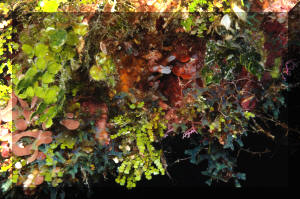
Some desirable and not algae groups in
Cozumel |
Back to Pt. 1
 |
New Print and
eBook on Amazon
Marine Aquarium Algae Control
by Robert (Bob) Fenner
|
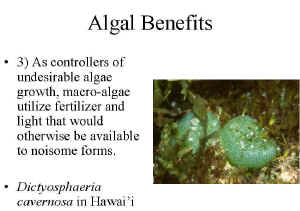
| Using up available solubilized
nutrients by desirable cultured algae species cuts way back on the
growth of noisome forms. |
|
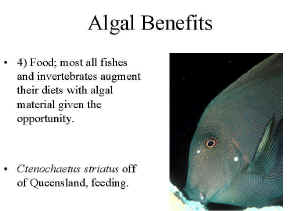
| As food itself… what could be better
than having your own salad bar growing right in your home? Many
types of livestock forage for a good part of the day; live,
palatable algae species make up an appreciable part of their
diet. |
|
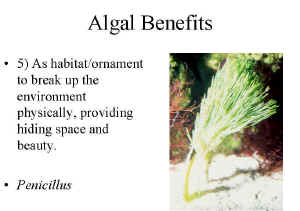
| 1) For esthetic
reasons. Many algae are gorgeous, ornamental in their own right;
useful as growing d?or, breaking up the physical/optical
environment for you and your livestock. |
|
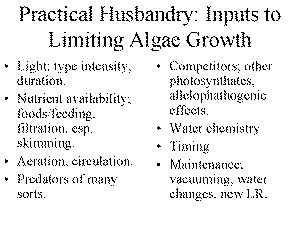
| The following factors are the
most important in defining what it takes to grow "good"
algae types and population sizes and/or avoid too much of
"bad" ones and proportions. |
|
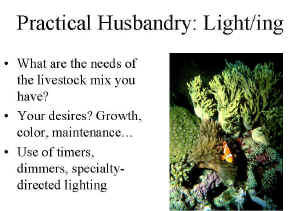
| Many aquarists have a
too-haphazard approach to livestock selection, assortment and
placement. It pays to investigate the light/ing needs of your
systems occupants, be aware of what you're "driving"
with your lighting, and your desires. Don't over- or
under-illuminate your system and its specimens. Study about their
requirements ahead of purchase. Use directed light sources, timers,
dimmers to achieve your goals. |
|
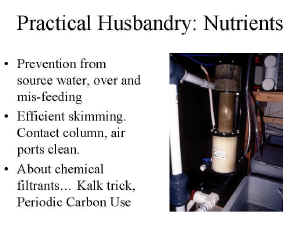
| Through water testing,
careful preparation of make-up water, use of appropriate foods in
palatable formats, fed in such a way that all are consumed,
assiduous use/maintenance of skimmers goes a long way to preventing
and removing excess wastes/nutrients that drive algal
proliferation. Periodic use of carbon (monthly change outs) is
recommended and the "trick" of Kalkwasser dosing to
precipitate phosphate is worthwhile at times. |
|
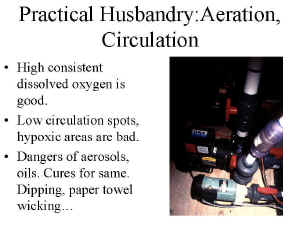
| As simple as good water movement
and gas exchange is, this is often THE most important aspect
missing in algae-troubled systems. Arrange your powerheads,
internal and external pump discharges, intakes to prevent any
"dead" areas, directing circulation about and behind all
live rock, substrate surfaces. Practically speaking a system
cannot be over aerated/circulated. |
|
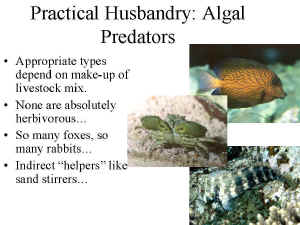
| There are members of almost all animal
phyla that one can enlist to curtail algal overgrowth by their
predation; fishes, Seastars, Crabs, Sea Urchins and more. Bear in
mind that almost none are entirely herbivorous, and that they need
to be matched to the systems size, development, metabolic rate,
other livestock and conditions. |
|
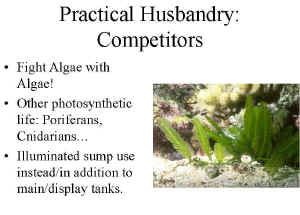
| The worlds reefs are vivacious
environments, with webs of ever changing, inter-cooperative
relations at play, organisms competing for space, light, nutrients.
Not well-known amongst home hobbyists is the arena of chemical
interactions amongst SeaLife, particularly the allelopathogenic
effects of some algae, other photosynthetic organisms have on each
other. Favoring, or allowing the favoring of groups or species in a
system can have profound effects on the growth, reproduction of
other organisms. The use of live sumps, often called refugiums is
of keen usefulness here. |
|
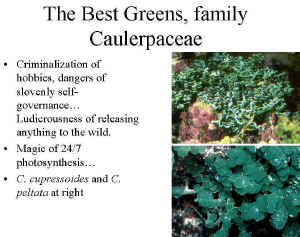
| Unfortunately the "powers
that be" have begun to make illegal the possession of the very
best species of algae to do all the positive jobs that algae
co-culture can do. The genus Caulerpa is supreme in accomplishing
the "light reaction" of photosynthesis 24/7. It's
very adaptability has been its undoing in the eyes/hands of
legislators who have banned it in places, for fear of its being
released to wild environments. Many other ornamental and
agricultural organisms are more destructive, but the point is
conceded that it is of utmost importance that no organism be
released into a novel environment where it might persist, displace
native life, perhaps introduce pathogens, other
competitors… |
|
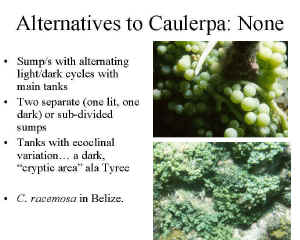
| Approaches to growing/resting other algae species
that can be employed in Caulerpas place include utilizing two sumps
(one lit while the other is dark), a sub-divided sump (with a dark
panel) to accomplish the same result, or utilizing timers to
alternate between the main/display aquariums light/dark cycle with
the sump/refugium with some overlap. |
|
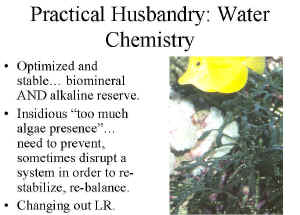
| As with photosynthetic coral
culture, live algae require suitable biomineral content AND
alkalinity. I would like to mention two points here: That algae
can/do modify their environment profoundly, poisoning other life
forms (and sometimes themselves) in ways that favor their presence.
Don't let pest forms therefore become too dominant. One aspect
of marine/reef aquarium culture that needs reinforcement is the
technique of switching out, replenishing diversity, solubility of
beneficial organisms, minerals with switching out some of
"older" live rock with new after a system is a year
and a half or so of age, and every half year or so thereafter. |
|
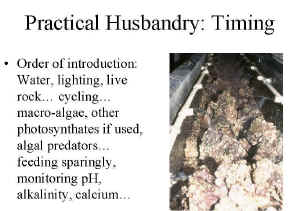
| Words of wisdom from the Tao te Ching;
of use here. What gets placed in what order is important,
particularly in a newly set-up system. Water, lighting with live
rock use, placement of other photosynthates, scavengers for algae,
appropriate feeding, regular testing and augmentation of needed
materials… all are important in determining what goes on in
your aquariums. |
|
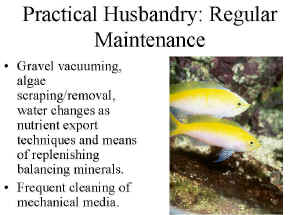
| Regular maintenance is part of the
aquarium experience. Develop and stick with a routine of daily,
weekly, monthly and other longer periodic activities to keep your
system stable, optimized. For instance, simple cleaning, renewal of
mechanical filter media goes a long way to exporting nutrients that
can fuel pest algae proliferation. |
|
Back to Pt. 1 ALGAE can
be your friend 3/14/08 Dear Bob Fenner, <Charles>
Accept greetings from Cameroon. It's my pleasure to connect with
you. I came across your information on thallophyte a short while ago
and the caption algae can be your friend was attractive enough. That
made me to have a look on the information and it has been useful for my
lectures on Thallophytes. I am a senior lecturer in Phytopathology and
Phyto-toxicology in the Department of Pharmacy and Phytotherapeutics,
University of Yaounde 1, Republic of Cameroon. I just thought of
connecting with you and appreciate the work you must be doing to inform
the academic or reader audiences about your work. <Heeee! More like
massaging folks into learning eh?> We can always share and discuss
ideas in the future. I would like to have more information and some
slides on the beautiful algae. <For academia? Make it known what
you're looking for and I'll send along electronically> Very
best wishes from Charles Fokunang PhD, CBiol, MIBiolSenior Lecturer
Department of Pharmacy University of Yaounde P.O. Box. 33032,
YaoundeCentre Province Republic of Cameroon <Cheers, Bob Fenner>
|
|
New Print and
eBook on Amazon
Marine Aquarium Algae Control
by Robert (Bob) Fenner
|
|
|