|
Related FAQs: Amblygobius Gobies,
Amblygobius Gobies 2, & FAQs on:
Amblygobius Identification, Amblygobius Behavior, Amblygobius Compatibility, Amblygobius Selection, Amblygobius Systems, Amblygobius Feeding, Amblygobius Disease, Amblygobius Reproduction, &
True
Gobies, Gobies 2, Goby
Identification, Goby Behavior,
Goby Selection, Goby Compatibility, Goby Feeding, Goby Systems, Goby Disease, Goby Reproduction, Clown Gobies, Neon Gobies, Genus Coryphopterus Gobies, Mudskippers, Shrimp Gobies, Sifter Gobies,
Related Articles: True or
Combtooth Gobies, Gobioids in General,
/The Conscientious Reef Aquarist
Hover Gobies, Genus
Amblygobius
|
|
|
By Bob Fenner
|
Amblygobius phalaena
|
Genus Amblygobius, the Hover Gobies: Thirteen
species of sand sifting/diggers, too often lost in captivity from
simple starvation and jumping out of tanks. Continuous feeders in the
wild on filamentous algae, various crustacean groups, nematode worms...
Keep in reef type settings with adequate interstitial fauna... And
don't buy skinny specimens!
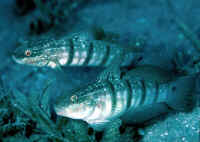
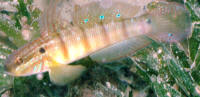
| Amblygobius albimaculatus (Ruppell 1830),
the Butterfly or Tailspot Reef Goby. Indo-West Pacific; Red Sea,
East Africa to the South Pacific. To seven inches in length. Lives
in seagrass beds, sand, broken rubble zones. A pair and an
individual off the beach of Na'ama Bay, Sharm, Red Sea.
http://fishbase.org/Summary/species
Summary.php?ID=6675&genusname=Amblygobius&
speciesname=albimaculatus |
|
Bigger PIX:
The images in this table are linked to large
(desktop size) copies. Click on "framed" images to go to
the larger size. |
%20MD.JPG) |
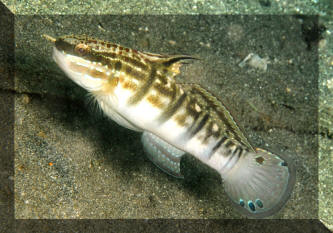
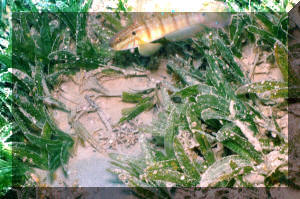
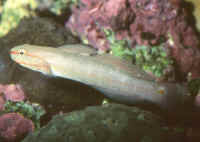
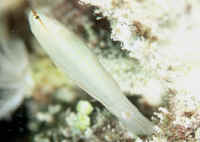
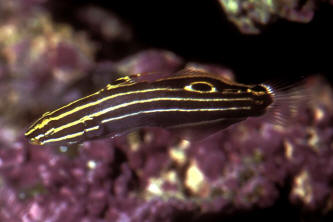
| Amblygobius decussatus (Bleeker 1855), the
Orange-Striped Goby. Western Pacific; Philippines, Micronesia. To
three and a half inches in length. One in an aquarium, the other in
Queensland, Australian waters. |
|
Bigger PIX:
The images in this table are linked
to large (desktop size) copies. Click on "framed" images
to go to the larger size. |
%20MD.JPG) |
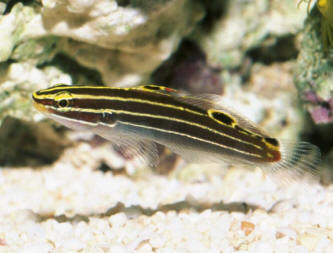
| Amblygobius hectori (Smith 1957),
Hector's Goby. Indo-West Pacific, including the Red Sea, to
Micronesia. To two and a half inches long. Aquarium photo. |
|
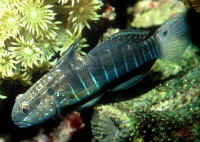
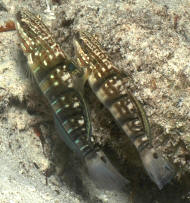
| Amblygobius phalaena (Valenciennes 1837),
the Banded Goby. Indo-Pacific; Philippines to the Society Islands.
To six inches in length. Black spot on first dorsal fin. One
off of Heron Island, Australia's Great Barrier Reef, and a pair
in Raja Ampat, Indo. |
|
Bigger PIX:
The images in this table are linked
to large (desktop size) copies. Click on "framed" images
to go to the larger size. |
%20MD.JPG)
|
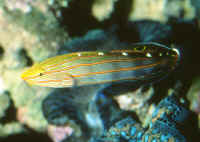
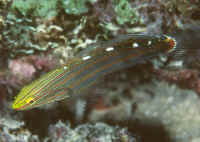
| Amblygobius rainfordi (Whitley 1940),
Rainford's Goby to the aquarium interest, Old Glory to science.
Indo-West Pacific; Philippines to Micronesia. To two and a half
inches. Aquarium, and Australia's Great Barrier Reef
specimens. |
|
Bigger PIX:
The images in this table are linked
to large (desktop size) copies. Click on "framed" images
to go to the larger size. |
%20MD.JPG) |
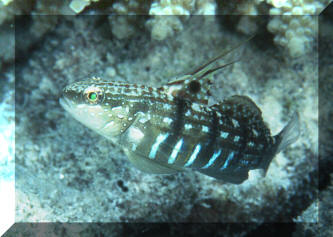
| Amblygobius semicinctus (Bennett 1833).
Western Indian Ocean. To nearly four inches in length. This one in
the Maldives. |
|
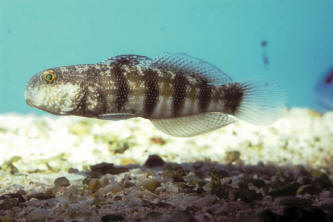
| Amblygobius sphynx (Valenciennes 1837), the
Sphinx Goby. To about seven inches in length. Indo-West Pacific;
Red Sea to Micronesia. Aquarium photo. Similar to A.
phalaena but has more cheek scales and lacks the dorsal
ocellus. |
|
Don't Allow Your Amblygobius to Jump Out! Or Get Too
Thin!!!
| The most common cause of loss of Amblygobius (with
jumping out a distant second!) is starvation. Shown is a too-thin
A. hectori. Get these fishes in a good "index
condition" (round, not sunken in) and feed them continuously.
Best with large, established reef systems, a refugium, and plenty
of small living items to choose from. |
|
|
|


.JPG)