|
Pike-characins, family
Ctenoluciidae (Excerpted from: Extreme Characins Part 1:
Hatchets, pikes, and other lethal weapons by Neale
Monks)
Like the hatchetfish, the pike-characins are
peaceful South American characins that inhabit open waters and
stay close to the surface at all times; but there the
similarities end. These fish are schooling predators that view
smaller fish as food. They are fairly frequently offered for sale
as oddball fish though, and in the right aquarium, can make
excellent community fish. As is often the case with specialised
predators, these fish are not aggressive at all, and actually
want pass their time unnoticed by other fish so that they can
more easily creep up on their prey.
Just as with hatchetfish, when scared, these
open water fish instinctively jump or dash about the tank. While
that may be helpful in a river or lake, in an aquarium these fish
can end up damaging themselves. Injuries to the snout in
particular are common and often become infected, leading to the
death of this fish. Keep pike-characins either among their own
kind or in a community tank with peaceful tankmates such as plecs
or large barbs. Besides being easily frightened by aggressive
tankmates, pike-characins will also panic if the lights come on
too suddenly over the aquarium, especially if the room is dark.
On the other hand, floating plants seem to calm these fish down,
and tall plants around the edge of the tank, such as
Vallisneria and Amazon swords, help to keep these fish
from slamming into the glass when alarmed. If you're going to
keep these fish, you do need to plan ahead, and choose plants and
tankmates with care.
There are two genera in the Ctenoluciidae,
Ctenolucius and Boulengerella, between which seven
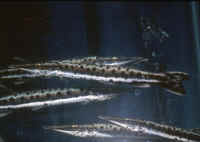
species are known. Boulengerella lateristriga is perhaps
the one most frequently sold, though under a variety of names
including striped pike-characin and striped gar. It is usually
sold at an appealingly small size, around 15 cm/6" being
typical, but this fish can reach a maximum size of 26 cm/10"
when fully grown (reports of larger specimens appear to be
misidentifications). None of the pike characins are 'easy
fish' and the striped pike-characin is no exception. It needs
a large, mature aquarium with excellent filtration and frequent
water changes must be carried out to ensure that the nitrate
levels are kept low. Soft, slightly acidic water is preferred,
and likely essential to long-term success. Certainly, very hard
and alkaline water should be avoided.
Feeding these fish is another headache. In
the wild these fish are predators, taking insects when young and
small fish as they mature. Since all the fishes sold are
wild-caught, weaning them off live foods and onto frozen
substitutes will be a major hurdle. Earthworms, mealworms,
crickets, and other such foods will work as either a stopgap or a
permanent diet, and it is definitely important to get your
specimens feeding properly as soon as they are introduced to the
aquarium. Once settled in, silversides and lancefish can be used
effectively. These fish are crepuscular hunters, meaning that
they are most likely to accept food at dawn and dusk. As with
many other fish of this type, they hunt by sight, lunging at
flashes of silver or white. Tossing a defrosted fish into a
strong current of water within the tank usually does the trick,
by fooling the pike-characin that the target is alive. Starving
the pike-characin for a day or two does no harm if you want to
whet its appetite, but do bear in mind newly imported specimens
will likely not have eaten a proper meal for several weeks.
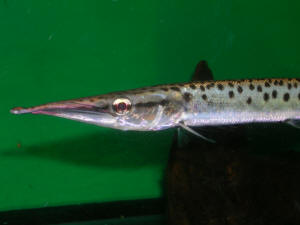
The spotted pike-characin, Boulengerella
maculata, is broadly similar but a bit bigger, getting to
about 30cm/12" in length.
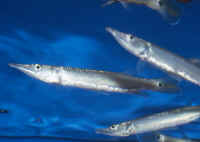
Ctenolucius hujeta is known variously
as the hujeta, the rocket gar, and the blunt-nosed gar (this
latter name on account of its slightly upturned snout). Aquarium
specimens can reach a trifle over 20 cm/8", though wild fish
are said to get to more than twice that size (though as with
Boulengerella lateristriga, some of these giant specimens
may in fact be misidentifications). Ctenolucius hujeta is
silvery-green in colour with a prominent dark spot on the base of
the tail. Water chemistry and quality need to be similar to those
required by Boulengerella spp, but on the whole
Ctenolucius hujeta has proved to be a bit more amenable to
life in captivity, and has even been bred in aquaria.
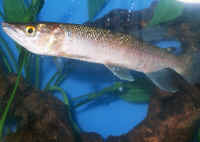
A closely related species, Ctenolucius
beani, is superficially similar but larger species, getting
up to 28 cm/11" in length. It is distinguished from
Ctenolucius hujeta by being covered in dark blotches when
young and small dark spots arranged in neat rows as an adult.
Care is otherwise identical. All the pike-characins are sometimes
sold as freshwater barracudas, though in fact that name is more
properly applied to a completely different family of characins,
the Acestrorhynchidae, a fascinating group of characins of which
more will be said next month!
|
|
Excerpted from: Pocket-sized Pikes; There's something about
these miniature killers that fascinates us. But can they be kept
without mayhem and mass murder? by Neale
Monks Pike characins, family Ctenoluciidae
Pike characins indeed very pike-like in
shape, but like the needlefish they like to form schools and
mostly hang about it midwater rather than hidden among the
plants. Boulengerella lateristriga is the most frequently
sold species, most often as the 'striped gar'. It reaches
eight to ten inches in length and is strikingly colored, being
basically silvery-brown but with a thick dark band along both
flanks and mottled fins. Soft, slightly acidic water is
essential, and low nitrate levels seem to help as well.
Ctenolucius hujeta, also known variously as the
'hujeta', 'rocket gar', and 'blunt-nosed
gar' is another commonly traded species. It is silvery-green
with a prominent dark spot on the base of the tail.
Basic care for these fishes is similar to
the needlefishes: plenty of swimming space, good water quality,
no aggressive tankmates, and floating plants to help them feel
secure. Apart from small fish, pike characins will happily take
chunky live foods such as mealworms, crickets, and earthworms.
They can be weaned onto a frozen food diet fairly readily. They
hunt at dusk and dawn, and seem to be attracted by a sudden flash
of silver. If you throw a piece of whitebait into a water current
at the right time of day, with the aquarium lights turned low,
with any luck your pike characins will strike. Starving a healthy
fish for a day or two will do no harm and does help to whet their
appetites, but before training these fish in this way, make sure
you fatten them up on live foods for a week or two beforehand.
Newly imported fishes can be very underweight.
Predatory fish, large or small, add an
interesting touch to any community tank, and if you don't
want to feed them live fishes, you don't have to, as most
will happily accept all sorts of substitutes. Indeed, a good
argument can be made for weaning them onto an alternative diet
anyway, not least of which is the risk of transferring parasites
from feeder fish to your pet fish. What makes these pocket-sized
pikes so special are their subtle, stealthy habits and their
sleek appearance. Miniature hunters they might be, but
they're still natural born killers!
|