Part 2 of 3, Back to 1, On to 3
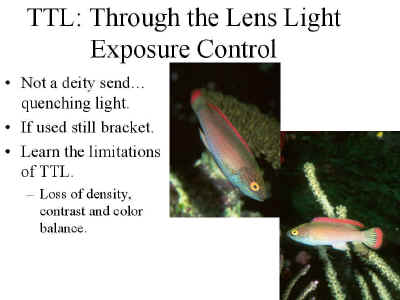
| Many people rely tremendously (okay, exclusively)
on TTL control... I don't and know several other photographers
who "shoot manual" for light control (setting aperture
and exposure both)... how do we "do it"? Practice,
experience, a lot of wasted film and processing... |
|
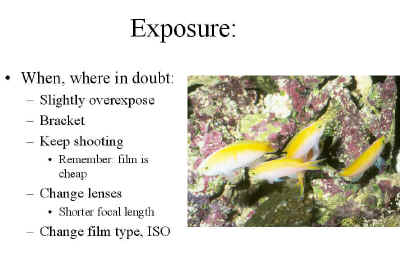
| In actual practice it's better to slightly
overexpose film than to under-... Still, remember to bracket, keep
shooting, change lenses... and possibly film type/ISO. |
|
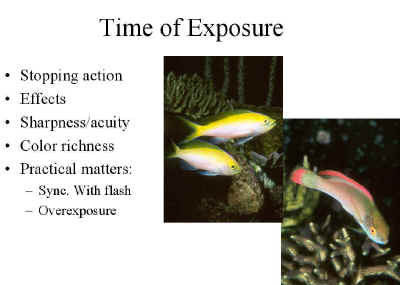
| How long your shutter is withdrawn, exposing the
film on the plane. Important trade offs between: |
|
| Again, trade offs... unless you're aiming for a
dramatic blurred effect, there is an optimum range of settings
time-wise to expose your film... Do check on issues like
synchronization with your flash units (some go to 1/250th... others
not half that)... |
|
|
Huge variability... likened onto women's clothes sizes...
Umm, quality of premium ice creams?
25, 50.... 100, 200, maybe 400 for most all
types of shooting... but film ISO's do go to the
1000's... Give example uses for various types, ISO's.
Dark conditions, tank shots, slow lenses...
|
|
|
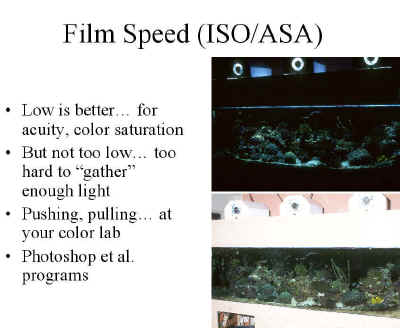
Mutually exclusive desires... fast films are grainier, not as
color rich... but able to stop action, be shot at a
faster/shorter exposure time, with less light... but suffer from
a greater likelihood of over-exposure...
Digital and analog fixes, techniques abound. ICE technology
by Nikon, Photoshop by Adobe... many more.
|
|
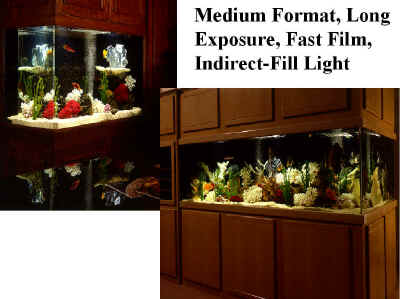
| For "whole tank" shots, faster films,
tripods and bulb releases or timers, outside lighting, longer timed
exposures, faster lenses of shorter focal length. |
|
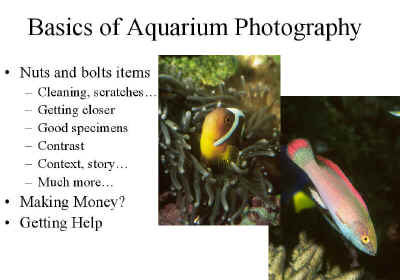
| Many small details go into producing consistently
good aquarium photographs. Here are some of my "other"
ideas on things to look out for... And a few notes on the
money-making aspects of this interest, as well as getting
help. |
|
|
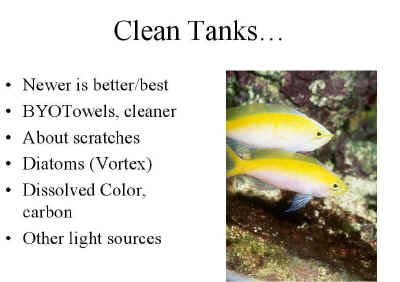
New fish stores, holding facilities, public aquariums, tank tours
where everyone has carefully scrubbed their tanks down in
advance... are what you want. Fine scratches, water marks,
dissolved color are not the photographer's friends.
Try to arrange "after hours" times when outside
lighting can be turned off or down at least.
|
|
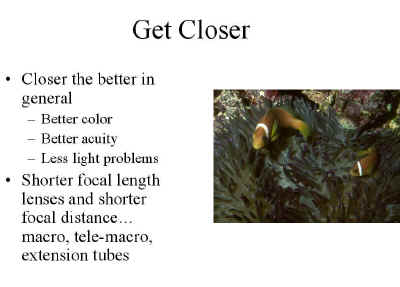
| You want the absolute least distance between you
and the subject... to the point where you mal-influence the animals
behavior. |
|
|
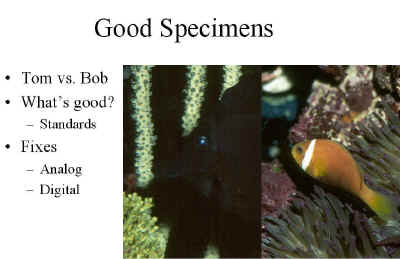
When you think of a handsome paradigm: is it me or Selleck? How
can you tell?
Reference works... personal experience... interrator
agreement.
Post photographic fixes...
|
|
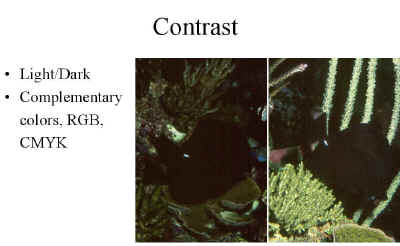
| Must need be able to differentiate the
subject from its setting, background... think, look for these
opportunities ahead of pushing the shutter release. Example of Hans
Joachim Richter, paper covered tanks, cut out, lift panel... where
he planned of photographing subjects. |
|
Click here for Part 3 of 3 of Aquarium
Photography
|
|