|
|
| Home | Marine Aquariums |
Freshwater Aquariums |
Planted Aquariums |
Brackish Systems |
Ponds,
lakes & fountains |
Turtles & Amphibians |
Aquatic Business |
Aquatic Science |
Ask the WWM Crew a Question |
| Please visit our Sponsors | ||||
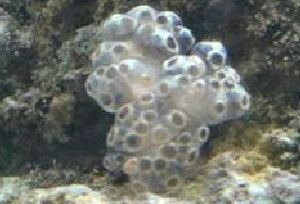
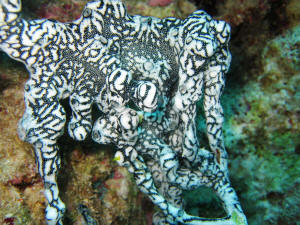
Polycarpa aurata 6/5/06 Hi Crew My tank is 100 gallon with 80 gallon refugium 1.5 years old. The parameters are all ok I just acquired 7 Polycarpa aurata <Neat animals> and I put it in my refugium full of kelp (the brown one) <More, much more than one...> and the light is not intense. Everyday I shake the kelp so the detritus fall on them and pour the Nanochloropsis. I heard people says it is very difficult to maintain in aquaria. So my question is how long the life span of this species actually?. <In the wild, years> I've also read the Steve Tyree's comments about the zonal required for the tunicate <Not "the"... there are many species of ascidians, of highly differing habitats...> and I think my refugium is semi cryptic. <Polycarpa spp. are not cryptic by any measure...> And also I've consulted Gretchen Lambert about this species and she said it is not difficult to maintain them so now I'm confused. So, today in the morning several of them didn't want to open the excurrent opening and I saw the mucus around the body, is that a sign that they will die? Is this species are highly toxic? <Not necessarily and not as far as I'm aware> Thank you for your input and your help Best regards Ignatio <Perhaps a search of literature at a large college library... Bob Fenner>
Tunicates? Hi Gang, <Brandon> In doing my homework before buying a tunicate, I see that various members of the board have a low opinion of keeping tunicates. This is understandably so, but I have a caveat to ask about. What if I am feeding live phytoplankton regularly to my tank for my small clams and corals? The mix I use has 5 different live varieties of phytoplankton in it. Would this cause you to change your mind, or should no one keep them no matter what suspension foods are fed? Thanks! <These ascidians are really neat organisms... and a blessing to have "just show up" in well-set-up and maintained reef systems... Most feed on more than small unicellular algae... but... worth trying to keep individuals, a colony in a well-established, otherwise un-crowded setting... with a good sized healthy refugium tied in. Bob Fenner> Dismal survival: Lollipop "coral" Tunicate 3/14/05 Dear WetWebMedia, I've been trying to find information of blue tunicate: http://seadwelling.com/v-web/gallery/MarineInvertebrate/bluetunacate080904 . However, I have not found its scientific name or any information of this species. Do you guys anything about it? Thanks a ton in advance, Robertino <commonly ascribed to the genera Oxycorynia or Neptheis, this tunicate is referred to as the (blue) Lollipop "coral". It has an absolutely dismal rate of survival in captivity. It escapes me why the organism is even collected or offered for casual hobby use (versus collected for scientific use, study or at least species specific home tanks with focused care). Anthony> Sea squirt hitchhiker on LR Dear All <Peter> Am a new
hobbyist here in England. Your pages are by far the best
I've come across. Brilliant, educational and encouraging
stuff. <Glad we have found each other> Now the question - hidden
behind a (cultivated?) soft coral I bought recently is a sea squirt -
beautiful and interesting - but should I dispose of it, due to toxicity
etc, before it dies a quick death, as your FAQs imply, or should I see
how it goes? <I would definitely leave it be... these ascidians are
almost never a problem in just "popping up"... and a good
sign of your good husbandry that they do so> Would love to keep it,
but not if I risk a disaster. Yours |
|

|
Features: |
|
| Featured Sponsors: |