|
|
| Home | Marine Aquariums |
Freshwater Aquariums |
Planted Aquariums |
Brackish Systems |
Ponds,
lakes & fountains |
Turtles & Amphibians |
Aquatic Business |
Aquatic Science |
Ask the WWM Crew a Question |
| Please visit our Sponsors | ||||
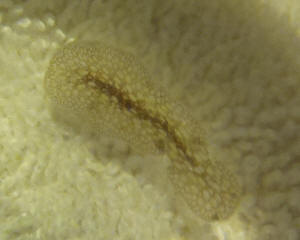
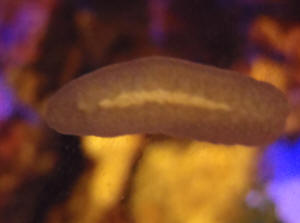
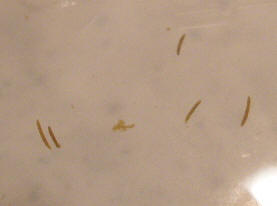
Poly clad flat worm... using WWM
2/23/16
flat worms, human contact/hlth. 10/10/11 Coral/flatworm Toxin Dangers to Humans?
2/15/11
Tank not able to support coral life 3/4/04 Good morning, I will try to keep this short and thank you in advance for your assistance. <Good morning Paul. Adam here, glad to be of assistance.> Background My 120 gallon reef tank ran for a few years with success, supporting softies, LPSs, SPS, bugs, fish etc. until a dreaded flatworm crash that killed just about my entire tank. Unfortunately, I did not have a skimmer that was able to deal with the toxins from the millions of dying flatworms and consequential events. <Was this crash incidental or induced (Oomed, Flatworm exit, quinine drugs)? If it was induced, you have the combined issue of the flatworm toxins, the rotting flesh and the medication. This can be quite a stressful combination! Powerful skimming, water changes and carbon can help ameliorate these problems.> So, I tore down the tank treated everything with Melafix and set it up again - that was about 8 months ago. New sand and water but same live rock (if I can still call it "live"). I did not get a new skimmer at that time - BIG mistake. My tank has run for the 8 months being able to support only fish with little evidence of life otherwise. I would buy snails, a frag or two, bugs, and everything would die. Algae everywhere (hair and Cyano), despite my attempts at growing macros, poly filters, etc. <Why Melafix? This is an "herbal" (read: questionable) treatment for fish disease, and my impression is that it is really only meant for FW. Your ongoing problems probably have many causes. Lack of good skimming may be contributing, but you probably also did significant damage to the life on your rock.> Today I have a new LifeReef skimmer that has been up and running for about 6 weeks. Since then, I have seen dramatic improvement - worms, virtually eliminated the Cyano, great reduction in algae, and even some zoos I didn't know I had are coming back. My parameters are (Salifert): 1025 salinity, 8.2-8.4 ph, 10 DKH, 78 temp, phosphates undetectable, nitrates undetectable, calcium 300. I am working on getting my calcium up. Lighting consists of two 175 watt 14K halides with two 96 watt actinics. My circulation is via sea swirl and closed loop. <The skimmer is a nice addition, and it sounds like a nice set-up. It is a good sign that things are recovering.> Problem/Question I purchased a few frags on Saturday (Acros, Hydno, cap, torch, xenia, zoos). As of this morning I have lost the Acros, cap. The Hydno and torch do not look good. The zoos look fine. With the exception of my calcium, my parameters seem good. Can you tell me, is it possible that I have left over effects from the whole flatworm thing? The Melafix?, Can their be some pathogens or bacterial problems? Toxins? <Could be some combination of all of the above. You have moved right into some of the most finicky corals. Acros, torch, Hydnophora and xenia are all very sensitive to a wide variety of water quality issues. Zoanthids (zoo's is an improper contraction... If anything "Zo's" would be less confusing with Zooxanthellae which begins "zoo". Sorry for the pet peeve rant.). You can rule out pathogens. Coral pathogens are extremely rare, selective in what they infect and generally opportunistic on already stressed animals. Toxins are a possibility and could be from your previous treatments or the flatworms.> At this point I am very frustrated and confused. Would a UV sterilizer help? Thanks again and sorry for the length but I figured you needed to understand the whole story. <No worries about the length, the more details, the more likely we will find a solution. UV will not help since this is not a pathogen. The lack of life shows that at very least your tank has to be built back to "maturity". It could take a long time to accomplish this since most of the life was killed off. You may be best served by replacing all or at least a large portion of your rock to get back on track.> Paul <Best Regards. Adam> Acoel flatworms - red/rust-brown "Planaria" 8/26/04 Your Book of Coral Propagation states that these aren't predators, <well... they are not predators on corals> however, One of my fish has been digging into the sand in my tank and has uncovered something, which on the glass looks exactly to the tip like http://www.wetwebmedia.com/WormPIX/FlatwormPIX/flatworm_city_id.JPG . <hmmm... the Acoel flatworms of notoriety do not live in substrates but rather live on them> My problem isn't the terrible infestation of them but rather my corals. I have 3 Colt Corals which have fallen very very ill (Barely pink color now, formerly orangish, hanging over on their rocks, flat on the reef) I think it is the Planaria because the corals have spots at the base of them that resemble the Planaria on the front glass/sand floor. <the only way these flatworms can be of any harm is if they live in great numbers upon the coral and physically shade the coral from light. You likely need to look for another culprit here> My question is, is there any way at all to save my corals, I wish I had a picture to better describe my problem. <the issue is much bugger here, I suspect. And even if the worms were to blame... they could have been avoided with a proper quarantine of all new livestock. Please do read up and practice this for all new acquisitions> They only seem to be attacking the colt corals. Mushroom corals around them are thriving, as well as Hermit crabs, fish, snails, etc. Thanks in advance for any assistance. <do consider a series of large water changes in the meantime (25% or greater... 2-3 times in the next 2 weeks) to stimulate the coral and dilute possible water quality issues. Best of luck, Anthony> Planaria In My Refugium - 03/22/06 Hi folks. <<Howdy>> I have a Chaetomorpha refugium, bare bottom with lots of pods and also lots of red/brown Planaria on the walls, detritus and within the algae. <<Sounds like my refugium about a year ago.>> Should I be concerned? <<I never was...these pest are overrated in my opinion. Yes, they can become a "plague"...but are usually easily controlled with aggressive skimming, diligent feeding, etc..>> This refugium is fed unfiltered (no sock) raw water and then overflow into the sump and then pumped back to the tank. <<As it should be.>> I have not vacuumed this refugium in fear of taking away the pods. <<Understood and agreed...>> Is Planaria a dangerous thing in a refugium. <<Not in my opinion.>> My main tank (180) has few but I am worried that they can be harmful to my corals. <<There's some concern if they reproduce to the point they drape/shade the corals...but this is usually a result of lazy/sloppy husbandry. Aside from the other control methods mentioned, you can siphon them from the display when performing water changes.>> What do these critters thrive on? <<Neglect...but (more) seriously, an excess of organic material.>> Should I vacuum and add a filter sock to the fuge, limit nutrients? <<Mmm, no...defeats the purpose of the 'fuge.>> I realize that in getting rid of Planaria there will be collateral damage and I should expect population of pod to grow back up. <<Using chemicals/poisons is not the answer in my opinion.>> The tank has been running for about three months. <<Opinions/methods vary...please have a look here and among the indices in blue: http://www.wetwebmedia.com/flatworms.htm >> Thank for the immense help you have shared for the past three years. <<A collaborative effort...I'm thrilled to do my small part! Regards, EricR>> Flatworm Obliteration 12/24/06 Good Evening everyone, <Evening> I've got a problem...one that can't be solved with yelling anyways. <The toughest type.> I have flatworms....and I have for quite some time. At first I used Salifert's Flatworm Exit, <Personally not a fan of this product> and it worked, to a degree. However, against my vocal discharge, they came back. <They usually do.> Then after reading the WWM forums, I decided to get a yellow wrasse. While I knew I certainly had the ability to handle his bioload and he is quite a pretty fish, he happens to be as ineffective as me when it comes to removing these pests. <Better stuff to eat.> Here in a nutshell is my tank so that you have some background info 100g long (5' long) 120 lbs Live rock 14g sump 14g refugium ASM G2 Skimmer Phosban Reactor w/ half carbon half Kent Phosphate Remover Nitrates 0 Nitrites 0 PH 8.3 Salinity 1.025 Calcium 425 So now my question. What can I do? Is there anything short of hypnotizing myself and learning to love my red flat bodied buddies left? They apparently love me, but I'm afraid the relationship is quite one sided. Any help would be appreciated. <Best bet is to just accept them into your life. Beyond manual removal during water changes and keeping nutrients as low as possible not much to be done. Their populations tend to wax and wane over time.> Regards, Clay <Chris> Pseudoceros ? Dear Bob, My reef tank is now in its 4th month and I will soon add a Heteractis crispa anemone, blue leg and scarlet hermits, turbo snails, cleaner shrimp, mushroom anemones, and later some fish. The mysterious "tube anemone" or coral or ? colony I asked you about earlier has multiplied in a cluster - not to any other rocks - just within a 6 square inch area. The largest now has a 3/4 inch disk and 1 1/4 inch diameter including the tentacles. They are now brown rather than white opaque since I got the 500+ watts of VHO going. Someday I'll find out what I have - as I said, they look nothing like the pictures of Aiptasia (I've had my share of them but with your advice got rid of them for now). They look more like individual heads of a coral cluster. <Maybe, indeed, a coral after all!> Now I have another uninvited Live rock volunteer that looks like Pseudoceros splendidus but without the red border or any border, this guy is solid black. He is about 1 1/2 inches long and 3/4 inch wide. There is another one about 1/2 inch long. They come out only at night and roam around the rock work. I read with horror the flatworm FAQS. Is this a friend or foe? Will they multiply and cause a plague? <Likely not a friend... If it were me, I'd gingerly vacuum it/them out with a piece of "rigid tubing" attached to a siphon> Also, a second hand rock came with numerous lovely little 1/4 inch or less fringed polyps that fluoresce brightly under the actinics and even a bit after the lights are out. <Neat> Very very tiny white (lice like) animals crawl around some of the rocks at night. (I am really into this hobby and want to know all I can about what I am keeping). <Take a cruise through the Aquarium Frontiers archives... Link to same on the WWM site's link pages if your search engine doesn't pull up... for articles about marine invertebrates associated with live rock, substrates... These are likely some sort of amphipod crustacean...> My water is perfect: 0 on all chemistry, 8.2 pH, Ca, KH, Spg., all at ideal levels. Only thing not perfect is temperature which varies from 78.5 in the morning to 82 after a day of lights and wave makers on full daytime cycle. Will this temp. problem be ok for my longer range plans for corals and a variety of fish? <Shouldn't be too problematical... considering the rest of the system> The Turboflotor 1000 effectiveness is doubled or tripled after a put and old air pump on the venture tube. <Ah good. Bob Fenner> Flatworm Problems? Mr. Fenner I have what I think is red Planaria, (HELP!) it started 2 weeks ago and they a multiplying rapidly. I have been trying to siphon them during a water changes but this does not seem to slow them down. My question is are they dangerous to the fish or corals of my reef and what type of fish will eat them? A few people have told me that a six-line wrasse will do the trick.?? Any help will be greatly appreciated!! Thanks in advance. Dave Brunsmann <<JasonC here, Bob has gone diving in the tropics. Hmm, flatworms... complicated because, well... there are just some many of them, of which any number may be red, red-brown, etc. Some are indeed worthy of concern, others are not and this same variance applies to the critters that eat them. Does a 6-line wrasse eat flat-worms, probably. Will a 6-line wrasse eat your red flat worms - flip a coin. Best to keep up the observation, especially of your corals and fish, although less so with the fish. Read through the FAQ on flatworms on WWM - http://www.wetwebmedia.com/flatwormfaqs.htm and you'll have some more ammo. Good luck, J -- >> Rings on fingers and Flatworms on Leathers Dear all, I recently purchase a toadstool (Sarcophyton) possibly glaucum, soft coral, it has huge extended polyps and looks really healthy. However, under close inspection there are a number of small 1/2 inch by 1/4 inch patches of transparent red speckled areas. Out of these areas gossamer like tendrils appear and stretch to about 6 inches and then retract. I would like to know what these are and if they are a danger to the otherwise healthy looking fish and corals. One of these patches has now appeared on another leather coral which was within tendril reach. Please help ? Many Thanks, Jon Pinfold <hmmm... flatworms (predatory and incidental) are quite common here... but the "tendrils" are strange. Do you think they could be fine strands of mucus from the occupation of a flatworm? If not, we may need a clear image of the area/organism. Best regards, Anthony> - On Mandarinfish and red planarians - <Good morning,
JasonC here...> First, thanks for maintaining this excellent site.
Its a truly great resource. <I'm glad you find it useful.>
I've read most of the Mandarinfish Faq's and just have one
question left that I can't seem to find an answer to.... I have a
tank that should be able to sustain a Mandarin.(75Gallon, 115lbs
liverock, 4" 1mm aragonite deep sand bed, 30gallon fishless
miracle-mud Chaetomorpha refugium with another 20lbs liverock upstream,
20 gallon 4"deep sugar sand aragonite raceway full of Halimeda
algae plumbed upstream as well) Both the refugium and the raceway are
overflowing with amphipods. My problem is that I have a decent
population (not really a plague) of red planarians. (the population is
small, sparsely covering only a foot or so of tank during the periodic
blooms, then they die back.) I have read that Mandarins eat some types
of worms as well as amphipods. Would a Mandarin eat them, and if so is
that a bad thing for him? <If I were a mandarin dragonet and given
my choice between flatworms and amphipods, I'd eat the amphipods
first. That being said, there's just no way to guarantee the fish
will do one or the other.> I have read that the planarians are
toxic, and wouldn't want the Mandarin to poison himself. <Hard
to say for certain... there are many, many types of flatworms that are
also red.> Getting rid of the planarians would take only one extra
pump, I think, but it would be mounted in an awkward place, so I'd
like to leave them alone if I can. -mat |
|

|
Features: |
|
| Featured Sponsors: |