|
|
| Home | Marine Aquariums |
Freshwater Aquariums |
Planted Aquariums |
Brackish Systems |
Ponds,
lakes & fountains |
Turtles & Amphibians |
Aquatic Business |
Aquatic Science |
Ask the WWM Crew a Question |
| Please visit our Sponsors | ||||
AEFW... chem., bio. controls 1/22/14
Fish dying after using Flatworm
Exit 3/26/12 Nutrient Level Question, Flatworm control f' --
06/26/10 AEFW Problem... they said our flatworms were no fun --
11/27/09 Flatties and I don't mean Halibuts
11/27/09
Flat worms, control 11/4/09
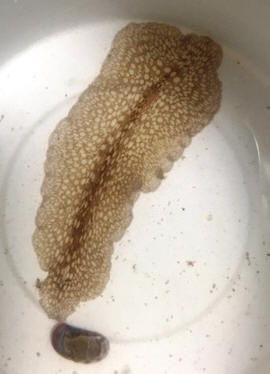
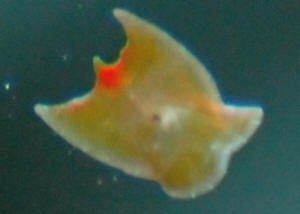
Flatworms, contr. -- 9/24/07 Hey guys, I have the dreaded rust colored flatworms. Bad. I have tried ordering the blue velvet Nudibranch but they either arrive dead or disappear in the tank after a few hours. I stopped trying that after 3, because they are beautiful sluggy creatures and I was tired of sacrificing them for nothing! So the flatworms have been multiplying. I will syphon them out with an airline hose and they are back in full force a few days later! So here's the deal.... I am moving my tanks (probably combining them into the bigger one) and was thinking this could be a good time to try and eliminate my flatworms...? Is there something I can do to get rid of them during the move? I am moving the tanks up the road. All of 900 feet. Wish me luck. <These flatworms are a bit like algae in that they're harmless by themselves (though not aesthetically pleasing). There is something called Flatworm Exit that will kill them. However, I personally strongly advise against using it since these worms are toxic upon death. So long as they're alive, the toxins stay inside them. After they die, the toxins are released. I would just keep doing what you're doing (siphoning them out). Also, increasing water flow and protein skimming should help too. But I wouldn't be surprised if their populations died down after the move. A change in environment can easily change the "balance of power" to their disadvantage. If not, again, I'd just keep doing what you're doing, increase water flow and skimming. For Mr. Calfo's take on the worms: http://www.wetwebmedia.com/pestflatwrmanthony.htm> Carrie in Colorado <Best, Sara M.> Re: pests/ Bob's email address, pest flatworm control 7/20/07 Hey Bob, hope all is well in Cali. I sure do miss the beach. You're so lucky to live there!! <Sara M. here now. I hope I can help...> I keep trying to get my hubby to get a superintendent job at a golf course by the beach, but no luck so far!! I have a technical question for you. Every month we meet here in Phoenix and swap frags. This last frag meet, we had a few tanks with red bugs, Monti Nudis and now Acro eating flat worms. Do you know of any treatments for the flat worms that will not kill the Acroporid? <There's what seems to work for at least some people: 1) Remove all the Acropora colonies and put them in quarantine (even the ones that don't yet appear to be affected. The reason you have to remove ALL the Acropora colonies is because you'll want to starve to death any AEF that might remain (or hatch) in the tank after you remove the Acroporas (this usually takes at least five days). After all, there's little point to treating an affected coral only to return it to an infected tank. 2) In a second quarantine tank, medicate the corals with Levamisole (available from a local vet or possibly a livestock and feed supply store) for about 6 hours or so. 3) Use a smaller MaxiJet (or other small powerhead) to blow the worms off the coral. 4) After you've blasted off all the adults, look very carefully for any eggs. If you find any, scrape them off with one of those plaque scrapers you can buy at a drug store for your teeth. 5) After all this is done, return the corals to the first quarantine tank. 6) Repeat steps 2 through 5 until you stop seeing any worms or eggs. Of course, this is going to stress out your corals to no end. But there really isn't any other way. You might lose some of the colonies to stress. But you're likely to lose them to AEF if you don't do anything.> There is a fellow reefer in town that has these and has Acro colonies that he is thinking about throwing away because he hasn't found a treatment yet. <Please tell him not to throw them away just yet. Do try the above. I know it's worked for some people and it's worth a shot.> I figured I would ask the expert!! Any help you can give our group would be helpful. <You might also want to try and contact Marc Leverson. I know he's been successful fighting AEF in his own tank using the method above. Also, some people claim to have some success with heavy dosing of Flatworm Exit (in quarantine) in addition to or instead of the Levamisole. If someone is thinking of throwing out infected corals, you might as well do some experimenting to see if something works before tossing them. Good luck! And do let us know how things work out. :-) Best, Sara M.> Pests/ Bob's email address, EricR's go at flatworm control - 7/23/07 <Hope that's not me being a pest!> I have tried emailing Bob a few times with an email address he has sent things to me from previously. My mail keeps getting returned. Here is what I sent. Hopefully I can get an answer for the WWM crew!! <Ah, yes> Hey Bob, hope all is well in Cali. I sure do miss the beach. You're so lucky to live there!! <Agreed> I keep trying to get my hubby to get a superintendent job at a golf course by the beach, but no luck so far!! I have a technical question for you. Every month we meet here in Phoenix and swap frags. This last frag meet, we had a few tanks with red bugs, Monti Nudis and now Acro eating flat worms. Do you know of any treatments for the flat worms that will not kill the Acroporid? <Mmm, best for me to refer your query to SaraM here... and thence to others who are much more active re. You have read here re: http://www.wetwebmedia.com/pestflatwrmanthony.htm and the linked files above?> There is a fellow reefer in town that has these and has Acro colonies that he is thinking about throwing away because he hasn't found a treatment yet. I figured I would ask the expert!! Any help you can give our group would be helpful. <Be chatting! Bob Fenner> <<I've had issues with Red Bugs and Monti-eating Nudibranchs. The Red Bugs were more or less "cycled out" with a bit of patience and possibly some help from a few small wrasse species. The Monitpora-eating Nudibranchs were more problematic and required removal of their food items to eradicate. I've been fortunate not to have had to deal with the Acro-eating Flatworms, I have heard they are more resistive to the usual "Flatworm treatments." Here's a link to a discussion forum on RC that may help where folks post some differing solutions/levels of success against these pests (http://www.reefcentral.com/forums/showthread.php?s=&threadid=756327). Cheers, EricR >> Catching a flatworm 3/14/07 Hey there, <Hello!> I recently discovered what appears to be a flatworm in my tank. When I first saw it, I wasn't quite sure what it was, but had my suspicions and looked for info on the web. I came across your site, saw the attached pic, and pretty much confirmed that what I have is the same thing. I believe it came in on a large piece of live rock that I added about a month ago, and I just saw it for the first time last night. I want to get rid of it, but it seems to stay buried within a large piece of live rock whenever the lights are on. <Pretty typical> When my moon lights are on, it sometimes gingerly ventures out. How can I catch this thing when I can't really have any lights on? <Reddish light outside the tank... you'll be able to see, but the Platyhelminth won't...> If I try a flashlight or something, it quickly disappears back into the rock. Are there any predators? Any traps of some kind? Any advice is much appreciated. Robert - <Best to have a siphon ready to go... Bob Fenner> Looks Like We Have Flatworms 1/15/07 Hi all, <Hi> It looks like we might be getting a breakout of flatworms...they appear to be a form of Pseudoceros (brown to purple in color with a white line down the middle, speck of orange approximately 1cm). We've noted about 7 of them across the bottom rocks of the tank, however, I'm assuming for every one we see soon we will see 2-3 more. <At least.> As I think we caught this in early stages what do you suggest we do? I've read some wrasse CAN eat the worms, however, with the few in there, I doubt he'd spot and attempt to eat them. <Low priority food, if there is something better to eat in the tank they usually will and ignore the flatworms.> I've read some pretty awful experiences with the use of Worm Exit. <Toxic.> I attempted to remove two of the worms to show to my LFS. Almost immediately my bubble coral emitted/shed some brown "stuff". Not sure if this was due to potential noxious worm or something on my hands or just irrelevant. <Probably irrelevant.> Going to buy a siphon and attempt manual removal for the time being, but these little suckers stick to rock pretty well and I don't want to foul the tank. Please help. Scott L. Davis <Best that you can do is go with the manual removal. This should keep their population under control, but it is nearly impossible to eliminate them from the tank.> <Chris> Flatworm Treatment for a Refugium? Hi gang: << Hi there. >> In my fishless refugium, I'm currently marveling at the reproductive powers of the rust red planarian. I've read the usual suggestions about predators (mandarin gobies, dragon wrasses, leopard wrasses). And upping the flow isn't an option because I'd either chop the fauna to bits with a powerhead... or run the 'current' through the tank too quickly for the little critters to reproduce with a more powerful return pump. Ideally I'm hoping to find is something which would go for the planarians while being either uninterested-in or incapable-of catching the amphipods and copepods that are the refugiums reason-for-being. << Well that is tough. >> Can you think of any kind of 'magic bullet' in terms of an crab/shrimp/crustacean (even if it's a generally non-reef safe creature like an arrow crab) that might work in this segregated area? I'm even willing to try a 'best guess' and report back on the results. . . << In that case. Cut the lights for about 4 days. Your algae won't like it, but will recover. The Planaria on the other hand... the really don't like it. Otherwise I too would recommend a wrasse. >> Chuck << Blundell >> Acoel Flatworms 2/9/05 Sorry that I'm asking you about flatworms because I know the issue is covered well on your site. But, I think my case is kind of unique. I have a 12 gallon nano-cube which contains invertebrates but no fish and I do not plan on having fish. I recently finished cycling and have a couple of mushrooms, a small star polyp frag, and a couple others. I'm taking my time on this one. <Ah, good to hear> Sometime during the cycling however, I got a mega infestation of red brown flatworms and they're all over the glass, the rocks, etc. <Do try to prevent these from even entering the tank by strictly quarantining all new livestock in a bare-bottomed QT in advance> I understand they thrive in high nutrient levels (i.e. a cycling tank). My question is, since I can't add a mandarin or other fish which preys upon them, how should I rid myself of these buggers? <Strong water flow and large frequent water changes. I normally do weekly 100% water changes on my nano (have done so with small reefs for over ten years). Superb water quality, no supplements needed usually, fast coral growth, etc> I'm afraid to scrape the algae off my front glass because I don't want to kill any and pollute my water with their poisons. <Not that big of a deal. Use airline tubing for a slow siphon instead if you like> So basically I haven't been able to see my tank for a while, and I have no idea what to do with these things. I've been waiting patiently for them to naturally wane but it's not happening. Should I transfer the livestock to my other reef tank and then go through a week or so without lights to kill them? <It really is not likely to work> They have symbiotic algae do they not? Please help. Thank you SO much. Chris <No worries... one month of large weekly water changes while siphoning them out and strong water flow will do the trick. Anthony> Flatworm control 2/10/05 Thank you for your swift reply, but I would just like to know a little more about these 100% water changes. Do you do this all at once? <Yes> I'm sure it wouldn't be too stressful as long as temperature and salinity were kept very close... <Correct> ...but I never thought it was a good idea to do such a large change at once. <Hmmm... do consider how many of our inverts come from intertidal region which get exposed to baking sun, rain, etc for many hours> Do you do multiple changes over the course of the week? <Once weekly mate> I am very interested. I rely on the water changes to maintain simplicity in my nanos, as I feel the salt mix provides most of the necessary elements so long as I am diligent with my changes. <Very much agreed :)> I am quite intrigued. Please enlighten me. Thank you, Chris <Kindly, Anthony> Hyposalinity and flatworms Hey guys, <Hi there> had a quick question. I have a few frag tanks that have flatworms, these tanks do not have substrate, I don't like the idea of using chemicals, the flatworms are in the grates I use to hold the frags as well (the tanks are pretty large). I was wondering if I could blow the frags off, remove them, drain the tank, and fill it with freshwater to kill these blasted things. After an hour, I would drain it, rinse it, and refill with system saltwater and put the frags back, problem solved. But, I have heard that beneficial bacteria build up on surfaces, these would also be subject to death by hyposalinity, would I be looking at a potential Cyano outbreak if I did this? <Worth trying... and possible algal/Cyano troubles... have you already experimented with fish/crustacean predators here? Bob Fenner> Thanks for everything you guys do Flatworms in Marine Aquaria 9/1/05 Hello, <Salutations> I wish to thank you for all the wonderful information you've provided me in the past, it's saved me, my pets, and my wallet many times over. <Ah, good. Welcome> I'm writing today because I recently made a new purchase, just this past Friday of a beautiful Zebrasoma desjardinii. He's around 3 inches nose to vent. I've learned, albeit the hard way, to quarantine all new arrivals so I pulled out and cleaned my old 30 gallon tank. I've lost fish in QT before, probably because of water quality issues, so I decide to just bite the bullet and bought 30 lbs of live rock for the qt, and 20lbs of live aragonite sand. I installed an old sea clone skimmer, heater and a Rio powerhead. The desjardinii will be the last vertebrate addition to my 180 gallon reef tank that's been running for about 9 months. Trying to get to the point, sorry, anyway, today I noticed flatworms on the back top of the glass, spreading rapidly. The desjardinii seems fine, eating and grazing along the rocks and feeding well- is he in any danger from this? <Not likely> Also, when I move this guy, is there the possibility of transferring them to my reef? <Not if you're careful, use an intermediate pH-adjusted freshwater dip/bath> The flow in the reef is pretty strong- 4x800 gph powerheads with swirls and a 1500 gph return pump that's tee'd off to two returns, an Aquacontroller controls the powerheads to randomize the flow a little. I've seen a couple free swimming flatworms in my refugium from time to time, but I keep a school of Pseudanthias dispar in the main tank that seem to chase and devour anything that is free swimming. I had planned on putting the 30 lbs of liverock from the QT into the sump of my main display, but only if the flatworms won't spread into the main display- you think they would? <Very likely so... with this move> Water quality is pretty high- ph 8.29 at the end of the photoperiod, 8.17 in the morning, sg is 1.025, calcium is 370, dKH 11.2 non ph adjusted ORP is 358, I don't use ozone. No ammonia, no nitrite, nitrate is probably present, but I can't detect it. I do 2x50 gallon water changes every month with a 6 stage RO/DI unit- is the flatworm infestation in the QT tank related to the newness of the tank? <Yes> Should I be concerned for the Zebrasoma? <Mmm, no... not much re these worms> Would leaving the QT fallow after the fish is put in the display, and not introducing food cause the flatworms' numbers to be reduced to an acceptable level? <Likely so... but to zero?> How long would something like that take? <Months> Should I not use the rock in the QT, it's the only possible source. It would be a shame, but I'd rather lose the rock than have an infestation in my display. Anyway, sorry, this got a lot longer than I anticipated, I'm sure you get my point. Any information you can provide is greatly appreciated. I do have a small strip light on the QT, it's maybe 18watt NO, and they are concentrated around the center of the strip in the back top of the tank. The flatworms seem to be of the species Convolutriloba retrogemma, at least they are most similar in appearance, it's very difficult to tell. Thanks, Aaron <Most such "flatworm" infestations are transitory, not real trouble... should just be ignored. Please read here: http://www.wetwebmedia.com/flatworms.htm and the linked files above. Bob Fenner> Getting rid of Flatworms 9/5/05 Hi Bob and team.....one of my display tank systems ( 12 aquariums) got hit by flatworms a while ago....I increased the flow, and made sure the water quality was good...they abated a little, but still present. I have emptied out the system, and plan to redecorate soon....Question is....I have a few hundred kilos of good gravel, and I suspect they are still living in it...I want to reuse the gravel...would be shame to throw it away.....If I rinse the gravel well in freshwater....will it kill them??....or should I soak in water treated with a dose of Formalin, and then rinse really, really well before re-using?? regards JD. <Freshwater rinsing will likely "get rid of them", the formalin addition definitely will... Do use gloves, with good ventilation (outdoors is best) if you go the latter route. Cheers, Bob Fenner> Re: Getting rid of Flatworms 9/5/05 Thanks Bob.....will do it outdoors tomorrow......By the way, I dip my corals when they arrive, and also when customers purchase them. I use Reef Dip, which is pretty much an Iodine solution.....this is designed to kill bacteria etc, will it do away with flatworms that may come with the shipment.?? <Probably not...> ....All my corals come from South Sulawesi, and I know that's where the flatworms originated, some of my exporter friends have had the same problems JD <Have seen enormous numbers of flatworms on the corals, related species and not there... (mainly Waminoa sp.). Cyclical, seasonal... Bob Fenner> I Just Did Battle With A Giant Flatworm! Suspended spell and grammar checking fingers! 3/23/06 <Sounds like a great title for a campy sci-fi show!> Giant Flatworm~ Round One Carole~ Got A Good Chunk Of Him Ok so I do recall reading over the years, that these things grow as big as a dinner plate, and are bad bad news. <Mmm, mostly innocuous> I found one about the size of my palm over a year ago. I was just looking in the tank with a flashlight, doing my morning sneak peak at the tank. lights are out} and I see this thing partially sticking out from under a rock.. my heart starts racing. I start to think.. what is the best way to get this thing? <Siphon> This one is huge, thinner than a piece of paper, transparent.. but sort of a light greenish yellow. with specks all over it. So I go get a fine net and a steak knife and I stab this thing the best I can. <Where are the spaces between your sentences Carole? Argggghhhh> It started writhing and twisting. I only got about 3" of him.. the rest got away. <"What's worse than finding a palm-sized worm in your tank? Finding two half-palm sized pieces!"> So, then I am thinking. what makes them so bad? This thing has to have been in the tank for years. Hmmm. only real significant loss has been some snails and a few LPS. So I guess I need to start reading over what I can about them again, because I forget what the deal is. Do you know about them, or had experience with them? Thanks so much, Carole <Posted on WWM... and please fix your English before writing us. Bob Fenner>
Possible solution to Brown flatworms Thanks for your reply on my Calcium reactor problem. Here is something I have posted a few sites, maybe this will help you or someone else. About 6 months ago, I had a huge problem with brown flatworms. They were all over, and nothing I did seemed to have much of an impact. I tried every type of Nudibranch, which always disappeared after a few days. I tried increasing water flow, they just moved. I tried sucking them out, they multiplied faster than I could remove them. I bought 6-line wrasses, 8-line wrasses, every type of crab, Hawkfish, blue Chromis, you name I tried it. After talking with many fish stores about there problems with flat worms, I tried a new approach that WORKED! I don't know if one of these would have worked by itself, but I did all three. It took SEVERAL months for them to disappear, but I do not see any signs whatsoever. 1) lower the water temperature to about 76 degrees( the flatworm multiply very very fast at high temperatures) 2) raise ph to 8.3 and do your best to keep it there. I used a product named "reef buffer" from Seachem. I'm sure anything that keep ph at 8.3 would work 3) maintain Alk at high levels. I also used reef builder, again, just keep Alk high. It took about 2-3 weeks to begin to notice that the population was decreasing. I continued to Vacuum as many as I could each week when changing the water, and I have not seen any for several months. I hope this help someone Zander Gray <<Thanks for sharing. Cheers, J -- >> Fighting Flatworms Hello Bob & Co., <Scott F. at your service> I am currently stocking a new 350 gallon reef tank with new inhabitants and pc.s from my current 135 gallon reef. The problem is that my 135 gallon reef is infested with the little red flat worms. <Uh-Oh...> So far I have dipped the live rock over night in a diluted saline solution about 1.010 which seems to do the trick. The red worms fall right off and die immediately. By the morning the rocks are clean with some heavy collateral damage as far as bristle worms, feather dusters, etc; but the purple coralline algae remains intact. This is acceptable to me but now comes the live rock with SPS' attached to them, and also pc.s that have softies and LPS's attached. I know these will not survive over night. How many minutes do you think they can survive in this diluted saline solution? <Well, SPS do not, categorically, take well to full-strength freshwater dips, so I'd be very careful with hyposalinity treatment as well. If you are going to experiment with this, please try a small captive-propagated frag, and use a dip time of 5-10 minutes at the most. Study the coral carefully for a few days after the dip procedure. My conservative solution would be to engage in a rather tedious manual extraction through siphoning the animals out. Additionally, you can place the afflicted specimens in a quarantine tank with very high water flow...These little pests don't seem to do well in high-flow environments. Other "natural" controls would be the use of Mandarins and Macropharyngodon wrasses. Please note, however, that these fishes require substantial populations of amphipods and other fauna to thrive- they are not easy fish to keep by any stretch, so think twice before attempting to keep one for the sole purpose of flatworm control...Other people swear by Chelidonura Nudibranchs as another "biological" control...> How many minutes does it take for the rock to saturate itself so that the worms hidden within the rock will die too? <Hard to say- trial and error will determine that...Carefully experiment, as mentioned above.> What is the best procedure to rid the rock of the flatworms while not killing the coral itself? Some damage to me is acceptable but I cannot have those flatworms in the new tank. <See above for my other thoughts...Other ideas are to maintain impeccable water quality through skimming and other nutrient export processes, which will discourage the growth of these nasty guys...Best of luck! Regards, Scott F> Red/Rust-brown "Planaria" [Acoel flatworms] 10/28/03 I have all these little brown flat leach looking things on my mushrooms, frogspawn, hammer coral, crystal coral. I am wondering what they are and what to do about them. they seem to be hurting my stuff. please help... <you have the nuisance Acoel flatworms Convolutriloba or Waminoa. Much has been writ on our site and abroad about these organisms (check the sections in my Book of Coral Propagation or "Reef Invertebrates" book (with Fenner) if handy. Use the names provided here to do keyword searched of our archives on wetwebmedia.com And please be sure to use a proper quarantine tank for a full 4 weeks in the future with all new entries (fish, coral, algae, sand, rock... everything) to prevent contamination like this form happening. You lucked out this time without QT... next time could be something devastating. Best of luck, Anthony> Red/Rust-brown "Planaria" [Acoel flatworms] Redux 10/28/03 Hey there! My name is Jas, I currently have a 55 gallon marine reef tank. I have had it for 4 years now. I have had fairly good luck with everything until just recently. I bought a mushroom rock that came with more than I bargained for. My tank is now over run with some sort of flat, beige, I don't know what to call them. They are a little smaller than the size of a pencil eraser. <you have the nuisance Acoel flatworms Convolutriloba or Waminoa> I've asked where I buy my fish and corals but they have no idea either. <Ughhh... not a good sign that they could not ID this common creature. Please do inform them of our website as a source to free information to better their business, knowledge and success with customers> My mushrooms (where they started) have retracted, they have also spread to my frog spawn, crystal coral, and now they are also retracting. Will they eventually kill everything in my tank? <they are a plague/nuisance> Is there anything that could help naturally by eating these pests? Please help me identify these critters. <we answer this question often here at WWM. I am cutting and pasting my response below to the same question asked by another aquarist mere minutes ago... Much has been writ on our site and abroad about these organisms (check the sections in my Book of Coral Propagation or "Reef Invertebrates" book (with Fenner) if handy. Use the names provided here to do keyword searched of our archives on wetwebmedia.com. And please be sure to use a proper quarantine tank for a full 4 weeks in the future with all new entries (fish, coral, algae, sand, rock... everything) to prevent contamination like this form happening. You lucked out this time without QT... next time could be something devastating. Best of luck, Anthony> Flatworms On Hammer Coral - 03/21/06 I just recently received a small hammer coral from a fellow reefer. The whole thing including the plug would fit inside of golf ball. It's very small. <<Indeed>> I just noticed some small brown flatworms on it today. I didn't know what they were until I tried to pick them off with a pair or tweezers. The problem I'm having is that the flatworms are on the tentacles and every time I try to pick them off the tentacles retract. I can't siphon them off or I'll damage the coral. I want to get them early before they infest my tank. <<Likely too late, they have probably already spread. Quarantine could have prevented this.>> What can I do? I really need your guy's help, I can't think of anything. Thanks in advance for all your help. <<You can try giving this coral a temperature and pH adjusted freshwater dip, though be aware this process is not without peril (do a search on our site re for more information...you can start here: http://www.wetwebmedia.com/dips_baths.htm). Regards, EricR>> Complaints Over Disappearing Flat-Worms, Can I interest You in Some Aiptasia or Cryptocaryon 5/4/06 Hello. <Hi John.> I have a 150 gallon reef tank. <Neat.> I had a problem awhile back with those pesty flat worms -- apparently I had a few hitchhikers on a piece of live rock that I purchased and we all know how fast they can reproduce. Rather than try products like Flatworm Exit (which by the way does work) <Mmm 'I wouldn't be so sure.> I was concerned that the toxic levels from the dead worms would eventually harm some of my favorite creatures. So, I just siphoned out as many as I could while doing my weekly water changes. This seemed to worked. But I've been noticing over the past few months that the flat worms have been reproducing less and less. In fact, if I look in the tank now I have to look hard to find just ONE where they used to be so plentiful. Why is this? Everything in the tank is extremely healthy and nothing seems to be stressed. Where did they go???????? <Sounds like your diligent siphoning, disrupted their breeding and possibly any egg deposits did them in.> Do you know of this happening to anyone else? <Yes.> Don't get me wrong - I'm not complaining - lol. Yes, I do know for a fact that they were flatworms. What happened to them? <See above.> John <Adam J.> Flatworms 6/22/06 Hello crew, I have a problem with pest flatworms in my refugium. This outbreak has been growing for about 6 months and for about the last 3 months I have increased the water flow to about 15x and have almost completely stopped feeding the refugium. I vacuum the pests off the glass and rocks every week when I do water changes but they just keep returning. <Typical> What can I do or get to keep the population down without wrecking havoc on my pods. <Not much besides manual removal. Most times the population will eventually crash after a while. Try using a turkey baster to blast them/debris off the rocks, sometimes helps.> Thanks for all the great help you provide. Sincerely Mark <Chris> Red Flatworms 10/5/06 Hello Crew, <Hi> I have a case of red flat worms. Multiplying rapidly. <Not uncommon.> 24 gallon nano 25lb live rock 4" DSB nitrate undetected phosphate .02 mg 1250 ca 410 dKH/Alk 9.7 temp 77.5-79 F .0025 salinity <Probably 1.025> remora nano skimmer PhosBan ChemiPure chiller 150 20k HQI halide pendant Healthy 1 year old bubble tip anemone hosted by 2 ocellaris clowns sally light foot serpent star critters mushrooms zoos What natural predator in such a small tank will help. I DO NOT want to medicate this beautiful system! Best, Ronnie Shingelo <There are no reliable predators for these that are appropriate for this tank. However siphoning them out during water changes and frequent use of a turkey baster to dislodge them you get their population under control.> <Chris> Red Flatworms 10/7/06 I did siphon out a lot today, but there are so many on the rocks. The more I look the more I see. Will they eventually die off? <Mostly> What if I borrowed my friend's wrasse for a few weeks? Or a scooter blenny? <More trouble than it is worth.> Thanks so much for your time! Ronnie <Chris> Flatworms on my Corallimorpharia 1/5/07 First, happy new years to everyone at WWM. <And to you.> My Corallimorpharians are covered in flat worms similar to the pic in the article, "Flatworms, including "Planaria" & Marine Aquariums" by Bob Fenner, on your website. In the article Bob recommends leaving them alone or getting a predator. <I actually prefer manual removal over getting a predator, most find something better to eat in the tank than the flatworms.> They do not appear to be harming the mushrooms however can I remove the rock the Corallimorpharians are on and give it a fresh water dip? <Would hurt/kill the corals.> If not, or also, what type of predator would you recommend. <A siphon during water changes. Otherwise 6-line wrasse are sometimes a good choice.> I have a 100 gal tank with 1-yellow tang, 1-regal tang, 1-blenny, 2-maroon clowns and two-Banggai cardinals. The tank is 6-months old and is doing well: sg-1.026 kh-12 cal-420 nitrates-0 phos low Thanks again. One additional thing I failed to mention, which may affect the choice of a predator, is that I have 2-cleaner shrimp. <A possible problem with the six-lined wrasse, although often works out fine. My suggestion is to go with manual removal during water changes. The worm's population will often wax and wane over time..> <Chris> Flatworms or Red-Rust Planaria? I recently went to look at a reef tank I definitely would have purchased were it not for the huge infestation of what is commonly, but incorrectly I am told, referred to as Red-Rust Planaria. Delbeek and Sprung have them pictured in their TRA vol. 2 and label them as Red-Rust Planaria. In doing a bit more research and bulletin board lurking, I have learned that they are just some type of flatworm and not Planaria. > Can you tell me more about these little guys? > How can they be prevented? How can they be controlled once in the tank? > And how could a massive infestation be eliminated from a tank. or can it be? Are they bad to have other than covering up all the LR? Should I have passed up a deal for $800 on a 75 reef w/ 130lbs. Fiji LR, Icecap 660, Marine Technical Concepts Skimmer, 2 Iwakis, DIY Kalk Doser, 4 stage SpectraPure RO/DI w/meter for DI, about 12 various softies, and 2 fish, all because of these "flatworms"????????????? >> Thanks, >> Dave > >> > Geez, what would Billy Shakespeare say? "What's in a pet-fish name?". Yes, I agree with you, the Platyhelminths in marine systems are not "Planaria", but other (mainly Turbellarian) flatworms... but, you know what's coming... the "medium is the message" and many folks are already familiar with the term "Planaria"... And they are flatworms.... as well. > Now, about preventing them... tough to do. If you can cure, store your own live rock for a few to several months you might catch their emergence in many shipments, and avoid their introduction into your main/display system... > But getting rid of them? Some are apparently more tasty than others. Some shrimps (my fave try is the genus Rhynchocinetes, e.g. "Camel Shrimp")... some wrasses (my fave first try are the Pseudocheilinus) might munch them... and then you/we can raise the bar and try various Butterflyfishes, filefishes, even triggers... > Or you can go the vacuuming route, ultimately the "live and let live" ignore them and hope they'll exit stage left... > Was this a bargain that you passed up? Seems like a pretty good deal to me, but I'd like to see the condition of the equipment... you could have "rinsed" most of the flatworms away, or rendered the live rock to base and placed new, inoculating live rock on top of it... > To be continued... no doubt. > Be chatting, > Bob Fenner Flatworms "Planaria" My 135 gal reef tank which has been set up for about 1 year recently developed an infestation of Planaria. There have been no new additions for the last four months. The corals are still in excellent health and are exhibiting signs of growth. They include Green Hammers , Red and Green Open Brains, 3 Elegance, Bubble, 2 Varieties of Hydnophora, Torch Coral, assorted mushrooms, A Cynarina lacramalysis, (meat, modern cats eye), and an unidentified leather possibly a devil's finger. I've even tried a mandarin goby and a six line wrasse and still these pests are present. I really have not seen either fish eat any of these flat worms. Sprung & Delbeek in Vol 2 recommend a variety of Nudibranch, C. Varians. The fish population is small 2 Perculas, 2 green Chromis, 3 Chinese zebra gobies, Randall's goby. Any help would be greatly appreciated. Greg >> I know what you mean... and it's tough to get rid of these flatworm plagues... even if the animals don't appear to be causing trouble. Other than selecting vacuuming them out, keeping an eye out for the elusive specific Nudibranch predator, I'd try another, in this case, larger species of "lined" wrasse (genus Pseudocheilinus), either an Eight Line or an Evan's or Disappearing Wrasse... Let's keep our fingers crossed that these Labrids find your species of flatworm tasty. Bob Fenner Flat Worms Hi Bob I have a 20L reef set up, with two Skilters (both doing 400 gph) running,30 lbs. live sand, 20 lbs. live rock, various mushrooms, star polyps, soft corals, and a coral banded shrimp. No fish at the moment, as I'm readying for a 75 gallon reef in the next two months. Question: My live rock is teeming with what appear to be planarian flatworms. They are everywhere. I feed the tank once every two weeks, and the only other source of energy to them in on the rock, and from the lamps (2 actinic, 2 6500K). I had this problem once before in another aquarium, and solved the problem by adding a small mandarin. The problem is, the local pet stores have a horrible reputation with regards to the quality of their fish, and I know how delicate mandarins can be. Once of the fish I plan to have in the new set up is a six-line wrasse, Pseudocheilinus hexataenia. Would this help rid the rock of these worms? I plan to use the rock in the new tank in a couple of months, and I'd like to get rid of these worms as completely as possible before the set up is complete. <Let's see, flatworms to get rid of (I agree) in a small system that you intend to move all the livestock and rock to... The new wrasse might help... but I'd go a little further and "raise the bar" and ask that local retailer or another hobbyist to lend you a trigger... Place new liverock in the new tank, and move all the other livestock other than the old live rock after the new tank has cycled. Give the trigger a couple of weeks after not seeing any worms to give him back and then another couple of weeks for safety's sake to move the rest of the old rock... though, if it were me, I'd leave it out for a much longer time. Bob F> Planarians We have several tanks building large populations of a reddish brown planarian. On the web (http://www.austmus.gov.au/science/division/invert/mal/forum/chelvar.htm) we see that Chelidonura spp. will possibly eat this beast but we are unable to locate a source for this sea slug. Any ideas on how to obtain one of these slugs? What will Clout (Aquarium Products) do to these creatures? What bad effects will Clout have on a reef tank? Any other suggestions on how to reduce/eliminate these flatworms? James Lubbock, Texas >> I do commiserate with you... Try the Sea Slug Forum for much more on this genus... but don't see many members in the trade (they don't live, sell very well)... but can be collected out of the South Pacific and Australia (have seen them frequently underwater)... maybe an urgent request through your supplier... Otherwise, have you tried "the usual suspects?" the Peppermint shrimp (Lysmata wurdemanni....) and other members of the genus? The several species of the dragonet/psychedelic goby family Callionymidae will sometimes eat the flatworm du jour.... And no to the Clout in your marine system... this product includes an organo-phosphate (acetylchlolinesterase inhibitor)... very bad news for many types of life... should only be used in a hospital tank set up with ready water changes handy... Bob Fenner Re: Flatworms Bob, Just wanted to let you know what I've learned. The Blue Mandarins didn't seem to be making much of a dent on my flatworms. In fact I never saw them go after even one. After doing some more research, I found a recommendation regarding freshwater dips. I took out every piece of coral and live rock, and dipped it for 10 seconds in buffered freshwater, then shook it vigorously for a couple of seconds. Those worms just flew right off. I then scraped my glass, let things settle for a 1/2 hour, and vacuumed the bottom. Obviously even with this procedure, I could not get them all. I restacked and next day received my FF order, which included 3 neon gobies, 4 Scooters and 2 psychedelics, and 1 Scott's Fairy Wrasse (boy is he cool). What was left of my worms are just about gone now. I don't know who did the munching for certain, but my guess is the psychedelics. My corals are kinda shrunken from the dip, but I think they'll be okay. Would you recommend an Iodine addition to help them, (I still use Kent Part A and Part B) or just let things settle? >> Thanks for the input... it probably was... either the Psychedelic or Scooter "blennies" (actually both are of the same family as the Mandarins... Dragonets, Callionymidae). And yes to the iodine dosage... a good idea for traumatized corals. Bob Fenner Re: parasite? I'm sorry we were discussing treatment of flukes. Is quarantine part of protocol or would fresh water dips with Meth blue or formaldehyde do the trick say every two days? <The quarantine is part of the treatment protocol... to give this fish time/space to rest up and prevent immediate re-infestation> I'm hoping so. Also I did the search on the topic and kind find much info on the life cycle. Like how long they can stay alive off the fish in order for me to proceed. <Depends on the species... the systematics of the group points this up... Monogenes have direct life cycles... on the fish, off the fish, on... the digenes have more complex "intermediate host" needs... and are easily defeated by excluding these other life forms... and waiting... a few weeks to months...> Are they as difficult to rid your tank of as ich? <No... in almost all cases, much easier... use the search terms "Trematode", "Flukes", "Fishes", "Parasites", "Marine", "Disease"... in your directory, engines. Bob Fenner> Rust Brown Planaria Hello WetWebMedia crew! <Cheers, Martha> I spoke to Anthony last time. He helped me understand the flatworm problem I am having in my tank. I wonder if I could get some additional advice? <I'm still the same guy I was all those many weeks ago...fire away!> I need to move the tank out into the garage while the inside of my house is being painted and new carpets are being laid. When I set the tank up again I will be putting in a deep sand bed (had crushed coral). It will be about 5" deep. <excellent> Right now I have my fish and coral in a 20 gallon tank and I have the rock sitting in a Rubbermaid trash can with a heater and a powerhead in there. If I can I would like to not introduce the flatworms into the tank with the DSB. I have done my reading on these critters and know that fresh to a low salinity water will kill them, but will kill other life on the rock. I wonder if you could suggest how I could get these flatworms off my rock without killing the other life on it. <a freshwater "rinse" (cold water from the garden hose) would help greatly... this is what many of the Fiji rock collectors do... but does still kill a lot of good stuff. Yet not so much as a soak, tank bath with FW.> Impossible? <yep... they have always been there and always will be. In every tank essentially. They simply just flare in some tanks at times> Another thought was that I would like to add some of the Salt water from the 20gall and rock holding areas back into the tank with the new sand bed, in hopes of aiding the cycling. Should I give up that idea (possibility of reintroducing the flatworms?) and just add some new uncured rock to help the cycling along? <neither... the old rock or some cured rock would be best. Aged water has little to offer and uncured rock does more harm than good. Buy cured or use your old rock. Again... the worms can be controlled through aggressive skimming and strong flow. After rinsing the rock, the skimmer/current combo should be enough> Thank you in advance. Martha <very welcome indeed. Best of luck to you, dear. Anthony> Re: Red Flatworms <Anthony> Anthony, Thank you so much
for all of the valuable information you were able to provided me about
my flatworm problem! <very welcome, my friend> I never did
notice before but they are at their densest in low flow areas.
<yes, they are very predictable. In aquaria with a virtual tsunami,
they will find the one calm spot and get a foothold> I added a
powerhead and kicked up the skimmer. I hope that might help lower the
population for my corals until such a time that the flatworms naturally
decreases. <just a matter of time... always seems longer than it
really is <wink>> I'm off to get a copy of your book :)
and just wanted to say how thankful I am. <the pleasure is truly
mine that I have something to share. Kindly, Anthony> Martha Dip Question Hello Crew, I have a question about dips. I have a 10 gallon mini reef that I will be tearing down in the near future, big pain to take care of will all the fluctuations it experiences. I have a frogspawn, Maxima claim, and 1 Green carnation coral ( Dendronephthya ). The tank has been running for over a year now. The problem is that there are quite a bit of those little brown/red flatworms in the tank. I want to move the corals/clam to the main tank, but not the flatworms. I thought that I had read something about freshwater dips not being to good for corals, is that the case? What can I do to make sure I don't bring the flatworms over. Will I need to QT the animals since I know where they are coming from and that besides flatworms, they are not diseased in any other visible way? As always, thank you! Paul < Many times simply increasing your water flow will do the trick, also siphoning them out every water change will help. A protein skimmer also helps by removing organics which they feed on. I wouldn't do a dip here, especially not freshwater, too risky. Read here for more: http://www.wetwebmedia.com/flatwormfaqs.htm Cody> Downsizing 9/21/05 Hello, <Hi there! Scott F. here today!> I first want to thank you for the information you put out in publication and on the web. So many people love to get into the hobby, but they don't do their home work and end up with more issues than they could ever have dreamed of. <Amen!> Many of us are conscientious, because of the fact that we bought the tanks, fish, coral, etc. and now are trying to be responsible people and provide a healthy environment, but many stores don't have educated people to guide us. <Glad to hear of your philosophy! However, many fish stores do have dedicated personnel who are knowledgeable and compassionate about the animals that they sell'> Now to my issue. I have had larger salt water tanks for about 5 years now. I have a 180 gal now that, unfortunately I have introduced flat worms and Aiptasia. I have tried Berghia which had no effect at all and Peppermint Shrimp that seem to be making a dent, not completely sure yet. I have just decided to downsize (too much to take care of right now) to a 75 gal. I have decided to put in new sand and rock (running a Berlin system). I was wondering if 1) I should transfer any of the water from the old tank <Well, it would be nice, but with the flatworm issue, it would be too easy to accidentally siphon some in with the water and start the problem anew in the 75. I'd make new water, myself.> 2) What is the best way (if there is any) to eliminate the flat worms from hairy anemones, button anemones and star polyps as I would like to keep them. <There are a number of chemical controls for these pests, but the "cures" do carry some risk of collateral damage. I'd check on the many hobbyist message boards to hear what other hobbyists are using.> Also, is there a quick way to get the anemones to release from the old rock? <Unfortunately, there is no easy reliable way to get these animals off without injuring them. Best to chip away bits of rock around them and to glue the small rock onto larger rock in the new system.> Any guidance would be appreciated. Best regards, Melanie Roberts Castle Rock, Colorado <Hope this helps! Good luck! Regards, Scott F.> Low Salinity to treat flatworms in Reef 9/30/05 Hey crew, I've lowered my salinity to 1.012 in my reef tank to try and get rid of flat worms. <Yikes!!! While this may indeed rid your tank of flatworms, it is also very hard on all of the life that you don't want to kill. Worms, 'pods, etc. will all suffer and likely die in such low salinity. Also, all of the dying flatworms will release a large load of nutrients and possibly toxins into the water.> How long do I have to keep the salinity level down (hours, days, weeks)? and is the salinity low enough at 1.012 to rid myself of this problem? Any information you have would be much appreciated. Thanks, Jay <I would suggest raising your salinity back to normal over then next couple of days. Do this with 25% or so water changes with normal strength salt water. Flatworm problems can usually be resolved with better husbandry (water changes, skimming, water movement, predators). Hopefully some of the beneficial live will be spared, and if your flatworm problem persists, you can siphon them out during water changes, increase water movement and improve your skimming to try and control them. Also, possible predators include "target" mandarins and the "blue velvet" sea slug. Best Regards. AdamC.> Flatworm Control (3/13/04) Hi, <Greetings. Steve Allen with you.> I'm a new reef keeper (55 gallon/ 20 sump) I've been running my system for ~ 4 months (I cheated to start it and used a lot of live rock/sand/water from an uncles tank) <Nice to have a head start.> and recently I have noticed a number of flatworms. Being new to the hobby, I freaked, looked up everything I could and have come up with out many answers. I am fairly sure that they are the red Planaria. They seem to increase on Monday and Thursday nights after I add phytoplankton. <they come out of hiding to eat.> Because of this I have cut back the amount of phyto I add. I have attempted to siphon out as many as possible, but they keep coming back. <Relentless little critter, eh?> I am a little hesitant to add some chemical (Salifert flatworm exit), so I decided to approach this with a predator at first. <Smart. Few, if any, remedies are so specific as to kill only their intended target. "Collateral damage" is often extensive.> I was a little hesitant cause I already have a decent number of fish and didn't want to add to much, but my NO3/NO2/NH4/NH3 levels are way low w/ O2 high. <"Way low" better mean zero on the ammonia and nitrite.> I Went to the store and got a 6-line wrasse, and a Mandarin Dragonet. <The second of these was a bad choice. They prefer 'pods.> The 6-line was getting picked on by my Pseudochromis, and I'm not sure the Dragonet will survive if he doesn't eat the flatworms. <It will almost certainly starve. 95% do.> In short I don't think they are accomplishing a thing. They are both very pretty though . . . <Maybe you should loose the Pseudochromis. I'm surprised it hasn't killed your gobies yet--give it time.> I usually add a dose of MelaFix <I suspect you mean Melafix. Remember..."collateral damage." No meds in the tank> when introducing new fish (I don't have a hospital/quarantine tank). <You'll be sorry someday. You can set up a 10G QT for less than $40. Considering the hundreds you could lose to an epidemic in your tank, that's chump change.> Within 8 - 10 hours after adding the MelaFix (to short a time for the dragonette/wrasse to have eaten all the worms) the flat worm population is SIGNIFICANTLY reduced. This was 2 days ago, the flatworms are at a significantly lower level that usual, I am going to add some more MelaFix Friday and see if this continues to lower the population. <And what else is it significantly reducing, like your biofilter for instance? It supposedly has antimicrobial properties.> Have you ever heard of this being used? <No. Remember that it's the population you can see that's "reduced." Who knows what remains hidden in your LR?> Meta fix is reef safe isn't it ?? <Why are you asking this after you put it in your reef? Better to find out beforehand, right? I wouldn't bet my reef on it. No one really knows what beneficial microbes it might be killing.> (it hasn't caused any <visible> damage to any corals or inverts <yet>, I have used it a number of times w/ my freshwater frontosa tank) Tank setup 55 gallon / 20 sump 220 watts of power compact on timers Penguin 330, Emperor 400 Pretreatment before sump w/ bioballs and chemical media (PhosBan/carbon) Protein skimmer Live Stock 2 true Percs 1 Sailfin tang (not Red Sea) <Your tank is far too small for this fish that can grow to 15" Are you saving for a 180?> 1 engineer goby 1 scissor tail goby 1 purple pseudo <A Meanie> 1 six line wrasse 1 mandarin dragonet <dead fish swimming> Invert 1 large green bulb tip anemone (can I overfeed this thing?, it eats anything/everything I give it) <Read more on WWM, you don't want to underfeed either.> 1 electric flame scallop <99% starve to death> 2 Featherduster worms 2 emerald crabs 2 peppermint shrimp (pest anemone control) ~ 35 - 45 hermit crabs (blue and red) ~ 30 -40 snails (Astrea, bumblebee, turbo, conch, Nassarius, etc) Corals blue mushrooms pink mushrooms green stripped mushrooms xenia elongata purple sea fan <Good luck. Do learn about their special needs.> starburst polyps yellow colony polyps w/ a couple zoos Tony Krause <Tony. The Tang has to go. Either you need a much bigger tank within a year or you should sell him. I'll be your Sixline will do a much better job of eating flatworms if weren't being bullied. Halichoeres chrysus might be a better flatworm eater. I'd be surprised if your Pseudochromis does not eventually turn on the gobies. You might want to be rid of him, too. Please use quarantine. The FAQs are packed with tales of woe from those who neglected this vital procedure. I have personal experience with said woe. Leave the meds out of your tank, most will either not work or will cause untold, initially unrecognized collateral damage. As for the flatworms, they are not always a problem unless there are large numbers like you have. You cannot hope to eradicate such prolific organisms, but ought to be able to reduce their number. Read this article and all related links: http://www.wetwebmedia.com/flatworms.htm Your tank sounds very nice. With conscientious, informed husbandry I'm sure you can keep it that way.> |
|
|||||||||||||||||||||||||

|
Features: |
|
| Featured Sponsors: |
.jpg) cropped, spiffed
cropped, spiffed