Morays, Family Muraenidae: 36 Species Recorded
Though Indonesia isn't quite the "Land of the Puhi" as
Hawai'i, there are moray eels to be found here, sometimes in mixed
species association. The most commonly encountered shown below.
|
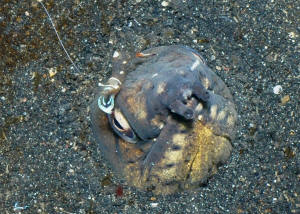
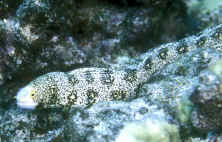
The Snowflake, Starry, or
Diamond-Backed Moray, Echidna nebulosa (Ahl 1789) To about
thirty inches total length. Base color of silver gray with black
and yellow "snowflakes" randomly sprinkled over the
lower body. A crab and shrimp eater that rarely bites.
|
|
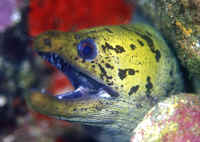
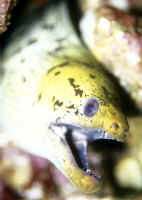
| Gymnothorax fimbriatus (Bennett 1832), the
Fimbriated Moray. To 80 cm. (32 inches) in length. Indo-Pacific;
Madagascar to Society Islands. Feed on fish and crustaceans at
night. |
|
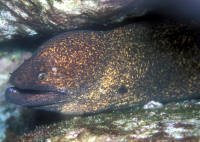
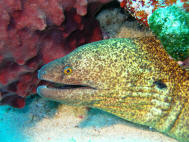
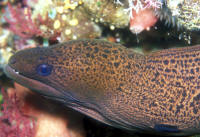
| Gymnothorax javanicus (Bleeker 1859), Giant
Moray. To ten feet, 3 meters in length. Indo-Pacific; Red Sea, East
Africa to Hawai'i. Feeds principally on fishes, secondarily on
crustaceans. Largest Moray species according to Fishbase. Shown
here in Northern Sulawesi. |
|
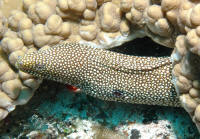
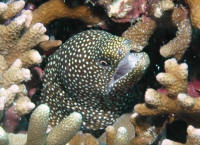
| Gymnothorax meleagris (Shaw & Nodder
1795), the White Mouth Moray. Brown to black with numerous white
spots. Dark spot around gill opening. Indo-Pacific. To about forty
inches in length. N. Sulawesi images. |
|
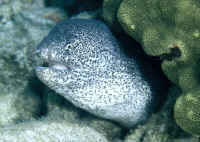
| Gymnothorax pictus
(Ahl 1789), the Peppered Moray. Indo-Pacific; East Africa to the
eastern Pacific, Hawai'i. To five feet in length.
|
|
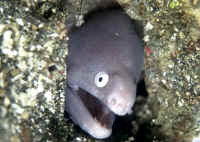
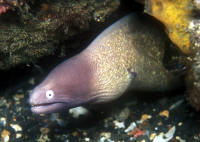
| Gymnothorax
(Siderea) thyrsoidea (Richardson 1845), the White-Eyed Moray.
Indo-Pacific; Christmas Island to French Polynesia. To twenty six
inches in length. Found in shallow water, often with other Moray
species. N. Sulawesi images. |
|
|
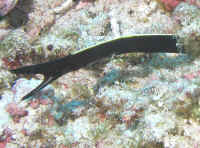
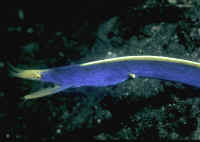
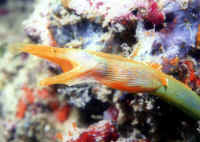
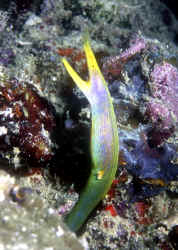
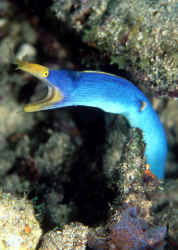
Rhinomuraena
quaesita Garman 1888, the Ribbon Moray Eel. Fiji image at
right or a changeling female and male. Below, a juvenile (black)
and male in N. Sulawesi and a female in Mabul, Malaysia. Females
are rare and mostly to all yellow in color. Best approached
while vigorously rubbing, thumbing a pointer near the base of the
fish's hole, then wiggling it in front to draw it out.
|
|
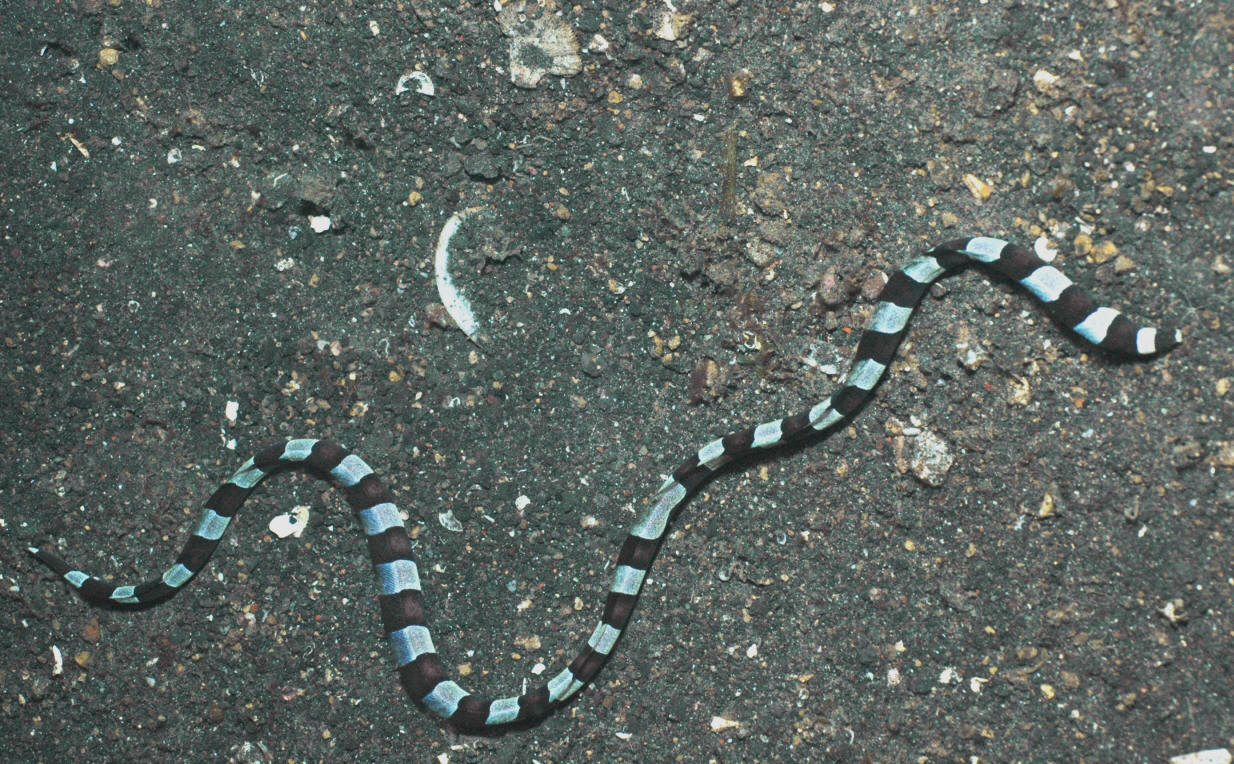
Snake & Worm Eels, Family Ophichthidae: 31 species
recorded from Indonesia
Of all places in the world, Indo. is likely where you'll
actually get to see a live Snake Eel... they're encountered during
the day with their snouts sticking out in "muck" areas, and
out and about hunting by night. Scary at times, they pose no danger to
divers.
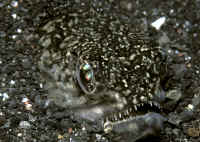
| Brachysomophis cirrocheilos (Bleeker 1857),
the Stargazer Snake Eel. Looking frightening like its namesake (the
uranoscopid stargazer)... come to think of it, looking more
terrifying... Indo-West Pacific; Red Sea to Indonesia. To four feet
in length. N. Sulawesi image. |
|
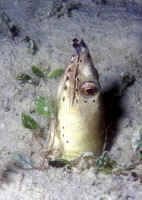
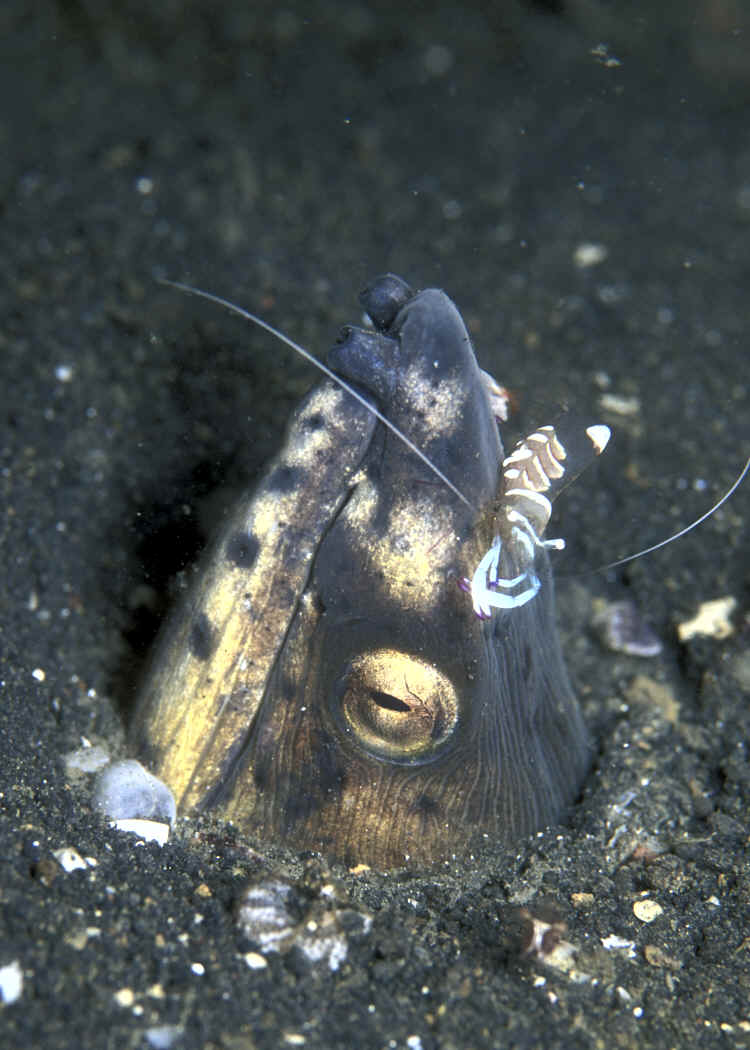
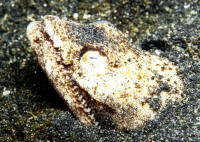
| Ophichthus altipennis (Kaup 1856), the
Highfin Snake Eel. Seen mostly in the sand by day. Darken with age,
size. A younger individual in Mabul, Malaysia and a larger/older
one with a friendly shrimp on its snout and one out and about in N.
Sulawesi. |
Conger & Garden Eels, Family Congridae: Nine described
Indo. species.
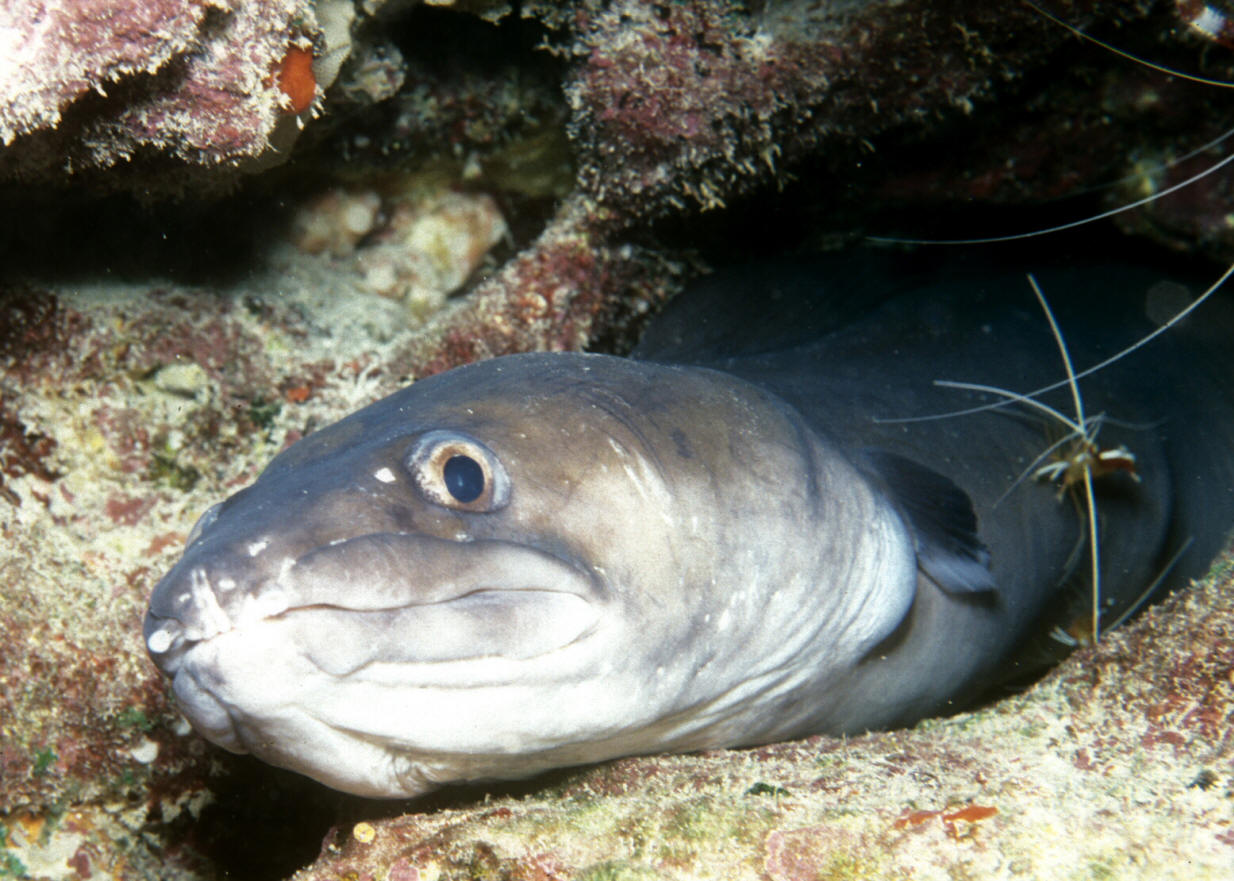
| Conger cinereus Ruppell 1830, the Mustache
Conger. Indo-Pacific. To four feet in length. Found in holes in
rocky caves near the bottom. Looks like a sea monster, but is a
gentle giant. Hawaii pic during the day. |
|
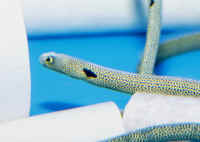
| Taenioconger hassi (Klausewitz &
Eibl-Eibesfeldt 1959), the Spotted Garden Eel. Indo-Pacific; Red
Sea, East Africa, over to Australia, up to the Ogasawaras to
Micronesia. Sandy reef slopes, generally below 15 meters. |
|