|
|
| Home | Marine Aquariums |
Freshwater Aquariums |
Planted Aquariums |
Brackish Systems |
Ponds,
lakes & fountains |
Turtles & Amphibians |
Aquatic Business |
Aquatic Science |
Ask the WWM Crew a Question |
| Please visit our Sponsors | ||||
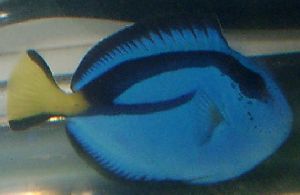
Koran angel fungus? 12/24/07 Hey crew merry Christmas to you and yours <Peace, good will...> Need help ASAP. I have gotten <How long ago?> a Koran angel from a LFS he is eating very well, alert and curious. However, He seems to have this white colored film growing on him. Looks like a fungus. <Mmmm... would be exceedingly rare if this were a true fungus...> It has eroded some of the edges on his pectoral fins and given them a pale white translucent color as opposed to the normal clear transparent color. this does not seem to be ich as it is not raised protrusions this is more a film or a better example would be when you do a fungal assay the white subtly fuzzy film of certain fungi that appears. I realize this could also very well be a bacterial infection. either case this fish is quarantined (of course) in a 55 gallon aquarium with a 30 gallon sump water <Ah, very good> is reef quality 0 ammonia, 0 nitrite, < 10 ppm nitrate, calcium 400 ppm, ph 8.3. I have removed carbon and turned off protein skimmer. I have dosed for the last 48 hours in malachite green. I have not seen any real improvement. now I have realize that if it is in fact a fungus that I would probably need to use a sulfur type medication. <Likely you mean Sulfa...> do you have any recommendations? <Yes... just simple observation for now> also if it is bacterial which regimen of antibiotics should I use. <Best not to...> Don't be afraid of giving a complicated answer I am a veterinary technician pursuing a bachelors in marine biology I have access to all chemicals and medications. please be as specific as possible. thank you all so much for what you do. its people like you who helped me to see my goals in this field to fruition. God bless you Regards Daniel Bock <IF you were a wholesale/intermediate facility I would have done a prophylactic dip/bath (see WWM re) going in/out of stages/systems here... IF you think it will help (sans any sensitivity testing) I MIGHT utilize a Furan cpd. (perhaps Nitrofuranace) at 250 mg./ten gallons... as an antimicrobial... If your employer will allow it, I would do a simple "mucus swipe" look/see here (see Ed Noga, "Fish Disease, Diagnosis and Treatment"... Again, I am very dubious that this situation is mycelious... and it is highly likely that actual "treatment" of this Pomacanthus may do more harm than good. Bob Fenner> Dwarf Angel Fin Rot, quarantine methods f' -- 11/17/07 Hello, <Greg> I am fighting a losing battle with a case of fin rot on a dwarf angelfish in a 10 gallon Q/T. The fish did fine in Q/T for about 10 days but then started getting ragged fins. <Maybe simply the quarantine experience> The fins were just literally disintegrating a small amount each day. I started treating with Kanamycin (SeaChem Kanaplex) every 48 hours, but after 3 days the fins continue to erode at a faster rate. The fish is eating fine <A very good sign> and all water parameters look good as I have a full biological filter which is surviving the Kanamycin treatment. Ammonia and nitrite are zero 3 days into treatment. I did go without chemical filtration for about a week. But once the fin rot started, I filtered with carbon and PolyFilter for about 1/2 day and did a 25% water change before starting the Kanamycin. I am concerned the Kanamycin is not working and I am wasting valuable time to save the fish. Should I continue with the Kanamycin and if so for how long? Or should I switch to a different antibiotic for fin rot? At a loss here as I have used Kanamycin successfully for fin rot before. Thanks, Greg <I would discontinue the Kanamycin, not try other antibiotics... I would summarily pH adjust and freshwater dip and place this animal in the main display. Please see here and the linked files above for the thinking/rationale here: http://wetwebmedia.com/dips_baths.htm Further quarantining will not likely grant you anything... other than a more-stressed specimen. The root cause of the "rot" is likely non-pathogenic. Bob Fenner> Re: Lugol's Dip and Gorgonians, Pete, will you take a look at, refer? & bacteria f', human dis. -- 4/10/07 <Yowsa Pete! Thanks as usual for this dissertation! BobF> Dear Mark: Bob forwarded your email to me and asked me to lend a hand with your dilemma. It's very difficult to say what may have caused the demise of your H. kuda but I would be happy to share my thoughts on the matter with you for whatever it's worth, sir. Like all fish, seahorses do occasionally develop various granulomas, malignant neoplasms, tumors and fibrosarcomas associated with certain diseases or the aging process, but these primarily affect internal organs. Furthermore, such growths are not characteristic of vibriosis and, judging from the symptoms you described -- or lack thereof -- it seems unlikely that a Vibrio infection was involved in this case. I am more concerned about the possibility that the tumor may have been a granuloma symptomatic of a Mycobacterial infection. Granuloma disease is caused by gram positive, acid-fast bacteria from either the genus Mycobacteria or the closely related genus Nocardia invading the tissue and internal organs and organ systems. Both of these bacteria can affect the skin as well as the internal organs, causing nodules and granuloma. And both Mycobacteria and Nocardia can be transmitted to man, causing a localized, unsightly skin rash after entering through a cut or break in the skin. Here is an excerpt from my new book (Complete Guide to the Greater Seahorses in the Aquarium, TFH Publications, unpublished) that discusses mycobacteriosis in more detail, Mark. It may help give you a better idea whether or not the tumor you noticed could have been associated with granuloma disease: MYCOBACTERIOSIS, A.K.A. PISCINE TUBERCULOSIS Mycobacteriosis is also known by the following synonyms: fish tuberculosis, piscine tuberculosis, granuloma disease, swimming pool granuloma, fish tank granuloma, and acid-fast disease (Aukes, 2004; Leddo, 2002a). Like all fishes, seahorses are susceptible to Mycobacteriosis. It is not uncommon in wild-caught seahorses obtained from pet stores and is the second most commonly seen bacterial infection of syngnathids at large public aquaria after Vibriosis (Bull and Mitchell, 2002, p20). Cause: Fish tuberculosis is caused by pathogenic Mycobacteria, of which two different species are the primary culprits: Mycobacterium marinum and Mycobacterium fortuitum (Giwojna, Sep. 2003). Unlike most bacteria the plague fish, these Mycobacteria are gram-positive, and take the form of pleomorphic rods that are acid-fast and nonmotile (Aukes, 2004). When cultured on solid media, they form cream-colored to yellowish colonies (Aukes, 2004). Mycobacteriosis is worldwide in distribution (Giwojna, Sep. 2003). All fish species are considered susceptible to it (Aukes, 2004). Although this disease can in fact infect almost all fish, certain species are more vulnerable than others (Giwojna, Sep. 2003). The most susceptible species are freshwater tropicals such as black mollies, all gouramis, Neons and other tetras, all labyrinth air breathers, and most species of the Carp family (goldfish and koi, for example), Aukes, 2004. Mycobacteria are ubiquitous and waterborne, and the aquatic environment is considered the disease reservoir for fish tuberculosis (Aukes, 2004). Mycobacterium marinum has been cultured throughout the world from swimming pools, beaches, natural streams, estuaries, lakes, tropical fish tanks, city tap water and well water (Aukes, 2004; Leddo, 2002a). Human epidemics of granulomatous skin disease have occurred from swimming in infected water, and in fact, this mode of human infection is far more common than infection from exposure to infected fish tanks (Aukes, 2004; Giwojna, Sep. 2003). Clinical Signs: There is a very severe or peracute form of this disease, in which fish can simply be found dead without showing any telltale signs or symptoms (Bull and Mitchell, 2002, p20), but that is quite rare. In my experience, Mycobacteriosis is a chronic disease that progresses quite slowly in aquarium fishes (Giwojna, Sep. 2003). It may take years for an infected fish to develop any symptoms of apparent illness and much longer before it becomes fatal (Aukes, 2004). The glacial progression of the disease makes it difficult to diagnose. Some early signs to look out for include lethargy, fin loss, emaciation, skin inflammation and ulceration, edema, Popeye, and peritonitis (Aukes, 2004). There may be superficial skin lesions that take the form of small subdermal lumps or pus-filled nodules of granulation tissue (Bull and Mitchell, 2002, p21). These are simply the outward manifestations of a systemic infection that may already involve many of the major internal organs (Bull and Mitchell, 2002, p21). In later stages, nodules may develop in muscles or skeletal structure and deform the fish. (Giwojna, Sep. 2003). As difficult as slow-moving TB may be to diagnose while the infected fish is alive, once the victim expires, postmortem examination will reveal clear, unmistakable signs of Mycobacteriosis (Giwojna, Sep. 2003). The telltale granulomas will appear as gray or white nodules in the liver, kidney, heart and/or spleen (Aukes, 2004). There is often black, necrotic tissue eating away at the internal organs, and there may also be skeletal deformities. Diagnosis is then confirmed by the presence of acid fast bacteria in tissue sections (Giwojna, Sep. 2003). Treatment and Control: There is no practical method for treating mycobacteriosis or granuloma disease at the hobbyist level. As discussed below, good aquarium management can prevent Mycobacteria/Nocardia from becoming problematic. Prevention is the watchword for this condition. Transmission: The bacteria can be transmitted through the water from open ulcers, through contaminated food (including live foods such as shrimp or molly fry), via feces of infected fish, or through the consumption of infected, dead or dying fish in the tank (although the latter does not apply to seahorses), Aukes, 2004. Contributing factors: This disease is not highly contagious and does not seem to spread from fish to fish readily (Aukes, 2004). However, fish TB it is often associated with poorly kept or dirty tanks with poor water quality (Aukes, 2004). Chronic stress from factors such as overcrowding, malnutrition, or aggressive tankmates often plays a role as well (Giwojna, Sep. 2003). Mycobacterium, the causative organism, is believed to be ubiquitously present, making it very difficult to eliminate it entirely. However, if good aquarium maintenance and management is followed, including vacuuming of the gravel along with good filtration and regular water changes, combined with a nutritious diet and the addition of an enrichment product rich in vitamins, the problem can be minimized and eliminated as a cause of mortality (Aukes, 2004). Any dead fish should quickly be removed and disposed of properly. Diseased live fish should be isolated and treated in a hospital tank (Giwojna, Sep. 2003). Transmission to Man: The seahorse keeper should be aware that piscine tuberculosis is one of the few forms of fish disease that is communicable to humans (Leddo, 2002a). This transmission usually manifests itself as an unsightly skin rash involving one or more granulomas on the arms of the fish-keeper (Leddo, 2002a). In severe cases, these nodules of inflamed tissue can become large and disfiguring. They can spread and be very difficult to eliminate. The granulomas often take some 2-4 weeks after exposure before manifesting themselves, so the individual is frequently unaware of how he or she contracted them and the condition very often goes undiagnosed (Giwojna, Sep. 2003). The Mycobacteria that cause the disease typically gain entry through a break in the skin such as a cut, scrape, or abrasion on the hand or arm of the aquarist (Leddo, 2002a). Although unsightly, the granulomas themselves are not a serious problem and are almost always localized and most certainly curable in healthy individuals. But for those of us whose immune systems are compromised by AIDS, kidney disease, diabetes, liver dysfunction, chemotherapy or the like, the infection can sometimes become systemic or, on rare occasions, even life threatening (Giwojna, Sep. 2003). Awareness is the appropriate response to the risk posed by fish tuberculosis. The seahorse keeper should be aware of the remote possibility of being exposed to Mycobacteria via his aquarium, and take appropriate precautions, but there is certainly no need to be overly concerned (Giwojna, Sep. 2003). The aquarist should merely remain aware of Mycobacteria and follow the usual sensible precautions. Nets, aquarium accessories and equipment, and any other items that may come in contact with the fish should be sterilized between uses to prevent cross-contamination (Giwojna, Sep. 2003). Avoid mouth-siphoning of the water in a Myco-positive tank (use a hand pump instead). Mycobacterium cannot penetrate intact skin -- it only causes infection after entering through open wounds or source, so make full use of aquarium gloves and don't place your hands or arms in the aquarium if you have any cuts or scrapes (Giwojna, Sep. 2003). Handle sick fish carefully, dispose of deceased specimens properly, and scrub up afterwards. Do NOT dispose of dead fish by flushing them down the toilet, as this is a prime way to spread disease. Place the fish carcass in a plastic bag or wrap it in some foil and dispose of it with the solid waste of the household. And don't feed dying fish to larger carnivorous fish, since this an excellent way to spread infection (Giwojna, Sep. 2003). One thing hobbyists who are worried about fish TB can do to allay their concerns is to get their seahorses and live foods (crustaceans such as shrimp are known vectors for Mycobacteriosis) from a High Health facility such as Ocean Rider rather than from their local fish store (Giwojna, Sep. 2003). Seahorses at OR are routinely screened for pathogens and parasites by independent examiners from an outside agency (DVMs with the Department of Agriculture), and I know for a fact that Mycobacteriosis is one of the diseases they specifically check for (Giwojna, Sep. 2003). Thus far, multi-organ histopathology has found no granulomas and tissue sections have revealed no acid-fast bacteria -- conclusive proof that Ocean Riders are free of Mycobacteria. <Close quote> That's the rundown on mycobacteriosis or granuloma disease, Mark. The very similar Nocardia is a gram positive, acid-fast, filamentous bacteria and is even more insidious than Myco. Nocardia is closely related to the Mycobacteria that cause piscine TB or granuloma disease and, like Mycobacteria, it can affect the skin as well as the internal organs, causing nodules, granulomas and pyogranulatomous cysts. And like Mycobacteria, Nocardia can be transmitted to man, so be sure to take appropriate precautions if you suspect granuloma disease may have caused the death of your H. kuda. Here is some information from Paul Anderson explaining how professional aquarists typically deal with Mycobacterium/Nocardia: Fellow Seahorse Enthusiasts: Mycobacterium is a genus of bacteria that are ubiquitous in almost all environments. Mycobacterium infections occur in many (if not all) vertebrate taxa (e.g., mammals, birds, fish, etc.). Some studies that have looked at prevalence of infection of Mycobacterium in wild animals have often found that a small percentage of wild animals are infected, even without clinical signs. The most common Mycobacterium species found in seahorses are M. marinum, M. chelonae, and M. fortuitum. There is currently no cure for mycobacterium infections in fish. The options available are to 1) depopulate and disinfect the system, or 2) maintain the fish but prevent cross-contamination by observing strict biosecurity protocols. The second option is often chosen by public aquaria with long-standing displays, when aquaculture/production of the infected fish is not an issue. Many mycobacterium spp. can cause disease in humans, especially if the species is a rapidly growing one and/or if the person is immunocompromised. Of the three species mentioned above, M. marinum is a slow grower, and grows at 25 degrees Celsius incubation, but not at 37 degrees Celsius. The other two are rapid-growing species and grow at both temperatures of incubation. The significance of 37 degrees is that it is human body temperature. While most infections of otherwise healthy people are limited to lesions on the extremities (even with infection by a rapid-grower), there is a greater risk of the rapid-growers to cause systemic disease (especially in immunocompromised people). In a Myco-positive tank, the best option is not to come in contact with water or fish; wear gloves (sleeved gloves if necessary). Avoid mouth siphoning (use a hand pump). Having said that, in an aquarium situation mycobacterium only causes infection if it enters a wound; it cannot penetrate intact skin. Effective disinfectants against mycobacterium include spraying with 70% Ethanol and allowing the equipment to air-dry, and bleach baths (I use 50ppm bleach baths with a minimum contact time of one hour, this has been reported to be effective against M. marinum) followed by sodium thiosulfate neutralization baths. Ultraviolet light sterilization is also recommended in Myco-positive systems. If you've got Myco-positive tanks among other systems, common sense suggests performing husbandry on these systems last in your rounds. A note on ethanol: I have found in my experience that seahorses are very sensitive to ethanol, so I advise being very cautious to avoid overspray into tanks (while we're'¬"¢re on the topic, has anybody else observed this?) Check out the following for more information about mycobacterium infections in fish/aquaria: <_ http://edis.ifas.ufl.edu/VM055_ (http://edis.ifas.ufl.edu/VM055) > <_ http://www.mdsg.umd.edu/Extension/finfish/FF9.html_ ( http://www.mdsg.umd.edu/Extension/finfish/FF9.html) > Mainous, M.E., and S.A. Smith. 2005. Efficacy of common disinfectants against Mycobacterium marinum. Journal of Aquatic Animal Health 17: 284-288. Paul Anderson Ph.D. Candidate Department of Fisheries and Aquatic Sciences University of Florida That's the situation when Mycobacteria is confirmed in an aquarium, Mark. As long as you observe the proper precautions and practice good aquarium management, it's a problem the aquarist can sometimes live with... Nocardia is a different matter. When Nocardia is confirmed in an aquarium, the only real recourse is to break down the entire aquarium, discard the live rock, substrate, and invertebrates, sterilize everything, and start over from scratch. The problem is that Nocardia is saprophytic -- it doesn't require a host to survive and it will persist in your system indefinitely. These bacteria live off any kind of dead or decaying organic matter; in nature they are commonly found in soil and wastewater -- in your tank, Mark, they are no doubt entrenched in your substrate, live rock, filters, everything -- where they act as a disease reservoir, ready to infect any new fish and invertebrates (or careless humans) they encounter when the opportunity presents itself. The risk of cross-contamination of your other tanks and specimens is great, compounded by the fact that human health (primarily yours, Mark) is also at risk from this organism. If your H. kuda was infected with Nocardia, then everything in your 25-gallon aquarium has been exposed to these bacteria and is potentially a source of infection. Leading the tank lay fallow indefinitely will not help with Nocardia whatsoever. If Nocardia killed your kuda, you must consider all the equipment, decor and specimens in the tank to be contaminated, Mark -- treat them like you would toxic waste or any other biohazard. Even your invertebrates are a risk. Your coral, macroalgae, etc,. are all sources of organic matter, and can therefore harbor Nocardia and carry the infection. Do NOT disperse your live rock, substratum, Gorgonia and soft corals, macroalgae, equipment or accessories from the 25-gallon tank to your other aquaria, Mark, or you will be inoculating them with Nocardia and spreading the infection to all your tanks! And you must be extremely careful to avoid accidentally cross-contaminating your other tanks from your 25 gallon aquarium. Any nets, hydrometers, or other equipment used in your 25-gallon aquarium should be sterilized after every use and not placed into or used in any other tanks. Avoid working in infected aquarium with your bare hands, scrub/disinfect your hands and arms thoroughly after working on the tank, and do not place your hands in the 25-gallon tank and then place your hands in another aquarium. These bacteria can even be transferred from one aquarium to another by splashing water droplets or as an aerosol via the mist generated from a protein skimmer or an airstone. Be careful! That is what I typically advise hobbyists when Nocardia has been confirmed in their aquaria, Mark. I hesitate to recommend such drastic measures when Nocardia or Mycobacterium have not been confirmed. And the tumor that you described is not typical of the pyogranulatomous cysts that characterize Nocardia. They most often present as greyish-white pimple like lesions on the skin. They are often motile when manipulated and may release a cheesy exudate when compressed. That does not sound like the hard mass you detected beneath the skin near the vent of the H. kuda. So you're going to need to use your own judgment, Mark. To be 100% safe, you could discard the contents of your 25-gallon aquarium, sterilize everything, and start over from scratch. Or you could dip the live rock, Gorgonia, and corals with Lugol's solution as a precaution and then trust to good aquarium management to keep the seahorses in your 40-gallon aquarium healthy and happy. Since Mycobacteria and Vibrio bacteria are virtually ubiquitous, and normally only become problematic when the seahorses have been stressed and their immune systems have been impaired, I might be inclined to take the latter course in your case. If you can provide your seahorses with optimal water quality, a nutritious diet, and they stress-free environment, the chances are good that your livestock will not be affected by granuloma disease or vibriosis. Starting out with seahorses from a high-health aquaculture facility that you obtain directly from the breeder will further increase your chances for success. As an added precaution, you may also want to consider installing an ultraviolet sterilizer on your 40-gallon seahorse tank after it has cycled completely and the biofiltration is well-established. Best of luck with your new seahorse tank no matter how you decide to proceed, Mark! Respectfully, Pete Giwojna, Ocean Rider Tech-Support Re: Lugol's Dip and Gorgonians, Pete, will you take a look at, refer? -- 4/10/07 Dear Bob: <Pete!> I'm always happy to help when I can, sir. <And you do a fine job of it, I assure you> When I receive inquiries from aquarists regarding Mycobacteria/Nocardia, I feel it is very important to provide them with as much information as possible because of the possibility of human transmission and because they may be confronted with the decision as to whether or not it's necessary to depopulate their aquarium, sterilize everything, and start over from scratch. So I make it a point to try to arm them with all the facts they need to make an informed decision in that regard. <Yes... and one of the principal reasons for my encouraging the publication of your book, your articles (as well as others... including my own!) to get "complete answers" to folks... in a speedily manner> Hopefully, once we get my new book on seahorses published and into the hands of the hobbyists, there won't be a need for us to devote so much time discussing these issues on the forums. <Heeeeee! You'll see...> Happy Trails! Pete Giwojna <And to you, Bob Fenner, out in HI, at times visiting with Carol and Craig and their (now four year old!!!) boys, Dylan and Cooper> White spots (bacteria?) on purple tang 6/9/06 Hello. I recently purchased a purple tang from a LFS. Within 3 days he broke out in ich <Hopefully quarantined...> and what appear as dull white spots on his body (none on the fins). The cleaner shrimp took care of the ich within 2 days, but the white spots stayed. I believe it may be some sort of bacteria, possibly fungi. <Not...> The spots are approximately 2-3 times the size of the ich parasites and duller in color. They are also flatter against the fish's body than ich which appears as tiny grains of salt. I placed the fish in a QT tank <After? Then this is a treatment tank> and have treated for 4 days with Maracyn-Two and Melafix, <...> but with no success. The fish appears healthy (eats like a horse and is very active) other than the spots. I read on WWM that vitamins such as VitaChem and Selcon help against HLLE and overall just improve the immune system. Should I try this method, or continue treating with antibacterial medications? <I would switch> Is there anything other than Maracyn Two you can recommend if antibacterial meds is the way to go? Thank you for your help Jon <... I would not use antimicrobials here... The spots are likely simply residual stress markings from the Crypt, "treatments"... You can't see the microbes mentioned. Bob Fenner>
Angel with cloudy eye 5/23/06 Dear WWM crew: I have recently introduced a moderate sized Emperor Angel into my 150 gallon fish-only system that contains only three other inhabitants: Achilles Tang, Maroon clown, and Spiny Boxfish. Although the angel appeared to acclimate well and is an assertive feeder, it has developed persistent "abrasions" on the pectoral fins and slight clouding of one eye. The clouding is not diffuse (appears almost like excess mucous) and not accompanied by Exophthalmus. The fish will occasionally "rest" between rocks, but otherwise is active and approaches anyone who goes near the aquarium. My presumption is that the fin abrasions and eye abnormality are bacterial in origin, <Mmm, most likely> likely secondary to minor trauma or stress (water parameters are stable). If I'm correct that the problem is not fungal/parasitic, would you recommend a nitrofurantoin-based treatment (in quarantine) such as Jungle "fungus eliminator?" <... possibly... How long has this been going on?> Is there any role for a freshwater bath given that bacteria are unicellular and should not be able to osmoregulate (like parasites)? Thanks for your advice, Dana <As stated in articles, FAQs posted on WWM... five, ten minutes. Did you freshwater dip this animal as part of the original acclimation procedure? This could be something else... my next best guess is trematodes/flukes... Need for microscopic examination... Bob Fenner> Re: Angel with cloudy eye - 05/23/2006 Thank you for your reply. The duration of symptoms is now approximately 10 days and began around 1 week post transfer from quarantine. <I see> The other fish in the aquarium have not shown visible signs of infection, though the Achilles Tang was darting around for a few days (now back to normal color, swimming behavior). <Not atypical for Acanthurus species... when new livestock, changes occur...> I did not freshwater dip the fish before or after quarantine. As far as microscopic examination, I do have the equipment to perform this analysis--the issue is how to procure a specimen without further stressing/damaging the fish. <Mmm, I see you have a medical doctor affiliation... For what you have invested here, and into the future, I encourage you to seek out and borrow or buy a copy of Edward Noga "Fish Disease. Diagnosis & Treatment"... This single reference will grant you insights as to body slime slide prep., the current rudiments of pathology of ornamental fishes> Therefore, since my original message, I made the decision to treat the fish in quarantine with Jungle's nitrofurantoin-based treatment, again without a freshwater dip. If I understand you correctly, do you believe that there is a role for a freshwater bath even if the assumption of bacterial infection is correct? <Mmm... well, if I/you were going to the "trouble" to remove, isolate this fish already, I would elect to process it through a pH-adjusted freshwater bath enroute> Thank you again, Dana <I do hope this is clearer. Bob Fenner> P.S. I can try to obtain a digital image if things do not improve <Appreciate this> |
|

|
Features: |
|
| Featured Sponsors: |