|
|
| Home | Marine Aquariums |
Freshwater Aquariums |
Planted Aquariums |
Brackish Systems |
Ponds,
lakes & fountains |
Turtles & Amphibians |
Aquatic Business |
Aquatic Science |
Ask the WWM Crew a Question |
| Please visit our Sponsors | ||||
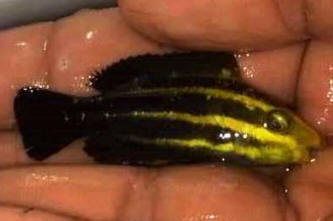
quoyi parrotfish, sel./stkg.
8/21/19
Green parrotfish (Scarus quoyi) 6/17/18
MisID on photo
9/8/13 Bowers Parrotfish, Chlorurus bowersi, feeding mostly
7/8/12 Re: Bowers Parrotfish, now Cetoscarus sel./comp. 8/9/12 parrot fish... comp. 3/24/11 new parrot fish, under sand? Scarid incomp., reading
5/27/10 Re: Tank and stocking questions... Trigger/Parrotfish
incomp. -- 09/26/09
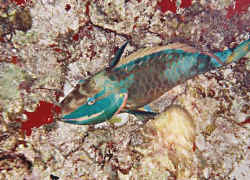
Quoyi parrotfish 5/17/08 Hello I Have an aquarium saltwater fish store in Montreal, Canada and I bought a Quoyi parrotfish from one of my wholesaler that told me that this parrotfish is reef safe? <Mmmm, this species does consume a good deal of algae in the wild: http://fishbase.org/Summary/SpeciesSummary.php?id=5554 but... I would not state that it is "very" reef safe...> I know that parrotfish normally are not reef safe and was wondering if you have any info about that fish . I also know that parrotfish are not easy to feed and keep since they normally scraped rock , corals for algae but he is eating everything that I put in he aquarium ( spirulina, nori, ocean nutrition , frozen food etc...) and swimming actively . Sorry If I made some error in the writing my primary language is French ! Than you again for all you`re info on your site very helpful . <Your English is near-perfect! I have not seen this Scarid species imported for the trade in the west... ever. I do encourage you to see if you might get it started eating Spectrum (a brand) pelleted food. I have witnessed other Parrots doing very well long-term on this food (Pablo Tepoot, the manufacturer has had some Cetoscarus bicolors on this alone for years... and I've seen it used to maintain parrotfishes in a few public aquarium settings). Merci, Bob Fenner>
Bicolor Parrot Fish Issues. Sel. 4/26/07 Hello, <Hi.> I recently and unfortunately bought a bi-color parrotfish at the LFS on a whim based on his looks. <*Wags finger at Frank.*> My research didn't start until after I put him in my quarantine tank. I was already aware by there max size at adults, but was told by the LFS that they are hardy. <I would say yes and no. Yes because if you can get the animal to accept frozen and prepared foods then you might have a good shot. No because this animal gets most of it's nutrition by eating live hermatypic corals and consuming the polyps within or even eating dead (skeleton) corals and consuming the algae that has grown on them. Sometimes new specimens will have issues adjusting to captive diets. And you did mention "max-size" so I won't lecture on that, you know what type of quarters this monster will eventually need.> After learning all of this distressing info, I spoke with the LFS and was able to return him for a credit after having him for 3 days. <I would leave him there.> It was then reiterated that this was an African Bi-Color Parrotfish which are hardy compared to the bi-colors from other locales. <If we are talking about Cetoscarus bicolor, then personally I've had better luck with individuals from the Red-Sea.> I just wanted to know if this was a true statement. <Hard to say if something is true or false if based on anecdotal experience.> This LFS is a respectable, long established store in downtown Chicago. I just wanted to have a better intake of information so that I may perhaps look to buy an African bi-color down the road. <The two biggest issues will be tank size and diet in that order.> Thanks. <Welcome.> Frank <Adam J.> Scarid comp. 1/29/07 Hi thanks for that info but I need to know wither the parrotfish will attack stingrays or nurse sharks... Didn't see anything about that in info on website. Thanks, Morgan <What do Scarids eat? Not fishes... Bob Fenner> Parrot Fish/Feeding 1/22/07 HI, <Hello.> I have a question about a Princess Parrot fish. Im wondering will it go after my sting ray and nurse shark. Im also need to know about their dite <diet>. <Parrot fish are not an easy fish to keep. They require very large aquariums and acclimating them to prepared foods can be very difficult. In the wild their diet consists of hard corals as a primary source of food. Some aquarists have had success keeping these fish, but the percentage is very low. Do read the FAQ's here for more info on this family. http://www.wetwebmedia.com/parrotfa.htm> Thanks, <You're welcome. James (Salty Dog)> Mr. Garcia Humu Aggression…Incompatibility with parrot fish (Scarus), Incredibly Poor Purchasing Choices 10/26/05 Hey, I have a 90 gallon FOWLR with about a 7in rainbow parrot. <Wow, a Scarus guacamaia…talk about tank buster at a potential 50 inches!! Definitely not suited to private aquaria.> He was in there for about 3 weeks. I recently purchased a 7 inch Humu Humu. <A risk…to say the least.> They seemed fine for two days. The third morning I was looking for the parrot, to my surprise I eventually find him floating behind rocks with an eye ripped out, and pieces of his body bitten into. <Mmm, while I am sorry to hear of the passing of your specimen I am not surprised.> I was told that parrot fish can live with a Humu Humu, is this wrong, or is this trigger crazy? <Triggers have varying personalities, one trigger can be docile the next can be the Boston strangler…..its always a gamble, always a risk mixing triggers and anything else really…nest kept a single specimens.> <<When speaking of the Humu, take Adam's admonitions seriously - I once cared for a juvenile Humu who literally stalked me around the tub (3K gallon holding tub) - I had to take very real care that he didn't sample me. MH>> What fish do you recommend I consider for this guy? <In this size tank…and now that he is alone, this trigger will likely not tolerate any tank mates at all.> Thanks a lot. ~Sam <Adam J.> Recent death fish store blames me. Easy loss of a Parrotfish Hi all <Chris> Thanks for all the great info you folks supply. First off I have a 125gal w/30gal sump 2 skimmers 1 homemade, 3x150 metal halide lights 100w actinic lights, roughly 160lbs LR. This tank mainly fish, 1 small finger leather, 1 small hammer coral, Fish are 1 Coral beauty angel, 1 yellow stripe wrasse, 1 blue pacific tang, 2 "engineer gobies" rarely seen, 2 Ocellaris clowns, 7 Chromis, 4 or 5 hermits, 40 Nassarius snails, 12 large turbo snails. I recently purchased a "princess parrot" fish (absolutely beautiful) <Yes... though this tropical West Atlantic species rarely lives in captivity...> from a LFS in the buffalo area. It survived for 3 days. Now this is the first time I dealt with this particular place. After checking the water quality finding all is well with the water, except for a slight ammonia issue (slight as in barely visible color change with my test kit, the fish store test showed absolutely nothing). <Ammonia is transient... can be "lost" in moving the water sample...> They claim that the dead fish that was my fault due to salinity being OUT OF acceptable levels @ 1.025 and I shocked the fish seeing that I only acclimated it for 1.5hrs. According to the people @ the store my salinity should be @ 1.019 - 1.022 at the max. <Mmm, I disagree... but if the fish had been acclimated to this lower spg, some additional stress would occur in rapidly moving it to near seawater strength> I keep my water quality as high as possible due to a bamboo shark who is so far doing great after 3 months.( I already have started searching for larger quarters for him). I am new to the saltwater hobby being only 2 yrs experience(2nd fish I have lost except for those poor little goldfish my Oscars enjoyed so much), many years fresh water. Basically what do you think? Does my acclimation time need to be extended? <No> I already have made my conclusions, but I will take expert advice when I can. I have read through the pages and for a short 10 min. trip. well I float the bags for at least 20 min., then I slowly add water from the tank in to the bag over an hour. Water Quality R.O. water 1.025 salinity Alk is a one tough as the new test I have gives a very broad range only showing low - normal - high, but falls close to normal 400ppm calcium 8.3ph <0 >0.25 ammonia <Should be zip as you know> 0 nitrites 0 nitrates 0 phosphates In the sump there is also more live rock, various macro algae. <Sounds good> Also unwanted freebies I received on the LR 1 chocolate chip star, 1 peacock mantis shrimp (very cool looking still don't want it after reading about them), hundreds of those little white stars, but the wrasse is talking care of them. Thank you for your time & keep up the much appreciated work Chris <I suspect this specimen was just too shaky from being collected, transported... Parrotfishes, Scarids often die mysteriously... You can see much more input re these issues on WWM. Bob Fenner> Parrotfish ID To Whom It May concern <Scott F. here today!> I just purchased a red and blue parrot from a LFS. They said he was from Sri Lanka. He is red on the top half and almost white on the bottom half with the fluttering dorsal like a wrasse. Looks very close to a long fin fairy wrasse. I was wondering if it could be a parrot fish that resembles a wrasse. I have searched various sites and was wondering for your expertise. Thanks in advance. Marvin <Do take a good look through the WWM site. Start with this link: http://wetwebmedia.com/parrotfi.htm Otherwise, a scan through fishbase.org might be of help. We'd need a pic to make an accurate identification. Good luck! Regards, Scott F> Sulking Parrotfish? Hi, <Hi there! Scott F. here today> No rush on the reply as I realize you guys must be very busy! A juvenile princess of parrot fish (99% sure) came into the LFS about 6 weeks ago. I decided to bring it right home, they assured me it had come in by accident and they weren't going to order any. <I hope so- not really a great fish for aquariums, IMO> I have a 220 7' tank that's a couple years old that I thought might suit him (soft corals/fish) Anyways I quarantined him first in a 33 gallon and got him eating. Started with Spirulina stick on tablets stuck on dead corals, etc. By the end of 2 weeks he was eating Mysis, Spirulina, flake, krill, clam all from my hands!! I was thrilled. <That's good to hear...> I then moved him over to my 220. He is in with compatible fish including a Moorish idol that I've had for almost a year. (sorry, but I'm proud of that) I feed him 4-6 times per day. It's now 6 weeks and he's looking wonderful. The question that I have is that he isn't foraging for food on his own...at all?? He just swims out front where he can see me and basically waits to be fed. Should I cut back on the feedings to force him to or is this a healthy enough situation? <Well, it's hard to say. These fishes do spend a lot of time foraging in the wild, but they tend to hang out on the bottom, acting sort of lethargic. This is not all that unusual for a captive parrotfish. They are really not good long-term aquarium inhabitants. Nonetheless- do what you can to provide him with enough food and plenty of space (a larger tank in your future?). Also, I'd like you to ID him for me. Thank you so much, Lynn McKinney (p.s. the French you saved of mine last year is doing great!) <Lynn- I didn't get a pic- so do send us one and we can attempt an ID for you. Regards, Scott F.> Sulking Parrotfish? (Cont'd.) Thanks for the reply, here hopefully are the pics. I got the feeling that you think this fish is lethargic as I had said he wasn't foraging. I just want you to know that he is not at all lethargic...he just doesn't forage...but swims lots and lots. <Unfortunately, I didn't get the pics. Glad to hear that he's active. Remember to provide plenty of space, good water conditions, and quality food. Hopefully, he can live a comfortable captive life with your continued good care. Good luck! Regards, Scott F.> Parrots Need XL Aquaria 10/28/03 I know... another fish ID? How do we get fish that we don't have an idea of how to care for? What it eats? Why -- Why? <agreed> I am sorry for the question but I have recently saved this fish <it is clearly a parrotfish... please do review this unfortunate fish for the aquarium in our archives> from someone who didn't know what it was and said it was a wrasse. After taking it out of his tank (after he lost 3 small angelfish. (one at a time) He bought one then couldn't find it, Then another etc. I since have checked water quality (o.k., meaning o.k. not perfect) But saw this fish with nice teeth and felt it may be his problem. I now have him in QT until <they are not always aggressive... your bigger problem is providing adequate variety in the diet of this corallivore (yikes... eats coral) and provide for its enormous adult size> I find out what he may be , What he needs to eat? And if I dare place in one of my tanks? <needing tanks of several hundred gallons in size to live fully/well> It looks like a parrot fish to me, but what Bi-colored after changing colors? See if you can help. <no prayer of a species ID from this pic> Thanks David <best of luck. Anthony> Help with Homework Hello, thank you for taking the time to read this e-mail and answer my questions. I'm going into 9th grade and I need help on my Biology project. <I should be able to help, I had to take it twice, dang bird project!> This year I have to do a project over the 7 classes of Phylum Chordata. I need a animal for every class and I picked the parrotfish. <cool> I just need a couple of my questions answer and then I will be able to complete my project. I need to know what kind of ecosystem, habitat, and their symbiotic relationship is. You have no idea what it would mean to me if you could get the information to me as soon as possible. THANK YOU SO MUCH! <Hi, fishbase.org is good place to start, for the genus enter "Scarus", and change the species drop down to "contains", search, and whammo a plethora of parrots. Fishbase has great information on their environment, distribution, and biology. You may also want to look into their ability to much coral reefs, talk about getting sand up your shorts, ouch. One of the best examples of their symbiotic relationships is between them and the cleaner wrasse. Try the google search tool on our site and the rest of the web for more information. Best Regards, Gage> Parrotfish husbandry, feeding Dear Bob I was reading your article on parrotfish and I have some advice for anyone wanting to try one. I have had mine for about 3 months now and it is doing great. I feed it dried seaweed, Kent herbivore pellets, Spirulina tabs, and "parrotballs". and it is doing quite well on this regimen. You may be wondering what parrotballs are. It is a mixture of plaster of Paris and vegetable matter (Spirulina flakes etc.) that you roll in a ball and drop in the water. It is quite effective at feeding them and keeps them quite happy. So anyone wanting a parrot should try it out.~Justin <Thank you for this valuable input. Will post for others edification. Bob Fenner> What's In A (Common) Name? Hello, <Hi there! Scott F. with you tonight> I hope you are doing well tonight!! <Sure am! Hope you're fine, too..> My LFS gets fish which they label as Red Parrots. The fish don't at all look like parrots, they look quite a bit like a female Cirrhilabrus solorensis (different shades of bright red scales) . At the LFS it had a whitish blue underbelly which has now turned red like the rest of the fish. I bought the fish, not because it was labeled as a parrot, but, because after a bit of research on your site, I felt that it probably was a wrasse. I have had the fish for approx. 5 months and it is doing great, looks, acts and swims like some sort of wrasse. Also, it does not pick or chew on any live rock or coral, which, I would assume, would eliminate it from being a Parrotfish??? <In all likelihood, that would be a good thought! Ahh- the danger of common names for identifying fishes...I guess some Scarus species Parrotfishes do look a bit like Cirrhilabrus species...> Basically, I was just wondering if you have ever heard of a Red Parrot being offered in the general Marine fish trade? <I personally have not...The fish that I have seen called a "Red Parrotfish" is Scarus atropectoralis, which does not look all that red to me!> Also, if you would like, I can send along a photo. <A photo would be great...If I can't make a positive ID on the fish, I'm sure that Bob could...> Thanks for your time, continued, valued help in the hobby and in advance for your response. Cheri <And thanks for stopping by, Cheri! Glad that you enjoy the site! Regards, Scott F><<May be Sparisoma viride, RMF>> Re: your website on coral mortality Hi Bob Thanks for your site - a job well done, very informative and I like the presentation. Just for your info re: Parrotfishes - there are currently 89 recognized species (Bellwood, 1994) and most of those species that scrape or excavate on coral reefs actually redistribute existing sediment, rather than producing it (Bruggeman, 1995). If you need more info on these references I can provide you with such. Also it is not necessary to say 'living coral polyps' as all coral polyps are alive, although I agree that this small redundancy is not so important. <Ah, merci. Want/ed to state that many Parrotfish species scrape "previously" live coral matrix as well.> Hope you are getting the input you had hoped for when you put this site together <More and more. Thank you again. Bob Fenner> Andrea Bullock Laboratoire de Biologie Marine Concarneau, France Re: Parrot fish sexing Hello, I Have a pair of painted parrot fish. They have laid eggs. I am not sure if I have a male and a female. Is there anyway i can tell them apart. If you can help me with any information it would be great. <Parrotfishes, family Scaridae are almost always very differently colored, marked. Please see here: http://www.wetwebmedia.com/parrotfi.htm Do you see the species you have there? On the linked files (in blue, above)? Bob Fenner> Thank you very much for any information. Thanks you, Tom Orange spot parrot fish Dear Bob, <Hello> I don't have any saltwater fish, I have Cichlids, from 7-Stripe Frontosas to Tropheus Moorii, but why I am writing to you is that I was thinking of maybe in the future I would like to try a saltwater tank, the more I read up on this the more I don't even want to try it. the Marine fish are so beautiful, well I have been checking out the fish that I think are really pretty and one is the Orange spot parrot fish, but I don't want one after reading all the questions and feed back on this fish, when I went to the site Wet Web Media.com there are advertisements of fish suppliers <Stop! These are not "advertisements" (per se). Please look up (as in a dictionary) what this word means. These companies are sponsors of our site. They receive "promotional consideration" as payment in turn, with their names, links to their sites for sponsoring WWM> at the top of the web site and one is Foster and Smith , that is where I first saw the Orange spot parrot fish, and wanted to purchase it, if they are so hard to keep, and you are so against it, then why are you sponsoring That Company? <We don't sponsor these companies... they sponsor us. We are not in control of their content, practices, neither are they in control of ours. Not to be disingenuous here, let me ask you a similar question. Are you against air-pollution? Do you still ride, drive a car? Bob Fenner> Michelle Wrathell Re: Orange spot parrot fish Ok, so they sponsor you, whatever, all I can say about it is that: It is pretty bad when you sell fish and know that they are going to suffer and die anyway, and not for a cheap price either!! <Agreed entirely... the last 35 years of my life I've written and given "talks" (to business, hobby, scientific groups) on this basic topic/theme: Please consider the historical, practical longevity of what species, sizes, source locations you buy your livestock... YES, there is a huge difference in what is likely to live and not in captivity. I wish everyone involved in our hobby, industry felt as you do. How to better make this point? Books, articles, shows on television? Who is going to pay for such exposure, influence? Do the governments involved have to regulate the trade? Who will decide what is "right", "wrong" to do, use? To me, each individual is responsible, must "make up their own mind". Am glad to see you voicing your opinions. Bob Fenner> M.W. Re: Orange spot parrot fish (inappropriate livestock period) I know their are a lot of bad, rotten things in this world that we see every day and I hate to see things suffer, Sorry I lashed out at you. <No offense taken> When you are just a new-be in the saltwater hobby, you look at the different sites that sale the saltwater fish and if you don't read up on the fish that you have an interest in (which apparently a lot of people don't) You think, if they sell it must be a hardy fish that will thrive in your aquarium, So I guess it is also the consumers responsibility to find out more about the fish they want to purchase! <Yes! As you delve further into the hobby you will find many "positive, inspiring" ideas, people whose values you agree with. My thoughts are with you. Bob Fenner> Thank you again M.W. Spots on a Parrotfish? My parrotfish has developed some dark black markings throughout it's body at first it was acting normal, but as more dark spots appeared he's not his normal frisky self. Do you have any idea what this could be? Any help would be appreciated. Thanks, Annie <Well, Annie-there are lots of possibilities here. Could be some sort of parasitic infection. Do review the disease FAQs and other resources on the wetwebmedia.com site for descriptions and treatments for many diseases. Sorry I couldn't be more specific here, but I think that you'll find an answer elsewhere on the site. Good luck! Scott F.> Re: Hello (hard, soft corals, Parrotfishes in captivity) Dear Mr. Fenner, I recently asked you about my parrot fish and corals. You told me no corals would survive. <Can you find who actually responded to you with this information? It wasn't me> After doing a little more research I found out that soft corals could be kept. <Makes sense... Scarids don't consumer alcyonaceans...> I found the info in a book called Marine Fishes by Scott W. Michael on pages 321-322. So I had to test this theory out. I went to my local fish store and bought a small fragmented cheap piece of soft coral for 5 dollars. After putting in the tank for over a week I realized that the parrot has no interest in it. From my conclusion I believe that it is possible to keep soft corals with parrot fish. I will try to keep you updated on future successes and failures (hopefully no failures). I just thought you might like to know. I love your book and web site. Thanks, Terry Rickman <Thank you for the clarification. Bob Fenner> Parrotfish and corals. I have a Orange Spot Parrotfish aka (Bower's parrotfish) <this species gets fully one foot long. Small for a parrot but still too big for most tanks under 6 feet long (180+ gall)> and seems to do well in my tank. I have live rock and decent lighting about 300 watts worth on a 90 gallon tank. He was purchased on 05/10/2002. My question for you are their any corals or anemones that I could keep with him? <nope... thanks for asking :) Ha! In truth, my friend... we must obey the fact that form follows function and these parrots have beaks for a reason. No like sessile invertebrates are realistically safe. Best regards, Anthony> Parrotfish To Mr. Fenner, I have reading your web for long time, but I have some question to ask you. I have purchase a Quoy's parrotfish [Scarus quoyi] and when I put it in my 60x30x30 tank, I didn't see it swimming. Instead of swimming, I saw it hide in a hole. What should I do with that? Please reply back me the mail. <Not atypical behavior for the family in captivity. What should you do? Hope the specimen comes out, learns to take food, lives. Please read through the Scarid coverage on WetWebMedia.com again my friend. These are not easy fishes to keep in aquariums. Bob Fenner> thank you very much, pavaphon Parrotfish with cloudy fins Hello, <Hi there> I had a bicolor parrotfish in my tank for about six months. Four weeks ago I had to take him hostelling to my LFS for about four weeks.. All four weeks he was in copper. <Oh oh... not good> I brought him back home today. He has cloudy fins, nothing major, but noticeable. I FW dipped him for 10 min, and put him in a 55 gal QT for now. After the FW dip his fins were still cloudy. What is the best approach here? Thank you for all your help. <Hope, prayer... just try your best to keep the fish stable, the environment optimized... only time can/will tell here... whether this animal was too toxified by the copper, too traumatized by the moving experiences. Bob Fenner> Parrotfish help Bob, I come to you for help because I did something terrible and if anyone can help me, its you. I made the mistake of buying a bicolor parrotfish a few days ago on a whim. I knew parrotfish where difficult to keep in captivity, but I saw it eating in the store, so assumed if it was eating it was a healthy thriving specimen that had adapted to captivity. Having seen quite a few bicolor parrotfish offered at local fish stores as of late, I assumed, again incorrectly, that it was a species of parrotfish that was the exception to the rule. <This is a gorgeous, even cute species as a juvenile, and likely THE most commonly offered Parrotfish offered in our interest...> It was only after I got it home and went to your site that I realized that it was common not because it thrived well in captivity but sold well in captivity. Ugh, never again will I impulse buy a fish I have no prior knowledge of. <A hard lesson learned> However, now that I have it, its my duty to at least try to provide the best care for it I can, and that's what I'm hoping you can help me with. I see they get to three feet in length and love to roam. I'm guessing my 75 gallon aquarium isn't going to be adequate if I am able to keep it alive in the long term. <Umm, no... most don't live more than a few weeks in captivity. I have never seen a female or male in an aquarium> Fortunately, I want to upgrade to a 180 soon, and eventually, I plan on building a concrete shark pond in my basement. <Wow! Do keep notes, take photos... Quite an undertaking> If I am able to keep it alive and thriving, how long before it would outgrow the 75 gallon? The 180? <Months... if it lives. Most die "mysteriously", usually at night... likely due to "stress", imperfect nutrition> I know there is no way I could make its eventual home a big as it needs, but if I'm already planning on the shark pond eventually, do you think its possible to house my parrot fish in there? <Yes> What size would you say it would have to be as a minimum? <Whatever size it is> Would it do okay with epaulette sharks (Hemiscyllium ocellatum) or possible speckled carpet sharks (Hemiscyllium trispeculare). <Yes... if it is more than mouth size... Let's say eight or more inches at the time, and the shark specimens are small to start with... and there's adequate rock/spaces for the Parrot to sleep in at night, get away by day.> From what I understand, these two species are relatively peaceful, although I haven't done much research since my plans for the shark pond are a few years off. As for current care, I also have some questions. If I understand what I've read, it feeds mainly on algae that grows on coral skeletons. I've gone out and purchased some dead coral skeletons today (another sign that this whole parrotfish experience is a bad one as I never wanted to buy dead coral as a matter of principle). As suggested on your parrotfish page, I'm going to try to mash food into the skeletons to feed the parrotfish. Do you have any ideas of algae that would be better than others? <The ones intended for human nutrition... as at the oriental food stores... and ones you can grow (Halimeda, Caulerpas...)> I'm also unclear about if coral polyps are necessary or not for the parrot fish to thrive. Would it be wise to try to at least occasionally supplement its diet with live coral? If so, do you then Xenia would be taken? How about other relatively fast growing soft corals? <Not likely a good idea or necessary. No on the coral> My final parrotfish question; I've been planning on making my own rocks and re-aquascaping the tank. Keeping in mind parrotfish habitat and their roaming habits, would it be better to keep the tank as open as possible, or to try to make lots of holes and rock out croppings to make a more maze like environment in hopes of giving it lots of stimulation that way. <Lots of nooks and crannies> And now for something completely unparrotfish. I read someone's suggestion and your subsequent response about formatting the faq's to be more readable in the seahorse faq. If you need a volunteer, I'd be more than happy to volunteer my time. I could probably only do a few pages a week, but I figure a few pages is better than none, and since I can probably do it more or less indefinitely, eventually, everything would get done. :) Let me know if you'd like the help. I figure its the least I can give back for all the wonderful information you're providing! <Ah, thank you for this... is it possible for you to "download" what is there, "fix it" and send it back to us as an attached file? Bob Fenner> Thanks so much for your time, Tami Re: Help! I appreciate all of that help. You really don't know how much that helped. I have 2 more questions for you. What is the gestation period of parrot fish and how many young does it have at on time and how does it care for the young? <What? Parrotfishes are not internal breeders... spawners, with gametes released to the environment. Take a read through the references posted on WetWebMedia.com> Ok that was actually 3 question, but any information would help me. Thank You- Leigh Anne Coyle <To the library my friend. Bob Fenner> Help! (... net "search") Hi! My name is Leigh Anne
Coyle and I am doing a Marine Biology project where you have to find
different organisms to research. I am having trouble with the parrot
fish and I was wondering if you knew any of these answers. I would
greatly appreciate it. What are the predators? <Sharks, marine
mammals when many Scarids are near adult size... some are notably toxic
(ciguatera)... to humans, other animals...> All about reproduction.
<Please see here on our site:
http://www.wetwebmedia.com/parrotfi.htm> How many mates does it have
in a lifetime? <Some are haremic... one male, a few females...
others more group spawners> The average lifespan. <A few years to
a few decades... depending on species. Bob Fenner> Thank you for
your time,
color of parrot fish on average how many weeks do you think it will take for my 4 inch long saltwater parrot fish to change its color completely? <On any measure of "central tendency" (e.g. mean, median, mode...) it will be dead before changing color at all. If it were to live, about six months to a year. Bob Fenner> parrot fish Hi Bob I purchased a parrot fish. Its grey and white with blue around its eyes. I believe its either a queen parrot or a princess parrot. I have only had him for one day and he has started to eat. He's been eating little pieces of clams. Yesterday when I bought him my friend was feeding him dry fish food pellets. But I decided to feed him frozen food instead. He doesn't eat very much at all very little bits of food he's been eating so far is this normal? He's only 4 inches long. I mentioned he's got no color on him he's just white and grey. Will he eventually change color ? like maybe to green or blue? Let me know your response soon. Thank you Sincerely , Chris Faiola <Though these are amongst the two better captive species of Scarids, what you describe is their typical behavior... little or no feeding. These species do "eventually" change color depending on... growth, condition, feeding, mood, pre-determined genetic development... if they live. Bob Fenner> Parrotfish I checked out your information on parrot fish and I'm still interested in buying one. I have a friend who owns a pet shop so I know if I get one it will for sure be eating before I buy it. Bob will it be okay in my 3 month old 120 gallon tank. my tank doesn't have very much algae growing in it. I understand you say its necessary to have algae growing in the tank for this fish. <Most species, specimens, yes> If I get one that's eating in captivity will it be okay in my tank or is it going to die in the first month like you say most of them do? <As a group (Scarids), yes, most all will die within a month (maybe 90+%...) irregardless of the apparent suitability of their captive environment... some do live... Ones not too beat by the collection-transport process...> Are they aggressive towards puffers, lions ,damsels, clowns, tangs, triggers? Please let me know. Thank you very much. Sincerely, Chris Faiola <Not aggressive towards any of these... Shy fishes really... and easily lost as you will see. Bob Fenner> I have two questions I hope you can help with. First, I recently purchased a Midnight Parrotfish. Is there any special diet he needs? He doesn't seem to be eating all that much. Right now I try to feed the frozen cubes mix (Prime Reef, Formula 1, Formula 2, etc.) <A Scarus coelestinus? The Midnight Parrot is a real beauty... out of the tropical west Atlantic... and should have been left there... This species almost never eats anything but coral polyps and associated algae... while chewing on live corals... Take it back is my advice> Second. I tried to put 3 Yellow tangs in my 150 gallon tank. They continually fought. Finally, two of the three died from stressing the others out. Now the survivor has some sort of white bumps on both sides near his rear. This is somewhat like if I scraped my knee and scabs formed, but they are all white and bumpy. Anything to be concerned about or should I just let him heal? Should I medicate? I have LR in tank so that might be hard. >> <Just leave this survivor alone... the bumps are probably tumorous... and will cure on their own... or not. Removing it, tossing in "medication" will do nothing beneficial. Bob Fenner> New Fish I just received a very large livestock order from
FFExpress and wanted your input on the optimum diet for two of the new
arrivals. One is a Flame Dwarf Angel and the other is a Bicolor Parrot.
Also, is the angel really reef safe? (I know the Parrot isn't -
he's in a large fish-only tank). >> The Flame (Centropyge
loricula) will eat most any dried, frozen/defrosted, freeze-dried,
fresh food.... once it gets settled in... and really derives a great
deal of its nutrition from materials in/on your live rock.... The
Bicolor parrot (it is a juvenile of white, orange with black bordered
bars I take it) are not of my favorite "top three of ratings"
group of captive marines... it may consume some dried food, "algae
stones" you can make... but do provide live rock, and peaceful
tankmates for this fish... Bob Fenner |
|

|
Features: |
|
| Featured Sponsors: |
.JPG)
.JPG)