 |
|
| Home | Marine Aquariums |
Freshwater Aquariums |
Planted Aquariums |
Brackish Systems |
Ponds,
lakes & fountains |
Turtles & Amphibians |
Aquatic Business |
Aquatic Science |
Ask the WWM Crew a Question |
| Please visit our Sponsors | ||||
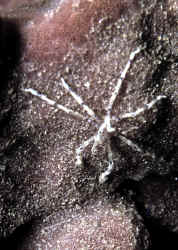
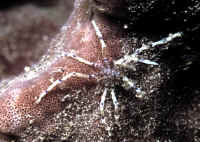
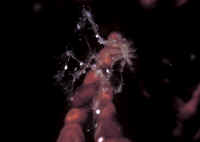
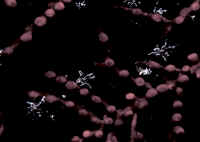
These are tiny (some barely perceptible to the naked eye... a few millimeters to centimeters across) jointed legged creatures that resemble terrestrial spiders (none marine), but have only 4-6 pairs of legs. If you can look close, you'll see they have two pairs of eyes on a rounded knob process that extends from their heads, and a long proboscis. Women's libbers will like these animals... though the sexes are separate, it is often the males that carry the fertilized eggs and young about (no planktonic larval stages). Most of the 1,200 or so described species are found in association with encrusting invertebrates... all live on the bottom, crawling about. Found worldwide (350 or so species in the Indo-Pacific). in tropical to subtropical seas. More Commonly Encountered Pycnogonids:
Selection: These animals aren't necessarily rare in the wild, but are cryptic, small... and easily overlooked. Their presence in captivity is a matter of "luck" in dealing with very fresh live rock... They just "appear out of nowhere" for those fortunate enough... and do no harm to captive marine livestock. |
|

|
Features: |
|
| Featured Sponsors: |