|
Related FAQs: True Blennies, Combtooth
Blennies 2, Blenny
Identification, Blenny
Behavior, Blenny
Compatibility, Blenny
Selection, Blenny Systems,
Blenny Feeding, Blenny Disease, Blenny Reproduction,
Algae-eating
Blennies, Ecsenius Blennies, Saber-Tooth Blennies, Blennioids & their Relatives,
Tube/Pike/Flag
Blennies/Chaenopsidae,
Related Articles: Blennioids and their Relatives,
Algae Eating
Blennies, Ecsenius Blennies, Sabertooth Blennies, Family
Blenniidae/Tribe Nemophini, Algae Control, Triplefin Blennioids, Tube/Pike/Flag
Blennies/Chaenopsidae,
Regional Accounts: Blennioids of
Indonesia,
/The Conscientious Marine
Aquarist
The True/Combtooth Blennies, Family
Blenniidae
|
|
|
By Bob Fenner
|
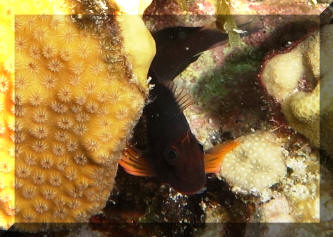
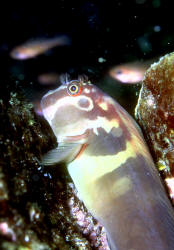
Cirripectes castaneus |
 |
New Print and
eBook on Amazon
Marine Aquarium Algae Control
by Robert (Bob) Fenner
|
Family Blenniidae, the Combtooth Blennies;
are mostly marine and tropical, Atlantic, Indian, Pacific. They have
scaleless bodies with large blunt heads that bear their namesake
comb-like teeth; maximum size to eighteen inches, but most under
six.
These are the Blennies to many.
There are some six tribes, fifty three genera with about three hundred
fifty species. Atrosalarias, Ecsenius, Meiacanthus,
Petroscirtes, Ophioblennius, Cirripectes, Parablennius, Istiblennius,
Salarias are the genera whose members are most often offered to the
hobby. <To save download time, the Sabertooth Blennies are treated
elsewhere>
Blenniids include several mimetic species, that look and
behave like other fishes, including other blennies, to gain advantage.
Mullerian, Batesian and aggressive mimicry are all involved. We will
mention some of this below.
A Least Favorite Blenny, The False
Cleanerfish
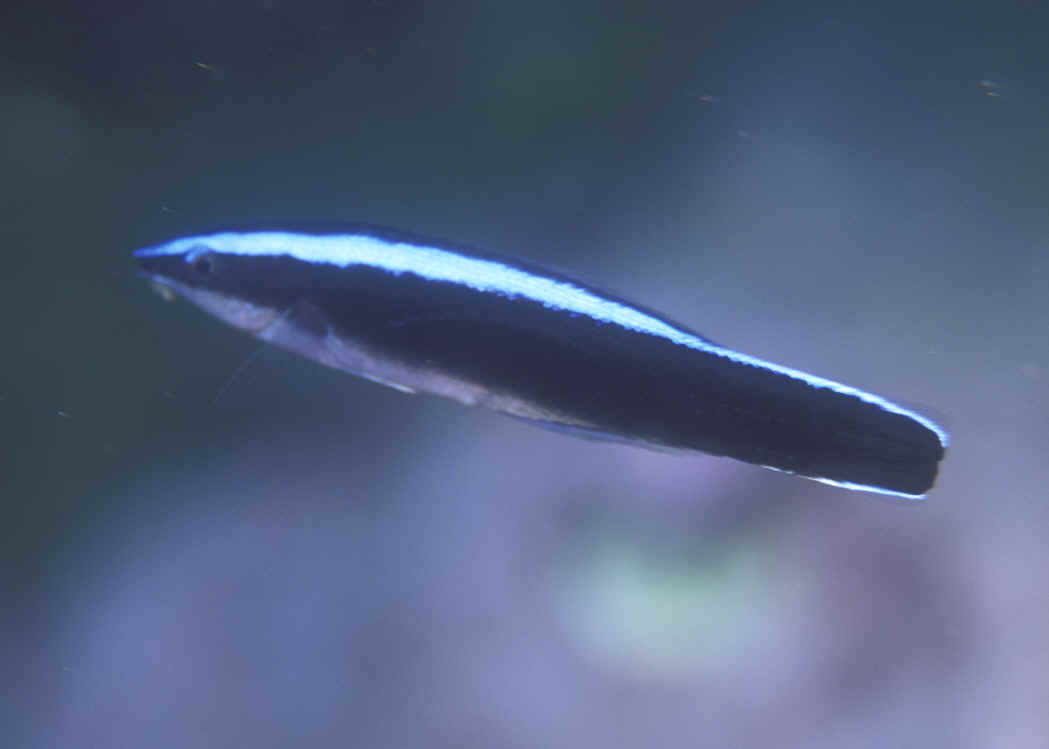
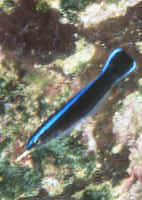
| Aspidontus taeniatus Quoy & Gaimard
1834, the False Cleaner. Mimicking Labroides
dimidiatus in both color, markings and behavior, the False
Cleaner sneaks up on unsuspecting victims and takes a bite out of
their flesh or scales. This fish is discernible from its wrasse
look-alike mainly by its sub-terminal (underslung) mouth. As you
might guess, rarely offered (by accident) in the trade/hobby. Nuka
Hiva, Marquesas image on left, Labroides on right. |
|
Favorite Combtooth Blennies/Groups
The family Blenniidae has several stalwart species that
are perennially offered to aquarists. The Caribbean Red Lip Blenny
Ophioblennius atlanticus is surely one; and a ready "poster
child" example of the family, skittering about with its comb like
dentition and prominent "eyebrow" cirri. Please see the
pertinent negative press and image of the "Leopard" or
Sailfin Blenny, Exallias brevis, posted in the FAQs on
Blennies... this obligate corallivore occasionally makes it into
pet-fish markets, and shouldn't (thanks to Bruce Carlson, Waikiki
Aquarium for this heads-up).
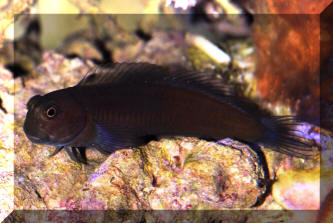
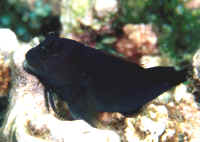
Genus Atrosalarias: Monotypic (one species).
Genus Blenniella:
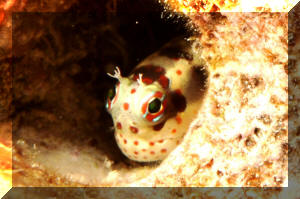
| Blenniella chrysospilos (Bleeker 1857),
the Red-Spotted Blenny. Indo-Pacific. To five inches in length.
Found on reef flats of moderate to high current. Shown typical
setting, hiding in a hole in Fiji. |
|
Genus Cirripectes is another popular aquarium genus with
a handful of its twenty one members offered off and on to the trade.
Their all-seeing eyes are large and protruded even by blunt blenny head
standards. Also conspicuous are the groups fleshy lips and
"eyebrows" (orbital cirri). Cirripectes are more
cryptic than Ecsenius but just as attractive and comical.
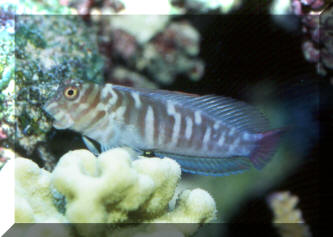
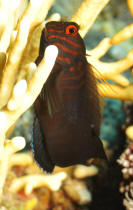
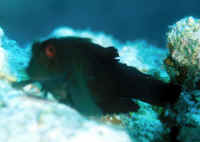
| Cirripectes castaneus (Valenciennes 1836),
the Chestnut Blenny. Indo-Pacific; Red Sea to Tonga. To five inches
in length. Found on reef flats of moderate to high current. Males
with a barred appearance anteriorly. A male and female in the Red
Sea. |
|
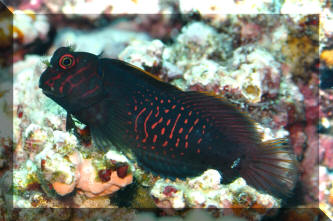
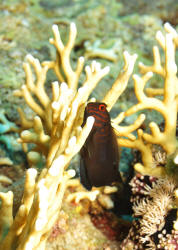
| Cirripectes stigmaticus Strasburg & Schultz 1953,
Red-Streaked Blenny. Bright red
ring about the eye. To 10 cm. Fiji 2017. |
|
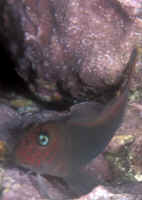
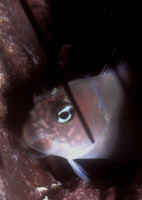
| Cirripectes variolosus (Valenciennes 1836),
the Red-Speckled Blenny. Pacific Plate: Palau to Johnston,
Marquesas, throughout Micronesia. Usually found in association with
Pocillopora corals. To four inches in length. Nuka Hiva,
Marquesas photos. |
|
Bigger PIX:
The images in this table are linked
to large (desktop size) copies. Click on "framed" images
to go to the larger size. |
|
%20MD.JPG)
|
Genus Crossosalarias:
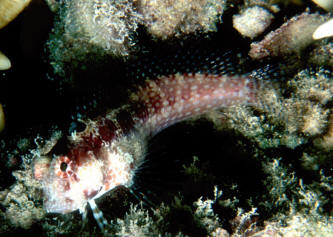
| Crossosalarias macrospilus Smith-Vaniz &
Springer 1971, the Triplespot Blenny. Western Pacific; east to
Tonga. To 8.2 cm. This one off of Queensland, Australia. |
|
Genus Ecsenius:
|
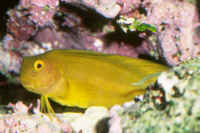
The genus Ecsenius deserves special
attention in the family Blenniidae; with forty seven species
these are delightful, small (to four inches) fishes that do
superbly well in peaceful fish, invertebrate and reef
systems.
|
%20MD.JPG)
|
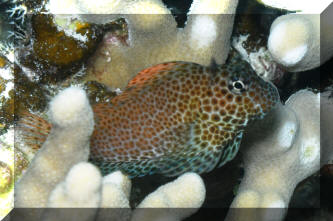
The Coral Eater: Exallias (one species, thank goodness)
Exallias brevis (Kner 1868), Leopard Blenny.
Indo-Pacific; Red Sea to Hawaiian, Marquesas Islands. To almost six
inches in length in the wild. Obligate feeders on live coral
polyps. Definitely NOT reef safe. Still offered on pet-fish markets
on occasion. A male in Oahu, Hawai'i female at a marine
wholesalers in L.A. starving...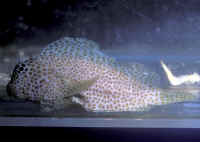
|
%20MD.jpg)
|
Genus H ypsoblennius:
| Hypsoblennius brevipinnis, Barnaclebill or
Red-Spotted Blenny. To 2.5 in. Puerto Vallarta 2015 |
%20MD.JPG)
|
Genus Istiblennius: Twenty four nominal species
Genus Ophioblennius: ten described species. Can be territorial
terrors.
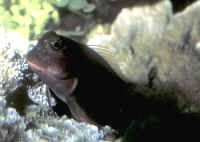
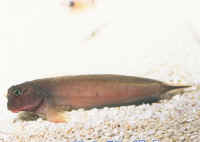
| Ophioblennius macclurei
(Silvester 1915), the Atlantic The Red-Lipped Blenny. Tropical
Eastern and Western Atlantic. To more than seven inches in the
wild. A tough customer... territorial. Aquarium images. |
|
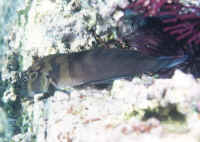
| Ophioblennius steindachneri Jordan &
Evermann 1898, the Largebanded Blenny. Tropical Eastern Pacific. To
a bit over seven inches in length. At right off of Cabo San Lucas,
Mexico's Baja. Below, a juvenile and adults in the
Galapagos. |
|
Bigger PIX:
The images in this table are linked
to large (desktop size) copies. Click on "framed" images
to go to the larger size. |
|
%20MD.JPG)
%20MD.JPG)
|
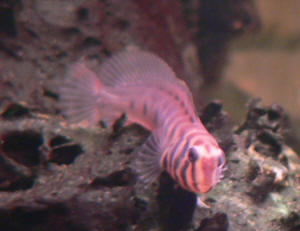
| Omobranchus zebra (Bleeker, 1868) is known as the Zebra
Blenny or Vietnamese Freshwater Blenny in the aquarium trade. It is
found in mangrove and brackish waters fringing the Indian and
Western Pacific Oceans from India through to Philippines, though
oddly enough not from Vietnam, despite the common name! Maximum
length is about 2.5". Hard, alkaline water with some salt
added (SG 1.005+) seems to be essential to the long-term health of
these fishes though they seem to tolerate maintenance in freshwater
adequately well for short periods. They can also be kept in marine
aquaria. Zebra Blennies are distinctly territorial and need to be
given plenty of space is kept with their own kind or with other,
potentially competitive fishes, such as gobies. They are predatory
and will attack surprisingly large prey, including shrimps almost
as large as they are! They also enjoy bloodworms and other such
foods. Do not seem to eat algae. This species is very pretty, with
a greyish body marked with bold dark grey and off-white
approximately vertical bands that are strongest on the head but
become fainter towards the tail. Other brackish water species of
Omobranchus may turn up in the future, and these will likely
require similar care. |
|
Blenny photos 3/21/07 Hello
Robert, Courtesy of Bob Edwards, here are some photos of
Omobranchus zebra: It's a brackish/marine species, so may
have use in the marine blenny article as well as the
FW/brack one. Hope they're useful. Cheers, Neale <Will
post with credit to BobE, noted re the marine habitat. B>
|
 |
.jpg) |
Genus Salarias: Lawnmower Blennies.
Much-loved by aquarists as algae groomers. Seven nominal species.
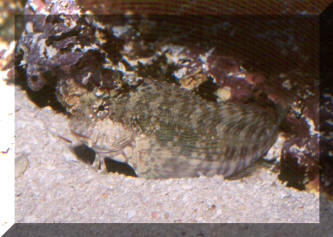
| Salarias ceramensis Bleeker 1852, the Seram
Blenny. Western Central Pacific, Indonesia, Philippines and PNG and
northern Australia. To six inches in length. This one in an
aquarium. |
|
Genus Stanulus:
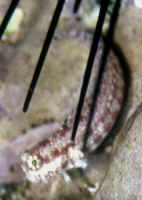
| Stanulus talboti Springer 1968, Talbot's
Blenny. Pacific; GBR to S. Japan to the Society Islands. To about
2.5 inches in length. Nuka Hiva, Marquesas, Polynesia
pic. |
|
Bibliography/Further Reading:
|
|
New Print and
eBook on Amazon
Marine Aquarium Algae Control
by Robert (Bob) Fenner
|
Baensch, Hans A. & Helmut Debelius. 1994. Marine
Atlas, v. 1. MERGUS, Germany.
Brown, Gregory W. The Combtooth blennies, from the kelp
forests to the world's coral reefs. Discover Diving 3,4/92.
Burgess, Warren E., Herbert R. Axelrod & Ray E.
Hunziker. 1990. Atlas of Aquarium Fishes, v. 1.
Marines. T.F.H. Publ. NJ.
Dakin, Nick. 1992. The Book of the
Marine Aquarium. Tetra Press.
Howe, Jeffrey C. 1995. Original
descriptions; Cirripectes alleni, Ecsenius randalli.
FAMA 10 & 11/95.
Hunt, Philip. 1993. The midas touch. TFH
2/93.
Kahl, Burkhard. 1972. Blennies of the
Mediterranean. Aquarium Digest International 1:2(72).
Nelson, Joseph S. 1994. Fishes of the
World, 3d ed. John Wiley & Sons, NY.
Parker, Nancy J. 1976. Piscatorial
clowns. Marine Aquarist 7(4):76.
Pyle, Richard L. & A. Privitera. 1990. The Midas
Blenny Ecsenius midas Starck.
Ranta, Jeffrey A. 1996. Bicolor Blennies. TFH 12/96.
Robertson, Graham C. 1975. North Sea
blennies. Marine Aquarist 6(1):75.
Thresher, R.E. 1984. Reproduction in Reef Fishes. T.F.H.
Publ., NJ.
|
|


MD.JPG)
.jpg)
%20MD.jpg)
%20MD.jpg)