|
FAQs on Marine Velvet,
Amyloodiniumiasis 4
Related Articles:
Marine Velvet,
Parasitic Disease, Copper Use, Formalin, Formaldehyde
Use,
Related FAQs: Marine
Velvet 1, Marine Velvet 2,
Marine Velvet 3, & FAQs on
Amyloodinium/Velvet: Diagnosis/Symptomology, Prevention, Cures
That Don't Work, Cures That
Do Work, Products/Manufacturers... & Marine Parasitic Disease, Parasitic Marine Tanks,
Parasitic Reef Tanks,
Cryptocaryoniasis, Marine
Ich, Biological
Cleaners, Treating Parasitic
Disease, Using Hyposalinity
to Treat Parasitic Disease,
|
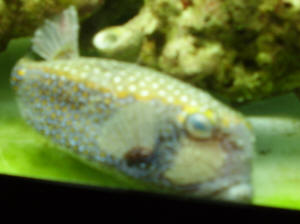
More likely Crypt.
|
Marine Velvet surprise attack
7/27/19
Hi WWM Crew
Please help me figure out the cause of our disaster. We are in total shock. Five
dead fish today and two others with obvious signs of velvet.
Two days ago everything appeared fine. Last added to tank was 2 pajama cardinals
about 6 months ago - quarantined prior to putting in display. They appear
unaffected at this point. All other residents range from 11 years old (Flame
Angel) to 3 year old Blue Chromis.
In 2014 we did have a devastating strike of Velvet and lost many fish. Several
fish did survive - the aforementioned Flame Angel was one. It was quite a long
time afterwards until we added anything to our display tank and subsequently
have been diligent regarding QT any new additions.
It’s been 20 years of owning reef tanks and five years since the mentioned
outbreak.
How could the parasite survive so long without any afflictions to the fish all
these years?
Any insights?
Regards, Brenda Brush
<Mmm; well, Amyloodinium can/may be introduced on most anything marine/wet...
foods, water from an infested system, live rock and sand, non-fish livestock...
There is some possibility that this Dinoflagellate pest/parasite (and others,
e.g. Cryptocaryon), can be resident... even in systems that show not even
clinical symptoms. There is indeed a balance of favoring, disfavoring factors
that can tip a system (via its potential hosts) toward infestation. I'll offer a
link to an effort I've penned to describe such:
http://www.wetwebmedia.com/mardisease.htm
Bob Fenner>
Marine Velvet surprise attack Wil’s input
7/27/19
Hi WWM Crew
<Hi Brenda>
Please help me figure out the cause of our disaster. We are in total shock. Five
dead fish today and two others with obvious signs of velvet.
Two days ago everything appeared fine. Last added to tank was 2 pajama cardinals
about 6 months ago - quarantined prior to putting in display. They appear
unaffected at this point. All other residents range from 11 years old (Flame
Angel) to 3-year-old Blue Chromis.
In 2014 we did have a devastating strike of Velvet and lost many fish. Several
fish did survive - the aforementioned Flame Angel was one. It was quite a long
time afterwards until we added anything to our display tank and subsequently
have been diligent regarding QT any new additions.
It’s been 20 years of owning reef tanks and five years since the mentioned
outbreak.
How could the parasite survive so long without any afflictions to the fish all
these years?
Any insights?
<It is not uncommon to see these outbreaks from time to time; even in the most
established tanks that have no new additions for a long time, it may happen.
Amyloodinium as well as Cryptocaryon are always present but in a dormant
state, and just like in the case of humans, these parasites/pathogens
are waiting for the immune system to be compromised to launch an attack, the
worst part is that they don’t need just live fish to thrive, they can survive in
almost any wet surface, so it is possible to transfer them in all wet gear
commonly used in maintenance chores (nets, hoses, buckets, etc…) Hope you find
this helpful- Cheers. Wil.> <<Thank you Wil... I swear we're two different
people! B>>
Regards, Brenda Brush
Marine Velvet Dormancy 10/16/18
Hello Bob and Team!
<Hello Anik, Wil this morning>
Hope you are doing well. Like any reefer, I’m constantly reading about
preventing any disasters.
<Like any good/responsible reefer!>
The topic of my paranoia this week is Marine Velvet. Some facts about my
setup: my display tank is 100G mixed reef; shows no signs of marine
Velvet and never has. There’s been a sign of ich once, which made itself
visible on bullied fish but that cleared up on its own and everything
has been clear since. Btw I QT everything, and medicate every new fish
with PraziPro and Cupramine and observe after.
<Quarantine is fine but there´s no need to medicate if fish are not
sick, treating healthy fish just makes any pathogen more resistant to
medications and this could be a problem in the future if fish happens to
get sick.>
Typically I QT for 3-4 months.
<4-5 weeks is more than enough>
The one time I didn’t was when I added a mandarin to my DT, no QT :(.
Current roster, two ocellaris clowns, male Anthias, melanurus wrasse,
yellow Coris, yellow flanked fairy wrasse, flame angle and tiny blonde
Naso.
<I hope you are aware that the Naso tang will need a bigger tank (a few
to several hundred gallons) to have a long, healthy life.>
Anyways, questions; is it possible to have marine Velvet present in a
tank but kept at bay from infestation by keeping water parameters in
check and general conditions clean/healthy/happy to hold the velvet in
check?
<Actually that is how it works; velvet as well as other diseases are
always present in the system water but with good maintenance and feeding
practices, you can keep them away of your livestock indefinitely.>
What I am getting at is can a fish have velvet for months and not be
symptomatic until something triggers it?
<As I mentioned, disease is always present but only attacks your fish if
its immune system is compromised.>
Depending on your answer, I may go against your advice from a few months
ago regarding Ick in the DT (referring to that one fish mentioned
above); I may just move all my fish to QT and treat them and run the
tank fallow out of straight paranoia.
<I don´t see the need of treating your fish without been absolutely sure
they are sick, you are going to add unnecessary stress. I wouldn´t move
them to QT>
I have two wrasses and a flame hawk in QT right now and would like to
plan my next steps to add them to DT...but would like to avoid disaster.
<If you have quarantined/observed them for at least 4 weeks, you may
transfer them to the DT.>
Thanks Team! Anik
<You´re very welcome. Wil>
Re: Marine Velvet Dormancy
Thank You Wil!
<You´re welcome Anik!>
Love your teams’ advice. It definitely helps to quell much of my on
going paranoia.
< Hahaha....there´s no need to be paranoid! just make wise, on impulsive
decisions...we are glad to be helpful…>
I’m secure and confident in my overall QT scheme and don’t plan on
adding anymore fish in the future...until I upgrade which is a near term
possibility.
<That´s good to know>
Yes the Naso will get a larger home, gladly he’s only 2 inches right
now.
<Yes, you still have time to plan the upgrading >
I won’t move the fish then. Thanks again for your advice!
Have a great night.
<Have a great night too!>
Anik
<Wil.>
Copper treatment, incl. marine Velvet f'... Using WWM
3/15/18
Good evening from Thailand
as I had a bad Marine Velvet outbreak in a tank (fish with life
rock only)
I am now having the survivors go through a Cupramine treatment. This
started a few days ago and copper levels are sitting nice at the
recommended 0.5 ppm and fish seem to be behaving ok still eating well.
(think even noticing some of the survivors showing the parasite previous
losing them??)
Some snails I had in there and crabs seem to have died
<!? Yes; of a certainty from the copper exposure. ALL non-fish life
needs to be elsewhere; lest they be poisoned AND absorb the copper>
which I knew was going to happen but I figured getting the tank Velvet
free and in the same time treat the survives superseded the snails and
crab as they can be reintroduced at a later stage again...Now I am
wondering as I might want to add new fish to this set up
<What? No; don't add anything here until you're VERY sure the Velvet is
gone>
as the suggested 30 day period is on going with every time a new fish is
added we start counting back from day 1 I guess.....How long can fish be
ok in this therapeutic level of copper and how dangerous is to add new
fish
into a copper environment from buying them new...
<There is too much to answer, ask and respond to here by rekeying. But
all is available by your searching on WWM re "Cupramine", "Velvet"...
and READING. Do so, and write back w/ specific questions (if you have
them) afterwards. Bob Fenner>
Marine velvet... no reading, using WWM
11/29/17
Hi, please help me I need to know how to get rid of marine Velvet the
quickest way naturally as I have lots of invertebrates in my tank, lost
all my fish except a black Combtooth blenny, he’s thriving in tank, I do
feed garlic extreme an I do put it in the water, I need to know how long
it takes to get rid of marine velvet the no fish way, step by step as
this is my first time dealing with this as I’m new to saltwater !
<But not run-on sentences>
I do have fish that have never been in my main tank, that are in a
quarantine tank, how do I know when it’s safe to put them in the main
tank! Thanks
Kandis
<.... try reading: Here:
http://www.wetwebmedia.com/amylloodiniumart.htm
and the linked files above. Bob Fenner>
Marine Velvet vs. Freshwater Velvet
9/29/17
Hello, after all these years of being in this hobby and servicing
aquariums, I can’t believe that I need to write for advise from you
great folks.
I quarantine all marine livestock for four weeks using CopperSafe at 2.0
because I service 20 marine aquariums for folks and business and I move
many fish through my quarantine tanks.
<Good to have, use a strict S.O.P. here>
I had two jobs that became low on fish and against all my rules of
quarantining livestock, I jumped the gun and took fish out after only
two weeks in my tanks. Well as Murphy’s Law prevails within a couple
weeks fish in these two jobs started dropping like flies.
After witnessing the fish struggle and die I’m fairly sure they have
velvet, I do not see the tell tale signs of “ICK” on their bodies but do
see the velvet type of film on their bodies before passing away.
<Both can be/come so virulent and undetected/undetectable... REALLY need
to sample body slime, perhaps a clipped gill section, and look at under
a 'scope>
I’m always ready to learn more and dove into the net to reread on this
subject I found that this parasite also thrives with photosynthesis!!
<Yes, Amyloodinium is a Dinoflagellate, a single celled algal species>
To my surprise both jobs are brightly lit with out side light near by!!
My only thought on getting away from these parasites now that the fish
are almost all dead is to bomb the job with a heavy dose of copper and
let the tank sit for a few weeks.
<Mmm; having been in the aquarium service business myself a few decades,
I encourage you to liquid chlorine bleach "nuke" this system.... per the
procedure outlined on WWM, rinse, fill, rinse... re-fill and start
again; just to be sure>
Another thought is to take these jobs to freshwater “African Cichlids”
to be able to have colorful fish for these jobs in a matter of days.
<Ahh yes; another possibility>
But my question to you folks is, will this marine form of Velvet be able
to live in freshwater if I don’t manage to kill all the marine velvet
and switch the tank to freshwater?
<I think you should be safe here; the freshwater should kill the marine
velvet>
Thank You for any help in this matter.
Jim
<Welcome. Bob Fenner>
Re: Possible Oodinium Hello again Robert, <Howdy> My
fish have been having problems again lately. Several of them have been
scratching (a Toby, the tang, and one of the gobies) quite a bit today.
There are breathing a little bit heavy, and they look annoyed by
something (jerking their bodies, more irritated with each other). The
temperature is still running a little bit high, but it hasn't gone
above 84 (that may still be too high though). I have powerheads
circulating the water, and an airstone. I did a 15 gallon water change
(80 gallon tank) making sure that the temperature and salinity matched.
The water quality is fine (although the nitrates have been around 20
lately). My question: If I do have a parasitic infection, how do I know
and what can I do to treat / stop it (without destroying the live rock
/ fish's health etc)? <Best is to learn to do a simple
skin/slime scrape test... with a microscope, a glass slide... a less
than willing fish... No staining necessary... but maybe helpful. Are
you using cleaner organisms? Bob Fenner> Thank you again for all of
your help in the past! Jim Moss
Re: Marine Velvet / Ich and Chloroquine/Hypo Treatment
6/5/14
Hi Bob and Team,
<Hey there Brad>
Just a follow up. It's been 1.5 weeks since my last email when I
initiated hyposalinity treatment + Chloroquine. To date I
haven't seen much of any improvement (no fatalities but no improvement),
and I'm wondering if perhaps at this stage I've eliminated the
Ich/marine velvet and perhaps have flukes (since I've
been treating with Chloroquine for about 2 months now, and don't
see the trademark ick spots, nor the velvety coating/rapid breathing,
just some scattered white spots, some fin fraying, and a few spots in
the eyes.
<It is indeed possible. Trematodes are almost always present on marine
fishes in the wild...>
interesting that it isn't on all fish, just a few. Some fish show no
signs at all. I'm beginning to think maybe I still have some form of
flukes/monogeans. It definitely doesn't appear to be anything bacterial
or fungal.
<... do you have access to a simple microscope? Sampling and looking is
simple...>
From what I can see researching online, I'm not sure that either
hyposalinity or Chloroquine would treat flukes (just some anecdotal
evidence on forums, but nothing concrete.)
<Mmm; they will not. Straight pH adjusted freshwater WITH formalin will
eliminate external (body and gill) flukes... Otherwise, the use of
Anthelminthics like Prazi/pro is advised>
I don't want to rush into anything but wanted to seek your guidance on
treatment. Should I continue to treat with Hyposalinity/Chloroquine?
<I would not. You've already gone long enough with this M.O.>
Maybe I should pull the Chloroquine with water changes/poly filters, but
hold the hyposalinity? The other option I was thinking was to pull the
Chloroquine and treat with Praziquantel at hyposalinity levels.
<I'd be reading... THEN doing dips while moving the fish livestock, THEN
treating them with Prazi>
I've used Prazi prophylactically in the past for my reef tank fish with
Copper. Not sure if it would be ok to treat with it + hyposalinity.
Seems like an easier treatment on the fish. I could also punt and
continue the current path, but usually in my experience you notice a
change in symptoms when you are affecting a cure within a few days, and
the multiple weeks of treatment is to ensure you eradicate everything +
give your DT time to kill off the parasites.
Any guidance would be greatly appreciated!
Best Regards,
Brad
<... wish we could do "the Vulcan mind-meld... am about as olde as
Spock!)... reading re Trematodes, 'scope use, the compounds mentioned...
Bob Fenner>
Re: Marine Velvet / Ich and Chloroquine/Hypo
Treatment 6/5/14
Thanks Bob!
<Welcome Brad>
I do have a microscope, and just got oil for 40x+ resolution, and also a
USB adapter so I can take pictures and share. I agree with not doing
trial by elimination treatments, and not opposed to pulling all of the
fish again for treatment. Just wanted to avoid that if possible as to
not stress the fish out more if there was a simpler coarse.
<Course; and better to sample, know what is on your fishes>
Will ponder this a bit more and dig around WMM some more along with
pulling out Ed Noga's book for more research after I catch a candidate
fish and collect the samples. Just wanted to follow up in case if there
was something else obvious that I was missing.
All the best,
Brad
<Not that I know of. Cheers, B>
Defeating Marine Velvet in DT and HT
1/18/14
Hi WMM Crew,
I would like to get your opinion on a few specific questions I didn't
catch on your site, and which I've seen varying opinions on the net.
I setup a new 300G tank and despite a quarantine period (30 days for the
tank, 60 for the fish) after a return pump failure that caused a temp
drop because the heater was in the sump there was an outbreak of Ich and
marine velvet in the month after the event. I only noticed the ICH
at first, but when the classic velvet symptoms kicked in over the
following month I new that evasive action was really required. So,
I've already taken the liberty of removing all of the fish and putting
them into my original 120 quarantine. Not as nice of
accommodations as the 300, but I never tore it down after the initial
setup, so it was still running fine. I have a few questions
regarding my fallow period and treating the fish.
1. What is the max temperature I can
set the tank to with some crabs/snails and a few leather corals to help
speed up the lifecycle of the MV/ICH? Is 84 or 85 Fahrenheit too
hot? I'm planning a 4 week fallow period. I also have
a 120W UV on the tank with a new bulb just to help things along.
<The mid to upper 80's F. should be fine>
2. I've read conflicting opinions
about blacking out the tank for a period of time because the marine
velvet is a dinospore related to algae. Assuming I removed the few
leather corals, do you think this might help in addition to the temp
increase to further impact the velvet? I was thinking of doing it
for a handful of days later in the fallow period.
<A lack of light will kill the dinospores in time; but not a handful of
days>
3. I have some angels that are noted
for being sensitive to copper medications. My HT is treated with
Cupramine, but I was thinking about running carbon to remove that +
water change and switching to Chloroquine phosphate which I don't yet
own, so I'd have to order. One thing I've not seen on this site
but I've heard conflicting information on the web is if this impact the
biofilter at all?
<CP can indirectly malaffect nitrification>
Some folks say yes, others say no. Copper doesn't impact it in my
HT, but I'm worried that if I put this in it might spike the nitrogen
cycle. Do you think this will impact the biofilter, or do you
think the anecdotal evidence about it spiking the bio filter might be
folks running it in tanks with invertebrates and algae which it is known
to be toxic to.
<Yes>
Hoping this post sheds some light and helps others in the hobby if they
have these questions as well.
<I as well>
Thanks much!
Brad
<Welcome. Bob Fenner, about to get on a plane>
Likely Marine Velvet infection in display tank where the
fish appear immune. Impt. Questions
11/27/13
I appreciate the vast knowledge of the site and have used it quite a bit
to try to understand the hobby, but I haven't been able to track a
specific answer to the question I have. Basically, I had two fish die,
which raised alarms, and my LFS and I couldn't pinpoint cause. My water
parameters have been consistently normative. I did not quarantine
(tragic flaw), because my LFS does quarantine, but I purchased a fish
from a different store, and I believe that fish was the fish that
introduced Velvet into my display tank because it was the first to die.
The second (an already introduced Toby puffer) followed shortly
thereafter.
<IF Amyloodinium, likely all fishes would die... and show symptoms>
The tank is 90g FOWLR with a valentini, dwarf lionfish, Foxface, dwarf
angelfish, goby, and a rainbow wrasse. The two that died were a
saddle puffer and a flame angel (which I replaced with the current one).
The deaths occurred over a month ago.
Because none of the other fish appeared affected at the time (nor have
they shown symptoms at two a half months), I didn't suspect Velvet,
<Ahh!>
but I had a 30g freshwater that I converted to saltwater by taking LR and
saltwater from the other tank, and I introduced two clown Perculas to
it.
They looked healthy for a couple of weeks. One day, they were fine. Both
were eating and were fine. The next day, one was dead and the other was
swimming in the flow and had a white velvety hue. I pulled it out, gave
it a freshwater dip, but it died before I could get it copper treatment.
Long story longer, I Googled "Velvet," and the image of the clown popped
up. It was an exact image of what my fish looked like.
<Mmm; could be other Protozoans>
I'm going to let the thirty gallon lie fallow, but the 90g, from which
the infestation likely occurred, I don't want to molest. The fish in the
90g appear well. My question is, will the Velvet die off if the
fish in the tank aren't affected, or will it continue to live? Also,
will I be able to introduce new fish to that one, or will I have to be
wary of an outbreak?
<There are folks; plain hobbyists to academics, who've stated that some
parasitic diseases can/do induce immunity; and I do believe this is so,
as well as the possibility of such infestations "laying dormant" or
existing in sub-clinical states in captive systems... "waiting" for
weakened stock, conditions to "become" hyperinfective... How to avoid
troubles? The assiduous use of quarantine/isolation ("hardening") of new
specimens... even slow introduction to the extant system by way of
adding some water from it to the isolation system after the new
specimen/s is/are stable.
This sort of topic is touched on in the "Infected States" FAQs files
that are linked here:
http://www.wetwebmedia.com/parasittkfaq2.htm and here:
http://www.wetwebmedia.com/reefparfaq2.htm
and the linked files in series>
Thank you for your time.
<And you for yours. Bob Fenner>
velvet disaster 7/25/12
Hi Bob,
<Jeff>
We're just heartbroken. I looked in on the fish this afternoon and was
surprised to see them lined up by the cleaner shrimp. When I took a
closer look, I saw that the two Heniochus diphreutes were coated in what
appears to be velvet. The two black and white clowns were also being
serviced. We got the Heniochus, the clowns and the Kole tang out. They
are being treated with Cupramine in a hospital tank. Before we pull all
the rock out of the tank to find the other fish, I wanted to find out if
can safely leave any of them in there, while we wait for the protozoa to
run their course, or do all have to be pulled?
<IF this is Velvet, Amyloodinium, it will likely kill all fishes in
there.
Not easily cured, endured>
They are a mandarin goby, a shrimp goby, a royal gramma and a pearly
Jawfish. All except the mandarin are going to be tough to corner.
We have two twenty-gallon quarantine tanks. In there are a swallowtail
angel, two black and white clowns, the Heniochus and Kole tang. Even if
they survive the velvet, do they have a reasonable chance of making it
for six weeks in such small tanks?
<Not good odds>
Right now, the swallowtail is completely isolated from the others and
because he was already in quarantine, he is uninfected. If I treat his
tank with Cupramine though, I was thinking of putting the goby,
mandarin, Jawfish and gramma in with him, and have the clowns, tang and
Heniochus in the other tank. Does that mix make sense?
<Will be tight>
I don't want to hurt any more fish though. If they do survive the
treatment but might not survive the quarantine, I'd prefer to find homes
for them as soon as a I can.
any advice is appreciated. we're pretty miserable about this. We thought
we were being so careful. I'm wondering now if the mysterious death of
the potter's angel last week might be explained by at least having the
early stages of velvet, and he then spread it around the tank when I put
him in there (he died nearly instantaneously after putting him in the
tank).
Jeff
<Could be another pathogen/Protozoan... need sampling, microscopic
examination to tell for sure. Bob Fenner>
velvet outbreak, questions part two 7/26/12
hi bob,
<Jeff...>
Velvet update: the Kole Tang and the two Heniochus are dead.
<...>
The black and white clowns are still alive in the QT.
In a separate QT is a Swallowtail Angel that we obtained from
LiveAquaria.
They say he was quarantined for two weeks. Here are my concerns
about her:
1) How will she do in a 20-gallon long tank for however number of weeks
she needs to be there while the DT goes fallow?
<... w/ monitoring of water quality, spare feeding... fine>
2) The water in the QT tank had been changed 50 percent and then
filtered for the week or ten days since we removed the potter's angel
that died when placing it in the DT. If there was some disease on the
Potter's (wasn't visible but who knows?), is the Swallowtail in danger?
If so, what advice would you give for a safe preventative?
<Could be and not likely any>
If I pull the other fish from the DT and raise the temperature of the
DT, could the corals, clam and cleaner shrimp survive or would I have to
remove them.
<... I'd not move anything at this point. Am concerned that you're
over-reacting at this juncture; causing yourself and livestock more harm
than goo>
I think you wrote that this would speed up the period that the tank would
have to lay fallow. And finally, I've read conflicting reports about
mandarins and velvet; some say they are susceptible others say not.
Would you leave him in the DT with a higher temperature?
<Leave all as is for now>
Mostly, I want to do what is safest for the fish, so an plan you suggest
that will increase their odds works for us. We are just so tired of
losing these beautiful fish.
Jeff
<Time to be patient, investigate... read and reflect. BobF>
|
Velvet. - 5/7/2012
|
|
Hi Crew, Having read your site I notice you say that leaving the tank fallow will remove most of the disease, but surely then once fish are reintroduced the remaining few will rapidly multiply and kill the fish. Also how does leaving the tank
empty have an effect on the nitrogen cycle. I have an anemone, coral and two
Seastars in an 80 liter tank. Regards, AA.
|
wwm:
The theory is that Whitespot, Velvet, and other ciliate parasites need a host to complete their life cycle. The free-living stage (the stage that doesn't need a host fish) can only live for a certain number of days depending on the water
temperature -- typically a couple of days at tropical temperatures -- so if you leave the tank free of fish for, say, a month, there's practically no chance of free-living stages surviving. If you add healthy, parasite-free fish to that
tank, they shouldn't catch Velvet or Whitespot. With this said, the problem is that many apparently healthy fish can carry low levels of parasites, and may even have some degree of acquired immunity (something not really understood in the
realm of fish science). You can add these infected or carrier fish, and then look on in horror as your other fish come down with the parasite, or worse, the carrier fish get sick because something in their environment has suppressed their
immunity (water quality problems for example). If you're leaving a tank to go fallow, you need to *also* treat/quarantine the fish in a hospital tank using standard medications. These medications would be toxic to corals, shrimps, etc.,
but that's not an issue here because they're kept in the fallow aquarium. Since there's livestock in the tank, you can maintain the filter bacteria by feeding these invertebrates, perhaps keeping the food input somewhat comparable to
what you'd add if there were fish in there too. Shrimps and starfish will consume this surplus, and the filter bacteria couldn't care less whether the protein was eaten by fish or shrimp. If you reduce the food input dramatically downwards
once the fish have been removed to the quarantine tank, there's a risk the filter bacteria population could die back a bit, but even at a low level of food input proportional to what invertebrates and corals would need, you'd still have a
cycled filter with a ready ability to re-accommodate a population of fish if they were added carefully and with due diligence (feeding, water changes, ammonia/nitrite testing). Make sense?
Cheers, Neale.
|
Sick angelfish and a big thanks
2/21/12
Sorry to say that I am not writing under the best of circumstances but
due to your website and everything you guys do I think our newly
acquired French angelfish has a good chance of survival. So thank you
so much for all of your efforts in helping all of us in this wonderful
hobby.
<Welcome>
Four days ago we purchased a 5 inch French angelfish.
<Mmm, border-line too large for initial aquarium
use>
She was alert, active, eating well, and even keeping a blue jaw
trigger in line at the fish store. Not a single mark or torn fin so we
brought her home and put her in a 55 gallon quarantine tank. The second
and third days she looked great. No change in habits and was already
coming up to the top to be fed. On the evening of the fourth day she
developed spots of a whitish coating on her body and her breathing
seemed to be up a little. I immediately turned to your site to research
what may be the problem. After an hour of research she quit swimming
and actually began to lay on her side on the bottom of the tank.
<Mmm, likely Velvet from your description>
I knew we had to do something quick. From the appearance of the spots
and the quickness that it set in I figured we were dealing with velvet.
We lowered the salinity from 1.020 to 1.019
<I'd drop immediately to much lower IF I were doing this... like
1.010>
and added an additional wooden air stone to increase oxygen
content in the water. We were hoping this would make it easier for the
angel to breathe.
<Should>
We also removed all filter material and dosed the tank with
CopperSafe.
<Mmm, hard on Angels; particularly ones that are already compromised
health-wise>
The copper level is currently at .20 to .25 ppm. During the first
hour she was still laying on her side and things didn't look good.
Then she decided to get up and swim around a little. Two hours into the
treatment she is now sitting up but she is leaning on the side of the
tank. All of the lights are out in an effort to make her comfortable
enough to rest.
<Good>
Her breathing is staying steady at about 105-110 breaths a minute. A
little high but it is very steady. Hopefully a good sign.
Does it sound like we made the correct diagnosis? I would send a
picture but I don't want to stress her tonight. Did we take the
correct steps? Is there anything else we could or should do?
<Yes, yes, and yes. Read here: http://www.wetwebmedia.com/amylrealcures.htm
and the linked files above>
Thank you again. We are just starting the treatment process and she has
a long way to go but without your site she wouldn't have had a
chance.
Thanks,
Scott
P.S. We have a 210 gallon tank for her after the qt process is
done.
<Thank you for sharing. Bob Fenner>
Marine velvet, 11/28/11
Hi,
<Hello>
I have a question,
one of my customers bought a fish from someone and didn't do a
quarantine and her fishes caught the marine velvet.
She lost a lot of fish only 3 are left, and they seam unaffected, they
eat well and look good
<For the time being, they are infected, just have some level of
immunity to keep it in check.>
The question : I know that this parasite will live 6 weeks in a system
without a host if she keep the fishes in the aquarium, and wait 6 weeks
without introducing an other fish and after 6 weeks the fishes that she
have now never got the disease is the parasite gone?
<Doubtfully>
Or do she really have to remove the fishes and let the tank go 6 weeks
without any fish?
Can the fish still have the disease but without symptoms after 6
weeks?
<Yes and yes.>
Thank you for your help
I don't want to give her the wrong information
<This is why this disease is so problematic, it will often leave a
few fish relatively unaffected, but still contagious for any new
additions. Also as soon as anything goes wrong with the tank or
the fish themselves their lowered immune systems will allow the
parasite to kill them. Treat outside the tank and allow a minimum
of 6 weeks fallow. See here for more. http://www.wetwebmedia.com/amylloodiniumart.htm
.>
<Chris>
Re: Marine velvet 11/29/11
Thank you for the information.
<Welcome>
But that leave me with one question :
The fish that have survive till now, they are doomed?
<Most likely unless they are treated.>
They will ALWAYS carry this disease?
<Unless they are treated yes.>
If I tell her to remove them from the tank (that we leave the tank
running without fish for 8 weeks)
and that we put the fishes in a hospital tank, and we feed them, or
treat the hospital tank with Chloroquine phosphate would that remove
the disease.
<If treated with an appropriate medicine in a hospital tank while
the tank runs fallow you are most likely clear of the disease.>
Right now she have a 150gallons... so it's sure that eventually she
will want more fish than the 3 survivors.
I need to know how this can be done or if the only wait it's to
kill the fish that are left :( because they will always be a risk of
giving this deadly disease.
Thank you for your time.
<There are never any guarantees but if properly treated most likely
the disease will not be a continuing problem.>
<Chris>
Re: marine velvet 11/30/11
ok... an other question... the last one lol
if we feed the fishes food with Chloroquine phosphate, (the way they
tell us to in the book : The marine fish health and feeding by Bob
Goemans ,
<And Lance Ichinotsubo>
in theory the parasite wouldn't be able to stay on the fish... so
by doing the treatment (every 3 days) for 6 weeks we would be able to
let the fishes in the main tank and it would be like they would be no
fish in it since the fishes would be treated what do you think?
<Better to move the fish elsewhere... to a treatment tank... leave
the main/display empty of fishes, fallow for this period>
I'm just scare that by removing them to put them in an hospital
tank, that they will stress and become sick giving us no time to treat
when now they are ok and eat well
thank you
<Up to you... the CP is best whichever way applied. Cheers,
BobF>
Marine Velvet Outbreak
9/11/11
Hello:
<Shel>
First, I want to say THANK YOU for all of the great work you do . .
.
Next, on to my issue. I have a 55-gallon tank that's been cycled
since October of 2008. I have not added any new fish since Feb. 11th,
2011.
My tank WAS perfect until a few days ago when I noticed lethargy and
flashing going on. Today I noticed my Ocellaris has velvet.
<Mmm, where did this come from? Amyloodinium rarely comes about from
a "resting stage"... Almost always from an infested
host/fish>
I also have an Oscillated Dragonet, who seems fine,
<Slimier... less susceptible>
a few snails, and a Chalk Bass who is at the top of the tank, breathing
heavily, looks bad. I have absolutely no idea where the velvet came
from and I guess it 'is what it is'.
<Mmm, food perhaps... anything wet can be a vector>
I've read everything I can find about treating velvet, and nothing
sounds very promising other than moving all of the fish to a different
tank, treating them with Chloroquine diphosphate, and leaving the
display tank for 8 weeks.
<A good avenue>
My problem is this: I do not have a
quarantine tank setup (I know, bad, but it is what it is). I have
another tank, which is empty and is only a 29-gallon. Should I set it
up and move the fish,
<Yes I would>
then treat them? I don't have time, I know, to cycle it, etc.
<Just move the water from the existing tank...>
and I'm
thinking that they will probably not make it in there, especially if I
can't move any gravel, etc. to help it cycle faster.
Should I treat the main tank with Chloroquine diphosphate?
<You could...>
I know this is not the best solution, but I am willing to try anything
to save the fish.
I also don't have time to order the Chloroquine diphosphate online,
I know. If I can't get a hold of any, is there anything else I can
use that might work?
<... now we're getting into "third tier" choices...
more dangerous, less likely of effecting cure... You could drop Spg
precipitously (like to 1.010) and add (Chelated) copper to 0.15-0.2
ppm... and check twice daily for conc....>
My only other option is to let them die, wait the 8 weeks and start
over. Obviously this is a very bad option - I've had the clown
since 2008 when I started the tank.
Any advice would be greatly appreciated.
Thanks in advance for your help,
*Shelly Neumann*
<Sayings re rocks and hard places come to mind. Do write back for
more if you need, would like. Bob Fenner>
Re: Marine Velvet Outbreak 9/11.5/11
Mr. Fenner:
<Just Bob Shelly...>
First, as always, thank you SO much for all your wonderful help and for
your very zippy response to my first email.
<Welcome>
I do have a few more questions, though, if you don't mind?
Actually, what I think I need is your "This is what I would do if
I were you" take.
<Certainly>
I wasn't able to procure either Chloroquine Diphosphate or Quinine
Sulfate anywhere nearby, (tried 2 health food stores, Walgreens,
RitAid, Petco, a saltwater guy in the next state, etc.)
<A common state of affairs at this point/time... Do see WWM re
"sources" for such... likely will have to be
ordered/expedited from an etailer... Or you'll have to go w/
another treatment>
I also called two vets and was told "we don't do fish."
(They are ever so helpful - NOT!)
<Also the usual>
So, I decided to try your "third tier" choice. I've
lowered the SG from 1.024 to 1.014 (not quite as far as you said, I
know, but I can keep working on that) I didn't move the fish to the
29-gallon tank because there's really nothing in the tank to harm
other than the snails.
<Mmm, yes...>
After doing that, the fish are still breathing about twice as fast as
they should be, but seems to be feeling about 30% better than last
night. The chalk bass is not at the top of the tank gasping anymore,
but he is not swimming around much today and still has very labored
breathing. I did read Steven Pro's article about using hyposalinity
to cure parasites (ich mainly), but noticed it was written quite a few
years ago, so I'm not sure if the info. there is current.
<It is indeed... another friend in the trade, Lance Ichinotsubo
should get credit for his bold statements a few weeks back at the
second fish health conference we have given talks at UNE... he
professes to maintain his fish only service accounts at 1.010 spg. WITH
a titer of free copper as I'd mention... on an ongoing basis... AND
what is more, claims he can/has cured Brooklynellosis this way for many
years, occasions... I am given to believe his statements, though I was
incredulous at the time>
I am on the fence about using CopperSafe in the display tank (FO),
<Will kill the snails... I would go w/ Cupramine... will also kill
non-fishes>
but I am worried about using this on the Oscillated Dragonet.
He is not showing any signs of being ill and I really don't want to
kill him if I can help him. Being scaleless, I can't treat the tank
with Copper at all, can I, without harming him?
<Will, does more malaffect Callionymids/oids as you surmise...
but... I would still treat... on the low side... 0.15 ppm free cupric
ion... DO see WWM or elsewhere re test kits for copper
compounds>
Should I leave the SG as it is and order some Crypto-Pro and hope they
survive until it gets here or use the CopperSafe?
<I would lower it still and use whatever source of Quinine... or
copper you can get your hands on readily>
I think what they have must be ich as opposed to velvet, if velvet
really kills fish in 12 hours or so. The clown is much more active
today than he was yesterday, but still has some "white film"
covering the front 1/3 or so of his body. His tail and fins and back
end seem to be fine. I don't want to wait too long to medicate the
fish, but I don't want to kill anybody, either, if I can save them.
(obviously, rock and hard place DOES fit well here)
<Ah yes... BobF, bushed out here in Fiji, on the way down for a
soak. Cheers>
Not A Happy Man!/Marine Velvet 6/13/2011
Dear sirs,
<Sirs?? We all work for a living here. :-) >
Firstly, thank you for a wonderful web site of information.
<You're welcome, Carl.>
After a few years out of the hobby and several kids later I decided to
set up a small Nano 24g system. I have loads of live rock. I bought it
from a guy selling off his stuff and let it cycle for a month . With a
small refugium of Chaeto' algae. I then added the cuc,
<I would not place a Cuke in this volume of water.>
4 turbo snails, 2 small narcissus and a hermit. Ok to the point, post
checking all the water parameters were ok, I added a pair of true
percula clowns a few weeks later. Perfect little critters and for 3
weeks, Nothing amiss.... Then, boom. Flippin marine velvet,
Amyloodinium. All water conditions were happy days. Yes I know, I
didn't QT, so I suppose had it coming. Fortunately they were the
only fish in the system. Alas, I do not have room for another tank.
Hence the Nano and lack of QT. I tried the fresh water dip, prob a day
too late and sadly, they died shortly after (I did follow all
procedures re temp and pH). My main question, how long will it take the
tank to cycle out any remaining parasites minus fish? I take it that
they cannot survive on a cleaner shrimp / coral / aforementioned
snails? I have read 6 weeks to be on the safe side? I have Duncan
coral, sun coral and a small Blastomussa wellsi. Will the inhabitants
be enough to keep the tank cycle going for 6 weeks before I add more
fish?
<Should be fine as long as the crabs and shrimp are fed.>
I don't suppose there is anyway around QT.
<A fresh water dip before introduction can be very helpful depending
on the type of fish you want to dip/introduce.>
I'll have to think of where to put one! I hope the boss allows
it..... Your thoughts and comments much appreciated.
<Regarding marine velvet, the info you seek can be found here.
http://www.wetwebmedia.com/amylloodiniumart.htm James (Salty
Dog)>>
Kind regards, Carl.
Re Not A Happy Man!/Marine Velvet
6/13/2011
Hi there!
<Hello Carl.>
Many thanks for the reply.
<You're welcome.>
I meant clean up crew as opposed to cucumber (Cuke). 6 weeks with no
fish!
<Ah, better yet.>
Still, worth it to get rid of the parasites.
<Have you read where the link took you?>
Thanks again,
<You're welcome. James (Salty Dog)
Carl
Re Not A Happy Man!/Marine Velvet 6/13/2011
Yes, I had a look, very helpful thank you.
<You're welcome.>
I think I'm going to have to find room for QT. Can you call the
Mrs. and tell her I need 2 tanks?!?
<Certainly. We'll do a conference call and you can tell my Mrs.
that I need a 220 gallon tank.>
I'm not brave enough!
<A couple of hits of Jack Daniels should make you much
braver.>
Just kidding of course. Thanks again. Hopefully I'll have some
nicer questions down the line. Kind regards, Carl.
Good luck with the Mrs., Carl. James (Salty Dog)>
Re: re: Hey all..... Velvet rereredux
1/30/11
Hey Bob, following up with you. So I'm about a week into the
"fallow period " and I lost 2 out of 5 fish due to velvet.
The last 3 are a small 3" batfish, a 2" flame angel and a
3.5" hippo tang being treated with QS in a 20gal long. Do you have
better feelings about just theses 3 fish in this 20gal for the
full "fallow period "?
<Just have to be watchful, have plenty of new water for change
outs...>
I am kind of concerned they're not going to make it this long in
such a small tank. Ammonia and nitrite are 0 and Ph is around 8.
<Ah, good>
I've had this tank running for over 6 months with the year
"seasoned" water from my main tank. With daily water changes
and levels in check, do you feel these fish will stay healthy? I feed
every other day.
<I do hope so. Cheers, B>
Re: re: Hey all.....
Bob, seriously thanks again. Your assistance and advice gives me the
hope and motivation that I need to keep things going and keep a
positive attitude.
<Ah, very good.>
Enjoy the remainder of the little bit of weekend you have left.
<Have a few more hours to catch up on WWM... Cheers! B>
Thanks
Re: 08/03/10 Still confused.... Quarantine tanks...
Velvet, Fallow period interval percentage success
guesses 3/11/10
<Hi Jason>
OK, sounds good. Now my question to you is: Bob states in his
literature that no remedy for Velvet is 100% effective, what are my
chances of the Velvet parasite being killed off or eradicated after a
full 8 weeks fallow time?
<Mmm...the longer you leave it, the better the chance. The most
likely outcome is that 99.9% of the parasites will have died off, and a
small number remain. By removing this 99% you reduce the numbers down
to a level that is tolerable by the fishes, who may have some acquired
immunity, and good care from now on re: their health, not overstocking
your tank, reducing stress as much as possible will see you through.
This is certainly the case with the very similar parasite Crypt, where
REALLY long periods (3 months or more) would sometimes be needed to get
completely rid. Impractical for most people and fishes. The other thing
is, nobody really knows if you are completely 'rid' or not,
since a combination of low virulence and healthy fishes will exhibit no
outward signs at all. This reminds me of this:
http://www.advancedaquarist.com/2006/7/aaeditorial >.
I had a SEVERE case of velvet about two months ago and I am just
worried that it's still living inside the tank (in the sand bed of
2.5" and within the 55lbs. of live rock in the tank).
<Could be. Once in, these parasites are so difficult to get out.
This is one reason why when setting up a new system it should always be
left for at least three months before fishes are added. Then, if the
fishes are quarantined correctly before introduction, these problems
can be avoided. My protocol at the moment is prophylactic treating with
Chloroquine Phosphate>
If you had to surmise the probability in percentage that the Velvet is
no longer alive in my tank, what would that percentage be? Or.....the
odds, if you will?
<I am no scientist, Jason, and my guess would be just that - a
guess. What is working in your favour however, is the fact that these
parasites have been battled by many aquarists over the years and it
seems that 8 weeks is the general consensus for 'about the
right' amount of time>.
Once again, thanks
<No problem, Simon>
SW med. reading, BFs, Velvet, Copper --
01/30/10
Hi everyone
Hi again guys lol. Ok, so I am in the middle of a two month fallow
period in my 90gal tank due to a velvet outbreak. I currently have my
3..5" Heniochus in a ten gallon
<Yikes>
QT tank with a penguin 150 HOB power filter a heater and some sand in a
pouch from my main tank to avoid a level spike (or at least help with
it). I have medium amount of circulation and an airstone for oxygen. I
just made the first dose of Cupramine.
<... I would not expose these, or most other Chaetodontids to
copper... Look into/use a Quinine compound instead. Read here:
http://wetwebmedia.com/quinmedfaqs.htm>
Now, the label says to dose this for two weeks
<Not w/o testing for free copper daily>
and your good to go (if no signs of spots or symptoms), but do you
think this is long enough?
<I suggest you read re Cu use on WWM>
I know for a face there is velvet in the water because it's the
same water that was from my display tank. If not two weeks, what amount
of time do you feel is safe enough to say the fish is free of velvet
and can be placed back into the display? And, how do you feel about the
"Prime" product by Seachem just in case I run into problems
with ammonia and water changes aren't completely
cutting it?
Thanks,
J
<Start here: http://wetwebmedia.com/mardisindex.htm
scroll down... Bob Fenner>
Re more SW dis. w/o reading 1/30/10
Ok thanks Bob. Is there anywhere unparticular that you recommend I
purchase Quinine Sulfate from?
<Please read where you were referred to. Sources are listed there.
B>
I can't find much online and for a reasonable price at that. And is
the success rate with killing velvet as good as that of Copper?
<And this...>
Thanks
30/01/2010 Velvet & Quinine
1/31/2010
Hi everyone
<Hello Jason>
I am reading now......only thing is I can't find the answer to my
one question.......can I use Quinine Sulfate in my display tank and
kill off the Velvet?
<It is not likely to work. The presence of substrate can affect the
med, and the lifecycle of the parasite means that it will still be in
your system when treatment finishes. This is best done in a QT setting.
http://www.wetwebmedia.com/amylloodiniumart.htm>
It says it does not kill beneficial bacteria.
<Does not, but neither is it likely to the job you want it to here.
Simon>.
Re: 30/01/2010 Velvet & Quinine
2/1/2010
<Jason>
Ok Simon, thanks for responding. So since the life cycle is so long
with Velvet, how long shall I QT for in order to be sure that the life
cycle is complete?
<Have you read where you were referred? 8 weeks 'fallow'
time>
If the Quinine doesn't get absorbed (hence bare bottom tank), will
it work faster?
<No, this will take 8 weeks, although the treatment period is not
this long. Please read:
http://www.wetwebmedia.com/quinmedfaqs.htm>.
Also, I have a lil nylon bag of sand from my main tank in my QT tank to
add some beneficial bacteria and help with suppress a new cycle and
level spikes. Will that be enough to absorb the Quinine?
<Mmmm, maybe. Maybe not. I would not use this, it may well harbour
some parasites as well as absorb the med. Instead I would use some
bacteria-in-a-bottle to seed some inert sponges in a filter>.
Or does it have to be a full sand bed in order to absorb it?
<To my knowledge there is no data on this. If there is, or if any of
the crew knows more here I am sure they will chip in>.
Thanks
<Simon>
Re: 08/02/10 Re: Velvet & Quinine
<Hello again Jason>
Wow that was fast.......lol.
<I was online... Now it is a bleary eyed morning!>
Ok sounds good, I will be in touch with you. I just tested ammonia and
I'm at almost zero but nitrite are between 0 and .25ppm.
<This will be ok, keep at it>
So I guess I'm nearing the end of the mini cycle. Which bottled
bacteria do you feel is the most effective?
<I've used a couple and found Hagen's Cycle to be the best, but
there are many I have not tried at all>
And do you like Nite-out?
<I am not familiar w/ the product>
If the bio rings did have encysted parasites the Quinine would still
kill them correct?
<No, it won't. If it did then no-one would ever use anything
else. To my knowledge there is no chemical that will kill these and not
kill everything else, my understanding is that all act on the free
swimmers. You will probably be ok here though, but if you are nervous
(like me) I would put some inert sponge in a filter in the QT and
gradually remove the bio rings bit by bit once you have the ammonia
under control, and before you finish the treatment course>
And would the Quinine be just as effective when just treating the water
in a QT with no fish?
<? why would you want to do this? You mean in your display sans
fish? No.>
All these questions I know.......sorry.
<No problem>
Thanks Simon
<Ok!>
Re: 08/02/10 Re: Velvet & Quinine
2/10/10
Hey Simon,
<Hello Jason>
You are of MUCH help in this process, I really appreciate it.
<No problem, but do remember - these problems are of your own making
from the lack of use of a QT tank before you add fishes to your
display>
To follow up on the last email you sent over to me.....I was referring
to treating my QT tank (NOT display tank) with Quinine before I added
fish,
<? You mean you have not already acted? I'm scrolling down here
and it seems this has been going on for a month. If you suspected
Velvet then you should have acted and separated the fishes immediately
as James initially advised. I am confused here.. are you purchasing new
fish when you have a parasitised system?>
what do you think?
<I would medicate the QT first and then add the fish after, if it
was Velvet.... but I suspect since the amount of time this has been
going on now (a month) that what you have is actually Cryptocaryon...
either way the treatment is the same>
I want to try to kill a lot of the parasites so I don't have to put
the new fish into so much stress.
<Mmmm, these will drop off and die in the med. anyway after a few
days - most of the stress will come from general QT tank conditions
over time>
Also, the directions to the Quinine Sulphate are VERY vague. It
says....."Dose 1/4 teaspoon every 24 hours with 25% water changes
before each dose....". So how long shall I treat this for?
<Please read here, there is plenty of info that can help you:
http://www.wetwebmedia.com/quinmedfaqs.htm>
Shall I dose daily for a week, for ten days? What do you think? And,
unfortunately I just added a Heniochus in my QT and it has Velvet
already.
<?>
I started treatment with the Quinine the SAME day I noticed spots on
the fish, will the Quinine act quickly enough? Is it a fast acting
medication or does it take several days?
<Please read/ learn the lifecycle of this parasite Jason, it is the
key to successful treatment and you have been referred to it several
times. It is virtually identical to Marine Ich, Cryptocaryon>
Thanks again
<No Problem>
Simon.....your AWESOME!!!
<Simon>
Re: 09/02/10 Re: Velvet & Quinine
<Hello Jason>
Yes I have been referred to several different links and web pages but I
am not exactly a pro at this and I am thinking of so many different
things.......I lose track.
<Hmmm, ok - some clear thinking is needed here>
Simon, I have had the Heniochus and I have three other fish that a
friend is holding for me. The Heniochus already had velvet and I had
treated my QT with Quinine prior to putting him in the QT.
<Ok, this is the right way to go>
I must ask though, my Heniochus' spots of velvet went away after
one dosage
<No, this is where the understanding must come in.. the spots went
away because they dropped off of their own accord, NOT because of the
Quinine>
BUT he is breathing rather fast, is this the Quinine or parasites?
<Heavy breathing is a strong indicator of this parasite. The gills
have the thinnest skin membrane, and water is passing through them
continually, so it is logical that this is the first, last and most
likely place for the parasites to attach. Makes breathing
difficult.>
Does the Quinine stress fish out slightly? Like make them act a little
weird, breathe fast and swimming oddly?
<Yes it will stress the fish a little, but these are also symptoms
of ammonia poisoning, particularly the odd swimming combined with heavy
breathing. There could easily be a combination of factors at work here,
including parasitization>
He greets me when I come over to the tank but he remains stationary in
one spot toward the bottom. He ate like a PIG yesterday and today he
doesn't eat at all (AFTER I dose with Quinine). Is it normal for
fish to lose their appetites when treating with Quinine?
<Loss of appetite as well? This sounds like ammonia to me. Are you
testing for this daily?>
Does any of this sound peculiar or does this sound "normal"
with the treatment of this med?
<If it was just the med he would not show these symptoms. There are
other factors at work here. I think you need to stay with this Jason,
if he ate yesterday then you don't need to feed him for a couple of
days. Monitor the ammonia/ nitrite carefully, daily and act to reduce
it if you have to. Keep the quinine dosed. I am worried for this fish
here...the signs are not good... but he should improve rapidly as the
parasites drop off IF ammonia is under control. I am still confused
though... you state more than 10 days ago you had three Heniochus in a
10 gallon, yet you have only just placed one now? What size is the
present QT tank? Where are the other two? And the Chaetodon Ulietensis?
These are with your friend? These are also parasitised remember. I fear
this has been going on too long...how far into the 8 week fallow period
are you?? You should be about half way..>
Thanks
<Jason, you need to collect your thoughts and think clearly. Write
it all down if you can, what went where and when you did what.
Simon>
Re: 09/02/10 Re: NOT Velvet & Quinine
WHOA!!!! Simon I really appreciate your help, but I'm already
nervous and you are making me worse lol.
<Really?>
I have never stated that I had three Heniochus, always one.
<Mmm, no, unless you are not communicating effectively>
I have a few fish with my friend but he is treating those already so I
left them there for a bit.
<Ok>
The False Double Saddle Butterfly I never purchased because when I went
back to the store, only one gill was moving.
<Good move, especially since your current system is
parasitised>
I have a 2" Heniochus in a ten gallon tank and I have zero Ammonia
but I do have less than .25 ppm of nitrite but you stated in a previous
email that it was ok (use live bacteria and/or water changes).
<Should be, yes, but these are sensitive fishes...maybe he is
feeling this>
So, to think clearly here and critique everything, my salt level is at
about .019, my ammonia is zero (I check daily, sometimes twice a day),
nitrite is just below .25ppm, my temp is around 78 and my ph is at 7.8
(been using a pinch a day of baking soda to higher this to 8), and I
have an airstone running.
<Mmmm, ok, assuming your salinity is 1.019, although a little low I
would not be changing this yet>
The Heniochus' swimming pattern has changed to a much less
jerky
motion and fins are raised up high.
<Ok, he should improve daily as the parasites leave his body>
I now see more velvet sprinkles on him and just dosed my second dose of
Quinine. Unfortunately I am not even half way with my fallow period. My
tank went "fishless" on January 20th. How long does the
Quinine normally take to take effect?
<No, you are not understanding this... the quinine is effective
immediately... it prevents the fish from becoming re-infected by
parasites, so that once the parasites that are on the fish host leave,
there will be no new parasites attaching due to the quinine. This is
how it works.>
And please let me know what other things I can do at all to improve
this.
<You are doing all you can here Jason, the only thing you could do
better now would be to purchase a larger QT tank. My choice would be to
get one, set it up over the next few days with clean, new saltwater,
clean dry sponge in a filter, cycle it with some bottled bacteria &
a little flake food and when the treatment period is over in the 10
gallon move the fish right over to the new tank and sterilise or dry
out the 10g and all the filters etc. This way there will be no chance
of a reinfection from any lingering cysts anywhere>
I have followed the internet faithfully along with the forums and WWM
but it just feels reassuring/comforting to speak with a live person
with experience.
<No problem, I do think this fish will benefit from a larger tank
for the full fallow period here, and you need a larger one going
forward anyway as I assume that from now on all new additions will be
quarantined?>
Thanks again
<No problem Jason, Simon.>
Re: 09/02/10 Re: Velvet & Quinine
2/11/10
<Jason!>
Ok great, that just answered all of my questions. I feel better
now.
<Well, that's marvelous (marvelous B?) news!!><<One
"L">>
I am still concerned about my Heniochus though,
<Yes, I would be too. It is always concerning to have fishes in
small QT tanks under treatment>
his breathing is definitely at a slower rate but he is just acting
"weird".
<So he's improved. This should continue over the next few days
assuming he has not had too much stress>
I can't explain it but he's alert and fins are spread and
he's swimming, he just has no appetite and doesn't search for
anything in the tank (like algae or any types of food) just like
butterflies normally do all day.
<Lets be honest here Jason, there's not much room for him to go
swimming around in a 10g is there?>
He kind of just stays close to the bottom and swims a little bit.
<Yes, typical>
His fins are also blurry looking, no spots just filmy. Could any of
this be from the Quinine? Or is he dying on me?
<It sounds like he has calmed down a bit. Keep monitoring.
Simon>
Re: 09/02/10 Re: Velvet & Quinine
<Hi Jason>
Ok, I check ammonia and nitrite everyday and add live bacteria also.
But I asked in the previous email what the blurry fins are from? Is it
velvet again or from Quinine?
<Not from Quinine. Could be velvet, or the fins might have a
different appearance in the Qt tank under ambient lighting>
Also Simon, I can't find anywhere in the forums about how long to
treat Quinine for. It says 1/4 teaspoon per ten gallons every 24 hours
with 25% water changes before each treatment. But how long do I do this
for, a week? <Not long enough> Ten days?
<This... to two weeks if the fish appears to be able to 'take
it'>
Or just until I notice that the fish is clear of symptoms and
spots?
<Should be clear after a week or so, if not..... then a new course
of action will be required.... not good>
I called National Fish Pharm and they gave two different answers, one
person said ten days, the other said 7 days. I figured I would just
treat as needed upon seeing rapid gill movement, flashing, spots, etc.
What is your recommendation?
<Posted>
I like your advice, but I think you know that by now with these
relentless emails lol!
<It's Ok Jason, no problem. Simon>
Trying to save my clown (trigger): SW Velvet. Disease
identification and treatment. 7/31/2009
Hello,
<Hi Don.>
You have a wonderful website with a great deal of great
information.
<Thank you.>
I have a 165-gallon tank that has been up for 3 months. We have 1 clown
trigger (4 inches), 1 nigger trigger (3 inches), 1 yellow tang (5
inches), 1 blue hippo tang (4 inches), 1 raccoon butterfly (4 inches),
1 yellow head goby, and 1 dragon goby (both 3 inches).
The water measurements are ph 8.2, ammonia 0.00, nitrates .20, nitrites
0.00, and hydrometer reads 1.022. The temperature of the tank ranges
from 78.9 to 80.9. The tank has live rock and sand. We also have a 65
gallon tank that had been up for a year.
<Don, Thank you for providing these details. Also, while everybody
gets along now and everyone 'fits' in this tank, you are likely
to have some behavioral problems down the road.>
Yesterday my powder brown tang looked like it had swam through a snow
storm. It started swim in small circles and refused to eat dinner.
Within about an hour he was dead.
<That is fast - too fast for Crypt. How long did you have this fish,
how long was it quarantined, and how was it behaving recently?>
This is the first fish that we have ever had that has died. I had just
did a 35 gallon water change the day before and moved the direction of
one of my powerheads more at the rocks. I buy saltwater from my LFS
same place I have been using the last year.
<Not likely a contributing factor.>
This morning it took a long time for our clown to come out of his
cave.
When he did we noticed some real light white spots on him similar to
those on the powder brown.
<Spots or bumps?>
He ate excellent this morning and we kept the lights off after the
feeding.
At the dinner feeding the spots are still there and he ate excellent
again. He appears to be swimming fine.
All of the other fish in the tank appear fine and there are no signs of
white spots on any of them. They all are eating well and swimming as
normal.
Could this be ich or what?
<Based on what you are telling me, it is possible, that or
Amyloodinium.>
<Read here for descriptions and pictures that can help you identify
the disease and treatment options:
http://www.wetwebmedia.com/parasiti.htm
http://www.wetwebmedia.com/amylloodiniumart.htm
http://www.wetwebmedia.com/clndisood.htm (Deals with clownfish, but
good pictures.>
http://www.wetwebmedia.com/ichartmar.htm
http://www.wetwebmedia.com/ichart2mar.htm >
I am at a loss, since it is now on my clown. Everything I have says
tangs are walking ich carriers but very little on clowns. Any help and
advice would be great.
<Do read above the linked articles above and see if you can
determine the disease..>
Thank you,
Don
<MikeV>
Re: Trying to save my clown (trigger): SW Velvet.
Disease identification and treatment. 8/3/2009
Mike,
<Hi Don.>
Thank you for the very informative links. After spending almost all of
Friday reading thru your website and every link on Google, we would
agree we have VELVET.
<Need to treat and treat fast.>
So we went to our LFS and bought something they said works well and
they run in their tanks called Copper Power.
<Ok, do realize that you need to use copper long term for it to be
effective against this disease. It will get it off of the fish, but not
kill it in your system.>
When we got home it was about noon and our clown trigger still
hadn't showed up. We truly believed he was dead since he missed the
morning feeding and we couldn't locate him anywhere.
Our QT tank is only 20 gallons and at this point now the raccoon
butterfly, hippo tang, and Niger trigger, all were showing signs of
this powder across their bodies. The raccoon looked by far the worst.
As I stated we have a FOWLR tank and getting these guys out would have
created a huge stress and we have no doubt would have pushed the
raccoon over the edge. We still knew we were going to have to located
the clown trigger body and remove it before it started messing up the
water. We decided to treat the fish in the main tank hoping to
stabilize them and possibly get them back on a road to recovery.
<Ouch!. This is going to kill any invertebrates as well as your live
rock.>
This may have been a dumb thing to do but we felt it was like trying to
stabilize an accident victim before moving them, so they don't die
on the way to the hospital. This may have been flawed logic on our
part, but I just didn't want anymore lose of life.
If they start looking better in a week or two should we move them to
the QT and treat again?
<Treatments are best in a QT tank, as the tank has been
'nuked' at this point, start watching your ammonia levels - the
copper will kill off your biological filter as well..
About four hours after the treatment of Copper Power to the main tank
the clown trigger appeared. He still was covered with the white powder
looking stuff but was swimming around. We were filled with joy and felt
some sort of huge victory.
<Copper starting to work.>
Since the clown trigger didn't get breakfast we fed the fish again
a small amount of food and all of them had great appetites. As the
evening went on we noticed the raccoon and clown trigger going to the
top by the overflow looking like they were trying to get more air.
<Gill damage from the velvet.>
So I adjusted the power head on the opposite site of the tank
completely upwards to create a large break in the surface. I also add a
12inch air stone to the other side of the tank. We had also unplugged
the main display light to keep the tank darker.
<Good.>
At 9:00 PM we fed them again and all of the fish ate. It appeared about
15 min.s after eating all of the fish retired for the night.
This morning at 9:00 AM we did a count and couldn't find clown
again.
We lifted the lid to the tank and got all of the food out and
ready.
About 15 minutes into this the Clown showed up. From where we still
don't know. We then fed the fish. The sad thing in this time the
clown or raccoon didn't eat. The raccoon still is covered with the
spots and now is hanging out next to the air stone and the clown went
locked into a rock facing the bottom if the tank. We are seeing very
little movement from these two as I write this.
<Not a good sign. Velvet does kill quickly.>
The other fish are swimming and ate well. The gobies still have not
appeared yet, but they usually don't until the light comes on.
The tank is dark, temp is holding at 82.9, the salinity is 1.022, water
circulation is good, and I added about 2 gallons of r/o to sump this
morning since it was low.
Did I create more trouble by treating the main tank and where should I
go from here?
<Well, it didn't help - all of your live rock is now dead or
dying.>
How long until we should see signs of improvement?
Can take a while, velvet infests the gills long before you see signs on
the fish itself.>
Can velvet be killed by not leaving the tank without fish for 6 weeks
and just treating with copper for that long? Or does that just
create
stronger velvet?
<Copper is good for getting the velvet off of the fish, but it will
not kill it in the tank unless you continuously dose for weeks.
Chloroquine diphosphate is a much better solution. Try
http://www.nationalfishpharm.com/ >
Thank you again for your great articles and willingness to help. Once
we get through this no fish will ever go in any of my tanks without at
least a 5-week QT.
<Sadly, it usually takes a lesson such as this.>
Thanks again,
Don
<MikeV>
Re: Trying to save my clown 8:00 PM update part 2
8/3/2009
Mike,
<Hi Don, Sorry for the delay in writing back, had a minor
catastrophe at my house as well.>
Good evening Mike. I just wanted to give you an update and ask for
advice.
All today we kept the lights off in the tank. Since this morning the
clown trigger remained in the rock face down and never moved. We also
cover the tank with towels to keep it as dark as possible. At about
6:00 PM we fed the fish again, the raccoon butterfly ate really well
this time.
<A good sign.>
After the food had been in the tank for about 2 minutes the clown
trigger started moving and slowly came out of the rock. So we added
some omega brine shrimp so the clown could have the opportunity to eat.
He did start eating and appeared really hungry so we added some more
food and he ate that also. He had a really good meal. He swam around
for about 15 -- 20 minutes and went back to the rock he was in all day
and positioned himself facing the bottom of the tank again.
<Good sign that he is eating. It will take a while for him to
heal.>
At 8:00 PM we used a flashlight to check on him and he is breathing
very slowly. He doesn't appear to be laboring. While he was out
swimming and eating it appeared some of the dust or white that was on
is body was gone and in its place was what looked like a sore or an
abrasion.
<Yes, do watch for secondary infections.>
Also when he went to the restroom his waste was white and stringy. He
relieved himself twice and both time the waste looked the same. In the
four months we have owned him this is the first time I have seen him
poop.
<Likely because you hare hyper-aware of his health.>
After spending the majority of the day next to the air stone bubbles
the raccoon butterfly is now actively swimming around and picking at
the rocks. All of the other fish appear to be doing well and are eating
at each feeding.
<Good.>
The tank is dark, two air stones now in the tank, circulation good,
temp 83.7, salinity 1.023.
What else should we be doing?
<Watch for ammonia, I am expecting your tank to cycle again.>
Thanks again for all of your help.
Don
<MikeV>
Marine velvet present after 9 weeks?
6/13/09
Hello everyone. I had a break-out of Marine Velvet 9 weeks ago. I
followed all of your wise advice as far as QT'ing, treating fish,
allowing the tank to run fallow. Fish are great,
ready to go back home now to the main tank. The siphon used for
emergency water draining during the velvet breakout has not been in any
water for 9 weeks now. I am about to do a couple of water changes over
the next 2-3 weeks before adding fish back in.
I want to be as far away from that horrific velvet life-cycle as
possible, so I've decided to wait a little longer before adding
them back in.
<Ok>
My question now is, "Is it safe to use that same siphon for water
changes now?" I have thrown out all old nets, buckets, jugs, rags,
measuring instruments, etc....from before, so only this siphon remains.
From reading your articles, I have learned that the virus is spread by
anything wet while still in an active life-cycle state.
<Actually not a virus but a parasite, Amyloodinium ocellatum
.>
After 9 weeks dry, will I resurrect them again by getting it wet?
<No, but if it makes you feel better a soaking in a mild bleach
solution followed by thorough rinsing will sterilize it.>
Thanks in advance for your guidance.
April.
<Welcome>
<Chris>
Re: Marine velvet present after 9 weeks?
6/15/09
Excellent, thank you Chris.
<Welcome>
And a parasite, not a virus?
<A Dinoflagellate protozoa.>
With all of my reading your site, I still learn something new on a
regular basis!
<Me too.>
I'll surely soak it in a mild bleach bath first, as it would indeed
make me feel much better about using it.
Peace to you.
<Thanks>
<Chris>
Re: marine velvet...? No data
again... 3/14/09
Hi again crew continuing with the problem as before I had a really good
clean of my tank lowered the water by half and gradually increased it
till I have got the tank back to the usual level with doing small
changes between, the fish were great and seemed to have no problems,
and levels remained balanced. About five days ago my female Bluethroat
started twitching slightly and she was going in amongst the other fish
at feeding but not actually taking any food, yesterday morning I found
her on the bottom just resting against the rocks, it's as if she
his paralyzed, I gave her a slight push with the net and she moves
along then just drops back to the rocks, now my male as started the
twitching very slightly and also is going up to feed but not taking
anything, he also on the last feed last night went erratic in the tank
and actually jumped out the water, he is still swimming around with the
other fish but obviously I'm very concerned. My tobacco Basslet
don't seem is usual self either.
Thanks again for your time and advice
Simon
<Mmmm... Simon... need data to help you... This list of symptoms
tells me nothing... other than that your fishes are obviously not doing
well... What re your water quality tests? BobF>
Re: marine velvet... not... all would be
dead 3/15/09
Hi Bob my water test are as follows
gravity is 1.026
ammonia 0
nitrate 40 at most
<Way too high... please see WWM Re>
KH 7
ph 8.1
po4 .1
Ca 380
Cu 0
No2 0
Mg 12
<... no>
I'm thinking this is more bacterial
<?...>
as my water as always remained quite stable. I use a sera aqua test kit
that is about 6 months old and still in date.
Cheers
Si
<Please... read on WWM re the above notes... Don't write...
instead read.
B>
Attacking Amyloodinium 11/16/08
Greetings, I hope that you are able to assist me with this problem.
<Will try! Scott F. in today!> I have a medium-sized female
Maroon Clownfish that I believe has been inflicted with velvet. I plan
on removing this fish from the display tank ASAP, and putting her into
a quarantine tank for treatment. My question is, what is the best way
to treat her? <Good strategy; you certainly want to treat the fish
in a separate system. This is one of the most virulent diseases that
you can encounter, and needs to be attacked quickly and decisively. The
really bad news about this disease is that you often can't identify
it until it's too late...AND, it is VERY contagious! Any other
tankmates of the infected fish should be considered potentially
infected themselves, and treatment will most likely be required. I
would utilize copper sulphate (per manufacturer's instructions), or
possibly formalin-based treatment.> I have non-chelated copper, an
organic fungal medication by Kordon, Rid-Ick by Kordon, Methylene blue,
and that's about it for what I have on hand and unfortunately, I am
unable to get to a suitable pet shop that would carry more Marine Fish
medications. <Go with the copper...Be sure to monitor it with a test
kit to assure that you're keeping a proper therapeutic dose.
Don't deviate from the manufacturer's instructions, or the
"collateral damage" could be worse than the cure!> I will
greatly appreciate any suggestions you may offer. I am very partial to
this fish. <Act decisively and be sure to monitor your fishes
progress regularly during the treatment process! Best of luck to you!
Regards, Scott F.>
Marine velvet in new tank, 8/13/08 I am new to the reef
aquarium hobby. <Welcome to the club.> I will give you our
tank's specs. We have a 90 gallon tank, 30 gallon sump, precision
marine RL-150 needle wheel skimmer, GenX p40 external pump, 140 pound
of cured live rock, 2-250MH,2-VHO actinics. Our tank is about 4 months
old. We started off slow w/ a total of 3 dozen hermit crabs and snails.
Next we added 2 true percula clowns, and in a couple of weeks, we added
a small Christmas wrasse and a coral beauty. <Ok> Our LFS guy
(who set up our tank for us) kept telling us that our tank and live
rock could handle this load. <Should be fine.> He also does not
believe in quarantine tanks, since he does not sell sick fish! <Oh
boy, I would find a new guy, or at least ignore his advice here.
Everyone sells sick fish at times, and QTing is not only about disease,
but allows fish to acclimate to captive life, foods, without
interference from tankmates. I highly suggest setting up a QT.> Our
tank did handle this with no problem, ammonia/nitrite/nitrate all 0,
salinity 1.025, pH 8.1-3, alk around 14 dKH ( he likes to keep the alk
high and does not like to check calcium). <Oh boy, check the calcium
yourself, in fact here I would probably take over all maintenance of
this tank, this guy does not inspire confidence.> We add B-ionic A/B
mix and when I test our calcium, it is normally around 310. <Good
that your testing yourself.> Next we added a blue throated trigger
and some frogspawns and torch corals without a problem. Then we added a
magnificent Foxface Rabbitfish and a bubble tip anemone a couple weeks
later. <I would suggest skipping the anemone, they are very fragile,
not really for beginners, and can be very problematic when combined
with corals.> Everything was going well. We would get a small
ammonia spike to 0.1, but only for a day. So we got greedy, and tried
to add a pair of swallow tail angelfish (Genicanthus melanospilos)
after the LFS guy said it should be fine. <You may run into problems
here with the Coral Beauty.> The male angelfish would not eat for a
week and would only hide in a cave. The female came out and starting
eating after a few days. The trigger fish did bully the male angel for
the first day, but then left him alone. After a week, the male was
covered in white dust and started swimming toward the surface, and then
finally died. This started a chain reaction with the other fish which I
assume is the contagious part of marine velvet. <Yes> The other
angel and the trigger both died. The Rabbitfish is covered in black
spots, but still swimming. Our ammonia did spike to 0.4, and we did a 5
gallon water change. Our LFS guy does not like water changes in reef
tanks. <What? Find a new guy ASAP, "the solution to pollution
is dilution". Water changes are key to success. 10% weekly is
ideal, biweekly is acceptable.> We did 3 days of rally reef product,
since we can not add copper to our reef tank. <I would not add this
stuff either, a couple of antiseptic products combined with formalin,
definitely not reef safe, nor a particularly effective way to treat the
parasites.> Now to my questions. Everything that I read about this
marine velvet is that it is very contagious and leads to a rapid death.
<Yep.> Our LFS guy is telling me to leave the fish that are still
alive in the tank and let them ride this out. <!> I feel like I
should remove the remaining fish and put in a quarantine tank and let
the display tank sit for 6 weeks with just the coral and crabs and
treat the quarantine tank with copper. <Yes, absolutely, and good
for you to not follow blindly, learn and improve the situation. This
will serve you well in this hobby.> He says the fish that have
survived will be stronger and be OK. <A few may survive, but the
tank is still infested and any new additions will likely suffer.> I
also asked about fresh water dips, and he says don't do it, since
it will probably kill an already stressed out fish. <Unlikely if the
fresh water is pH adjusted, oxygenated, and temperature matched to the
main tank.> My other question is how do I know that the fish in the
tank are not just carriers of the organism and say in 6 weeks when I
try to add new fish that they will not get sick too. <If you treat
the fish in the QT with appropriate medication you can be fairly
confident that they will be disease free. So when you add them back to
the main tank they do not bring back the parasite.> I am so
confused, but I don't want to lose the rest of my fish or the
coral. Thanks for any advice. Sorry for the long email. MM <If you
have not, take a look here for treatment and more on velvet.
http://www.wetwebmedia.com/amylloodiniumart.htm .>
<Chris>
Re: Velvet Treatment 8/6/07 Mr. Fenner
Thank you for responding on a Sunday. So copper is of no use for
velvet? <Generally not... you did not read here:
http://wetwebmedia.com/amylloodiniumart.htm and the linked files
above> That contradicts everything I have read beyond your site.
<Ah, not all that is known...> From what I have read on your site
I will be best off just with freshwater dips twice a day with Methylene
blue and put fish in a parasite free setting for 15 days before adding
to tank. <...> I will leave tank vacant for 30 days with a UV
going. Is this a good course and the only course. Im not second
guessing but peteducation.com says copper is the only treatment.
Another says formalin 3. Another says there is no cure. It is so easy
to get lost in this. Thanks for all your input. Rick <Have just
skipped down. Please, read the above citation. RMF>
Re: Velvet Treatment 8/6/07
<...> Not sure what this means? Thanks <Indicative of ennui,
dissatisfaction, amazement...>
Re: Velvet Treatment 8/6/07 Mr. Fenner
Please read this on the link you wrote for me to read here is the
treatment that it says---Formalin exposure (100-200 mg/l aka ppm.) for
6-9 hours will result in the shedding of trophonts... but unless some
efficacious treatment is continued these will later develop dinospores
and re-infest the fish-hosts. Re-examination of hosts is required...
Then on the dip link you told me to read it contradicts- 4) Formalin
and formalin/malachite solutions are probably too dangerous and may
well be disallowed by law in your area, they are in California. These
cross-link peptides indiscriminately, destroying any and all proteins
they come in contact with. In a very real sense, you're poisoning
the "good guys" as well as the "bad". Hopefully the
latter faster than the former. Due to their narrow range of safety,
toxicity to livestock and handler, and legal constraints, I would avoid
formalin mixtures for pet-fish applications. Malachite green, zinc-free
is no longer even used at most government labs and fish hatcheries.
<From the general to the more specific... I do agree, adhere to both
statements> Now on Methylene blue you say on your site-- Most
promisingly as a preventative... against fungal and bacterial action on
freshwater fish eggs. Though sometimes suggested as a treatment for
ich, velvet, Cryptocaryon, Amyloodinium, other protozoa, monogenetic
Trematodes... there are far more useful medicines for actual treatment
of these pathogens. <The key words here are "sometimes,
suggested"... Not by myself> You not understanding why Im a
little confused by your advice and not seeing the contradictions in
your site leaves me <...> <...> <...> <...>
<...> <...> <...> <...> <...> <...>
ten fold. <Is it possible to state exactly what one means? I do
appreciate the opportunity/challenge to be more clear...> There is
no shame not knowing how to treat this. It seems to me your just
writing what others have tried. <And... many times myself... Most of
the times w/o success... Caught too late... not economically
justifiable to treat... Returning organisms to the sea (where
collected), or destroying all, using a biocide (generally bleach) to
start anew...> A simple answer would have been fine like others
members of the WetWebMedia crew do instead of sending them off to
wetwebcontradictions to read for hours while there fish are dying. My
treatment seems to be working. <Ah, good> If I it works no thanks
to you I will send you my results and you can post them and then give
the link to other people who ask about curing velvet. Your site has
grown so big all you need is a simple page with what steps to take to
treat things like velvet. But I guess you have to know 1st. But hey
your a hell of spell checker. Thank You Rick <I wish you well, and
your fish livestock... I STRONGLY suggest you attempt to compile such
articles... that are accurate, significant and useful... With a bit of
studying, say on this one pathogenic agent, I am very sure you will
come to about the same place I am... in a few decades. BobF>
Amyloodiniumiasis 8/6/07 Hi Bob <Angela> I hope you
don't mind me contacting you directly, but you have given me such
good advice in the past, which I have followed. I have a question about
your article about Amyloodiniumiasis entitled " Coral Reef or
Velvet Disease, Amyloodiniumiasis, A Virulent Dinoflagellate Disease of
Salt Water Fish" on Wet Web Media site. <Okay> I have done a
lot of reading on the subject, from your book and from the net and also
speaking to aquarium workers. I cannot seem to get a grasp on some of
the answers that I am given. <I do hope to be more erudite here>
I used to be a veterinary nurse and so I do understand life cycles and
the different stages of parasites, obviously in dogs and cats etc, but
not fish. In my understanding, once you have treated an organism for a
parasite and eradicated all of its different stages from the body, then
it cannot come back unless it comes into contact with the parasite
again and becomes re-infected. Is this true of Amyloodinium? <Yes...
rarely is this protozoan/algae resident w/o becoming virulent... unlike
many other single-celled pathogens of captive marines> because the
shop workers have told me that: 1. All fish have this parasite and that
it becomes infective when the fish becomes immune compromised or
stressed. <This is assuredly NOT so> 2. Even if you treat the
asymptomatic fish with dips and baths during quarantine it can still
appear later even if you do not have the parasite in your tank.
<Again, not so> 3. It doesn't matter how long you quarantine
a fish for, it can still carry Amyloodinium and develop it at a later
date. <I disagree... as do other investigators> 4. After
successfully treating an outbreak it can still reappear later.
<No... systems can be and remain specific pathogen free... thank
goodness> So am I right in thinking that it is like the human Herpes
virus in that once you have been infected you will have it for the rest
of your life? <No... if excluded, eradicated from a system, it is
gone> (Hope that makes sense) They said that nobody knows why this
happens and if I find out why then "come back and tell us"
was the answer. The reason for these questions is because I have an
infestation. I'm devastated. I have done everything by the book,
I.e., quarantine and I only buy fish from the one shop who quarantines
for 6 weeks and his fish cost a fortune. I am now treating my fish in a
separate tank with copper and 2 have died already. The only thing I can
think is that I haven't quarantined my corals, which were from a
different shop, for long enough before putting them in the main tank
and I didn't subject these to any dips or baths either. <Yes...
the dinospores can be vectored on anything wet. This is a likely
possibility> My question about the article is: At the end where you
write "Infected tanks can be cured in one of three ways: 1, 2 and
3" you write in 1 that a tank should be left fallow (without
"fish" hosts), I am just making absolutely sure that you mean
literally without FISH and to leave in hermits, snails, feather
dusters, starfish and corals, along with live rock is ok?
<Correct> But then, at the end of the whole section you say
"None of these is 100% effective in eradicating Amyloodinium from
a system." Does this include points 1, 2 and 3? or just the end
paragraphs. Does this mean I need to throw everything away and start
again???!! <Unfortunately, this last statement is so... The resting
stage/s of this parasite can at times last months w/o fish hosts... The
VERY BEST means of control (of Amyloodinium) are exclusion... through
careful selection, quarantine, perhaps prophylactic treatment...> I
really hope you don't mind me emailing you directly, but I just
cannot seem to find anyone who is 100% sure on what to do. Angela
Manchester, Britain (In tears). <Oh my friend. I am so sorry for
your travails... Do consider the "malarial treatment"
mentioned in the above reference. Bob Fenner>
Re: Amyloodiniumiasis 8/7/07 Hi Bob
<Angela> (Trying not to cry). I have lost another 2 fish and 2
more are showing signs. Thank you for clearing that up for me. If I was
to leave my tank fish free for say 6 months do you think that all
stages of the parasite will have died in all my filters and pumps etc?
<Yes... most likely all would be gone in a month... virtually
certain of all gone in two or more> Would it make any difference to
have a UV steriliser? <Not much...> Again I have been told that I
would need in theory 20 foot of UV sterilisation to have any effect on
the water borne stage. Do I have to face the fact that I shouldn't
put fish in my tank again? Angela. <No... As stated before, I have
been party to collection and wholesale settings where for economic
expediency all have been dumped, bleached... but in a hobby setting,
allowing all to go fallow for a few months should "do it".
Bob Fenner>
Re: Amyloodiniumiasis 8/8/07
Thank you, thank you, thank you. It is so good to get a straight answer
from someone who knows what they are talking about. I will be
thoroughly researching quarantining of corals for the next few months
on wet web and your book. Just wish I could have saved my little
fishes. Once again thanks. Angela. <Welcome! BobF>
Marine Velvet, source/s 5/23/07
Hey folks, I have a question here. I have been doing this
for a long time, had many problems with velvet, but have prevailed in
my aquatic endeavors. I have an established marine aquarium,
set up for years. I looked at my fish today and swear some
have velvet. The thing is, I have not been near a fish store
in over 6 months. All the fish I have in there have been
there for at least a year. I did add some shrimp about 6
months ago. Could this be? <Could> Could
velvet appear out of nowhere? <Mmm, not out of nowhere, no... but
most anything wet could transport/transfer Amyloodinium... even
lyophilized/processed brine shrimp nauplii, eggs...> I just
can't believe it... I always have QT, I just don't know what to
think! <Well, let's hope that this is something else... It may
be that you're just seeing some light reflecting from the
fish's bodies... Bob Fenner>
Amyloodinium ocellatum 5/15/07 Dear
Mr. Fenner, I'm a graduate student at the Gulf Coast Research
Laboratory in Ocean Springs, Mississippi, studying epidemiological
aspects of Amyloodinium ocellatum infections. I've been looking for
an article for a while that you've cited in 'Coral Reef or
Velvet Disease, Amyloodiniumiasis, A Virulent Dinoflagellate Disease of
Saltwater Fishes'. The article citation is the following:
Bower, C. E. 1987. Update on Amyloodinium ocellatum.
SeaScope Fall 87 4(4):1-4. I've tried many libraries
and e-mailed other people including Carol Bower, the author, but I
haven't succeeded. I would appreciate receiving a copy of it if you
still have it on hand. Thank you for your courtesy.
Sincerely, Ignacio Masson <I see Marineland (new owners...) have
only archived issues back to 2001
(http://www.marineland.com/news/news_seascope.asp)... > Ignacio
Masson Graduate Research Assistant, PhD Candidate The Gulf Coast
Research Laboratory 703 E Beach, Ocean Springs, MS 39566 <Have just
looked through my collection. I only have the one copy (bound and given
to me as a gift), but will copy this piece and mail it to the above.
Address. This is not my property, obviously, but am sure Ms. Bower
would encourage its dissemination, and that the present owners of A.S.
won't mind. Bob Fenner>
| Oodinium Outbreak 3/22/07 Hello,
Great website, it has been extremely helpful over the
last couple of years. I also recently got a copy of CMA and it is
wonderful as well. <Lots of good help there, here> I have a
bad situation and would like some advice. A maintenance customer of
mine has a 210 FOWLR that is in my opinion over stocked and now
seems to be consumed with an Oodinium infection (white flaky
dandruff like substance all over most of the fish with some cloudy
eyes as well). <Yikes... no fun. I was in the service trade for
about 19 years...> All fish were quarantined before being put
into the tank until last week when the customer called me and said
that he was taking home a new Blue Spotted Stingray (which I had
told him was a poor choice). <Exceedingly> Since all of the
fish had been doing well up till then I would assume that this is
where the infection came from. <Mmm, this or most anything
wet... including marine foods...> None of the fish have died yet
and they are all still eating well. <Mmm, might be Cryptocaryon
then instead... Likely Amyloodinium would have wiped out all
otherwise by now> But there are a lot of expensive fish that
need some help. Would you suggest taking out the live rock and
treating with copper or formalin, hyposalinity, just pray? Also
would a stingray, zebra eel, or map puffer be ok with copper or any
medication? <Mmm... I would treat all as proscribed on WWM...
including for these fish/groups... Prayer "helps" only
those who "do and believe in it"... Not the physical
world> Any help would be greatly appreciated. It has been a very
depressing evening, I feel very sorry for the fish that are
suffering. Thanks for your time,
Jeremy <>< <Read on my friend, read on:
http://www.wetwebmedia.com/mardisindex.htm Too much to
state here. Bob Fenner> |
| Re: Oodinium Outbreak 3/23/07 Hello
again, Thanks for your quick response. I have been
reading over the FAQ's and am still very confused as to what is
wrong with the fish. As you stated if it was Oodinium the fish
would likely be dead now, or at least have stopped eating. But it
still doesn't look like ich to me (or at least what I think ich
looks like), of course I could very possibly be wrong about this.
<There are actually several possibilities here... some other
Protozoans, some non-pathogenic...> I have attached a few pics
of the Boxfish (Ostracion Meleagris) it looks worse than any of the
other and is actually in a different tank now because of that.
Again it is a very flaky looking white substance covering the
entire body. <This appearance is due to the reaction of the
host...> The pics are not real good but maybe they will help.
Thanks for your time. Jeremy <><
<Macroscopically this appears to be Crypt to me... if you intend
to be successful in the trade, I would get, learn to/use an
inexpensive microscope... and good reference works... For many fish
pathologies... my fave (w/in reaching distance) is Edward Noga,
"Fish Disease, Diagnosis & Treatment"... Expensive,
but worthwhile. Bob Fenner> |
|
|
Another Angelfish and the Prophylactic Use of Copper )
3/14/07 Hi guys. <Leslie in for the guys this
evening'¦> I have a 120 gallon FOWLR which was nearly
"completed" recently. It has two 3" Regal
Tangs, a 3" Yellow Tang, a 3" Coral Beauty, a 4" Purple
Tang, a Longnose Hawkfish, a Purple Firefish and a Blackcap Basslet.
<Wow, that's quite a combination there. I hope you are planning
on a much larger tank sometime in the not to distant
future. I hate to be the bearer of bad news but here
goes'¦.. your tank is not appropriately stocked. You have 3
more Tangs than the recommended number, which would be one per system
unless you have a very large system. 120g would not be considered very
large. The Purple Firefish belongs in a more docile environment. These
fish have a tendency to hide and starve to death when kept with more
pugnacious fish.> I had recently added the "final"
addition, a very good looking Bluefaced Angel. It had been
at the LFS for 4 weeks and was eating Mysis shrimp. <Very good
signs!> I got him and since my quarantine tank was only 10 gallons
and he had been looking good at the LFS a added him directly to my
tank. <Woops, a larger quarantine tank would be in order.> Of
course four days later he has velvet and dies two days after that.
<Oh no, so sorry for the loss, but not unusual.> Naturally a day
after he died, the Tangs were showing early signs of velvet too. So I
bit the bullet and took out the live rock and cleaner
crew. I treated the whole system with copper and even though
the two Blue Tangs went down to the bottom on their sides, everyone
recovered. <Very lucky, indeed.> So here is my
question: I'd like to replace the Angel with either
another Blueface or an Imperator. <Your tank is really too small for
either of those fish. If you have your heart set on one of the large
Angelfish you really need a bigger tank. Please do yourself and those
fish a favor'¦.get a bigger tank and/or return some of those
fish your LFS and re think your stocking plan.> Since the live rock
is out and the water is medicated could I add the fish while the copper
is still in as to avoid any ick or velvet breakout while adding him?
<I wouldn't. Copper is a not gentle drug. I am not a fan of
using prophylactic medication most of the time.> It's been about
three weeks with the copper in the tank. Your thoughts on
this would be appreciated. Francisco J. <Well those are my thoughts,
probably not exactly what you wanted to hear but I hope they help,
Leslie>
Attacking Amyloodinium! - 01/24/2007 Dear Scott,
<Hi there!> A little background on myself first. I operate my own
aquarium maintenance company. So I buy a lot of fish. <No doubt!>
I've read a lot on the Wet Web Media site. You guys do such a great
service for all of us out here. <Thanks for the kind words!>
I've also recently reread a lot of the articles on fresh water
dips. This has saved a lot of fishes lives I can tell you.
<Glad to hear that!> I have a tank of fish right now I've had
now for a month, recently lost a Yellow tang, upon closer view I
noticed a Black and White Heni with what I think is Velvet.
<Uhh-Ohh..> I have had success fighting ick using just freshwater
dips, but I've been reading about Velvet and it seems harder to get
rid of. I have the feeling that this is what's in this quarantine
tank. None of the fish are scratching but I was surprised to
find the Yellow Tang dead. <Well, Velvet is such a virulent disease,
it doesn't surprise me that you suffered some losses.> This tank
is a 40gallon breeder tank with, a Black and White Heni, Kole Tang,
Small Blue Angelfish, Small Regal Tang, Flame Angel, Starry Blenny, and
a Neon Goby. <Quite a crowd!> I would probably use
CopperSafe on this tank but with the Flame Angel, Blue Angel, and Black
and White Heni, I don't want to put copper in with them. <Agreed
that some Centropyge and Tangs have problems with copper for the long
term, but I would not be as concerned about the other fishes, myself.
If you follow the manufacturer's advice concerning duration and
dosage, you should be alright, in my experience.> In your opinion
could I fight of Velvet with just the fresh water dipping every other
day? Every Day? <Honestly, I doubt it. I think that even though
freshwater does provide some degree of osmotic shock to the causative
protozoa, it's far more effective to use medications for Velvet,
IMO. Yep- I like copper...I know the potential drawbacks for some
fishes, but it's my personal weapon of choice.> I have a U.V.
light I'll put on the tank tonight but I'm aware it only can
kill parasites in the water column. <Correct. U/V is valuable,
though.> Any suggestions would be great
appreciated, Jim Jesko <As above-
proceed with caution! Sorry for the delay in responding! Regards, Scott
F.>
Possibly Marine Velvet? - 12/12/06 The Flame
Angelfish my dad and I purchased just a day ago has a bunch of white
spots on it. They're too many of them for it to be ich. I compared
it to the picture of Amyloodinium (Spelling?) <This is it, the
correct spelling> in the Conscientious Marine Aquarist and it looks
almost exactly like it. We introduced it into the quarantine tank with
the lights off and it didn't have any spots on it. Then today it
has tons of little white spots on it. The temperature went up 3 degrees
from 75-78 overnight. The water quality should be good since we did a 5
gallon water change It's a 10 gallon tank) right before we put the
Flame Angelfish in there with water from our main tank which has
perfect water quality according to our 2 test kits. I called my dad and
we decided to treat the illness and put in the amount of copper-based
medicine that the bottle recommended after removing the carbon from the
filter. We will do a freshwater dip when my dad gets home. <Mmm,
really only useful "in transit", moving fishes from one
setting to another (non-infested) one> The Flame Angelfish has about
145-150 gill movements per minute. <Yikes... way too fast> Maybe
a little bit more. Is this Amyloodinium for sure? <No... could be
Cryptocaryon... other possibilities> The Conscientious Marine
Aquarist says that it's often deadly and needs treatment soon.
<This is so> The Flame Angelfish doesn't react much to me
waving my hand near it <Another good clue, observation on your
part> and it hangs around the top mostly swimming at an angle. If
there's anything else you would like to know, then I'll be glad
to supply it. Any advice would be greatly appreciated! Thanks in
advance. <I do hope your fast diagnosis and treatment are useful
here. Please read here: http://www.wetwebmedia.com/amylloodiniumart.htm
and the linked files above to help you solidify your ideas re what this
might be, how to proceed... and do keep me/us informed. Bob Fenner>
Amyloodinium 9/26/06 WWM Crew, <Jeff> I
received two ocellaris clowns via overnight shipping on Friday. After
acclimation to a 20 gallon quarantine tank, I noticed that one of the
clowns was breathing heavily and didn't quite have the sheen of the
other. It displayed interest in flake food, and would go right up to it
and sample it but wouldn't eat it. <A bit soon...> Through a
magnifying glass, I saw very small white/gray spots on the upper half
of its body. Technically, they were visible to the naked eye, but one
would have to get very close to the fish to notice them. I suspected
Amyloodinium <Mmm... I would have just waited...> and dropped the
specific gravity over a few hours from 1.025 SG to 1.011 <Not a good
idea with Clowns to drop so much, so fast> SG following the advice
in Wilkerson's Clownfishes. <We are in disagreement here>
Seeing no improvement the next day (Saturday), I dosed Seachem's
Cupramine as suggested (2 mL to bring concentration to 2.5 mg/L). The
next day I continued to see no improvement. <... It may well not be
Velvet...> At this point, the sick clown was spending all its time
near the bottom of the tank, with labored breathing, <Right. Likely
just from the "treatment"> listing occasionally to one
side or another. The spots may have been slightly better. I do not
recall for certain. I again dosed the Cupramine and brought the copper
concentration to the recommended concentration of .5 mg/L (confirmed by
Seachem Copper test kit). This morning I awoke to find the sick clown
heavily dusted. In addition, the healthy clown, which had previously
had no sign of infection whatsoever, has begun to taste and spit out
its food. It is otherwise active. A few quick questions. First, I
understood from a Trevor-Jones article that copper kills Amyloodinium
in the free-swimming dinospore phase. If this is so, does my seeing
additional trophonts today suggest that the copper concentration
isn't sufficiently high? <Mmm, possibly... need to maintain a
physiological dose/concentration at all times> (presumably,
today's trophonts were free-swimming dinospores last night when the
Cupramine copper concentration was at .5 mg/L). <Yes> Second, is
there something else I should be doing? Should I leave the water's
specific gravity at 1.011 or begin to increase it over time? Thank you
very much. -Jeff <I would... contact the shipper re this incident...
all other clowns they have, have shipped are likely afflicted. And I
would consider an immersion bath/dip in a volume of similar spg water
and formalin... then movement to all new water (to cut the life
cycle...). Bob Fenner> Re: Amyloodinium, SW
9/26/06 Thanks for the reply. I'd like to clarify one point you
made. After the formalin dip, you recommended moving the fish to new
water. Should I maintain the copper concentration in this new water or
stop the treatment altogether for the time being? Thanks. <I would
maintain the chelated copper level/use. BobF>
-Velvet? Nope Tis Pods- 9/4/06 <Justin
with you tonight, who is up WAYYYYYY to late for his liking :) >
Greetings! I had a tank infestation of what I strongly believe to be
Amyloodinium around 8 weeks ago. I had it about a year before with the
unquarantined introduction of a Coral Beauty, and thought I conquered
it but nevertheless it came back. Lesson learned, always
quarantine and keep water quality high! As far as treatment goes, too
little too late. Two damsels survived, but all the other fish were too
far gone. The damsels are in a quarantine tank that I treated with
copper. I also gave them a freshwater dip with Meth Blue before going
in and they seem to be doing well. <Do be careful with the copper,
don't use tank on scaleless fish and or for q/ting corals or
inverts now. best to mark and set aside as coppered.>
Rather than dosing the FO show tank with copper I chose to just let it
go fallow for six weeks or so and theoretically get rid of or severely
weaken the Amyloodinium, eh? However, on the eighth week I
am still noticing small white specks on the glass; about half are
stationary and half seem to be moving. They are about the same size as
a grain of sugar, looking very much like what infected the fish. They
are all about the same size. I can scrape them from the glass and they
will reappear a day or so later, with various amounts (sometimes only a
few, sometimes they're all over the glass). They
are barely visible to the naked eye, but I can still absolutely tell
that some of the specks are moving about. Patience is a virtue, yes,
but I'm getting a little eager to get the tank going again at this
point ^.^ <Those aren't Velvet cysts, but amphipods, copepods,
etc, beneficial micro fauna, the bottom of the food chain.> Would I
be correct in assuming they are Amyloodinium tomonts, trophonts, etc? I
realize it's kind of a wild shot, asking this through an email, and
I suppose without a photo or sample that identification would be
difficult. However, is it possible for Amyloodinium or some
other parasite to last this long (almost 8 weeks) in a
fallow tank? Could they continue their life cycle without a fish host?
The only things I left in the tank were 4 Blue-legged hermits (still
going strong) and a clump of some sort of algae. Is it possible they
can continue their life cycle with the crabs or algae but not become a
problem? A week ago I added 35lbs of Lalo live rock (very
very nice, from Drs. Foster and Smith). My only hope is that a tank
sterilization is not necessary, since I really don't have money to
just replace the live rock. I figured I'd have to wait
another month or so anyways to let the rock cure. Any invincible
parasites ring a bell? Any experience with this sort of problem?
Perhaps these specks are not Amyloodinium, but some benign thing that
is always around. Never noticed it on the glass before though..... On a
good note, I have a new Rubbermaid sump that's working very well,
and 475gph though the 75gal tank. New heater, Poly Filters, life is
good. The Euro-Reef skimmer works like a charm, and with no clearance
necessary to remove the skimmer cup it is absolutely a great product.
Thank you for the recommendation on that, and thank you for your help.
You guys (and gals?) do a great job with the site and it's a great
resource I'm glad to have. I probably would not still be in the
hobby if it weren't for the huge amount of info on here. Thanks
Again, Bryan, PA <New rock you added as well as the old rock being
fishless has allowed the copepod population to grow and is definitely a
sign of a healthy tank. At this point slowly adding fish
over the next few weeks would be fine, but do go slower to allow the
biofilter to catch up with each addition. Q/t the new ones
so you don't have to do all this again. Good luck with
your tank.> <Justin>
- Velvet issue, 6/25/06 - Hi crew, <The crew says
hi.> First off, thank you for all the time and effort that you put
into the website and your books. In a year and a half I've gone
from complete newbie reef keeper to having a solid understanding and
respect for the hobby using WWM as my main source of info. This is my
first time writing in, and the first time that I'm faced with an
issue that I can't resolve using your wonderful archives. I
apologize in advance for the length of this email but there are a lot
of variables here that may have played a role in the situation. Here
goes.. I've had my 72 gallon reef up and running for about a year
now with really no problems. Last week I decided that I wanted to add
another 20 lbs of LR in addition to the existing 50 lbs that's been
in there since the start. So I took a ride over to the LFS, which
happens to be a very reputable shop, and they told me that they had
their LR curing for about two months and that it should be fine to
place it right in my display tank (since I was going to keep it
submerged during the ride home and the store was only 15 minutes away
from my place). So the rock went in, and I went away for the weekend,
only to come back to an elevated pH (ph meter read 8.6, up from the
normal 8.35 at that time of night) and white spots on my purple tang. I
immediately checked the water parameters and found zero ammonia,
nitrates or nitrites. The next morning, I set up my 15 gallon QT tank
and filled it halfway with new SW. I did a 20 gallon water change on
the display tank and used some of that water to fill up the rest of the
QT. I then drove back to the store and explained the situation to them.
They recommended a treatment for the tang called Oodinex, (not the same
as Oodin ex) made by the German company Wiegandt. They said that what I
was describing to them sounded like Oodinium and not ich, but I'm
not really sure because I can't for the life of me find any good
pictures of Oodinium to compare with the pictures of fish infected with
ich. <The best way to tell is simply this - if ich looks like the
fish has been salted - well defined white dots roughly the size of a
grain of salt. Oodinium is still white dots but many more of them and
much, much smaller - the dots are so small in fact that they are hard
to discern - often best seen by looking at the fish in profile, down
the length of the fish from the front or back. There are usually so
many of these dots that they give the fish a velvety sheen - hence the
name, velvet disease. I'm not convinced this is your problem, and
I'll explain why in a bit.> Either way, the treatment contains
2,550 ppm Copper so I'm guessing it should suffice if it is ich. So
the tang has been in QT for 2 days and hasn't really moved from the
corner or eaten. It's breathing heavy and its color has faded
except for a stripe that extends from the head to the tailfin. Having
researched the disease on WWM, the consensus seems to be that copper
isn't exactly effective against velvet, and fresh water dips with
Methylene blue may be in order. However, I am hesitant to dip the fish
in its current condition. I feel that any more stress on it will
probably kill it. Would you agree? <Yes... stress piled on
stress.> Also, should I be doing small water changes on the QT daily
while trying to keep the medication level at its recommended dosage?
<I would skip water changes until there is detectable
ammonia/nitrite, and then as you mention - replacing medication for the
amount of water replaced.> I'm left wondering what it was about
the rock that caused the sudden affliction. If there was no die-off,
and ich and velvet are only transmittable from fish to fish, what could
it have been? <Theories coming soon to an email near you.> The
tank that the store kept the rock in was fish-free. Now to complicate
matters, the other fish in the tank are two ocellaris clowns, which are
showing no signs of the disease, and a bicolor blenny which now has 3 -
4 white spots on its head, won't eat, keeps trying to bite its own
tail and generally appears to be very agitated. Since copper is
extremely toxic for blennies, I'm guessing that I have to set up
another QT and just do the fresh water/Methylene blue dips? <If
that's how you're going to approach this problem, then yes a
second quarantine would help.> How many times can I/should I dip it
if this is the case? <I try to stick with every other day... every
day can be a little too stressful.> I plan on keeping the tang and
blenny in QT for 4 weeks if they survive. If the clownfish aren't
susceptible to the parasite, would it be ok to keep them in the display
tank, going with the idea that having them in there is the same as not
providing the parasite with any fish hosts for a month? <Well... if
this is actually a parasitic outbreak, then no, you wouldn't want
to keep any fish in the main tank and allow it to go fallow. Having any
fish that "could" host the parasite means they eventually
will.> Two QT tanks I can handle, but three would be really rough
(it's a small apartment!). If I do need to QT the clowns, can
I/should I put them into the same tank with the tang and copper now, or
do I wait until after the 10-14 day treatment, remove the medication
with carbon and then QT them for a month, allowing the display tank to
clear of the parasites? Sorry, I know that was a lot of questions, but
this situation has my head spinning (as I'm sure yours is now :-))
. <Actually, my head was spinning before I read this email but for
very different reasons.> Thanks in advance for any help on this
matter! Matt <Matt, it's always difficult to know with absolute
certainty what is going on in situations like this, so all we hobbyists
can do is our best to observe the symptoms and do what we can to keep
our fish going. A couple of thoughts are rattling in my spinning head.
First, I don't think this is Oodinium/velvet and I'll tell you
why: Oodinium is simply too virulent. Most times when you finally
decide this is actually the problem your fish has, they die - the
parasite moves much too quickly, and very often had a head start in the
gills where you didn't see it in time. Likewise, it spreads with
similar speed so almost everyone would show some sign at this point,
not just a dot or three on the blenny for instance. What is more likely
is that this is ich caused by stress and not brought in on the live
rock per se. Here's the skinny: I'm sure you know, live rock is
quite porous, and if you brought it home wet, then you introduced a
decent quantity of water from the LFS rock tank into your own tank
along with the rock. Because saltwater fish drink their water, they
would encounter any differences pretty quickly and may or may not
stress out because of it. So, even small differences in say alkalinity
would be enough to cause stress in some fish - tangs seem to be one of
the most susceptible to these kinds of changes (sometimes even just
water changes). So... I'd leave everyone else be for the moment.
I'd keep a good eye on the tang and make sure it has some stuff to
interact with in the quarantine tank - PVC fittings, etc. - places to
hide. Keep an eye on water quality first and foremost, and secondarily
on the spots on the fish. If things don't improve in the tang, it
will likely not make it through any form of chemical treatment so
I'd just leave it be for the moment - if you want, try the
freshwater dips every other day if it seems that the spots are not
going away, but I'd concentrate on reducing stress in this fish
more than anything else. In the future, put any wet rock through a
series of rinses in your own water before introducing the rock to your
main tank, or better yet cure for an extra week at home before adding.
Cheers, J -- >
Marine Velvet: 6/8/06
I introduced this to my system due to poor quarantine
practices. I know my fault, stupid. I knew about
it and well this is obviously what it has to take in order for me to
change my practices. But I have taken all of the fish out of
my tank, quarantined them, treating with copper and freshwater dips for
as long as it takes my main tank to cycle out the parasite. My question
is can my snails, shrimp, starfish, corals, and anemone safely sit in
the tank while the tank is in this cycling process? <Yes, and they
are not "carriers"> I looked through all of the forums and
failed to find any information on what to do with the corals and
anemone. Thanks. Jonathan aka Stupid Idiot <Don't be
so hard on yourself Jonathan... You have gained/learned by this
experience. Cheers, Bob Fenner>
Time For Another Round of Treatment?
5/4/06 Hello! <Hi there! Scott F. here today!> I have had
several fish in quarantine now for five weeks. I diagnosed them as
having Amyloodinium, based on the appearance and behavior of the fish--
pinhead sized white spots and scratching on everything in sight.
<Could also be good old-fashioned Cryptocaryon, in the absence of
other symptoms, such as difficulty breathing, sloughing of mucus, etc.
Amyloodinium kills very rapidly. Regardless, the medical approach is
similar for both illnesses.> They have been treated with Cupramine
(Seachem's answer to copper's down sides) for better
than three weeks at the recommended concentration. The problem I'm
having is that as I observe the fish to make sure the parasites are
gone, I continue to see some of the fish scratching on the rocks and
sand. There are no other signs of parasites and haven't been for
these last three weeks. <Ahh.. minor criticism here. I would highly
recommend NOT using a substrate in a "hospital" tank. In
addition to "sucking up" medications (making it tough to
maintain a proper therapeutic dose), substrates provide refuge for the
causative protozoa to anchor in during their free-swimming stage. This
is a bit over-simplified, but you get the idea. Next time, go
completely bare bottom in a treatment tank.> Everyone is apparently
healthy except for the scratching. Do you have any ideas as to
what's happening here. I'm hesitant to put fish back in the
display tank. Thanks! Scott <I agree, Scott. At this point, I'd
back off on the treatment for a while, as continuous exposure to meds
can be tough on the fishes. After about a week off meds, I'd
consider embarking on another round of treatment if symptoms persist.
Regular water changes will ensure a healthy environment, and frequent
feeding will help the fishes maintain the energy they need to get
better. Continue close observation, and monitor dosage carefully. Good
luck! Regards, Scott F.>
Quandary with Oodinium infection -
2/28/2006 Hello WWM crew! I really love the site and
have learned an enormous amount from the posts. but I didn't learn
it fast enough to prevent the predicament I'm in: <Mmmm>
I've had an outbreak of Oodinium on my 150 marine FOWLR tank for
the last week. It has already finished off my three
Butterflies and I have since created a hospital tank (20gal) and have
my Rabbit fish isolated in it treating with
Cupramine. I've still got a 6in hippo tang, a smaller
yellow tang and a 4 inch Naso in the main tank. <All have to be
treated...> The Hippo is looking pretty bad and I can
tell the yellow is starting to be infected. <All are infected... as
well as the system itself> I'm really worried that I'll lose
the tangs if I don't quarantine and treat but I've only got the
one 20 gal hospital that has been running for 3 days and I don't
think I can fit all 4 fish in it. Should I (1) let the three
tangs fight the infection and hope they survive (I have 2 cleaner
shrimp in the tank working overtime.) at this point all are eating
pretty well) And if they don't let the tank go fallow to
let the organisms die and start over....or (2) make a makeshift
hospital out of a Rubbermaid container and buy another cheap filter and
heater and hope I can cycle fast enough to not kill the fish from
ammonia and then treat with Cupramine.....and let the tank fallow for a
month. I'm not sure the tangs would survive either
way.....any thoughts or advice would be greatly appreciated!
<I'd opt for the second approach if you ever intend to introduce
other fish life here> Which do you think is the lesser of two
evils? I'm really sick as this tank was going along
great till I put in a maroon clown from my LFS without quarantine (duh!
Never again even from my LFS its 30 days of isolation from now on!) My
LFS says a Rubbermaid tub won't work as an isolation because the
plastic is too porous and will absorb the copper and the other stuff in
the water and get nasty? <Mmm, no... needs to be tested/measured
daily, likely re-applied... Water changed to dilute wastes> How long
would on expect the Cupramine to start working on the rabbit fish.
I've dosed it twice on startup like the bottle says and am checking
copper levels and they are about .5mg/L. <... too much. See WWM
re... 0.35 mg/l or ppm tops> Rabbit was darting around the tank like
he was insane. Is that normal too? (he's been in full dose of
Cupramine about 24 hours? Sorry for the dumb questions.. just looking
for some advice.. realizing that it may be too late anyways.. Thanks
George W <Much to consider, and a need for immediate action. Bob
Fenner>
Re: quandary with Oodinium infection
3/2/06 Thanks so much for you quick reply...... I'm taking your
advice and creating a temp 30gal hospital tank right
now. Couple of quick follow ups if you would mind too
terribly....I've got the SeaChem copper test kit but I have a hard
time telling the shades of blue apart...any suggestions on a easier to
read kit? <I would look to the Hach and LaMotte companies here>
My ammonia is about 1ppm right now in my 20 gallon hospital...what is
the level of ammonia that would require me to start water
changes. <Posted... I would keep this under 1.0 ppm>
If I have to do daily water changes to keep the toxins in check, can I
introduce new water for the changes or must I use tank water? <The
latter is best/better... if not infested of course> I really
appreciate your help.....were all very fortunate to have dedicated
knowledgeable folks like you to give us guidance while we learn the
ropes.... George W <I do wish the ding dang trade would adopt a
prophylactic pH adjusted FW dipping policy... most all the Amyloodinium
and Cryptocaryon problems would/could/should be avoided thus. Bob
Fenner>
Marine Velvet, HELP! - 02/16/2006 Hi there,
<Hello> My tank seems to be invested <Cash it in!> with
Marine Velvet and I have lost 4 fish in the past 3 weeks to this
bugger. My tank is a 155g and I suspect the disease came from a fish
(sweetlips) that I got from my LFS. <Not a hardy animal,
genus... and not quarantined...> I did not QT the fish (my mistake)
and he died about 2 & ½ weeks later, with a noticeable
spot on his side. Since then, my Half-Moon Angel (had for 8
months prior), Tomato Clown (8 years prior), Anthias (5 months prior)
and Royal Gramma (2 months prior) have all died of what I believe is
marine velvet. I also have 4 Yellow Tangs who have since
contracted it as well. After my Gramma died, I rushed out to
by a 10g QT tank for my angel & clown. I threw them in
there and started treating with Maracyn & Maracyn Plus. <? Not
useful here> My clown died 3 days later (I was doing
daily wc's to the QT tank of about 2-3 gallons, using the saltwater
from my main tank <-- is that good or should I have just made fresh
SW?), <... you should have read on WWM, and should now> and then
I threw my Anthias in with the angel and he died 2 days later as
well. <Too little, too late> All this time the angel
seemed to be doing well. After that, my Gramma died in
the tank and my starfish ate him (less cleaning for me =)...) and then
I went out and bought a 20g QT for my Tangs. <Better> I have
since put my tangs in there (about 3 days ago) and have been treating
only with copper, then my Angel died last night (very sad, she was a
beautiful & expensive fish). Now I'm at a loss as
to what to do. My main tank has 9 Nassarius Snails, 7 or so
Blue-legged hermit crabs, 1 Atlantic Hermit Crab (about 3"), 2
Skunk Shrimps, and 1 Bali Starfish. The inverts seem to be
doing fine, but how can I rid the velvet from my tank? <...> I
did a 60g wc about 4 days ago and since then, I've done 3 small,
10g changes in hopes to rid the system of it. <? No> I read some
articles on WWM about treating velvet and they recommended that I
either crank up the heat to about 95 degrees (which would kill all my
inverts), drain the tank completely and let it dry (I have no other
tank available to put my inverts), or use the bleach method and rinse
with freshwater (which again, would prob. kill my
inverts). So what do I do? <I'd leave all
be... sans fishes, hosts... for a couple months...> I have no LR,
just 120lbs of LS and fake coral. I have a 50g wet/dry
filter/sump with a Red Sea Berlin Protein Skimmer and 2 overflow boxes
with pre-filters (I know, I hate undrilled tanks!) so I think I'm
ok with my equipment (I've got a Turbo Twist 36w on back order from
Fosters & Smith). ANY, and I mean ANY help you can give me on this
would be greatly appreciated. I feel really bad that
I've lost so many fish in such little time. Thanks in advance for
the help and thanks for having such a great website. Bob <Spend the
fallow months reading... on WWM, elsewhere. Spiff up your new
quarantine systems, make a new stocking plan... Bob
Fenner>
Velvet pix? 2/3/06 Dear Mr. Bob Fenner,
Interzoo, Odessa is online. We have read Marine Velvet 3 FAQ and found
the letter of Steven, regarding light microscopic images of
Amyloodinium. We also need for quality light microscope images for the
adequate diagnostics. We will be grateful if you will notice us about
any finding and we will try also help you in the booking. Thank you at
advance, Interzoo crew.
<Mmm, am not following you here. Will cc Steven to see if he can
help. Bob Fenner>
Breaking The Life Cycle of Amyloodinium
1/19/06 Just a quick question, can Velvet disease
stay dormant hiding in a fish without killing it? I had an
outbreak and I have one fish left and it seems healthy. Its
been over 2 months now and I want to make sure that its safe
to put fish in with it in the future. <I suppose that it
is possible. The causative organisms do require a host to complete
their life cycle, but they do go into a phase where they detach from
the host fishes and attach to substrate in the form of a cyst. It may
be possible for some of these organisms to emerge at a later time to
wreak havoc. I would highly recommend "fallowing" the tank
(removing all of the fishes) to completely deprive the causative
protozoa (Amyloodinium) of their hosts for about a month. There is no
guarantee- but this is an effective technique. Good luck! Regards,
Scott F.>
Velvet disease 1/14/06 Good evening,
<Afternoon here now> I have a 2 part question. First, I lost a
blue tang to velvet disease (I know should've quarantined him) but
I had placed him in the tank and I am scared he might have passed it
along to anything else in there. <If this is what it was, the system
has it> Now all I have left is an eel, 2 serpent starfish, crabs,
and some snails. Now are eels capable of getting the disease? <Not
as easily as "higher" fishes, but yes... Otherwise can act as
reservoir hosts...> I don't plan on putting anything else in the
tank for a while. Now can I just wait it out and put new fish after 2
months or so, or is there a possibility that if I do that something in
the tank might still give it to whatever I put in it? <Yes>
Hoping you can guide me to see what is the best possible plan in order
to have a healthy tank. Thank you in advance, Armando <... to be
safe, the eel should be moved, treated elsewhere, the main tank left
free of fish hosts for a month or more. Bob Fenner>
Marine Velvet? - 01/09/2006 Hi, <Hello>
First off I would like to say thank you for the wonderful service all
of you provide. My question concerns the possibility of a
marine velvet outbreak in my tank. I have never seen a fish
with marine velvet in person and I was not able to find a clear picture
of it on the net, so diagnosing it has not happened yet. I
have two fish in my tank a four stripe damsel, and one yellow
tang. Two days a go I noticed a very small white spot on the
tail of the damsel, but it was gone within a few hours. <Not
velvet/Amyloodinium> I know the life cycle of this parasite involves
itself attaching itself to the fish, and then falling off, but I
thought the odds of my catching it in the falling off stage in just the
few hours I knew about it were low so I just put it into the back of my
mind. The next day everything seemed
fine. However, today there are two more very small white
spots on the damsels tail again. <Perhaps crypt/ich>
So far these spots have been isolated to the damsel's tail
only. <Maybe not> This is the only symptom, there is
no scratching heavy breathing or any other behavior deviating from
normal. <And not on other fishes? This is something
non-pathogenic> The only thing that leads me to believe it is
velvet, not ich is the very small size of the white
spots. From everything I have read velvet deteriorates the
fish very quickly, <Usually, yes> and I have seen nothing of the
sort yet. This fish has had a history of changing its colors
(Ex. large white spots, turning almost entirely black, and turning
almost entirely white) due to stress, <Important clue> or for no
apparent reason I can think of, but I have seen nothing like this
recently. The tang may be infected, but I see no symptoms,
white spots on a yellow fish may be hard to see. I have set
up a QT tank for the damsel and I am about to set a 55 gallon QT for
the tang. If this is velvet at least I caught it
early. I know this is a lot, and I don't think I
actually asked a direct question, but please give me some feedback or
ideas on what could help my situation. I really appreciate
the service all of you provide. Thank you, Aron <I would look to
improving water quality, bolstering immune systems through food
supplementation here... not adding medications, isolating the fishes.
Bob Fenner>
Velvet I think 12/13/05 I have 1 clownfish,
I've had him a year in a 15 gallon nano reef. I think he
has velvet. <... not after a year... unless it was introduced> He
looks "dusty" I am afraid I caused this by neglecting a
water change for over a week. (I had company) What can I
do? I do have corals in the tank. Just some mushrooms,
Ricordea and a leather. Some crabs and snails. I hope there
is something I can use, he really is my pet. Thanks Debra Jansen
<Best to check, improve water quality... Bob Fenner>
Re:
Velvet I think 12/13/05 Bob Are you saying he can't come
down with that unless I've added something to introduce
it? <Yes> If it isn't that than what? <Likely
"just" body secretions...> What about marine Ick. <This
also very rarely "rests" for such long periods w/o expressing
itself> I know what freshwater Ick looks like. <FW ich
does have long "resting stages"> I think I've seen
marine ick also ( just like freshwater) He is eating and
seems O.K. other than the dusty look. I haven't added
anything to the tank in 6 months. Should I just do 2-3
gallon water changes every couple days for a week or so for
water quality? Thanks for your fast reply. Debra Jansen <Yes to the
water changes. Bob Fenner>
Can freshwater dips with velvet clog
gills? Plus, disappearing copper 11/9/05 I have been battling
velvet (Amyloodinium ocellatum) in my tank for over three months.
You'd think I was an idiot, but I'm pretty much an expert on
the parasite by now (I even helped the not-so-expert local PetSmart to
identify and rid their system of velvet). I have spent days reading up
on your site over the last few months, which has been helpful, despite
my lack of success. I rid PM's 250g tank of velvet, however, I am
not having the same luck with my 72. To make a long story short, I lost
almost all my fish in two days the first time around, <Can be very
virulent> so the tank went fallow for two months and the surviving
fish in a QT (with no outbreaks over those two months at all). Upon my
re-introduction of a yellow tang, it died overnight from velvet once
more. How does velvet survive in a fallow tank for two months?
<On "slime" detritus... a good idea to clean out, lower
spg, raise temp...> So the 72g was stripped down, all corals were
put in a 30g (which are doing great), and the rock in a tub. I sucked
up the 5" DSB, scrubbed the tank dry, and after a 100% water
change, the 72g has a 3/4 in sandbed (not live) and is treated with
Cupramine (but still has live rock - it's expensive and I
didn't want to let it go). <... Cupramine and carbonaceous
materials together? Not for long... the carbonate in the substrate and
LR will absorb the copper in short order...> Corals will stay in the
30g for 10 weeks so the parasite dies out. The 72g will be treated for
a month and the copper will be sucked out if the remaining rock for a
month with CupriSorb. <Uhh, not likely> Sounded like a good
plan, but then it got messy. <I'll bet...> 1. I can't get
copper to show up in my tank. I've added three times the max dosage
of Cupramine (should be 1.5 ppm by now) over the last week and I am
still getting a 0 reading on Seachem's copper test. <Is
all gone... absorbed> Seems the copper or the test would be bad, but
both seemed to work for Pet's Mart's tank. Everything in my
tank should be dead - even fish, but NOTHING is dying. I think the test
is right - the one mushroom coral left is thriving, so there can't
be much copper. The velvet is thriving too. I think my current fish
have fought it off enough that they are immune, but new fish I'm
trying to QT have it now (I thought treating new fish would be good, to
make sure they didn't have anything from the LFS. now I know that
was a very bad idea. please forgive my bad judgment!). <Mmm, not a
bad call, just a poor choice of means of execution> I know rock and
sand can absorb copper, but can they absorb that much? <Oh
yes... and much more> If so, is it going to release all that at once
and wipe out my tank? <Could, but unlikely to do so... but
enough can/could be released to damage other than fishes.> What
should I do? I have PVC pipe for them to hide in if I need to trash the
rock, but I hate to lose that much LR. it's expensive. <... I
would sell, trade to someone with fish-only system aspirations> 2.
I've tried a freshwater dip on two fish who have both died. I
followed protocol to a tee - R/O water pH matched, temp matched, and
aerated for one hour. The yellow tang I dipped bled out of his gills
(that's what it looked like) immediately, then quit moving, so I
put him back in the QT - I'm assuming he was too far gone and the
bursting parasites ripped his lungs up. <<Hey, mate,
fish don't have lungs. It's the gills they're
breathing with. MH>> He lived for a few hours but died
overnight. Was the dip the wrong thing to do? <In this case, yes...
I would not FW dip fishes for Velvet treatment...> A new dip bucket
was set up for a Coral Beauty which was given to me by Pet's Mart
to save. The CB was fine in the freshwater, swimming like nothing was
wrong for five minutes. Upon re-introduction <... why replace
the fish/es in an infested system?> to the QT, he freaked out,
swimming at the top of the water. He died quickly thereafter, and did
not sink. I was told that FW dips for velvet can clog their lungs with
the dying parasites tissue. Can that happen? <Yes> Would trapped
air be the cause of his floating? <Possibly, but doubtful... more
likely disorientation, the fish trying to breath> From experience, I
don't want to dip my pink tail trigger (which is the one fish I
didn't want to lose - not easy to replace). Is that a bad call? Is
there a point where the dip does more damage than good?
<Yes> What is that point? <Individual cases... how
debilitated what species, specimen is...> Is there anything that can
be done once it's showing on their body? <Yes...>
He'll probably be gone by morning but I thought I'd ask for
next time. Thanks so much for your help and patience. Rockwell
Ryan <... Have you read here: http://www.wetwebmedia.com/amylloodiniumart.htm
and the Related linked files above? I would do so (again), and the
archived materials on Copper Use... You need to treat these afflicted
fishes in a system devoid of carbonaceous material... with daily
testing... plenty of aeration, water on hand for change-outs. Bob
Fenner>
Being jocular, carefree, and Amyloodinium 10/13/05 Me
again. I sent an email a few days ago regarding an Oodinium outbreak
that kept coming back to haunt me (even without hosts in the tank for
over 4 months). I washed the tank down with fresh water and let it dry
for 3 days before putting my display water into it. On the third day, I
added a Pakistani butterfly. I was too afraid to use bleach to
sterilize the tank for future deaths with new fish (in case I
didn't get every last bit of bleach). <Not hard to rid
all... chemically... and necessary. Just drying doesn't often kill
all of the parasite> Was letting it dry for 3 days good enough to
kill off the parasite (do they die after being dry and out of water for
a while)? <No> Should I worry about my new b/f contacting it even
with all new water and hosing off/drying tank? <Will worrying change
the future?> I also let the filter pad and bio wheel dry out for
those 3 days and by mistake I put them both back in the tank. Luckily
they were only in there for about an hour before I realized. Then I
took them out. Please tell me all of this is ok, I need help guys!!!
Thanks so much, Jay <Trouble my friend. Bob
Fenner>

