|
|
| Home | Marine Aquariums |
Freshwater Aquariums |
Planted Aquariums |
Brackish Systems |
Ponds,
lakes & fountains |
Turtles & Amphibians |
Aquatic Business |
Aquatic Science |
Ask the WWM Crew a Question |
| Please visit our Sponsors | ||||
|
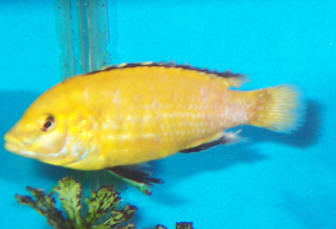
African cichlids comp. 02/06/09 Hello to all! Hope things are going well. I have a question about a couple types of cichlids, please. Yellow labs and rustys. <Labidochromis caeruleus "yellow" and Iodotropheus sprengerae. Both excellent fish, and perhaps the two BEST Malawi cichlids for beginners (or indeed anyone not wanting to manage a war zone).> I have read that both are compatible with each other and both can be in a community tank. Is that true? <Yes, they work extremely well together. Can form the basis of relatively peaceful Malawi cichlid community tank. Wouldn't recommend either for a generic community with Neons and Guppies though! But up to a point, either could be mixed with, say, Rainbowfish, in a large, hard water (critical!) community tank, and neither will damage robust plants.> Also I have read that they can be hard to sex until they get fairly large. <Correct.> If I do not care about breeding them would it matter if I got 1 or 2 of the same sex? Thank you for your help. James < Labidochromis males are mutually hostile, so it's best to keep a half dozen. Groups tend to settle much better than singletons or pairs. Iodotropheus are somewhat of a schooling species, and should be kept in a group regardless. If your tank isn't big enough for six of both species, then I'd heartily recommend sticking with one species. Much better to have one species of fish that "works", staying on display and behaving peacefully, than two species that either hide all the time or constantly fight and bully one another. Cheers, Neale.> Re: cichlids 02/06/09 Thank you Neale, Since sexing is an issue when they are smaller, would it matter if the group I bought happened to be all males or all females or an uneven mixture of both? <Statistically, groups of six tend to include both sexes, unless the species is one where pH determines sex, as with Pelvicachromis pp.> Also, even if a 75 gallon was large enough for 6 of each species plus 6 or more rainbows, I think I would rather just go with one species to keep the tank looking less crowded (and taking no chances on problems with fighting and or hiding. <OK. But dither fish do help cichlids settle in and act normally, so don't underrate them.> If I were to go with just one type which one would your recommend for overall hardiness, beauty, behavior, etc.? <Yellow Labs.> Can Corys be mixed with either of these? <No. Dwarf Synodontis would be appropriate though.> And you mentioned hard water? I assume that means high on the PH scale? <No. pH is the acid/base scale, hardness is dissolved mineral content. In particular Malawian cichlids need *carbonate* hardness, measured on the KH scale. Read up on Malawi cichlid water chemistry, taking specific care on the topic of buffering. Do that right, and the pH will "set itself" automatically around 7.5 to 8.> Thanks again for all your great advice and knowledge. James <Cheers, Neale.> Re: Labidochromis caeruleus
Aggression 4/22/09 Re: Labidochromis caeruleus
Aggression 4/26/09 New 125 gallon African Cichlid tank - compatibility question 1/11/09 Big Lake Malawi Tank set Up Dear WWM crew; I have a new 125 gallon tank after 2 months cycling with three fish. L 80"xW 16"xH 24" with a lot of rocks, clay flowerpots; PVC pipes etc. and two Eheim filters total 500 g/h. Water results are as required. (Ammonia is zero, Nitrite is zero; Nitrate is 10-15 ppm temperature is 26 deg C), need advice on type and quantity. Optional types look like: 1. Pseudotropheus acei (blue)- Mbuna 2. Pseudotropheus saulosi - Mbuna 3. Labidochromis caeruleus (Lemon; electric yellow lab) - Mbuna 4. Iodotropheus sprengerae (Rusty cichlid )- Mbuna 5. Placidochromis electra (blue) -- Hap 6. Metriaclima estherae -- Mbuna (the zebra is in lower priority) 7. Dither -- like Cyprichromis or Zacco danios As you (and many other books) recommend; I plane looking for juveniles for all types and let them grow together. My questions: 1. What types, out of the list (or any replacement you'll recommend) will work fine together? < The Ps acei eats algae off of driftwood so I would plan to add some well seasoned driftwood that will not stain or alter the chemistry of the water. Some good quality carbon will prevent any tea colored water. The red zebras (M. estrea), and the rustys (I. sprengerae) are going to be the big mean territorial guys in the tank. Both are quite attractive and worth a try. Add all the other fish first. When the first group is up to two inches then add the mbuna at 1 inch. This will give a the bigger fish some additional time to adjust to the meaner cichlids as they grow up. I don't think the Cyps would do well in this set up and I would recommend the Zacco barbs instead.> 2. Quantity, here I'm lost: a. For the Acei a minimum quantity of recommended juveniles are 10 (10 to 20 is even more recommended.) < These guys are pretty peaceful out of all the fish you have suggested, these are probably going to be pushed around the most. I would recommend at least 6 but you can add as many as you like.> b. All the others cichlids should start with quantity not less than 10 as well (at a later stage extra male might be removed). < I would recommend starting with 6 each, red zebras and rusty cichlids. Assuming you get an even sex ratio this will give you three females and three males of each species. Remove two males of each species leaving you with three females and one male of each kind. This will cut down on some of the aggression. Add as many of the other as you like.> c. With the Dither; again such school should be 10 to 20 (15 to 20 is more recommended.) < The Zacco barbs are fairly fast moving and aggressive eaters that do better in schools. If the school gets too large they may intimidate the others smaller cichlids at first. Try an even dozen to start.> d. All that result a ridiculous quantity (or not??); < Not at all. Just continue to check the nitrates. If the nitrates keep getting much above 20 ppm then you may start to get algae problems. Keep them in check with water changes.> What do you recommend? < I like the idea of using sexually dimorphic species like the Ps. saulosi. The males are blue and the females stay an orange-yellow color. If you have wild red zebras then you would have a cobalt blue male with the red female. Look at the Melanochromis parrallelus. Females are white with black horizontal stripes while males are black with blue horizontal stripes. This is the only peaceful species in the group, don't confuse this fish with others in the genus that are very very aggressive and can get large. Also look for Labeotropheus species with mottled females. I would also add an ambush predator like a Nimbochromis species to eat small unwanted fry that will be released into the tank from the females.> Reducing quantity per type? Or reducing number of types? If so, which? < See above> 3. Last question; at present I have only three fish (for the cycling) one Pleco (grow fast in two month and is now 5") and two Aulonocara baenschi Males 4". The Peacocks are gorgeous but 99.9% of the time are hidden (from nobody; as they have no more neighbor). Why do they hide? <Yellow peacocks come from caves in the wild and are hardly ever see out in the open. When you add the other fish they will hide even more.> Shall I remove the three of them? < The other fish will eventually get bigger and more aggressive and they may not ever come out. The Pleco will get in the way of the territories and get his fins torn up as he gets in the way. If you are interested in cichlids I would recommend joining the American Cichlid Association at ACA.org.-Chuck> Thank you for the support Hanoch MALAWI COMPATIBILITY 9/25/08 Hi Crew! <Hi,> I am setting up a 550 litre Malawi tank and would like to stock it with the following Malawi Cichlids:- PSEUDOTROPHEUS SAULOSI <Aggressive, but so much smaller than the other species you should be okay.> LABIDOCHROMIS CAERULEUS <Very reliable in communities.> IODOTROPHEUS SPRENGERAE <Excellent community species.> PSEUDOTROPHEUS SOCOLOFI "ALBINO" <Not peaceful by any standards, though admittedly unlikely to become hyperdominant.> HAPLOCHROMIS SP. "RUBY GREEN" (poss. Lake Kyoga not Malawi) I have selected these for their lower aggression (for Malawis!), a variety of colour and the fact that they all have compatible dietary requirements. <Mixing multiple Pseudotropheus is almost always a bad idea, re: aggression and hybridisation.> One source I have found on the web advises against stocking P. Saulosi with similar looking fish as they may attack them. Would this include the Labidochromis Caeruleus as they are yellow like the female Saulosi's?? Or would this just apply to the blue males?? <Impossible to predict. Dwarf Pseudotropheus usually behave very well in communities when kept with larger species, but do take care not to mix them with larger Pseudotropheus such as Ps. socolofi. Do consider replacing larger Pseudotropheus species with Aulonocara or Cynotilapia spp., or even Cyrtocara moorii. Does all depend on creating the correct environment: rocks for the dwarf Mbuna especially, open water for Aulonocara, sandy areas for Cyrtocara, and so on. While you should be okay with Ps. socolofi in this big tank, there's no guarantee, so keep your options open and consider alternatives.> I have 3 very nice pieces of ocean rock (each about 18 inches max by 9 inches max) with many holes and tunnels for fish to hide in if required. <Sounds nice.> Also how many should I get of each species?? <Invariably best with one male alongside a harem of four or more females. This minimises aggression between males and unreceptive females, and you also get to see a more natural set of behaviours. Exception is Iodotropheus, which is basically non-territorial; keep as many of these as you want.> I have an Eheim Pro 3 filter that services tanks up to 1200 litres (1700lph) and has a large media capacity (4 litre mech, 8 litre bio + pre filter) so that I can overstock to further reduce aggression and enhance the look of the tank. <Cool.> Many thanks Brian <Cheers, Neale.> RE: MALAWI COMPATIBILITY 9/25/08 Thanks for your advice Neale. I will leave out the Socolofi. I have looked up the fish you recommended below on www.cichlid-forum.com and they are all carnivores. The fish I selected are all herbivores or omnivores according to the same site. Will mixing carnivores and herbivores not cause problems with the herbivores eating meat and getting bloat?? <Realistically, getting carnivorous cichlids to eat vegetarian flake is usually not difficult! Most cichlids will eat anything! So if you mixed high-fibre meaty foods (brine shrimp, daphnia) alongside Spirulina flake and tinned peas, I'd expect both sorts to thrive. Feeding meaty foods to herbivores is mostly a problem where those herbivores don't get enough green foods and too little fibre. But being careful with your choices is sensible. One idea you might consider is Tropheus; these are herbivores, and work remarkably well with moderately aggressive Malawians, provided they have ample swimming space.> When I say meat I am assuming brine shrimp/daphnia and the like. If this will not cause problems that that will vastly increase the choice of fish I can stock. <Artemia and daphnia are low-protein "laxatives" and good treats for herbivores, alongside their regular green foods. The things to avoid are fatty or high protein foods.> Cheers Brian <Cheers, Neale.> A Very Mixed Cichlid Tank Hi Bob, I have a 30 gallon tank with 1 electric yellow dominant male, 1 orange dominant male, 1 orange female, 1 peacock sex unknown and a blue striped red finned male. I recently cleaned my tank and found 4 juveniles and have moved them to a separate 10 gallon tank. The dominant orange fish has already dug 3 pits and the female doesn't seem interested, the peacock is lonely and the electric yellow needs somebody to boss around (even though he is the smallest fish.) What do I do to make everybody happy and when can the newbies rejoin the others. Thanks for any help, Andrea < With the cichlid pecking order already set I would recommend some giant danios or some rainbow fish to add as dithers. These fish are pretty fast and all the other cichlids will be able to chase them and then leave each other alone. You can try and add the fry when they are the same size as the adults. Otherwise they will be chased and probably killed.-Chuck> Cichlids and Puffers 3/2/06 Hi crew, I just wanted to ask a quick question or three. 1) Are there any specie's of cichlid that are compatible with any species of puffers (freshwater)? If not what species should I go with? I just want something color full. < Red bellied puffers are truly fresh water and not too aggressive. They could go with dwarf cichlids from West Africa or south America.> 2) I have a 55 gallon tank and have it cycling now, when it's done what types of freshwater invertebrates or any other's might you suggest I get to keep a clean and healthy tank? < Algae eating shrimp and snails help keep things in check but they are no replacement for water changes and cleaning filters.> 3) Can I keep an eel with any one of those specie's? < Eels are all predatory and will eat smaller fish and shrimp.-Chuck> Thanks for any help Brian New Malawi Cichlid Tank 2/18/06 Greetings from Toronto! I'm a new African cichlid fanatic. Amazing fish. I'm having a blast. Tank is finally "complete". Most fish are babies (about 1"). I wanted to double check on any potential compatibility issues with an "expert" so I know what to watch for. 55 gallon tank with a Penguin 330 double bio wheel power filter. Water conditions are almost perfect PH 8.2, temp 77-79 degrees. No ammonia/nitrites. I-weekly 25% water changes. Bi-weekly filter changes. I also add a little aquarium salt with each water change. Feed: spectrum granules. Rocky bottom (lace and lava rock). A couple of fake plants. Contents: 4 x labidochromis caeruleus (electric yellows),2 x Haplochromis ahli (electric blue),2 x Metriaclima lombardoi (Kenyi),2 x Metriaclima estherae (red zebra),1 x common pleco So far everyone is happy and healthy. The largest yellow lab seems to rule the roost at the moment. Which is kind of funny according to everything that I've read. Any comments would be greatly appreciated. Cheers, Ann < All the other fish will get larger than the yellow labs. At that point the labs will take a back seat to the others. The Kenyi and red zebras will fight it out for dominance of the tank. Everything looks fine.-Chuck> Match Up Rift Lake Cichlids 2/17/06 Hey, I was wondering if you guys had any of the specifications on Metriaclima cyneusmarginatus, Ophthalmotilapia boops, Otopharynx lithobates, Xenotilapia sp. 'Ochrogenys Ndole', Xenotilapia sp. 'Papilio Sunflower'. I have a 45 gallon tank that I'm just starting to get ready to put fish in, I have a few already chosen, and I was wanting to know what other fish they can live with, how big of a tank they need, their maximum size things like that. Thanks! Chelsea < The Metraclima cyneusmarginatus is a large zebra type from Lake Malawi. It needs a habitat that is a combination of both rocks and sand. The water should be hard and alkaline and in the mid 70's F. In the aquarium they will probably get at least 4 inches on a diet of algae flakes. You could keep one or two males and at least 6 females in a 45 gallon. The Otopharnyx lithobates live in caves and eat organisms living in the sand. You could keep one male and 4 or 5 females in a 45. Males get up to 6 inches, females can easily get up to 4 to 5 inches. They need food like sinking pellets. The O. boops comes from the shallow rocky areas of Lake Tanganyika. The prefer very hard alkaline water at least 80 F. The eat just about anything. One male and 4 to 5 females could go in your 45. They get about 4 to 6 inches. The Xeno. sp. "Ndole Bay" is an open water fish that should be kept in a sandy aquarium. One male only to a group of 5 females. The other Xeno Sp. Papilio Sunflower actually hangs around in little schools over sandy areas on rocks. When they breed they pair off on their own away from the group. For more details on these and other cichlids to consider check out "Enjoying Cichlids" by Ad Konings at CichlidPress.com. -Chuck> Cichlid(s)Causing Problems 2/13/06 Hi, I have a peacock cichlid store name). He has a blue face with yellow and black stripes and red fins all of them are red). Anyways, he has within the last 2 days been very vibrantly colored. Usually his black markings are more grey and lately (seemingly constant) he has been very bright and vibrant. We have no females in the tank but that seems to be fine when we are home there is absolutely very little aggression in the tank. Hardly ever do the males lock jaws or chase each other. <You said you have a male peacock. Who is he locking jaws with?> (plus on a side note we also have tiger barbs and Bala sharks in the same tank now for the last 4 months and have not lost a single one to the cichlids). < Cichlids? What other cichlids are in the tank?> On a side note my tanks water has become very cloudy. I have done a water test and all the levels seem to be in the ok ranges. < You should have zero ammonia and nitrites. The nitrates should be under 25 ppm. OK means nothing.> We changed the filter and have done water changes the water has been cloudy since just after the peacock has become bright. Any clue as to what this is and if the peacock is re-establishing dominance in the tank? < Dominance over who? It would simply just chase the other fish away.> Any idea as to how long he will take to be satisfied he is dominant? < Dominant cichlids stay dominant until something pushes them aside> There is no cloudy tuff or spots on any of the fish. Yesterday the peacock was jittery he would stop in one spot kind of shimmy his whole body and then he would swim off and today all the fish were at the top of the tank seeming to gasp for air. We have another air filter that we put in the tank besides the main tank filter and now they seem to be ok any clue? < I think that the peacock cichlid killed another fish and the body is stuck in a rock somewhere polluting the tank with high ammonia levels.> We have had the tank and all the fish for roughly 5 months with no problems whatsoever. We also just recently put some plants in( the plants were Cabomba). The store said it would be ok for cichlids and most other fish and also said that we could give the fish fresh vegetables or fruit. Any idea on which would be best other that peas? Thanks so much. < Pull all the rocks and ornaments out of the tank. Do a 50% water change, vacuum the gravel and clean the filter. Feed you fish once a day and only enough food so that all of it is gone in two minutes once each day. Get a food with Spirulina in it instead of wasting your money on plants that will get torn up and clog your filter. You letter was very difficult to understand because of the lack of punctuation and Grammar. If you want you questions answered in the future you will need to review you questions with proper punctuation or they will be deleted.-Chuck> <<Just returned. RMF>> Blue Crayfish mis-mixed with African Cichlids 1/25/06 Hi there, <Hello> I just bought a blue crayfish from my local fish store this past Friday. He is in a 20 gallon tank with 4 smaller African Cichlids and a small pleco. <Too small...> For the first three days after I put him in the tank he really seemed to enjoy wandering around the tank and exploring the decorations. The fish bothered him a little bit at first, but they are starting to learn their lesson. When I came home today I realized I could not find the crayfish. I checked his usual hiding spots and when I lifted up the castle (which has an opening just large enough for him to fit through) I found one of his antenna in the gravel. I freaked out thinking one of my fish had ate him. I turned the castle on its side and eventually found him curled up where I could not see him. He has not come out of the castle at all today. Is he molting or is he just being shy? Should I be concerned? <I would be concerned... the Africans are harassing the crustacean... and will likely do so to its demise. It needs other quarters. Bob Fenner> Thanks so much, Chris Malawi Cichlid Mayhem 1/19/06 I fear that my yellow lab cichlid has been attacking and killing my other fish. I first noticed this when I bought three neons and when I put them in the tank, were all gone in less than ten minutes. (I didn't know that he was a cichlid at the time as my dad had simply brought him home and hadn't bothered to look at the name, but I have done some research.) Of course I had learned my lesson and hadn't gotten any more fish that could fit into his mouth, but then I bought some mollies and one of them wasn't there in the morning. I realize that they are livebearers and aren't aggressive, but I have had several more disappeared since. I also had some other kind of tetra, and it's tail was chewed off, and died shortly after. I also have a rainbow shark, and a pleco. I was wondering what kind of fish I could put in with them, what their aggression levels are, how long they normally live, and I was also wondering if I could put any kind of shrimp in with them. <Your Labidochromis caeruleus comes from deep water in Lake Malawi. They have teeth and know how to use them as you have found out. The only thing you can keep with him is other cichlids from Lake Malawi. A shrimp would get picked apart in no time at all.> I would also like to know if there is a kind of heater I could put in a 1.5 gallon plastic tank. (My mollies had babies and they are in a tiny isolation tank right now and I don't want to release them because of my cichlid. < A small 25 watt heater will be more than enough to keep the little bowl warm. get a quality name brand that you can set the thermostat. Watch the water temp closely at first to make sure that the heater is set correctly.-Chuck> Mixing Malawi Cichlids... and other FW 1/19/06 Hey guys, few questions regarding mixing of lake Malawi cichlids and freshwater fish. Can a rainbow shark, tiger barbs, banded Leporinus and green severum tolerate semi-hard, alkaline water with a minimal amount of cichlid salt added to it? <Yes> I only want a few peacocks, yellow lab and electric blue (Sciaenochromis ahli) as far as Africans go. Otherwise I want mostly standard freshwater fish such as the ones I have mentioned above. Not interested in doing a FULL African tank, is that possible or at least can I get away with it? <Possibly, yes> I have regular stone gravel as my substrate, can I just add a small pouch of crushed coral in my sump to buffer the water? <Yes> Lastly, exactly how aggressive is Sciaenochromis ahli? <Individual males can be aggressive to a degree in some settings... uncrowded... not as "mean" as most Mbuna> After thorough research I found it to be a mixed opinion varying to extreme from relatively peaceful to very aggressive. Thanks a lot! <Better by far not to mix these... always going to be some discernible tension. I'd set up/keep a biotope of just the Africans. Bob Fenner> Mixing Tetras With African Cichlids 1/13/06 I was wondering if it were possible to put a 2 inch silver dollar and a 2 inch bleeding heart in with African cichlids? Please write back as soon as possible. Roger. < Besides having different water requirements, the African cichlids would soon have the tetras pretty torn up in no time at all.-Chuck> Green terror Lost a Gill Plate - 01/09/2006 Hi crew. Read the instructions on contacting you. About 4 weeks ago I lost my Texas, at the time he had some small red sores on his side. Hopped online and came across your site. Did the water change, scrubbed everything, ensured levels stable, temp was at 25C. I have African cichlids mostly so trying to find middle medium on pH at 8.0. Added salt to stimulate skin protection, treated with Melafix. Lost him anyway (he was 13cm so was pretty harsh to lose). Tank since seamed great. Went on holiday returned after 5 days from Sydney. Still tank was 100%, all levels right. Adjusted pH to 8.2 for the Texas is no longer in the tank. My Green terror has now just had his right gill detach at the base. I have removed him and placed in hospital tank. Separation of gill happened in 2 days 1 night. I have him in stable hospital tank but cannot find anything online that comes close to what has happened. I'll treat with Melafix until I get better advise on what I can use. Awaiting your response. Thanks Lisa < Your green terror probably got into a fight with one of you African cichlids and got it ripped off. African cichlids have incredibly strong mouths with lots of teeth to back it up. They eat by scraping algae off of rocks. These same teeth and mouths make pretty good weapons. In the wild obviously these fish never see each other so the green terror really didn't expect such an opponent. This is why I recommend never to mix rift lake cichlids with other cichlids. Keep the water clean and treat for infections if needed. The gill cover probably won't grow back.-Chuck>
Adding a Tilapia butikoferi with Oscars 12/16/05 Just a couple of things really. Firstly, great site and keep up the good work! < Thanks> Could you please tell me what the hell a Tilapia butikoferi is and find me a picture and/or any information on it as it's not on Fishbase.org nor can I find it anywhere else using Google etc. < It is a large African Riverine cichlid. Try Tilapia Butikoferi on your next search. They get pretty big but have a great vertical black and white striping that stay with them even as adults.> Just a quick note now on my tank and pets therein. I have 2 Tiger Oscars (Lemmy & Hendrix) and 1 Tiger Shovelnose Catfish (Violet). Do you think this is a good mix? < The tilapia gets bigger and meaner that the Oscars. As long as they are all the same size then they might get along. The tilapia will dominate the tank.> At first the Tigers (Oscars) seemed a little apprehensive and sulked with me for adding a tank mate but now they all cuddle up on a night and swim fine during the day. At current my tanks only a 36"x18"x15" but they're getting a 4 footer next week and I'm moving around September next year so they'll be getting a 5-6 footer then so they should be alright for now. As long as I keep up to my water changes and (hand) feed them all they're happy. I'll try and get some pictures on sometime. Thanks again, Pete < Many books say that the tilapia butikoferi only gets to about 10 inches, but I have personally seen some in the Midwest close to 18 inches. A big mean fish is hard to get rid of.-Chuck> Adding to a Tropheops Tank 11/12/2005 Dear crew, Firstly I'd just like to sat how much you help people (like me), even all the way on the other side of the Pacific, here in Australia. I have one female Tropheops tropheops (now apparently called Pseudotropheus tropheops) <<Actually, is Pseudotropheus tropheops tropheops! Go figure. Marina>> and I have one male and two females on order from my local pet shop. I was just wondering, what other fish can I place with them, as I will soon be purchasing a 3' by 1.5' by 1.5' tank thanks - Andrew <Mmm, other mid-sized Malawi, "Mbuna" cichlids would be my choice, along with a few Synodontis catfishes... With sufficient rock/cave cover will make for an interesting mix behavior and color-wise. Cheers, Bob Fenner> Dither Fish In An African Cichlid Tank 10/22/05 Thanks Chuck... I've also heard that Rainbows and Giant Danios are good dither fish for Africans. Any thoughts on how they'd work in this setup? < They would work fine. Some rainbows get big so try and keep the mid sized ones. these fish are very active and require lots of food and put out lots of waste so you will need to keep up on your water changes.> I also want to introduce the dither fish first to the tank to help establish it before I add the 30+ Africans. < Good idea.-Chuck> Setting Up An African Cichlid Tank 10/21/05 I have a new 75 gallon tank, and have mostly raised South American cichlids in the past, so I am somewhat new to African cichlids. I'm looking to get a lot of variety in size, with many colors. Any recommendations on the fish combinations that would work well? Also, are catfish the best to use for a "cleaner" fish? I've use Plecos in the past with my SAs. What dither fish (if any) do you recommend? Thanks! <If you wanted to do a Lake Malawi tank then there are many options. Keep the water in the mid to upper 70's. The pH should be over 7.5. I would use a crushed coral type of substrate to buffer the water and prevent it from becoming too acidic. The filter should pump at least 400 gallons per hour. I will give you some recommendations but you may not be able to find all of the fish. Both males and females will be colored. Try Pseudotropheus saulosi, Ps. acei, Melanochromis parrallelus, Labidochromis caeruelus (Chisimulae), Labeotropheus trewavasae (Chalumba) for the rocky areas and "Hap" Moorii for open sandy areas. Get six of each. Plecos don't work too well in these tanks. Try some Synodontis petricola for cleaner fish. Try and find some zacco barbs from Asia as dither fish. They can handle the water conditions and are very active swimmers.-Chuck> African Cichlid Tank Stocking 10/22/05 Chuck... also forgot to ask. When you say "six of each", do you mean 6 of all the fish you mention? So, 36 all together? That seems like a lot. < You get six of each around the same size. Hopefully under 2 inches and raise them all together. As they grow you will get a 50/50 sex ratio of half males and half females. As a male of each species becomes dominant it will chase the other males to the upper corners of the tank. There they can be removed and traded/sold back to the local fish store for credit. This will bring you down to approximately 25 fish. This is a little over crowded but these fish need to be over crowded to disperse the aggression between the males. This fish I have recommended don't get that big. The C. moori actually get pretty big but are not very aggressive. -Chuck> Missing Cichlid 9/23/05 Hi, I've recently set up a African Cichlid tank, with a jewel 120 litre aquarium (with extra filtration) and have slowly built up to the stock up to 11 Cichlids. There is plenty of rock in the tank, and I've been changing around 20% of the water every 7 -10 days. Everything seemed to be fine but I recently noticed one of the fish had disappeared, it is no where to be seen, I have searched the tank. Is it possible that the other fish have eaten it? Also I have had differing advice on how many cichlids I can keep in my tank how many would you recommend. Thanks Sue < Sometimes cichlids excavate areas under rocks and become crushed when the supporting substrate is removed by the fish. Either the fish or the naturally occurring bacteria would make short work of a dead carcass. Malawi fish don't mind being too crowded. Check the nitrates in between water changes. If they are below 20-25 ppm then you can add more fish. If they are higher than that you need to do more water changes or keep fewer fish.-Chuck> Lake Malawi Cichlid Compatibility Problems 9/3/05 Heya fellas, I've got a setup that needs attention regarding my Kenyi under the filter being chased there by the larger socolofi 55g Mbuna tank June added to 20g, July 28th added to 55g 3" female chipokae 2" female Kenyi 2" female yellow lab then August 12th added to 55g 2 1/2" male socolofi 2" male snow white socolofi 2 1/2" male red zebra 1 1/2" bumblebee I use the filter that came with Wal-Mart aquarium package, and BioWheel 150 Tank was cycled with used 20g filter and previous gravel on July 28th but I gravel cleaned the whole aquarium and put new filters the first week in August trying to clear up the cloudiness, was then informed it was cycling, told to leave it alone 2 weeks. For almost 2 weeks now the Kenyi is kept up by the filter by the larger Soco, she isn't showing the clamped fins, she comes to eat but still wary of Soco, and eats about a third of what the others eat, her color changes from striped to a solid beautiful blue but never loses color, there is 100 lbs of holey rock for her to hide but she is forced up there. I want to know all possibilities because I dread having to remove all the rock structure and try and catch this guy. I thought of adding more fish, but what kind? < Try rainbows or fast moving hardy medium sized barbs> I don't want my Kenyi to be bullied more or by more fish. Maybe a divider and fatten the Kenyi up until she's bigger , then remove the divider later, or add rocks the rest of the way up, its currently 1/2 way up across the aquarium, I'm wary though of how much weight the glass can hold up. The Kenyi was #2 in the pecking order, right under the chipokae, and now Soco is #2 nipping at the smaller Soco, chasing the bumblebee and the red zebra. The two (Kenyi&Soco) must have fought because when they met they would shake and Kenyi was still dominating, then one morning she was under the filter. water parameters: nitrate 40ppm < Too High .Reduce to under 25 PPM with water changes> nitrite 0ppm ammonia .25ppm if my test strip is correct total hardness 120ppm alkalinity/buffering capacity 120ppm ph 8.1 10lbs of crushed coral in front and 20lbs of epoxy covered neutral brown gravel I've added aquarium salt at about 1tsp to every 10g < Try rearranging the rocks, adding floating plants and reduce the water temp to the mid 70's.> And this question is cause I'm curious, my yellow lab now in the last 3-4 months has apparently carried eggs in her mouth at least 3times, her chin gets droopy, her lips pucker up and she doesn't eat and stays close to a certain area, so she hasn't grown like I would have liked her to. My question, why would she carry eggs if she doesn't see any male yellow labs? < These cichlids will very likely cross with others if no suitable mates are available.> Could it be the black background on two sided creating a mirror for them? < No more likely a cross.> Any direction for the first question would be really appreciated, my poor Kenyi, Soco is not one of my faves at this point in time. Any info on my lab would be cool so she could eat and catch up in size to her fellow Mbunas. I apologize for the long email. Thanks a bunch! EJ < Please try the advice.-Chuck> Peacock Cichlid Tankmates 8/23/05 Hey, I have one male Aulonocara OB and three females I have been breeding them which has turned out good but I have decided to stop and make my tank a colorful all male tank so I was wondering what other male cichlids could go with my male peacock (which is around 3in and probably bigger than the fish I will be buying). I heard that a labidochromis would be good and that Ps. saulosi are good but they only get 3-4in and I was wondering if that would be to small to be with the others who get around 4-6. If you no any others I would really appreciate it if you listed as many as you know of that would work. < Your male OB peacock is actually a hybrid that is not found in nature. Any of the Labidochromis would work fine. They get up to four inches but it takes awhile. Ps saulosi, elegans, lanistacola and acei would work well took. Mel. johanni and parallelus aren't too aggressive. Look at some of the open water "haps". As a general rule don't combine males with similar color patterns and rearrange the tank every time you add a fish.-Chuck> Cichlid and Catfish Questions 08/08/2005 Hi. I hope you can help me. I wanted to post this question on your bulletin board, but am not sure how to get back there. Also, if it's not a 911 question, I'm not sure where to type the question. It seemed like the 911 questions were responded to, in live time. Anyway, please advise me. < Questions are usually answered in 24 hours. Sometimes the best, most qualified person on the crew to answer a specific question is unavailable, vacations, work, etc... So other members may wait a few days until that person returns or another crew member is able to research the answer. Someone usually gets to a question after 3 days.> 1) About disinfecting the containers, nets, and aquarium divider, etc. I read a couple of different things, but I don't feel comfortable using bleach, b/c of it's strong properties. Is it alright to use the following, as noted somewhere on your site: 37% standard stock concentration of formaldehyde w/ Methylene Blue added? What measurement of each and How much? Then what about the rinse? Is it just plain tap water? How long to soak in the first bucket? Second? Please let me know if this is enough to kill any bacteria or whatever might be lurking on these plastic ornaments and containers, and nets, etc. I am not talking about bleaching white items white. I'm talking about killing germs and fungus so it will not affect new or other fish if these containers had fish in them with a disease at one time in the past. < All of these procedures are dependent on what you want to accomplish. Sterilizing a tank is usually a waste of time. I would recommend that you wash everything in hot water with dish soap and a soft brush. Just like you would wash dishes. I figure if it is clean enough to eat off of then it should be clean enough for new fish.> 2) I have a 29 gallon African Cichlid Tank with One zebra (1.5 inches long) , two yellow labs ( 1 fem 3 inches long & 1male 3.5 inches long),) 1 upside down catfish SIX INCHES LONG (***which I have observed 'TWISTING WHILE SWIMMING' at times,) and I believe a Peacock (3 1/2 -four inches) . There used to be a two year old pleco, but after growing up w/ these others, they poked his eyes out and ultimately killed him. I was shocked! He began at the size of 1 inch and grew to about 5 inches w/in two years. I was surprised that they others would harm a pleco that grew up with them. I believe either they were threatened by his size, or it was b/c the pleco began eating whatever food I was dropping inside the tank when I fed the others at night. I now realize that he should've been eating veggie disks. Perhaps if he wasn't on the top, along w/ the rest of them eating food I just dropped in, that wouldn't have happened. 3) But since he's been gone (about two months time frame) the algae seemed to turn into fungus on the plastic plants in my tank--like stringy whitish fuzzy things.) Which is why I needed to know about sterilizing them. Actually, I trimmed the leaves of the plastic plants earlier today, but need to know what to do w/ the rest of the stuff as noted above. Now I realize that I NEED A PLECO in there, to keep it clean BUT NEED TO KNOW WHAT SIZE to get! WHAT DO YOU ADVISE? <African cichlids are actually pretty good algae eaters. In the wild they scrape algae off of rocks and plants. They are also opportunistic feeders and have found about the pleco's week spot. The eyes will always be picked on by the cichlids.> I DON'T WANT THEM TO GO AFTER THIS NEW ONE, TOO! I will be getting this tomorrow. I wanted to add another one or two yellow female labs, but can't seem to locate ones large enough. I'm afraid of the fungus growing back on the plastic plants, so I figured I should just add he pleco tomorrow, although my goal was to add the two or three fish at the same time. Generally, approx. how much does it cost to purchase a Fem. Yellow Lab that's around 33-4 inches? do you have any ideas? < Algae is usually caused by excessive nutrients in the water with strong light. I would recommend that you feed your fish once each day. Make sure all the food is gone after two minutes. Check the nitrates. They should be under 25 ppm. If not then clean the filter and do a 30% water change while vacuuming the gravel. Keep the lights on only when you are watching you fish. Feed flake food high in Spirulina algae. There are many web sites that sell yellow labidochromis. Do a google search and hopefully you can find a vendor in your area with adults for sale. Wild fish are very expensive and can cost up to $50 each. Tank raised fish are usually much less expensive.> 4) Is a TWISTING MOTION normal for an Upside Down Catfish to exhibit sometimes? (swimming fast and twisting?) Or is this just aggressive behavior. < Synodontis catfish are often switching positions. It is pretty normal.> 5) Lastly, my male yellow lab seems to have scraped the surface off his skin on top of his head right before the fin begins going across the top of him. IT looked like a pointy object could've broken the yellow skin, and appears to be white. It's NOT like a crystal white. Is this perhaps something he could've gotten from the plastic plants when they had fungus on them? Do you have any ideas? < It is probably a scrape from hitting a rock. If it is fuzzy then it has been attacked by a fungus and should be treated with Nitrofurazone.> It seems like he hasn't been eating all the food I drop in there. He seems to be swimming around while I feed the rest of them, but afterwards does take in and spit out one of the foods I feed them. Besides that, he seems to tread water about three inches below the rotating BioWheel and hangs out there some of the time. Is this reason for concern? < May be an internal bacterial infection. Isolate and treat with Metronidazole as per the directions on the package to be sure.> Thank you in advance, for your speedy response! I need to take care of this stuff TOMORROW :-) Please respond as soon as you can. You're the Best! From, "Kinda New with Fish. < Thanks for the kind words and good luck.-Chuck> Preventative net/gear dips, killed Pleco w/ African Cichlids, injury... panic 8/9/05 Hi. I hope you can help me. I wanted to post this question on your bulletin board, but am not sure how to get back there. Also, if it's not a 911 question, I'm not sure where to type the question. IT seemed like the 911 questions were responded to, in live time. Anyway, please advise me. 1) About disinfecting the containers, nets, and aquarium divider, etc. I read a couple of different things, but I don't feel comfortable using bleach, b/c of it's strong properties. Is it alright to use the following, as noted somewhere on your site: 37% standard stock concentration of formaldehyde w/ Methylene Blue added? <You can... is this necessary though? Are you a commercial establishment... with lots of livestock coming/going? Most home hobbyists don't need, nor should want to use a prophylactic dip> What measurement of each and How much? <An ounce per five nominal gallons...> Then what about the rinse? <Just freshwater, changed out daily> Is it just plain tap water? How long to soak in the first bucket? Second? <A rinse in both... a second or so> Please let me know if this is enough to kill any bacteria or whatever might be lurking on these plastic ornaments and containers, and nets, etc. I am not talking about bleaching white items white. I'm talking about killing germs and fungus so it will not affect new or other fish if these containers had fish in them with a disease at one time in the past. 2) I have a 29 gallon African Cichlid Tank with One zebra (1.5 inches long) , two yellow labs ( 1 fem 3 inches long & 1male 3.5 inches long),) 1 upside down catfish SIX INCHES LONG (***which I have observed 'TWISTING WHILE SWIMMING' at times,) <Happens, no worries> and I believe a Peacock (3 1/2 -four inches) . There used to be a two year old pleco, but after growing up w/ these others, they poked his eyes out and ultimately killed him. <Not uncommon with Mbunas> I was shocked! He began at the size of 1 inch and grew to about 5 inches w/in two years. I was surprised that they others would harm a pleco that grew up with them. I believe either they were threatened by his size, or it was b/c the pleco began eating whatever food I was dropping inside the tank when I fed the others at night. I now realize that he should've been eating veggie disks. Perhaps if he wasn't on the top, along w/ the rest of them eating food I just dropped in, that wouldn't have happened. 3) But since he's been gone (about two months time frame) the algae seemed to turn into fungus on the plastic plants in my tank--like stringy whitish fuzzy things.) Which is why I needed to know about sterilizing them. Actually, I trimmed the leaves of the plastic plants earlier today, but need to know what to do w/ the rest of the stuff as noted above. Now I realize that I NEED A PLECO in there, to keep it clean BUT NEED TO KNOW WHAT SIZE to get! WHAT DO YOU ADVISE? I DON'T WANT THEM TO GO AFTER THIS NEW ONE, TOO! <Will, likely> I will be getting this tomorrow. I wanted to add another one or two yellow female labs, but can't seem to locate ones large enough. I'm afraid of the fungus growing back on the plastic plants, so I figured I should just add the pleco tomorrow, although my goal was to add the two or three fish at the same time. Generally, approx. how much does it cost to purchase a Fem. Yellow Lab that's around 3, 3-4 inches? do you have any ideas? <Nope... and the cichlid folks here didn't respond to you in a day... so I am. You can look up what etailers are selling these for on the Net> 4) Is a TWISTING MOTION normal for an Upside Down Catfish to exhibit sometimes? (swimming fast and twisting?) Or is this just aggressive behavior. <Normal> 5) Lastly, my male yellow lab seems to have scraped the surface off his skin on top of his head right before the fin begins going across the top of him. IT looked like a pointy object could've broken the yellow skin, and appears to be white. It's NOT like a crystal white. Is this perhaps something he could've gotten from the plastic plants when they had fungus on them? Do you have any ideas? It seems like he hasn't been eating all the food I drop in there. He seems to be swimming around while I feed the rest of them, but afterwards does take in and spit out one of the foods I feed them. Besides that, he seems to tread water about three inches below the rotating BioWheel and hangs out there some of the time. Is this reason for concern? <Likely a physical injury from tussling about...> Thank you in advance, for your speedy response! I need to take care of this stuff TOMORROW :-) Please respond as soon as you can. You're the Best! From, "Kinda New with Fish. <Take ten, make that twenty deep breaths... and skip the Pleco, add filtration, more maintenance to your regimen... I would not use a net dip here... for sterilization or cleaning your ornaments... too toxic, too much trouble... there are articles and FAQs files posted on WWM re set-up, maintenance of freshwater systems, go, read there. Bob Fenner> Mixing Perciformes... N. Am. panfish and African Cichlid cohabitation 7/24/05 Hello from ND, <Back atcha from southern Cal.> What are your thoughts on keeping a Lepomis gibbosus and Altolamprologus calvus together in a planted, sand-bottomed 54G tank? <Mmm, well the sunfish is much cooler water, but both enjoy about the same water quality...> Our natural pH around here is close to 8 - my calvus loves it and pumpkinseed sunfish are native. Both fishes seem to be hardy with respect to temperature, but the pumpkinseed prefers a little cooler water than the Tanganyikan Cichlid. <I see we agree> If they could thrive in the same water conditions, would they be too aggressive toward each other? <In a large, well-fed enough system...> Thank you for your insight! Andrew <Bob Fenner> Crabby Compatibility - 07/14/2005 Hello: <Hi.> Are there any freshwater crabs out there that are compatible with African Cichlids? <Mm, no, not any that are available in the aquarium hobby in the US, in any case. There are, however, some different crabs that do live in lake Tanganyika and are pretty neat looking. I do not believe that any of them are exported for the aquarium trade. Furthermore, I fear any of them would be quite capable of taking on most cichlids. The crabs that ARE available in our hobby are all, with one exception, brackish to marine animals that absolutely require land masses (can't stay submerged 100% of the time). The one exception, the Red Claw Crab (Pseudosesarma moeshi / Sesarma bidens) can survive with only freshwater access, but still requires a land mass.> Thank you! Pedro <Wishing you well, -Sabrina> Jewel pair in cichlid community? 07/02/05 Hi, and thanks for taking the time to read this! (I sent this query on 6/30 and am sending it again, since I see that your answers recently updated contain questions sent today, and I've read through your FAQ page that you sometimes have problems of not receiving emails. <Yes... unfortunately. Thank you> However, if you have received this and just haven't gotten to it yet, please forgive the duplication.) I read through everything I could find on your website about jewels--both compatibility and breeding, and I've checked the other fish sites I've come to trust, and my collection of information has led me to contradictory advice, so I'm hoping you can answer this more definitively. I'm trying to round out the stocking of my cichlid tank and wondering if I can add an already-paired-off pair of jewels. I have a 50g breeder that currently has one electric yellow lab (f), two different peacocks (both male), a demasoni, a paradise fish (I know, not a cichlid, but so far the tank alpha), <Interesting> and three clown loaches. All the fish are still juvenile, and I've been careful about the order of stocking and relative sizes to minimize aggression and enable them to sort out a pecking order. So far, so good. (If paradise or loaches get into trouble as cichlids mature, there's room in my other tank--school of good-sized rainbow fish, mostly boesemanni--to transfer them.) <Good... I would likely move them pre-emptively> The tank has a lot of caves, including some with woody roots, a sand substrate, only a few fake plants for cover. There was a beautiful pair of two-spot jewels at my LFS, part of a larger group, today, and they recommended that I only take one of the pair, since the species gets aggressive when breeding. <Yes> While I generally trust their advice, I like to research this kind of stuff... <Even better> and yet some websites seem to concur that breeding jewels will kill everything in their path; <If the path is narrow... the tank small that is> others suggest as long as they're with other Africans of similar or bigger size, things will be fine. Everybody is in the 1-2.5" range now, and certainly the jewels are not destined to be the largest in the tank. Would adding the pair of jewels be a bad idea? <They might do some damage as they grow... if they do indeed reproduce> Would adding only one of them be cruel, since they form monogamous bonds? Thanks for anything you can clarify. Andrea <I'd likely be willing to take the risk here, move the non-cichlid fishes... Bob Fenner> Jewelfish Cichlids-Chuck's Take 7/4/05 Thanks, Bob, for your quick reply. I've spent a lot of time reading on WWM and am super impressed at how quick and knowledgeable you guys all are. Just to make sure I'm understanding your last sentence correctly (I'm including last bit of exchange below as a reminder): you'd "likely be willing to take the risk" of adding the pair, right? (Just want to be sure it's not "take the risk" of separating the pair, implying that adding them both would be problematic :-) Thanks again! < Jewelfish are beautiful and interesting aquarium fish. They have actually been the in the hobby for over 80 years. They are not to particular about their water conditions and are not too fussy about food. Although they don't get too big (4")they have an attitude that makes them think that they are a foot long. They will eat smaller fish and do not back down from a confrontation. Breeding pairs in small aquariums are a disaster. They fearlessly guard their eggs and fry against all. If the other fish cannot get away then they will some be injured or killed. Other cichlids as tankmates are usually a better choice than non-cichlid sense they can usually take the confrontations better and keep the jewelfish somewhat under control. When the fry become free swimming they should be removed. As the wander about the tank the parents go nuts trying to protect them from all the other fish.-Chuck> Mixing Rift Lake Cichlids Hi, I hope you can comment on my situation, I posted this in the public forums but didn't get a response: I set up a new tank a few months ago, planning on stocking it with a pair of Altolamprologus Calvus and a few Julidochromis Ornatus. I set the tank up fine (25Gal), lots of rocks, aragonite substrate mixed with black sand. Tank cycled in about a week, I let it go over two. I added the pair of Calvus first, with one becoming very dominant over the other. After about two days in the tank, they fought locking lips fiercely. After this, the dominant calvus swims around the tank with the other confined to a corner, but seems to be doing fine otherwise and will venture out to eat, but will then be forced back it's corner. Unsure of sex of either. After a couple weeks I added 3, what I THOUGHT at the time were Julie Ornatus. They actually turned out to be Melanochromis Auratus. This killed my 'Tanganyika' tank theme. The strange part is, is that the two species seem to be getting along great. I have had these 5 fish plus a Pleco in the tank for a couple months now. One of the auratus is starting to change into the male colors. This male along with an apparent dominant female keep the third (also apparently female) in it's place (currently behind the filter tube). The Melanochromis have TOTALLY ignored the Calvus to date. The Calvus usually completely ignore the Melanochromis, occasionally giving an unhearted chase to the Auratus. My question is....Do you think that the Auratus will ever give the Calvus problems? The Calvus in my tank are the focus, so I could get rid of the auratus and get Julies like I first planned. Or will these fish always get along? Could I add a pair of Julies now? That may be too crowded, and they may not get along with the auratus as well as the calvus... Thoughts? Thanks, Mike < When and if the calvus stumble into an auratus breeding pit the Melanochromis will have no problem chasing him away. They don't look similar to each other so their interaction shouldn't bother either of them.-Chuck> Mixing Lake Malawi Cichlids Hi, I have a 30 gallon aquarium and you told me before that it would be okay to put johanni in there. My question is could I put ps. saulosi along with the johanni? I am worried about hybridization. Thanks again, Katie < You could put them together and they may hybridize. The only way they will not cross for sure is to keep one species per tank.-Chuck> Cichlids and Pleco's Hi Bob, My roommate was given a 50 gallon tank with 3 African Cichlids (one being very large and very dominant - always chases the others around). A friend of mine gave me a large Plecostomus and I added him to the tank today. I am a bit worried though. The Plecostomus just sits on the wall and the large African Cichlid comes over and snaps at it's eyes and tail constantly. Will they get use to each other and knock it off or should I find a new home for the Pleco? Thanks! < Plecos usually come out a night when the cichlids are asleep. Get him a hollow log or s cave for him to hide in during the day. The cichlids should leave him alone after that.-Chuck> Kribensis Companions Hi, I was wondering if it would be possible to keep some Kribs, maybe a mated pair, in a 10 gallon tank? < A pair of Pelvicachromis pulcher would do well .> So far this tank has held (1) 4" Red Tiger Oscar, (1) 3.5" Jack Dempsey, and a 4.5" Pleco. I am going to move these guys to a larger 55 gallon tank and would like to replace them with some smaller cichlids that can fit into a 10 gal. tank. < Good idea.> I was also thinking of including an African Butterfly fish with the Kribs if possible. < Your butterfly fish likes to hang out at the surface and eat insects that have fallen into the water. When your Kribs spawn they will guard the fry and attack any fish that comes near their fry.> Oh, also, I have a lone Peppered Cory that I enjoy watching in the 10 gal. Would he/she work with the Kribs and Butterfly fish or just get eaten? < Everybody would get along until the cichlids spawned.-Chuck> Jewel Cichlids In Community Tank? Yikes!!!! Hi, I was wondering if I could put a Jewel Cichlid in my 55gallon community tank? I hear that it is not recommended, but I want one so bad and I do not have the capabilities for another tank. I currently have 2 4-5" iridescent sharks, 3 young angels, 2 zebra danios, 2 pink kissy fish (forgot the name), and 4 platys. Would it be at all possible? Everyone in the one thank gets along well now...I am more concerned about the compatibility between the Jewel and my sharks, angels, and kissy fish. Can I have some feedback. Thanks for your help. Sarah < While jewel cichlids may be very beautiful, easy to take care of and very tolerant of a wide range of water conditions, they are incredibly aggressive. They would start out by eating the danios. Then they would be picking on all the other fish until they were outright killed or died from a secondary disease caused by the excessive wounds inflicted by the jewel fish. Jewel fish go well in a tank with other cichlids , especially those from Central America. BTW, when you start missing fish, its the sharks that are doing it.-Chuck> Ps. Saulosi Hi again Chuck! My Oto is now in my 12gal nano cube with another one and they seem to be enjoying each other. :) Thanks for the info on the rock but I have one problem with your suggestion on the Ps. saulosi. It seems everywhere I check I read that this is an aggressive fish that wouldn't do well with Peacocks. I'm confused. I'd hate to introduce a fish that would bully my others to the point that there would be no peace. I have read that Tanganicodus irsacae is a good eater of hair algae. What do you think of this fish and it's personality? Eileen <Typically most Lake Malawi Mbuna are aggressive and would not work , but in this case these fish come from a reef in the middle of the lake and are actually very mellow for mbuna. So much to the point that your peacocks will probably bully them around. Try them and you will see. Just make sure you have the real species. Some stores don't know there fish too well.-Chuck> A Little Freshwater Carnage 2.27.05 Hi, we're new to the whole aquarium life, and have a 30 gallon freshwater tank with 7 cichlids and one algae eater who we call Homer. <Hello, Ryan helping you out today.> Not sure if there are different varieties of them, but ours is brown and bumpy, and about 4 inches long. About a month ago, we noticed that the cichlids were picking on Homer, and then, much to our disgust and amazement, realized that his actual eyeball had been taken out of its socket! <That's pretty gory!> We immediately put him into a separate sick box where he could safely recover. After a week of separation from the others, Homer was put back into the tank and seemed to be getting along well with one eye. Today he got wedged between the coral and a ship in the tank, and we noticed that his good eye had been scratched. We were gone for most of the day, and upon returning home, realized that his other eye has now been taken out as well. He's in the sick tank once again, but we're really concerned for his well being once he's healed up enough to be released back in with the others. <Not a great idea...I would take him back to the pet store, and start managing the nutrients more aggressively to impede algae growth.> Have you ever heard of this, and what are his chances of living with no eyes? We realize that the cichlids are aggressive fish, but is this a normal occurrence, and how do we prevent it from happening again in the event that we need to replace Homer? We're desperate for any information you can provide. <It breaks down like this: Cichlids, with some exceptions, are aggressive and territorial. You're keeping these fish in a small enclosure- This much water in nature would be just a piece of ONE fish's territory. So, natural war will be ongoing with this selection. Now, a 30 gallon tank is great for single species tanks, or less "touchy" tenants. I'd figure out what species of fish you're keeping, and then make a few changes. Good luck! Ryan> Mbuna compatibility Hello. I am hoping to set up an African cichlid tank, and I would like to now if the following list of fish is compatible. The fish I am hoping to keep are Labidochromis caerulens, Maylandia estherae, And Pseudochromis saulosi. I would be keeping them at a ratio of 3 females to 1 male for each species, would this be an acceptable mix? I would also like to know what size tank you would suggest as optimal for a group of this size/species mix and what order/how many at a time should they be added to the tank. Any response would be greatly appreciated and I thank you for your time. < Your mix of fish would work fine. The Labidochromis and Ps saulosi are actually very easy going fish for Malawians so I would make them the larger fish and put them in first. The estherae will get bigger and be the most aggressive fish in the tank so I would add them last and make them the smallest of the group to start. A 30 to 40 gallon would probably work. If you let them get full size then the estherae will be getting up to 4-5 inches and then would really need a 40 to 50 gallon tank.-Chuck> Freshwater Planted Tank... water chemistry and African Cichlids Folks...I have a 72''x24''x30'' 220gal tank. Would two 48'' x 260 watt CP's be adequate for plants to thrive in a 30'' deep aquarium? <Just barely> My thought was to place both fixtures over the middle of the tank, bright light over the center, dimmer on the edges. Plants such as Amazon Swords, Tiger Lotus and Aponogeton would be options. If this will not work, I wouldn't mind building a shelf closer to the surface for large pots of plants. <A good option... though high-light intensity plants will grow with these fixtures, wattages at the thirty inch depth... it will be slow/er than if there were more light> Water question, pH of 7.3, TDS 655 PPM from Milwaukee Testers. KH of 3 degrees, DH of 5 degrees from drips into test tube device. To me the PPM and the DH don't seem to match. <Don't let this throw you... dissolved solids can easily be minerals that don't contribute to hardness... If interested, you can have your water tested, or if it is supplied, the company (check your billing paperwork) will provide you with a free analysis of its content> From the drops in the test tube method, it looks like plant water. From the TDS method it looks like poor water for plants. How can I maintain a PH of 7+ and perk up my KH and use CO2 in a planted aquarium. (African Cichlid planted tank) Thank You for this site...Mark <Ahhhh! Now we're getting to useful specifics! I would change your orientation here... and stock the system with plants that are tolerant/appreciative of the same hard, alkaline water conditions as the fishes they are to be kept with.... Please see here: African cichlid Planted Tank Bob Fenner> Need Help With Some African Cichlid Compatibility First of all I would like to say that you have an informative and helpful website. But I do have a question for you that I could not find on your site. I currently have a 125 gallon tank with 6 Pseudotropheus demasoni making their residence within. I am looking to add another cichlid species to the tank; and I would like to get your advice on the two other species that I am thinking about. The first one is Neolamprologus pulcher "Daffodil" and the second is Sciaenochromis fryeri "Electric Blue Ahli". The Neolamprologus pulcher is a rock dwelling Tanganyikan and the Sciaenochromis is a Hap. from Lake Malawi. My Pseudotropheus demasoni is a Mbuna from Lake Malawi. I have heard that you should not mix species from the lakes and that the Haps. should be kept separate from the Mbuna. Do you think that I would be able to keep any of these with my demasoni successfully? And if not what type of cichlid could I keep with them? I have thought about other Mbuna's but I am worried about cross breeding. Any input or advice would be helpful. Thank you for your time and a great website. < The daffodils (AKA Neolamprologus pulcher) would get their extensions on their tail bit off and would be constantly harassed by the very aggressive demasoni. The Electric blue would be fine as long as the tank was big enough. If the electric blue get too big they may eat smaller fish. The electric yellow labidochromis would get along fine too.-Chuck> Mixing Frontosas Hello, I have 3 Frontosas ranging in size from 3 - 4 inches including the tail. They are hard to find in my area and my LFS was able to find 2 of them and the third one I found while visiting my sister in another State. Recently, while visiting my sister again, I found a beautiful male Frontosa in her LFS again. This one is about 6 - 7 inches including the tail, and is offered at a really great price. I felt sorry for him as they had him housed in only a 10 gal tank, however, I was hesitate about buying him because I was not sure with him being larger than the others if they would get along. Do you think they would be okay or would I be taking a chance with he lives of my other Fronts? < Frontosas come from waters deep in Lake Tanganyika. They will get up to a foot long and some males even exceed that. You will need a tank of at least 100 gallons to successfully raise all of these fish to adulthood. As far as keeping them together now, if your tank has numerous rocks and caves for the smaller fish to get away then there is a pretty good chance they could be placed together depending if your current tank is big enough. Be aware that the bigger fish is probably a trade in that someone else didn't want. Maybe because it was too aggressive to keep in their own tank. When we make recommendation they are typically generalities, but actual individual fish especially cichlids do have their own personalities and may exhibit aggressive behaviors not usually associated with other fish keepers experiences. Thanks, Carol Neolamprologus buescheri "Zaire gold" Tankmates I am considering putting my buescheri's in a larger tank (current 25 gal hex) once they pair up and begin breeding. Are there any larger cichlids I could use as tankmates which could put up with these aggressive little devils but not kill them in return? < Buescheri's live deep in Lake Tang. around large dark boulders. I would look at schools of Cyprichromis as possible dither fish. Make sure that the tank is well covered because these fish will jump through any microscopic opening in the tank. A recently discovery I have made is using Zacco barbs. They are closely related to Barilius and are active open water fish. As long as the fry stay close to the rocks the barbs will not bother them.-Chuck> Thanks, Cpt Re: Neolamprologus buescheri "Zaire gold" Tankmates Thanks for the quick response, never knew of the Cyprichromis, very interesting. Not really what I am looking for though. I already have dither fish, I'm looking more for a larger display fish. I like the Altolamprologus but the slow growth rate and my inexperience with the species concerns me, Any suggestions along these lines? I would prefer to stick with Lake Tang. but a good substitution from elsewhere will do. Thanks again, < Try J. ornatus. They don't get too big. Any of the lamps would work until the Buescheri started to breed. Spawning pairs are best left as pairs. Look at O. ventralis to fill the open water column. Males look great but the females are a silvery-grey color. Maybe some of the Xeno's would work it you get the smaller species and have some open sandy areas. Malawi cichlids can handle the hard water but they are like a bull in a china shop and have a mouth full of teeth that inflict a lot of damage very quickly.-Chuck> Cpt Malawi cichlids Hi I'm a new aquarium owner. My tank is a twenty gallon with a BioWheel (Penguin) filter. My tank has just finished cycling it seems. Currently, I have three Electric Yellows and one lombardoi. It seems that my lombardoi has chewed off the tail fin of my electric yellow and part of a second yellow's tail fin. Currently I've placed the lombardoi in an isolation net within the tank to give the others a break. Will this help curb his aggression by reintroducing him as the new fish in the tank? < No. When you put him back in the twenty he will go back to his old terrorizing self.> How long should I keep him in there? < As long as you want to keep your electric yellow labido's alive.> My electric yellows don't seem that aggressive (so far) can you recommend some fish that would be more compatible with them that don't grow too large? < Stay away from the Zebra types. They will get too big and too aggressive. The Acei is a good choice. It lives in large schools in the lake and grazes on algae from fallen tree stumps and logs. Pseudotropheus saulosi is another good one that does not grow too large. The females and fry are yellow but the males are blue with black stripes and black fins. Melanochromis parallelus is another I would try. The males are black with blue horizontal stripes and the females and fry are white with black horizontal stripes.> I had an acei that seemed ok with them but my lombardoi killed it. I've been told that I should add more fish to control aggression with dispersion. I do a water change (20%) weekly and feed every other day. I'm getting mixed information regarding how much to stock a small tank such as this....Some say max four cichlids....and stick to smaller species...others say as long as you keep the tank clean and have hiding places put more in to control aggression. Should I get rid of the lombardoi? Right now my fish are no more than an inch and a half long. I have two electric yellows that are tiny (3/4 inch). Also, will my poor electric yellows tail fins grow back?? He's having a hard time swimming without his tail, poor thing. Id appreciate any advice you can give a newbie like me.....Thanks.....Michelle < It is best to add the fish when they are small so they can all grow up together. Mbuna do need to be crowded to disperse the aggression from breeding males. Keep the water temp in the mid to high 70's. Feed them Spirulina flake food and let them eat the algae off the rocks. This tank really is growing to be to small after awhile. Hopefully you can move up to a 50 some day. Try and keep the nitrates under 25 ppm with water changes. The fishes fins will grow back if they have not been chewed down to the base of the tail. If you really want to get into Malawi cichlids then a good book would be Malawi Cichlids By Barron's, under $10. If you really want to get into them there is a more expensive book by Ad Konings called " Back to Nature Guide to Malawi Cichlids." It can be purchased online at Cichlidpress.com. It is an exceptional book that is well written by one of the best.-Chuck" Who to put with 3 Daffodils? Greetings- I just wanted to ask your opinion of what might be the best to add to this setup: 55 gallon running 4 on the back filters (350+ gallons an hour) 9 ph Medium rock areas 1 Neolamp. Cylindricus at 3.75 inches 3 Neolamp. ³daffodils² ranging from about 2.25 to 3 inches Got some bad info from a store- told me they were selling me a Tanganyikan threesome when they were Mbuna. The Daffodils won¹t give them a moments rest. There are three of them that I plan on removing tomorrow. Anyway, I just wanted to get your opinion on what to put with the Neolamps. I was considering 1 Frontosa (slightly larger than the Daffodils) or a small school of Cyp. Leptosoma. I¹ve just had one mistake after another so far and I really don¹t want to make another! < The daffodils (Neolamprologus pulcher) from lake Tanganyika really do like to hang around the rocks in large colonies. Other rock fish that could go with them are any number of Julidochromis species. Other lamps like lelupie or trets would work well to. Stay away from Frontosas because they get too big. Tropheus are expensive and like to be in large schools and require an almost all vegetarian diet. The Cyprichromis would work but make sure that the tank is well covered because they like to jump out for the littlest things.-Chuck> Thanks for your help... Stephen African Cichlids and Crab compatibility Hello WWM, I was wondering if you know a couple of African cichlids that will not bother crabs. I read that most of the cichlids will tear them up. I have a fiddler and a red claw and I would love to add a couple of cichlids. Thanks for the info, you guys are the best. < Crabs are found in Lake Malawi and Lake Tanganyika naturally. The heavy shell and claws are more then enough to keep cichlids away. The problem is when your crabs shed. The have an external skeleton that must be shed for them to grow. When this skeleton is shed they are very soft and vulnerable to attacks by cichlids. They essentially become mobile banquet blocks. Unless you can set up an area for them to hide for awhile until their shell hardens then they will indeed be preyed on by the cichlids.-Chuck> -Rich Sick cichlid or territoriality? I recently acquired some cichlids. I have an African cichlid (yellow) that was doing o.k. after the transportation from my friends house on Saturday. But this morning I noticed he has a red mark in his lip and is at the bottom of the tank upside down. Once in a while he'll move but usually drops to the bottom upside down. This is all new to me and I've been looking for help on the web without much luck. I don't want to lose him, what can I do.? < If you have tried to add this new cichlid to an existing cichlid tank then I think he has smashed his head on the glass trying to get away from the other fish that already have established territories. Isolate him in another tank and add some rock salt and treat for wounds. He may not recover from the trauma to the head. -Chuck> thanx Anita Breen Re: Sick cichlid or territoriality? Thank you, all the cichlids were transported from my friends house, they were all in the same tank for three years, however their new tank is smaller. I will try the rock salt and keep my fingers crossed. < Sometimes these things happen with cichlids. They fight over new territories and Your yellow Labidochromis is not one of the tougher fish. Good Luck.-Chuck> thanx Anita Breen African cichlid compatibility & dither fish I am relatively new to keeping cichlids and have a few questions. First, I currently have 4 Labidochromis Caeruleus (Yellow Labs), 1 Iodotropheus sprengerae (Rusty), 1 Aulonocara jacobfreibergi (Peacock), 3 Melanochromis cyaneorhabdos (Maingano), 3 Pseudotropheus Estherae (Red Kenyi), 3 Sciaenochromis freyeri (Electric Blue Ahli), 2 Synodontis eupterus (Catfish), and 1 Plecostomus (Algae Eater). They are all about the same size 2.5" - 3" and are in a 35 gallon tank. I have several rocks, and caves constructed out of flat stones, and petrified wood of different sizes. Plenty of places to hide. The substrate was labeled "especially for African Cichlids" - some sort of crushed shells and stone. The filtration system consist of a Whisper sized for 20 - 40 gallon tanks and a Regent sized for 30 - 60 gallon tanks. I know that it sounds like a lot, but all the Pet stores say to "overcrowd" and "over-filter" the tank. Is this just some ploy to get me to buy more? < Your pet shops are giving you very good advice. In the wild these Lake Malawian cichlids are very territorial. They guard large areas of rocks on which algae grows. The territory and algae represent food to them. So the larger the territory the more food is left for them and their mates. These fish also have teeth that are used to scrape algae off the rocks and also does a great job in taking scales and fins off of other fish. If you only had a few fish in the tank then the larger one would continually chase the smaller ones around until they were dead or starved to death. When you crowd the tank then the dominant fish must chase them all and not just pick on one. A large group of active fish produce a lot of waste and need a lot of oxygen too. The filters should pump at least 3 to 5 times the volume of the tank in one hour.> Also, are all these fish compatible with one another? < All the cichlids come from the same lake so you are ok there. The catfish are not really needed and eventually with have their fins torn up by the cichlids.> (So far I have had no problems at all, but it's only been 4 days) Last but not least, what are dither fish? I have been told to put 5-6 Danios in with the cichlids as "dither fish"...why? Won't they just eat them or at least kill them? What role, if any will they play in the tank? < Dither fish are usually fast active swimmers that are chased by the dominant fish in the tank. They help use up the energy of the dominant fish so they will be too tired to chase the real fish you want to keep. I use Zacco barbs in Rift lake tanks. They get about three inches and travel in a school of about 20 in the upper levels of my 100 gallon. They look good and are heavy eaters and always seem faster that the cichlids. Others would be rainbows or giant Danios.> In the very near future I do want to upsize the tank to at least 75 - 90 gallons. < Good idea> This is just a start for me, I bought the tank complete for $20! < Good Deal too!>All I added was the fish, substrate, and the Whisper filter. Thanks for your help! < If you are interested in learning more about cichlids then the American Cichlid Association is having their annual convention in Denver, Colorado in July. For more info log on to www.aca2004.com Chuck> Re: African cichlid compatibility & dither fish WWM FAQ Crew <crew@mail.wetwebmedia.com> wrote: Thanks for such a quick response! However, you have now raised another question. I have tried to research "Zacco Barbs" and my efforts have proven unfruitful! The closest I can come is "Zacco Danios" @ www.aqualandpetsplus.com They are a green with six black vertical bars, extremely attractive specimens. If in fact these are what you are referring to, the next question is where can I buy them? I live relatively close to Houston, and San Antonio. Any help you can give is greatly appreciated. < These are the same fish. I found them in the Bay area. They are expensive but they work really well. You could also use rainbow fish or other barbs. I went to Lake Tang a couple of years ago and found a fish named Barilius ubangenese, Not quite sure of the spelling. Anyway, I found that these Zacco barbs are very closely related to the fish I saw in Africa. Try Amazonia in Houston or Austin. Can't remember which city. Caroline gets fish from all over the country and could specially order some.-Chuck> Chuck Portends Mbuna Doom? My friend bought a Kenyi Cichlid (Pseudotropheus lombardoi) for a 10 gallon tank all by himself. He moved away and left me with the tank. Well, I've been taking care of him for 5-6 months and I recently upgraded tanks to a 30 gallon with much nicer filtration and heating. I am wondering how I can stock the tank. if it's even possible to. He's been living by himself for long periods of time (with the exception of two agile sucker fish- one who is dead now) and I am wondering If I can add any other types of cichlids to the tank. He is a VERY aggressive fish, often times just looking around for another fish to butt heads with. I provided about 5 cave-like areas in the tank; he has staked one area out as his own at one end of the tank. I am wondering if it would be safe to add any types of larger cichlid to the tank (just so he would think twice about messing with them). I am really curious what species/kinds of cichlid are compatible with him. Thanks for your time! < Lake Malawian cichlids from the rocky areas are referred to as Mbuna by the natives and by avid cichlid enthusiasts. In the wild your fish eats algae off the rocks and actually stakes out territories. The larger the territory then the more algae there is too eat. Females are allowed to feed in his territory and this will allow the male to breed with them. So you can see in the wild that this adaptation works well. In the confined space of an aquarium this does not always work out. If you really want to add fish with him then you are going to need to spend some money and do some work. First make sure that the filter is moving at least 5 times the volume of the tank every hour. So your 30 gallon tank will need to move at least 150 gallons an hour. I would not recommend a canister filter. I find they are too much work to service so I would go with a Marineland 330 or better. They hang on the back of the aquarium and are easy to get to. Undergravel filters will not work because the cichlids will dig down to the filter plates making them useless. Make sure the heater has the water adjusted to 77 degrees. At any temp above that the males will keep trying to breed will always aggressive. Now you will need to buy at least 10 , yes 10 more Mbuna at least the same size at the same time. Buy the new fish at the end of the day. When you come home then you should do a 30% water change and rearrange the aquarium making all new territories. Add all the new fish and then turn out the lights for the rest of the night. The next morning I would slowly start feeding small amounts of Spirulina algae flakes a couple times a day. You large male will now have to chase all the other fish around and will not pick on just one. repeat this process every time you add new fish or you will just be sending all new fish to an early death.-Chuck> Nick Pseudotropheus lombardoi Hey! I really appreciate your reply and it solidified a lot of research I've been doing recently. I just purchased the filter you suggested off the internet for 30 bucks. < The filter I recommended does not run off of an air pump. It has its own water pump and can circulate over 300 gallons an hour. An outside air pump is not really required for aeration. The actual water movement is what is needed. As the water moves it comes in contact with the surface and that is where it picks up the oxygen, not from the little bubbles from the air pump.> I am however wondering if my 10 dollar air pump is enough, it's a Profile 1500, I'm guessing 1500 UL of pressure? < I think it is just a model number> I don't know what is needed or how oxygen fits into the grand scheme of things with more powerful filters after doing some reading. What species do you suggest I buy? < Mbuna from Lake Malawi will do fine as long as they all are around the same size.> I like the M. Lombardoi species which my current lonesome fish is and am wondering if it's all right to buy 10 more of them. <Sure, females and immature males are light blue and adult males are an orange yellow color. The males will fight over the females, so I would put two males with 8 females. If they are well fed then the females will breed and release the fry into the tank. Fun to watch.> Also, the current gravel in my tank is the size above pea-size gravel - small rocks, do you suggest I buy smaller ones to layer over that? < Pea gravel has a lot of pore space but not much surface area for bacteria to grow on. I would recommend a crushed coral type of sand. It buffers the water from having the pH drop too low and looks good too.> Lastly, to add more cave areas for the large number of cichlids ill be adding do you think it's a good idea to buy a few planting pots and break them up and stack them around the tank? < It doesn't look too natural but it will work.-Chuck> Frontosa Aggressiveness -II Thanks so much for your quick answers! Something I forgot to mention was that we have set up several PVC "caves" in the aquarium, a few of which are too small for the male to get into. The females hang out in them sometimes, but they often will swim in the open water and, after an initial period of adjustment, appear quite comfortable in their home. In light of your answers, I think the best course of action is to get a completely different (but compatible) group of cichlids for the tank, perhaps redecorating at the same time. Hopefully, next time they spawn it will be more productive. (It is a proven colony, so I'm sure it's just a matter of time and conditioning.) < I would not give up on this group at all. A trio of blue Frontosas can definitely work!> Thanks again for all your help. BTW, I'd like to add your link to our club website ( http://www.kcfishclub.org). (I'm one of the webmasters.) Please let me know if you have any special way you would like us to do that, such as a particular page you want us to link to. Evelyn < I think just hooking up to the main homepage would be fine . thanks -Chuck> Tanganyikans and S.A. Dwarf Cichlids together? Not a good idea I have frontosa brundi's( 2 juveniles ) and one brichardi daff. and I was wondering if I could add some ram cichlids without any problems in regards to how the breeds usually get along. <The frontosa come from Lake Tanganyika where the water is very hard and alkaline. The rams come from shallow savannah streams were the water is soft and slightly acidic. So their proffered waters are at the opposite ends of the scale. You could balance the pH by keeping it neutral for awhile but in the long run neither one would look its best and may not thrive. Eventually the frontosa would grow to 12 inches and eat everything in your tank including the daffodil. It would only take them a few months to get big enough to start eating the rams. The rams may survive by hiding all the time , so why get them at all. I know the temptation because those little rams sure are cute-Chuck> The tank is 75gl. I know the water quality wouldn't be exact, but I have successfully kept rams in this tank before I got these Frontosas thanx, Steve A Frontosa and a Pacu? I have a 75-gallon freshwater setup that houses three tinfoil barbs, one remaining silver dollar, and one red-bellied pacu. In a smaller tank, I have one frontosa. The frontosa is about six inches long. I am debating the wisdom of putting the frontosa in my large tank with the 16-inch pacu. Is there any chance they'd be compatible? <I would place the frontosa in the tank late Friday night just before I turn out the lights. Watch them while you are at home and see how they are getting along. While none of your fish are particularly aggressive you never know until you actually put them together. The Frontosa comes from Lake Tanganyika and requires hard alkaline water. Your other fish come from rivers where the water may be soft. They should all adapt just fine.> I would like to take advantage of the large tank's capacity in order to allow the frontosa to grow larger. <Your frontosa will definitely benefit from a larger tank. -Chuck > Thanks for you help. Patty African Help HI, Help! <Hi, I'm here to help.> I am pretty concerned because in the last 3 months I keep finding dead fish. <That is definitely a cause for concern in my book.> The most interesting thing is, that one of those tank mates is probably nipping the fins pretty aggressively. I wonder which one could it be. When I try to watch the tank, nothing seems to be a problem. <Most fish don't act naturally when someone is watching the tank. Typically the aggression happens when lights are out or if no one is in the room. When a fish sees you in the room most fish would rather beg for food.> I have 2 African cichlids (which were considered not too aggressive). And this is true, one is more or less harmless, another is more aggressive, but until a certain point and then it just goes away near the bottom and just swims. <Cichlids are aggressive fish, even the "less aggressive" titled species still can be very testy and nippy to other tank mates. "less" doesn't mean "not".> I have one barb, two long fin Danios (I found their fins shortened over night), three orange Platies (I found one dead since yesterday), 2 dwarf gouramis (they don't seem a problem), one yellow gouramis, and one silver tetra. I had two mollies but I found them dead without fins. <I'm not sure what type of barb you have, some are classified as semi-aggressive (like the tiger barbs and such). Aside from the barb these other fish are not aggressive, they are peaceful community fish, and really shouldn't be kept with aggressive species of fish. Cichlids really should be kept with other cichlids (or in a tank all to themselves). Cichlids are very territorial and will fight with all other fish for space. And in a fish tank, there isn't a lot of space for a fish to set up territories. The fins are most likely being nipped by the cichlids, and it won't stop until the aggressors are removed from the tank. It is a good idea for you to think about setting up another tank to separate the cichlids from the peaceful fish.> This seems to happen overnight and I don't know whether one of the cichlids is hunting or what is going on. <During the night when they start to rest many cichlids don't like other fish being around them, so territory disputes occur when the lights go out.> I had crabs but they climbed out of the tank a month ago and now I have a female crab left which I consider harmless (or maybe not, I don't know). <Many crabs will try to attack sleeping/resting fish. Larger crabs have been known to catch and eat fish in home aquariums. You can try removing that first and see if it does make a difference in the tank, but most likely the crab isn't the creature nipping on the fins. Remember, always seal your tank when you have crabs and other animals that can climb out. I found out by having a crab climb out and move into the filtration system of the tanks.> So I just wonder whether I have to eliminate some fish out of the tank ( I really like cichlids, so I'd rather have aggressive fish if I have to change) or are those crabs, something is going on that I don't know. <You will have to separate the cichlids from the other fish. I enjoy cichlid tanks and have found them to be very exciting to have. Many fish stores will offer you store credit for the fish you have.> My tank is 55 gal, has a lot of hiding place. I don't know how long these orange Platies live, maybe it was time for it to die (It had a fat belly a day before, then it shrunk and then it died) Before she had babies and it looked like that, so I was not concerned, I thought that might have been babies again. <It could have been pregnant, and the other fish ate the babies. Also right after giving birth some fish are quite weak, and in this state that many of them get killed by tankmates. Platies normally live for about 2-3 years. I had one last 2 and a half, and was quite a large fish when it finally passed away.> So, I will impatiently wait for your answer and thank you in advance. Lina <Hope that helps. Good luck with the fish. -Magnus> I got a question for yellow labs I'm currently have 1 electric yellow cichlid (male). can I keep him with a female krib? <provided that you have a large enough tank with plenty of rockwork and caves for each to have their own territory then they shouldn't be that bad together. a Male Labidochromis caeruleus (electric yellow) can be a bit pushy, so just keep an eye on them for the first 3 weeks> Jason Nguyen <good luck -Magnus> Re: I got a question for yellow labs you're right about waiting for the fish to be braver. my fish now loves to go up near where the filter top is. usually he'll stay in the bottom but now he's mostly on top. <once cichlids get used to a tank, they make great active pets.> My fish has some light black lines across his body. What does that indicate? sick? <no, probably not sick, most cichlids have black lines across their bodies. most likely the fish is getting used to the tank, and relaxing. Once the fish is in a nice healthy tank and is happy, they true healthy colors show through. So most likely the black lines are just the natural color patterns on the fish. So, nothing to be worried about. The time to worry is when a cichlid's color fades and it looks rather pale. that is usually a sign of sickness. -Magnus> African cichlids w/ eels I have been doing some serious research about this and have unfortunately gotten (as usual) conflicting advise on the matter. First off I love the site, great answers. What do you know about Aethiomastacembelus elipsifer or Aethiomastacembelus plagiostoma? <Not much. Members of this genus of spiny eels rarely come into the trade in the west> I have an African setup in a 55 gallon w/ black sand and tons of rocks to hide in. Do you think these guys would do well? I know to cover any and every hole to prevent suicide and thought about actinic lights to possibly increase the time spent swimming instead of hiding. Tell me what you guys think. Thanks, <If the cichlids are not overly aggressive... and you can get the eels in relatively good initial health... you just might have a very nice biotope set-up going. Please write in re your experiences with these mastacembelids. Bob Fenner> African Cichlids and aggression - 12/15/03 Hi, <Hello> I have a 10 gallon tank with 4 cichlids. <10 gallon?? You're kidding right?? This is not a good size tank for the cichlids you describe. WAY under sized!!> 1.Orange colored African cichlid (4") 2.Orange colored zebra cichlid (3") 3.Brown colored African cichlid (3.5") 4.Convict cichlid (4") These fishes were living in harmony with each other for the last six months with one other cichlid who died recently. <What?? Really?? Dude......I have a 90 gallon with 5 cichlids coming in somewhere near the sizes you describe and as far as I am concerned my tank is barely the minimum for this many cichlids when it comes to aggressive species let alone the more docile ones. Many ideas here but you should consider a 55 gallon above anything else.> They are growing and I am suddenly noticing the Orange colored African cichlid (4") is continuously chasing both the Brown colored African cichlid (3.5") and Orange colored zebra cichlid (3"). <In any size tank this is to be expected, but in this small tank I am surprised there hasn't been continuous death> He hasn't killed or hurt any fish but I am worried that this constant aggression towards the other 2 fishes may stress them out leading to their deaths. Is this true? <YES!> My tank has plenty of hiding places <Dude, it's a ten gallon. Most of the volume of the tank are taken up by fish mass! Are you kidding me?> and nowadays the Orange colored zebra cichlid (3") is hiding all the time and not even eating any food. <Afraid for its life, me thinks> Any suggestions or ideas to combat the aggressive behavior of the cichlid. <To start a bigger tank. Even with a bigger tank though, some cichlid species are very aggressive and territorial. Do your research on the needs and environment of your chosen inhabitants. Be sure to know the adult size and behavioral profiles of each.> I have heard of dither and target fishes but I am not sure anyone has a chance with this big guy. <Agreed, have you heard of bio loading? There are limits, my friend. Please read through our site and check through the FAQs. There are also some very good cichlid forums out there. I suggest for you to use them before during and after inhabitant additions and setup> Any ideas towards this? <Get rid of the fish until you can provide a better suited environment is my first thought> He picks up big shells with his mouth and throws them on top of the plants and the pebbles are in a state of constant disarray. <This is as expected for a lot of the cichlid species> I read about sexing cichlids and I believe the Orange colored African cichlid (4") is male, Orange colored zebra cichlid (3") is male, Brown colored African cichlid (3.5") is female and Convict cichlid (4") is female. Is there any quick identification tips for finding out the sex of a cichlid. <Some varying methods all documented throughout our page. Try here: http://www.wetwebmedia.com/FWSubWebIndex/afrcichlids.htm and let your fingers do some clicking on the blue links above. So much info related to your exact issues and situation. Good luck to your fish ~Paul> Thanks for your help. Naveen Naidu Mixing rift lake cichlids Hi, Some people say it's ok to mix Malawi and Tanganyikan cichlids and others say it's not a good idea. You guys seem to be very knowledgeable on Africans and say not to mix. I was wondering if you could give some specific reasons not to. I'm about to move 5 - 1" to 2" OB Peacocks, 4 - 1" to 2" Yellow Labs and 1 - 1" Blue Dolphin from a 55g to a 125g tank and wanted to add a Frontosa and an Orange Calvus. I thought their diet and personalities would match. <Hi! Yes, it is usually beneficial to the animals if you keep your display "biotopic." The benefits to you, the owner, are also great, as you see how your animals would behave under normal conditions. But, many mix with great results. The water quality and chemistry for the species you plan on keeping is nearly identical-as long as personalities match, you've found an exception to the rule. Now, do the personalities match? That's something that only time will tell. Do yourself a favor- make sure you have an area to quarantine your fish if the aggression gets out of hand! Best of luck-Ryan> Thanks for any help you can provide, Keith Malawi Cichlid Compatibility - 9/4/03 Hey Crew, I want to make sure that a Demasoni Cichlid (Pseudotropheus demasoni)< http://www.cichlidae.com/tanks/t032.html> will be compatible in my tank. <Always depends on not only the species but the individual fish as well.> It is a 30 Gallon tank (Lots of hiding places) with very good water in terms of PH, Nitrates, ammonia, etc. <I should hope so> I currently have (2) Kenyi Cichlids <I assume we are talkin Pseudotropheus lombardoi? http://centralpets.com/pages/critterpages/fish/freshwater_fish/FWF4512.shtml> and (1) Electric Yellow. <Assume we are talking Labidochromis caeruleus? http://centralpets.com/pages/critterpages/fish/freshwater_fish/FWF4501.shtml> These fish seem to play very well together <I wouldn't say they are playing, mate-> and I don't want to cause any premature deaths. <Hard to say. Let me say this though, I have currently five Aulonocara type Malawi cichlids in a 90 gallon and I still have aggression. Have had them since they were fry and they have all been together for over six years. All are from different families and no two really look alike, yet I still see much fighting. There is no telling an individual fish personality will react to badgering and confined quarters. Pseudotropheus species in general are super aggressive and I would like to think that in their environment the more space between them the better thus a bigger tank is in order. At the very least 55 gallons for what you have but more like 75 would be ideal. Something to think over. Not that it can't be done in a smaller tank though.....just.....give them the best environment, if you know what I mean BTW- I love this site http://www.cichlidrecipe.com/ -Paul> Thanks, Shad Burundi Frontosa Compatibility Hello. <Hello! Ryan with you tonight.> I have a question regarding Burundi Frontosa.<Shoot> Four days ago I purchased two of them ( man they're beautiful <Agreed>). Right now they are at approx 1 1/2 inches. For now I put them in my community tank which contains: 2 Bala Sharks ( approx 3 1/2 inches), 2 Blue Gourami (approx 3 inches), 2 Boesemanni Rainbowfish ( approx 3 inches ), 4 Ruby Barbs ( approx 1 1/2 inches), 1 Plecostomus ( approx 3 inches ), and now of course 2 Burundi Frontosas. So far they seem to be doing really good! <Only temporary, I'm afraid.> The tank that I have is 46 gal bow front. It has been running for 2 years now. I'm using Fluval 404 filter ( media: sponges, carbon, ammonia remover, and ceramic cubes. Carbon and ammonia remover I change every 30 to 40 days). Temp is stable at 80 degrees. pH is 7.8 ( I happen to be quite lucky ( I think ), the pH is regular tap water.<Yes, testing your source water has great advantages!> ) I do weekly water change approx 30% and I use Aqua Plus to kill chlorine and chloramine. <OK> My first question is: are the Frontosas going to be ok in this community tank? <Keep them well fed, and pray. At this size, perhaps. These fish grow quickly.> Guy at the local fish store assured me that they will do well. <They always do-remember, if they're selling something, get a second opinion!> I should mention next year I'm planning to get approx 90 gal tank,<May even want bigger, certainly if you'll want them to have companions.> which will be future home for my new fronts, and I'd like to make Lake Tanganyika setup. <Wonderful! Please consider A. Calvus and A. Compressiceps for this setup. Slow moving, big. Good match> But that will be next year. The 46 gal will remain community tank ( I've had all those fish for 2 years now, so I don't want to get rid of them.) My second question is about feeding the fronts. The current diet that my fish are on is: tropical fish color enhancing flakes, algae tablet, blood worms, brine shrimp. Almost everyday they get something different. So far I've noticed that the fronts are not eating the algae tablets (It seems that they don't know how to eat it, they just swim around it). <Fronts are fish eaters in the wild- if your specimens are wild caught, I'm not surprised. Try Whiting, brine shrimp, black worms, glassworms or silversides. These fish truly have a taste for meat...> But everything else, wow, they have quite appetite. Should I change the diet since the fronts arrived? Please give me some suggestions, <see above> Also, I have some lava rocks and driftwood. Should I get rid of drift wood? Will it lower the pH too much for the fronts ( it's been in the tank for 2 years. <No>). If I have to get rid of it, I heard something about using lace rock or slate in the cichlids tanks. Is that true? <Not a big fan. If this system has been successful for 2 years, don't mess with it. Remember, this is only temp until you upgrade.> That's all for my questions for now, please give me some suggestions and let me know what you think of what I'm doing so far. <You're overstocked, even with these beauties at smaller size. Watch that bio-load, keep the Fluval clean, and keep up the water changes. Lots of GREAT info on these wonderful monsters here http://www.cichlid-forum.com/articles/frontosa_corner.php> Thank You Daniel. <anytime! Ryan> Kenyi compatibility I have 55gal tank w/ 3-cobalts, 3-powder blues, 4-yellow labs and 2-kenyi. The entire back wall is a rock pile w/ many caves of different sizes. have also made rock walls from back to front of tank to delineate the Kenyi territories. <Sounds like a neat tank> It appears that both my Kenyi are male. One is a bright orange-yellow w/ light brown stripes. The other is pale yellow w/ faint hint of lavender at flanks & bright yellow fins. Aggression levels seem to be increasing daily with one or the other constantly chasing someone. <Aggression like this is normal for Kenyi's> I am thinking about trading in one of the Kenyi & trying to obtain 2 female Kenyi. Will this reduce the aggression level in my tank, or should I just give up on keeping Kenyi unless I get a tank just for them? Thanks, Terri <Kenyi's do best in species tanks rather than mixed in with other species of cichlids so I would recommend staying away from them until you have a tank just for them. Ronni> Cichlid compatibility questions Hi, <Hello> My son and I just set up our first tank and I'm afraid we got some questionable advice from our local fish store. We have a 25 gallon tank with an Eclipse system. <OK> We purchased a pair of Julidochromis and 3 Labidochromis (Yellow Labs) which were all on the small side. Immediately, the Julies paired up and laid eggs in a conch shell. They've completely taken over the tank and constantly harass the Labs. <Not uncommon, especially when spawning.> We now realize that we've mixed Tanganyikans and Malawi cichlids. We're going to take back the Labs but were wondering what else we might add to the pair of spawning Julies. Also, the Julies don't seem to be eating. Any suggestions? <Get rid of the Labs and just keep the Julies. In this size tank your fish will be much happier and healthier if it's just the pair of them.> Thanks! Jesse <You're welcome! Ronni> Re: Cichlid compatibility questions Ronni, Thanks for the quick reply. We did get rid of the labs, and now just have the spawning pair. We can see about 6 to 8 fry swimming around in the large conch shell that the pair have taken over. <Very good, congrats!> We tried to feed the fry some liquid egg layer food, but it disperses into the tank - we turned the pump off for a short period of time and that seemed to help. Should we be feeding them? <Turning off the filter is a good plan. You can also make fry food from any flake or pellet food by crushing it up into a fine powder.> Should we attempt to segregate the fry? <Nope, Cichlids take care of their fry so I'd leave them in there.> Should we be concerned about them getting sucked into the filter? <Probably not but if it's a worry then place a piece of foam over the intake of the pump.> Thanks again for your help! Jesse <You're welcome! Ronni> Clown Loach with African Cichlids? Will a non-aggressive but tough fish like a clown loach survive in a 55g African cichlid tank? Ph is 7.8, I add about a cup of sea salt per 15g, substrate is aragonite. There are a dozen cichlids plus one pleco and two giant Danios. <Some people do successfully keep clown loaches with Africans but unless you can get some that are already fairly large I wouldn't recommend it. Clowns aren't as tough as you might think. This is one of the reasons they rarely reach their full size when kept in captivity. Also, your tank is really already at it's full fish load.> My reason for considering this is simply visual diversity. The cichlids made quick lunch, though, of the tiger barbs I had added for this reason. Jeffrey M. Zegas <Tiger Barbs are recommended as dither fish but when I tried them I had the exact same thing happen. Mine didn't last an hour! Ronni> African cichlids kept with brackish species Robert, Great web site. I would love your expert opinion on a number of questions that I've accumulated over 20 years of aquarium keeping. <Ask away> I'm having success keeping scats and monos with my African cichlids. <Good mix temperamentally, in terms of water quality preferences> I maintain salinity at 1/2 teaspoon/gallon. What is your opinion of the salinity level with respect to the ongoing health of both types of fish? <If this is working for you, I'd stick with it... An important mention should be made that there may be substantial salts in your source water to start with... I would shoot for a specific gravity of about 1.005 or so...> Should the brackish fish have a higher salinity level? If so, at what point will the increased salinity start to harm the Africans? <Once again, we need to define a few terms... all this depends on the type of "salt" you mean... not just sodium chloride... the brackish fish groups you keep live in a varying mix of natural sea salts... Malawi cichlids live in a very different mix (and Lake Tanganyika ones very different still)...> In order to keep brackish fish for a long time, i.e., more than 4-5 years, is it necessary to eventually raise the salinity to full sea water? <No> What is the ideal salinity level for brackish fish? <Please take a read here: http://www.wetwebmedia.com/brackish.htm There are widely ranging tolerances/preferences by species... as stated, a spg of about 1.005 made with synthetic sea salt/s... is best for you, your livestock mix overall.> Any help, especially with the first question, will be appreciated. Thanks, Kevin <Be chatting my friend. Bob Fenner> FW (African Cichlids) I have a 20 gallon long tank with a pair of jewel cichlids and 3 small Kribs. The jewels have taken over the tank and I am wondering if I can add any other semi-aggressive fish to the mix, as they have already killed my swordtails and dojo loach. Thanks! <Actually... no to adding more livestock period here. The Kribensis Cichlids are way more less aggressive than the Jewels... I would trade in either one or the other... add a bit more rock to see if that will alleviate the aggression if you keep the Jewels, or plant life if you favor the Kribs... Your twenty is not only mis-matched temperament-wise with the fishes you have, but overcrowded as well... Only the Jewels will go, and one or two of them likely killed by the others in time... or the Kribs and maybe a small ditherfish, perhaps a catfish... Bob Fenner> Re: FW WOW was that ever fast!! Thanks for the advise I will do my best!! <Outstanding. Be chatting my friend. Bob Fenner> Cichlids Bob, <Steven Pro this morning.> How's about a little change of pace? I've got a question about 3 African cichlids that we have. 1. Pseudotropheus Zebra 2. Pseudotropheus Collainos 3. Melanochromis auratus Would it be possible to put them into a 155 gal. tank along with 2 8-10" Oscars, <A marginal choice, Oscars could swallow Africans or Africans could constantly harass/nip Oscars> 1 3" gold angel, <No> 2 3" silver dollars, <More than 2 would be better> and last but not least, 2 6-8" Plecos. <These are fine.> We have a bunch of lace rock in there for cover for the Plecos, could we build that up a little to also afford some cover for the Africans? Looking forward to your response. Thanx, Ce <Africans are best kept with other Africans due to aggression, water parameters, etc. You are welcome. -Steven Pro Invertebrates and African Cichlids I have a 29gallon tank with 5 full grown Mbunas and one Pleco. I was wondering what kind of invertebrates if any I could keep in the same tank. < I would not recommend any except as food...seriously. Snails, crabs, crayfish/lobsters and shrimp are all quite delectable to most every cichlid (with a few exceptions). Kindly, Anthony> Cichlid tank I'm currently in the stages of purchasing a 180 gallon tank. I want to house Lake Tanganyikan cichlids the species I like are: Altolamprologus calvus black, Chalinochromis "ndoboi", Cyathopharynx furcifer Ubwari green, Cyphotilapia frontosa Ikola "aqua blue", Julidochromis regani Zambia gold, Lepidiolamprologus kendalli, Neolamprologus leleupi, Opthalmotilapia ventralis "black head", Synodontis petricola, and another Synodontis. I'm trying to keep this a biotope. Would this mix work and if not which ones wouldn't? <although the Frontosas are usually gentle giants, their size will be very intimidating to the smaller adult cichlids. The Julidochromis are great fish but might be too assertive at least at feeding for the other shy fishes (calvus and furcifer for example). And lastly, mixing Synodontis species can be quite tricky. Better off with one species per tank> How many of each should I get? <one male and several females each for most African cichlids> And what kind of aquascaping should I do, <large shells and caves will be nice for the calvus and Synodontis specifically> I know lots and lots of rock work, I currently keep Malawians but have no experience with Tangies. Thanks! Ty Medaris <and know that Tangies like VERY alkaline water (high 8's towards 9.0!!!) and generally very well aged water. Best regards, Anthony> Fish Compatibility (African Cichlids) Hello there, <HI> I was wondering if I could have your opinion on what would be a good fish addition to my 36 gallon freshwater tank, some live plants, rocks and driftwood. Currently I have 6 African cichlids (3 Julidochromis and 3 Cyprichromis leptosoma), an Albino Bristle nose and a couple of baby bristle's. Just looking for a something else that would get along well with the cichlids I have now. <Well... by nature cichlids do not get along well in the home aquarium. In this situation I might look into getting a larger tank. If I were to get any more fish I would go for more Tanganyikans of similar size; possibly a shell dweller. But be forewarned, if you have too many aggressive fish in a small area, chances are someone is going to get hurt.> Thank you, Jay <The link below has info on some of the different Tanganyikans. http://www.wetwebmedia.com/FWSubWebIndex/afrcichlids.htm fishbase.org is also a great resource. Best Regards, Gage> Maylandia estherae and elephant nose hi, I was wondering if it would be wise and Ok to keep Maylandia estherae and elephant nose fish together, I have four M. estherae and two Elephant nose fish. Thanks <Maylandia estherae, aka the Red Zebra (Mbuna) cichlid and Elephant Nose/s (Mormyrids) are not well-matched... the former prefer very hard, alkaline water with considerable salt content... and Elephant Noses neutral, soft water with no salt... and temperamentally these fishes are a poor match... the cichlids are quite aggressive, would harass, eat the Elephant Noses into starvation. Bob Fenner> Learning about Cichlid Compatibility issues (the hard way) I've had a 30 Gal tank for about a year. Initially it had 8 small cichlids, a Cory and Pleco. It has always had lots of caves. Over the first 6 months the herd thinned considerably. We found out the hard way that some of our fish were more aggressive than others. In fact the Labidochromis Cerulean killed our Cory and our pleco (it ate their eyes out) and 2 other cichlids. We returned him and he was later placed, by the store owner into a tank of convicts...where unbelievably he has carved out his own niche. <Not unbelievable to me> For the past 6 months the tank has been relatively peaceful. Here are the inhabitants: 1 Tetracephalus (2.5 inches), 1 Demasoni (2.5 inches),1 Daffodil Brichardi (2.5 inches), 1 Neo. cylindricus (1.5 inches), 3 fancy barbs (put in to act as dither fish) <Good idea... but your tank is way too small...> and 3 of some other inexpensive fish that are also acting as dither fish. For some reason all of a sudden the Tetracephalus and the Demasoni cannot tolerate each others presence. <Natural. They occupy, use similar niches in the wild... are trying to exclude, move out each other from the present one... but there's nowhere to go.> Twice we have had to put the Tetracephalus into a breeders net and nurse him back to health after he lost nearly all of his fins (and lips) to the same sized Demasoni. Every time we re-introduce him to the tank he immediately goes right back after the Demasoni. Any suggestions? <Yes my friend. Either acquire, use a much larger system (at least twice the volume) or trade one of the aggressive cichlids in. Bob Fenner> thanks! Mark Learning about Cichlid Compatibility issues (the hard way) <Yes my friend. Either acquire, use a much larger system (at least twice the volume) or trade one of the aggressive cichlids in. Bob Fenner> Darn. Well unfortunately I cant get a larger tank at this time since my employer is forcing me to relocate half-way across the country. Do you happen to have any advice on moving the fish I have or is it really impossible? <Possible yes. Please read here: http://www.wetwebmedia.com/movingaq.htm though this pc. is titled "marine", the same techniques, technology, protocol apply> Is it possible to power a heater (and/or a bubbler) from a SUV power outlet? I'll be moving from NY to Tennessee and I don't think mailing them will be an option. <How many hours, days do you think there might be between returning the fishes to a system? If you're attached to them, I would contact a store you trust at your final destination, and strike a deal to ship them there for temporary holding.> thanks for all of your help, Mark <You're welcome. Bob Fenner> Learning about Cichlid Compatibility Issues (the hard way) 2 "Yes my friend. Either acquire, use a much larger system (at least twice the volume) or trade one of the aggressive cichlids in. Bob Fenner" Darn. Well unfortunately I cant get a larger tank at this time since my employer is forcing me to relocate half-way across the country. Do you happen to have any advice on moving the fish I have or is it really impossible? <There is actually an entire article on moving aquariums located on www.WetWebMedia.com, http://www.wetwebmedia.com/AqBizSubWebIndex/movingtkho.htm> Is it possible to power a heater (and/or a bubbler) from a SUV power outlet? <Not that I know of, but there are battery operated air pumps if you feel the need.> I'll be moving from NY to Tennessee and I don't think mailing them will be an option. Thanks for all of your help, Mark <Good luck! -Steven Pro> African Cichlid compatibility I just got a new aquarium 120 X 55 X 70 (430 LT) and it's cycling...ready to be the new home of Mbuna cichlids. It has rocks for decoration and many caves and hiding places. I would like your advice for the number and species of the fish I want to keep. What do you think of a combination of the following : Aulonocara jacobfreibergi 1M+3F Labidochromis caeruleus 1M+4F Pseudotropheus socolofi 1M+3F Cynotilapia afra mbamba 1M+3F Labeotropheus trewavasae 1M+3F Copadichromis borleyi 1M+3F or even some Labidochromis sp. "Perlmutt" or Labidochromis sp. "Red Top Kimpuma" ?? I don't want to have aggressive species and problems in my tank later. Thank you for your help, George <Hi George, sounds like a nice mix, but it may become a little crowded for adult Mbunas. Aggression will likely be an issue. I would remove at least one set of 5 or even 2 sets of 4 by species. -Gage> Re: Pseudodoras niger or jaguar catfish?? Hey Bob, are these guys related; Pseudodoras niger and Megaladoras irwini?? <Yes... same family... though a genus has changed... Please insert these names in www.fishbase.org and you will learn> also can u help me.. I am looking for a catfish that I can put in with my African cichlids.. at the moment I have a few Synodontis multipunctatus in there and they are all doing fine.... I was wondering could a Pseudodoras niger or jaguar catfish work in that kind of a tank.. <Likely yes... if they start out large enough, with plenty of rock spaces to get away, adequate feeding to initially fit in> I saw the Pseudodoras at my LFS and the guy told me that they can live in a tank with a ph of up to 7.8 and GH of 25... mine are ph 7.8, KH 12, GH 16.. its 280 gallons.. 96 x 24 x 31 dimensions.. <Mmm, as you'll find by looking at fishbase... these S. American fishes prefer softer, less alkaline water... there are many "native" African choices to consider in their place> currently I have 8 fish in there.. a Kigoma frontosa (about 3"), Malawi blue dolphin (3" also), a gold Lepidiolamprologus profundicola (4"), 2 Neolamprologus sexfasciatus (2"), 3 Synodontis multipunctatus (4").. I plan to get more fish later on, but this is what I have at the moment.. I also plan to get 3 more Mpulungu Malawi blue dolphin.. 4 Mwele orange Altolamprologus compressiceps, 4 Mutondwe gold head Altolamprologus compressiceps, 5 Synodontis angelicus, 3 Synodontis multipunctatus and also 1 Lepidiolamprologus kendalli.. that's all I have looked into at the moment.. is this a good idea?? If not can yo u recommend any other catfish that would work. I really like how the Pseudodoras looks... its really cool and plus I have the big tank that it requires.. I just got my 280 gallon.. its cycling at the moment. Please help! <Do take a read through the family Mochokidae again... there are some nice choices there that are as available as these doradids... and much more appropriate in terms of water quality. Bob Fenner> FW Ich, African Cichlid Compatible Cats Hey Bob, <Hey Gage> Gage here, just drinkin, dreamin, and answerin emails. <Sounds familiar> I was wondering if I could enlist your help in a couple of matters, and was hoping that this would not get posted on the daily's. I've got a couple of emails in my box that I am not sure about. <Okay.> First off is regarding Gourami Fry with Ich. Will a regular dose of meds kill the youngans? I was thinking maybe a half dose, and some aquarium salt? <Better to use/suggest elevated temperature (about 85 F.) alone... sans med.s. The higher average kinetic energy will do the trick.> The next question is about catfish to include in an African tank. "r these guys related; Pseudodoras niger and Megaladoras irwini?? " <Insert both names in Fishbase.org and you will see.> I was thinking no because their names are completely different, but I dunno. <You will. What sort of reference system, materials do you have? The "net" is better every day, but... I still have to "go to the library".> >here is the rest of his message: "I am looking for a catfish that I can put in with my African cichlids.. at the moment I have a few Synodontis multipunctatus in there and they are all doing fine.... I was wondering could a Pseudodoras niger or jaguar catfish work in that kind of a tank.. I saw the Pseudodoras at my LFS and the guy told me that they can live in a tank with a ph of up to 7.8 and GH of 25... mine are ph 7.8, KH 12, GH 16.. its 280 gallons.. 96 x 24 x 31 dimensions.. currently I have 8 fish in there.. a Kigoma frontosa (about 3"), Malawi blue dolphin (3" also), a gold Lepidiolamprologus profundicola (4"), 2 Neolamprologus sexfasciatus (2"), 3 Synodontis multipunctatus (4").. I plan to get more fish later on, but this is what I have at the moment.. I also plan to get 3 more Mpulungu Malawi blue dolphin.. 4 Mwele orange Altolamprologus compressiceps, 4 Mutondwe gold head Altolamprologus compressiceps, 5 Synodontis angelicus, 3 Synodontis multipunctatus and also 1 Lepidiolamprologus kendalli.. that's all I have looked into at the moment.. is this a good idea?? if not can u recommend any other catfish that would work.. I really like how the Pseudodoras looks... its really cool and plus I have the big tank that it requires.. I just got my 280 gallon.. its cycling at the moment.. pls help!!! " >As far as I know Frontosas are Tanganyikan prefer not to associate with Malawians. I have also heard that mixing Synodontis is not the best idea. <Some mix quite well> Please feel free to kick some knowledge, that's youngan for please help me out. <A pleasure. Please do "send" messages that you don't feel you have time to delve into onto me, others.> Best Regards, Gage <Be chatting. Bob Fenner> African cichlids and eels??, Eels & Rift Lake Cichlids hey, would a fire eel work in a mixed African rift lake setup?? I currently have a 1-2" frontosa, 2" Malawi blue dolphin, 2 3" Synodontis multipunctatus.. if it doesn't work, r there any other eels that might survive in this.. can u recommend any?? thanx, Jiwan.. <Well- "survival" is a relative word. Although Fire eels are adaptable to a range of water conditions, I'd probably pass on adding one to this system. Your Frontosa is gonna be a BIG fish, and the other fish can be fairly aggressive feeders. Fire eels also get big -more than 3 feet-but they are generally nocturnal and are not competitive feeders. For more info on eels, see ://www.wetwebmedia.com/FWSubwebIndex/matacembelids . Good luck! Scott F.> Re: African cichlids and eels?? hey bob, <Gage here.> thanx that was really helpful.. but u didn't answer one of my questions.. would the fire eel eat the other fish seeing that it can get to 3 feet long?? <No, the fish that you are keeping are pretty dang tough, I would worry more about the eel.> and also if not the fire eel r there any other eels that I could keep in this type of a setup???.. my frontosa is pretty passive.. the only one I am concerned with is my Malawi blue dolphin he is pretty aggressive.. Jiwan <I would not add any eels to this set up, I would pick one lake and go with it. Your Frontosa is from Lake Tanganyika, and the blue dolphin is from Malawi. This will not work in the long run, it is best to stick with cichlids from the same lake, and possibly some catfish. How big is your tank, the Frontosa can reach 13in. Best Regards, Gage> African cichlids and eel?? hey bob, <Hi Jiwan, Craig here> Thanks very much. So if a fire eel is a bad idea would a freshwater moray eel be a better option, seeing that they like salt in their water and African cichlids live in alkaline conditions and I do have salt in my tank. The salinity is 1.005. Would a FW moray eel work?? Do I have to worry about them eating the other fish in the tank?? Jiwan <"Freshwater" Morays are not really freshwater residents but are really brackish residents that require 1.005-1.010 SG salt water. African Cichlids are freshwater fish requiring a higher pH and hardness but they could not survive brackish conditions. You would not like the results regardless. Please do research stocking options on WetWebMedia.com. Craig> |
|

|
Features: |
|
| Featured Sponsors: |