FAQs on Establishing Cycling
Trouble/Fixing
Related Articles: Establishing Cycling, Freshwater Filtration, Setting up a Freshwater Aquarium, Tips for Beginners, Water Quality and Freshwater
Aquariums,Related FAQs: Establishing Cycling 1, Establishing Cycling 2,
Establishing Cycling
3, Cycling Products, Biological
Filtration, Freshwater
Filtration, Freshwater
Environmental Disease, Nitrates in Freshwater Aquariums,
Ammonia, FW Nitrites, FW
Nitrates, Chemical
Filtrants,
|
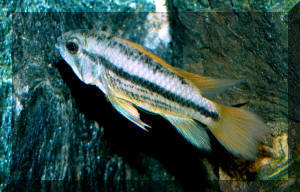 Some aquatic life
is much more sensitive to cycling issues.
Apistogramma cacatuoides
Some aquatic life
is much more sensitive to cycling issues.
Apistogramma cacatuoides
|
Extremely high ammonia during cycling
12/12/18
Hello Crew! Hope you all are doing very well.
<All good.>
Got a brackish nitrogen cycle question for you. I have recently
set up a 5 gallon biotope aquarium for some Opae ula shrimp.
There is a tall tower of lava rock (held together with aquarium silicone glue)
to provide a hypogeal environment. There is also additional lava rock mixed with
some reef "dry live rock" pieces in the rest of the tank. Specific gravity is at
about 1.010.
<Understood.>
First evening after filling the tank, I added a few (very few!) flakes of fish
food to begin cycling. After 24 hours I tested for ammonia using an API Ammonia
test kit, and the result came back at 8 ppm! Since 8 ppm is as high as the test
goes, the ammonia level is anywhere from 8 ppm to who knows what. No way this
came from those teeny flakes!
<Possibly not. Hard to say without knowing how much protein was in the flake and
how much water (actual, not nominal) is in your 5 gallon tank.>
So, the ammonia could only come from one of three places: my tap water, the salt
mix, or the rocks. I tested my tap water after treating with Prime water
treatment, and it came back at between 0.25 and 0.50 ppm ammonia, likely from
the chloramine. Then I mixed in some of the marine salt mix and retested - came
back the same as the tap water.
<Indeed, as should be the case.>
I still had some lava rocks left over so I put a few in some fresh water and let
them soak a few hours and then tested. Yep, it was the lava rocks.
<Yikes! I'm not a huge fan of lava rock, which not only affects water quality in
this case, but more regularly, affects pH and water colouration too. It's
vaguely acidic in many cases, causing pH to drop, and the minerals contained can
stain the water reddish brown.>
After 48 hours the ammonia level was still high and beginning to look a little
cloudy, so I did a 2 gallon water change.
<Correct action here.>
At this point I'm assuming it will be continue to cycle the tank as usual, am I
correct? Or are these levels too high even for cycling? I'm also guessing I will
need to do a fairly large water change after the cycle
completes as there will likely be pretty high nitrate levels.
<Yeah, but if there's no livestock in this system, the ammonia spike shouldn't
do any lasting harm. If the shrimps are there, and have survived, wow!!!>
At any rate this was a good lesson to learn - don't just throw new rocks into an
established aquarium! Even if you have tested for carbonates, you never know
what might be lurking in there.
<Sage advice.>
Thanks for your input on this!
Joanne
<And thank you for sharing. Neale.>
Re: Extremely high ammonia during cycling 12/12/18
No, definitely no livestock in here yet. Just doing the cycling.
<Understood.>
The reason for using the lava rocks is because I am trying to recreate a
biotope. In the case of Halocaridina rubra (Opae ula) this is definitely lava,
with a sprinkling of carbonate rocks. I did a lot of research on
scholar.google.com on the Hawaiian anchialine pools - fascinating stuff!
The lava rocks I purchased are not *exactly *the same as the lava where they
occur, but it is as close as I can get.
<I am fairly sure the "lava rock" traded is a byproduct of glass making or some
other industrial process, rather than actual pumice stone.>
Based on your comments about these rocks changing the pH, I will give this tank
an extended cycle period. Once the nitrogen cycle has completed I will continue
to monitor the pH and other parameters, while keeping the cycle "fed" with the
use of flake foods. If there is a trend toward acidification, I will remove some
of the lava rocks and replace them with some limestone and/or dry live rock to
help keep things buffered.
<I do think Tufa rock, or Texas hole-y rock, might be better.>
I'll see how things trend before adding any live creatures. Hopefully things
will tend to stabilize as whatever soluble materials are in the rock get leached
out.
<Hopefully!>
Thanks again!
Joanne
<Most welcome. Neale.>
|
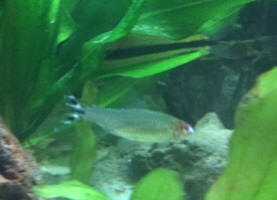
Hi WetWebMedia Crew! Disease help please!
6/1/17
Hello crew!
I've been using your site for years now and have always come back to read
the FAQ's and ask for advice. Once again, I require some disease
identification and treatment help.
<Okay>
My mother's freshwater tank has been setup for 2 years and ,according to the
all in one test strip, it has the following stats:
GH: 0 ppm
KH: 0 ppm
<This lack of hardness is a huge issue here. I would be adding at
least baking soda, if not a modicum of Neale's "Malawi Mix" here. Read here
Re:
http://www.wetwebmedia.com/fwsubwebindex/fwsoftness.htm
and the linked files above>
pH: 6.5
no2-: 0.5 ppm
<Debilitating to outright deadly toxic. Needs to be addressed immediately:
http://www.wetwebmedia.com/FWSubWebIndex/NO2ContrF.htm
no3-: 20 ppm
temp: 28 degrees Celsius
Her tank is 45 gallons.
Her stocking list consists of:
6 Rummy nose tetras
1 Siamese algae eater
3 Discus
4 Julie Corydoras
9 Harlequin Rasboras
Now for the spicy advice we need. So I will go chronologically from what it
seems started her downwards spiral. 1. The new rummy nose tetras she
purchased died the day after. 2. Her pre-existing rummy nose tetra developed
white balls/tufts on the centre of its eye.
<Both these are environmental insult manifestations; only secondarily
pathogenic>
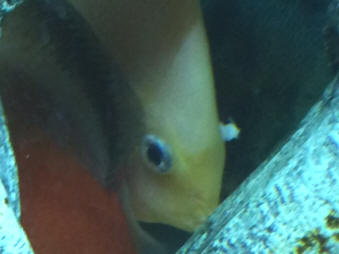
3. Her white discus's eye became cloudy. 4. The eye began to protrude and
the white tuft continued to push outwards. 5. the red discus(not pictured)
is beginning to show clouding in one eye.
<This as well>
We treated the tank with the proper cycle of tetracycline (the instructions
are not off the top of my head) and she did some impromptu Methylene blue
doses.
<No treatment is going to work till you fix the environment/water quality>
After the treatments and the results looking as poor as they did before. I
told her to do water changes every other day for a week and to replace her
carbon.
Now seeing the current issue at hand, I am wondering what to do. We are
quite lost and need some disease identification(doesn't look like typical
cloudy eye) and some treatments.
Pictures should be attached in no chronological order whatsoever
Thanks for the help,
Kellan
<The reading ASAPractical, modification, fixing next. Bob Fenner>
|
 |
Re: Is our tank possessed by an ammonia demon???
9/4/16
Thanks for your response, Neale.
<Welcome.>
We use well water, no chlorine, but we still add conditioner to it to
help keep the skin coating on the fish.
<Well water can, does absorb ammonia and other pollutants from the
surrounding ground, especially in rural areas (nitrogenous compounds are
often very high near farms that use fertilisers or rear livestock). So
you should absolutely be using water conditioner, and a good one at
that, even on well water.>
Our tap water is zero for ammonia, nitrates and nitrites. We've tested
it many times. And the water itself was tested by the water softener guy
and was clean.
<Do you use water from the bypass tap, or water that's been through the
water softener? You should be doing the first, not the second. NEVER use
water from a domestic water softener. Introduces all sorts of variables,
including high sodium and zero carbonate hardness that can cause
problems.>
We (well, Maria - I'm in the sidelines with a herniated disk in my lower
back) are doing multiple 50% water changes until the ammonia is gone.
We've done two today and will do a third tonight and again in the
morning until the numbers are down. All the gravel is being washed in
both tanks.
<Good.>
We are using that bottled bacteria, we don't have any other option.
<Is this refrigerated before purchase? If not, it's useless. Franky,
even the refrigerated stuff is pretty ropey. I'm not a fan. I'm going to
ask Bob's opinion on this, but I've come across FAR too many problems
with tanks cycled without fish but with store-bought bacteria potions.
My preferred method is to clone an existing filter, which is pretty much
foolproof done right. Do you live near anyone with an aquarium? If they
can donate half their mature media, which any mature filter can without
problems, your tank would be instantly cycled. Hence, "cloning" a
filter.
The donor filter can have 50% of its live media replaced with brand new
sponges (or whatever) and experience NO noticeable drop in water
quality.
Bacteria double in numbers every 20 minutes, the scientists tell us, and
when you have a gazillion per cubic cm on a mature block of sponge, that
means the donor filter will make up any losses very quickly. The
problem, as you may realise now, is when you have none or just a few
bacteria per cubic cm.>
Thanks again for your help and time.
<I do think things should settle down. What fish do you have now? If you
change all the water, clean the filter as indicated (taking care not to
over clean and kill the bacteria) and then feed sparingly, if at all,
for a couple weeks, hardy fish (Danios, peppered Corydoras, 'feeder'
guppies, etc.) can, do sail through the cycling process without much
trouble if you change some water every day or two. Old school approach,
and not widely recommended, but does work. The addition of floating
aquarium plants, especially floating Indian Fern, is another 'magic
bullet' from days gone
by. Cheers, Neale.>
re: Is our tank possessed by an ammonia demon??? (RMF?)
9/4/16
1. We have been using softened water. We'll switch, but we're going to
replace another fifty percent. Should we use the bypass tap for that? Or
half half, if they're used to the softened water?
<I'd go the latter route, maybe 25% bypass/75% softened for the first
water change, and so on across a week of water changes. Domestic
softener water isn't good for fishkeeping for all sorts of reasons, and
it's a shame that
the idea of "softening" water means different things to different
people.
Please do check with the installer of your system, but most work by
leaving general hardness as it is, but replacing carbonate hardness
(limescale) with sodium ions. That's why people with blood pressure
problems, for example, are told not to drink softened water. On top of
that, with zero carbonate hardness your pH might not be stable between
water changes, and a low pH (anything far below 7) will
absolutely hammer biological filtration.
Indeed, some reports suggest it stops working completely below pH 6!>
2. We use Aqueon filters - a mesh bag with carbon in it. I guess you are
talking about the mesh part of the filter?
<Nope. Take the carbon and throw it in the bin. Useless for freshwater
fishkeeping. Actually, there are VERY SPECIFIC situations where carbon
is handy, like removing leftover medication from a tank, but other than
that... useless. Similarly anything labeled "ammonia remover" (Zeolite)
is also useless for a normal tank, and again, chuck in the bin. Or at
least lay down for use some other time! What your filter needs is plenty
of biological media -- usually sponges and/or ceramic noodles. That's
where the bacteria live.>
If we can find someone with a filter, would we just put that in the
tank?
<Well, pretty much, yes. Easier to have that filter donate some sponges
or ceramic noodles, and put those inside your new filter. Should
jump-start it a treat.>
We have one white skirt tetra, one platy, and one Pleco in the tank. We
DO have a second 20 gallon tank. Could we use the filter from that?
<Any filter more than a couple months old should be mature
enough to donate some live media. That assumes temperature and
water chemistry aren't very different. Obviously taking filter media
from a hard water tank and sticking it in a soft water system would be
nasty to the bacteria and likely to stress them (though not kill them).>
No, we just changed the filter in that, but I have that filter - it
didn't dry out, so maybe use that? Should we not change the filters?
<I'm a bit concerned here. What do you mean by "change the filter"? You
never "change" a biological filter. All you do -- every six weeks to six
months depending on how well flow rate is holding up -- is rinse the
live biological media under a lukewarm tap to get rid of the muck.
Periodically (every five years or so) you might want to replace a really
irredeemably grubby sponge, and every ten or twenty years you might
change some of the ceramic noodles. But even then, you'd only change,
say, a quarter to a half of the media at any one time. Really, a
biological filter should be left
alone as much as possible, and the golden rule is "if in doubt, and
water is still flowing through it, leave it alone". You should
absolutely NOT be changing media every time you change water! For sure
the manufacturers will want you to change carbon and ammonia remover
every week or two, and they're right to recommend that -- such media
needs frequent replacing. But those media are totally unnecessary in the
average freshwater aquarium.
Some filters are designed around carbon and Zeolite modules, but they're
a con, and I spurn them! Focus on sponges, noodles, and perhaps a small
layer of filter floss to trap silt (and the filter floss will need
replacing or cleaning quite frequently, if it bungs up).>
If we put the fish in another tank, how would you suggest that we
restart the 38 gallon tank as new tank? From scratch?
<See above; I'm a bit worried you're doing something to the filter
that's preventing it from maturing. Perhaps I've misunderstood? Neale.>
Re: Is our tank possessed by an ammonia demon??? (RMF?)
9/4/16
sigh. You have not misunderstood.
<Oh dear.>
We have been doing what they told us to do: using the carbon filter for
the Aqueon pump and changing it out when dirty.
http://www.aqueonproducts.com/products/filtration/
<Got you now. I don't know these filters, so can't be sure about their
design. But usually these small internal canister filters have two or
three 'chambers' inside them. Ideally, the water passes through a
mechanical medium first to trap dirt, a second stage of biological media
to clean the water of ammonia and nitrite, and finally (and optionally)
a chemical medium (such as carbon, peat or Zeolite) to chemically change
the water somehow. This last stage is a total waste of filter space in
most freshwater tanks. Furthermore, the mechanical and biological stages
can be combined if you're limited with space. Sponges and ceramic
noodles will trap silt as well as house bacteria, and so long as you
only rinse them gently in aquarium-temperature water (even a bucket of
old aquarium water during water changes) then you'll keep the bacteria
on that medium in tip-top condition as well as rinsing off the dirt.
Make sense? Now, I don't
know which filter you have from their range. But I'd suggest looking at
the instruction leaflet or packaging, or heck, just email me the make
and model number. Once we know which filter we're talking about, we can
plan accordingly. One option though is that if your filter has simple
empty chambers that you're meant to put proprietary cartridges into,
those chambers can still be stuffed with filter floss or ceramic
noodles. Filter floss is cheap and crams nicely into awkward shapes.
Don't over pack it though or you'll stop the flow of water. Also, the
other problem is that it clogs up quickly and isn't really washable more
than once or twice, so you have to be careful about replacing no more
than 50% per month. Ceramic noodles are more expensive, especially the
really good brands (such as Siporax and Eheim Substrat Pro) which hold
the most bacteria per cubic centimetre. Being a loose but solid medium
you can stuff it into a
compartment without worrying about clogging up the flow of water. So
it's a better medium in all but the smallest and most awkwardly shaped
filters. Of course your particular canister filter may have proper
biological cartridges on sale, and these are the ones to use if that's
an option.>
We are using the Aqueon pumps and I don't know if they have a filter
like the one you are talking about. If you don't like their products
what do you suggest? These things get pretty dirty. Maria can go get the
new media now, but we don't know what to get. We THOUGHT we did, but
obviously we were listening to the wrong people.
<Possibly. Since you already have an existing aquarium, cloning that
tank's filter should be easy. Can some media be removed from that
filter? Or even, worst come to the worst, scrape off the top 1 cm gravel
from the old tank
and add it to the gravel in the new filter. The top layer is where some
filter bacteria live, so while it's not as good as cloning a filter,
it'll provide a heck of a jump start to any new aquarium, speeding up
the cycling process a lot. As mentioned before, adding a handful of
floating plants is another good way to get things moving. Hope this
helps, Neale.>
Major cycling issues 9/3/16
Hey Crew.
Sorry for asking but I am at a complete loss.
I purchased a four foot long, 90 gallon aquarium at the end of March, to
transfer my fish from my old 15 gallon tank.
I upgraded to a large canister filter but used all my old filter media in it and
just topped it up with new media.
I didn't anticipate any problems. I thought I might have to watch my water
chemistry for a few days.
I always preheat my water to the same temperature as my tank, treat it with
prime and then add it after 5 minutes. So I followed this routine when filling
my new tank, and then added my filter and fish.
But something went wrong, and it is like my bacteria have all died out.
<Does happen...>
It's been a few months, and I still have at least 1ppm of ammonia in the tank
after a week if I don't do water changes every other day. I don't even
understand where all the ammonia is coming from,
<... the water? Foods? Life?>
all I have in the tank currently are 3 harlequin Rasboras, although I also
currently have a pond snail infestation. I feed every second day.
I thought my test kit must be testing wrong but I bought a liquid test kit and
the results are correct. Lots of ammonia, no nitrites, no nitrates. I have
plants in the tank so they might take up some nitrites/nitrates, no idea.
<Have you tried using a bacterial product to move the cycling process along? I
would. Dr. Tim's line is a fave.>
I have no idea what wiped out the bacteria to start with, and no idea why this
tank is showing no signs of cycling. It's been months. I lost 3 of my 6
harlequins to fungus, and I don't want to lose the others. (I decided at one
point to slow my water changes to see if too many were inhibiting the cycle)
Please help!
<Something forestalling establishment of bio-geo-nutrient cycling here. A few
possibilities. Please read here:
http://www.wetwebmedia.com/fwsubwebindex/fwestcycling.htm
and the linked files above. Bob Fenner>
Re: Major cycling issues 9/5/16
Thanks Bob,
I'll try the bottled bacteria you suggested.
<Good>
I'm worried that whatever caused the bacteria to die off and is inhibiting the
new cycle will make it ineffective but I will give it a go.
<This is what I'd do. Am hopeful that enough beneficial microbes will overwhelm
whatever is the issue here>
If this doesn't work, what would you suggest?
<Dumping, bleach washing all, rinsing a few times, refilling and trying again.
There are a few "scenarios" that might explain the observations here...
restarting can solve most all>
I read that a lack of calcium could cause this but my PH sits at 7.2 and doesn't
fluctuate, so I doubt this is the issue.
<Me too>
There are no spray products used in the house, so I don't think chemicals
getting into the tank are an issue either :/
<A mystery... that we could pursue if you'd like... Bob Fenner>
Re: Major cycling issues 8/7/16
I am curious. I understand that you are busy and have lots of more urgent emails
to deal with. If you do have time, could give me some of the scenarios. I like
to learn and would appreciate a better understanding of what could have gone on
here.
<Some of the scenarios? That forestall the establishment of (nitrogen) cycling?
Okay, categorically the ones that come to mind:
1) Lack of essential nutrient, or TOO much of said nutrients. E.g. no
assimilable ammonia, or excess will starve or poison nitrifiers. Have seen folks
pouring in too much concentrated exogenous NH3/NH4OH and wondering what was
going on...
need to use a bit of organic source (foods are best) and let "rot"/decompose.
2) A paucity of alkalinity; in particular carbonate/bicarbonate... the
metabolism of nitrification is reductive; drives pH down.... you state your pH
is 7.2 so this is not likely a/the issue.
3) Presence of other microbes/bacteria... that outcompete, poison desired
species. "Wipe out syndromes" are commonly attributed to these conditions.
4) Other sources of toxicity: Metal contaminants, medications, saponifiers like
soap residue....
Bob Fenner>
Cycling question
8/31/16
Hi there
<Jason>
I know you must get this sort of question a lot , but I need a definitive
answer.
<Let's see if I/we have one>
Set up a new 300 litre tank that will house Malawi cichlids 14 days ago , Have
buffered the tank with crushed coral and is holding stable at 8.0 ph , I started
the cycle with Tetra safe start and the water parameters as of last night were
as follows , ammonia 1 mg per litre, Nitrite 2mg per litre and the
Nitrate is between 25 and 50 mg per litre ,
<Mmm; all three nitrogenous compounds present at the same time... the Ammonia
should "go to zero" soon (days) and then the Nitrite soon after>
I am doing a fishless cycle currently and would like to know what these
parameters suggest ,
<Progress>
as far as I know after being in the hobby for 10 years that the ammonia and the
Nitrites should drop to 0 pretty soon as the Nitrate level is present ,
<Ah yes>
or has something gone wrong in the cycle somehow.
<Agreed... >
The crushed coral was bought at a local fish store but seems that the coral had
been used previously in filters but was dry and dusty and was thoroughly cleaned
prior to filling tank.
Tested the tap water and came out zero on all fronts and the ph was 5 .
<Wow; I'd be pre-treating new water in a container OUTSIDE the tank; storing for
a few days/week ahead of use, TESTING before adding to the system>
Regards Jason Liffmann
<And you. Patience here... and if NH3/NH4OH and NO2 don't go in a few days, do
check the water with other test gear. Bob Fenner>
Cycling question /Neale 9/1/16
Hi there
<Jason,>
I know you must get this sort of question a lot , but I need a definitive
answer.
<Understood.>
Set up a new 300 litre tank that will house Malawi cichlids 14 days ago , Have
buffered the tank with crushed coral and is holding stable at 8.0 ph,
<Good. Though personally, I'd be relying on carbonate hardness added to the
water with each water change. 0.5 to 1 teaspoon baking soda (sodium bicarbonate)
per 5 US gallons/20 litres should do the trick nicely.>
I started the cycle with Tetra safe start and the water parameters as of last
night were as follows, ammonia 1 mg per litre, Nitrit 2mg per litre and the
Nitrat is between 25 and 50 mg per litre,
<Currently lethal conditions for fish! But what you'd expect early on in the
cycle.>
I am doing a fishless cycle currently and would like to know what these
parameters suggest,
<Within the normal range.>
as far as I know after being in the hobby for 10 years that the ammonia and the
Nitrites should drop to 0 pretty soon as the Nitrat level is present,
<Ammonia usually drops to zero within 2-3 weeks, and nitrite something like 3-6
weeks, but this is not totally predictable. Nonetheless, after 6 weeks the tank
should be safely cycled. Fishless cycling doesn't always work first time. You
can add a helping hand by adding some fish food. Why?
Because the complex chemicals provide nutrients for saprotrophic bacteria.
The nitrifying bacteria use ammonia and then nitrite, but fish wastes aren't
necessary just ammonia. They can be other chemicals as well, urea for example,
and uneaten food as well. So saprotrophic bacteria need to be there too.>
or has something gone wrong in the cycle somehow.
<Not necessarily.>
The crushed coral was bought at a local fish store but seems that the coral had
been used previously in filters but was dry and dusty and was thoroughly cleaned
prior to filling tank.
<Understood.>
Tested the tap water and came out zero on all fronts and the ph was 5 .
<Yikes! That's some very acidic water!>
Regards Jason
<Hope this helps, Neale.>
Re: Cycling question 9/2/16
Thanks Neal
<Welcome.>
Was concerned with the high Nitrat reading , threw me a bit .
<Understood. For a start, the test kits aren't that accurate, hence the "25 to
50 mg/l" range your test kit indicated. You also have to look at the nitrate
level in your tap water. London tap water for example can easily have 40 mg/l
nitrate!>
Did a 50 water change last night and all the levels predictably dropped by half
so ammonia 0.5 mg per litre Nitrit 1.0 mg per litre and Nitrat between 25 mg and
50 mg per litre , didn't check phosphate level previously but have checked now
and the readings are between 1 and 2 MG per litre.
<Fine.>
As far as my thinking goes may have not cleaned the substrate and rock well
enough , your thoughts on this and should I just carry on cycling and see if it
corrects itself.
<Carry on. Fishless cycling just isn't as reliable as cycling with fish,
unfortunately! It does take a while for the whole thing to settle down. Just
persist.>
Or should I boil al the rocks and the substrate and restart the cycle with a few
fish with another bottle of Safe Start.
<Tetra Safe Start does not add bacteria! You can't do a fishless cycle with this
product on its own. It really isn't anything more than fancy water conditioner.
You need to be adding ammonia, which I think you're doing, and waiting for the
bacteria to arrive. They're in the air, but you can speed things up by adding
floating plants, which carry lots of them on their feathery roots.>
Regards Jason
<Hope this helps, Neale.>
8+ week cycle 5/29/16
Sorry to impose again, but I am confused. Eight plus weeks into cycling
my tank. Everything was looking good - but it was taking a long time to
get a safe Nitrate reading.
<Do you really mean this? Anything between 0 and 20 mg/l nitrate is
ideal for a freshwater aquarium. Up to 40 mg/l is okay for standard
community fish (tetras, barbs, catfish, etc.) though cichlids (such as
Angels and Rams) tend to be disease-prone when nitrates get into this
range, especially if water changes are infrequent.>
I did partial water changes, fed the bacteria occasionally, etc. Just
now I tested Nitrates (>20ppm) but Ammonia is back up to 0.25 ppm (?).
<Right. Now, two things to do here. Check water tap water first. If your
tap water has this trace level of ammonia AFTER being treated with water
conditioner, your ammonia test kit is detecting "safe" neutralised
chloramine. So nothing to worry about. Only a problem if the aquarium
has HIGHER ammonia than the treated tap water, because that means
biological filtration isn't happening properly/quickly enough. Immature
filter, too much food, too many fish, not enough filter media or flow
rate, etc. The nitrate level in your water should be relatively low,
depending a bit on where you live (agricultural and urban areas can have
quite high nitrate levels). But whatever, the nitrate should be lower
than in the aquarium because the biological filter ADDS to the amount of
nitrate when it does biological filtration. Make sense?>
I do use Prime daily - and the Seachem Ammonia Alert is <0.02. What am I
doing wrong?
<Possibly nothing. Assuming you treat your water and your filter is
properly set up, the filter should mature within 6 weeks. Of course that
assumes you were providing a source of ammonia, like pinches of fish
food or drops of household ammonia.>
My tap water is treated with Chloramine.......will I never be able to
have a safe tank? R/O and bottled water are out of the question. It's a
10 gallon tank
<Stocking 10 gallon tanks is difficult. Most of the stuff sold is too
big.
Do choose carefully. Have a read:
http://www.wetwebmedia.com/ca/volume_5/volume_5_3/stocking.htm
Some ideas there, but fish of similar size/habits could work too. Feel
free to ask.>
with 6 plants (thriving), heater, filter, sponge filter, airstone and UV
sterilizer.
<This latter is probably overkill.>
Any advice would be appreciated. Thanks again, Eve
<Personally, I favour the nitrite (not nitrate) test kit as the one less
likely to give "false positive" readings. If nitrite is zero, and you
have been supplying an ammonia source to jump-start the filter, I'd
assume the filter is ready, and start stocking. A few small, hardy types
would be ideal. One of the smaller Corydoras species for example, or a
robust little cyprinid like Tanichthys spp. (these are best in cool
tanks though, even room temperature). Cheers, Neale.>
Re: 8+ week cycle 5/30/16
Thank you for the quick reply Neale,
<Welcome.>
The tap water treated with Prime is reading 0.25 ppm ammonia, testing
the same as the tank (now, before it was 0 ppm).
<Problem solved. If you're confident the ammonia reading in the treated
tap water is the same as the aquarium, then no new ammonia is being
added/created by livestock, so your filter is working fine. Time to move
on!>
I am doing a fish-less cycle for a 10 gallon tank for one Betta only.
<Sounds a great strategy.>
I live in the city and nitrates from straight tap water can fluctuate up
to 5.0 ppm. The tank was 160 ppm maybe 3 weeks ago, but is slowly coming
down, with partial water changes (?).
<I'd be minded to change all the water. 160 mg/l is a vast amount.
Switch the heater and filter off, change all the water, then switch the
heater and filter back on Assuming no big water chemistry variations,
filter should be
fine, and you'll go from 160 mg/l nitrate down to something much lower.>
It's tricky all this, but I want my next Betta to be in a safe tank -
and I wasn't sure that could be achieved with my water source. Thanks
again for the advice!
Eve
<Glad to help. Neale.>
Re: 8+ week cycle 5/31/16
Thank you for the quick reply Neale,
<Welcome.>
The tap water treated with Prime is reading 0.25 ppm ammonia, testing
the same as the tank (now, before it was 0 ppm).
<Problem solved. If you're confident the ammonia reading in the treated
tap water is the same as the aquarium, then no new ammonia is being
added/created by livestock, so your filter is working fine. Time to move
on!>
I am doing a fish-less cycle for a 10 gallon tank for one Betta only.
<Sounds a great strategy.>
I live in the city and nitrates from straight tap water can fluctuate up
to 5.0 ppm. The tank was 160 ppm maybe 3 weeks ago, but is slowly coming
down, with partial water changes (?).
<I'd be minded to change all the water. 160 mg/l is a vast amount.
Switch the heater and filter off, change all the water, then switch the
heater and filter back on Assuming no big water chemistry variations,
filter should be fine, and you'll go from 160 mg/l nitrate down to
something much lower.>
It's tricky all this, but I want my next Betta to be in a safe tank -
and I wasn't sure that could be achieved with my water source. Thanks
again for the advice!
Eve
<Glad to help. Neale.>
Re: 8+ week cycle 5/31/16
Again, Thank you....I was wondering about doing a 90% water change.
<So long as you avoid substantial water chemistry and temperature
changes, this is totally fine.>
Thanks again!
<Welcome. Neale.>
Re: 8+ week cycle 5/31/16
Neale, maybe I'll do a 50% WC instead.
<Certainly sensible; doing two 50% changes, the second the day after the
first, will go a long way to clearing out a murky aquarium without
stressing the filter or livestock too much.>
I see that you are a Paleontologist - last October I took part in a dig
opened to the public in Sewell, New Jersey with Rowan University (found
some poop) with Dr. Lacovara. Below is his Ted talk (haven't watched it
yet, too busy draining the tank). Take a look:
http://www.ted.com/talks/kenneth_lacovara_hunting_for_dinosaurs_showed_me_our_place_in_the_universe
<That's a good talk! Fossil collecting certainly is fun, and a good way
to understand the age of the Earth and the diversity of life that's been
here.
It's a shame geology is taught to badly in schools. It's often thought
of as dull, which it really isn't, as you probably realise now! FWIW, my
field was ammonites, specifically heteromorph ammonites; but apart from
freelance articles on the subject for various magazines and websites, my
day job is as a science teacher now. Much better at that than writing
grant
applications!>
I love fossils, especially fish.
<Cheers, Neale.>
Don't know if my tank is recycling. /RMF
9/14/15
Hello gang.
It's been a couple years since I needed to write you. I have a 40 gallon
freshwater tank that I have had set up for about 4.5 years now I have an Emperor
400 with 1 slot is carbon filter, 2 slots are sponges from LFS,1 slot is bio
stars(I thought I had one slot for sponge and 2 for bio stars. What
would be the optimal configuration for the 4 slots in the filter?
<In order, first on: Mechanical (foam, pad, floss...) biological (stars,
sponge...), chemical.... a Dacron bag with activated carbon likely.>
Everything was fine until the last few weeks I have had 5 die
(Madagascar Rainbow, Julii Cory and three blood fin tetras two are still alive
and "looking ok". I have two more Julii's a Botia and a black ghost(about size
of pinky).
<?!>
Side question...Since I introduced the black ghost so young when he gets bigger
generally will he still go after the smaller fish that he grew up with, or does
fish not work that way?
<Can't tell; some do/don't>
I bought a new API liquid test kit 2 days ago. I found the ammonia to be at
.25ppm and Nitrates way up at over 60ppm about one less square from topping out
on the API reference card. I admit I did get a little lax on vacuuming and water
changes but due to water evaporation I do 5 gallon water change once a month.
<Do a weekly change, vacuum of 20-25% See WWM re>
I did a 5 gallon water change yesterday and 5 gallon today and also yesterday I
put a Nitra Zorb Friday afternoon, but today Sunday it doesn't look like the
nitrates have gone down at all. I know(for a new tank) the Nitrates go up to
bring down the nitrites and the nitrates go down after the ammonia goes up and
it all starts all over again. So if my nitrates are
higher than ammonia does it sound like cycle restarted?
<Something is out of whack here... STOP feeding period for a few days... >
My LFS said not to do another water change yet, but I told them I used a 10
gallon bucket which would be 20 gallons of a 40 gallon tank but they are only 5
gallon buckets so I only actually did a 10 gallon change of the 40 gallons.
Hoping to get your opinions, suggestions and resolutions so I can get this back
on track.
<READ on WWM re FW sys. maintenance. Bob Fenner>
Re: Don't know if my tank is 9/14/15
<READ on WWM re FW sys. maintenance. Bob Fenner>
Thank you for the speedy
response. I will stop feeding for a few days and do water changes as you
suggest. As for the configuration of the Emperor 400 not sure if you mean "first
on" do you mean front left or back left. Can you break it down that way for me.
Which goes in front left, back left, front right, back right.
Can't thank you enough for the help over the years. take care.
<<First as in the water flow path through this or any filter system...
First mechanical....BobF>>
Don't know if my tank is recycling. /Neale 9/15/15
Hello gang. It's been a couple years since I needed to write you. I have a 40
gallon freshwater tank that I have had set up for about 4.5 years now I have an
Emperor 400 with 1 slot is carbon filter,
<Do understand carbon will prevent medications from working... unless you have a
specific reason to use it (and you don't) replace this module with something
more useful, even plain vanilla filter wool.>
2 slots are sponges from LFS, 1 slot is bio stars (I thought I had one slot for
sponge and 2 for bio stars. What would be the optimal configuration for the 4
slots in the filter?
<A good rule of thumb is at least half to three-quarters should be biological
media of your choice, and the rest mechanical media you can remove and rinse as
often as needed.>
Everything was fine until the last few weeks I have had 5 die (Madagascar
Rainbow, Julii Cory and three blood fin tetras two are still alive and "looking
ok". I have two more Julii's a Botia and a black ghost(about size of pinky).
<This will be the "miner's canary" in this system... will also require more
space, more current, and better water quality for long term success. Do
understand the adults are massive fish and hypersensitive to low oxygen levels.
Even 75 gallons is "small" for adults. They don't grow fast, but yours
should/will outgrow this system within six months to a year.>
Side question...Since I introduced the black ghost so young when he gets bigger
generally will he still go after the smaller fish that he grew up with, or does
fish not work that way?
<Complicated. But usually fish kill prey-sized tankmates once they become big
enough, but there are stories of big predators ignoring small fish. Apteronotus
are not piscivores but vermivores, and if properly fed (they have big appetites)
generally leave all but the smallest (Neon-sized) tankmates alone.>
I bought a new API liquid test kit 2 days ago. I found the ammonia to be
at .25ppm
<Lethal to Apteronotus quickly; other fish will become stressed, sickly.>
and Nitrates way up at over 60ppm about one less square from topping out on the
API reference card.
<Do more water changes. Add fast-growing plants. Don't overfeed.>
I admit I did get a little lax on vacuuming and water changes but due to water
evaporation I do 5 gallon water change once a month.
<This WILL NOT work with Apteronotus. You need to raise your game. Most
specimens of this genus kept "casually" in this way end up dead.>
I did a 5 gallon water change yesterday and 5 gallon today and also yesterday I
put a Nitra Zorb Friday afternoon, but today Sunday it doesn't look like the
nitrates have gone down at all. I know (for a new tank) the Nitrates go up to
bring down the nitrites and the nitrates go down after the ammonia goes up and
it all starts all over again.
<Not quite. Fish excrete ammonia. Ammonia is turned into nitrite by the filter
bacteria. Then another bunch of bacteria turn the nitrite into nitrate. In a
normal aquarium nothing removes nitrate apart from fast-growing plants, which is
why you need to do regular water changes to dilute than nitrate.>
So if my nitrates are higher than ammonia does it sound like cycle restarted?
<If your aquarium has more nitrate than your tap water, then yes, nitrate being
produced by the filter implies the first AND second bunches of bacteria
described earlier are growing there.>
My LFS said not to do another water change yet, but I told them I used a 10
gallon bucket which would be 20 gallons of a 40 gallon tank but they are only 5
gallon buckets so I only actually did a 10 gallon change of the 40 gallons.
<You should be doing 20-25% changes every week or two, regardless. With
Apteronotus, you really have to be on top of water quality.>
Hoping to get your opinions, suggestions and resolutions so I can get this back
on track.
<Most welcome. Neale.>
Is this a mini cycle? 9/23/14
Hi there,
<Chris>
One of my worst fears was realized recently, my tank sprang a leak. It
was a 20 gallon, with a dwarf Gourami, 7 Cory
cats, and 7 tetras. It had been established
for approx. 10 years and I've had most of those fish for many
years.
I had a small 7 gallon tank and was able to set that up and transfer the
fish, using existing filter and tank water, while I ran out to
purchase a replacement 20 gallon.
I set up the new tank using existing live plants, driftwood, rocks, and
filter/medium from my original established tank. I used new
gravel but put some of the old gravel in a new
pair of pantyhose and put it in the tank as
well. I hoped all that would be enough to skip a mini cycle.
<So....?>
For several days I tested ammonia and nitrites daily, and both were zero
so I thought I was safe. Three days ago my
Dwarf Gourami had been making loud smacking
noises at the surface of the water (like he does when he eats,
except he wasn't eating) but seemed fine otherwise. The next day
I found him dead.
<Could be anomalous>
That prompted me to retest the water, and my ammonia is still at zero
but the nitrite level is at .25. I've
done water changes the last three nights
and it is still at .25.
<Best to halt feeding for now>
The one thing I should also mention is the water smells a bit musty,
ever since I set up the tank. The tank was
clean when I got it, and I rinsed it several
times (no soap or cleaners were used) and there was no odour to
it. I've never had a musty smell before, so I wonder what may be
causing it. There is no debris in the tank, as
the gravel is new (very well rinsed).
Should I be doing 20% water changes every day until the Nitrite levels
are back to
zero?
<Mmm; I would not... can result in forestalling establishment of
nitrogen cycling>
I don't know what else I should be doing.
<I'd add a worthwhile (some are placebos) bacteria starter
culture/adjunct. A fave: SeaChem's Stability:
http://www.seachem.com/Products/product_pages/Stability.html
Thank you for your help!
Chris
<Welcome. Bob Fenner>
Too soon overstocking, cycling issues
8/1/14
Hi, I started a fishless cycle on a lake Tanganyika 30 gallon tank 9
weeks ago. I had good readings 7 weeks into the cycle so added a
marlieri Julie and also put 2 Synodontis in. All was fine so the next
week I added 6 more cichlids
<Too much too soon>
under advice from lfs and 3 days later I have an ammonia reading
of 0.5ppm and the 1ppm the following day.
<Dangerously toxic; more so at high pH>
I have been doing 10 percent daily water changes which I hope is helping
the fish but am starting to worry I have reset my cycle because of the
bioload I placed on the tank. Is there anything you would recommend that
may help.
<Yes; the usual reading:
http://wetwebmedia.com/FWSubWebIndex/fwcyctrbfix.htm
and the linked files above>
Cheers
Nick
<And you, Bob Fenner>
Most creatures are less active 1/16/14
> Hi,
> Our tank was a Christmas present for our 12 year old.
> <A worthy gift; proffered at a sensitive/appreciative age>
> In the middle of
> December we put water, gravel, decorations etc in, and she put her
first
> fish (a male Betta) in on 29th along with 2 (zebra?) snails.
> <Mmm, what was done to "cycle" this system?>
> stock has been
> added over the last 2 weeks, and now there are 3 algae eating fish,
> <Yikes... how large is this tank? Do please look up the name
> Gyrinocheilus/"Chinese algae eater"... these are inappropriate... as
are
> larger suckermouth catfishes of the family Loricariidae ("Plecos") in
small
> volumes>
> several
> red cherry shrimps, 2 Ramshorn snails, a lava snail, 2 giant shrimps,
and
> some rabbit snails. the fish and snails are a lot less active over the
> last
> 24 hours compared to when they were introduced. some snails haven't
moved
> any distance for 24 hours.
> <Oh oh... good reporting of bad behaviors>
> the shrimps don't seem to be as affected -they
> are still feeding, but have always stayed 'out of the way' as the
Betta
> liked to take a closer look at them initially. The snails seem to hide
in
> their shells some of the time too, I even thought one had died and the
> shell left empty!
> The water seems to be fine - ammonia isn't tested on the dip strips I
have
> (API 5in1), but no3
> <If you'll search, read on our site, you'll find that I/we don't trust
> "test strips" (liquid colorimetric assays/kits are far more accurate,
> precise: reliable)... and the fact that you have no measurable Nitrate
> (NO3) indicates this system is NOT cycled... this is likely THE
principal
> cause of your livestock malaise, trouble here. You MUST be very
careful
> (little feeding, careful water changes...) to avoid poisoning/killing
the
> stock here... AND do what you can to urge the system to cycle
(commercial
> product, old media...) AS gone over here:
> http://wetwebmedia.com/FWSubWebIndex/fwestcycling.htm
> and the linked files above: READ>
> and no2, nil, pH7.5, KH 180, GH 180. Tank size approx.
> 50 litres. Are you able to give any idea why the activity in the tank
is
> reduced? I'm not sure if there may be Whitespot on one of the Bettas
side
> fins (by gill) but don't know how to treat it with snails and shrimps,
or
> how diseases might affect them. no spots on other 3 fish though.
> Thanks for your advice,
> Susan
> <STOP feeding for now and READ. Do write back if you have further
> questions, concerns. Cheers, Bob Fenner>
Re: Most creatures are less active 1/16/14
Hi,
My husband has done most of the setting up of this tank....
<Do show, review w/ him our corr. here>
I think we probably put a commercial cycling product in, and I know we
added a bag of daphnia - my husband thought they might become
established providing a food source for the 'proper' residents of the
tank, but I suspect the treatment they get before reaching us renders
them sterile, and the lifespan isn't that great! I'm sure they will have
helped create great bacteria in our filter.
<Possibly; but... where is the accumulating NO3? It should be detectable
in a ready-cycled system>
The fish he has included to eat algae off the glass etc, are definitely
not Plecs - looking at the ID pages on here I think they may be
Otocinclus.
<Ahh, these are fine... compatible... just not very hardy in most hobby
systems>
We had no means of measuring hardness with our older test kits, and
weren't sure how reliable the they would be with their age. Also, we had
ran out of nitrate reagent, so bought the dipsticks when we got her
tank. I have done tests with the chemicals for ammonia and nitrite today
confirming the negligible reading on nitrite, and 0.1 on ammonia
<This MUST be zero, .0.0>
My daughter learnt her lesson on overfeeding with a mishap in our tank
and is now very careful, and I help her keep on top of water changes.
I did realise overnight that someone (probably her) had flicked the
switch to override the lighting timer, leaving the tank lit
continuously. There seems to be more movement today after no light on
for16hrs. Hopefully they will all feel less stressed, and my daughter
can get back to enjoying them.
Now to catch up on my reading matter:)
Thanks
Susan
<A pleasure to aid your success, enjoyment. BobF>
Cycling query; FW, GF sys., stalled nitrification poss.
11/13/13
Hi crew, thanks as always for your wonderful site and all the help you
give us.
<Ah welcome>
I have a query about cycling. Four weeks ago, I moved house and at that
point I changed to a new tank in order to make the transfer easier.
<Good>
Despite my bringing the filter media in a bucket of water and some
gravel from the old tank, the tank is showing an ammonia reading
of 0.25 every time I test, from which I assume the tank is
cycling. I test two hours after feeding, which consists of a half pea,
or one sinker.
<Ok... DO test your kit... just tap/source water... the quarter ppm may
be artifactual, spurious>
The tank is 125 litres, with one fantail goldfish who is about 6 inches
long including tail. It has a built in heater and filter to which I have
added another filter to increase filtration. This set up is exactly the
same as it was in the previous tank.
<Am with you thus far>
For the last near month I have been doing a daily 50% water change to
reduce the effect of the ammonia and have reduced feeding to once a day.
However, there is no sign of any improvement or cycling.
<Changing so much water daily is likely forestalling the establishment
of cycling... I'd cut back to 25% and feed much less; though a few times
per day... sinking pellets of low protein composition>
The fish seems healthy and happy, although a little subdued. I see from
the extensive reading of the site that my water changes will be slowing
cycling. What timescale should I be expecting here?
<Ahh, yes; and as you state/d, I would not have expected, anticipated
that you'd have any cycle at all having moved useful bacteria from the
get go to the new system... Another couple/three weeks "should do it"...
Elsewise, I might buy/use a bacteria/cycle product>
My understanding is normal is 4-6 weeks, so how would this be affected?
<Yes; and just time going by>
Also, is it necessary to still be doing these changes to this extent?
Could you recommend any further course of action?
<As detailed; cutting change outs by half (to a maximum of a quarter per
day) and reducing feeding>
Hope you can help,
Oliver.
<I hope I have. Cheers, Bob Fenner>
The Missing Cycle, GH 8/4/13
Hi,
I need some help diagnosing why I can't get a Betta tank to produce even
a hint of nitrates even though I have detectable amounts of ammonia.
<Mmm... first thing that comes to mind is cycle isn't complete; that and
defective test kits, procedure>
Sometimes it is as high as 4+ ppm after a few days and for whatever
reason, it seemed to have zero effect on the fish (more on that later).
I have started up and broken down a bunch of fresh and salt water tanks
so I more or less have a basic understanding of how it all works. The
tank I'm working on now is the smallest I've done. It's an Aqueon Evolve
4 which is four gallons (go figure). It's actually a pretty well
done tank aside from having to isolate the pump to reduce the noise and
putting some foam around the output to diffuse the flow. I have
had this tank almost four months now. I figured I would do a
few 25-50% water changes a week and that should more or less keep things
reasonably healthy.
I use tap water and a conditioner.
<Might I ask what brand, label? Some have ingredients that yield false
positives for ammonia>
I was wrong. Things are not healthy. I feed the fish once per day
around 5 flakes.
<Try pellets instead... more nutritious, discrete>
If one happens to sink, I'll leave it there for the day and if it is still
there at night, I'll get it with the turkey baster and get some poo if I
happen to see some as well. After a month or so of not detecting
any nitrates, I started thinking something was not right. I know
the bacteria are not floating around the house telling all their friends
to stay out of the four gallon tank
<Heeee!>
because it's too small according to the Internet for Betta fish and to
instead check out the 55 in the living room or maybe the 28 or 20 in the
dining room. My temperature was at 72 degrees which I learned was much
too low for Betta fish so I turned up the heater and now it's at 80
degrees.
<Good>
I understand that temperature makes a difference in how bacteria grow and
perform so i hoped that the heater would help.
<Indeed>
The fish was more active but still no nitrates. I know the test kit works
because my other tanks all have various levels of nitrates when I test
them. The next thing I tried was adding some ceramic rings but
that did not help and was a bit of a silly thing to try. I then
decided there was something in the tank (the water is crystal clear) so
I broke it down, cleaned it and pushed the reset button.
And....I'm back where I started.
Our Betta is cranking out ammonia but the cycle just won't start.
So back to the Internet I go and I stumbled on how dechlorinators work
and how you end up with ammonia after all the atoms and electrons finish
up their business so I decided to test the treated water for ammonia
thinking we may have a high level of chloramine and there is too much
for the conditioner to handle the resulting ammonia.
<A good guess/speculation>
This was not the case so the water I'm adding does not have ammonia in
it. I also started doubling the dose under the guess that maybe
there was still chloramine in the water and that was killing off the
bacteria.
<Ditto>
Again, still no cycle. So back to the fish that looked none wiser
for the wear. I learned on that horrid Internet that ammonia can grab an
extra hydrogen atom in low pH settings which makes ammonium which
apparently is harmless.
<An order of magnitude or so less>
So I looked on the test kit and it does not differentiate between the
two so I guessed my pH may be really low. I bought a fresh water
pH kit because the one I have is high range for the salt water tanks
and....my pH was 6 or maybe lower because that is as low as the test
goes. I then test the tap water and it's 7. So my theory is
that ammonia turned to ammonium which gobbled up all the hydrogen.
<Well; kind of the chicken/egg sort of thing here... The lower/ed-ing pH
drives the change in NH4/NH3 change/conc.>
My pH drops to the floor so all the ammonia is really ammonium and its
pulling the pH down.
<More the pH is dropping (need to find out why and counter a bit) and
this is driving the change of ammonia to ionized ammonium>
I read that low pH can inhibit or even stop the nitrifying bacteria so
perhaps this is my problem?
<Yes>
I've had high ammonia so perhaps this killed off the bacteria according
to some (doubt it, have you seen ammonia readings curing live rock)?
<Again; a very real possibility>
I then read yet another explanation of the nitrogen cycle and they point
out how much oxygen you need along the way. I just got an air
stone to agitate the surface more thinking that would help if there was
not enough oxygen.
<Nah; very doubtful>
Or, maybe there is something in the tank like the fish (no comment) that
is competing not leaving enough left over for nitrification?
<Mmm, much more likely the/your water is alkalinity deficient, and
there's naught IN the system to offer same... As in natural gravel,
stones, a cuttlebone (not a joke)>
Am I missing something obvious?
<Just a/the source (of mostly) bicarbonate, carbonate... perhaps
accompanying biomineral (calcium, magnesium...). Easily remedied>
I have the right temperature. I'm putting in water that has a pH of 7
that has no ammonia and presumably no chloramine. I'm agitating
the surface thinking it will increase the dissolved oxygen levels. The
bubbler is the last thing I added a few days ago so I don't know what
impact that will have. I'm not addressing the pH because that is
probably going to kill the fish if it rises and things go back to
ammonia.
<Yes; like steering a large ship w/ a small rudder you want to
change/alter this slowly (over days)>
I don't do 100% water changes so there is a steady supply of ammonia.
What am doing wrong? Paul
<The (apparent) "missing link" is the/se aspects of water quality (GH,
KH)... to buffer the pH upward, and supply chemicals for sustaining
nitrification... A few possible courses of action: In the short term,
the addition of a "pinch" (some science now!) of baking soda (sodium
bicarbonate) to the change out water (a gallon or so is all I'd change
any given day)... to register pH to more than 6.0... Are you using
tapwater/RO/drinking specialized source water? In the longer term,
adding a source of "hardness"... some coral sand, crushed shells,
commercial prep. in a filter "bag/sock" in the tank or filter... And/or
just adding the Arm & Hammer or aquarium-equivalent product (see
SeaChem's excellent line) to the new/change out water will "solve this
mystery"... Or far better, add even more questions to your sensitive,
curious mind (which I greatly approve of BTW). Bob Fenner>
Re: The Missing Cycle
8/5/13
Hi, Thanks for the response. For conditioner, I started out using
API's Stress Coat+ but switched to SeaChem Prime which I like better.
<Is a much better product>
I use regular tap water. I have raised the pH to 6.2 and will go
slowly from there and keep up with Prime.
<Ah, good>
I think you are right that this is a water quality/buffering issue.
<Oh yes; am quite sure. You can see my brief bio. posted on WWM; I've
"done" the aquarium business for quite a few decades; and did teach H.S.
level chemistry, physics, bio. classes>
I downloaded our water companies annual report looking for clues (50
million gallons per day and they use fast and slow sand filters.... will
resist the urge to see how the water company works for now). I
looked over the different tables (calcium, sodium and on and on) but
then, there it was, total alkalinity. The average was 16ppm and
the range was 3.5-23 ppm over their different test sites for the year.
I believe these are very low numbers and my fish could stand having any
number of your suggestions implemented.
<Yes; these values are "low"... not a worry>
It also listed copper statistics from their testing. We have
copper pipes so I found an old copper test kit from API used during a
salt water Ich battle and tested my tap water that had been in the pipes
for 6 hours but nothing showed up.
<Yes; the operative word/modifier you state is "old"... again, no
problem>
The Betta tank gets water from a tap that almost never gets used and I
was not really expecting to find anything. I figured I'd put
enough time into this that I may as well cover all the possibilities no
matter how remote they are. There you have it.
So, I will send an update in a few weeks figuring you probably want to
know what happens in the end. Cheers and enjoy! Paul
<I thank you, BobF>
strange things... establishing cycling
2/15/13
I have been feeding my new 10 gallon aquarium with pure ammonia, up to
about 4 ppm,
<I'd limit this to no more than 1.0 ppm... too much exogenous ammonia
can/will poison... oh, I see you mention this below>
for about 2 weeks. Now 16-24 hours after adding ammonia to the 4 ppm, the
bacteria eats it and it then tests about 0. However, still nitrites test
0!
<Ah yes>
Since I have seeded the aquarium with much mature filter media from an
established aquarium, is it reasonable to assume that the bacteria
responsible for eating nitrites is also in that media, and thus consume
the nitrites as soon as they are produced, resulting in 0 on the API
test?
<Eventually, yes>
I just don't want to put in the fish if there might be a big nitrite
spike on the way....
<You are wise here. Do wait on the completion of the cycle... I'd limit
the ammonia additions as mentioned, or better still, just add a bit of
dried food at this juncture and keep testing for accumulating NO2, NO3>
Thanks!
-dKH
<Welcome. Bob Fenner>
Re: strange things 2/15/13
Thanks! What about the phosphate concern some are talking about
connected to decomposing fish food?
<A very minor issue... some HPO4 is absolutely essential in biological
systems/circles. BobF>
Guppy with possible fin rot... Uncycled system... for
obvious reasons, iatrogenic troubles 11/17/12
Back again!!! Sorry to bother you once again but I am at my wits
end with my tank! I have a 26 gallon tank running two filters, one
is the one that came with the tank and I added a second for a ten gallon
just to add surface for good bacteria. It has one tower
decoration, one pirate ship and one treasure chest, all bought at
PetSmart, two Marimo( may not be spelling this right) balls and four
fake plants with what I felt were soft leaves. I had done a
fishless cycle that was removing ammonia and nitrites quickly using pure
ammonia and so I did a large water change and added 4 male sunrise
tequila guppies. I was having nitrite issues after that but never
ammonia issues so I do water changes almost every other day and use
Prime and water conditioner every time but to no avail!
<This situation, establishing nitrification, just takes time... I'd
remove the guppies to a cycled system, add some food to the cycling
system and wait, test every few days... till NO2 was gone, there was
accumulating NO3>
Still having them. In the mean time I acquired two Mickey Mouse Platys.
<? You're compounding the problem by adding more biota>
Still doing 30 percent water changes, vacuuming the gravel
<Don't do this... you're forestalling the establishment of nutrient
cycling>
and using Prime but no luck.
<The use of Prime won't help either...>
It's been two months and now for the main reason I am writing. One of my
guppies top fin looks ragged with white tips and I know water conditions
can bring on fin rot but I also believe he may have been bullied a
little although most of the time they seem to get along. Then
tonight maybe it's paranoia but on of my platys looks kind white and
maybe it's eyes look a little buggy so I ran out and got Maracyn 2
because the booklet said if she showed a decrease in movement it was the
one I should choose. I am too afraid to set up a hospital tank and am
afraid to break down my main tank for fear I will be starting over the
cycling process, not that I have ever really completed it anyway.
What am I doing wrong and how in God's name do I proceed from here?
<Your situation is so very common... and fixable... Review here:
http://www.wetwebmedia.com/FWSubWebIndex/fwestcycling.htm
and the linked files above... Best, as stated above, to remove the
fishes here... add some food... and just let time go by>
I'm so frustrated! By the way, tank temp is at 82 and have floated
frozen water bottles to cool it down to no avail, which may be good
since I have this bacteria but will invest in a chiller if I don't give
up all together soon. I love them and don't want to have
them suffer so any suggestions would be gravely appreciated!
Thanks!
<Don't panic, or get too bummed... Time will solve this issue assuredly.
Bob Fenner>
Sick Catfish 7/16/12
Hi,
<Lese>
I am hoping you have some advice on my sick fish.
<Me too>
I have a 180 Litre tank with a canister filter system, heater and air
stone, some plastic plants and a helicopter ornament. I have 9
catfish. 2 Bristlenose, 2 Synodontis petricola, 2 Synodontis
multipunctatus, 3 Synodontis ocellifer. They are all 3 years old which
is how long I have had the tank. I also have 2 Electric Yellows
approximately 4 months old. My Silver Shark
<Mmm, what species is this? Balantiocheilus, the Ariid cat?>
died 2 days ago, he had been darting around the tank for the past week, he
jumped out when i fed them a few days ago too.
<Mmm... either trauma or summat wrong w/ water quality... or both>
His eyes were slightly cloudy. He seemed to have some blood around his
fins. I do one third water changes every 3 weeks and clean the
filter every 3-4 months.
<I'd change this to weekly and monthly respectively>
I did move house 2 months ago. My catfish are looking really
sick now and I am not quite sure what to do.
I took a water sample in to be tested 2 days ago they told me all
the levels seemed fine ammonia was maybe slightly high
<Very toxic>
but nothing that should cause a problem.
<?!>
They thought perhaps velvet disease?
<Where would this come from? No>
They gave me Bactonix and told me to run that through the tank whilst
doing a partial water change every 2nd day. I have treated the
tank with 40ml of Bactonix.
<May further interfere w/ nitrification>
I have since noticed lots of very long white poop, almost like cobwebs or
hair strands?
<Could very well be environmental in cause>
The 2 Multipunctatus Catfish are sitting right in front of the water
outlet spray from the filter they have not moved for days. The
Ocellifer Catfish have very cloudy eyes, they are limp/lethargic and
look so unwell. All the catfish have blood under their fins.
I have a glass thermometer inside the tank which reads 25’C- the heater
is usually set between 26’C – 28’C- i just turned it up slightly
however.
Hoping you can get back to me soon.
Thanks.
Regards
Lisa
<I'd be treating the water to cycle the system for sure; read here:
http://www.wetwebmedia.com/FWSubWebIndex/fwestcycling.htm
monitoring nitrogenous accumulation
and using activated carbon, Polyfilter or such as a chemical absorbent.
Bob Fenner>
ammonia problem
3/15/12
Hi :-)
<Hello,>
Our 3 gallon
<Too small for fish. Assume this is for shrimps maybe? Or
cut flowers? Not for fish, except maybe a Betta, but even then, a poor
starting point.>
tested 0 for ammonia, nitrites and nitrates before a 25% water change.
A week after, it tested at 1.0 for ammonia. I suspect
an increase in the biological filter will help.
<It takes 6 weeks for a biological filter to mature BEFORE you add
any livestock. So carry on with your non-fish cycling method -- e.g.,
adding tiny pinches of flake each day -- and wait until the ammonia and
nitrite drop to zero. By tiny pinches I mean about the size of the eye
of the fish that would be kept, so in a 3 gallon, that'd be a
better, so a single flake 2 mm x 2mm would be ample, once or twice per
day. Will take 6 weeks for cycling; don't add livestock before
then.>
What do you recommend as the most effective way to do this?
<See above.>
Thank You.
Cindy
<3 gallon tanks rarely work well, usually kill livestock other than
shrimps or Bettas; do understand this. Worthless for any other use.
Cheers, Neale.>
Temperature impact on
cycling tank - reestablishing bio filter,
FW 3/4/12
Hello
I have two tanks I keep in a northern United States home
basement. In the summer, the tanks get to 66-68 F degrees or a
little higher based on how hot it gets outside. In the winter,
they fall to 60 F degrees, although on the one I have a heater I try to
hit 66 F degrees as I have a snail in with the gold fish. I take the
heater out during the spring.
<I see>
The biofilter in the 66 degree tank got cleaned and I am having trouble
cycling it. It was taking months to reestablish, so in
frustration I took 1/2 the media out of the filter in the 60 degree
tank and put it into the 66 degree tank. Initially, this worked
great. The nitrite finally started to rise (so much in fact I put
all the fish temporarily into the other tank).
But this meant taking the heater out of that tank, and now the nitrite
levels are crashing and it looks like the cycling did not
complete. The tank fell from 66 F back down to 60 F, and it looks
like I am stuck again.
<Likely>
Sure, I could pony up and get another $20 heater, but am I on the right
track here?
<Mmm, right... track... yes; in that in either case/temp. the system
will cycle in time>
Are there some temperatures where a tank won't cycle?
<Just slower at too low, too high temp.s>
I want to keep the temperature as low as my tank mates (gold
fish, Danios, and snail will allow, as the only benefit of higher temps
seemed to be that I had to feed them more, they would be more active,
generate more waste, etc.). Not much of a benefit. But if I
can't keep my biofilter alive, too low seems problematic as
well.
<Just monitor nitrogenous metabolite concentration, be ready to
change out water, stop feeding should NH3, NO2 get too high (like half
a ppm). Bob Fenner>
Newbie that did EVERYTHING wrong, FW,
non-cycled... 3/2/12
Good morning,
<And you>
Thank you for taking the time to answer questions. I inherited a
72-gallon aquarium from a friend that is moving. I've never
had an aquarium before, and stupidly thought you just throw fish in,
feed them, and they will be fine. Dumb, I know. Anyway, the
tank came with three Harlequin Rasboras, a huge Pleco, and a khondi
loach. It also came with a number of live plants and
snails. We moved the same substrate and plants into the new tank,
and the same day we set it up, I added 10 Zebra Danios, 6 Neon Tetras,
and 9 Platys. A Platy and a Danio have since died. It's
been up and running for almost three weeks.
<Was this tank cycled? Please read here: http://www.wetwebmedia.com/FWSubWebIndex/fwestcycling.htm
and the linked files above, particularly
"Trouble-Fixing">
After the two fish died, I started spending hours and hours researching
what to do to keep them healthy. At a week, I started testing the
water parameters. We had a nitrite spike for a day or
two,
<Toxic, debilitating>
which has since subsided. Now, ammonia and nitrites are 0,
nitrates are 5 and ph is about 7.2. Then things started getting
interesting.
Last weekend, five days ago, I noticed that one of the tetras and two
of the platys had small white spots on them. Thinking Ich, I
started treating the big tank with Paraguard, and set up a 10-gallon
hospital tank, where I put the two platys and all 6 neons. Both
tanks are now at 80 degrees F,
<I'd raise...>
and I added 1 Tablespoon of aquarium salt per 5 gallons of water.
I started treating the hospital tank with Rid-Ich. I was trying
to protect the loach and the plants. Everyone in the big tank now
seems fine, except for one platy that hides all day and only comes out
to eat. I have also twice seen her with long, white stringy poop
hanging down.
Anyway, I used water from the main tank for the little tank, which I
know now was not sufficient. Last night, the platys were handing
out on the bottom and no one in the little tank ate. I tested the
water in the little tank, and the nitrites were .25, ammonia 0. I
did a 50% water change, and got a reading of 0 for both ammonia and
nitrites. This morning, nitrites were between .25 and .5, ammonia
still 0. And, some of the neons had pieces of their tail fins
missing! I panicked and moved everyone back to the big tank, where at
least I know the water is okay.
My questions are these: 1) Could the nitrites have caused the loss of
appetite/lethargy in the little tank or is something else going on?
<The NO2 could have>
2) What is up with the tetras missing tails?
<Chemical/physical "burn">
It happened overnight, so I am not thinking tailrot, right? 3)
How long should I treat the big tank with Paraguard?
<Please read here:
http://www.wetwebmedia.com/FWSubWebIndex/fwichremedyyes.htm
I would just use elevated temperature>
4) Could something ELSE be going on in the big tank, and, if so,
should I just leave it alone right now while I treat the Ich?
<More could be going on... other chemical issues, other biological
disease agents...>
Thank you so much for your time. I had no idea what I was getting
myself into, but I want to take good care of the fish. I am
trying to learn everything I can.
Carrie
<Like life itself. Bob Fenner>
Re: Newbie that did EVERYTHING wrong 3/2/12
Good morning Bob,
<Carrie>
Thank you for your response. I have read the links you
included. I am almost certain the big tank was cycled, it had
been in my friend's house for nearly 10 years. My husband
transferred the plants, substrate and a big log the Pleco lives in when
he set it up in our house, so I am very much hoping he transferred the
good bacteria with it.
<Should>
I am also hoping the nitrite spike of .25 in the big tank last week was
a mini cycle caused by adding too many new fish too soon.
<Maybe>
I never detected an ammonia spike, but I understand from your
links that this could be the filter working to keep that level under
control. I continue to test at least the ammonia and nitrites
every day, and so far, so good. I am doing a "fishless" cycle
with a splash of household ammonia in the little tank we bought, so
that it will be cycled and ready to act as a quarantine or hospital
tank if needed.
How much higher would you raise the temperature to treat the ich?
I have read conflicting information re: how high I can go without
hurting the tetras, Pleco and loach. It has been at 80 for three
weeks.
<Mid-80's... as posted>
Also, I am on day 6 of Paraguard, should I just stop cold or is it
worth continuing another few days in your opinion? I have not
seen any spots in two days, only one of the Platys is still
"flashing," and she is the one that is hiding all day, so not
sure what's going on with her.
<... pls re-read where you were referred to>
Thanks again for your help. Is there a way to donate to your site
or otherwise compensate you for your time and information?
<There is a PayPal donation button on every page>
I really appreciate the help as I try to redeem myself from my
initial ignorance which put the fish in danger.
Carrie
<Welcome. BobF>
1st time woes... FW uncycled sys.
2/29/12
1st off, thank you for a great resource for us fish owners. I
just started a new 30 gallon aquarium a week ago,
<... not cycled>
Treated my water, and let it run for 36 hours before I bought my
veiltail Betta (not sure on sex, possible male because of the long
fins). I couldn't resist the temptation after 2 days, and ended up
introducing 6 red wag platys , 3 albino Cory catfish, and 1 guppy (The
guppy was a mistake, but she said she wouldn't charge me for it).
After floating them for 20 minutes, then introducing aquarium water, 15
minutes later everyone was in the tank.
They all seemed great and hyper. I know the problems of sharp increases
in ammonia and nitrates,
<and nitrites>
so I tested everyday. Then one morning I find a red wag platy dead, on
the bottom of the tank. He hardly swam much the day before and the
employee at the lcf just said it was stress cause my water was fine. My
questions are 1. Any other ideas on my platy's cause of death?
<... read here: http://www.wetwebmedia.com/FWSubWebIndex/PlatyDis8.htm
and the linked files above>
2. I hear cloudy water with a new tank is normal,
<Not healthy... see WWM re... the search tool>
but I'm at a week in and its still a bit cloudy (I use spring water
and the Tetra brand conditioner). 3. Sometimes my guppy and a few
platies will just stay in one place on the sides of my tank and watch
themselves, normal?
<Likely so; seeing themselves reflected in/side>
4. Two times a day I feed the tank a pinch of flakes, a tiny bit of
freeze dried bloodworms (for the Betta)
<See WWM re Betta nutr.>
and 3 sinking small pellets made for catfish, but every fish eats
them. Is this too much?
<Shouldn't be... but if there's ammonia, nitrite...>
I hope you can give me some insight, and if you need any further
information, please let me know.
Thanks,
Tom
<Please read here: http://www.wetwebmedia.com/FWSubWebIndex/fwestcycling.htm
and the linked files above... particularly "cycling
trouble-fixing". Bob
Fenner>
Some advice for a total newbie, FW,
too-soon-stocking issues 2/17/12
Hello, I hope all is well for you guys.
<Thank you Jason>
I suppose I'll start at the beginning. First, I have never taken
care of fish before the past two weeks, so please bear with me.
<Certainly>
I started with an empty five gallon aquarium, which was given to me.
When I went to the local fish shop, I told the man working there that I
was looking for some fish for a five gallon tank. He sold me a (rather
poor quality, in hindsight) filter and a bottle of Kordon AmQuel and
told me to fill the tank with tap water, pour a capful of AmQuel into
it, then leave the filter running for a day before putting fish into
it.
<Yikes...>
I did as he said, but waited two days before I returned to the shop to
buy some fish.
When I asked how many fish the tank could accommodate, he said six or
seven small fish, but never specified what kind of fish. Being naive, I
bought two balloon mollies, two zebra Danios and two tiger barbs.
<Oh oh>
During the first two days, everything seemed to be fine, but on the
third the tiger barbs seemed ill, not moving much and hiding in the
back of the tank.
<This system is "uncycled"... not ready for aquatic life
based on a lack of biological filtration>
I did some research and found out that they needed to be in groups of
six or more. I didn't want them to die, so I took them back to the
shop. They seemed to almost immediately perk up when they were placed
back into their tank at the shop.
<Oh yes>
A couple of days later, my tank had a bacterial bloom so I did more
research and started doing daily gravel cleanings and 25% water changes
to clear it up. Just as things began to look less cloudy, one of the
balloon mollies started acting very lethargic, so I took him back to
the shop to be reunited with his buddies as well. The man at the shop
offered me store credit and seeing that the zebra Danios were so
lively, I picked up two more of them. At this point my tank contained
one balloon molly and four zebra Danios. They all seemed to be doing
fine, but I had this nagging feeling that they weren't going to
make it and so I did yet more research on a wide variety of aquarium
topics.
<Still not cycled...>
I must have learned more about aquariums and fish in those hours of
research than I ever knew, so I went to a different shop and bought a
ten gallon tank (I don't have the space for much larger), a Tetra
Whisper 10i filter, an Aqua top water heater, another bottle of AmQuel,
a bottle of API Stress Zyme, some higher quality food, an ammonia level
indicator, some freshwater aquarium salt, some plants (both real and
synthetic), an air pump and an air stone. I transferred the water and
gravel directly from the five gallon tank to the ten gallon tank,
hoping to preserve whatever beneficial bacteria might have accumulated,
filled the remainder with filtered water, installed all of the new
hardware, set up the plants and added more AmQuel along with the first
dosage of Stress Zyme bacteria booster. So far, all of the fish seem
much happier with this arrangement and I have been keeping a very close
eye on them for any signs of trouble.
<Good>
The zebra Danios seem to be schooling together and the balloon molly
swims
all about, nipping on the plants. My questions to you are do you think
these little guys will be ok like this for the long-term and if so, do
you think adding one more balloon molly to keep the current one company
is a bad idea? I'd really like to keep these guys, but I will
return them and get other fish if it's better for them.
<We'll/you'll have to see if they survive the establishment
of cycling... but can live together... the fishes you list/have both
enjoy hard, alkaline water quality, of moderate temperature>
My apologies for the lengthy fish story, but I thought it would be best
to provide more information rather than less. I do appreciate any
suggestions that you might be able to provide.
Regards,
-J
<And you. Do read here: http://www.wetwebmedia.com/FWSubWebIndex/fwset-up.htm
and here: http://www.wetwebmedia.com/FWSubWebIndex/fwestcycling.htm
and the linked files above. Bob Fenner>
Tank set-up and fish
advice. 2/7/12
G'day.
<G'day!>
Found your site shortly after I got my fish set up on their tank and
thought I might seek advice on a couple of matters. I have a
36L tank (about 9.5gal)
<Small...>
with a beta, Bristlenose Pleco (2.5cm), black balloon molly, golden
swordtail and red wagtail platy.
<'¦ and much overstocked, mis-stocked.
http://www.wetwebmedia.com/ca/volume_5/volume_5_3/stocking.htm
http://www.wetwebmedia.com/FWSubWebIndex/fwlivestk.htm
>
I 'think' they're all male, I stupidly forgot to keep track
of what genders I was buying. Using fake plants; one leafy plant
provides a low dark hiding area and a couple of others. Gravel
substrate. 100W lamp set to 25 degrees Celsius and a filter that pumps
a max of 350L/hour. I have a pH testing kit and it's hovering
around 7.5 with daily testing and adjustment at the moment. I'm
feeding them fish flakes and algae wafers. Flakes twice a day and algae
wafer once a day. I've had this setup since Wednesday and my fish
'seem' to be doing mostly fine.
<For now. How did you cycle the filter beforehand?
http://www.wetwebmedia.com/fwsubwebindex/fwset-up.htm
For the first few days ammonia levels won't be much above zero and
the fish will look fine. But a week in and ammonia will rocket, and a
week later nitrite; both of these are lethal to your fish.>
My bristle nose appeared to lose a bit of colour, and a nearby fish
shop suggested I do a partial water change every 3 days for a
while.
<And the rest! If the filter wasn't matured for 4-6 weeks before
adding the fish, you will need to do 25% water changes every 1-2 days.
Trust me on this. Things may look fine, but that means nothing. If you
don't do this, your fish will sooner or later start gasping and
looking lethargic, and not long after you'll find your first sick
or dead fish.>
My platy is currently spending most of his time hiding under the leafy
plant and chasing away the swordtail when it comes near. Ignores the
other fish.
From reading some of the FAQ's I'm running under the assumption
that these could be stress and environmental issues. I don't have
an ammonia testing kit (cost is rapidly becoming an issue).
<Get a nitrite (with an "i", not nitrate with an
"a") test kit. It's the one kit you MUST have. All the
others are optional extras, provided you know your water chemistry --
i.e., if you have soft water or hard water.>
I ran the filter in the tank for a few days before getting the fish,
but didn't really understand why so probably didn't do anything
and I'm assuming I don't have a good bacterial colony to break
down the ammonia, so I'm trying to feed them less and performing
the water changes. Using a gravel-vac for the water change. I don't
think there's any specific illness as there haven't been any
other symptoms I've noticed.
So is this a reasonable diagnosis?
<Yes.>
Anything else you would suggest I do to make my fish more
comfortable?
<See above; read.>
Also, I'm wondering if it's a good idea to get any more fish.
Under the "2cm of fish for 1L",
<No!!!! Far too many fish. The old "inch per gallon rule"
works out at about 2.5 cm per 4 litres. But this rule assumes [a]
you're keeping small fish and [b] your aquarium is big enough for
them in other ways too. Let's take an extreme example of a Great
White Shark measuring 4 m, or 400 cm. If you allowed 2 cm for every 1
litre, that's be 200 litres for that fish. Obviously stupid. So,
any of these rules is only as useful as the thought the fishkeeper
applies when using them. For a 10 gallon tank, your fish are almost all
the wrong size and temperament, needing more space -- Swordtails are
fast-moving fish that need a tank more than 80 cm long, and Mollies are
so aggressive and can get so big that anything less than 100 litres
makes no sense at all. Even Platies, though somewhat smaller and less
active, need more than 36 litres.>
if all these fish get to full size, then I'll fill half my quota.
I'm thinking a small school of some kind of tetra, or one or two
larger blue fish (blue to bring a little more colour to the tank). Or I
may get some of the same species for company if my fish need it. So any
advice on that subject would be welcome.
<For 36 litres, a school of 8-10 Neons and 6 "pygmy"
Corydoras (such as Corydoras hastatus) would be about right, perhaps
with a few Red Cherry Shrimp for colour.>
Cheers Olias
<And likewise, cheers, Neale.>
Re: Tank set-up and fish advice. 2/9/12
G'day again.
Thanks for your comments. It can always be hard to hear how bad your
doing even if you already know it. But I appreciate because it's
not my own comfort I'm looking out for here.
<Real good.>
The water had previously been cycled for 5 days with everything but the
fish in place.
<It'll take at least 3, 4 weeks for the biological filter to
mature --
assuming you're adding a source of ammonia. If all you're doing
is running the filter with no ammonia source, then nothing will happen.
It's just getting wet! The easiest way to cycle the tank is to add
a small pinch of flake food daily. It'll rot and produce ammonia.
Use your ammonia test kit; the ammonia level should rise to 1, 2 mg/l,
maybe a little higher. But it'll eventually drop down to zero, at
which point the filter is halfway to be mature. Keep doing the daily
flake feedings another 2 weeks, and the second half of the process
(nitrite to nitrate) should be done.>
I've already done a couple of water changes already but I'll
bump up how often I do it. I also notice it's difficult to get
around the plants and decor with the gravel-vac. Would it be a bad idea
to remove the decor before starting a water change and replace them
afterward?
<Makes no real difference. Keep the tank clean and remove uneaten
food (once fish are installed) and any other organic crud but don't
worry too much about cleaning the tank completely every week.>
As to the mis-stocking, ignoring for a moment the tank size, would it
have been better if only one of the swordtail, balloon molly, and platy
were male and the other 2 female? (I'm beating myself over the head
for not checking what genders I was picking up.) Or is it generally bad
to keep all those live bearers in the same tank? I see now the molly
was a poor beginner choice.
<None of these species belongs in a 30-40 litre tank. Do read the
articles linked last time.>
I may have gotten the numbers mixed up and it should've been 1cm/2L
which is closed to the inch/gal.
I'll see about getting a nitrite testing kit as soon as I can. In
the longer term I'll also see about acquiring a larger tank.
Thanks again for clarification.
Olias
<Glad to help, Neale.>
Re: Tank set-up and fish advice.
2/9/12
G'day again.
Thanks for your comments. It can always be hard to hear how bad your
doing even if you already know it. But I appreciate because it's
not my own comfort I'm looking out for here.
<Real good.>
The water had previously been cycled for 5 days with everything but the
fish in place.
<It'll take at least 3, 4 weeks for the biological filter to
mature --
assuming you're adding a source of ammonia. If all you're doing
is running the filter with no ammonia source, then nothing will happen.
It's just getting wet! The easiest way to cycle the tank is to add
a small pinch of flake food daily. It'll rot and produce ammonia.
Use your ammonia test kit; the ammonia level should rise to 1, 2 mg/l,
maybe a little higher. But it'll eventually drop down to zero, at
which point the filter is halfway to be mature. Keep doing the daily
flake feedings another 2 weeks, and the second half of the process
(nitrite to nitrate) should be done.>
I've already done a couple of water changes already but I'll
bump up how often I do it. I also notice it's difficult to get
around the plants and decor with the gravel-vac. Would it be a bad idea
to remove the decor before starting a water change and replace them
afterward?
<Makes no real difference. Keep the tank clean and remove uneaten
food (once fish are installed) and any other organic crud but don't
worry too much about cleaning the tank completely every week.>
As to the mis-stocking, ignoring for a moment the tank size, would it
have been better if only one of the swordtail, balloon molly, and platy
were male and the other 2 female? (I'm beating myself over the head
for not checking what genders I was picking up.) Or is it generally bad
to keep all those live bearers in the same tank? I see now the molly
was a poor beginner choice.
<None of these species belongs in a 30-40 litre tank. Do read the
articles linked last time.>
I may have gotten the numbers mixed up and it should've been 1cm/2L
which is closed to the inch/gal.
I'll see about getting a nitrite testing kit as soon as I can. In
the longer term I'll also see about acquiring a larger tank.
Thanks again for clarification.
Olias
<Glad to help, Neale.>
20 gallon freshwater with fish having problems!
New tank, hobbyist syndrome 2/5/12
Hi there,
<Salve!>
I am pretty new to freshwater tanks and have only had two saltwater
tanks in my 23 years of life which both were my father's tanks. So
roughly three weeks ago my fiancée and i decided to delve
into freshwater aquariums. We have a okay local fish store and at first
i really thought they were good, but after talking and researching
things after i started having issues i found out that the store was
just selling to be selling and was telling me whatever they thought i
wanted to hear. Anyways i bought what they said was a 15 gallon tank,
turns out its a 20gl.
<A lucky break.>
With a heater, filter which i never could figure out what type of
filter system it was and i got a plant and some zebra Danios to put in
the tank they told me the Danios and plants would help. The plants
were, when i asked for their name, the store owners "famous
homegrown weeds"..
<Could be anything; hmm'¦ do read:
http://www.wetwebmedia.com/fwsubwebindex/keepoutfw.htm
Many cheap "aquarium plants" are nothing of the sort.>
so i washed my bag of larger sized gravel which i was told would help
root my plants, put the gravel in the tank and then proceeded to poor
water and fill the tank up. We live in western NC and have a well feed
from a natural spring here on our 17 acres and when i took a water test
in to check it i was told it was fine to use. After i filled the tank
full i planted the plants, made a little shelter for my African leaf
fish
<Ctenopoma acutirostre; a lovely but predatory fish; peaceful but
will eat bite-size tankmates; gets fairly big. Doesn't eat flake,
pellets or freeze-dried foods, so you will of course need to use live
earthworms and river shrimps or wet-frozen alternatives such as
bloodworms and chopped tilapia fillet.>
i was getting later and then turned the filtration system on.
Immediately i could tell that something wasn't right because the
water flowing out of the small filter was not much at all.
<Oh dear.>
Anyways, at the time i thought nothing of it. I put the Danios in to
acclimate and then put them in the tank. The next day i take a water
sample to the fish store and was told it all looked good and that i
could take my leaf fish home as well as a loach.
<Did the retailer know you were putting the Danios with the
Ctenopoma?>
They called it a dojo loach but it wasn't it was some other type of
loach. After acclimation, i put the loach in first and then the leaf
fish. The loach immediately started laying on his side and had very
rapid gill movement.
<I see. Loaches, on the whole, are not good fish for new
tanks.>
He lived for four days and then died.
<No surprise. They need good, clean water with lots of oxygen and no
ammonia/nitrite.>
I exchanged him for a Rainbow Shark who looked healthy as can be.
<For now. A poor species for 20 gallon tanks; gets big, is
territorial, potentially aggressive.>
This whole time my leaf fish is snacking on Danios at night and just
doing great.
<Yes and yes. Being air-breathing swamp-dwellers, they're pretty
tough. They're also dawn/dusk predators. See those big eyes? That
huge mouth?>
I also got two mystery snails which other than them looking like their
fighting or mating (i read the page on that issue already lol)
they're doing great too. I've also been doing water tests
myself at home. My dad has a 29 gallon bio-cube and has the reef master
kit tests. The owner of my local fish store told me that i could use
the reef test kit, ammonia, nitrites, and nitrate tests and it would be
accurate so that's what I've been using. At first when the
loach died, my ammonia spiked at around .25 ppm an a tiny bit higher
then within a few days an two water changes later it went to 0ppm. But
then my nitrites went quickly up to 2.0-5.0ppms and nitrates went to
40-80ppms. So we continued with the three water changes a week and my
rainbow shark within a week an a few days started acting really weird,
"flashing" some times but still eating and swimming around
the tank.
<Reacting to ammonia or nitrite in the water.>
Within a few days though, by this time id been another week (2 total)
and the nitrite and nitrates were still very high. The nitrates
even went to nearly 160 ppm.
<Lethal.>
The rainbow shark has now been wedged on a ledge of my leaf fishes home
and will occasionally come out and flutter on the ground then finds a
spot and just sits there and ever so often its like he gas a seizure
because his tail fin starts fluttering and his side fins start flapping
like he's trying to warm them up or something.
<Ammonia and nitrite are irritants; they "burn".>
Now i do have a heater which is suction cupped to the back side of the
tank and my temperature stays between 72-78 degrees
F.
<!!! Between!!! Why is the temperature swinging this much at all? It
should be more or less steady; aim for 25 C/77 F.>
So after a ton of internet searching the only thing that was making any
sense as to why i have had no ammonia for two an a half nearly three
weeks but deathly high nitrite and nitrates was due to my inadequate
filtration system.
<Yes.>
Yesterday we went to a local Petsupermart and bought a Tetra EX 30
<I'm really not a fan of these hang-on-the-back filters. Big gap
at the back of the hood for fish to jump through, noisy, often seem to
force you into using proprietary filter modules (such as carbon, which
most aquarists should avoid). No idea why they're so popular in the
US. But whatever. The main thing is you need a decent filter offering a
turnover rate about 6 times the volume of the aquarium; so for a 20
gallon tank, that's 120 gallons/hour. Anything less is a false
economy. I believe the EX 30 offers 160 gallons/hour, so you're
okay there. Good call.>
and we also last week got an air pump and air stone to help. Anyways,
we got the new filtration system and a chemical additive called
Nite-Out II. It is supposed to help the nitrite and nitrates become
lower.
<Snake oil.>
So we took the old crummy filter out installed the new one and did a
nearly 50% water change then started up the new filter.
<Hope you transferred across the mature filter media.>
As soon as we did, you could see an instant difference in the tanks
clarity. The other filter while installed, left my tank very very
foggy. So last night i decided, many hours after the water change, to
do a water test. I did two at one time. I used the reef master.kit that
I've been using this whole time and then this new test strips we
got yesterday. The results were a bit confusing. The ammonia from reef
kit was 0ppms, nitrites were 5.0ppms
<Yikes!>
and the nitrates were 80ppms, while the 6in1 tetra test strips said
this; nitrate 20ppms which it says is safe, nitrite 5.0ppm listed as
Danger, Hardness 75ppms listed as soft, total chlorine 0ppms, total
alkalinity 80ppms listed as moderate, ph 6.8ppms listed as neutral. So
the only discrepancy was the nitrates.
<Forget for now. In fact don't do nitrate tests at all. Nitrite
is the issue here. So far as nitrate goes, don't feed more than 3-4
times a week, remove uneaten food after a couple minutes, and do 25%
water changes 2-3 times a week until the tank settles down.>
This morning i did another strip test and it told me that my alkalinity
was 0ppms ... so now I'm really confused how accurate is this Tetra
6 in 1 east strips for fresh and salt aquariums. My nitrites wont budge
and I'm very scared that the prolonged elevation of nitrite and
nitrates have slowly and is still slowly killing my rainbow shark.
<For sure.>
My leaf fish is doing fine
<Tough fish.>
and my mystery snails are doing good too.
<For now; lifespan in tropical aquaria is limited; see WWM
re:>
I am so worried about my tanks chemical balance and that i may loose my
shark and eventually my African leaf fish as well. What else can i do??
I cant find any answers on the internet nor at my local fish stores as
their staff knows as much as i do at the moment. Any advice would be
very appreciated.
<Stop feeding until nitrite below 0.5 mg/l. Don't overfeed when
you do. For the next 4-5 weeks, do as many water changes as possible,
at least 3-4 25% water changes a week, and ideally daily. Maintain
filter carefully. Read, understand how the nitrogen cycle
works.>
Kindest Regards,
Stephanie
<Hope this helps, Neale.>
Tank cycling, FW... prompting/prompted?
9/24/11
Hi Crew!
<Rhiannon>
Just when I thought I was starting to understand this whole cycling
business, turns out I don't. After doing every conceivable thing
wrong when setting up my first tank, it was a steep learning curve. Now
I know what a bad human I have been, I'm making an effort to repent
and do everything the right way (I swear, keeping
dogs/cats/horses/birds/etc has never been this tricky! Fish are a whole
new ball game).
<Ah yes... not tetrapods/homeotherms... very different in a few
fundamental ways>
So, last weekend my housemate bought a 100 litre tank to be set up as a
cold water tank (eventually will be transferring all my 4 remaining
goldfish from my tropical tank to here). I filled it half full with
water from my (cycled: ammonia/nitrite is 0) tropical tank, then topped
it up with tap water, treated it for chlorine/chloramine and added some
stress zyme+. I also added a rock ornament and a plastic plant from my
aquarium (I
read somewhere that the 'good' bacteria can live on here)
-<Can/do>
treated this like I would any livestock (bagged it up and allowed it to
gradually come to temperature etc) to avoid killing the bacteria. Aside
from this, everything else is brand new: new tank has an inbuilt filter
in the hood in which all the media is new, brand new gravel and a new
ornament and ornamental plant. My housemate chose white clouds for her
tank, so I put 6 of those in, plus one goldfish (approx 5cm) from my
tank who had one eye eaten a while ago and has
since seemed stressed by all the movement and activity in my tropical
tank (he loves the new tank - thinks he's king of the castle).
I've fed them flake food sparingly and peas on one occasion - a
tiny amount each day and ensured nothing was left to rot. They've
happily eaten everything.
The thing is, I've been testing ammonia daily since the second day
of setup and it has remained zero.
<Might stay so>
Half way through the week (3 days ago) I added the 5 zebra Danios from
my tank. I've read conflicting reports about whether they are/can
be cold water fish,
<Are "cool">
but I had them in my cold water tank before it turned tropical for
about 5 - 6 years and they were fine. I live in Australia, so perhaps
it never gets cold enough to be an issue?
<Likely not, unless you're down S. (e.g. Tasmania)>
The trigger for the move was discovering that one of them had had
it's entire tail chewed off (I'm thinking maybe a clown loach
is the culprit as during feeding time they get very excited and seem to
try to eat anything that moves, however they could just be trying to
school or follow other fish, they move so fast my inferior human eyes
can't keep up -- my BGK before it died also had its tail eaten,
presumably cause it looked like a wriggly worm. But I'm just
pointing fingers, I really don't know who is the tail/eye
eater).
<Could be the loach/es>
So I decided to get it out of there and, because they're so zippy,
I had to take out all the ornaments
and half the water from my tank just to catch them, I figured I might
as well grab them all if it was going to take that much effort (I'm
thinking of getting scissor tails as dither fish for my tank instead).
When the white clouds were briefly in my tropical tank, the Danios
schooled with them, so I figured they'd be all fine together. And
they have been, the 4 zebras, 1 pearl Danio and 6 white clouds are
happily schooling. Though with no large fish in there, they are often
content to hang out alone as well until there is some activity in the
tank (i.e. feeding, moving things, if the one-eyed goldfish tries to
swim over to them they school tightly). I also figured it would move
the ammonia cycle on a bit.
Well it's been a week total and still nothing. Ammonia is fixed at
zero. I haven't done any water changes as I have been waiting for
the ammonia spike to do so. I have read in places that ammonia should
be seen to rise after the third day, so I figured I should have had
some reading by now. I doubt my efforts were enough to skip the cycle
completely,
<May well have been>
especially given that the filter is brand new from which I am led to
believe is a pretty big deal where ammonia spikes are concerned, so
I'm wondering if by adding water/ornaments from my tank I have
delayed the cycle?
<A small perchance>
I'm going away for the weekend and have to leave the tank in my
housemate's hands so if there's going to be a sudden spike I
want to be able to equip her with the info to deal with it.
<I wouldn't worry. Just go over w/ her re the small amounts of
food you want proffered>
Thanks for your time,
Rhiannon
<Welcome. Bob Fenner>
What haven't I done wrong?
New Tank Cycling Problems 9/12/11
Hey all, I first want to explain that obviously I am very new to owning
an Aquarium.
I was given a 50 gallon tank as a gift. The tank came with a suitable
stand, lighting, filtration system, and some decor. The former owners
were having issues keeping their fish alive. After cleaning the
components with warm tap water, and diluted bleach compound if
necessary, giving everything a final bath in warm tap water. I have to
admit that I was very anxious to get this tank up and running with
fish. With no water in the tank, I took the dimensions of my tank and
the filtration system to my LFS to get their opinion on whether or not
it was a proper fit for the size of my tank.
The system is the side attached waterfall type. Its an AquaTech 30-60,
which I am assuming is for the gallons it is recommended for. I also
have an air pump Aqua Culture 20-60. After leaving my LFS I was much
better educated then I was when I went in. He told me that my tank
could be ready for fish in two days, but before getting the fish I
want, I would need to cycle my tank with less expensive fish. He
quickly explained what cycling the tank was. He sent me home with new
filters, new air stones, gravel and high hopes of soon raising my own
fish.
After filling the tank that night with cold tap water (from the hose)
and slowly adding amounts of warm to hot water, along with Stress Coat+
made by API, Amquel made by Kordon, and Stability made by Seachem, I
turned the filters and air pump on. On the end of the 2 valves of the
air pump I have air stones, one large sitting under rocks under an
ornament, and the other air stone is smaller and in a sponge
filter(??). After about 32 hours of letting this run and monitoring
temperature, I consulted with my LFS who told me I could add some fish,
and asked me what type I wanted to start out with and what I would want
in my tank after my cycle was finished. I was looking at the tropical
fish and they advised me to buy a heater. They sent me home with a
heater, 20 Zebra Danios, 2 GloFish, and 2 Cory Cats, advising me that
we may lose a few during the cycling period of 6 to 8 weeks. They also
told me to keep the tank about 78-82 degrees Fahrenheit. We came home
installed the heater (letting it sit unplugged for 15 min.s, and waited
for the water to get to temp. Now I know this is wrong, but didn't
know that when I just dumped the fish in their new home, instead of
floating them.
We added Stability everyday as recommended for the first 7 days, and
fed them once a day about a half a flake each. A week later only 2 fish
of our 24 survived, and an additional 6 were added about 4 days into
this, who have also died. Got our water tested at our LFS who told us
that it appeared correct for cycling tank that that our deaths where
probably a combination of underfeeding, stress from the new environment
and the way I added them, and the batch of Danios that they got were
weaker then normal. So we added 10 more Danios, 3 Red Eye Tetras, and 3
Black Eye Tetras, and are continuing with our normal routine. When we
called about whether we should clean the first week during the cycle or
not, they said we should probably hold of our first cleaning until
10-14 days.
1 day in the tank and I already have a Danio acting very sick (twirling
while trying to swim). That's when I decided I REALLY should have
done my homework more, and started to do research. (I know this should
have been step 1) That's when I discovered this amazing site with
helpful friendly people that were truly interesting in helping.
First, I know I made a lot of amateur mistakes, and now I have read a
lot of the FAQs on your site, along with a lot of the threads. Now I
need help.
I listed out all of my experiences and steps to help you understand
what the status of my tank is at this point, I have lost a whole lot of
fish, and because I am stubborn, now have more fish in the tank. I will
not buy anymore (I promise) until I am positive I have a GOOD home for
them. I currently have: 1 Cory Cat (original), 1 GloFish (original), 3
Red Eye Tetras (been in tank 1 day), 3 Black eye Tetras (1 day), 12
Zebra Danios (10 are 1 day, 2 are 5 days, NONE from the original
20)
The original 20 Danios all had started to get red spots and looked
flaky,
I had originally thought this was due to one of them being a bully. He
was chasing all the other fish and biting them and trying to remove him
I couldn't catch him, and I was worried about stressing all the
fish out.
What are my next steps to get my tank back in order?
I am buying a self test kit today, I had asked my LFS if I should get
one and he told me that he would test my water for free anytime that I
wanted, but after reading this site, I will be more responsible for
that.
< Get a kit that reads ammonia, nitrites and nitrates as well as
pH.>
So for my cycling tank, should I be doing a lot of water changes to
help keep the ammonia down?
< Get the kit and test for ammonia, nitrites and nitrates in ppm.
Kits that say OK or fine are useless. Keep ammonia and nitrite levels
down with water changes. The nitrates should be under 20 ppm.>
Will this lengthen my cycle putting a damper on the bacteria
growing?
< You could have added Dr. Tim's One and Only and be ready for
fish anytime. Some ammonia and nitrites are needed to feed the
bacteria.
Elevated levels are very toxic to fish. Watch the fish every day for
signs of stress then change the water as needed. Some fish handle the
nitrogenous wastes better than others.>
How long should my cycle last?
< As the ammonia levels go down the nitrite levels should rise. When
the nitrites levels start to go down the nitrate levels will start to
go up.
When the ammonia and nitrite levels are next to zero the nitrate levels
will start to rise. >
And MOST importantly how do I keep these guys healthy and happy?
< When you tank is stable and you are thinking about adding more
fish , you should invest in a quarantine tank.>
Sorry for the length of this, I just want to do the right thing now. I
would be appreciative of all advice, criticism, and further learning. I
will probably have follow up questions, not knowing the proper way to
siphon \water out of the tank (do have the tool). Thank you so very
much, Jeff
<Start out slow and don't be in a hurry., While your tank is
cycling you can start looking at fish and try to figure out what kind
of fish you ultimately want to get.-Chuck>
Tank Re-cycling woes
8/7/11
Hey there wonderful people. The site is great and I have scoured
through it for hours looking for some answers, and although I have
found some, I am still at a loss for the others. I feel there is some
information that is conflicting so I hope you can help me. Here's
the background information on my tank. I have a 39 gal. tank that has
been established for over a year. I have a power HOB filter rated for
60 gal. and an under-gravel filter. My stock includes 3 platies, 1
dwarf Gourami, 1 striped Raphael catfish, and 2 GloFish (down from 3).
I use Prime as a conditioner and add some aquarium salt with water
changes. My ph is 8.0 (my tap is 7.8 and very
alkaline) The problem I'm having is with the dreaded A-word,
ammonia. My ammonia levels have been elevated for over 3 weeks
between .25 and .5, as high as 1ppm
<Yikes! All deleterious to deadly toxic at high pH>
and I have 0 nitrites and 5 nitrates. Obviously I am very concerned
even with low levels of ammonia since I have a high ph. I now believe
my tank is re-cycling.
<Likely so... I would give up on the adding salt/s... this is
contributing to your problem here>
This is why: Over 4th of July weekend, we had a 4 day power outage due
to a bad storm.
<Ahh, and of course the biofilter will die back with loss of
circulation>
Of course, I just started a 12 hour shift at work and could not attend
to my tank until I got home, so for 12 hours there was no water flow. I
had the hubby cover it with blankets to keep it warm and when I got
home I hooked up some battery air pumps and did warm water changes to
keep the temps up (my tank is in our cold basement).
<Good>
I did not however, put the filter sponges and cartridges in the tank
itself right away because I thought they'd be fine in the filter
(stupid me). I did eventually put them in the tank after the 2nd day or
so realizing my error. They were not dried out however. After the power
came back on, my ammonia levels did not rise and were at 0 for 2 weeks
after the outage so I patted myself on the back for attending the tank
so well and thought I was in the clear. I then proceeded to clean my
tank a bit and changed the filter media (stupid me again). I'm not
really sure what threw me into this cycle: the power outage, the over
cleaning, or both. For the first two weeks of my ammonia spike I was
reading as high as 1ppm and was doing daily 50% water changes. I
reduced feeding my fish.
<Good>
My ammonia was coming down with water changes, but not going away and I
had 0 nitrites with a small amount of nitrates. Due to lack of
nitrites, I suspected something may be askew so I then started to
investigate my filter, and found that the impeller was missing 5 out of
its 6 blades. I had some water flow yet so I had no idea that it was in
that bad of shape.
I immediately hooked up another HOB power filter (rated 20 gal) to pick
up the slack until I could have a new impeller sent to me. So the
problem was now compounded with this discovery. I then added some
SafeStart by Tetra to add some bacteria to hopefully kick start the
cycle. I received the new impeller last Monday and have the 60 PF going
full blast and I still have the other 20 PF running too. I still am
reading .50ppm ammonia and 0 nitrites. I have been occasionally dosing
with extra Prime to detox the ammonia.
<Likely forestalling establishment of filtration as well>
I have asked advice on what to do from both a large chain pet store and
from a mom and pop pet store. They both told me that I was prolonging
the cycle by doing the water changes and I needed to back off.
<Good advice>
The mom and pop store (where they've raised fish for many years)
told me to do, at the most, 20% water changes daily, and to let it be
so it will
cycle. So that's what I did this last week. Still no nitrites! My
ammo levels have stayed between .25 and .50 this last week. I've
lost 1 GloFish (who I suspected also had an illness) and 3 fry (who I
lost right away at the beginning of the spike). The remaining fry I had
moved to it's own tank so I didn't pollute my main tank with
fry food. The rest of my fish seem to be okay, but possibly a little
stressed (as am I). I've decided to go back to 50% daily water
changes since this prolonged spike was still prolonging and I don't
want my fish to be poisoned any longer. I also plan on cutting back on
the feeding to every other day and adding some more SafeStart. My
questions for you are:
1) Am I prolonging my cycle by doing the water changes? If I do water
changes how often and how much?
<First... stop feeding almost entirely... The 20-25% change a week
is fine... ONLY change out water IF there is more than 1.0 ppm of free
ammonia... STOP feeding altogether if it's more than 0.5
ppm>
2) Do I vacuum my gravel to get rid of extra waste or will I be sucking
up the good bacteria?
<Don't vacuum>
I feel I should leave it be. What about just vacuuming the very surface
of the gravel to pick up loose new waste?
<Period>
3) Am I not seeing a nitrite spike because of the use of Prime?
<Likely so>
There seems to be conflicting information about cleaning and water
changes during an ammonia spike and/or recycle so I'm eager to hear
your take on it.
Sorry my message is so long, but I am at my wits end!
Thanks in advance for a response.
~Hannah~
<Welcome. Bob Fenner>
tap water and cycling
question 7/15/11
Dear WWB staff,
<Warner bro.s?>
I hope this isn't something you answered before. I've done as
much research as I could this morning and can't find what I need.
I'm going to give you the back story. I hope that's what you
want.
<Oh yes>
I have two tanks cycling with fish (I know this isn't ideal, but
it's too late), both on day 14 of having the current fish in them.
The 10 gallon has 2 female and 1 male guppies. I thought this tank was
mostly cycled when I added these fish because it had held goldfish for
a month.
<Can be harbingers of real trouble... dropping, leaving
parasites>
(I was pulled into this craziness when my 4 year old won 3 goldfish at
the fair.
<Ahh! A common origin for many of us>
That was June 4 and I've been frantically researching and reading
on how to keep these things alive.
<You're to be commended>
I knew nothing about fish before hand. Finally, after having to sneak
out and replace fish while my daughter was in camp twice and realizing
that I didn't want to buy a 55 gallon tank to properly house 3
feeder goldfish, I gave the survivors to my friend with a lovely
established pond.) I used the filter, ornaments and 3 gallons of water
from the previous tank. Also, excited about my new obsession I bought a
29 gallon which now has four platys (3female/1male)
For the first week, I did 20% water changes twice a day and used a
master test kit to test ammonia, nitrite, and nitrate. At the end of
the week, I brought my numbers to two independent fish stores and was
told by both that I needed to stop all water changes until the tank had
cycled and that my fish would 'adapt' because they were
'hardy.' I just shouldn't add any more fish.
<Mmm. Had you added any purposeful biofiltration bacteria
product?>
I wasn't completely comfortable with this but decided to continue
my twice a day monitoring and only change the water if the fish showed
signs of stress. I know what this looks like from my goldfish who were
significantly stressed, poor things. (Doing great in the pond
though.)
My Platys look happy and healthy (remarkably) swimming around,
interacting, and gobbling up food. So I haven't changed their water
in a week. The Nitrite and Nitrates have been climbing and ammonia
dropping, but not going to 0, which had me concerned.
This morning the readings were temp: 76, PH 8, Ammonia 0.5 (up from the
day before), Nitrite 2, Nitrate 10.
<Be stingy re feeding...>
My guppies I'm more concerned about. The boys won't eat fish
flakes, though he'll eat peas and plants, and is always nibbling on
the rocks (for algae I assume). The smallest girl has been frantically
trying to get out of the tank. Two days ago I did a 20% water change
and last night a 50%. Yesterday temp: 78, PH: 8, Ammonia: 1, Nitrite:
5, Nitrate: 40. Today temp: 78, PH: 8, Ammonia: 1, Nitrite: 2, Nitrate:
20.
<NO feeding for this tank till ammonia is lower>
The water change must have induced a birth because this morning I found
3 baby guppies. I knew they were doomed in that awful water so I
scooped them out and put them in an old beta bowl my mother used,
figuring they were better off there with water changes than that tank.
I decided to test the bowl along with the tanks this morning and was
shocked to find the ammonia in that was almost 1.
Frantic I checked my tap water (I could have sworn I had done that
already), again ammonia almost 1,
<Mmm, this is not good for your drinking, potable uses... But the
measure/s may be artifactual... your test kit may be faulty. I'd
check against another that is known to be accurate, and/or check yours
with a source of water known to have 0.0 Ammonia (e.g.
distilled...)
checked the gallons under my sink that had been sitting there for days
with Prime in them, again almost 1. Checked my distilled water 0,
<Ahh, I see>
but I can't use all distilled water the PH is 6 and it's too
soft for my fish. I spent two hours searching your site and the rest of
the internet (that might not sound like a lot of time, but it made us
late for camp and work). All I could find was either buy an extremely
expensive reverse osmosis machine or use chemicals to 'lock'
the ammonia, but couldn't find another way to actually get it out
of the tap water.
<Aerating, storing for a few days to a week will "do
this">
Finally, desperate, I started checking different water sources, all the
other taps in the house were the same, but the water out of the
refrigerator dispenser was clean, ammonia 0, same color as the
distilled.
<Likely there is a "charcoal" (carbon) filter cartridge in
place here in-line>
Then I checked the refrigerator filtered water's PH and it's
8.2. I haven't been happy with the PH of 8 in my tanks and have
been doing my water changes with 30-50% Distilled water, because I knew
I have hard alkaline tap water (I must have originally tested them with
the strips that don't include ammonia.) I wanted to, as slowly and
naturally as possible, bring my ph to 7.5, so something other than
guppies and platys would eventually survive.
So here's my plan, go home, do a 50% water change on both tanks
(75% on the bowl) with ½ refrigerator water plus prime
(have to wait for it to get to room temp, obviously,) and
½ distilled water. Is this a good plan?
<Yes>
Is there some reason not to do this?
<May forestall the establishment of cycling...>
Does it make sense that the refrigerator would filter out the ammonia,
because I went to the Brita site and it says that doesn't?
<Mmm, actually, I think the latter may just be stating this to avoid
liability. Try running the water through their product and test>
Thank you so much for reading through this really long story and I
would appreciate any help you could give.
Stacy
<I think you're doing swimmingly; would continue per your stated
plan... and invest in a dedicated "water change container"
for your aquarium use. Store (treat if you want) new water for
changes... Bob Fenner>
Overall Tank Confusion/Sickness/Death... FW
cycling 2/7/11
Hi Crew,
<Sean>
I'm having trouble getting my tank established and healthy. I got a
20gal (tall) tank on in May of 2010. I certainly didn't go about
starting the tank right. I ran the tank for 3 days after adding
conditioned tap water to the tank with decorations, gravel (blue) and a
mechanical filter. The filter I use has an ammonia remover bad,
chemical remover and a sponge.
<Mmm, you need some ammonia to establish biological filtration. Are
you familiar with this?>
I put in 2 red coral platies and 2 tiger barb. I knew nothing about
fish and only after research did I realize there needed to be at least
3 more barbs. I had them in there for at least a month doing weekly
20-25% water changes. They survived and were actually thriving. I added
2 more barbs and a Chinese algae eater (not a good idea). One platy
died. The tigers never bothered the other fish. The CAE got aggressive
and chased the other fish around. The other platy died also with no
obvious illness. I gave the CAE back to the fish store that recommended
it.
I decided to get 2 green barbs to add to the community and they
didn't fair well. After 2 weeks they showed signs of Ick and the
one died very fast.
The other one died days later. This caused a nasty chain effect in the
tank. All the barbs starting getting the Ick too and all but one died.
2 platies that I got survived with spots on them too. I didn't
realize it but I'm sure they were stressed from the ammonia levels
of having too many fish at once.
<Ah yes>
I treated the tank with green malachite with a raised temp to 82. It
had been about 3 months and I vowed to do everything I could to get the
tank right.
I didn't add fish and worked on cycling the tank with 2 red
platies, 2 ADFs and a frog Pleco. I did this for another 2 months. I
finally tried adding 3 guppies after a week vacation using one of those
week feeding pyramids.
<These have very little utility, food value>
They pooped a lot to say the least. I got home and did an immediate
water change and gravel cleaning. I did it again 2 days later before
attempting to add 3 guppies.
<...>
The showed signs of sickness immediately. 2 were dead within hours.
That last one died during the night. I took them back to the store and
they test my water. They said the nitrates/nitrites were okay but the
ammonia was a bit high.
<... Let's stop here and have you read:
http://wetwebmedia.com/FWSubWebIndex/fwestcycling.htm
and the linked files above. You've been mis-leading a
"petfish" life here reactionarily... Killing your aquatic
charges.... You need to learn what you've been ignorant re to
prevent further killing>
Even the platies were acting strange. One would dart around running
into the gravel and seemed disoriented. The other will hide under a
rock and only come out for food. The underside of one is turning white
too.
I did water changes every 3 days about 5 times. I got an ammonia drop
tester. I couldn't get the ammonia level to drop to zero. The color
would be yellow at zero and darker green at a high level. It seemed to
go from green to light green. I tested the tap water and it showed
light green.
That kind of worried me. 3 weeks later I added 2 guppies and they were
doing fine. A week later one died and the other has Ick now.
The ADFs and frog Pleco seem to have done just fine through all the
mess.
The Pleco has gotten 4 times bigger. I'm ready to just let
surviving fish live their lifespan and start over new. My filter and
tank should be cycled. My wife thinks I do too much work on the tank. I
clean the filter in the tank water so I don't kill the beneficial
bacteria. I feed the fish flakes, frozen bloodworms, frozen brine
shrimp, bottom feeder tablets and algae wafer. The frogs get their
specific little pellets of food. I did notice that the frogs like to
bite at the fish.
Sorry for the big email. I'm in a financial pinch and can't go
out to get more testing equipment. The ammonia was at 0.25 (light
green) about a week ago. I wish I could give more test numbers.
Should I just start over?
Thanks,
Sean
<Read. Bob Fenner>
|
Fish Question... cycling issue? FW
hlth. 11/23/10
Hello Crew,
I have a 10 inch freshwater Plecostomus in a 55 gallon
aquarium.
<Mmm>
To make a long process into a short story, I bought the entire
setup piece by piece (with the help of an aquarium shop owner)
and achieved pristine and balanced water, all in preparation for
a fish to come live with me. He was a 10 inch African Cichlid who
had been living healthfully for years in a friends tank and this
friend offered the fish so he could change his scenery a bit (the
friend's). He arrived here on a Friday night
in a large cooler of his own very well-kept aquarium water, and
by Saturday night he had died. Although his
color returned to full strength an instant after being placed in
the new tank, as time wore on he rapidly deteriorated. His
symptoms included a white wispy film flowing from his fins,
clouding his eyes, and disintegrating the tips of his fins. He
was lethargic at first, being less active than usual, and then he
began resting his belly on the bottom of the tank, and gradually
he seemed to have difficulty holding his body perpendicular to
the tank floor. When I began noticing this white film forming
10-12 hours after his arrival I called the Aquarium-owner friend
and he recommended I check his water temp and bring it up from 68
degrees F to 75-80 to help him heal, and to go purchase some
anti-fungal medication.
I did this approx. 6 hours before he went belly-up. Now my
Plecostomus has the same white film, lethargy, difficulty
breathing, a slight reddening of his scaled regions and is unable
to hold himself up on the glass (there are some bubbles at the
top of the tank now but I was told that is probably from the
medication). I've put "Lifeguard" tablets in the
tank (an antibacterial and antiparasitic) as well as added 4
rounded tablespoons aquarium salt. This tank has a 50-60 gallon
dbl-headed water filter, a 200 watt heater and a complete
undergravel filtration system. Oh and the Pleco had been doing
beautifully the 3 weeks he was in the tank by himself before the
cichlid got introduced (we did that so that the cichlid
wouldn't beat up the Pleco, or if he did the Pleco would
defend "his" territory and not let himself get injured
too badly, since the cichlid wasn't very friendly with other
tankmates).
I understand that my Pleco may die from whatever this bacteria
(I'm guessing it's a bacteria) is if the medications are
too late, but what puzzles me is that I can't seem to find a
disease with this appearance
online to compare or get advice. This is my first attempt at
having an aquarium ever, and I am really bummed about this first
experience... I've put a lot into trying to make the most
comfortable environment possible for a couple of fish. Any advice
would be greatly appreciated. I've attached pictures of how
he looks right now, and a couple of how the tank looked before
introducing the cichlid. Thank you for your time guys I really
appreciate it...
-Laurie, Klamath Falls, OR
<Laurie... is this system cycled? Do you have the means to
test for ammonia, nitrite, nitrate? The pic of the set-up appears
very sterile...
Please read here: http://wetwebmedia.com/FWSubWebIndex/fwcyctrbfix.htm
and the linked files above. Bob Fenner>
|
|
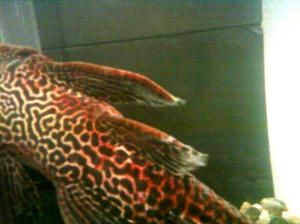 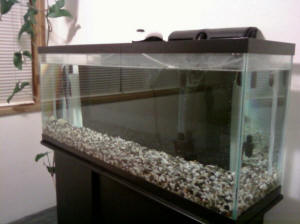
|
Re: Fish Question; as suspected 11/23/10
I did the new aquarium process dictated by Aquarium
Pharmaceuticals and used their product "Stress Zyme+"
that had me let the water run through the filter for 2 weeks
before putting in fish,
<... too soon. Takes longer to become established, cycled.
Read where you were referred or any general freshwater aquarium
husbandry book>
adding 10mL per 10 gallons on the first, seventh, and fourteenth
days.
This was to remove chlorines and chloramines and develops
biological filter (by adding beneficial bacteria).
<... it, the API product, does not do this last>
Unfortunately the Pleco "Leonardo" died last night not
long after I sent you those pictures. It looks like I would
benefit from some "How to clean your aquarium after fish
death to prevent it happening again" advice, if you
will.
<No need; not advised. Instead leave all as is to cycle and
read in the meanwhile>
Thanks again.
I'm going to study the white film on Leo's fins and see
if it is a fungal or bacterial growth.
<... decomposers period...>
I'm a medical student rather used to culturing gross stuff,
and I had some sterile swabs and specimen tubes handy. I'll
let you know how they test.
-Laurie
<I have an advanced degree in fisheries pathology... Read on.
BobF>
Re: Fish Question 11/23/10
The Stress Zyme says "Contains Live Bacteria".
<... not nitrifiers of use. Please, this/WWM is NOT a bb...
search them on the Net re this product. It alone will NOT
establish bio. cycling>
And two weeks wasn't long enough?
<... no>
Leo was doing fine for the 2 week he was in there alone: water
was clear, he was active and a healthy color. That is a very cool
degree, and I'm glad you have a site like this to help us
beginners. I am not adverse to further reading on aquarium
preparation, but please understand I invested in an aquarium to
have a pleasant living room de-stressor (Finals are in two
weeks). I will do as you suggest and let the filters run for now.
I thought I was taking every precaution possible with this
attempt, and the water was perfect until something in/on the
cichlid came into the tank. Well anyway thank you for the advice;
I'll read some freshwater aquarium husbandry books over
Christmas break.
<Good>
Cheers
<And you. B>
Re: Fish Question 11/24/10
Here, let me read you the label on this API Stress Zyme+ since we
seem to have a bit of confusing interaction on the subject. Maybe
this will help
...
"The Complete Starting Kit for Achieving Ideal Water
Conditions
Benefits: Contains millions of live bacteria that speed up the
development of the biological filter to eliminate ammonia and
nitrite.
When to use: Whenever setting up a new aquarium, and use weekly
to maintain fresh water aquariums.
Directions:
Shake well
New Aquariums first use: use Stress Coat (the other bottle in
this kit) to remove chlorines and chloramines. Next, on the
1st,7h, and 14th days, add 10mL of Stress Zyme per gallon of
aquarium water to establish biological filter.
Thereafter and existing aquariums: to maintain good water quality
and healthy biological filtration, add 5 ml.s of Stress Zyme per 10
gallons aquarium water weekly.
I understand that this site is not a bb. I really didn't mean
to be obnoxious by expressing confusion. I was very careful to do
everything just so for the sake of two fish, and both have died
on my watch. Both had very interesting personalities were and
were very healthy before the cichlid was moved here. My water
tested just right, even with the slightly higher pH the cichlid
would prefer. I had suspected some fungal or bacterial agent
introduced by the cichlid, maybe the cooler he was moved it, or a
microorganism who found the new tank a more productive
environment than a previous one, but I don't know that sort
of thing, especially not about fish. And as I've said,
I've looked all over online for what these symptoms
could have been caused by. Please let me know if you have any
more ideas on what may have gone wrong.
<Hello Laurene. The problem with these "instant
cycling" potions like Stress Zyme is they're not
terribly reliable. They're like stain removers that promise
to clean your clothes from ink stains and such: sometimes they
work, but sometimes they don't. So most of us who've been
in the hobby for a while don't recommend them. At best, if
you use one -- don't rely on it.
Add the instant cycling potion, and then add an ammonia source
like a small pinch of flake. Add further pinches over the next
week, and if you find ammonia and nitrite levels stay at zero,
then all well and good. Add some fish! But if the ammonia and
nitrite levels aren't zero, then the potion hasn't
"taken" and the bacterial will need a bit more time.
Carry on adding the pinches of flake and doing water changes. In
all likelihood you'll speed up the cycling process because
the potion will get things started, but you probably won't
entirely eliminate the cycling process. By the way, once a filter
is cycled, there's no need to add further Stress Zyme on a
weekly or whatever basis. The manufacturers would obviously love
you to, but the reality is that the filter contains a
self-maintaining population of bacteria that will be optimised
simply through proper maintenance.
Nothing needs to be added. Cheers, Neale.>
Re: Fish Question 11/24/10
Alright, thank you for the advice Neale.
Cheers
Laurie
<Always glad to help. Cheers, Neale.>
|
Black Ghost Knife and dying tankmates
11/7/10
We bought a Black Ghost Knife (that will go into our ~1 year old, 75
gallon, planted tank) and at the same time bought 5 Snakeskin
Barbs.
<Puntius rhomboocellatus, a nice species.>
We put all six fish into our 10G quarantine tank - 50% of the water
from our cycled tank, and media from our cycled filter into the QT
filter. Everything was fine for 2 days, when we lost one of the barbs.
No nipped fins, just belly-up.
<Puntius rhomboocellatus is a delicate species. It's sensitive
to "old" water, and apart from zero ammonia and nitrite
levels also needs very low nitrate levels. Water hardness should be
low; this isn't a species for hard water tanks.>
We checked the levels, and we had some (~20) nitrates, possibly from
the main tank water, or from overfeeding.
<Indeed. While 20 mg/l shouldn't be lethal to either Puntius
rhomboocellatus or Apteronotus albifrons, both will resent nitrate
levels much above that.>
We stopped feeding the fish, did a 30% water change. Checked the levels
the next day, and then the morning of day 4 we lost 3 more barbs.
Levels were OK (Ammonia: 0.5, Nitrite: 0, Nitrate: 0).
<That ammonia level is far too high for both species.>
We noticed that temperature was 75 (down from the 78 it was set for).
We had had some cold nights, so I assumed that it was shock from
temperature drop? We made sure to keep the room temperature more
steady, and we are now covering the QT at night to keep it steady. That
evening, we lost our last barb, and the temperature was fine
(78-79).
<A little warm for both species; aim for 25 C/77 F. Both species
need LOTS of current and plenty of oxygen.>
Levels were the same, and we did another water change. All this time,
the BGK looks great, is active, is eating, and is behaving normally
(for a BGK, that is). We waited 6 days, doing water changes every 2-3
days). We added in a guppy three days ago (as a canary). Last night the
guppy was dead. Checked the levels this morning - Amm 0, Nitrite .5,
Nitrate 0.
<Again, the non-zero ammonia and nitrite levels indicate the filter
isn't mature. Or, if it is mature, the filter is too small for the
aquarium or you're maintaining the filter badly.>
Temp is good (78-79).
<Actually not good.>
It's apparent that our QT isn't fully cycled, but I don't
think the .5 nitrite is enough to kill a guppy (and not affect the
knife?).
<Yes, non-zero ammonia levels are always dangerous and can be
lethal. To some degree there's a relationship between pH and
ammonia, but in any event, if you detect either ammonia or ammonium, it
clearly indicates problems with the filter.>
We are going to do another water change now. Could the knife be
carrying something (parasite, disease) that is killing the tankmates,
but not affecting itself?
<No.>
Or could these be small, new tank woes?
<See above. Both Puntius rhomboocellatus and Apteronotus albifrons
are crashingly bad choices for new aquaria.>
We would like to get the BGK into our main tank soon, but we don't
want everything in that tank dying. Advice? We are tentatively planning
on keeping the BGK in the QT for another week, then adding another
guppy to see if it lives.
<Guppies are fairly delicate fish, and in any case require hard
water, which is the opposite to what your Puntius rhomboocellatus and
Apteronotus require, so buying Guppies is pointless. Remember, for your
Puntius rhomboocellatus and Apteronotus albifrons, you're after
5-10 degrees dH, pH 7 to 7.5.>
Thanks in advance for the help! Your site is awesome!
<Thanks for the kind words.>
John
<Cheers, Neale.>
Re: Fish seem poisoned, please help. (Bob, any ideas)
7/28/10
Hello again! :)
<Hi,>
The fish seem to be doing ok. A group of them still prefer their spot
on the gravel but only two or three are still breathing heavily
(although, seemingly not as heavily as before). Streaking is almost
completely gone now. Not out the woods yet I know, but my hope is
returning.
<Cool.>
Regarding the sand... Thanks for the warning! I went to a local garden
supply shop today and asked for smooth silica sand. The man seemed a
bit confused by the request, and didn't quite know what I was
talking about.
<Sometimes called smooth silver sand. As distinct from sharp silver
sand.
Ask for smooth, non-calcareous, i.e., lime-free, sand and he should
know what it is. It's used in pot plants and gardens to improve
drainage. Just don't get sharp sand!>
I explained to him that I needed it for some burrowing fish, and that
it needed to be fine because they pass it through their gills. He
pointed me in the direction of the washed Sydney sand (I'm
currently in Sydney, Australia btw). Basically, it's just really
fine beach sand. Is it ok to use this, and when the time comes to put
it in the tank, should I do anything besides rinsing it out first?
<No, don't use beach sand. It contains lime, usually in the form
of pulverised sea shells, and will dramatically raise pH and
hardness.>
Thanks again!!!
-Julie B.
<Cheers, Neale.>
Re: Fish seem poisoned, please help. (Bob, any ideas)
7/29/10
Hiya again,
<Neale's out till next week>
Sorry about being a pest, I was hoping that the next time I wrote, it
would just be a final update saying that everything is fine now and to
thank you for all the help and advice.
I tested the water this afternoon (last test was a couple of days ago -
ammonia - 0, nitrite - 0, PH 7.2 or there about). I didn't bother
with Nitrate because the last time I tested it was only 5.0 and I knew
it wouldn't have risen much, or at all. Anyway, my results today
are ammonia -
0.50 or possibly even 1.0,
<Deadly toxic at high pH>
nitrite - 0, nitrate - 0, PH 7.4 - 7.8 (I used high and low PH tests,
but it's difficult to match the liquid colour to the
test strips 100% , so it could be either the highest two colours of the
low end test, or the lowest two colours of the high end test.)
Whatever the case, it's not good, and definitely not what I want to
see in a cycled aquarium.
<This system is not cycled per your test... Have you checked your
test kit/s against others for accuracy?>
I checked around for dead fish and found nothing, I've not been
feeding the tank (but even if I had, I wouldn't expect a rise in
ammonia). So I can only conclude that the spike is due to the death of
my biological filtration.
How's that for a spanner in the works!
I did a small water change (100 liters). My tap waters PH is easily 8
or higher,
<Deadly>
and I do not want to risk a larger water change for fear of raising the
PH even higher than what it is now. I re-tested the water about an hour
or so after the change but got the same results.
Given the fragile state most of the fish are in, how would you suggest
I proceed?
<Read. Here: http://wetwebmedia.com/FWSubWebIndex/fwmaintindex.htm
the third tray (Yellow header) down, re cycling, ammonia>
I can think of a couple of things to do in this situation, and although
I've kept fish for years I'd rather not risk doing the wrong
thing right now, I really could use some expert advice.
I've not had a bio filter crash on me before, I've never had a
fluke problem before, nor have I ever had a possible tank contamination
situation before.
The biggest disasters I've ever had to face were fish with ich, and
they were dealt with in quarantine before they ever set fin in a main
tank. But flukes? How was I supposed to spot them in quarantine?
<Hard to impossible to do w/o microscopic examination, and/or a good
footing on what to look for/observe macroscopically on host
fishes>
It's darn unusual (from what I hear) that some of them got big
enough eventually to be seen with the naked eye.
The tip of one of my Corys fins is a little opaque, and some of the
Danios have pale patches.
<... environmental likely>
As for the sand, they sell river sand too but I don't know how fine
it is...
I might be better off going to the LFS and checking if they have any
burrowing fish friendly substrate there, just to be on the safe side.
:)
Thanks again!
-Julie B
<Welcome. Bob Fenner>
Algae eater/ bottom feeder with Glofish... Uncycled sys.
issues 3/4/10
Dear Wet Web Media crew,
<Hi!>
I have a 20 gallon tank with live plants and a sand substrate to which
I added 6 Cory catfish and 8 zebra Danios 5 days ago.
<I think your problem lies here. You've added too many fish at
one time, causing a "mini-cycle." I have made this mistake in
the past, and can affirm that you'll probably only make it once --
after that, if you're anything like me, you become overly cautious
about adding fish to a newly cycled tank.>
Prior to this I had let the tank cycle for 2 weeks.
<I know you mentioned that you were adding substrate from the pet
store, and I'm guessing that you meant this was seeded substrate
from an established aquarium. However, this period still seems a little
short to me. In the future, if you'd really like to
"rush" cycling, I'd suggest obtaining filter media from
an established system, rather than gravel, since filter media is in a
more direct line with water flow in the filter.>
During the cycling period I kept testing the water and also got a
neighbouring pet store to test it and everything seemed to have settled
down. As soon as I added the fish the ammonia level has gone to 0.5 ppm
('stress' on the testing strip). <<Deadly toxic.
RMF>>
<I really like the test kits that use the liquid reagents a lot
better than strips. The strips aren't always very accurate.>
I do 25% water changes daily but the ammonia levels are stuck at the
0.5 ppm. I tested the tap water in my house and that reads 0 ppm.
<Good information to have. You're lucky -- I have ammonia in my
tap water!>
The other parameters are of the tank are:
1. nitrate: < 20 ppm ('safe' on the strip)
2. nitrite: 0 ppm
3. total hardness: 300 ppm ('very hard' on the strip)
4. total alkalinity: between 120-180 ppm
5. ph: 7.8
<Okay, so everything else looks okay. The water is a little hard for
Corys, so it might be a good idea to look into their needs, as far as
that goes, and see if you can adjust this so that they're more
comfortable.
Please read here about Corys, as well as the linked files above the
title of the article:
http://www.wetwebmedia.com/FWSubWebIndex/callichthyids.htm>
I lost one Cory catfish (the smallest one) pretty suddenly 2 days after
adding the fish. She was swimming around and eating in the morning, was
listless in the evening and gone by the next morning. I could see no
reason
for the death (I examined her carefully).
<This may have just been a weak specimen, but the ammonia certainly
didn't help. The ammonia should be going down when you do water
changes, at the very least, but your strips aren't going to show it
unless it returns to zero, I'd imagine. You should see this problem
clear up in a few days, when the biological filter has had time to
'catch up' with the bioload. I think that, rather than adding
all fishes at once, it would have been better to, at the very least,
add the Danios, and then a couple of weeks later, the Corys, or even to
split each group up, and only add half of
each group every week. The fact that you stocked all at once, plus the
immaturity of the tank, and the speed of this cycle, caused an unstable
situation.>
The other fish seem fine now, but, I am concerned and do not know what
to do for the ammonia. Please help.
<I think that when you're changing water, you're reducing
ammonia, but these strips aren't showing it. In any case, within a
couple of days, you should see that ammonia go away, and turn into
nitrite. I think this process was just rushed a little too much, which
caused some problems, but the biological filter should recover. If
you'd like to see evidence of what your water changes are doing for
ammonia, I'd suggest getting a liquid test kit. Then you'll be
able to see more of a difference.>
Thank you.
<You're welcome. Good luck, and please write back if you have
any more questions.>
Meenakshi
<--Melinda>
New Tank - Guidance Needed. not cycling w/ fish, env. dis.
3/1/10
WWM,
<Hello,>
I have come across a lot of info, however, there seems to be a lot of
differences from one site to the next.
<Variation in quality, I suppose. To our credit, we're experts
who write books and magazine articles, and we aren't selling
anything.>
I am hoping if I give some specifics you can reply with some
specifics.
<Let's see.>
I have a new 36 gallon tank (30w x 16d x 20h), with all the
necessities:
power filter, heater (200w), light, cover, 6" air stone (fine
bubble), Gravel (~2" deep). Large fake rock in center with various
holes and tunnels. Lots of imitation plants (would like to slowly
migrate to live plants).
<OK.>
Water is on the hard side. pH is 7.6-7.8 out of the tap. Temp
maintained @ 78F (26C) in tank. New water was pretreated with a
conditioner and the tank was set-up and run for three days before
adding starter fish to cycle the tank.
<Ah, now, here's where the wheels come off the wagon. The
"cycling with fish" approach is fraught with risks, and
generally not recommended anymore. It's far, far better to cycle
with a "fish-less" method. Some folks use ammonia, some folks
use pinches of fish flake, but either way, the goal is to periodically
give the biological media something to use up, and you wait until the
nitrite level rises and then falls down to zero.
Once that happens, you're good to go. Typically, if you add a small
pinch of flake food every 1-2 days, the aquarium should be cycled
within a month.
Time consuming perhaps, but low-risk and cheap to do.>
After some web search, Zebra Danios seemed like a good hardy starter
fish.
I bought (6) Zebra Danios to start cycling the tank. All died within 3
days. (Maybe should have tried fishless cycling but read of it too
late, although ,it seemed if you provided a good environment even in
the beginning of cycling hardy fish should make it)
<Yes and no. There are ways to cycle new aquaria using fish, but
it's risky, and does demand that you do frequent water changes to
keep ammonia and nitrite as low as possible. We're talking daily
water changes.>
What would lead to such a quick demise?
<Yes.>
I was under the impression that the higher pH with the presence of
Ammonia could be quite lethal and may have led to the deaths.
<Something like that.>
Not knowing any better, the local store talked me into using three
Mollies as my starters this 2nd go. After reading your section on
Mollies I realize this is not the way I want to go seeing that I would
need a Brackish tank for best results.
<Yes. Mollies are really, really bad choices for cycling freshwater
tanks.>
I have three Mollies now: two "Creamcicle" and one
"Dalmatian" variety.
The two appear to be doing quite well and all have survived 10 days so
far.
The other, the Dalmatian, just got what I would guess is something of a
swim bladder disease since he has trouble descending.
<No, it's not "swim bladder disease" since that's
basically a non-existent disease. What people call "swim bladder
disease" is a catch-all description for fish that aren't
swimming properly, and that ranges from constipated Goldfish through to
Mollies with the Shimmies.>
It cleared up the next day but was back the day after. I did a 15%
water change to get rid of NO2. Not sure if that was what helped it or
not.
<Helped.>
Are these three fish enough to cycle? From what I read not using enough
fish is almost as bad as using too many. Seems it will introduce
mini-cycles from some articles I read.
<I wonder what you're reading? Essentially, you cycle with the
minimum number of fish possible. Once the tank is cycled, it will
quickly adapt to a few more fish added, and doesn't
"re-cycle" at all. When you add the new fish, ammonia loading
increases, but the billions of bacteria already in the filter quickly
adapt.>
I test GH, KH, pH, NO2, NO3 & Ammonia daily. Ammonia has been .25 -
.50.
<Lethal.>
Waiting for it to drop to zero, should see it any day now if the
tank-cycling info I read is correct. Nitrites were zero up until a few
days ago, but oddly there has been a slight presence of Nitrates.
Nitrites and Nitrates are both showing now. Nitrite Should spike around
day 14 based on what I have read.
<Does depend on all sorts of factors, could take longer.>
Currently @ day 12 in the cycle with the Mollies (not counting the
first 3 days with the Zebra's)
GH: ~30 ppm
KH: between 80-120 ppm
<Far too low for Mollies.>
pH: 7.0
NO2: 0.5 ppm
<Lethal.>
NO3: 40ppm
Ammonia: between .25 - .50
<Lethal.>
Is it odd Nitrates are showing at this point in the cycle?
<Not really.>
The local store also directed me to use a pH buffer to get my water to
7.0.
<For Mollies? What are they smoking?>
I found your web site a bit too late and realize this is too low for
Mollies.
<I'll say.>
They also directed me to use aquarium salt. From what I read on your
site, it seems the aq salt is of no benefit to the Mollies and would
hurt any other FW fish.
<Aquarium salt will detoxify nitrite and nitrate to some degree, but
it won't provide the other benefits of increased carbonate
hardness, increased general hardness, and a stable basic pH.>
Is this correct about the aq salt?
<Marine salt mix is far superior.>
My goal is to have a Barbs, Danios & Rasboras combination, smaller
sizes preferably.
<Not with Mollies.>
I would rather have more smaller fish than fewer larger fish.
<OK.>
Based on my tank specs how many can I populate my tank with? ( seems to
be a lot of rules of thumb but nothing specific for a beginner to
follow easily)
<
I am partial to gold barbs as my primary. What would be a good
combination and number of top, mid and bottom swimmer types be?
<These prefer cooler water to Mollies, so aren't an option.
Golden Barbs, whether Puntius semifasciolatus or Puntius sachsii, are
best treated as subtropical fish and maintained around 20-24 degrees C.
Mollies of course need much warmer, around 28-30 C, so there's no
overlap at all.>
I would also like some sort of bottom feeding algae eating cat fish or
other variety with this combo. any suggestions?
<Depends on the fish you're keeping. Mollies eat algae, but you
could keep them with salt-tolerant Nerite snails.>
I would like to keep the Mollies I currently have but would not add
more.
I may find a new home for them since I cannot run more than the 1 tank
for now.
<OK..
I plan on NOT treating the pH on water changes and to allow the pH to
slowly normalize in the tank back to what comes out of the tap 7.6-7.8.
It seems the higher pH will benefit the current Mollies and the local
shops should probably be around the same when I decide on getting more
fish once the cycle is complete.
<You need to read about water chemistry, here:
http://www.wetwebmedia.com/FWsubwebindex/fwh2oquality.htm
>
Should I not use aquarium salt?
<Would recommend marine salt mix for brackish water systems,
assuming you want to keep Mollies as easily as possible.>
How many fish should I add at a time when it is time to add more when
the cycling has completed?
<Depends on the fish, but obviously add as few as possible,
depending on their social behaviour. Better to add six schooling fish
than just three of them, but if you can, add fish in ones or twos with
a couple of weeks between them.>
WWM is the Best web-site I have come across so far. I am very excited
with this new undertaking and cannot wait to have a thriving
community.
<Good luck.>
Thank you so much - John.
<Cheers, Neale.>
10 Gallon Tank rapidly declining 2/24/10
Hello,
<Hello Kerry,>
I have a 10 gallon tank that currently has a few snails, 2 Mickey Mouse
Platys, 1 Neon Tetra, 2 Golden White Clouds, a male Betta, and 2
African Dwarf Frogs. In the last two months, we had 4 Platys, and 3
Danios die
quickly showing no obvious signs of distress until the end. I have had
the tank for almost a year and half, and the Neon is the only remaining
fish from when the tank was originally set up.
<Now, before we go any further, let's be clear that 10 gallon
tanks are [a] poor choices for beginners; and [b] difficult to stock.
Few of those animals belong in a tank this small. I'd skip Apple
snails for a variety of reasons, not least of which is they don't
live long in fish tanks. Platies need at least 15 gallons, Danios the
same if not more, and certainly a tank 60 cm/2 feet end to end, simply
because they are so hyperactive. Neons and White Cloud Mountain Minnows
could be kept in a 10 gallon tank, but in groups, and because they need
somewhat different conditions, you wouldn't tend to keep them
together, though it's certainly possible. Both prefer fairly cool
water, around 22-24 C (72-75 F) and that's much colder than Bettas
tolerate, so you can't mix them. Plus, Bettas are targets for nippy
fish, and Neons and Danios are known "Betta harassers".
Hymenochirus frogs are fine in 10 gallon tanks, but on the whole mixing
frogs with fish is risky, and something to approach carefully. Let me
direct you to this article about stocking very small tanks like
this:
http://www.wetwebmedia.com/ca/volume_5/volume_5_3/stocking.htm
To some extent, what you keep depends on your water chemistry and the
temperature. If you had soft water, then Neons would be a good choice.
If you had hard water, then Endler's Guppies (a dwarf species distinct
from common Guppies) would be sensible.>
To start off, I noticed white "flaky" spots on the Platys
before they died (each one got sick and died separately from the
others). I did my research and determined this was Ick and treated with
QuICK Cure drops.
<Ick looks like salt/sugar. Flaky patches on the Platies are more
likely caused by Finrot or Fungus, in which case a different medication
will be required. You have said nothing at all about water chemistry
and water quality, both of which are crucial.>
This did not help during any of their quick demises, so I would look to
make sure I saw no signs of Ick on the other fish, and I discontinued
treatment until the next one got sick. This happened for separate
times.
<Likely environmental. Without data about the water chemistry and
water quality I can't be sure, but I'd bet dollars to doughnuts
that you either have poor water quality or the wrong water chemistry
for the fish you're keeping. Perhaps both.>
2 of my Danios seemed to just go. I couldn't understand what had
happened with them, and Google searches did not help. They each died
separately and seemingly unrelated.
<Again, this points strongly at a water quality issue. Do make sure
you have cycled the aquarium before adding any fish, and that you test
for nitrite every few days to make sure cycling is progressing. The
easy way to cycle a tank is to fill it with water and plants -- but no
fish -- and add small pinches of flake food every couple of days. Do
this for 3-4 weeks, doing 25% water changes once a week. By the 3rd or
4th week, the nitrite level should have peaked and dropped, and once it
hits zero again, you can add a few small fish. Half a dozen Neons, if
you have soft water, would be appropriate. Let them settle down, test
the water every few days, and don't even think about adding any
more fish for at least two weeks. Sure, this sounds time consuming, but
better 4 weeks of an empty tank than 4 weeks of dying fish. Do read
here:
http://www.wetwebmedia.com/FWSubWebIndex/fwset-up.htm
>
Fast forward to last weekend, I did my normal water change (roughly
20%), I added AquaSafe in as usual, and then I noticed my Betta was
VERY lethargic. This Betta was my sister's fish at school, but she
found transporting him to and from school during every break was too
stressful and gave him to me. He has always been a "lazy"
fish, not incredibly active in the tank, and he enjoyed lounging on the
leaves of plants. However this weekends behavior
was extremely unusual even for him. I did some research and read about
aquarium salt helping to aid fish in better respiration and disease
treatment.
<How told you this gem of misinformation? Salt does nothing of the
kind.>
I got API Aquarium Salt and according to the directions on the box,
added 2 tablespoons of salt. I also purchased Lifeguard All-in-one
treatment of parasites including Ick (I was not treating with QuICK
Cure currently).
Since Saturday, I have lost a Platy and a Danio.
<I bet. You haven't understood the actual problem here, and your
"cures" are only making things worse.>
The Platy died much the same as the others, but the Danio had developed
a white thing coming out of his rear (which I only noticed Sunday
night).
This morning, the white thing had not changed, but when I got home, he
was gone and his anus was SEVERELY inflamed and red. I scooped him out
of the tank as soon as I got home.
<Oh.>
The frogs seem ok, with the exception that one has become very thin and
stays on the bottom of the tank.
<Starving, will die soon. Needs wet-frozen foods like bloodworms and
mosquito larvae; won't "scavenge" on fish food,
flake.>
The snails seem to be thriving, and I have had to remove several sets
of eggs in the last week, and I have discovered 2 new sets today.
<As is their nature, though overuse of medications can kill them,
and that means you have lots of rotting snail corpses in the
tank.>
The only other medicine I have put in the tank is Clarity, because
after Saturday's water change, everything looked cloudy. Also, I
have removed my water filter according to the Lifeguard box's
directions.
<Hmm...>
I fear I will lose my entire tank before I figure out what is going on.
The water tests are normal, except for a low pH, but that is not highly
unusual for my tank.
<I need numbers. For a generic community tank, you're aiming for
pH 7-7.5, hardness around 10 degrees dH, and a temperature of 25 C/77
F. Ammonia and nitrite should both be zero.>
I'm planning on doing a partial water change tonight. Any help
would be very appreciated.
-- Kerry H.
<Cheers, Neale.>
Re: 10 Gallon Tank rapidly declining 2/24/10
Neale,
<Kerry,>
Thanks for your quick response.
<Pleasure.>
I just went to test the water to send you data, and discovered I used
the last strip yesterday morning. I will get more tonight and send you
accurate data when I get home.
I'll go in order of my testing strip:
Nitrate - 0
Nitrite - 0
Total Hardness - 150 GH
Total Chlorine - 0
Total Alkalinity - 120 KH
pH - 6.2
<Whoa! This pH is far, far too low. Do understand filter bacteria
are happiest around pH 7.5 to 8, and when the pH drops below 7,
filtration diminishes. At pH 6, it stops altogether. Moreover, only
some fish tolerate acidic conditions. Tetras (mostly) like acidic
water, but livebearers can't tolerate it at all. So Platies,
Guppies, etc. aren't viable additions to this community. Do read
here:
http://www.wetwebmedia.com/FWsubwebindex/fwh2oquality.htm
>
Water temp holds pretty well around 75 F (I do have a heater)
<Fine.>
I realized I did not say last night that when I discovered the low pH I
put in a "Correct pH" to get it back to neutral.
<Do not do this. Do not use potions of any kind that come in
bottles. If the retailer offers you a bottle of magic potion, run. All
of these products are notorious for leading beginners into total
mess-ups. You need to add a portion of Rift Valley cichlid salt mix,
perhaps one-quarter to one-half the recommended dose, to each bucket of
water you add. This costs pennies, and the key thing is it adds
carbonate hardness to the water, and that stabilises water chemistry.
For a mixed community, you're aiming for about pH 7.5, 10 degrees
dH. This is acceptable for a wide range of fish including tetras,
catfish, barbs and (most) livebearers (not Mollies).>
Should I put the filter back in? Should I change more of the water?
I've had all these fish for at least 10 months (if not longer) with
no problems, then all of the sudden they're dropping like
flies.
<Read the above link. Act accordingly.>
What should I do? I feel like I've been a poor aquarium owner, but
I am trying hard to help those little guys...
<Yes, you've made some mistakes. But time to move on. Providing
good water chemistry is cheap and easy: all you need is a bag of Epsom
salt, a bag of baking soda, and a bag of marine aquarium salt
mix.>
Kerry
<Cheers, Neale.>
Re: 10 Gallon Tank rapidly declining --
02/25/10
Hi Again Neale,
<Hello Kerry,>
I read the page you sent me while at work, and went out to buy marine
salt, new test strips, and blood worms (for the frogs).
<Very good.>
I got home and put in a new filter, did a small water change with the
Rift Valley Salt mix, and tested the water. Here is what I got:
Nitrate - between 80-160
<Yikes!>
Nitrite - 1.0
<Ah, this is lethal; be under no illusions.>
Hardness - 150 GH
<Fine.>
Chlorine - 0
Alkalinity - between 120-180
<Fine.>
pH - 7.2
<Fine.>
I was SHOCKED when I saw this!! My other strips (same brand) must have
been duds!
<Can happen. As they say with breakfast cereals, "store in a
cool, dark place". It's also fair to say that they aren't
especially accurate at the best of times.>
I know that the Nitrate is WAY high, will getting the filter going
again help this?
<No; biological filters fix ammonia and nitrite, not
nitrate.>
Or do I need to do a large water change?
<Water changes. I'd to 50% today, and 25% tomorrow. After that,
the usual 25% weekly should be fine.>
Thank you for your help! So far Indigo, the Betta, is still hanging
on!!
<Cool.>
Kerry
<Cheers, Neale.>
Re: 10 Gallon Tank rapidly declining 2/26/10
Just wanted to write a quick thank you note to Neale!
<You're welcome.>
I did my 50% water change tonight. My water data is much much
better!
<Good.>
After the water change:
Nitrate - 40
Nitrite - between 0-.5
Hardness - 150-300
Chlorine - 0
Alkalinity - 180
pH - between 7.2-7.8
Tomorrow I will do a 25% water change.
<All sounds promising.>
Indigo is still here! I can hardly believe it! I hope he will get
better
now, but I think I'll just have to wait and see.
<Good luck.>
I did lose another Platy, however.
<Hopefully, as nitrite drops to zero, things should improve. Almost
all premature fish deaths come down to either poor water quality (i.e.,
non-zero nitrite/ammonia) or the wrong water chemistry (most often, the
water is too soft for the fish being kept, rather than the other way
around).>
But at least I know now to buy another set of test strips if I seem to
be getting unreliable numbers when there is stress to the fish.
<Indeed.>
Thanks again!
Kerry
<Cheers, Neale.>
Pregnant Swordtails, red gills, and two clueless tank owners
-- 02/22/10
Hello. For my birthday this year, January 9th, my husband decided to
get me an aquarium tank.
<Cool.>
After four hours at Wal-mart (you don't even have to say it), we
walked out with a 10 gallon tank, Whisper filter, bubble stone, a few
deco items, fake plants, food, test kits, chemical adjusters, and our
fish: 2 Swordtails (2 female, a pineapple and a black tail), 1 Pleco, 1
African Albino Clawed Frog, and a Kissing Gourami (all young).
<You do realise almost none of these animals will survive in a 10
gallon tank. Actually, the plastic plant is the only thing that will be
happy.
Swordtails are up to 12 cm/4 inches long, and as their shape should
immediately suggest, very fast swimmers. They need tanks at least 90
cm/3 feet long to feel at home. The Plec will get to 45 cm/18 inches
within a year or so, while the Kissing Gourami is a big food fish that
becomes a slab of meat up to 25 cm/10 inches long at maturity. The
frog, Xenopus laevis, might be okay, but it's a coldwater animal
that doesn't belong in a tropical aquaria, and frogs and fish
rarely mix successfully. I'd suggest you take back everything, and
read here:
http://www.wetwebmedia.com/ca/volume_5/volume_5_3/stocking.htm
>
My husband set up the tank, chemical adjusters and all, and we released
the hounds a few hours later.
<What are these "chemical adjusters"? Almost always,
beginners shouldn't touch bottles of any potions *other* than water
conditioner. Beginners kill more fish using pH buffers than they ever
help.>
However, we lost the Kissing Gourami before it even got to the tank,
and the AACF didn't make it past a week.
<Indeed.>
So, we returned the Gourami and exchanged it for a Red Male
Swordtail.
<Males are extremely aggressive.>
We gave the frog a proper flushial (burial) and purchased another
frog.
<Hold on... why are you buying more animals when you don't know
why the ones you had just died?>
A few weeks later our Red Swordtail died.
<Dismal.>
On Valentines Day, we lost our Pleco with no sign of sickness or
ailing, except that he hardly ever touched his Algae wafers and just
sucked on whatever else he could (malnourished?)
<No, he was killed through careless maintenance.>
We've been struggling to keep good bacteria in the tank and Ammonia
out.
<I bet.>
After extensive research, we've come to the conclusion that we
shouldn't have bought fish the same day as the tank.
<Indeed.>
Last week, we went to a pet store and bought 2 more Plecos and another
Swordtail (male).
<Stop! Stop!>
The next day, one of the Plecos was dead.
<Oh, for the love of God! What are you doing here? Are you trying to
make me cry? This is sheer insanity! For gosh sakes, take all the fish
back, and go buy a book about keeping an aquarium. Clearly you have all
kinds of money, since you're happy spending it on fish that die
overnight. So choose a book on fishkeeping for beginners, and read the
darn thing.>
Last week our Frog's toe was twitching for a few hours, so we
changed the water and he stopped after a while. Could that be the
Ammonia?
<Yes.>
My husband has been changing the tank a few days a week. Mostly doing
full tank changes. We just bought Stress Coat & Stress Zyme, API is
the brand.
<Look, all the potions in the world won't help UNLESS you know
what's going on. For a start, you have too many fish, and none of
them belong in this tank. Take them all back. If I was feeling cranky,
I'd say you should keep pet rocks or something, but I'll try
and be constructive this time around.
Your tank needs cycling. Do that without fish. Set the tank up, run the
filter and the heater, and then add a tiny pinch of flake once every
other day for the next three weeks. During that time, replace 25% of
the water once a week. After the end of the third week, check your
water. You should find ammonia is zero and nitrite is close to zero.
Carry on doing this, and when both are zero, you're good to go. Buy
a few small fish suitable for this aquarium. I'd suggest either six
Neons (if you have soft water) or one male and two female Endler's
Guppies (if you have hard water). Let them swim about for a couple of
weeks and see what happens. If all is good, and nitrite and ammonia
stay at zero, you can slowly add more small fish every couple of weeks.
Broadly speaking, if you stick with small, Neon-sized fish, you can
allow about one inch of fish (i.e., one Neon or Endler's Guppy) per
gallon of water. If you add bigger fish, then you can't add so
many.>
He's been adding those and is now doing 20% water changes but there
doesn't seem to be an improvement.
<I bet.>
Here's the kicker;
<Only now comes the kicker?>
I have noticed a black stripe straight through the black tail Swordfish
and just figured it was her color. Well, this weekend, we went away
overnight to my in-laws and when we came home Sunday we found a few
tiny little unfamiliar moving objects inside the tank. Low and behold
they were fry...19 fry. The black tail Sword no longer has that black
stripe going through her body but now has a redness under her belly
(probably where she gave birth?) and a black sack looking thing near
her gills.
<Very sick.>
This led to us noticing a sort of redness on her gills and a redness on
our other two Swords gills. We also noticed our pineapple Sword has a
black pouch under her tummy as well, and has been there for a weeks
now. Could she be pregnant?
<Likely.>
If so, what should we do?
<Well, I'm weeping for the poor little souls. This is really not
an aquarium for Swordtails.>
They are all acting fine for the most part.
<"Most part"? Half the fish you've bought are dead,
and some of the surviving ones are sick...>
So, our questions are, how can we fix our aquariums eco system properly
without getting rid of our fish and doing it from scratch?
<Illogical question. You can't keep the fish you have in this
aquarium.
It's rather like me asking you "How do I get a ripped body and
lose all my flab without eating less and doing any exercise at
all?" You have a too-small aquarium that hasn't been cycled
and is filled with fish that don't belong there.>
What happened to the black line through our Swordtail and why does she
have a black sack near her gills?
<No idea without a photo.>
What do red gills on the swordtails mean?
<Inflammation. Same thing as red patches on humans.>
How should we take care of the Fry, where should we put them?
<Least of your problems right now.>
Any idea how to get our Pleco to suck on something other than an
inanimate object?
<Take it back to the shop. It doesn't belong here.>
Thanks a bunch,
<Indeed.>
Tina
<Not sure you're going to be pleased with my reply, but I did my
best. Good luck to you all! Cheers, Neale.>
Air bubbles in fish, Emphysematosis & Cycling
troubleshooting/fixing 2/8/10
Good day:
<And you>
I have an ongoing problem with supersaturated water- one of my goldfish
had recently presented with air bubbles in his eye which I discovered
was from my tap water.
<Not uncommon this time of year... the cold/er weather increases gas
solubility, the difference in temperature releases it. Hence a good
idea to... oh, I see you state this below>
I began leaving the water to sit in 5 gallon pails for 48 hours before
using it for tank changes. This seemed to be effective and the bubble
effused from the fishes eye over several days. This morning, however, I
noticed a large bubble just beside the nare of my smaller fish- I am so
frustrated!!! The water here where I am currently living (Vancouver) is
really very poor. It is heavily chlorinated and also, apparently,
supersaturated.
<I would store the new/change water a good week ahead of use
here>
I have had so much trouble getting my tank to cycle and I am afraid my
poor fish are taking the brunt of this inferior water. My tank is still
not cycled after almost 6 weeks (not a trace of nitrates showing yet)
so I am still doing daily 25% water changes to reduce ammonia build-up.
Hence the issue with the supersaturated water... Do you have any
suggestions for helping to reduce the oxygen levels to normal
amounts?
<Yes, enhanced aeration... a mechanical "bubbler" will
help de-gas the water>
It is rather an odd problem as most people have the opposite
problem.
Would a small pond pump immersed in the waiting pails of water help to
release the dissolved O2?
<Yes>
I am using Prime to condition the water and lock up the ammonia-
<I would not do this. This practice may well be responsible for your
forestalled establishment of nitrogen cycling>
I was told to treat the entire tank every day as the Prime only locks
up the ammonia for 24 hours. When I do a water change I do treat for
the entire 36 gallons. I was wondering if this could be affecting the
nitrogen cycle (it isn't supposed to, according to the manufacturer
but I do wonder).
<It is>
Thank you for your assistance!
Gina de Almeida
<Gina, is there someway to get/buy "The Real One" (aka
BioSpira) where you are? Or otherwise add some established media?
Please read here:
http://wetwebmedia.com/FWSubWebIndex/fwestcycling.htm
and the linked files above. Bob Fenner>
Re: Air bubbles in fish, & cycling f', FW --
02/08/10
Thank you Bob:
<Welcome Gina>
I have not found the Bio-Spira but did use a product called Tetra Safe
Start that is also supposed to one of the real ones. For some
incredible reason they don't sell live bacteria in Canada and I had
to have it smuggled across the border from the US.
<Mmmm. I don't like to encourage law-breaking, but I don't
agree with such brainless carte-blanche censorship either>
Everyone here uses the chemicals that you have to continually add to
the water, like Stability.
To complicate matters I have been treating for an intestinal parasite
and I think it may also be partially responsible for the delayed
cycling of my tank. I have more Safe Start on order, but the intestinal
problem is just not going away so I may wait until my fish is clear to
add it. In the mean time, I have purchased a really nice Eheim filter
and added a UV filter to the mix to try to kill off any free-floating
bugs that may be around. I know it isn't uncommon to lose a fish
but I only have two Dragon-eye fancies and they are quite endearing
little fellows so I will do all I can
to prevent a loss!
<Ahh! I feel similarly re my Ryukins>
I am on week three of Jungle anti-parasite medication and if that
doesn't work I have some 100% Metronidazole that I'll try.
<Only treat once with this material. Very potent, hard on fish's
kidneys>
It's really confusing as to what parasite might be affecting the
poor fish as there seems to be so many! He still has stringy, clear
feces even after the third cycle of meds. I'm concerned about
bringing in the "big guns" as
I don't want to harm the fish with unnecessary meds, either. It
really is a complicated matter- I can't believe that people
perceive fish to be an easy
pet!
<Some much more/less than others for sure>
On a happy note, I have started fish training and my small fish (who
has much better eyesight than my big bug-eyed fish) is responding quite
well.
<Neat!>
The larger fish just can't see the food reward up close and it ends
up floating away (much to the delight of the smaller fish).
Kind regards:
Gina de Almeida
<And you, BobF>
|
Open Body Sores/Striped Raphael Catfish culprit?
Rainbowfish hlth./env. 1/10/10
Hello,
<Hi there>
We have a 55 gallon tank with: 2 turquoise Rainbowfish, 2 zebra
Danios, 2 emerald Cory cats, 2 praecox Rainbowfish, 1 Australian
Rainbowfish, 1 Plecostomus, and 1 striped Raphael catfish.
<Mmm, the Rainbows are social species... should be kept in
groups>
Recently we've had a problem with our Rainbowfish having open
body sores and subsequently getting Popeye twice.
<Water quality? Measures?>
This has gone on for probably 4 months now and we've done
treatments with: Lifeguard, Melafix, Tetracycline, and EM
Erythromycin.
<Mmmm. Please read here:
http://wetwebmedia.com/FWSubWebIndex/atheriniforms.htm
and the linked files above>
Our last attempt at treatment was done by setting up a hospital
tank and dosing only this fish with the Erythromycin. After
several courses of treatment we had quite a bit of improvement,
but the sores were still present. We placed the Australian back
in the 55 gallon tank with the others about 6 weeks ago.
Now the sores are looking worse and the Popeye is back again. I
also noticed that one of the praecox rainbows has a huge gash in
it's side. I checked the water levels and they're all
fine.
<Please send values, not subjective evaluations>
Four days ago I started dosing the entire 55 gallon with
Melafix,
<Worse than worthless... see WWM re>
at the recommendation of pet store, because it is inexpensive
<Bingo>
and supposed to treat the problems we are experiencing,
<... it will not. In fact, it forestalls folks seeking, using
real cures;
sometimes disrupts nitrogen et al. cycling... is worse than a
placebo>
but it doesn't seem to be doing much. Today I noticed that
the praecox seems to be struggling and staying at the surface of
the water, so I put both it and the Australian in the 10 gallon
hospital tank, added aquarium salt, and started treatment with
the Erythromycin and aeration with an air stone. Do you have any
suggestions on what else I can do?
<Yes... water changes, the use of carbon et al. chemical
filtration, the adjustment of water quality, determination of
root cause/s here... There is something amiss with the
environment... NO treatment/medicine is going to solve
this>
I'm also wondering if you have any opinion on whether the
Raphael cat may have caused the injuries to these fish with his
hard and spiny exterior?
<It has not... Lives on the bottom...>
Thanks,
Heather Richardson
<Please send along water test data, history and make-up of
this set-up, images of all including the livestock if you can.
Bob Fenner>
Pictures Re: Open Body Sores/Striped Raphael Catfish
culprit? 1/10/10
Attached
<Mmm, no. Unfortunately no pix attached. Please try again.
BobF>
please find pictures of the Australian Rainbowfish that has
Popeye and body sores as well as a picture of the praecox
Rainbowfish that has the gash on its side. Please also note that
where I said, "Recently we've had a problem with our
Rainbowfish having open body sores and subsequently getting
Popeye," I was referring to only the 1 Australian
Rainbowfish that I've attached the pictures of.
Thanks,
Heather Richardson
Re: Open Body Sores/Striped Raphael Catfish culprit?
1/10/10
The pictures should be attached this time. Also attached are
photos of the water chemistry as of this morning in the 55 gallon
tank (which I replaced the carbon in yesterday after transferring
the sick fish into the hospital tank). It seems the levels are
off now.
<They are... do you agree that there is detectable ammonia and
nitrite here? Toxic!>
The temperature hangs around 76.6F.
It was unclear as to whether you wanted pictures of the healthy
fish, <Mmm, no>
so none are attached (I did try to take pictures of them, but
they're too fast to catch.)
<The Praecox is ich infested... the others...>
It may be of worth to mention that the reason we don't have
several of each social fish is because we've had some
problems in the past with a malfunctioning heater.
<?! Replace this>
Over the past couple of years, our heater has malfunctioned three
times causing our tank temperature to soar to 90+ degrees,
<...>
which has killed off probably 10-15 of our fish. The last time
this happened was during the time that the Australian was
treating in the hospital tank, so I don't think it's
related to the condition.
As far as the praecox with the gash in the side, it died
overnight.
Should I continue to treat the Australian in the hospital tank
with erythromycin until I figure out what is wrong in the 55
gallon tank?
Thanks,
Heather Richardson
<First and foremost, the water quality... whatever is
subtending nitrification needs to be FIXED. Pronto... See WWM
re:
http://wetwebmedia.com/FWSubWebIndex/fwmaintindex.htm
the third tray down. The issue here is a priori environmental.
Pouring in more med.s is counterproductive. BobF>
|
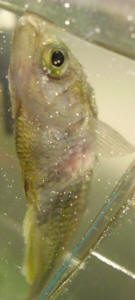 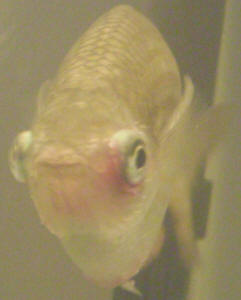
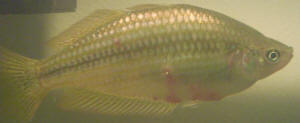 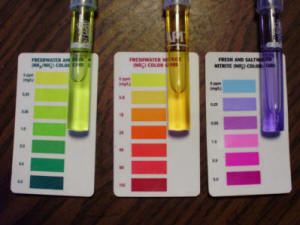 |
Re: Open Body Sores/Striped Raphael
Catfish culprit? 1/11/10
Thanks for link as far as where to look for information, however,
there are a lot of links and stories and I'm not sure what
exactly it is that I'm looking for instruction on.
<Hello Heather. Platydoras-type catfish are generally extremely
hardy, and the last fish to show signs of stress. So if your
specimen is currently sick -- and I better make the point here
they're social animals that don't thrive kept singly --
it's a good idea to review the reasons why. As Bob mentioned, a
broken heater serves no purpose. When shopping for a new one,
choose one that either has a clip-on heater guard, or else pick up
a heater guard that can be fixed over whatever heater you buy.
These catfish are notorious for burning themselves as they nestle
against the heater. They like to hide, and switched off, a heater
is mistaken for a plant root or something. By the time they feel
the heat when the thing switches on, their skin is burned. Catfish
don't have scales -- their armour is actually just thickened
skin -- so unlike most other fish that can slough off damaged
scales easily, catfish can be severely harmed by otherwise
superficial burns and cuts. Optimal water conditions should ensure
spontaneous healing of such wounds, but any trace of ammonia or
nitrite, as well as excessive heat or cold, will stress the fish
sufficiently to allow secondary infections. In any event, if
you're getting a variety of sick/dead fish, it's a very
good sign the aquarium environment is poor. Review tank size,
filtration, diet, etc. and act accordingly. To recap, a community
of talking catfish and Rainbowfish would need to be upwards of 180
litres in size and equipped with a robust filter rated at not less
than 4 times the capacity of the tank in turnover per hour (e.g., a
200 litre tank would need a 4 x 200 = 800 litre/hour filter). Water
chemistry should be neutral (pH 6.5-7.5) and the water slightly
soft to moderately hard (8-15 degrees dH). Avoid extremely soft or
extremely hard water, and don't add salt.
Ammonia and nitrite should both be at zero levels all the time; if
they're not, then the filter is immature, the filter not
properly maintained, the fish overfed, or the tank overstocked.
Cheers, Neale.>
Re: Open Body Sores/Striped Raphael Catfish culprit?
1/11/10
Thanks for the information, Neale. Fortunately, our Raphael catfish
is not the one with the sores.
<Oh.>
It is the Australian rainbow that is having the problems with the
wounds that won't heal and the recurring Popeye.
<Almost certainly a water quality issue, perhaps aggravated by
collisions with solid objects, fighting amongst themselves, or a
vitamin-poor diet.
Check the Rainbows aren't throwing themselves into the glass
because of sudden noises, lights coming on in the dark,
etc.>
To recap my previous discussions, we have a 55 gallon tank with: 2
turquoise Rainbowfish, 2 zebra Danios, 2 emerald Cory cats, 2
praecox Rainbowfish, 1 Australian Rainbowfish, 1 Plecostomus, and 1
striped Raphael catfish.
<I see. I will make the observation an adult Plec, anything
upwards of 20 cm, and up to 45 cm when fully grown, can overwhelm
an aquarium this size, preventing good water quality. There is no
obvious reason to keep a Plec in a tank this size, and you'd be
much better with an Ancistrus Bristlenose.>
We use an Emperor 400 BioWheel filter (400 gallons per hour) in
conjunction with a submersible bio filter. We should be getting a
pretty good flow with these.
<In theory, yes. But even the best filter clogs up with time,
and some designs waste precious filter media space on stuff like
carbon and Zeolite you don't need.>
I'm not sure if you saw the photos of the sick fish or the
water chemistry, so I have attached copies for your review.
<OK.>
As you see, our levels were a little high.
<I'll say! First check your tap water doesn't contain
ammonia or nitrite. It shouldn't, but some supplies do. Water
conditioners are available that neutralize (not remove) the ammonia
that comes with tap water (no good for fixing ammonia produced by
fish, though). If your water contains nitrite, that's a bigger
deal, and you really should call your water supplier.>
In an attempt to solve this problem, I did some gravel vacuuming
today and a huge water change.
<Gravel cleaning doesn't dramatically change much of
anything, though it makes the fishkeeper feel a bit better I
suppose. There really shouldn't be much organic matter in the
gravel assuming the tank is properly filtered and you stir the
gravel a bit each time you do a water change.>
The levels are still the same, though. I'm wondering if the
fact that our tap water tests high for ammonia has anything to do
with it?
<Yes, can do. Obviously a filter neutralizes ammonia at a fixed
rate, and is designed to remove the ammonia produced by the fish.
If you also have ammonia in the water, and this isn't
neutralized first, then filter could be overwhelmed. The WHO
recommend water for drinking contain less than 0.2 mg/l, and higher
levels are often taken to imply a mix of dirty water (i.e., sewage
or agricultural run-off) with potable water. If you're getting
above 0.2 mg/l, pick up the phone and call your water supplier.
Such levels are potential health hazards to you and your family,
let alone your fish.>
I've read online that although the results say it's ammonia
(on the tap results), it may just be chloramine that shows on the
test as ammonia.
<Yes, this can happen. The interaction between chloramine,
dechlorinators, ammonia removers, and ammonia test kits is complex.
See for example these explanations by manufacturers:
http://www.rena.net/reference-center/articles/Article.aspx?ArticleID=7
http://www.novalek.com/kordon/articles/about_water_conditioners.htm#anchor549256
The bottom line is that using one or more products to condition
your water (for chloramine and ammonia) may be necessary, and at
least initially, try doing small (10-20% water changes more
frequently to avoid flooding the tank with extra ammonia. As an
experiment, try skipping a water change one weekend, and see what
happens. If you find ammonia and nitrite drop to zero after a
couple of days and stay there for the next ten days, then the
problem is the TAP WATER. If the ammonia and nitrite levels do not
drop to zero, then the problem (in part at least) is THE AQUARIUM.
Why? Because even a crummy filter should process the ammonia in
your tap water. Once it's gone, it's gone. So if levels
don't drop to zero, that means there's some other source of
ammonia that keeps topping up the levels in the water.
This is, of course, the fish (either directly, or via the food you
give them).>
Regardless, I don't think either are probably things I want in
our tank.
We use AmQuel Plus when doing water changes. Any suggestions on
what to do next?
Thanks,
Heather
<Cheers, Neale.> |
|
(fishless) Cycling tank experiencing
nitrite fluctuations 7/15/2009
Dear WWM crew,
Hi! I hope you're doing well and thanks for taking the time
to read this!
<Happy to help.>
I'm at the tail end of a fishless cycle for a Betta tank that
I'm having difficulty finishing up. Nitrite levels have an
infuriating habit of lowering to 0.1 ppm in the morning and then
spiking back up to around .8 ppm after I add the daily ammonia
dose.
<You're adding too much ammonia for the filter to process
"in real time"; try adding half as much, and see what
happens.>
They'll then go back down to .1 ppm by the next morning until
I re-add the ammonia. The ammonia itself takes less than a day to
go back down to zero.
<Indeed.>
This has been going on for a few days and short of considering a
bum nitrite test kit, I'd like to ask your opinion of a few
tips I've read about to get the cycle moving, but I'm a
little too nervous to try out, lest I disturb the cycle.
<If you've been doing this for more than, say, 3 weeks,
the tank is probably cycled good enough to add fish. At the very
least, stop adding ammonia, and instead add a tiny bit of flake
food each day, just as if there was a Betta in the tank. It goes
without saying that ammonia is ammonia is ammonia, and the
bacteria couldn't care less whether the ammonia comes direct
from decaying flake food or via your pet fish. It's all the
same to them! If you find 0 ammonia and 0 nitrite after a few
days of this protocol, you're good to go.>
But First, some tank specifics are in order!
tank size: 5.5g, planted, cycling, heated (80F) and filtered
(whisper HOB filter with a sponge insert on the intake to protect
delicate Betta fins and a baffle on the outtake to reduce the
current)
set-up: half an inch of gravel, planted with 2 Anubias nanas, 1
Anubias barteri, 5 bunches of java fern, Christmas tree moss,
duckweed a Cladophora ball and a few pieces of driftwood for
cover
water additives: Nutrafin aqua plus water conditioner(10ml),
blackwater extract (5ml) and weekly Seachem flourish and excel
doses(.5ml) for the plants along with tetra Florapride which is
added each month (5ml). I'm also adding 12 drops of ammonia
each day and Seachem stability was added the first week of the
cycle.
water parameters:
ph: 7.6
GH: 120 ppm (this value tends to fluctuate a bit)
KH: 60 ppm
ammonia: 0 (it goes up to around .5 ppm when I add ammonia and
goes back to 0 ppm in less than a day)
nitrite: .1 ppm but then goes up to around .8 ppm very quickly
after ammonia is added and then back down to .1 by the next
morning
nitrate: between 50-110 ppm
uninvited guests: pond snails, Planaria, copepods, nematodes and what I
think are Ostracods
<All harmless, and in fact likely helping the cycling process
in their way.>
I had left the tank alone until July 8th when I did a partial
water change because of a second nitrite spike that brought
levels from .3 ppm back up to 1.6 ppm which I attributed to a
sudden KH drop. In response to the nitrite levels, I thought the
ammonia was inhibiting their growth in some way, so I've been
reluctantly lowering the amount of ammonia I add from 20 to 18
then to 12 and finally to 10 drops.
I was dosing 20 drops at the beginning, then 18 when I started
getting nitrites, followed by 12 when I had a second nitrite
spike and right now I'm adding 10 drops.
I've never found any information that matches my current
predicament so I'm hesitant to try some of the cycle
troubleshooting advice I've read. They range from water
changes, varying the amount of ammonia I add to the very
ominous-sounding not adding any ammonia at all for a day or
two.
I have to say I'm mildly tempted to skip a day of ammonia,
since the nitrites are on the brink of disappearing and adding
ammonia is what appears to be keeping them from doing so. But
then again, I don't want to have a die-back of the other
bacteria. I'm also nervous about adding a fish now, because
the gradual lowering of the ammonia dose has no doubt reduced the
bacterial bed, no? The bacteria can consume .5 ppm of ammonia in
less than a day, do you think that sounds like a ballpark range
of waste produced by a Betta each day?
<Who knows? Not a huge fan of using ammonia for precisely this
problem; should I need to cycle a tank without fish, I tend to
use flake food or bits of seafood to mimic the amount of food
added to the aquarium once the first batch of fish are added;
this way, I know the filter is getting "used" to
exactly the right amount of waste.>
In a nutshell, have you ever encountered this sort of thing? If
so, is there anything I can do, or is this another one of
cycling's many 'sit down, shut up wait' tests?
thanks for all your help,
Emilie
<Cheers, Neale.>
Re: (fishless) Cycling tank experiencing
nitrite fluctuations -- 07/17/09
Dear Neale,
<Emilie,>
Thanks so much for the quick response (I can't say so much
for myself)! I Just wanted to say that the nitrites finally
reached zero yesterday,
<Hurrah!>
and after a large water change I purchased a Betta (who's bag
water had a 1 ppm ammonia reading no less)!
<Eek!>
Despite that he's got immaculate fins and vibrant colour.
He's still a little skittish and his gills might be
compromised by the polluted water he was in, but hopefully
he'll take a shine to his new surroundings and live out his
days comfortably!
<I hope so too. Good luck!>
Thanks so much for taking the time to send me all that
information and I'll put it to good use should I ever
convince my parents to let me get another tank!
<Sounds like you're enjoying this hobby, which is good
news for the future.>
gratefully, Emilie
<You're welcome, Neale.>
Re: (fishless) Cycling tank experiencing nitrite
fluctuations 7/26/09
Dear Neale,
(don't worry, I'll leave you guys alone after this
message)
<You're always welcome to write!>
It's been about a week since I got my Betta and things are
going wonderfully! I can't express how pleased I am!
<It's a lovely aquarium too! It would be a real blessing
upon the world if everyone kept their Bettas in tanks as well
constructed as this one. Your choice of plants is excellent and
should do well even under moderate lighting levels. One thing
I'd add though, if you find algae becoming a problem, is add
some Indian Fern (Ceratopteris). This floating plant provides
shade and cover at the top -- Bettas love the stuff! -- but even
better, it's a great algae-buster. Anubias in particular
doesn't like direct light, and the edges of its leaves often
become covered with hair algae. Floating plants moderate the
light a bit, and helps Anubias and other shade-loving plants keep
algae-free. Simply crop back the Indian Fern regularly to prevent
the tank being totally overwhelmed.>
It's so rewarding to wake up and get to see a healthy, active
fish going about his business. In light of this I need to thank
you and the rest of the crew for creating this site and for all
your patience and advice. WWM is by far the best resource for
fishkeepers I've come across and I can spend hours at a time
looking through all the FAQs (although I usually skip the Betta
FAQs because it depresses me a little) and learn some thing
new.
<Ah, yes, the Betta FAQ does tend to be unusually rich in the
"same old problems", in part (unfortunately) because
pet store clerks seem to continue selling inappropriate Betta
habitats, and offer little in the way of useful advice.>
In that spirit, I thought you might like to see a photo of my
Betta's tank (I hope it got through!). Most of the final
setup is a result of reading your site's articles and FAQs
and I thought you'd like to see the results of applying your
site's (and enviable knowledge) indispensable resources.
<Thank you for this photo!>
Anyway, I think it's really important that I take the time to
let you (and the rest of the gang) know that I recognize and
highly value the time and effort you (all) put into WWM because
I'm often disturbed by how ungrateful some of the people who
write in are. Once again, eternal thanks and I hope I accumulate
enough experience to become as knowledgeable as you all are!
Emilie
<And thank you for taking the time to write! Good luck with
your fish, Neale.>
|
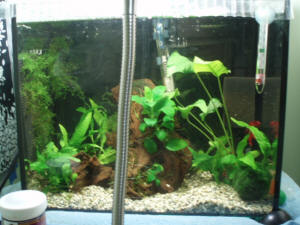 |
Tank Cycle Question
New Tank Problems With Cycling 4/9/09
Hey crew, First I want to say thanks for all your advise with my
previous questions about setting my 75 gallon tank correctly. I have
the aquarium set up and I currently have a green terror (goldsaum) and
3 clown loaches. I plan to add just one more fish and I am considering
a tiger Oscar. The tank has been going through a cycle for the last 3
weeks. I have been struggling with cloudy water and ammonia readings,
to combat that I have been doing 50% water changes and with every water
change I have been using a product called "neutralize"
dechlorinator and product called "colonize" to add good
bacteria in the water. I also had a problem with low pH due to it
coming from my tap on the low side and having drift wood in the tank so
I was told to add some crushed coral to the filter and now it's
been stable for the last week in an acceptable range for the fish I am
keeping. The fish are showing nice colors and are very active.
After testing yesterday I noticed that I am showing 0 ammonia, NO2 was
0.25 ppm, NO3 looked to be 5.0 ppm, and the pH was between 7.4 and 7.8.
I have I attached pictures of how the results have changed over the
past couple of weeks hoping you guys could tell me if I should continue
changing the water every couple of days until the NO2 and NO3 and
ammonia are at 0 or if I am nearing the end of the cycle and I could
space the water changes out a bit.
<The nitrites are still a problem. Continue with the water changes
or add Dr. Tim's One and Only to establish the biological
filtration.>
The presence of NO2 just started yesterday and as well as the first
time I had a 0 ammonia reading also for the first time yesterday my
tank was actually clear. Today I did about another 30% water change and
it remains clear. Thanks in advance for any advice or suggestions
Tom
< The bacteria that break down the ammonia are now becoming
established and converting the ammonia to nitrites. While less toxic,
they still are a potential problem and will cause problems for another
few weeks. When the ammonia and nitrites are at 0 ppm then think about
adding new fish. BTW, you clown loaches and green terror will grow up
to a foot long when at adult size. You may not want to add any
additional fish.-Chuck>
Is this a "mini-cycle"? 02/09/09 Hi Crew,
I am helping someone set up his new 300L tank, using approx 1L of
mature Seachem Matrix from my existing canister filter into his new
filter. I was expecting that this would allow him to start stocking and
he added 4 small rosy barbs and 2 small clown loaches. After one day,
he is seeing approx 0.1ppm ammonia and 0.25 nitrite. pH is 6.8. Seeing
that its got nitrite, I presume that at least he is not needing to go
through the full cycle process. What is happening here? Is this a
'mini-cycle"? How long will this last, and what else should he
do - apart from dosing with Prime, which he has already done, and not
getting anymore new fish. cheers Tim <Hi Tim. Well, it does sound
like this filter is cycling. Something went wrong in
"cloning" the filter. Perhaps there was a substantial water
chemistry change, or temperature change. Perhaps the filter media was
allowed to dry out or suffocate. A variety of things. But the upshot is
this new tank is cycling, and it is critical the fish are not fed
during the next week. Because the media contains at least some bacteria
(you detect nitrite, so there must be some) my guess is the filter will
cycle fully very quickly, perhaps 7-10 days. No need to feed the fish.
Do big water changes, ideally 20-25% daily, but at least 50% every
other day. Should be fine after that. Do check water chemistry is
stable (filter bacteria don't like acidity, and stop working below
6.0). Cheers, Neale.> Thanks Neale. Cheers Tim <Happy to help.
Good luck! Neale.>
Re: Is this a "mini-cycle"? 02/10/09 Hi
Neale By the way, I seeded the new filter at about the same time as
fish were added. Perhaps the bacteria died waiting for the fish waste
to generate some ammonia? Moreover, it was almost 45 minutes from
taking out the media from the old filter, driving to the location of
the new tank/filter and adding the old media into the new filter.
<Filter media can survive without ammonia for maybe a day, but after
that, the bacteria will die back. If you put live media into a system
(whether live rock or mature media) you need to provide a source of
ammonia. A pinch of flake per day will do; it doesn't have to be
fish.> In retrospect, what would have been the best time to seed the
filter in order to preserve the bacteria? Should the fish be added to
the tank first, wait awhile (how long?) and then seed the new filter?
<You *do* need to add a source of ammonia. Whether that's fish,
4-5 mg/l ammonia per day, or a daily pinch of flake food, doesn't
much matter.> Cheers Tim <Cheers, Neale.>
No luck with freshwater cycle? -07/18/08 Hello, WWM crew, and
thanks in advance for your reply. I have a couple of questions on a
brand new 10-gallon freshwater tank I'm trying to set up. I
currently have a Betta in a 1-gallon setup (no heater, poor guy) who
will be moving into the new tank as soon as its water settles. General
Question (the General for short) lives on my desk, where the ambient
temperature sometimes drops below 70 F due to an overactive air
conditioner... I'm sure he'll enjoy his new home much more.
Joining him will be a few small catfish (Otocinclus - the excellent LFS
has fat & happy, local, captive-bred specimens) to help with algae
and add some more interest to the tank, which will be helping to spruce
up a very dull reception area at my workplace. <Tank-bred Otocinclus
are very rare and they aren't bred on farms. The only breeders are
hobbyists, and prices tend to be high as and when these fish are sold.
If your LFS really does have a supplier of such fish, that's
fantastic! Wild-caught fish predominate, and are so inexpensive lots of
aquarists buy them. As I've explained elsewhere on WWM, they are
extremely bad fish for the non-expert fishkeeper: they need quite cool
water (no more than 25 C), very strong water currents, lots of oxygen,
and a constant supply of green algae (not other kinds) or a suitable
substitute such as algae wafers. All in all, difficult fish to keep
alive, and the VAST majority die within a few months.> I am pretty
new to this and have never tried to do a fishless cycle before - the
few aquarium books I've read have absolutely nothing useful to say
on the cycle process, and I didn't find what I'm looking for by
searching your site or the web at large. That said, I've had a
blast reading all your articles. <All aquarium books should describe
the cycling process, and I've never yet seen an aquarium book for
beginners that doesn't. In any case, here it is:
http://www.wetwebmedia.com/FWSubWebIndex/fwestcycling.htm > The
10-gallon will eventually have rooted plants, but does not yet (I get
paid today, rooted plants come soon!) and currently has a pair of Java
fern. It has 1" sphagnum peat (no additives) under 1" gravel
as a substrate. As our local water is very basic and very hard, the
peat not only makes the plants happy but also keeps the pH in a less
extreme range (7.2 rather than 8.3). There is a hanging filter with
mechanical, carbon and biological media (AquaClear 20), a heater
holding at 78-80 degrees, and a fluorescent grow light that came with
the hood. When starting my cycle, I sprinkled in a few of the
General's freeze-dried bloodworms, hoping that their decay would
cause an ammonia spike. Indeed it did; ammonia went from 0 to 6 ppm in
two days' time. I've also seen a NO3 spike up to 100 ppm, but
no NO2! The ammonia is slowly dropping back down, the NO3 is rising,
and this does not fit the pattern I've read about over and over on
your site and elsewhere. Did I go wrong somewhere? Do I need to try
again? Or does it just need a big water change? <If you have
ammonia, it's because you are either: [a] overfeeding; [b]
under-filtering; or [c] not allowing the filter to mature. Common
mistakes people make are to keep cleaning the biological filter medium
vigorously. This kills the bacteria. A gentle squeeze in a bucket of
aquarium water is all you need do, ideally once every 2-6 weeks
depending on how messy your fish are. Obviously you should not feed
your fish at all if you can detect ammonia. Fish can easily last 1-2
weeks without food, so this isn't an issue. Just let the ammonia
drop down, and once it's safe, add tiny amounts of food. A single
flake is ample for a Betta.> The second question involves snails.
They must have come in with the Java ferns. I didn't have snails
before - don't want them, even - and they're tiny. One has
already died; I found its empty shell scooting around in the
filter's current. At least two other individuals exist - one has a
fuzzy tuft of algae on its shell and the other does not. They are
glossy, black, and very round, and researching them told me that they
should not be able to survive in the aquarium at this stage as the
ammonia and nitrate are way too high. How are they surviving the wild
swings in this tank? <Some snails are adapted to ponds where the
water quality can be pretty poor. These snails breathe air, and are
consequently less dependent on water quality than fish. While snails
will die if endlessly exposed to very poor conditions, in the short
term at least things like pond snails and Melanoides are surprisingly
tolerant. Snails don't do any harm, and their numbers are directly
proportional to the amount of uneaten food and generally muck in the
tank. Clean tanks have few snails; dirty tanks have lots. So the
important thing is to appreciate what snails are -- recyclers -- and
keep the tank clean so that their numbers stay small. A few snails in a
tank is a good thing: they help circulate the gravel and so prevent
anaerobic decay. But in large numbers they are unsightly, and certain
plants will be nibbled by them. That said, I have a small planted tank
with lots of snail species and it is fine. Cryptocoryne, Java
fern/moss, Vallisneria are all ignored by small snails such as Physa
spp. Melanoides snails never eat plants and are completely
trustworthy.> I'm pretty confused on this, though not concerned
as it seems the General will probably eat them once the water has
figured itself out and he's in his new home. Thanks! ~Sylvia
<Cheers, Neale.>
Re: No luck with freshwater cycle? 7/22/08 Thanks for all the
information and help! <Most welcome.> My water has settled down
over the past few days, and I'm just waiting for the last few ppm
to drop to 0 before introducing the fish. <Good move!> I now have
a total of three snails scooting around - they grew from pinhead size
to being almost 1cm long in just those few days and developed a golden
color - and four plants (the new ones are a Micro Sword and an Anubias
nana.) <I happen to like snails. I bought a couple of really
interesting conical snails over the weekend for my "freshwater
reef tank", a small tank with snails, shrimps, and a couple of
gobies and some dwarf halfbeaks. Lots of plants, of course. Anyway, if
you take care not to overfeed them, snails aren't the problem
everyone says they are. I actually have some snail-eating snails in
there, and these keep the populations low by eating the baby snails.
The shrimps breed like crazy when happy, so I have something that's
as much fun to watch as a marine aquarium, but hardly any effort to
maintain at all. All this in about 8 gallons of water. I hope that gets
you thinking about what's possible in a small space, IF you're
careful!> I would emphatically recommend your site! So much
information, accessible in so little time. <Bob Fenner, the site
creator, I'm sure will be very touched to hear you say this.>
Thanks again! I'll keep on doing my reading, and work toward a nice
display in my workplace. <Cheers, Neale.> <<Ah, yes. Thank
you both. BobF>
How to keep bacteria alive in a fishless tank? 4/24/08 Hello
Neale, <Giuseppe,> hope you and your tanks are doing well.
<Yep, we're all just fine; thanks for asking!> I have 2
unrelated questions. 1) I will be on vacation for 2 weeks in June and I
was wondering if the good bacteria would starve to death in a tank
without fish. By then I will have all my fish in the 46-gal, but I
would like to keep the established 10-gal running to try breeding when
I'm back. Again my question is whether or not the good bacteria
would starve in these 2 weeks or not and what could be a solution.
Maybe I should leave 1 or 2 Otocinclus and they would eat the algae in
the tank? <Otocinclus aren't my favourite fish in the trade
because their survival record is so poor. But certainly some hardy
algae eater, like an Ancistrus or Hemiloricaria whiptail, could be left
in the 10 gallon tank for a couple of weeks with a bit of carrot for
grazing but otherwise left to fend for himself. Alternatively, just
stick a small frozen prawn in the tank and let it rot away. Remove when
you get back, obviously. Yet another option would be a plain
"holiday block" of the type often sold for Goldfish and the
like. These are basically lumps of limestone that dissolve away,
releasing flakes of food. Again, the food will rot, producing ammonia.
The bacteria couldn't care less where the ammonia comes from.>
2) How should I feed Otocinclus? I used to have 1 in the 10-gal tank
and he did great for 1 year without feeding anything. When I moved the
fish to the 46-gal it died after a couple of weeks, probably because
there was no algae in the tank. When I'll be on vacation for 2
weeks I will use an automatic feeder loaded with flakes or mini
pallets, which the Otocinclus wouldn't eat. Do you think the poor
guy would starve? <Otocinclus are very difficult to feed. They
almost entirely eat "aufwuchs", the combination of green
algae and micro-invertebrates that encrust surfaces in bright, clear
waters. They are opportunistic to some degree though -- most
notoriously eating the mucous from slow moving fish -- but still,
getting enough food into them within a community setting can be very
hard. They do best (perhaps only do well) in large tanks with
established algae "turfs" on the rocks and plants where they
can feed continuously, supplementing that diet with bloodworms, algae
wafers, and so on. I'd tend to avoid in favour of hardier, more
adaptable Loricariidae, of which there are many.> Thanks, Giuseppe
<Cheers, Neale.>
Bio-Spira... not following directions... 2/26/08
I wrote to you on 2/21/08 concerning Amon. & No2 & No3 levels.
In brief: 55gal., aqua-clear filtration system, artificial plants &
décors Started tank without fish 12/31/07 Amon ? O.5 No2 &3 - O.
Added 6 Danios 1/9/08- Amon. O.5 No2 & 3 ?O. PH-7. <Ammonia is
toxic> 1/24/08 Added 3 swordtails & 1 Gourami 2/10/08 Added 6
Australian rainbows Up to this time all levels stayed the same ? Amon.
O.5 No2 & 3 ? O. All of this was recommended by LFS and knew of my
concerns <... still deadly toxic> about the ammonia levels and no
reading for No2 &3. (Told me that the tank probably already cycled)
(Can you tell I'm new to this hobby)? <Yep> On 2/17/08 Amon.
now 1.0 and still no readings for No2 & 3 PH-7.2 . Had been doing
15 ? 25% water changes weekly with no changes. <No use changing
water... forestalling the establishment of cycling> Was told by Bob
to use ?Bio-Spira?, no water changes, feed tiny amts. (feed every other
day) and no new fish until cycled. <Good advice!> I bought the
?Bio-Spira? and was told by LFS to use only ½ of the pkg.
<... a full dose?> I did this on Sat. 1/23 and tested water today
and all levels are still the same as on 2/17/08. Should I use the rest
of the ?Bio-Spira? --- or wait it out and test daily? <Use the full
dose... as labeled> All fish are fine, water crystal clear and no
odors. <And check your test kit... against another, and/or make a
standard (with household ammonia, and water known to have no
ammonia...) Thank you for any help <Read:
http://wetwebmedia.com/FWSubWebIndex/fwestcycling.htm and the linked
files above. Bob Fenner>
New Tank Cycling HI, your web site is GREAT, and I'm
hoping you can help me. I tried looking for the answer on your site,
but I'm not sure what to do. I have a calico goldfish (a little
larger than 1 and a half inches), which has been in a 6 gallon Eclipse
for about almost two weeks now. The tank has been previously used, but
when I put my fish in, I added new gravel, water, etc., and a new
filter. I did pH, nitrite, and ammonia testing and the levels were all
good, ph was about 7, ammonia was 0, and nitrites was 0. About 3-4 days
ago I (after he'd been in the tank about a week) I thought I should
clean and change water. I changed about 25% of the water, vacuumed the
gravel, and wiped the inside of the tank. After doing some research, I
figured it was probably to early to clean (the water parameters were
the same as when I started the tank, before I cleaned). After I did the
water change, I noticed he was acting a little strangely sitting in one
area of the top of the tank, and sitting in corner at the bottom. I
immediately did water testing and found the ammonia level at about
0.5-0.6, and the nitrites at about 0.3 (Hagen testing kit). I usually
keep a little aquarium salt in the tank, and I added a little more. I
tested the next morning, and found the same levels in both, and I did a
50% water change. I checked the levels in the evening, they were still
about the same. I did another 50% change yesterday and got some Cycle
(supposed to add good bacteria and drop nitrites and ammonia) and added
that to the water as well. I checked the levels again last night and
the ammonia dropped a little, and nitrites dropped to 0.1. I changed
the water again this morning (50%) and added cycle again. The levels
are now BARELY detectable. Should I keep changing water until there are
NO traces? Eddie's still sitting at the bottom (fins still
clamped), he swims around when I change the water, I have been still
feeding him smaller amounts of food then usual. He also now seems to
have a little less of one his tail fins (although it is hard to tell
because he never swims!) I just noticed that today, research indicating
probably because of the poor water, BUT should I now treat him
medically for that? If I do I have to stop the filter and bio-wheel
(disrupting the good bacteria again)... HELP, Thank you soooo much, and
sorry this was so long, just trying to give you as much info as
possible. Mel <Hey Mel, the longer the better, we like detailed
emails. You are on the right track. 6gal is a small volume of water, so
it will foul quickly, especially if it was not cycled. Keep up on the
small water changes, daily if needed, test frequently. Once the tank is
cycled Eddie should start acting normal again. I would not use any meds
right now, just focus on getting Ammonia and Nitrite down to zero. Best
Regards, Gage >
Cycling with ammonium chloride (11/10/03) <Hi! Ananda
here...> Am having a really big problem cycling my tank. Some fresh
water expert suggested to use ammonium chloride to cycle my 40gal fresh
water tank (planted). <Sounds good.> So I went to the local drug
store and got some ammonium chloride (powder). I've been dosing
since 3 days to bring the ammonia up to 2 ppm but all what I got is
about 0.1 Until now 7 large tablespoon has been added and the ammonia
is still 0.1 ..What's wrong??? <Hmmm. I would suspect your
ammonia test.> I am starting to get worried. I have a power filter
with carbon in it and some bio media. I hope you could help. A.G
<Have you checked the nitrites, too? What is your nitrite reading?
Meanwhile, there's an excellent article on fishless cycling here:
http://www.tropicalfishcentre.co.uk/Fishlesscycle.htm
... -Ananda>
|
Re: Power cut, cycling
2/21/08 Hi Neale, From what I read in your last e-mail, does
this mean that all the good bacteria in my filter thing has died?
It came in-built with the tank as did the pump and the heater. It
was out of the water for at last 4-5 hours and there was no water
flowing on it because the electricity was off. What should I do
now? Will my fish die because the bacteria aren't there
anymore? I mean how long will it take for it to grow back?
Thanks, Neervana <No, not all the bacteria will have died, but
some will because the oxygen that will have passively diffused
into the filter will be less than the amount of oxygen that gets
in when the motor is running. So do your water change, and then
over the next few days, reduce/stop feeding, do nitrite tests,
and basically act as if the filter is only partially cycled. With
luck, the remaining bacteria will spring back into life straight
away, and quickly undo the damage. Cheers, Neale.>
Cycling... learning to use
WWM, not chatting 2/21/08 Hi Neale, <RMF here in his
stead> I did a 50% water change before I e-mailed you - I did
it around midday I think. I then tested the water and the
nitrites is still showing really high - around 10. Was not sure
about the colour of the test strip, looked more like 20. Do I
need to do a water change again? <... you need to learn to/use
the search tool, indices which are WWM. This time I'll do
this for you: Please read here:
http://wetwebmedia.com/FWSubWebIndex/fwnitrates.htm and the
linked files above> I have not fed them anything so why did
was the nitrites still high after I did a water change? <See
WWM re freshwater maintenance, water changes... this is all
covered and much more related information you may need to
know> Also, my new aquarium should be arriving soon, I was
thinking that every time I do a water change from my 200 gallon
can I then put the water I siphoned out of that tank into the new
one? <See WWM re... Cycling...> Will this help with
bacteria to grow in the new tank. If I put the water I have taken
out of the old tank into the new one once a week for 6 months,
perhaps it will be cycled then and safe to add a fish to? Thanks,
Neervana. <Keep reading. Bob Fenner>
|
Re: Bio-Spira Cycling Questions 11/8/07 Bob,
<John> Again, thanks. <Welcome> Yes, I've read on the
use of DSB's and plants on WWM. But, Since I vacuum the gravel so
frequently (recall I have two comets and a Pleco) I didn't think
that this would work for me. <Could "tie in" a sump...
another tank outside... or use a canister filter with an anaerobic to
hypoxic media...> I have also desperately tried to do plants, but I
have not been successful because both the comets and the Pleco love to
eat them and uproot them. <The sump... could be lighted... perhaps
on a reverse daylight photoperiod with the main display> I'm
searching for java fern, which I've heard neither comets or Plecos
like, and also have short 4" bamboo here in my local pet store
chain. But, I'm not knowledgeable on bamboo so I'm going to do
more research on that before I just add it to the aquarium. Again
I'm not sure if you can say, but I was curious which products you
think were for show? <Principally the continuous read assay
devices> I've been seriously looking at the Matrix and
de*nitrate, but don't know really the differences between the two.
I was thinking it might be better just to have an all-in-one product
like Matrix, but then again, sometimes all-in-one means less
performance for all functions involved. Decisions, decisions. I've
also got the Purigen, but I'm not so sure this is working as well
as I had hoped. And about my water... I do filter it through a PUR
faucet before I cook and drink it, but unfortunately my ice maker is
not filtered. What can nitrates to do a human!?!? <A few things...
that are best avoided> Perhaps it might explain my sudden
not-feeling-so-well. <I don't like this> Thank you, John
<I do hope/trust you're joshing re the NO3... the federal
standards for potable water have back-slided in the U.S.... I would
get/use (I do) a reverse osmosis device. Bob Fenner>
Ceramic media, & air pumps FW --
08/26/07 Hello Neale, I bought the ceramic cylinders yesterday to
be used as filter media. I wanted to ask you how should I place them
inside the power filter and how many of then I'm supposed to use?
Should I also bury some cylinders in the gravel and use them to jump
start an eventual new tank? I also wanted to ask you if using an air
pump inside the tank is really beneficial or not. As always, thanks a
lot for your helpful insights. Giuseppe <Greetings Giuseppe. How you
use the ceramic media depends somewhat on the design of your filter.
Some filters have "compartments" that you stuff with the
media of your choice. If this is the case here, place the ceramic media
in the last compartment (i.e., the one that water enters last of all)
for best results. This will stop it getting clogged with solid waste
quickly, allowing the media to perform as biological media better. If
your filter doesn't have compartments, then place the media in a
media bag (or something similar, like the "foot" from a pair
of stockings) and stuff it somewhat after the mechanical filter media
(again, so that it doesn't get clogged too quickly). There's no
"wrong" way to use media, just more or less efficient ways,
so if this all seems to complicated, just cram the ceramic hoops in
wherever you can. The filter should have some instructions explaining
this. You likely can't use "too much" or the filter
won't go back together. As for burying them in the gravel --
pointless. If you have spare, buy another filter and put them in there.
Otherwise, leave them somewhere dry to use at another time. The gravel
in a tank without an undergravel filter is basically "dead"
as far as biological filtration goes, and the ceramic media won't
do anything useful and won't get significantly colonised with
bacteria. Better to remove 50% of the media from the filter after a few
months, and use those to "seed" a new filter in a new
aquarium. You can replace up to 50% of the filter media from a mature
filter and not lose too much biological filtration capacity. Obviously
you add new media after you do this. This process is called
"cloning" a filter, and it's how I set up all my tanks,
and totally removes the cycling process. Now, as for air pumps:
here's the deal. Air pumps don't put oxygen into the water.
That's a myth. What they do is improve circulation. By doing this,
de-oxygenated water at the bottom of the tank is brought to the
surface, where CO2 diffuses out and oxygen diffuses in. That's
really all air pumps do. Obviously, an air pump connected to an
airstone at the bottom of the tank will be more useful than the same
pump connected to an airstone that's bubbling away at the top of
the tank. Do you need an airstone? Generally not. A decent filter
should be providing adequate circulation on its own. This wasn't
always the case in the past, where air-powered filters were common, but
modern electric filters generally offer a lot of circulation. The ideal
for regular community fish is 4x the volume of the aquarium in turnover
per hour. For goldfish, cichlids, Plecs, etc. this goes up to around
6-8x per hour, and for marines anything from 10x upwards is required.
Your filter should have a "gallons per hour" or "litres
per hour" quote on it somewhere; compare this to the volume of the
aquarium, and draw your own conclusions as to whether you need to add
extra circulation. Cheers, Neale>
Water Changes Affecting Cycle, FW -- 06/15/07 Hi
Crew, <Hello.> Just a quick question about water changes and
cycling. <OK.> I was on a forum the other night and someone asked
a question about cycling his freshwater tank. The L.F.S. he had
purchased the tank from had unfortunately sold him 4 fish at the same
time as the new tank. <Common problem. Actually, depends on the size
of the tank and the fish being bought. Four mollies to mature a 55
gallon fish-only marine tank would work rather well. But four mollies
in a 20 gallon freshwater tank would be a disaster.> The person had
to his credit, realised he was in trouble and read up on cycling. He
had then managed to source a mature filter pad from one of his friends.
<In theory this works very well. It's called "cloning"
a filter, and it's my preferred method. But you do need to be
moving the mature media from one tank to another without killing the
bacteria by drying them out or shocking them water chemistry
changes.> He said that he had seen a nitrate spike after ammonia and
nitrite had appeared and was wondering whether this confirmed his tank
was cycling. <Nitrate (and indeed ammonia/nitrite) levels are almost
never the nice smooth curves you see in aquarium books. There's
fluctuations to them for a variety of factors. In other words, provided
the ammonia and nitrite stay at zero, and your nitrate level stays
below some danger value (realistically, around 50-100 mg/l for most
freshwater fish) then there isn't any real reason to worry about
the precise value or how it compared to the reading you got last
week.> I replied telling him that indeed this did mean his tank was
in the process of cycling and it was a good sign. I told him to carry
on performing his scheduled water changes, and gave him a list of
symptoms of stress to watch out for. <Very good.> I told him to
observe, and if he noticed any signs of stress, perform a large water
change. <Correct.> This is where the question comes. I then told
him that the emergency water change may slow the cycle slightly, but
was not significant and was preferable to sick or even dead fish!
<Absolutely.> I checked the post a few hours later and one of the
moderator's had posted a reply after me stating that 'water
changes will NOT AFFECT THE CYCLE'. <Almost certainly
correct.> I replied stating that a large water change would decrease
the available nutrients for the bacteria and therefore would marginally
affect the cycling time. <Hmm... not convinced. The multiplication
of bacteria depends on other things than just ammonia/nitrite
availability, such as time, temperature, pH, oxygen, surface area of
the media, etc. In other words, there's the biological law that
processes are restricted by the thing in least supply. If the bacteria
haven't had time to reach maximum population size, then it
doesn't really matter if they have 0.25 mg/l ammonia to play with
or 25 mg/l ammonia. Fundamentally, you're looking at a process that
is constantly changing. The ammonia and nitrite in the water are the
stuff the bacteria *haven't* had time to use. They're
"leftovers" if you will. If you remove 50% or 75% of the
water and so dilute these leftovers, the bacteria aren't going to
starve. The fish are constantly producing more ammonia, and the
nitrifying bacteria are producing more nitrite in due course. Think of
it like a conveyor belt in a sushi bar: even if you take away most of
the dishes on the conveyor belt at once, the sushi chef will be adding
new ones all the time, so before long the belt will be filled up again,
and the diners won't be hungry. They might have to wait a little
longer to get the exact dish they want, but they won't starve.>
He replied stating that the bacteria have a limited reproductive rate,
and that a concentration of 0.25 ppm ammonia, would be no different
than a concentration of 3.00 ppm ammonia, with regards to cycling
speed. <I'd be dubious about actual values, but in terms of
theory, this makes sense.> I decided to leave it at that as I
didn't really want to enter into an argument. However I am
interested to know whether I was right or wrong. <I'd tend
towards agreeing with the moderator.> I have seen members of the WWM
crew state that water changes will slow the cycle and was wondering if
any of them have a reasoning behind this statement or whether it is
from gathered experience. <Water changes are good, even during
cycling, and are critical if you're cycling with fish. Anything
above ammonia = 0.25 mg/ is lethal to fish, so you have to do water
changes at that point anyway. Any possibly benefits of leaving the
ammonia at higher levels will be more than offset by the sick fish. So
while an interesting academic discussion, in sheer practical terms
somewhat irrelevant.> I look forward to your views/opinions. Thanks
and keep up the good work, Matt. <All very interesting. Thanks for
sharing. Cheers, Neale>
Bio-Spira + Amquel = Uncycled Tank 3/9/07 <Hi,
Pufferpunk here> I started a new tank using Bio-Spira (75 gallon
tank). I got a little crazy with the Amquel, which resulted in a lower
pH and now I'm wondering what else its resulted in. <Amquel
shouldn't lower your pH. If you read the directions on the
Bio-Spira package though, it says not to use any ammonia-removing
products with it. The bacteria in Bio-Spira needs ammonia to live.>
My ammonium <ammonia?> went up and went down. My nitrites started
down, went up, then up again, then up again and now I have no idea
where the reading should be but it's a real pretty shade of purple.
The nitrates stayed low until recently, now it's on the rise but
the nitrites are holding steady. My fish are eating, swimming, seem
relaxed but I'm extremely worried and willing to do anything in my
power to keep those beautiful dollar bills swimming. I'm mainly
writing to find out if Amquel is skewing my test on the nitrites.
Please let me know. About the only thing left to buy is snake oil and
the only thing stopping me is finding the salesman. <Now why would
you want to go and do that? Using anything other than Bio-Spira to
cycle your tank, will only hinder the cycle. Get another package of
Bio-Spira and add to your filter, after doing an 80% water change to
remove the nitrites & Amquel. You tank should be fine within 24-48
hours. Next time, please be sure to correct your capitalization &
punctuation, before sending out your email to us. I have to correct
them before they are posted in our FAQs. Very time consuming. Another
Crewmember might have returned this email unanswered, for correction.
Thanks, PP>
|
|

