|
FAQs on Freshwater Aquarium Snail
Selection
Related Articles: Snails
and Freshwater Aquariums, Invertebrates for Freshwater Aquariums by
Neale Monks, Assassin Snails and
Sulawesi Elephant Snails. Keeping Clea and Tylomelania in the
Aquarium by Neale Monks, Fresh
and Brackish Water Nerites by Neale Monks,
Related FAQs: Freshwater Snails 1, Freshwater Snails 2, Freshwater Snail Identification, Freshwater Snail Behavior, Freshwater Snail Compatibility,
Freshwater Snail Systems,
Freshwater Snail Feeding,
Freshwater Snail Disease,
Freshwater Snail Reproduction,
Snails by Species: Mystery Snails, Apple/Baseball Snails,
Malaysian/Trumpet
Snails, Ramshorn
Snails,
|
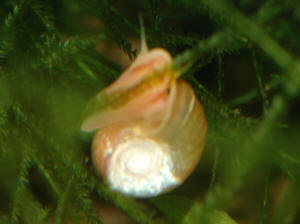
A hermaphroditic species, the
Ramshorn, loved/hated by aquarists worldwide.
|
Red Australian snail, article by Bob Fenner
1/5/16
In an article on pond snails on your site, Bob Fenner mentions Red Australian
snails. I've read about them in a couple of old aquarium books and I'd be
interested in obtaining some, but I can find no information online. The
illustrations and descriptions show them to be quite different from red
ramshorns, which I already have. Do any of you have a few in a tank or pond? or
know someone who does?
<I have not seen these for many years.... do see the "Aquarium Advice" link
using the string here :red Australian snails: >
Here's Fenner's article:
http://www.wetwebmedia.com/pondsubwebindex/pdsnails.htm
Thank you for your time.
Jaron
<http://www.wetwebmedia.com/pondsubwebindex/pdsnails.htm>
[http://www.wetwebmedia.com/PondPIX/Gold_and_Regular_Mystery_Snailssmall.jpg
]<http://www.wetwebmedia.com/pondsubwebindex/pdsnails.htm>
Pond Snails, Bane or Boon? - WETWEBMEDIA<http://www.wetwebmedia.com/pondsubwebindex/pdsnails.htm>
www.wetwebmedia.com
Skip down to FAQs on Pond Snails. Back to Articles on Pond Snails II, Pond
Livestocking /Aquatic Gardens, Design, Construction & Maintenance
<Do please write back if you have any luck finding this species or further input
to share. Bob Fenner>
Apple snails- overstocked? 8/28/15
Hello crew, thanks for this fantastic site. I have a quick question regarding my
apple snails. I have 12 (Pomacea diffusa), most medium sized with a few being
full grown and now 2 egg clutches just appeared. They are housed in a 20 gallon
long tank, but due to the lowered water line, substrate, etc., the tank is only
holding about 14 gallons of water. I have 2 power filters, one internal and one
hang on back, with a combined filtration capacity of 300 gallons per hour. There
is also a small sponge filter. The reason I am concerned is that I am having a
hard time fully cycling this tank. I would really appreciate your opinion on
this. Thanks so much.
Gabby
<Can you clone a filter? In other words, take some medium from an established
filter and replace it with some of the medium in the new filter. Established
filters can lose up to half their biological media without problems. Assuming
water chemistry and temperature are similar, the bacteria will adapt to the new
filter quickly and immediately process ammonia. They'll also colonise the rest
of media inside the new filter very quickly, likely within a few days. This
process is very reliable if done properly. It does assume you're using filters
that can donate or accept media such as ceramic noodles or filter floss, or else
the two filters are identical and can share proprietary modules. If all else
fails, adding a few cups of gravel from a mature tank can help, though this is
less effective because filter bacteria only colonise the very top layer of
gravel where oxygenated water is to be found. Gravel deeper than, say, 1 cm from
the surface won't have many/any of the "good" bacteria we're after.
Cheers, Neale.>
Re: Apple snails- overstocked? 9/5/15
Hello again Neale,
Thank you for the considerate reply. I followed your suggestions and took some
established media from one of my cycled tanks. At first I saw no improvement, so
I upgraded my main filter to the next most powerful model of it's kind.
<Always a good idea.>
Nitrite levels have decreased by about 75% since.
<Excellent.>
I am using SeaChem stability with water changes and keeping a close eye on the
filter, which consequently is running perfectly at this time. I just tested
parameters in the apple snail tank, and although nitrites remain (0.50),
nitrates are now my concern (almost 80 ppm). Is this a normal finding for the
steps I have taken?
<Can't answer this without knowing the nitrate of your tap water. Put another
way, if your tap water has a nitrate level of 50 ppm, then getting something
like 80 ppm a week after a water change isn't unreasonable for a busy aquarium.
On the other hand, if the tap water nitrate is 20 ppm or less, than that same 80
ppm reading looks a lot more alarming. Test kits aren't very accurate, so
there's some wiggle room, but if you get a "low" reading on your tap water and a
"very high" reading in the aquarium, then yes, something's amiss. Nitrate comes
at the end of the decay of organic material and nitrogenous wastes from the
fish, so typically nitrate is high in tanks with (a) a lot of decay and/or (b) a
lot of fish/fish food. Make sense?>
Thank you
<Most welcome. Neale.>
Snails in aquarium; Whence forth? Whence go?
8/26/14
Hi crew
Been a few years since I had to write for help. I have had my tank set
up for about 4 years now after moving. I have not added any fish,
decorations or anything else since then. The only thing that goes into
the tank is frozen blood worms and flaked food. I somehow got snails in
my tank. Have no idea how. Have you seen or heard o this happening
before? I read that a yoyo loach does a good job getting rid of snails.
Is this true and do you recommend to get one? My tank only currently has
3 Cory cat fish and a 9
inch black ghost.
Thanks
Joe
<The snails were probably always there. You just never saw them. No,
they don't materialise out of thin air, so yes, they have to get in
there the usual ways, typically on aquarium plants. The easiest/best way
to eliminate snails is a combination of physical removal (repeatedly,
likely across many weeks) and the addition of some sort of predator.
However, loaches tend to be more trouble than they're worth. For a
start, you don't get "a" loach.
They're highly social; you get five. Second, they're boisterous,
sometimes aggressively so. The Yoyo Loach is fairly peaceful if kept in
adequate numbers, but adding 5 specimens may not be practical. Finally,
adding 5 fairly big fish to your aquarium will add more stress to the
filter than the snails, so think carefully before doing so. Personally,
I think the Assassin Snail is an infinitely better choice. It's small,
breeds very
slowly, eats snails, but leaves plants alone. In any event, do start by
reading here:
http://www.wetwebmedia.com/fwsubwebindex/fwsnails.htm
http://www.wetwebmedia.com/fwsubwebindex/AssassinSnailF.htm
Cheers, Neale.>
Rapidly maturing snails 1/28/13
Hi. About two months ago, on a whim my friend (who works at a pet
store) convinced me to buy a blue "mystery" snail for my Betta's
tank. I'm really mad I did that.
<I bet. Not a huge fan of adding "critters" to Betta systems, and
Apple/Mystery Snails aren't good companions for fish anyway.>
I'm always really careful with what I put in my Betta's tank and I can't
believe I didn't look more into snails before I got one. My friend
told me that the snail would just eat whatever George (my Betta) would
leave behind. A few days after I had the snail it occurred to me
that that was probably not the case. After some research I found
out my snail was most likely a Pomacea diffusa (or at least I thought,
now I'm not so sure) so I started leaving bits of spinach and zucchini
for it to eat in the tank.
About a month into it the snail had babies and I freaked out. The
babies had started eating George's plants and anyway a Betta, a snail,
and a bunch of baby snails were waaay too much for George's 2 and 1/2
gallon tank. I took all of the snails out, gave George new rocks,
changed his filter, cleaned his plants, etc. His tank has been
snail free since then. I put the mama snail and the four baby
snails I had found into the cup I usually put George in when I'm
cleaning his tank. It was supposed to be a temporary fix until I
could find them a larger tank, but unfortunately they were in there a
little longer than they should have (about four days). I had been
changing the water everyday, but I guess that just wasn't enough because
the mama snail died. It was really awful.
<Unfortunately this happens all too often. Apple Snails aren't as easy
to keep as many suppose. Do see the excellent AppleSnail.net website for
more.>
I got the baby snails a 1/2 gallon tank. Everyday I change the
water alternating between changing a 1/3 of the water and changing the
whole thing. I give them a new leaf to eat every other day when I
do the full water change. This has been going on for a month and I
need to find a more long term solution because I've been becoming a
little lax with it and I hadn't done a full water change in about three
days and I found two new baby snails (which I threw away because
honestly I'm not having more snails, I felt bad but enough is enough).
From everything I read the snails shouldn't have been sexually matured
for at least a few months.
Also, I didn't find any sort of eggs. My plan was to eventually
give most of them to a friend once they were bigger, but they're not
really bigger yet. Help! Should I just give them to my friends
now? If I'm a little more vigilant with my cleaning can I keep the
snail population down until the snails are a little bigger? Could
they be pond snails and that's why I haven't seen any eggs (except their
mom was white and blue which I didn't think pond snails came in that
color)?
<Could easily be. Apple Snails lay very distinctive egg clusters ABOVE
the waterline. About the size, shape and colour of large raspberries, so
hard to miss! Apple Snails have to be in pairs to breed because they're
either boys or girls, unlike some snails which can produce offspring all
by themselves (e.g., the Malayan Turret Snail). Squishing unwanted Apple
Snails should be easy enough to do, or failing that, just remove the egg
cases as you see them. It's not hard to rehome true Apple Snail
offspring because pet stores can sell them on easily. On the other hand,
pond snails like Physella spp. can breed quite quickly, and it's
possible for these more pest-like snails to get into tanks via aquatic
plants or on the shells of Apple Snails.>
Thanks, Annie
<Cheers, Neale.>
|
Snail nix cure? re: better!!....re: Salt for fungus?
(Bob, any obs. re: Java Ferns and snails)<<Most don't eat. B>>
11/24/12
Neale,
The snails are almost finished devouring the plants. There's too
many...it's too out of control. The plants were expensive and
they're almost all gone.
<These are Java Ferns, which are toxic, so few animals eat them. Fish
certainly won't, and generally snails and shrimps leave them alone too.
So try and identify the snails. Melanoides, Physa, Physella and
Planorbis snails will not harm Java ferns or indeed most other healthy
plants (Melanoides, whatever their other faults, won't eat *any* healthy
plant of any kind, even seedlings). Nerite snails of all kinds are
equally safe. About the only truly destructive snails commonly kept or
encountered by tropical fishkeepers are the Apple Snails and their
relatives: Pomacea spp. and Marisa cornuarietis. In virtually other
situations where snails are "eating" the plant, they're actually eating
at dead or dying plant material. Of course there are exceptions for some
of the softer plants or for seedlings, where possibly an excessive
number of Physa spp. might cause harm. But ordinarily, and especially
with something as inedible as Java fern, the question is why is the
plant failing not why is it being eaten by snails. For what it's worth,
Java Ferns are not as easy to keep as many suppose, and are (in my
experience) much less reliable than Anubias spp. One issue may be that
"fake" Java Ferns are traded at the budget end of the market, and these
simply don't survive for long underwater. But otherwise do review the
needs of this species. While undemanding in terms of water chemistry and
temperature, it will not do well planted too close (let alone in) the
substrate and is best kept an inch or two clear of the substrate
attached to bogwood rather than rocks or ornaments. Strong water
currents seem to fragment the plant, and algae-eaters, especially
raspers such as Panaque spp., can cause real damage very quickly. It
grows slowly, and because of that, doesn't do well if constantly
buffeted or pecked at. To be brutally frank, it's a plant I've given up
with years ago, as I have with Neon Tetras among fish, because there are
better, more reliable options available. One last thing. Your Anubias
looks fine, and my golden rule with plants is this: buy one of whatever
you like to begin with, see what does well, throw out what doesn't, and
buy more of the species that seem happy. Your aquarium looks a bit
sterile, and my gut feeling is any snail and algae problems you have is
more to do with the lack of "balance" than anything else. Try and grab
some floating Indian Fern (Ceratopteris thalictroides, but as floating
plants, not the more difficult to keep rooted plants, though if you snap
off fronds from the rooted plant, they'll grow into floating plants just
fine). This is the #1 plant, I think, for jump-starting an aquarium.
It's easy to grow, seeds the tank with plenty of good bacteria, provides
food for herbivorous fish, grows rapidly enough to shake off any
nibbling by snails, and helps to prevent algae. Sure, it looks a bit
scrappy to begin with, but a thick canopy of the stuff below the
waterline has its own beauty (I tend to trim away over the waterline
growth before it burns under the lights). It also provides shade, which
Java fern and Anubias really appreciate.>
I've had two local fish shops recommend Skunk Botia to nix the snails
and they have hard water too...though the one is selling water too so
they have non hard water available.
They're the smart shops...not just a chain store.
<Skunk Botia, Yasuhikotakia morleti, are social (keep 5+ specimens),
aggressive amongst themselves and towards other fish, and grow quite
large. Think very, VERY carefully before purchasing.>
One lady said they're perfectly ok in hard water.
<Up to a point, yes, like most loaches they're tolerant. But they do
prefer soft to moderately hard, pH 6-7.5 water.>
The guy I just spoke with (at the shop that also sells water) suggested
skunk Botias are ok with Mollies, which actually implies they tolerate
hard water based on Molly's sensitivity to soft!
<Not a wise combo. Do visit those folks over at Loaches.com for second
opinions, or read over the excellent Loaches book some of them wrote on
behalf of TFH.>
When I checked my facts online it looks like it's not so though....the
skunk Botia looks like any other Botia in water preference..but these
hard water folks say it's great for our water!!! You say you have hard
water....do you know of people keeping skunk Botia in hard with any
success (fish thriving)? Is it a flexible species?
<It is, but there are better choices. The Horseface Loach for example
can thrive in even slightly brackish water (around SG 1.002) and as such
can be kept with Mollies.>
I think I definitely shouldn't keep it with Mollies. They like
marine salt to thrive, a loach no no.
<For the most part, yes, loaches avoid brackish water, though some
species enter slightly brackish water, notably around the Caspian Sea.
Among traded species, Acantopsis choirorhynchos, the True Horseface
Loach, is the classic slightly salt-tolerant species. It's a fun species
and will eat small snails, but does need a sandy, not gravel,
substrate.>
I think I can get my water to 7.5 with mixing it like you said. I
think that would probably be alright for a Botia.... Should I add peat
filtration too?
<No real need and unpredictable anyway.>
Do you know of anyone using this water system for filtration with
success?
<Peat filtration is fiddly (not to mention questionable in terms of
environmental sustainability!). Remember, few fish care about the pH
_per se_, and provided you reduce the hardness down to around 10 or 12
degrees dH, soft water fish can thrive at pH 7.5 without the least
trouble.>
It looks like this removes hardness and even the water softener's salt.
I could do 50/50 with this water and the outdoor spigot that's hard
water that I have been using.... The filter is at this link:
http://www.drsfostersmith.com/product/prod_display.cfm?pcatid=4484
I just thought....I wonder if there's something out there to filter
water for tanks, and I checked online and there it is. How good is
it, is the question?....$40 is inexpensive comparatively.
<Still a waste of money. Your fish don't need this kind of
molly-coddling. If we're talking standard community tropicals -- barbs,
danios and whatnot -- then a 50/50 mix of hard tap water with RO bought
from your local retailer will be just fine.>
Reverse osmosis not practical...it wastes too much and is too slow!
<Indeed.>
Since I have the million snail thing going on........do you think the
Botia could tolerate it if temporarily I put a whole bunch of fake
plants in the tank?
<Likely so, but Skunk Botia are a unwise bet for a small tank in many
ways. You need 5 or more, and they'll get to around 10 cm/4 inches in
length, and they fight amongst themselves a lot, and they chase
slow-moving fish. Do read up carefully on this species.>
The guy suggested it would be easier to get rid of them if there were
less food supply for them. However Botias like a heavily planted
tank. And are known to be aggressive and territorial. I'm
wondering if they'd tolerate fake plants..or is that an issue?
<Do try floating plants as mentioned above before giving up. Remember,
if you switch to fake plants, algae will make up the difference; few
tanks without plants are algae-free without huge amounts of hard work.>
In a 29 gallon what is a good ratio of females and males to keep with
this species? He said 5 to 10 fish..... I'm ok if it's my only
fish species. I can live with that. I just remember I
understocked mollies and had issues and I wonder if 9 is best, or is it
ok to start with 5 since the plants will be fake in the beginning?
I want to make sure there are enough and not too many, if that makes
sense.
<Are we talking about the Skunk Botia here? An odd number, with more
females than males is the ideal.>
I really want living plants and the java fern was absolutely covered in
baby snails last night even with adding the plant food and an increased
light source. They look like java-lace-fern and there's not much
more to eat on them!!!
<Bin 'em.>
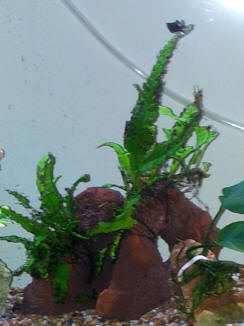
I attached a picture. They were $8.00 lg investments!
<This is actually a low, too low, price for Java Ferns, which is my
concern. Here in the UK, a good sized "mother plant" Java Fern growing
on a bogwood root will cost around £25, that's around $40 US. That's a
bargain mind you, because a healthy Java Fern mother plant produces lots
of baby plants on the tips of its leaves, at least some of which can be
removed successfully and transplanted to new bits of wood. Such a
healthy plant will live for many, many years so is a sound investment.
But cheap Java Ferns may or may not be a bargain. If money is tight,
there are many better species that I'd recommend.>
I want my tank back and I am willing to work with the skunk Botias based
on their reputation of being snail annilators!
Jill
<Don't expect any fish to annihilate snails. Just isn't that easy.
Dealing with snails demands an holistic approach, not just removal, but
also understanding why they're thriving at the expense of your plants.
Cheers, Neale.>
|
 |
|
Re: Snail nix cure? re: better!!....re: Salt for fungus?
(Bob, any obs. re: Java Ferns and snails) 11/25/12
Wow....this is embarrassing. I had bought a replacement bulb a couple
months ago and that's when the plants started to noticeably go down hill.
The guy really sold the bulb, he had claimed it was SO much brighter and
great for plants too, so he said. It was what HE uses. I should
have known better. The bulb he enthusiastically sold to me is called
actinic.
it doesn't even grow coral!
<Actually, actinic tubes are used, alongside white tubes, in marine aquaria,
and yes, they do encourage good coral growth. But you are correct that
they're mostly for looks, helping to make the blues on marine fish really
bright blue.>
There is so much misinformation in this hobby.
<Hard to argue with this. But perhaps a more charitable opinion is that
there are many different opinions on things, some based on experience, some
on sales and marketing literature, and sifting through these for what'll
help in your situation isn't always easy.>
There should be a class for fish store employees because people will ask
them questions and they will give out free advice.
<Can't speak for where you live, but here in the UK, yes, there is college
called Sparsholt College that has vocational courses on fish husbandry,
including one aimed at retailers. It's been running for some 20 years now
and is very well respected. There may well be others offering equally useful
courses, and I agree with you, it'd be helpful if retailers made an effort
to train their staff more fully. If nothing else, mis-selling equipment such
that hobbyists end up with dead fish or plants pretty quickly dampens any
enthusiasm. That in turn means such people leave the hobby, never to come
back. Proper training means sales staff can nurture good aquarium practice
in their customers, and long term, such customers will come back for more
stuff over the many years they stay in the hobby.
Cheers, Neale.>
Re: Snail nix cure? re: better!!....re: Salt for fungus? (Bob,
any obs. re: Java Ferns and snails) 11/25/12
Thank you Neale!
<Jill,>
I had been totally sold against skunk Botia in spite of their supposed snail
eating prowess, due to the negative things I'd read about their temperament.
But then the LFS were selling it as a miracle cure to snails and downplaying
what I'd read about it's aggression. As there were two LFS
recommending it, they'd convinced me against my better judgment to get them.
Thank you for confirming that it's a bad idea!!! I was ready to go and
buy a bunch and it probably would have been a disaster.
<Could well have been. On the other hand, Assassin Snails (Clea helena) are
generally safe, being harmless towards fish (though probably not fish eggs
and fry) and much slower to multiply than plant-eating snails. Do consider
these.>
I wouldn't do a pea puffer either I don't think...but the lady at LFS
recommended a pea puffer for snails instead when I'd told her I worried
about skunk loach aggression, and she said it wouldn't bother other fish if
I just got one. She said it's mouth was too small!!!! LOL!
It sounded so cute I was tempted. But all the authorities say it
occasionally does ok with Otocinclus (because they're bottom dwellers and
they swim FAST enough to get away), but that it will attack larger fish and
it ought to be in a species only tank. Also it's freshwater not
brackish tolerant so I couldn't keep it with mollies.
<While I'm sure the Dwarf Puffer will tolerate a little salt without the
least complaint, you are quite right that they're a bad species for mixed
communities. Some people have had success mixing them with a variety of
other fish, but on the whole, the results have been poor.>
They guy at the other LFS actually told me I could just keep a school of pea
puffers but that also disagrees with everything else I've read, as they
fight each other once they mature. (His were young stock.)
Anyway they're so small..... they probably wouldn't make much of a
dent on millions of snails in the amount I could keep of them!
<Indeed. Big scheme of things, it's often easier to remove snails manually
(or, _in extremis_ with snail-killing chemicals) as far as possible, then
add something that will stop the remaining snails multiplying too quickly,
such as the Assassin Snails. Adding big but harmless snail species that
compete with pest snails can also keep snail populations down; Tylomelania
spp for example don't eat plants but do eat leftover fish food. They're big
(up to about 10 cm, but commonly around 6 cm) and valuable, so any new
specimens that appear can be removed easily when they're 2-3 cm long and
returned to retailers or shared with fishkeeping friends.>
I will buy a whole bunch of Indian fern and return the hideous plastic
plants I purchased last night!!! I will also build up stock of fish again.
I think I'll go all female this time, and I'll chose baby mollies about the
same size as the two that I have now so they're equal.
<Good luck with all.>
Hopefully I can balance the tank and with regular plant feedings and some
supplemental light or a better bulb, the plants will grow again.
I'll offer more vegetable to the fish so they don't live on flake and algae
alone. Neale, ironically, I've had incredible success with java ferns in the
Betta setup, and that's why I was freaking out that they were failing in the
large tank...it seemed such a hardy and durable plant in the Betta setup.
<For sure. Java Fern is one of those plants that either thrives amazingly
well or fails abysmally; it rarely seems to just potter along.>
They do reproduce, hundreds of little off shoots which come loose and I
stuff those into the java moss where they grow. They grow super slow
of course, but predictably.
<One issue its lighting. If overhead lighting is strong, red algae grows on
the leaves (typically blue-black brush and hair algae, which are red algae
despite the colour). Anyway, these algae are a sure sign that the Java Fern
isn't in a good place. In the wild the Java Fern lives in shady places,
usually above the waterline to be sure, but places like waterfalls in
rainforests where the overhead light is filtered through trees and shrubs.
If you just dump a Java Fern in bright light, then this algae problem is
common. Does the algae cause any specific harm to the plant? I don't know;
but I've rarely seen Java Ferns thrive when covered with red algae.>
I did think they looked inedible... I think I'd also read somewhere that a
fish that nibbles plants won't eat them.
<They contain poisons, supposedly, like many other ferns, and even if fish
bite them, they don't like the taste, and won't eat them again. Snails of
course have different metabolic systems to fish, and may well be able to
handle eating Java Ferns. But that said, neither Bob nor I have seen much
sign of snails eating them in our tanks. Indeed, I have a tank with lots of
plants and lots of snails, and the snails do no harm at all.>
I was therefore shocked that the snails were devouring it. So I
suppose I have the notorious apple snails.
<You would know if you have Apple Snails, Pomacea spp. -- they're very big.>
Though....the javas in the big tank aren't reproducing. Maybe they are
imposters!!! wow. That Anubias had more leaves. At least it's
holding stable. I'll buy a ton of Indian fern.. hopefully
I can find it. I'll feed it too. I suppose that was the issue
too.
<Do be careful with feeding. Anubias grows slowly, and like Java Fern, will
become covered with algae if exposed to bright light. If you have a mix of
Anubias and Indian Fern, I'd dose the tank at about 25% the amount the
bottle says, only going upwards, to maybe 50%, after a few months if you see
signs that the plants need more minerals (e.g., the leaves are going yellow,
not green). Too much fertiliser will simply promote algae growth (and waste
money, too).>
My tank became sterile as plants died back and I had trouble with mollies
bullying and they slowly died out. The guy I spoke with yesterday at one of
the shops said he's found if he does a vegetable like zucchini twice a week
it really helps to curb molly aggression. I tried squash to catch
snails and while they ignored it....the mollies loved it. I think I'm
struggling for lack of experience at this!!!
<Perhaps. But you're gaining experience, and that's the main thing. As I've
said before, look for what works, and stick with it. If some plant or fish
simply doesn't work with you, then skip it.>
I am going to try this cool home made snail trap today..... i think
the shrimp pellets will be more enticing than lettuce or zucchini. I
have a small plastic container. I hope I can thin their population
somewhat.
http://www.aquariumadvice.com/forums/f20/diy-pond-snail-trap-126550.html
<Worth a shot, but generally traps are less than stellar in their
performance. Here's what I'd do: strip the tank down to the glass. Put the
fish in a bucket with the plants. Stick the filter into this as well, or if
possible, into another pail of water big enough for you to leave the filter
running (though switching it off for an hour won't do any harm at all,
especially if you can open the filter to let the bacteria inside "breathe").
Clean everything as thoroughly as possible. Bin whatever you can, preferably
the gravel if nothing else because removing all the snails from that is a
chore. You can buy snail-killing potions that work well if you want to
sterilise the gravel, but that may or may not be cheaper than replacing with
new gravel. You can also use boiling water to clean the gravel, but that's
surprisingly ineffective unless you do it in batches so that all the snails
are killed. Dead snails tend to come to float to the surface if you stir
small batches of gravel. But honestly, replacing with new is easier. Anyway,
do this and then rebuild the tank. Fill up with mostly new water, and then
top up with water from the buckets. Reconnect the filter and heater. With
everything shipshape, net the fish out and put them back. They're doubtless
be a few snails in the buckets that hitchhiked their way in on plants and
filters, so don't pour them in by accident. Now go buy some Assassin Snails,
4-6 per 10-15 gallons of water. Add to the tank. They'll vanish into the
gravel or sand, but if they take, they'll breed slowly, and they'll be a
built-in anti-snail system!>
I thought horse faces get to 11" so I hadn't thought him an option, but I
searched again today.
<Ah, they do get quite large, around 15-20 cm/6-8 inches being typical. I
couldn't remember the size of your tank. Suitable for, say, 55 gallons
upwards.>
There's a 2" variety that is rare, but is totally cute if I could find some.
Then there's also a 4.5"- The link to 4.5" here:
http://www.loaches.com/species-index/acantopsis-octoactinotos
<This species is quite aggressive and predatory compared to the "true"
Horseface, Acantopsis choirorhynchos.>
I guess it needs a small group due to the species.
<With these semi-aggressive loaches, they're best kept singly or in groups
of 5+.>
I wonder if it would it bother full grown mollies? (The article said
it finds danios tasty.)
<Indeed Acantopsis octoactinotos has a rather poor reputation as a community
aquarium fish!>
I'll see if a LFS could order the dwarfs..... I like the look of them and
they're a perfect size.
<The smaller Acanthopsoides species like Acanthopsoides robertsi are fairly
tolerant, schooling fish, but being so much smaller, their impact on snails
will be much less intense.>
Thanks again, Neale, enjoy your weekend.
<So far, so good.>
These issues I have will take some time to resolve I think. There's a
learning curve for sure. (Especially with LFS selling imposter plants
and trying to get people to purchase mean tempered fish for a smallish
aquarium.)
Jill
<Soon enough, all will click into place. Do spend time reading a good
aquarium book, there are many, but here are two inexpensive ones you might
like:
http://en.microcosmaquariumexplorer.com/wiki/The_101_Best_Aquarium_Plants
http://en.microcosmaquariumexplorer.com/wiki/The_101_Best_Tropical_Fishes
Both are written my former aquarium magazine editors with lots of
fishkeeping experience, and both take pains to point out species you
shouldn't keep as well as ones that should do well. If you're looking for
used book bargains, both "An Essential Guide to Choosing Your Tropical
Freshwater Fish" and "Interpet Guide to Community Fishes" cost pennies on
Amazon and cover the basics well (indeed, the second book named was my very
first aquarium book, bought in the early 80s!). I like the "Complete
Aquarium" by Peter Scott as well, even though it takes the quirky approach
of step-by-step descriptions of around 20 different types of tank (about six
pages for each). Do try and look at this one, it's inspirational!
Cheers, Neale.>
Re: Snail nix cure? re: better!!....re: Salt for fungus? (Bob, any
obs. re: Java Ferns and snails) - 11/25/12
Wow, I'd love to attend those classes! I suppose they have something
in TX at College Station or maybe in a University near the coast, but it's
likely more commercial and not for hobbyists.
<Likely so.>
I'm studying real estate classes now, though I read a lot about fish in my
spare time, and having some classes to help me better understand the
chemical biology of tanks would be useful. Now I know the actinic is what
caused the downward spiral with the plants. I'm mad at myself for
letting myself be sold on that bulb in spite of misgivings, but I guess if I
get a two bulb strip I can use it in the future beside a plant bulb.
<Possibly.>
I appreciate your educated advice!
Jill
<Most welcome, Neale.>
Re: Snail nix cure? re: better!!....re: Salt for fungus? (Bob,
any obs. re: Java Ferns and snails) - 11/25/12
Thank you, Neale, I'll try those books, the used book I started to
read last night contained outdated info and I was wanting to find some
reputable ones! The last book sounds like fun. I have a short book on
biotopes that I love, and it sounds like that one's even more detailed about
the different kinds of tanks.
<It is a good book.>
No one had Indian fern….
<Do search under "Water Sprite", another name often applied to this
species.>
but soft hornwort was working reasonably well before the light bulb change,
and it's popular locally.
<Hornwort tends to be demanding (of light) in tropical conditions, but it
can do well, yes.>
A guy's going to give me a huge bunch free this Friday as they throw it out
at that shop anyway....it's just what their cherry shrimp are shipped in.
(I'm hoping I'll find a tiny shrimp or two in it!) Other stores sell
it and claim it grows like a weed.
<Indeed, though I've found not indefinitely in tropical tanks without strong
lighting.>
I ordered a bunch of Indian Fern from him also as no one carries it but the
farthest away store who was out Saturday and needing to reorder… These
plants will provide a quick planting replacement, the hornwort bridging the
gap until the Indian fern grows larger.
<Sensible.>
This way I don't have to spend a lot and I can rebuild my plant stock
gradually. I may temporarily hook hornwort to decorations to simulate
rooted plants... To give more hideaways. I'm sure the fish won't
be picky.
<But the Hornwort; it does prefer floating, especially if lighting levels
are low to middling.>
I'm up to 5 assassins..... I've been buying them weekly. It looks like
a couple of them are growing larger...probably from the massive food supply.
<Perhaps.>
I guess it will best to wait till the new plants arrive next weekend to do a
thorough clean and gravel switch, as I don't want it to get too sterile.
I have a Quick Start too...whether or not that will be helpful remains to be
seen.
<It's not that helpful, and if the tank is already cycled (if you don't have
an undergravel filter, of course) then it's pointless because hardly any of
the bacteria you want are living in the existing gravel.>
Thanks again. I'm going to hit up some garden stores now for fine
gravel. It's cheaper to rinse it than pay all that money for the
gourmet pet store variety.
<Correct.>
Though I saw some on sale claiming to already have the bacteria......
That is tempting and may be worth a little extra cost.
<It's not.>
But Quick Start was $3 and claims to be the bacteria needed.
<It's a claim, and not one many experienced aquarists take too seriously.>
I could probably soak a little of the gravel in it and add it that way to
make sure it takes as opposed to just dumping it into the water.
<Rinse well; the silt is messy. Otherwise, the existing aquarium fixtures,
especially the filter, have all the bacteria you need.>
Jill
<Neale.>
|
Snail mug shots thanks
again!! re: Snail nix cure? re: better!!....re: Salt
for fungus? (Bob, any obs. re: Java Ferns and snails)
11/28/12
Thanks Neale. Yes, it's called Water Sprite here, and I used
the Latin name too when asking around.
<Real good.>
The chains used to carry it I think, ages ago, but they all went to
small packaged plants...only one chain store still has a plant tank
except for the specialty stores....and they all carry limited stock in
their plant tanks, planted in gravel not substrate, with a few fish and
apparently lots of tiny snails and every kind of algae imaginable!
That's why I like the ones packaged in moisture beads that are clean!
They also have the Latin name. The only fern they carry is Peacock
and it isn't the same Latin name.
<Ah no. This isn't even an aquatic plant; a species called Selaginella
willdenowii that inevitably dies underwater.
http://www.wetwebmedia.com/fwsubwebindex/keepoutfw.htm
Not even sure why this plant gets traded.>
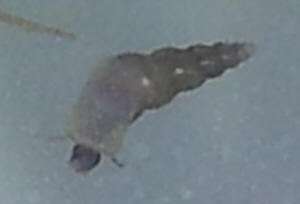
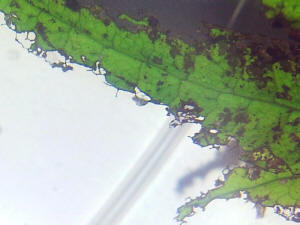
Here are some mug shots of the snails. If you don't really look you
might not know they're there.
<Most of these seem to be Melanoides spp.; they're harmless to healthy
plants.>
The one on the java is dead center and harder to spot. I use a
paper towel to wipe-capture as many as I can from the glass but some
still fall back into the gravel so restarting is the best option. Thank
you again! I'll take your advise and see if I can save this tank.
I guess if it works, thinking very optimistically, I'll need to drop
live food occasionally for the assassins?
<Nope. They're as much scavengers as predators, and need very little
extra food beyond the odd bit of fish food they'll find themselves. But
they aren't herbivores, so they don't eat plants.>
Maybe a little live food is ok for Mollies even though they're primarily
vegetarian.
Jill
<Cheers, Neale.>
|

 |
|
Pond snails...
stkg./sel. 11/5/11
My daughter brought home a pond snail from school that was raised in
our math & science center. Can we introduce this snail to our
established freshwater aquarium?
<No... are cold water organisms; not suitable for indoor use, and
too likely to harbor/vector disease... DO wash your hands after
touching. Bob Fenner>
Re: Pond snails 11/5/11
Even though our aquarium is not heated, it is keep at room temp.
<Even though>
Neritidae snails, FW, sel.
7/13/10
Hi, I have been looking for freshwater Neritidae snails. Can you please
tell me if you handle them or where to get them? Also, in the
information that I have been able to find about them, some say that
they will not multiply and others that they will. Which is right?
Thanks
Rod
<Greetings. Where to buy them depends on where you are. Here in
England they're quite widely sold in the bigger aquarium shops,
such as the Maidenhead Aquatics chain. Asking your local tropical fish
shop to get them in shouldn't be hard, but note that some retailers
haven't a clue what these snails are properly called, so it may
take some effort to connect the common names on his wholesaler's
list with the Latin names of the species you want to buy. As for
reproduction, most do not breed in aquaria. They certainly will lay
eggs, but the larvae are planktonic and in many cases float into the
sea to develop, and only return to freshwater later on.
Consequently these snails aren't easy to breed in captivity. There
are a very few exceptions, like the European species Theodoxus
fluviatilis, that can complete their life cycle in freshwater. But the
ones you see in pet shops, such as the African zebra Nerite Neritina
natalensis and the Indo-Pacific zebra Nerite Vittina coromandeliana
will not breed under aquarium conditions. Cheers,
Neale.>
Choosing a snail, FW, Apple admonition...
again 6/24/10
Hi,
<Hello,>
We bought a very lovely Apple snail, Carl, who was about an inch in
diameter. He seemed to be thriving for about a year and a half. He was
mobile and active a lot of the time and did a great job cleaning algae
and I suppose any food debris. I also made available to him (her?) the
algae pellets every few days or so and he also liked the shrimp
pellets.
<Indeed.>
Then one morning, he was dead. No signs of trauma. Just dead. I checked
the usual suspects (temp, chemistry, etc) and nothing was out of
whack.
<As I've stated here at WWM endlessly, Apple snails do not
survive for much beyond a year under most aquarium conditions. They
need an alternation of warm, watery conditions with a couple of months
when they're kept out of
water in damp soil. This replicates aestivation. If kept constantly in
warm water, they eventually "burn up". They are, generally,
poor choices for aquarium pets.>
I then read that the life of Apple snails is shortened by keeping them
in a common aquarium temp of 73 degrees.
<On the contrary, keeping them relatively cool for at least a few
months can be beneficial.>
So even though I wanted to immediately replace Carl, I didn't think
it would be right to knowingly place a snail in an environment that
would shorten his life.
<With Apple snails, you may as well treat them as disposable pets.
They very rarely live more than a year.>
Is there a non-pest snail whose life is not shortened in a 73 degree
tank?
<Oh, you could try some of the Nerite snails. They come from
tropical streams so do well slightly on the cool side provided the
water is briskly moving and has plenty of oxygen. Because they eat ONLY
algae, they will starve if the aquarium is too small, so allow one
large specimen (about 2 cm long) or two smaller ones (1 cm long) per
10-15 US gallons. They need moderately hard to hard water, and
won't live long in acidic conditions.
Alternatively, you could try Marisa cornuarietis, the Colombian
Ramshorn, which is very much like the Apple snail but does rather well
kept
underwater constantly. It's a very bad plant eater though!>
Thanks,
Jacki
<Cheers, Neale.>
Snail and Java Fern... sel., sys., Betta....
sys... 3/8/2010
Hi
<Hello,>
I have two questions. I have a Red Ramshorn Snail I bought about five
hours ago.
<Planorbis spp.; these are coldwater snails that don't last long
in tropical tanks.>
At first, he was coming out of his shell a little bit. I put him in my
four gallon tank with my Betta and now he doesn't come out. My
Betta hasn't touched him as I've been monitoring the tank.
<These two life forms aren't really compatible. Bettas need to
be kept at 28 C/82 F, or they eventually die. The snail will soon
suffer if kept this warm, and won't last more than a few
months.>
First time I put him in I accidentally dropped him but he landed on my
plant, so I don't think he got hurt?
<Unlikely.>
His shell seems to be fine. He is defecating at the moment. What's
wrong with the little man?
<Little snail, surely...?>
Also, my Java Fern looks like it has a white cottony- growth all over
the leaves and the roots. I was told to just wash it but I can't
get it all off.
<Likely fungus, a sign of organic decay in aquaria with poor water
quality and not enough water movement or filtration.>
It's not dying as there are other little plants growing on it.
<Actually, one thing Java ferns do when unhappy is to produce
plantlets at the tip of the leaves while the big leaves rot away. Java
ferns need at least some proper lighting, and won't live in tanks
without lighting. Aim for about 0.5 to 1 watt per gallon.>
I thought it may of been the oxygen shell that was in my tank as the
growths first started on the plants roots. I threw out the oxygen
shell.
<These are the white lumps in the shape of a scallop shell, right?
Useless products. No substitute for filtration.>
Is the plants problem connected to the snail problem?
<Review the environment. Both may be suffering for the same
reasons.>
How can I solve both? Any information will be greatly appreciated.
Also, my tank is not filtered or have a heater.
<You're keeping a Betta in a tank without a heater? Who told you
that was a good idea? They lied to you. Read here:
http://www.wetwebmedia.com/FWSubWebIndex/bettasysart.htm
Bettas are tropical fish. The word "tropical" means they come
from somewhere hot and sunny. A centrally heated home in the temperate
zone won't be hot enough. You MUST have a heater AND a simple,
air-powered
filter for this aquarium.>
It's just plain freshwater with water conditioner.
<Tap water with water conditioner is fine, but don't use water
from a domestic water softener.>
I also replace 10% of the water every few days with new, conditioned
water.
<No substitute for filtration.>
Thanks :)
<Cheers, Neale.>
re: Snail and Java Fern 3/8/2010
Hi
Thanks for the response :)
<Happy to help.>
I got the Betta as a present from somebody in a brandy glass. I knew
that this is an improper home for him so I got him the larger tank as
soon as I could. It is a round bowl as that is all I could afford
unfortunately.
<Won't live long. A few weeks if the house is warm, much less if
the house is cold. But not for anything like the two years or so they
should live for.>
I haven't been able to find any filtration, pumps, heaters or
lights that can fit or a suitable for my tank.
<Are available. A 25 watt heater should be fine for a 5 gallon tank.
A small air pump and internal sponge filter will be adequate for
filtration.>
I've searched many pet shops, aquarium specialists, I've asked
people and I've looked on many websites including eBay but I've
had no luck.
<Oh.>
I plan to get a rectangular tank and all these things as soon as I can
but I don't know how long this is going to take as I am a full time
student, not working and living on my own.
<I see.>
So is there anything apart from all the above mentioned that I can
do?
<Not really, no. Regular water changes will help offset water
quality problems, but even with clean water, the cold will eventually
kill the Betta.>
Also, my snail has moved as its fairly far away from where I originally
put him (from on top a leaf on the plant to close to a rock, he's
also the right way up, foot touching the ground). My Betta seems
curious, he stares at the snail and sleeps right next to him. He
doesn't flare up at him or look agitated or aggressive, he just
simply stays next to him. Would this be a good indication that my Betta
is OK with the snail?
<Yes.>
Cheers
<Cheers, Neale.>
Snails, sel., FW
2/13/10
Hello crew I am very confused... I have always wanted snails.
<Snails are fun. But you do need to choose carefully. Do start
reading, here:
http://www.wetwebmedia.com/plantedtkssubwebindex/snailsags.htm
http://www.wetwebmedia.com/FWSubWebIndex/fwinverts.htm
On the whole, you need to choose snails that won't harm your plants
and share the same requirements as your fish.>
I have researches them allot and know what they need well kind of.
<If you don't mind me saying so, you have an interesting way
with the English language.>
So the other day I went to Petco to see if they had any. Well they did
but most of them were dead from shipping so he found me 3 that were
still alive he thought. 1 was called a mystery snail and it was real
dark brown and
black. The other two where called golden Inca snails.
<Both varieties of what are generally called "Apple
Snails", Pomacea species, typically Pomacea bridgesi. Although fun
to keep, they do have very specific demands, and they don't mix
well with fish.>
Well I wasn't satisfied I wanted more than just three. So I
traveled about an hour to another pet shop. They had a whole bunch so I
got 2 blackish mystery snails and one that was called ivory mystery
snail and a golden mystery snail also a blue mystery snail. Well I am
happy with all of them but I want them to breed but I don't know
what species they are so I don't know if they will. So what are the
difference between these snails and will they breed together?
<Yes, very likely they will interbreed if all Pomacea bridgesi.
These snails need somewhat warm water in summer, cool water in winter,
and if kept properly will lay their eggs *above* the waterline in
raspberry-like egg masses. These hatch after a couple of weeks, and
miniature snails fall out into the water. In a filtered, well
maintained aquarium they're quite easy to rear. But overall, people
rarely keep Apple Snails alive for longer than a few months. Do take
some time to research their needs in terms of diet, temperature and
water chemistry. Cheers,
Neale.>
Re: Cleaning used equipment - follow up
question re: snails 9/2/09
Greetings - thanks for the advice below.
<My pleasure.>
I successfully cleaned all the components of the 55 gallon aquarium
with vinegar and it worked quite well. I hope to start the tank this
weekend and move the fish in 6 weeks.
<Very good.>
My follow-up question has to do with snails in the aquarium. At the
beginning of the pond season I purchased 10 Japanese trap door snails.
I think they have done very well and are about 1 1/2' in size.
<Sounds like you've done well with them. Viviparus malleatus
gets to about twice that size in shell length.>
My question:
How many of these snails should be brought in to place in the 55 gallon
aquarium with the 3 fish.
<Difficult to say... ten specimens should be fine though.>
If none of the snails should go in can I keep them in a separate
aquarium so they can go back in the pond next Spring?
<Yes, it's a very good idea to keep snails in their own aquarium
over the cold months. While Viviparus malleatus is tolerant of cold
water, you may want to remove a few of them late in autumn so you have
a starter population that could be pressed into service next spring
should the winter be so cold the snails outdoors don't survive. A
10-20 gallon tank with a simple box filter should be ample. Don't
overfeed during the cold months when these snails tend to be fairly
inactive.>
Thanks so much
<Cheers, Neale.>
Can and/or do Oto Catfish tolerate slightly
brackish water? 5/17/09
<No.>
I put about a tablespoon of aquarium salt per 5 gallons.
<Why? Adding salt at this concentration does precisely nothing to
make your fish healthier or happier. Utter waste of money, and
potentially harmful to freshwater fish in the long term.>
If not, what small algae eating fish does well in brackish
conditions?
<Best bets are Mollies and other Poeciliidae; algae-eating snails
such as Nerites; and salt-tolerant algae-eating shrimps such as Amano
shrimps. Most of the large herbivores like Scats will also eat
substantial amounts of
algae, though they're not normally used for algae control. As ever,
if you have an algae problem, the solution isn't fish but making
sure the tank is "balanced", in particular, that there are
enough fast-growing plants under strong light. Most algae problems
occur in unbalanced aquaria.>
Thanks
Hannah
<Cheers, Neale.>
Re: Oto Catfish and brackish water? 5/17/09
Hmm that's weird because I thought that Mollies do best with a
little bit of salt...
<They do. One tablespoon per 5 gallons doesn't make brackish
water, and neither does it do anything useful for freshwater fish.
Adding such a trivially small amount of salt is pointless. Mollies do
well upwards of 6 grammes per litre, which is about one level teaspoon
per litre, and one litre is 3.75 US gallons, so that's about 3.75
teaspoons per US gallon. Since one tablespoon is three teaspoons,
that's a bit over a tablespoon per gallon. You're adding less
than a fifth the amount needed to optimize Molly health. In other
words, you're not doing much of anything. Plain vanilla sodium
chloride ("tonic salt" or "aquarium salt") as
opposed to marine salt mix (what you use in a brackish water tank) only
raises salinity, which has some therapeutic value in terms of nitrate
toxicity. Marine salt mix contains carbonate salts that buffers the pH
and raises the carbonate hardness, improving the stability of
conditions in the tank, and this also helps Mollies dramatically.
Bottom line, you cannot safely keep Otocinclus with Mollies: to create
conditions that Mollies need for maximum health and longevity, you need
to add more salt than you're doing now, and that would be harmful
to most freshwater fish, including Otocinclus. Trust me on this: I
literally wrote the book about brackish water fish! Cheers,
Neale.>
Re: Oto Catfish and brackish water? 05/18/09
Thank you much! I'm going to put some more salt in and look into
the Nerite snails... Thanks again
Hannah
<Good-oh. Nerites work well in brackish water, especially Clithon
species; these eat a lot of algae! Cheers, Neale.>
Re: Oto Catfish and brackish water? 05/23/09
I went to my LFS and they didn't have any of the Nerite snails...
They just had "mystery snails."
<Not Nerite snails... Apple snails (Pomacea spp.)...>
I was told that they ate algae, but they were just sitting on the
bottom.
<Eat some algae, but hopeless algae-eaters in most aquaria, being
happier eating plants or fish food... also very difficult to maintain
in the long term. Most specimens die within a year; need a resting
phase in cooler conditions for 2-3 months per year. Generally fiddly;
leave in the shop, or at least read up on Apple Snails first, e.g.:
http://www.applesnail.net/
>
I was able to test how salty my tank was and it was > 1.000 I'm
not sure what that means...
<Nor am I; "> 1.000" simply means more saline than pure
water... but that includes the sea! Apple Snails not tolerant of
brackish water, so not an option for the Molly aquarium. You're
after a specific gravity ("SG") of 1.002-1.003 for Mollies;
see WWM re: Brackish water fishkeeping:
http://www.wetwebmedia.com/BrackishSubWebIndex/bracsystems.htm
>
I could add more salt and keep looking for those snails.
<Don't buy the Apple snails for this system.>
Just wondering: do Oto cats tolerate that?
<No.>
I know they can be very picky when it comes to water parameters... What
do you think is best?
<For Otocinclus, you want low to middling temperature, around 23-26
C; you want soft to moderately hard water, so 5-10 degrees dH is about
right; and pH 6.5-7.5 is fine. Water turnover should be medium-high to
high, so say 6-10 times the volume of the tank in turnover per hour.
Water should be clean, and the tank well established. Green algae MUST
be present in the tank, or else provided via substitutes such as algae
wafers; Otocinclus DO NOT eat diatoms (the golden brown algae on the
glass); hair algae; brush algae; thread algae; or blue-green algae.
They are not compatible with Mollies or other fish that want hard
water, let alone brackish water. The majority of Otocinclus sold die a
few weeks after purchase simply because their needs aren't met. If
you don't have the right tank for them, don't waste your
money!>
Also, I was told that the Nerites were hard to find ??? Is that
true?
<Not even remotely true in the UK; most good fish shops have them,
for around £1-2 a throw. In your own country may be different;
consult fishkeepers in your area. By far the best algae eating
snails.>
Sorry for throwing all these questions at you.
Thank you so much
Hannah
<Cheers, Neale.>
Snail Questions, Mystery, sys., sel.
04/21/09
Hello:
Great site! Now I just have to find the time to ready through it all.
So far I think it's the best one out there.
<Thank you.>
Background:
I am setting up a 10 gallon tank for the first time. I have a Mystery
Snail that I rescued from a Betta Bowl where he was being harassed. So
the snail will be part of my 10 gallon community. A friend gave me an
old
10 gallon tank, but nothing else. Researching what I need I thought the
"Eclipse 1" would be good, however I'm concerned about
how it works.
Tank Question:
I have not seen the eclipse 1 yet, but if the filters work from the
top, doesn't the water have to be topped off for it to work?
<Don't know this filter myself, but you should see a
"minimum" waterline somewhere on the filter. Usually, the
water is about keeping the motor from overheating more than anything
else. Anyway, if the water is below this line, it's unsafe.>
Don't snail need at least 1" of air space for their
respiration?
<Yes.>
Reference From: www.peteducation.com
Respiration: Snails of the Ampullariidae family have both gills and a
lung.
They use a siphon, much like a snorkel, which the snail can extend out
to the water surface allowing the snail to breathe while submerged.
Therefore, in an aquarium setting, there should be two to four inches
of open air space above the waterline to provide the snail with open
air to breathe.
The siphon of the Pomacea genus is typically longer than the length of
the snail's body.
<Contrary to what people imagine, Apple Snails actually aren't
good additions to fish tanks. There are multiple reasons, two of which
are the need for air and the tendency many fish have of nipping at the
Apple
Snails. But Apple Snails are also seasonal creatures that spend part of
the year in "hibernation", usually during summer when the
water level is low.
Without a resting phase, they simply burn out, which is why so few
Apple Snails ever get as big in captivity as they do in the
wild.>
Snail Health Questions:
The snail has not been looking good since he was being harassed. Now he
has a lot of white cloudy stuff all over his shell and a lot of gooey
stuff coming out of him all the time. He also is very inactive. Is he
dying?
<Quite possibly. Once damaged, Apple Snails are prone to dying,
which is why I recommend people keep them in their own quarters, away
from fish.
That way, you can control all the variables. Prevention is definitely
better than cure.>
Will it be safe to add him to the tank or is he too sick?
<I wouldn't; a lump of rotting snail meat wouldn't help
water quality one bit. Much better to leave it in a reasonably large
bucket (say, 3-5 gallons) with an airstone, and see what happens.
Assuming it's not too cold where you live, you might not even need
a heater.>
Any idea what is wrong with him and how I can help him recovery.
<Snail medicine is very much in its infancy! So far as we can tell,
Apple Snails are either in rude health or dying; there isn't much
in between.>
I've tried searching for the answers, but wasn't having any
luck and I want to get the tank setup this week if possible.
Thank you for your time & knowledge,
Phyllis
<Hope this helps, Neale.>
Re: Snail Questions
Hi Neale,
Your answers were very helpful - thank you for your time.
Phyllis
<My pleasure. Good luck!
Neale.>
Question about miniature freshwater aquarium
snails 01/09/09 I was wondering where miniature freshwater
aquarium snails come from. <Depends. Usually attached to aquarium
plants (sometimes as eggs) or less often as stowaways in bags of new
fish. Some folks, like me, actively go out and collect or buy snails to
add to their tanks; snails do little harm and much good.> One day, I
happened to notice a miniature, dark brown snail, about a centimeter
long in my turtle's freshwater aquarium. <Do look at Physa and
Physella spp, as these are the most common small brown snails in
freshwater tanks. Malayan livebearing snails (Melanoides spp.) are
typically green with very pretty red-purple markings.> Could they
grow by themselves? <Not from nothing, no.> Could they somehow
develop from the goldfish I bought? <Not as such, no. But they could
come in the bags your goldfish travelled home in.> I have no idea
where they came from, either someone put them there without me knowing,
or they grew from bacteria if that's possible... <It took snails
about 3 billion years to evolved from bacteria, so unless you've
had your tank set up a fair while, this particular pathway isn't
likely!> What do you think? <I'm a snail fan. Enjoy them.
They're fun and do some useful work scavenging and aerating the
substrate. They only multiply to plague proportions in dirty tanks
where there's stuff for them to eat. Remove any excess snails you
don't want, but otherwise keep the tank clean and your snails
won't do any harm.> Thank you for your help- Sincerely, Corinne
<Cheers, Neale.>
Malaysian trumpet snails... comp.,
sel. 12/18/08 Good afternoon, I don't have a
question but I wanted to share a problem I had with Malaysian Trumpet
snails. I used to have a 30 gal hexagon freshwater tank with some
tetras and snails. At a LFS, I saw in a tank a tiny Malaysian Trumpet
Snail and asked if I could take him home. After a couple of months,
they had taken over the tank. Some times I would pick them out and be
able to fill up a shot glass with them, and the next day it was like
nothing happened. Finally, I emptied the tank, and switched it to a
fish only salt water tank. I had I guess left a little water in the
bottom along with the gravel. I then filled it up with fresh water and
added salt. A week later, I noticed one trumpet had survived and was
climbing the glass. It had acclimated to the salinity of 1.023. I then
completely drained, rinsed, and started over again to never have the
problem again. Once you get them, unless you have a puffer, they are
impossible to kill, even with salt. Beware. Just wanted to give someone
a heads up if they were interested in them. <Hello Bobby. Melanoides
snails are misunderstood. They are neither bad nor dangerous. In fact
they do much good. Let's start with the basics: reproduction. Yes,
they're livebearers. Although individually not especially long
lived (likely less than a year) they are livebearers that can produce a
lot of offspring across their lives. Males are rare, and females can
apparently reproduce by cloning themselves without the need for males,
producing offspring parthenogenetically (like aphids). However, like
any animal, they can only breed when conditions are right,
specifically, if they have enough to eat. In clean tanks they breed
slowly. The dirtier the tank, the faster they breed. Note that a
"dirty" tank isn't necessarily a bad thing, and I'm
not talking about water quality here. Rather, anything edible,
including uneaten fish food, dead fish, decaying plant leaves, algae,
and fish faeces. Remove these from your tank aggressively, and
Melanoides snails will breed slowly. When it comes to controlling their
numbers then, the best thing is to simply limit the amount of food
available to them. Then their populations settle down to an acceptable
level, with births doing little more than countering deaths. There are
predators that will eat these snails happily. Pufferfish may be
examples, but also loaches and various catfish (if hungry) including
Synodontis and the various species we call "talking catfish"
such as Platydoras costatus. But the best predator is Clea helena
(sometimes called Anentome helena), a predatory freshwater whelk that
is increasingly widely sold in the UK at least. It greedily hunts down
these snails, and while it does breed under aquarium conditions, as a
predator it can only maintain much smaller populations than
herbivore/scavengers like Melanoides tuberculata. It's also rather
pretty and brightly coloured, and you can easily remove surplus snails
and share them with other aquarists. Why bother with Melanoides at all?
The answer is that it is an astonishingly good scavenger. If you have a
tank with a sand or gravel substrate, this is the PERFECT animal to
circulate through that substrate, removing organic wastes, and thereby
preventing unwanted decay. By cleaning up the substrate it reduces the
chances of pathogenic bacteria collecting in the substrate of the type
that irritate catfish and other bottom-dwelling fish, and it also keeps
the substrate loose enough that plants can dig in easily. I'm very
much with the authors of Baensch's Aquarium Atlas in viewing these
snails as a blessing, not a curse. Wild populations can consist of
thousands per square meter, but even in large numbers in aquaria, they
don't actually do any harm. Unlike the majority of snails they do
not seem fussed about copper-based medications, so there's little
risk of a mass die-off next time you're treating for Whitespot or
Finrot. As a "clean-up crew" for planted tanks they're
second to none. They're even safe with fish fry, though mixing them
with fish eggs is probably unwise. You are indeed correct in noting the
high salt tolerance of these snails; while freshwater snails, they are
known to inhabit brackish water at over 50% seawater salinity, and
likely will tolerate higher salinities for extended periods, though
likely not indefinitely. In other words, don't be too hard on these
snails! All they do is highlight problems *we* have keeping our tanks
as clean as we should, by converting waste organic matter into baby
snails. In a clean tank, they do little harm and much good. Cheers,
Neale.>
Malaysian Trumpet Snails 11-13-08
Hello All, Hope you are having a great day! <Hello! Yea,
wouldn't be so bad except for that exam tomorrow.> Recently I
read an article on your site about Malaysian trumpet snails and I had
made up my mind to use some in my aquarium after setup since it will
have a sand bottom. However; I have read in other places that the
snails will multiply to the point of almost taking over the tank, and
even though they do keep the sand stirred up, they do not eat the fish
poop, causing it to fall farther into the sand when stirred up. Please
give me your feedback on this. Also, I have planned on getting at least
6 or 7 of the same species Cory. Would they do just as well keeping the
sand stirred up, and do they eat fish poo? thank you for all your help.
You have been a lifesaver so far in helping me get this tank set up. I
had a tank a few years ago, and it seems everything I knew (or thought
I knew) I have forgotten. As I am getting older I think senility is
setting in. <Well, I personally have had problems with snail
populations in my tanks. But, never with Malaysian trumpet snails, only
with Ramshorn snails. You would have to be careful about introducing
them in you tank considering populations will get out of control. They
do keep the sand stirred up and I know the snails are scavengers but I
am not sure about the fish waste consumption. The Corys are strict
scavengers and will not eat the fish waste, so your best bet is to try
a few Malaysian trumpet snails. If they get out of control give some to
friends or sale them.> Have a great day!! James <You are welcome!
Merritt A.>
Malaysian Trumpet Snails Part II 11-13-08 Thank you. Do you
feel that if I do not go with the snails and have about 7 or 8 cories
in a 75 gallon tank that they will keep the sand from compacting? And
lastly, I am only going to have artificial plants so I was thinking of
starting at the back with no more than 1 inch of sand and sloping it
gradually to the front. Does this amount of sand seem adequate? Thank
you again. James <Hello again! That many Corys should be just fine
for the sand. Also, with my 75 gallon sand bottom tank, when I do a
water changes I just run my fingers slightly through the sand to help
my group of Corys out and it helps with the compacting. You might want
to have a little more sand in your tank. I would go with at least a 1.5
inches in the back and .5 inch or more in the front. You don't want
to have to worry about adding more because it can get messy. You are
welcome again! Merritt A.>
Malaysian Trumpet Snails Part III 11-14-08
Thank you Merritt, and just curious (not disagreeing, just learning)
why do feel I need at least 11/2 inch of sand in the back?
<Not a problem. You can have less, I think in my 75 only has 1 inch
in the back to be honest. It is just when designing a tank the back
should be higher than the front to give an illusion of more space. You
can easily
put just an inch. You are welcome again! :-) Merritt
A.>
Malaysian Trumpet Snails and Male to Female
fish ratio 11/04/2008 Hello all, Hope things are going well
for you today. Kind of gloomy and rainy here. I am considering adding
some Malaysian trumpet snails to a 75 gallon fw aquarium. I have read
of all of the benefits they can provide, but do I have to worry about
them not getting enough detritus for their food source and dying?
<No risk at all. In fact overfeeding is why people end up with crazy
numbers of these snails. In a clean tank you basically get a healthy
constant number limited by food availability.> Also, I have read
that if this type of snail dies there is no requirement to remove it as
it will not foul the tank. Is that correct? <Pretty much.> My
other concern is with male to female ratio of certain fish. I am
planning on stocking my tank with gouramis for a slow moving fish to
occupy the top as well as banded rainbowfish for the middle. Please
tell me how many males to females of each of these I need please.
<Rainbowfish are best kept in equal numbers of males and females.
The ratio of Gouramis depends on the species. Colisa spp. are often
kept in pairs without problems, and the same can be said for
Trichogaster leeri and Trichogaster microlepis. Trichogaster
trichopterus is a bit more tricky; males are quite short tempered.
They're best kept one to a tank, with as many females as you want.
In a big tank you could keep multiple males, but make sure there are at
least twice as many females.> Thank you so much for all you do to
make aquarium life better for people like me. James <Happy to help,
Neale.>
Magic
Snails, FW, sel., ID 10/5/08
Hi WWM,
<Hello,>
I've looked over all the FAQ pages, and I haven't quite found
what I'm looking for, so I resort to asking you. I have a 75g reef
tank as well as a 30g freshwater tank. I've noticed over the past
few weeks that I have dozens of what appear to be Cerith snails in my
freshwater tank.
<In the freshwater tank at least, these are likely Melanoides spp.
(such as Melanoides tuberculata). They're useful, predominantly
nocturnal snails that burrow through the sediment feeding on organic
matter. They are livebearers, and can become very numerous if they find
enough to eat -- a comment on the cleanliness of the tank more than
anything else! They don't do any harm, and numbers can be
controlled by physical removal, trapping, cleaning the tank, or
installation of a suitable predator such as the whelk Clea
helena.>
The tank has been established for several years, with nothing being
added in the past 2 years but fish. I've let all of the ornamental
fish complete their lifecycles, and I only have one Pleco and a few
feeder fish for my fuzzy lion (I'm weaning him off successfully,
but he's taking his time). I've had a ton of Cerith eggs in my
reef tank, is it possible that they hitchhiked on the net while in the
plankton stage, and developed in my fw tank?
<It's certainly possible for certain intertidal or estuarine
marine snails to survive in freshwater conditions, for example Puperita
pupa and Neritina virginea. These are sometimes sold as freshwater
snails despite doing better in brackish/marine conditions. They
don't tend to breed in freshwater tanks though, because their
larvae need saltwater conditions to develop. This said, most snails
sold for reef tanks will be stenohaline rather euryhaline
species.>
I can't think of any other place they could come from.
<Plants.>
If this is the case, is there any way of re-acclimating them to
saltwater? Thanks for your
help.
Ryan
<Cheers, Neale.>
|
Nerites Snails in
Canada? 11/13/07 Hi guys and girls, as always I really
appreciate your work and help! <Good> Wondering if you know
where I can find Nerites Snails (Freshwater or Saltwater) in
Canada? I have tried to get some shipped from the United States,
but they will not ship them up here anymore. My LFS have never
even heard of them. I once got a shipment from Arizona Gardens,
and they cleaned the algae on my glass like nothing else. Thanks
so much for your help. Deryck <I saw them at the Big Al's
locations in Toronto last year... Are there any locations near
you: http://bigalscanada.com/storelocations/storemap.htm Bob
Fenner>
Re: Nerites Snails in Canada? Converting FW to BR... not
all 11/14/07 Thanks, they had closed down a
while ago, but looks like they are reopening! I will give them a
shot when they are open for business. <Okay> I still have a
few freshwaters Nerites, I have researched and heard they may
breed in brackish water. Think I can give it a shot to acclimate
them to brackish? <Not if they're totally freshwater
species. Please read here:
http://www.google.com/search?q=freshwaters+Nerites&rls=com.microsoft:en-us:IE-Address&ie=UTF-8&oe=UTF-8&sourceid=ie7&rlz=1I7PCTA
The first couple citations> Thanks again for your help. Deryck
<Welcome. BobF>
|
| Ramshorn Snails.
Sel... 10/21/07 Hello, I came across your
site today and found it very useful. But after reading up on the
snails, I was left with questions. Recently (maybe about 2-3 weeks
ago) we got a 10 gal. fish tank and put in 2 live plants, 2 male
guppies, 2 balloon belly mollies, and 4 neon tetras. <Hmm... be
careful with this selection of fish. Mollies often (if not always)
get Finrot and fungus when kept in freshwater aquaria. But while
adding marine salt mix makes them much much hardier, Neon tetras
don't like salt at all.> Within a week I found this big
snail (he's big for popping out of no where, he's probably
like 1/4 of an inch). He must have been an egg on the plants,
because I inspected them very well and they didn't have a live
snail on them. We Googled and found out it was a Ramshorn snail.
<Can't confirm that from your photo. Could be Planorbis sp.
certainly, but Physa sp. "tadpole snail" is possible
too.> Suddenly I have counted up to 6 snails, and today I found
a baby fish (I think its a tetra- but it is tiny, black with orange
on it's head). <Many snails will breed freely in aquaria.
Controlling snail numbers can be tricky if you let things get out
of hand. They primarily turn uneaten food and decaying organic
material into snails: control the food and remove algae/organic
wastes, and the snail population stabilises. The baby fish could be
either a Molly or Guppy. Guppy babies are smaller.> My question
is where in the world are all these new creatures coming from?
<From their parents.> I look at that tank everyday and have
yet to see any eggs in there, but I keep getting new little snails.
<Snail eggs aren't always obvious, and some are viviparous
anyway, i.e., they produce baby snails, not eggs.> Where could
the eggs be hiding? <Usually on the glass, but can be elsewhere,
even inside pipes and filters.> I thought they liked to lay
their eggs out of the waterline? <No, that's Apple snails
and their relatives.> I attached a pic of the first one on the
glass with some tetras in the background.:D Thanks for your help!
Ashley <Do take care to control snail numbers before you have
problems. Snails are a fun addition to any aquarium, but in large
numbers they can be unsightly. Some species eat plants as well.
None are a threat to your fish. Cheers, Neale> |
|
|
Snails, FW, sel., contr. 09/08/07
Hi crew, The other day, Neale gave me some advice on keeping my sand
'safe' for my freshwater tank. It was suggested that Malayan
livebearing snails would be good to keep the sand aerated and to eat
debris, etc. It's just a small 6gal., and so far just two fish. So
I've done some reading, but here's my questions. If I get the
Malayan snails, seems they'll reproduce prolifically; will they eat
up all the algae? I'm worried that my Otocinclus won't have
enough to eat if this happened. Also, being that they would reproduce
so much, do they contribute to the bio or waste load much; or is it
negligible? Thought I'd ask since my tank's so small. Lastly,
would the water condition needs differ much from the Oto? Thanks so
much! Vanessa <Hello Vanessa, Malayan livebearing snails (Melanoides
spp.) do have a bad reputation among some aquarists, while others
consider them a blessing. I fall into the latter camp. Here's why.
Melanoides turn organic material into snails. They don't eat
gravel, they don't eat sand, and they don't eat live plants or
fish, EVER. So if the Melanoides are multiplying, they only do so
because there's "stuff" in the tank for them to eat. That
might be uneaten food, it might be decaying plant leaves, it might be a
dead fish, or it might be algae. Provided you keep the tank free of
those things, the snails won't multiply very much because they
can't. In a clean tank where all they have to eat is algae and tiny
amounts of organic detritus, they just don't become a problem. They
may be breeding, yes, but they're dying too, so you end up with a
more or less steady population. It's in messy tanks where people
have inadequate filtration and overfeed their fish and don't remove
dead plant leaves that the snails become problematic. Even in large
numbers though, they don't do any harm, and removing them isn't
especially difficult. You can buy little snail traps for about $5-10
(it's called the JBL "Limcollect") and you could use one
of these every six months or so if you thought things were getting out
of hand. Some folks make their own lobster pot-type traps from small
plastic cartons and the like. Since the snails crawl onto the glass at
night, it isn't difficult just to turn the lights off early one
night, and then wait for the snails to emerge, and then scrape them off
with a net or suck them up with your siphon. It's no big deal. But
really, I leave them to their own devices. No, they won't
out-compete you algae-eating catfish, and no, they don't add much
to bioload on the filter. On the plus side, they ensure there's no
anaerobic decay in the tank and they help aerate (if that's the
word) the substrate encouraging good plant growth in the same way
earthworms do on land. They are also very good "early
warning" monitors: if you see them on the glass in the daytime
making a bee-line for the surface of the tank, it means you have a
problem. As far as water chemistry goes, they're not fussy. In
soft/acid water they tend to reproduce very slowly, which may or may
not be a good thing depending on your needs. I'll also add that
they are extremely pretty little animals. Take a look at one close-up:
they have beautifully sculpted shells with red and purple markings. If
they were rare and difficult to keep, aquarists would covet them... but
because they're so easy to keep, we scorn them. Strange. I hope
this helps, Neale.>
Goldfish and Suckerfish
8/7/06 Hi! <<Hey, there. Tom this
afternoon.>> I currently have 3 small goldfish, and lately there
has been some algae growth. Is this due to the cycle of the tank,
because it has recently matured? <<One of the signs of a cycled
tank is algae growth so I would say this is more than likely the
case.>> I was wondering if there was any types of algae-cleaners
that I could buy to put in my tank. I have read that the common Pleco
will suck on the goldfish. Are there any other types of suckerfish that
would get along with goldfish? <<Your information on the Common
Plecostomus is correct. Unfortunately, there aren't any of the
so-called Algae Eaters that will do well in a Goldfish tank. Very few
fish will, which is why it's recommended that Goldfish stay
segregated with their own kind. What you might look into, provided
it's aesthetically pleasing to you, is the Olive Nerite snail
(Neritina reclivata). I'm not a "snail guy" myself but
these critters are used by many aquarists to control algae (something
they do very, very well by all accounts).>> Thanks!
<<You're welcome. Tom>>
<http://yatfs.com/new_page_11.htm>
Snails, Wherefore art
thou? 7/30/06 Hi there. <<Hi, Norma. Tom>>
Just a quick question. I have just cleaned the fish tank out and I
found two small snails in the ornamental castle. I have discarded them.
Have I done right and, where on earth have they come from?
<<Chances are that the snails you "inherited"
wouldn't be overly helpful, or harmful, to your tank, so it's a
matter of personal choice as to keeping them around. These, nearly
always, "hitchhike" on live plants. A "bath" in a
weak solution of potassium permanganate for 15-20 minutes prior to
introducing plants into the aquarium will take care of the eggs/snails
that have come along uninvited.>> Thanks Norma <<You're
welcome. Tom>>
Baby
Snails - 04/27/06 I have an 80 gallon tank that contains
three Plecostomus, one rainbow shark and two Oscars. I have
not introduced any new fish in over 6 months. The only thing
I feed the fish is frozen brine shrimp gumdrops. Recently I
noticed what appear to be tiny baby snails. They stay on the
bottom of the tank or on the glass. They have suction cups
and small cone shaped shells, in dark brown. Where did they
come from? Occasionally we fill the tank with a garden hose
passed through the window. Could this be where they came
from? <they could have came from anywhere, they are nothing to be
worried about!, IanB> <... Ian? Likely were introduced with some
of the shipping water when you placed the new fishes. RMF>
Thanks for your help.
Sally Rosenfeld Snails in Livebearer Tank -
2/4/2006 Hi Bob, <<Lisa writing tonight.>> I always
wanted a healthy planted, livebearer, tank. <Sounds great.>>
This is 15g tank with mollies, platies, swordtails. It was cycled by
"fishless cycling" , and I have not lost a single fish since
last six months when this tank was set up. <<Good stuff!>>
Well the problem is that the living conditions in this tank are so good
that it is now having lots of unwanted guests "Snails". I do
not want to use chemicals. <<I wouldn't either.>> I
read that loaches eat snails, but right now, they are not available at
LFS. Do bettas eat snails, <<Not usually.>> can they be put
in this tank? Any other method? Picking them manually is very tedious
and stresses the fish, which I want to avoid. <<Search on WWM for
tricks to catch them. Know that where there are snails,
there is snail food.>> Thank you Sandeep Raghuvanshi
India <<You're welcome. Lisa. Canada.>>
Snails Lots of snails 9/28/05 Hello!
Your site has been helping me the site has been helping me a lot with
my current aquarium "experiment". Thanks for the
time and effort spent doing this. <It is for you...> To explain a
little bit about my experiment: I have kept several
community tanks during my life and even a 20 gal reef tank at the age
of 12 through 15 that died abruptly when my little sis' decided
that pennies would be a good decoration. <Yikes... not good luck>
Recently I have taken a fancy to the idea of a more beautiful looking
tank. To achieve this I wanted to go small and heavily
planted 5 gal. 20+ plants. I am using a pH monitored CO2
system and a 4x overdriven 8 watt T5 5500K light. (by the way it needs
to be trimmed at the very least once a week.) <I see> I have: 2x
Otocinclus mariae 3x Aphyosemion australe 1m 2f 10x Caridina serrata
(cherry red shrimp) <Very nice> I also have (uninvited): at last
count, 450 baby Ramshorns and pond snails. I skipped the dip thinking
that nothing bad could happen. <Uhhh> So I have built a snail
trap with a 35mm film canister I bait it with blanched zucchini and
pull out around 35 - 40 snails over the course of a day. The
holes to the trap are too small for the Otos and they sit staring at
the canister all day like the cat stares at the tank. <Heeeee!>
Now for the real questions: My snail removal plan is to remove any and
all adult snails. I thank that part is done
now. And then to keep trapping for the babies until they are
gone. I would like to know at what size these snails reach
maturity and start reproducing, so that I can remove those (mature
ones) by hand as soon as I see them. <Am guessing, but likely about
the size of your fingernails...> Also: After I get this mess cleared
up I am interested in introducing Melanoides tuberculata, (Malaysian
Trumpet snail) as a soil maintainer. <A wonderful animal... but...
just as improbable to remove...> I am worried about their
prolifictivity. <Neat word!> I was planning on baiting for the
young of these once a week once they are established. Would
that be too often or am I risking another population explosion? <As
burrowing animals... Might I suggest a change in your experimental
stocking? To Mystery Snails... easier to control population-wise... Bob
Fenner> Thank you much for any help.
Healthy Snail Search - 08/12/2005 Hi Robert,
<Actually, Sabrina here, in his stead> I enjoyed your snail
articles, and noticed you've mentioned farms in FL that supply
parasite free snails. Do you have any company
names? I'm having a heck of a time finding any on the
net... I'm looking for snails that reproduce and grow
quickly, about the size of a dime. Any recommendations?
<Try here: http://www.applesnail.net
- in addition to more snaily information than I've ever seen
anywhere, they also have a discussion forum, where you could perhaps
meet others who have what you're looking for.> Thank
you, Karen Sprague, Baltimore, MD <Wishing you
well, -Sabrina>
Garden Snails Aquatic? 7/22/05 Hi there, I
love your site! I visit often and would like to thank you for all your
very useful advice. I have a question for you. Today a friend of mine
at the local grocery store found a snail cruising around the back room,
produce department and offered it to me for my fish tank. <Be on the
lookout when you buy your tomatoes next time...> My problem is.. I
don't know what kind of snail this is, and I have a tank in which I
just added some aquarium salt to yesterday. ( which my guppies are very
happy about) So I'm worried the salt will harm it. <Aquatic
snails have no problem dealing with salt. However, it does not seem as
if this one was aquatic. If it was found on dry land, leave it on dry
land, don't stick it in water.> I looked online and think it may
be a garden snail, if it is, can it survive in an aquarium?
<Doubtful.> Right now its in a fish bowl with some cabbage and a
tiny bit of water, until I find out what to do with it. I'd like to
keep it, the kids adore it. So any advice on what kind of snail this is
and how to care for it would be very much appreciated! Thanks in
advance. (Picture is attached.) <I'm sorry, I didn't receive
any photo, so I really cannot help you there. However, Google is magic:
do an image search on Garden snails, see if it matches your snail. If
so, switch to a web search and start reading! Mike G>
-Gina
Snails for Bug Tank Hi, I just started a 10
gallon tank for predacious water bugs. Right now I only have ferocious
water bugs (Abedus herberti) in there but I would like to add some
other non-fish animals/bugs to my collection. I want to add a snail to
the mix, but I am afraid that 1, snails will take over the tank, and 2,
parasites from the snails will hurt the water bugs. The ferocious water
bug supposedly will eat snails, which has led to another problem; I can
only get a large snail for the tank. I live in southern New York and
know of a pond where there are these really big snails (about 2
inches). I would love to put one of these in the tank, because I know
the bugs won't eat them and they look cool. I was wondering what
you thought about this. I've read that the parasites can be harmful
to fish, but are they to water bugs? < Bugs in general have a pretty
short life span and probably over winter as eggs so I wouldn't
worry about parasites on your bugs.> And another question is: what
kind of snails do you think they are. And how do they reproduce?
< My guess is that are black mystery snails released from an
aquarium. There are males and females. They will mate and the female
will lay a clutch of eggs outside the water. Usually on the inside lid
on the tank. They will stay there for about a month. After that they
will hatch and fall into the water where they will become food for your
bugs.> They are large, usually black (that's all I've ever
found), have a trap door, and are more blunt, not conical. Thank you so
much for the help. Jeff Osborne < You could always buy some snails
at a local fish store. This way you will know exactly what you
have.-Chuck>
ABOUT SNAILS Do you think it's ok to put a
snail that we find outside in our freshwater tank with our fish and if
so, what should we feed it? <tough to say from your general
question. If the snail that you find is terrestrial... then definitely
no. If it is aquatic but you live in a temperate climate, the answer is
still no. The truth of the matter is that it is generally a bad idea to
capture wild animals indiscriminately for captive care without correct
identification of the species needs/husbandry and quarantine. There is
a very real risk of introducing a fatal disease to your fishes by such
random introductions. Kindly, Anthony>
Where did they come from? I HAVE HAD AN
AQUARIUM FOR TWENTY YEARS NOW. ONE DAY I DISCOVERED A SNAIL IN THERE.
NEVER HAVE I NOTICED SNAILS BEFORE. WHERE DO THEY ORIGINATE FROM?
<If freshwater, from live plants mostly likely. If saltwater, from
liverock.> THE FISH FOOD WAS MY FIRST THOUGHT. ALGAE WAS MY NEXT.
WILL THEY HARM MY FISH? <No> HOW DO I TAKE CARE OF THEM IF THEY
ARE GOING TO BE IN THERE? <They generally take care of themselves.
-Steven Pro> <P.S. Please do not write in all
capitals.>
Re: SNAILS!! HI Ronni, boy were
you right... <Drat, sometimes thats not a good thing!> This
morning I woke up and there was a snail moving about on my driftwood-
from your website it looks like a Ramshorn. Now its small, but hey,
don't want it there. <I dont blame you!> The driftwood did
come with a note saying it was 'live driftwood' <Oops, this
may not be a good thing unless you want little crustaceans in your
tank.> and I've seen little mollusk looking creatures on it from
time to time, and I think I actually caught another snail and pulled it
out- it was black. However, I guess since I didn't QT plants (the
Bacopa and the Mondo grass)- even though I washed it sooo well--I
thought- there was a snail this morning I tried to 'get
him' but he was pretty quick <My guess is that you probably got
snails from both the plants and the driftwood.> and I didn't
want to upset the Amano (who as you predicted are ok--up and out
munching on driftwood this morning)- <Glad to hear this part
anyway!> So is it true that snails are like mice, you really never
have just 1? <Unfortunately yes. Freshwater snails multiply like
crazy.> If yes, how do I get rid of him? I looked at fish called Yo
Yo loach, but they say it gets up to 5 6 inches, too big for my tank.
Is there another smaller (like 2-3 max) fish to eat snails? Or should I
let it go for now? <There are several smaller fish that eat them but
not really any that will work in your system (Bettas, Puffers, etc). I
would go get one Loach, either a Clown or a Yo-Yo and let them do their
job for a while. Fortunately, the Loaches do seem to grow fairly slowly
so if you keep one for a few months and then trade it back in you
should be fine.> NEVER AGAIN no QT!! <Im glad to hear this but
sorry that you had to learn it the hard way. But its better that you
found out from snails than from a disease like so many people do.>
Also, my otos survived their first night-- they are small, smaller than
the Rasbora and white cloud and the fish were circling around them and
freaking them out, but everyone seems on today. I figure if otos make
it through weekend, they won't 'die'- read they do
sometimes. If they are happy for about 2 weeks, then can I
add either rummy nose tetra (2) or the cherry barbs? <If possible,
it would be best to wait about 4 weeks.> And if I get a fish that
eats snails, I guess I'll get it and omit the rummies- arghh.
<Youll be able to add the Rummynose Tetras once your snail problem
is taken care of and you trade the Loach back in.> Thanks for help,
have a GREAT weekend, Best Rosa <Hope you have a great one too!
Ronni>
Can I Release Snails into a Local Pond? To
whom it may concern: <Hello there> I searched via Google, but I
could not find an answer to my question. I apologize if it
has been asked and answered previously. I bought some plants
for my fish tank. Unbeknownst to me, some snails were
attached to the plants. About one month ago, my fish died. I
am not going to buy another fish, so I wondered if there was a safe way
(safe place) to release the snails. Certainly, I do not want
to kill them, but I do not want to keep a tank filled with
snails. Can you help? Thank you. Pete <Can help. It
may seem cruel, but please DO NOT release the snails (or anything live
for that matter) into any natural environment... Not only for the sake
of not causing competition with local species, but snails in particular
are very common vectors (carriers, hosts) for many, MANY parasitic
diseases... of fishes, invertebrates, even humans. Far better to place
them in a plastic bag, put them in the freezer (this is painless) and
dispose of them in the trash later. Bob Fenner>
Snail Stocking Hello again, Sorry to bother
you with what's probably a simple question, but I can't seem to
find a set answer on it anywhere else. I was wondering, is there any
set rule as to stocking mystery snails in a tank? I know the
'1" of fish per gallon' rule (and the surface area rule,
and...) but how should mystery snails of this species be counted in
regards to the tank's bio load/stocking levels? <Well, honestly,
I was not to sure either so I checked with Bob for both of our
benefits. "I think about one per five gallons of any of the common
species is "about right"." You could also try
starting with 1 per 5 gal, then slowly adding more and testing your
water quality.> So far the only advice I've been able to find is
one individual who doesn't think they add much bio load since their
nitrate levels haven't changed since adding two to their 10g Betta
tank, and another who has about 40 small ones in a 1 gallon container
with a 60gph filter and air stone. <I am willing to be
40 snails in a 1 gallon container will be hard to maintain in the long
run.> I know the snails produce a lot of waste, but they (at least
the ones I currently have) also seem to do a good job of roaming the
tank cleaning up leftover food and dead leaves (and have left my
various live plants completely alone, other than occasionally using
them as ladders) that might otherwise pollute the water. Also given
they get some of their oxygen from the surface. (It's weird
watching one of them crawling up a wall, air siphon extended :) )
<CHARGE!!> Thanks for your time and any advice you're able to
offer, I'll likely pass it on to the two forums I posted this
question on (Aquamaniacs and Applesnail.net) for the folks there as
well. <Hope it helps, keep a record of your trials and tribs for
others benefit as well. Best Regards, Gage>
Snail Stocking Part Two Hello again, Thanks
for the response, I've got two in the 10 gallon right now (I had a
regular brown one in there, what I've seen called the
'wild-type' shell pattern, then saw a little blue one shoved
into one of the 'Betta cups' at Wal-Mart the other day and
decided it needed a home). The only other one I'm possibly planning
to add in the future is maybe the one from my 6g African dwarf frog
tank if any water problems develop there. So far no problems with the
10g since adding the second mystery snail, other than slightly elevated
nitrates (25 rather than 20), but I think that's likely due to
overfeeding of the bottom feeders, or my trimming back a lot of the
anacharis that's in there. I'm going to try adding a little
duckweed (I know, it takes over tanks. I read somewhere about someone
making a 'corral' with airline and airline clips to keep it
within an area of their tank. So I'll see if that works.) to pick
up the extra nitrates. Plus I heard there's a chance the mystery
snails might like to nibble on it. <Duckweed is an excellent way to
suck up excess nutrients.> I'll let you know if there's any
problems with either level of snails in the future. On a different
topic, since WWM's amphibian area is a bit sparse right now, I
thought I'd offer the following feeding idea, if you'd like to
post it: One of the biggest problems I had with African
dwarf frogs was trying to get them to eat before their food (frozen
bloodworms) fell between the gravel, resulting in hungry frogs and food
polluting the water. So as a solution, I got a plastic water bowl from
the reptile section of PetSmart and half buried it under the gravel.
The plastic's a single piece of unpainted molded plastic, so I
figure it should be safe to use. Now I just squirt the defrosted
bloodworms (mixed with water from the tank) into the bowl with a turkey
baster. The frogs swim right over and start feasting, they've also
taken to trying to nip at the turkey baster if it's in the tank
since they've figured out that's where food comes from. Posted
this idea on a few forums and the regulars seemed to like it, so
figured I'd pass it on incase it's of use to any of WWM's
regular readers. <Great idea, I have heard of something similar for
feeding Corydoras live worms that dig into the substrate before the
fish get a chance to eat them. Thanks for the info, best of
luck, Gage> Thanks again,
-Chris
New Betta! 1/14/04 <Hi,
Pufferpunk again> Thank you so much for the advice! <You're
welcome, happy to help.> Today I bought Tate, a blue and red Betta.
<My favorite colors for Bettas> He seems happy and energetic in
his new home, and he's eating 2 pellets of food twice a day. In a
few days I am going to look for a snail to live with Tate. (I would
have gotten one today, but none of them looked very healthy at that
particular store.) <Yes, make sure you get a healthy
one. Nothing fouls a tank worse than a dead
snail. Phew! If he doesn't move for a while,
take it out & press lightly on the "foot". If
it has resistance, it's still alive. If the body caves
in, or it smells bad, it's not.> Basically, I am wondering what
I should feed the snail, and if I should move it into the tank the same
way I would a fish. I've never had an aquatic snail before, so this
should be quite an adventure. <It wouldn't hurt to acclimate
your snail. Whatever your Betta eats, the snail will eat,
just make sure he gets some.> Thanks again! -Kathryn <Enjoy
your fish!--Pufferpunk>
Canister filter Qs + tank setups
Hey WWM Crew, <Jamie> A big ol' Thank You! to Gwen for
answering my last email (the one below this one). It helped me picture
what's happening with the canister filter. I'm sure it'll
all be crystal clear once I bring one home, lol. I'm also hoping
that the plants won't become snail food, hehe. The snails are
Pomacea bridgesii effusa Apple snails, the ones that do not eat live
plants and safe for the planted tank. They haven't eaten any of
mine for the year or so I've had 'em so I think I'm in the
clear, lol. <We'll see> Anyway, I have indeed pondered more
and more about my setup with the 20Ls. Since putting them together with
one canister filter is not a good idea, I've been thinking what
would. Maybe two Whisper power filters, but I am afraid that the water
turbulence may be too much for both inhabitants and plants, and that
they wouldn't bring up much of the snail mess. <These are
actually a good choice... not too turbulent...> Then I thought maybe
sponge filters would work but wouldn't I be compromising space for
my plants and the snail mess might still pose a problem. Any
suggestions??? I'm open-minded and all ears :) <I would go with
hang-on, outside power filters> Also, I've looked over more of
the Eheim canister filters and found the Ecco Comfort Plus Filter 2232
and 2234. Is this a good one or should I just stick with the Filstar
for either the 30 or 33L?? <I prefer the Ecco products over the
Filstar> Sorry for all the questions, figured that while you're
all available I should ask the pros everything I can ;) And,
as always, thanks for help, it is greatly appreciated :) ~ Jamie
<Bob Fenner> Snails and Planted Tanks Hi! I would like to
add a single already grown Pomacea bridgesi (mystery) and one
Melanoides (Malaysian trumpet snail) specimen to my heavily planted
tank. I'm afraid that they could already be fertilized when I bring
them in the aquarium. <Me too> How much time can it take between
fertilization and time to give birth/lay eggs? In other words, how long
should I quarantine them to be sure they wont lay eggs or give birth in
the display tank? Thanks! Dominique <I would wait a good two months
here. Bob Fenner>
Mollies and Snails WWM Crew,
First, I must say your site has been very informative. I've learned
so much! I have read plenty about Mollies etc, but I have a couple
concerns re: my mollies. I currently have 3 of them. 1 silver molly
(M), 1 silver lyretail (F), and black molly (F). My concern is with the
two silver mollies. I did read that it is not uncommon for the male to
chase around the female trying to breed. However my male is NONSTOP
harassing the other silver female (she's pregnant too), and rarely
messes with the black molly. Is there a special reasoning behind that?
<Mmm, no... or not really. Some males are just like this... having
more females, more "other" fishes, plants, other decor to
break-up the physical environment... helps> I am worried that he
will just wear her out, but I don't want to stock my tank with more
females as I am already taking care of 16 fry as it is. Any ideas on
the best way to handle this randy boy?? hahaha <Isolate him... at
least for a while... perhaps in a floating, plastic colander if you
don't have another tank> Second question... When is it safe to
put the fry back into the larger tank with the adult mollies without
the risk of them being eaten? <When they're "big
enough" to not be consumed> I have 2 that are about a month
old, but I don't want to take them out of the net too prematurely.
The others are only a day or two old. Do you judge based on size? or
age? <Size> And lastly (are you sick of me yet? haha), about a
week and a half ago I noticed a small snail in my tank. Have NO IDEA
how it got there as I sure didn't buy one from the store!! Then,
when doing a water change the other, came across ANOTHER one that was
twice it's size. I'm assuming it was under gravel somewhere
because there's no way you could miss it otherwise! How do I know
if it's ok to keep in the tank and breeding of snails etc?? I do
NOT want more snails!! I have looked at the info on this site re:
snails, and haven't come across one that looks like mine. Is it
better to wait till they're more grown to determine the type of
snail? And just out of curiosity... any ideas on how snails got in my
tank? <Come in... with fish purchases in the water, some live
foods... can be eliminated in a few ways, but not likely a problem...
perhaps a help in keeping your tank clean... Not harmful to your
fishes> Is it possible they hitched a ride on the fish as tiny lil
thingies on them? Sounds crazy but, I have no other clue as to their
appearance! Thank you so much in advance for any help you can
give! I will continue to research your site for more information.
It's a great tool!! Sarah <Thank you for being part of it. Bob
Fenner>
|
|