|
FAQs on Freshwater Worm Parasitic Diseases:
Leeches (Hirudineans)
Related Articles:
Nematodes, Flatworms, Anchor
Worms and Other Worm Parasites of Freshwater Fish by Neale Monks,
Freshwater Diseases, FW Disease Troubleshooting, Ich/White Spot Disease, Choose Your
Weapon: Freshwater Fish Disease Treatment Options
by Neale Monks, Invertebrates for Freshwater
Aquariums by Neale Monks,
Related FAQs: Worm Parasites, Worm Parasites 2, Freshwater Worms, (Freshwater Worms of All
Kinds) & FAQs on: FW Worm Disease
Diagnosis/Identification, FW Worm
Disease Treatments, & FAQs on Parasitic Worms by Group:
Platyhelminths/Flatworms: ( Flukes,
Planaria, Tapeworms), Acanthocephalans, Nematodes/Roundworms (e.g.
Camallanus),... Anchor "Worms": See FW Crustacean
Parasitic Disease, & Aquarium
Maintenance, Freshwater
Medications, Freshwater
Infectious Disease, Freshwater Fish Parasites,
African Cichlid Disease 1,
Cichlid Disease, Ich/White Spot Disease,
|
|
Tylomelania snails with leeches problem. – 09/9/13
Hello WWM crew!
<Hello George,>
First of all, I've read the article on Tylo snails about a year ago and
I really enjoyed it.. At the time I was reading to get info on Clea
helena, but I kept thinking back on the Tylomelania from the article,
and when I saw some for sale I went for it and I'm really glad I
did. They're great pets.
<Yes, they certainly are fun.>
(I re-read the article today, and read "Snail Disease", "Freshwater
Leeches" and so on, but couldn't find anything on the topic of snail
leeches... If it was there and I missed it, I'm sorry.)
<Hmm... problem is that mollusk healthcare is barely understood.
Snails are either healthy or dying, with little, if any, understanding
of what medications could help with parasites or diseases.>
While I was online researching the needs of the Tylomelania, I found
that a pretty common problem people were having was finding leeches
(Glossiphonia sp I think) on their snails. When I got mine I didn't
notice any at first, but then I did see a leech attached to one of my
snails, so I used the salt dip method on that snail, and all the others
as a precaution.
<I see. While this might work on a chemotherapy basis (stressful to both
snail and leech, but leech being smaller dies first) these snails are
not going to be happy with this sort of treatment, and timing it right
to kill leeches without killing the snails will be hard. Plus, once the
snail retracts into its shell, any parasites inside the mantle cavity
will be isolated from the salty solution. Bottom line, I wouldn't expect
this approach to do any more than have a vague chance of succeeding.>
I found that all of them had at least a few smaller leeches under their
shells, but by putting them halfway in tank water, and then slowly
adding water with salt added, and squirting under their shells with the
water, I was able to get rid of most of the problem... I did two
treatments a week apart, and the leech problem was mostly solved.
<Cool.>
The trouble I'm having is with one particular variety/species of snail
that seem to be extra sensitive to salt. The other snails didn't
exactly like the treatment, but as long as I added the salty water
slowly and only put them in the water up to the rim of their shells,
they tolerated the treatment pretty well.
<Indeed.>
The two sensitive ones just snap shut into their trapdoors as soon as
the tiniest bit of salty water touches them, so I'm having a lot of
trouble getting the leeches off.
<Quite so.>
Today I saw a big leech on one of the "sensitive snails" head, so I
tried *very* gradually adding the salty water, but again as soon as it
felt the tiniest bit of salt, it snapped shut like a clam, and wouldn't
come out again until he'd been back in the tank water for 5-10 min,
whereas all the other snails would come out of their shells immediately
once I'd put them back in their tank after treatment.
I'm kind of stumped... The only thing I can think of trying next is
holding the snail by his "foot" while I squirt salty water on him, but
I'm afraid that might hurt him.
<Hurt, possibly; do fatal harm, unlikely, though pinching onto the foot
(e.g., with tweezers) could cause at least as much damage as the
leeches.>
Is there anything else you can suggest for me to try?
<You could try an antihelminthic medication such as Praziquantel (e.g.,
Prazi Pro) and see what happens. Leeches are annelid worms, but I'm not
sure Praziquantel has been tested on these particular leeches let alone
how safe they are with snails. For sure people have used Praziquantel
safely in takes with Melanoides (MTS) snails but those snails will
survive Armageddon; your Tylomelania are more sensitive animals. Perhaps
try out a few in a hospital tank and see what happens.>
Thanks in advance.
George
<Welcome, Neale.>
Re: Tylomelania snails with leeches problem (Bob?) <<Nothing further>>
– 09/9/13
Okay, I've decided to just let them be for now and not try to remove the
leeches from those two unless they seem to be in distress...
<Sounds like a plan. To be honest, this is what I'd do. Most fish and
invertebrates collected from the wild are probably parasitised anyway --
it's only in this case you can *see* the parasites and consequently
worry about them!>
I noticed while I was treating the group that the snails who stayed
buried in the sand/gravel most of the time were the ones who had dozens
of leeches come off when I did the salt treatment, and now all of them
are active and don't hide that way any more... but the two
sensitive ones were always out and about even with the leeches attached,
so I'm not too worried.
<Indeed.>
If the problem gets worse I'll look into treating with Praziquantel.
Thanks for the tip, and thanks for all the great articles and FAQs by
the way... always a good read. I don't know how you manage to have the
patience for all of us bums who write in with our problems though!
<Ah, thank you for these kind words.>
Thanks again, Neale.
-George
<Most welcome, Neale.>
|
snail leeches/worm identification and
advice 8/31/11
I think I have snail leeches, but I am not certain. Please see
attached picture of one of the leeches extended.
<Appears to be a Hirudinean>
Along glass they move like inch worms, but they also
"swim" by wiggling in the water. When I catch one and
place it on my had, it attaches at one end.
<More fuel to the fire so to speak>
I see them buried in the substrate and they come out when I feed
my fish and dwarf shrimp. I also have Nerite snails in my tank,
but they don't affect the Nerites, fish or shrimp. They did
kill four of my mystery snails. Or I should say, the dead mystery
snails were swarming with them.
The reason why I think they may NOT be snail leeches is that all
of the pictures I have seen of snails leeches online shows them
as black and thicker. So, I am not really certain what I
have.
My fellow planted freshwater friends have advised a complete tank
tear down, which would certainly not be good for all of my shrimp
fry. I would prefer not to do to this drastic step.
I would like to get more mystery snails. My kids like them most
of all.
Attached is a picture. Any help with definite identification
would be appreciated, as well as advise as to how to kill
them.
Julie
<The careful use of an anthelminthic will likely be the best
approach. Read here: http://www.wetwebmedia.com/FWSubWebIndex/tapewmfwf.htm
and here: http://www.wetwebmedia.com/FWSubWebIndex/fwwormdistrtf.htm
Bob Fenner>
|
|
|
Leech eating fish
8/1/11
Good afternoon. I would like to inquire about stocking my pond
with red ear sunfish or any other fish suitable to thrive in
Vermont. The pond is in Southern Vermont in the Town of Weston. It is
approximately 1 acre in size and is roughly 17 feet at its deepest
point. It is a mature pond with a lot of wildlife. Newts, small guppy
like fish, tadpoles and frogs. It is fed by a stream that runs
parallel with the pond.
<Sounds a lovely natural pond.>
This season for some reason we have been seeing leeches swimming
around.
<Many of which are harmless; only a few bite humans.>
They seem to live in a rust colored weed that roots itself at the edges
of the pond. This weed is also new, so I think the leeches may be a
result of the weed. Anyway, the pond is used constantly for swimming
and I am concerned that the leech problem, if not addressed will
escalate.
<May not be a problem. Remember, many leeches are predators that eat
potentially pest species including mosquito larvae and snails.>
Do you think stocking the pond with red ear sunfish will alleviate the
leech problem?
<Nope. If these are blood-sucking leeches, then fish will be
potential prey, and the more fish, the more leeches. Plus, these
Sunfish will consume the tadpoles, so frogs and newts won't be able
to breed there so successfully.>
1. When is the best time to stock the pond?
2. How much do the fish cost?
3. How many will we need?
4. Will the fish eventually spawn?
Thanks in advance for the advice.
Keith
<Best to leave alone. Your pond sounds great the way it is. If
you're worried, your local Fish & Wildlife may be able to
identify the leeches in your pond, and if its a dangerous one,
recommend a good way forward. But again, do understand that most
leeches are harmless to humans. Rat urine in your pond, for example, is
far more likely to pose a health threat (Leptospirosis) than leeches.
Cheers, Neale.>
Re: Leech eating fish 8/1/11
Thanks very much.
Keith
<You're welcome! Cheers, Neale.>
|
leeches? 3/26/09
Hello crew. Its been months since I have needed to contact you
for any sort of problems as everything has been going great for
the past few months.
<No news is good news, eh?>
My golden rams even spawned again, (albeit in a community tanks
so the eggs were as good as gone).
<Perhaps no great loss. Unless you actually want to breed
fish, dealing with hundreds of baby fish can be a chore.>
However, while cleaning out a filter cartridge today I found two
of what I suspect are leeches.
<Usually come in with live foods.>
The largest one was about an inch at full extension, and the
smaller one was maybe about 3/4ths an inch. They moved in a
slinking method, stretching out first, then for the lack of a
better word, curling up. None of the inhabitants seem to be
bothered (in fact I haven't lost a single fish since I set
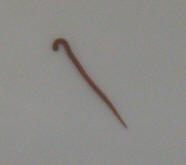
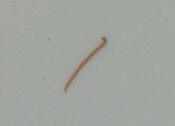
the tank up 7 months ago). I tried to include pics but they are
rather low quality. From the pics, and my description do these
sound like leeches?
<Yes.>
If so do you think they arrived as live plant hitchhikers? Also
how should I go about finding if there is a secret leech meeting
place somewhere in my aquarium. If you can't guess leech or
not they are in a bucket of water and I can put them on my finger
and see if they clamp down. Thanks.
<Contrary to popular belief, not all leeches are parasitic.
Many are simply predators that catch and eat invertebrates of
various types. These are the ones you find in ponds where there
aren't any fish. While I can't be sure, it's likely
that your leech came in from either a plant nursery or a live
food farm, neither of which would have fish swimming about. So in
all
likelihood, this leach is relatively harmless (unless you're
its favored prey, perhaps snails or crustaceans). You may still
want to remove it though, just in case. If I could tempt you with
the idea of a room temperature invertebrate tank, you might find
this leech the star attraction. All you'd need is a sunny
spot so algae would grow, a 5 gallon tank (if that!), some
gravel, and ideally an air pump sufficient to keep the water
stirred. Add the leech, a bag of daphnia, a few algae-covered
stones, and let nature take it's course! Add any flatworms or
other interesting beasts you see in local ditches and ponds.
Some, like damselfly larvae, can be extremely beautiful things.
Cheers, Neale.>
|
  |
|
Re: leeches?
03/26/09
Thanks for helping me out. Perhaps these guys were my savior in
destroying the overwhelming amount of snails in my aquarium.
While the idea of the invertebrate aquarium does sound very
appealing, it doesn't look like a possibility now as I'm
a college student with very little spare cash to spend. However
if there's still some leeches in the aquarium when I get
some money I'll most likely give it a shot.
<To be honest, if you've not seen any sign of bites in the
last seven months, there probably aren't blood sucking
leeches. Leech bites are very distinctive: they're circular,
with a ring of teeth marks (often three teeth). In any case, the
main thing is not to dump the leeches anywhere they could work
their way into natural waters; even though it's
unlikely, they could carry diseases from your tropical fish into
the 'wild'. Cheers, Neale>
|
Salt- Koi- Goldfish... and Anchorworm evidently, maybe Leeches as
well 8/5/08 Dear WetWeb Crew, Could someone there tell
me the correct amount of salt to use for medicinal purposes-salt
bathes. My Koi and Gold fish have a parasite on them. It looks like a
barb or needle sticking out of the base of the dorsal fin. Also how
long should I leave them in the salt solution. I would greatly
appreciate your help. Thanks for your time. John. <The following is
a table modified from "The Interpet Manual of Fish Health", a
useful little book: --- 0.1% (1 gramme per litre): General additive for
livebearers or in tanks where fish show physical damage (i.e., lesions,
fin damage). Use in the aquarium. 0.3% (3 g/l): Reduces nitrite
toxicity or to treat physical damage. Use in the aquarium. 0.3-0.5%
(3-5 g/l): To control Hydra. Use in the aquarium for no more than 5 to
7 days, then change water to gradually reduce salinity. 1% (10 g/l): To
treat ulcer disease on coldwater fish. Acclimate fish gradually and
then reduce salinity gradually once fish are cured. 2-3% (20-30 g/l):
To remove leeches from pond fish. Use as a bath, with fish put into
bath for 15-30 minute dips. --- In your case, it sounds like you have
leeches or anchor worm. Salt dips will certainly deal with leeches, but
anchor worms will need a specific treatment of some sort. Salt
won't help because the free-living stages are in the water column,
so even if the adults are killed, another generation of anchor worms
will find their way onto your fish. See here:
http://www.wetwebmedia.com/PondSubWebIndex/contrpdparasit.htm Your
local pond supplier may well have a variety of other treatments
available. Cheers, Neale.>
Leeches For the reader that was trying to control leeches,
Dimilin or Formalin will work, but care must be used in selecting
dosage. Be careful! Formalin will cause problems in
bio-filters if applicable. Also try: http://www.state.me.us/dep/blwq/doclake/leech.htm
Craig>
|
|

