 |
|
| Home | Marine Aquariums |
Freshwater Aquariums |
Planted Aquariums |
Brackish Systems |
Ponds,
lakes & fountains |
Turtles & Amphibians |
Aquatic Business |
Aquatic Science |
Ask the WWM Crew a Question |
| Please visit our Sponsors | ||||
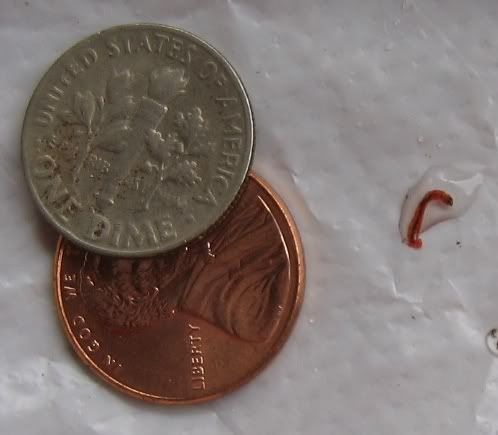
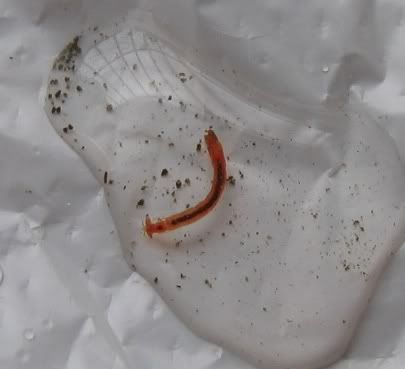
Salt- Koi- Goldfish... and Anchorworm evidently, maybe Leeches as well 8/5/08 Dear WetWeb Crew, Could someone there tell me the correct amount of salt to use for medicinal purposes-salt bathes. My Koi and Gold fish have a parasite on them. It looks like a barb or needle sticking out of the base of the dorsal fin. Also how long should I leave them in the salt solution. I would greatly appreciate your help. Thanks for your time. John. <The following is a table modified from "The Interpet Manual of Fish Health", a useful little book: --- 0.1% (1 gramme per litre): General additive for livebearers or in tanks where fish show physical damage (i.e., lesions, fin damage). Use in the aquarium. 0.3% (3 g/l): Reduces nitrite toxicity or to treat physical damage. Use in the aquarium. 0.3-0.5% (3-5 g/l): To control Hydra. Use in the aquarium for no more than 5 to 7 days, then change water to gradually reduce salinity. 1% (10 g/l): To treat ulcer disease on coldwater fish. Acclimate fish gradually and then reduce salinity gradually once fish are cured. 2-3% (20-30 g/l): To remove leeches from pond fish. Use as a bath, with fish put into bath for 15-30 minute dips. --- In your case, it sounds like you have leeches or anchor worm. Salt dips will certainly deal with leeches, but anchor worms will need a specific treatment of some sort. Salt won't help because the free-living stages are in the water column, so even if the adults are killed, another generation of anchor worms will find their way onto your fish. See here: http://www.wetwebmedia.com/PondSubWebIndex/contrpdparasit.htm Your local pond supplier may well have a variety of other treatments available. Cheers, Neale.> Guppy question, dis. 8/2/08 Hello, Last night I noticed that my female guppy had a bunch of orange lumpy stuff protruding from her backside. I assume these are eggs? <Nope. Guppies are livebearers.> They aren't coming off though. They're "stuck" on her. I put her in a breeding container in the tank to keep the other fish from picking at her, but what can I do for her? She's not eating, but doesn't seem to be in pain. Please help! <Without a photo, can't be 100% sure, but I wonder if this is actually a Camallanus worm infection? These look like reddish threads protruding from the anus. Treatment is using a worm-killing medication such as Levamisole, Piperazine or Praziquantel (sold under brands like Prazi Pro). http://www.wetwebmedia.com/fwsubwebindex/fwwormdisfaqs.htm > THANKS!! Tara <Cheers, Neale.>Possible Camallanus worm infestation
5/22/08 Dear WetWebMedia Crew: <Allyson> I have a 20
gallon freshwater tank, (originally with an angelfish, <Need more
room than this> 4 platies, 2 mollies and 4 white cloud minnows) and
am having fish die at the rate of about 1 per month (getting thin,
listless, then refusing to eat, and then dying). Since the water
parameters were good, I thought it might be a parasite infection and
gave a couple of doses on Jungle Parasite Clear (fizzy tank tabs with
Praziquantel, Diflubenzuron, Metronidazole and Acriflavine), <Good
shot gun approach here> but it didn't help. I am now down to the
angelfish, 1 platy and 3 minnows. I did email WetWebMedia a couple of
months ago and Bob Fenner kindly suggested a good aquarist in my area
since I live in San Diego. They were very helpful and suggested that
the fish might have been weakened by the extreme hardness of our water
and I started to used deionized water. No luck. Over the past week I
have noticed tiny, red, stick-like things protruding from the anus of
my angelfish, whom I have had almost a year; he is otherwise behaving
normally. A WWM search causes me to believe I have a Camallanus worm
infestation <Agreed... very likely> and I went to the aquatic
suppliers and they have sold me Metronidazole, along with polymer to
help bind the medication to the food, and a garlic additive to make it
taste palatable. Is this the correct medication? <Mmm, no... need a
vermifuge... not a protozoacide> Your site suggested Levamisole,
Piperazine or Praziquantel, <Yes> but if you think that the
Metronidazole will also work, <... no> I will start using it. I
don't want to weaken the fish by giving them the wrong medicine,
especially since they are all behaving normally (for now) Thanks so
much for your help and your great site, Allyson <See WWM re
Camallanus... Vermifuges-anthelminthics... Bob Fenner> Molly Question 03/26/2008 Hi I've got a 160ltr tank which has been going for about 10 months now, it's got mollies, platys, Endler's and guppies in it. I've had a issue before with platy's dying from the skinnies, but I've never had a problem with mollies before until now. <What's the "Skinnies"?> I have 6 second generation marble mollies, and over the last few days they have been feeling poorly with the shimmers and tail fin clamping. Today they seem much better, they are swimming around happily, eating and I haven't seen a shimmer in over 24 hours. <Do check temperature and salinity, both key factors with Mollies. Given you're keeping all livebearers together, adding salt to this tank is easy and safe. I'd be going with 6 grammes per litre of water, and use MARINE SALT MIX, not "aquarium salt". The Mollies will be altogether healthier in every way, and the other livebearers will appreciate the extra alkalinity. If you have a hydrometer, what you're aiming for is a specific gravity of SG 1.003.> However on 3 of them I've noticed what appear to be 2 red spikes coming out of them. It's not fecael matter, it's different to that, one of them it's coming from it's anus, but the other two has it coming from higher up their bodies towards their stomachs. Is this a normal thing? I've never seen it before. <These are Camallanus worms, seemingly quite common among livebearers in both the US and UK. So I'm guessing there's an issue here with breeding and transport. In any case, you need an anti-helminth medication. See here: http://www.wetwebmedia.com/FWSubWebIndex/fwwormdisfaqs.htm > I'm sorry if I'm being really stupid about this, I've have raised them since birth and I really don't want to lose them now! <Indeed!> Any help would be appreciated. Annabel <Cheers, Neale.> What is best treatment for flukes in goldfish? 3/26/08 Hello, I was wondering what your recommendations are for treating body flukes in goldfish at least I think that's what they are. I have noticed from time to time that my goldfish will quickly rub themselves on aquarium decorations. <This could be a variety of things, not just flukes. Whitespot/Ick often manifests itself as scratching behaviour. Rapid changes in pH will also cause this behaviour. So you need to be a bit more open minded, or at least look for other symptoms that might pin down the problem> At one time I put in Live Bearer by Aquarium Products and that seemed to stop their behavior, but unfortunately I can't find it anymore in the local pet stores. <Do see here: http://www.wetwebmedia.com/FWSubWebIndex/gldfshdisease.htm > I mainly want something that I can use as a preventative and not have to take out the carbon in my filter, etc. <Treating with a "preventative" is counter productive, and says more about how we sometimes view healthcare than what is actually useful. Most medications cause some degree of stress or harm to fish, and in some cases some fish simply get killed by them (loaches and copper-based medication is the classic example). So you need to use medications only when absolutely necessary. Instead focus on REAL preventative medicine, i.e., quarantining new livestock, providing a balanced diet, and ensuring good water quality. As for removing carbon, you need to replace carbon every month for it to do any good, so removing it for treatment purposes shouldn't be a chore. I don't feel that carbon serves ANY useful purpose in a freshwater tank; 50% weekly water changes will do a much better job of removing those pesky dissolved organics, and will also keep the nitrate down and prevent pH swings! Just say NO to carbon!> Thanks Sharon <Cheers, Neale.> Camallanus woes 2/14/08 Dear WetWebMedia Crew, <Kim> Before I present my problem, I would like to thank you so much for your informative website. I have learned so much from reading it and owe a lot to all your efforts. Please bear with me for this long question - I just want to be thorough! <Be so> First off, I suppose I should describe my setup. I have a 90 gallon planted freshwater tank with a 30 gallon sump and a 1.5 gallon hang-on refugium. Filtration is provided by an Eheim Pro II 2028. For lighting, I have 4x65 watt PC. I use pressurized CO2 and maintain it at about 20-30 ppm; my pH varies between about 6.8 and 7.0. I keep the tank at 77-78 ºF. The ammonia and nitrites have always been zero, though I have had spikes with my latest problems, which I have been combating with frequent water changes. For my plants' benefit, I keep phosphates at about 1 ppm and nitrates at about 10 ppm. As for livestock, I have 3 /Gold Gouramis/, 4 /Botia Dario, //1 Bushy-Nose Pleco, about 20 Cardinal Tetras, about 15 Cherry Barbs, 6 Corydoras trilineatus//, 6 Corydoras aeneus//, 6 Kuhlii loaches, 1 Betta, 2 Bamboo Shrimp, wildly reproducing Cherry Shrimp (which I love), wildly reproducing snails (which I don't love, hence the Botia// loaches), and 4 dwarf African-clawed frogs. It is landscaped with rocks, large pieces of driftwood, and lush vegetation./ /Whew! Well, on to my problem. Despite carefully quarantining all my livestock, a few months ago I started having a few fish die with no apparent cause. After close inspection and research (and the observation of red worms protruding from the anuses of some fish), I realized they had Camallanus// infection. I read a paper from "Aquarium Sciences and Conservation" by Arne Levsen titled "Transmission ecology and larval behaviour of Camallanus cotti// (Nematoda, Camallanidae) under aquarium conditions". From this article and further Internet research I determined the proper course of treatment would be 2 mg/L Levamisole. I tried capturing just the fish that had evidence of Camallanus// and moving them to my hospital tank, but I just kept seeing more and more fish with it, and realized that the unthinkable (treating my display tank) might be the best option. In the aforementioned article, it seemed that Camallanus //would persist in an environment without fish for up to 40 days, and since it would probably be very difficult to even find and remove all my fish, my options seemed limited. <This is so> I read further on Levamisole and found aquarists agreed that it wouldn't harm my plants or invertebrates. So, I got enough injectable Levamisole phosphate from my veterinarian for the first treatment; and so began the rollercoaster called my water parameters. As directed, I administered the medication, kept the lights dark for 24 ours, then began massive water changes (>70%). The first treatment resulted in several fish dying (which I expected - I assume they perished from intestinal impactions of dead Camallanus//). I continued regular water changes for the next two weeks as my phosphate went through the roof (>> 10ppm, presumably from the Levamisole *phosphate*), and the nitrites went up to as high as 0.5 ppm (I don't know why - something must have been dying, but I don't know what!). Per the article and others' suggestions, I siphoned the substrate as best I could, but much of it is inaccessible from the plants and landscaping./ /I have done two more treatments since then (but switched to Levamisole hydrochloride to avoid the phosphate spike), all two weeks apart. From what I've read, 2 treatments is usually sufficient, but I am up to three and am still seeing a few Camallanus// in the cherry barbs. <These may be dead...> For the most part, the treatment has worked very well, as I have watched many of my other fish, including the Betta, Pleco, and Corys, clear up. Nonetheless, I know that "mostly cleared" translates to "they'll be back", and I'm losing confidence that further repeated treatments will yield success. Do you folks have any suggestions as to how to clear up this infection once and for all? Sorry again for the length, I just didn't want to leave out any relevant details./ /Thank you so much for your time. And keep up the great work!/ /-Kim/ <After the third treatment with Levamisole, I would wait a few (three) days, execute another summary water change, vacuuming... This treatment succession should "do it". If the worms persist, I would continue with another vermifuge: Fenbendazole, or Flubendazole. Unfortunately, the popular Prazi/quantel has not proven efficacious. Bob Fenner>
Newbie /anchor worms and Camallanus worms, FW 12/12/07 Dear Crew, First let me apologize in advance for any posting errors. I have never posted anything before. I have read just about everything I could find on your site and the web, and still haven't found a clear answer to my question. <Welcome> My eight year old son and I are relative newbies to freshwater aquariums, but we are learning fast. Several months ago, we got a 5 gallon aquarium, with one live dwarf Amazon sword plant. We have a small under gravel filter from our previous 2 gallon tank, a small heater and a corner box filter, air pump (suitable for up to 10 gallon tanks). There is a tiny snail, which I have only seen once. I assume it came with the plant, and I don't know if it is still alive. After a couple of weeks we got 1 fancy guppy. We had him about three weeks, and then got another guppy and an Otocinclus. We did not quarantine (a lesson which I have since learned), I also learned about water testing around this time. Within a couple of days, the new guppy died of fin and tail rot, and the Oto had ich. I treated the tank with MelaFix and malachite green. <Better to simply elevate temperature here.> The Oto struggled with ich off and on for several weeks, and eventually died. Throughout all this, the original guppy appeared healthy. As I learned about water testing during this time, we have been at ammonia 0, nitrites 0, nitrates 2.5-5, ph 7.6-8.0. now for several weeks. We waited several more weeks, before attempting to get any more fish, and on 11/24/07 decided to get 2 more Otos to help with the algae. <Mmm, I would not place Otocinclus in such a small volume, with such a high pH... better to seek out other means of algae control. Posted on WWM> They are currently quarantined, and so far appear healthy. The day we brought home the new Otos, I discovered a parasite hanging off the side off the guppy. After investigating on line, I am sure it was an anchor worm. I removed the box filter/charcoal and I started to treat with Jungle Parasite Clear, which said it was good for anchor worms <... but adults, on host fish/es... must need be physically removed...> and would not harm the plant like CopperSafe. The anchor worm fell off, leaving a gaping wound in the side of the guppy. Despite this, he continued to eat and was active. A few days later, several red worms protruded from his anus, and one from the gaping hole in his side. After more searching on line, I am sure from the photos I have seen on line that he had Camallanus worms. <Mmm... no... these Nematodes are stark white, round in cross section... Likely what you are seeing are other/new Anchorworms...> I continued to treat with the Jungle Parasite Clear which contains Praziquantel, Diflubenzuron, Metronidazole, and Acriflavine. <Mmm... none of these will treat for, kill Lernaeids... Please read here: http://www.wetwebmedia.com/FWSubWebIndex/fwcrustdisfaqs.htm and the linked FAQs file above on Organophosphate Use> This appeared to have no effect on the worms, and the fish has now finally died (whether from the worms or the wound). So my basic questions are these? <Likely crustacean... Anchorworms> What do I treat the tank with to ensure anchor worms (which I know is not a worm) and Camallanus worms (theoretically they have a 30 day life cycle) are gone (since the Jungle Parasite Clear didn't appear to treat the worms)? <Not worms... just appear worm-like> What is safe for the plant? <Please read the above...> Is the snail an intermediary host? <Mmm, no> How long do I need to wait, keeping in mind I have 2 Otos in quarantine, waiting for all the algae in the tank. Do I need to take down the whole set up and sterilize and start over? <Mmm, possibly the best approach here now> If so, how? <See here: http://www.wetwebmedia.com/clnaqfaqs.htm> How do I keep the bacteria going in the tank since there are now no fish in there? <They will be there> Thank you in advance for your advice. I have learned much from your site. I wanted to introduce my son to the pleasures of an aquarium, and all he has seen so far is a bunch of parasites and sick fish. I realize we have just a tiny set up, but I had an aquarium when I was growing up, and I wanted him to have the same pleasure it gave me. I'd just like to get the new Otos settled. We know the 1 inch per gallon of water rule, so we know we can only have a few small fish, but we want them to be healthy, happy fish. Thanks again for your help. Vida <Thank you for writing so well... Clearly and completely. I want to state, make it known to you that the difficulties you and your animals are suffering are not of your origination... The livestock you have received has been infested, compromised... and not easily cured by anyone's efforts. I would either bleach-wash and start over here, moving the water from the Quarantine along with the Otocinclus... and feed carefully till the system is established. Otherwise, Clout (tm), Fluke Tabs (tm), other DTHP or Dimilin containing pesticide can be added... Do please write back if you have further concerns, issues. Bob Fenner> Re: newbie /anchor worms and Camallanus worms 12/18/07 Mr. Fenner, <Vida> Thank you for your prompt reply. I think I will take every thing down and bleach it out. Is there any way to save the plant? <Yes... can be peremptorily dipped/bathed in an alum and water solution... See WWM, the Net re> We like having a live plant as opposed to plastic. Likewise, how does one safely add new live plants, as I realize they can introduce parasites? <Rare, but yes... most all that is wet can/may> If we are starting all over, we will probably add another plant or two, and definitely don't want to introduce any new parasites. The Otos in quarantine appear healthy and thriving, and my son would like them in the tank. Here are some photo links, which show the photos why I believe the fish had Camallanus. This looked very different from the anchor worm on its side, and definitely appeared to be multiple red worms in the anus. They would pull in and appear much shorter at some times than at others. The anchor worm did not do this, it was the same until it fell off and left the wound on the side of the fish. My husband, who has a background in biology and a PhD in genetics, also felt that the organisms protruding from the anus were Camallanus and not the same as the anchor worm. http://www.inkmkr.com/Fish/CamallanusTreatment/experience.html http://img520.imageshack.us/img520/2897/parasiteen0.jpg http://www.gaem.it/pubblico/articoli/malattiepesci/Camallanus/camallanus03.jpg <I must commend you on your photographs. Some are very nice indeed... These do appear to be Nematodes... reddish from feeding likely> I had tried elevating the temperature of the tank to between 85-90 degrees (normally it is at 76 degrees) and adding a small amount of aquarium salt for the ich, but was conservative with this because of the plant and the Oto. The pH of the aquarium was running 7.2-7.6 before treating with the Jungle Parasite Clear. I suspect some component of the medication fizzy tab has increased the pH. <Possibly...> Thank you again for your assistance. Vida <Thank you for this follow-up. Bob Fenner>
Parasitic Worms Coming Out Of Fish, FW -- 8/19/07 Hi, I have a parasite ( microworm like ) eating his way out my blue and gold ram and killifish anus. It looks like something is eating the fish's anus and you can see like 4 or 5 red little worms coming out. I been looking on the internet and you guys seen to have the more knowledge on parasites. I would appreciate any help. < Most parasites like this can be controlled with Clout or Fluke-Tabs. Just follow the directions on the package and they should be fine in a few days.-Chuck> Sick Oranda, Flukes? 8/19/07 Hi. My Oranda died today. Gills were blue so I assume it was from the gill flukes. <Mmmm, not necessarily> How do I decontaminate the tank before putting in new goldfish? <Best to bleach, dump, dechlorinate... Please read here: http://www.wetwebmedia.com/clnornart.htm The same protocol...> I read that gill flukes aren't susceptible to high salt concentrations. I was thinking of overdosing the tank with Jungle Labs Parasite Clear and then let the tank run with just water and the filter going for a couple of weeks. Do I have to get rid of my plants, too or OK to keep in tank? Thanks. YM <Mmm, the plants, actually anything wet could be a vector here... I would at least isolate these, treat them with an organophosphate... Bob Fenner> Platy with piles? 8/13/07 I have a platy Plec that has lumps that can only be described as piles on its anal/vent area, they are white / pink in colour and there is a lot of them. this is the only platy Plec I have in the tank along with 2 guppies, alas all the others have died over time....... please can anyone tell me what it is ...... <Hello. Sounds a lot like worms of some kind. Without a photo, can't be sure. But assuming that it is, you'll need to treat with an anti-worm medication (Waterlife Sterazin, JBL Gyrodol, Aquarium Products Fluke-Tabs, etc.). If you're losing a lot of fish in a short period of time, do also reflect on aquarium water quality/water chemistry. Platies and guppies like nice hard water with a high pH (say, 15 dH and a pH of 7.5). Water quality should be good, 0 ammonia and nitrites, and platies especially need a tank with a bit of swimming space, certainly not less than 15 gallons. Cheers, Neale.>
Worms and platy fry 6/16/06 Greetings from Australia to all the crew, <Returns from sunny southern Cal. in the U.S.A.> having only a few months experience in keeping fish we have been running into quite a few problems with the poor things. Our latest involves something as unpleasant as worms. The local aquarium guy has assured us it has to do with the drought affecting our area and dams and not just something we did. We bought fluke tablets and after fishing out a few platy fry (all of which seemed fine) and we set up an emergency tank for them with water from the big tank. We then added the fluke tablets but being new at this and apparently not very clever we took out the wrong piece of the filter, with the result that worms are still in the fish and tank! We had a few mishaps with the little fry in the emergency tank with a new heater going berserk and killing the poor things, we were trying so hard to save, so we decided to leave the two last fry who seemed affected by the worms in the tank when treating next, but just as we were about to add more fluke we saw about 20 little fry swimming around. To make it worse we also have a speckled Cory which the before mentioned fish guy told us will not appreciate the fluke. Now what do we do? <I would treat all> One of our nice big platy females is having big worm issues and is in big trouble but what about all the little new ones? <All> Do we risk killing them in the new little tank with water from the big tank and a crazy out of control heater or do we leave them in the big tank and hope for the best? <I'd treat all in place, in your main/display tank> Please help. My kids have named 10 of the little fry and will be pretty upset if I kill more than I already have.. Oh and we also have some tough neon tetras in the tank. They have survived terrible water conditions due to our inexperience, ich, etc and now worms . We managed to kill 5 guppies, and 3 tough platys early on, yet the Neons live nice and strong. Totally opposite to what we have been told. (It may not sound like it but we really tried and we do care about the fish. We have bought every single form of equipment and medicine available. We are just not clever) Marianne in Australia <Bob Fenner> Red, Protruding Spine-like things... Ram hlth. -- 06/08/07 Hi there, <Hello.> I have three Bolivian rams in my 40 gallon tank along with some other tank mates and I just recently lost one of my rams. He had these red spines that were protruding from his underside. Now I am noticing that the surviving three also are beginning to show signs of this. <Hmm... are these spines associated with the fins, or sticking out of the body far away from the fins? Without a photo, it's difficult to identify the problem.> Do you know what it is and if so, how would I go about treating this? <My first guess would be Finrot. When the fins decay, the membrane goes but the spines remain, and these could be the red spines you're seeing. Untreated, Finrot will kill fish. It is treatable using a variety of commercial medications. Ideally, choose a remedy that treats fungus as well, as the two things often happen together. Now, Finrot is 99% of the time a symptom of poor water quality, so check the ammonia and nitrite levels especially. Bolivian rams (like most other dwarf cichlids) are also very sensitive to high levels of nitrate. You should be doing 50% water changes weekly, and the nitrate level should be well below 50 mg/l. Ideally, as close to zero as is practical. Hardness and pH aren't terribly important, but you're aiming for low to moderate hardness and a pH around between 6-7.> I really like these fish and I don't want to lose anymore. <Yes, they're lovely animals.> Thanks and I look forward to your reply, Trish <Good luck! Neale> Re: Red, Protruding Spine-like things -- 6/8/07 Hi Neale, Thanks for your reply. <You're welcome.> Now, I would believe you except that my levels are all good and I always do water changes... Now the other thing is that these guys' fins are beautiful! There is nothing wrong with any part of any of them. <Okay.> This red spiny thing sticking out is protruding from the anus so is coming from inside the fish. The one that died had them really big and they would go in and out. The fish now just have a small piece poking out. Do you still think this is Finrot? <Ah, the plot thinnens. No, this doesn't sound like Finrot any more. More like intestinal worms. Rather rare in freshwater fish kept indoors, but they do occur. If these worm-like things are wriggling about and obviously alive, then they're definitely intestinal parasites. You will need an anti-helminth (anti-worm) medication to treat these. Depending on your local laws, you will either be able to obtain such drugs from your retailer or from a vet. In the UK for example, Flubenol is available over the counter from aquarium retailers but most of the others used by American aquarists are not. Your own mileage will vary, as they say. The only other thing they could be is stringy faeces. This is actually very common in cichlids, often through the wrong diet or as an additional symptom to things like Hole-in-the-Head disease. In this case, the stringy faeces hang out the back of the anus like threads, but are clearly inanimate. If this is the issue, it's a case of identify the problem, then treat. Diet can be fixed with, for example, more vegetables in the diet. Hole-in-the-Head usually requires antibiotics.> Trish <Hope this helps, Neale> Wormlike parasite 5/30/07 Hello there, <Good morning> I have a problem with two Bronze Catfish, they seem to have a parasite that I can't identify. One of the Bronze Cats is new, I've had it for a few days. My tanks isn't very old (less than two months, but I have been monitoring it closely and it has cycled). It is a 90 litre tank (24 ish gallons). Currently my temp is 79, pH is 6.8 , ammonia 0, nitrites 0 (I only tested for nitrates once about three weeks ago and there were none, the tank is quite heavily planted so I'm guessing whatever nitrates have been produced are being used up or removed during water changes). I don't think that water quality is affecting the fish, but nevertheless the Bronze Cats seem to have extremely tiny, whitish, wormy looking things attached to the very ends of their fins, they are difficult to see with the naked eye. There don't seem to be any on their bodies, they just seem to be on the ends of the fins, hanging like little tassels that move when the fish are swimming. They are very small, they must be less than a mm long. There seem to be more on the newest Bronze Cat, but I believe that the other bronze has caught them now too because I noticed a few today ( I'm afraid that they are spreading). I have 2 Pepper Cats and two Sterbai Cats and they seem unaffected, none of the other fish in the tank seem affected either (Neons, Gouramis, SAE etc.). These parasites don't seem to be bothering the fish so far (no clamped fins, scratching or heavy breathing) but I know that this could change. These two Bronze Cats also seem to each have another problem as well ( I know this is getting boring but I think it's better to get all the details out in the open). My older Bronze Cat is a long finned variety, very pretty, but I think that someone likes the look of his magnificent dorsal fin because sometimes it suddenly looks munched or shredded. It heals readily and does not seem to get infected so I don't think that it's fin rot. I don't keep any 'aggressive' fish in my tank, but maybe a naughty baby Clown Loach might have nipped him? ( Who knows what any of the fish get up to when the lights are off?). The newer Bronze seems to have lost the barbels on one side of his mouth, it doesn't look infected. This seems to have happened quite suddenly as well ( it was while I was inspecting this that I noticed the parasites). I think that the barbel may have been damaged during feeding. I try to break up a few small sinking wafers for all my bottom feeders to have an even chance but I have still noticed that the Clown Loaches are pretty dominating at feeding time. My Betta also gets quite aggressive as well. Could the barbels have been severed during a feeding frenzy? I realise that the parasite and the injuries may be related because the fish may be more susceptible to infection if they're injured. But do you have any idea what the parasites are and how to treat them? <Mmm, microscopic examination would be the route to go here, but likely some type of Fluke (trematode)> My other issue is with a new Blue Ram. I bought a male and a female (they get along well) and it is the female who is looking rough. She has got small white patches on her body and fins. They aren't ich spots but they don't look cottony or fluffy either. Could they be a fungus infection that is just starting out? Or is it bacterial? <Impossible to state for sure... but the fish being new, I would be very conservative here re treatment> I don't know what to treat with. I have a malachite green/Methylene blue/quinine solution which is meant to be a sort of 'cure all' tonic, <The Malachite is quite toxic... I would hold off for now> but I am afraid to use it with the Clown Loaches being in the tank now, and I don't want to destroy my biological filtration either. Would the medicine that I have be suitable to treat the worm parasites and the fungus or would you recommend something else? Should I treat the whole tank? ( I don't have a QT but could do a short soak in a bucket?) Sorry this is so long but I would really appreciate any advice you could offer. Kind regards, Jessica in New Zealand <I would treat the worm problem with an anthelminthic (likely Flubenol or Prazi(quantel)... covered on WWM (see the indices, search tool)... and the current problem with the Ram... not at all, other than maintaining good (soft, acidic, warm) water quality. Bob Fenner> Re: wormlike parasite continued 5/31/07 Hi WWM, <Jessica> Thank you Bob for your reply regarding my unidentified 'worms'. Before receiving your reply I went to my LFS to buys some plants and asked them about the worms. The parasite description stumped the staff there but one of them eventually decided that I should try Praziquantel. He said it was what they used to treat parasites on their discus so we figured it was worth a go. <Yes> I bought some of the Praziquantel but I waited to hear what your suggestions would be (no offense to my LFS, just thought you guys would have had more experience with parasite ID's). Imagine how great it was to hear two different sources suggest the same treatment! I used the Praziquantel this morning (on the whole tank as I believe it was spreading to all my catfish) and it looks like the parasites have already come off the fish's fins. I can't see them anymore. So I'm guessing that the Praziquantel made the parasite fall off of their hosts? <Very possibly> I was given two doses and told to use the second one in a week's time, would you recommend this and should I do my usual weekly water change (about 15-20%) beforehand? <I do recommend both> I also wondered if I could use some MelaFix to help my Blue Ram? <Mmm... not really worthwhile> Whatever is ailing her seems to be getting worse, I'm still not sure if it's a bacteria or a fungus. <Likely water quality...> She just seems to have small, white clumps on her body and fins (they are different to the parasite that was on my catfish), some of them are looking a bit stringier (still not cottony/fluffy though) than they did before so maybe this is a fungus? <Do see Google re Lymphocystis... pix...> She's also looking a bit more 'clamped' than she was before, still feeding and reasonably active though. Her partner looks fantastic and they seem happy together, he is not beating her up and neither is anyone else. Maybe the male was a bit aggressive in the bag on the way home from the store (although it wasn't a long trip and I didn't see anything amiss), or maybe she was already sick at the store. The stock there all looked pretty good and my water chemistry seems suited to their requirements. I'm not sure what's making her sick, but I'm worried that she's getting worse and maybe the MelaFix would be a milder course of action (rather than the malachite/Methylene/quinine tonic that I have). <Neither one is suggested> I'm aware that the MelaFix may not have an effect on whatever is making her sick, but I just thought it would be worth a try if it was safe to mix with the Praziquantel. I've done a ton of research on both of these today, but I haven't seen anything saying whether you could mix them or not. At least now I know more about them on their own :-) <Can be mixed... but the "Fix" product is just a "tea"... soaked Melaleuca leaves... at best it might lower the pH here> A third and completely unrelated question is that I have two Honey Dwarf Gouramis (Trichogaster chuna), a male and a female. <Ahh! One of my favorite species> They seem to get along apart from the odd brief chase here and there, which I'm sure is natural. Today (before dosing the Praziquantel) I noticed that the male has darkened up considerably on his ventral area. It is a section that runs from under his mouth and eyes, just under his pectoral fins, along past his bottom and into his fins (anal fin? pelvic fin?). It's actually quite a defined, diagonal line. The colour seems to be a mottled black pigmentation and it extends around his belly. I've seen him blow a few bubbles at the surface, but no bubble nest building. Is he trying to impress his lady friend? Or could this be a sign of something else? <Likely is reproductive/stress color change...> Again, thank you for your time. I'm glad that there are credible websites like yours for people to turn to with their queries. Jessica <Welcome my friend. BobF> Help with possible parasites 5/25/07 Good Morning, <Its good evening here in Merrie Olde Englande.> I have a question regarding one of my female neon swordtails. She is a full grown adult that I have had approx. 6 months. First of all tank parameters: Ammonia - 0 Nitrites - 0 pH - 7.4 Nitrates - 25 Tanks size - 55gal, tankmates are platies, guppies, other swordtails, and one Pleco. <All sounds fine.> I noticed a strange growth inside the fish about 1/4" from her tail. It appears to be circular. The fish swam next to the light and I could see through the tail and that's the only reason I saw it. She has been acting very healthy and normal. Eating very well, in fact just dropped about 15 fry. You can start to see the lump on the outside if you look very carefully, however, nothing is protruding outside the scales. The other fish in the tank are doing very well and also the many fry are doing fine. <If the swelling is inside the fish and in muscle tissue (rather than the abdomen) then almost certainly a benign cyst or tumour. Quite common in fish. No real cure, but no real threat to your fish either. But without a picture, impossible to say for sure quite what this is.> I have done considerable research to see what this may be and the only thing I can come up with is a digenetic fluke. <Rather unlikely, because of the complex life cycle most of these flukes have. Pond fish sometimes get them, but indoor fish almost never.> Any suggestions will be appreciated. I understand that if it is a fluke the life cycle requires an intermediate host such as a snail. I do have a few snails in the tank. <Indeed, but usually very specific snails. The chances of you having a worm that worked in both the fishes and the snails in your aquarium have to pretty small.> Doesn't look like there are many reliable cures for this other than removing the fish and the intermediate host. Can I expect to have a major problem from this or is this something that healthy fish can live with or overcome. Thanks in advance. <Since it's almost certainly just a cyst or benign tumour, there's not much to be done. Provided the fish can swim properly and the internal organs are impacted in any way by the cyst, the fish should remain healthy. Cheers, Neale> Red sword and Levamisole Phosphate, use of anthelminthics, FW 5/21/07 Hello fellow crew member, This is Anna. We exchanged few e-mails a couple of months ago. Just to give you a recap - so far my tank is doing well; I got some plants that keep growing nicely; fish seems to be happy there.. in few words - "almost perfect." There is one issue I am not sure about. I presume my female red sword is doing well. It is first at the feeder, eating with no problems; it does not display abnormal behavior (except for the time when it hides under plants to "visit the bathroom") - it is well integrated within community. Yet, when I observe its feces I see something that other fish does not performs. Basically, the red sword is "on the toilet" :--) all the time, producing quite large amount of feces, mostly dark green (chewing my plants ??) or black, with some sort of whitish segments in between. After studying the book of Drs. Untergasser and Axelrod I concluded that my sword might be affected by tapeworm. The books says it is okay not to take any action if fish is doing fine (my is doing well). Yet, I feel sorry for that fish having toilet problem all day long and would like to help it - if possible. My colleague at another fish community suggested I use LEVAMISOLE Phosphate (injectable solution). I got one (13.65), but before using it I would like to make sure it is: - safe for fish - manageable - with min. side effect. <Mmm, I would not use this format of Levamisole... nor inject this small fish... If you were to use "L", look for the HCl (Hydrochloride) radical... to be used in foods... Or better, look to an anthelminthic that can be simply applied to the water... my choice? Praziquantel...> Would you recommended that I use that medicine? How should I proceed with using it? <Please see WWM, the Net, Ed Noga's works...> As for my aquarium condition - ammonia is at zero; pH is between 6.6 - 6.8. I also trace phosphate (current level around between 0.5 and 1.0). I do partial water changes every day to help keep the fish healthy. Do you think there is anything I can do for my red sword with or without LEVAMISOLE? <Perhaps...> Please, help... Thanks much. Anna P.S. - I attached some pictures of my red sword to help you see what I can see ;--) <Mime... not useful> <Ah good... The Prazi... Bob Fenner> Worms in my tank 4/10/07 Hello, I have been reading your site and it has been really helpful, but to be sure I just wanted to explain my situation and see what you thought. I have a 75 gallon freshwater tank with one Jack Dempsey cichlid and a algae eater (not sure of the real name) <Algae eater is probably Gyrinocheilus aymonieri, a nasty son-of-a-gun and a Jack Dempsey is one of the few fish that would be able to handle it. Big (30 cm), greenish fish with distinctive spiracle (opening) above each gill slit.> They both seem very healthy, very vibrant in color. I was looking very closely and I saw very thin hair looking worms that didn't really move. The only reason I new they were living things is because I poked one with my finger and it squiggled. There are only a few of these worm things and I was wondering if it was a parasite from my Jacks stomach. <Unlikely. If parasitic worms sometimes come in with wild-caught fish, but they don't wiggle about in the gravel. If you see a swollen belly and/or worms protruding from the anus, then parasite worms are possible. Otherwise these are harmless nematodes or Oligochaetes that have (for example) come in with live food.> The only reason why I'm concerned with this is because lately he hasn't had and appetite. Any thoughts on this? <Try using garlic to stimulate appetite. You can even buy ready-garlicked frozen food! Also try starving the fish for a few days, and then offering something new. Maybe some seafood or a bit of whitebait instead of the usual flake and pellets. One thing aquarists often overlook is dried food loses its savour after a while. Though safe to use for months after opening, after about 4 weeks it doesn't smell strong enough and many fish ignore it. If you buy big tubs, divide it up, freeze most of it in a dry container, and remove only a portion at a time. Maybe check for constipation (yes, happens to fish too) a remedy by offering green foods such as cooked peas.> Thanks for your time, <No probs. Cheers, Neale> Jennifer Camallanus dosage problem. Neotrop. cichlid dis., Levamisole/Anthelminthic, FW 2/27/07 I have a Camallanus problem in my 125 gallon tank, with 2 fish showing the worms protruding from the anus. My pH is around 7.8, ammonia is 0, nitrite is 0, and temperature is 80.2 degrees. The fish are single specimens between 2"-4"of the following: blue Acara, archer fish, Nicaraguan cichlid, Red Hump Eartheater, Satanoperca jurupari, Geophagus surinamensis, Bujurquina vittata, and Hypselecara temporalis. I've looked this up on the Search, but I have serious questions/ doubts about dosing. The medication I have available is Levasole (Levamisole hydrochloride) in the powdered form, and it brings 18.25 grams. <This is the total weight of what you have available?> here are my questions: -What would be the appropriate dose for using it in the water instead of adding to food? <Mmm, much better administered via food/feeding> -How much Levasole would I need to do this? <Mmmm, "lifted", or my new term "meta-analyzed" from Noga's fish diagnosis tome: Oral formulations: Feed 2.5 to 10 mg. Levamisole HCl/kg (you'll have to guess the weight of the fishes...) = 1.1 to 4.5 mg per pound... for seven days. As stated, I would not "pour the medicine" into the tank... or use prolonged immersion in a bath... or encourage you to try injections> -When do I repeat the treatment, and when do I do the first water change? <Daily for repeats, for a week... and water changes as they are needed or weekly IMO> thanks for the help, and sorry for the long message. <Glad to assist you. Bob Fenner> Ghost shrimp, Acanthocephalans, worms in general... 1/15/07 I just bought a few ghost shrimp and everything appeared to be going fine until today, when I noticed one of the shrimp had a worm in it. <You have good sight> After a mild freak-out I managed to do some research on the internet and found out that it was most likely a horsehair worm. <Yes, possibly an acanthocephalan...> Unfortunately, I haven't found much useful information regarding my situation beyond the initial identification. The infected ghost shrimp was in a tank that contained some guppies as well as other ghost shrimp. Could the worm have possibly laid eggs in my tank? <Could...> Would I be able to see them? <No, too small> Should I worry about the larva (assuming there are eggs and that the eggs will hatch) infecting my fish and other ghost shrimp? <Mmm... possibly the shrimp... not likely the fish... May well be that the life cycle of this parasite is "complex" and that your tank is missing an/the intermediate host... likely guppies are not definitive here> I know that the young are parasitic, yet I am not completely sure if they use fish as hosts. The ghost shrimp was in my tank for less than 24 hours. Are they dangerous to my fish? <Again, not likely> Should I assume that my whole tank has been infested? Is there anything I can do to stop the infection, assuming there is one, without harming my fish? <... I would do nothing... but there are some useful anthelminthics... Praziquantel, Levamisole... you can search re these on the Net, WWM...> Currently, all of the other inhabitants of my tank seem fine, and there is no evidence of other horsehair worms infecting my tank. I hope I am overreacting to this tiny worm. <Mmm...> Please set my mind at ease. Should I be freaking out about the possibility of infestation of my other fish and ghost shrimps? Thanks, Lauren <How to put this... there are actually several... as in many, species of worms... living in your system... in your own personal world... This one is likely only detrimental to the shrimp that are hosting large individuals... in non-propitious circumstances. I would not panic here. Bob Fenner> Another livebearer question 12/30/06 Hi Tom, <<Hello, Linda.>> Another question if I may? <<Certainly.>> What do you recommend for preventing gill flukes? I haven't had this problem for some time but since I plan to get guppies I want to be prepared. I had quite a problem at one time after purchasing guppies. I have tried CopperSafe before but I wonder if there is something better to ward off a potential problem. I understand if the fish are in good shape and remain un-stressed they can keep many parasites at bay themselves. What about salt on a regular basis? I don't keep snails but I may get a stray or two since I plan to have living plants in my new 55gal tank. Is that a potential source of gill fluke infestation? <<As you're likely aware, Linda, maintaining top-notch water and tank conditions is the best preventative. As to water conditions, these speak to themselves in terms of regular changes, substrate/filter cleaning, etc. As for the tank conditions, be wary of over-crowding and provide hiding places particularly for the expectant females. You're quite correct that stress-free, healthy fish are -- virtually -- immune to parasitic infestation. I've mentioned this in other posts but it bears repeating: in cases of disease, medications merely 'control' the spread. The immune systems of the fish are what ultimately eradicate the problem. In short, there's nothing better that you can do for your pets than provide the best conditions possible. The Guppies, more so than the Swordtails and Platys, will actually appreciate the addition of aquarium salt to the water. Even fish that don't have a high tolerance for salt will do fine with a modest amount in the tank. Pests, on the other hand, have little tolerance for any. The one admonition I would have for you here is that plants may not do well with salt in the water. Typically, however, this would be at what might be described as 'treatment levels' which would be several times greater than you would normally maintain in your aquarium. In your case, I would cut the common ratio of one tablespoon per five gallons in half and see how both the plants and fish fare at this level. (Sometimes some good, old experimentation is needed to find a happy compromise.) Finally, since gill flukes don't require an intermediate host, I don't think a stray snail or two will pose a problem. Look into treating your plants in a solution of potassium permanganate if you want to avoid introducing even a stray snail. In fact, it's really not a bad practice to quarantine plants as well as fish before adding them to the display tank. Goes a long way in avoiding 'undesirables' that may be trying to hitchhike their way into a new home.>> Thanks, Linda Ritchie <<Happy again to be of service, Linda. Tom>> Endless livebearer frustration - this time Camallanus! 11/12/06 Hello Crew! <<It's been quite a while, John. Tom>> I am rather unhappy to be writing you again. Not unhappy with you, of course, but unhappy that I actually have to write you about a problem yet again. As well-documented on this site you probably remember that during the summer I had endless problems with platys and guppies. <<I recall, John.>> Those troubles finally settled in September and October and things had been going well. I started a new aquarium setup (a 160L tank), did a fishless cycle and stocked it after ensuring there were no sick fish (i.e.: a quarantine regimen). The two other aquariums I was running (a 96L and a 54L) were doing fine too after a long period of "disequilibrium" and sickness amongst my fish. <<All sounds good.>> However. <<Uh oh'¦>> I was doing a thorough clean of the 96L today and afterwards I was observing my fish, handiwork and my sparklingly clear waters when I noticed a female guppy with some fine red strands coming from the anus area. Oh no, I thought. Double oh no I thought as I had just transferred some of the fry she dropped into the 160L tank. I did this because the tanks had been running clean for a month or more with no new additions. To my shock and horror I believe this guppy is infested with internal parasites namely nematodes (Camallanus). <<Absolutely agreed, I'm rather sorry to say.>> Thus, I am facing a rather nightmarish scenario at the moment. I believe I have put contaminated fry into my beautiful 160L tank and I believe I have a case of advanced nematode parasites in a guppy in my 96L tank. Come Monday I will obtain some Levamisole in order to treat this problem. The questions I have are as follows: 1. How bad is my current situation given that I have a fish with extruding (and visible) parasites? <<Critical though not insurmountable, John. This will all depend on the extent of damage to the internal organs of the fish. Levamisole hydrochloride is absolutely effective in eradicating the worms and in increasing the immune systems of the fish however, the guts of the fish may be badly perforated. Time for some extreme 'finger-crossing.'>> 2. What is the treatment regimen here? I have read that I need to dose the aquarium water at 2ppm, is this correct? I assume there is no need to treat the food, but to just put the Levamisole into the water, is this correct? Also, how long/how often should I treat? <<Given the fact that the parasites are visible, John, I would consider 5 ppm the minimum dosage. (Have seen reports of four times this dosage being administered but the lowest effective dosage is best.) You're correct that the Levamisole should be added directly to the water. It's absorbed through the gills of the fish. One dose should be given over a 24-hour period followed by a massive water change. Repeat after four days. Whether, or not, a third treatment is in order will depend largely on how your fish are faring. If stress levels are low I would consider a third application.>> 3. I have also read that after treating it is still necessary to change 100% of the water, but this seems drastic. Is this a misconception, or do I indeed need to change out ALL the water? <<As much as possible, John, with emphasis on 'possible' not just convenient. A re-infestation can go unnoticed for months before you're back in the same boat that you're in now. Less than 90% will leave too much potential for missing the immature parasites. As an aside here, Levamisole reportedly acts as a paralyzing agent on the adult worms. That is, the worms drop from the fish alive even though they appear, for all intents and purposes, to be dead. I think it highly doubtful that they can recover from this paralyzed state but it makes a compelling argument for replacing every drop of water that you can.>> 4. I have invertebrates in the tank, specifically some radar shrimp and apple snails (Pomacea bridgesii). Do I need to remove these invertebrates so they are not affected by the Levamisole, and if so, where do I put them? Is it possible they are carrying the nematodes? <<Levamisole does not appear to have any adverse affect on invertebrates. Camallanus does not 'require' an intermediate host but it's a darned good bet your snails are acting as 'intermediates'. Removing these to other quarters until your fish are clean and, then, reintroducing them is almost a sure-fire way to end up back at 'square one.'>> Please, help - I am vastly discouraged and can't believe I have run into yet another crisis. My experience with live bearers so far has been absolutely dismal and I am thinking never to go this route again. <<You've had more than your share of troubles, to be sure, but this one is a real 'doozy', John.>> Thanks in advance, I truly and greatly appreciate all your help. <<I wish you the best of luck with this situation, John. Best regards. Tom>> Camallanus rapidly leading to mass disaster
11/16/06 Hello Crew - <John> I don't know if my last
email made it through, so I'll write you again with the latest
developments. I had a black female guppy with an obvious Camallanus
infection. I could not get Levamisole but was able to obtain
Mebendazole in 100 mg tablets. I dosed the tank at 5ppm (or
about 4 and 1/2 100 mg tablets) for 24 hours. I lost the
black guppy after this. I vacuumed the substrate thoroughly
and changed about 90% of the water. Now my leopard Corys are
looking very ill and falling over on their sides. <Mmm... this might
not be Nematodes here... but some effect of the medication. Camallanus
are not able to readily parasitize all families of fishes>
I have 6 of them and 3 look to be doing very poorly and the
other 3 look not-so-good. I am concerned that I will lose
all of them. I am terribly discouraged with all
this. Combined with the problems I had over the summer I am
seriously considering getting out of the hobby. I have spent
over half of the 10 months I have had the aquariums battling one
problem after another and, to be honest, I am no longer getting
enjoyment from the hobby. <I would do successive water changes to
remove the Mebendazole, other metabolites... keep the water near
neutral in pH (or slightly acidic)...> Unfortunately, I also have a
160L tank into which I put some of the fry from the infected
tank. As I have been reading about Camallanus, it seems that
this tank is in great danger as well. <Mmm, yes, can be easily
transmitted (their eggs, intermediates) through the water> Do I dose
the tank with Mebendazole now, or should I wait? The reason
I ask is that apparently the medication is effective only against the
worm when it is in the fish. <Yes> Is Mebendazole even effective
against Camallanus? <Yes... is a general anthelminthic> If so, am
I using the proper dose (i.e.: 5ppm)? <Yes, should be> I am so
completely discouraged by all this especially since I have done my
utmost (quarantine, choosing "healthy" fish, etc..) to avoid
such problems. At some point, should I have the heart to continue
keeping fish, is there something other than livebearers I can
try? Do you have a recommendation? Regards, John. <I am a
much bigger fan of Prazi/quantel here. This compound should be readily
available to you... through the Net... and has a much wider range of
efficacy. Bob Fenner> A Thank You ... using WWM! 7/28/06 Crew, <<Tom with you this time, Alex.>> Not a question, but a quick thanks for all of your work. Story: One (not so) fine day I noticed some short red wormlike things trailing out of my Bolivian Rams' anuses. After less than five minutes on WWM, I found a question from a person who had the same species of fish that also had Camallanus worms, and saw how to treat it. Within a day of discovering the worms, thanks to your site, I had purchased PraziPro and started treating the fish in a quarantine. Unfortunately, it was too late to save one of the rams, but the other, along with the Zebra Danios that shared the tank, appear to have turned the corner in terms of vitality, eating, etc. The point? Within five minutes of opening my web browser, I: found someone that had the same problem, diagnosed the problem, found the actual ingredient to treat the fish, found a common product name containing said ingredient, and found how to effectively treat using the medication. Many, many thanks for this great resource - my fish and I are in your debt! <<A wonderful testimonial, Alex. While I can't take credit for saving your fish, I assure you that I'm proud to be associated with this fantastic group of folks. For all of us, I thank you kindly for your complimentary post and wish you continued good fortune in this great hobby of ours!>> Alex <<My best. Tom>> Update on Pregnant Aulonocara Death & Cichlid Exchange... Monogenes 6/18/06 I think we've isolated the cause of death of my pregnant Aulonocara ruben Red and fry. The 2 ½ mo. old fry were exhibiting similar symptoms, one died and I almost lost another just 1 ½ weeks ago. When we last left off I was treating both the fry and remaining adults with Furan-2 and concerned they might have mycobacteriosis. Not knowing for sure what I was dealing with I treated this as some sort of bacterial gill infection. They survived the Furan-2 treatment but the fry still looked pale and their gills looked pink and irritated. Several were thin and wasting away. Chuck:'¦'¦'¦Cichlid Exchange contacted me after you contacted them. They checked my date of purchase for the female Ruben Reds against their records and confirmed they were from a breeding pair of theirs sold to my LFS. Cichlid Exchange thinks the pregnant female Aulonocara died from digenetic flukes after talking to me and viewing photos (the pinhead cysts are evident in the photos I sent you). <Ahh! Not uncommon> I have a feeling she also had monogenetic flukes because her gills were swollen and red. They recommended treating the fry and adults with a bath of a ½ dose of Clout for 5 days, then doing a partial water change and repeating the ½ dose another 5 days. They mentioned possibly following up with Praziquantel medicated food. I'm actually considering a Praziquantel bath over medicated food since it sounds as though Praziquantel absorbs well through the skin. Right now I am on day 4 of the Clout treatment and the fry seem okay but are still pale with pink gills. I am disappointed I'm not seeing any results so far. Maybe I'm expecting too much too soon, but I was hoping to see some reduction in the gill irritation by now. I worry that a ½ dose isn't sufficient, <Best to be conservative here. With fishes that are already border-line gill-damaged> yet anything stronger might kill the young ones who are only ½' -3/4' long. I don't know how they tolerate Clout, my hands itch as soon as I place them in the tank until I wash them with soap. I have an aquarist friend who thinks Clout is the worst treatment and a shotgun approach. He's trying to convince me to switch over to Fluke Tabs. He said fluke tabs aren't as hard on the fish, especially babies. Any suggestions? <I would finish with Clout for now... but switch to Fluke Tabs if there is a next time> I think the fry have monogenetic flukes as several of them were flashing against objects 8-10 weeks ago (at the time I thought it was due to traces of ammonia in their brand new uncycled tank). I kept up daily water changes until I was able to get my hands on some Bio-Spira and then I was soon able to cut back to every other day changes. None of the fry have any evidence of external lesions or cysts. The flashing, pale skin, irritated gills, and emaciation sound more like symptoms of monogenetic flukes, but then again, what do I know? <Need microscopic examination for an assured diagnosis, but trematodes are common on wild-collected fishes or ones that are mixed with same> I know there are a number of different types of flukes and some have complex life cycles, can attack different organs, some attach externally, others internally, and others live in the blood. I've heard some types of flukes may be incurable. I haven't had sufficient time to research this more thoroughly as I just got back from 5 days in FL (I flew back the night before the storm officially was upgraded to a hurricane. I waded through ankle deep water during a torrential downpour & 40 mile an hour winds at Cape Canaveral so I could make my flight home -- but it was worth it and I got to see a several Manatees before I left!). In case you're wondering, I had someone tending to the fish in my absence (a needed break after the losses I've been dealing with here recently!). My fluke problem may extend beyond the Aulonocaras. I quarantined an Astatotilapia latisfaciata (Zebra Obliquidens) in the same tank the pregnant Aulonocara was in immediately after I moved her into her permanent residence. Right after moving the Zebra Obliquidens I quarantined three Plecos (one of which I sent you a picture of that died from sunken belly), all again in the same tank. The quarantine tank has a gravel substrate which could harbor flukes and fluke eggs. Now I feel I need to treat these fish as well and I don't have a clue as to which fluke medications are safe to treat Plecos with. The substrate goes when this is all over! Cindy <No need to toss all, any gear that's been exposed as long as it is treated along with the fishes. Bob Fenner> Worms and platy fry 6/16/06 Greetings from Australia to all the crew, <Returns from sunny southern Cal. in the U.S.A.> having only a few months experience in keeping fish we have been running into quite a few problems with the poor things. Our latest involves something as unpleasant as worms. The local aquarium guy has assured us it has to do with the drought affecting our area and dams and not just something we did. We bought fluke tablets and after fishing out a few platy fry (all of which seemed fine) and we set up an emergency tank for them with water from the big tank. We then added the fluke tablets but being new at this and apparently not very clever we took out the wrong piece of the filter, with the result that worms are still in the fish and tank! We had a few mishaps with the little fry in the emergency tank with a new heater going berserk and killing the poor things, we were trying so hard to save, so we decided to leave the two last fry who seemed affected by the worms in the tank when treating next, but just as we were about to add more fluke we saw about 20 little fry swimming around. To make it worse we also have a speckled Cory which the before mentioned fish guy told us will not appreciate the fluke. Now what do we do? <I would treat all> One of our nice big platy females is having big worm issues and is in big trouble but what about all the little new ones? <All> Do we risk killing them in the new little tank with water from the big tank and a crazy out of control heater or do we leave them in the big tank and hope for the best? <I'd treat all in place, in your main/display tank> Please help. My kids have named 10 of the little fry and will be pretty upset if I kill more than I already have.. Oh and we also have some tough neon tetras in the tank. They have survived terrible water conditions due to our inexperience, ich, etc and now worms . We managed to kill 5 guppies, and 3 tough platys early on, yet the Neons live nice and strong. Totally opposite to what we have been told. (It may not sound like it but we really tried and we do care about the fish. We have bought every single form of equipment and medicine available. We are just not clever) Marianne in Australia <Bob Fenner> Wormy Arowana - 02/27/06 I have a 12" Arowana that had a lump on his right side. I tried to treat it with Prazi-pro, and salt but to no avail. I thought he may have developed dropsy but that was his only symptom, so I treated him with Maracyn II after the Prazi and salt but that didn't work either. So, I decided to perform surgery. I used eugenol as the anesthetic (clove bud oil) then made a small incision under the scale at the backside of the lump. I couldn't believe what I saw. I removed a 3-4" pink worm with a white head all curled up in a ball. He is doing fine know and I am using the Maracyn II as an antibiotic. I was wondering if you could identify the worm and give me some tips on how to prevent this again? My water is perfect and I also have a very healthy teacup ray and clown knife. Thanx Mark Galary < These fish are always wild caught and could have picked up all kinds of intestinal critters like flatworms or tapeworms. Use a medication with Praziquantel in it like Parasite clear, or PraziPro to prevent further problems.-Chuck> Rummy Nose Tetra with worm? 12/20/2005 I could sure use some help! I have a rummy nose tetra that has a worm in his front right fin and I have treated him with Fluke Tabs and Aquari Sol (my tank had Ick) and the worm is still in the fin (must be internal). <Might be> I have taken the fish out and put him in a hospital tank and under a microscope to make sure the worm is in the fin and sure enough it is! I have taken him to a fish store and chatted with a woman that has worked a lot of science when it comes to sick fish but even she was unsure what to do She told me she would look further for more information but could find nothing. The fish is breathing heavy and flapping his fins. I am very good with a scalpel and was thinking on cutting part of the fin off to remove the worm (clove oil to anesthetize??) <Mmm, possibly, but hard to do on such a small specimen...> and then treat with an antibiotic. Under the scope I also found a very very light dusting of black dots that can only be seen under a scope. I am thinking on doing the removal of the fin as a last resort. I would appreciate any information you could give me as time is running out. Sincerely, I. Garrett <I would use an anthelminthic here. Please use this term in the Google search tool on WWM... Bob Fenner> Fire Eels, Cestodes, and Praziquantel - 11/01/2005 Hello Crew! I have a 2 1/2 foot Fire Eel that appears to have tapeworms. He appears very healthy and gregarious in all respects, but periodically he discharges some white, flat, many inches long, substance which appears to cause him some discomfort, resulting in thrashing about the tank to dislodge it. Does not appear to be normal waste or a normal way to evacuate based on the discomfort involved and the color. <Could indeed be tapeworms.... or other worms.> I have not been able to isolate any of this substance as the rest of his tank mates devour it immediately, <Ugh.> which of course means they also have worms if that is what they are. <Agreed.> He is fed live worms and I know they can be carriers of tapeworms which has caused my concern. <Good concern.> I know he shouldn't have any medications with copper, and I was also concerned because he is scaleless, or nearly so anyway. Some of his tankmates are also loaches and Botias, so I have to worry about them as well since he is too big to quarantine and they and the rest of his tankmates would probably have to be treated as well, anyway. However, all his tankmates also appear to be quite healthy. What medication or treatment would you recommend? <Praziquantel would be my first choice, followed by Levamisole or Piperazine.... There are a number of products available for aquarium use, one being "Prazi-Pro". Any of these medications (or others for Cestodes) will need to be administered via food, I believe.> Thank you for your time. He is a sweet little fiend, and I don't want the worms to cause him problems in the future. I wasn't able to find anything by performing a search for this item in your website. <Glad to hopefully be of service.> Marcia <Wishing you well, -Sabrina> Judging LFS, Fancy Rams 9/16/05 I usually deal with saltwater aquariums and reef aquariums, but a particular fish caught my attention one day while walking through my LFS. This is generally a store that I hate as most the workers can't answer questions and the animals always seems to be dying (fish) and the mammals always suffering from dirty cage neglect. <It is usually best to avoid purchasing from such places, as they will only continue to replace the animals that you've bought....> Okay.. venting over.. so I came across a fish which they referred to as a gold veil angel ram. Basically a long-finned gold ram with an angel fish shaped body. The colorations and disposition of the fish caused me to immediately fall in love with the fish and I proceeded to plan my future purchase. Originally I bought a few for my grandmothers aquarium that I take care of.. the 3 I placed I've had for over 3-4 months and they're doing great. I also moved my aquarium at my parents house inside for my sister (as I don't live at my parents house) and got it up and running with plants and driftwood and fish.. the plants are really taking off.. but I have to focus on the pH as it's a little too basic for Microgeophagus. <Okay> Here's the problem.. I bought 5 of them from my LFS today and they came with a problem. They have this little tumor like cysts in their bodies some of them 1 or 2 .. but no more than 3.. they are about half the size of a grain of rice.. probably even smaller, they react like normal and don't show any signs of being sick.. now.. here's the reason I bought them.. This fish I haven't been able to find online and this is the only fish store on Oahu that gets them in stock. <Perhaps another/better store would order them for you?> And worse.. they only get them 1-2 times a year and normally by the time they get them in stock they're sold out. So yeah.. I took the chance.. So.. back to the tumor like things.. they appear to be brownish in color.. they aren't translucent.. but you can see them clearly through the fishes body.. at the moment I have the 5 in a 5 gallon hospital tank being treated with paragon. I wish I could get a picture for you guys but I don't have a digital camera. I can try an borrow one and get one too you by next week.. but if anything I'm more curious as to if this is something fatal, curable, or whatever other possibilities there are. <Chuck's archived response to you can be found here: http://www.wetwebmedia.com/FWSubWebIndex/ramfaqs.htm . Though I agree with Chuck's suggestion that they are digenetic trematodes (that's, external parasites, similar to worms, that require different animal hosts at different stages in development - the snail/bird/fish parasite he suggests is one), I would also propose that these things could in fact be tumors or granulomas, possibly even from mycobacteriosis.... In any of these cases, treatment is of no help, and in the case of mycobacteriosis, treatment is very, very unlikely to effect a cure and may even be harmful.> Otherwise.. I'd also like it if someone could give some background information on them as I know they're probably a product of inbreeding. Either way. Any info would be greatly appreciated. <Indeed, they are not natural in color or shape. I can't find much on this "new" body shape; though, I've seen "balloon" rams (similar to balloon mollies) as well.> Thanks -Jonathan <Wishing you well, -Sabrina>
Camallanus Worms - Treatment 7/23/05 Hello, I am currently having a problem with treating Camallanus worms (red worms hanging out of the anus) in my 75 gallon aquarium. I know that there are several articles throughout your website, but none of them seem to answer the questions that I have. My aquarium currently houses three semi-adult Bolivian Rams (Microgeophagus altispinosa), ten of their fry, and ten Otocinclus affinis. Sadly I had to have two of the other Rams put down, and I have lost a countless number of fry. I have tried treating them with Piperazine citrate by treating the tank water and through their food to no avail. Since then I have tried treating them with a newer product on the market called Gel Tec Ultra Cure PX, which is supposed to treat internal parasites, and contains Praziquantel (.0057%), <Not enough> Metronidazole (.30%), and Flubenol (.03%); this did not get rid of the worms either. I have been reading a lot of literature from your website and others, as well as from numerous books. Many of them said to treat with Piperazine citrate (which didn't work), Levamisole, or Fenbendazole. I have finally found and purchased Fenbendazole, but it is for dogs and I am unsure of the dosage as there is little literature about dosing, and it usually is conflicting just like anything in fish keeping is. > Ed Noga's "Fish Disease, Diagnosis & Treatment", prolonged immersion calls for adding 2 mg./l (7.6 mg./gal.) once a week for three weeks, orally 25-50 mg/kg body weight (11-23 mg/pd.) for two weeks> My fish and I would sincerely appreciate anyone who could tell me how to dose the Fenbendazole granules, as the vets here don't treat fish. It is in 1g packets, and contains 22.2% or 222mg/g Fenbendazole. I would prefer to treat the water due to the fact that I have the Bolivian Ram fry, but my three large Bolivian Rams will take medicated chunks of broken up frozen bloodworms. These worms are basically eating my fish alive. As of right now they only have a couple of worms protruding, but the two that I had to have killed were suffering and badly infested. I don't know how they have gotten Camallanus worms. These fish aren't wild caught, nor have they been fed live foods, and they haven't been in contact with any unquarantined fish. This is a new tank for my five juvenile discus, and the Rams were supposed to be cycling the tank for the discus. With the addition of Bio Spira the tank cycled within a few days with only .25 NH3/NH4, and I never detected any nitrites, so they never experienced anything overly traumatic, and this is obvious to me because they were breeding a week later. The tank is now only one and a half months old, and I don't know if I'll ever move my discus to this tank as I have heard that you basically have to, as another website stated, 'nuke the tank'. These fish are my pets, and I care for them immensely. They rely on me for care, and I will do anything to provide the best for them. I perform frequent weekly water changes of 30% or more' making sure it is of the same in temperature, pH, etc. although I've upped this and am doing it every two days due to the way this worm spreads through the fecal matter. The current parameters are pH 6.6, Nitrate 0, Nitrite 0, Ammonia 0, Buffering 70ppm, and Hardness 90ppm. I would like to thank anyone who is able to give me this information, <Welcome> and if my fish parish due to this new medicine I will hold no one responsible because my fish will die without being medicated anyway. Any information on the origin of this worm, treatment, and if it is safe to add other fish eventually, if ever, would be appreciated. Having these fish killed is a last resort, and I would only be willing to do so if they were suffering. Thank you in advance for any words of wisdom. Sincerely, Angela <If the "Panacur" doesn't kill off these nematodes, I'd look to the product "PraziPro" next. Good life to you. Bob Fenner> Getting On the Right Track With Black Spots - 05/31/2004 Someone else has asked about this problem and wanted to know what caused the black spots and the answer was about the quality of the water. <Mm.... Might help to have more background on your specific problem. Not having the other FAQ in front of me, I don't know about the other person's scenario, but it will be difficult to aid you without details of your situation.> I understand that probably is the cause but the question of that person as well as myself is are the black spots due to a fungus or a bacterial infection because the treatment is different. <Really, without details, I can only give you a generalized answer, based on assumptions.... I can assume that you mean the "classic" 'black-spot' disease, which is a digenetic fluke - a parasite, passed to the fish from another animal - which appears as small, black spots, like bits of pepper on the fish, almost. For this, there isn't really a great deal you can do to treat, but it shouldn't be terribly life-threatening. If the fish is horribly infested, it might be worthwhile to try a Praziquantel bath, or try treating orally with Levamisole or Piperazine, but I really don't know how effective this would be. 'Course, with this assumption, I might be WAY off track - perhaps you have some other disease in mind.... Ah, I realize now, I don't even know if you're talking about a fresh or saltwater tank.... If you can, please get back to me with more information - fish affected, type & size of aquarium, other inhabitants of the tank (especially presence of snails - the first host of the fluke responsible for 'black spot'), how long the tank's been established, how long you've had the affected fish (newly acquired fish may bring along 'black spot' if they were collected in the wild or raised in a pond), water parameters.... anything else of note.> Yes, I know to change the water and correct the problem for the future, but I wish to treat specifically with medication but don't know if I should use an antibiotic or an antifungal???? <Again, without details of your situation, I cannot give you an answer; without details to try to diagnose with, I don't know if your fish has 'black spot' or a common cold.> Please Help. <Would love to, really; please do get back to us; I'd be delighted to give you a better answer, once I have a better understanding of what's happening in the tank.> Thank you <Thanks for writing in - wishing you and your fish well, -Sabrina> MONOGENETIC Gill Flukes Infect Snails and Fish? - 05/31/2004 I am told by a moderator on an aquaria message board that my Pomacea bridgesii snails have given my guppies gill flukes. <Mm, no.... May have brought other things, like digenetic trematodes responsible for 'black spot', but not gill flukes. As you note in the title of your question, gill flukes are monogenetic.... need no other host than the fish.> I have searched the net for weeks and can find no evidence that this is possible. The snails are captive bred/raised, <Can still be captive bred/raised in outdoor ponds with access for visiting birds (or just visiting bird poo), which would allow for transmission of some parasites, like 'black spot', as above - I'm not at all saying this has happened, and probably does not at all relate to your situation - just another reason to quarantine *all* animals, *especially* snails.> and as far as I know, gill flukes are monogenetic. This would mean the fluke would have to be non-host-specific and infect both snail and fish alike. <Mm, no, found only in fish. Another fun tidbit - gill flukes are usually of the genus Dactylogyrus, but skin flukes are of the genus Gyrodactylus - I'm too easily amused....> This seems like a big stretch, and I have no real evidence that the fish have/had gill fluke. Some did/do appear to have some gill irritation which began with 48 hours of being introduced to a completely disinfected new setup that had cycled without fish for over a month, and to which I then added the P. bridgesii about 1 week before the fish. <I'd test ammonia, nitrite, and nitrate, also consider if the fish have had any major changes in pH (either from the store to home, or from QT to main tank); I would think this far likelier than flukes.> Is it really possible that the snails gave the fish flukes or is some other cause more likely? <I would hedge my bets on 'some other cause'.> I would appreciate any information, documentation or verification of this possibility. <Can give you documentation *against* it, but not for it, I'm afraid.> Thank you, K <Any time. Wishing you, your fish and inverts well, -Sabrina> MONOGENETIC Gill Flukes Infect Snails and Fish? - II - 05/31/2004 Thank you very much, Sabrina. <You betcha, Karin.> In all my research I could find no evidence that a gill fluke could live on both the gills of apple snails (quarantined for over a month, I might add) and then infect the gills of aquarium fish, but hearing it from you increases my confidence 10 fold. Thank you so much. <Any time. That's what we're here for.> I kept notes of all the parameters of the new tank, including even O2 and CO2 levels, but I neglected to keep track of the parameters in the quarantine tanks since I was replacing the water with fresh tap water every couple of days. There almost certainly would have been a pH change of as much as 1 degree, <Zowie. That in and of itself might be/might have been the issue.> and certainly more dissolved solids. In addition, I had an entire mail order of plants die and foul the new tank, <So a bundle of decaying organic material, too, then - do check that this hasn't given you a bit of a pH swing, as well.> so I used an enzyme cleaner <I, personally, feel that such potions are bunk. If you can't reach it to siphon it out, you might want to look into a longer siphon tube, perhaps? A little elbow grease will go a lot farther than a magic cure-all-in-a-bottle.> to help break it down what I couldn't reach with the siphon so it could be removed by the bio- and mechanical filters. <If there's not a whole lot of debris, it can be confidently left without worry. If there is a whole lot of debris, again, maybe a longer siphon tube....> It seems possible that some of that enzyme may have also remained in the tank, possibly causing some irritation. <I don't doubt that it's possible that this concoction may have caused some discomfort in your critters; I really don't put much stock in them.> I'm so glad to be reasonably assured that gill flukes are not the problem, and will be more careful to acclimate new fish in the future. <If you're feeling daring, and have a microscope (or high school/college laboratory to make use of), you might take a skin scrape just behind the operculum to look at; this would be sufficient to reassure you, one way or the other. Dactylogyrus, after hatching, make their way along the body of the fish to the gills, so you need not take a scrape of the gills to see if they're present.> Maybe I'll start by replacing the quarantine water slowly with water from the main tank so that they become accustomed to the dissolved solids, pH, and other things before introduction. <A perfect plan, indeed!> If you have some documentation AGAINST the fluke hypothesis, I would be interested in reading it (one can never learn TOO much). <Oh, my.... crackin' out the books.... We'll start with "Tropical Fishlopaedia", by Bailey and Burgess, p. 274 & 275, "Gill Flukes - Strictly, any fluke that parasitizes the gills, but in aquarium usage applied to the monogenetic flukes of the genus Dactylogyrus. Some 50 species are known, with a size range of 0.15 to 2mm in length. All are gill parasites, found only in fish, and occasionally also occurring on other parts of the body." Next, "Handbook of Fish Diseases", by Untergasser, page 100: "Dactylogyridea - Monogenetic flukes or trematodes of the order Dactylogyridea live mainly on gills." Next, "Aquariology: The Science of Fish Health Management, Master Volume" by Gratzek et. al., page 241, under "Monogenetic trematodes": "Dactylogyrids are usually associated with the gills, and for that reason are called gill flukes." Lastly (and not leastly), "Fish Diseases: Diagnosis and Treatment" by Noga, p. 88-93, aside from having Dactylogyrus listed as Monogeneans, even has a diagram (page 90) of the life cycle, with the fish as the only host (er, since they are, after all, monogenetic). And from page 89, "The oviparous Dactylogyrids are primarily gill parasites of freshwater fish (Yamaguti, 1968)." There is far, far too much information in these books to even begin to type it all out for ya, but I hope these excerpts have settled your mind a bit; as it is, "You don't have to take my word for it". Also, now you have a list of books to go diggin' for, should you choose to see the info firsthand :) > Thank you again. Your helps is greatly appreciated. <Any time. I live to research. Wishing you and your fish well, -Sabrina> Sincerely, K MONOGENETIC Gill Flukes Infect Snails and Fish? - III - 05/31/2004 Thank you again, Sabrina! <Sure thing.> Now, I not only have reassurance that the fish aren't infected with gill flukes, but I have a way to check without trying to scrape gill filament from tiny little GUPPIES! Eeek! <And even still, I think the likelihood of gill flukes in your case does not even warrant checking; just if you feel so inclined, less trauma for you (and the fish).> I also have learned a lesson -- no enzyme cleaners (although I'd have had to dismantle and drain my heavily planted and decorated tank to get rid of the muck -- <...?... Uhm, do you really have portions of the tank that are *that* inaccessible? Zowie.> looked okay until I stuck my hand in and everything disintegrated into goo). Maybe should have siphoned out all the water and replaced it a couple of times. <Aaaaah. I see. Just, *poof*, eh? Yeah, water changes will give you much better results than a fix in a bottle.> Thanks also for the titles/authors. I need some good reference books, and you've given me a place to start with my next visit to Borders or Barnes and Noble. <Well, to point you in the right direction, then, I'd strongly recommend "Tropical Fishlopaedia" by Bailey and Burgess. This is a very useful little book, though I wouldn't recommend it to a first beginner or a youngster, in most cases. For someone a little more advanced, it's a great all-in-one, and has very easy-to-understand information on disease and medication. It's a little more up-to-date than Untergasser (which is still a favorite of mine, and probably my second recommendation), and much simpler than Gratzek and Noga (cheaper, too!). Though, be sure to bookmark pages 189, 213 and 317, or you'll have a heck of a time with it.... much as I like this book, it has a major shortcoming of having no complete index.> Thank you so much for your help. <Any time. -Sabrina> Sincerely, K Callamanus <Mmm, Camallanus> Hi there. I have done tons of researching on the web and still have been unable to find any suitable answers for my questions. I'm hoping you can help! :-) I have been keeping fish for awhile now, and have over 15 tanks. One that I have is a 6 gallon planted tropical tank with the following inhabitants - 3 platies, 1 female dwarf Gourami, 2 croaking gouramis, and 2 cherry barbs. This is where I'm having problems. A month or 2 ago, I was noticing that my cherry barbs were not up to par, and upon closer examination, noticed red wormlike things protruding from their vents. I removed them to a quarantine tank and treated them with first Jungle Parasite Clear, and then, after further research, Pipzine by Aquatronics. (I am unable to find Discomed, I do not think it is being manufactured anymore.) There wasn't much improvement, and I needed the tank they were in for breeding, so I had to move them back to the 6 gallon. I then treated the whole tank with another dose of Pipzine. The female cherry barb is still eating, though she is very bloated and has been for some time. The male is definitely on the way out. In the last few days, I have now noticed that 2 of my platies are displaying the same worms. I am very upset by this, as I do not want the entire tank to die out, especially the croaking gouramis as they are very rare around here and I love them. None of the 3 Gouramis in that tank are displaying any sign of sickness, though the croaking have been in there the shortest period of time (month or so). I cannot quite pinpoint what kind of worms these are - they are constantly hanging out of the fish, they do not retreat with movement, and are a reddish brown color. The most severe cases are in the cherry barbs, who have 5-10+ worm tails(?) showing. I am afraid that the gouramis are all affected too, but not yet showing signs. I could move them to another tank, but I don't want to spread this parasite. It has shown up in one of my Bettas also. If you have any suggestions of what to do, what to treat with, etc, I would be extremely grateful. I'm at my wits end and almost ready to quit the hobby, this is so hard and I just can't seem to be able to do anything about it. Thank you!!! Julie Waite <<Dear Julie, do not quit!! You are on the right track. Your fish have Callamanus. You can treat with DiscoMed, made by Aquatronics. If you do a Google search, you will find lots of info on this disease. I would recommend you try to find DiscoMed online, and order it from a reputable website. Since I am Canadian, I can only recommend their website, http://www.aquatronicsonline.com/contact.htm , I also found this link for you: http://www.epetpals.com/cgi-bin/commerce.exe?preadd=action&key=031399111510 Hope this helps. -Gwen>>
Nematode/Worm Problems Hi! I have a problem with nematodes infestation. Red spines are hanging from the bottom of the fishes and they don't eat. I got this precious info from WWM to use: "anthelminthics (Piperazine, Levamisole (both in Discomed (tm)) the family of chemicals called Benzimidizoles" but cannot find any commercial product that would included those ingredients. Discomed doesn't seem to exist anymore. Please help me. Thanks! Dominique <Do a 30% water change, vacuum the gravel and clean the filter. treat the tank with Fluke-Tabs and that will take care of any invertebrates in the tank.-Chuck> Fish with Worms Hi Chuck! I have been following your advice and treated the tank with Fluke-Tabs. No new sick fish so far but a bit too early to say if it really worked. One thing though: it didn't prevent the fishes that already showed symptoms of infection to die. -Is this normal? <If sick fish are treated too late then a combination of illness and medication will kill them sooner than the parasite alone. Either way they would of died.> They Can this medication save fishes already sick? < The key is early detection. If the disease is treated early enough then it can cure fish without killing them.> -I discovered another (expensive) medication called PIPERAZINE CITRATE. Would it be even more effective than Mebendazole and Trichlorfon (Fluke-Tabs)? <Depending on the parasite one may be more effective than the other.> I think I will treat the tank again in a month even if there is no sign of the parasite. I want to be sure it's gone before I introduce the 5 discus I plan to buy. And at least I will be prepared for the next attack. Dominique <Good luck with those new discus.-Chuck> Gourami with Swordtails Well, it's not the Gourami's
survival with the Jack Dempsey that I'm worried about as much as
the swordtail's survival with the Gourami. But you don't sound
too worried about it. < They should get along fine as long as they
are pretty close to being the same size.> I have a new question
though, I just brought in some (I think it was frog weed? something
like that, but its not duckweed) from a pond supply store and I put it
into a 10 gallon with snails only (gold and black mystery snails (2))
and after a while I notice tiny white worms EVERY WHERE!!!! Glad I
didn't have any good fish in there. What are they? < Probably
plant leeches.> And how do you eliminate them? < Fluke tabs will
get rid of them fairly quickly.> The plant I have floats on top of
the water and is supposed to grow like crazy, didn't pay much for
it and I would like to keep it, but if its too much trouble because of
the worms I'm good with getting rid of it. < The Fluke tabs will
work and you can keep your plants.-Chuck>
Methylene blue, harm, internal worm diseases In my freshwater aquarium I have internal worms in the sail fin mollies. I am going to treat with Methylene blue 1mg/litre. Will this harm my apple snails, African dwarf frogs and plants? <Will not harm these other organisms, but will do nothing directly to eradicate the worms either... Please read here: http://www.wetwebmedia.com/FWSubWebIndex/fwsubwebindex.htm sort through re parasitic disease, mollies. Bob Fenner>
Dwarf Gourami and Camallanus Hi there, <Hello! Sabrina, here.> Thank you all for keeping such a wonderful and informative website. <And thank you for the kind words!> I have had two dwarf Gourami in a 5 gallon QT tank with an established sponge filter for approx 2 months. I plan on moving them to a much larger tank when I'm sure that they are disease/parasite free. <Sounds like an excellent plan.> About one month ago I noticed two tiny red threads (approx. 2mm long) poking out from the anus of each Gourami. <Yikes, that does indeed sound like Camallanus.> I ordered some Pepsofood and fed it for three days and then once per week as directed with no effect. <Although Pepso food is very useful stuff, I do not believe it contains medicines effective against Camallanus.> The fish still have a hearty appetite and do not display any unusual behavior or appearance. <Always a good sign!> Recently I was reading an article that suggested my fish were infected with the Camallanus nematode. <Sounds like it. Though, is it possible what you're seeing is just feces? Some red-colored foods will give fish red poo, but the "threadlike" appearance you describe is classic of Camallanus.> Many different medications were suggested on many websites like disco worm, <Perhaps this was "Discomed"? Discomed, manufactured by Aquatronics, contains Levamisole, and should be effective against Camallanus.> Trichlorfon, fluke tabs, <Fluke tabs are/contain Trichlorfon. This substance should be avoided unless absolutely *nothing* else works; although it might be effective, it could be very toxic to the fish.> Fenbendazole, <Likely would be effective, but will be very hard to find, I imagine. Try looking for the proprietary name "Panacur". However, this will be difficult to dose, as it is usually found sold as a goat or horse worming medicine.> and Levacide. <Perhaps "Levamisole"?> Levacide was touted as being the best cure for this problem. <If you mean "Levamisole", as above, you can find that in Discomed, made by Aquatronics.> I did some research on the web and could not find out where to buy this medication and whether or not it would harm the biological filter. <Whether you use Piperazine or Levamisole (or even Fenbendazole), it should be administered via food, so it should not impact the nitrifying Ammonia is 0 nitrite 0 nitrate 10ppm temp 78F and 25% WC 2 times a week with dechlorinated water I keep heated and aerated in a bucket. <Sounds great.> Has anyone had experience with this kind of infestation? Which medication would be most effective and where can I get it? <Either Levamisole or Piperazine should work for you. Most small, non-chain fish stores do carry Discomed (Levamisole); however, you can also find it available for sale at many online stores. You can also look for Aquatronics' "Pipzine", which contains Piperazine, and should also be very effective against Camallanus. If you have trouble locating either of these, you might try contacting Aquatronics ( http://www.aquatronicsonline.com/ ). I believe there is a store locater on their 'site, as well.> Can snails be a secondary host? <I don't *think* so; it is usually spread through feces, I believe. It would certainly be a good idea to prevent moving any life from the sick tank to another.> Also, Camallanus I read is highly infectious. <It can be easily spread if an infected fish dies and is left in the tank to be nibbled on, or also again, through nibbling on feces (Mmmm, feces), so it'd be a really good idea to siphon off any poo and gunk very regularly, even daily.> If it has reached my other planted freshwater community tank (18 gal, 5 neon tetra, 1 SAE, 2 Otto Cats), what medication could I use with the sensitive catfish? <Certainly *not* Trichlorfon, that's for sure. Piperazine or Levamisole should be fine, though.> Thank you in advance for your help. Michelle <Sure thing. Wishing you and your Gourami well, Sabrina> De-worming fish in the hospital tank (11/22/03) <Hi! Ananda at the keyboard tonight...> Hi, I had some bad luck with internal worms, so I decided to start a nurse tank to minimize my losses. <Good idea.> My mother who is also a fish lover advised me to medicate the tank. <I always try to avoid medicating the display tank -- much easier/cheaper to medicate a hospital tank. Some courses of medications get so expensive with a big tank that you'd actually save money if you bought a small tank and treated the affected fish in the small tank.> She said not to use the full dosage but wasn't sure what meds to use or how much. What would you recommend in such a situation. <For internal worms and similar nasties, Discomed is a good one to use. Since you soak food in Discomed + water, you just follow the directions on the box.> I want to make sure the fish I put in my tanks are disease free. All of the tanks are fresh water community-semi-community. Thanks <Ah, that brings to mind an image of a town full of fish driving tractor-trailers.... Your desire to keep your fish healthy via a hospital tank is a good one. Do check out our freshwater forums at http://wetwebfotos.com/talk . --Ananda> - Freshwater Black Spot - Hi, I wrote you guys/girls a while back asking for some help on the black spots that my angel fish got. You provided a link but the link only took me to the parasite part of your website and plus my angel fish are freshwater and it was the saltwater parasite part. <Doh! Sorry...> Thanks anyways but I was wondering if you could help me again. <I'll try.> Let me describe the parasite it is black "spots" about the size of a pencil tip. As if someone had poked the fish about 10-15 times with a pencil on both sides. It appears to be under the scales. The fish do not rub themselves however and they eat fine. The dots are getting worse however. I have looked all over your site and at almost every parasite article that you offer. My water parameters are perfect and even my local fish store does not know how to solve it. I've used MelaFix which I now know does not really do anything, <Agreed there...> parasite guard, and some other medicine that is in a white tablet form. I'm all out of ideas as to what to give them to fix the problem. Hopefully you can tell me of a medicine or some remedy to solve the black spot dilemma. <It sounds to me like this might be freshwater velvet... which is treatable. Your best bet is to start by putting this fish into a separate tank for quarantine, and perhaps even considering removing all fish from the main system while you treat this problem. Marine and freshwater velvet are caused by related Protozoans and these have life cycles which will continue as long as you have fish-hosts. To treat freshwater velvet, raise the temperature a couple of degrees, and then [in the quarantine tank] treat with a copper solution for a minimum of two weeks. Keep plenty of water around for small, frequent water changes to keep the ammonia from building up. You can also add a little salt to the quarantine tank water to help offset the osmotic balance of the Protozoans - much like a freshwater bath for marine fish, a saltwater bath for freshwater fish has shown to be of some use in these cases.> thanks, Sam <Cheers, J -- > Leeches For the reader that was trying to control leeches, Dimilin or Formalin will work, but care must be used in selecting dosage. Be careful! Formalin will cause problems in bio-filters if applicable. Also try: http://www.state.me.us/dep/blwq/doclake/leech.htm Craig> HELP!! ICH!! Flukes Hi Ronni, <Hello Ruth> I just wanted to say thanks for your help and input! It was good to get reassurance about the flukes. I have been doing the ammonia/nitrite checks, partial water changes, temperature @ 82Ã-Å¡ and salt all along, all has been well in that department. <OK> But then a few days ago I noticed MORE white spots on a red zebra, and after doing some more reading on line decided to try CopperSafe. The lady at my LFS told me that there are getting to be some very resistant strains of diseases out there that don't respond as readily to traditional treatments any more. In any case, the scratching and head shimmy has all but stopped now, and everyone is behaving much more normally. <Very good!> I was thinking about doing a regime of Piperazine flakes as I noticed some stomach bloating on a couple of the fish, even though they look normal now. (Of course these two are the most enthusiastic feeders!) Can this hurt even if I'm not sure they've got internal parasites? ,Nope, shouldn't hurt them at all. I wouldn't do it for an extended period but short term isn't going to hurt anything.> Have a great weekend! Ruth <Thanks! You too! Ronni> Bloodworm Infestation (HELP!!)... Camallanus Hi, your site's really great! I really hope you can answer my question I'm at my wit's end! ). My question is ( I admit ) a bit off the subject BUT still is related to external/internal parasites. OK, my fish ( guppies, silver hatchets, loach, emerald cat, iridescent shark ) and one of my African Dwarf frogs are infested with bloodworms. I am POSITIVE they are bloodworms ( thin, red, protrude from vent, and aquarium has no other parasitic contact ). Anyway, my frogs NEED the bloodworms to eat ( they won't eat anything else. <Have you tried "Glassworms"? (actually chironomid/midge fly larvae), small frozen/defrosted marine crustaceans? There are quite a few of these offered by the pet-fish trade. Look for the Gamma brand...> I feed them frozen ones, never live. ). I now know a feeding method that prevents the fish from getting infested, but, now one of my frogs is "wormy". Whenever my fish got wormy, it always died in the end. I try to halt parasitic invasion by plucking the worms out of their ventral areas ( it's really gross and I'm rather squeamish. ). It seems to help, but my fish still die. Is there any medication or wormer that I can use? <There are... a few worth trying. Piperazine and Praziquantel may be had through your veterinarian... you are looking for a vermifuge (as in "flee worm") medication that won't harm fishes, frogs...> I have no invertebrates in my tank, and all of the plants are fake yup, plastic. ). I really don't want to hurt my fish and frogs. It'd be great if there is a medication available. Please help me! "Worm Picker-Outer"( that's really grossed out ) <Do keep us informed of your progress. Bob Fenner> Apparent Cestodes in Discus I have six beautiful pigeon blood discus in a community 68gal. tank. Two pair are currently spawning, laying and fertilizing their eggs. After each batch I have noticed that all four fish have at one time or another expelled a white, ribbon like, segmented cord from their anus. Once one was breathing it in and out. I didn't see if it had ate it or if it just came out of it's mouth. I am concerned because I just lost a beautiful breeding pair of Snakeskin Red Turquoise. They just went crazy for about three days and died. I left them in the tank for a couple of hours and this cord was coming out of their mouth and gills. It freaked me out. Is this a tapeworm and should I medicate with Praziquantel (Droncit) or should I just leave them alone. <Worth looking into. Do you have availability to a microscope? I would try to take a look at these stringy feces before actually treating. Metronidazole (aka Flagyl) is a possible antiprotozoal to add to the possible materia medica here. Bob Fenner> Please help.
There is a very safe treatment for flukes <Ananda here today...> Flukes are easily and safely treated with the dog worming medication: Droncit. <With a bit of research, I found that Droncit is also known as Praziquantel. It is prescribed as a tapeworm medication for both dogs and cats.> Treatment on day 1 and day three or four, successfully kills flukes in Goldfish. See Dr. Erik Johnson's book, Fancy Goldfish for precise dosages. Best wishes, Goldfish geek <Thank you for the heads-up on this book. I took a look at the book previews and it appears to be a very good book to have, even if you don't keep goldfish. --Ananda>
Monogeneans from the gills of Mormyrid fishes Dear Professor, <Blahoua> I hope you will understand this message easily; my English is quite poor. <No worries> I am called BLAHOUA KASSI Georges. I am a doctorate of the university of Cocody-Abidjan (Ivory Coast). I undertake my research in Laboratory of Hydrobiology. I just red in the internet one of your publications which title is: 'The Elephantfishes, family Mormyridae, in Aquariums My topic concerns the Monogenean from the gills of Mormyrid fishes. Concerning the bibliography, I have some difficulties because I don't have any previous publications. I will be duly grateful you send me publications on 'Gills Monogenean parasites from Mormyrid fishes'. You can also give me names and e-mails of some persons who have worked on my topic that you know. Doing so you will help me a lot in my research works. Best wishes in 2005. Sincerely yours. <I suspect you don't have easy access to large library collections as well do here. Where would I send this material? Bob Fenner> BLAHOUA KASSI GEORGES Address postale : University of Cocody, UFR Biosciences, LABORATORY OF HYDROBIOLOGY 22 BP 582 Abidjan 22 (Coast of Ivory) Worms! Hello again. I have recently written in about my Pleco and the headache I'm sure he gives himself. I have a 90 gallon fresh water, with live plants and community fish. 16 gallon water changes every 2 weeks with aquarium salt added in. My new problem is I came home this morning and I discovered that one of my fish looked like it had a fire cracker explode in it. This is one of the fish I brought home for feeders and it didn't get eaten. It just grew. I thought that maybe some of the fish got at it, but this was not a small fish. And I try to be as careful as possible when getting new fish. That they aren't aggressive. So what I want to ask is, is there a parasite that could make my fish "explode"? It was the strangest thing I have seen. While fishing out parts of the fish. I notice that there was a worm like thing on the cover of the tank, on the under side. I have thought about clearing out, the tank and starting over, this weekend. Would it be a good idea to save about half the water in the tank, or should I start right from scratch? I was going to turn off the filter and siphon out the top part of the tank and reuse it and then take another 45 gallons, and let it stand for a couple of days. Does that sound like a good idea? I have no where to store 90 gallons of water and I don't have a smaller tank to place my fish in, so I cant wait the 2 weeks to cycle the tank. Thanks for your help Lukas <Sounds like your fish have worms. These are common in wild caught fish, like most plec's or fish bred outside, like most feeders. Breaking down the tank will not help. Try here for medicated de-worming flake. http://flguppiesplus.safeshopper.com/31/cat31.htm?452 And once again I warn about offering feeder fish unless you can QT them for at least a month. Don> Fish Scratching on Rocks and Agitated Fins... Worms likely Ok I found a few things out about what I think may be wrong with my tank, read below, sent in earlier. I had a snail in my tank that I believe brought in yellow grub/black spot parasite. One of my fish has it pretty bad, little black dots on body and in the eye. I got rid of the snail, most info I read said to get rid of birds flying around and or snails, obvious which problem I had. Snails gone. Was wondering though if my fresh water crabs could keep the cycle going also or if I should be ok on this end. Please let me know ASAP. Thank you so much. < To get rid of external parasites it is hard to beat formalin. Add a teaspoon of rock salt per ten gallons of water and try treating with formalin or rid-ich for the parasites. You might have to move out the crab for awhile until treatment is complete.-Chuck> <<Mmmm, answers to the actual questions and follow-up: Could have come in with the crabs... do read re treating/eradicating Nematodes... and Formalin will definitely kill the crabs. RMF>> Jeff Fortier |
|

|
Features: |
|
| Featured Sponsors: |