|
Related FAQs: Example
genera: Astyanax ( Blind Cave,
Mexican Tetras), Byconamericus, Bryconops, Cheirodon,
Gymnocorymbus (Black Skirt/Widow
Tetras), Hasemania (Silver Tip Tetras), Hemibrycon, Hemigrammus (Head & Tail Lights,
Rummynose
Tetras,), Hyphessobrycon
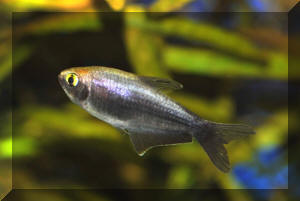
(Black
Neons, Bleeding Heart
Tetras, Flame Tetras, Lemon Tetras, Serpae
Tetras,),Inpaichthys (Emperor Tetras), Megalamphodus
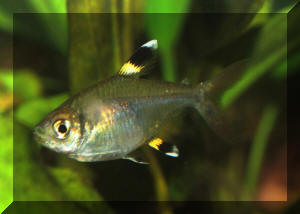
(Black Phantom Tetras),
Moenkhausia (Red Eye (Moenkhausia)
Tetras), Oligosarcus, Paracheirodon, Rachoviscus,
Tetragonopterus, Tyttobrycon. ) by Bob Fenner & FAQs on:
Tetragonopterines, &
Alphabetical By Species/Common Names: Black Neons, Black Phantom Tetras, Black Skirt/Widow Tetras, Bleeding Heart Tetras, Blind Cave/Mexican Tetras, Buenos Aires
Tetras, Emperor Tetras, Flame Tetras, Head & Tail Lights, Lemon Tetras, Neon
Tetras, Red Eye (Moenkhausia)
Tetras, Rosy Tetras, Rummynose
Tetras, Serpae Tetras, Silver Tip Tetras,
Related Articles: Characiform Fishes, Characid Fishes,
Mostly Small Tetras, subfamily
Tetragonopterinae
|
|
|
Bob Fenner
|
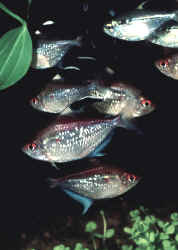
Bleeding Heart Tetras
|
Small characin fishes of southern U.S., Central and South America. Example
genera: Astyanax, Byconamericus, Bryconops, Cheirodon,
Gymnocorymbus, Hemibrycon, Hemigrammus, Hyphessobrycon, Inpaichthys,
Megalamphodus, Moenkhausia, Oligosarcus, Paracheirodon, Rachoviscus,
Tetragonopterus, Tyttobrycon.
Genus Astyanax:
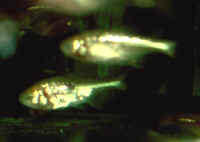
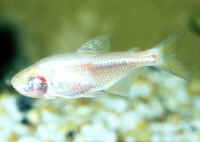
| Astyanax jordani (Hubbs & Innes 1936),
the Blind Cave Tetra. North America; Mexican endemic. Sometimes
identified in pet-fish literature as Anoptichthys sp. An
eyeless form evolved from A. mexicanus. Cond.s: pH 6-7.8, dH
to 30, temp. 20-25 C. A pugnacious species that must be placed very
carefully. Best kept in a "species" exhibit tank by
itself in a school. |
|
Sidebar: The blind cave tetra, Astyanax
mexicanus (Excerpted from: Extreme Characins Part 1: Hatchets, pikes, and other
lethal weapons by Neale Monks)
Blind cave tetras are a peculiar variety of
Mexican tetra, Astyanax mexicanus, that inhabit limestone caves.
Living in complete and perpetual darkness, they have no eyes and no
skin pigmentation, and for food they depend very largely on bat
droppings, which contain large amounts of undigested insect remains.
Because they cannot see their food, as would Mexican tetras living
above ground, they instead use a heightened sensitivity to sounds and
vibrations. When something hits the surface of the water, they will
swim towards it. They can also use their sensitivity to vibrations as a
sort of pathfinding sense, allowing them to locate other individuals in
the group as well as the physical boundaries of their environment.
Cave tetras are a bit pushy and can be nippy, so
while they can be kept in an ordinary community tanks with robust
species, they are most rewarding kept their own aquarium. Black sand
and upright pieces of slate will work very nicely, and for illumination
consider a moonlight or Grolux tube instead of normal aquarium lights.
Catfish such as plecs and Synodontis will work perfectly in such
an aquarium and make excellent companions for these fish. Hard,
alkaline water is preferred but these fish are very adaptable, and they
will eat practically anything, including flakes, pellets, bloodworms,
and most small live foods. Cave tetras get to about 8-10 cm/3-3.5"
in length and are relatively easy to breed if the water is cooled down
to about 18˰C (64˰F). Surprisingly perhaps, the fry have normal eyes,
and only lose them as they mature.
Genus Gymnocorymbus:
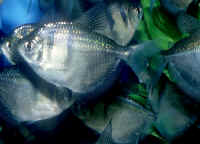
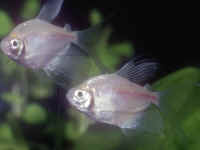
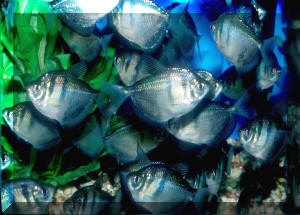
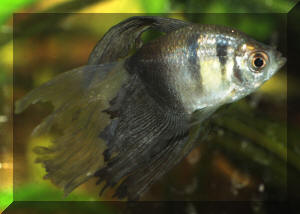
| Gymnocorymbus ternetzi (Boulenger 1895), the
Blackskirt Tetra. To 6 cm. South America; Paraguay and Guapore Basins. pH
6-8, dH 5-19, temp. 20-26 C. A few "sports" of this species have been
produced for the aquarium interest. Ones with no barring, some with no color
whatsoever, longfinned varieties... |
|
Genus Hasemania:
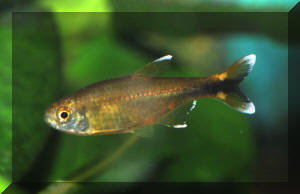
| Hasemania nana, the Silvertip Tetra. To 6
cm. South America; Paraguay and Guapore Basins. pH 6-8, dH 5-19,
temp. 20-26 C. A few "sports" of this species have been
produced for the aquarium interest. Ones with no barring, some with
no color whatsoever, longfinned varieties... |
|
Genus Hemigrammus:
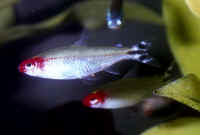
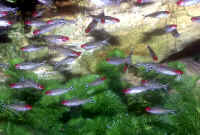
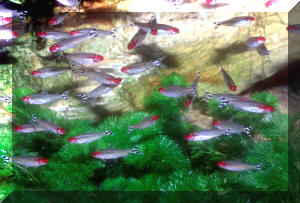
| Hemigrammus bleheri Gery & Mahnert 1986,
one of the two Rummynose Tetras of this genus. South America: Rio
Negro basin, Brazil; Río Meta basin, Colombia. 3.6 cm. standard
length. pH 5-6, dH 5-12, temp. 23-26 C. Show best being kept within
the stated water quality conditions in a grouping of several to
many individuals. Aquarium pix. |
|
| Bigger PIX: The images in this table are
linked to large (desktop size) copies. Click on "framed"
images to go to the larger size. |
|
|
Genus Hyphessobrycon:
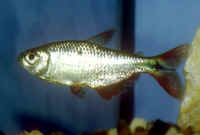
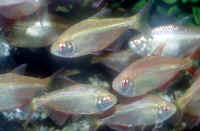
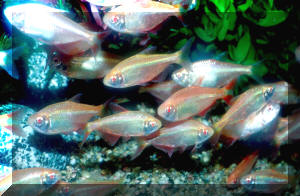
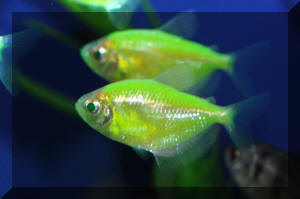
| Hyphessobrycon anisitsi Eigenmann 1907, the
Buenos Aires Tetra. South America; Rio Parana basin in Brazil and
Paraguay; Rio Uruguay basin in Brazil. To 5.7 cm. total length.
Amongst the hardiest of aquarium fishes. In the wild feed on worms,
crustaceans, insects and plants. Aquarium photos of cultured wild
and albino sports. |
|
Bigger PIX:
The images in this table are
linked to large (desktop size) copies. Click on "framed"
images to go to the larger size. |
|
|
Bigger PIX:
The images in this table are linked to
large (desktop size) copies. Click on "framed" images to
go to the larger size. |
|
 %20MD.jpg)
|
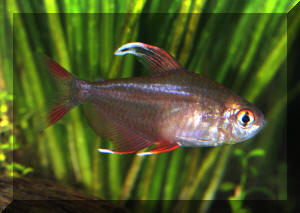
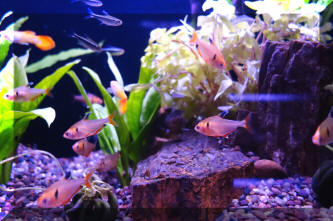
| Hyphessobrycon eques (Steindachner 1882) Serpae Tetra.
Nippy, but beautiful. TiffB pic at Aq. Exp. 2014 |
|
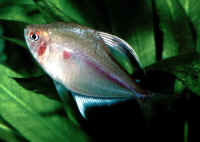
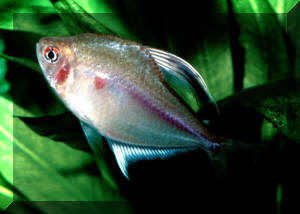
| Hyphessobrycon erythrostigma (Fowler 1943),
the Bleeding Heart Tetra. South America; found in the upper Rio
Solimoes of the Amazonas. To two and a half inches total length.
Cond.s pH 5.6-7.2, dH to 12, temp. 23-28 C. In the wild feeds on
insects, worms, plant material. |
|
Bigger PIX:
The images in this table are
linked to large (desktop size) copies. Click on "framed"
images to go to the larger size. |
|
|
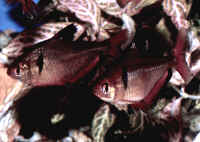
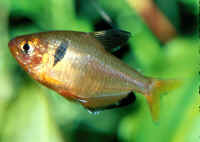
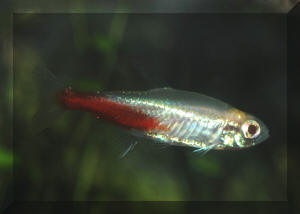
| Hyphessobrycon flammeus Myers 1924, the
Flame Tetra. South America; found in the coastal regions of Rio de
Janeiro, Brazil. To about an inch in length. Cond.s: pH 5.8-7.8, dH
5-25, temp. 22-28 C. Aquarium images. |
|
Bigger PIX:
The images in this table are
linked to large (desktop size) copies. Click on "framed"
images to go to the larger size. |
|
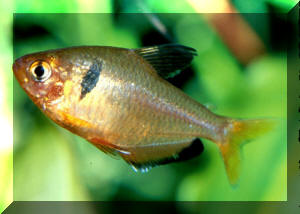
|
| Hyphessobrycon megalopterus (Eigenmann
1915), the Black Phantom Tetra. South America; Upper rio Paraguay
basin in Brazil; Rio Guaporé/Mamore basin in Bolivia and Brazil.
To 3.6 cm. in length. Cond.s: pH 6-7.5, dH to 18, temp. 22-28 C.
Aquarium image. |
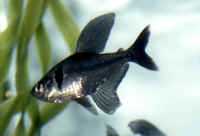
|
| From Neale: "This fish is some type of
Hyphessobrycon, and one of the "rosy tetra" clade at
that. Given its size and shape, I'd assume basic care much like
the Serpae tetra, Hyphessobrycon eos, i.e., a schooling fish, and
potentially a biter, so not to be trusted with slow-moving
tankmates." |
%20MD.JPG)
|
Genus Moenkhausia:
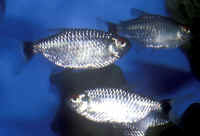
| Moenkhausia sanctaefilomenae Steindachner
1907, the Red Eye Tetra. South America; Brazil (in Paranaíba River
basin) and Paraguay. To 7 cm standard length. pH 6-8, dH 5-19,
temp. 22-26 C. Feeds on worms and crustaceans in the wild. Aquarium
photo. |
|
Genus Nematobrycon: Two species
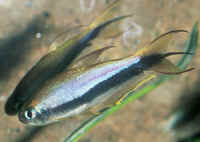
| Nematobrycon palmeri Eigenmann 1911, the
Black Emperor Tetra. South America; the Rio Atrato Basin. To 4.2 cm
standard length. pH 5-8, dH 5-19, temp. 23-27 C. Feeds on worms and
crustaceans in the wild. Aquarium photo. |
|
Genus Paracheirodon:
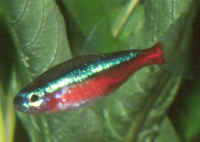
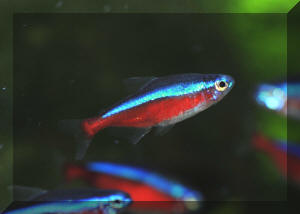
| Paracheirodon
axelrodi (Schultz 1956), the Cardinal Tetra. To 2.5 cm (2
inches), pH 4-6, dH 5-12, temp. 23-27 C. South America; upper Rio
Orinoco to upper Rio Negro. Aquarium photo. Best kept in schools of
several individuals. Difficult but not impossible to breed in
captivity, though most are still wild-collected. |
|
Bigger PIX:
The images in this table are linked to
large (desktop size) copies. Click on "framed" images to
go to the larger size. |
|
|
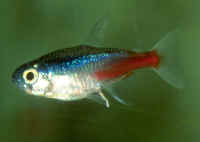
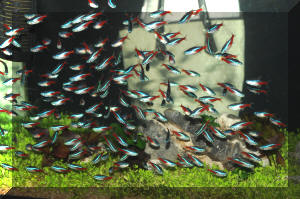
| Paracheirodon innesi (Myers 1936), the Neon
Tetra. To 2.2 cm , pH 5-7, dH 1-2, temp. 20-26 C. South America;
dark and clear waters of the Solimoes. Aquarium photo. Best kept in
schools of several individuals. Most now captive-produced for the
aquarium trade. |
|
Bigger PIX:
The images in this table are linked to large (desktop size) copies.
Click on "framed" images to go to the larger size. |
|
|
Genus Pristella:
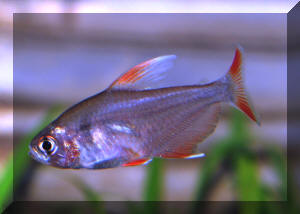
|
|


.jpg)
%20MD.JPG)