|
|
| Home | Marine Aquariums |
Freshwater Aquariums |
Planted Aquariums |
Brackish Systems |
Ponds,
lakes & fountains |
Turtles & Amphibians |
Aquatic Business |
Aquatic Science |
Ask the WWM Crew a Question |
| Please visit our Sponsors | ||||
Butterflyfish compatibility question
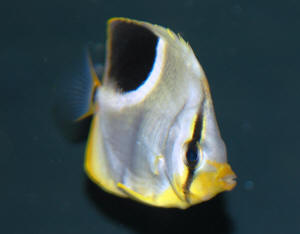
8/16/17 <Thank you Kathy; yes> I am currently in the finishing stage of cycling my 560 gallon FOWLR tank. ( tank size : L 72", W 60", H 30") I was wondering if I can put some golden semilarvatus and Tinkeri Butterflyfish together in this tank? In your opinion, would these 2 have a chance of co existing together? <Yes; have high confidence (have collected both species... in the Red Sea and HI), that they will be fine together in a system of this size, type. I would MAKE SURE the system is completely cycled first> And, given that the Tinkeri requires a lower water temperature , will the other fishes do okay with this? <I'd shoot/aim for an intermediate temperature... the mid to upper 70's F will suit all; as will a "normal" spg/density of water; 1.025 or so at this temp.> Future tankmates that I have in mind would be a red sea emperor angel or a scribbled angel and some tangs. <Okay> Thank you very much for taking time out to read my email. Your website has been a source of very useful information to me ever since I got into this hobby. <Ahh!> Sincerely yours, Kathy <Please do report back regarding your ongoing stocking, observations. Bob Fenner> Re: Butterflyfish compatibility question 8/17/17 Thank you very much For your prompt reply Mr. Fenner. Will keep my fingers crossed that I will be able to find these 2 species of Butterflyfish. I just have a follow up question about the Tinkeri .... is this fish better kept as a single specimen or as a small group of like 3? <Best as an individual. In the wild almost always found solitary> �� ( assuming I have enough budget to buy 3. They are quite expensive! ) Again, thank you very much. ���� Kathy <The genus, subgenus Roa are all worthy (but expensive) Butterflies. BobF> Re: Butterflyfish compatibility question 8/17/17 Thank you very much Mr. Fenner. Will update you. Kathy <Ahh, I thank you Kathy. BobF> Fish selection for custom size tank. Not these
3/25/13 Bad Aiptasia Problem -Klein’s Butterfly… Reef Safe? –
01/28/13
Butterfly Fish Compatibility 8/30/10 Re: Compatibility - Threadfin BFs 02/27/09 Another quick question... On further reading, read that Threadfins butterflies would be best one to a tank. Thoughts? <In large-enough systems a pair is fine... yours is border-line... Unless you find a/the two together, I would go with just one. BobF> Scott Chaetodon flavirostris Saw a Chaetodon flavirostris (black or
dusky butterfly) the other day in the LFS. Liked his unique look but
resisted buying until I could do additional research. (LFS wasn't
even sure what it was but said it had been eating). My research
produced everything from unable to keep in captivity to fairly easy. I
understand this is not a common fish in the trade. To make a long story
short it did nibble slightly at the LFS and I decided to take a chance.
He has adapted to the 300 gal tank and the other butterflies after only
24 hours and is very spunky always looking around. As of yet he has not
obviously eaten anything but appears very interested while the other
fish are eating. He does not appear interested in anything floating in
the water column. Do you have any first or second hand experience with
this fish and his/her chances of making it? Thanks
<http://wetwebmedia.com/poorchaetodons.htm Sorry to state, very few
Butterflyfishes of this species live for long in captivity. Have seen
two in European Public Aquariums in good health... but their historic
survivability in the trade is dismal. Good luck. Bob Fenner> Re: Golden Butterflyfishes Hi, A few days ago I emailed you about adding some Golden Butterflies to my 800 gallon Angelfish tank. After reading your comments and doing more research I went out and purchased 3 Golden Butterflies to be place in my 500 gallon reef tank. All three specimens are 4-5 inches in length. In the reef tank right now I have 400 lbs of live rock setup up in two large pillars that reach the water surface almost with swimming room in the middle of the tank (I kind of wanted it to look more like the outskirts of the reef with a collection of tangs ). I have various hard and soft corals, along with a few clams and so forth. The tank like my 800 was built on site and is glass not acrylic. It runs on two 90 gallon tubs/sumps and various other equipment that I have rigged up mostly. My reef keeping goes back about 5 years now so the tank itself is doing great. The Semilarvatus' were quarantined in a 75 holding tank in the filter room for about a day and a half. <Hmm, w/o reading further below, I would have left them there for a couple of weeks...> After they started eating I moved them to the 500 which contains the following for fish: Gold Rimmed Tang (Nigerians a year old and doing well!) 4 in, Achilles 5 in, 3 Red Sea Purple Sailfins all 3.5 in, Black Longnose 6in, 5 Chromis, 9 Sunburst Anthias, various gobies and blennies, and the reason I came into saltwater my 9" Red Sea Sohal Tang. It was a nightmare getting these fish to coexist for the first 3 months but now everything goes well especially since I stumbled across such a docile Sohal and he kind of intimidates them but never shows aggression. I'll have to check my readings but I think my bioload is good right now. The 3 Golden's settled in and were accepted except by the Nigerians but his nipping soon diminished. My question is how big should I expect them to grow? <Ultimately plate size (yes, several inches)... but quite slowly... an inch or so per year> Also should I worry about my corals? <Not much. Chaetodon semilarvatus are omnivorous, can/will eat SPS polyps at times, but generally prefer other foodstuffs> The fish get tons of food because my system is so efficient but will they still possibly graze? <To a large extent yes... though these are quite hefty, active fishes> Is there anything else I should expect/worry about? I never realized how awesome these fish were until I had them in the luxury of my own home! Thanks again, I love your site! <Thank you, and no, not much to worry re... this is a fabulous aquarium species for folks with adequate space. Bob Fenner> Butterflyfish Just one question, which of these butterflyfishes are more hardier? The True Falcula or Declivis butterfly? <Both on the "Better to good list"... but the Declivis by a handful of percentage points. Bob Fenner> Thanks, Ron Chaetodon semilarvatus Hi Bob, Does the semilarvatus butterfly eat mushroom corals? I would like to put one in my tank and I've gotten rid of all the coral except the mushrooms. My imperator angel does not bother the mushrooms and I just want to make sure the butterfly won't either. <"Won't" cannot be guaranteed... Chaetodon semilarvatus can, do ingest some stinging-celled animals in the wild... hard and soft corals... Are unlikely to eat corallimorphs in captivity though. Bob Fenner> Holly Butterfly in the reef tank, Blueface Hi Steven, The snippet below from one of your recent replies to me (different account) suggested a C. semilarvatus. It's a very pretty butterfly and I have been reading widely looking for reef tank safe butterflies. Your WWM listing for this species suggests it eats polyps and corals, though. I don't mind a little zoanthid nibbling and I don't keep LPS except for Euphyllias but is this one really a possibility for the reef tank? If the risk isn't too high I think I'd try it but I haven't previously seen it mentioned as a reef tank candidate. <Sorry, I did not pay real close attention to the subject line. The Semilarvatus is not a good choice. I made that suggestion to go with the rest of your Red Sea biotope fish.> As for the ones generally indicated as reef say, the Heniochus don't do anything for me but the long nose are pretty. <The two species of longnose BF's and the copperband BF are better choices.> Thanks! Marc <You are welcome. -Steven Pro> A longnose yellow butterfly or 3-4 yellow "Coris" wrasses for some yellow. (I prefer the butterfly though). Would love a pair but I've yet to see one advertised anywhere or in the LFS. <Get the butterfly. Maybe a Semilarvatus?> Question about redness in Chaetodon auriga Butterfly Mr.
Fenner, <Hello> Thanks again for the great advise on purchasing
the Iwaki circulation pumps and oscillator/wavemaker for great water
circulation! <Glad the folks here could be of assistance>
All of my fish are very healthy since I bumped up the circulation in my
tank. I have a 5 month matured 180 FOWLR system, current inhabitants, 1
bi-color angel, 1 tomato clown, 1 velvet damsel, 2 Chromis, 1 Xmas
wrasse and I just purchased today a large Chaetodon auriga Butterfly. I
have a question... the Auriga is about 7 inches large in size and
before I left the store he was perfect in color, fins exceptional
condition... <Seven inches? Shame on the collector... such
large specimens should be left in the sea... they don't adapt well
to captive conditions or ship well generally> no external problems
whatsoever. I arrive at home 10 minutes later , proceed to drip him for
about 45 minutes with a .019 salinity, same as what 's in my
hospital tank, then placed him in. <Mmm, then why the dip?>
I now see what appears to be a subtle redness, not too much, around the
mouth and fin bases. Can this be some internal damage due to the trauma
inflicted during the bagging and trip? <Yes, or residual, partially
healed damage from previous holding and shipping> When the store
salesperson scooped him in the plastic container I noticed the fish
flapped around quite hard against the glass and he may have injured
himself. I am very concerned about the redness ... is it internal
bleeding? <Possibly> Will he recover from this with good
treatment , good water quality and vitamins? <Again...> I
don't want to lose him. Should I place him in my main tank since
the environment there is much better... no nitrates, temperature
perfect? Please help! <I might do so> This is a section that I
read from Wet Web Media on Auriga's Appearance.... Appearance:
Reddening of the mouth or fin bases disqualifies a prospective
purchase. Due to their sharp pointed snouts, threadfins, indeed all
B/Fs need to be packed in large bags and laid on their sides in
transit. This provision reduces the chance of damage from slamming
during handling and shipping. <Not surprisingly, I totally agree...
with myself. Bob Fenner> Mitratus butterfly Hi Bob... <Hello> I have a fully stocked 300g reef.....maybe 50 medium-large Acros, as well as sponges, leathers, brains, polyps, etc. actually, just about everything is included. as for fish, I have several pygmy angels, Anthias, wrasses, Chromis to name a few. I am interested in adding a mitratus butterfly (I've wanted one ever since I saw them while diving in the Maldives). <A gorgeous species, complex of Butterflyfishes> there are some available, and flying fish has them listed as 'planktivores', but I am very leery of adding a butterfly to my reef. the last thing I need to do is add a 'reef mower' to my system. I can't seem to find any info on the net, and was wondering if you have an opinion on this. <This is about as close to "reef safe" as the chaetodonts get. Please read here: http://www.wetwebmedia.com/BFsBestWrst.htm, the many linked files beyond... or use the search tool on the homepage, indices re. Bob Fenner> thanks for any help you can offer, Doug C. semilarvatus Hi Bob, I wrote you not so long back,
enquiring about establishing pair of golden (semilarvatus) butterflies.
Normally, I store replies to such emails for future reference, but
cannot find the first one I sent. I also checked your FAQ's under
'best butterflies', 'red sea butterflies',
'Fishwatcher's guide to red sea', 'red sea
biotopes', and although the follow up replies are there, the
actually first email is not, which is what I am looking for. <Mmm,
should at least be archived under "Chaetodon FAQs":
http://www.wetwebmedia.com/chaetofaqs.htm There are other people's
queries re the species...but I don't see yours there... Please go
to either the homepage or an index, locate the Google Search Tool and
put in either the common or scientific name.> Anyway, I am sure you
would agree that it would be quicker to just ask the question again,
except in abbreviated form. In my 72"x18"x18" tank,
containing only a 3" juv. P. maculosus, and a 3" red sea 4
line cleaner wrasse, could I keep a pair of C. semilarvatus?
<It's a bit crowded, even for just the Maculosus eventually...
but you could likely stock them for a while (a year or so, depending
on... initial size, feeding, maintenance.> Second question, TMC have
informed me that these are naturally shoaling fish, and are collected
in groups, not pairs, so a pair cannot be obtained directly.
<Actually... I disagree re the schooling. Except in rare occasions
these fish are almost always found in pairs... they can/will school in
captivity and do occasionally associate in a group in the wild... but
not really a "shoaling species" per se> Given the fish
come from the same group initially, if I purchase two medium (about
3-4") sized fish and place them in my tank, will they coexist
peacefully, or would a single specimen be a much better choice? <A
couple is better, behaviorally and aesthetically> My dealer assures
me that he has done this before, got two fish, acclimatized them, and
put them together, and they co-existed for years with the occasional
minor scuffle. He has offered to acclimatize them for me. <They
rarely fight amongst themselves; I agree with your dealer> Would I
be mad to try this? Thanks for reading, Regards, Matt <Not mad... do
keep planning on a larger system though... something in the 1000-1200
liter size. Bob Fenner> Melon Butterflies belong in the Ocean, bub 5/14/03 Hello I was wondering if I added my two melon butterflies about 1.5 to 2" to my main tank that has a clean up crew of snails and blue legs crabs and a sand sifting sea star would I have to worry about them eating the clean up crew and last but not least I have some stag horn and Stylophora and a few pieces of Acropora plus a few mushrooms in my system mostly SPS would they possibly attack these corals or do they just eat coral polyps, anemone, and other soft meaty corals? THANKS! <this butterflyfish should not be imported into captivity... they are obligate feeders on coral polyps... specifically Pocillopora. If is impractical, if not unethical to import or purchase this fish unless you are farming Pocillopora coral to feed it. More information see here: http://www.fishbase.org/Summary/SpeciesSummary.cfm?genusname=Chaetodon&speciesname=trifasciatus best regards, Anthony> Chaetodon ephippium- reef safe butterfly? 3/14/03 just a quick question: any experience with the Saddleback butterfly (Chaetodon ephippium) and hammer corals? I already have several hammers and would love to get a butterfly. If not the saddleback, any suggestions? thanks for your help, Tom L <as you know, almost all butterflies are a calculated risk with corals. There are very few that are reasonably safe. The safer species (less inclined to eat Cnidarian tissue) are the longer nosed varieties. Copperband butterflies are one of the safest if your tank is peaceful enough (no tangs, few damsels/clowns, etc). Any chance with a Saddle is best taken in a very large aquarium (over 300 gallons) as this is how many public aquaria get away with it. The sheer volume of live rock affords more grazing opportunities on bryozoans, tunicates, and sponges growing naturally and satisfies/tempers the borderline species. Anthony> Chaetodon semilarvatus Hey Bob and Anthony and Crew, <Hello Peggy> Researching the Masked Butterfly (Chaetodon semilarvatus) as a possible addition to a 72-gallon bow front tank. I'm getting conflicting information as to whether or not these fish should be housed singly or in pairs. <Singly if in such a small system, in pairs if hundreds of gallons> Some say absolutely no pairs, just aggregations or singles, others say usually found in pairs. I've see them in pairs more often than not but figured I'd come to the masters and ask you to opine. <In the wild (Red Sea) almost always encountered in pairs... unless quite small or rarely in "spawning" (?) aggregations> Also conflicting info on minimum tank size, diet, etc. The most believable info I've gotten so far is from "The Conscientious Marine Aquarist, but it is limited due to the intended scope of the book. <Yes> It appears as thought this fish needs very peaceful tankmates. Does this hold true if this fish when introduced is larger than an existing tank inhabitant who may be known to be a bit "pugnacious" as they say, i.e., a small Purple Tang? <Should be fine. This butterflyfish, more than most, can "hold its own"> The only other fish in this system are 2 Blue/Green Chromises who are obviously no threat. There will be about 125 pounds of Marshall Island rock (presently have about 75 but will be adding another 50--cured of course). I would be grateful for your opinions and any specific info you may wish to share on this beautiful fish. Also, any recommendations on high quality online stores from which to purchase this fish? <Look on the various aquarium chatforums, bulletin boards. The folks at Marine Center (.com) have a very good reputation> Local retailers sometimes carry them but they never appear healthy. What's your opinion of Aquacon? <Only know them indirectly. Have heard good things about their practices> Only looking for top notch dealers. I do have wholesale status for with a couple wholesalers for my small aquaculturing business, but these fish are not common on their inventory lists. Unfortunate because one Florida wholesaler is excellent and provides only healthy, excellent stock. Sorry for blathering. <No worries> Can't wait for the new book to arrive. <Us neither! 'Twill be soon.> Many thanks for your kind assistance. Peggy <And you for your participation. Bob Fenner> Triangular butterfly Hello wise and kind Wet Web Crew,
<Howdy> My LFS recently sold me a fish that turns out to be a
Triangular Butterflyfish ( Chaetodon triangulum ). This was not what I
was told I was buying. Yes, I know I should not have bought it on the
spot!!!!!! So after I get it into quarantine I of course
look up what this person told me and it turns out to be a triangular.
Both you and all the other references I could find claim this fish will
most likely die in a month. The fish is a juvenile (less than 2 inches
long) and ate both at the store and in my tank. My thought
is that I should take it back and get a refund. I don't want this
fish to die simply because I can't feed it properly. My system is a
sparsely populated FOWLR 75 gal. I fed it angelfish frozen food. Any
thoughts? Thank you again for your wonderful site. Warm Regards,
Joe <Mmm, sounds like you have a good grasp on the
situation... Your choices you've elucidated clearly... I would
return this specimen unless you want to "take the
challenge"... the vast likelihood is that this specimen will not
live for more than a week or two. Bob Fenner> Klein's Butterfly Hello, <Hi there> I have a 230 gal. tank with 230 lb. of live rock, two pulsing Xenia, two clowns, one coral beauty, one algae blenny and a Klein's butterfly (all yellow except for face - 4 in. long). I would like to have a small school of Klein's butterfly fishes - 3 or 4. The one that I have doesn't eat the Xenia. Here are my questions. Will they swim in a school? <This is one of my favorite butterflyfishes, and have observed, photographed it many times throughout its range... it is almost always encountered as individuals (though I have seen them in groups occasionally... teaming up to eat Damselfish eggs/nests in Sulawesi most recently)... unlike the bulk of butterflyfishes that occur in pairs... and the few that aggregate on a regular basis. I don't know that the species would associate with others of its own kind in your setting> Will they be peaceful towards each other? Can I add one at a time and do they have to be adult size? <Good questions... you might try sending your query out to a wider audience, perhaps ReefCentral or reefs.org in the hopes that someone might have more experience with this BF> At what age do they get the full yellow colour (lose the brown band)? Are they all Xenia safe or am I just lucky with this one. If a school would work what number would be best for my tank? The only other fish I intend to add is a Royal Gramma. Thanks, Peter <Most lose the darker banding at about four inches total length. I would try adding whatever number you intend to ultimately have all at once. If it were me, a total of three in this system. Good luck, life. Bob Fenner> Butterfly Pairs <HI, Mike D here> A while back I was told by in of the crew members that I might be able to get away with one Golden Butterflyfish in my 75 with my other stock. Here is the stocking list Fish. 1- Moorish Idol 3 inches. (yes it eats) <You're lucky, as most don't last> 2- Kole Tang 3 inches 1- Six Line Wrasse 2 inches 1- Gold Headed Sleeper Goby 3 inches Inverts. Assorted mix of snail and cucumbers etc Rock / Sand Right now I only have 20 pounds of rock but I plan to get 20 more because in this somewhat small tank I just want to create a side of the reef image (so far with the little rock it looks good). The edge of the reef design also gives my fishes more space to swim. I have about 80 pounds of live sand in my tank <In my opinion, you're at or over capacity now. Don't forget, the fish you have will grow!> Equipment. Protein Skimmer UV Sterilizer Aquafuge Refugium Now my question is, when I went to my LFS I was going to purchase 1 Golden BF. But they insisted that I buy 2 of them. I told them that I had a 75 gallon tank and they said that the size would be ok. <They are referring to the size they are now and not considering them actually surviving.> The BF they have are only 2 inches. Is this true and will I be actually able to keep these 2 fish?<They are trying to sell both fish because they can and do live in pairs, but these are juveniles. Use care, as this shop seems much more concerned with the contents of your wallet than of your aquarium.> I wanted to make sure before I bought these expensive $$$$$$$ fish. Scott MCkeown <To add my 2-cent's worth, perhaps there would be a better, smaller, less expensive choice that could be added singly. FWIW, I also would be hesitant to buy such juvenile (2") butterflyfish in any circumstance. I'd be worried about them surviving. A bit bigger fish that is demonstrably eating well at the dealer would be a better bet. Steve Allen> New Tinker BF processing Hi Guys or Gals, <Matt> I have a quick FOWLR questions. I am purchasing a Tinker's Butterfly for my 250 FOWLR and Mr. Fenner once recommended to me NOT to Quarantine my Pakistani B'flys. Should I take the same steps with the Tinker's or should I quarantine? I always quarantine my fish for a period of two months. But my Q tank has no live rock which seems to be essential to the Tinker. What should I do? <I would NOT quarantine a Tinker's... WOULD treat as stated for the Pakistan> By the way, What do you folks think of the hardiness of the Tinker? <It is about as solid a species of Chaetodont (as are all subgenus Roa) as there exists> Thanks a ton and Happy Holidays, Matt <Bob Fenner, out in HI, saw two Tinkers in pretty shallow... about 120 feet, yesterday> Chaetodon pelewensis and Prayer - Why do People Insist on Impulse-buying Animals??? 10/25/05 First of all OH MY JESUS I LOVE THIS SITE, <Yeeikes!> second of all I went and bought a Chaetodon pelewensis, although it was sold it under the name "sunset Butterflyfish". Now I didn't know it was on your hate list but I bought it because it looked stunning, in fact seeing as it's a butterflyfish I cleared out my whole tank for it so that it's the only fish in the tank. I have no idea what the gallon conversion system is in America (so sorry I live in England by the way, and I'm a deliciously ignorant 15 year old) <<Apparently it isn't just Americans who suffer poor punctuation, grammar, etc. Can't accuse you of being a non-native English-speaker, can we? MH>> <You'll be just as delicious, but far more satisfied with more knowledge... there's a bit less than four liters/litres per U.S. gallon...> but my tank's dimensions in inches are 30 x 12 x 15 so if you could be kind enough as to tell me what its capacity is, I'd be very grateful. <... there are about 231 cubic inches in a U.S. gallon... multiply those three numbers together, divide by 231...> <<As well as MANY conversion programs/sites available online! We Yanks can even convert to liters using them. MH>> Anyway my main concern now is that I've got it, so I need to know how do I care for it, feed it etc. <...> Also the concept of live rock isn't huge here in England due to the related problems of disease. Anyway please help me, also is my tank too small? <Yes> I really don't want to get rid of it as I love it and it cost me £120 which I think is nearly $300 and so you can imagine my father was mortified and there is no refund policy. <<Well, how did you get the money/credit card?>> Also if my tank isn't too small do you think I could add any other fishes, if so which ones? <I would beg the stockist to allow you to exchange this fish for more suitable life... Please start reading here: http://wetwebmedia.com/smmarsysstkgfaqs.htm and the linked files above... Bob Fenner> Re: Cyano Bacteria Stumper 4/09/06 Bob, <John> As always thank you for the response. <Welcome> And yes, the Chaetodon miliaris does deserve more attention because in my experience it has been a majestic peaceful fish causing no harm to my modest reef. They are also beautiful and this one has been easy to care for. <Ah, yes> Thanks again Bob and to the whole WWM crew for their dedication to this great hobby. Regards John <Welcome my friend. Bob Fenner> Blue cheeked Butterfly - 05/07/2006 Hi Bob, <Justin with you today> Kudos to you, Anthony C., and the crew at Wet Web. Your dedication to education and generosity with your time are greatly appreciated. <Thank you, will pass that along to Bob> Researching the beautiful C. semilarvatus and wonder if you'd care to opine on the conflicting information about keeping them singly or in pairs. <Mmmm one of the beautiful butterfly fish, this fish seems to do well either way, though a male and female pair does do better than a single of either. They DO NOT ship well, being very prone to hurting their mouths by rubbing them on bags. Be VERY careful about buying one, as a mouth injury is usually fatal in the home aquaria, the fish just stop eating. If you can find a pair that is eating, and have the space, they make a great addition, a good hardy single specimen as well, but do be very picky about buying one.> Many thanks. Peggy <Justin (Jager)> Addis Pair 5/31/06 Hi, I have emailed previously and found your (Bob's) answer, along with the other articles on the site very helpful indeed so thank you. I am 16 yrs old and still at school in England, so as you can guess, money is quite tight, so as much as I can I have resorted to DIY. I am moving on to my third marine tank, and my final one until I have my own house and no restraints :) <Forward looking. I like this immensely> It is 150 gallons, I realize this is not the largest, but the most I could house and afford. I will run all my old equipment and sump on it, including Deltec APF600, TMC UV Unit etc and 40 gallon sump. I hope to create a Red Sea biotope, I wish to create almost a mini reef containing all the major zones. This way I can save on lighting costs by having my halide over the highest part on one side - "Reef Flat" for SPS etc, my T5's over the "Reef Slope" in the middle for the softies, and my original tubes on the "Sand Flat's" for mushrooms and open swimming space. <And I really like biotopes and the "uneven" approach (lighting more/less intense) you mention. The contrast is of utility and beauty> Does this sounds ok, it just seems a neat way to save money on buying Halides for the whole tank etc whilst creating an acceptable, interesting and diverse environment. <Sounds fine to me> I have a school of 5 small (3") Pseudanthias squamipinnis (1 male and 4 females) that are living very happily in my 60 gallon that are to be swapped over along with all the live rock, corals etc and a further 25kg of live rock is on order. <Good> I will also use my 60kgs+ of Ocean Rock as a base and structure builder. After much persuasion, my parents have allowed me to install my "modified" Carlson surge box in the attic (as I live in a bungalow with concrete floors, weight for the tank is fine, also the attic is only 2 feet from the top of the tank cabinet), because I have heard great results and once again cannot afford £300 for a "Wavemaker". Do you think this is a good idea and is this type of flow good for coral, fish and detritus suspension?? <Is indeed> I have sealed braces at the ends of the tank so the surface wave deflects back (worked in testing), reducing splash and salt creep. Also should the wave hit into the higher "reef flat" side of the tank or start from this side, i.e. which direction would benefit the corals the most, especially the SPS? <Mmm, direct is best... the "front"> Finally, the burning question, I would love to keep a pair of Addis Butterfly's as they are often observed in the wild. I have done quite a lot of research, and most places seem to recommend a minimum size of 50 gallons so logically 2 would need 100 gallons and more. They are very expensive so I am seeking as much info as I can before committing. Would I be able to keep a pair for several years and maybe forced to give them away but it would still be worth it for me as they have been my most admired fish ever since I entered the hobby?! <Mmm, well this species, most often termed the "Blue Mask", "Golden" or "Semilarvatus" BF in the West is best in even larger systems, but should do fine here with what you list if not further crowded> They would not be crowded as I have always preferred to have less fish - minimalistic, and the Anthias could be removed if necessary if they would be classed as to boisterous. Maybe the 2 Addis as showpieces and then blennies/gobies etc - i.e. no other large fish?! Sorry for all the questions and I eagerly await your answer, and keep up the unrivalled good work :) Many Thanks Oliver. P.S I would never have go this far in the hobby without your help, as unfortunately, my age often dismisses peoples opinion that I can succeed in this hobby, financially but your last email made me realize that I can succeed, so thank you again <You might not be surprised to find how young some of WWM are... or started... myself, considerably younger than your current age. Cheers, Bob Fenner> Raccoon Butterfly problems, too small at purchase 8/23/06 Hi, I have read through all your articles I could find on getting a raccoon b/f to eat, but I am not having any luck. My new arrival is small (1 to 1 1/2 inches) <... too small> and I was very leery about buying such a small specimen. <You should be... I would take it back, pronto> I visited this fish four times over the course of so many weeks though, and he appeared healthy and was eating flakes like a pig. <Can't, won't live for long on flake food... try it> When I got him home, he ate for the first day, and then quit. I have to mention that when he met my cleaner shrimp, the shrimp went wild on him and exposed (?) a white patch behind his gills (not near them). <Could be a factor> It has not spread and neither the shrimp or the patch have bothered him since that first day, so I am not sure what it is. As far as eating, he will pick off the live rock occasionally, <Good> but will not eat anything else I put in the tank (flakes, Mysis shrimp, brine shrimp, Nori, krill, marine cuisine, oysters). So, I followed your advice and bought two different types of clams, pried them open and put them in the tank, so far- no interest. <Mmm, I'd be adding more, fresh live rock...> He is falling fast, I think, starting to lay on his side <A very bad sign> occasionally, swimming around fairly well otherwise. I know I am running out of time. There are no noticeable marks/redness around his mouth or gills. So, finally, for my question, we are thinking if he refuses to eat the clam, should we try transferring him to the refugium for a little while, so he has plenty of access to the copepods with no competition? <An excellent idea> I have to get him to eat something soon -this is about day 5 that I have had him. I am worried though that moving him again may just stress him out so much that he wouldn't make it. Do you think the move would be worth the risk? <Yes... about the only thing that might save this too-small specimen> Also, if I do put him in the refugium, should I put a clam or any other food down there with him? <No, I would not> I would appreciate any help you can give me! Thanks so much for your time. -Take care, Jennifer <Next time... please read re the species, genus (if they're available), family information on WWM re "Selection" for input on ideal size range for first purchasing specimens... like Goldilocks and the tres ursids and pudding temp... Not too big, or small... Bob Fenner>
|
|

|
Features: |
|
| Featured Sponsors: |