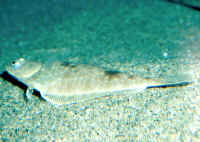
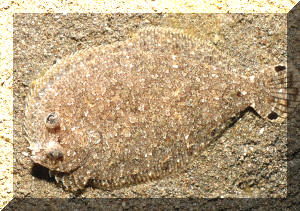
Order Pleuronectiformes:
Adults are not bilaterally symmetrical, juveniles are with one eye
migrating to the other side of the cranium; dorsal and anal fins have
long bases Bodies are highly compressed, somewhat rounded on eyed
side and flat on blind side with eyes that can protrude above body
surface allowing fish to see when buried in the
substrate;
About Freshwater "Flounders" of the Families
Achiridae, Soleidae, Cynoglossidae, Pleuronectidae. Yes, there are
maybe four true freshwater Flatfishes, though strictly speaking they
are not true "flounders", as well as many brackish species
that venture upriver temporarily.
| Family
Achiridae, American Soles. Western Amphi-Atlantic. Fresh,
Brackish and Marine. |
|
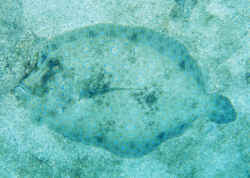
| Family
Bothidae, Lefteye Flounders. Marine; Atlantic, Pacific, Indian
Oceans. |
|
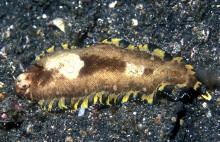
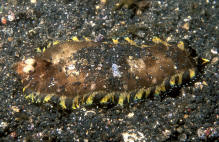
| Cynoglossidae, the Tonguefishes: Marine,
some venturing into freshwater. Worldwide tropical, subtropical
seas. Here's an unknown species in NSUL at night. |
|
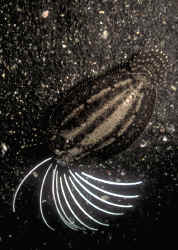
Family Samaridae. Three genera, 20 species. Indo-Pacific;
marine, tropical and subtropical. Generally deepwater. Dorsal fin
originates before eye, lack postcleithra, pelvic fins symmetrical.
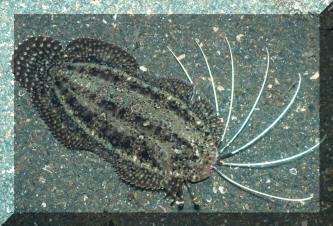
| Samaris cristatus Gray 1831, Cockatoo Right
Eye Flounder. Indo-West Pacific; all of Indian Ocean to Noumea. To
22 cm. Found on silty sandy bottoms, whipping out their
under-tucked longer dorsal fin rays to confuse potential predators.
N. Sulawesi image. |
|