|
|
| Home | Marine Aquariums |
Freshwater Aquariums |
Planted Aquariums |
Brackish Systems |
Ponds,
lakes & fountains |
Turtles & Amphibians |
Aquatic Business |
Aquatic Science |
Ask the WWM Crew a Question |
| Please visit our Sponsors | ||||
My ETSS Skimmer question & reef maint. f'
12/10/09 After Curing LR???/Live Rock 10/15/09 Liquid Calcium and Iodide: Dosing without testing SW
Chemistry\Supplements 10/13/2009 Saltwater Storage/Make Up Water 9/18/09 Swimming space vs. filtration, reef op.
7/18//09
Re: Water parameters out of whack? Water Changes With No Fish? 6/19/09 Keep your hands out of my tank Marine System and
Maintenance. 6/5/2009 Stocking - nitrates - feeding
05/21/09 Re: Ca reactor 4/28/09... Chatting... re SW maint. --
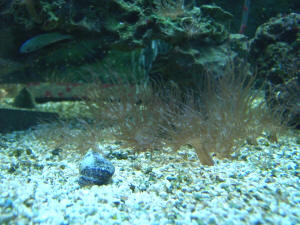
4/29/09 Dearest Crew/Scott! SW op. f' 3/17/09 Re: New Marine Setup 3/11/09 Re Nitrate And Unidentified Invertebrate 3/10/09 (Bob, I added double carats to his answers, why he inserted, I don't know.)<...> 3/10/09 I answered your questions below > Nitrate And Unidentified Invertebrate 3/9/09 > The picture isn't Jordan's award :> > I have two questions, I have a 65 gallon saltwater tank with soft corals and fish. I've had it for about 14 months and really enjoy it, although it is a continuous learning process. Water is changed weekly, calcium, strontium, and iodine was added and everything has been fine except I can't get my nitrate lower than 20. > <How about magnesium levels, is a major element.> > I've done multiple water changes, watch how I feed and everything is healthy in the tank. Is 20 an acceptable level? > <If your kit measures NO3-N, 20ppm would be acceptable for fish only systems, but for corals, your measured level is high. <<My kit measures N0H3 and says" Other nitrate kits that measure nitrate-nitrogen (NO3N) will give readings 4.4 times LESS than this test kit). And that means???? <Your kit measures total nitrogen.> I have a Bubble Tip Coral (doing great), a Bubble Coral, Mushroom Coral (blue) and another with small bumps on it (came with something else) but doing great and splitting (no problems and star polyp, divided and multiplying too. This higher range nitrate has been going on for months. The only thing I've lost is a brain coral. Fish; 2 Cardinalfish, a Yellow Tang, 2 Clownfish,3 Green Chromis, 1 Purple Chromis (looks almost black) a dark blue tang with yellow tail (tangs get along fine) <Hippo Tang>. I'm am not adding anything else, planning on getting a 90 gallon tank with underneath drill in the spring (shortly). I realize the fish and corals will grow and I need to have more room for them. <You also need more room for the fish, too high a bio load for your tank and is likely the cause of your high nitrate level. The Yellow and Blue Tang can grow quite large, and even the upcoming 90 gallon will eventually be too small for them.> > Are you using a protein skimmer? This will aid immensely in lowering nitrate levels and is considered a must have for maintaining healthy systems.> <<Yes, I have a protein skimmer, an under the tank large filter, and water wheel that turns filter.>> > I've also got a new addition that must have come from the rock. Can you help identify it, I just want to make sure it isn't a glass anemone. The body is round with what looks like the mouth in the centre, the tentacles are long and fine like hairs. > <Picture is a little blurry but from what I can determine, it appears to be the dreaded aiptasia anemone. This needs to go. Do search our site for info regarding this unwanted hitchhiker.> <<Thank your for the directions, I went right to it and see that sucking it out isn't a very good idea. Will try some of the crabs first and keep an eye on it. I did try to suck it out but it just retracted into the fissure hole, didn't want to start pulling it apart and end up with more.>> <You might want to try a product called "Joe's Juice". I have been hearing that the product works quite well. In future responses, do not insert your text into the original answered text, it makes it difficult to read and define who wrote what when. Just reply to the email. James (Salty Dog)> Suggestions 2/23/09 Dear Sirs, <And Madams, hello Larry.> Thank you so much for your forums, I get a lot of great information here. <Good to hear, thank you.> I have been in this for little over 2 years now and Mr. Fenner's book has been my main guide. <! He will be no doubt happy to hear.> I started with 55 gallon tank and little over a year ago went to 75 gallon. It has 3 inch sand bed, 90 pounds live rock. Blue legged crabs, turbo snails, 1 sand sifting star, <Hmmm, see http://www.wetwebmedia.com/marsiftfaqs.htm> 1 brittle star, coral banded shrimp, red shrimp, 2 Tridacna clams, bubble tip anemone, star polyps, green button polyps, green and purple mushrooms, finger corals, yellow and orange sponges. 2 maroon clowns, 6 green chromis, 1 midas blenny, 1 yellow goby, 1 sohal tang. AquaC protein skimmer, emperor 400 power filter, 3 power heads, DIY denitrator, 48 inch dual compact fluorescent lighting. I do a ten gallon water change weekly. Turn filter and skimmer off for 30 minutes. Add Kent tech cb calcium & buffer systems, iodine, strontium, phytoplankton. <All of this is tested for, right?> My water quality stays great except for nitrates, reason for denitrator. The polyps have grown and look great, the coral and mushrooms are trying to take over. Have to weed them out. <Typical'¦but a good sign.> But I can't keep an anemone. I am on my 3rd one. They last about 4 or 5 months. Start out great, then wither away. I feed piece of shrimp weekly. Tried everything I know????? <Could be a number of reasons, incompatibility in your system, instability, lighting, water quality'¦ all plays in. See: http://www.wetwebmedia.com/marine/inverts/cnidaria/anthozoa/bubbletipanemones.htm and the linked files above.> I would like to add sump, without bio-media, with skimmer, but have problem with cabinet. There is 14 inches to first shelf. The shelf is 1 inch thick and is built in. I would have to cut out. Wasn't thinking ahead at time of purchase. I was thinking about putting a CPR dual BakPak 2 and doing away with power filter??????? <What about your Remora? It is a far superior skimmer.> I am also starting my 55 gallon back up. It has been running little over 3 weeks. Put 40 pounds live sand and 10 gallons water from established tank. 2 power heads, Skilter filter, SeaClone skimmer. The filter and skimmer are temporary, not crazy about neither. <'¦a good assessment.> I added 40 pounds live rock yesterday. Turned skimmer on, adjusted, adjusted, adjusted. I plan to put 30 more pounds rock in about a week if water quality is o k. If I go with CPR BakPak, will put AquaC skimmer and 400 power filter on 55.The frame on 55 is open steel type, <<Mmm, this won't do... hard to coat so it won't rust, pollute the system. RMF>> so there is room for sump at latter date. Any suggestions and pointers would be greatly appreciated. <Opt for Remora #2!> Thank you all very much! Larry Leesburg, Al. <Welcome, Scott V.> Re: Overflow sizing, amount/Ca reactor valve 1/27/08 Hey Scott, <Hello again Matthew.> I just went ahead and ordered a couple more needle valves from the reef creations site. I found that to be much easier but i appreciate the McMasterCarr website. <Yeah, the site is amazing but sometimes it is just not worth sorting through it all for a few bucks savings. Time is worth something too!> Question for you: If i were to place a 150 gallon Reef tank in a waiting room where sunlight hits the tank for a bit of the afternoon, and this would be a tank equipped with 2-400 watt lights on it, would i run into serious algae problems regardless of having an added midnight lit refugium and 20% water changes every 2 weeks to reduce any chance of nitrates. I am looking into this kind of project but wanted to be sure that i wouldn't have to stop by more than once a week to address algae problems. <Hmmm, well lighting is one factor in algae growth. But if you have other factors (see: http://www.wetwebmedia.com/algaeconMar.htm if you need to, but I have a feeling you know all this) under control it will be fine. I have done just this in my own waiting room in the past.> I had a 90 gallon reef tank setup in this location before but that was equipped with an insufficient/poor quality skimmer and had no refugium and had only 10 gallon water changes once a month...not nearly enough water changes as required, quite a contrast from the proposed and improved routine above. What are this tank's chances of success? <Very good by my estimation.> Thanks, -Matthew <Welcome, Scott V.> Hank needs Help! Env., iatrogenic reef dis... Goniopora
hlth. 01/23/09 Hi! I sent the e-mail below a couple weeks ago
and didn't receive an answer. <Huh, I couldn't find any
answer posted either. Sorry about that!> I'm sorry to send it
again, I know you guys are busy, but out friend Hank needs help! I
appreciate any of your time you can spare!!! Thanks!!! Hi!!!! I love
your web site!!!! I looked and looked for a related answer to my
question and apologize if I overlooked it! Okay, so here are my tank
specs and a picture of Hank our tank:
http://img510.imageshack.us/my.php?image=adulthankxt9.jpg 55 Gallon SW
/ 100 lbs of live rock / FILTERS: max jet 120 & Marineland multi
260 / LIGHTING: Corallife 48 inch LIVESTOCK: Pink Carnation / 2
Clavularia Clove Polyps / 1 Leather polyp / Ritteri Anemone / 5
mushrooms (4 green, 1 purple) / Tree Coral FISH 9 Green Chromis /: Lg
Cardinal / 2 Bangal Cardinals / 2 Percula Clownfish / Mandarin Goby /
Black White Blenny / Sea Cucumber / 2 Starfish / Emerald Crabs / 2
peppermint Shrimp / Snails / Hermit crabs LEVELS: Temp 75-80F / Gravity
1.022 / pH: 8.2 / Ammonia: 0 / Nitrite: 0 / <Your salinity should be
higher for your invertebrates (closer to 1.025 to 1.026).> Nitrate:
19PPM <This is way too high.> Okay, so my questions, A.) We have
a Leather Polyp that seems to be in trouble. <All your
inverts/corals are in trouble. Your salinity is too low and your
nitrates are too high.> He use to stretch out and now he just stays
stuck in his rock and never comes out more than a 1/2 inch (he use to
stretch out to 3 inches sometimes! (although I admit, he would do that
about 8 months ago and our tank has much more live rock in it now).
Also, when we got him, the entire surface of his rock was covered with
him and not he seems to be dying off because there are lines and holes
in it. Also, there is a white soft almost transparent sponge/alga
growing under him. Can you help? I don't know how to help him and
its our favorite piece! I downloaded pics to Imageshack so I didn't
have large attachments.
http://img141.imageshack.us/my.php?image=leathercd2.jpg <Whoa...
this is NOT a leather coral! This is a Goniopora! A very, very
different kind of coral altogether! Who told you this is a leather
coral?!> http://img81.imageshack.us/my.php?image=leathernr0.jpg
<The coral is bleached and dying. You need to start feeding this
animal asap if it is to have any chance at all. Please see here:
http://www.wetwebmedia.com/gonioporapix.htm
http://www.asira.org/goniopora> And 2.) Also, we have white worms
all over the tank. I believe its due to overfeeding (our neighbor fed
our little guys while were out of town and I believe he over did it a
little) Do you have any suggestions of an invert that will eat these
little guys? <No need... please let the worms be. They're good
for the tank and don't cause any harm. Chances are, their numbers
will decrease in time anyway.>
http://img81.imageshack.us/my.php?image=whitewormsed6.jpg Okay, sorry
for the long e-mail. I know its probably easier if you know about the
tank to answer. Thanks for any advice/help you can offer and for your
time. I really appreciate it!! Happy New Year too!!!!! <And to you
too, thank you.> Heather Brion on behalf of: Hank the Tank"
<Keep reading/learning, Sara M.>
Old Lady, New Hobby With Potential Problems Ahead 1/20/09 Bright Blessings WWMCrew, <And ditto to you my friend.> I have spent much time on your web site and have learned much from your discussions. <By looking below, you need to learn more.> Being new to the hobby I just wondered if you would check the following stats of my tank and let me know if you would make any changes. I am a bit concerned about the lighting and water flow and am wondering if what I have is conducive to soft corals. My toadstool has been situated for about four days now and has not yet opened up at all like it was at the LFS. It occasionally has goose bumps but nothing more. I have placed it in approximately the same area that it was in the tank at the fish store. Perhaps I need to be a bit more patient. <The Toadstool is going to require more light than you are providing, especially with a tank 24" deep. Do read here. http://www.wetwebmedia.com/marlgtganthony.htm As far as the coral not blooming, this is not uncommon when moving to a different tank.> Thank-you again for the excellent service you provide. <You're welcome James (Salty Dog) Do look below for suggestions in carets.> J. Sage. Old lady, new hobby) TANK 6 mos. old 65 GAL. GLASS TANK 36 W / 18 D / 24 TALL LIGHTS ODYSSEA 12000K 96W TRUE DAYLIGHT 96W ACTINIC <Lighting needs to be upgraded for keeping corals re above link.> PROTEIN SKIMMER/SUMP CLF1 COMPACT BERLIN SYSTEM 24X13X14 LIFEREEF CLF1 SUMP SVS2-24 LIFEREEF PROTEIN SKIMMER <Good product choice here.> MAGDRIVE 9 PUMP FOR SKIMMER MAGDRIVE 9 SYSTEM PUMP LIFEREEF PREFILTER SIPHON BOX 35 lbs. LIVE ROCK 2 INCHES SAND SUBSTRATE LIVESTOCK Sarcophyton Alcyonium <Again, needs more light.> Antennarius maculatus (No problems with any of her tank mates. She is hand fed silversides and seems very happy.) <Mmm, unusual to keep an Angler Fish in your set-up. Can be risky with small fish present.> Amphiprion ocellaris Paraglyphidodon melas (2) <An aggressive fish that can grow to 5"> Chrysiptera parasema (2) <Better choice here in the Yellow Tail Damsel.> Cyaneus viridis <Chromis viridis> Goby Neosynchiropus ocellatus The Scooter Blenny/Dragonet can be difficult to keep due to it's feeding habits.> Centropyge flavissimus <Not an easily kept fish for a newbie. Does require more algae in it's diet than most pygmy angels.> Condylactis <The anemone does not belong here, can/will sting corals during moves and at risk to fish.> Lysmata wurdemanni Percnon gibbesi <When large, can/will attack small fish and inverts. Caution recommended here on the Sally Lightfoot.> Paguristes cadenati Mithraculus sculptus <Again caution, is an opportunistic feeder and if food is scarce, may supplement their diet with corals and inverts.> Turbo sp. Nassarius distortus (2) Nudibranch H2O CHEM Temp. 76 SG 1.025 PH 8.0 NH3 .025 <Mmm, this should be 0. Allow LFS to test and compare readings.> NO2 0.1 <Shouldn't be seeing anything here also. May be reading the residual level of the test kit.> NO3 10 <My suggestion would be to remove the anemone, the Blue Fin Damsels and the Yellow Angler/Frogfish as the angler can swallow fish close to it's own size. And, do read/learn more on the Lemon Peel Angel, not easily kept for a novice. Do read here. http://www.wetwebmedia.com/c_flavissimus.htm I've also provided a link to our Marine Index. Do continue to read/learn. http://www.wetwebmedia.com/marine/index.htm James (Salty Dog)>
Feeding Your Reef 11/30/08 Hi Eric, <<Hello Michael>> I am always a bit worried when it comes to overfeeding, <<Mmm, yes'¦ And the line between feeding enough and feeding too much can be a fine one indeed. But it has become my opinion that feeding a little too much is far better than not feeding enough. Though this needs to be supported by feeding the proper/necessary foods (all the brine shrimp in the world, if fed solely, is not going to do any good)>> and it seems like the general opinion among (reef) hobbyists is to underfeed. <<This was popular opinion when I set up my first reef tank in the late 80s. But then the use of bleached coral and under-gravel filters was common then as well. Underfeeding your livestock (read: starving) as a means to control nutrient buildup is an outdated concept in my opinion. I believe hobbyists who do so would experience fewer fish illnesses/deaths if they simply fed them properly (assuming a healthy environment overall)'¦thus making the fishes healthier/bolstering their immune systems in the doing. I have some fishes often considered difficult to keep (Tomini Tang, spawning pair of Leopard Wrasses, etc.) to which I contribute a large measure of their success to the feeding of a �large� and proper diet>> But don't you think that too many people overfeed their tanks? Or do think that it is actually the other way around? <<Each type system has differing needs re'¦ But when it comes to REEF systems then yes, I think many hobbyists underfeed their systems, with a few overfeeding with the wrong foods>> I always rinse the frozen food in RO water, because I am thinking of phosphates. Is this overkill? <<Maybe'¦ Maybe not'¦ Phosphate is a required nutrient, as is Nitrate (some advanced hobbyists actually administer Nitrate to their reef systems to promote coral health/color/vigor). Both in excess can be problematic for sure, but if your system is not expressing problems re, then your livestock/system maintenance/husbandry practices may well handle or be handling the load just fine. While sometimes a necessity, and while also strongly advocated by some authors, I do not routinely rinse my frozen foods as I believe this also robs the system of some beneficial dissolved nutrients (remember, you are feeding more than just the fishes in your reef tank). But that's not to say that if an issue emerges that I think I can help deal with by rinsing for a while, then I will. Each of us must assess our own situations re>> By the way what kind of fish do you have? I would like to know a bit more of what you have in your tank including corals and invertebrates, if that's okay? <<Sure'¦ I have a large and well stocked system (375g display supported by a 75g sump and 55g vegetable refugium) comprised mainly of Acroporids with a few Faviids scattered about, and a couple of ever-growing hitchhiker colonies of neon-green Palythoa and orange Ricordea (which I will not be able to ignore much longer). My fishes are comprised of five Tangs from four genera (Blond Naso, Mimic, Powder Blue, Tomini, and the ubiquitous Yellow Tang), the aforementioned pair of Leopard Wrasse, a Strawberry Basslet, a Bullet Goby, an Orange-Tailed Damsel, a Copperband Butterfly, a Scribbled Rabbitfish, and a dozen Pajama Cardinals>> On an entirely different note do you have a quarantine tank? <<I do'¦ Though admittedly used primarily as a �treatment� tank if/when needed. I generally use just a prophylactic freshwater dip for new introductions>> I don't know of any who does, although I can clearly see the benefits of it. I freshwater dip new arrivals, and run a UV filter. <<Depending on your source/how your fishes are acquired it may well be all you need, and the dips should certainly be the minimum that you do. Interestingly, I have heard Bob state more than once that if the trade (collectors/shippers/wholesalers/retailers) would only adopt this simple procedure as routine, that many fishes could be saved thus>><And hobbyists! RMF> I did have an outbreak of Ich a year and a half ago, then I bought a UV filter, and it went away, and I have not seen it since (knock on wood). <<Mmm, this is likely attributable to more than the UV device (lack of overcrowding, good husbandry, etc.). These devices have their uses, but there's no single silver-bullet out there>> After that I started to do freshwater dips of new arrivals. <<This probably has helped you more than the UV ever could. An ounce of prevention'¦>> But I would like to have a quarantine tank in the future. <<Very good>> Michael, your friend in Denmark. <<It's good to have friends. Cheers from wet and dreary South Carolina'¦EricR>> No Idea What Else To Try...Please Help! (Just how much rock can you stack in a 180g tank!?), reef maint. -- 10/06/08 Dear Gang, <<Hi Susan'¦Eric here>> This is the third time over a period of 2 years that I have written you. I spend many hours on your site, and find your advise most helpful. Thanks, again, for taking the time to share your experiences and expertise with the rest of us. <<It is good to know you have benefitted from the site'¦and we are all happy to share>> I have had a 180 gallon saltwater tank for 4 years. The tank is stocked as follows: approximately 400-500 pounds of live rock, <<Yowza! That's a lot of rock'¦I can't imagine there is much room for anything else! I don't have even near this much in my own 375g reef display>> 2-3 inches of live sand, 2 colonies of cabbage leather coral, 10-12 small to medium Kenyan tree coral, a very small colony of green starburst coral, small colony of button polyps, a very large toadstool coral, a very itty bitty toadstool coral (was a surprise result of the large coral after it was separated from a nearby rock and moved!), a very small hammer coral. I have a Bariene Tang (about 7" long), <<A uncommon (in the trade) and pricey species>> a Yellow Tang (4-5" long), a Sailfin Tang (4-5" long), 3 P.J. cardinals, a Pink Skunk Clown, a Neon Goby, 4 Engineer Gobies, a Keyhole Pygmy Angel (have had for 3 ½ years and is still only about 2 ½ -3" long???), <<Hmm'¦one of the larger Centropyge species (to almost 9' in the wild)'¦is only speculation but, perhaps the tank is too 'cramped' for space with all that rock causing this fish's growth to stunt>> a Yellow-tail Damsel, about 175-200 Nassarius snails, 5-7 large Turbo snails, 1 Queen Conch (have had for almost 2 years and is now about 2" long). At last count, I also had a mix of 7-9 small hermits - red leg, blue leg, scarlet leg - but I have not seen any of them for a while (not looking too hard though, and they are good hiders). I have a 60 gallon tank under the display that serves as filter/refugium. The fuge has about 10-15# of live rock, 4-5" of live sand bed and a fist-sized clump of Chaetomorpha algae that I have been unable to make grow for about 2 years (but it's not shrinking anymore, either). I run a Berlin Classic skimmer that I recently upgraded with the Turbo upgrade kit. <<Mmm, not a great skimmer to begin with'¦and certainly too small for this tank in my opinion>> For the most part, it has been quite a stable tank, and more or less self-maintaining with regular water changes and basic daily care. I have not added any livestock, coral, rock or sand to the tank for over a year; about 18 months ago I added the Sailfin Tang and a pair of Engineer Goby babies. Several months ago I noticed that things seemed to be not-quite-right in the tank. The first thing I noticed was that 3 of my large turbo snails had died in a period of about 1 week. I purchased 15 of them when I got the tank and had only lost a couple over that period of time. Not sure if this is connected to anything or if they perhaps reached the end of their lifespan. <<No way for me to say'¦but might even be a result of food shortage>> The next thing I noticed was a serious outbreak of Aiptasia. <<Hmm'¦a clue I think>> I have had some here and there, but right now I have over 60 (stopped counting at that point). I am painfully aware of what environmental conditions allow the Aiptasia to thrive, and this is basically the root of my frustrations. <<Oh?>> I am seeing more and more changes within my system - some other examples are very obvious shrinking of my hammer coral and colony of button polyps, increase of green algae growth in the tank (I typically have only trace green algae in the tank), and what seems to be retreating coralline algae <<More clues>> (perhaps it's just covered by the surge of green algae?) <<Is possible, yes'¦nuisance algae will readily overgrow Coralline algae>> At one point a couple of years ago I thought that the tank might be too clean, as my bristle worms seemed to be disappearing, but now I am noticing a strong resurgence of bristles... <<Yet another clue>> The surge of Aiptasia and bristle worms, the growth of green algae, the suspected retreat of Coralline, and the suffering of the button polyps and hammer coral all indicate to me that there is serious water quality issue going on. <<Indeed, but what has changed to cause this? Or maybe this is result of something that's been building up to this point over the years (this is my suspicion here)>> I have always had a calcium issue, but have never had other water issues of this nature. (With regard to the calcium, I have always had difficulty getting it under 600 mg/L. <<This is without supplementation? Unusual'¦>> I have changed brands of salt from Instant Ocean to Seachem with no luck. <<Regardless'¦I think the switch is wise as I too have had issues with Instant Ocean (after 30yrs of use) and now use the excellent Seachem product. But neither one of these salts has ever come close to having Calcium values such as you describe>> My fresh/filtered water tests 0 for calcium, and as soon as I bring the salt level to 1.024-1.025, the Ca level shoots to 600-800). <<I very much suspect this is a problem with the test kit. I suggest you try a couple different brands to validate this reading>> I do water 30-50% changes every 7-10 days, with a very occasional stretch to 14 days. <<Though this seems like a good idea, large frequent water changes can be hard on your livestock due to the constant rapid and likely large fluctuations in water chemistry caused by such'¦and depending on how well aged, by the ongoing chemical reactions of the new water mix itself. Large partial water changes are sometime necessary as corrective measures, but I would limit your routine water changes to about 20% every two to three weeks>> I had noticed a slight decline in skimmer output, so I took the skimmer apart as much as I could and cleaned it with hot water and vinegar and changed the venturi hose because of dry rot -- no improvement in amount of output. <<This may be a result of the large water changes'¦or just a fact of the function/design of this skimmer>> Ordinarily it would not have worried me, but I knew that things in the tank were not that good... After doing several hours of research I decided to purchase the Turbo Upgrade kit for the skimmer, <<Hmm, how's that saying go? Something about 'lipstick on a pig' [grin]. The money would have been better spent on a new quality skimmer>> all of the reviews and recommendations that I read promised that I wouldn't be disappointed. They were right. Disappointed wasn't the word....dumbfounded is a much more accurate description, as the output from the skimmer went down about 80%. <<Yeah'¦my experience with this unit is similar'¦better off with the original venturi and an 'oversized' pump, if an all-out upgrade to a better skimmer is not possible>> I made some minor adjustments to the setup of the skimmer and output improved trivially. <<You will likely have to 'fiddle' with the skimmer almost daily to maintain peak performance'¦such as it is>> I am getting less than 1 cup of junk per week, and prior to this problem starting, 2-3 cups per week was the norm. I really don't have the money for a new skimmer, but don't know what else to do here. <<I see'¦maybe just switch the unit back to its original configuration for now and upgrade to a new/better skimmer when possible>> I did a water change 6 days ago, and will do another tomorrow night. <<Unless you can identify a specific need for this I would hold off, for reasons already stated>> Water testing this morning yielded the following results: pH 8.1-8.2, alkalinity 2.25-2.5 (tested twice), calcium (600-800...used two different tests and got two different results), <<You stated this is also what your newly mixed water tests at, yes? How old are these test kits? I still think the tests are suspect. I would try a 'new' quality test kit (Salifert, Seachem, Hach)>> nitrate 5-10 mg/L, <<Not terrible but'¦has this been edging up? (a possible clue)>> nitrite 0, ammonia 0.25 mg/L. <<Yikes, toxic! A definite problem (and another clue)>> Overall, I am quite frustrated and don't really know where to go from here. <<Okay Susan, based on what you've told me about the tank, I think what is happening here is the result detritus accumulation under and amongst all that rock in the tank. I can't imagine there is much room to allow good water flow (not to mention lack of space for fish to swim, corals to grow) with 400-500 pounds of rock in a 180g tank. It is my opinion that the rock should be reduced by half, along with a good vacuuming of the substrate. Unfortunately this is not going to be an easy task as I don't recommend attempting such with the livestock in the tank. I fear such a large disruption will cause toxic spikes (even more so than already evident) and possibly fatal stress. This means you would need to find temporary homes for your livestock while you remove all the existing rock, clean out the accumulated detritus, and then replace 'half' the rock back in the tank (and maybe look to ways to increase/improve water flow throughout)>> I would really like to upgrade to a 250-300 gallon tank to give the Tangs a bit more room to grow and swim (if anyone in or around PA has just the tank for sale, email me at sand0113@yahoo.com ), <<This would be much better for the long-term health of the Sailfin, for sure>> but I don't really want to change things over until I get whatever this problem is under control. I have read for hours and short of changing the water every day, I don't know what direction to go. Thanks for your help! Susan <<The clues do seem to point to an accumulation of organic material as you have surmised. You need to find and correct the source of the issue'¦and based on the information provided, I believe it is a problem of too much rock in the tank likely coupled with inadequate water flow/circulation for the past four years, allowing a dangerous buildup of organic material. Reduce the amount of rock, clean out the accumulated detritus, and improve water flow and I think you will see an improvement. Regards, Eric Russell>> A few questions... reef... using WWM -- 09/29/07 Hello there! Great site! I have a 215 litre marine tank, with Fluval 405 external filter, an Aqua C Pro hang on Skimmer, 2 Tunze 6045 Nanostreams and a V2 UV sterilizer. Lighting is from a Arcadia Luminaire housing 4 37watt T5's. 2 blue 2 white. There is good amount of live rock and 20kg of live sand... with two Percula Clowns. I am planning on keeping these as the only fish in the tank to let the flourish. I have a few questions the first is i have this film on the surface of the water and i cant think of how it is there or how to get rid of it. <Could be generated ex- or internally... Often household cooking, other activity can result in such... or endogenous metabolites... Wick this off with a clean paper towel, dip away with a submersed pitcher... and/or look into a surface skimmer attachment for your Canister filter... these are made/available commercially> Any suggestions? I also keep getting patches of slime algae on the sand. I used to think it was phosphates that caused it, but I've read that low salinity can cause it too. Which is right? <Mmm, possibly a factor...> I also have seen some really nice algae plants in the local aquatic shop. <Likely some species of macroalgae... see WWM re> Could i keep these as i was told that they can absorb phosphates and nitrates, but I've also read they can leak them back into the tank at a higher quantity! <No...> If so would it help to trim the plant down after a period of growth and so remove these chemicals safely from the tank? <... see WWM> and finally i would ideally like to keep an Anenome for the clowns. I know its not necessary, but i have been told a Bubble tip is the hardiest. Also is there any corals that could become a surrogate Anenome for them? <... see...> Hope you can help and my letter isn't too long Clint <Mmm, no... but too vague. Do learn to/use the search tool, indices: http://www.wetwebmedia.com/WWMAdminSubWebIndex/question_page.htm Bob Fenner> Random questions/reef tank... maint., crab comp., zoanthid contr.
9/26/07 Hello all and thanks for the great website! I hope this is
not too annoying an e-mail, but I have several somewhat unrelated
questions that I hope I did not miss the answer to in the FAQs. We have
a 90 gallon reef, 4 inch DSB, 120 pounds live rock, with the following
livestock: Naso tang (N. lituratus), <This genus, species needs more
room than this... as stated on WWM...> pair of Clarkii clowns,
mandarin dragonette, double-barred Rabbitfish, yellow tang, cleaner
shrimp, peppermint shrimp, and sally light foot crab. It's the
dreaded "garden reef" <Heee!> with predominately SPS in
the upper third and LPS in the bottom half. However, just to cause
trouble, we have three different types of zoanthids and two types of
mushrooms. We have a protein skimmer and run carbon. No new fish or
invertebrates have been added in over six months. Thus far, all corals
appear to be flourishing and all fish are happily coexisting. Don't
panic over the stocking..... we are in the process of upgrading to a
220. The tank is finally in and husband is installing the floor jacks
tonight! Parameters are: ammonia/nitrate/nitrite/phosphate-0, SG-1.025,
pH-8.1, temperature-81, calcium-450 mg/dl, and alkalinity-8.5 dKH. So,
on to the myriad of questions......1. The Rabbitfish has developed a
pink hue on both lateral sides just dorsal to his abdominal area. I
have not seen this in any picture of a Rabbitfish, but perhaps it's
just too subtle for pictures. Is this something to be concerned about?
<Mmm, yes... highly likely environmental/stress caused... will abate
with the move to larger, better setting> Fish is eating fine (varied
diet of Mysis and other frozen seafoods, Nori, flake, pellets, etc.)
and acting the same as always. 2. I inquired about a final fish to the
stocking plan and EricR had suggested a powder brown tang. We
weren't crazy about the tang when we looked, so what are your
thoughts on a Sargassum triggerfish? Do you think the odds are good
that this would be a reef safe fish (no guarantees we realize) and that
this an appropriate addition to a peaceful tank? <Are good animals
for larger systems... and not too adventitious as other balistids...
May still sample your cnidarians> 3. The yellow zoanthids
(Parazoanthus gracilis I think) have gone absolutely out of control. We
started out with a small rock with perhaps 5 polyps on it over a year
ago and we know have hundreds of polyps. They have grown through the
rock to come out in different areas. <... got to keep them
isolated... on their own patch of rock...> When we try to prune
them, one polyp always seems to escape and then a new colony starts
wherever it lands! They are growing across the sand bed, in the back of
the tank, and even in the middle of other zoanthid colonies. Any
suggestions for curbing their growth? <Remove as much as you can in
the move to the larger tank> The main polyp area is on a huge rock
that supports a lot of the other rock structure, so removal is not
possible....well not easy anyway. At first they were quite pretty, now
they remind me of dandelions on a manicured yard! 4. Last question and
most important....any hints for trapping the sally light foot crab!?!
<Box traps... you can buy as such or just the plastic ones for small
rodents (they're the same)...> Last month I walked by the tank
to see the crab eating one of the cleaner shrimp (Arrgh, the horror...I
tell myself the crab was merely scavenging, but....). <Ah, no>
Last week the yellow tang had a tear in the caudal fin. The fin healed,
but we are worried the crab is on the prowl. We have tried physically
grabbing the crab (yeah, no shock that didn't work) and commercial
traps which resulted in one trapped and very stressed clownfish. When
we put frozen fish in a jar or on a string to bait the crab, all the
other fish grab the treat. We have tried feeding the fish on the other
side of the tank at the same time, but they are too clever for that!
Assuming we catch the crab, can we just place him in the fuge or would
one crab defeat the purpose of the fuge, especially since we rely on
the pod production for the mandarin? <Move, isolate, trade in with
the move...> Thanks for the help as always and sorry for the long
e-mail. All of you do a great service to us newbies out here! Michele
<Congrats on the new, larger system. Bob Fenner> How am I doing? Reef Maint. -- 09/17/07 Ben here from sunny, sometimes smokey, Central Oregon. Big fan of CMA and WWM, you have helped me with my reefing experience for 7 years now. I started with a 30 G fish only system back in Boston which evolved into fish with hardy inverts and soft corals. I gave that tank to a friend when I moved to Oregon a year ago and started to set up a 55 G w/20G sump (the whole sump being a new experience). The goal being to set up a relatively low maintenance, interesting, harmonious reef tank while adhering to laws of a conscientious marine aquarist. The addition of the sump has opened up a whole new load of questions which I have researched through WWM to find answers to and found for the most part. At this point I have a stable set-up, and am almost fully stocked. I have a few lingering questions/concerns that I would like to put to the endless wisdom of the WWM crew. Also, I would like to see if there are any issues that I am not currently concerned about that I should be. So here goes: 55 G wide tank w/ 20 G sump tank Equipment: CA (Catalina aquarium) Super Vortex protein skimmer (admittedly a cheap device but quite effective in produce thick dark skimmate) Seio M820 powerhead 820 GPH CA 2200 return pump ~700 GPH (fighting gravity for 3 ft) 2 * 96 W PC 50:50 10K:actinic @ 13 hrs 2 * 13 W PC 850 lumen, 850 colour @ 13hrs Questions to this point 1. Depending on my adjustment to the protein skimmer, I can either get a dark liquid skimmate or a solid protein waste of mud consistency collected from the protein skimmer. Is there any reason not to set the protein skimmer up to collect only the protein mud (which is easier to manage) verses the less viscous liquid form of skimmate? <Mmm, not much... measuring nitrate can likely foretell the trade-off range here> 2. Am I getting enough circulation for the soft corals and the type of substrate that I have (both listed below) from my setup? <Likely so> Turn system water over roughly 19 times an hour. Also concerned about variety of circulation. With existing set-up the only way to vary the circulation would be to adjust the SEIO nozzle every now and then. Is this something I should do, how often? <Mmm, maybe with the upgrade to your next larger system... a closed loop arrangement and/or some powerful submersible pumps...> Stocking: 70 lbs live rock Aragonite sand in display tank of varying consistency @~2in 1 royal Gramma 2 firefish gobies 1 blue-green damsel 1 porcelain crab 2 mithrax crabs 3 peppermint shrimp 6 scarlet hermit crabs 3 turbo snails 30 Nassarius snails 1 Trachyphyllia 1 Cladiella 1 green star polyp 1 Sarcophyton trocheliophorum <Keep this "sized"> 1 mushroom colony refugium-> medium fine live sand in refugium @4 in 1 small brittle star 10 Nassarius snails Chaeto couple small pieces of live rock Limited Water chemistry: calcium 380 ppm Nitrate ~ 0 Nitrite 0 pH 8.0 (am trying to raise this a bit goal of 8.3) salinity reading 1.023 @ 80 F (so salinity of 1.025) Temp ranges from 76 to 80 F (try to keep as narrow as I can) Perform 5% water changes 1/week The water container seen sitting above sump is dripping Kalkwasser with Strontium & Molybdenum replacing evaporated water (I make a fresh batch weekly) Occasionally (explained below) use activated filter carbon (coal based from Aquarium Pharmaceuticals Inc.) Remaining Questions 1. I use carbon placed in a bag in the overflow box for a couple of weeks duration at times when I think the tank could use it; for instance when I introduced the brain, colt, toadstool, and mushrooms a couple of days ago (after having success with the existing green star polyp for 3 months), when I go on vacation, when inhabitants don't seem to be behaving normal, when the water colour is not clear. Do I need to use carbon on a more routine basis? <Mmm, no, not likely> 2. I don't use any filter sponges other than the one attached to protein skimmer outlet used to decrease microbubbles. I read that it is good to have an unimpeded pathway for copepods to circulate through the tank, and also that the sump acts as a particle trap. Do I need additional sponge filters? <No...> If so, I could either filter at the overflow box or between the baffles in the sump, which would be better? <Wherever it is easier to service> 3. In regards to the mini refugium in the sump tank. I added the Chaeto yesterday, can I expect that to thrive in the lighting conditions? Also, is it a sustainable environment for the brittle star and 10 snails? <Should be okay for all listed> 4. I read an article on deep sand beds yesterday that got me thoroughly confused on my substrate set-up which I had based on what I read in CMA. The articles said a DSB needs to be at least 6 in, CMA said over 3 in, mine is 4 in of medium fine live sand. Is the 4 in going to work? <Yes> I would not hesitate to add more to be on the safe side but if you look at the photo of the sump; if I added anymore sand I would be limiting the area for Chaeto to grow and if I added a higher level of water to the sump I would not maintain the safety area given for a power outage. Need I do any maintenance, stirring the sand bed, or is it best left alone? <If not too "clogged" I'd leave alone> The DSB article also got me concerned about the display substrate which is 2 in of a mix of very coarse aragonite (shells) and coarse aragonite (5mm diameter aragonite pieces) and a negligible amount of medium fine sand which I initially added to help seed the aragonite. I used coarse because my old tank in Boston had fine sand which would cause a mess when agitated by a pesky clown and I read in CMA that the courser sand has better flow through it therefore less maintenance. I was also counting on the refugium and live rock for my nitrogen cycling, and therefore aiming at a less functional display substrate. The article I read yesterday said that the course sand requires more diligent siphoning. Should I decrease the depth of this display substrate and attempt to remove the very course shells? <I wouldn't> You can probably tell from my photos that most of my circulation is in the middle and top of the tank, need I direct any circulation toward substrate? <Minimally> 5. The WWM information on Trachyphyllia states in the Habitat portion 'either booster fluorescent &/or MH if more than a couple feet deep' and then in placement section 'types & amount of lighting are not ultimately too important for this species'. I would imagine that this contradiction has to do with the depth of water through which light penetrates. <Yes> My Trachyphyllia is situated (on the course sand which I read is not as good as the fine for this species) at 13 in water depth, probably about 18in from PC light source. Is that ok, or would it be better off on some flat rock higher up? Which on the other hand would be in an area of higher circulation. <I would not change things here> 6. As I said before my tank is almost full stocked, will add a colony of zoos, maybe add a couple other soft corals in the future, <Mmm... take your time... read... take heed... use the carbon... place away from extant cnidarians...> but I would like to maximize my invertebrate capacity. Would my tank be capable of housing any more crabs, shrimps? What type of hardy starfish would be alright/beneficial on my course substrate? <Posted on WWM... See the Selection, Compatibility FAQs for these groups> 7. I was planning on feeding the Trachyphyllia mysis once a week, and adding Coralife smorgasbord 3 times a week for the rest of the soft corals and some of the invertebrate life. I, also, bought some Kent PhytoPlex to help with copepod growth in my refugium. Do these supplements sound ok? <Can work> I ordered some copepods with the shipment of soft corals that came 2 days ago thinking that copepods are little organisms that one should be able to see because I have read people on WWM talking about how great their population of copepods, part of the reason I bought them in the first place realizing that they should be able to populate from the live rock alone but I saw no signs of them. I realized that I may be getting copepods mixed up with arthropods when I received these copepods because it turned out to be just a green liquid that smelled foul which I had some hesitation in adding to my tank. Now, if copepods have 0.5mm size how do these people have any idea whether they have a good population of them or not? <A bright flashlight... looking toward evening...> I realize this is a bloody long email, but they are all nagging questions (which I did not find answers to on WWM) that I have come up with over the past 9 months of setting the tank up, thought it would be better to deliver them all at once rather than one at a time. Thank you for taking the time to read them. Let the crew rock on! ps. the Sarcophyton in the photo obviously needs reorienting, thought I would let it settle into surroundings before messing with it too much. Same for the position of the mushrooms, I'll try and get them to a location of higher circulation. <Keep it trimmed... Bob Fenner> Help!! Reef maint.... & Vacations! -- 09/14/07 Hi, <Howdy> How come disasters always happens when you are away? Don't answer that. <Okay> I live in California and am currently in New York city for 1 week vacation. I have a 175 gal reef tank and I had my neighbor to check on it daily and supplement the auto feeder with frozen shrimps Phytofeast. Yesterday, they noticed that I have an inch of water on the floor and the pump was pushing air into the main tank. <!> We were able to diagnose the problem to my wet/dry where the top filter was clogging causing it to overflow onto the floor. Anyways, they fixed the leak and replenished the water level in the sump with the 6 gallons of already mixed salt water I had sitting around. <Thank goodness for planning> So, they got the circulation back running. But, the top off system was probably dumping RO/DI water into the sum for don't know how long. The SG is now at 1.013 instead of the normal 1.023. <!!> I have a total water volume of about 210 gallons. So, my rough calculation of (0.023-0.013)/0.023*210=91.3 says I have to add salt for 91.3 gallons of water. That is 46 cups of salt! <Mmm, about this, yes> My question is how quickly should I be adding the salt to bring the SG back to 1.023? <Depends on how stressed all looks... I'd start raising a .001 per day if all seems fine otherwise> It will be another 4 days before I get back home. I told my daughter to add in 2 ½ cups of salt to the return chamber of the sump twice a day. <Mmm, should be okay> I am wondering if that is too fast or too slow. Should I also add super buffer as well to maintain alkalinity? <I would leave off with the supplements> I have hard and soft coral, many anemone and fish. My daughter said the anemone and soft corals were looking pretty sad and shriveled up. My clam seems to be gone. Just the shell and scallop stem is left. After 5 cups of salt, the soft corals are looking a little better the next morning. Regards, Sammy <I do hope you can salvage what's left. Bob Fenner> Lake Level Change and Water Quality... reef maint. f' 9/10/07 Dear Crew, <Dean> I live North and West of Dallas Texas about a 125 miles. During the late spring and early summer we have received record amounts of rain. Our water supply is a lake that is located a few miles from town and went from 66% full to running over the spillway within 1.5 months. It is a rural area with a lot of cattle and farming. <Sounds nice> I have a 50 gallon Flat-Back Hex tank that is a garden variety reef tank with some 20 or so Corals, <! That's a lot of likely disparate life> three Pajama Cardinals at about 1 1/2", One Coral Beauty at about 3", one Copperband Butterfly at about 3 1/2" and one Yellow Tang at about 4 1/2". The Copperband was added last with much apprehension on my part due to my research on line, yours and others books and the Tang. For the first few days, the Tang did hassle the Copperband, but all is good now. When I feed my fish, I use a baster and she uses her long beak to feed from the tube. She is quite the piglet. She will actually bully her way to feed. When I target feed my LPS corals, it is a constant battle to keep her from stealing the food from the corals. For filtration, I have approximately 150 lbs of Texas Holey Rock <Not much room for water!> sitting on top of a Plenum that has a perimeter of about 4" of mixed grade sand. A Canister Filter I use for water movement and Carbon. A DIY Protein Skimmer That produces about 1/4 cup of really nasty skimmate each week and 25X turn-over with other power heads. For lighting I have a 260 watt Aqualight unit with another 80 watts of URI 50/50 lighting. My last water check was: Salinity - 1.027 Temperature - 79 Degrees Ammonia - 0 Nitrite - 0 Nitrate - 0 Calcium - 330 Working on raising this. Alkalinity - 10.0 I change 5 gallons of water every week and use RO water you get at the local grocery store machine. Just about the same time we started getting all of this rain, a friend of mine acquired a RO-DI unit. I started buying water from him instead of using the RO water. I started noticing Cyno-Bacteria to appear on my substrate about 2 months ago and it spread across my sand gradually creeping up on my rock, attacking my Gorgonians and Sun Polyps. I have always had some algae on my rocks, it has never been a real problem with the Tang and snails constantly grazing on it. <Won't eat the BGA> I have noticed some tissue recession on my Sun Polyps also. It got really bad. I quit feeding my corals all together and I cut way back on the amount of food I feed my fish. Historically, during the summer months, my temperature would get to about 81/82 degrees. So I opened the from doors to my stand a put a small fan blowing up and under the unit. I thought maybe a reduction in temperature would help. <A bit> It did lower my temp to about 78/79 Degrees. It did not appear to help with the Cyno outbreak. I also took a sample of my source water and my tank water to my LFS and they couldn't detect any Nitrates or Phosphates either. I would consider it an average retailer. So, would it be possible that some kind of DOC got thru the RODI unit <Mmm, no... not likely. Can/could test for...> due to the amount of rain <Would be removed> and did the reduction in temperature in my Plenum slow down the filtering capacity of my system so it allowed enough nutrients to feed this outbreak. It does appear that in the last two weeks that it is trying to subside. Thanks Dean <Much more likely this situation is a result of crowding... allelopathy by the stinging-celled life... and perhaps some material leaching from the Holey Rock... very common. Please read here: http://www.wetwebmedia.com/cnidcompfaqs.htm and the linked files in this series above... What you really need here is a much larger system... and perhaps the addition of a refugium... with macroalgae culture there... Bob Fenner> Thank you. Now onto feeding and future stocking options 9/9/07 Thanks so much Bob. I think I might be able to sleep tonight! I'm still going to keep an extra keen eye on all the fish for a while (if only the Chromis would slow down occasionally!). I've also told my partner that we're NOT getting anything else without proper research and quarantine. <Yay!> I think he now believes me (and thankfully he goes away more often than I do, so I don't think the situation will be repeated.) We do eventually want to up-scale from the new 55g tank, but that will have to wait until after we move out of the apartment we're renting and hopefully into something both larger and more permanent (for ourselves, as well as the fish). <Okay> Now that I've got the pressing issue sorted, I was hoping that you could give us a few more pointers re future stocking and feeding. For the time being though (in the current tank), we'd like to get a few more fish (over time), and then once the tank is a bit older, some Zoanthus (a couple of tiny colonies came on our rock) and maybe eventually some corals. some of the fish I've been thinking about (but haven't fully researched yet due to time constraints) are as follows (any suggestions/"don't even waste your time" tips?) *Banggai Cardinal (x2) (though am not sure about mixing them with the rambunctious nature of the Chromis. Puffy on the other hand is extremely sedate) *Flame angel OR Rusty Dwarf Angel (x1) (variety dependent on availability) *Royal Gramma (x1) *Longnose OR Pygmy Hawkfish (x1) (though maybe only after another tank size upgrade...?) *? Goby (haven't narrowed this field down at all yet) <These possibilities are all gone over on WWM...> We were also considering a policy of buying another 1kg or so of live rock 'with' every new fish purchased, to gradually build up the 'scape (per below, we have about 25kg currently). Since the rock will need time to cure (it's already shop-cured, but I'd like to be sure) before putting in the main tank, and we only have one quarantine tank, would this be better done before or after the introduction of the new fish? <Before> Our current feeding of puffy and the Chromis consists of randomly alternating between the following (we feed twice daily where possible, sometimes missing the evening feed due to late work/study getting us home after "lights out"): Sera Granumarin or Hikari Marine S pieces of Hikari algae wafers (rarely) Hikari Brineshrimp Hikari Krill frozen bloodworms live meal worms occasionally opened up frozen clams& a grated mix we've made ourselves of raw prawn (with shell), krill, raw squid, clam, bloodworms and small pieces of Nori (looks horrible, but they love it). How are we going? <Fine> Puffy won't eat any of the living shelled critters in the tank (ie, the small snails that sometimes appear on the rocks, or any of the crabs), <May in time... Tobies are notorious nippers> so as much as possible we try and get her to eat things like the krill while they're still frozen from our hands, so that she has to use her teeth. She will very occasionally prowl the rocks and peck at something though. Thanks once again -Jo <Keep reading Jo... you'll do fine. BobF> Reef sys. NO3, Gomphosus comp. -- 08/31/07 I have a reef tank of about 1500lt. The tank is about 14 months old and I am struggling to keep the nitrates low. Have a algae refugium in sump with 400mm x 400 x 200 sand bed. Have a ocean runner 5000 skimmer. Deep sand bed in tank, about 300kg of live rock. Tank is not overcrowded. Doing 10% water changes each month. Nitrites, ammonia test's 0 grams per mil. liter. Calcium, magnesium and PH are fine. Please help! <Do bigger water changes, at least 20-30%.> Is a green bird wrasse save to keep in a reef tank. <They don't eat corals, but they will eat small crustaceans and even small fish. They can be kept in tanks with fish of similar temperament and size. See here: http://www.wetwebmedia.com/marine/fishes/wrasses/gomphosus/index.htm> Thanks <De nada, Sara M.>
Protein Skimmer Woes... Umm, actually chemical algicide induced problems 8/20/07 Hello all, I have written in before and appreciate your help. I have a 125gallon fish only with live rock setup and crushed coral substrate. Fluval 405, Fluval 403, two 802 powerheads on an undergravel filter with rotating Hydor wavemakers on them, a Hydor 2 (600gph) on one side, and a Maxi jet 600 on the other side for circulation. I also have a red sea Berlin skimmer hanging on the back that has been collecting some good stuff over the past couple months since I got it ( used for $50) . For lighting I have a Custom Sea Life 72" 4x96 power compact with 2 50/50s and 2 10,000ks in it and 6 blue moon LEDs for nighttime. The lights cycle through dawn day dusk and night for 9 hours a day. I had an outbreak of Cyanobacteria, and after numerous water changes it was still persistent on covering my live rock, so I turned to some red slime powder to rid it. <... can be real trouble...> As per the directions I disconnected my skimmer, and put in two airstones for 5 days. the red slime for the most part went away, <Cycled...> when I disconnected the airstones and plugged the skimmer back in, the collection cup overflowed twice with in 2 hours, and the skimmer was dumping huge amounts of microbubbles into my tank. The liquid and foam in the cup was clear, and that never happened before either. There were always a few microbubbles before, but nothing of this magnitude. So I have disconnected the skimmer, and now there is a layer of gunk floating all across the top of my tank. I tried to run RO water through the skimmer in my sink and then reinstalled it, but it does the same thing. No matter what I do the skimmer over skims and does nothing because the foam and water in the cup are both clear. Could this be to left over red slime powder in the system? <Yep, tis> the directions on the powder said only to do a water change if the problem persists and you add more powder. <...> I am do <due> for a water change this week anyways, but I am still wondering why this is happening. <Biology, chemistry...> I have pretty much given up on the red sea Berlin ( mostly due to the noise it makes, but now due to the microbubbles, because they are very unsightly) and am considering purchasing a remora pro to replace it as I don't have a sump and the remora pro looks like a good option. What else can I do??? <... Please read here: http://www.wetwebmedia.com/maralgcidefaqs.htm and the linked files above> There has never been a coating on the surface like this before ( even when I had no skimmer ) and it worries me. <Me too> Oh for livestock I have a yellow tang, Bluefaced angel, <Needs more room than this> flame angel, yellow tail damsel, 2 green Chromis, a stars and stripes puffer, <Much more room> a small zebra moray, <Ditto> and I am saving up for a harlequin tusk ( they are soooo cool! ) I feed krill, Mysis, Spirulina, and seaweed once daily, and feeder crabs and ghost shrimp 1-2 times a week. Any tips you can give me would be much appreciated as I am in the process of gathering equipment to set up a 29 gallon reef tank, and I want to get as much info and get my 125FOWLR skimming good before I jump into the reef tank :-) Thanks, and keep up the good work, your site is the best! Douglas M. Payne Jr. (DJ) <Consider adding a refugium of size... give up on chemical algicides... and keep reading. Bob Fenner> Moving Livestock to a Larger System 7/31/07 Hello. <Greetings, Mich here.> I sure could use some advice regarding the transfer of live rock (10 lbs.), a BTA and 2 fish (royal Gramma and clown) that are currently in a year old 12g to a 65g tank. I'll be adding about 60 lbs. of cured live rock from the LFS next weekend, followed by a 4" of dry aragonite, seeded with much of the sand from the 12, to begin the cycle. The system will be low-tech--an Aqua-C Remora, some activated carbon run through a hang-on filter, 2 Maxi-Jet 1200's, and an ample T-5 fixture. My question: If the water parameters are stable after adding the new rock and sand to the 65, would it then be okay to begin transferring everything from the 12? <Should be.> I'm especially concerned about the BTA. Any advice would be much appreciated! <As long as your water parameters are as good or better than the 12 gallon and the water is clear and not filled with particulate (can happen when adding new sand) you should in theory be good to go. I would do a gradual acclimation with all livestock, just as you would when you bring home a new item home from the LFS and place in your QT tank. This will reduce the stress of transition. Cheers, Mich> Wonderful Site ! Absolute BEST ! Small Snails, New Additions 7/27/07, reef op. Hello, <Hi> I want to make this short but I fear I have a bit too much to say. <Me too, but most is not appropriate for public consumption.> First Thank You for your wonderful site and the vast quantities of information! I found myself in the odd position of working in a local fish store (chain) with no marine experience. Hundreds of magazine and dozens of books were a great start but the past year using your site has been the best help by far. <Good to hear.> I am able to help so so many people who come into the store to shop or have a problem. I fear that your servers may explode from all the extra traffic. <More likely from the beer we keep spilling on them.> I tell ALL the customers about your site and that I believe it to be one of (if not "the") best resource out there. I constantly find myself checking your site for information when an "odd" item shows up as available for order from the distributor to make sure it is really a good choice to have available to customers. <You serve your customers well and should be commended for going above and beyond what most seem to do.> I am able to attempt to steer people new to the hobby away from fish that are for the more advanced. <And in doing so hopefully keep them in the hobby.> Well after all the well deserved accolades I wish to use your knowledge for myself personally. I ended up starting a marine tank about a year ago. I waited about 2 months to stock the tank to be sure it was well cycled. I had only a 25 gallon Eclipse with one feather duster, 2 peppermint shrimp 2 turbo snails (Mexican and I know the tank is too warm for them but still they have been around a year now) and a Ocellaris. They were all on sale and fairly easy to keep so I decided to give it a shot. I replaced the 2 bulbs with Ocean Sun (15w each) and added a Fission Nano Skimmer. Four months and no losses. I did bi-weekly water changes of 5 gallons with premix sea water. I got a little bold and decided to get a small leather mushroom coral. Seven months into in and all was still going well and the clown was growing quite large. Then it happened! We received a Hepatus Tang that was in really poor shape. She was showing the start of HLLE and the store was going to put her down. I don't know why but I wanted to give it a shot. Now I know 25 gallons is way too small but she was only about 2 inches long. So thus my journey began... I went to twice weekly 5 gallon water changes and kept a baseball size handful of Red Gracilaria in the tank at all times. She not only survived but has healed quite nicely and most of the scaring is now gone. <Nice> She has been in the tank for 4 months now and the water changes are killing me both physically and financially. So.. I bit the bullet and now have a 90 gallon oceanic with a 30 gallon wet dry with skimmer (not sure what kind since it came with the W/D). <Definitely better, but still on the small side for this fast swimming fish.> The lighting is coral sun 260 watt (the 48" one). I have a bit over a hundred pounds of cultured live rock (Fiji) and 2/3 inches of sand. Nitrates, Nitrites, and Ammonia are all at zero. (or as close to zero reading as you can get with the Jungle test strips). <Get some dry reagent kits, they are much much more accurate.> Temp is 79, PH is 8.4 and salinity is at 1.025 The tank has been running for 3 months and all fish/shrimp/snails/coral/feather duster have been moved to the new tank and continue to thrive. I added 2 queen conch and there is a serpent star that I forgot I had in the 25 gallon who was HUGE when I made the transfer of critters to the new home. Huge meaning about 8 inches from tip to tip. <That's a big boy.> Oh yes and a Horseshoe Crab that also grew quite large. (I know not the best choice but I had him prior to visiting your site). <Should probably start looking for a new home for this guy.> Everything was going wonderful. Until... (and you knew there was going to be an "until") tonight I noticed about a dozen smaller snails climbing mostly on the glass. They are white in color with a few dark spots on the shell. They are shaped flat sort of like a pill bug. I have no idea where they could have come from since everything has been in the tank for months now. <Probably always there, just now for some reason the environment allows their population to increase.> So I have a few questions for your expert advice... 1 - Would a six line wrasse Pseudocheilinus hexataenia be the answer for the snails? Would he be a threat to the peppermints (now about 3 inches long)? I would think they are safe since that tank size is 90 gallons and each piece of live rock are donut style with a nice hole in the center. <Doubt it would help, but I'm not sure why you want to remove these, have you seen them doing damage to something?> 2 - Since I am seem to have lucked into Indo-Pacific fish what else would you suggest for the tank? I am partial to inverts but they hide so much. I would like to try an anemone for the clown but I fear he is too large now for anything that I could reasonably find for sale. <I would not mix anemones and corals, usually both suffer from it.> Any other soft corals you could suggest as well? <An almost endless list I'm afraid.> Perhaps pulsing xenia? <Nice, can grow like a weed out of control.> I do add Calcium, Iodine and Strontium weekly to the tank. I also add live algae whenever I am able to get a hold of some. I looked over the site and can't seem to find a complete listing of fish by Range. <Don't think we have one, if you have access to Scott Michael's Marine Fishes there is a map in there, its a great book I recommend picking up if you don't already have it.> Your site has been such a great help to me over the past 2 years I just wanted to share my experience and get some of your valuable input for my personal tank. Thanks So Much ! Derek Walters <Welcome, keep up the good work spreading information to those in need.> <Chris> Reef pH -- 07/24/07 I have a 75 gallon reef which has been running stable for approximately 1 year. I don't have a RO/DI unit and I use tap water treated with Prime to remove chemicals. <Mmmm> Ammonia, Nitrate, Nitrite, and Phosphates are all at undetectable levels. My trouble is with the tank's pH, It always stays at 7.8. <Low> The alkalinity in the tank is around 8 DKH and calcium levels are kept at 400. I have no way of testing the levels of magnesium <Mmm, there are kits for such... etailers...> in the tank and the LFS doesn't have a test for it either. I'm wondering if the tank isn't ionically balanced and maybe that's why I am having trouble keeping the pH at acceptable levels. <A distinct possibility> I realize it is never a good idea to put in additives without a way to test for it, <them... change in number...> but would you have a recommendation for how much magnesium to add and see if it helps the pH? <... the amount? Should be about 3 times calcium concentration... Depends mostly on what the sources of carbonates, bicarbonates are in your system, could affect pH> Would using RO/DI water solve this problem? <... depends on the cause/s> I would like to stay away from adding buffers every few days to maintain pH, so I am looking for a slightly more permanent solution. I was told that a calcium reactor would stabilize the pH at 8.3 but I haven't seen any information online that would verify this. <These can be very useful tools... see WWM re...> Since my tank occupants don't seem to terribly mind the pH, I'd prefer not to add buffers and have the pH constantly swinging between 7.8 and 8.3 because I feel that it would be more stressful than just having a stable 7.8. <I would make any such change/s outside the system... gradually... though water changes> While we're talking, what would you think about adding a Siganus vulpinus to my tank. I currently have 1 Dascyllus aruanus, 1 Amphiprion ocellaris, 1 small Zebrasoma flavescens, lots of Euphyllia, and some clams, xenia, and mushrooms. Thanks for all your help. <Might not get along with the Yellow Tang in this 75... Please read on WWM re pH, alkalinity: http://wetwebmedia.com/marphalk.htm and the linked files above. Bob Fenner> A few misc. questions... SW... Purple Up as sole
suppl., feeding zoanthids... Reef maint. f' -- 06/28/07
Hello Crew, I'm very impressed with your dedication to the subject
of marine life and to helping poor saps like me, so I hope to borrow
some of your expertise. I have a couple questions regarding my 75
galloon marine aquarium that I can't seem to find elsewhere. First:
I've recently (about two weeks ago) acclimated my first [sessile
invertebrates] to the tank, zoanthids. They seem to be doing very well,
but I wonder if they would benefit from trace elements in the water?
<All the trace elements you need should be in your salt mix.>
I've been told that a product called Purple Up would provide all
the trace elements I need for most corals. <To my knowledge, Purple
Up is mostly finely powdered aragonite and iodine. You can add it if
you want to, but it probably won't make much a difference. There
should be more than enough iodine in your salt mix already and
aragonite does not dissolve in salt water unless your pH is way below
what it should be.> Have you heard of this product and do you know
if this is true? Also, I'm spot feeding the zoanthids 5 ml.s of
zooplankton each day under the advice of my LFS. Do you see anything
wrong with this practice? <There's nothing wrong with spot
feeding zoanthids so long as you don't end up overfeeding the
tank.> My second question is about phosphates. I was told that
phosphates adversely affect corals by inhibiting them from metabolizing
nutrients. By another person I was told that the only thing phosphates
will do to hurt a tank is cause overgrowth of algae. Which is more
true? <Well, I wouldn't say that phosphates inhibit corals from
"metabolizing nutrients." What I can tell you is that
phosphates can definitely inhibit coral calcification.> I have
excellent water quality except for phosphates, which are a little below
1 ppm. I have a Seaclone 100 protein skimmer that I wish I'd never
bought. Would you offer some suggestions for a replacement skimmer that
is in my budget($200)? The tank is 90 gallons total volume. I'd
prefer an in-sump skimmer. I've seen some of you sing praises of
the Aqua C remora/urchin skimmers, but I'm not sure if these would
be appropriate for me because they seem to be made for smaller tanks.
What do you think? <Actually, in my opinion, the larger Aqua C
remora pro would be fine for a 90 gallon system. However, how much one
needs to skim a tank (and how big the skimmer should be) is largely a
matter of opinion (as is which brands are best). For a good overview of
the different brands/models, please see this article by Steven Pro:
http://www.wetwebmedia.com/ca/cav1i1/protein_skimmer_impressions.htm
One thing to keep in mind though, is that protein skimmers do not
remove inorganic phosphates (they do remove organic phosphates).
Considering that phosphate test kits sold for aquariums do not usually
detect organic phosphates, additional protein skimming might not bring
down your phosphate readings.> Thank you so much for your continuous
work. You saved many critters I'm sure! <Happy to help :) Sara
M.> Upstairs or downstairs? Reef/sump set-up,
maint. -- 06/28/07 Good afternoon all! I am in the midst of oodles
of research regarding adding a sump with refugium to my setup. I have a
55 gallon FOWLR at the moment, and would like to move up to a reef. The
tank is about a year old now. I've been researching the proper
plumbing, and am toying with the idea of putting the sump/refugium in
my basement directly below the display tank. I have much research to
do, and I'm sure I'll have questions coming regarding the
specifics once I get to that point. My question at the moment relates
to maintenance and water changes. It seems to me that many people with
sumps perform their water changes directly from their sump. Is that
correct? <It depends on the person and their set up. But I can try
to explain to you the logic of doing a water change from a
sump/refugium rather than the display. Many systems are set up such
that water pumps from the sump/refugium to the display while water
flows via gravity back to the sump (through a 'drain(s),' a
hole(s) drilled in the display tank). If you do a water change from the
display, you'd likely be bringing the water level down below the
drain(s). But the water in the sump would keep pumping water back up.
Since most sumps/refugiums are only a fraction of the volume of the
display, your sump could pump itself dry during the water change. This
is bad for the sump and for the pump in the sump. You could turn off
the pump in the sump, but you'd have to do this after you lowered
the water level in the display (or else the sump will overflow). Having
a sump in the basement could make this tricky. You might find yourself
running up and down the stairs, racing against the pump or gravity or
both. If you do the water change from the sump/refugium, assuming the
water volume of your display is much larger, the vertical water level
in the display tank should not drop nearly as far as it would in the
sump. Also, doing the water change from the sump could allow you to
more easily pace your water change. Of course, the situation changes if
you don't use a gravity-pulled output to the sump. Some aquarists
use two pumps instead of a pump and a drain. And some use a combination
of pumps and drains that can get quite complicated. But in your case,
and for most beginners, I strongly suggest the use of a gravity pulled
drain from the display to the sump, with a pump from the sump to the
display. You can have more than one drain though. That just depends on
how much flow you want from the two tanks and how many holes you're
willing to drill in your tank.> In my current tank, when I perform
water changes, I take that opportunity to siphon off the liverock,
clean the sand, etc. I'm wondering when the "sump people"
do that? <They likely do it as they feel they need to. To prevent
either one tank from going dry or another overflowing, you will need to
take out just enough water so that the water level is below the
drain(s). Then, before the pump in the sump/refugium brings the water
level back up, you'll have to turn off that pump. Again, this is
where having the sump in the basement is a bit of a disadvantage. Some
aquarists use float valves which automatically turn pumps off if water
gets to a certain level.> Do water changes turn into a two step
process......one being cleaning the display, and one being water
exchange? Could you shed some light here? <It doesn't have to be
a two part process. I have a 65g display with a 29g refugium and I do
all my water changes from the display. Even if you get confused in
trying to figure out when to turn off the pump or where to lower a
water level to, usually you learn after your first overflow or dry out.
Something about seeing it happen often helps people better understand
what's going on.> I'm ultimately trying to find out where
will be the best place to make all my water... ...upstairs with the
display, or downstairs with the sump? Will I be doing equal amounts of
work upstairs as well as downstairs? Am I better off to just put a sump
underneath the tank in the stand? (I do love the idea of having ample
room in the basement though). <I can understand why having the sump
in the basement is tempting. Many aquarists do this and wouldn't
have it any other way. However, if you plan on having a reef tank,
there's another thing you will have to consider; build up in the
pipes. The longer your pipes are, the harder they're going to be to
clean and/or replace.> I should have prefaced this by letting you
know that I am currently battling hair algae. In response, I have upped
my water changes to weekly (from every other week), and considering
twice weekly. <Have you tried getting more herbivores?> Every
water change is a major ordeal, as I am removing and cleaning all the
powerheads, heaters and canister filter intakes/returns during each
water change. Believe me, I'm up to my eyeballs in frustration! I
have finally figured out that there is phosphate in my tap water,
<Ah, there's your problem! You should invest in a RO/DI water
filtering unit. You will especially need this if you plan to keep reef
invertebrates.> and thus have ordered and received a Kold-Steril
unit along with their alumina media. (I just cannot stomach the thought
of the wasted water of RO units). <Hmm'¦ it might be
difficult for you to keep a reef tank without RO/DI filtered (or
distilled) water.> I have added Chemi-pure as well. And until I get
the Kold-Steril running, I am purchasing RO water for all change and
top off. I hope that my battle plan pays off, as the tank is nowhere
near a max bioload, <What are you considering the 'max
bioload?' I ask because people usually overestimate their 'max
bioload.' You can't go by the inches of fish per gallon rules,
especially not for reef tanks.> I feed sparingly, and have four
powerheads along with an Eheim 2026 filter that is cleaned out weekly.
I guess I'm wondering if when a reef tank is running
"optimally", whether the hobbyist is spending very little
time invading the display to keep it clean? (making the downstairs
setup more desirable). I should note that I believe I am very
understocked as far as clean up crew. I have 3 crabs (which I could
certainly do without......I'm not thrilled with having them at all)
and 3 snails. I believe I need to add a significant amount more snails.
<3 snails is probably not enough. While there's no certain rule
for how many snails you can or should have, you definitely want more
than one kind of snail. Different snails eat different kinds of
algae.> I've been researching, and as always, everyone has a
different opinion. Would 20 snails in a 55 gallon be a safe middle
ground? <It would be two many if they were all of the same type.
It's best to get 3 to 5 snails each of 5 different types. Also
makes sure that whatever type you get, they are species that live at
reef temperatures. Unfortunately, some of the snails sold for reef
aquariums are species from much colder waters and so are not suitable
for tanks at reef temperatures> Lastly, my plan for all this is to
purchase a 75 or 90 gallon for the display, and use the current 55 for
the sump. Is the 55 gallon too big? <Absolutely not, big
sumps/refugiums are good things.> And my apologies for one more
question.........when you add a sump, do you calculate the amount of
water to change based on the total new volume? Say you've got a 90
gallon display, and 30 gallons in the sump, would the 10% for the water
change be of the 90 gallons, or the combined 120 gallons? <This is
something of a trick question. Theoretically, yes, you'd consider
the total new volume of water when calculating for a water change.
However, the more water your system has, the lower your effective
'bioload' (assuming you don't start putting animals in your
sump) and so it's likely that, with the increased water volume, you
can do fewer or smaller water changes.> As always, thank you for
your time and willingness to share your knowledge. All the newbies are
eternally grateful! <Happy to help :-) Sara M>
|
|

|
Features: |
|
| Featured Sponsors: |