|
FAQs about Pet-fishing & Human Health:
Bacterial Infections
Related Articles: Wounds
Articles, Moray Eels
Bite, But Are They Venomous? by Marco Lichtenberger,
Related FAQs: Petfishing and Human Health 1, Petfish & Health 2, Petfishing & Human Health 3, & FAQs on:
Petfishing Concerns: Getting Poked,
Spined, Stuck, Envenomized
(injected), Bitten, Poisoning (ingesting), Skin et al. Contact, Companion Animal Involvement, Troubleshooting/Fixing, Parasitic Cross Zoonoses, Turn About's Fair Play... Stingrays,
|
|
|
Re: Mycobacterial Infection
1/21/20
Bob,
<Eric>
Thought you might be interested. There is a company called Aquabiomics that
does DNA testing on water samples and Biobeds.
<Have just read over their pdf>
I paid to get my tank tested and surprisingly there was no DNA evidence of
M. Marinum in my tank.
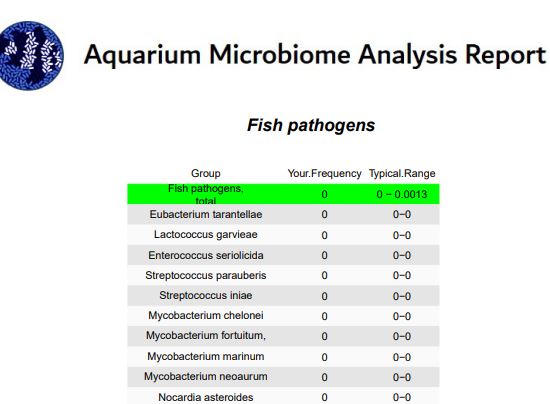
<See this; in fact 0.0 incidence of all Fish pathogens... Bizarre>
Either I got the infection elsewhere (open wound/wet counter at LFS) or the
bacteria was out competed. I attached my report if your interested in
looking over.
<Surprised (very) at how much detail is available (presumably to all) in
such a service. And, my understanding was that Mycobacteria were common, in
fact ubiquitous in marine aquariums; perhaps not super numerary, but not 0.0
present. Bob Fenner>
|
 |
|
Re: Mycobacterial Infection 1/22/20
Bob,
<Eric>
My tank actually has quite a bit of mycobacteria but none of the actual
fish pathogen.
<... am wondering how they (the lab) distinguishes twixt the two?>
The first page actually breaks down all the different types of bacteria
which was found. Here was the owner's thoughts on my report.
I had both of my tanks tested.
"Hi Eric,
I’m writing with some thoughts on your results, to share my perspective
based on looking at a few of these recently. From the info you logged
with your samples, I see that your tanks differ in age, and in terms of
problems reported (Dinos in the 450, macro in the 750). I'll interpret
your results in this context so please correct me if I've gotten that
wrong.
Both of your tanks had diverse communities, in the upper half of tanks
I've sampled. Based on the info logged with your samples, it looks like
the diversity follows the trend that we're coming to expect -- reduced
diversity with age.
<Yes to this; a general trend in all captive (and disturbed) systems>
What is striking is how high the diversity is in your 450. I'm guessing
you started this with some good live rock? It'd be interesting to hear
how more about the history of this tank (If you have already described
in PMs or emails please let me know and I will review them.) If its a
new tank, that is a really impressive diversity score.
<I agree>
Both tanks showed low balance scores, indicating that the balance of
microbial families was very different in your tanks than in the typical
tank. Please note this does not necessarily mean there is anything wrong
with your tank - it just puts a number on how similar or different your
tank is from others. In your case, both are pretty different.
To explore the reasons for these low balance score we can look at the
community barplots (part 2). Both tanks are very low in
Pelagibacteracea, which are dominant in the open ocean, a major part of
the typical reef tank microbiome, and are specialized for low nutrient
conditions. This happens in many tanks, and I'm not saying its a
problem. But it is a common difference between some tanks and the
microbiome of a natural reef. Both tanks are also low in
Flavobacteriacea, and your 750 is also low
in Alteromonadaceae.
It is interesting that neither tank has much Alteromonadaceae. Usually
when the Pelagibacteracea are low, the Alteromonadaceae bloom. Your
tanks show a different pattern.
In their place, your tanks have a relatively large amount of
Vibrionaceae.
This group is mostly members of the genus Vibrio, a genus that we find
in every tank. But it is also a genus full of pathogens. Vibrios are
associated with animals, and I typically see these in heavily stocked
tanks (including invertebrates like corals) - your 750 certainly fits
the image in my mind for a high Vibrio tank, lots of animal tissue
relative to macroalgae or bare rock.
<Again>
When I see atypical balance I start thinking about nutrients, meaning
more than just NO3 and PO4 (but those too). Do you feed your two tanks
differently? That may help us diagnose the reasons for the differences
in balance scores and community compositions.
Both tanks showed low levels of nitrifying microbes, but not unusually
so.
My view here is that a tank can process N through three different
pathways (nitrification, heterotrophic assimilation, or photoautotrophic
assimilation). Your tanks both show low levels of ammonia oxidizing
microbes and undetectable nitrite oxidizing bacteria, which suggests the
other processes are competing for N. I do not view this as a problem to
be solved, but as a description of how the microbial community has
responded to competition for ammonia. Like many tanks (including all my
display tanks), yours appears to not rely entirely on nitrification for
removal of NH3. I see you have a macro refugium in the 750. Is there any
algal competition in the 450? (aside from the Dinos, that is! maybe
that's enough to explain it)
Both tanks are free of known fish and coral pathogens.
As far as Mycobacteria -- I looked at this one in detail for your
samples.
The database I use includes (GreenGenes) perfect matches to
*Mycobacterium marinum*. None of these were detected in your sample or
any other. Like most tanks, yours include various other members of
*Mycobacterium *, most of which are uncharacterized species. In your
tanks, these are dominated by
3 types, none of these are close matches to *M. marinum*, they all match
other uncharacterized *Mycobacterium *clones more closely. The total
levels of Mycobacteria were also not unusual in your tanks, at the 78th
and 85th percentiles.
I hope this is useful and am happy to continue discussing your results,
but that is an overview."
<Thank you for sharing. BobF>
|
Re: Mycobacterial Infection 1/23/20
Hey Bob, no issues sharing any of the pictures I sent. If you need me to
resend I certainly can. Just let me know. So the DNA sample included a
direct water sample filtered through some contraption that was sent in.
Additionally q-tip swabs of inside the return lines were taken. I am
assuming the swabs were the main source of the sample.
<Ahh, thank you Eric. I did send along your corr. to friend and fish
pathologist (w/ a bkgd in Mycobacteria esp. In fact there's a pc. by him on
the subject posted on WWM), Myron Roth. Do please re-send images of the
site/would for his perusal. BobF>
Re: Mycobacterial Infection 1/23/20
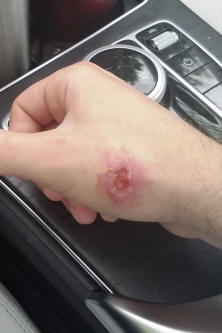
Not sure why I sent you a photo of my leopard wrasse. Here was the day zero
photo after the biopsy.
<Mmm; sent on to Myron. B>
|
 |
|
Re: Mycobacterial Infection 1/23/20
Bob,
<Eric>
Here are a few photos that he can use. There are a few to show how I
responded during treatment and the residual scar. If possible do you think
you can see if Myron can comment on how effective taking actual swabs of the
inside of the return lines and drains would be? I think that is what they
use for the majority of the samples and what was sent in. This is in
addition to the water sample filters he was referencing. How they extract
the dna from that is a bit out of my league. He did mention and was pretty
confident that if M. Marinum was in the tank it would show up on the test.
That is assuming I took the samples correctly but different Mycobacterium
species were found so I must have did something right.
<Am asking him here>
Now for the million dollar question. Do you think it's safe to add a new
fish too the tank?
<I do think it is safe (enough). Put another way, I would do so>
The current stock is healthy and acting normal. I've only had 1 fish die in
the tank in the last year and that was in June and likely related to a
spinal injury from crashing into the top of tank. Was looking at putting in
a Foxface to help with algae control.
I also attached a photo of the display so you can see the tank.
<BobF>
Re: Mycobacterial Infection 1/23/20
Bob,
<Eric>
I know Myron also posed another question regarding overall sensitivity.
Here was the response I got.
<Forwarded>
Eli, quick question for you. It would be interesting to know how much of a
non pathogenic/pathogenic reference would it take to get a positive result.
In other words, what’s the limit of detection of the system for a single
species of bacteria?
"Eric, Important but also a challenging question. Its not easy to put an
exact number on the answer, because its affected by a few unknowns. I
estimate one per several thousand cells.
To increase sensitivity further we could make small improvements by spending
a *lot* more money on sequencing, or larger improvements by filtering a
larger volume of water.
It would be interesting to answer your question experimentally by adding a
known concentration of cells that are not already present in the aquarium,
then immediately sampling to measure their relative abundance. Of course it
will be affected by the existing concentration of cells in the aquarium, I
will have to think some more about how to measure the limit effectively this
way."
Re: Mycobacterial Infection 1/23/20
Bob,
Some more. Sorry for the background colors. Not sure how to get rid of it.
Legal disclaimers first, I cannot offer medical advice and would have to say
the same if the bug was detected.
<Understood>
But speaking generally about detecting either organisms or genes with DNA
sequencing, its generally hard to be certain about a negative, right? Not
saying that either to dodge the question or to be snarky. Its genuinely
something we often would like to know (is this thing truly absent) but its
never easy to be sure.
<I don't know; really... I'd guess/surmise that "w/in the sensitivity" of
the test (gear), a negative has some validity (confidence limits in the
quantitative sciences)>
One thing in our favor, *M. marinum* is free living and infections occur
from exposure to the water itself. So our sampling method should be able to
capture it. The sample of 60 ml is expected to contain over 6 million cells
based on the typical range of microbial densities in aquarium water. So
we're sampling this population pretty deeply, millions of cells. Overall our
sampling should be a reasonably effective way of capturing the cells if they
are in the aquarium.
So the DNA I extracted and prepared for sequencing should reflect
contributions from millions of microbes. Our sequencing of 10,000 reads
didn't turn it up, but perhaps its there at very low levels (1 in 1
million?) I cannot rule that out. Sequencing that deeply would be
prohibitively costly. And even then we'd wonder what if its here at 1 per 10
million? etc.
<The folks familiar w/ the process and equipment should be able to tell you
this. I cannot>
It looks like there are PCR based methods for specific detection of M.
marinum. These will be more sensitive than the general 16S primers I used to
amplify (in principle) all Bacteria & Archaea. I have your DNA samples in
hand, so this will be an interesting test case. If its absent from the
standard 16S tests, is it also absent from the more sensitive species
specific test? It won't be instant, but I can order those primers with my
next batch and keep you posted. I'll check this at the level of PCR, so we
won't have to wait for sequencing results to come back.
<BobF>
|
|
|
Mycobacterial Infection
5/7/19
Bob,
<Hey Eric>
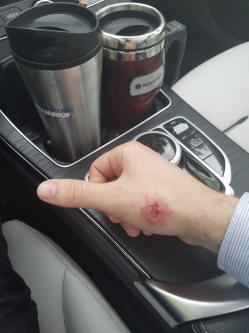
I scraped my hand cleaning the back of the aquarium. 2 weeks later developed a
large gnarly looking nodule with oozing and crusting right where the scrape was.
Did a week of antibiotics and steroid creams and nothing. Finally went to the
dermatologist as it is now a month later with no change.
<... what did the dermatologist say, speculate? Did they sample, culture?>
Preliminary diagnosis is Fish Tank Granuloma pending biopsy results and culture
but really nothing else it could be. My question is shouldn't my fish be sick
from this as well. This is basically fish TB right?
<Mmm; possibly. IF you don't think you're getting satisfaction, I'd look for
another Dr. Bob Fenner>
Thanks,
Eric
Re: Mycobacterial Infection
5/7/19
Thanks for getting back to me. He thinks it's Mycobacterium Marinum.
Should I be treating all my fish with some type of antibiotic as well.
<Mmm; no... this gram neg., rod... bacterium is pretty much omnipresent in
marine aquariums, the oceans...>
If the derm is right I must say I am pretty unlucky here.
<No as well; not uncommon. Bob Fenner>
Re: Mycobacterial Infection
5/7/19
Thanks Bob. In the future is it safe to put my hands in this tank? I am talking
about gluing frags to rocks etc. Skin contact with water is okay right? The
problem is with open wounds, etc correct?
<... Am a huge fan of keeping hands out of systems; ONLY putting in w/
full-length gloves. Bob Fenner>
Re: Mycobacterial Infection
5/7/19
Bob,
<Eric>
Last question. I have read articles about having to break down tanks and
disinfect everything. Also that splashing water and dried old water can still
harbor the bacteria.
<Yes; that is my understanding as well>
I am a little worried about my kids here. Can this be inhaled and cause lung
disease through siphoning?
<Mmm; that I do doubt. However, I am a big fan of "bleaching systems in place"
to sterilize.
Do read here re the elements:
http://www.wetwebmedia.com/PlantedTksSubWebIndex/clndecorag.htm
Bob Fenner>
Re: Mycobacterial Infection
5/8/19
Bob,
So essentially I would have to euthanize the fish and corals, etc?
<? No; remove them, all other life you want to keep first. B>
Re: Mycobacterial Infection
5/8/19
Is it necessary that I euthanize the fish and coral and bleach the tank?
This us utterly shocking to me as I have had most of my coral for over a decade
and most of my fish for over 5 years.
<... No... you mentioned disinfecting the system itself. Eric; perhaps a bit
more delving, reading...
Microbes are all about, on, in us... most of them, and the vast majority of
time, not pathogenic>
Re: Mycobacterial Infection
5/8/19
Thanks Bob. Must have taken your response out of context. So really I do not
have to disinfect the tank unless I want to?
<Correct>
What I struggle with is what is the point of disinfecting it if really
omnipresent and essentially will be added again at some point. Would uv
sterilization and ozone be of benefit here?
<Yes; higher DO, ORP do reduce TBC....>
Seems like safe reef keeping with hands out of the tank and gloves is all that
is needed. Do you agree?
<Indeed I do. B>
Re: Mycobacterial Infection
5/8/19
Is running ozone and oversized uv overkill? Is one more effective than the
other?
<... too much O3 can be dangerous. Again; my advice; reading... On WWM,
elsewhere. B>
Re: Mycobacterial Infection
5/8/19
Thanks Bob. Is there also anyway to figure out where I got this from. By that I
mean I also have a QT tank with fish in it. I guess it's just as likely that I
scratched my hand in my main display and the cut got infected in the QT tank. If
the fish in the QT tank are asymptomatic do you think it's reasonable to move
them into the display tank.
<? How would I know Eric....? Folks, aquarists do get such growths,
infections... freshwater, marine, fisher-folks as well.
http://www.wetwebmedia.com/woundbactf.htm>
Re: Mycobacterial Infection 5/14/19
Bob,
Just wanted to let you know. Diagnosed was confirmed via biopsy results.
Definitely a Mycobacterial infection.
<Again; not uncommon, and not often trouble. Bob Fenner>
Re: Mycobacterial Infection 5/14/19
Bob,
<Eric>
Right now I am running a Pentair 120watt uv sterilizer inline. Would adding an
ozone unit be of any benefit?
<What's your ORP run? IF the UV et al. set up, maintenance... are yielding a
rather high/steady RedOx state (300-400 usiemens/cu...) I wouldn't>
I haven't been able to find much as to which is better or more effective against
bacteria. I know uv's are
certainly safer.
<Mmm; I think I've recently stated this... the better part of UV use is their O3
generation. Bob Fenner>
Re: Mycobacterial Infection 6/22/19
Bob,
<Eric>
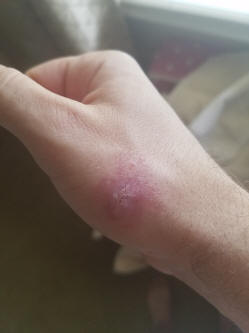
Wanted you to have these pictures as I think they are great for
educational purposes. Been on antibiotics for 30 days and the M. marinum
has cleared up pretty good.
<Yes; the emargination... looks good>
2 more months to go. Just an fyi all my sea life creatures are still
doing okay as long as they dont jump out of the tank.
<Thank you for sharing. Bob Fenner>
|
|
Re: Mycobacterial Infection 11/3/19
Bob,
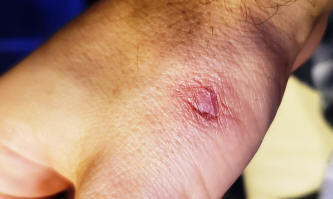
Here is the final picture. Just left with a reminder scar. Have 5 more days of
antibiotics and all good.
<Does look like it's healing well Eric. B>
|
 |
|
Three New MASNA Education Pages
The Marine Zoonotic Disease article (http://masna.org/masna-education/zoonotic-diseases/
The Zoanthids and Palytoxin article (http://masna.org/masna-education/palytoxin/
The Impacts of Releasing Marine Ornamental Species article (http://masna.org/masna-education/release-invasion/
Very Worried...Small Granuloma(looking)On Left Finger
8/10/14
Greetings Crew, I'm a little concerned about 3 days ago a small red patch showed
on my left pointer finger, below second knuckle. Initially it filled with very
little pus(sorry for details here) and ruptured in 24hrs. It now looks like a
red scaly patch about a 1/4in. No pain, although it is draining ever so
slightly.
Coincidently, I had been researching wound management on WetWebMedia a few weeks
ago and came across articles on Mycobacteria. Seeing the similarities, I
immediately made appointment with my doctor. I made appointment for possible
mycobac. infection. My doctor looked at my sore and said it is so small, barely
looks infected and with very little drainage to culture,
don't worry unless it gets worse. I informed her I'm a at risk group. I'm a part
time fish breeder(47 aquariums and 6 aqua. res.(8000g), part time open ocean
kayak guide, very part time scuba instruct.etc., with lots of freshwater and
saltwater contact. I occasionally receive fish from large fish farms in Asia and
local pet stores(even more questionable in my area IMO). After a lot of
convincing she decided to put me on antibiotics. At this point she hasn't
researched Mycobac. mar. I happened to noticed on her sheet, she has spelt
Mycobacteria, microbacteria. I ask if she can research Mycobac. mar please, so I
can get on the right antibiotics. She responds. I'm not going to research
something I haven't cultured.
<?... RMF>
I respond by saying, I heard this doesn't culture well and may take 4 weeks. She
admits she has never heard of Mycobac. mar. and does research,( right in front
of me). So I end up leaving with a combination antibiotics specifically geared
toward Myco. mar. To be honest, now that I'm home, I'm having second thoughts on
taking meds.
This thing is so small, I feel good, no swelling, no swollen lymps., I hate to
take a combination of antibiotics, if I don't have to. I have a follow up appt.
with my doctor in 3 days. She did attempt to culture sore. If it weren't for my
insistence, I wouldn't have left with antibiotics. I'm not looking for medical
advise in anyway, but perhaps if anyone has had similar experience, please chime
in. Everything I've found online shows much more advanced cases, but they look
similar. Thanks for any help if possible.
Aloha Brandon
<Hello Brandon. This is absolutely (probably legally) something we cannot advise
on, and doing so would surely be a bad thing to do. Mycobacterium infections
(also known as Mycobacteriosis) from fish rarely cause long term problems for
humans, but occasionally they do cause health issues beyond the skin rash, very
rarely serious/fatal ones if the person is immunocompromised. Talk with your
doctor, and if necessary, they'll recommend treatment or further tests. You are
right to consider the
possibility of Mycobacteria infections coming from aquaria, but at the same
time, such infections are very rare, and without microscopic analysis of the
infected tissue, you cannot diagnose them anyway. All sorts of bacteria
can get into scratches on the skin, and once there, spark an opportunistic
infection of some kind. As aquarists we often fixate on the notorious disease we
call "Fish TB" because of its scary name, but in practise there are all sorts of
possible bacterial infections you can get from fish tanks (as well as herptile
vivaria) including such favourites as Salmonella infections (which cause stomach
upsets). And while Mycobacterium fortuitum and Mycobacterium marinum, among
others, have been reported from aquaria, there aren't any quick treatments, a
notorious problem with Mycobacterium spp generally. Antibiotics such as
Minocycline and Rifampin are used across multiple months. Your general
practitioner should be able to give you much
more depth on this, and if he/she can't, then discussions with an expert on
zoonotic infections would be helpful. Cheers, Neale ("the wrong sort of Dr to be
helpful here!").>
Steven pro; Mycobacterial involvement
7/15/14
Hi
<Mick>
My name is Mick Virgo, I am from South Australia
<Salud>
I was hoping to contact Steven Pro in regard to his article
Mycobacterium Marinum which I found while Googling for information on
this disease
<Will bcc him here>
My 20 year old Daughter contracted the disease 3 1/2 years ago working
in a aquarium shop cleaning a quarantine tank and was punctured on the
hand buy a catfish spine. She was initially treated with Clarithronycin
as well as Ethambutol and has been suffering from the arthritis type
symptoms he talks about for about 2 years.
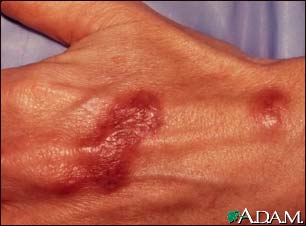
<Yikes... I've encountered these infections over the years; am the
person who shot the photo on Steve's hand...>
We have seen several specialist but none have been able to help her and
I doubt they believe her when she tries to explain the symptoms and the
origins
<And another PA friend of Steve's, Don.... I would ask your doctor to
confer w/ American staff in the same field>
The reason for contacting Steve would be to ask if he knows anybody that
might be able to help us, or shed some light on what direction to go
from here as he describes to a tee what she is suffering at the moment.
Would you possibly be able to pass this on to Steve
<Yes I will>
Thanks
Mick
<Welcome. Bob Fenner>
Important Question: Concern with autoinfection from hands in tanks
6/23/14
emailing you today because I have some concerns. I have no
experience with saltwater or freshwater aquariums but have recently
secured
a position at a leading retail store selling many tropical fish, live
rock,
corals, venomous fish and so on. I was unaware of some of the dangers
upon
taking the position.
<Mmm>
This is where the situation is unique. I know that I have no reason to
panic, but instead to use caution and arm myself with knowledge so I can
take steps to prevent accidents while cleaning the tanks etc but I have
a
nail-biting disorder. It's called Onychophagia. Most people find this
revolting and something that you should just stop doing. But I simply
can't. It is an obsessive compulsive behaviour that I have very, very
little control over.
<Well; then I would definitely get/use gloves if you're going to have
your
hands in the water. More important and likely than trouble from
livestock
itself; all biological waters, including aquariums, have large mixes of
microbial life... some of which you don't want to ingest. Akin to
Coliform
bacteria, Enterobius worms... from autoinfection, you want to thoroughly
wash your hands after having them in the tanks>
I'm aware while at work to be washing and rinsing thoroughly and often
but
what I'm really worried about is the open wounds around my fingernails.
<You should be. I take it you're seen here on WWM:
http://wetwebmedia.com/Wound.htm
the linked files above>
If I am to clean 4-8 30gallon tanks per day, amongst other tasks
(handling
and cleaning protein filters etc) am I especially at risk for
contracting
diseases?
<To some extent, yes... again, the elbow length gloves are the route I
would go>
My worry is that when dealing with things that are microscopic, I can't
be
sure that I have cleaned my hands thoroughly enough and I can't stop
myself
from biting once I'm done work.
Should I be anxious about this?
<Yes>
I feel anxious. I would rather be safe and broke than have money and be
sick. Thank you so much!! I look forward to hearing your answer.
<I had "the habit" of biting my nails and cuticles when I was younger...
and sis still does. I would seek out the help of a dermatologist and
their
aid in turn in "conditioning" help to rid you of this compulsion.
Bob
Fenner>
Article: True, False or Mostly Hype, Disease from
trop. fish 1/18/13
Hi Bob, Neale and Crewmembers,
<Hello!>
Best wishes to you all and thanks as always for all of your hard work
and dedication. The aquarium community is indebted to all of you and I
maintain that you cannot be thanked enough for your volunteer services.
<Thanks for the kind words.>
I have a short article I'd like you to check out at your leisure, which
was written on a mostly gossip-type site with sometimes questionable
information. A co-worker stumbled upon it and sent me the link:
http://www.dailymail.co.uk/sciencetech/article-2263812/Tropical-fish-diseases-passed-humans-Humans-risk-impetigo-pneumonia-diseases-drug-resistant-tropical-fish.html
<Ah yes, the Daily Mail newspaper. No scare story left untouched!>
My response was that I was always under the impression that fish (as
pets) to human diseases for the most part are extraordinarily rare
<Thus far, yes.>
and vice versa but that I'd like to get the experts opinion from you
guys...and yes, you guys are experts.
<Perhaps not as microbiologists though… or medics.>
Please don't try to deny it! Thanks as always for answering my
question/giving your opinion and I hope you all have a wonderful day!
Nicholas
<Bottom line is that there's always been a risk of contracting things
like Salmonella from aquaria and vivarium. Anywhere warm, damp and laden
with decaying food can culture such bacteria. But what this article is
about is scientists finding antibiotic resistance in fish. That doesn't
necessarily put humans at risk, though it may mean that treating sick
fish *with antibiotics* could be more difficult. Since antibiotics
aren't used in the UK without a prescription, this is not a big deal;
but in the US, where many aquarists use antibiotics (such as Maracyn)
before using non-antibiotic medications, antibiotic resistance may
become a major problem. The bigger picture so far as human health goes
depends on whether humans could catch these antibiotic resistant
bacteria. That's certainly an issue to think about, but the bacteria in
fish rarely affect humans, so even if these bacteria are ten times as
dangerous as before, they're still not very dangerous in real terms
(going from a 0.001% risk to a 0.01% risk is a ten-fold change, but
overall the risk stays small). I'm not a medic, but I wouldn't be any
more scared of my fish tank than I am of handling raw meat, cleaning out
the cat litter tray, or working soil in my garden. All these things
expose me to bacteria, but if I'm sensible and don't do obviously stupid
things (like, say, swallowing a sick Goldfish or injecting myself with
muck from the filter ) then I can't see how this is a big deal at all. A
wise doctor once said that the secret of health is 50% keeping clean and
50% getting dirty. In other words, you have to avoid germs of course but
you also need to get exposed to them as well, so your immune system can
develop. I'd guess that if you're healthy, interacting with animals,
including fish, helps to develop your immune system. Cheers, Neale.>
Re: Article: True, False or Mostly Hype
1/18/13
Thanks Neale! As always your explanation seems absolutely reasonable to
me.
<Always good to talk, Nick. Cheers, Neale.>
Question, Human/aquarist bacterial
infections 5/3/11
Steve or other,
<BobF here>
I saw and heard your lecture in Orlando at MACNA and Steve discussed
fragging coral with gloves on to prevent getting a bacteria or
infection in the persons body. I can not remember the name of the
bacteria or
infection.
<Mycobacteriosis mainly>
Could someone help me with this. I am pretty sure I have it in my hand
and I need to know how to treat it.
<Mmm, see WWM, http://wetwebmedia.com/Wound.htm
and the linked files above, and importantly, a dermatologist,
specialist re>
--
Thank you,
Regan White
<Welcome. Bob Fenner>
Blood in tank -- 09/09/10
Dear Mr. Brenner,,
<Close enough>
I have talked to you in the past regarding my goldfish
Larry. Larry had a bulge on his right side that would enlarge anytime
he had difficulty passing his stools. Through photos you considered
that this may have been cause from a congenital defect.
<Possibly>
Sadly Larry passed away within the last half hour. When removing him
from the 55 gallon tank his anus hemorrhaged and blood pooled into the
tank. I do not know how much water to change the one remaining goldfish
and algae eater in the tank.
<Mmm, maybe half>
Larry had an appointment to go to the fish vet next week to rule out
tuberculosis. What do you recommend?
<That you wash your hands thoroughly (as usual) after they've
been in the tank... not place them there if/when you have open wounds.
Otherwise, enjoy, appreciate the life around you. Bob Fenner>
Thank you for all your help,
Susan
|
Sick Goldfish ... RMF's go
7/28/06 I would like to ask you a question about my goldfish.
She is losing her orange color, having difficulty getting up
to the surface of the water, and when she does make it up
(with great effort) she gulps air and then descends
again. She spends most of her time just laying on the
bottom of the tank, and she is listing to one side. <All bad
signs> While searching the Web for answers I read about
fish tuberculosis. My fish seems to have many of
the symptoms. This concerns me (because I don't know if it is
or isn't, and I don't know what to do for the fish)
and also because it said that this disease is transferable to
humans. <Yes> While I washed my hands
afterwards, I did clean out the tank by hand,
stirring up the gravel, washing off the rock, etc.
<Unless there are breaks in your skin...> My cat also drank
from the fish tank while I was transferring the fish
to a bowl. Should I be concerned about the
possibility of TB, how could I know for sure if this is what my
fish has, and what can be done for the fish? <Not able to
tell from here... however Mycobacterial transference is not
likely> If it is not TB, then I thought it could be
a swim bladder problem (my fish does have trouble with
constipation), but why is she losing her color?
<Could be several influences> Thank you for listening to my
question. Any help you could give me is most
appreciated. <Have you read here: http://wetwebmedia.com/FWSubWebIndex/gldfshdisease.htm
and the linked files above? BobF>
Sick Goldfish ...
Tom's much better go 7/28/06
<<Greetings. Tom here today.>> I would like to ask
you a question about my goldfish. <<Fire away.>> She
is losing her orange color, having difficulty getting up to the
surface of the water, and when she does make it up (with great
effort) she gulps air and then descends again. She spends most of
her time just laying on the bottom of the tank, and she is
listing to one side. <<Not good, certainly, but
having "peeked" at the remainder of your post, I've
noticed that you haven't included any of the very important
information that would be useful here. What "type" of
Goldfish, tank size, type of filtration, water parameters
(critical!), diet, etc. From our perspective, it's like
asking us why you just sneezed. A cold? Hay fever? Allergies?
Someone tickled your nose with a feather? Sounds a bit silly but
I think you see what I mean. Fish can display very similar
symptoms from a wide variety of causes.>> While searching
the Web for answers I read about fish tuberculosis. My
fish seems to have many of the symptoms. This concerns
me (because I don't know if it is or, isn't,
and I don't know what to do for the fish) and also because it
said that this disease is transferable to humans.
<<Possible? Yes. Likely? No. I understand your concern but
I would suggest that it's not warranted. What you've
described thus far could simply be due to your pet being in too
small of an aquarium or living in water conditions that are
sub-par. At this point, I really don't know.>> While I
washed my hands afterwards, I did clean out the tank by hand,
stirring up the gravel, washing off the rock, etc. My cat also
drank from the fish tank while I was transferring the fish to a
bowl. Should I be concerned about the possibility of
TB, how could I know for sure if this is what my fish has TB, and
what can be done for the fish? <<I think you
should be "aware", as we all should be. Concerned? No.
To know for certain would require a laboratory and a pathologist.
A couple of indicators would be a sunken stomach or detention
(sinking) along the back of the fish. Protruded eyes, loss of
scales, lesions on the body of the fish would also be indicative
but not definitive. As for what can be done for the fish in the
case of TB, there are some treatments that would likely be out of
the realm of the typical hobbyist. In all likelihood, the animal
couldn't be treated effectively.>> If it is not TB,
then I thought it could be a swim bladder problem (my fish does
have trouble with constipation), but why is she losing her
color? <<Here, we go back to my earlier
comments. Goldfish, regardless of their opportunistic feeding
habits, require lots of vegetation in their diets. They don't
process proteins well and become "compacted" when fed a
diet that is too high in these. Much information on our site
about the appropriate diet for Goldfish as well as the
environment that they require to thrive.>> Thank you for
listening to my question. <<Not a problem at
all.>> Any help you could give me is most
appreciated. <<If you wouldn't mind, I'd like you
to give me your name when you post again. Tom>>
Re: Sick Goldfish 7/28/06 Thank
you for your reply, Tom. <<Good to talk to you again,
Debra.>> I do not know the technical name
for the Goldfish--she is orange in color, having a
regular, slim, not a "fancy" body type, with
a black dot on her tail (which has always
been there). <<What you have is
either a Common Goldfish or a Comet Goldfish. Both are very
similar with the Comet staying a bit slimmer than the Common as
it matures. Both can attain 12"-14" in length at
adulthood. (Can't blame you if you just did a
"double-take".)>> She is now about 2.5 inches
long from mouth to tail tip. She is in a two gallon tank.
<<Way too small but I'll get back to this as we go
on.>> It used to have an air stone, but I put a charcoal
and "sponge type" filter in the tank when I found out
that it would do a better job of filtering out the ammonia in the
tank. <<Good...with a proviso. While the
airstone will do nothing for the ammonia, it does agitate the
surface water of the tank and helps in oxygen exchange. This is
where your Goldfish is getting its air to breathe. The larger the
surface area, the more oxygen that enters the tank. The fact that
she's gulping air indicates that she isn't getting enough
oxygen from the water. (Small piece of "trivia": A
fish's gills are much more efficient in extracting oxygen
from water than our lungs are in extracting it from the air. We
can "afford" this inefficiency because oxygen is so
plentiful in our environment compared to a fish's. I add this
for emphasis as well as a bit of extra information.) Side note:
activated carbon is effective for no more than 3-4 weeks.>>
I changed 80% of her water about every 1-2 weeks, with periodic
full tank water changes. When she got sick, I did a
full tank change and rinsed her rock, gravel, sides of the tank,
and plastic ornamental plants as I do periodically. <<When
ammonia/nitrites are an issue, this amount is likely appropriate
but, for now, I'd prefer to see you change out 15%-20% once a
week. This presupposes that your ammonia/nitrite levels are at 0
and nitrates are below 20. A fish store can test a sample of your
water for you if you don't have a test kit...which I would
highly recommend getting.>> Previously, I was using regular
filtered tap water for the water changes with several drops of
"stress coat" to condition the water, but when she got
sick, and I consulted a pet shop, they recommended that I use
bottled water, which I did (I still added a couple of drops of
Stress Coat, too). <<Neither "filtered" tap water
nor bottled water are the best choices here. Filtering water
removes elements that fish need, so-called "trace
elements" though major and minor elements would be involved,
as well. We almost always recommend that you acclimate your fish
to whatever source of water you have at the tap - without
filtering. Adding a good quality dechlorinator - one that
eliminates chlorine and chloramine - is all you need to do.
(Chloramine is a combination of chlorine and ammonia, used in
increasing numbers of areas because chlorine alone dissipates so
quickly. Chloramine does not. Stress Coat TM) only removes
chlorine, by the way. If your source of water is treated with
chloramine, you'd be introducing ammonia to the tank.>>
I called my cat's Vet but was told that they don't see
fish. <<About what you'd expect from a "cat
doctor". :)>> They gave me the number for a fish Vet
at U of P. I left several messages, but no one called back yet. I
was told the Dr. was only in intermittently--so I turned to the
Internet, and your postings for help. <<Along
with your commitment to your pet, we might just get this turned
around.>> My Goldfish was very healthy prior to last week
(except for the chronic constipation--I did try the peas in the
past, but it seemed to only help a little-). She is still hanging
on at the bottom of the tank, but is staying in one spot and if I
put food in, she will struggle to rise to the surface,
but she mainly gulps a lot of air when she is up
there. I don't know the chemical status of the
water, but I just changed it all with the bottled water, so I
don't think there is an ammonia build
up. <<Goldfish excrete ammonia through their
gills just like we exhale CO2. Regardless of the lack of fish
waste/detritus in the tank, ammonia is going into the water. Back
to what I mentioned about aquarium size now, your Goldfish needs
to be in, at least, a 30-gallon tank. Commons and Comets are
generally considered to be "pond fish" because of their
adult sizes. Unless kept in a sufficiently large indoor tank,
you'll ultimately run into one problem after another. Growth
will be slowed/stunted leading to health problems like bone
disease. Most importantly, despite your best efforts, a
two-gallon tank can't dilute the toxins in the water
adequately to provide a high-quality environment for
your fish. Any measurable amount of ammonia in the tank will
cause the gill membranes to swell/thicken (basically being
chemically burned) to the point that your fish will start to
suffocate. The "immediate" thing to do now is put the
airstone back into the tank and turn that "bad boy" up
high! And, start making plans to get a much larger
aquarium...>> She is very pale. When she is at the bottom,
she lists to one side a bit. She does not look particularly
emaciated, though. In fact, she looks fat like she is still
constipated--and there are no visible lumps, bumps,
discolorations or spots (other than the one that she was born
with), her eyes are not abnormal. She definitely has some sort of
equilibrium issue, but she doesn't really fit nicely into any
one disease category. <<All typical of water
quality issues with the possible exception of the
constipation.>> When I first got her, I fed her the small
pellet type food. When even the small pellets looked too large
and hard (I would crush them a bit) I tried the flake food, but I
think she prefers the pellets, so when she got sick, I switched
back to the pellets). <<She needs vegetable matter in her
diet, Debra. Goldfish don't process proteins at all well.
Zucchini, spinach, shelled peas (which you've tried) among
other common veggies are all good for her and will keep her
"cleaned out". Brine shrimp also act as a laxative
because of their "roughage". Also, do a search on our
site regarding Epsom salts. Many folks have good success with a
treatment of these.>> I hope this gives you more
information, although I know it must be difficult to diagnose a
fish sight unseen. Thank you for your time and any help you can
give. <<I've probably given you more than you
necessarily wanted here, Debra, but I've hit what I believe
are the key points. Bigger tank, more filtration, aeration and
diet. A little overwhelming, perhaps, but this is what your pet
needs.>> Sincerely, Debra <<My best to you and your
Goldfish. Tom>>
Re: Sick Goldfish 7/28/06 Dear
Bob F., Thank you for your prompt reply. I did peruse the site
you listed plus many others, but my fish did not fit nicely
into any of the disease categories, so I was still
puzzled. I will copy Tom's email to me and my reply to
Tom's email FYI. <I see (place) all> I hope
that this information will shed more light on the matter, and
that the problem may have a solution. And yes, my
hands did have breaks in the skin from playing with my
cat who accidentally scratched me, and from torn
cuticles, that was why I was concerned. <... might
be worth a visit to a medical center if you are indeed
concerned> I also quarantined my fish in a large
glass salad bowl while I was changing the water in her
tank--I bleached out the salad bowl and washed it with
antibacterial soap --along with my improvised "net",
a slotted kitchen spoon (we do not have a dishwasher)
but now I wonder if I should just discard the bowl and
the slotted spoon I used to transfer the fish with.
Sincerely, Debra <Mmm... there are a myriad of
degrees-of-infectious microbes in most everyone's experience
every day... I strongly suspect you have nothing to fear here. I
would not discard these implements. Bob Fenner>
|
Re: Lugol's Dip and Gorgonians, Pete,
will you take a look at, refer? & bacteria f', human
dis. -- 4/10/07 <Yowsa Pete! Thanks as usual
for this dissertation! BobF> Dear Mark: Bob forwarded your
email to me and asked me to lend a hand with
your dilemma. It's very difficult to say what
may have caused the demise of your H. kuda but I would
be happy to share my thoughts on the matter with
you for whatever it's worth, sir. Like all fish,
seahorses do occasionally develop various
granulomas, malignant neoplasms, tumors and fibrosarcomas
associated with certain diseases or the aging process,
but these primarily affect internal
organs. Furthermore, such growths are not
characteristic of Vibriosis and, judging from the
symptoms you described -- or lack thereof -- it seems unlikely
that a Vibrio infection was involved in this case. I am more
concerned about the possibility that the tumor may have been
a granuloma symptomatic of a Mycobacterial
infection. Granuloma disease is caused by
gram positive, acid-fast bacteria from either the genus
Mycobacteria or the closely related genus Nocardia
invading the tissue and internal organs and organ systems. Both
of these bacteria can affect the skin as well as
the internal organs, causing nodules and granuloma. And both
Mycobacteria and Nocardia can be transmitted to man, causing
a localized, unsightly skin rash after entering
through a cut or break in the skin. Here is an excerpt from my
new book (Complete Guide to the Greater Seahorses in
the Aquarium, TFH Publications, unpublished) that
discusses mycobacteriosis in more detail,
Mark. It may help give you a better
idea whether or not the tumor you noticed could have
been associated with granuloma disease:
MYCOBACTERIOSIS, A.K.A. PISCINE TUBERCULOSIS
Mycobacteriosis is also known by the following synonyms: fish
tuberculosis, piscine tuberculosis, granuloma disease, swimming
pool granuloma, fish tank granuloma, and acid-fast disease
(Aukes, 2004; Leddo, 2002a). Like all fishes, seahorses are
susceptible to Mycobacteriosis. It is not uncommon in
wild-caught seahorses obtained from pet stores and is
the second most commonly seen bacterial infection of
Syngnathids at large public aquaria after Vibriosis
(Bull and Mitchell, 2002, p20). Cause: Fish
tuberculosis is caused by pathogenic Mycobacteria, of which
two different species are the primary culprits:
Mycobacterium marinum and Mycobacterium fortuitum
(Giwojna, Sep. 2003). Unlike most bacteria the
plague fish, these Mycobacteria are gram-positive, and
take the form of pleomorphic rods that are acid-fast
and nonmotile (Aukes, 2004). When cultured on
solid media, they form cream-colored to yellowish
colonies (Aukes, 2004). Mycobacteriosis is worldwide in
distribution (Giwojna, Sep. 2003). All fish species are
considered susceptible to it (Aukes, 2004). Although this
disease can in fact infect almost all fish, certain species
are more vulnerable than others (Giwojna, Sep. 2003). The
most susceptible species are freshwater tropicals such as
black mollies, all Gouramis, Neons and other tetras, all
labyrinth air breathers, and most species of the Carp family
(goldfish and Koi, for example), Aukes, 2004. Mycobacteria
are ubiquitous and waterborne, and the aquatic environment is
considered the disease reservoir for fish tuberculosis (Aukes,
2004). Mycobacterium marinum has been cultured
throughout the world from swimming pools, beaches, natural
streams, estuaries, lakes, tropical fish tanks, city
tap water and well water (Aukes, 2004; Leddo, 2002a).
Human epidemics of granulomatous skin disease have
occurred from swimming in infected water, and in fact,
this mode of human infection is far more common than infection
from exposure to infected fish tanks (Aukes, 2004;
Giwojna, Sep. 2003). Clinical Signs: There is a very
severe or peracute form of this disease, in which fish can simply
be found dead without showing any telltale signs or symptoms
(Bull and Mitchell, 2002, p20), but that is quite rare. In
my experience, Mycobacteriosis is a chronic disease
that progresses quite slowly in aquarium fishes
(Giwojna, Sep. 2003). It may take years for an
infected fish to develop any symptoms of apparent
illness and much longer before it becomes fatal (Aukes, 2004).
The glacial progression of the disease makes it
difficult to diagnose. Some early signs to look out
for include lethargy, fin loss, emaciation, skin
inflammation and ulceration, edema, Popeye, and
peritonitis (Aukes, 2004). There may be superficial
skin lesions that take the form of small subdermal lumps or
pus-filled nodules of granulation tissue (Bull and Mitchell,
2002, p21). These are simply the outward
manifestations of a systemic infection that may
already involve many of the major internal organs
(Bull and Mitchell, 2002, p21). In later stages,
nodules may develop in muscles or skeletal structure and
deform the fish. (Giwojna, Sep. 2003). As difficult as
slow-moving TB may be to diagnose while the infected
fish is alive, once the victim expires, postmortem
examination will reveal clear, unmistakable signs of
Mycobacteriosis (Giwojna, Sep. 2003). The
telltale granulomas will appear as gray or white nodules in
the liver, kidney, heart and/or spleen (Aukes, 2004).
There is often black, necrotic tissue eating away at
the internal organs, and there may also be skeletal deformities.
Diagnosis is then confirmed by the presence of acid fast
bacteria in tissue sections (Giwojna, Sep. 2003).
Treatment and Control: There is no practical method for
treating mycobacteriosis or granuloma disease at the
hobbyist level. As discussed below, good
aquarium management can prevent Mycobacteria/Nocardia
from becoming problematic. Prevention is the
watchword for this condition. Transmission: The bacteria
can be transmitted through the water from open ulcers,
through contaminated food (including live foods such as
shrimp or molly fry), via feces of infected fish, or
through the consumption of infected, dead or dying fish
in the tank (although the latter does not apply to
seahorses), Aukes, 2004.
Contributing factors: This
disease is not highly contagious and does not seem to spread from
fish to fish readily (Aukes, 2004). However, fish TB it is
often associated with poorly kept or dirty tanks with poor
water quality (Aukes, 2004). Chronic stress from
factors such as overcrowding, malnutrition, or aggressive
tankmates often plays a role as well (Giwojna, Sep.
2003). Mycobacterium, the causative organism, is believed to be
ubiquitously present, making it very difficult to eliminate
it entirely. However, if good aquarium maintenance and
management is followed, including vacuuming of
the gravel along with good filtration and regular
water changes, combined with a nutritious diet and the
addition of an enrichment product rich in vitamins,
the problem can be minimized and eliminated as a cause of
mortality (Aukes, 2004). Any dead fish should quickly
be removed and disposed of properly. Diseased live fish
should be isolated and treated in a hospital tank (Giwojna, Sep.
2003).
Transmission to Man: The seahorse keeper should be
aware that piscine tuberculosis is one of the few forms of
fish disease that is communicable to humans (Leddo, 2002a).
This transmission usually manifests itself as an unsightly
skin rash involving one or more granulomas on the arms
of the fish-keeper (Leddo, 2002a). In severe
cases, these nodules of inflamed tissue can become
large and disfiguring. They can spread and be very
difficult to eliminate. The granulomas often take some
2-4 weeks after exposure before manifesting
themselves, so the individual is frequently unaware of
how he or she contracted them and the condition very
often goes undiagnosed (Giwojna, Sep. 2003). The
Mycobacteria that cause the disease typically gain
entry through a break in the skin such as a cut, scrape,
or abrasion on the hand or arm of the aquarist (Leddo,
2002a). Although unsightly, the granulomas themselves
are not a serious problem and are almost
always localized and most certainly curable in healthy
individuals. But for those of us whose immune systems
are compromised by AIDS, kidney disease, diabetes,
liver dysfunction, chemotherapy or the like, the
infection can sometimes become systemic or, on rare
occasions, even life threatening (Giwojna, Sep. 2003). Awareness
is the appropriate response to the risk posed by
fish tuberculosis. The seahorse keeper should be aware of
the remote possibility of being exposed to
Mycobacteria via his aquarium, and take
appropriate precautions, but there is certainly no
need to be overly concerned (Giwojna, Sep. 2003). The
aquarist should merely remain aware of Mycobacteria and follow
the usual sensible precautions. Nets, aquarium
accessories and equipment, and any other items that may come
in contact with the fish should be sterilized between uses
to prevent cross-contamination (Giwojna, Sep. 2003). Avoid
mouth-siphoning of the water in a Myco-positive tank (use a hand
pump instead). Mycobacterium cannot penetrate
intact skin -- it only causes infection after entering
through open wounds or source, so make full use of aquarium
gloves and don't place your hands or arms in the
aquarium if you have any cuts or scrapes (Giwojna, Sep.
2003). Handle sick fish carefully, dispose of deceased
specimens properly, and scrub up afterwards. Do NOT dispose
of dead fish by flushing them down the toilet, as this is a
prime way to spread disease. Place the fish carcass in a
plastic bag or wrap it in some foil and dispose of it with
the solid waste of the household. And don't feed dying
fish to larger carnivorous fish, since this an excellent way to
spread infection (Giwojna, Sep. 2003). One thing hobbyists who
are worried about fish TB can do to allay their concerns is
to get their seahorses and live foods (crustaceans such as
shrimp are known vectors for Mycobacteriosis) from a
High Health facility such as Ocean Rider rather than from
their local fish store (Giwojna, Sep. 2003). Seahorses
at OR are routinely screened for pathogens and
parasites by independent examiners from an outside
agency (DVMs with the Department of Agriculture), and I know
for a fact that Mycobacteriosis is one of the diseases
they specifically check for (Giwojna, Sep. 2003). Thus
far, multi-organ histopathology has found
no granulomas and tissue sections have revealed no
acid-fast bacteria -- conclusive proof that Ocean
Riders are free of Mycobacteria. <Close quote> That's
the rundown on mycobacteriosis or granuloma disease, Mark. The
very similar Nocardia is a gram positive, acid-fast,
filamentous bacteria and is even more insidious than Myco.
Nocardia is closely related to the Mycobacteria that
cause piscine TB or granuloma disease and,
like Mycobacteria, it can affect the skin as well as
the internal organs, causing nodules, granulomas and
pyogranulatomous cysts. And like Mycobacteria,
Nocardia can be transmitted to man, so be sure to take
appropriate precautions if you suspect granuloma
disease may have caused the death of your H. kuda. Here is some
information from Paul Anderson explaining how
professional aquarists typically deal with
Mycobacterium/Nocardia: Fellow Seahorse Enthusiasts:
Mycobacterium is a genus of bacteria that are ubiquitous in
almost all environments. Mycobacterium infections occur in
many (if not all) vertebrate taxa (e.g., mammals,
birds, fish, etc.). Some studies that have looked
at prevalence of infection of Mycobacterium in wild animals
have often found that a small percentage of wild animals are
infected, even without clinical signs. The most common
Mycobacterium species found in seahorses are M. marinum,
M. chelonae, and M. fortuitum. There is currently no cure
for mycobacterium infections in fish. The options available
are to 1) depopulate and disinfect the system, or 2)
maintain the fish but prevent cross-contamination by
observing strict biosecurity protocols. The second option is
often chosen by public aquaria with long-standing displays,
when aquaculture/production of the infected fish is
not an issue. Many mycobacterium spp. can cause disease in
humans, especially if the species is a rapidly growing one
and/or if the person is immunocompromised. Of the
three species mentioned above, M. marinum is a slow grower, and
grows at 25 degrees Celsius incubation, but not at 37
degrees Celsius. The other two are rapid-growing species and
grow at both temperatures of incubation. The significance of
37 degrees is that it is human body temperature. While
most infections of otherwise healthy people are limited to
lesions on the extremities (even with infection by a
rapid-grower), there is a greater risk of the rapid-growers
to cause systemic disease (especially in
immunocompromised people). In a Myco-positive tank,
the best option is not to come in contact with water or
fish; wear gloves (sleeved gloves if necessary). Avoid mouth
siphoning (use a hand pump). Having said that, in an
aquarium situation mycobacterium only causes infection
if it enters a wound; it cannot penetrate intact
skin. Effective disinfectants against mycobacterium
include spraying with 70% Ethanol and allowing the equipment
to air-dry, and bleach baths (I use 50ppm bleach baths with
a minimum contact time of one hour, this has been reported to
be effective against M. marinum) followed by sodium
thiosulfate neutralization baths. Ultraviolet light
sterilization is also recommended in Myco-positive systems.
If you've got Myco-positive tanks among other systems, common
sense suggests performing husbandry on these systems last in
your rounds. A note on ethanol: I have found in my experience
that seahorses are very sensitive to ethanol, so I advise
being very cautious to avoid overspray into tanks (while
we're'¬"¢re on the topic, has anybody else
observed this?) Check out the following for more information
about mycobacterium infections in fish/aquaria: <_
http://edis.ifas.ufl.edu/VM055_ (http://edis.ifas.ufl.edu/VM055) > <_ http://www.mdsg.umd.edu/Extension/finfish/FF9.html_ (
http://www.mdsg.umd.edu/Extension/finfish/FF9.html) >
Mainous, M.E., and S.A. Smith. 2005. Efficacy of common
disinfectants against Mycobacterium marinum. Journal of
Aquatic Animal Health 17: 284-288. Paul Anderson Ph.D.
Candidate Department of Fisheries and Aquatic Sciences
University of Florida That's the situation when Mycobacteria
is confirmed in an aquarium, Mark. As long as you
observe the proper precautions and practice
good aquarium management, it's a problem the
aquarist can sometimes live with...
Nocardia is a different matter. When Nocardia is
confirmed in an aquarium, the only real recourse is to
break down the entire aquarium, discard the live rock,
substrate, and invertebrates, sterilize everything, and
start over from scratch. The problem is
that Nocardia is saprophytic -- it doesn't require
a host to survive and it will persist in your
system indefinitely. These bacteria live off any kind
of dead or decaying organic matter; in nature they are
commonly found in soil and wastewater -- in your tank,
Mark, they are no doubt entrenched in your substrate, live rock,
filters, everything -- where they act as a disease
reservoir, ready to infect any new fish and
invertebrates (or careless humans) they encounter when the
opportunity presents itself. The risk of
cross-contamination of your other tanks and specimens is
great, compounded by the fact that human health (primarily
yours, Mark) is also at risk from this
organism. If your H. kuda was infected with Nocardia,
then everything in your 25-gallon aquarium has been exposed
to these bacteria and is potentially a source of infection.
Leading the tank lay fallow indefinitely will not help
with Nocardia whatsoever. If Nocardia killed your
kuda, you must consider all the equipment, decor and specimens in
the tank to be contaminated, Mark -- treat them like
you would toxic waste or any other biohazard. Even
your invertebrates are a risk. Your coral, macroalgae,
etc,. are all sources of organic matter, and can
therefore harbor Nocardia and carry the infection. Do NOT
disperse your live rock, substratum, Gorgonia and soft
corals, macroalgae, equipment or accessories from the
25-gallon tank to your other aquaria, Mark, or you will be
inoculating them with Nocardia and spreading the infection
to all your tanks! And you must be extremely careful to
avoid accidentally cross-contaminating your other tanks from
your 25 gallon aquarium. Any nets, hydrometers, or
other equipment used in your 25-gallon aquarium
should be sterilized after every use and not placed
into or used in any other tanks. Avoid working in infected
aquarium with your bare hands, scrub/disinfect your hands
and arms thoroughly after working on the tank, and do not place
your hands in the 25-gallon tank and then place your hands in
another aquarium. These bacteria can even be transferred
from one aquarium to another by splashing
water droplets or as an aerosol via the mist generated
from a protein skimmer or an airstone. Be careful!
That is what I typically advise hobbyists when Nocardia has been
confirmed in their aquaria, Mark. I hesitate to
recommend such drastic measures when Nocardia or
Mycobacterium have not been confirmed. And the tumor
that you described is not typical of the pyogranulatomous cysts
that characterize Nocardia. They most often
present as greyish-white pimple like lesions on the
skin. They are often motile when manipulated and may
release a cheesy exudate when
compressed. That does not sound like the hard mass
you detected beneath the skin near the vent of the H.
kuda. So you're going to need to use your own judgment,
Mark. To be 100% safe, you could discard
the contents of your 25-gallon aquarium, sterilize everything,
and start over from scratch. Or you could dip the live
rock, Gorgonia, and corals with Lugol's solution
as a precaution and then trust to good aquarium
management to keep the seahorses in your 40-gallon
aquarium healthy and happy. Since
Mycobacteria and Vibrio bacteria are
virtually ubiquitous, and normally only become
problematic when the seahorses have been stressed and
their immune systems have been impaired, I might be inclined
to take the latter course in your case. If
you can provide your seahorses with optimal water
quality, a nutritious diet, and they stress-free
environment, the chances are good that your livestock
will not be affected by granuloma disease or
Vibriosis. Starting out with seahorses from a
high-health aquaculture facility that you obtain
directly from the breeder will further increase your
chances for success. As an added precaution, you may
also want to consider installing an ultraviolet
sterilizer on your 40-gallon seahorse tank after it
has cycled completely and the biofiltration
is well-established. Best of luck with your new
seahorse tank no matter how you decide to proceed, Mark!
Respectfully, Pete Giwojna, Ocean Rider Tech-Support
Re: Lugol's Dip and
Gorgonians, Pete, will you take a look at, refer? --
4/10/07 Dear Bob: <Pete!> I'm always happy to help
when I can, sir. <And you do a fine job of it, I assure
you> When I receive inquiries from aquarists regarding
Mycobacteria/Nocardia, I feel it is very important to
provide them with as much information as possible because of
the possibility of human transmission and because they may
be confronted with the decision as to whether or not
it's necessary to depopulate their aquarium, sterilize
everything, and start over from scratch. So
I make it a point to try to arm them with all the
facts they need to make an informed decision in that regard.
<Yes... and one of the principal reasons for my encouraging
the publication of your book, your articles (as well as others...
including my own!) to get "complete answers" to
folks... in a speedily manner> Hopefully, once we get my new
book on seahorses published and into the hands of the
hobbyists, there won't be a need for us to devote so much
time discussing these issues on the forums. <Heeeeee!
You'll see...> Happy Trails! Pete Giwojna <And to you,
Bob Fenner, out in HI, at times visiting with Carol and Craig and
their (now four year old!!!) boys, Dylan and
Cooper>
|
Swallowing water Hi Bob, I have a marine tank (46
ga.)that has been up for about 5 months. I houses a blue damsel,
percula clown, coral beauty, yellow tang, cleaner shrimp, and a few
crabs and snails. During routine maintenance this weekend while
siphoning water out for a water change, I guess you could say that I
swallowed a bit of water trying to start the siphon. I remember
"drinking" some of the ocean water as a kid at the beach, but
I'm sure the water in our tanks is a little more "full of
waste" than the ocean. It happened 2 days ago. I feel fine.
Anything I should worry about? Thanks. <Not really... unless you
have ulcerations... open wounds in your buccal cavity... you're
more than likely fine... I have swallowed actual gallons of water from
fish tanks over the years... though I am the "Jimi Hendrix"
of siphoning at this late stage. Bob Fenner> Jason
Human Poisoning from Sarcophyton? Anthony- After a
somewhat panicked web search, I came across your article: http://www.reefkeeping.com/issues/2002-06/ac/feature/
on coral propagation in Reefkeeping magazine. I say
"panicked" because while I was attempting to cut a diseased
portion of a Sarcophyton species off, I inadvertently cut my finger in
the process. The cut was shallow; so shallow that I did not
realize I cut myself until the "operation" was complete, and
it did NOT draw blood. However, I'm worried about any toxic
reaction. It's been two hours as I write this, with no
sign of rash or anything at the cut site, or any symptoms that
can't be explained by panic disorder. Are there any warning
signs/window of time I should be looking out for a "bad"
reaction? Is it possible I introduced something harmful or
lethal via this shallow cut? I feel incredibly stupid for (a)
doing this and (b) e-mailing someone I don't know about it, but
I'd really like the opinion of an authority on this so I can rest
easy or get myself to the hospital. Thank you very much for your time..
-Todd <Cheers, Todd. Very glad to hear about the propagation
efforts! Sorry to hear you got a scare :p No worries though my friend.
Nothing imminent is likely regarding a poisoning or allergic reaction.
What risk there is no worse than the same risk of being bit or stung by
a non-venomous fish or even simply putting your hand in the tank on a
daily basis with a hangnail or other non-related wound. Specifically,
there are nasty microbes in all aquatic environments and specifically
we fear Vibrio or Mycobacterium. Your first step of course
was/should be to cleanse the wound thoroughly with soapy water and then
use a disinfectant (antibiotic cream, peroxide, or the like). The
doctor is unlikely to be necessary but do call at least to get his
advice. Really... the concern here is more from a septic infection from
the razor than anything the coral could impart. Sarcophytons are
specifically noxious to other corals and aquatic invertebrates with
regard for allelopathic compounds. Again, since this is not an overtly
poisonous (to humans) animal and you didn't even draw blood... it
seems likely that you will have a very nice holiday week. The only
poisoning that I see as being likely in your near future is alcohol
poisoning tomorrow night <G>. Happy New Year, my friend.
Anthony>
|
Sore Fingers...Infection from My Saltwater Tank?? -
8/13/03 Hi all at WWM. I have a pretty serious
question to ask of you, I hope someone can get back to
me (I've sent you another email about some live rock with no
response so I hope this one makes it) First off, I
love your site and have learned a great deal from you
all! Me and my fish appreciate all the hard work u put
into it. I am just venturing into the hobby of
saltwater fish and have just completed setting up my
tank. About 5 or 6 weeks ago I purchased some live
un-cured Lalo rock from an online store. When it
arrived I rinsed in some saltwater which took me quite a while
and placed it in the tank. As I was finishing up I
noticed that my thumb (also my first 2 fingers but more so my
thumb) on my right had had gotten very tender and was a bit
red. I put it off to abrasions from handling the rock
etc. But, over the course of the next few
days my thumb and fingers felt worse. They were
reddish/purplish, slightly swollen, warm feeling and felt like
razors or pins were in the pads of my thumb and the same 2
fingers. Anyway, over the course of the next 5 or 6
weeks all my fingers except my pinkies (and they are starting to
get sore now a little bit) have developed the same
symptoms. All those symptoms seem to be isolated to
the pads of my fingers. Now this morning I noticed
that I have like these little white circle/spots/bumps under the
skin but some are raised slightly. They hurt when I
try to feel them, again like a razor is in there. They
look like white things about the size of a sesame seed pushing up
from under my skin on the pads of most of the
fingers. I also have a few that are now on the side of
my finger. I went to my doctors today and they had no idea what
it was. They put it under the heading contact
dermatitis and to come back in 2-3 wks if it didn't get
better. I told her that I was concerned that I may have gotten
something from handling the live rock with no gloves on (maybe
even crystals of some sort got caught under my skin??) She
thought I was basically crazy and said she wasn't aware of
any infections etc. that I could get from live rock (she
didn't even know what LR was till I told her!) I really hope
you have an idea or suggestion as to what this may
be. I have done extensive research on your site and
also found names of things (infections etc.) and done a web
search but I'm still not sure of what this is. I
hope its not marine TB, I don't think it looked
like the pictures I saw but I'm getting worried that it is
going to get worse instead of better. (its already been like 6
weeks and hasn't gone away) Please, any help
would be of great help. As I said, 2 of my
others emails never got answered (maybe not great ?? LOL) but if
for some reason you do respond to me without using the reply
button, the "0" in my screen name is
actually a zero, not the letter o. Desperately
awaiting a reply, Jan <Jan... please do seek another doctors
opinion. Also, read our coverage on diseases and mycobacterium as
well as another former a colleague of ours (may not apply to
you... but I hope it frightens you into wearing gloves properly
to handle live rock!). My first impression from your symptoms
stated was that you got calcareous spicules embedded into your
skin from handling a sponge (common) or that you got setae
(bristles) from segmented worms in there. This would definitely
cause a prickly feeling like fiberglass in the skin. Please do
seek a doctor with experience in aquatic pathogens. Likely little
to worry about... but do play it safe. Speedy recovery, my
friend! And please do give us a follow-up later. Kindly,
Anthony http://www.wetwebmedia.com/Wound.htm
http://reefkeeping.com/issues/2003-07/sp/feature/index.htm
>
Sore Fingers... Infection from My Saltwater Tank: Follow-up
- 8/21/03 Hi crew at WWM...I just wanted to give you a follow
up email about my fingers. <much appreciation!>
So as it turns out my symptoms were getting worse over the past
week - the little bump things started to move up the sides of my
fingers, they appeared on the palms of my hands and near my
wrist. Then Saturday morning I woke up and the joints
in 3 of my fingers were really sore. <Yowsa...>
I called my Dr's office and got an appointment with the
infectious disease doctor who finally saw me today....as it turns
out I do in fact have a mycobacterium marinum infection. <Doh!
I hate when that happens> (I'm pretty ticked at my Dr. as
I originally asked her to look up M. Marinum and she told me to
calm my "bacteria imagination"
down. Obviously she had no clue eergh)
<don't be too upset... keep in mind that few doctors
(inland particularly) ever see the pathogen. Most go a lifetime
and never do. You did the appropriate thing by seeking other
opinions and research> Luckily I don't have the TB type
but a different strain I guess? <yep... really no
biggie at all when caught early. Just some meds and the need for
a lot of yogurt after the antibiotics <G>>
Anyhoo, I just filled a prescription for a pretty
strong antibiotic which I'll take twice daily for at least 3
months. <ah, yes... have had several friends go through
this... your tummy will be a but upset afterwards, but none the
worse for wear> Hopefully they won't bother me - he said
they were pretty strong and some people get sick etc. from them.
<heehee... fruit and dairy will not be your friends for a
while. Eat them strategically with green bananas, rice and olives
to ...er, counter the effects. Doh!> Guess we'll have to
see. I really wanted to thank Anthony (he happened to be the one
to reply to my original email) for getting back to me with his
input and suggesting I see the infectious disease
doctor. <very welcome my friend> I guess
I've learned my lesson, I really had no idea all
the lil' nasties one could get from an aquarium.
<they are rare... but it is very important to wear gloves when
working with aquatics and most any creatures in animal husbandry.
Few are toilet trained <G>> I will surely wear gloves
whenever my hands/arms go into the tank! <very
good investment> I've only had the tank a few months and
I'm learning so much from your website. I'm on
here everyday reading every saltwater subject you
have! I'm glad that this ordeal hasn't scared
me away from the hobby. <excellent to hear and
very intelligent. Truly a rare happenstance. No need to avoid
your love and passion for the sea because of it>> Probably
not possible... besides the clean up crew I only have 2
fish, well 3 if you consider my "evil" blue
damsel a fish LOL but I could watch them all day! My
daughter and I will sit up late at night with the flashlight
checking out the live rock creatures....amazing! Once
again, you guys and gals are terrific. My
fish and I thank you for all the hard work you put into
maintaining the site. <very very welcome my friend!> One
more thing, I've been trying to purchase Bob
Fenner's book CMA and thought I had seen it available for
sale on your web-site. <actually from Di his wife
direct, but they have been in Indo for the last two weeks... will
be back next week> I went to purchase it yesterday and
can't seem to find the link anymore. Is it now
only available thru the 3 web-stores you have links for (Di's
store etc.) <not at all... er, that is.. if you
don't want it signed... it is on Amazon.com and numerous
other mail order aquatics places (Custom Aquatic, Marine Depot,
Champion Light and Supply, That Pet Place, Barnes and Nobles,
etc)> I really wanted an autographed copy and Di's store
wouldn't put the order thru, some error or something so I
figured they may have run out. <Ahhh, yes... some glitch due
to their absence no doubt. Do try them again next week my
friend> If you could let me know if its possible to get it
through your site still I'll get it here otherwise I'll
just order it un-autographed ;-) online somewhere. Jan
<best regards, Anthony>
Sore Fingers... Just an Update/Reply Hi again WWM (and
Anthony, my "reply" guy). <cheers, dear>
Just happened to be browsing your site (oh alright, I'm
here reading everyday!) and happened to see a reply from a Dr. to my
"finger dilemma" post. <Ahhh, yes... Dr.
Allen> If I could clarify my "being ticked at my Dr."
reply that would be great ....the only reason I was a lil' upset at
my Dr. was because when she told me she had no idea what it was and
lets go with c. dermatitis for a few weeks and see if it goes
away, I gave her a paper with the name of (what I thought I
had) Mycobacterium and asked if she wouldn't mind just looking
it up for me - not only did she refuse to look it up she chuckled at me
and told me to "calm my bacteria imagination
down"! Mind you that I live on the East Coast/Boston
area so very near the ocean and also telling her my fears of handling
the live rock, I think she should have made an effort to at
least check it out for me while I was there (I even told her about this
site, which is where I originally read of it, and she didn't want
to know...) <yes... agreed, the dismissive attitude even without
your coastal residency is indeed disappointing> I just wish she was
a big enough person/dr. to admit she had NO idea and either look it up
for me or immediately refer me to someone else, instead she told me I
had c. derm and that was it... <truly disappointing> And
yes, I will be sure to inform her that I actually *do* have
what I asked her to look up for me and not just an over active
"bacteria imagination" lol...maybe it will help some other
patient out. <exactly> By the way...any idea of about how long it
takes for the antibiotics to start working some magic? I
know its only been about 10 days but my fingers are still sore/sorer,
more bumps appearing <hmmm... variable for folks but slow. Many stay
on the treatment for ~ 4 months to kick it. Quite long as antibiotics
go> and now I have a stomach ache [sic] a lot of the time c/o the
antibiotics LOL. <I can only imagine!> (not to
mention that now I'm wicked creeped out thinking maybe I have
bugs/parasites in my fingers - just kidding, that's just
my bacteria imagination kicking in I guess LOL ) <ha!> The
infectious dis. Dr. told me that they may not work at all and we may
have to switch to a different type of antibiotics.
<correct... 'tis what I recall from friends> I may give a
call back to him but was trying to be patient/optimistic. To
make a long email even longer.....I got Mr. Fenner's book, CMA,
yesterday and I LOVE it. I believe I've already read it from cover
to cover! <outstanding... and do share your wisdom in kind> Today
I am going to order the Reef I. book as well. <did get your order...
kind thanks!> (I really admire both Anthony and Bob not only for
their wealth of knowledge-and humor- but for donating their time to
help us all out on this great site (as all the crew on WWM
does!) <its a labor of love> Does the RI book cover
sump design/ideas - I wouldn't have thought it to but I think I
read a reply here that stated there were like 100+ pages designated to
that subject? <roughly 20-30 for sumps/refugiums... the
balance to components like plants, algae, live sand. And yes... indeed
described refugium styles> As I said in my last
email, I've only had my 55g tank for about 3
months so I'm still doing a lot of adding/upgrading to
it. I want to add a protein skimmer ASAP but wanted to
install a sump first to house all the equipment and free up the space
in the main tank (think I'll put the sump in my basement where I
have lots of extra room and plumb it up) I have no
idea on how this is done so I'll have lots of reading up on it
ahead of me! (change topic) Any thoughts on compact
fluorescent lights... I'm off to order the custom SeaLife 260W - 2
10k, 2 actinic - with 4 moonlights for my tank which will be home to
fish/inverts and some *easy* cor
|
A Doctors Input on Fish TB - 8/22/03 <Cheers, Doc :)
> Glad to see on today's post that Jan got to see an infectious
disease specialist as recommended. <yes... whew!> Thanks for
advising going easy on the primary care doc. You are right that most of
us have never seen this pathogen. <yes... so true. Certainly not
fair to blame your doctor about some rare and obscure pathogen. Its
unrealistic to expect your doctor, or electronics technician or broker
to know every possible thing there is to be known in a given industry.
Common sense should compel one to get other opinions if necessary for
an intelligent consensus (fortunately this aquarist did)> I only
learned about it when I became a marine aquarist. People should never
be afraid to question their doc (we're only human) and seek second
opinions if they are skeptical of the first one. <true, true... not
a bad thing at all. And surely not taken as a slight by good doctors
either.> It would be worthwhile to politely inform the first doc of
the final diagnosis so that he/she will be aware of this possibility if
seeing an aquarist in the future. <Ahhh... good point. I wish I had
though to mention it. Will be posting as always.> Steve Allen, MD
<kind thanks as always, Anthony>
A Nasty Owee 12/9/2003 Good morning, Yesterday while
cleaning my tank I had a small cut on my thumb. <Did you cut
yourself before putting your thumb in the aquarium or on something
inside?> I accidentally touched the elegance coral and was stung by
it. <Ouch!> My thumb is now swollen, red and tender. <Either a
toxic reaction or an infection.> Should I go see the doctor or give
it some time. <Go to the doctor ASAP. If this redness is spreading,
you may have cellulitis, a potentially serious infection requiring
antibiotics.> Also, what is the active ingredient in the
poison. <Uncertain. I could not get any specifics on the Internet.
Most of these toxins are a mix of noxious things--local irritants,
anticoagulants, neurotoxins. Most reactions are localized burning &
swelling, but can be more severe depending on type & amount of
venom. Allergic reaction can be severe. Some aquarists have had
neurological symptoms like numbness & tingling, loss of taste.
Check here for more info: http://www.emedicine.com/wild/topic18.htm>
Thanks, <You're welcome. I hope this heals quickly, Steve
Allen> -Brent <There's a lesson here for all. It is best to
wear arm-length gloves when messing around in your reef tank.
Here's one source:
http://www.drsfostersmith.com/product/prod_display.cfm?pcatid=3871&D=gloves&R=7795&Ntt=gloves&Ntk=
All&Dx=mode+matchallany&Ntx=mode+matchallany&Np=1&N=2004&Nty=1 Also,
NEVER EVER put your unprotected skin into the water if you have an open
wound (scratch, laceration). The tank is a veritable cesspool of
potentially infectious agents and broken skin is an easy access point
for them to infect you. Intact skin is your primary line of defense
against infection.>
Fish germs and other yucky microbes--Eww! (12/08/2003)
hello, I got a question here. If we handle a fish which are sick like,
body fungus, gill disease, or other disease with hand without glove,
will the disease effect us? or is there any side effect to us? thanks.
sorry for my bad English. hope u reply a.s.a.p <While many fish
diseases can't infect humans, some do, so it pays to be cautious.
Bacteria are very good at entering the body through the slightest break
in the skin (cut, scratch or scrape) and some (Vibrio, Mycobacteria)
can cause nasty infections. Fungus is probably less likely, as are the
various parasites. Fish tapeworms have been known to infect humans. If
you got tapeworm eggs on your hand and touched your mouth you might get
infested. The best bet is to always wear gloves if you need to handle
your fish. Latex-free surgical-type gloves from the local store will
provide good protection. If you're going to put your hand in the
tank, it's best to wear arm-length aquarium gloves. In any case,
always wash your hands thoroughly with hot, soapy water or use an
alcohol-based skin cleanser after handling anything that's inside
your aquarium. Steve Allen>
Mycobacteria marinum Hi Bob- While surfing my favorite
fish site I came across your article on Mycobacteria marinum. I too had
acquired the infection-twice. The first time I went to the ER I was
given some antibiotics that didn't help. By my third visit to the
ER I was immediately sent to our local plastic surgeon (the infection
was in my right index finger. I was rushed into surgery within 30
minutes and stayed in the hospital for 6 days. It was 4 days before the
source of the infection was found. <Lucky just the same...> For
this I received massive doses of antibiotics both orally and by I.V. My
finger and hand remained swollen for 6 months until my second bout of
it. By this time I knew what was coming and got to the Dr. in time to
stave off the severity of before. The surgery involves opening the
infected site and SCRAPING the infected area, on me it was the ligament
sheath, flushing the open wound for 6 days (the wound needs to stay
open so the infection does not get trapped inside and the wound has to
heal from the inside out) and then to top it off I need physical
therapy 3 times a week for 5 weeks to get mobility back, even then it
was a bit stiff and swollen. <Yes... very painful, inconvenient,
frightening> It's been since Jan 7 of this year since the last
bout of this. My finger just now looks to be normal size. Best
precaution??? ARM LENGTH VINYL GLOVES & a MAG FLOAT!!! Cause of
infection: getting scrapped by live rock while cleaning the inside of
the glass. Lesson learned!!!!..............................Lance
<Thank you for sharing your harrowing experiences. You have helped
many others. Bob Fenner>
More Mycobacteria transzoonoses... It's not "just
a scratch" Friend of mine is at the hospital now with an
infection he kicked up with a cut in the aquarium. They are telling him
he has a form of Tuberculosis and want to operate. I saw an article
about an infection or bacteria that can be picked up this way but cant
locate it. Can you help. I mentioned this to him a week ago but he
laughed it off. Thanks <Not, NOT a "laughing matter".
Please have your friend and his health practitioner read here: http://www.wetwebmedia.com/Wound.htm
and more importantly, the associated FAQs file (linked, in blue, at
top). These "aquarium wounds, infections" can be VERY serious
indeed. I wish your friend (and they are fortunate to have friends like
you) good health, recovery. Bob Fenner>
Re: Mycobacterium Thank you, my friend has been
diagnosed with Mycobacterium marinum and they will operate this week to
remove two granulomas. Aquarists need to be made more aware of this
hazard. He was told he could have faced amputation if he had ignored it
much longer. Thanks for your prompt response. Paul <And you for your
input. Will be posted, shared. Bob Fenner>
Cleaning Fish Tank Can Lead to Infections NEW YORK
(Reuters Health) - Owners of tropical fish be warned: Cleaning the fish
tank without wearing gloves may get you a bacterial skin infection,
especially if you have an open cut or abrasion on your hand or a
depressed immune system. Writing in the medical journal Clinical
Infectious Diseases, Dr. C. Fordham von Reyn and colleagues from
Dartmouth-Hitchcock Medical Center in Lebanon, New Hampshire, describe
eight adults who developed sores, mostly on the arms, after cleaning
their fish tanks. In six of the eight individuals, lab tests showed the
culprit to be Mycobacterium marinum, a bacterium first identified in
dead aquarium fish in 1926. This bug was found to infect humans in 1951
after being isolated from skin lesions. The use of chlorine in swimming
pools has drastically reduced the number of skin infections among
swimmers. Today, most reported skin infections linked to the bacterium
come from contact with fish tanks. Antibiotic therapy took care of the
infection in most cases. But one patient's infection failed to
resolve after about two years of drug treatment as well as attempts to
cut out the sores. This patient had a depressed immune system. He had
psoriasis, melanoma, and was taking steroids. . Fish-tank exposure is
the source of "most cases" of M. marinum skin infections, the
researchers warn, and may be preventable by using waterproof gloves.
SOURCE: Clinical Infectious Diseases, August 1, 2003. <Thanks
Miguel... a growing (awareness) concern. Bob F>
Health Concerns (3/17/04) Hi Crew,
<Steve Allen tonight> I wish to thank you for your
help in the past with my evolving for tank into a full blown reef
system. <We are always glad to help.> Through browsing your site
I came across the sections regarding bacterial and viral infections
which could possibly be passed from tank/animals to humans, especially
regarding the "various respiratory ailments" mentioned.
Tank specifications are:- 230G marine FOWLR evolving slowly
to reef. (I do siphon water out by mouth for the record)
<Many people do. I'd suggest spit & rinse right away after,
maybe even with Listerine, but I'm paranoid.>
I'll try to cut a long story short. 1yr 5 mths ago I
had what I though was a minor throat infection, the symptoms being a
very dry throat and later in the weeks that followed, the feeling of a
golf ball sized lump in my throat, bellow the "Adams apple"
area. All very frightening until one morning at 2am I found I could
hardly breath. I asked my wife to drive me to the hospital ER unit
which she did. I was sent home with the diagnosis that I had a sore
throat !!!........That's another story! Later that day
I went back to the hospital and was immediately admitted and put on
antibiotics IV. The resultant diagnosis was "Epiglotitis" (a
swelling of the vocal chords <actually, its the
epiglottis, the lid that prevents food from going down the trachea>)
which can be very serious indeed. <Scary disease, can be fatal. Many
young children used to get this from Haemophilus influenza B (Hib).
Thankfully there's been a great vaccine available for more than a
decade. As a pediatrician, I have not seen a childhood case in 10
years. It is rare in adults, but can be caused by other pathogens. I
almost lost an adult cousin to it.> This all came with hundreds upon
hundreds of tiny (but fairly painless) ulcers which completely coated
my mouth and throat. <Definitely not Hib.> They tested for cancer
and all else but had no idea where this had come from........They were
completely at a loss, had no idea. Until, somebody asked "Do you
keep any unusual pets"?..............Well the answer was yes and
still they were none the wiser. My question to you my good
friends is, have you ever heard of anything even remotely like this
before? I am really struggling to get anywhere with this as I am still
suffering from the lump in the throat and the very dry throat. This is
over a year now and although it comes and goes it is still of some
concern. <Understandable. I trust you have seen an ENT specialist
and had a laryngoscopy and perhaps an MRI. I am not aware of anything
from your tank that would likely cause such a thing, unless you have
some known toxic fish or invert in there. With your problem, I would
certainly advise not starting siphon by mouth, just to be safer. Since
no infectious pathogen was isolated and you are still having problems,
I'd suspect it is some sort of allergic/inflammatory reaction to an
irritant or toxin that you are inhaling from somewhere. Do you get
hives ever? Wheezing or asthma symptoms? Do you work with hazardous
materials in your job? It might be worth consulting an allergist or an
environmental physician.> Any help at all you may be
able to offer will be very much appreciated With much gratitude.
<You're welcome. I hope this helps a bit. I suggest you continue
to work with your doctors on this one. I hope this problem is solved
for you soon.> Simon
Health Concerns 2 (3/17/04) Many, many thanks for your
quick reply. <You're welcome.> Yes I realize the swelling is
the epiglottis but for general purposes some people may not know where
ones epiglottis is ;-) I have seen the ENT specialist and she had
several looks at the state of the epiglottis which was indeed very bad
and according to her if I had left it any longer I would not be here
now! <Good thing you went in>.> What is really puzzling me is
the fact that they cannot decide whether it is bacterial or viral? I
would have thought if it were viral then IV antibiotics would not have
helped much but they did reduce the swelling a great deal.
<Bacterial diseases are diagnosed by culturing bacteria from the
infected area. Sometimes we are unable to get anything to grow in
culture even when it is there. The fact that antibiotics helped suggest
there was some bacterium involved because, as you obviously know,
antibiotics are not effective against viruses. Specific viruses are
more difficult to diagnose unless there is a specific, unique syndrome
such as chicken pox. We often fail to get a definitive diagnosis in
viral infections.> I am not presently suffering from any
more of the hundreds of little ulcers, have not had those for a year
now so am just concerned about the lump and the dryness in the throat.
Never had Hives. I do not work with any hazardous materials. Have had
several laryngoscopies. No asthma, no wheezing. <I just noticed you
hail from the UK. It sounds like you NHS specialists are being
thorough.> Thank you so much for your prompt reply. This
has reiterated my own concerns i.e. the problem could be
"environmental" but I do have to get to the bottom of this.
<Yes. I hope you do soon.> Again if you hear of or find out
anyone else has suffered anything similar would you be kind enough to
let me know. <Do consider posting this dilemma on the forum at
www.wetwebmedia.com The forum "Zo's Bar &
Grill" is read by a lot of our users and if any o them have any
ideas, they'll chime in.> Cheers.........Simon <I hope you
are restored to full health soon. Steve Allen.>
| Pet-fish owees! Bob: This picture
accompanied a brief article about Mycoplasma marinum in a recent
issue of the New England Journal of Medicine. This is a teaching
slide, so it should be acceptable to post as fair use for education
our readers. Steve <Yowzah. Will post... but not near
dinner time. Bob F> |
|
|
URGENT! Medical question: Aquarium related Human Skin
Infection (8/13/04) Greetings crew, And greetings to you as
well....Leslie here for the crew this evening> I have a quick and
urgent question for you. <Sure I will do what ever I can to help
that's what I am here for.> I am in medical school and a fellow
classmate of mine has a patient that they are following with a rather
serious infection. <Utto, sorry to hear that> My
colleague--knowing of my avid passion for marine aquariums-- requested
my help. It seems their patient cut his arm on some rock (assumed live
rock) in their marine aquarium 5 days ago. It is now a very
serious sub-dermal infection taking up the majority of their
forearm--serious enough for hospital admission. Lab results
and cultures are pending (won't be ready till tomorrow night at
least). The patient is currently on broad-spectrum IV antibiotics.
<Well it sounds like your friend's patient is in excellent
hands, however enlisting the services of a consulting an Infectious
Disease Specialist might be appropriate. > My question to you (that
was asked of me) is this: What microbe is most likely to
have infected this patient? <Well the first thing that comes to my
mind is Mycobacteriosis caused by the organism Mycobacterium marinum. I
am not a Physician but I do work in the medical field as a Registered
Nurse and I have had personal experience with this particular
infection.........my experience is written up in this article which you
may find helpful..... Mycobacteriosis: An Infection You Could Acquire
From Your Aquarium which was published in FAMA but can be found here as
well http://www.syngnathid.org/articles/mycobacteriumInfection.html>
What are the most likely characteristics? <The
articles and references listed below will give you a pretty good
picture of the characteristics as well as the clinical course, but
basically the organism causes a localized nodule/s typically on the
upper extremity. These are erythematous ranging from 0.5-3.0 cm in
diameter, may be tender and/or actively draining. I can tell you mine
was quite painful. As an addendum to my article I experienced what at
the time I thought were premature peri menopausal symptoms with
"hot flashes". Well since my infection was not diagnosed
until it was almost completely resolved .....in retrospect what was
actually occurring were mild low grade fevers of 99.9 to 100.3 with
associated chills alternating with diaphoresis, on a regular basis, for
over a year and long after the lesion on my arm had almost completely
resolved. My annual skin test for TB was always negative prior to this
infection. Now is falsely positive and additional evidence
that despite not having the lesion cultured that I did in fact have
this infection. > Assuming the aquarium was the source, and it came
from the rock, I am assuming it is an aerobic organism. That
is about all I can get from my knowledge. I have no idea if
it would be gram positive/negative, motile, coagulase+/-,
etc. < If M. marinum is the culprit then it is a
moderate-growing, non motile photochromogenic, acid-fast bacilli which
did not come from the rock as it is a water borne pathogen. > Any
information you have on this would be most helpful.
Here are several references I have found interesting and
informative..... Mycobacterium marinum: The Fish Disease You Could
Catch by Steven Pro: http://reefkeeping.com/issues/2003-07/sp/feature/index.htm
Mycobacterium Marinum Infection of the skin: http://www.emedicine.com/derm/topic281.htm
Mycobacterium Marinum Main Index: http://www.medicinenet.com/mycobacterium_marinum/index.htm
Atypical Mycobacterial Diseases: http://www.emedicine.com/derm/topic930.htm
http://www.fpnotebook.com/DER129.htm
http://www.medicinenet.com/mycobacterium_marinum/article.htm
There is a photo here in the New England Journal of Medicine in Images
in Clinical Medicine: http://content.nejm.org/cgi/content/full/350/9/e8
This article lists a few other aquatic organisms that cause human
disease:
http://www.freshwater-aquarium-fish.com/articles/human_aquarium_pathogens.htm
Thank you and once again, you (the WWM Crew) are a true credit to the
hobby and a wonderful resource. <You are most welcome. I hope this
information is useful. Please let us know what the results of your
friend's patient's work up reveal and thank you for the
accolades. Best of luck to you both in your studies and careers,
Leslie.>
|
Photo Dear Bob, On your site there was a picture
(Steve Pro's
"owee"...www.wetwebmedia.com/TopicsPIX/Wounds/HandStevePro.jpg)
I am writing a medical-biological book on dangerous marine
animals and I would like to ask if I can use the picture for the
book? With kind regards, John <I am the photographer. Is this
book of a commercial nature or more instructional? Bob
Fenner>
Re: Photo Hi Bob, Although it is used by a few
organizations as a instruction book it is mainly
commercial. It is not supported by the government or something.
John <I see. As it is only one image and the topic intended I
am inclined to grant its use. Please do credit myself as the
photographer and WetWebMedia as the source. Bob Fenner>
Re: Photo The sore was caused by an infection of
Mycobacterium marinum. I wrote an article about
it here http://reefkeeping.com/issues/2003-07/sp/feature/index.htm If
there is any other information or if you have any
questions, feel free to ask me. Sincerely, Steven Pro <Thank
you Steven. I do hope/trust that this writer will ask re
disclosing your name in association with the photos use. Bob
Fenner>
Hand Photo I saw the picture of my hand on the main
page of your website. <Yes, though Mike.K doesn't quite
agree, thought it was about the best "poster image" for
the new "scientific index" for WWM> For your
information and that of your viewers, the infection cleared up
after three months of three times daily antibiotics. I cannot
remember which antibiotic it was because I had to change three
times before we found one I could take. At the end of the
treatment time, I was cured of the Mycobacterium infection but
had a new problem. Being on antibiotics for such a long time
wreaks havoc on one's digestive system. It took six months of
eating yogurt to be able to have milk and I still have problems
with certain fruits (peaches, strawberries, grapes). Since then I
have been using Coralife's gloves, but they tend to leak. I
am looking into gloves from a vet. I saw some high gloves that
were used to help remove a calf during birth. I am trying to find
a source for these now. Hope all is well, Steven Pro <Yes my
friend. Do read through the article, FAQs especially having to do
with this phenomena: http://www.wetwebmedia.com/Wound.htm Bob
Fenner>
|
Atypical Mycobacterium and Aquariums (5/11/04) I have
been diagnosed as having a rare infection, caused by "atypical
Mycobacteria". <Sorry to hear.> (There is a photo posted in
the FAQ's - http://wetwebmedia.com/woundfaq.htm
- but my case is not as serious as the poor guy shown there). <Thank
goodness.> My doctor is giving me special antibiotics, called
Minocycline. <Should help, but treatment of this infection may take
a long time.> My question for you is: Is it possible that my
infection came from my aquarium (freshwater, 150 liter, tetras).
<There are many types of "atypical"--as in
non-TB--Mycobacteria, some from birds and some from fish. Perhaps the
doctor can tell you what species.> How can I treat my aquarium?
<I would consult a veterinarian with expertise in fish. Perhaps they
could culture the tank. This infection is very difficult to eradicate.
It usually requires a complete takedown and disinfection of the tank
and its contents. The fish need o be treated with antibiotics effective
against Mycobacteria, sometimes by injection. I also recommend never
putting your hands in your tank without wearing gloves. Shoulder-length
aquarium gloves are available online or at many local retailers. Steve
Allen.>
Zebra Danios With TB 12/05/2005 Hi, We have 10
gallon tank and have started the tank 4 months from now. We bought 3
Danios to start with, and they did very well for first 2.5-3 months. We
used to do weekly water change. Our local pet store suggested to not to
change water for first month to have fully cycled tank. We stopped the
water change. I am not sure if this is the cause or something else, but
we lost our smallest fish during this time. Rest two fishes has
lived fine for some time and they started slowing down. They used to
eat a lot and swim around in whole tank that is filled with natural
plants. They stopped eating with that eagerness. They stopped playing.
We noticed that their spine is also got curved. First we were
thinking that they are getting old. After reading FAQ section in your
website, we are scared about fish TB. I have been touching the
water to clean up the tank. Though I don't have any wounds, but
still I am scared and wanted to know what measure we can take to
diagnose if we got infected or not. About the fishes, now they both are
dull and during the night they lie down on the bottom of tank. Actually
till light is off mostly they lie down on the bottom. If light is on,
they try to swim. We can see they have hard time swimming. They most
stand still at one place. I have also read on internet somewhere that
when they are at the end of their life cycle, then also they develop
curve in their spine. So how do I know if my fishes have TB or they are
just old. In summary these are questions I have. 1) What measures can
we take to find out if we have infected ourselves with the fish TB?
< Fish TB is very very rare. If people were getting infected and it
was a problem I think you would see warnings all over the place. As a
precaution I just wash up after having my hands in an aquarium.>
<Rare in people, yes.... but I have seen many, many cases
in fish lately - many of which were Betta splendens....
-SCF> 2) how do I find out if my fish's spine is getting
curved because they are old or they have fish TB? < More than likely
your fish are getting old. Usually these little guys don't last
more than a couple of years tops and the contouring of the spine is one
of the signs of a fish getting older.> 3) In case of fish TB, how do
I sterilize the whole tank? Do we have to start from scratch for the
new fishes? < I think you fish may have gotten ill due to poor water
quality. Check the nitrates. The lower the better. These little guys
like clean well oxygenated water.-Chuck>
|
|