|
FAQs about Pet-fishing & Human Health
3
Related Articles: Wounds
Articles, Moray Eels
Bite, But Are They Venomous? by Marco Lichtenberger,
Related FAQs: Petfishing and Human Health 1, Petfish & Your Health 2, & FAQs on:
Petfishing Concerns: Getting Poked,
Spined, Stuck, Envenomized
(injected), Bitten, Poisoning (ingesting), Skin et al. Contact, Companion Animal Involvement, Troubleshooting/Fixing, Bacterial Infections, Parasitic Cross Zoonoses, Turn About's Fair Play... Stingrays,
|
|
|
Re: Mycobacterial Infection
1/21/20
Bob,
<Eric>
Thought you might be interested. There is a company called Aquabiomics that
does DNA testing on water samples and Biobeds.
<Have just read over their pdf>
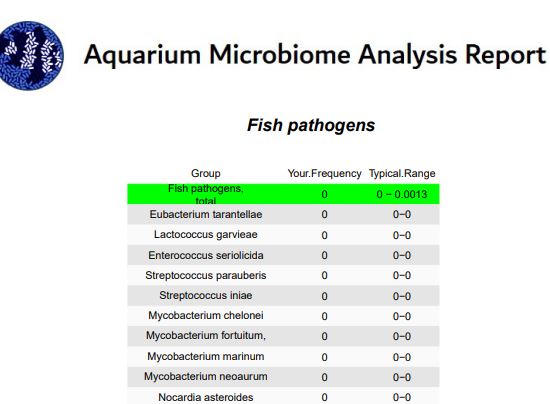
I paid to get my tank tested and surprisingly there was no DNA evidence of
M. Marinum in my tank.
<See this; in fact 0.0 incidence of all Fish pathogens... Bizarre>
Either I got the infection elsewhere (open wound/wet counter at LFS) or the
bacteria was out competed. I attached my report if your interested in
looking over.
<Surprised (very) at how much detail is available (presumably to all) in
such a service. And, my understanding was that Mycobacteria were common, in
fact ubiquitous in marine aquariums; perhaps not super numerary, but not 0.0
present. Bob Fenner>
|
 |
|
Re: Mycobacterial Infection 1/22/20
Bob,
<Eric>
My tank actually has quite a bit of mycobacteria but none of the actual
fish pathogen.
<... am wondering how they (the lab) distinguishes twixt the two?>
The first page actually breaks down all the different types of bacteria
which was found. Here was the owner's thoughts on my report.
I had both of my tanks tested.
"Hi Eric,
I’m writing with some thoughts on your results, to share my perspective
based on looking at a few of these recently. From the info you logged
with your samples, I see that your tanks differ in age, and in terms of
problems reported (Dinos in the 450, macro in the 750). I'll interpret
your results in this context so please correct me if I've gotten that
wrong.
Both of your tanks had diverse communities, in the upper half of tanks
I've sampled. Based on the info logged with your samples, it looks like
the diversity follows the trend that we're coming to expect -- reduced
diversity with age.
<Yes to this; a general trend in all captive (and disturbed) systems>
What is striking is how high the diversity is in your 450. I'm guessing
you started this with some good live rock? It'd be interesting to hear
how more about the history of this tank (If you have already described
in PMs or emails please let me know and I will review them.) If its a
new tank, that is a really impressive diversity score.
<I agree>
Both tanks showed low balance scores, indicating that the balance of
microbial families was very different in your tanks than in the typical
tank. Please note this does not necessarily mean there is anything wrong
with your tank - it just puts a number on how similar or different your
tank is from others. In your case, both are pretty different.
To explore the reasons for these low balance score we can look at the
community barplots (part 2). Both tanks are very low in
Pelagibacteracea, which are dominant in the open ocean, a major part of
the typical reef tank microbiome, and are specialized for low nutrient
conditions. This happens in many tanks, and I'm not saying its a
problem. But it is a common difference between some tanks and the
microbiome of a natural reef. Both tanks are also low in
Flavobacteriacea, and your 750 is also low
in Alteromonadaceae.
It is interesting that neither tank has much Alteromonadaceae. Usually
when the Pelagibacteracea are low, the Alteromonadaceae bloom. Your
tanks show a different pattern.
In their place, your tanks have a relatively large amount of
Vibrionaceae.
This group is mostly members of the genus Vibrio, a genus that we find
in every tank. But it is also a genus full of pathogens. Vibrios are
associated with animals, and I typically see these in heavily stocked
tanks (including invertebrates like corals) - your 750 certainly fits
the image in my mind for a high Vibrio tank, lots of animal tissue
relative to macroalgae or bare rock.
<Again>
When I see atypical balance I start thinking about nutrients, meaning
more than just NO3 and PO4 (but those too). Do you feed your two tanks
differently? That may help us diagnose the reasons for the differences
in balance scores and community compositions.
Both tanks showed low levels of nitrifying microbes, but not unusually
so.
My view here is that a tank can process N through three different
pathways (nitrification, heterotrophic assimilation, or photoautotrophic
assimilation). Your tanks both show low levels of ammonia oxidizing
microbes and undetectable nitrite oxidizing bacteria, which suggests the
other processes are competing for N. I do not view this as a problem to
be solved, but as a description of how the microbial community has
responded to competition for ammonia. Like many tanks (including all my
display tanks), yours appears to not rely entirely on nitrification for
removal of NH3. I see you have a macro refugium in the 750. Is there any
algal competition in the 450? (aside from the Dinos, that is! maybe
that's enough to explain it)
Both tanks are free of known fish and coral pathogens.
As far as Mycobacteria -- I looked at this one in detail for your
samples.
The database I use includes (GreenGenes) perfect matches to
*Mycobacterium marinum*. None of these were detected in your sample or
any other. Like most tanks, yours include various other members of
*Mycobacterium *, most of which are uncharacterized species. In your
tanks, these are dominated by
3 types, none of these are close matches to *M. marinum*, they all match
other uncharacterized *Mycobacterium *clones more closely. The total
levels of Mycobacteria were also not unusual in your tanks, at the 78th
and 85th percentiles.
I hope this is useful and am happy to continue discussing your results,
but that is an overview."
<Thank you for sharing. BobF>
|
Re: Mycobacterial Infection 1/23/20
Hey Bob, no issues sharing any of the pictures I sent. If you need me to
resend I certainly can. Just let me know. So the DNA sample included a
direct water sample filtered through some contraption that was sent in.
Additionally q-tip swabs of inside the return lines were taken. I am
assuming the swabs were the main source of the sample.
<Ahh, thank you Eric. I did send along your corr. to friend and fish
pathologist (w/ a bkgd in Mycobacteria esp. In fact there's a pc. by him on
the subject posted on WWM), Myron Roth. Do please re-send images of the
site/would for his perusal. BobF>
Re: Mycobacterial Infection 1/23/20
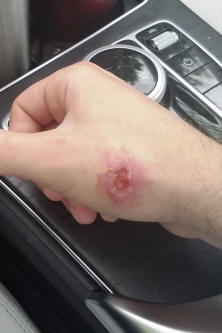
Not sure why I sent you a photo of my leopard wrasse. Here was the day zero
photo after the biopsy.
<Mmm; sent on to Myron. B>
|
 |
|
Re: Mycobacterial Infection 1/23/20
Bob,
<Eric>
Here are a few photos that he can use. There are a few to show how I
responded during treatment and the residual scar. If possible do you think
you can see if Myron can comment on how effective taking actual swabs of the
inside of the return lines and drains would be? I think that is what they
use for the majority of the samples and what was sent in. This is in
addition to the water sample filters he was referencing. How they extract
the dna from that is a bit out of my league. He did mention and was pretty
confident that if M. Marinum was in the tank it would show up on the test.
That is assuming I took the samples correctly but different Mycobacterium
species were found so I must have did something right.
<Am asking him here>
Now for the million dollar question. Do you think it's safe to add a new
fish too the tank?
<I do think it is safe (enough). Put another way, I would do so>
The current stock is healthy and acting normal. I've only had 1 fish die in
the tank in the last year and that was in June and likely related to a
spinal injury from crashing into the top of tank. Was looking at putting in
a Foxface to help with algae control.
I also attached a photo of the display so you can see the tank.
<BobF>
Re: Mycobacterial Infection 1/23/20
Bob,
<Eric>
I know Myron also posed another question regarding overall sensitivity.
Here was the response I got.
<Forwarded>
Eli, quick question for you. It would be interesting to know how much of a
non pathogenic/pathogenic reference would it take to get a positive result.
In other words, what’s the limit of detection of the system for a single
species of bacteria?
"Eric, Important but also a challenging question. Its not easy to put an
exact number on the answer, because its affected by a few unknowns. I
estimate one per several thousand cells.
To increase sensitivity further we could make small improvements by spending
a *lot* more money on sequencing, or larger improvements by filtering a
larger volume of water.
It would be interesting to answer your question experimentally by adding a
known concentration of cells that are not already present in the aquarium,
then immediately sampling to measure their relative abundance. Of course it
will be affected by the existing concentration of cells in the aquarium, I
will have to think some more about how to measure the limit effectively this
way."
Re: Mycobacterial Infection 1/23/20
Bob,
Some more. Sorry for the background colors. Not sure how to get rid of it.
Legal disclaimers first, I cannot offer medical advice and would have to say
the same if the bug was detected.
<Understood>
But speaking generally about detecting either organisms or genes with DNA
sequencing, its generally hard to be certain about a negative, right? Not
saying that either to dodge the question or to be snarky. Its genuinely
something we often would like to know (is this thing truly absent) but its
never easy to be sure.
<I don't know; really... I'd guess/surmise that "w/in the sensitivity" of
the test (gear), a negative has some validity (confidence limits in the
quantitative sciences)>
One thing in our favor, *M. marinum* is free living and infections occur
from exposure to the water itself. So our sampling method should be able to
capture it. The sample of 60 ml is expected to contain over 6 million cells
based on the typical range of microbial densities in aquarium water. So
we're sampling this population pretty deeply, millions of cells. Overall our
sampling should be a reasonably effective way of capturing the cells if they
are in the aquarium.
So the DNA I extracted and prepared for sequencing should reflect
contributions from millions of microbes. Our sequencing of 10,000 reads
didn't turn it up, but perhaps its there at very low levels (1 in 1
million?) I cannot rule that out. Sequencing that deeply would be
prohibitively costly. And even then we'd wonder what if its here at 1 per 10
million? etc.
<The folks familiar w/ the process and equipment should be able to tell you
this. I cannot>
It looks like there are PCR based methods for specific detection of M.
marinum. These will be more sensitive than the general 16S primers I used to
amplify (in principle) all Bacteria & Archaea. I have your DNA samples in
hand, so this will be an interesting test case. If its absent from the
standard 16S tests, is it also absent from the more sensitive species
specific test? It won't be instant, but I can order those primers with my
next batch and keep you posted. I'll check this at the level of PCR, so we
won't have to wait for sequencing results to come back.
<BobF>
|
|
|
Mycobacterial Infection
5/7/19
Bob,
<Hey Eric>
I scraped my hand cleaning the back of the aquarium. 2 weeks later developed a
large gnarly looking nodule with oozing and crusting right where the scrape was.
Did a week of antibiotics and steroid creams and nothing. Finally went to the
dermatologist as it is now a month later with no change.
<... what did the dermatologist say, speculate? Did they sample, culture?>
Preliminary diagnosis is Fish Tank Granuloma pending biopsy results and culture
but really nothing else it could be. My question is shouldn't my fish be sick
from this as well. This is basically fish TB right?
<Mmm; possibly. IF you don't think you're getting satisfaction, I'd look for
another Dr. Bob Fenner>
Thanks,
Eric
Re: Mycobacterial Infection
5/7/19
Thanks for getting back to me. He thinks it's Mycobacterium Marinum.
Should I be treating all my fish with some type of antibiotic as well.
<Mmm; no... this gram neg., rod... bacterium is pretty much omnipresent in
marine aquariums, the oceans...>
If the derm is right I must say I am pretty unlucky here.
<No as well; not uncommon. Bob Fenner>
Re: Mycobacterial Infection
5/7/19
Thanks Bob. In the future is it safe to put my hands in this tank? I am talking
about gluing frags to rocks etc. Skin contact with water is okay right? The
problem is with open wounds, etc correct?
<... Am a huge fan of keeping hands out of systems; ONLY putting in w/
full-length gloves. Bob Fenner>
Re: Mycobacterial Infection
5/7/19
Bob,
<Eric>
Last question. I have read articles about having to break down tanks and
disinfect everything. Also that splashing water and dried old water can still
harbor the bacteria.
<Yes; that is my understanding as well>
I am a little worried about my kids here. Can this be inhaled and cause lung
disease through siphoning?
<Mmm; that I do doubt. However, I am a big fan of "bleaching systems in place"
to sterilize.
Do read here re the elements:
http://www.wetwebmedia.com/PlantedTksSubWebIndex/clndecorag.htm
Bob Fenner>
Re: Mycobacterial Infection
5/8/19
Bob,
So essentially I would have to euthanize the fish and corals, etc?
<? No; remove them, all other life you want to keep first. B>
Re: Mycobacterial Infection
5/8/19
Is it necessary that I euthanize the fish and coral and bleach the tank?
This us utterly shocking to me as I have had most of my coral for over a decade
and most of my fish for over 5 years.
<... No... you mentioned disinfecting the system itself. Eric; perhaps a bit
more delving, reading...
Microbes are all about, on, in us... most of them, and the vast majority of
time, not pathogenic>
Re: Mycobacterial Infection
5/8/19
Thanks Bob. Must have taken your response out of context. So really I do not
have to disinfect the tank unless I want to?
<Correct>
What I struggle with is what is the point of disinfecting it if really
omnipresent and essentially will be added again at some point. Would uv
sterilization and ozone be of benefit here?
<Yes; higher DO, ORP do reduce TBC....>
Seems like safe reef keeping with hands out of the tank and gloves is all that
is needed. Do you agree?
<Indeed I do. B>
Re: Mycobacterial Infection
5/8/19
Is running ozone and oversized uv overkill? Is one more effective than the
other?
<... too much O3 can be dangerous. Again; my advice; reading... On WWM,
elsewhere. B>
Re: Mycobacterial Infection
5/8/19
Thanks Bob. Is there also anyway to figure out where I got this from. By that I
mean I also have a QT tank with fish in it. I guess it's just as likely that I
scratched my hand in my main display and the cut got infected in the QT tank. If
the fish in the QT tank are asymptomatic do you think it's reasonable to move
them into the display tank.
<? How would I know Eric....? Folks, aquarists do get such growths,
infections... freshwater, marine, fisher-folks as well.
http://www.wetwebmedia.com/woundbactf.htm>
Re: Mycobacterial Infection 5/14/19
Bob,
Just wanted to let you know. Diagnosed was confirmed via biopsy results.
Definitely a Mycobacterial infection.
<Again; not uncommon, and not often trouble. Bob Fenner>
Re: Mycobacterial Infection 5/14/19
Bob,
<Eric>
Right now I am running a Pentair 120watt uv sterilizer inline. Would adding an
ozone unit be of any benefit?
<What's your ORP run? IF the UV et al. set up, maintenance... are yielding a
rather high/steady RedOx state (300-400 usiemens/cu...) I wouldn't>
I haven't been able to find much as to which is better or more effective against
bacteria. I know uv's are
certainly safer.
<Mmm; I think I've recently stated this... the better part of UV use is their O3
generation. Bob Fenner>
Re: Mycobacterial Infection 6/22/19
Bob,
<Eric>
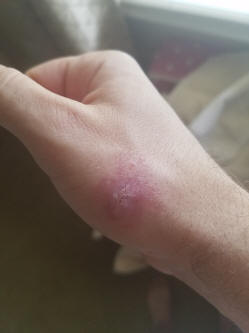
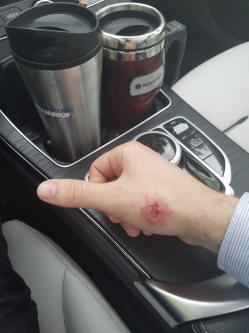
Wanted you to have these pictures as I think they are great for
educational purposes. Been on antibiotics for 30 days and the M. marinum
has cleared up pretty good.
<Yes; the emargination... looks good>
2 more months to go. Just an fyi all my sea life creatures are still
doing okay as long as they dont jump out of the tank.
<Thank you for sharing. Bob Fenner>
|
 |
|
Re: Mycobacterial Infection
6/27/19
Bob,
<Eric>
Sorry to open this inquiry back up. Not sure if you recall but I had
also
sent you an email regarding polyp extension on my Acros. I was actually
going move all my soft corals and anemones out and setup a new tank for
them giving me more space to increase flow space out some of my sps
corals. This entire myco infection has got me concerned about
contamination of the new tank even though I know mycobacterium marinum
is
omnipresent to a degree.
<Yes; but varying in "potency".... infectiousness if you will. As long
as
your livestock is healthy, system optimized and stable; not much chance
of
expression>
Would removing the coral not attached to rock and anemones likely result
in contamination. I have read for hours and most of what I have been
able to find pertain to zebrafish studies. I haven't seen any studies
that apply to the casual aquarist in situations like mine.
<Not much science per hobby conditions, no. I would do your best to
provide
good maintenance and try not to worry re Mycobacteria. Bob Fenner>
|
Re: Mycobacterial Infection 11/3/19
Bob,
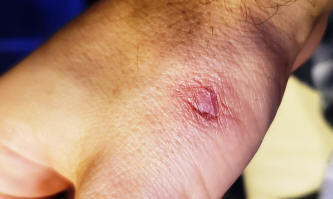
Here is the final picture. Just left with a reminder scar. Have 5 more days of
antibiotics and all good.
<Does look like it's healing well Eric. B>
|
 |
|
Fish disease transfer (to humans)
7/28/16
Greetings Crew, I'm hoping you can put my mind to rest. Have you heard
any first hand accounts of parasites being transferred from fish to
humans or other pets. I routinely irrigate my lawn with water from my
tanks. I recently imported some farm raised fish from Asia and wondering
what kind of micro organisms have hitch hiked in. I've become most
concerned about my dog as she spends so much time out there. I
personally have only heard of mycobacterium infections but how about
nematodes/Trematodes and other parasites? Thanks for your time. Thanks,
Brandon
<The risk is virtually nil. There are some microbes that can grow around
fish tanks that can jump between the aquarium and people. Salmonella is
an example, sometimes found around the hood for example. But Salmonella
can be
found in any warm, damp environment with decaying organic material,
including kitchen bins, reheated food, cat and dog food bowls,
terrariums, etc. It's also easily avoided by washing your hands after
handling your pets. So assuming you have a healthy immune system and
take reasonable precautions like cleaning your hands after working in
the fish tank, there's no significant risk here. Mycobacteria are
similar, and there are occasional reports of "Fish TB" jumping to
humans. Usually it's Mycobacteria marinum that's mentioned in the
aquarium press, but whether it's actually this species is open to
debate. In any event, same basic rules apply, and a healthy person
taking sensible hygiene precautions isn't at serious risk. Even when
healthy people do catch aquarium strains of Mycobacteria, the worst that
happens is a skin rash on their hands. Beyond these two bacteria types,
there really aren't any major health risks in
keeping fish or handling recently imported livestock. The worms you
mention usually have complex life cycles that aren't flexible with
regard to hosts, so aren't likely to affect humans (indeed, a lot of
fresh fish sold in grocery stores is infected with worms like
Lernaeocera branchialis, but cooking kills them, and even when eaten raw
the risk is negligible, though skilled sushi chefs are trained to remove
them before serving -- obviously!
-- and sushi-grade fish is frequently very deep frozen to further
minimise the risk). I wouldn't feed live goldfish to a dog, that would
be pretty silly, but the risk of you picking up a worm while cleaning
the filter and then transferring that worm to your dog having washed
your hands first is pretty much zero. Compared with cats and dogs, both
of which routinely pose health risks to humans, tropical fish, and even
more so marine fish, are extremely safe -- one reason they're frequently
in hospitals and doctors' waiting rooms but furry animals aren't!
Cheers, Neale.>
In a panic... Cryptosporidium in source water 4/25/16
I live in a very rural area and get my water from a well. My neighbor's house is
up for sale, but they just lost a buyer because the well wouldn't pass
inspection. They shocked the well and tested it again, but it still didn't pass
inspection. Apparently their well is contaminated with cryptosporidium and we
are on the same aquifer. I have had repeated problems with constipation and swim
bladder disorder in my loaches - could this be caused by cryptosporidium?
<(trouble in humans, not in fishes).....
https://www.google.com/webhp?sourceid=chrome-instant&ion=1&espv=2&ie=UTF-8#q=Cryptosporidium+and+human+health
>
If it could be, is there anything I can do?
<Yes.... filter the water ahead of all uses; esp. potable. I'd have professional
services come out and bid for setting you up a system. Bob Fenner>
*Renee *
Re: In a panic... 4/25/16
Have a system set up, but apparently it is being overwhelmed - will try to
upgrade. They're talking about condemning the neighbor's well. They've been
digging over there since last Thursday. They found what they believe
are human remains.
<Ugh!>
Are there any medications that will help my fish that are currently being
affected?
<I would not be concerned re the fishes. BobF>
Re: In a panic... 4/25/16
So, to make sure I'm understand you right - when I get rid of the
cryptosporidium, the fish will straighten out on their own?
<I doubt that this pathogen is malaffecting your fishes. B>
Re: In a panic... 4/29/16
I don't understand. You said in your first response that the cryptosporidium
could be causing my loaches constipation and swim bladder problems?
<Ah no; sorry for the confusion. I meant it could cause
gastro-intestinal issues in you/humans. This genus is found, has been cultured
from several species of fishes.... more likely akin to Escherichia in humans.
B>
Re: In a panic...
Ok, thank you.
<W>
Reef Tank Causing Respiratory Distress; Zoanthids...
1/28/16
Greetings,
<Hola, Earl here.>
A little back-story: My 130 gal reef was broken down into a temporary setup for
3 months due to a silicone defect while the new aquarium was built. Without
proper filtration dinoflagellates took root, smothered and killed most of the
corals, but the fish/inverts seem OK and 4 days ago I transferred the
inhabitants and rock to the new 240 gal system.
<OK Sarah I am sure Bob and some others will have more to say on this but I
wanted to give you an immediate heads-up because this is potentially as serious
as a heart attack, literally. Look up palytoxins. It is very likely you have
"Palys", button polyps, Zoanthids (zoos), such similar in your tank, no? Stress
or physical damage or attempts to remove them/kill them
can cause them to release a very dangerous neurotoxin specific to these animals.
This needs to be taken extremely seriously...I have heard incredulity from
people on the seriousness of this but please know it is definitely something
that needs to be dealt with asap, with a cool head.
The symptoms you describe are classic.
http://www.asanltr.com/newsletter/02-2/articles/Neurotoxins.htm has
some good and detailed info. Also check the faq's on WWM regarding this. I have
some friends in my reef club who had a very similar occurrence which included
hospitalization for 2 of the family. It particularly attacks the respiratory
system. The CDC says:
http://www.cdc.gov/mmwr/preview/mmwrhtml/mm6431a4.htm. The first
well-reported hobby-related instance commonly known
http://www.advancedaquarist.com/blog/personal-experiences-with-palytoxin-poisoning-almost-killed-myself-wife-and-dogs
>
The last few days my husband comes home from work and develops an immediate
runny nose and if either of us work on the tank our sinuses burn, develop slight
chest discomfort, irritability, clouded thinking, watery eyes and sore throat.
We noticed a correlation between our symptoms and working in or near the system
and have ruled out possible irritants in the house. The aquarium is plumbed into
the basement and we notice the worst effects while in the sump room - last night
we set up the skimmer and carbon in a reactor and were quite uncomfortable
after.
If it were hydrogen sulfide, I'd expect to have disturbed a sand bed, which I
have not.
If it were palytoxin, I'd expect to be severe.
<Please see above. See a doctor quickly for some alleviation and have some of
this printed out as it's unlikely to be known to most physicians.
Remember Rule 1: Don't Panic but do decontaminate (nuke with bleach) possibly
contaminated gear, etc.. And please follow up your email here with updates as a
follow-up as to how things go.>
There's about 10 heads of Zoas in the reef total, although, they are not open.
If it were toxins from the Dinoflagellates, I would expect my CUC to die off -
in fact, it's the opposite, the urchin has recently started eating it.
Please chime in, the unknown is making us uneasy.
Sincerely,
Sarah
Re: Reef Tank Causing Respiratory Distress
1/28/16
Thanks for the prompt response, I'm familiar with palytoxin and it's why I've
never been a Zoa gardener, but there are about 10 heads of stressed Zoas in the
tank, stressed from the dino outbreak I presume.
I think I'm going to cut the large stylo colony off and whip that Zoa rock in
the snow.
<Will share this w/ Earl, but want to respond as well. Yes to (carefully)
removing the rock/Zoanthids to elsewhere. I would also run a good deal (pounds)
of GAC (carbon) and maybe PolyFilter in the system); do a few consecutive daily
water changes (to dilute)>
The tank transfer was 4 days ago and for the past 2 we've noticed the symptoms.
Didn't boil rock, or leave it out of the water for more than a minute or so. I
also wonder if disturbing the dinoflagellates released some kind of toxin. While
our symptoms are present, they aren't severe.
Sarah
<See, read on WWM re others archived accounts. Trouble. Bob Fenner>
Re: Reef Tank Causing Respiratory Distress. Zoanthids
2/23/16
Thanks for the prompt response, I'm familiar with palytoxin and it's why I've
never been a Zoa gardener, but there are about 10 heads of stressed Zoas in the
tank, stressed from the dino outbreak I presume.
I think I'm going to cut the large stylo colony off and whip that Zoa rock in
the snow.
The tank transfer was 4 days ago and for the past 2 we've noticed the symptoms.
Didn't boil rock, or leave it out of the water for more than a minute or so. I
also wonder if disturbing the dinoflagellates released some kind of toxin.
<Not likely discernible by humans>
While our symptoms are present, they aren't severe.
Sarah
<I'd be reading (on WWM, elsewhere) re Zoanthid toxic effects, removing
these animals (the whole rock they're on);
running GAC and more... NOW.... READ here:
http://wetwebmedia.com/zoanthidcompfaqs.htm
and the linked files in the series (above). Bob Fenner>
Re: Reef Tank Causing Respiratory Distress; Zoas 2/24/16
Thank you for the add'l info, I truly appreciate our correspondence.
<VERY glad to help>
After running 2 lbs of carbon, PolyFilters & w/c's we no longer experience
symptoms
<Thank goodness>
near the reef tank and then what seemed like a secondary cold set in for both of
us - 3 weeks of moderate to severe
sore throat, chest congestion and runny nose. All has returned to normal and
I'll share this info with the locals.
Thanks again,
Sarah
<Thank you for your report. Bob Fenner>
Fish handlers disease topic 8/25/15
"On a more serious note I was wondering in your travels if you have ever heard
the term fish handlers disease or seen aquarists with wounds that don't
heal properly
<Oh yes! Unfortunately. Read here Spot:
http://wetwebmedia.com/Wound.htm
AND the pertinent linked files at the top>
and if you have a good "doctor" that has experience with bacteria's acquired
through fish!
<Have to call around.... they're about; specialists in tropical medicine, some
dermatologists>
I believe the source was from working the Oceanside lobster boat season and
having old salmon juice splash on my arm just above my glove line!
Reoccurring wounds where I get small cuts and small infections! Only thing that
has helped or healed these wounds happens to be the hemp seed oil I make but it
seems like either the bacteria is now throughout my body or I just work way to
much on aquariums and I'm always soggy so things just don't heal! Any trade
secrets I'm open minded:) thanks bob cheers" -spot
<Let's keep chatting mate. Best to do the concentrated "getting rid of" routine
re... Perhaps very aggressive antibiotic series. Bob Fenner>
Important Question: Concern with autoinfection from hands in tanks
6/23/14
emailing you today because I have some concerns. I have no
experience with saltwater or freshwater aquariums but have recently
secured
a position at a leading retail store selling many tropical fish, live
rock,
corals, venomous fish and so on. I was unaware of some of the dangers
upon
taking the position.
<Mmm>
This is where the situation is unique. I know that I have no reason to
panic, but instead to use caution and arm myself with knowledge so I can
take steps to prevent accidents while cleaning the tanks etc but I have
a
nail-biting disorder. It's called Onychophagia. Most people find this
revolting and something that you should just stop doing. But I simply
can't. It is an obsessive compulsive behaviour that I have very, very
little control over.
<Well; then I would definitely get/use gloves if you're going to have
your
hands in the water. More important and likely than trouble from
livestock
itself; all biological waters, including aquariums, have large mixes of
microbial life... some of which you don't want to ingest. Akin to
Coliform
bacteria, Enterobius worms... from autoinfection, you want to thoroughly
wash your hands after having them in the tanks>
I'm aware while at work to be washing and rinsing thoroughly and often
but
what I'm really worried about is the open wounds around my fingernails.
<You should be. I take it you're seen here on WWM:
http://wetwebmedia.com/Wound.htm
the linked files above>
If I am to clean 4-8 30gallon tanks per day, amongst other tasks
(handling
and cleaning protein filters etc) am I especially at risk for
contracting
diseases?
<To some extent, yes... again, the elbow length gloves are the route I
would go>
My worry is that when dealing with things that are microscopic, I can't
be
sure that I have cleaned my hands thoroughly enough and I can't stop
myself
from biting once I'm done work.
Should I be anxious about this?
<Yes>
I feel anxious. I would rather be safe and broke than have money and be
sick. Thank you so much!! I look forward to hearing your answer.
<I had "the habit" of biting my nails and cuticles when I was younger...
and sis still does. I would seek out the help of a dermatologist and
their
aid in turn in "conditioning" help to rid you of this compulsion.
Bob
Fenner>
African dwarf frogs and salmonella 1/26/14
Hey crew! I'm currently cycling a new planted 10 gallon tank for 3-4
African dwarf frogs. Everything's going good. I did my research and am
pretty excited besides the fact that I keep reading about salmonella
from adfs. My question is, what're the chances of catching it and does
having little spots of psoriasis on my hands increase my chances?
Thanks so much!!
Nicole
<Hello Nicole. Virtually all aquaria and vivaria can "grow" Salmonella.
It's not the animals so much as the combination of warmth, damp, and
spilled food particles. Keeping the tank clean will help, but my guess
would be even the cleanest aquarium holds a few of these bacteria.
Generally speaking, washing your hands after exposure to things that
might carry Salmonella (whether raw meat in the kitchen or water in an
aquarium) provides adequate protection, but some people choose to wear
rubber gloves when working with animals and their enclosures. But I'm
not a medical doctor so if you have serious concerns, you should talk to
someone who is medically qualified. Cheers, Neale.>
Popular in Camden? California?
11/15/13
Hi Bob and Crew,
<Hey Johnny!>
Stumbled upon this article at lunchtime, first I've ever heard of these
fish(es).
http://en.wikipedia.org/wiki/Hallucinogenic_fish
<http://en.wikipedia.org/wiki/File:Sarpa_salpa_.jpg >
Have you ever had a request for advise on their upkeep? I bet so!
<Haven't as far as I recall; but have eaten some... tropic boiled
goatfish...>
Dreamfish and chips for tea tonight!
<Yeah!>
Best regards,
Johnny
<Cheers, BobF>
Reef tank causing illness? 1/22/13
Hi Bob and Crew,
<Hello Edie, Lynn here today.>
I am so thankful for your website! But I've read and read, and
can't find anything even remotely like my question:
<Sorry about that!>
I have two reef/fish aquariums, the largest is 90 g. I do a 5%
water change twice a week, wipe down the sides, and deal with any
problems or rearrange the live rock or coral. I've had these tanks
for approximately two years (although many fish-only tanks in the past).
I was diagnosed with peripheral neuropathy---a burning and
numbness in my lower legs and feet about 1-1/2 years ago.
<Yikes, I’m sorry to hear/read that.>
I'm seeing several doctors, but they all say they have no idea why I
have this problem. Needless to say, it is very discouraging.
<I can only imagine.>
I've been reading more about Zoanthids and realized I had been given a
Palythoa which he called a clove polyp. I didn't realize it was a
Zoanthid at first, and had decided not to chance keeping one because of
the poisonous mucus.
<There’s definitely good reason for caution when dealing with
Zoanthids/Palythoa sp.>
I also have a large Pulsing xenia colony, several rocks covered with
Pachyclavularia viridis, several mushroom polyps of various kinds, and
orange plate corals in addition to the fish (common names: orange-spot
goby, fire fish, yellow wrasse, coral beauty angel, Chromis, royal
gramma) and two cleaner shrimp in the 90 g; 2 clowns and an ocellated
dragonet in the 30 g).
I have to confess I haven't been using gloves because I can't seem to
handle anything small with the big clumsy gloves I order on the net--I
think they are put out by Coralife.
<Ah yes, the blue and orange “Aqua Gloves”. I bought a pair myself
years ago with similar results. All in all, I believe they’re good
gloves, but vendors seem to only offer them in one size (which I found
to be absolutely gigantic). You might want to give “Atlas Nitrile
Gloves” a try. I’ve used these for years and love them.
They’re full length, yellow, tough enough to pick up rock/coral, etc.,
without tearing, come in different sizes, have textured hands (feels
like they added some “grit” to the hand areas), an elastic band around
the tops, and are reasonably priced. I got mine from Dr’s
Foster & Smith (where they still sell them), but they may be available
elsewhere as well. Size seems to run pretty true. I
typically wear a women’s med/large glove so I got both sizes. Both
fit, but I prefer the large because it gives me a bit more room.>
I'm an older woman now and my hands are not calloused. Of course,
I plan on working with gloves, somehow, from now on.
<Do try the above-mentioned gloves; I think you’ll be pleasantly
surprised!>
Have you ever heard of anyone having a nerve disorder like neuropathy in
their feet and legs from having their hands and arms in the fish tank?
<No, I have not.>
I've had saltwater fish for over 25 years, with no trouble, but only
started with live rock and coral two years ago. I have been
scratched a couple times on the live rock, and an electric-like
sensation from the orange plate coral, but nothing more serious--yet!
It seemed like an odd coincidence that I also developed the neuropathy
at approximately the same time as starting the reef and fish tanks.
<It does seem coincidental, but it’s nothing I’ve run across – so far,
anyway.>
Maybe I'm grasping at straws, I know, but I'd really like to solve the
mystery of where I got this disorder, and maybe do something about it.
Can you help? Any ideas?
<I sure wish I could do more than offer a brand of gloves to try! This
is just not something I’ve heard of before. I’m a big proponent of
wearing gloves, however, so I do think it’s a great idea to don them
whenever working around/within the tank or when handling any livestock,
rock, sand, equipment, etc..I know it sounds a bit extreme but there are
all sorts of nasty things that can happen when you go bare-handed in a
saltwater system (see:
http://www.wetwebmedia.com/Wound.htm ). If nothing else, it may help
you to rule out the possibility that the issues you’re having could be
related to your system in particular.>
Thanks so much for all your help in the past, and hopefully, with this
one.
<You’re very welcome. Again, I just wish there was more I could do
to help.>
Edie
<Take care, Lynn Z>
Re: Reef tank causing illness? 1/22/13
Hi again,
<Hi Edie>
I'm sorry I didn't do more research on my newest coral before writing---I
thought it was a Zoanthid, but now find it is most likely a Clavulariid,
or a "clove polyp".
<Gotcha>
But the question remains, could reef-keeping be causing the burning and
numbness in my legs, known as peripheral neuropathy? I know you're
not doctors, but I was wondering if you ever heard of a similar
incident.
<I have not. I wish you all the best though, and hope that you
and/or your doctors can figure out what’s causing this and take care of
it quickly!>
Thanks again.
<You’re most welcome.>
Edie
<Lynn Z>
Article: True, False or Mostly Hype, Disease from
trop. fish 1/18/13
Hi Bob, Neale and Crewmembers,
<Hello!>
Best wishes to you all and thanks as always for all of your hard work
and dedication. The aquarium community is indebted to all of you and I
maintain that you cannot be thanked enough for your volunteer services.
<Thanks for the kind words.>
I have a short article I'd like you to check out at your leisure, which
was written on a mostly gossip-type site with sometimes questionable
information. A co-worker stumbled upon it and sent me the link:
http://www.dailymail.co.uk/sciencetech/article-2263812/Tropical-fish-diseases-passed-humans-Humans-risk-impetigo-pneumonia-diseases-drug-resistant-tropical-fish.html
<Ah yes, the Daily Mail newspaper. No scare story left untouched!>
My response was that I was always under the impression that fish (as
pets) to human diseases for the most part are extraordinarily rare
<Thus far, yes.>
and vice versa but that I'd like to get the experts opinion from you
guys...and yes, you guys are experts.
<Perhaps not as microbiologists though… or medics.>
Please don't try to deny it! Thanks as always for answering my
question/giving your opinion and I hope you all have a wonderful day!
Nicholas
<Bottom line is that there's always been a risk of contracting things
like Salmonella from aquaria and vivarium. Anywhere warm, damp and laden
with decaying food can culture such bacteria. But what this article is
about is scientists finding antibiotic resistance in fish. That doesn't
necessarily put humans at risk, though it may mean that treating sick
fish *with antibiotics* could be more difficult. Since antibiotics
aren't used in the UK without a prescription, this is not a big deal;
but in the US, where many aquarists use antibiotics (such as Maracyn)
before using non-antibiotic medications, antibiotic resistance may
become a major problem. The bigger picture so far as human health goes
depends on whether humans could catch these antibiotic resistant
bacteria. That's certainly an issue to think about, but the bacteria in
fish rarely affect humans, so even if these bacteria are ten times as
dangerous as before, they're still not very dangerous in real terms
(going from a 0.001% risk to a 0.01% risk is a ten-fold change, but
overall the risk stays small). I'm not a medic, but I wouldn't be any
more scared of my fish tank than I am of handling raw meat, cleaning out
the cat litter tray, or working soil in my garden. All these things
expose me to bacteria, but if I'm sensible and don't do obviously stupid
things (like, say, swallowing a sick Goldfish or injecting myself with
muck from the filter ) then I can't see how this is a big deal at all. A
wise doctor once said that the secret of health is 50% keeping clean and
50% getting dirty. In other words, you have to avoid germs of course but
you also need to get exposed to them as well, so your immune system can
develop. I'd guess that if you're healthy, interacting with animals,
including fish, helps to develop your immune system. Cheers, Neale.>
Re: Article: True, False or Mostly Hype
1/18/13
Thanks Neale! As always your explanation seems absolutely reasonable to
me.
<Always good to talk, Nick. Cheers, Neale.>
|
Boiling Liverock almost killed my household the other night.
Zoanthid/human mal-interaction 1/12/13
Good afternoon guys--
<Mario>
I am finally feeling well enough to get out of bed and fully function so
I wanted to send a documented email to you to explain our experience.
<Please do share>
The day of the 1/10/13 I purchased a few new corals for my 72g Bow reef
aquarium. On my way home I mentally played with changing my aquascape a
bit to fit my new corals, and open my tank up a bit for better flow.
5pm and the new corals are acclimating. Since the corals I purchased
were Acans, I needed real estate at the bottom of the tank since I am
running MHlighting mixed with130w PC actinics. I decided to start
re-aquascaping.630pm and the aquascape is now done and looks great. In
that time frame I decided to rid my tank of roughly 15lbs of Liverock. I
had the extra rock
that was moved sitting next to the tank in a pot. I wanted to save this
rock for later use, but I have nowhere to allow it to dry out since we
live in an apartment complex so I decided to boil it. Yes, this is where
the trouble started.
7pm and the rock is boiling on the stove and I am doing my daily duties
around the house before my wife comes home from work.
730pm my wife arrives home, and on a whim we decided to go out for
dinner.
By this time the water in the pot is full boil so I cut the stove off
and place the pot on the back burner.
8pm we leave for dinner and I notice that my nose is tingling much like
having allergies. I suffer from hay fever so I know the signs of my
allergies coming on. Once we arrived at the restaurant my nose was
pouring like I had a cold and my wife started to complain of a tight
chest and a cough. We pushed through it not thinking anything of it.
<Ohh...>
10pm and we arrive home and we are both sick. Thinking that we are both
getting the Flu or a nasty cold we bundled up warm to take our dogs out
(110lb Lab and 70lb Golden Retriever) to do their nightly duties. I feel
short of breath and my wife and I have a nasty headache, even though we
are completely bundled up we are freezing cold. After the outing with
the dogs
we sit down on the couch to relax and watch a bit of TV before we go to
bed. Both of us are sick and grumpy. Body aches, headache, sneezing,
running nose and labored breathing. We call it a night and go to bed.
1pm and the our Lab wakes us up to a flurry of vomiting. We clean it up
and go back to bed feeling worse than when we went to bed the first
time.
Now we cannot fall asleep. My wife is moaning and stating that she feels
like she has the Flu. I feel the same and know something is going on in
the house. I don't want to alarm her so I refrain from teller her how
bad I actually feel as well.
130pm and she is asleep but I am noticing both dogs are breathing very
heavy and restless. Our Lab gets up and goes into the kitchen and from a
weird smell I realized that he defecated. I wake my wife up and we clean
it up. by this time she is moaning and groaning. I take the dog out and
he walks maybe 20 feet and lays down. Anyone that has a Lab knows this
is not typical behaviour for the breed. I got him up, he urinated and
the defecated and laid back down. I was finally able to get him in to
find my wife back in bed stating that she may want to go to the ER. She
stated she felt like she was dying. I have never heard he whimper and
moan like this.
I was feeling just as bad but pushing through it but felt horrid and
almost morbid.
2am and I come up with the idea we have mold issues. We had a flood 2
weeks prior that flooded out my car and made its way into the crawl
space below our apartment complex. I search and search for mold but
cannot find any.
230am and I walk into the kitchen again. In the corner of my eye I see
the pot of boiled rocks and the light bulb in my head went off like a
Nuclear explosion. I jump on the PC and search for coral poisoning and
find that certain types of Zoanthids find their way onto Liverock. This
is evident in my tank as there are ugly zoos on some of my rock. I then
find that
these types of polyps contain Palytoxin.
<Yes>
245pm and off to the ER for both of us. Prior to leaving I took to pot
of rocks and dumped them onto the lawn outside and rushed out.
330pm and we are rushed into the ER with difficulty breathing. The Dr
and Practitioner see us both at the same time and listen to my story. I
explain how I boiled life rock from my saltwater aquarium and think I
poisoned myself and wife as well as dogs by these little polyp things
that may have been attached to the rock. I still believe that he thought
we were nuts
and were looking for pain meds. After running our vitals, he finds me
with a fever of 101.5, wife @ 101.3 and both of us had high blood
pressure readings. He asks me, " do you guys want any pain meds?" My
answer was to the effect of "Doc, we aren't druggies, we don't need pain
meds, we need to know what they hell is going on." I think that squared
that thought
process away in his mind.
430pm and he comes back with questions about Palytoxin. Imagine that,
the doctor is asking me about a toxic substance in corals. He states he
has never come across anything like this before and needs more
information. I explain to him to read online as there has been a few
documented cases of Palytoxin being ingested causing serious side
affects. I also explain I am
not a Marine Biologist so I do not have any type of info that would
pertain to treating it. He states that he has researched it and found a
few documented cases, and also called Poison control. Poison control
stated that he could only treat the symptoms if the patient was still
"alive" and let it run its course. Prior to all this at around the 330
mark I would assume, they started IVs and took blood and urine samples
as well as chest x-rays. the chest x-rays came back with symptoms of
Bronchitis.
5am. After our conversation about poison control they gave us Steroid
breathing treatments to ease our difficulty breathing and Tylenol for
our fevers. He placed us on heart and oxygen monitors and said that its
just a waiting game and he will monitor us for a while and we should
both get some sleep.
We left the ER at roughly 9pm feeling much better but still in a lot of
chest pain. Two days later, both of us are still feeling the effects of
the toxin. When we take a deep breath our chest hurts like we have been
in a pool or water for too long. Growing up on the beach we called it
being water logged. Our abdomens hurt horribly from the violent coughing
we are
experiencing. We are both on Ventolin Inhalers and 800mg's of Motrin as
well as Z-Pack's for any type of bacteria we inhaled. We were also
advised to see a respiratory specialist in the near future. Both dogs
are fine now, we opened the windows and allowed any residual toxins to
vent out.
Going back to the point of boiling, I do not recall if there were any
polyps on the rocks. I can tell you I quickly examined them for any life
just out of curiosity. I guess I missed something.
<Something toxic there... but I don't know what. Am not a fan of boiling
rock, substrates>
I know this was a long and drawn out read so I do apologize. I felt
compelled to send this to you so you can publish it if you choose as a
warning to all novice and experienced reefers. We survived this horrid
experience.
Lesson learned the hard way.
Regards--
--Mario and Stefanie
<Thank you for sharing. I do hope you have saved others from similar
trouble. Bob Fenner>
|
 |
|
Re: Boiling Liverock almost killed my household the other night.
1/12/13
Thanks Bob--
<Thank you Mario>
We both appreciate it and hope that it helps others in the future.
<Ah yes>
I posted this on Reefcentral.com as well as thereeftank.com prior to your
response.
<Good>
Any ideas on how I can rid my tank of these Hitch Hiker polyps? I cannot
remove my rock because there are a few on each rock.
<Well, the best course of action is to take all out at once and air dry,
bleach, rinse, air dry again... then re-inoculate the dead rock (after
restacking) w/ a bit (a few tens of percent) of new/live. Bob Fenner>
|
Couple questions; Pterapogon fdg., Scler. stings
1/2/13
Hi Crew and a happy New Year, I haven't asked anything in a while so
here are two issues. I bought 2 pair of Banggai Cardinals over the past
six months and all starved. The would spit out the food. I guess they
wanted only what they were used to. I tried pellets, flakes,
decapsulated brine shrimp eggs (which most fish go crazy for), my own
home made minced fish.
They were all in good shape but they lasted 2 weeks and that was it. And
they were from different stores. You would think they would take
anything if really hungry.
<... I'd have tried live and frozen/defrosted foods of appropriate size>
Anyway, I decided to try once more and after a week of watching them
spit out everything I went back to the LFS and asked them what they
think will work. And they suggested Hikari frozen brine shrimp. Well, it
really worked. They are now much livelier and run for all the foods but
they still spit out all except the bs. It does contain supplements so do
you think they can survive on it.
<I'd expand on the menu... Read here:
http://www.wetwebmedia.com/banggaifdg.htm
and for Apogonids in general>
I had a really nice Lobophyllia. It was oval about 3 inches long and 2
wide. Red outside and bright blue center. Had it about 3 years. Any time
an Acan or Candycane fell on it they melted away
<?! why are other Scleractinians falling?>
and you could hardly see any mark on the lobo. Recently an Acan fell on
it with the same results. About a week later I rearranged my rock so
that my Trachyphyllia would have room to spread so I removed all my
coral, rearranged everything and put the coral back. The next
day I felt a bad sting on a finger and it took a week till it felt
normal. And then the Lobo just disintegrated in about 2 days.
What could have triggered this event. Thanks, Sam
<The contact with both. Bob Fenner>
Pharmacy Degree Question
1/5/12
Hi,
<Hello Paige>
I created my own Pharmacy education site called http://www.pharmacydegrees.net,
a personal project that I've finally gotten to a stage that is
"presentable". I would like to submit my website for your
review and inclusion in the resource section of your site:
http://www.wetwebmedia.com/woundfaq.htm
I created http://www.pharmacydegrees.net as a resource for new
college students to find in-depth and unbiased information about
picking the right Pharmacy degree to fit their needs. I spent
a good amount of time researching each school and providing information
to find the best program to fit their needs. I'm hoping that after
you take a look, you'll think its a valuable enough resource to
include a link to my site in your list of resources.
<Will do here as well as in our educational section>
I'd appreciate the opportunity to answer any questions, or take any
other steps in order to get my site's link listed.
Thank you for taking a look!
Paige Dagmar
<Thank you for your efforts. Bob Fenner>
Upper Respiratory Issues When Cleaning Our Reef
Aquarium 1/14/10
<Hello Wayne>
After thoroughly searching the Internet as well as discussing this with
my local shop owner as well as one of his aquarium cleaning staff I now
turn to you. My 50 gallon saltwater reef aquarium for the past 1.5
years (it was
set up 3 years, 4 months ago) has become seemingly toxic to my health
when cleaning. I am forced to wear a full carbon filter face mask (as
used for toxic chemicals) to reduce the likelihood of getting an upper
respiratory infection when I clean. I spend approx. 3 hours every 2-3
weeks cleaning.
If I break it up to 1 hour increments over a couple of days there is no
issue as long as I wear the mask, but if done all at once, even with
the mask, I develop (as does my wife if she assists me) a dry throat
followed within an hour by mild to more aggressive coughing. The next
day the cough is productive and colored. I work in a medical clinic and
have considered culturing the sputum, but have not yet. The symptoms
(pretty lousy feeling besides the cough) last for 24 to 30 hours. --
Have you heard of this before? I also wear full arm protection so it is
unlikely that there is a connection to physical contact of the corals.
Surely someone else besides my wife and me have had issues of this
nature when cleaning their reef aquarium, but I have been unable to
find anything on the Internet.
Thanks for any advise you might be able to provide. If you need more
specific information such as what animals I have, I would be pleased to
provide that.
<Mmmm, do you run an ozone generator in this system without an ozone
filtering method? Seems unlikely that both of you would be allergic to
a substance in this system other than ozone. Mr. Fenner may also shed
his input here as this is the only item that comes to mind for me in
lieu of the protective measures you employ.
James (Salty Dog)><<I am wondering... if some small fraction
of the "spray" from the water while these folks are in/near
their tank has a titer of toxin/s from some of their Cnidarian
livestock. Please search here: http://wetwebmedia.com/Googlesearch.htm
With the string: "human health cnidarians"
Read the cached views... Likely Zoanthids... BobF>>
Wayne Luallen
Re: Upper respiratory issues when cleaning our
reef aquarium 1/15/10
Thanks to both Bob and James. I am considering an ozone generator
and/or carbon filtration.
<Both worthwhile>
I went to the URL Bob listed below and searched under "human
health cnidarians" as suggested. Many of the articles I had
already gone thru. Regrettably none of several URL's I went thru
provided any information regarding respiratory issues, but instead
dealt with the health of the aquarium animals and human
"contact" issues. All the same I do very much appreciate you
referring me to look there.
If you have any additional suggestions I would appreciate hearing from
you.
Thanks so much for your interest and advise.
Wayne
<I would be looking about, seeing if you can't find a doctor, or
researcher that has dealt with such maladies from "aquarium
contact"... Or perhaps even removing some of the types of life
from your system selectively, to see if you can discern the root of the
problem. BobF>
Palytoxins 1/15/10
Bob,
Came across this in regard to the gent having breathing problems
cleaning his tank.
FWIW I thought I would send to you.
http://en.wikipedia.org/wiki/Palytoxin
James
<Ah yes. Have sent to Wayne as well. BobF>
Killing Palys. Zoanthid control, human toxicity
f's-- 12/04/09
Dear Crew,
<Glenn>
I have a tank being over run by brown polyps. I believe people here
call them Texas Trash Palys. At first it looked nice to have a large
mat of these but this is getting ridiculous. They were growing on all
the rock, sand and back wall. Now I have reason to believe they are
making me ill.
<No bueno!>
8 weeks ago, I did a lot of work on my tank, mainly removing algae and
removing Palys growing on the sandbed. So my hands were in the water. I
was wearing gloves, but they only come up above my wrists. I don't
remember having any cuts. That night, I had trouble sleeping due to
chills. I got up and went into the bathroom and blacked out. Busted my
head open and bruised my ribs in the process. Went to the hospital but
had no fever. My lower BP# was initially really low. Recovered an moved
on.
A few weeks ago, I discovered a leak in my sump. So I broke down my
tank and put all the live rock, including Palys in totes. That night, I
had chills again and felt dizzy when I stood up. This time I sat down
and did not black out. I recovered later in the day. I got a new DT and
setup the new tank and sump. Put the LR and Palys back in. The water
smelled terrible. All my Ricordea were dead but the Palys were alive.
The can with the fish had a few rocks with Palys. Two fish were dead
and the others were near death. That night I got the chills again. My
remaining fish were dead by morning.
<Bad, bad and worse>
I'm thinking all of this is from the Palys.
<Could be>
Even if their not the cause, I want to get rid of them anyway. They are
reduced in number, but I'm sure they'll be back. My tank
completed a cycle and I've started adding some hermits and a
brittle star to clean up anything left decaying in there. I as hoping
to begin restocking fish this weekend. How can I kill the Paly's
and not have another cycle of the tank?
<Remove all rock with them, the Zoanthids on them... Bleach... for a
day... Rinse, let the "old" rock air dry... for a few days...
Place back in the system with some new atop to reseed with other forms
of life>
Not to mention avoid taking the rock out of the tank and manually
removing them?
<This is what is necessary... Either that or nuking/bleaching all in
place.
Yes, I am serious. You are by far not the first or worst to be
malaffected by these Sea Mats... Do take care. Bob Fenner>
Thanks,
Glenn
|
Infections in the skin from coral (dangers of SW sys.
keeping) 11/8/2009
Hello,
<Hi there>
I know these may simply be too gross to post, but if they can
prevent someone from undergoing what I've gone through, not
once, but twice now, I'd sure like to contribute them.
<I thank you for this. You will have saved many others great
trouble>
My name is Renee, and I am a coral enthusiast and like most of
us, I heard some things about coral being poisonous, and how not
to take much of it to heart, that it's just over-stated to
make us afraid, and - well, let me just say that I am now much
more cautious due to a couple things that happened to me while
reef-keeping, with varying degrees of poisoning and illness.
#1: Longhorn Cowfish poisoning. It's not Tetratoxin, but
it's called Ostracitoxin.
<Yes... is an Ostraciid species (a boxfish), not a
"true" puffer (family Tetraodontidae)>
My fish was in a 10 gallon hospital tank. She had Ich, and passed
on and when she did, I noticed a slight foamy look to the water,
so I slid it to the sink to dump it, and as I did, the tank
slipped, cut my finger on the plastic liner to the bone and the
water went inside of this open wound while I poured it into the
sink. I was completely unaware that they carry toxin, as my pet
store had told me that they were 100% safe to keep in a reef.
<Mmm, not so>
He even said people over-react about the puffers being poison and
laughed it off when I had originally inquired.
I called the poison control center, and they told me that it
could make me ill, to be careful for 4 to 6 hours and if I showed
any illness signs, to call them back.
About 8 hours later, (way after poison control's time
period), I began heavily salivating to the point it was hard to
swallow it. Mucous got thick in my throat and I felt really
dizzy. I vomited, and it passed, and if it had not subsided,
I'd have called 911. I forced water and fluids for 24 hours
and was fine.
Additionally: Poison control told me that a curator for the Shedd
Aquarium once poked himself with a dead blowfish spike (which was
the only case he could find like mine) and had a minor
reaction.
<Reactions vary... akin to proteinaceous stings of social
insects>
I thought I'd note that when I told the local store owner I
had purchased the fish from about the incident, he did not
believe me.
<Reflex defensive mechanism>
#2: Foxface Rabbitfish : Ouch. I had him over a year. I took him
out of a fish trap he had accidentally gotten into and as I did,
his fins went between my thumb and forefinger, lightly brushing
as he went into the tank. Mind you, he did not poke my skin. He
brushed it. IT BURNS. It stung like an amplified bee-sting. My
hand swelled...and I put it under water, cleaned it and it
wasn't bothering me an hour later, although I hear they can
truly poison you if they poke the skin...I am thankful that mine
was just a brush of fins and that I was not poked by one.
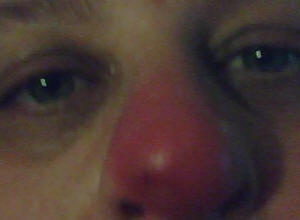
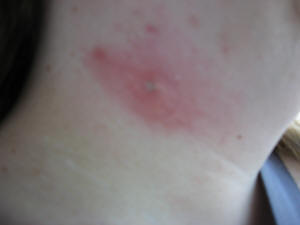
#3: The infections: Coral can bring with it some of the worst
bacteria known to man. Here is one small video and a few small
photos of varying infections caught after handling coral at my
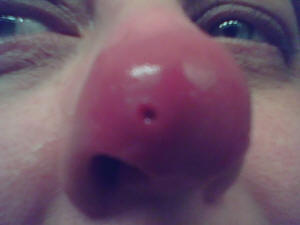
home.
The nose images may seem hard to believe, and the video of it, 2
weeks later (still huge, but going down), as it heals is still
hard to believe.
Note: The nose.jpg photo is after the initial abscess was
removed, after the treatment was given and antibiotics
administered, 6 days into the infection. I had become very ill,
and at one point, I had begun getting weak and dizzy from the
infection.
10dayslater.jpg is 10 days after initial onset of infection.
The video is about 2 weeks later...and you can see how it has
permanently damaged my noise now. I have a dent, a little hole
and a permanent tear in the nostril.
I had gone to my friend Josh's house, sat on his sofa,
handled 3 containers of frags I got from him, itched my nose and
by the time it took me to drive 100 miles home, it had already
begun itching severely.
Within 24 hours, it was a whopping 2.5" across and was
unable to see past my nose.
<Yeeikes!>
You cannot imagine the pain from this. Just think how it feels
when you get a blemish on/in the nose, let alone one that goes
completely through from the top to the inside.
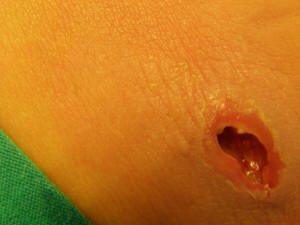
The neck images (2, one prior to removal of abscess, one after):
The neck became infected when I handled coral and then scratched
a blemish lightly, after a hand wash. The physicians said I had
not cleaned under my nails thoroughly enough, and the bacteria
(which I have never had identified) had entered that way. Within
8 hours of touching my tank, it was already swollen and inflamed.
Within 5 days, it abscessed into a huge abscess, which
subsequently was excised. The remaining hole is what is in the
second image, and I am permanently scarred from this as well.
My point in sending this to you is to help prevent readers from
undergoing these same infections.
Cautions I now take:
1. Wear gloves.
2. Wash hands under hot soapy water when finished, being very
sure to scrub under the nails.
3. Read anything you can on fish before you handle them and check
to find out if they carry toxin. I had no clue my Foxfish was
poisonous till I was brushed by his fins.
Just be careful. We love our reefs, and fish and tanks, but the
truth is, they can be a dangerous place to play in and unless we
use some caution, know what we are fishing around in and are
aware of potential dangers, then we are blindly walking in an
attack zone.
Use caution please.
Renee
<Again, many thanks for your sharing/caring. Bob
Fenner>
|
  |
Re: Infections in the skin from coral
11/8/2009
You are welcome, Bob. You are also more than welcome to use the
images or film to help people and to give them a healthy caution of
the dangers lurking in their tanks.
<Thank you Renee>
I found that in my local shops, there is a generalized dis-belief
about the dangers of reef-keeping.
<Yes... and though there is a bit of risk, I have optioned to
post my more dire (though not alarmist in my value system) warnings
on WWM, in articles, books>
3 local stores are still selling customers cow-fish, and right in
front of me, one week after I had been poisoned, just after I told
him the story, the owner told a customer to go ahead and buy the
cowfish, that I had been misguided and probably had the flu.
Renee
<!? Bizarre. BobF> |
Valentini puffer venom? -- 07/04/09
Hello,
<Hi Wendy.>
I thought I'd done my research on the valentini puffer and just
purchased a tiny little specimen to add to my 50 gal tank, but have
just found an article calling the valentini venomous, and wondering in
what sense? I did read that they are poisonous to eat, and have not
planned on eating it, or putting it with aggressive fishes, so thought
that would not be a problem.
<You are absolutely right.>
But, is the little cutie dangerous to handle in the tank, say if
I'm putting my arm in and he bites me?
<No problem. A bite can be painful and may easily become infected,
but there is no venom transferred into your body. However, it is true
puffers have toxins such as Tetrodotoxin and are very poisonous when
eaten.>
Thank you for your help! Wendy
<Welcome. Marco.>
fish food bioaccumulation and humans
6/24/09
crew,
slightly bizarre question, that I have not found an answer too, though
perhaps have been looking in all the wrong places. I have read on the
container of fish food "not to be fed to fish intended for
human
consumption". Not being learned in the topic, I must assume that
whatever component it is that is harmful to humans is accumulated in
the flesh of the fish (it would seem organs being most likely but also
skeletal muscle). I have also read of many people, myself included, who
water their plants (mainly flowers) with the waste water from water
changes.
<Not a/to worry>
And now to the question:
Is there any reason, or risk in using the waste water to water plants
intended for human consumption?
<Only if it's marine/salt...>
further would the likely hood be greater in a fruit type plant, a leafy
vegetable or a root vegetable?
<Zip to nil>
It seemed to me very unlikely but since this is not my area of
knowledge and haven't seen any statement one way or the other I
would ask the crew.
Thanks again,
Forrest
<I suspect this is mainly an "avoiding liability" issue,
though some fish foods have had added medications (antibiotics,
anti-protozoals), others have incorporated beef/cow material that in a
very tortuous way could be associated with human health. I do not,
would not worry. Bob Fenner>
Palytoxin-like compounds and Marine Aerosols...
Zoanthid sel., human hlth. f's
I am writing you today, as I came across the question below on your
website. My family has experienced a similar situation, and I would
like to share it with you, along with a recent article I found dated
March 13, 2009 that directly ties Palytoxin-like compounds to marine
aerosols.
<Thank you for this>
"Human Lung Disease? 11/26/07
Dear Dr. Fenner,
<Just Bob please... I have no doctorate>
Friday I spent several hours cleaning my sump, pumps, heaters etc. Most
of this time was spent hunched over the garage sink with a lot of water
vapor rising up into my face. That evening, my lungs felt inflamed. The
next day (yesterday) a cough developed and then a high fever followed
with all of the usual aches and pains associated. The reason I am
writing is because there seems to be a very clear correlation between
the cleaning of the sump and the rapid onset of this illness. I read
the article posted on your site regarding aquariums and human health,
and most of it seemed related to skin infections. Do you know of
diseases of the lungs caused by the inhalation of bacteria commonly
found in substrate? If so, I would greatly appreciate any
references.
Best wishes to you all,
Brad in Basalt
<I do not... but do encourage you to seek out medical attention if
you are concerned... I wish you good health. Bob Fenner>"
Cellular Physiology and Biochemistry
http://www.online.karger.com/ProdukteDB/produkte.asp?Aktion=ShowPDF&ArtikelN
r=218190&Ausgabe=249208&ProduktNr=224332&filename=218190.pdf
Production of Functionally Active Palytoxin-like Compounds by
Mediterranean Ostreopsis cf. siamensis
Palytoxin is one of the largest and highly potent marine toxins first
isolated from Zoanthids of the genus Palythoa. It has been also found
in sea anemones, Polychaete worms, crabs and herbivorous fishes.
However, algae from the genus Ostreopsis have been proposed as the
possible biogenetic origin of this toxin as well as some potent
analogues, e.g. ostreocin-D.
Palytoxin-like compounds also cause human sufferings because of
exposure to the marine aerosols, with symptoms that include fever
associated to serious respiratory disturbs, such as
bronchoconstriction, mild dyspnea, wheezes, and in some cases
conjunctivitis.
Here is our story:
Palytoxin Poisoning from Palythoa Polyps
Dave and I want to share a bizarre experience we have encountered,
should you know of anyone who owns a salt water fish tank, and finds
themselves getting sick from the water.
Dave recently purchased a 75 gal aquarium and then found a guy on
Craigslist who was selling everything in his tank, as his doctor told
him he was allergic to his fish tank. Every time the guy stuck his hand
in the water he would get sick.
This sounded "odd", but we went ahead and purchased about 90
pounds of live rock, various sea anemones, etc. We really didn't
know what the entire package included, but believed it was safe enough
to transfer to our tank without gloves.
That night Dave , Kent and I all became dreadfully ill for 4 days. Dave
had a fever for 3 days that peaked at 103.5. All of us had muscle
aches, stomach cramps, difficulty breathing, coughing, diarrhea, nausea
and headaches. Only Dave had the fever.
We recovered, only finding our family repeating this cycle every time
Dave stuck his hand or arm in the tank, (to clean or move things
around). After Dave's 5th fever of 101.7 he went to the doctor and
they ruled out Swine Flu, but we had him tested for Salmonella
Paratyphis B and Vibrio, both rare aquarium diseases that can both be
quite dangerous.
We contacted the owners of Saltwater City in Bellevue , one of which is
a Marine Biologist, and the other, "Andy" a microbiologist
and research scientist. He believed we must have poisonous Palythoa
Polyps growing in our tank. (They look like purple flowers.) This
turned out to be exactly the problem. We called the previous owner and
asked him what his "allergy symptoms" were, and they were
identical to ours. Our family would get these symptoms just by
BREATHING the fumes from the tank. We have since removed these deadly
polyps, and are in the process of de-toxifying our aquarium.
Andy, from Salt Water City had a case of this only one other time.
Every time the guy stuck his bare arm in the tank, he would get sick
with a fever. He removed his Palys and recovered. Also, we did find out
that the previous owner who sold us this live rock package had the
exact same symptoms as us! Every time he stuck his hands in the water,
he would get sick with a fever.
He has since recovered.
Trev Dakan, the owner and Marine Biologist of Salt Water City claimed
that a couple times in his life, when we was cleaning out a "bad
tank" he would get very ill with a fever. He just thought he
caught the flu.
We have recently removed 4 LARGE clusters of Palythoa Polyps, and we
also are removing all the sand in our tank, slowly, in sections to go
bare bottom. The sand is in a bucket in our garage. If you were to
stick your head in the bucket and breath in, you WILL find yourself
coughing.
We have been to the Dr. My husband became the most sick, as his immune
system has been compromised prior to all of this due to a sinus
surgery.
Anyway, they did a chest X-ray, tested for every kind of bacterial
infection, and read the above article linking Palytoxin-like compounds
to marine aerosols. They believe this is the cause of our problem.
(They did find Dave's white blood cells to be high. The
microbiologist said this is common with Palytoxin exposure)
We are currently cycling "Chemipure" thru out tank for two
months to try to purify the tank. We understand we may have to
"gut" the whole thing and sterilize it, but the experts we
have talked to think we can save everything by trying this method.
Currently we have not had any reactions around the tank, but we do use
gloves up to our armpits before entering the tank.
If you have any thoughts you would like to share, we are more than
happy to listen.
Thank you for your time!
Sincerely,
Amy and David Fulton
Monroe, WA
<Again, thank you for sharing... You may well have saved several
others from very dire Zoanthid health issues. Bob Fenner>
Poisonous Critters 03/27/09
hello. I was wondering about how poisonous a black long spined sea
urchin and a fuzzy dwarf lionfish are. I have looked on the internet
for these facts and cant really find any solid info except that they
are. Also, if one is poisoned what should they do? Thanks, Bobby
<Well, it really depends on how badly you get
"stung"...and how sensitive you are to the toxins. It's
quite rare for anyone to end up dead or hospitalized from either of
these animals (unless the person has a particular allergy/high
sensitivity and are stung badly). However, that doesn't mean you
shouldn't be extremely careful. Often times, you won't know how
sensitive you are until you get stung (which you don't want to ever
happen). Please see here: http://www.wetwebmedia.com/Wound.htm
Cheers,
Sara M.>
Marine question.. Light hazards to humans
10/6/08 Hi all, firstly let me say what a fantastic resource
this site is! I don't think I've ever failed to find the right
answer on WWM.... until now! So the question, can viewing my aquarium
at close quarters damage my eyes or skin? <Mmm, "if" using
some types of metal halides sans protective shields, you might,
otherwise, only by long exposure... like a mild "sun
burn"> The reason I ask is because the intensity and
wavelengths of light (I run 234 Watts of T5 in 150 Litre tank) are not
what can be called "natural", and in my experience in
situations like this the health and safety bods would be recommending
some sort of PPE to be worn! Furthermore, can T5's be more harmful
than halides? <Not as far as I'm aware, no> I'm first to
admit I spend unfeasible amounts of time observing my reef, so this
question may be of interest all the other like-minded pet stone keepers
out there! I cannot find an answer anywhere in literature or on the
web, possibly because nobody is asking! If you have any knowledge in
this area it'd be greatly appreciated. Thanks Kevin W <Relative
to other sources of "trouble", this one is vanishingly small.
Not to worry. Bob Fenner>
Zoanthus vs. Palythoa vs. Protopalythoa: Palytoxin
07/07/08 Hi WWM crew, <Hello Brian! Sorry about the slow
response, I was asleep at the wheel...> I'm writing you about
palytoxin because I so far cannot find concrete answers about it
anywhere and I have children and pets around my tanks. <Yes...many
stories, few facts available to the hobbyist> This is my first
letter to you all after many readings (including reading many of your
letters on Zoanthidea and palytoxin). I have a few quick questions and
I would appreciate any citations to additional resources you can give,
the more scientific the better. I'm trying to get hold of the Book
of Coral Propagation by Anthony and Corals and Coral Reefs by Eric
Borneman since I hear they have good info on palytoxin but no luck so
far (they're expensive!). <Calfo gives some anecdotal info that
is helpful- cautionary - to the hobbyist. If you're interested in
scientific texts on palytoxins you might try a local library or
(preferably) a college library where you can gain access to scholarly
journals. Perhaps a search of scholar.google.com or JSTOR would be
fruitful in this area.> (1) How can you tell the difference between
a Zoanthus, a Palythoa, and a Protopalythoa species of Zoanthidea? I
would like to concretely identify what is in my tank and learn how to
ID future specimens. <As I understand it, this largely relates to
the common foot. As hobbyists Zoanthus are the smaller, more colorful
polyps sharing a foot; Parazoanthus being larger, more distinctly
carnivorous, and still sharing a common foot, and the
Palythoa/Protopalythoa being colonies of unconnected large polyps>
(2) Do all Zoanthidea species have palytoxin in them? I know that even
within Palythoa, not all specimens have palytoxin in them, but I'm
wondering here whether all 3 species have palytoxin or if, for example,
Zoanthus are safe and do not have it. <All of these families may/do
produce palytoxin and other organic poisons> (3) If not all
Zoanthidea have palytoxin, which ones do not have it? <Can't be
told based on appearance, unfortunately. We must suspect all...for
safety reasons> (4) Where is the palytoxin actually "kept"
in the Zoanthidea? Is it ever released other than when the specimen is
damaged or cut? How is it released (I've read about it squirting
out of Zoanthus but never seen anything on how they actually release
it)? <It is held in the fluid of the mesophyl, exuded in mucous, as
an allelopathic compound.> (5) Is palytoxin also harmful to other
things in the tank (e.g. other corals, fish, inverts, macroalgae,
etc.)? <Anything with nervous tissue, motor function> (6) I have
two Zoanthidea in my tank now that I was told, when buying them, were
Zoanthus. I knew nothing about palytoxins so didn't ask any
questions beyond that identification. They have spread off the original
frag/rock/disc they came on and some of the polyps are bridging the gap
between the frag disc and the live rock. If it turns out these are a
species that sometimes contains palytoxin I'll probably not keep
them, the risk seems not worth it despite their beauty. How should I go
about removing them from the tank to minimize the risk of palytoxin
exposure? <The only way to eliminate exposure would be to take the
polyps and the rocks they are on, bag them in garbage sacks, and
dispose of them.> I've taken up a lot of your time already, so
I'll stop here. Thank you again for your answers. <Unless these
creatures are handled, palytoxin poisoning is unlikely. If you are
concerned about colony size or a child reaching a hand in the tank,
removing these is probably prudent. DO take care in handling them
(gloves, goggles, etc.) especially if they have been severed or
crushed.> Sincerely, Brian <Benjamin> Dragon Goby, Human Injury 6/9/08 Hi, <Hello> I am
trying to research the dragon goby, but not for a fish tank. Recently,
while we were at Thassos, Greece, my daughter reached down to pick up
what she thought was a rock or a shell, but turned out to be a fish
that had been resting under the sand. (She was sure it was a sea snake
that bit her.) <Did it look like puncture wounds? If so I would
guess it was stuck by spines as opposed to bitten.> It did cut her
finger and resulted in a very painful and inflammatory reaction. A
doctor there came to give her an injection to help with the pain, and
said it was probably a Dragonfish. Two weeks later, her finger is still
swollen and is now being treated medically. I want to find out more if
the dragon goby could be the fish that she touched. <Unlikely, they
would not be capable of inflicting such a would, I would guess it was
some sort of Scorpaenidae, many of which do have venomous spines and
could be mistaken for rocks.> I am not finding very good information
so far, and see that you have a lot of expertise. Will you please help
me by directing me to the right resources? Please send information
directly back to my email address. Thank you. Sincerely, Melissa
<Some of these fish can be very dangerous, fortunately it seems as
though the injury here is pretty localized. Two weeks seems like a very
long time to still have significant injury, perhaps DAN (Diver Alert
Network) could direct you to a doctor familiar with dive related
injuries, and may have familiarity with something like this.
http://www.diversalertnetwork.org/index.asp . Hopefully if Bob has any
more ideas he will add here, but I would definitely seek a medical
professional here.> <Chris>
v tail aggression
5/12/08 Hello crew I have a 90 gal FOWLR setup with 2 dwarf
lionfish and a 6 inch v tail grouper. Every time I put my hand in the
tank my grouper darts at me with super speed. I cant rearrange my live
rock I want to form more cave like formations. How can I stop him from
attacking me without injuring him? I do not want to damage my fish do
you have any suggestions? <Have you tried/considered wearing gloves?
-Sara M.>
May be Poisoned?
5/10/08 Hi, I was helping my boyfriend move his 12 gallon nano
home today from school and in the process I spilled some tank water on
my leg that has an open cut. The corals were all extremely irritated at
being moved and I'm sure they gave off some type of toxin in the
process. <Possibly, the zoos more than anything as far as toxins
pertaining to effects on humans.> Its been about 10 hours and my leg
is starting to hurt from my hip to my foot almost as if its just a
strained muscle. I thought at first that's what it was because we
moved a lot of stuff today but that was until I thought about the water
being spilled on my leg where I had a cut. The corals in the tank are
Zoanthids, mushrooms, Ricordea mushrooms, Acans, Xenia, yellow
Toadstool Leather, and Frogspawn. I believe that's everything
that's in there. The pain in my leg didn't start right away but
now its extremely sore. Its 2 a.m. where I am and I don't know if I
want to wake my entire house to go to the hospital if it really is just
a sore muscle. I don't even remember cutting my leg so I'm not
sure how old the cut actually was once the water hit it. <Even if
there were toxins in the water, the dilution thereof should be of no
consequence. It is likely not related to the water spilling onto your
leg other than any possibility of an infection (even then not likely
brought about by the spill alone). I/we are not M.D.'s, if you have
any concerns about your well being, by all means do consult a
physician, other concerns may be at play here. I wish you the best,
Scott V.>
Hermit crabs, human hlth. 5/1/08 Hi I just
have a few quick questions. My daughter is very ill and can not be
around any disease carrying pets someone suggested a hermit crab to her
and she has been searching to see if she can have one. Do they carry
any diseases that can be transmitted to humans? <Mmm, not unless the
human is badly challenged immunity wise... some waste bacteria...>
Are they expensive to take care of? <Mmm, no> I hope to hear form
you soon. I would like to purchase a couple as soon as I know if they
are safe for her because we don't know how much longer she will be
with us and I want to give her what ever she wants but sometimes I
can't. She is just recently without her dog due to this illness and
now she just wants something she can love. Also if they are safe where
is the most reputable place to buy them? I only have corporate pet
stores near me like Pet smart and Pet co. <Some of these (due to
individual staff) are excellent. I would visit, engage them in
conversation... purchase a small book on Hermit husbandry, read it with
your child. Oh, and do read here:
http://wetwebmedia.com/FWSubWebIndex/hermitcrabfaqs.htm for some
general care input> Thank you Valeri <Welcome. Bob Fenner>
Zoanthids, palytoxin, human contact 4/9/08
Mr. Fenner, I have a disease called scleroderma that effects my
autoimmune process and need to be cautious. I have read about the
neurotoxin called palytoxin that occurs with Zoanthid polyps. I read
about the need for caution and it's effects but on the other hand I
get the impression its occurrence in the aquarium hobby seems rare.
With this in mind I have what I believe is a Zoanthid Palythoa that
looks like the common type with green polyps. I'm new to the hobby
and need to know if I have a serious concern. I intend to use gloves if
the need comes to physical touch it, but do I need to be concerned
about making contact with the aquarium water with my hands. Your input
will be appreciated. Steve C. <Mmm, always best to be cautious when
dealing with Zoanthids... particularly in handling directly, as in
asexual propagation/cutting. I do advise that you, actually most
everyone wear good gloves whenever they place their hands in their
tanks... to prevent possible troubles for themselves during exposure,
as well as to disallow contamination. Cheers, Bob Fenner>
Help - my son ingested Tri-start!! -- 03/13/08 Hi
I have a fresh water aquarium and treat my water with Tri-start when I
do a water change. Today my two year old son got into my fish equipment
cupboard and had a sip of my tri-start. I panicked and called poisons
info (I am in Australia) but they couldn't find any information on
the ingredients of tri-start. They did eventually find one database
that said water conditioners are mostly sodium chloride. I was
wondering if you could tell me if that is the case, and if not, what
the main ingredients are for Tri-start or similar products. So far my
son seems fine but I am worried and surprised that manufacturers do not
have to list at least an active constituent. The poor man at poisons
agreed as it makes their job very difficult! Thanks a lot. Hope you can
help me. Regards Sarah <Sarah, water conditioners -- dechlorinators
-- are mostly sodium thiosulphate. That's what you need to tell
your medical practitioner. My understanding is that sodium thiosulphate
is relatively harmless unless consumed in large amounts, though it is
an irritant and emetic, and you should certainly get in touch with your
MD. Cheers, Neale.>
|
Skin Condition due to Saltwater
3/12/08 I can't find an answer to my dilemma. Please
help. Have you ever heard of anyone getting a serious skin
condition from exposure to saltwater? <Yes... an
"industry hazard"...> My 125 gallon reef tank has a
smell even though the water is clear. Seems like an algae smell.
My problem is that I am getting skin outbreaks & eye itching
that I can't help but think is coming from the aquarium. When
I rub my eyes, I think I smell "that smell" coming from
my tear ducts. Any of this make sense? <... Yes! Very
important that you be extremely careful here... I would ONLY
place my hands in the system with long gloves on my hands...
There are such for many purposes... Read here:
http://wetwebmedia.com/Wound.htm and esp. the linked FAQs files
above. I would see a dermatologist re as well. Bob
Fenner>
Re: Skin Condition due to Saltwater 3/14/08 Thank
you! <Welcome! I and many other friends in the trade have
suffered dermatological troubles from SW exposure... some can
"get by" with lotions of different sorts use... Others
have had to learn to keep their hands/arms out of tanks entirely!
There are many possible negative interactions biologically as
well to consider... The best "remedy" are arm-length
gloves of quality. Cheers, Bob Fenner>
|
IMPORTANT .....my cat drank medicated fish water!!
01/26/2008 NEED INFO: <<Hello, Andrew here>> I turned
my back for one second, and my cat was drinking the medicated fish
water I'd just prepared! It was Furan (1/2 tablet in a 5 gallons of
water) for 1 sick fish. He couldn't have gotten more than a few
licks......will this hurt him?? I've searched the net, and
can't find any info Thanks so much Carol Herard. <<This
medication is classed as not harmful by ingestion/swallowing. I would
not be overly concerned. Just keep fresh drinking water available for
the cat. <<Thanks for the question. A Nixon>>
Rabbitfish question, handling 12/15/2007
Hello. I've got a one-spot Foxface Rabbitfish and we've had it
for some time now. It's doing well and growing like crazy. We
bought him in town and nobody told me that the spines could be
dangerous. <Oh yes> Needless to say, we moved him between 3 tanks
now and didn't know. I held him in my hand at one point and even
helped him get his gills going in the new tank when the smaller tank he
had been raised in crashed. (We had numerous newbie fish disasters
throughout the year, but everything is a+ stable now). I am concerned
after finding out that they are venomous, quite by accident, because
nobody took the time to tell us, knowing we were newbies. I've
searched the site thoroughly and read the Rabbitfish FAQs, and I see
that it mentions that they have a painful sting and are venomous. It
does not, however, tell you how venomous they are (from what I saw, but
I may have missed it somewhere) or if they are actually fatal, such as
the lionfish can be. <Somewhat less than Pteroines... more than
bees... Can be dangerous to folks who have aversion to proteinaceous
stings> I am concerned, needless to say, because he's grown to
about six inches long and he's quite the boss of the big tank, with
the exception of a few of our tangs, who rule the roost. Thank you
<I too have hand-handled many Siganids... one just needs to be
careful to keep their hands away from the spiny (anterior) portions of
their dorsal and anal fins... Bob Fenner>
Snowflake Eel Bite -- 11/28/2007 Hi!
<Hello.> I have read through the posts on snowflake morays. I
could not find an answer to my question. I care for a 300 gallon tank
at the junior high where I teach science. I have had a snowflake eel in
my home aquarium and have never had a problem like this. Today while
trying to feed the inhabitants of the tank, at school, the snowflake
eel was wildly thrashing in and out of the tank. I had some silversides
for him and the lion fish so I grabbed one with me fingers to give him
(I know, not recommended ) anyway, he latched onto my finger and would
not let go without some coaxing. After he let go I had several small
piercings in my finger, and was bleeding. I cleaned the injury with
peroxide, but was wondering - do they carry any weird bacteria that
could be infectious. <Several dangerous bacteria have been found in
the mouths of moray eels, among them Vibrio and Pseudomonas. If the
wound swells, is becoming severely red or you feel insecure about what
to do, visit a medical doctor. In addition many (probably all) moray
eels possess a weak toxin produced by club shaped cells in their skin,
that might be transferred by a bite. Dizziness and tremendous pain are
reported symptoms, but the toxin is so far not considered very
dangerous (perhaps only to allergic persons).> I don't know
where else to seek an answer. <The aquarium magazine TFH had an
article on moray bites in its September issue. Possibly will be at WWM
some day, too.> Living in Cheyenne, Wyoming doesn't afford me a
wealth of expert advise. <So far I am not aware of anyone, who died
due to a moray eel bite, but I am aware of some people, who had to go
to the hospital, some because of infection, some because of massive
loss of tissue (larger eels). Although most moray eel bites heal
without infection and further problems, I'd stop hand feeding.
Fingers and silversides are not the healthiest diet anyway. Clam and
mussel meat, squid and crustaceans should be used to alter the
diet.> Thanks in advance for any info you can provide. <Hope that
helps. Cheers, Marco.>
Human Lung Disease? 11/26/07 Dear Dr.
Fenner, <Just Bob please... I have no doctorate> Friday I spent
several hours cleaning my sump, pumps, heaters etc. Most of this time
was spent hunched over the garage sink with a lot of water vapor rising
up into my face. That evening, my lungs felt inflamed. The next day
(yesterday) a cough developed and then a high fever followed with all
of the usual aches and pains associated. The reason I am writing is
because there seems to be a very clear correlation between the cleaning
of the sump and the rapid onset of this illness. I read the article
posted on your site regarding aquariums and human health, and most of
it seemed related to skin infections. Do you know of diseases of the
lungs caused by the inhalation of bacteria commonly found in substrate?
If so, I would greatly appreciate any references. Best wishes to you
all, Brad in Basalt <I do not... but do encourage you to seek out
medical attention if you are concerned... I wish you good health. Bob
Fenner>
Fire Coral, human hlth. 11/15/07 Just
reading your article on fire coral. You mention about getting stung and
the treatment, you should also mention that extreme caution should be
exercised also, some people like me have extreme allergy to fire coral
which can land people like me in hospital, it is not just ouch. I am
starting up the salt again soon and I shall do what you say and use
gloves at all times. Also I do not know if you mention any other corals
that can sting, I know for someone like, I must exercise extreme
caution in the hobby now. By the way I do love your site and your
articles, they are very helpful in giving information and giving
advice. Cheers Richard South <Thank you for your input here. Will
add/share. Cheers, Bob Fenner... always watching out for Milleporines
UW>
|
|

