|
|
| Home | Marine Aquariums |
Freshwater Aquariums |
Planted Aquariums |
Brackish Systems |
Ponds,
lakes & fountains |
Turtles & Amphibians |
Aquatic Business |
Aquatic Science |
Ask the WWM Crew a Question |
| Please visit our Sponsors | ||||
Couple questions; Pterapogon fdg., Scler. stings
1/2/13 Re: Stocking list & Lionfish Venom.
3/4/2010
Coral Catfish (Plotosidae) Questions
6/25/2009 Re: Coral Catfish (Plotosidae): More
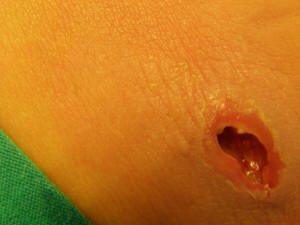
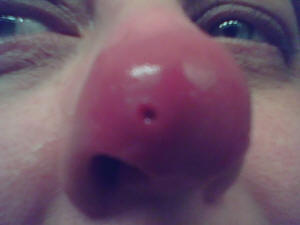
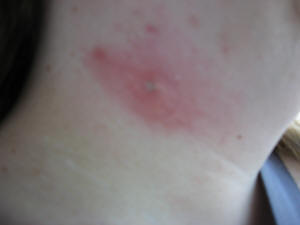
questions about venom. 6/26/2009 Good Snails, Bad Snails.. I know I have had my share... <Wow, sounds like the lyrics from "Cream" from a sixties R & B adaptation! "If it weren't for bad snails, I wouldn't have no snails at all...."> I have recently set up a 29g tank with 30lbs of Marshall Island live rock. The tank has cycled and I am slowly adding livestock. I have had a few hitchhiking snails on the rock. I call them "checkerboard snails" due to their patterning. What are the chances of these snails growing up to be a deadly seashell? <Not likely at all... almost zip> Conus magnus or some such? <Nah! Dangerous conids are sand dwellers> The rock is from the south seas where these animals originate. From what I understand these seashells can be some of the most deadly creatures on the planet. Should I pluck them out (with great care) or let them be? <... the latter IMO> I have 911 on speed dial but I really didn't think I'd need that for an aquarium. Besides my own personal safety, are these snails a danger to coral? Thanks for all your help. <Not likely... they're all part and parcel of what makes live rock so. Enjoy the show! Bob Fenner> Cone Snails--Steer Clear (6/3/05 I am a chronic pain patient. I now have the cone snail venom medicine in me called Prialt. (just approved by the FDA December 31, 2004) <I hope it is helping you.> I am fascinated by these snails and want to get one or a very small group. <I would only keep one of these if I had a death wish. Prialt, like Botox, is safe because it is so dilute and weakened. Like botulinum toxin, some cone snail toxins are among the deadliest toxins on the planet.> I have 20, 30, 50, 100 gallon tanks (although not in use because of my pain problem, 11 back surgeries). <yikes!> Anyway, do you need a permit? <Probably not, just a death wish.> If so, how do you obtain one? <not sure> And how would you go about obtaining a group? I am very well read on care, feeding and safety. <If so, you should be able to find some, but I strongly advise against it--see what Dr. Ron Shimek says about them in "Marine Invertebrates.> Thanks, Brent Ryther, Salt Lake City. <If you really want more info on the possibility of keeping these extremely dangerous creatures and how to get them, you might want to speak to Brad at The Aquarium in Sandy (fantastic new store) or Randy at Mountain Shadow Marine in Centerville. They know a lot about marine aquariums. Steve Allen, Taylorsville.> Stingray sting 8/23/05 My husband and I were on vacation in Corpus Christi Texas and he got stung by a stingray. I took him to the emergency room and they stuck his foot in hot water, took an x-ray, and gave him some antibiotics. It is now 2 weeks later and he is still having some pain in his foot and he is very tired, nauseated, has diarrhea, and sweats a lot even though he is not hot. Could this be because of the sting? Thank you, Amber <Amber, Sting Rays have one or more barbed stingers and two ventrolateral venom containing grooves that are encased in a sheath, so to speak. When a victim is stung, such as your hubby, the stinger apparatus then injects a protein based toxin into the wound generally causing immediate intense pain. The injury may occur without envenomation since many rays lose or tear off the sheath covering the venom gland. In your hubby's case, sounds like the gland was intact. And yes, your hubby's symptoms are included along with others listed below. Syncope Nausea Vomiting Diarrhea Diaphoresis Muscle cramps Abdominal pain Seizures, and Hypotension Have hubby keep taking his antibiotics as the doctor prescribed. Hope he is feeling fine soon. James (Salty Dog)> Delayed reactions to stingray stings 9/24/05 Saw a child who was stung in the front of the ankle by a stingray 3 weeks ago. He soaked his foot in hot water, and it got better. About a week later, he started to get these small dense bumps in the sting area. They continued to increase in number. About a week ago, he was swimming in a pool and slightly scraped his forehead and nose. Now those same bumps are developing in these areas. They itch slightly and are not painful. A few more come out each day. Any ideas? <Mmm, yes... I would take this child to his pediatrician, ask for a referral to folks who deal in such matters... There are two or more components in such stings... some involve the immediate trauma, venom... others more latent infection... Bob Fenner> Watch Out! There's a Lion fish behind you'¦avoiding those nasty stings 12/2/05 Hi! <Hello.> While my friend goes on vacation, I volunteered to take care of his marine tank. <He must trust you a lot.> In the tank is a Lionfish. He says that when he's cleaning he has to be really vigilant just in case it mistakes his hand for food. I'm kind of afraid. Can I use new rubber gloves when cleaning his tank? <Yes but I still would not attempt to touch the fish, having never been stung by one I'm not sure how protective these gloves will be, of course they are better than nothing. However be sure they are not used as far as soap or other harmful materials'¦.they need to be as sterile as possible.> <<Not sterile, chemically inert is the issue here. Regular "Playtex" gloves will not offer sufficient protection from a spine. You need heavy-duty, try chemical gloves. Marina>> Would that protect me? <When I clean a tank with lions I usually (carefully without touching them for your safety and theirs) herd them into the corner with some sort of utensil, (Kent scraper in my case). Some folks use barriers such as eggcrate or acrylic to keep the animal at bay. In general the animal will be much more afraid of you than you are of it and will keep a distance itself, also just be aware of where the fish is at all times don't get lazy or day dream. ;) > Thanks <Welcome, Adam J.> Echinothrix calamaris (Hatpin Urchin) 1/19/06 Hello Bob, <James today> I work at a small LFS and we the boss picked up 3 "zebra urchins" at our supplier the other day. They are Echinothrix calamaris I believe. My first question is, do these urchins have the ability to "shoot" their shorter spines out? <<No... don't shoot out. RMF>> I touched the longer tubular spines with my thumb while trying to move it (and ONLY the bigger ones, I am positive) but received two of the smaller spines buried in my thumb. Very painful. I've heard from several sources that they may be able to do so but no definitive proof. Second question is, are they reef-safe? They are in our fish-only tanks at the moment because we could not find any information on whether they are or not reef-friendly. <The spines of these urchins have hundreds of alternating light/dark bands, some being strong, thick and hollow and others shorter and finer with all being very sharp. I'm guessing while you were trying to move it the shorter finer ones nailed you. The venom is very much like a bee sting so it doesn't surprise me that it is painful. Interesting urchin as in nature they can attain lengths of up to 9" and Banggai Cardinals often seek shelter among their spines during the day. I did some researching and couldn't find anything as to the urchin "shooting spines". James (Salty Dog)> Thank you and keep up the good work! <You're welcome> Brandon Lionfish poison 10/30/06 Hi to all the crew! < Greetings, Emerson with you today. > I have a little concern about Lionfish stings. I actually tried to find out everywhere how dangerous is their poison, but the same answer shows up: their sting is very painful. What does that mean? < Lions are actually toxic and not poisonous. They are eaten all over the world. > No, I know what it means, but how dangerous is their sting? I have a Pterois volitans, he's still pretty small (3" or so) and I'm taking great care to avoid his spines while cleaning the tank, but an accident can always occur. The problem is that the closer poisoning center around is in the neighbor city in a children's hospital somewhere in that same city. I don't have any allergies, but I'm really concerned about the dangers of the sting. < You really wont know if you are allergic to a Lionfish sting until it happens. > Could it be deadly? < There have been deaths reported from Lionfish, but it is said to be extremely rare. > Or is it ONLY painful? Your help would be more than appreciated! < Most stings are very painful, and treated with hot water immersion to help with the pain. Keep the poison control # handy in case you get stung. > Thanks!! < Most welcome, and have a great day. > Ivan Foxface Envenomation (Ouch!) - 10/25/06 Two weeks ago, I was stung by 3 of my Foxface Lo's dorsal fins on the inside of my wrist, for two hours the pain was quite intense. <<Indeed...yikes!>> It was suggested that I soak the wrist in as hot a water as I could handle for at least 1-2 hours -which I did. <<Yes, it is believed the high temperature breaks down the proteins comprising the venom>> It seemed to have solved the problem the three marks almost disappeared in a week. <<Ah good>> Then this week the marks began to turn red and turned into 3 small reddish blisterish looking marks and the skin area around them is slightly red around now as well. <<Mmm...>> I am not sure if this is the type of questions you can answer but here it is. My question too you, is this - Have you heard or read of any unusual side effects from the Foxface lo venom? <<Have heard the wounds can be slow to heal, with secondary infection a reality. But as with bee stings/other envenomations, some individuals will react more severely or less severely to the toxin than the "average" person>> Could this just be part of the process of the venom leaving the body? <<I think this is a "secondary infection">> I would appreciate any input you may have. Thank you, Rhonda McAskill <<Were this I, I would have these wounds checked/treated by a doctor. Regards, Eric Russell>> Hebrew Cone (Conus ebraeus), Poisonous? Yes! Degree of toxicity... ? 5/13/07 Hello crew, <Hi Jana, Mich here.> I am trying to find on the Internet how poisonous the Conus ebraeus is? <Well it does kill it's prey, primarily eunicid and Nereid Polychaete worms, by injecting them with conotoxin, a potent neurotoxin that disturbs the ion channels involved in neuromuscular transmission, typically resulting in paralysis.> I found information on other cone shells but not on this particular one. <Yes, I too am having difficulty finding anything specific to this particular species. There are more than 600 members of the Conidae family and only 30 documented cases of envenomations by Conus in humans, some resulting in death. The most toxic is reported to be Conus geographus, though C textile, and C marmoreus are also associated with an increased of mortality. I have been unable to find any reports describing the degree of toxicity of the conotoxin associated with C. ebraeus, but it is certainly something to take seriously and the effect of the conotoxin would likely vary between individuals. Also worth noting is current research on members of this family for the treatment of pain and conditions such as Parkinson's.> Is it found in Australia and how poisonous is it. <The distribution of Conus ebraeus occurs in the Indo-west Pacific and Eastern Australia as far south as Sydney. Many thanks, kind regards, Jana. <You're welcome. Mich> Stingray toxicity to humans 10/24/07 Hello <Hi there> I was thinking about getting a blue spotted ray and have read on your web site if you are stung that you could have a allergic reaction. How dangerous are they and what percent of the people getting stung have a bad reaction? <Mmm, folks with allergens to proteinaceous stings might be in trouble... how much, how many? I don't know. Much collateral damage is done physically with such injuries....> I have read about the blue ring octopus, it's nothing like that is it, or is it more like a lionfish sting. <More toward the Lion end of the scale> What kind of ray would you recommend that's not to toxic, if the blue spotted is? <One of the non-stingray ray species... See WWM, the Net, Scott Michael's popular cartilaginous fishes book re. Rays are not easily kept BTW... as you will find by reading. Bob Fenner> Thanks Todd Rabbitfish question, handling 12/15/2007 Hello. I've got a one-spot Foxface Rabbitfish and we've had it for some time now. It's doing well and growing like crazy. We bought him in town and nobody told me that the spines could be dangerous. <Oh yes> Needless to say, we moved him between 3 tanks now and didn't know. I held him in my hand at one point and even helped him get his gills going in the new tank when the smaller tank he had been raised in crashed. (We had numerous newbie fish disasters throughout the year, but everything is a+ stable now). I am concerned after finding out that they are venomous, quite by accident, because nobody took the time to tell us, knowing we were newbies. I've searched the site thoroughly and read the Rabbitfish FAQs, and I see that it mentions that they have a painful sting and are venomous. It does not, however, tell you how venomous they are (from what I saw, but I may have missed it somewhere) or if they are actually fatal, such as the lionfish can be. <Somewhat less than Pteroines... more than bees... Can be dangerous to folks who have aversion to proteinaceous stings> I am concerned, needless to say, because he's grown to about six inches long and he's quite the boss of the big tank, with the exception of a few of our tangs, who rule the roost. Thank you <I too have hand-handled many Siganids... one just needs to be careful to keep their hands away from the spiny (anterior) portions of their dorsal and anal fins... Bob Fenner> Stingray Wound - 8/15/03 What is the recommended treatment of a wound caused by the barb of a Round Stingray? <To a human, fish, invertebrate, itself? I do assume you are speaking of a human, no? Here is what the dive doctor has for ya: Prehospital Care: As soon as possible, immerse the affected body part in very hot water (as hot as the patient can tolerate without actually getting burned) or apply a hot pack to the affected body part. Heat rapidly decreases the patient's pain. Emergency Department Care: If a patient has demonstrated any sign of systemic effect, it should be addressed quickly. No specific antidote is available, and supportive care is recommended, including use of analgesics. An easy and important initial treatment that can be started (sometimes at the scene of the injury) is immersion of the injured extremity in hot water (preferably 110-115°F). The water should be as hot as the patient can tolerate but should not cause burns. The water should be exchanged for more hot water as it cools, for an immersion duration of 30-90 minutes. Very little has been written about the toxin left in wounds after a stingray injury. The authors do know that the stingray toxin is a protein and is very sensitive to heat. The patient should obtain very rapid symptomatic improvement with heat as the poison denatures and becomes neutralized. In addition, some practitioners also infiltrate the wound with a local anesthetic, such as Lidocaine (Lignocaine) or the longer-acting Bupivacaine. Occasionally, parenteral narcotics also may be given. After the toxin has been deactivated by the hot water, attention to local wound care should begin because it is not uncommon for part of the stinging apparatus to break off in the wound. Obtain a plain radiographic image (X-ray) of the injured area to look for retained barbs or other foreign material. Explore the wound thoroughly and irrigate it. Perform any necessary debridement. (debris removal). Remove any foreign body from the wounds, including the spine and sheath from the stingray stinger, as well as dirt or sand. As with other potentially contaminated wounds, consider allowing the wound to heal without closure. Because most of the wounds are small, this usually is not an issue. If the wound is very large or gaping, consider loose primary closure. Address the patient's tetanus immunization status and administer a booster as needed. -Paul> Stingray Wound to a Hooman Beene - 8/15/03 Hi, Paul! Wow, that was FAST!!! <We aim to please, plus a marine inflicted wound is nothing to wait about> Yas, it be to a hooman beene! <Lucky guess. I figured fish know enough not to muck with a stingray. :-) Diving or venturing into the frigid south coast waters?> Excellent info, and Thank You Very Much, R.L. "Bob" Dean <My pleasure. Take the wound seriously and let us know if we can be of anymore help -Paul> - Stingray Stings - Thanks for your concern. The incident occurred last Monday to a friend, an adult male approx 30 in excellent physical condition. Beach was rocky, thus not expecting stingrays. ID'd as definitely "Round Stingray" approx 12-in dia. Wound was a "slash", not puncture, pain and bleeding were instantaneous, bleeding was profuse which helped flush out the wound. While water was heating over a propane flame, wound was irrigated with fresh water and inspected for the barb or any other foreign objects. Nothing was found. Within approx 3-4 min.s of immersion in HOT water, pain level greatly reduced. Kept checking patient for any signs of shock incl anaphylactic. No signs other than somewhat elevated state of excite. Analgesic in form of Benadryl given orally. Wound stopped bleeding after about 20 min.s (being soaked in clean bucket), but pressure by walking reopened so applied compress gauze over wound. Patient had somewhat painful night, Swelling was only about size of half-dollar, no striations indicative of infection by morning, couldn't keep him out of the water, said "Goodbye!" Reason for my inquiry was a couple of people on site demanded he soak it in COLD water! Took about 5 min.s to get through to them. Thanks again, "R.L." <Indeed, hot water is 'de riguer' for venomous stings (or wounds in this case) as the heat breaks down the proteins of the venom. Ice and cold water can wait till later to help reduce swelling, but to address the immediate pain of the injury, you did the right thing. Onward and upward! Cheers, J -- > A Nasty Owee 12/9/2003 Good morning, Yesterday while cleaning my tank I had a small cut on my thumb. <Did you cut yourself before putting your thumb in the aquarium or on something inside?> I accidentally touched the elegance coral and was stung by it. <Ouch!> My thumb is now swollen, red and tender. <Either a toxic reaction or an infection.> Should I go see the doctor or give it some time. <Go to the doctor ASAP. If this redness is spreading, you may have cellulitis, a potentially serious infection requiring antibiotics.> Also, what is the active ingredient in the poison. <Uncertain. I could not get any specifics on the Internet. Most of these toxins are a mix of noxious things--local irritants, anticoagulants, neurotoxins. Most reactions are localized burning & swelling, but can be more severe depending on type & amount of venom. Allergic reaction can be severe. Some aquarists have had neurological symptoms like numbness & tingling, loss of taste. Check here for more info: http://www.emedicine.com/wild/topic18.htm> Thanks, <You're welcome. I hope this heals quickly, Steve Allen> -Brent <There's a lesson here for all. It is best to wear arm-length gloves when messing around in your reef tank. Here's one source: http://www.drsfostersmith.com/product/prod_display.cfm?pcatid=3871&D=gloves&R=7795&Ntt=gloves&Ntk= All&Dx=mode+matchallany&Ntx=mode+matchallany&Np=1&N=2004&Nty=1 Also, NEVER EVER put your unprotected skin into the water if you have an open wound (scratch, laceration). The tank is a veritable cesspool of potentially infectious agents and broken skin is an easy access point for them to infect you. Intact skin is your primary line of defense against infection.> Human Poisoning from Sarcophyton? Anthony- After a somewhat panicked web search, I came across your article: http://www.reefkeeping.com/issues/2002-06/ac/feature/ on coral propagation in Reefkeeping magazine. I say "panicked" because while I was attempting to cut a diseased portion of a Sarcophyton species off, I inadvertently cut my finger in the process. The cut was shallow; so shallow that I did not realize I cut myself until the "operation" was complete, and it did NOT draw blood. However, I'm worried about any toxic reaction. It's been two hours as I write this, with no sign of rash or anything at the cut site, or any symptoms that can't be explained by panic disorder. Are there any warning signs/window of time I should be looking out for a "bad" reaction? Is it possible I introduced something harmful or lethal via this shallow cut? I feel incredibly stupid for (a) doing this and (b) e-mailing someone I don't know about it, but I'd really like the opinion of an authority on this so I can rest easy or get myself to the hospital. Thank you very much for your time.. -Todd <Cheers, Todd. Very glad to hear about the propagation efforts! Sorry to hear you got a scare :p No worries though my friend. Nothing imminent is likely regarding a poisoning or allergic reaction. What risk there is no worse than the same risk of being bit or stung by a non-venomous fish or even simply putting your hand in the tank on a daily basis with a hangnail or other non-related wound. Specifically, there are nasty microbes in all aquatic environments and specifically we fear Vibrio or Mycobacterium. Your first step of course was/should be to cleanse the wound thoroughly with soapy water and then use a disinfectant (antibiotic cream, peroxide, or the like). The doctor is unlikely to be necessary but do call at least to get his advice. Really... the concern here is more from a septic infection from the razor than anything the coral could impart. Sarcophytons are specifically noxious to other corals and aquatic invertebrates with regard for allelopathic compounds. Again, since this is not an overtly poisonous (to humans) animal and you didn't even draw blood... it seems likely that you will have a very nice holiday week. The only poisoning that I see as being likely in your near future is alcohol poisoning tomorrow night <G>. Happy New Year, my friend. Anthony> - Dead Lionfish Venom - Hello! I have read that dead puffers and other kinds of poisonous [venomous] fish can pollute the tank with toxins from their body and wipe out the entire system. Does this also apply to lionfish when they are dead? <Not as far as I know... although any fish, venomous or not will become a source of pollution if left dead in the tank for too long.> Andrew <Cheers, J -- ><<A side note here re Lionfish/Scorpaenines... they ARE still venomous to humans when dead. RMF who knows this firsthand>> Medical Article Related to Marine Aquaria Bob & Fellow Crewmates: I thought you might find this article about "Poisonings, Envenomations and Trauma From Marine Creatures" found in the most recent issue of American Family Physician to be interesting/useful. Steve http://www.aafp.org/afp/20040215/885.html Interesting Articles on aquatic animal envenomation Bob & Anthony: Thought you might find these articles for doctors at eMedicine.com interesting: Echinoderrn Envenomations: http://www.emedicine.com/emerg/topic158.htm Coelenterate and Jellyfish Envenomations: http://www.emedicine.com/emerg/topic104.htm Lionfish and Stonefish: http://www.emedicine.com/emerg/topic300.htm Octopus Envenomations: http://www.emedicine.com/emerg/topic342.htm Stingray Envenomations: http://www.emedicine.com/emerg/topic556.htm Decompression Sickness: http://www.emedicine.com/emerg/topic121.htm Steve <Thank you for this Steve. Will post on WWM. Bob F> Toxic corals? 9/30/04 Hi please I need help, I am very confused, all corals are toxic right? <hmmm... depends on your perspective/meaning: regarding filter feeding? (stinging nature of Cnidarian animals)... regarding allelopathy (chemical warfare against encroaching organisms)... poisonous nature if ingested or harassed?? what corals are more toxic?, what corals are less toxic?, <variable as you might guess... and as per the above definitions> can a coral kill a human really?, <yes... more than a few can. Notably... palytoxin in Zoanthids. A historical use by Hawaiian natives, et al when tipping spears for mortal combat> I wont full my aquarium with corals, but I don't wont go to the hospital or die, please help me, what corals you know not are dangerous?, thanks you. <this is a small concern with good husbandry/handling... really. No worries with careful and proper handling as you do household chemicals, medications, fumous agents at work/home, etc. Anthony> |
|

|
Features: |
|
| Featured Sponsors: |