|
Related FAQs:
Stinging-celled Animals,
Cnidarians 2,
Cnidarians 3,
Cnidarian Identification,
Cnidarian IDs 2,
Cnidarian IDs 3,
Cnidarian IDs 4,
Cnidarians ID 5,
Cnidarians ID 6,
Cnidarian ID 7,
Cnidarian ID 8,
Cnidarian ID 9,
Cnidarian ID 10, &
Cnidarian Behavior,
Cnidarian Compatibility,
Cnidarian Compatibility 3,
Cnidarian Compatibility 4,
Cnidarian Compatibility 5,
Cnidarian Selection,
Cnidarian Systems,
Cnidarian Feeding,
Cnidarian Disease,
Cnidarian Reproduction,
Related Articles:
Coral Compatibility: On Reducing Captive Negative Interactions Cnidarians by Bob Fenner, 900-1000 Words on Live Corals,
Hydrozoans
(Fire Coral,
Stylasterina,
Jellies that are Hydrozoans),
Coral/False Anemones (aka Mushrooms),
Zoanthids,
Anemones,
Tube Anemones, Blue & Pipe Organ Corals, Sea Fans, Soft Corals,
True or Stony Corals, Marine Invertebrates, Acclimating Symbiotic Reef
Invertebrates to Captive Lighting, Water Flow, How Much
is Enough,
Cnidarian Compatibility: On
Reducing Negative Cnidarian Interactions, Part 4
Parts: 1,
2, 3, 5,
|
| Bigger PIX: The images in this table are linked to large
(desktop size) copies. Click on "framed" images to
go to the larger size. |
 Here a H. magnifica stinging
an acroporid in the Red Sea. Here a H. magnifica stinging
an acroporid in the Red Sea. |
|
|
By Bob Fenner
|
|
New eBook on Amazon: Available
here
Livestocking Pico, Nano, Mini-Reefs; Small Marine Aquariums
Successfully discovering, determining, picking out the best species,
specimens for under 40 gallon saltwater systems.
Book 1: Principles, Algae, Invertebrates
by Robert (Bob) Fenner |
|
|
|
|
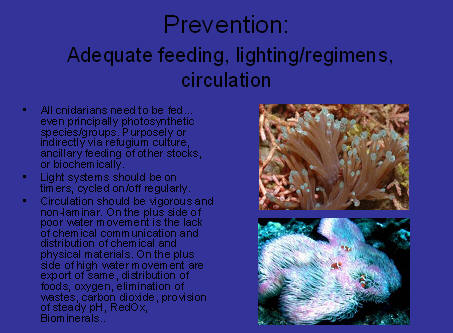
All
cnidarians need to be fed even principally photosynthetic
species/groups. Purposely or indirectly via refugium culture,
ancillary feeding of other stocks, or biochemically.
Circulation should be vigorous and non-laminar. On the plus side of poor
water movement is the lack of chemical communication and distribution of
chemical and physical materials. On the plus side of high water movement are
export of same, distribution of foods, oxygen, elimination of wastes, carbon
dioxide, provision of steady pH, RedOx, Light systems should be on timers,
cycled on/off regularly. Biominerals.. |
|
|
|
|
|
Parts: 1,
2, 3, 5,
|
|
|