 |
|
| Home | Marine Aquariums |
Freshwater Aquariums |
Planted Aquariums |
Brackish Systems |
Ponds,
lakes & fountains |
Turtles & Amphibians |
Aquatic Business |
Aquatic Science |
Ask the WWM Crew a Question |
| Please visit our Sponsors | ||||
|
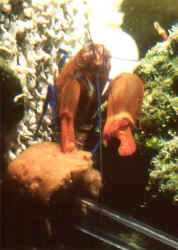
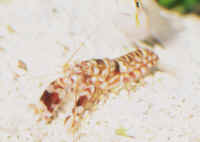
Family Alpheidae, Pistol Shrimp Seldom seen, often heard... and the results of their "shooting" known far and wide... the Alpheids can be easily identified (if you can find them) by their very short eye stalks and one much larger "pistol" claw. This specialized appendage is capable of punching holes in all crustacean exoskeletons, even many shellfish! Alpheus and Synalpheus species are the notable symbionts with Shrimp Gobies. Pistol Shrimp are the predominant crustaceans on the world's reefs... and so you are likely to run into them... they eat most all types of foods... and if kept fed will often leave other crustaceans and mollusks alone. See happily fed specimen above in title bar.
Family Caprellidae: Skeleton Shrimp, Leach 1814.
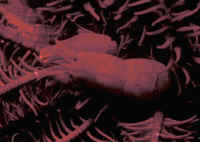
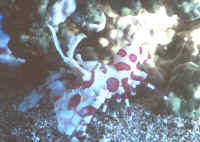
Family Gnathophyllidae & Hymenoceridae, Harlequin Shrimp. Four genera.
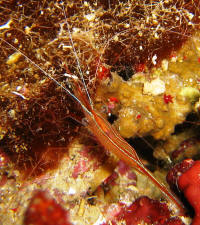
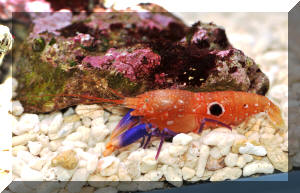
Family Hippolytidae, Cleaner Shrimp
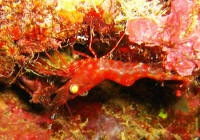
Family Palaemonidae, two subfamilies: Rock Shrimp, Anemone Shrimp
Family Pandalidae:
Family Penaeidae: Mostly "Eatin' Shrimp"
Family Rhynchocinetidae, Dancing Shrimp.
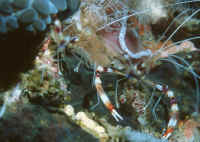
Family Stenopodidae, Boxing Shrimp.
Bibliography/Further Reading: Raising Peppermint Shrimp: www.lysmatapublishing.com Baensch, Hans & Helmut Debelius. 1994. Marine Atlas, v.1. MERGUS, Germany. 1215pp. Brach, Vince. 1996. Aquarium "gunmen" (Alpheid shrimp). FAMA 8/96. Brockmann, Dieter. Undated. Keeping Anemone Shrimps in the marine aquarium. Aquarium Digest International #53, p. 13 Bruce, A.J. Undated. Shrimps that live on tropical echinoderms. Underwater Magazine. #17. Bruckner, Andrew W. 1993. Tropical Shrimp. Social relationships in the aquarium. FAMA 2/93. Chlupaty, Peter. 1982. The Harlequin Shrimp- Hymenocera picta. TFH 11/82. Debelius, Helmut. 1984. Armoured Knights of the Sea. Kernen Verlag, Essen Germany and Quality Marine, Los Angeles, CA. Debelius, Helmut. 1999. Crustacea of the World. Atlantic, Indian, Pacific Oceans. IKAN, Germany 321pp. Delbeek, Charles. 1989. Common Shrimp (Suborder Natantia) for the marine aquarium. Aquarium management, reproduction and behaviour. FAMA 4/89. Friese, U. Erich. 1984. Crustaceans in the home aquarium. TFH 12/84. Gosliner, Terrence M, David W. Behrens and Gary C. Williams. 1996. Coral Reef Animals of the Indo-Pacific. Animal live from Africa to Hawai'i exclusive of the vertebrates. Sea Challengers, Monterey California. 314pp. Hemdal, Jay. 1984. Shrimp of the Caribbean. FAMA 9/84. Hilfrich, Walter. 1972. Shrimps are more than food. Marine Aquarist 3:1. Hunziker, Ray. 1993. The magic of tropical Shrimps. TFH 7/93. Kerstitch, Alex. 1988. Jaws and claws. Most shrimps are scavengers, but some species employ more resourceful and ingenious techniques for capturing prey. FAMA 10/88. Kraul, Syd and Alan Nelson. 1986. The life cycle of the Harlequin Shrimp. FAMA 9/86. Sheley, Tom. 1984. Hymenocera picta. FAMA 10/84. Wilkens, Peter. 1989. Tropical Shrimps in the Marine Aquarium. TFH
11/89.
|
|

|
Features: |
|
| Featured Sponsors: |
%20MD.JPG)
/Lysmata/Lysmata_debeliusAQ.jpg)
/Periclimenes/Periclimenes_pedersoniAQ.jpg)
%20crop.jpg)
%20MD.jpg)
%20MD.JPG)