 |
|
| Home | Marine Aquariums |
Freshwater Aquariums |
Planted Aquariums |
Brackish Systems |
Ponds,
lakes & fountains |
Turtles & Amphibians |
Aquatic Business |
Aquatic Science |
Ask the WWM Crew a Question |
| Please visit our Sponsors | ||||
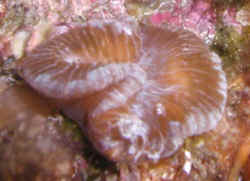
Some explanation is needed, sel./$ of scleractinians -12/19/2007 Hi there, I am so confused after reading this post by Anthony. AFAIK, there's no one selling @ the price that Anthony proposed. <<Actually, I've seen them being sold at these absurd prices all around the country.>> And this gets more true for Acans or Duncans. Do you guys (specially Anthony) have some proof to back this up? Not trying to be rough, but just want to understand it a bit better. <<I'm not sure what you want in the way of "proof" exactly. It was certainly true at the time Anthony wrote this. However, the prices may be going down now. You can get some idea what they're going for these days by looking on Ebay.>> Feeding Mussid LPS corals 5/13/05 Hello, I just lucked out on a single polyp of Blastomussa wellsi and three polyps of Acan lord, my question is should they be imbedded in the sand or glued to a lower section of live rock? <My first concern is that you got robbed (price-gouged really) in saying that you "lucked" into a single polyps of Blastomussa wellsi. These are common in imports... landing in LA for around $10 per colony (10-30 polyps). An appropriate retail price for the whole colony would be $30-50. Single polyps are worth mere dollars. Some unscrupulous hobbyists have been price gouging these (as well as Acans and other corals) as "rare" to unknowing hobbyists. I hope that you were not one of them my friend. As for husbandry, Both can adapt to a wide range of light, but it is usually best to err conservatively and start them low I the tank (bottom of the aquarium is fine). The real key to success with these (and most) corals is feeding. 3-5 times weekly ideally (or more). Use meats of marine origin/zooplankton substitutes. Cyclop-eeze is a great choice. Flying fish eggs (for sushi) are great too. For smaller polyped corals, DT's natural diet (oyster eggs). Best regards, Anthony> <<I agree with Anthony that these corals have been sold (and perhaps are still sold) at some absurd prices. However, personally, since corals are "luxury" items, I don't believe it's wrong/immoral for stores to sell them at whatever price people are willing to buy them. It's just classic supply and demand. If a particular type of coral experiences a surge in popularity and demand, it's only "natural" for the price to go up (imo). There are many things for sale at outrageous prices I don't personally think their worth. For example, recall the "Beanie Baby" phenomenon. Here we had toy bean bags made in China (things materially/inherently nearly worthless) selling for hundreds and even thousands of dollars! However, you wouldn't seriously consider Beanie Baby collectors/traders to be unethically "price gouging" for simply having their finger on the pulse of demand and pricing their goods accordingly. Corals, like Beanie Babies, are luxury items, not life necessities. So why should coral vendors be accused of unethical "price gouging?" It's up to the consumer to be smart enough with their own money to do the appropriate research on competitive prices and to not to spend their money on something that might not be "worth" it to them (though, how one wants to establish "worth" is also debatable). Best, Sara M.>> Re: Some explanation is needed 12/19/07 I tried to do the search on eBay but I only found 2 Acan corals and no Duncan. Does that mean that price has gone up and/or these corals are more rare than 2005? <If by "Duncan" you mean an Acanthastrea from Australia, I'd assume they are/were always expensive. As for other Acanthastrea, the prices were often very high in 2005 (though I couldn't tell you specifically when the prices began to rise). It does seem like the prices are coming down now (more recently). When it comes to Acanthastrea, it's not an issue of rarity (they are not rare and have not been rare). It's an issue of demand and what people are willing to pay.> Ghazni <Best, Sara M.> Mussidae: Acanthastrea husbandry 5/13/05 I have a question about Acan lord frags. I've been trading them lately, and acquired a couple of nice pieces. My question is about their care. I have Eric Borneman's book, but it has a very short blurb about acans, not really getting into aquarium husbandry. With frags, should they be put in partial shade with low current, partial shade and high current, or full light at bottom of tank? I think Anthony has had lots of success with these frags and I'm curious what conditions he puts his frags at. Thanks, Brandon <This entire genus is staggeringly hardy for aquarium use. At worst, they need slow acclimation to bright lights in some cases. But, they CAN be acclimated to a wide range of light. They grow successfully under fluorescent and metal halide light equally well. They real key to fast growth is feeding: heavily and frequently (meats of marine origin, whole and minced zooplankton substitutes). Mine double in 2-4 weeks (individual polyps are cut in half and then again within one month cycles). Its due largely to my feedings (3-5 times daily) and weekly (75-100%) water changes in their systems. Such habits illuminate the difference between reef keeping versus coral farming. Two very different styles of husbandry. Best of luck, Anthony> |
|

|
Features: |
|
| Featured Sponsors: |