|
|
| Home | Marine Aquariums |
Freshwater Aquariums |
Planted Aquariums |
Brackish Systems |
Ponds,
lakes & fountains |
Turtles & Amphibians |
Aquatic Business |
Aquatic Science |
Ask the WWM Crew a Question |
| Please visit our Sponsors | ||||
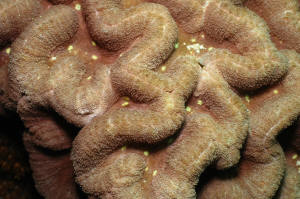
Acanthastrea lordhoweensis in with allelopathic
aggressors
2/23/12
Micromussa'¦ Thoughts on Combating Allelopathy -- 03/07/08 Hi Crew, <Hi Sam, Mich here.> I tried to get a picture but my Kodak just does not get it clear even when I use the setting that says it is for less than 27 inches away. <Look for a "Macro" setting, the symbol often looks like a daisy or a flower.> Anyway, I want to know if what I bought is in fact a Micromussa. <Hard to say with out a photo.> The person who sold it to me sent me a picture first <How about this picture? Does it look more like this: http://images.google.com/images?um=1&hl=en&safe=off&client=safari&rls=en&q=Micromussa&btnG=Search+Images or more like this: http://images.google.com/images?um=1&hl=en&safe=off&client=safari&rls=en&q=blastomussa&btnG=Search+Images > but what I got does not look like the picture. <Often the case, but does not necessarily mean deception is involved.> But I do like it and just want to know. <Is responsible to know the animal you are caring for.> The polyps are smaller than a dime and are an orangey (no such word) <Nope, but I understand what you are saying!> tan color with the centers a brighter orange. <OK.> The tell tale sign of what this is, is what I saw this morning. I could see some tiny tentacles that I would not notice except that I was looking for it. And the mouth was not just a dot in the center as it usually is but was elongated like it had a nose shaped like a funnel sticking out about 1/8 of an inch (O>). <Sounds like the tin man!> On another topic, most tanks with corals have this chemical warfare going on. <Mmm, I'd go as far as saying most tanks with coral have allelopathic issues!> It would be nice if someone came up with a test to show it <I suspect it would be similar to allergy testing, could be done, but doing it repeatedly isn't terrible helpful or informative. We are aware that many corals kept in captivity produce toxic compounds, and that these compounds are present in our systems.> and an antidote to equalize it. <We have the "antidote". The simplest, easiest, most cost effective way to limit the effects of these toxins is frequent water changes. For example, why would you test your hands for potential infective agents and then cover your hands with multiple expensive antibiotics when simple hand washing is more effective, easier and most economical? I should also mention that activated carbon can be useful. More here: http://www.wetwebmedia.com/chemFiltrMar.htm > Thanks Sam <Welcome, Mich> Cynarina incompatible with Sarcophytons? Likely so 10/16/07 Hello! And thanks in advance. <Welcome> Four months ago I added a Scolymia and two Cynarina to an established 75 gallon tank. 360 watts compact fluorescent, water good except for a tendency of Ca to fall to around 350, KH sometimes down a bit also. I have torches, shrooms, a pearl, Montipora, octocorals, <Of what sort, species?> frogspawns, all of which have been doing great. I feed the corals live brine shrimp and raw shrimp with Selcon once a week or every 10 days. Also have two Sarcophytons. <Mmmm> The Scolymia is doing fine, however, the Cynarina have slowly been going downhill for at least two months now. Both the Scolymia and cyans are in the same part of the tank, same current & light and not close to any other corals, so I'm starting to really wonder what might be going on. The only thing I can think of is the water quality (which I've been working on) or perhaps not enough feeding, but it seems that Scolymia would be suffering also. <Not necessarily, no> Eric Borneman mentions in passing in one of his books that there's some anecdotal reports that Cynarina and leathers are incompatible, with the cyans getting the worst of the deal. Do you if there's any truth to that? <Yes> I used to have some xenias which did well for a year, but then cashed in the chips when I got a leather. I've seen been told that xenias can't deal with leathers, which I can well believe.... Thanks, Mark <Am going to make this theme... cnidarian allelopathy... methods of reducing, avoiding, my "pitch" topic for 08's club get togethers. Alcyoniids of this genus are trouble in small/er systems... Large water changes, the use of GAC, better skimming... might help here... but if the Sarcophytons are large... they are very likely producing enough terpenoids to poison Cynarina. Bob Fenner> Goodbye Blastomussa 8/22/06 Bob, Anthony, crew: Hope you are all well. Been a while, all has been good. But you know, rarely do we mail you when things are currently good :). Although I have sent along some thank you's over the last year... Anyhoo, one day, my small colony of blue zoo's 'poof' seemed to vanish. A couple days later, my 14 head ruby/silver Blasto colony appeared to be down to skeletal stages on about 7 polyps and fringes of others. <Bizarre... frightening> I scooped it out to check and something launched (not exaggerating) off the rock, landed on another rock and did a 'I have squished myself into a small blob and now you don't see me', so there - maneuver. <Mmmm> Well, I did see it. And sucked it up in a baster. Now it lives in a Tupperware. It looks like a whitish slug, about the size of a nickel, with a somewhat darker top. Moves rather fast. Multiple sensory tentacles (appx 4, frontal). I am trying to get a clear pic but it is bland, small and my camera is not the best. I have researched on the site as well as the slug forum. Nothing. Any ideas or a genus or something to point me in the right direction? Am I looking for the Blasto/zoo eater in the wrong place and should return the goober to the tank? Thanks much, best to you all Bill (Tirion) <... need more to go on... Could be a fast-moving mollusk of some sort... Perhaps a Notaspidean... that seemed to "jump"... Please send along the pix... Bob Fenner> Re: Goodbye Blastomussa 8/22/06 Crew; Strike some of that. It has turned more darkish on top and I never touched it previously (never be too careful).. However, I have found that it has a thin shell like top but is still very flattish. Very fast mover. Almost whelk like in speed and movement. Mouth has no visible barbs or rasps. Still no good pic. Thank you. <Still no good guess. Bob Fenner> Re: Goodbye Blastomussa 8/23/06 Bob, Crew. I might have caused a ruckus over nothing. I now believe this is a largish Stomatella. <Ah ha!> Had never seen one this size prior, mostly smaller in refugiums and 'dingy' with that environment. Testing in my zoo frag tank :) <Do keep your eyes peeled for others... Bob Fenner> Blastomussa wellsi and Seahorses? 7/30/03 follow up I received a Red Blastomussa ......Blastomussa wellsi is the species that was listed on the invoice. I have enclosed a photo just in case they ID it incorrectly. <seems to be indeed> It was sent with an order, as an extra. I seem to remember a conversation I had with a reefer friend who told me that they have very potent nematocysts and can inflict a pretty nasty sting. <nope... not true or accurate. Quite the contrary... they are passive and easily harmed by others> I could of course be confusing it with something else. <perhaps some of the Faviidae with which it is commonly shipped but not related> I keep seahorses and worry about them because they will hitch to just about anything and they can stay put for an incredibly long time. I avoid anything that can sting and possibly injure them. <seahorses with any cnidarians are unnatural and unsafe IMO. Please do re-examine their natural bio-topes. No place with corals or anemones in the aquarium> Do you know anything about this species and it's stinging potential? <weakly so indeed... still enough to irritate seahorses> If not is there somewhere you could refer me. I have not been able to find a resource that includes this sort of information about corals as it relates to fish coming into close proximity. Any information is much appreciated. Thank you so much for your help! Leslie <best regards, Anthony> |
|

|
Features: |
|
| Featured Sponsors: |