|
|
| Home | Marine Aquariums |
Freshwater Aquariums |
Planted Aquariums |
Brackish Systems |
Ponds,
lakes & fountains |
Turtles & Amphibians |
Aquatic Business |
Aquatic Science |
Ask the WWM Crew a Question |
| Please visit our Sponsors | ||||
Was HI Featherduster, now Goniopora stkg./sel.
9/24/11
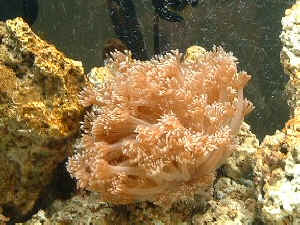
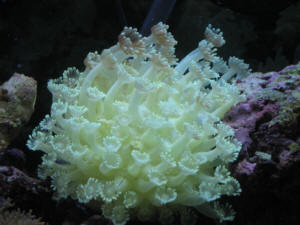
Flower Pot swollen 2/27/08 I have a green flower pot in my tank and it's been doing very well, I was originally told they were pretty easy to keep, <Yikes, no. If we're talking about Goniopora sp., they are not easy to keep. Please see lots of info available here: http://www.goniopora.org/> but today it's gotten swollen, the tentacles aren't reaching out, but it's just all puffy. The ammonia, nitrates and nitrites all test at zero, but I also just lost my Scopas tang, who was gilling at the bottom. The only other fish in my tank is a Mandarin fish, which I acquired today, and I have no idea what went wrong. The tank is an 8gallon nano, <Wow, those are probably two of the worst possible livestock choices for a nano tank. Please research your live stock purchases before you make them. Mandarin fish need at least 50lbs of well established live rock (and probably also a refugium) to get the live food they need to survive.> with a couple other little corals in it, the Scopas was just in there till our 50 gallon matures. He was only about 2 inches long. <Even 50g is probably too small a tank for a Scopas tang. Please see here: http://www.wetwebmedia.com/zebrasom.htm Best, Sara M.> Purchasing the Almost Impossible to Keep Goniopora 4/29/07 Hey guys, <Hi Jeff, Pufferpunk here> I absolutely love your site. <Thanks!> I had two questions for you guys today. First off, I was at the store and I saw a flowerpot <Goniopora> for 15 bucks and had to have it. <Hmmm... impulse shopping for corals is rarely good. Cheap price or not.> I didn't do my homework and found out when I got home that these are notorious for dying off in home aquariums. <Very true! As stated by Anthony Calfo in our FAQs: "Very difficult if possible for any beginner to keep. Actually, its extremely difficult for advanced aquarists to keep too. Most die within weeks of import. This one will almost certainly not live to see a year captive at any rate unless you make rapid changes in system design or get it to someone that has a better shot at keeping it. Shame on your dealer for selling it to you without advising you of its needs, and quite frankly bud... you need to shoulder the same blame for buying a living creature without knowing its needs and if you could meet them first. It will likely cost this animal its life. I will also say that the animal CAN indeed be kept... but not likely the way you want to keep it. It needs deep sand bed systems (perhaps 6" plus) that are mature and have been established for some time to generate natural plankton. Seagrasses kept in-line in a fishless refugium may also be extremely helpful for producing phyto and epiphytic matter. It will benefit by being kept on the sand bottom in a colony with others of its kind... but will likely suffer in time in a mixed "reef aquarium" packed with a variety of species conducting silent chemical warfare on each other (allelopathy). You are going to learn a hard lesson on this coral most likely and I do hope that you will be sure to not only research an animals need before you bring it home... but also be sure to quarantine it. Again, please browse our archives where there are many thousands of pages that should interest you (like QT articles by Fellman). Be mindful too of infection with this coral. The brown jelly infection that commonly afflicts Goniopora as they begin to die can wipe out many/any of your other healthy corals in the display. This coral cannot eat anything prepared (from a bottle, bag, pack, etc) that you can offer it... needs natural nanoplankton from a fishless refugium in aquaristics. Research refugium methodologies too. Dude... you really could not have picked a worse coral to buy on impulse... I regret to say."> I put him in my tank anyhow... 55 gallon, power compacts (4 65 watt lights) with 3 chromis,tomato clown, percular <percula> clown, diamond goby, hawkfish, sailfin, cleaner shrimp, fire shrimp, horseshoe crab, LR, 4 inch sand bed, assorted hermits and snails, leather toadstool, green zoos, mushrooms. <55g is too small for a Sailfin tang.> I am going to try him out and see how he does but I don't want him to die and infect my tank and kill off all my other expensive livestock. Should I give him a few days? Is this wise? What are the signs that he is dying and when should I yank him? <Please read our FAQs on this coral: http://www.wetwebmedia.com/poritididfaqs.htm > Also I'm worried about the lighting. I heard you should place them in the sand but I fear he will be to far away from the lights so I have him currently on a rock in the upper-mid part of my tank. <You heard correctly. They prefer to be in the sandbed, where they are away from bright light & heavy flow.> Please let me know if you have any suggestions. Thanks! <More info here: www.goniopora.org Please no more impulse buying of ANY living creatures! ~PP> -Jeff from UCLA Coral Placement/Appropriate Species Selection - 12/11/06 Dear Crew, <<Daniel>> I'm having a few concerns about a new coral I bought. I'm in the process of converting a fish-only tank to a reef tank and placed in my first coral two days ago - it's a nice daisy coral. <<Mmm...a Goniopora species? Did you research before you bought? These corals are difficult to keep even for skilled/experienced aquarists...definitely not a coral for a beginning reefer. Any chance you can return this specimen for a better/hardier choice?>> Immediately after placing it in the aquarium (about 10 inches down) it opened up and was looking good. The guy at my LFS told me that these corals have high light demands and told me to put it high in the tank, as high as possible. <<I disagree with the store owner...these corals are very often found/collected from turbid waters...moderate light demands at best>> Today, I noticed it expelling some brown stringy mucus that is either waste or its zooxanthellae (I'm hoping it's the former!) from a few of its polyps. <<Might be expelling its zooxanthellae due to light shock>> My lighting includes two 75W actinics and one 75W fluorescent. <<Hmm, ok...wouldn't expect this lighting to be "too much">> They are in a weird configuration. <<...?>> My tank is 4 feet long, and the three lights are staggered: left, right, left from back to front. I've put my two actinics so they fill the back and middle slot (left and right) so they stretch the full length of the tank, and my fluorescent <<What color temp?>> at the front (in a left hand slot). <<You might want to consider adding another bulb (two actinic/two 10000K and configure for a more even distribution>> The daisy coral is on the right, with only one actinic above it (confusing I know!). <<Understood...but the coral would do better with 10000K lighting as opposed to "just" actinic>> I'm currently giving the tank 8hrs of light, mostly at night as the days are getting very hot here in Australia at the moment and the temperature will happily rise to 30C during the day if the lights are on. <<Ah yes...tis summertime down-under...>> My concern is that if the coral is expelling its Zooxanthellae, it's due to light shock. <<My first thought as well...but it doesn't sound as if your lighting is that intense>> The tank at the LFS had the coral quite high as well though so I'm not sure. How can I go about helping this guy out? <<Try adding another "daylight" spectrum bulb to your setup>> Should I move him to the bottom of the tank for a couple of weeks or wait it out and leave him where he is? <<Moving the coral about is stressful...best to leave where it is in this situation and modify the lighting as explained. I don't think "intensity" is the issue here with your current fluorescent configuration>> Or, more worryingly, could this all be a result of the relatively high temperature (averaging 28C)? <<Mmm, about 82F...edging up there but should be fine>> Any help would be greatly appreciated! Daniel <<The biggest problem I see is that you have acquired a very difficult species...one not really suited to captive care. Regards, EricR>> Re: Coral Placement/Appropriate Species Selection - 12/12/06 Thanks for the quick reply! <<Quite welcome>> I looked up Goniopora corals on the net but couldn't find anything that looks quite like this coral so I have attached a pic. Sorry it is large. Any idea what this is? <<Daniel, I'm afraid the picture didn't get here>> In case the file is too big, the coral is composed of hard calcite branches with a flower-like polyp coming out of a cup at the end of each branch. <<Hmm, there are "branching" species of Goniopora...but this doesn't sound like that>> Most Goniopora seem to look like they have soft stems, <<Agreed>> this one definitely doesn't. <<The description doesn't ring any bells with me... Bob, any thoughts?>> <Perhaps the Dendrophylliid genus Tubastrea. RMF> Also regarding my lights, I need to correct some information. The two actinics are 30 W, the single fluorescent is a 30 W 10000K tropical marine light. <<Ah, yes...big difference (30w ea. vs. 75w ea.)>> Adding an additional fluorescent will be difficult as the tank I have is an all-in-one filter/light set up (AquaOne120). <<Mmm, I see...then I suggest you replace one of the actinics with another 10000K bulb (1-actininc/2-10000K) and gear your stock list toward lower light-requiring specimens (corallimorphs, zoanthids, etc.)>> Unless I remove the filter from on top of the tank there is simply no room for an additional light. <<Understood...but do realize that only having three 30-watt bulbs over the tank will limit/dictate what you can/can not keep>> I am considering removing the whole lot and replacing it all with metal halides. <<Decide what you "want" from this system first...better to buy lights to suit the organisms you want to keep>> Do you think this would be a worthwhile investment or is the configuration in my previous email going to be sufficient? <<It all depends on what your plans are for this system. Do some looking around/reading/researching and decide on a theme/species/biotope, or pick a niche of the reef you would like to replicate. Once you have an idea of what you want you can then build the system around this. It takes a bit of patience and a measure of effort...but the result/ultimate health and vigor of the system is well worth it>> Thanks again, I absolutely love your website! <<A collaborative effort. Regards, EricR>> Flowerpot corals Thank you for your advice. I completely disagree with you on flowerpot corals. I know Bob Fenner holds the same opinion. It was the first coral I purchased, and until I added my more powerful lights, it was thriving; it is halfway out while adjusting to the new lights. It is a sensitive coral, and has alerted me to problems in the water. The flowerpot and green star corals have both survived my disastrous first attempt at reefkeeping. It is not slowly dying, it has grown since I acquired it over 8 months ago, even with inadequate light and mediocre water chemistry. PLEASE reconsider your view on flowerpot corals, they are beautiful. << Oh they are beautiful, but I really do think you are in the minority here. Just about every large site (ReefCentral and Reefs.org) have many many horror stories of these corals. In fact in Borneman's book Corals he states "Goniopora have a long history of failing to survive in the aquarium, often going into a slow demise for no apparent reason." He then goes on to say "Goniopora frequently thrive for up to a year or more before declining". You may be having good luck with yours, but I would still not recommend them to anyone. >> James <<Blundell >> Re: new corals affecting old ones?- Thank you for your advice. I completely disagree with you on flowerpot corals. I know Bob Fenner holds the same opinion. It was the first coral I purchased, and until I added my more powerful lights, it was thriving; it is halfway out while adjusting to the new lights. It is a sensitive coral, and has alerted me to problems in the water. The flowerpot and green star corals have both survived my disastrous first attempt at reefkeeping. It is not slowly dying, it has grown since I acquired it over 8 months ago, even with inadequate light and mediocre water chemistry. PLEASE reconsider your view on flowerpot corals, they are beautiful. James <Do agree that these Poritids are gorgeous, and will have AdamB respond as well, but I assure you, after nearly four decades in the trade, this genus is a solid LOSER... the vast majority die within a few weeks of collection. Am glad yours is doing well... and will relate that the Goniopora that I've seen around the world do best in what folks consider "filthy" water conditions in captivity... the bottom of sediment, nutrient laden systems. Bob Fenner> Another Goniopora... sigh :( 10/9/04 Hey there, I have a quick question about a Goniopora. I just purchased one about a week ago, and am enjoying its appearance in the tank. <sigh...> I was reluctant to get one for awhile (for known reasons..) but I'm deciding to try to test fate and keep it alive as long as I can, though I have learned that its death is seemingly definite! <it is beyond my grasp why informed aquarists still attempt to keep these corals casually (versus mature, deliberate species-specific displays at least). My harshest opinion is that it is disrespectful to life. My kindest opinion is that it is a flippant approach to aquarium keeping when so many other hardy and beautiful corals can be had instead> I am noticing today within 4 or so hours its body has bloated up a lot, and then it had calmed down and appears to be doing well. <it was "doing well" when it was bloated too... it is an attempt at feeding. A strategy to increase its (mucus) covered surface area and trap nanoplankton, bacteria and other prey> I have searched the internet for "bloated Goniopora" but can't find any explanation, so I figured I have learned so much from your website, I would give it a try and see if you had any ideas on this. Thanks for any and all help. Jeremy <no worries on this count, a normal behavior again. Please do ponder future purchases seriously as a conscientious aquarist. Anthony> Look before you leap, please! Goniopora 10/6/04 Hi, a couple of days ago I bought a Goniopora, <oh, no!> yep I know they could be a challenge but Anthony says in his BOCP1: "Goniopora are kept for years and even propagated in captivity by aquarist willing to look beyond the stigma and dark reputation" so, I want to look beyond the stigma! :) <Carlos, my friend... it is not fair to me (the excerpt) or fair to yourself... and especially not fait to the animal you just bought. You clearly do not have the set up I recommended for keeping this coral (p. 246 - 600+lbs of aragonite in the refugium display with mature/established Seagrass [providing epiphytic matter). On those same two pages of BOCP1... the same two paragraphs even re: this genus, the coverage says "responsible aquarists will leave Goniopora to the most experienced individuals until more information about captive husbandry requirements can be determined." and "Goniopora species, as a rule, are best left tot he most experienced aquarists." Now I realize that you have said you more or less want to do what it takes to keep this coral. But your actions speak differently. I don't believe you have a mature sandbed and lagoonal biotope display. I fear that this is a mixed coral reef display with other species and genera of coral. I don't think you can describe what this coral actually eats ( and I will tell you that studies report that at best only 78% of this corals daily nutrition is derived from zooxanthellate symbiosis... 22% or more must come from alternate feeding everyday or your coral will slowly starve to death as most all do in captivity. Sigh... I know that you mean well my friend. But you have been impatient. And you are not prepared. Please tell me I'm wrong and that your tank is a species tank set up and mature/waiting just for this species of coral?> The first step (quoted from his book) is the correct identification of my specimen, I try to look into the internet, and probably my decision would be G. stokesii. Please, I'm attaching you a photo so, if you can help my in the correct identification I will appreciate it! Regards. Carlos DÃaz (Guatemala, Central America) <the pictures are not clear enough, but it does resemble G. stokesii. And yet, you bought the coral without even a clear identification. I do wish you well, Carlos. But I am disappointed to be honest. If it helps you for perspective (and you could have asked this and got this answer before you bought your coral)... my successful display (resembling others) was a 240 gallon Seagrass tank with over 6" (15cm) of deep fine sand... established for over 2 yrs before it was given to the Goniopora colony. Prior to the Goniopora there were small Acroporid frags in the tank, but they were pulled and the tank was a fishless refugium the entire time with a remarkable plankton population. FWIW. Best regards, Anthony> Responsible use of resources: Goniopora 10/11/04 First, thank you very much for the help. <always welcome my friend> My friend (who has helped me through the last year of working reef tanks) has had a Goniopora well and flourishing for over two years. Is it really just chance? or could it be careful attention to needs? I'm skeptical of the "definite death" because his has done so well. JG <please consider if you might not be rationalizing the purchase in all fairness. No one says that Goniopora have a 100% mortality rate. Some people have had good fortune like your friend. But 2 years is several decades short still of a natural lifespan. And his expedience is by far the exception and not the rule. If you/we are to be conscientious aquarists, we must make choices that serve the greater good of/for all... and in this case, the keeping of Goniopora speaks to responsible use of resources. Do you have any concept of how many Goniopora die before reaching the US mainland? And how many die by the time they travel another week or two through the chain of custody upon import to finally reach a retailer? I do, mate. I've been a wholesaler and a retailer for over ten years. And I can assure that many dozens (perhaps over 100) specimens die within six months of collection for every one that lives longer than that. Your friend's success is a fluke. I'm glad to hear it, but I could not in good faith encourage others to keep this coral casually when so many have to die to get one healthy one at a merchants display for you. Please reconsider... or at least do it right with a 1+ year established species tank (DSB, Seagrass refugium, etc.) waiting for it before you take on a live specimen. Anthony> Goniopora and Bob Covert Anthony, <Hello, in your service again now that Bob has left on a secret international mission of military reconnaissance disguised innocuously as a fun-loving, beer-swilling, SCUBA diving aquarist. The part was really a stretch for him... but he is a professional. I have faith that he will play the role well> Thanks so much from my fish. The inconvenience of maintaining a quarantine for a month has definitely paid off. <yes, do spread the word...not enough aquarists heed this life-saving advice. Glad to hear it> My tang has been ich-less all this time, and has acclimated well back into his home, as has the clown and lion. You the man! <thank you, my friend> A little side note - and mostly encouragement to keep the education crusade going. I was looking for my first coral, having decided to add it while the fishies were off in their qt. I was thinking of a leather or mushroom. <both excellent choices!> Well, I went to a LFS that I've been testing out, and have been a little more comfortable with than the other one in town... Somehow, this idiot (1st person) was talked into a better beginner coral. A beautiful specimen it is, and probably will be for another month or two. Yes, you guessed it, Goniopora. <you're right... you are an idiot. And I mean that with all due respect> I just wish I wouldn't have trusted this shop owner - killing animals is a fine hobby for other people - I just want a reef. A valuable lesson learned - follow my instincts and don't let someone change my mind who has immediate financial interest in my choices. Hmm, I thought I learned that one 30 years ago?? <one of the reasons why shop owners promote these corals is that they are so plentiful that they can be acquired for as little as $6 wholesale with regularity. Yet they are so beautiful. And given to choose between selling a $45 coral to an aquarist that cost them $18-25, or selling a Goniopora flowerpot that cost $6-10, some make the narrow minded choice and don't think about cultivating a happy long-term customer (forget about the moral ramifications). I will say that I have had very good success with Goniopora over the years and have had them produce continuous daughter colonies for over three years. But I would never recommend them to a casual aquarist just looking for a nice garden reef tank. My colony was in a very mature system set up with parameters conducive to their success (2-3 foot tall Seagrass in a dense refugium, natural sunlight, 500 gallon system...blah, blah, blah). Can you at least tell if it is G. stokesii or G. lobata (green colored would be reassuring of a better chance that it is stokesii)> I grew up in Reading, Pa. We weren't neighbors, were we? <In the same ballpark... both of us eating 'pasghetti and cheering for Terry Bradshaw and the "Piksburg Stillers". I'm near Monroeville/Pittsburgh PA.> Daron <do follow up if you need advice on the Gonio... I've written quite a bit on them. Best success with stokesii is in a Seagrass bed with at least one other individual touching them (interesting but true IMO)... perhaps a refugium for you? Kindly, Anthony> Algae Woes? III + a Goniopora Question >Hi Marina, >>Hello again. >Thanks for your reply. If you love Seafood Hong Kong is the place. >>So I hear. My youngest sister lived on one of the nearby islands for several years, unfortunately seafood is NOT her thing. >We have several markets that display fish/Shellfish/crabs/sea cucumbers whatever... that you then pick (sentence to death) and they cook them for you. Well at least you will enjoy teasing your palate.. >>And here I am hungry. >Any way I had asked "the coral guru" at WWM about the compatibility between different mushroom genera and I would appreciate very much if you could at your convenience get someone respond to that. >>I'll take a look around, I'm going to assume you mean Anthony. >Last evening I picked up a type of Goniopora coral. Bright Lemon in colour, very eye-catching to the point of looking dubious, do you by any chance happen to know if it is possible to dye a coral? (could it possibly be done with say organic material like turmeric?) and if indeed there is a bright lemon coloured Goniopora? >>I know for a fact that many anemones are dyed, though with what substance I couldn't tell you. Based on that, I don't see why a coral couldn't be dyed as well. I, personally, have never seen any color other than green in Goniopora, but I am not the coral expert. However, in perusing my book, "Corals: A Quick Reference Guide", by Julian Sprung, I see pictured (on pages 36-37) brown Goniopora, A branched Goniopora from Indonesia that is a lovely dark purple with whitish centers, a red species from Bali, and from the Solomon Islands a light, lemony yellow Goniopora. It is on the pale side, but distinctly yellow. >In Hong Kong they dye some freshwater fish (it has no effect on the fish) namely the Indian Glass fish with fluorescent colors, the colours then fade away within a few weeks. >>FYI, those fish are not dyed in the classic sense, they are injected with dye. >A few years ago I recall a guy that told me that they do this in Hong Kong. >>Yes. >Still waiting for the Damn Bubbles to stop. Will get some abalone after they are done with my algae, maybe I will eat them myself...just kidding ;). >>I've never had abalone myself, but I'm certainly willing to give it a try! Marina >Regards, Jorell |
|

|
Features: |
|
| Featured Sponsors: |