|
FAQs about Marine Snail Compatibility and
Removal 3
Related Articles: Gastropods, Sea Slugs, Mollusks, Abalone,
Related FAQs: Snail
Compatibility 1, Marine Snail
Compatibility 2, Pest Snails
(Pyramidellids...), Marine Snails
1, Marine Snails 2, Marine Snails 3, Snail ID 1, Snail
ID 2, Snail Behavior, Snail
Selection, Snail Systems,
Snail
Feeding, Snail Disease,
Snail
Reproduction, Mollusks, Sea Slugs, Abalone, Marine
Algae Eaters,
|
|
|
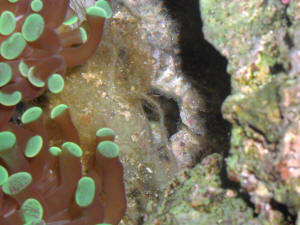
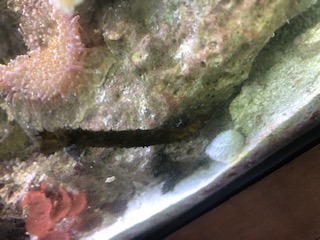
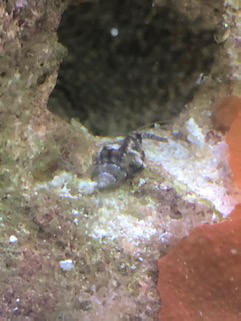
population explosion /RMF 10/30/19
I haven't added anything to my tank in awhile with that said I have had an
explosion of population in these black cucumbers and Snails. I cant figure
out if this is a good thing or an indication of something wrong.
<Likely the former; conditions are favorable to the animals>
I probably have over a dozen of the cucumbers, relatively small, and Not
sure about the snails but they are all over.
I just recently lost my Maxima clam and noticed several of the snails in its
shell so I'm not sure if they were the culprit or just scavenging after its
death.
<Ah yes; can't tell>
They seem similar to Nassarius snails.
<Need a more-resolved image to help guess>
Should I be removing any of these or sharing them with other hobbyists if
they are healthy for a tank
Thanks in advance
Jason
<I would be thinning the snail herd... can be trouble even if not predaceous
should conditions bring about a sizeable die-off. Bob Fenner>
population explosion /Wil
10/30/19
I haven't added anything to my tank in a while with that said I have had an
explosion of population in these black cucumbers and Snails. I can’t figure
out if this is a good thing or an indication of something wrong.
<Probably a sign of a healthy system>
I probably have over a dozen of the cucumbers, relatively small, and Not
sure about the snails but they are all over.
I just recently lost my Maxima clam and noticed several of the snails in its
shell so I'm not sure if they were the culprit or just scavenging after its
death.
<My guess is they scavenged the clam after death>
They seem similar to Nassarius snails.
Should I be removing any of these or sharing them with other hobbyists if
they are healthy for a tank
<I suggest keeping an eye on them, if the population increases, you see
aggression, or you just don’t want that many...take them out.>
Thanks in advance
Jason
<Welcome. Wil.>
|
 |
|
Fish eating snails 1/31/19
Good evening,
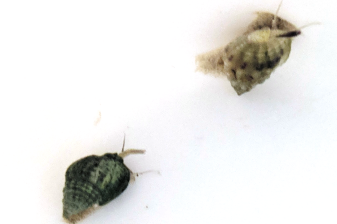
I was hoping you could help me identify a couple of different snails that I have
in my tank. I thought they were Nassarius snails and I still think the 1 is but
not sure of the other.
<The upper right one does look like a Nassarius species, the lower left, darker
one, perhaps a Cerithid>
I have attached a close up of what I believe to be 2 similar but different
snails. I know Nassarius snails will watch left over food but what concerns me
is this morning I found about 8 or so chewing on the fins of a lionfish that was
living but not dead.
<Mmmm; these snails didn't catch, kill the Lion>
I know they will consume a dead fish but I did not think they would attack one
that was living. The lionfish has since died not sure if it was already dying or
because of damage from the snails.
<The former; assuredly>
There are currently no fish and the tank will house shrimp gobies Dartfish and
fairy wrasses that build a cocoon at night. should I be worried that they would
go after a wrasse that was sleeping at night?
<I don't think so, no>
Thank Jason
<Thank you for sharing. Bob Fenner>
|
 |
Ilyanassa <sic> Obsoleta snails, stkg., using
8/20/13
Several months ago I recently purchased a large number of Ilyanassa
obsoleta snails for my display to keep the sand bed free of detritus and
uneaten food. They have actually done a great job and I haven't had any
problems with them. In fact my system is doing better now then it ever
has. I only keep a one inch sand bed in the display as I have 2
additional separate
refugiums in my system.
<With deeper fine sand I hope/take it>
I recently came across an article written by Mike Greenemeier describing
how these snails can wreak havoc on a sand bed and more
importantly, harbor parasites/flukes/Trematodes that can give an
aquarist a rash referred to as swimmers itch.
<Mmm, a smallish possibility of both... I see your notes below; and
would not be concerned re>
The vender claims that all snails are tank raised and that he is a
licensed aquaculture facility. He advises snails 4 snails per
gallon
<Way too many. You're free to read my posted comments/stance on
such use of gastropod and hermit "cleaner uppers"; archived on WWM>
and I have a 300 gallon system so you can imagine that I have quite a
few.
Many of them are in my sump. As of yet, I haven't had any issues but I
don't want to wait for something bad to happen if there is a high
probability that it will so I have the following questions.1)
Since they are omnivores, will they harm coral and or other inverts?
<Not likely; unless very hungry; another reason to only harbor a few>
If so which ones?2) If they are farm raised as claimed, do I need to
worry about the Fluke/Trematode that causes swimmers itch?
<Much less likely to be a problem/vector>
3) I could easily run a UV if I absolutely had to since it is already
plumbed in for emergencies.
<... wouldn't kill... And I'd run this tool all the time regardless>
I don't like running it and everything does better when I don't.
<Really? I wonder "why"... What do you think is changed therewith?>
If I did run it, would I need to run it as long as the snails were alive
or would running it for say a few weeks suffice?
<... again. See WWM re UVs>
4) Do you advise removing them as I could easily trap them. Any overall
suggestions would be appreciated
THANKS SO MUCH
Steve
<Welcome, Bob Fenner>
Snails… problem: Overabundance – 2/5/13
Hey Crew,
<Hey Paul, Lynn here today.>
I have snails... I didn't think the problem was bad but now I took out
about 300 (hand-picked) out of my 125 gallon tank...
<Yikes, that’s a lot of snails!>
I have a fish only saltwater tank.... Controlling them simple?
<What kind of snails are they? If they’re beneficial herbivores, you
might want to share them with/sell them to other hobbyists through
perhaps a local aquarium club.>
Just get a wrasse or two?
<If you do decide to add a wrasse, I’d recommend sticking with just
one.>
But here is the problem.. I have shrimp... I have heard the 4 line
wrasse or sometimes called the 12 line wrasse would be good to eat and
control the snails but they may leave the shrimp alone.. these are the
bigger cleaner shrimp that I have... true?
<It’s a risk, especially during/right after the shrimps molt. There’s
just no way to guarantee that they’d be safe – or that the wrasse would
even be interested in whatever snail species you have. If they’re
tiny snails, like a Collonista sp., Pyramidellid, or rissoid, they may
be consumed. However, if the snails are larger, (like a
columbellid) then they’ll probably be left alone (or picked at, but not
consumed).>
Okay, now... I also have hermit crabs.... They help control algae in the
tank.... Will these become dinner for the 4 line? Will the larger
electric blue hermits be targeted...
<Again, it’s a risk. Unfortunately, I haven’t had any experience with
four-line wrasses (Pseudocheilinus tetrataenia) but I’ve had two
different six-line individuals (Pseudocheilinus hexataenia) over the
years. One was awesome - never bothered my cleaner shrimps,
hermits, etc., but the other was an absolute terror. It harassed
every shrimp I had (bit off antennae and the occasional leg), killed my
hermits, picked at the snails (knocked them off the glass, but wasn’t
able to kill), and bullied a large tomato clown (that had been a terror
herself) into hiding below a filter out-take. In the end, I had to
practically tear the tank apart to get the pain-in-the-wrasse out.
These guys are fast swimmers that can dart and hide in the most
inaccessible places!>
So now that I have listed my problems... is the best way to control the
snails while not losing the shrimp or hermits, would be to just hand
pick them out of the tank.... No clams or coral to worry about... just
the darn snails.
<I’d still like to know what kind of snails you have, but no worries.
Since they’re apparently reproducing like crazy, I’m guessing they’re
more than likely one of the common/harmless herbivores, like a species
of Collonista, Stomatella, or perhaps a collumbellid (Euplica sp.) of
some sort. Of the three, Collonistas (typically ~3-4mm/~1/8”
across) and Columbellids (~12mm/.5” long) can, on occasion, become
numerous and get hung-up in equipment (filter/pump intakes and such),
but otherwise, they make nice additions to a system. Stomatella
spp. are mostly nocturnal, terrific/innocuous little grazers that don't
have enough shell to hide under/within so are thus typically preyed upon
by hermits and various shrimps (esp. peppermints/Lysmata wurdemanni).
All in all, I’m thinking that if your system is doing well right now (as
far as livestock) – that is, everyone’s getting along, then I wouldn’t
want to potentially disrupt the status quo by adding a fish that could
cause more problems and still not solve the snail issue. Instead,
I’d opt for continued manual removal of the snails, and try to
control/reduce their numbers through the reduction of their food supply
(= nutrient/algae control). In the meantime, do try to find some
local hobbyists that might well love to have some of those snails.
It’s nice to have a self-sustaining population of herbivores. It’s
just not so great in cases such as yours where the population has
virtually exploded. Please see the following links for more
information:
Nutrient control:
http://www.wetwebmedia.com/nutrientcontrol.htm?h=
Collonistas (several related FAQ’s here):
http://www.wetwebmedia.com/snailidf14.htm
Columbellids:
http://wetwebmediaforum.com/showthread.php?336-Critter-of-the-Week-Columbellid-snails&highlight=columbellid
Stomatella spp.:
http://wetwebmedia.com/MolluscPIX/Gastropods/Prosobranch%20PIX/Limpets%20Scutus/LimpetF1.htm?h=
>
Thank you for your opinions and comments.. as always have a good day
<You’re very welcome, and the same to you! Please feel free to
contact me/us if you have any additional questions or would like to ID
those snails. Just include a couple of close-up, detailed photos
and we’ll take it from there.>
Regards,
Paul
<Take care, Lynn Z>
|
Trematodes came with my snails?
11/13/11
Dear Wonderful WetWeb Crew,
<Kor>
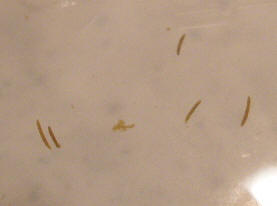
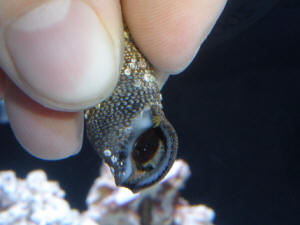
I have a 40 gallon aquarium that has been set up since September.
Specific Gravity is at 1.026 and temp is around 78. I added about
10 Cerith snails from a local fish store a week ago and they have
some wormish hitchhikers.
<Very common>
At first I just saw a few stuck to their shells. Then I picked a
snail off the rock to look at closer and some of these fell out
of inside the shell as well. I have attached pictures that I hope
will help you give me an idea of what they might be.
<Need much more highly resolved, larger pix>
I was thinking of dosing the tank with PraziPro, but thought
I'd try to get some kind of ID from you guys first. They are
about 1/16th of an inch long and reddish brown in color. They
don't appear to swim in the container nor move at all.
I'm slightly puzzled and have never seen this. I didn't
come across it on your website either. The first picture are some
that fell out of the inside of 2 snails into a clear container.
The second is obviously on the snail.
Thank you for any insight you may have on this. It is truly
appreciated.
KJ
<Gastropods/Snails are very often vectors/carriers,
intermediate hosts for worms of various sorts. IF concerned that
these may "be trouble", I would go ahead w/ your
Anthelminthic treatment plans. There is a very large body of
data, writing re various species (esp. of economic or health to
humans consequences)... Some "worms" that get about
this way have complex life cycles and will most likely perish in
an aquarium setting w/o "causing harm". Do a bit of
look/seeing on the Net... perhaps a visit to a large/college
library w/ a life science dept. Cheers and thank you for sharing,
Bob Fenner>
|
|
|
Polychaete worm and snail comp
Name & Advice 10/3/11
Tonight, I witnessed mucous around one of my brand new (and looked to
be very healthy) Ceriths...upon closer inspection, I saw a worm that
certainly didn't look like my average-Joe bristle. It was thick,
more like a Fireworm, and seemed to have a very large mouth that sucked
like a snail snout. It was pale in coloration and stout...
I went to the site to research and saw this response to one of the
questions in the section:
"Dead ones, yes. Live ones, no. There is a type of worm that is
bright red, long and thin that prey on snails by smothering them in
mucous before eating them."
My worm was not bright red, nor long and thin--but there was definitely
an undeniable ball of mucous surrounding the shell's opening.
I've never been able to keep snails in my tank, I always thought it
was because I didn't acclimate them properly...what should I
do?
<Bait out and remove the worm/s in question>
What is this worm called?
<Harvey? Can't tell from the description>
What are the chances that the mucous was from the snail, not the
worm?
<Better than middling>
Is that the defensive mechanism of a snail?
<One, yes>
Thank you for the help and taking the time to read.
- Ruth
<Welcome. Bob Fenner>
Turbo Snails and Clove
Polyps/Snail Compatibility 7/10/11
Hi Bob and crew:
<Hello Edie>
Once again I'm stumped----I can't find an answer to my
question. Sorry to bother you about this:
<Is what we are here for.>
I have a 90 gal mainly FOWLR but with several green star polyps,
several mushroom types (I'm not looking up the scientific names; I
hope that is o.k. in this case),
<No problem. Common or scientific names are fine.>
clove polyps, 3 cleaner shrimp, 7 fishes, (all doing great) and about 5
snails, two of which are the large turbo ones. My concern is about
1-1/2" turbo snails and the clove polyps. I saw one on a group of
clove polyps yesterday and now about half the polyps are gone. Do they
eat polyps?!!!!
Or do you think he was just cleaning up some dead ones.
<Turbo Snails are not Corallivorous, likely eating algae on the polyp
encrusted rock causing the polyps to retract and/or dislodge from the
rock.>
The polyp looked just fine until then. The snails have been in the tank
for over a year with no problems until now.
I've had the inverts 4-6 months and am enjoying them immensely.
This particular polyp seems to have multiplied, but so far, all
offspring are very small.
I don't want to get rid of the snails if I don't have to. They
do a good job with algae and are interesting to watch. Thanks again for
your help,
<You're welcome. James (Salty Dog)>
Edie
Snail Stuck To The Bottom Of
Anemone 2/22/11
<Hello Peanut Butter>
We brought home a long tentacle anemone yesterday and placed him on the
sand in the front of our tank since then he has started to move toward
our live rock but I noticed this afternoon that one of our turbo snails
is stuck to the bottom of his foot. I searched online but can't
find anything about this. Should I try removing the snail if so
what's the best way to this without harming the anemone.
<I'd try massaging the area in question with your finger tip
until you can remove the snail. James (Salty Dog)>
|
Wendletrap OK with Lettered Olive Snails?
With Caution - 4/13/10
<Hello, Lynn here today.>
I brought home some tiny (1/2 inch) Wendletrap (Epitonium
humphreysii) shells
<These are beautiful snails but not recommended for systems
with corals and/or anemones.>
..from the beach (TX gulf coast)
<Oh, lucky you. Thats one of my favorite places to
vacation.>
..today in a plastic container. There was a tiny bit of water in
the bottom from washing them off.
<Uh-oh, I know where this is going.>
They were washed up dry with some debris on the beach
<Heeee! Is it seaweed season already?>
..so I mistakenly assumed they were empty or dead. I was wrong.
There are a few that are still alive. Lucky me, right? The beach
is a 90 min drive from here so returning them isn't an
option. I want to know if it would be a mistake to introduce them
in my tank.
<Well, there's always the possibility of adding some sort of
uninvited guest (pathogen, parasite, pollutant, etc.) to the
system. Just how big a risk that is, Im not sure. Bob, any
thoughts on this? One thing Id like to add is that Epitonium
species apparently secrete a purple substance that has been
listed as a toxin and/or anesthetizing agent. Unfortunately, I
don't know how much/if any risk this presents to your livestock.
If its a toxin, the more water volume, the better (for dilution).
Running carbon is also a good idea as a preventive
measure.>
The shells are very beautiful
<They are indeed.>
..but I don't want to hurt my current residents.
<I can certainly understand that.>
I have a rather unique tank in that everything was collected in
the wild. My tank is about a year old and running fine. The
substrate is 2-3 inches of sand.
<If its fine-grained, it would be better to have either 3 or
more for a DSB or less than Ã'½ to 1 for a
shallow bed.>
There's not much in there, but everything is predatory. I
have a Sergeant Major Damsel that is a year old, (very
feisty)
<Oh yeah.>
..some kind of striped Killifish who is rather tiny and boring
but he's a super cleaner, and about 5 Lettered Olive Snails.
I have read that LOS's aren't good in a tank
<Just depends on what kind of tank you want.>
..but in my setup they're terrific!
<There you go!>
They're super efficient sand sifters and I've got nothing
in the tank for them to harm. I feed them defrosted chopped salad
shrimp about once a week and sometimes they get a treat of
scallops which brings them all up out of the sand simultaneously.
Watching them eat is really entertaining.
<I bet it is!>
They're even laying eggs lately, but that's another
story...
<Id love to know more.>
Once in a while the SM fish will peck at their snorkels
(that's what I call them),
<Thats an apt description. Its called a siphon, a structure
common to predatory and/or scavenging snails that's used for
respiration as well as food detection. As water is inhaled, it
passes by chemoreceptors that allow the snail to taste it for any
signs of food.>
but they're not hurt by it.
<Good>
Given what's in the tank, would the Wendletraps attack the
LOS's?
<I doubt it. Wendletraps/Epitonium spp. feed on corals and
anemones, including Aiptasia and Heteractis malu (depending on
the snail specie). Also, some species don't actually feed on the
tissue, but instead consume the mucus.>
If the LOS's would attack the Wendletraps I don't think I
would mind too much. Just more food for them.
<Its possible that they may well go after the Wendletraps,
especially if they're hungry/aggressive enough.>
Also, I couldn't find anything on this site or the web about
whether they would be on top or underneath the sand.
<They'd be on top.>
And if they'd climb the glass and whether they'd be OK in
the air and trying to get out. I have cats. I don't want to
find Wendletraps in my bed one morning. :-)
<Heeeee! You should be fine. Wendletraps sometimes end up on
the beach as a result of a storm, or unusually high tide, but
that's about it. The same cannot be said for Nerites though. If
you decide at some point to try some of these, beware. I can tell
you from personal experience that they have an unfortunate
tendency to go on walkabout and end up as cat toys!>
Thanks for your advice and the great site!
<Youre very welcome and thank you!>
The search feature isn't working for me, not sure why,
<Oops, sorry about that. I just checked and it seems okay but
do let us know if you continue having problems.>
..but I skimmed all the snail pages looking for anything on
Wendletraps and couldn't find anything. Plus I doubt
there's another person with LOS's!
<There have been a few, but we mostly discourage them for
mixed reef systems because of their predatory nature and possible
threat to beneficial DSB fauna.>
Thanks!
<Youre welcome! Take care, Lynn Z>
Re: Wendletrap OK with Lettered Olive Snails? With
Caution. Also, Info re: Olive Snail Reproduction -
4/14/10
Hi Lynn,
<<Hi Amy>>
Thanks so much for your reply and information.
<<Youre very welcome.>>
<Is it seaweed season already?>
Not yet. Although some kind of vegetation is washing up here and
there. It's little 1 inch brown segments. I'm finding
them in 6 foot wide patterns, as if a plant has disintegrated its
pieces washed up.
<<Yep>>
What's mostly washing up right now though are jellies.
<<Yuck>>
I was there (Surfside Beach, TX, south of Galveston), a couple
weeks ago and there were tons of cannonball jellies.
<<Its amazing now numerous they can be at
times.>>
Yesterday some of those were still there, but now the man o'
wars are coming in.
<<Yikes>>
Peak season for the Sargassum seaweed is later in the summer
months.
<<It seems like that's what I remember from being a kid but
for some reason, the last few times we've been to Port Aransas in
early May, its been all over the place.>>
That's when we find some really cool specimens of marine life
to look at!
<<Oh, definitely!>>
Funny how much life people walk right over on the beach and never
even know it's there!
<<Absolutely!>>
We've found crabs, shrimp, Nudibranchs, anemones, and below
the floating clumps of it, before it beaches itself, are
beautiful juvenile trigger fish, tons of juvenile Sergeant
Majors, and even Sargassum Fish!
<<Neat! Sometimes you can find the little floating purple
Janthina sp. snails that eat Man-O-Wars tangled in there as well,
or the lightweight little Spirula spp./Rams Horn
snails.>>
We found several other species of fish I wouldn't want to
name because I don't know for certain that I identified them
properly. But it's like a floating reef!
<<Yep, those floating mats become little ecosystems with
all sorts of critters living within and around them.>>
Anyway... I'm rambling. It's a favorite subject of mine
and I could go on forever!
<<Sounds like were two peas in a pod then!>>
<Epitonium species apparently secrete a purple substance that
has been listed as a toxin and/or anesthetizing agent.
Unfortunately, I don't know how much/if any risk this presents to
your livestock.>
I've seen a little bit of a reddish/purple tint on the tip
end of a few of the snails. If that's the volume of their
toxin capabilities it's minute, but thanks for the warning
and I'll keep a sharp eye out.
<<Yep, its always best to be forewarned.>>
<Running carbon is also a good idea as a preventive
measure.>
Got that covered!
<<Good>>
<If its fine-grained, it would be better to have either 3 or
more for a DSB or less than Ã'½ to 1 for a
shallow bed.>
The Sergeant Major Fish will fan the bottom and make deep
depressions in one side, and a big pile on the other side, like
he's creating a hidey hole for himself. It's cute so I
quit trying to fix it. He's apparently more comfortable like
that. One side is 1" and the other is well over 3". My
sand does create bubbles so I read that's a good thing.
Re: my Lettered Olive Snails...
They're even laying eggs lately, but that's another
story...
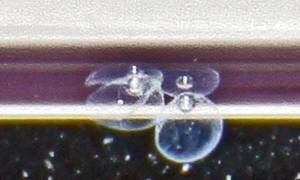
<Id love to know more.>
One night I went to the tank to feed the fish and turn the light
off for the evening, and there were tiny (1mm) translucent disks
everywhere, and millions of dots that I can't describe
because they were so small. It was like a heavy snowfall!
<<Wow!>>
My fish were chowing down! I took photos of it because I
didn't know if I'd ever see it again and at the time
didn't really know for sure what was happening.
<<Im so glad you got photos! You did indeed witness a
spawn.>>
I looked it up on your site and read about it later. I never saw
anything on top of the sand, on the glass, but it could be that
they laid the eggs on top of the sand and either the SM fish
stirred them up, or the water flow from the filter output did
it.
<<Nope, the eggs actually do float. In the wild, they rise
to the surface and drift about on the current before hatching
into a free-swimming planktonic form called a
veliger.>>
Well, within a couple hours it was all over. Half eaten, half
sucked up in the filter. So I wanted to see if any would survive
so I left that filter in for as long as I could, and checked in
there with a flashlight, but no luck. So then about a month
later, it happened again. This time right before my eyes!
<<Neat!>>
I was staring at the tank, noticing that a couple snails were
interacting under the sand. I could see it actually undulating.
The thought crossed my mind that they were procreating... but I
thought nahhh... can't be. Sure enough, 5 minutes later one
comes to the surface and the little circles & dots erupted
into the water. There weren't as many that time, but it was
still a cool show.
<<Terrific observations!>>
The snail went right back under the sand so I didn't even get
to see from where in their anatomy they came from. This time I
have a brand new filter in there so I hope some will have time to
grow. We'll see. I think it would be neat to see one as a
baby.
<<It certainly would. From what I've read, they go through a
short veliger stage before settling to the substrate and
metamorphosing into crawling snails. What Im unsure of is whether
the veliger stage is a feeding or non-feeding one. The young
stand a better chance if its non-feeding.>>
In all the internet searches I've done, I have never seen a
baby Lettered Olive Snail.
<<Neither have I.>>
A couple of the ones I have are shorter than the others, about 1
inch, vs. the 2 inch older ones, but they're still adults
with many layers to their spiral shells. Is there any way to tell
how old they are?
<<Not that I know of.>>
<Wendletraps/Epitonium spp. feed on corals and anemones,
including Aiptasia and Heteractis malu (depending on the snail
specie). Also, some species don't actually feed on the tissue, but
instead consume the mucus.>
What would you recommend I feed them then?
<<The best thing would be what they eat in the wild, which
is most likely an anemone of some sort, but I don't know
which specie(s). If you perchance have any Aiptasia, Id watch for
declining numbers. In lieu of that, I'd try various meaty
foods on hand.>>
I have some cubes of frozen sea urchin, but my fish won't eat
it
<<Can't say I blame them. Im not a big fan
myself.>>
..and if it doesn't get consumed it dirties up the water and
then sits in the filter. So I don't want to experiment with
it if I don't have to.
<<I wouldn't, since its so messy.>>
Also wondering if they would eat the shrimp that my LOS's
eat?
<<It never hurts to try. Id offer a variety of foods and
see what happens. You might also want to try placing the food up
on the rocks (near the Wendletraps) so they wont get overrun by
the Olive snails in the sand. If the fish go after the food on
the rocks, you can try feeding at night instead.>>
They'll die if they don't have something. Although
they're tiny so I don't know how long they'll go
between meals, do you?
<<I don't. Some organisms (various Cukes, stars, anemones,
etc.) can take a surprisingly long time to succumb to starvation,
but unfortunately, I just don't know how long it would take for a
snail.>>
So tonight after I got your response, I added them to the tank
and they've been in there for a few hours now. So far so
good! No LOS siphons. So they must not smell/taste like food
yet.
<<Yep. If/when one starts ailing though, they'll be on it.
Oliva sayana/Lettered Olive snails have no problem getting
through the shells of small clams so I doubt that a
Wendletrap shell would pose much challenge. They're
usually pretty thin/lightweight.>>
My fish checked them out but don't seem too interested. The
SM did pluck one off the glass but he's ok. They look like
they have better footing on the oyster shells I have in there,
than in the sand. No traction in the sand I guess.
<<Likely so, yes.>>
I'll let you know if it's a success or if they become
food.
<<Please do.>>
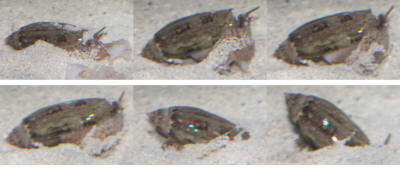
Oh, one more question... about the LOS's digestion...
I've always been curious about what part of the anatomy this
is: When they come up for food, let's say a piece of shrimp,
they cover it with their body, head first, but then tuck it
underneath in this pouch kind of thing, and then go back down
into the sand with it dragging behind. Is that pouch just for
storage, or is it their stomach? It's hard to tell from
looking at diagrams.
<<It's actually the anterior portion of the foot called
the propodium. Its adapted for burrowing, propelling the snail
forward, and for trapping prey/food items. Once the snail has the
food trapped, it takes it back under the sand so that it can eat
at its leisure. Apparently this is accomplished thanks to a
radula (a many-toothed tongue-like organ) and the release of
fluids into the animal that break down the tissue.>>
Attached is a photo I took of the first LOS egg event where you
can see the translucent circles, and the dots, and one of the
LOS's eating a piece of shrimp.
<<I see them in the follow-up message, thanks!>>
Enjoy!
<<Thank you!>>
Amy
<<Take care, Lynn Z>>
Follow-up Re: Wendletrap OK with Lettered Olive Snails?
With Caution. Also, Info re: Olive Snail Reproduction -
4/14/10
<Hi Amy>
Oops, I forgot to attach the two photos mentioned in my previous
reply.
<No problem. Thanks for sending them along, they're terrific!
Take care, Lynn Z>
|
  |
|
Marine Snails Identification 1/19/10
Hi WWM Crew,
<Hi there, Rafy, Lynn here today.>
I know I have been telling this many times, but this great site
never stop impress me :) Keep up the good work, guys.
<Thanks, its always a pleasure.>
The reason I am writing this time is to get your help to identify
3 of my snails, which I first thought all of them are Nassarius,
not until I came across a guy at the LFS who told that this snail
is actually damaging towards my corals.
<Which snail? Have you noticed any damage and if so, what type
of coral?>
I may have oversimplified it by thinking all snails with
"antenna" are Nassarius
<Yes, but it's understandable. Not everyone is, or even
wants to be, a snail geek like me!>
..but after hearing that remark at the LFS, I start to feel
uncomfy.
<I can certainly understand that.>
Appreciate your help to verify whether these snails in the
pictures are Nassarius or otherwise.
<I don't think they're Nassarius spp. snails.>
If they aren't Nassarius, then, what are they?
<Heheeee! Would you like the short answer or the long one? How
about both? The short version is that I personally don't think any
of these three snails are harmless herbivores so Id
remove/relocate them all. Now, here comes the long version where
things get a bit sticky. First of all, Im sorry, but I cant see
enough detail in the photos, and don't have enough information
(size/location of origin, etc.), to give a positive ID. However,
I can offer some possibilities for you to research on your own.
If you haven't seen any coral damage, the snails could easily be
relatives of Nassarius spp. snails (Family: Nassariidae). That
is, they're in the same Superfamily: Buccinoidea, which also
includes Whelks (Family Buccinidae), Tulip snails (Family
Fasciolariidae), Dove snails (Family Columbellidae), etc. (see
below for links). I'm leaning towards the Whelks. Snails in
this Superfamily are mostly predators of other snails, bivalves,
Polychaetes, and even Sipunculans (peanut worms). They also
scavenge and some have been reported to eat detritus. Others,
like some of the Dove snails, dine on film algae and possibly
diatoms. The second possibility, and large group of snails,
includes the predatory Murex snails (Superfamily: Muricoidea).
There are many species within this group that eat corals, so if
you've seen any damage, its possible that at least one of your
snails belongs to one of the following families: Muricidae
Coralliophilinae, Muricidae Rapaninae, or even Muricidae
Ergalataxinae (see below for links). One thing to bear in mind
while comparing snails to the photos is that there can be a
surprising amount of variation in color and shape within even a
single specie, so be sure to see all examples. Finally, please
know that I would be more than happy to help you with these IDs,
but Id just need a bit more information. Anything you can tell me
about origin, or size would be helpful, but most importantly,
I'd need some good detailed photos that include at least one
taken from above each snail, and one from the flipside, showing
the opening/aperture side.
Superfamily Buccinoidea. Go through the various families listed
above (include subfamilies). See the links to thumbnails on the
right side of the following link:
http://www.gastropods.com/Taxon_pages/SuperFamily_BUCCINOIDEA.shtml
See especially: Buccinidae Pisaniinae:
http://www.gastropods.com/Taxon_pages/TN_Family_BUCCINIDAE_PISANIINAE.shtml
Superfamily Muricoidea:
Muricidae Coralliophilinae:
http://www.gastropods.com/Taxon_pages/TN_Family_MURICIDAE_CORALLIOPHILINAE.shtml
Muricidae Ergalataxinae:
http://www.gastropods.com/Taxon_pages/TN_Family_MURICIDAE_ERGALATAXINAE.shtml
Ergalatax margariticola (this species has been noted as a
corallivore): http://www.gastropods.com/1/Shell_1131.shtml
Muricidae Rapaninae:
http://www.gastropods.com/Taxon_pages/TN_Family_MURICIDAE_RAPANINAE.shtml
>
Are they harmful to my reef tank in any way?
<Again, if it were me, Id remove/relocate them.>
I have provided 2 shots of each of the 3 snails to give you a
look at them from various angles.
<Thanks>
Appreciate it guys :)
<Youre very welcome. Please let me know if I can be of any
further assistance.>
RAFY
<Take care, LynnZ>
|
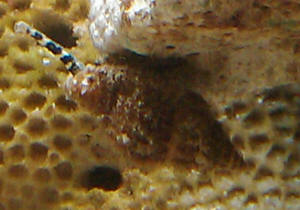 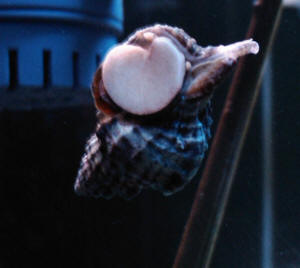
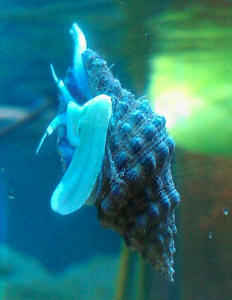 |
Question for the experts.
Hermit, snail in/comp. 11/3/09
Hello,
Thank you so much for your informative website, and generous dealings
with newbies to the saltwater/reef hobby. About 3-4 weeks ago, I went
to PetCo (I prefer my LFS but they are the only place open after
6pm...) and bought two pieces of live rock, transferring them to my 20g
aquarium. I didn't notice anything until about 2 weeks after I had
the rocks, when I turned the lights off. There were several tiny, maybe
half to 3/4 the size of a dime snails that didn't look anything
like the other snails Petco had advertised! I had a suspicion that they
were something unusual, and did some research.
Although so tiny that one would need a good magnifying glass to see
details, the shape of the shell is pretty textbook. So I really enjoyed
having these little guys, as they were the only moving thing in the
aquarium big enough to watch! I went out of town for 5 days over
thanksgiving, and forgot to tell my boyfriend (who was taking care of
my freshwater thank) to watch the water level on the saltwater. When I
got back, I thought the evaporation might have caused high of salinity
levels, and wasn't sure what would have become of the abalone. A
day or so later I saw one empty shell on the sand, and sadly thought
all of them must have died. Then in a couple days I decided that since
the aquarium levels were all good (0's on phosphate, nitrites/ates,
ammonia) I would get some hermit or Mithrax crabs as
"janitors". I purchased two "red legged" hermit
crabs yesterday. Then yesterday night after turning off the lights,
what do I see but the two little abalone I had thought were dead! So my
big question is this (and I'm sorry if this was too long-winded of
a message but I wanted to be clear):
Do the abalone have any chance of escaping the hermit crabs?
<Mmm, some, yes. If the Hermits are well fed...>
I have found on your website and others that hermits are voracious and
not to be trusted with smaller snails, but pointedly because the crabs
wanted the shell.
<Mmm, no, not just the shells... but for food as well>
Your website definitely mentioned that one should stay away from
housing hermits together with any similar sized snails, with
attractively shaped shells, but that if kept well fed and given extra
shells the crabs probably would not bother snails, especially those
much bigger or smaller than themselves.
<Size bears little relation to predation here... the Hermits will
eat the largest of Gastropods if hungry>
I want to keep the abalone, but would rather not keep them as the only
thing in the tank, I really want some crabs or shrimp for interest.
Would another
type of sand-sifter/algae eater be a less predatory tank mate for the
abalone?
<Mmm, yes... but really better to counter algae here in other
ways.
Competition, nutrient limitation, removal...>
Do the abalone have the possibility of growing to near-full-size?
<If conditions are propitious, yes>
I read elsewhere that they are very sensitive to changes in salinity,
and usually don't last long in captivity. But if they would
continue to grow, and the hermits are a real threat, I will gladly take
back the hermits to keep the abalone. Please let me know what you
think, and thank you SO much for the great resources and info you
provide!
Cheers,
Katie P.
P.S. you can, of course, edit this email to a reasonable length if you
wish to post it!
<No worries. Katie, if you're very interested in these snails, I
would return the Hermits. Cheers, Bob Fenner>
|
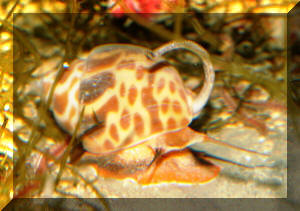
ID for Snail in Dailies - 10/05/2009
Hi Bob,
<Amazing Lynn>
The snail in the photo today looks like something in the genus
Babylonia, which depending on where you look, is usually either
assigned to the family Babyloniidae, or Buccinidae. Here's an
example of one:
http://www.gastropods.com/1/Shell_11.shtml
Main page with others in this family:
http://www.gastropods.com/Taxon_pages/TN_Family_BABYLONIIDAE.shtml
<Ahh, Babylonia zeylanica... does look like this>
Do you have any other photos of this little guy?
<I do not>
If so, and if you can tell me where it's from, I should be
able to narrow it down further.
<... a fish store>
Take care,
-Lynn
<Thank you dear. BobF>
snail ID - 10/05/2009
Hi everyone,
the snail in today's pic of the day is a Buccinulum corneum
as far as I can see. They live in the sand, are predatory and are
sometimes used for controlling bristle worms.
Alex
<Ahh! Thank you Alex. Bob Fenner>
Re: snail ID
Bob,
I just took a second look - it might as well be some Babylonia
species (also from the Buccinidae family). They do look pretty
much alike as far as siphons etc. go. A good reference is
http://www.nmr-pics.nl/Buccinidae/album/index.html
in this regard.
Alex
<Yes... my best guess is Babylonia zeylanica.
BobF>
|
 |
Re: ID for Snail in Dailies -
10/05/2009
Right back at you, Amazing Bob!
<Heeee!>
You're most welcome. Those are neat-looking little snails, but
I wouldn't trust them around other Molluscs. They're
predators and scavengers. Also, I didn't mention in the
previous mail, but the common name is Babylon or Babylonia snail
and I've seen them available from time to time on the 'net
and locally. Woe be it, though, to the person who puts one in their
tank without knowing the possible consequences!
Take care,
-Lynn
<Be chatting! BobF> |
Horse Conch: Big Appetite,
Potentially Huge Snail 8/20/09
Hello, I have a young horse conch who of course ate all other snails in
my tank faster than I could find out he is indeed a cannibal (ignorant
me).
<Ouch! Unfortunately that's one of those lessons learned the hard way
to research before bringing home! If what you have is indeed the
Florida horse conch Pleuroploca gigantea (family Fasciolariidae tulip
snails) it will most definitely eat other snails, some thin-shelled
bivalves such as pen shells (family Pinnidae) as well as scavenge. In
addition, it also has the potential to reach almost two feet in length
- as in yikes!>
I now feed him pieces of shrimp tucked into snail shells. Do you know
if he eats other life such as corals?
<Nope, it should leave your corals alone.>
Thanks for considering my question, Mary
<Youre very welcome. Take care, LynnZ>
Injured Nassarius Snail
06/25/09
Hi Guys,
<<Hey Robert>>
Couple quick questions.
<<Okay>>
I have a Threadfin Butterfly that bit the siphon tube off two of my
Nassarius Snails.
<<Bet that had to sting>>
It attacked them like a pit bull.
<<! As in shaking them violently from side to side?>>
I added about 5 of these snails today to help sift/stir the sand with
intentions on getting more.
<<Are excellent for this and to help with detritus
removal>>
They are still moving around and such at this time, but will they make
it??
<<Probably Truth be told, I have a Copperband Butterfly that
likes to do the same thing, though not as much anymore perhaps it has
tired of it as I do keep it well fed (or maybe the snails are just
getting smarter [grin]). But my population of Nassarius snails seems to
prosper and grow despite the Copperband>>
Will their siphon tube regenerate?
<<Don't really know. Perhaps>>
Should I find another sand stirrer and if so what kind or type do you
recommend?
<<You might try adding some Cerith snails to the mix>>
The butterfly doesn't mess with any other snails or crabs, guess it
didn't like the new ones.
<<The siphon tubes are very worm-like...too much of a temptation
for the Threadfin (and my Copperband). Im guessing you don't have any
Featherdusters either>>
Thank you!
Robert
<<Happy to share EricR>>
Someone's Eating Our
Snails/Escargot Anyone (Yuk!)? 3/7/09 Hello. <Hello
Nicole.> I am hoping that you can help us. If you need more
information, please let me know. My husband and I have a 34 gallon Red
Sea Max. It is landscaped with liverock. In it we have a Flame Angel,
<Your tank is a little small for keeping a Flame Angel. Most
etailers will list a 30 gallon tank as minimum size, but a 50 gallon
minimum is more realistic. Behavourial/Environmental issues may ensue
here.> Six Line Wrasse, a pair of young (about one year old) False
Percula Clowns, and a Fire shrimp. We recently had introduced a small
fish to the tank who wound up dead a few days later. (We believe our
flame angel killed her). <May very well be, as stated above.>
They are supposed to be very territorial fish, but we had never seen
her act harshly before. In the past we also had a cleaner shrimp which
we found to be dead after a weekend away. A friend had been feeding our
fish for us and said it had been alive that morning. After doing some
research on your site, we found that six lines develop a hunger for
shrimp so that may explain that. However, for the past six months or so
we have been unable to keep snails or hermit crabs alive for very long.
Someone in the tank keeps eating them. As snails are an important part
in the cleaning process of the tank, we are concerned that this is a
problem. We are wondering if you would be able to tell us who might be
eating our snails and what we should do about it. <The Six Line
Wrasse will search for live foods in the form of small crustaceans such
as Pyramidellid snails (clam parasites), urchins, and commensal
flatworms, but in my experience, I've never saw them eat snails or
Hermit Crabs, at least the sizes that are generally kept by aquarists.
More than likely you had too many janitors and there was a shortage of
food for them.> Thanks, <You're welcome. James (Salty
Dog)> Nicole Gutermann
Re Someone's Eating Our
Snails/Escargot Anyone (Yuk!)? 3/8/09 Just one remark on your
reply. I realized that I probably should have mentioned in the previous
message. We have seen several of our snails, before they died, with
chunks missing from their bodies. This is why we believe someone may
have been eating them. Do you still stick to your conclusion that there
were too many in the tank? (At the moment there are six snails and one
hermit crab.) <Mmm, I assume the snails were intact after you
purchased them, and, have you ever observed the Six Line Wrasse nipping
at them? The Flame Angelfish has been known to nip at corals and clam
mantles, so there is a chance it may have nipped at the snails. Observe
this fish. You did not mention what specie of hermit crab you have.
Hermit crabs can never be classified as entirely reef safe. They are
opportunistic feeders and can/will kill and eat snails to obtain a
larger home or satisfy their hunger. If yours is of the Blue Legged or
a similarly small sized variety, then it is unlikely that the crab is
the culprit. James (Salty Dog)> Nicole
Nassarius Snail vs. Crocea Clam
- 10/20/08 Hello, <Hi there, Jeremy.> I awoke this
morning to find a Nassarius snail eating on my Crocea clam.
<Yikes!> The clam has always seemed healthy and I hadn't
noticed any problems with it. I removed the snail and my clam is still
alive, extending and contracting most of its mantle except for the part
the snail was on. <Okay> Did the snail start eating the clam
because it is sick or dying? Or are Nassarius snails a natural predator
to Crocea clams? <They're not actually dedicated predators of these
clams, but they are carnivorous and opportunistic. Most of the time,
Nassarius snails make terrific little tank scavengers, but I have read
the occasional reports of them snacking on healthy clams. My guess is
that in these cases, there wasn't enough readily available food so the
snails went after the clam as an easy meal. That could easily be what
happened in your case as well, given that you feel the clam is in
otherwise good condition. If it were me, I wouldn't put the snail back
in the tank, but if you still have others, Id discourage them from
straying by keeping them well fed. You can offer something like sinking
pellets or any meaty bits of marine origin (shrimp, fish, etc.>
Thank you for your help. Jeremy <Youre very welcome. Take care,
-Lynn>
Nassarius Snails Eating Hermit Crabs
6/21/08 Hey WWM Crew, <Hi Brian! Lynn here today.> Love the
site and thanks for taking the time to sift through everyone's
questions. <Its a pleasure.> I have something going on in my
clean-up crew in my saltwater tank I haven't been able to find out
anything online about. <Lets see what we can do to fix that.> I
have a 75g tank about 2 months old now with just live rock. The ammonia
and nitrite levels were at zero after a month when I added 10 small
blue leg hermit crabs, two Emerald crabs and five Nassarius snails. I
have read all over about hermits taking out your snail population
<Yes, it can certainly happen. Many, including myself, avoid keeping
hermits in reef systems altogether.> ..but in my tank it seems my
snails are taking out my hermit population. <Uh oh> I have
witnessed on three occasions the snails harassing the crabs.
<Calling them names? Telling them bad hermit crab jokes like: How
much does a hermit crab eat? Just a pinch! Whets a hermit crabs
favorite dessert? Clawberry Cheesecake! I guess I can see where that
would be annoying.> The first time the hermit left its shell and
headed to the rocks and returned later to collect its home. <Awww,
poor little guy.> Then about a week or so ago I saw a snail envelop
the crab with about five or six hermits in a conga line on the shell of
the crab getting eaten (maybe trying to pull him back?). <It sounds
like the crab was already dead or in a significantly weakened state and
it attracted every scavenger in the area.> Another snail crept up
from the sand bed to help and eventually the crab was eaten. <That
sounds about typical, again, if the crab was dead or dying.> Just
now I peeked in my tank to see another empty shell and two snails
leaving the scene of the crime. <Not good.> Have you ever seen or
heard about this before? <I've never heard of the common Nassarius
vibex snails attacking and killing healthy hermits, no. What Id do
first is make sure that the snails you have are indeed N. vibex. Please
see this link for comparison:
http://www.gastropods.com/0/Shell_1930.html . If you have something
else, let me know and well see if we cant figure out what it is.
Otherwise, I have a feeling that with such a new system, the problem
might be one of too many scavengers and not enough food to go around.
Keeping everyone well fed will go a long way to ensuring healthy
individuals and keeping the peace. Also, it goes without saying that
keeping the water parameters stable and in good shape is a must.> Am
I missing something as a food source for these snails that is leading
to this behavior? <Just make sure that they're all getting enough to
eat any meaty foods of marine origin, sinking pellets, etc.> Any
thoughts would be appreciated. <Let me know if you have a different
species of snail, or if things don't improve!> Thanks! Brian
<Youre very welcome! Take care, -Lynn>
|
Snail Infestation!! Help 6/16/08 Hi
again, <Hi Jarod> 55 gallon tank, water quality average or
better, community fish, and many leathers, a few SPS, and
cleaning crew. <Okay> I travelled this past weekend and got
back last night after the tank lights had turned off. I checked
to see if I had any floaters, and I noticed several little white
"things" on my rock. I turned the light on, and I had
dozens of little white snails on my rock and glass. They are the
size a small pea, white roundish shell with brown spots. <Id
need a photo to confirm, but what you're describing sounds a lot
like harmless/beneficial little Collonista snails. Please see
this link for more information and photos:
http://bb.wetwebmedia.com/viewtopic.php?f=25&t=242 > Not
only that, there were large "slugs" or snails without
shells on the glass, at least 6 that I could see. <Again, a
photo would be great, but these could easily be a common,
beneficial, hitchhiking snail in the genus Stomatella (related to
the ever popular Turbo and Astraea snails). Although they do look
very slug-like, they're most definitely snails, with
disproportionately small, flattish shells that are very often
overlooked. Please see this link for more information/photos:
http://bb.wetwebmedia.com/viewtopic.php?f=25&t=181 > These
guys were the size of my Turbo snails. <Stomatellids can get
fairly large.> I have never seen them before, obviously they
are nocturnal, <This is often the case with both of these
snails. It helps them to avoid daytime predators such as various
fishes, etc.> ..but now I am concerned they are nuisance
snails and I need to know what they are and how to get rid of
them. Should I just pluck the ones I see each night? Should I be
concerned that they will kill my coral? <If they are what I
think they are, you're in good shape. These are both beneficial
and welcome hitchhikers that pose no threat to corals or other
livestock. Please check the links provided above for
confirmation. If what you have is something different, please let
me know. Also, please see the links at the bottom of both of
those info sheets. You'll find a link to WWMs Google search
engine. Just enter the terms Collonista or Stomatella. You'll find
quite a few FAQs related to these snails.> Thanks for your
help! <Youre very welcome!> Jared S <Take care, -Lynn
Z>
Re: Snail Infestation!! Help: Collonista and likely
Stomatellids 6/16/08 Lynn, <Hi Jarod!> Thanks a lot for
the links and the information. <Youre very welcome.> The
little guys are definitely Collonista snails. <Terrific!>
The others I need to confirm and I will try and get pictures of
both. <Sounds good.> If these guys are all beneficial, then
I can't wait to see them all come out and roam now. <LOL
Yep, the terms harmless and beneficial are what you want to see
when it comes to hitchhikers. This is especially true when there
are great numbers of said hitchhikers!> I had no idea that the
night life in my tank was so fascinating and different than
daytime hours. <Oh, are you in for a treat! I think you'll be
very surprised to see the number and diversity of creatures that
seem to come out of the woodwork after the lights go out. I have
no doubt that you'll see all sorts of pods scurrying here and
there, possibly some peanut worms (Sipunculids), etc, etc. By the
way, a flashlight with a red lens cover goes a long way to
improving visibility and not shocking the inhabitants. I can tell
you from experience that they do *not* like it when you shine a
white halogen flashlight in their tiny little eyes!> Jared S
<Have fun! Lynn>
Re: Snail infestation!! Help: Collonista and Stomatella
6/17/08 Lynn, <Hi Jarod.> Big body, little shell, the
others are definitely Stomatellids. <Excellent, those are
terrific little snails to have around.> I couldn't wait
until the lights went out last night to see everything. <Its
truly amazing, isnt it?> Of course I grabbed a flashlight and
shined it in their little eyes, I will get a red lens tonight.
<LOL They'll very much appreciate that!> I did see some pods
scurrying about, AND a small brittle starfish. I have read that
starfish aren't reef safe, <Some are most definitely not.
Among the Brittlestars, the most notorious is the Green
Brittlestar (Ophiarachna incrassata), aka The Green Death. These
clever stars like to suspend themselves in caves and drop down on
unsuspecting fish at night - yikes!> ..should I be worried
about him? He was no bigger than a quarter. <No worries. This
is very likely a harmless/beneficial species of mini-Brittlestar
(Ophiuroid). They range from about the size of a dime, up to
about a Kennedy half dollar and pose no threat to corals or other
livestock. These common little hitchhikers are
detritivores/scavengers that like to hide within/underneath the
rockwork, many times extending an arm or two out into the water
column to catch food particles drifting by. Most range in color
from all white to a combination of shades of white and gray,
often with bands of darker gray on the arms. A plus with these
guys is that given good conditions, they reproduce readily and
sustain a healthy population of clean-up crew specialists! For
more information and photos, please see these links:
http://www.wetwebmedia.com/brittlestaridfaqs.htm
http://www.wetwebmedia.com/brittlestars.htm > Thanks again,
<My pleasure!> Jared S <Take care, -Lynn>
|
Vermetid Snails 3/30/08 Hi,
first off love this site. There is such a great wealth of information
here. Ok so here is my problem. I have a 65 gal reef tank. I had an out
break of Vermetid snails a few months ago. I had thousands of them,
They were everywhere, at feeding time their webs would cover the rock.
I winded up redoing my aquascape with mostly new rock. Over the past
few weeks, they are again starting to show themselves. I really want to
try to combat the problem this time. Manually removing is out of the
question ( too many spots I can't get to. I do not want to use
chemicals. I read about people have success with zebra hermit crabs.
Does this work? Copperband butterflies I also heard, don't really
want one in my tank. What other things can I try. <<Hey Anthony
please take a look at this;
http://reefkeeping.com/issues/2005-01/rs/index.php .>> Thanks in
Advance. Anthony <<Adam J.>>
Feather dusters with hitchhikers...
snail... pred.? 02/28/2008 Hello there, <<Hello, Andrew
today>> I am recently new to the hobby and have found your site
to be an invaluable tool. However, I have an interesting dilemma and am
hoping you can offer some insight. <<Will do my best>> I
read the post regarding a feather duster hitchhiking on the back of a
snail, but I seem to have the opposite phenomenon- a feather duster I
bought from my local LFS has a snail attached to it! The duster itself
is of the giant variety (Sabellastarte sp.) and its tube is already
approximately 3.5-4 inches long. After I got it home, acclimated it,
and wedged it into a rock crevasse, it had disappeared by the next
morning. After some searching, I found that the snail, which appears to
be a Cerith snail, was dragging it all over the aquarium (most likely
in search of food). This has been going on for three days now and the
feather duster appears to have had no ill effect- its radiole is
usually out and feeding OK- but I am concerned that the constant
changes in light, water flow, etc (it's a 50gal tank) will
eventually lead to a bad end. <<Snail must be working hard in the
tank...he he he>> I read the other post about possibly trying to
separate the two with a small scalpel but this seems extreme,
especially given the fact in this instance that the snail is located
farther up the tube and not near the posterior end. Any suggestions?
<<I would do as suggested, separate the tube from the snail
shell. All that will happen with the current setup, is the tube worm
will constantly be dropping its crown through stress of always being
moved and i feel it will stand little chance of doing well as it
is>> Thanks in advance! Juli <<Thanks for the questions. A
Nixon>>
|
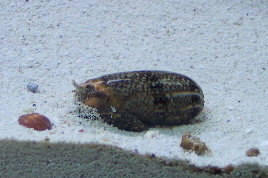
Thats no Nassarius! Thats a predatory Olive
snail! 12/24/07 Hey WWM crew. <Hi there.> I have been
reading lots about identification of snails, and have identified
the snails that have been trolling my tank as cap snails.
<Neat. Stomatellids are terrific little grazers that make a
nice addition to a tank.> Also have been reading on some other
snails people have encountered and found this one interesting.
Attached below. I also bought 4 of these snails at one time (sold
as Nas) <Ugh don't even get me started!> and watched them
eat one of my Astrea snails. <Yep, what a shame. These Olive
snails are beautiful, but are predators/scavengers, and look
nothing remotely like a Nassarius. How they can be sold as such
is beyond me.> After hours of searching I found out what it
was. I got rid of them right away. <Understandable hopefully
you educated the seller!> Just saw a few people had questions
and that you guys were unsure of the identification. Lettered
Olive Snail Oliva sayana <Much appreciated! Here's another
photo of one, as well: Take care -Lynn>
|
|
|
Mr. limpet and the Pyramids
-12/15/2007 Hello crew, I try to avoid asking questions and believe
I have only asked 2 so far. Usually I can find all my answers with
research on your site and or others. This one seems to allude me
though. I have been running a 55g reef for 2 years now. The last year
has been really great. Anyway this question doesn't really pertain
to lighting or water parameters so I will skip that this time. I was
doing some research on clams because some day I would like to own one.
I then stumbled across something called Pyramidellid snails. To my
amazement I have recently noticed these little guys before. They were
on my turbo snails!! After I found out what they were I promptly
brushed them off of my snails and waited for dark. ("the freaks
come out at night") Here they were by the hundreds! Now at this
point according to my calculations manual removal of such little
creatures would take somewhere between 100 to 1,000,000 years. I also
have hundreds of limpets that don't seem to bother anything in my
tank including the Montipora. Now here it is, will the Pyramidellids
feed off of the limpets? Therefore removing the snails for a long
period off time to remove the Pyramidellids food source thus starving
them to death would not work, correct? I also cannot use a six line
wrasse or other type to help control nor do I think a wrasse would work
effectively anyway. Any Ideas? <Well, first things first... please
make sure you have the "bad guys" before you start to worry
(or start killing them en mass). There are several harmless/beneficial
snails which look very similar. Please see here:
http://www.reefland.com/rho/2006/05/identify_rissoid_pyramidellid_snails.php>
I apologize for the incomplete e-mail. <no worries> Any help on
this subject would be greatly appreciated. Thanks, Nick <De Sara
M.>
|
Vermetid Snail Mucus Causing Frogspawn Polyp Ejection? -
11/14/07 Hello Wet Web Media, Since launching my 24g nano
earlier this year, I have been an avid reader of your site. Thank
you for contributing so much information to the reef-keeping
world. <our pleasure, thank you> Your site has helped me to
diagnose a problem, but now I need input on how, or whether, to
"solve" it. The pride of my tank is a bright florescent
frogspawn that I added about five months ago. Since that time,
two remarkable things have happened: first, the frogspawn has
rapidly divided: from four heads to ten or twelve, and dividing
still. <wow> Loving my frogspawn as I do, I was initially
enthused by its reproduction. I've placed this coral in a
nice space where it can expand and be a real showpiece in the
tank. But I recently read a post by Anthony Calfo on this site
that described polyp ejection (featuring the clear bubble that
has developed on a few of my frogspawn heads as they've
split) as a "stress induced strategy of asexual
reproduction." <Interesting, but I'm not yet
convinced that this is what is happening here with your coral.
There is certainly plenty of reason and academic research to
support the notion that polyp bail out is a response to stress
(and method of asexual reproduction). Polyp bail out is when the
soft tissue of a polyp detaches and drops out of the coral
skeleton. If conditions are right, these dropped polyps will form
new skeleton, and ultimately new colonies. (see "Polyp
Bail-Out: An Escape Response to Environmental Stress and a New
Means of Reproduction in Corals" by Paul W. Sammarco,
published in Marine Ecology, Vol. 10: 57-65, 1982). Thus, if your
corals polyps were bailing out, I'd expect them to be dropped
from the mother colony and forming new colonies (not forming new
branches on the same colony).> This got me thinking about the
second remarkable thing that has happened since I acquired the
frogspawn: in the last several weeks, a great deal of mucus or
webbing has accumulated around the stalk or stem of this coral.
Today, with the help of your site, I at last found the likely
cause of this mucus: the frogspawn came with what I originally
believed to be two tube worms attached, but what I now believe to
be Vermetid snails. A small colony of Vermetids has since grown
up on the frogspawn and the surrounding live rock. (Perhaps they
thrive on the phyto I feed my feather duster.) Recently the web
of Vermetid mucus has grown pretty thick on the frogspawn and has
even trapped a bit of detritus. <Indeed, this is what the webs
are for. If you watch them, you can actually see them
"reeling in" these webs to collect their catch.> So
now I am wondering: could this mucus web be irritating the
frogspawn, resulting in stress-induced asexual reproduction?
<It's *possible* but I'm not sure how likely...> If
so, is that a bad for the long-term health of the coral?
<It's hard to say since I'm still not sure your coral
is truly stressed. Could you send in some pictures maybe?> If
so, what if anything should I do to prevent it? Would you
recommend or advise against an effort to baste or vacuum some of
this mucus off the coral? <Likely a futile effort...the snails
will just make more.> Dare I attempt to remove the snails?
Some sort of dip? <Eek, don't dip it. If you MUST kill the
snails, use a needle/syringe to inject vinegar/Kalk/etc. into the
tubes.> Thank you very much for your time and expertise. Ben
Irvin <De nada, Sara M.>
Attn Sara M: Vermetid Snail Mucus Causing Frogspawn Polyp
Ejection? -11/14/07 Hello Sara, Thank you again for your time and
insight. So, if polyp ejection or bail out results in a complete
detachment of the polyp, that is definitely not what is happening
to my frogspawn. However, some, but not all, of the heads that
have divided on my frogspawn have developed a clear bubble
similar to the one pictured on this page:
http://www.wetwebmedia.com/caryfCorlsaqs.htm And the frogspawn
does seem to be splitting very fast. <Yeah, this is odd...>
Here are two pictures: the first, #546, shows the frogspawn from
below. You can the see largest, green worm-like structure, as
well as a web of greenish-whitish mucus-like material
accumulating on the coral and the rock. <That actually
doesn't look like Vermetid snail mucus web. If anything it
kind of looks like sponge.> The second, #550, shows the
frogspawn from above and behind. You can see more worm-like
structures, as well as a web of mucus-like material that is
catching detritus. This is the first I've noticed, but there
seems to be some algae now growing on the mucus-like material as
well. <That wouldn't happen with Vermetid snail mucus.>
One last thing that perhaps I should have mentioned earlier: this
frogspawn is hosted by two true Percs. <Hmmmm... interesting.
Normally I would tell you that clown hosting is very stressful to
corals. But this is such an odd thing with your coral growing so
fast.> I'll confess, I thought I had it all figured out,
so I await your judgment: is this bad for the coral? need it be
addressed? if so, how? <I'll be honestly with you, I'm
a little baffled myself. Hosting clowns usually stress out corals
quite a bit. But if your coral is growing this fast, and if it
keeps growing this fast, I'd question how stressed it must
be. Typically, stressed corals don't grow so fast (if much at
all). Let me ask you, do the clowns feed the coral?> Thanks
once again. Ben Irvin <Thanks for writing, Sara M.>
Re: Attn Sara M: Vermetid Snail Mucus Causing Frogspawn
Polyp Ejection?-11/14/07 Hi Sara, It's really nice of you
to take the time, and I'm happy to respond, even at risk of
showing my ignorance, so long as I am not taking up too much of
your attention. <Not at all... I quite enjoy hearing from
other people about their experiences with their corals.> I,
too, wondered about the possibility of a sponge, but was at a
loss to explain the worm-like structures in the gauzy, mucusy
material. <I know it doesn't look like your typical
sponge, but I'm 98% sure it's some kind of sponge.
Sponges can be mucus-y, web-like, gauzy... all the things
you're describing are not inconsistent with some kinds of
sponges.> To give you a better sense of what this looks like,
if I saw it growing in my fridge, or in a garbage can, I'd
think that it was mold. It is whitish-greenish in color, it
clings to (possibly grows on) the adjacent rocks. It has
developed worm- or tube-like structures in it. It seems to cling
to, or grow on, the lower, green portion of the stalk rather than
on the white portions of the heads. Now, ugh, here's my
ignorance: in response to your question, do the clowns feed the
coral, my answer is, I don't know what that means. I feed my
clowns Mysis and Cyclop-eeze every third day, a reduced feeding
schedule that is aimed at reducing nutrients in the tank. (I also
add a few mg of phyto twice per week.) I occasionally squirt some
of the Cyclop-eeze in the general direction the frogspawn, but in
general I don't target feed it. The clowns stay close to the
frogspawn and swim in and around its heads at night. <Just
like how clowns bring food to anemones in which they might be
hosting, they will often also bring food to any coral in which
they are hosting. This is what I mean by "feeding.">
Again, I acquired this coral in May. It had four heads when I
obtained it, and I suspect I'll have sixteen soon enough,
each heading having split and many now splitting again. <Dear
lord that's a lot of splitting. Do you have any pictures of
the whole coral colony? I'm just curious to see this thing
now.> This coral had been fragged off of a specimen the size
of a basketball in my LFS's show tank. So perhaps it is just
a quick grower. <Oh cool... I was just going to say that it
would be interesting to see if the coral grew just as fast
without the clowns (and/or in a different tank). So, if a frag of
it in a different tank is growing just as fast, that might tell
us something. But I'm afraid I still don't have a real
answer for you as to why it's growing so fast. I suppose it
could have some sort of genetic "defect" that is
causing this. But I honestly don't know. Please do record all
this though (take pictures and make notes of observations).>
But I want to be sure that whatever is growing/clinging to its
trunk is not an irritant. <If you're worried, and if you
can easily remove it, go ahead. Better safe than sorry I
suppose.> Your insight is greatly appreciated. Ben <De
nada, Sara M.>
Re: Attn Sara M: Vermetid Snail Mucus Causing Frogspawn
Polyp Ejection? -11/14/07 Hi Sara, Unless you recommend
otherwise, I will put some light water pressure (turkey baster)
on what we think is the sponge. If it blows off, great, but if it
doesn't budge, I probably won't risk any kind of
intervention. <Sounds like a good plan. You could also use a
pair of tweezers to try and gently pull it off if the baster
doesn't work.> Later this evening, I will send you two
pics of the coral, one opened and one closed. <Cool,
thanks!> Have I told you that I appreciate your expertise?
<Hehe, yes, and thank you again for sharing with us.> Ben
<Best, Sara M.>
Re: Attn Sara M: Vermetid Snail Mucus Causing Frogspawn
Polyp Ejection? -11/14/07 Thanks for the advice, Sara. During
a regularly scheduled water change this evening, I attempted
first to suction and later to blow this unidentified material off
the frogspawn. I was able to remove a little of the detritus and
what looked like a bit of brownish hair algae, but the mystery
material stayed put. So, since you haven't identified it as
fatal coral-killing death stuff, I'm going to let it be.
<Yeah, I'd just let it go for now. Most sponges don't
pose any real threat to stony corals.> I've attached two
pix: the first, #556, shows the whole coral as it's beginning
to retract for the evening. For scale, the whole thing cuts an
arc a little bit bigger than a soft ball. <Thanks for the
pics, looks like a healthy coral. :-)> The second pic, #566,
shows the coral closed up a bit. I had hoped to show you a
picture of the coral closed all the way, so that you could
distinguish the separating heads, but the frogspawn doesn't
seem inclined to close up tight tonight. But, just for example,
the two heads at the far right of the picture have each developed
two mouths and the splits seem imminent. Likewise, on the far
left, what appears to be one big head is actually four. It's
really been amazing to watch. <Indeed, very interesting.>
But so long as it is not an unhealthy response, I'm happy!
<Corals are still so mysterious to us humans. All I can really
say is that the coral looks plenty healthy. I'm not going to
promise you that there's no chance this accelerated splitting
isn't a result of some kind of stress. But I don't have
any reason to say it is either. And even if it were, it's
obviously not killing the coral. So I say just keep doing what
you're doing and keep an eye on it.> (Also, in the
background of 566, you can see a bit of pink sponge in the
vicinity, so maybe this is a sponge-worthy rock.) <LOL...
"sponge-worthy"--too funny.> And speaking of rock,
you rock. Thanks for all your help. If you ever need a totally
noobtastic second opinion, be in touch. <Fabulous, my
pleasure.> Best Ben Irvin
<Best,
Sara M.>
|
|
.JPG)
|
|
|