|
Related FAQs: Sea Stars 1, Sea
Stars 2, Sea Stars 3, Sea Stars 4, Sea
Stars 5, Brittle Stars,
Seastar ID 1, Seastar ID 2, Seastar ID 5, Seastar ID 6 & Seastar Selection, Seastar Compatibility, Seastar Behavior, Seastar Systems, Seastar Feeding, Seastar Reproduction, Seastar Disease, Seastar Disease 2, Seastar Disease 3,
Star Disease 4, Star
Disease 5, & Asterina Stars, Chocolate Chip Stars, Crown of Thorns Stars, Fromia Stars, Linckia Stars, Linckia Stars 2, Sand-Sifting
Stars,
Related Articles:
Echinoderms, An Introduction to the
Echinoderms: The Sea Stars, Sea Urchins, Sea Cucumbers and
More... By James W. Fatherree, M.Sc. Brittle
Stars, Asterina Stars,
Crown of Thorns Seastars,
Marine
Scavengers,
Sea Stars, Class Asteroidea
part 5 of 11
To:
Part
1, Part 2, Part 3, Part
4, Part 6,
Part 7, Part 8,
Part 9, Part 10,
Part 11
|
|
|
By Bob Fenner
|
|
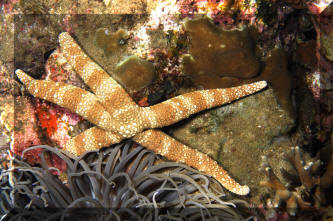
| Gomophia egyptiaca Gray 1840, Egyptian
Seastar. Indo Pacific; Red Sea to the South Pacific. Needs shade,
calcareous rocks which it feeds on the life on. Typified by
isolated tubercles each surrounded by a white ring. Here in the Red
Sea and S. Sulawesi. |
Bigger PIX:
The images in this table are linked to large (desktop size) copies.
Click on "framed" images to go to the larger size. |
|
%20MD.jpg)
|
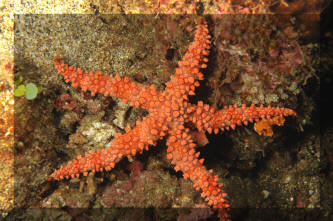
| Gomophia watsoni (Livingstone 1936),
Watson's Brittlestar. Tropical Australia endemic. To four
inches across. Notably, this species of Seastar is a grazer on
detritus and algae. Here in Queensland, Australia. |
|
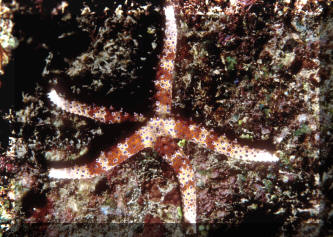
| Leiaster glaber Peters 1852, the Red Velvet
Star. Slender arms, irregular red blotching, small central disc. To
about 8 inches across. Indo-Pacific including eastern Pacific.
Nocturnal, unlike the similar Linckia guildingi of similar
coloring and markings. Here in Hawai'i. |
|
Bigger PIX:
The images in this table are linked to
large (desktop size) copies. Click on "framed" images to
go to the larger size. |
|
|
The Genus Nardoa: Especially when started small, these
species tend to get along with most all other invertebrate livestock.
From the Indian to Central Pacific Oceans; Africa to the Philippines.
Typified as having knobby tuberculations on their aboral surfaces.
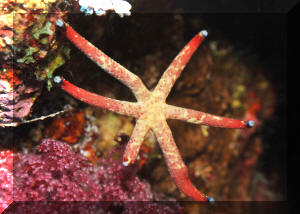
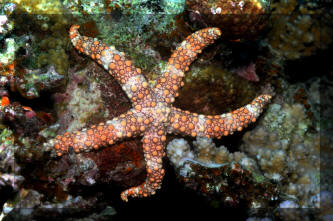
| Nardoa frianti Koehler 1910. Bears
tubercular warts on the margins of the body as well as the
upper/aboral surface. Eastern Indo-Western Pacific; Andaman Sea,
Micronesia, Noumea, Philippines. Fiji 2017. |
 |
Bigger PIX:
The images in this table are linked
to large (desktop size) copies. Click on "framed" images
to go to the larger size. |
|
%20MD.JPG)
|
| Nardoa galatheae Brown Mesh Seastar. To 20 cm., 8".
Tapered, cylindrical arms. Indo-W. Pacific. Bali 2014 |
%20MD.JPG)
|
Bigger PIX:
The images in this table are linked to large
(desktop size) copies. Click on "framed" images to go to
the larger size. |
MD.JPG) |
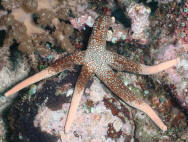
| Nardoa novaecaledoniae (Perrier 1875). West
Pacific; Noumea, N. Australia, Indo, Philippines, PNG. Here in N.
Sulawesi, and St. Louis... Found in shallow reef, rocky areas 1-5 m
in depth. |
|
Bigger PIX:
The images in this table are linked to large
(desktop size) copies. Click on "framed" images to go to
the larger size. |
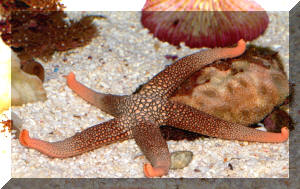 |
| Nardoa rosea Clark 1921. Large tubercles on
non-marginal parts of arms. Found in shallow reef, rocky
areas. |
|
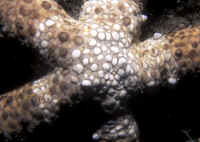
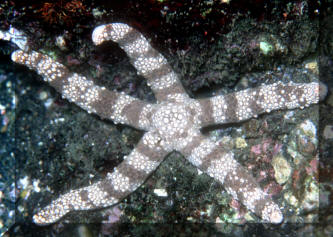
| Nardoa tuberculata Gray 1840. Mottled or Warty
Seastar. Indo-West Pacific. Shallow rocky reefs. To eight inches. N. Sulawesi pic, close-up during the day. |
|
Bigger PIX:
The images in this table are linked
to large (desktop size) copies. Click on "framed" images
to go to the larger size. |
|
|
To:
Part
1, Part 2, Part 3, Part
4, Part 6,
Part 7, Part 8,
Part 9, Part 10,
Part 11
|
|


.JPG)