|
FAQs on Chelmon Butterflyfishes
Systems
Related Articles: Chelmon Butterflyfishes, Foods/Feeding/Nutrition,
Related FAQs: Chelmon Butterflies 1, Chelmon Butterflies 2, Chelmon Identification, Chelmon Behavior, Chelmon Compatibility, Chelmon Selection, Chelmon Feeding, Chelmon Disease, Foods/Feeding/Nutrition, Using
Chelmons as Aiptasia Controls, Butterflyfish Identification, Butterflyfish
Foods/Feeding/Nutrition, Butterflyfish Compatibility, Butterflyfish Behavior, Butterflyfish Systems, Butterflyfish Selection, Butterflyfish
Disease, Butterflyfish
Reproduction,
|
|
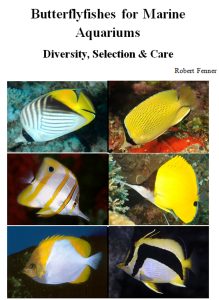 |
Butterflyfishes for Marine Aquariums
Diversity, Selection & Care
New eBook on Amazon: Available
here
New Print Book on Create Space: Available
here
by Robert (Bob) Fenner |
Copper band butterfly; sys., stkg. 8/22/18
Hi guys I just was reading that Robert Fenner is very knowledgeable in the
butterfly field so I had a question...
<Will gladly proffer my input>
I have a 93 gallon cube up for 3 years now and I know the Copperband calls for a
125 gallon tank but what is your opinions on putting one in a 93? Is this
certain failure...is this 50/50...is this a decent chance...is the fish going to
live but be miserable?
<I'd say decent chance... not volume alone of course goes into such stocking
considerations. MOST important here is securing a healthy, eating specimen>
I only wonder about this because I’ve had a magnificent fox in my tank now for 2
years and it to calls for min 125 gallons but he seems very happy and does
really well he is approx 6-7”...I have about 12 fish in my tank currently most
of which are more of the 2-4” sizes at full grown...anyways like i said do I at
least stand a fighting chance to make this work...oh and I have a 125 gallon
sump and a 25 gallon skimmer sitting in the sump so I think I will be ok with
the bio load...I am really hoping to get an answer back that I want to hear lol
so I am hopeful but if not I guess it’s not meant to be...thanks a bunch for
your time hope to hear back soon
<Chelmons have gotten better and better in recent years. Likely improved
collecting, holding, shipping at play here. If this were my system and I had
such an interest, I would go ahead w/ this acquisition.
Thank you for sharing. Bob Fenner>
R2: Any Wrasses Less Likely To Jump? - 07/20/07
Whoops...you're right Eric. <<Hiya Pam!>> I meant I'd keep away from Fairy
Wrasses. <<Ah yes, so I thought>> One more question for you. <<Okey-dokey>>
LiveAquaria mentions that a Copperband Butterfly needs a 50g tank or larger, and
another site mentions 30g, but I believe they can get up to 8". <<In the wild,
yes'¦ and maybe a bit larger even>> Aren't they way too big for a 50g? <<In my
opinion, yes'¦ Not so much because of the water volume as these fishes are not
quite so active as say the Tangs, but rather the limits in 'real estate'
prohibit keeping this fish in such smallish systems. Chelmon rostratus is often
a problematic feeder, having a larger system (100g+) with ample live
rock/substrate and the associated infauna (along with an in-line refugium to
help sustain populations) will go a long way towards sustaining this fish while
it is being trained to other foods, as well as continuous contribution to the
long-term health of this species>> Thanks. Pam
<<Cheers, EricR>>