|
FAQs on Brown, Diatom, Dinoflagellate Algae 4
Related FAQs:
Diatom Control 1, Diatom Control 2, Diatom Control 3, Algae Control, Marine Algicide Use, Nutrient Limitation, Marine Algae Eaters, Culturing Macro-Algae; Controlling: BGA/Cyano, Red/Encrusting Algae, Green Algae, Silicates,
Related Articles:
Algae Control,
Marine Maintenance,
Marine Scavengers,
Snails, Hermit Crabs,
Mithrax/Emerald Green Crabs,
Sea Urchins,
Blennies,
Algae Filters,
Ctenochaetus/Bristle Mouth Tangs,
Zebrasoma/Sailfin Tangs,
Skimmers,
Skimmer Selection,
Marine Algae,
Coralline Algae,
Green Algae,
Brown Algae,
Blue-Green"Algae"/(Cyanobacteria),
Diatoms,
Brown Algae,
|
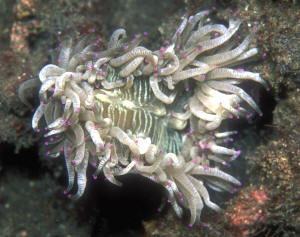
Catalaphyllia jardinei Saville-Kent 1893, the
Elegance Coral.
|
 |
New Print and
eBook on Amazon
Marine Aquarium Algae Control
by Robert (Bob) Fenner
|
|
Mature Tanks - Diatom Bloom 4/24/20
Good afternoon!
<Hello Dave!>
I'm frustrated to the point of wanting to take a hammer to my tank (ok not
quite yet)
<Ahh!, been there several times in the past 30 years, this hobby demands
patience>
Going on 18yrs in the hobby, and I had a previous 90g reef tank and 200g
predator tank running beautifully without issues after a 3yr trial and error
period. With a move, I gave up the other tanks and now have a 60g reef. I
very quickly seemed to have that tank under control within the first year,
but at the start of year three I used some chaeto from a local fellow
hobbyist that seemed to be plagued with bryopsis. Within two weeks of using
his chaeto, there was nasty green algae everywhere...
took a while to figure out it was bryopsis, and I soon had that under
control with fluconazole. Since then, I've been getting what appears to be
diatom algae.
It's not cyano. I <It> starts on my sand bed at the front of the tank, and
then shows up on some of the surfaces of my rock where I don't have corals.
<Is it present even on the shaded areas?... have you seen any small air
bubbles on the top of the sand or rocks where it has grown?>
I use RODI, have changed filters on schedule, and my source water readings
are Ammonia, Nitrate, Nitrite, Phosphate all 0 readings.
<What about Ph?>
I was suspicious of the Phosphate test and bought a Hanna, and confirmed it
was in fact a zero reading. I'm confident my source water is good.
<Okay>
Feeding... two Clowns, a Foxface, Royal Gramma, Peppermint Shrimp, Cleaner
Shrimp, Sebae Anemone, Banded Serpent Star, maybe 20 blue legged hermits, 5
Nassarius Snails, and four other assorted snails. Frogspawn, Colt, assorted
Zoas, and a Toadstool. I figure I have a relatively light load for a 60g
tank.
I feed half a cube of frozen 4 times a week, and pellet 3 times a week -
just enough that it's all consumed. I think if anything I am feeding light,
my Foxface could use some additional weight.
Other nutrient control: skimmer that produces some pretty wet skim and it's
hard to adjust properly.
<A good, reliable protein skimmer is very helpful in maintaining top water
quality.>
It definitely could be better, but then again I have a very light load I
think.
I have chaeto in a refugium that grows like crazy I rinse and garbage a 1/3
of this every week during water changes that are 10%/week. My tank water
parameters are ammonia, nitrite, and phosphate 0. My nitrate will sometimes
give me a small reading of 0ppm to 10ppm, which I think is fairly normal and
healthy? I also have one filter sock that I change weekly.
<Well, since your tank seems to have a very low nutrient source, I am
thinking these could be Dinos (dinoflagellates), which prosper in the
absence of nutrients.>
Lighting... I have two Kessil 360's 8" off the water that run from noon to
10pm.
They start and stop with about a 90min blue and 0% intensity schedule, and
the 2hr ramp up/down period hits a peak of 45% intensity and sits there for
3hrs before dropping (7hrs all together), I'm adding 55% color on the same
schedule. I do get about 40mins of direct sunlight on the side of my tank
from a huge window, but I figure in conjunction with a 7hr light schedule
where I apply my color/intensity that this shouldn't result in my diatom
algae? Again, I ran the tank for a year algae free on a similar light
schedule (I wish I had kept the specs on that schedule – it was since
adjusted for various coral placement, etc.)
I remove all noticeable diatoms (that eventually start growing green hair)
with my water changes. I have conducted two full 3 day blackout periods in
the past two months, and still this all comes back.
<Worth trying a 5- day, to a whole week blackout, covering the tank with
cardboard and allowing no light at all, natural or artificial.>
I can't seem to figure this tank out. I was watching 52 weeks of reefing on
YouTube and the clean-up crew video where they indicated too many
snails/crabs can lead to algae because there isn't enough food for them all,
they die, and leads to excessive nutrients. What peaked my interest is that
I have thousands of those tiny little pebble snails (what are they called?).
<Astraea?.>
Could the birth and die-off of these little guys be causing a problem? Seems
unlikely
<Only if they die massively>
The algae starts only in certain spots, and then will slowly spread...
always starting in the same spots. My two return pumps each have a splitter
for two directional flows (4 total) and they circulate my tank volume maybe
15 - 20x/hour. Additionally, I have one MP40 on a random setting. I know
water flow will help with cyano, but it seems odd this diatom algae starts
growing right along the front of my tank in the path of my MP40.
Does anything stand out to you as a probable cause of this algae issue?
<Yes, from your description, and the way things happened, I am almost sure
these are dinoflagellates, which were introduced to your system via the
Chaetomorpha.>
With the algae starting on the bare rock and in the front of the tank where
it receives the most light, I keep going back to my lights. Thoughts?
Dave
<I suggest the following:
1- Trim your chaeto to about half and see if Dinos start to disappear over
the course of a week or two in the presence of some nitrates and phosphates.
2- Siphon out regularly the top layer of the sand, where the majority of the
algae is located .
3- A high ph around 8.4 seems to inhibit Dinos proliferation, I don’t know
your current reading, but it will help if you aim for the mentioned number,
go slow with any changes.
4- Leave only the blue lights on for 6 hrs./day, for one week (Dinos like
the white spectrum).
5- Consider adding a DSB to your refugium
6- If possible add a UV sterilizer.
I hope this helps. Wil.>
|
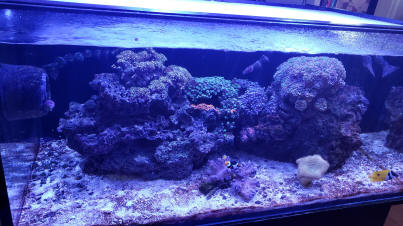 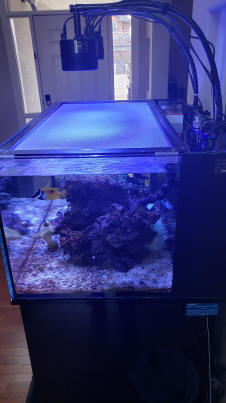
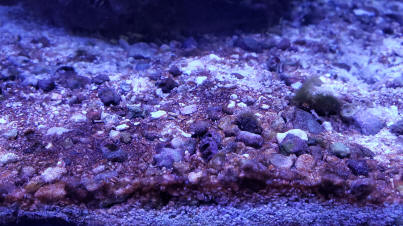
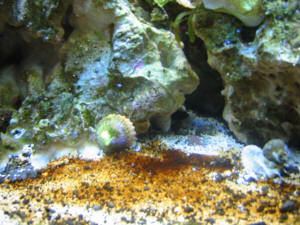
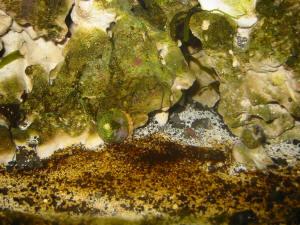
Does this look like Cyano to you? |
|
Re: Mature Tanks - Diatom Bloom 4/25/20
Thank you for the response, Wil.
<Welcome>
Not sure if you got my attached photos?
<I did,... are already posted on the daily FAQs. The only way to be
absolutely sure of the type of “Algae”, is to take a sample and see it under
a microscope, many look pretty much alike, that’s why we have to rely on the
antecedents of the particular system.>
A little more info on the timeline...
I had a perfectly beautiful tank and went to Europe for 4 weeks on vacation
while a friend monitored the tank with water top-offs and feeding. I
returned to chaos and a mess of a tank. Algae everywhere. Some water
changes, etc... I had it looking good again and my chaeto that I had at the
time had turned black so I tossed it. I ran without chaeto for awhile, and
my nitrates then increased from 0 to as much as 30 or so ppm, and it seemed
my corals were suffering. I then purchased some chaeto from the hobbyist and
had the bryopsis outbreak very soon after. I fairly quickly resolved the
bryopsis outbreak with fluconazole, but then started to experience the
diatom algae and had some nitrates in the 20ppm range. I just recently added
the good batch of chaeto and it has resolved my nitrate issue, and finally
my corals are looking good... but the diatoms are still there.
Thus, I hear what you're saying... but the Dino was present even when my
nitrates were in the 20ppm range.
To answer your questions:
It first looks like a rusty dusting over sandbed and then rocks. There might
be the smallest of bubbles that form followed by green hair algae. It is not
present in shaded areas, no.
<Those are indicators of Dino infestation.>
Ph is consistent at 8.2 since I started the tank
The tank is an Innovative Marine, thus the sump is actually the back portion
of the tank. If I add anything back there, it'll be a bitch to ever get it
out...
<Understood, it’s impractical to add a DSB there.>
but I hear what you're saying. On my old 90g reef, I had a deep sandbed in
my refugium and my setup was pretty slick and trouble free - never even had
to clean the glass of algae.
<That’s why I suggested that.>
If I alter my lighting to 6hrs a day with more blue (on these Kessils
there's only a percentage setting, so I am assume I just keep my color
around 20% or less?), do you think I should keep my intensity as is?
<The bluest spectrum your Kessils provide is okay, just don’t use the light
spectrum on the lower Kelvins range.>
Do you perceive any coral impact to a color adjustment?
<Not too much as this is going to be temporary.>
As far as equipment, on a scale of 1-10 I'd rank my Innovative Marine
skimmer around a 6.
<Yes, the biggest drawback is that it is very difficult, almost impossible
to fine tune.>
I do get wet skim and bubbles constantly, but then again I wonder if it's
because the tank is fairly clean?
<Could be>
Investing in presumably a better skimmer vs adding a uv sterilizer. Go with
the UV Sterilizer?
<For now, I’d go for the UV to kill any floating micro-organisms that are
causing this issue. Wil.>
Dave
|
|
Nuisance algae continued! 2/4/18
Hey Bob,
<Marty>
Many thanks for your reply to my original email a couple of weeks back when i
asked whether you thought the brown-red algae in my tank was Cyano or diatoms. I
am now pretty sure that these are diatoms caused by me
(stoooopidly!) adding reeflowers white sand to the tank as a sand filter.
I'm not sure what possessed me to do this but hey-ho, I get to kick myself
everyday about it now!
<Clarity is pleasurable>
I think the outbreak is diatoms as i have done the following but to no
avail.....added additional macro algae (Caulerpa & Chaetomorpha) to the sump,
increased flow with 4 8000lph powerheads, done a 48hr blackout, added
2 tower filters with carbon and Rowaphos, cut down on bioload by returning 9
Chromis to lfs, reduced feeding to once very other day and algae on the days
between, put more sand sifters in (sand sifting stars and conch) and
turned over the sand manually each day.
<I'd only vacuum or stir lightly once per week>
And with all this came no reward....at all! Infancy <in fact?> the algae has now
spread quite stubbornly on to most of my rock work but as yet as not blanketed
and corals so am happy that it is being managed at the moment. Water parameters
are all spot on apart from nitrate gone from almost undetectable to about 3ppm -
most likely as a consequence of stirring my sand bed!
My question really is..... (eventually I hear you cry!)......what can I do to
get rid of this pest as i know it doesn't cause direct problems but it is making
my pride and joy look terrible!!! Is there anything I can do biologically
whether that is further reduce loading or add something that will outcompete
more effectively than macro algae or will eat them, can I do anything physically
or mechanically to remove as when i remove the brown sand it just regrows in a
few hours........as a last resort is there anything chemically that will destroy
diatoms?
<There are a few things... time going by; an RDP arrangement for culturing the
macro algae in your refugium, improving ORP... via O3 use perhaps...>
I know this will now resolve the underlying issue but I am positive that this is
the new silicates that I introduced with the new sand (prevention is better than
cure I know!).
The problem isnt as bad as the first pics but I don't want better I would like
gone!
Basically......HELP!!!!!! Ha ha
<Perhaps a (re) read here:
http://www.wetwebmedia.com/algaeconMar.htm and as much review of the above
links as you deem useful>
Thank you so much in advance for helping idiots like me to rectify our
mistakes!!!
Regards, Martin
<No worries; happens to us all. Bob Fenner>
|
 |
Brown Algae... New SW tank 12/6/16
Hi guys,
I've been down this road before, but just wanted your opinion with a quick
question. New 60g saltwater tank, anxiously awaiting the delivery of my RO/DI
unit and my protein skimmer (this week in the mail).
<These will definitely help!>
I have some brown algae starting in a two week old cycling tank. I know this is
to be expected, and I know my RO/DI water, regular water changes, and
introducing a protein skimmer will wipe this out in a few weeks. My question...
if Nitrates, Nitrites, Ammonia are all in check at zero... is it appropriate to
introduce a clean-up crew during this brown algae bloom?
<Mmm; I'd wait a few more weeks myself. For me, the undue stress on this life is
just not worth it>
Is it harmful to hermit crabs, snails, maybe a banded or brittle starfish?
<Yes; harmful>
My plan while battling the bloom... intro the cleanup crew this weekend, and if
water parameters are still in check, then introduce two clowns and maybe a
watchman goby in two weeks.
<I urge patience. So easy to key eh? Bob Fenner>
|
BIG BROWN BLOOM! 3/17/12
My tank has only been set up for about 3 weeks and look at this
bloom!!
<Very impressive Pam!!! ;)>
I just ordered 35 lbs <If this is not cured, your cycle will
start again as the rock 'cures' in the tank> of rock
and a
Current_USA_Nova_Extreme_Pro_T5HO_10k_460nm_Actinic light
fixture.
Please tell me this bloom will be gone after the proper lighting
is in place! <Not likely that this is caused by a lack of
lighting, in fact, while your tank is cycling, there is no need
for light especially if you have no livestock ( I see none in
pic). Since the tank is new, it could very well be Diatoms
(http://www.wetwebmedia.com/diatomfaqs.htm ), which is
normal in the starting phase, although this is excessive.
If you are able to get a closer picture, I may be able to give
you a better answer. What are you using for your water
source? What type of substrate are you using, sand or large
crushed coral? Are you testing for Ammonia, nitrite, and
Nitrate? If so, please respond with results. Turn the
lights off starting now, it is only making it worse.
Bobby>
|
|
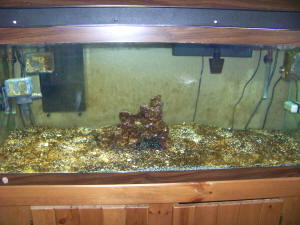
Re: BIG BROWN BLOOM!
3/18/12
OMG Bobby,..please tell me I haven't totally screwed up my
tank, as I have about an inch of "normal" <As
in Freshwater type gravel or large, course Calcium carbonate
(Sold as Crushed coral). Not a great substrate choice as it
allows 'crud' to collect in large, open spaces but it is
not fine enough for anaerobic bacteria to break down the
nitrate> gravel on the bottom with 80lbs of LS on
top! Is the gravel the cause of the diatoms?
<Not directly impacting this, but may ultimately cause you
issues with high nutrients, and as a result likely algae
issues> I lay in bed one night totally stressing about the
possibility of breaking down the tank!<At least you
don't have 100# of rock and livestock in there>
Nooooooooooooo!I only have the one 8lb piece of LR that cost me
$68.00!!! Eight bucks per pound, plus $4.00 for a small mushroom
! What a rip! As a result, I went to Bulk Reef Supply and
purchased 35 LBS of dry rock.<A good product, make sure you
clean it well. On a side note, it is totally inert and will
take a while to establish itself> It's on its way!
Also, the Current light was ordered and will be here soon.
I have (2) 1200 power heads, a Remora skimmer, and an old hang on
the back power filter with charcoal and sponge type media within.
I'm trying to save money! LOL, too late for that!
I shut off the lights! I have also done just 2 water changes in 3
weeks.
AND, it is tap water (town of Cape Cod Mass).<This is likely
the biggest culprit. I cannot provide details without
knowing the specific make up of your water, but silicates and
phosphates can certainly be high in tap water in addition to a
number of other concerns which contribute to unwanted
algae. I would suggest that before you spend money on other
equipment you consider a RO/DI Unit for yourself. BRS sells
these as well. It will be the biggest bang per buck for you
at this point if your goal is a successful Reef Aquarium> Here
are my numbers; March 16, 2012,Ammonia ),ALK10,Calcium 280
<Low, get it to at least 380-420>, Ph 8, Salinity1.022 ,Get
it up tp 1.025-1.026, Nitrate 0, Nitrite 0, Temp76
Any good news? I could use some now!! <You haven't killed
any corals yet ;)>
Thanks Bobby!<You are welcome>Pam
Re: BIG BROWN BLOOM! 3/16/12
BOBBY! 3/19/12
Bobby! I just got my
Current_USA_Nova_Extreme_Pro_T5HO_10k_460nm_Actinic
light fixture today, AND my 35 lbs of dry rock! <Like
Christmas in March>
I've had the lights off for over 24 hours and the brown algae
is dissipating quickly. <Great> Can I,...should
I keep the lights off as the tank cycles the new dry
rock? <I would, there is no advantage to having them on during
the cycle> I'm just dying to test drive these lights! But
I can be patient if it's best to keep the tank dark. Also,
will my one mushroom coral die in the darkness? <You can
certainly run them a couple of hours a day to help the Mushroom
as well as your Impatience ;) >
Thanks Bobby!! <You're Welcome>
Pam
|
Diatom Problems 2/29/12
Hello WetWeb Crew,
<Hello Erik>
I have a thirty gallon tank that's been established
for a few months now and even after a few water changes I can't
seem to get rid of this brown algae that is covering most of my live
sand and live rock. I believe the algae is called diatoms?
<Is it powdery, are you sure it is diatoms? This generally
occurs in newer systems but usually goes away after a month or
so.>
I heard that this could be because of high phosphorus levels in
my tank but I have no idea how to test for it or how to get rid of it
if that's my problem.
<Get yourself a phosphate test kit. Your water source could be
a potential problem as well unless you are using RO water.>
I searched the site and couldn't find the answer to my specific
problem.
Sorry if the answers on there. Everyone in my tank seems fine
though and my levels are good. What should I do?
<Read the FAQs here, should find some answers within.
http://www.wetwebmedia.com/diatomfaqs.htm>
Thanks a million,
<You're welcome a trillion. James (Salty Dog)>
Erik
Brown Algae/Algae Control 9/28/11
Hi there Crew,
<Hello Jim>
Before I get started I truly love this site!
<Thank you.>
I have written a few times. I recently upgraded my light system to
metal halides. I have two 95 watt blue actinic, and two 10000k 150 watt
halides.
Since I added these lights my rock, sand, and glass has turned brown.
The metal halides stay on probably 12hrs and blue antics 14hrs a day.
They are not on a timer. I was thinking of hooking up my UV sterilizer.
Would that help?
<Not much.>
I had a high nitrate problem about three weeks ago. It is now at zero.
I know nitrates feed it. The tank is a 180 reef tank, three blood red
shrimp, two skunk shrimp, lots of crabs and snails, coral, mushrooms,
six dart fish and few damsels. Please Help.
<Whiter halides like your 10000Ks are known to increase algae
growth.
Would have been better going with 14000K lamps instead, but that alone
is not the sole reason for your algae problem, it just propelled it.
May want to read here and related articles found in the header.
http://www.wetwebmedia.com/algaeconMar.htm
James (Salty Dog)>
Jim
Re Brown Algae/Algae Control 9/28/11
Hi James,
<Hello Jim>
I <please cap "Is"> was wondering would the 20000k
lights help out even more then the 14000k with algae?
<The 20,000 K bulb is more blue and will bring out all of the
fluorescent pigments in many corals, however, tests and observations
have proven that when used alone, the growth rate of SPS corals can
come to a complete standstill with 20,000 K lamps. It's a good
supplemental lamp for appearance and deep tanks, but these bulbs
generally should not be used as the only source of lighting. You could
replace one 10,000 K lamp with a 20,000 K lamp, but after looking at
your previous email, I will advise that your present lighting isn't
enough to cover a 180 gallon tank. Since you gave no tank dimensions,
I'll assume it's a six foot tank. James (Salty Dog)>
Jim
Old Coralline Algae (Removing from
acrylic) -- 08/18/11
Hi,
<<Hello John>>
I bought a used acrylic aquarium that was in good shape. However, the
black background has tons of old calcified coralline algae on it. I
tried using a Kent acrylic scraper and a credit card, but nothing
works.
<<Yes'¦can be a bear to remove>>
I almost want to take a metal paint scraper to it!
<<Mmm, well'¦if done VERY carefully, this is not likely
to do too much more harm than has already been done by the Coralline
algae>>
Any ideas?
<<Coralline algae, when left alone for a while on acrylic, will
etch the surface quite remarkably'¦not only making it very
difficult to remove, but also scarring/distorting the surface. When
this happens on viewing panels, it can take a significant amount of
polishing to restore clarity (I speak from experience'¦do be
sure to deal with any Coralline buildup on viewing panels without
delay). The fact that the panel you need to clean up is opaque and not
used for looking in to the tank can make this cleanup a bit easier, but
you will still likely see the marring of the panel. So softening of the
Coralline with a mild acid solution (a cup of white vinegar to a gallon
of tap water) and scraping with a plastic or acrylic scraper is still
probably the best approach. Then if desired, any scarring/marking can
be addressed/reduced to a tolerable level by polishing with any of
several products available re>>
Btw the tank is filled with water.
<<If this means there is livestock in the tank, a suitable magnet
cleaner with Micro-Mesh (Google the name) sandpaper sandwiched betwixed
may be a better option>>
Thanks,
John
<<Happy to share'¦ EricR>>
Brown deposit on sand
8/4/11
Hi
I have started to experience the sand in my marine
tank suffering from what appears to be a covering of brown
algae (though I am uncertain if it actually is algae) but the live rock
and corals are unaffected.
<Very common... often due to and termed "diatom
scum">
The water parameters are all within recommended limits. Very recently
the Iodine content was found to be high and I have started to correct
this through water changes. The water is clear. I use a DD MC 500
protein skimmer and clean this almost daily. Do not over feed. LED
lighting is on for 9 hours each day. Circulation is via a Vortech pump
and there appears to be ample water movement over the sand. It has been
suggested that problem could be associated with nutrients in the sand.
I clean the sand weekly using an Eheim gravel cleaner. I do weekly
water changes ( about 8% ) using only RO water and a quality marine
salt. Any advice you could give would be much appreciated.
Thanks
Ross
<Read here: http://wetwebmedia.com/brownalgcontfaqs.htm
and the linked files above. Bob Fenner>
Diatom growth - 0 ammonia, nitrites, nitrates
5/15/10
Hello Crew,
I'm a bit unsure as to why I continue to have diatom bloom.
<"Because they can">
I know the fact that I have a small tank (14 gallons) doesn't help,
but if I have 0 ammonia, nitrites, and nitrates then why would they be
growing?
<Lack of competition, predation... conditions that allow>
I have to get them off of my liverock with a turkey baster, which kicks
up my livesand and doesn't make it look awfully good.
Any other likely causes?
Best regards,
Sam Sutton
<... time going by. B>
Cloudy water, SW
3/6/10
I moved from a 10 gallon to 20L in December of 2009. Recently I woke up
one morning to find a very yellow cloudy water in my tank.
<Is this out of the blue? Tanks will become yellow between water
changes if [a] those water changes are very infrequent; and [b]
there's a lot of organic matter in the tank, such as bogwood. But
these are gradual processes, and stain the water like tea rather than
making it cloudy. If the tank has suddenly become cloudy-yellow, then
it's more likely you're dealing with a diatom bloom.>
Not knowing what exactly was going on I treated the tank for ammonia
and did a 20% water change.
<What do you mean "treated the tank for ammonia"?
There's no such process. Either you have non-zero ammonia levels,
in which case you have to review stocking, filtration, overfeeding --
or else you don't!>
The tank was then clear for about another two days and then became
cloudy again.
<Does sound like a bloom.>
I then did a 50% water change and didn't have trouble for another
couple days only to wake up and find that my water was cloudy. In a
panic I head to my LFS and asked for the opinion of someone who could
help me understand. He said that he believed my tomato clown was
kicking up my sand because he was unhappy and causing the bacteria in
the sand to be suspended in the water.
<No, it's a diatom bloom, and quite common in new marine tanks,
less common in freshwater tanks. You either let them take their course,
which can take months, or else you install a UV-steriliser, which
generally kills the problem once and for all. Some folks leave the UV
on all the time, others only switch it on if they have problems. Either
way, works very well. Do read here:
http://www.wetwebmedia.com/diatomfaqs.htm
>
He recommended adding more feather dusters
<!!!>
and to cure my fishes attitude problem by getting an anemone or another
fish in the tank. another recommendation was to add another filter
system.
I'm just looking for help and general info about what I should do
for this problem since I'm generally new to this hobby. Thanks
guys!
<Cheers, Neale.>
Diatoms and low nitrates - your opinion?
(Anything to add Bob?) 1/19/10
Hi Crew,
<Hello>
Just a quick question. Do you feel there is any validity to the theory
that low nitrate levels in aquariums encourage diatom growth?
<Not in my opinion.><<Nor mine; may be a contributing
factor... in so much as a lack of some necessary nutrient for competing
organisms might serve preferentially to promote diatoms.
RMF>>
I am of the opinion that diatoms occur when tanks are new, tanks that
are new are low in nitrate, so it is more of a guilt by association
thing.
Just wondering your thoughts on this...
Thanks!
Nicole
<My personal opinion is that it is more of a case of diatoms being a
simple and fairly undemanding life form is best able to colonize the
relatively barren environment that is a new tank, along with
Cyanobacteria. As the environment stabilizes higher forms usually come
about and outcompete the diatoms and limit their numbers. I don't
think Nitrates plays a big role in it, but Bob can/will comment if he
has anything to add. Generally for Diatoms silica/silicon is the
limiting growth factor.>
<Chris>
Diatom Issues! Silicate control in a well
maintained system. 11/15/2009
Hi team!
<Hi Neil.>
I have a 180 litre Juwel Rio reef that has been setup for nearly 3.5
years, however, over the past 3-4 months I have had real issues with
diatoms and hair algae like never before.
<OK>
My tank specs are as follows:
Tank: Jewel Rio 180 with internal filter chamber + powerhead
Dimensions: 101x41x50 cm (40x16x20')
Lighting: Arcadia Luminaire (4x 39W T5 2x Marine White + 2 x Actinic
Blue) (tubes replaced 15-03-09) with 8hr photoperiod (2x 30 min blue
only at start/end of day)
Water Disturbance: 2x Seio M620 + 1x Koralia 1 Powerheads
Skimmer: 1x Deltec MCE 300
Capacity: 180 litres (41gal/49 US gal) @ 24 degrees
Capacity with rock: 153 litres (33.7gal/40 US gal) (24-03-2007)
Rock: 30kg Fiji live rock
Substrate: 1' Coral Aragonite and Caribsea live sand (2:1)
(27-06-2007 and 28-02-09)
Water: D-D Reverse Osmosis (4 pod) (Media replaced 14-06-2009) + Reef
Crystals (560g /17litres per water change) = 1.024 S.G.
Chemical Filtration: Purigen, activated carbon and Rowaphos in filter
chamber in tank (all replaced every 12 weeks (or if any detectable
levels of compound found)
Nitrates: 0
Phosphates: 0
Carbonate Hardness: 8.6 dKH
<All looks good. Have you tested for silicates? One thing to keep in
mind as well, a reading of 0 on a test kit does not mean that you
system is not producing any of the compound in question. It simply
means that what is being produced is used up.>
Water changes are performed weekly with 17 litres of RO water at same
SG/temp and have been aerated for 48 hours before use and the only
livestock I have in there is a cleaner shrimp and banded serpent
starfish - along with numerous red legged hermits and snails. All
corals appear in fine fettle with polyp extension good and no tissue
degradation/signs of atrophy etc.
<OK>
I have recently started to treat with a single ampoule of both Bioptim
and Biodigest after a water change at the advice of my LFS and am not
seeing much difference. 8 weeks in and not much has changed.
<Personally, I am skeptical of such additives, and they are no
substitute for good practice.>
I appreciate the best way to combat diatoms is a) prevention of
introduction and nutrient export, however, with a reading of 0 ppm from
my RO water (untreated tap water is 320 ppm) and the skimmer pulling
off a small amount of dark skimmate per day, I am not sure what else I
can try/what I am doing wrong -- I have even checked my top-up / water
change buckets are of food grade quality and are rinsed after each
use!
<One if the biggest single contributors to diatoms is silicate,
which is normally introduced by adding sand or disturbing an existing
DSB.
Of interest I used to have a 3' DSB which was removed (again at the
advice of the LFS) when the issue arose -- I had added extra aragonite
sand prior to that as I thought it had slowly been degraded as I have
read DSBs are prone to do.
<This is likely the culprit. Adding and removing sand caused the
silicate levels to rise, causing the diatom bloom. Similar with the
hair algae and nitrate and phosphate. Personally, I would have left the
DSB in place.>
As you can see I take my maintenance schedule very seriously and am not
knee-jerking at changes seen in my tank --
<I see this. You are to be commended on your maintenance.>
I'd been avidly reading WWM for a good 5 years and appreciate all
of the school-boy errors that can be made and have only called in the
favour of this 1-1 help once before (generally things are covered so
well in the FAQs)!
<If they are available in your area, I would look into a silicate
test kit. Test your tank water, test your makeup water, and test the
water before and after the RO system. I would suspect that you have an
excess in your tank. Also of note, silicates may not necessarily be
removed with RO The only way I am aware of to remove them completely is
with De-ionization. The good news is that it will pass in time as the
silicates are used up. Until then, I would keep up with the water
changes, perhaps making larger changes every week.>
Thanks for reading.
<My pleasure.>
Neil
<MikeV>
Reef Lighting -- 11/09/2009
Hey Bob,
<Hey Dustin, JustinN here tonight>
I have a 120 gallon reef with mostly softies and leathers and 1 crocea
clam. I have 2 black oc. clowns, 2 pearly Jawfish and 2 green chromis,
and a forktail blenny.
<Sounds nice>
My light fixture has 8 bulbs and I am looking for the right kind of
mixture to make the corals grow fast.
<What kind of bulbs? T5? Compact Fluorescent? VHO?>
The calcium in the tank stays around 420, pH is 8.3, Alk. 11, dKH,
<dKH is at what?>
0 nitrite, 0 amm, 10 nitrate, 79 - 80.5 degree. Right now I have 3 10K
and 5 actinic but I seem to get a diatom looking algae growing from the
lighting.
<Mmm, not likely from the lighting unless the bulbs are very old --
look to nutrient export/control.>
I was using 5 10K and 3 actinic and the algae growth was out of
control. I use the Giesemann
bulbs.
<The algae likely grew out of control in response to the amount of
nitrogenous wastes in the tank -- not necessarily in a form that would
be testable, but likely accumulated detritus surrounding your rockwork.
How long has this tank been running for? Heavy diatom blooms are often
associated with the initial tank cycle as well. Hope this helps!
-JustinN>
Brown Algae or Diatom Please help Diatom Control
10/8/2009
<Hi Chad>
I was reading through a lot of you posts on brown algae and need some
direction Please
<Sure.>
Tanks Setup:
75Gal - setup about 7-8 months ago - 150lbs live rock - 1.5" -
2" Aragamax aragonite sand.
15 Gal Life Reef Custom Sump with Life Reef SVS2-24 Protein Skimmer
(Looking into Filter Cylinders for it as well)
10gal - Refugium with 4" Florida live sand, couple balls of Chaeto
and some Live Rock Rubble.
2 bags Chemi-Pure Elite in Sump - 1 bag of Phosban in sump in overflow
area.
Lighting - Main Tank 260w Power Compact (2) 10K PC 65w and (2) 420/460
Actinic PC 65w - Reefugium 36w Power Compact (1) 10K PC 18w and (1)
420/460 Actinic PC 18w
I had Caulerpa (growing out of control) in the Refugium but removed it
yesterday as it was starting to turn white on the bottom (heard that
was bad) and plan on getting more Chaeto instead.
<All sounds good..
Photo Period:
Actinic on 10:30 am off 9:30 pm - 11 hours
10K on 12:30 off 8:30pm - 8 hours
Moonlights on at 10:30 am off at 10:30 pm - 12 hours
Water Flow:
Sump has Mag 9 for Protein Skimmer and Mag 12 for return pump
1 Vortech MP20
1 Koralia 4
<Everything looks good so far.>
Inhabitants:
2 Clowns, 1 Hippo Tang, 1 mandarin goby (First Fish), 1 Scooter Blenny,
1 Cleaner Shrimp, 1 Peppermint Shrimp, 2 Turbo Snails, 2 Zebra Snails,
5 Nassarius snails, 2 Trochus snails, 1 Sebae Anemone, 1 Emerald Crab,
1 Anemone crab, couple hitchhiker crabs, 3 mushroom colonies and some
cauliflower (Forgot the real name) they all seem to be doing very well.
Oh and the new sump/ Refugium are full of pineapple sponges and found a
pink tipped urchin in the Refugium yesterday .
Tank Parameters:
Temp= 78-79
Salinity= 1.025-1.026
Ammonia= 0 ppm
Nitrite= 0 ppm
Nitrate= <5 ppm may go up with removal of Caulerpa yesterday.
PH= 8.3
Alkalinity= 9 dKH trying to raise to 12 but keeps dropping.
Oxygen=N/A No test kit
Phosphate=0.05 mg/l
Calcium = 420 ppm
Magnesium = 1390 ppm
Strontium = 16 mg/l
All Test Kits are Salifert
Feeding:
Omega One Flakes every other day (not much, finger pinch), spot feed
Frozen Mysis opposite days w/ DT's Live phytoplankton and Sebae
gets a silverside or 2.
Algae Sheet quartered every other day for Tang.
Recent Changes:
2 months ago I installed a new Life Reef Sump and Refugium approx 25gal
total additional water to my 75 Gal setup. And removed my Fluval 404
with carbon in it.
Even since adding the new sump and removing the 404 I have what I think
is a diatom bloom, it's all over the live rock and sand, seems to
be more so on the higher rocks in the tank.
<Kind of a red\brown scum?>
I have test for silicate and it does not register on the Seachem
test,
<That means there is no excess silicate in the water, but what is
there is being consumed.>
I use a RO/DI 100gpd unit for water changes and top offs as well.
I have been reading about Skimmers and decided to upgrade my Deltec
MCE600 HOB to a Life Reef SVS2-24 in sump (3 weeks now) and it seems to
be working better. I clean the collection cup about once a week as it
is pretty big cup. (Dark Brown Skimmate) But I am still having this
issue with this brown algae (Diatom) all over the place (Sand Bed, tops
of rocks) really ugly and wasn't there as bad (Still There)with my
previous setup but way less. I am going to inquire about adding some
filter tubes to my sump to add back the carbon and filter pads. I do
about 30% water changes about every 3 weeks and top off 1 gal a day
with fresh RO/DI from evap. Replaced the bulb this week as well with
SunPaq (2) 10K PC 65w and (2) 420/460 Actinic PC 65w.
Question: Please help with Brown Algae (Diatom maybe?)
<Likely diatoms.>
I know the main reason is nutrients but I have tried rapid water
changes "(3) 30% changes in 2 weeks" Nitrates are below 5ppm.
Seems to be more of an issue when the lights are on.
<Typical with diatoms.>
There seems to be a lot of Detritus in the back of the aquarium, when I
do a water change and pour water in the back half behind the live rock
a lot comes up front from the water movement, should I get another
power head and face it in the back?
<Yes - this sounds like a 'dead spot' in your tank.
something to avoid.>
Or should I remove all the live rock and clean it up (Please say I
don't have to do that) but I will if you recommend it. I am kind of
at a loss as to what to try next.
<If you didn't have your diatom bloom when you first set up the
tank, it looks like you are getting it now. Not much to be done other
than to be patient and keep up with the water changes. It will pass in
time as the silicates bound up in your substrate are used up. You can
try to suck up as much as you can and reduce your lighting period a
bit. Read here:
http://www.wetwebmedia.com/diatomfaqs.htm >
You guys seem very knowledgeable and hopefully you can point me in the
right direction.
Sincerely,
Chad
<MikeV>
Spider Decorator Crab & Diatom Bloom,
9/30/09
Tank specs:
Size: 25 gallons
Filtration: activated carbon
Circulation: High; using a 40 gallon filtration unit
Substrate: crushed coral
LR: ~14 lbs
Fish: none
Other organisms: Camposcia decorator crab
Tank age: Nearly two months
<Ok>
So here's the story. I've had this diatom bloom in my tank for
two weeks now - part of new tank syndrome, I know! But it doesn't
seem to be showing any signs of dying down! :/
<Can take time and diligent work.>
I've done two 20% water changes since I've had the tank and my
third one is about to be due but I'm afraid to follow through with
it since the silicates in the tap water will probably only make things
worse.. what do you think?
<Have you tested your water source for silicates?>
Should I hold off until the bloom dies down?
<I would still go for it, more potential for good than
harm.>.
Can the "strip" chemical tests be trusted? (Those you can buy
at any local pet store).
<They are marginally useful.>
I ask this because we tested our water at Petco after 2 weeks of having
our tank and they used one of those strips and we apparently had
optimum results, but 3 weeks later, we went to a fish store and they
used a coloration solutions kit to analyze the ammonia and supposedly
it came out relatively bad (a middle blue color).
<I would be much more inclined to trust the liquid tests.>
This leads me to my next question - are the diatoms helping at all with
the ammonia/nitrite levels or just the nitrate levels while the
bacteria take care of the ammonia and nitrites?
<Not really.>
And finally, my last question refers to the decorator crab, which we
actually stopped feeding because it appeared to be eating the diatoms
off the LR. Is that normal?
<They will try to eat just about anything.>
lol. Can the crab survive solely off the diatoms for now? (I
haven't fed it in 4-5 days and it seems okay? or should I be
concerned that it's dying?).
<Will probably be ok for a while just scavenging off the
rock.>
As an aside, I've read plenty about highly recommended additions to
a tank's filtration systems such as RO units and protein skimmers
but it's tough being short on money.
<I highly recommend both, and personally would not try to run a
marine tank without a quality skimmer and would be very hesitant to go
without a RO unit.>
I don't mind lightly cleaning my tank every week and doing 1-2 20%
monthly water changes but as far as water quality goes, will it be
enough in the long run (1-2 years) if I were to either add something
else (and nothing else) like an eel or a fish or two?
<People do it, but will require large weekly water changes and light
stocking. 1 or 2 small fish would probably be ok.>
Thank you so much for your savvy and prompt replies!
AR
<Welcome>
<Chris>
Diatom Bloom 9/13/09
Thanks for the info guys!!!
<You're welcome.>
My question today is about diatom bloom. I have a 120G that is through
the cycle for about a week now. I have some inverts in the tank and a
couple of corals that need light. I keep the light on for about 7 hours
per day. The diatom bloom is covering everything. Is it best to let it
go away on it own or do something to get
rid of it.
<Very common to appear in new systems. Not to worry, continue using
the Chemipure, maintain water quality, and this will soon subside on
it's own.>
I have checked all the stats of the tank and the ammonia is at 0,
nitrate is 0, nitrite is 0. The only thing that is slightly high is
phosphate and it is 0.05 ppm. Is this what is causing the diatom
bloom?
<In my opinion, no. Likely reading the residual of the test kit.
Might want to try testing a sample
of R/O or distilled water, see if you get the same reading.>
I have the Chemipure Elite filter in my sump but it does not seem to be
taking the phosphate out. Please help before I turn brown with
diatom!!
<Patience my friend. Do read here.
http://www.wetwebmedia.com/diatomfaqs.htm
James (Salty Dog)>
Dreaded Diatoms: SW algae control and
Maintenance. RO Water, High Iron Content. 6/5/2009
"Help me Obi-Wan Kenobi, you're my only hope".
<Live long and prosper.....wait, I think I am mixing science fiction
worlds...>
This phrase keeps replaying in my head as I deal with my ongoing algae
issues.
<OK, nothing is insurmountable. What kind of algae? Are you sure it
is diatoms?>
My 125 reef with the 30 gallon sump is almost a year old. Though I did
have a similar aquarium a couple years prior so I do have a few years
experience with saltwater but am still an amateur at best the way I see
it. I've been patient with this thing trying to get some resolve
but to no avail. I've done plenty of reading this forum for answers
but I have read enough problems and answers to know that I have been
doing all of that already.
So what's left to try.
<So lets hear it.>
Here's the breakdown:
I do weekly water changes of 10%, have increased my DSB recently from
about 3" to now 5".
I have a Euro-Reef skimmer in the sump that is quite capable of
producing a cup full of the dark stuff.
<Wow, that much per day?>
I have about 180 lbs live rock.
I have a mag-drive in the sump, the 1,800 gph variety. I understand
that much of the GPH is lost by being down in there so more powerheads
need to be in the display. Maybe one day I'll graduate to
Calfo's PVC manifold deal and eliminate powerheads all together,
but I'm not there yet.
I have two Koralias both 1200 GPH at opposite ends of the tank blowing
towards the center glass. I notice even these which are almost a year
old don't seem to push water even close to the Rio 660 gph that is
impeller driven rather than propeller.
<They move water differently, the Koralias are more diffused rather
than a linear discharge.>
I cannot seem to keep micro bubbles from forming on rocks which leads
to algae.
<Usually, microbubbles are indicative of algae - that air has to be
coming from somewhere.>
What about my Coralife 2 Pure-Flo RO unit?
<Don't have any direct experience with them, but have not heard
anything bad either.>
It has the membrane and three prefilters.
<Likely carbon, sediment, and another sediment prior to the
membrane.>
Is this an acceptable unit? I notice the first filter gets rusty pretty
fast and I have both rinsed it and replaced it a couple times over the
year.
<Ah ha..... a clue my friend... That is iron. A very good plant, or
in this case, algae food. You wouldn't happen to have well water
would you?>
The second stage I have also replaced once and it shows no rusty
coloration. The third stage I haven't replaced nor the membrane but
I'm due for those next.
<Would be interesting to test your water before it goes through the
RO unit and then after to see how much iron is still in the
water.>
<Also, what are your other readings? Ammonia, nitrite and
particularly nitrate?>
Would this rust color in the first stage be indicative of the rust
color (Diatoms) in my display?
<Possibly, would also be interesting to see what your silicates are
before and after the RO unit.>
One other thing. A few months ago I had an allelopathy (sp?) crash with
my corals feuding it out and lost several inhabitants. One of those was
my 10 Mexican Turbo snails whom all did a great job cleaning up algae.
I never did replace those guys, I got some Nerites and Nassarius
instead.
Thinking maybe I needed those Turbo's back in there I ordered some
and they're acclimating to the water temp as I type. But I think
you will say, "you're treating the symptom not the
problem". I have done plenty of reading as I said. But it's
worth a shot I say.
<Can't hurt, but it is a "band-aid">
I have a Yellow Tang and a Atlantic Blue which by the way I love. I can
double as a Purple at times. It's my only fish that comes close to
being a Chameleon, it's capable of at will changing it's
coloration and overall
appearance. Very cool and for a least a third of the cost of a Purple,
not to mention two Zebra's wouldn't get along anyway.
<Likely not.>
Also Flame Angel, a pair of Perculas, a pair of little Gobies, a
Six-Line, one Chromis, and one bi-color Blenny. I wish I would have
known he wouldn't be a "bi"-color for long, he's now
uni-black.
<Ok, so you are not grossly overstocked., which is a good
thing.>
I'm a Kalk guy because I'd rather play with that than add other
chemicals for calcium and such. I do a 24/7 slow drip into my sump of
close to 12 Ph Kalkwasser. But I had neglected for awhile to make sure
the Kalk was at or around 12 Ph and so my Ph in the main tank dropped
to 7.85 for awhile. I slowly got it up to 8 for the morning and 8.3
evening. I saw from reading today someone said to keep at 8.3 for
morning and 8.6 for evening. Agree?
If so will raise slowly.
<I shoot for around 8.2 - 8.3 with the lights on, 8.0 - 8.1 with the
lights off.>
Oh, and the fuge has a 7" deep sand bed with Chaetomorpha.
<If you run that on a reverse light cycle (lights in fuge while tank
lights are off) it will help stabilize your pH.>
I also employ a block sponge over my powerhead in the sump and clean
every few days. I use a small amount of carbon weekly and occasionally
use a Polyfilter. But again, I don't see using these things as
fixing the problem.
<They can help remove other nutrients, but will not help with
this.>
Any truffles of wisdom to share?
<I suspect you are on well water, that or very bad city water, and
you are introducing both iron and silicate to the tank, feeding the
diatoms. Test your water for both, before and after the RO unit. I do
know that a high iron content can "use up" an RO membrane
fairly quickly.>
Thanks again and again,
<My Pleasure.>
Jason
<MikeV>
Diatom Removal: Algae control
5/8/2009
Hello Experts,
<Hi Nick, not sure if I qualify as an expert, but I appreciate the
sentiment.>
I just started a saltwater tank about three months ago and believe
I'm having a diatom problem.
<Not at all surprising.>
This stuff is brown, slimy, and becomes very stringy after being
freshly cleaned out each week. I had started the tank with tap water
(180 ppm) and once all the brown stuff began appearing, I promptly
changed to making water from a Kent Marine Hi-S filter (~4 ppm).
I still notice a lot of the 'diatom' forming and I've since
done about a 20% change for the last two weeks.
<Sounds good so far.>
Would it be necessary to use a Phosban reactor (don't really want
to spend $100) to remove the rest of the
silicates or will doing water changes get rid of it eventually?
<Water changes with low silicate water and time will take care of
it. If you want to hurry it along a bit without spending a fortune, you
can add a pouch of Phos-Zorb to your filter for a couple of
weeks.>
<Do also read here about diatom control:
http://www.wetwebmedia.com/diatomfaqs.htm >
Thanks in advance,
<My pleasure>
Nick
<MikeV>
Algae Control: Was Cyano, Diatom Evolution
5/7/2009
<Hi Penny>
I was told that I had Cyano,
<Yep.>
could this be dino instead??
<Do you mean diatoms?>
If so I am really up the creek aren't I?
<No, diatoms thrive when silicates are high. On the
"bright" side, they will out compete the Cyano.>
I wish I had a microscope to look at it properly. The sand bed is filmy
brown (just starting)
<Diatoms.>
and the Vortechs get this brown snotty stuff on them that no one seems
to like to eat.
<I'm sure the crabs are picking at it, but not enough to make a
dent.>
Is there a way to identify which one you have, other than a
microscope?
<Cyano is normally a red\purple\maroon and sometimes blue-greenish
slime that will recede at night, and come back during the day. Diatoms
will not recede in darkness and appear as a brown scum. The
"nice" thing is, diatoms will recede on their own when the
supply of silicates is used up.>
<I'm sure you've already read it, but here is the link again
for posterity.
http://www.wetwebmedia.com/diatomfaqs.htm >
<Yes, it gets frustrating, Just keep at it, you will prevail in the
end.
It sounds like your tank was a "late bloomer" Normally, these
type of outbreaks happen when the tank is a month or two old.>
<Mike>
Diatom blooms, SW
4/19/09
Help,
I've been reading the FAQs about the brown algae - diatom- blooms
with new aquariums. My tank is exactly on schedule and I've been
hoping for the cycle to starve itself and go away. It started 7 days
ago and is still going strong. The display tank is 160 gal with about
75 pounds of live rock. I have a few "starter" fish and added
2 cleaner shrimp to help with the mess, they aren't helping. The
livestock appear fine, all are eating and active. The algae is
beginning to hold oxygen (?) because there are bubbles continuing to
spread across the surface of the algae growth. How long is this likely
to last before starvation truly wins and green algae takes over?
Thanks for your help and the great FAQ section,
Jayne
<Hi Jayne. Diatom blooms tend to take a few weeks, and my cycle back
and forth a few times before they're gone for good. The precise
causes aren't clear, and while likely related to fluctuations in
nutrients such as phosphate and nitrate, the role of silica, introduced
with new sand, is sometimes suggested. Regardless, a combination of
water changes (to flush out the nutrients) and strong mechanical
filtration (to physically clean the water) can help. If you're
impatient, a UV steriliser works wonders.
Cheers, Neale.>
Re: Diatom blooms -- 04/20/09
Neale,
Thanks for the bad news.
<Or good news, i.e., they go away eventually!>
I've been aggressively washing my fiber filters to remove the crud,
I guess I'll be doing that longer than this weekend. It's so
great to have the crew as a resource. Thanks so much!.....Jayne
<One of my close friends set up a marine tank some five years ago,
and for the first few months kept getting these diatom blooms. We
installed a UV steriliser onto the outflow from the canister filter,
and almost overnight, the bloom went away and has never come back. My
feeling is that UV sterilisers are quite a good investment, especially
for otherwise "low tech" systems where algal blooms are more
probable. Cheers, Neale.>
Bioactive sand turning brown, Diatoms
3/15/09
I have a 55 gal tank and this one we have decided to go with the
Bioactive sand that is "fish ready".
<Is not, just wet sand really.>
One of my ballasts went out on one of my lights so I've only had
one light on until the pet store gets my new hood and light in - so the
side of the tank where the light is on during the day is turning brown
- actual beach sand color - is this normal?
<Sounds like diatoms, which are common in new tanks.>
The other side that is not lighted is still white in color. It sounds
like a no brainer - but I am just wondering.
<See the related FAQs for more
http://www.wetwebmedia.com/diatomfaqs.htm .>
Also - my nephew bought me some coral that was at a shell shop - he
lives in a beach town in South Texas - and the people at the shop told
him to soak it for a few weeks in salt water to get the bleach and
cleaners off of it - can I use that piece of coral in my tank?
<Will be fine most likely after a good soak and use of a chlorine
remover.>
It isn't live coral - just for decorative use. thanks for all your
help!
<Welcome>
<Chris>
Re: Bioactive sand turning brown, Diatoms,
Feeding and nitrates 3/17/09
Thank you so much for your information.
<Welcome>
I love your site and it is now in my favorites!
<Great>
I have another question - maybe two.
<Ok>
I use test strips to test my water and the nitrates on the second line
of the strip said caution - it is at about 0.5 on the test strip.
<Test strips are highly inaccurate, I would try switching to a dry
reagent test, not that difficult to use and much more accurate.>
Where on the top test area it the strip indicates ideal. I did a water
replacement and it was still a little at "caution" Any
suggestions as to what could be wrong?
<Most likely overfeeding, more water changes here and try cutting
back on feeding.>
I have not put a great deal into this 55 gal tank I have - I have a 26
gal as well and it is doing great. I have the tanks for my kids and
they love the colorful fish - I have damsels and a clownfish - do I
need a protein skimmer?
<I personally would not run a tank without a quality skimmer, but
with a light enough bioload and frequent water changes you could
probably get away without one.>
I've seen this mentioned in many of your answers.
<They really are a great tool, one of the most important pieces of
equipment in my opinion.>
I hate to buy a bunch of fish and kill them - that is cruel.
<Agreed>
I am just a novice and any basic ideas or suggestions would be greatly
appreciated.
<Water quality, water quality, water quality, lack of being by far
the biggest killer of fish, cause of excessive algae growth and related
problems, and people quitting the hobby.>
Its like all the other pets in my life "mom we promise to take
care of them......" need I say more.
<Hopefully still a learning experience for them.>
Once again thank you for a WONDERFUL site. Have a great day!
<Thanks>
P.S. I feed my fish the frozen brine shrimp as a treat - is this good
or bad? They really seem to like it - but I don't want to overload
them.
<Better options available, try Mysid, more nutritional value and
usually also well loved.>
<Chris>
Re: Bioactive sand turning brown, Diatoms, Feeding and nitrates
3/18/09
Thank you once again. I've told several people about your site!
<Thanks>
<Chris>
|
Brown Algae (Diatoms)? [Yup!] -- 03/03/09 I
am not sure but I do believe my brown algae problem is Diatoms.
<<Yessiree'¦but hardly a 'problem' based
on your pics>> I am attaching pics of my problem...please
feel free to use these pictures as needed on your web site.
<<Thank you>> FYI this is a new tank and is still
cycling. <<So is experiencing the normal/natural algae
succession'¦ (In my best 'Master Po'
voice'¦ 'Ahh, patience Grasshopper')>> I
have read a lot about starting a new tank and am pretty well
convinced this is Diatoms. <<Indeed>> My tank is a
125H (60x18x24) hoping for a reef if I can get past my
intimidation level. <<A time for
reading/research'¦ Do see WWM re>> I am running 2
250w MH lights 12hours a day, 2-1300 gph powerheads cycled for 15
<minutes> alternately, 30g refugium w/ 50/50 pc light on
24/7, 2 cheap skimmers doing pretty well, Plus a homemade O2
fuser that adds O2 through my return pumps about 1 time per hour
flooding the tank with micro bubbles. <<Mmm, do read here
and among the linked files
(http://www.wetwebmedia.com/bubtroubfaqs.htm). Micro-bubbles can
be problematic>> Let me know what your opinion is of my
algae problem. <<Is not a problem'¦ Let your tank
keep cycling as it is'¦and start your research re your
desired biotope to replicate>> Thanks- your site is great
and I find a lot of good reading. <<Me too! >>
-Anthony <<Cheers, Eric Russell>>
|
 |
|
Re: brown algae (diatoms)? Now,
concern with bubbles produced therein 3-4-09 As I have
read many things as to the affect of micro bubbles on livestock I
come to understand that micro bubbles can be hazardous to fish
and other marine life. <Can be...> My question is...how do
the micro bubbles affect the cycling process and does it help to
hyper-oxygenate the water during this time. <Got me> Does
this help in the transfer of good and bad gasses and help surface
the dissolved solids for collection in my skimmers by way of the
overflow leading to my sump? <I don't know... I suspect
however that the presence, production of such bubbles
endogenously (within the system, by algae metabolism) are not
harmful per se, nor useful in ways stated to an appreciable
degree> Also I apologize for being go relaxed with my writing
in my last email. Thank you all...you are all truly great in your
fields, and with your experience. -Anthony <Neat to speculate
concerning such matters... Am given to wonder how one might
devise experimental systems, test for such hypotheses. Bob
Fenner>
|
Diatoms - Yes I know this question gets
old 2/13/09 Hello Crew, I'll start by saying
your site is impeccable and I have found many answers to my questions
on various subjects - so Thank you. Here's one question I can't
seem to find an answer to: I've got a 65g tank, 20g sump, about
70lbs live rock and a "faux" sand bed (comprised of
Caribbean/aragonite sand with Envirotex finish). The tank has been
running for 16 months. The "sand bed" has been in there for
about 6 months. I used RO/DI water, salinity is 1.025-1.025, temp=79
deg, ammonia=0, nitrites=0, and nitrates=40ppm. I know these are high,
<Mmm, yes...> but they have been consistent since the system was
set up. <Now... "they're catching up with you"> I
do a 20% water change every 2-3 weeks. The inhabitants are currently
just 20-30 blue leg hermits, 12 turbo snails, 2 small urchins, a colony
of mushrooms, 1 polyp Duncan coral and a pulsing xenia. There was an
octopus living in there for about 3 months before he passed of old age.
<Ah yes... what's that line from Ridley Scott's "Blade
Runner?"... Re burning the candle at both ends?> About 2-3
weeks after he died I've had a horrible outbreak of brown algae, or
diatoms, which coats everything. <Mmm, yes... likely related>
I've done numerous water changes and scrubbed rocks and walls all
to no avail - it comes back with vengeance less than 24 hrs later!
<Time for other countervailing strategies... the use of chemical
filtrants, addition of macroalgae to the sump, a RDP lighting
arrangement there... perhaps a DSB...> Everyone seemed to be doing
fine, even with the outbreak, until now. A month and half after the
initial appearance of the algae, but xenia has now been closed up for
the past 3 days (he never does this). He doesn't appear to have
lost any color or have the "melting" look like they some
times get, but just has the pom-poms closed, yet still pulsing just
slightly. <You are a keen observer; good> Is the diatom problem
effecting my xenia, or is this a separate issue? <All are related...
in this case not too distally> What can I do about the diatoms -
everything I've read addresses 'new tank syndrome', which
mine is not..... Any help would be great! Thank you. ~Chris <Mmm...
Read here: http://www.wetwebmedia.com/brownalgcontfaqs.htm and the
linked files at top, where you encounter them... of interest... and
consider the possibilities listed. We'll be chatting, Bob
Fenner>
Diatom 12/01/08 Hi ! Hope you had a good
Thanksgiving! I'm having a little trouble with my new and old tank.
My new 125g tank is set up and is done cycling . My old 55g have had
this diatom outbreak for months! Now, my new tank is doing the same
thing!! The water parameters on both tanks are all good. No ammonia,
nitrates, nitrites. I run a phosphate remover on both tanks! The algae
in the new tank is worse because it's all over the rocks and the
sand. The old tank is much better because the turbo snails are cleaning
off the rock. <Indeed, many snails do like diatoms.> I'm
running about 7-8 hour lights on both tanks. I tried to siphon the sand
and the algae would come back in a few days. I have 3 Koralia 3's
in my 125 and 1 Koralia in my 55g. I have different crabs and snails,
but they still come back <Hmm... is there any reason you might have
excess silicates in your water? Do you use RO/DI water? If so, when was
the last time you changed your filter cartridges? Have you recently
changed your brand of salt mix or started using any new additives?>
Is there a way to get rid of this?? Thanks, Allison <Best,
Sara M.>
|
Diatom Bloom 7/25/08 Hi Bob,
For some time I have been having problems with a diatom bloom. I
have done everything suggested and can not get it to go away. I
was wondering if you would kindly take a look at this and see if
I indeed might have missed something. The tank contains 2 pair of
H. Barbouri. I have diatoms crawling out my ears! The whole sand
bed is matted and it grows on everything. I have done everything
suggested and read and they just will not go away. They have even
gotten to the point that they are growing on the macro algae in
the tank. <Mmm... are you sure these are diatoms?> I have
added more CUC, I am skimming mostly green brown liquid not tons
perhaps a 1/2 cup a day. I seem to have a hard time tweaking the
skimmer so it skims constantly. <Mmm, there are circumstances
where these don't...> Everything gets rinsed before going
in at feeding time and all leftovers are taken out much to the
dismay of the peppermint shrimp). I have changed my chemical
media including adding a new batch of PhosBan. I currently use
Chemi-Pure. I don't know what to do could it be a bad batch
of salt? <Mmm, could be a contributor> Something wrong with
the RO/DI unit as it tests out also at 0.03 silicates but TDS is
0 <Zero?! This doesn't jive with the silicates reading
even... they are dissolved solids> Parameters are as follows
38G with a Pro Clear Pro wet/dry 150 sump. I have removed the
bioballs and used LR rubble instead. <Good> The tank has
been up and cycled since 12/07 had small bloom then and it went
away, came back about a month ago along with green bubble algae
which I also can't get rid of. I scrap and remove and pop and
they come right back. No new additions nothing different was done
to the tank. Temp 73 Sp 1.024 pH 8.3 lights on 7.9-8.0 lights off
(Is this too much fluctuation?) Ca 400 Mg 1320 dKH 8.0 (2.86)
Silicates 0.03 PO4 0 <Need some... I'd limit, or get rid
of the PhosBan> Ammonia 0 Nitrites 0 Nitrates 5 Bulbs are
brand new 2 (96w) PC running 10 hours a day. Return pump is an
Eheim 1262 I have good laminar flow as the gorg.s are very happy
in there and the horses can swim without getting blasted around.
Could this be a flow issue? I have two spray bars running
vertical connected by one piece of PVC pipe that runs horizontal.
Even the poor horses have diatoms on them. I just have no idea
what to do anymore. I have waited...... but it is not going
away..... or do I just have to wait longer? This is driving me
crazy. <Does seem/read like you're doing most all just
fine... I would switch salt mix brands, and try another species
of macroalgae than you currently employ.> Suggestions taken.
Thanks in advance for your time and consideration. Mark <Keep
the faith... and do make it known how the above changes
help/don't help. Bob Fenner>
Re: Diatom Bloom... likely not -- 07/28/08 Dear
Bob, Thanks for the advice given. I followed all your of your
directions and am still battling these "Diatoms" I for
the life of me can not get rid of them. <... takes time... and
from your pix...> I took out the PhosBan, have tried to skim
more. I did the tests again on my RO/DI unit and found out the
membrane although new was not functioning correctly, now I test
out at zero on silicates <This is telling> and 0 TDS. I
also cracked open a new bucket of salt, and have been using that.
It seems to have lightened a little but not much. So I still have
a nice tank but with very ugly brown sand. I am attaching some
pics perhaps I am not really looking at diatoms at all perhaps it
is something else, <Bingo... get out a simple couple hundred
power microscope... I'd bet dollars to donuts that this/these
are Cyanobacteria> you can also see on the rock the bubble
algae. The rock has also been that color green forever! I was
told it is green coralline algae. It can not be removed from the
rock by the CUC. <... too much money, too little
science...> I can scrap it with a scraper as one can with
coralline algae, it is part of the rock. I hope perhaps with the
pics you can shed some more light on the situation, and what to
do with this scourge. I am running against the wall on this one.
<Am very glad you did send along this further data and image
work> Thank you in advance for your time and consideration.
Mark <Do take a read re BGA:
http://wetwebmedia.com/bluegralgae.htm and... the linked files...
above. BobF>
|
|
|
Question For the WWM Team. SPS RTN and Diatom
growth... cause/s? Allowance/s? 6/11/08 Dear WWM Staff,
<Justin> Your website has been a great resource too me and would
like to thank you for your contribution to the hobby through this
website, it is invaluable. <Glad you find it useful> I started in
the hobby one and a half ago with a 12 gallon nano that was very
successful. Six months into it I did my research and upgraded to a 70
gallon system. My current system setup is as follows: Equipment 50g
Clear for life pentagon corner acrylic tank with a back corner overflow
box. The top front corners are drilled for the two returns, which is
powered buy an in sump Eheim 1260 generating a 10x. I installed a
closed loop by drilled the bottom right hand side of the tank for
intake and the bottom right for the split returns. (see attached
illustration 1). <None of these came through. Must be
attached...> An external Poseidon PS3, generating an estimated 18x
turnover, powers the closed loop creating a circular closed loop flow.
I run a VorTech pump in an opposite position to the closed loop at half
speed in reef crest mode creating turbulence and an additional 35x. I
have a JBJ 1/10th Titanium chiller running in the well ventilated attic
directly above the tank that is powered by an external Poseidon PS1,
generating an estimated 8x turnover, and returns to the main tank. The
lighting is a PFO mini pendant 250 MH running a 14,000K phoenix bulb,
replaced last month. I run a 24' 65W, retro fit SunPaq PC actinic
bulb and a set of two Current USA moon lights. I recently switched from
an ASM G1 skimmer to a Tunze 9010. My sump is a custom built 20 gallon
with a built in 3g refuge where I keep 5 lbs of miracle mud and Chaeto
under a low watt bulb 24/7. <Stop! I would not have the lighting on
continuously here. Chaetomorpha needs a dark phase... I'd arrange
the light to overlap, be on when the main display lighting is cycled
off> The overflow splits into two where 75% of the flow ends up in
the skimmer side of the sump and 25% ends up in the refuge. I run a
PhosBan reactor with Eco-Phos connected to a Maxijet 400 that pulls
from the skimmer side of the sump and returns to the return side of the
sump. I do not run a heater as the house is maintained at
74º and in combination with the MH I have been very
successful in maintaining a stable temp of 77º. Current
Parameters -- Very stable. Temp 77º Salinity 1.025 pH 8.3
Calcium 450 Alkalinity 10 Magnesium 1350 Nitrates 0 Nitrites 0
Phosphates 0 <Mmm... I'd read a bit re the need for soluble
phosphate... your system, with the reactor, may be too
"clean" for the livestock's good> Ammonia 0
Maintenance Schedule I change 10% weekly using Reef Crystals, but
recently switched to Reefer's Best. <The ZEOvit product> All
sponges are removed from the skimmer, pumps, PhosBan reactors and
cleaned out, to ensure no phosphate built up. I dose B-Ionic and or
DT's new CA/Alk/Mag chemical additives. I dose a little Potassium
(explanation later on) and Eco-Systems trace minerals. I run carbon for
5 days a month. I test all water parameters every Sunday at 8pm using
Salifert test kits. Feeding Schedule I feed sparingly once a day and or
every other day. I feed with Rod's Food (http://www.rodsfood.com/).
Bio Load 1 Med. Yellow Tang 1 Dusky Jaw 1 Blue Chromis 2 small Clown
fish 1 Royal Blue Tang 1 Small Six-line Wrasse 1 Peppermint Shrimp 1
Emerald crab Large cleanup crew (no stars), snails, (Hawaiian Trochus
Grazers, Hawaiian Turbo Grazer, Micro Hermits, Blue hermits, Strombus
Grazers conch, ninja, Pinky Cuke, Hawaiian Littorinid Grazers, Astraea,
Nassarius) Natural Filtration I have about 50 lbs of live rock and
30lbs of live sand. Light Cycle Moonlights off 7am Actinic on 11am MH
on noon MH off 9 pm Actinic off 10 pm Moonlights on 11pm Issues I have
two ongoing issues that I cannot seem to resolve. 1) Diatoms -- (one
year later) 2) SPS RTN/STN <This both may well be due to the
lack/absence of HP04...> I went through a very patient cycle and
waited and waited. However I still to this day suffer from Diatoms. I
have done everything listed on WWM site and more I have done two days
of darkness, however they always return and are very prominent on the
sand bed. They are densest by my Dusky Jaw, as assume it's because
the snails get used in the construction of his burrow and hence they
stay away from him and the sand does not get mixed up in that area,
however the rest of tank still suffers from bad diatom blooms. I can
keep pink and green Birdsnest that grow thick branches and have
wonderful plop extension and color. However, I cannot keep any other
SPS. Monti's die by STN/RTN within weeks and never show signs of
growth. I started adding potassium as the ZEOvit system promotes it and
I had run out of options. I acclimate slowly via the drip method and
place the coral low in the tank and slowly raise up towards the light
as to not light shock the coral. All other forms of corals start to
loose their tissue and then the diatoms start to attach and I
inevitably loose the coral. (See illustration 2) I have recently
increased the weekly water changes to 15% and switched salts from reef
crystals to Reefer's Best to address the low potassium issue as
tested by a ZEOvit user. <K presence/concentration is rarely a rate
limiting factor> Other Info The only piece of equipment that I did
not buy new was the tank and it was used as a freshwater system. My
build thread on sdreefs :
http://www.sdreefs.com/forums/showthread.php?t=25429&highlight=50g+build
Illustration 1 Illustration 2 Illustration 3 <Again, these graphics
didn't make it> Kind regards, -- Justin A. Hai <I'd pull
the Phosban out... run this system for a few weeks... see what happens.
Bob Fenner>
Cause of Diatoms? 4-15-08 Hello. What would cause
Diatoms on your sandbed, if you have undetectable phosphates, and
nitrates are only 2.5 ? My Phosphates were at .1 a month ago and
nitrates were 5. I added a Two Little Fishies Reactor a month ago and
started running Phosban, and also started rinsing my food (frozen only)
and cut out the occasional use of flakes and pellets. Phosphates are
now undetectable and nitrates have come down from 5 to 2.5 . I tried
cutting the lights for 2 days, and to my surprise, the diatoms vanished
completely. Within a week and 1/2, the diatoms have come back. No other
algae problems, but hate the sight of the brown diatoms on my sandbed.
I thought it might be my 4 24w T5's aging. They were 11 months old,
so I replaced them with new bulbs (ATI and UVL) about a week and 1/2
ago, but again, the diatoms came back, so I now know it wasn't the
bulbs. My 150W 10k MH bulb is 9 months old, so it might be about time
to swap out that bulb as well. <Wouldn't worry about it> Any
other ideas ? Thanks! Pam Tank: 53 gallons with 7 gallon sump Skimmer:
Elos NS550 (rated for 80-130 gallons) Water flow - 35X display size (2
Tunze Nanostream 6025's , 1 MaxiJet 1200, Eheim 1260 Return Pump.
Doesn't seem to be any dead spots. 10% water changes faithfully
every other week with RO/DI water / Spectrapure Maxcap TDS is 0 out of
the filtration system. Tank Parameters Temp 79-80f Salinity 1.025 PH:
8.4 Alk: 7 Calcium: 400 Mag: 1170 Phosphates: undetectable Nitrates:
2.5 Nitrites and Ammonia: 0 Fish: Canary Wrasse Longnose Hawkfish Royal
Gramma Pair of True Perculas Firefish <Well, your tank sounds very
well cared for. Your water changes are sparse, I would up to 25-50%
weekly and see if that helps. Also, sand sifters (sleeper gobies,
brittle stars, Nassarius snails, etc) may help. I wouldn't change
your light cycle - obviously the algae will die when you turn off the
lights for an extended period of time, but that's treating the
symptoms, not the disease, so to speak. How deep is your sandbed? Are
you sure the sandbed is receiving adequate water flow?> Thanks!
<Anytime> Pam <M. Maddox>
Cause of Diatoms part II 4-19-08 Hi M. Maddox.
<How goes it> I have a shallow sandbed. It's about 1-2"
deep. I have about 5 jumbo Nassarius snails and about 5 tiny ones. I
also have one conch and one sand sifting starfish. The diatoms
aren't horrible, but I'd prefer to get rid of them. I had a
dead spot behind my rocks and noticed a lot of detritus building up, so
I added a MaxiJet 1200 at the bottom of the tank behind the rock. That
took care of the dead spot behind the tank. Seems to have good water
flow everywhere. I'll try increasing my water changes. <Always a
good idea> Also, maybe it's just going to take longer to bring
my phosphates down further. <Shouldn't with large water changes
and phosphate removal media> I've only been running PhosBan for
a month (in a reactor). <Plenty long enough> I have a red sea
phosphate test kit, and it goes from 0 to .1, no smaller increment, so
who knows, I could have .05 and it might register as 0. (all my other
test kits are Salifert except this phosphate kit). Is there a better
test kit that will measure smaller increments of phosphates? <Shop
around - I'm sure there is> Thanks! <Anytime> Pam <M.
Maddox>
Diatoms 02/01/2008 Hello all, <<Hi, Andrew
here>> I have had a diatom problem for about 2 weeks or so now
and it does not seem to be going away at all. <<Hhmm...a day for
Diatoms it seems. he he he>> I have a 55 gallon FOWLR (no fish
yet) about 25lbs of live rock that was procured at my LFS, 1 - 1
½ inches or aragonite sand, 2 AquaClear 30 powerheads, an
AquaClear 110 power filter, and a ProClear aquatics 75 protein skimmer.
I have read that I should just leave the diatom problem alone because
it will eventually turn into beneficial coralline algae. Is that
correct? <<Wont really turn into coralline algae, but will get
removed via filtration and a cleanup crew>> If not what can I do
in order to get rid of this ugly mess. Oh, and by the way, my ammonia
is 0, nitrite 0, nitrate 10-20 ppm, and ph 8.4. I am ready to put one
or two fish in there. Is there a cleaning crew that I can introduce
first or is everything fine and will clear up in time? <<Adding a
cleanup crew first is always a good move as they will tackle and help
with the Diatom algae outbreak. Keeping good flow, the mentioned clean
up crew and patience, and it will go on its own. You can start to add
your first fish pretty soon with no worries>> Should I add any
fish now or wait a while too? Your website is great and I thank you in
advance. <<I prefer to let the diatom die down somewhat until its
really only a light dusting before introducing the first fish, unless
the first fish is an algae eating fish, then I would say go for
it>> Matthew Diethorn <<Thanks for the questions. A
Nixon>>
Diatoms, Control 1/29/08 Hello all, <Hello>
Wonderful website. <Thanks> I have learned so much from reading
for hours everyday. Now for my question. My tank is FOWLR (or will be).
My tank has been set up for a little less than a month. I do not have
any fish because I do not want to rush things and pay for it later.
<Good> I have a brown powdery type substance on all of my live
rock, substrate, and now moving on to my glass as well. I used plain
tap water with dechlor. Here are my stats for my tank...... 55 gal Spec
grav......1.025 Ammonia.......0 Nitrites...........0
Nitrates.........about 10-20 ppm Ph...............8.4 <Ok, may want
to test for phosphates too since you are not using an RO/DI.> I have
two AquaClear 30 powerheads, a ProClear aquatics 75 protein skimmer,
and an AquaClear 110 power filter. My lighting is 130W PC which I have
on for about 10 hours a day. I have just turned it down to 6 hours a
day to try to get rid of the brown stuff. How can this be resolved?
<Mostly time, its common and normal to get a diatom bloom in a new
tank. Can be controlled by nutrient control and competition. See here
for more http://www.wetwebmedia.com/brownalgcontfaqs.htm .> Any help
that you give me would be great. Also, my skimmer is only picking up
about a quarter inch of skimmate per day. Not much, but I also
don't have much in there either, <Not unexpected> just about
20lbs of live rock and ½ to 1 inch of aragonite substrate.
It is just starting to look very bad and I want rid of it in the worst
way. Will my live rock die because of this? <No> Thanks in
advance for all of your help. Matt <Welcome> <Chris>
Matthew Diethorn
Re: Diatoms, Control 1/29/08 Thanks for getting
back to me so quickly. <Welcome> It is very much appreciated.
Just one more question however. Do you think it would be wise to
introduce a cleanup crew to start to take care of this problem as well?
<You could start adding a small cleanup crew, but not much eats
diatoms so they won't help much here.> If so, what do you
recommend for a 55 gal tank? <A few snails of various types, see
here http://www.wetwebmedia.com/snailscavsel.htm .> I will also be
buying RO water from my LFS next time I have to do a change. <Will
help, but gets expensive to buy over time, may want to look into
purchasing one yourself, fairly cheap and easy to use.> Thanks again
Matthew Diethorn <Welcome>
<Chris>
|
Diatom Outbreak 1/17/07 Hi guys and gals,
<Hey there Tony.> Love the site I spend a couple hrs a
night reading ..unfortunately the little women is starting to
growl! <Uh-oh!> So I'll try to make this quick. I just
got my tank up and running 92gal 30gal refugium 6" deep sand
bed and waiting for some Chaetomorpha algae in the mail and 30
gal sump. I am now experiencing some brown algae. Its only on the
live rock the 50 lbs that wasn't cured. The other 50lbs seems
ok. the consensus seems to be that it will pass. <It will with
proper care/maintenance.> I make all the RODI water so I
don't know where the silica could be coming from. <Appears
from your readings that nitrate is your problem, though silicate
does contribute. Do you see any silicate via testing?> The
crew seem to tell people with similar problems to adjust your
skimmer to skim aggressively <You can skim 'wet' to
hopefully export more nutrients.> I have an AquaC 180. The air
is open all the way and the water is visible in the bubble tower
about at 1" or so. I get about 1/2 a cup a day of fairly
dark gunk but that's about it. is there any other way to
adjust it to get more? <Restrict the output on the skimmer a
bit more or a larger pump possibly.> There was a lot of
coralline algae which is now mostly covered by the diatom algae.
The water parameters look like this PH 8.23 alk 11.5dk SG 1.024
<I would raise a bit.> ammonia 0 nitrite 1.3 and falling
<Needs to be 0.> nitrate 22 <Too high, feeding the
problem.> calc 250....<Low, as you address.> Iv' e
been trying to get the calc up dripping Kalk but that didn't
work (I read your marble analogy good stuff ) So I tried Kent
turbo now a couple of nights still nothing any suggestions?
<Water changes to get your calcium/alkalinity back into
balance, this will lower your nitrate level as well. As far as
Ca/Alk supplementation I like two parts such as B-Ionic.> With
all your help I'm looking forward to having a great tank..
P.S. so much for quick lol. <No problem.> Thanks in
advance. Tony <Welcome, check out the link below, much the
same problem/solutions. Good luck, Scott V.> http://www.wetwebmedia.com/bluegralgae.htm
Re: Diatom Outbreak 1/18/08 Thanks for the
fast reply. You gays and gals are like having a doctor on call.
Much appreciated. <Happy to help.> A couple of follow up
questions. First I don't have a silica test kit yet its on
its way.. my dinning room table already looks like a laboratory!
<Hee'¦get like that fast. Never hurts to test for
silicate, but it is not usually necessary. Most local fish stores
will test this for you if you want to know your level.>
Concerning the high nitrate the tank has or is just finishing its
cycle, so I kind of expected it to go up but at the same time
didn't want to prolong it by doing water changes. <Water
changes will only help the situation. You are curing rock, not
cycling a brand new biofilter. With your rock curing the diatoms
are a common stage in the start up of a tank.> My Chaetomorpha
algae came today you think that will help any? <Yes, it
certainly will.> Unfortunately its freezing cold up here in
Ohio and it wasn't frozen but pretty cold when I opened the
bag. What a shame there were a lot of bugs in it looks like all
DOA. <They will repopulate in time.> secondly about the low
calc the tank water is only 3 weeks old how could it be out of
balance? and if my tap water is low in calc how will water
changes raise it? I use instant ocean mix I'm not sure of its
composition do you think it's the cause of the imbalance?
<Something is out of balance here. The salt you're using
is fine. You may want to test your make up water for Ca/Alk, but
your tap water being low in Ca should not matter. If has
particularly high Alk, this may be causing the imbalance.> Or
is there calc in the mix? <There is.> That might raise it
in the tank . <Yes.> Thanks again P.S. I fed the Monkey and
that quieted her down :) <Ooooh'¦careful :) Good
luck, Scott V.>
|
Diatoms Continue to Grow 12/30/07 Good Evening Wet
Web Crew. <Hello Kim.> I've had brown slime growing in my 75
gallon marine tank for about 4 months now, getting progressively worse
no matter what I do. <Yikes!> After cleaning out all four
powerheads, the slime is starting in again after only 3 days. It's
growing all over the live rock and substrate, and I can't get
coralline algae to grow very well at all. I removed a bio wheel filter
that I suspected was contributing to the problem, and thoroughly
cleaned out the Eheim canister filter. <The canister needs to be
cleaned very often, such as weekly.> Awhile after that, I removed
and cleaned out the Aqua C Remora skimmer (which produces about 2/3 cup
per day). I clean out the collection cup everyday. <Good.>
I've vacuumed the gravel every time I change water (5 gallons per
week using RO purchased from Culligan). Sometimes I will remove another
5 gallons, which I let settle, and then pour the top back in since
I'm removing so much junk that appears to be diatoms. <Wow!!>
The water has been testing out ok - even tested for phosphates which
were .02. <This can be deceiving, the test kits read low because the
diatoms are using the phosphate all up.> I'm now suspecting the
substrate, which is fairly large crushed coral, and only 1" deep.
There is an eggcrate base under that for the rock. I have decided to
gradually change out the crushed coral and replace it with aragonite
sand to a depth of 3". Am I on the right track? <Definitely a
good move.> Thanks so much for your help. Kim <What is in the
tank and what are your feeding habits? Sounds like you are headed the
right direction. If you do not have any other flow besides the canister
and Remora, do consider adding a few powerheads to aid circulation.
Check out the link below for more info. Different condition, same basic
causes and remedies. Good luck, Scott V.> http://www.wetwebmedia.com/bluegralgae.htm
Diatoms And RO Units -- 11/17/07 Hoping you guys
might be able to help me out with a few things. <<Let's see
what I can do'¦>> For starters, here's some info on
my tank. Equipment: 155 gallon bow front 180 lbs of live rock (approx)
1-1.5" sand bed <<Mmm'¦this is in that 'no
man's land' re the depth, in my opinion. Would be better to
reduce this by about half'¦or increase four-fold or so,
depending on grain size>> 300 gal wet/dry MagDrive 12 for return,
split to both back corners Corallife Super Skimmer 125 Corallife
Aqualight Pro HQI (3x150w) Compact (4x96w) Lunar 2 Penguin 550
Powerheads (with plans to add additional) Inhabitants: 1 yellow tang 1
sand sifting goby 1 black/white striped damsel 1 blue/green Chromis 1
yellow tail (blue) damsel 3 yellow-bellied (blue) damsels 1 urchin 1
(clump) green zoo's A few hermits 1 snail (maybe more but I never
see but 1) Reading through other questions, it is sounding like I have
a fairly large diatom algae problem. <<Oh?>> I don't
know conclusively what the cause is however I'm guessing on a few
major areas'¦ <<Your source
water'¦likely>> 1) Though I plan on getting an RO unit,
I do not currently have one. What makes this a really huge issue in my
case is that I am not on city water (good since there is no chlorine)
but on well water (lots and lots of silicates from what I gather).
<<Ah, yes'¦and 'possibly' other undesirable
elements (heavy metals, contamination from
pesticides/fertilizers)>> Looking through suggestions you've
given to others, getting an RO unit sounds like my first step.
<<Agreed'¦and preferably one that utilizes a
Deionization-Resin cartridge as well. The DI resin doesn't help
with the Silicates (non-ionic); that's up to your RO membrane to
handle, but it does do a great job of polishing the water/removing any
traces of ionic elements missed by the membrane>> I'm a fan
of Corallife, for whatever reason, as you can probably see from my
info. <<Yes>> I'm looking into maybe the Corallife
Pure-Flo II 50 gpd 4-stage unit. I need something that will remove a
lot of heavy metals and organics. Is this a good choice for my
situation? <<It looks like it should do fine>> Is there
something different you would suggest? <<These units are
basically all the same (components will interchange/many are the same
between the different brands [re-brands]), even those sold at your
local Lowe's/HD. If you're a little bit handy, you could
purchase a basic unit from the local home store and add to it with
components off the Net to get what you need and probably save a few
bucks. Otherwise, 'any' manufactured unit that incorporates
sediment and carbon pre-filters and a DI resin post-filter will do
fine'¦such as the Corallife unit you have indicated>> 2)
I would like to get a really good clean-up crew as well. Specifically
looking into Cerith, Nerites, and Astrea snails and they are listed as
being good for diatom algae. Are these all good choices and are there
others that you would suggest? <<The Cerith snails are the best
choice here'¦but controlling the dinoflagellates is more a
function of filtering your source water, ensuring strong/vigorous water
flow in the display, maintaining pH in the 8.4-8.6 range,
and'¦employing a quality skimmer>> 3) I've read that
both Mangrove and Caulerpa absorb a great deal of phosphates and in
return, reduce it in the tank. <<The macroalgae is much more
efficient than the Mangrove (grows much faster/utilizes elements at a
much greater rate)'¦and I recommend Chaetomorpha over Caulerpa
for its 'user friendliness'>> 4) Do you agree with this .
. . and would it be wise to consider adding this to the tank (it would
be directly to the tank as I do not have a refugium)? <<I do
agree, as just outlined'¦but this is best added as part of a
dedicated refugium for best efficiency. But either way, I strongly
suggest you DO NOT add any Caulerpa species directly to your display
tank as this macroalgae is quite invasive with the potential to
overtake everything'¦and can be very difficult to
eradicate>> And lastly, I'm not certain but I may also have
some green hair algae starting. Will all the above keep this in check
as well? <<It may, if the source water is the problem here as
well'¦else, you will need to determine the source of the hair
algae and address that too>> Any help you can provide would be
most appreciated. Thanks <<Happy to assist. EricR>>
Coral Beauty eating brown algae. Coral Beauty in
Quarantine 9/20/07 Hello, <Hey there! Scott F. in
today.> I've had a Coral Beauty in 10g QT for about a week. The
fish was eating Nori and mysis shrimp just fine. However, I made the
mistake of placing a second fish in the QT tank with a clear divider
between the two. Seemed to work OK the first day, but the Coral Beauty
started not eating as much, pre-occupied with other fish. So, I moved
the other fish to a second 10g QT (starting to look like a fish display
in my study!). <Nothing wrong with that! :) > Well, the other
fish is doing great (surprisingly, a Lemonpeel Angel), but the Coral
Beauty is still not eating as much, but it's only been 2 days since
the shuffle. Did this shuffle stress the fish out enough for a terminal
decline or will he return to normal eating habits?? <Well, if the
transfer was carried out carefully (and I have very faith in you that
it was!), I can't see why the fish won't make a full recovery.
Give it some time to re-adjust to its new surroundings.> One thing I
have noticed is the growth of brown algae in the original QT, it's
growing quite a bit, but the Coral Beauty has started eating the
diatoms constantly. <Good- a very natural behavior> He can clear
a brown layer off the bottom of the tank in a few hours, looks like a
cow mowing down a pasture. I know this because with the divider in the
tank, one half of the bottom was spotless clean while the other half
was covered in diatoms. <Do you hear that, all you WWM readers with
diatom issues...? Centropyge angelfish do eat them!> Does this stuff
have any nutritional value whatsoever and could it be affecting his
appetite for Nori or mysis? <Diatoms are a natural part of the
fish' diet, and it can provide a strong supplement to the
fish's diet. In fact, I have had a Coral Beauty that never ate
prepared food. He (she) just ate the algae and diatoms it could find in
its aquarium. This fish lived for almost 10 years.> I will be adding
protein skimmers to the QT's to help with nutrient control. I'm
trying not to go overboard here, so I went with the Taam Rio Nano
skimmer. Price was about $30 and the reviews seemed OK. Any
thoughts/advice on this skimmer? Thanks, Greg <I'm not familiar
with this brand of skimmer, but I certainly like the idea of skimming
in a quarantine aquarium. Anything that helps maintain the water
quality in your aquarium is a benefit! Hope this helps! Regards, Scott
F.>
Diatoms? Dinoflagellates? 9/5/07 My
aquarium is 4 months old. The regular diatom bloom during cycling is
under control on the rocks, sand & glass, thanks to time, snails
and hermits. However, I have a rusty brown algae covering the water
surface. <This sounds like Dinoflagellates.> What is it and how
do I get rid of it? <If this is D. then keeping the tank in the dark
for a few days should just about wipe them out. Of course, being able
to treat the tank this way is a luxury you have for being patient and
waiting before adding any corals. :-) If this doesn't work, your
best chance is to just keep manually removing the stuff. Running carbon
(and maybe even a diatom filter) might help some. But with any luck,
the few days in darkness should do it. Do a big water change after
these few days to help remove whatever nastiness the D. may have left
behind.> I don't have fish or corals in this tank yet, and
didn't know if this would be dangerous for these critters. <It
shouldn't be too dangerous for the fish, but D. can be quite toxic
to corals and other inverts.> Thank you for all of your help, past,
present and future. <De nada, Sara M.>
Diatoms?: how to proceed 8/23/07 Dear Crew,
<Mark> I know the information is on your web page; I just
can't seem to put it all together. Tank parameters: 90gal set up
for 3 years. Have always seemed to have an algae problem of one kind or
another since automatic fish feeder fell in the tank while I was at
work 1.5 years ago. Water flow is approximately 1500 gph Filtration:
sand and protein skimmer pH 8.2-8.4 NH3=0 NH2=0 Alk=9dKH
NO3=undetectable with Aquarium Pharm. PO3=undetectable with Aquarium
Pharm. Calcium=400ppm 5 gallon water changes weekly Livestock: 4"
yellow tang 3" flame angel 2" cleaner shrimp 2 species of
Montipora 3 species of Acropora 2 species of star polyps 1 frogspawn
colony Three weeks ago I added Kalkwasser to replace evaporation since
my calcium levels were a little low (350ppm vs. the 400ppm as present).
Two days after I added the Kalkwasser I noticed my BGA was replaced by
what I believe to be diatoms (I looked at them with a microscope and
found they were too large to be BGA, but did not appear as symmetrical
as I would expect from diatoms. <Bacillariophyceans are
distinctive... as you state> Cells were oval shaped with only one
plane of symmetry). <Not diatoms. Were organelles, nuclei
apparent?> Also, many of them float to the water's surface
during the day; less or not at all at night. The SPS don't seem to
be affected but the frogspawn and star polyps don't look very good
(stay closed most of the day). <Yikes...> In an effort to rid my
tank of this bloom I replaced my DIY protein skimmer with a Tunze DOC
9005, added an inch of 1-3mm aragonite sand (it was down to 2.5), and
switched from tap water to RO that I buy from the LFS. I also added a
small clump of Chaetophora to my tank. <Really? Am assuming you
mean/t the genus Chaetomorpha> What should my next step be? Keep up
with the water changes and wait it out? <Yes, I would... unless the
Stony Corals continue to "look bad"... in which case I'd
effect another, larger water change and use carbon in your filter flow
path> Buy some new live rock and/or order live sand activator to
recharge my system with small detritivores? <Also a good move>
Was this caused by the CaOH precipitating PO3 thus killing the BGA and
leading to a diatom bloom? <Possibly... but not diatoms... some
other Protista> Thanks for a wonderful website, Mark <Do send
along pix if you can. Bob Fenner>
Re: Diatoms?: how to proceed 8/24/07
Hi Bob, <Mark> Thanks for your quick reply. I forgot to mention
that I also stopped adding Kalkwasser a few days ago. As a result the
pH in my tank reverted to pre-Kalkwasser readings: 7.8 in the morning
and 8.2 in the afternoon. Also my calcium increased to 420ppm. This
could be due to experimental error (difference in reading of only one
drop) or due to increase calcium solubility in the lower pH. <Better
to look into bolstering alkalinity slowly through your water changes
over time here...> The corals do look a little better today, but I
am concerned about this Protist bloom. I looked at a sample I took from
the bottom of the tank (first time was from top/dead) and found that
when alive they are very mobile. <NOT Diatoms...> It looks like
they use cilia for locomotion. Also they seem to contain brown
chloroplasts and a nucleus. Enclosed is a Word document with a picture
pasted onto it. Are there any good herbivores for this? <I see...
more likely Dinoflagellates...> I am afraid to buy fresh live rock
at this point because I think it would become smothered. <Mmmm>
Thanks, Mark P.S. I did mean Chaetomorpha (not Chaetophora) <Ah,
good. Bob Fenner>
Dinoflagellates/tank breakdown --
07/25/07 Good afternoon, <Hey!> I've been checking around
your website (again) and can't seem to find the right answer I
need. I'm currently breaking down my tank due to an outbreak of
what I think may be a dinoflagellate outbreak. It formed a smothering
layer of light brown slimy looking goo over everything-rock coral,
equipment. I've had an ongoing problem with some hair algae when
bam (sorry Emeril), this stuff took over. Due to the hair algae
problem, I decided to break down the tank. Finally to my questions.
I've removed and scrubbed the live rock that had no
coral/polyps/etc still attached and have started to recure it-is it
feasible that it will still be 'live' after all that has
happened? <Did you let the rocks dry out? If they stayed wet you
should have kept most of the bacteria that is in the "live"
rock. Truthfully, even if it did dry somewhat out it still probably has
the majority of the bacteria unless it was left out for a sustained
period of time.> The sand substrate has a hard 'crust' where
the slim has grown-is it worth trying to save some of the lower levels
or start over with fresh? <You should be able to save all of it. If
you can stir the top and suck the nasty stuff out. But your tank will
look sorta icky.> I still have a few pieces left in the tank that
are 1/4 to 2/3 covered with green star polyps and 1 with a toadstool
that still has the slim/goo on them, but they continue to extend
themselves daily-any ideas as to how to clean them up and isolate them
to ensure the goo is gone? <Personally, I use a turkey baster and
blast all that stuff off of them.> Last, any recommendations as to
considering a total teardown to a bare tank is needed I hope not)? Any
suggestions would be greatly appreciated-Steve. <Steve, I would not
tear the tank down unless I absolutely had to but you do need to get it
cleaned out. I personally use a turkey baster to suck stuff out, stir
stuff up and blast the rocks off that need to be blasted. I have worked
on peoples tanks where I have actually pulled every rock out and
scrubbed them off with a never used toothbrush to clean all the cracks
and crevices off. One thing to note is that you should maybe consider
getting some more current in your tank because I have found that with
more movement in the tank, especially the lower levels you don't
get the hair algae or the Dinos nearly as bad. A couple of basics here.
Something is feeding the bad stuff so you might watch and cut down on
your levels of feeding. You might also want to look some more in the
WetWebMedia base for information about Calcium and alkalinity and its
effects on Dinos. Good luck, MacL>
| Re: Brown Algae Issues. The Brown Algae
Blues (Cont'd.) -- 07/18/07 Thanks for the response.
<You're welcome!> I went and bought the test kits, and no
signs of fuel for the algae blooms. <A good start, and a good
investment...I assume that means that you have negligible
phosphate, nitrate, a high pH and high alkalinity, right?> As
far as food goes, we only feed flake food, and a quantity that can
be consumed immediately once a day. Unfortunately, I don't have
a sump filtration system, everything is hang on. I have a AquaC
Remora skimmer, Millennium 2000 hang-on filter, and 3 power heads
in the tank. Would changing 75% of the water help any? <Water
changes with quality source water are always good. However, these
kinds of problems should be corrected with consistency over time.
Regular, modest water changes will do the trick. No need for
sudden, massive moves. Get on a water change schedule that you can
handle and stay with it. Try also to increase the flow in your
system to increase oxygenation and maintain a high, stable pH.>
Also, I've added 3 pictures showing you what I was describing,
in case the verbiage I used wasn't adequate. This was 3 days
after a cleaning. Jim <Well, Jim- I really think that you're
on the right track. Continued good husbandry (especially the water
changes and replacing/cleaning your mechanical filtration media
regularly), time and your patience will do the trick. Remember the
other things that we touched on in our previous correspondence, and
stay at it! You can do it! Regards, Scott F.> |
|
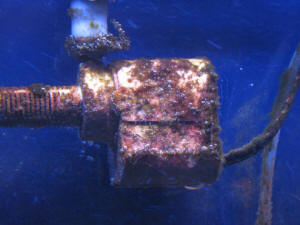 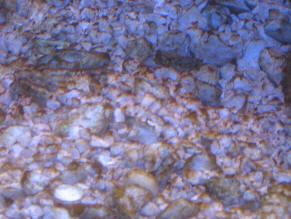 BGA? BGA?
|
Marine Tank Lighting and Algae ) 3/14/07 Hi
- <Hi!> I'm sure you've received this type of question
many times, but I'm still looking for a "definitive"
answer. I have a fish-only 46 gallon bow front tank. It's well
established and uses a built in wet-dry filter along with a 350 magnum
canister and Prizm protein skimmer. It has a bare bottom and rainbow
rock for decoration. <Rainbow rock as in the resin replicas or
actual sandstone (silica based) rocks?> I do cleaning, vacuuming,
filter changes and water changes every week. <If you are
too aggressive with your cleaning every week, it disrupts the
beneficial bacteria and balance of the tank. Avoid
sterilizing too thoroughly and don't change all the filter media
every week. It is not "well established" if it has to start
over every week.> The problem is I'm a fanatic about not having
algae, but I can't seem to prevent it. The type I get looks
brownish, collects on the rocks and tank, is very powdery and readily
brushes off. <These are diatoms. A silica based
unicellular algae. They are actually quite beautiful under a
microscope, but not so lovely all over the aquarium! Read here re
diatom control: http://www.wetwebmedia.com/diatomfaqs.htm >
Unfortunately it starts showing in just 3 days after a full cleaning
and rock bleaching. <Overcleaning is probably upsetting the balance
of your tank.> I use DI/RO water, no additives other than pH buffer,
I've tried various phosphate removers to no avail, all the
chemistry is good and the phosphates are low. <How
good? It is hard to advise without knowing pH, SG,
alkalinity, ammonia, nitrite, nitrate, etc. Phosphate is not
the problem with diatoms. Silicate is more relevant.>
I'm curious what I should do about lighting. I have four T-5,
36" 39w bulbs with two daylight and two actinic. I'm only
using two of the bulbs currently, one of each type. They are on
probably 14 hours a day. I've been told two things; shut the lights
completely off other than when I am home, the other was to step down to
a standard fluorescent light of less intensity than the T-5's. I
sort of feel like having the lights off most of the time is not a
normal environment for the fish, and giving up on an expensive fixture
and paying additional money for a even cheaper one doesn't feel
right either. <Agreed. Your lighting is fine. The fish do
need a natural light cycle to be comfortable and healthy. You could
back off to 12 hours, but 14 is ok. > I'm willing to do whatever
- your advice? <Consider allowing a more natural evolution in your
tank. Introduce some algae that you do like to compete for
nutrients. Add a more aggressive protein
skimmer. Cut back on feeding if you can. Do not
over-sterilize your tank. Adding some live rock or aragonite substrate
could help create a more natural balance. If you do not want
any type of algae or natural live rock in the main tank, a hidden
refugium may be the answer for you. http://www.wetwebmedia.com/refugium.htm Keep
reading'¦ Alex> Rob Buchanan
Brown Diatoms 2/21/07 Hi, <Hello> I believe
what I have on my front end of the tank and gravel to be
brown diatom algae. <Not uncommon.> I am not sure how
serious it really is. It hasn't covered the glass where I can't
see in, but when I look from an opposite side of the tank it is very
noticeable. The 6 snails I have in my tank have been munching on it,
yet I am not quite sure how to get rid of it. I was told that if I
scrub or wipe it off, it will just spread throughout the tank. <Will
do this anyways.> What should I do to remove it off the sand and
glass? <Remove as you would algae, siphon and wiping off.> Also
how can I avoid it in the future? I know that upgrading my
lighting will help, which I will in the future, and maybe a
refugium would work to? <Anything that controls
nutrients.> My tank is 36 gallons, 40 lbs of live
rock, 2.5 inch sand bed ,1 clown goby, 1 flame
angel. Bak Pak 2r Protein Skimmer. Established for 2 months.
<With this aged tank, these blooms are normal and usually fade with
proper maintenance.> <Chris>
Diatoms...more info needed 2/11/07
Hello, and thank you for all of your help with past questions. I have
always gone through the dreaded brown diatoms each time I have started
a new tank. It has always disappeared after a while, except in one of
my tanks. I can't seem to get rid of it. I wipe it off the plants
and rocks continuously. This is the only tank that is near a
sky light, though it is not direct. Because it is brown, I didn't
think light would be a source of the problem (?) Do you have any
suggestions? I need a little more info. What are the tanks chemistry
parameters? What source water...also search WWM re: diatoms/blue green
algae.> Thanks. <Adam J.>
Anglish, algae 1/15/07 aww sorry, I
know you are really busy and I hate to bother you, The brown is on my
rocks, glass, not real bad since I have the turbo snails , I have a
sump, have 1 power head in the tank, and one pvc pipe shooting water
also into the tank from pump in sump ,bio balls at the bottom and some
at top also, are these bio balls ever to be cleaned or rinsed? and yes
I was testing with strips, I have an expensive kit for testing but
haven't tried it yet I'm, probably scared to lol. <.....Holy
run on sentence, Batman! Ok, lets see if I can surmise this... The
brown you are seeing, still sounds like diatoms to me, not
Cyanobacteria. Bioballs do need to be cleaned, fairly often.. They
accumulate and highly contribute to nitrates in the tank, when they are
not regularly rinsed. To rinse them, rinse them thoroughly in tank
water before you throw it out after a water change. Do not fear test
kits, the test strips are MUCH more worrisome.> I have just bought a
light, I am very unaware of the lighting that I need but this one I
bought I don't know which one is the best to have, I had a coral
life 48" 6000k/ 50/50 actinic 03 made in
Germany , and another one that is blue ,now I have a power Glo 40 watt
high intensity, and still the blue one, I really need to know which one
is the best one to have? <...You really need to properly punctuate
your sentences here, pal... There's not enough time in the day...
As far as lighting goes, there is no "best to have", in
general. These specifics come from determining what species you intend
to keep. Corals and Anemones need intense lighting, quite possibly more
intense than you are providing here. The descriptions you give of these
lighting fixtures is very confusing. You should list the wattage of all
the bulbs, not just the bulb/fixture length. Have a read here: http://www.wetwebmedia.com/marcanopies.htm and http://www.wetwebmedia.com/marine/setup/lighting/index.htm
> the puffers are small right now 1 is 2" and the other one is
3" they are the porcupine puffers (brown and black and 1 tan
color). <These fishes will both outgrow your current aquarium. These
fishes can reach up to nearly 20 inches! See here for more information:
http://www.fishbase.org/Summary/SpeciesSummary.cfm?id=4659 .
Please don't fall to the all-too-common misconception that these
fishes will only grow to the size of, and fit to, the aquarium you keep
them in. This species needs a good amount of swimming room, as well as
extremely good filtration as they're such messy eaters. Likewise,
their dietary needs are very different from the other fish you
keep.> I am new to the salt water aquariums. I did put ChemiClean
for red slime in my tank as directed and left the stone in there, it
cleaned some, but not they way I expected it to, then done a 18 gallon
water change, but the snails are doing ok with cleaning the rocks off,
I think I need some more of them. <...Please, future correspondence
should be in proper grammatical form... You are mistaken about the
identification of the algae in your tank, IMO. This is not
Cyanobacteria, which ChemiClean treats for. Instead, this is standard
diatoms, which we all have to deal with to some extent. Your diatom
levels are likely accelerated by the high-waste producing fishes you
are keeping.> Also do you know what else I should add to my tank
that will keep the nitrates down, corals, hermits, clam? I like the
natural way if possible. I have 2 magnetic glass cleaners also they
work but can't get it to the gravel level to clean without
scratching the glass more, I usually use the sponge. <You need to
not worry as much about the small amounts of diatoms here, and let
things be. The way that you describe, leads me to believe this is a
fairly recently setup tank. If so, you are simply going through normal
algae successions. The key here for keeping nitrates down? Don't
overfeed, clean your bioballs regularly, and regular water changes, at
least weekly!> I do clean my tank on a regular basis, usually 2
times a week, I just clean the glass and blow the rocks lightly with a
turkey baster, check filter sometimes just rinse it off. <This is
not 'cleaning' your tank, as it is polishing it. You need to be
performing 10% water changes weekly as standard maintenance, especially
with the higher nitrate accumulation.> Thank You ICE <No
problems, mate. Please have a read over our query conventions here:
http://www.wetwebmedia.com/faqstips.htm and http://www.wetwebmedia.com/WWMAdminSubWebIndex/question_page.htm
-JustinN>
Better Anglish... and thanks 1/15/07 I
just want to say Thank You for all you do to help to try to help
everyone to maintain this beautiful natural life that we bring into our
homes. <Thank you for this.> I have never in my life had a fish
or a tank so, I am always trying to learn and try to maintain good
quality water as natural as possible. I wish though there was more
color in my tank, but I am scared to add new things as I don't
really know what I can add, as sometimes this also causes problems. My
favorite purchase was the flowering coral, the most awesome thing I
have ever seen. And Thank You again for all you do. ICE <There's
a saying that is often associated with marine fishkeeping.
"Nothing good in this hobby happens fast, only disaster."
Patience, knowledge, understanding are the keys here... Keep reading.
You'll get there, mate. -JustinN>
And finally re Algae... 1/15/07 ok, I tested
the water with a test kit( name: fastest master kit) <Ok, is a
quality test kit> here are the readings ammonia 0.0 nitrite0.2-2
lighter than color on the tester color <Yee-ikes! Step up those
water changes to 25%, and get on them until these nitrites are gone!
Nitrites and ammonia are deadly toxic to our aquatic charges.> ph
7.8-8.0 <Wide range here... No Nitrate test? Perhaps you need a
quick read through here: http://www.wetwebmedia.com/toxictk.htm and http://www.wetwebmedia.com/nitratesmar.htm Good luck!
-JustinN>
Diatoms on Glass 1/2/07 Hi There,
<Hi Carlos, Pufferpunk here.> First I'd like to congratulate
you on your excellent website, great unbiased info for a novice refer
like myself. <Thanks, we try!> Problem is that 3 months ago I
updated my standard tank lighting from 22W pc to 72W PC, in order to
keep corals. 3 days later bought a nice coral (hammer coral) and 5 days
later my 20 gallon tank has been overrun by green slime algae on the
glass. <Not algae--diatoms. Simply wipe off or get a
Mag-Float, for easy removal. I just leave it in the back
corner of my tank for daily glass cleaning. You can also add
snails to do some of the work but I still seem to be having to do most
of the removal myself.> <<Mmm, might be a BGA... RMF>> I
added a UV sterilizer suggested by my LFS which only turns on when the
lights do. <I have heard not to use a UVS on a reef
tank. It not only removes the bad guys, but also the good
guys, that make your tank alive, like your pods.> Last
week I modified my wet/dry filter and removed the bioballs (as
recommended in your other posts) and currently have some Purigen,
Phosguard, Matrix Carbon and de-nitrate in the filter. <I personally
don't use nitrate removers, as I have a refugium with Chaeto for
that. My nitrates are steady at 0.5 .> I have switched
from Red Sea salt to Seachem's Reef Salt and I'm now doing 20%
weekly water changes using tap water and Prime, aerating it over 24
hours. <Stop using tap water. That will cause the
majority of your algae issues! You must use RO or even
better, RODI filtered water for a reef tank or you will be battling
serious algae issues.> In a last ditch effort, I've reduced
lighting from 7 hours to 4 hours a day. <Your corals need a minimum
of 12 hours of light. Many (like your hammer), like
supplementation of meaty foods.> Water params are as follow: PH =
8.2 Salinity = 1.021 <Raise to 1.025-26> Ammonia = 0 Nitrite = 0
Nitrate = 7 Calcium = 400 <Alkalinity is important to test for
too. Also Magnesium.> Any help would be greatly
appreciated. <Make the suggested corrections & you will be much
happier with your reef. ~PP> Thanks, Carlos
Continued growth of a brownish colored algae on sand
surface 12/4/06 150 Gal. Tank, Reef, 80+ spices of soft
corals, several clams, 30+ Nassarius snails hermit crabs, varius small
fish (clowns, Diamond goby, 2 blue tangs, purple tang, Anthias etc.) 1
purple lobster, <Keep your eye on this... predaceous> Protein
skimmer. 2" sand base, <You may want to either increase or
decrease this depth. See WWM re> refugium growing Caulerpa, <And
switch out the Caulerpa for other genera...> Bag pre-filter, Calcium
reactor, Kalk reactor, CO2, R.O. replenished regularly with a liter
meter. 2 -36" blue actinics, 2- White compact flour., 2- 250 watt
Metal Halides Neptune control system, sterilizer, 2 PhosBan reactors (1
with PhosBan and 1 with charcoal) Tank established for 18-20 months
Calcium=460 (always above 440) Alkalinity= 9.3 Phosphate=0 (never have
shown any phosphates) Magnesium=1440 PH=8.38 (always fro 8.35-8.4)
temp=79.5 (always from 79-80.5) ORP=515 <Too high...>
nitrates=20-40 (I have always had trouble controlling these) <Try
other algae...> nitrates=0 Salinity=1.024 Halides are on 6 hrs a day
(12:00-6:00pm) <I'd extend this... to 9-10 hours per day>
Blue actinics are on 10 hrs a day (10:00-8:00pm) white compact
fluorescents are on 9 hrs a day (11:00-7:00pm) Moon lights on when all
others are off (8:00pm-10:am) Now that you know the particulars,
here's the problem: Ever since I added the
PhosBan reactors at the advice of the local fish guru I have had an
increasing amount of this brownish algae like the standard green glass
algae growing on the surface of the sand bed. <Likely mainly
diatoms> I have done several water changes and recently a major 75
gallon water change with a new type of salt (reef crystals) I used to
use ocean systems on a recent test I found freshly mixed salt water
produced some alarming phosphate results. By the end of each and every
day I have a bed of the ugly algae i vacuum the sand during every water
change. I felt these Nassarius snails and the sand sifting starfish
were controlling the sand well for the last year. Now they are not
keeping up. What do you all recommend, The local guy is telling me
it's time to replace all lamps, sounds kind of fishy to me. <...
if they're not "old", me too> Thank you for your time
in advance. I can send pictures if you would like... Rick McDonald
<Mmm... I'd favor some Ogo/Gracilaria, and/or Chaetomorpha in
your refugium, give the green the heave-ho... extend the photoperiod,
allow the calcium to drift down to 400 ppm or so... and this should do
it. Bob Fenner>
High temperatures 11/24/06 Dear Crew
<Hi Daniel! Tim answering your question today!> First can I say
that I love your website! It's a great resource and it
has already come in great use! Two things: 1)I'm having a bit of a
problem with temperature in my tank. I live in Australia and am heading
into summer. Recently temps have been getting up to 40C and my tank is
staying at a consistent 31C. I've read you advice about adding a
fan to cool the water, but this is where the problems begin. I have an
AquaOne 120 all-in-one setup (wish I'd never bought the thing but
stuck with it now). Since the lights (2 x 30 W actinics and 1 30 W
fluorescent) and filter are built into the top, it makes adding
equipment very difficult without significant drilling of plastic! Do
you know of any way I can modify this system to add a fan? Would adding
it to the filter box be sufficient? A chiller really isn't an
option as I've already forked out a packet and I don't know if
ice blocks will work over the long term either. <Have a look at
purpose-built aquarium fans that are often much smaller than standard
fans, and so may be more easy to place into your aquarium. Also,
although your fluorescent lamps will not produce a considerable amount
of heat, it may be helpful to have the lights on at night, late in the
evening or early in the morning, before the heat of day (though the
transition to this should be slow, to allow the livestock to gradually
adjust and avoid "jet lag"). Depending on your current set
up, you may also be able to reduce the amount of time that the lights
are actually on - this will also depend on your live stock, though I
would imagine that with regular fluorescent lighting there is not much
photosynthetic life in your aquarium. Finally, if the aquarium is in a
room with a lot of windows, consider covering the windows with curtains
or blinds to reduce the ambient temperature in the room as much as
possible.> 2) I have also had a pretty bad time with diatoms. My LFS
seems to think it could be due to the old lights that came with the
AquaOne setup (3 x 30W Atman Fluorescents which I have now changed to
the actinics mentioned above). Does this sound likely to you? It's
also worth noting that my protein skimmer has only just started working
as I added it about 3 months after the tank was started. <Check your
water parameters - presumably you have a problem with nitrates and/or
sulphates. Reduce these with large water changes (also be sure to check
your fresh water ANN levels!) and a continued proper maintenance
routine involving regular water changes. Your lights will only be
partly responsible for the problem. Other culprits may include
overfeeding and insufficient circulation. What kind of protein skimmer
are you running on your system? Best of luck resolving this
problem!> Any advice would be greatly appreciated! Dan Miller
Diatom Problem (or is it?) - 10/22/06 Hi Crew:
<<Hello Jim>> First a sincere thanks for all the great
information on your site. <<Is a collective effort>> I have
researched your site and found many helpful hints but I can't seem
to solve a problem. <<Oh?>> I will list my setup and
parameters first: -180 gallon reef tank -60 gallon sump -AquaC 240
skimmer -3x400 watt 14000k metal halides combined with 4x96 watt blue
actinic power compact (both run 12hrs/day) -RO/DI water and Instant
Ocean -Approximately 50 lbs. of base rock and 200 lbs. of live rock of
various types -Two-inch sand bed -Two Tunze and two Sea-Swirls for
powerheads as well as two Mag 9.5 pumps for return from the sump
-Precision Marine calcium reactor -Korallin Biodenitrator -Calcium
maintained between 430-450 -Nitrates and phosphates zero -Alkalinity
3.3 -KH 9.3 -pH 8.24-8.35 -Temp 77 -Salinity 36 <ppt> Livestock
includes three Yellow Tail Blue Damsels, one Yellow Tang, two Foxface
Lo's, one Blue Hippo Tang, three Clowns, two Firefish, two Gobies,
and one Cardinal. Also have approximately 150 snails (mostly
Astrea). My problem is the brown diatoms that won't seem
to go away. I started my tank 13 months ago and cured the
live rock in my tank before adding any fish. <<Ah, I too did this
with my current system (a bit more than three years ago)...in
retrospect, I feel curing live rock outside the display is the better
option. Curing the rock in the display is likely a
contributor to your diatom problem>> I started with the damsels
and slowly added the others. All fish are thriving but my
rock, sand, and glass are brown. I have taken multiple steps
to correct this after reading your site. Things are
definitely improved but not resolved. <<Resolving algae issues
can sometimes take a good deal of time>> I have corrected my
nitrate and phosphate problems, raised the salinity, tested for
silicates, <<Any silicate present is being utilized faster than
it can accumulate to the point where it can be read by hobbyist test
kits...much the same way green algae absorbs nitrate before it is
detected>> increased maintenance, changed the lighting duration
temporarily, and recently started a macro algae tank. Even
my Chaetomorpha alga is covered in brown diatoms. <<Are you
certain this is diatoms, and not a form of blue-green algae (Cyano)? I
know this is supposed to be a natural process of cycling in the tank
but I would think after a year this should be done; yet it continues.
<<Something continues to feed the bloom, whether diatom or
Cyanobacteria>> I barely have any coralline growth as it seems to
get smothered by the diatoms. I can't even keep
zooanthids as they also get choked. <<This last leads me to think
this is a brown Cyanobacteria...diatoms generally populate hard
surfaces (glass, substrate/rock)>> My last hope is to purchase
some live rock that is heavily covered with coralline algae and see if
it can overcome the diatoms. <<Don't waste your time/money;
it will only end up as you current rock. You need to find
and correct the issue first>> I wonder if my base rock is
leaching something in the water that I can't test for and it is
feeding the diatoms. <<Is this "base rock" of a
non-marine source? Maybe so if this is the case>> I
have spoken with a few successful aquarists in my area and they are
puzzled like myself. <<Did they come have a look-see of your
tank?>> I have tried adding more snails but they don't seem
interested and then many of them die (I suspect from starvation).
<<Yes>> My frustration level is very high and I probably
would have given up by now if it wasn't for the amount of money
already invested. Before spending more money changing out
the live rock I was hoping you might have suggestions. <<A
couple...check your RO/DI filtration unit, perhaps you need new
membranes/cartridges. Also, make sure the water storage
containers are "food grade" and were also not previously
"contaminated." I battled a turf algae infestation
for more than a year that was only cleared up by replacing a
second-hand "food-safe" storage container with a new
container>> Thanks for your time and dedication, Jim
<<Happy to assist. EricR>>
| New Tank, Algae Problems 9/13/06 Hi WWW
crew, <Hi> You have all been great in answering the questions
I have had in the process of starting up my tank.
<Nice> I have a 55 gal tank with 40lbs of
sand, 20lbs of live sand and 55 lbs of LR. I
have 5 astrea snails and 2 blue hermit crabs. The tank
has been running for about 6 weeks. My Nitrites are 0
and Ammonia is 0. My Nitrates have been between 25 and
50. <Sounds good, nitrate is a little higher than it should be
but a few water changes will get that under control.> I have
done weekly water changes with RO/DI water. Aqua C
Remora Pro and approx. 1500 gph for circulation.
<Good> I started getting brown algae on the substrate and LR
last Friday. I have been cleaning it off and doing water
changes to try and get rid of it. Today the tank is
completely covered in brown and there are small bubbles all over
the LR and also trapped in the substrate. I have
attached some photos. I have read the site regarding
algae but I can't keep up with this. The snails and
crabs seem to be ok but it looks horrible. I have
attached some photos. PH 8.2 and temp
78-80. I don't know what to do. Will the
LR recover. <Yes> The brown only grows where the lighting can
reach. Underneath the LR the sand is fine and LR is
fine. I did only start a consistent lighting schedule in
the beginning of last week. Could this be it?
<Partly> I would appreciate any help.
Thanks Paul <This is pretty common in new tanks, and usually
cycles out to some degree with time. However, you do
have a pretty good covering and might indicate more than just what
expected in a new tank. Have you tested for
phosphate? I'm guessing this is what is fueling the
algae bloom now that the lighting is on. Nitrate also
will fuel the algae bloom, so get this down and you will also see
some improvement.> <Chris> |
|
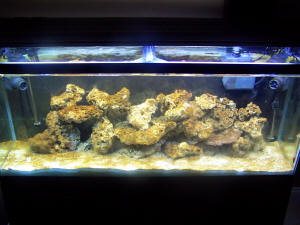 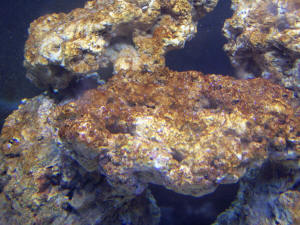
|
Is Diatoms, Not Detritus - 09/02/06 Hello there,
<<Hi!>> I have a question that I asked my local "fish
guy" and he answered the best he could but for some reason I have
a feeling that his advice isn't working. <<Ok>> I have
a 50 gal SW tank and everything has been awesome for about 6
months. Now, I am seeing huge amounts of algae
growth. I know that the coralline algae is a good thing so I
don't mess with that, and even some of the green algae can be
desirable, correct? <<Indeed...>> But, my problem is not
with those two things, I have an outbreak of this brown
(copper-colored) algae all over my sand and some of my glass!
<<Sounds like diatoms...do have a good read here: http://www.wetwebmedia.com/diatomfaqs.htm >> My fish
guy asked if anything had died in there and I told him no. <<Are
you filtering the your make-up/top-off water?>> His thought about
it was that it was detritus? <<Nope>> He gave me some pouch
to put in filter but that doesn't seem to be working
either. I just don't get it, I have good water quality
and nothing has ever died...I need help figuring out what it is so I
can do something about it. HELP! <<If you aren't
filtering your water, consider getting an RO/DI unit...if you are
filtering your water, check/replace the membranes/DI
cartridge. You can also try adding some bio-turbators
(Cerith snails work well) for your substrate and add some Poly-Filter
to your tank filter flow path>> Krysti <<Regards,
EricR>>
Algae Bloom and Copepods 9/1/06 Dear Crew,
<Paul> When many of my green star polyps died off, my 75-gallon
reef aquarium developed high nitrate and phosphate levels that
contributed to an algae bloom. <Happens> I believe
that the overhanging polyps and mushroom corals on top of the live
rocks had shaded the polyps on the sides of the rocks. <Could
have> After halving the fish population to nine small fish, the
water chemistry has just returned to normal. I expect my
skimmer and my 29-gallon refugium with Chaetomorpha and
reverse-daylight photosynthesis to maintain the water quality.
Unfortunately, my 4-inch deep aragonite sand bed is discolored with
micro-algae and diatom growth and I am considering siphon-cleaning its
surface. Will maintaining high water quality cause the
micro-algae and diatoms to disappear? <Over time... possibly> Are
there any detritivores, such as copepods, that can clean up the
micro-algae on the surface of an aragonite sand bed? <All sorts>
It has been my goal to introduce copepods into my reef aquarium for
possible Mandarin husbandry but I would like to know if I should
siphon-clean the sand surface first. <Will help... along with other
in-fauna, possibly the addition of other organisms that scour the
surface (e.g. some Sea Cucumbers), and turn the sand/gravel... see
here: http://www.wetwebmedia.com/marsiftfaqs.htm> Thanks very
much, Paul. <Welcome. Bob Fenner>
Diatoms 3/24/06 Hello I have a 55 gallon
saltwater tank that has been up and running for a year in December.
Everything was going great until the diatom algae started.
Shouldn't my tank be cycled by now? <Yes> I'm pretty sure
that's what it is. I have to clean the glass everyday but my sand
is the worst. It's turning brown all over the top and I have to
stir the sand like 2-3 times a day. It's getting worse because
it's going from brown to like a real dark purple and it's
almost hairy. I've read on how to get rid of it and nothing seems
to be working. I have and R/O unit with the silicate remover also have
a Protein Skimmer, 4 power heads positioned in different areas. Light
is on timer and runs for 9 hours everyday. I have so much movement in
the tank that my corals have a hard time staying put. I know I
don't over feed. I do water changes every 2 weeks usually about 10
gallons. I use Instant Ocean sea salt and the bag says it's free of
nitrates & Phosphates so that should be ok. I'm at my wits end
and don't know what to do. Everyone in the tank seems to
be fine. Sorry for the long letter but please help. Any help would be
much appreciated. Here's my list. Set
up is a 55 gallon tank set up in January 2005. 75 pounds of
Fiji Live Rock, 60LBS of Fiji Pink Aragonite Live Sand.
Filtration - Eheim Professional II Canister filter up to 92
gallons. Protein Skimmer - Aqua C Remora with Mag Drive
Power heads - 2-600, 2-1200 Maxi Jet Heating
System - Hydor Eth 300 External Thermal heater Kent Marine
Maxxima 35 Hi-S R/O / Deionizer 4 Stage Reverse Osmosis Unit.
Current USA Outer Orbit Fixture -- 48' 1x150W 10K
HQI-MH 1/ 2x130W Dual Actinic & 6 Lunar Lights
Inhabitants -- 1. Yellow Tang 1.
True & 1 False Percula 1. Dottyback Fridmani -- Mean
Little SOB 1. Scooter Blenny 1. Branch Coral?
1. Torch Coral -- (Brown) Misc. Hermit Crabs
Misc. Snails <Mmm, you're doing most everything
right... but there is more you could do. For one, your system is at a
"plateau" in its age/development and could stand with a bit
of "re-centering" with the addition of some new live rock...
If you have room, a desire to reduce maintenance period, I encourage
you to consider adding a refugium... RDP, macroalgae, perhaps a DSB
there. Lastly, there are some simple tricks (e.g. the periodic
over-dosing of Kalkwasser) that you can avail yourself of to delimit
nutrient availability... Bob Fenner>
|
|
New Print and
eBook on Amazon
Marine Aquarium Algae Control
by Robert (Bob) Fenner
|
|
|


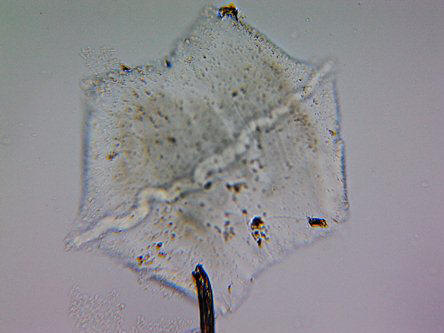 Diatom
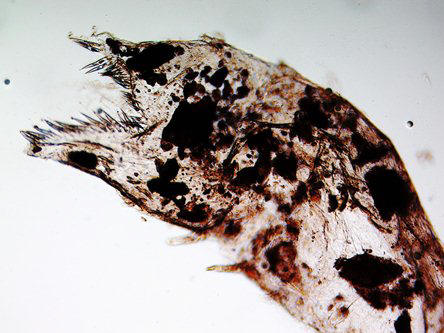 Rotifer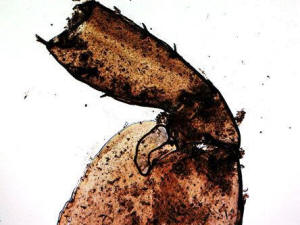
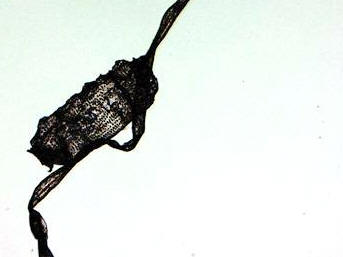 Flukes