|
|
| Home | Marine Aquariums |
Freshwater Aquariums |
Planted Aquariums |
Brackish Systems |
Ponds,
lakes & fountains |
Turtles & Amphibians |
Aquatic Business |
Aquatic Science |
Ask the WWM Crew a Question |
| Please visit our Sponsors | ||||
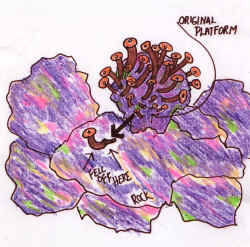
Neon Candy Cane Frag Mounting a Caulastrea Frag 9/24/08 Hello, <hi> I have a 24 gal Aquapod, been up and running for 4 months everything is going great with the tank. Last week I bought a neon candy cane frag. My question is on how to get the coral onto the live rock. I read numerous entries and I understand about the super glue attachment way. But how do I get the candy cane off of the piece of material that it is attached to when you buy it from the LFS? Do you cut it off of that piece (looks like an oversized golf tee) the coral is attached to? I am getting how to put them on the LR but I am not clear on how to transfer it. Thanks for any help! <Aaron you have a few options. Easiest would be to just jam that frag plug, (the golf tee looking thing) into a crack in the rocks and either epoxy it with something like Aquamend that you can get at your local hardware store, or super glue gel. Your goal is just to hold it secure so the various tank critters in your tank don't knock it loose. Over time coralline algae will cover the plug and you won't see it anymore. Your second option is to remove it from the plug by force, either by cutting it or breaking it at the base near the plug and doing the same gluing process on the rocks. I personally prefer the first method> Aaron<Regards, Jessy> Propagation-the hard way 12/27/06 Hi Crew, <Greeting! Mich here.> With all of us writing in our problems, the casual observer may get the idea that this hobby is just a pain. <Hehehehehe! But we all know better!> But there is lots to enjoy and there are many surprises. <This is true, even more true when the surprises are good!> I did not intend to split my candy cane which has two branches. <Hee! Intent and action are not always equivalent.> One branch has one very large polyp and a second branch that used to be one but now is 3 distinct polyps <polyps>. <Growth is good.> I have a glass cover on my tank, the kind that has a plastic hinge in the middle. I removed the hinge and have two glass pieces with a half inch gap between them. Somehow I managed to drop one glass into the tank and it hit the candy cane and I now have two candy canes, one with 3 polyps and no base and the other with a base and one polyp. <Oops, accidental fragging.> I just stuck the branch into a small hole in my rock and all seems well. <Should be, hopefully.> I have a mushroom that I bought about 3 months ago. It is on a two inch rock covered with purple coralline algae. I noticed a small lump at one side of the rock and now it is a nice zoanthid polyp with a peach colored mouth. <A good surprise! Very nice.> I just discovered a feather duster under the mushroom. It open up to about the size of a shirt button and the mushroom lift up as if to give it some breathing room. The feathers start off as a grey/blue color and at the tips they are yellow. The feathers look like they are v shaped and it looks as if there is a black barb at the end of each yellow end. <It sounds quite beautiful!> I look around quite often and was surprised that I had not noticed it before. <I think you could almost see something new everyday if you are observant enough. It is an awe inspiring hobby! Thank you for sharing some of your delights. It is always nice to hear!> Happy holidays. <Wishing you the best of the season! -Mich> Re: Candy Cane...the polyp stands alone. 1/3/07 Hi Crew, <Hi there! Mich with you again.> I wrote in about a week ago about an accident with my candy cane. I have a glass cover which fell into the tank and cracked off one branch with 3 polyps. At that time I took the branch and put it into a small hole in a rock. What remained on the original piece was two branches, one with nothing alive on it and the other a fairly large polyp. There is hair algae on this piece so from time to time I take a brush to it. Well, this time while I was brushing, the remaining polyp came off just at the point where the new growth attaches to the skeleton. I will explain how this polyp looks. It has a brown ring with a teal inside. The brown part (which is smooth) goes down the branch about an inch till the point where there is a hard rough skeleton. I am not sure how much of the brown part is soft since I try not to touch it. In any case the whole brown part came off the branch. I put it in the sand and last night after the lights went out the tentacles did come out. Is there anything else I should do? <Hmm, Not such a good situation. The fact that the tentacles are still expanding is a good sign. Though it is possible that this polyp could survive, it is does not have a favorable prognosis. They best you can do at this point is try to feed it and keep it clear of debris. Good luck. -Mich> Favites Propagation 4/21/06 Hello Anthony and Crew, Anthony, <Antoine's no longer with us... but still on the planet. Try him over at Marinedepot.com or Readingtrees> hopefully you will be able to answer this one as this inquiry is directed directly at one of the articles that you wrote regarding LPS propagation. In the article you mentioned that you keep your Acanthastrea sp. as free polyps on oolitic sand, and that you cut them every two weeks or so. I was wondering if the same could be done to Favites pentagona? <Yes, can be, though IMO/E is better to have a few polyps per fragged colony (easier to cut, survivability higher...)> The same method would be used, just slicing the polyps in half and letting them regenerate on the sand bed, in a protected area so they do not get flipped over by other animals in the system. I understand that a daily feeding of meaty foods of marine origin via target feeding is best for these organisms, is it possible to feed these so-called "halved" polyps? If so is there any special method to be employed when feeding the halved polyps? Thank you very much, Sheen <Again, most Faviids are better "spliced and diced" as multiple corallites. Bob Fenner> Disintegrating Candycane polyp 10/13/05 Hi All, I've had my 34 polyp candycane now for approx. 1 1/2 years. Actually, polyp count was 24 when it was purchased and has since been splitting and looking really good. Within the last two weeks, I've noticed the outer edges on two polyps lose its fullness but not quite emaciated. Then: 1) the mouths stayed open, 2) the center green flesh on one pulled away from the mouth causing a gaping hole and brown mesenterial filaments are showing. The other polyp's brown outer flesh in one location has started to drip, taking with it two spines! It just hangs from the polyp. I've checked the FAQ section and was unable to come up with an example of my problem. I would appreciate it if you could help me figure out what's going on with my beautiful candycane before whatever it is affects the whole head. <Congrats on your success with this coral! What you are seeing has been described by other aquarists and seems to be a form of reproduction. Eventually, the "dripping" tissue will fall free from the parent polyp, and if they find (or are placed on) a suitable substrate, they will survive and grow.> Water parameters: SG 1.026, pH 8.1 (can't get it higher?), dKH 10.9, Alk. 3.66, CA 395 Nitrate 10, Nitrite 0, Amm 0, phos. 0. I do a 12 to 15 gal water change every week on my 55 gal. Thanks for your help. Lynn <Keep up the good work! Best Regards. AdamC.> Disintegrating Candycane polyps part 2 10/16/05 Hi Adam C, Thanks for the speedy reply and news that my candycane is reproducing. How is that different from each polyp splitting itself in half to form new polyps other than maybe dripping forms new individual colonies? <I don't know, and I don't think anyone else does. Some suspect that it is stress related.> Also, how about the polyp that developed a gapping hole around its mouth and one can see the mesenterial filaments inside? I can see a couple of spines inside the hole. Has this polyp had it? If so, should I cut that particular stalk away? Thanks again for your help. Lynn <It is hard to guess if this is part of the same process or not. I would keep an eye on it. As long as it does not develop signs of any kind of infection (brown or white jelly like material), I would not worry about removing it. Best Regards. AdamC.>
Closed Brain Bubble- 5/28/03 Thanks to Anthony, the "doughnut surgery" on my overgrown toadstools was a success, the patients are fine and children were born. [trimming the perimeter of Alcyoniids to control growth] <excellent to hear, my friend! If you took any pictures, please share them with us> My closed brain coral has done well for two years with little growth, but it seems healthy with the green pockets brightly colored glowing under the blue actinic. Lately, I see two bubbles growing along its bottom edges, one is over an inch, the other about 1/2 inch. They are somewhat transparent and have a green spot on them. Should I be concerned or be doing anything? <hard to say... could be a couple things... leaning towards bad: a change in lighting (usually an increase from cleaned bulbs/lenses or new lamps) can cause stress induced polyp bailout symptomatically similar to what you see. In other cases, it is caused by aggression from an aggressive neighbor nearby or touching> There are two large polyp colonies on either side of the brain. Perhaps I should remove some of them. <Hello! neighbor> I have too many polyps in my system but haven't come up with a method to remove them other than pulling them off the rock one at a time with tweezers. Any suggestions? <yep... diagonal pliers that bite the rock at their base and skin them off the substrate with a slight sliver of rock underneath. Much faster and less damaging (fear of the polyps exuding palytoxin that harms the coral or you (!) over time from you tugging on their heads with tweezers <G>> I do have a green globe urchin which stays busy eating coralline algae, mostly off the back of the tank where it is thick. He has never been seen near the brain or other SPS corals. <no worries... not suspected> My water chemistry remains perfect with nitrates usually un-measurable and ORP between 300 and 350. Ca at 350 to 400.Temp.is chiller controlled at 78F. Even with R/O, D/I, ozone, macro algae refugium, less than 1/2 the recommended bio load, regular bulb replacement, and weekly 10% water changes I still have more than my share of red and brown algae. I conclude that this is something that must be lived with. Do some people really live without it? <possible... all about nutrient control. No nitrates does not mean no nutrients. Just none that you have a test kit for ;) The skimmer is the key. That and strong water flow (towards 20X)> I'm off to Cozumel for a family diving trip with a new digital camera and case. Does Bob use the "white balance" settings? <not sure... I thought he mostly used Tequila to get the best shots> Howard in Wisconsin <Antoine in space> |
|

|
Features: |
|
| Featured Sponsors: |