 |
|
| Home | Marine Aquariums |
Freshwater Aquariums |
Planted Aquariums |
Brackish Systems |
Ponds,
lakes & fountains |
Turtles & Amphibians |
Aquatic Business |
Aquatic Science |
Ask the WWM Crew a Question |
| Please visit our Sponsors | ||||
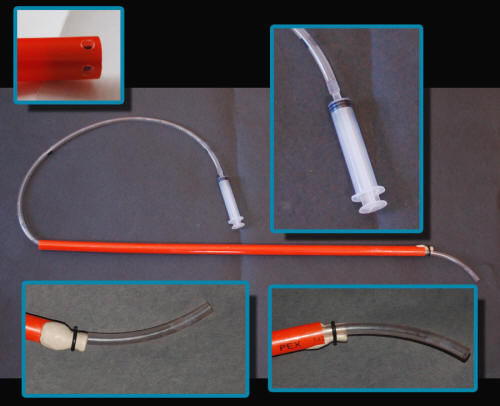
Force feeding fish... not often a good idea 8/21/08 Hi crew, <Mohamed> I am looking for detail information on how to force feed fish. I have found some information but none with detail. e.g. what food items to mix?, <Can be a blend... something "loose" to push...> can a tiny tube be used to insert the food?, <Yes... often a plastic catheter (like used in the medical field)> how little food can be inserted from the mouth?, etc <Don't know if I follow you here> I do know the prof Christine Williams <http://www.sareefkeeping.com/forum/forumdisplay.php?f=220> <Don't see this here> has demonstrated in conferences on how to force but I could not find any documentation. <Have never seen such> I personally feel that over the years of keeping fish there are times when fish stop eating for a day or 2. <Not a big deal... in fact, many fish/groups can/do go w/o feeding for weeks w/o trouble... MUCH better to not handle in almost all cases> When a quarantine tank is used for ill fish they become so weak at time that they require help by force feeding them. <Mmm, no, definitely NOT. Again, almost always better to summarily place these specimens in better settings> I think that once reefs know how its done, hundreds of fish lives can be saved if done correctly. <We disagree here. It is rare that an animal will not accept food once it is stabilized, put into a setting that is propitious. Capturing, holding, forcing food into the gullet of non-feeding animals is vastly more dangerous, damaging> Can the crew please point us in the direction of obtaining the required information or write an article/book on this topic? thanks Mohamed <Jay Hemdal had a piece run years back on force-feeding Platax pinnatus... There have been other popular hobbyist articles. By and large I don't think this is a warranted practice. Bob Fenner> New Life Spectrum Sinking Pellets Question 3/31/08 Crew, <Hello> Great website. Thanks for sharing your collected wisdom. <Thanks> Based on my numerous recommendations from the crew, I broke down and purchased Spectrum 1mm Sinking Pellets. My question is simple, how long does it take before fish start accepting the pellets as food. My 90 gallon tank has a mated pair of Perculas, a purple tang, a six line wrasse, and a lawnmower blenny. All are of medium size. I started feeding them the sinking pellets and stopped feeding them Prime Reef flakes cold turkey. Only the tang shows interest in the food and the others don't even seem to recognize the pellets as food. <Could take a little while, maybe a little garlic or other appetite stimulant to get them in the feeding mood.> Should I mix the pellets and flakes and gradually wean the fish off the flakes or stay I continue only feeding the pellets? <Mixing the two is worth a shot.> It has only been a couple of days but do not want to unnecessarily stress the fish out so I would like some guidance from any experienced user of the pellets. <A couple of days is no big deal, mixing the two is a good place to start.> Thank you. <Welcome> <Chris> Turn off Gen-X pumps for Feeding? 12/22/07 Hi Bob - <Hello, Scott V. here.> We emailed a while back and you and your crew rule the world! <Just a small part of it!> That being said: I have a 100 gallon reef tank with a main pump (currently two Gen-X PCX-40 pumps) pushing my main water from the sump about 12 feet up and into the display tank. There are also several pumps circulating water within the display tank. I rigged up a timer system that turns off my main pump for feeding. I can set it for 15, 30, 45, 60, or 75 minutes. Historically I had been turning off the main pump for 15 minutes when feeding fish food, and 30 minutes when feeding plankton. But recently my Sequence 3.5-amp main pump recently froze, after only about 3 years of use. (Yes I know that pump was way too much for this system even moving water 12 feet). So I replaced it with the two Gen-X pumps. Although I don't really know why, I suspect that the Sequence froze because of turning it on and off two to three times per day. <Doesn't help.> What do you think? Is it a bad idea to turn off my two Gen-X PCX-40 pumps for feeding? <Start up is the hardest thing on an electric motor in service. But, a few times a day is not terribly significant. It will shorten the life of the pump, but not significantly.> Thanks, Carl Beels <Welcome, Scott V.> Re: Turn off Gen-X pumps? 12/23/07 Hi Scott, <Hi again Carl> Thanks for your prompt reply...I spoke with someone who knows pumps of all kinds and he said that most pumps actually do not run all the time, and are designed to turn off and on automatically depending on various system conditions. <Most pumps do not run continuously, but start up is still the hardest phase on these pumps.> I think the pump froze because of a seal leak or possibly because it may have sucked too much air over time. <Likely.> OK so now I have two questions: 1. Do you typically turn off your main pumps when you feed your reefs? <Some do, I personally don't. Fish get fed by dropper, as they eat more is dropped in, nothing goes to waste. As far as feeding inverts, it will be spread about your system anyhow.> 2. Do you use a back-check valve? This is apparently the norm in many non-aquarium pump applications to prevent the pump from ever running dry. The back-check valve would go next to the pump on the suction side. Seems like that might have saved my pump. <This is commonly used in suction lift applications, rarely utilized in aquarium use. In this case I would not use one. Just too much restriction. Does you pump run dry on startup? It shouldn't in your case. Otherwise no problem restarting a pump a few times a day. Good luck, Scott V.>
Fairy wrasse sys. and Cyclop-eeze fdg. 4/14/07 Hello, First I want to once again thank you for all of your help. My tank and I owe you a great deal of gratitude. If you ever find yourself in south Florida, I owe you a beer. <Oooh, now you've got my attention> Today I stopped by a local pet store. I saw a little fish I thought I could offer a decent home, left to research him on your web site, and went back to purchase him. He looked so happy in my tank, for about an hour. I have a one inch space next to my filter that isn't covered. <Yikes!> Alas, the little guy found it. I haven't yet ruled out suicide, though no one in my tank is talking. Funeral processions will be held in my bathroom in a few minutes, after I cover up the escape hatch. <Am singing a dirge... in preparation for that beer at the wake later> On to my question. The pet store recommended freeze-dried Cyclop-eeze to feed my corals (soft corals only, zoanthids, mushrooms, various other polyps). <Mmm, about the right size...> Up until now I had been using Zooplex. <Another good product IMO/E> I brought home the Cyclop-eeze and it doesn't have directions. I searched their web site, to no avail. Any info on how I use the stuff. I'm worried about overdoing it and polluting my tank. Sincerely, Chris V <I'd alternate the two products listed... mix up a smidgen/cut-off piece of the Cyclops, defrost, dissociate the crustaceans in a bit of water... turkey baster blow toward the intended colonies... While suspending a good deal of water circulation if this is too brisk. Bob Fenner> Blue cheeked goby needs bulking up Dear Bob, <Michael> I have written you before, and thanks for the response. I have a new question. I was at a pet store looking at a blue cheeked goby, aka yellow headed sleeper goby. When the clerk found out that I had interest in the fish, she pleaded with me to take it, she even gave it to me for free. <!> Apparently they had requested a different fish, but were given this one as a replacement, and they were not prepared to keep this fish. Since it was such a fussy eater and they did not have the proper system, and a tank for itself, they couldn't feed it properly, and it was slowly starving. I took it and promised I would try my best to recuperate this poor fish. I have live sand which it is sifting, and I read a suggestion of mixing food (Mysis, brine, or chopped shrimps) into the sand, which I have been trying. I am also, as soon as time or whether permits (at the moment I am in the middle of the nor'easter in the northeast US, going to get live rock for my tank. <Good> Do you have any other suggestions, tips, and/or tricks I can use to get this fish healthy again? Thanks, Mike <Do soak whatever small, meaty foods (whole or chopped) in Selcon or such for a good ten, fifteen minutes and when you have time, use a plastic "turkey baster" to carefully squirt some of this (mixed in water) toward the area where this fish is sifting. Bob Fenner> Gourmet Foods For Butterflies... 6-28-05 Hi, <Hey there! Scott F. with you today!> I've always heard people first feeding Butterflies or other fish with clams or mussels and then slowly change its diet to frozen food by attaching it to an empty shell. <I've never tried it, but it can be done, I guess.> My question is- how do you attach the food to the shell?? Won't, for example, frozen brine shrimp fall apart to individual little shrimp and float away from the shell?? <Quite possibly.> How do I keep the frozen in the shell?? By the way, when I go buy some clams or mussel in the market later, is there anything I should be aware of? Or is any clams or mussel is fine?? <I think that you might be confusing the technique/concept a bit. The practice of using a fresh clam in the shell to help stimulate a finicky Butterfly into eating has been used for some time with varying degrees of success. I've tried it with Manila Clams, which you can get at a fish market or grocery store. You simply split the clam and place it in the bottom of the tank or on a rock...> Also, before putting it in the tank, do I need to do any preparation with the clam or mussel?? Thanks!! <I simply rinse 'em off before using...Best of luck! Regards, Scott F.> How to feed everyone when you have one "pig fish"? 8/30/05 Hello, crew! <Good morning, you have Leslie here this morning.> Sorry I've been bugging you guys a lot lately, thanks for all of the wonderful advice. <No worries and you are most welcome.> The latest conundrum we are encountering is that we seem to have fish that eat at different speeds. In the 120 gal FOWLR right now are three small damsels, a medium-sized longnose B/F, a 3-4" ornate ("Christmas") wrasse, and a cute-as-can-be 1" dwarf fuzzy lion. I've been feeding mostly Mysis shrimp, as well as San Francisco Bay brand omnivore and carnivore formula frozen foods (usually a little of each). When the food hits the water, the B/F is all over it, eating most of it. The damsels jump right into the frenzy as well. By the time the wrasse and the lion "wake up" and start noticing the food, it's all gone. Add more food, same deal. I swear I've put 20 lbs of Mysis in there today (well, ok, maybe just most of a cube) and that darned butterfly eats it all! The wrasse and lion aren't getting much, if anything. This is obviously not sustainable! I tried feeding the lion with a feeding stick today but it's so much bigger than he is, he runs away from it. Certainly this is not a "new" or "unique" problem, but I read all of the "feeding" FAQs and didn't find anything on this... any help would be appreciated. Many thanks, Dan <I would keep trying with the feeding stick'¦..your little Lionfish may just need some time to get used to it. As for the others try target feeding with a Turkey baster. Get your self a couple of clear turkey basters. You want a clear rather than opaque baster because they will not really see it, just the food inside it. Defrost your food. Suck some up into the turkey baster. Feed the fast eaters on one side of the tank somewhere away from the slow fish. While they are in a feeding frenzy, use the turkey baster to direct the food, releasing it as close to your slow eaters as they will allow. It will not take them long to figure out where the food comes from. My seahorses will eat right out of the tip of the baster. Hope this helps, Leslie> Trick to dicing Squid/meaty fish foods 3/28/04 Hello Crew! <whassup> Thanks again for a wonderful site full of great information! I am wondering if the crew knows of a trick or technique to help me out. Per your recommendations, I have added fresh squid to the feeding routine for my minireef. I rotate through Formula one, Brine shrimp, Mysis shrimp (both soaked in Vita-chem), and Bio-Blend. <please do reconsider using brine shrimp even soaked... it really is a hollow food (very poor nutritionally). Use most any other ocean meats instead: Pacifica plankton, diced krill, fish roe, etc... or Cyclops-eeze (frozen or freeze-dried)> OK, what is the best way to cut/grind the rubbery squid up so it is in small enough pieces for my fish (perculas, damsel, gobies) to eat without me having to do a fishy Heimlich on?? It currently takes me 10 minutes with a razor blade trying to cut it up and it is frustrating! ARRRRGGGGHHHHHHH!!!!! There HAS to be a better way! <yes... a very simple/easy trick: cut ocean meats while frozen or nearly so (food processor or cutting by hand with knife). A breeze> Thanks and guys rule! <rock on my salty brother. Anthony> Serving A Butterfly Buffet (A WWM Reader Shares His Technique) Hi gang: <Hi there! Scott F. with you today!> I'm a big fan of copper banded butterflies. . . but lost one several years ago when first setting up my system due to its 'shy' nature at feeding time. <An all to common occurrence, unfortunately> Essentially, it got out-competed for food by pretty much everything in my tank. A few months back I acquired another one. . . determined to find a way to see this one through. While he was in quarantine, I bought one of those plastic 'worm feeder' cones with a suction cup mount commonly used to feed blackworms to discus. Since the as-acquired-from LFS form has tiny slits allowing the tips of the worms to poke through (allowing any fish to feed and giving no particular advantage to a butterfly) I cut/opened a small 'vertical' slot big enough for him to get his 'nose' through just above the bottom of the cone. . . and no more than 1/4" high. By feeding him only in this feeding station, he was trained to it by the time I put him into my community tank. . . and now I can feed him worms, Mysis. . . whatever. . . in a way that doesn't allow the other fish to muscle him away from his dinner plate. Over time, he's even become (constructively) territorial about his feeding rights with respect to this setup. A final do-it-yourself note: If your tank (like my acrylic 60 gal.) has wide internal top-braces that ring the top and preclude suction-cupping the ring to the tank's side walls. . .then cement the top edge of the ring-the-cone-gets-suspended-from to the underside of the acrylic lip/top of the tank (allowing room to insert/extract the feeding cone for cleaning) along the edge of the top brace. With the hood in place, the whole rig is barely visible. Chuck <Well, Chuck, on behalf of WWM readers everywhere, I thank you for sharing your innovative solution! I'm sure that other Butterfly enthusiasts will benefit from this tip! Your unselfish sharing is what this site is all about! Regards, Scott F.> Feeding? Hi Bob, <Charles> I wish to know what food is suitable for marine fish with small mouths? Very hard to rear Artemia and I tried blood worm and they still refuse to eat. However some eat lettuce while most butterflies don't eat. Help. Thanks Charles <Foods for small butterflyfishes? Or marine fishes in general perhaps. These can be more/less species/situation specific. Having a goodly amount of healthy live rock present, a deep/er live sand bed might be of most help here, though there are cultures (put the names Frank Hoff, Indo-Pacific Sea Farm, Inland Aquatics in your search tools) that are useful. Are you intending to culture (breed, rear) a particular species or family of marine fishes? Bob Fenner> Frozen Food Preparation 2/11/03 WW Crew, <Howdy partner> Thanks for all the support/advice you give us wanna-be conscientious aquarists. <our great pleasure, and in the same boat as you <G>> I would appreciate an explanation of how you strain, or otherwise, prepare commercial frozen foods before feeding. I understand that the "pack juices" should not be added to the aquarium but am unsure of a good technique to remove same. Respectfully, Barry <good question, my friend. The pack juice from thawed frozen foods allowed into the aquarium is a significant source of nutrients and potential pollution. Although usable and nutritive to sponges, fanworms and other filter feeders... most aquariums have more than enough dissolved organics already to feed such creatures. This juice from daily or several times weekly feedings is an even bigger cause of nuisance alga than trace contaminants in source water IMO. For whole prey foods (krill, plankton, mysids, etc) simply thaw the frozen portion of meat in cold water (never warm water aquarium or tap as this denatures food value... no room temperature either for the same reason). After it is thawed sufficiently, simply strain the meat through an aquarium net, bit of cheese cloth or one of those handy little tea strainers. You can even squeeze a little of the juice out. I've seen Japanese's aquarists that feed frozen food heavily actually take it a step further and aerate their portion of food in cold water for more than an hour to strip proteins very efficiently... this is only necessary with extremely heavy feedings though. Gelatin based foods cannot be treated this way... of course, gelatin based foods are also catch-22 and arguably not the best fare either. Best regards, Anthony> Is it ok to feed marine fish with bloodworms (Hikari brand) ? Thank you, Luke <Yes, do "mix them in" with other foods at first... so your livestock gains familiarity. Bob Fenner> Feeding Frozen Food hi!! <HI!> Is it okay to feed frozen foods to my tang, clownfish and damsel or do I have to defrost it? Thanks <Either way will work, it is best to defrost it in some tank water and then toss the water before feeding. The packing juices can affect your water quality. I will admit that I am guilty of running through the house on my way out the door throwing frozen cubes in all my tanks. -Gage> Feeding Techniques For A Finicky Fish Hi Bob, <Actually, Scott F. in today!> I have your book "The Conscientious Marine Aquarist". Great book! <Isn't it? A real "keeper", IMO!> Anyway, I wanted to tell you about my new Majestic angelfish. I bought him a couple of weeks ago....before I saw the dismal writings in your book about their failure to eat and thrive in captivity. <I'm sure that Bob will agree that many CAN thrive in captivity (records of 20 years or more exist!), but source and collection techniques can play a large role in success...> Anyway, when I got him he was fat and healthy looking, but I could not get this shy fish to eat anything. After spending $179 before tax at my local fish store for this 5 inch fish, I was kind of upset as he did not eat for the first 4 or 5 days. I decided that I was determined to get him to eat. He cost too much money to let die! He would not touch flake food as he is so slow that the smaller fish in the tank would gobble it up before he even came out from the rocks to look at it. Live brine shrimp was another disaster as he is so slow that he only would catch maybe one or two before the other fish gobbled them all up or they got sucked up by the filter. I knew there must be something that he would eat...the frozen krill would float to the top of the tank and he didn't even know it was food. Well, I read that they like to eat a lot of sponges and algae grazing on the rocks in the wild. I finally got him to eat by taking pieces of seaweed sheets and pieces of frozen angel preparation made from sponges and krill (looks pink like sponges in the wild?) and placed them on a small rock with a rubber band. The other little fish in the tank took to it right away and when he saw them he joined in. These foods last on my 5 inch rock for an hour or two which is long enough for this slow grazing fish to eat. <Excellent technique for feeding this great food source...Thanks for sharing the idea..> I also got a brine shrimp feeder from Brine Shrimp Direct to feed him with great success. It is a little mesh cage type thing that you put the live adult brine shrimp into. It keeps them in the little cage until the fish peck at them and suck them through the mesh....Keeps them together in an area away from the filters where a slow grazing fish like a Majestic can feed over an hour or longer. <Another good idea...> Maybe you can suggest some of these ideas in your next article or book that may help others keep these beautiful fish alive. <Thanks again for sharing these techniques with your fellow hobbyists! That's what this site is all about!> Sincerely, Lesley Sears in Houston <Take care, Lesley! Regards, Scott F.> "Weaning" A Fish? Hi <Hello there! Scott F. with you again!> Thank you for returning my email. <Your welcome!> I am confused when you say "wean". How does one "wean" a fish? When I wean dogs onto a different food, I simply mix the two and than slowly wean off the first. With a fish, Do you simply stop the live and give frozen, until he eats. <Yep...I guess "wean" is a bad choice of words here, but you get the general concept. Basically, you are trying to get the fish to eat prepared foods by tempting it with a variety of items> Or do you alternate from live to frozen, intermittently. <You can...it's all up to you- and to the fish!> I have noticed that if I feed live for a day or so, the third day he will eat frozen ( I am assuming he thinks it is live, at first). But after a few nibbles he realizes it is different, and does not finish. <Well, you can try with frozen food of the same variety that you are feeding live (i.e.; Mysis or brine shrimp...)> Another question. I told you originally that I had two new cardinals in a QT. One has since died, not sure why, I only had him for a few days. It is a 10 gal. tank, water levels are good. I did put in 1 1/2 tsp. of CopperSafe. I am wondering, if from now on, I should not put in CopperSafe. Why try to fix something that is not broken. In other words, since they do not appear sickly when I purchased them, maybe the CopperSafe is stressing them out unnecessarily. <Bingo! I am a huge fan of quarantine, and a big fan of copper use. However, I do not recommend copper for "prophylactic" purposes. In fact, many fish cannot tolerate copper as a treatment, either. I agree with your conclusion- "If it ain't broke, don't fix it!"> I have only natural light on the tank. Is this sufficient? <For a quarantine tank, ambient room lighting is fine...It gives shy fishes a chance to be relaxed and comfortable...> I have also been told to feed QT fish, every other day. Is this good advice. <Well, on one hand, I can see some logic to this, because generally, a quarantine tank has a small filter (such as a sponge filter), and it is quite taxing to load up a small tank with organics. However, in the long run, it's better to feed your newly-acquired fishes as much as they will eat, and to compensate for the metabolic products produced by engaging in frequent small water changes...> Thanks for your feedback <My pleasure! I hope all works out for you and your fishes! Regards, Scott F> Feeding Help For Saltwater Setup >Hi. >>Hello, Marina today. >I currently have a yellow tang, dog face puffer, beauty rock angel, and 5 damsels in my 75 gallon SW tank. But I have all these different kinds of foods my LFS sold me, sea veggies (like seaweed) for my tang, frozen angel formula for Angel fish (said angels need sponge food in their diet), Prime Reef frozen food (said it's for most fishes and they sold it to me while I bought my White Spotted Dog face Puffer) then I have sinking marine pellets for my damsels.... How should I go about feeding my fish? >>Alternate foods. I would not be surprised if they all eat each other's food, right? So, what you've inadvertently done is provide them with a wide variety of foodstuffs. Just be sure that your frozen foods are very well sealed, feed each sparingly, and on occasion add some fresh meaty seafoods (shrimp, krill, squid). Also, you can soak the foods a few times a week in Selcon to ensure BEST nutrition. You and your fish will be golden. >If I feed every fish their own food then the tank will get polluted...can anyone suggest a schedule I can follow on when to feed and not to feed? Thanks any help will be appreciated. >>Remember, most of your fish graze all day long, the more frequent and smaller the feedings you can give them, the better. Beyond that, just be sure to only put into the tank what can be eaten in a very few minutes. If you have a skimmer it should help with excess waste, if not, consider one. Hope this helps! Marina Feeding Station Explanation 11/11/03 Hello Crew <howdy> I have decided to start a Mariculture farm. I purchased Anthony's book and must recommend it - It is fantastic. <thanks kindly my friend!> I really want to set up what Anthony describes as a feeding station, starting with phytoplankton, down to rotifers and finally to brine shrimp. <my goodness... I fear my response to you/this query was lost. Did you e-mail this some days/weeks ago to my personal address too? If so, I did reply and regret that it must have got nuked in the virtual world> I would like to know how each row feeds down the chain, and since the water is taken from the main tank, what is stopping rotifers getting into the phytoplankton? <ahhh... they are not centrally filtered, but rather strategically places with prey above predator on shelves to prevent contamination from drips and to make feeding each lower tier easier by draining prey down to predator (phyto down to rotis, rotis down to brine, brine out to feed, etc)> I have built the tanks and raceways, refugium and live rock growing and curing tanks and I am now desperately in need to getting my feeding station running - Please help <do check out more info on feeding stations in Martin Moe's classic "Marine Handbook - Beginner to breeder" and Frank Hoff's "Plankton Culture Manual"> Thanks for the fantastic site and advice, it is simply the best on the web! Kindest Regards Gavin - South Africa <cheers, my friend... Anthony> Fun With Foods! (Feeding Techniques) Hi WWM crew, <Scott F. your Crew member tonight> I got a weird idea but not sure if it is OK or not. I would like to provide my fishes with continuous food instead of just one or two meal a day. <Well, in principle, it's a cool thing...The actual execution tends to be a bit difficult, though!> What I'm trying is to fold and attach a large piece of Nori onto a live rock with rubber band. I notice that almost all my fishes including coral beauty/tang/clownfish are continuously nipping on the Nori. <A common practice; an excellent supplemental food for many fishes> However, I have two concerns. Would they eat too much leading to other problems? <Well, in nature, fishes tend to graze throughout the day, so they will eat to satiation. Of greater concern when using any food for continuous feeding purposes is to make sure that there is no food left uneaten to degrade water quality> Also, the Nori would be in the tank for a long time, almost whole day until it is all consumed. Would it lead to serious pollution problem? <Sheesh! Got ahead of myself again! As above; I'd recommend removing the uneaten Nori at the end of the day...> In addition to veggies, I'm also thinking to have a box floating on water with some small holes on it. I would then put live brine shrimp into the floating box hoping that some brine shrimp would continuously swim out of the box to provide a constant source of food. <Certainly a workable idea, but I am not a big fan of live brine shrimp in marine systems, unless you know of the source. Potential pathogens are a concern here...Not a horrible danger- just something to think of.> For brine shrimp in the box, is it possible that they would hatch and provide additional food source for my corals? <It is possible; it can be a useful food source for corals that can consume foods of this size...> Regards, Manus <You have some nice ideas, so don't hesitate to experiment here! Good luck! Regards, Scott F> Helping an Injured Fish (12/18/2003) I think I injured one of my Heniochus. <So sorry, I know how you feel, many of us have accidentally hurt a fish at some point.> I stupidly fed my fish with a butter knife and my Heniochus swam right into the knife. <Fish do get anxious to eat.> The injury is on the top of his head and consists of a deep wound with a piece of flesh hanging from the body of the poor thing. The wound seems really deep. <ouch!> I feel so bad about this... and will never do this again. I was lazy using the knife that I used to chop the food up. <A lesson learned.> He is eating and shows no sign of distress. Would you recommend treating him for bacterial infection in my quarantine tank or just watch him for awhile, maintaining high water quality? <A large avulsion-type wound like you describe is quite likely to get infected. If it's not too hard to do, I'd suggest you catch the fish an put him in the QT. You might want to swab the wound with iodine while you have him in the net. Then treat in QT with a broad-spectrum antibiotic such as Spectrogram to prevent bacterial infection of the wound. Hopefully, it will heal. High water quality is a must, of course. Good food enriched with HUFAs & vitamins may help.> Please, please help...the fish is ok now but I am afraid he may develop an infection. <a legitimate concern> Also, should I try to pull of the hanging flesh or leave it alone? <I'd leave it be, messing with it will very likely worsen the wound.> Thanks again, Chuck Spyropulos <We all certainly hope the fish will be OK. Do keep us posted, Steve Allen.> Feeding Technique From Across The Pond! Hey thanks Scott. I decided to go for the further rock re-arranging and (touch wood) they seem to be getting along fine (phew!). <Glad to hear that!> In return for your help and the help I've received in the past from the WWM crew, thought I'd share an idea that is just being used in the UK at the moment. You may of course already have heard/practice this but anyway here goes..... Basically, the idea is with regard to feeding. I know the little and often phrase is used a lot, but this can be difficult for people who work (like myself) to put into play. The idea is to take the full days feed (morning, evening the lot) and place all this together in one pot (so to speak) when you return home. Then pour the food into the tank in small doses throughout the evening (rather than the defrost and tip the lot method I used). This will apparently in time bring everything together, better water quality, healthier fish etc. They said at my LFS that should see benefit in 3 weeks with water parameters etc (but I'll not wager on that quite yet). <Interesting...Do update us as to the results that your getting with this technique!> Here's a link to the site: http://www.marinefishuk.co.uk/portal/forum/article_view.php?faq=3&fldAuto=8 Hope it can provide some payment for the help you guys supply. Many thanks, Martin. <Well- Martin, no payment required! Glad we can be there for you! Keep sharing! Thanks! Regards, Scott F> Weaning Longnose Butterfly Hello, <Hello!> I recently purchased a Longnose Butterfly and put him in a 15 gal. QT tank with about 15 lbs of live rock. It will eventually be moved to my 75 gal. with about 100 lbs of rock. It was being fed live brine shrimp at the LFS, <Fish love it...Aquarists hate it! Little to no nutritional value even when enhanced with vitamins> but I want to feed more nutritional foods such as frozen clams, enriched brine, etc. <Skip the brine completely> So far the longnose has ignored all of my offerings, but it has been picking things off of the live rock. I worry that the little rock in the QT tank will not sustain him for long. Do you have any suggestions for weaning him onto the frozen foods? <Try some Mysis shrimp. This worked perfectly with my butterfly. Also try a fresh open clam or oyster. Take a look at the fish's snout...see how small it is? Food must be able to fit in this little mouth. Be sure to feed small pieces> How long can he go without eating before it becomes critical? <Depending when he was last fed, two to several weeks at least... if there is ample LR in the tank> I have seen him mouth the frozen clams, but apparently not eat. He appears very healthy - robust body, with clear skin and fins. Perhaps I should move him to the 75 with more rock? <You don't say how long you've had the fish. If it's only been a few days, I wouldn't worry. Keep trying different things> Thanks for your advice, <The pleasure is mine. Try lots of different small food items. He's been spoiled with those silly brine shrimp. David Dowless> John.H Weaning Longnose Butterfly: Mysis shrimp worked! Thanks for your response. <You're more than welcome!> I'm happy to report that my Longnose Butterfly has taken a liking to Mysis shrimp. <Yippee! I'm glad to see that I was able to help!> First he tried just one, then about 10 at the next feeding! <Give it a few days and try some other meaty things. Just remember, a small mouth can only eat small pieces of food> Thanks again, <You're welcome! Take care! David Dowless> John.H Target Feeding/Shrimp Compatibility Thanks, you guys are awesome.... have been a tremendous help. <really glad to hear that! That's why we're all here!> So how do you directly feed a fish in your tank... for example, I am afraid of overfeeding my tank but some days- not enough food falls to my shrimp goby... Should I just trust that he gets his food over time? How do I directly feed my mandarin goby this Mysis shrimp without it being stolen from other critters??? <A great method to "target feed" these animals is to utilize a turkey baster to shoot a little food down there where he is. Also, you can "skewer" larger items, like krill, crab meat, or squid on a wooden kebob skewer, then carefully put the food in front of the fish's "nose". Do this at the same time that you are giving the other fishes in your tank food, to help eliminate some of the "competition" Even shy fishes will eventually learn to accept food this way.. Oh, you will be happy to hear that my Coral Banded Shrimp and Cleaner Shrimp are best buddies... ok, well not exactly. I have seen the CBS take a swing at him once... The Cleaner Shrimp seems to walk on water... he bounces off of everything and floats... He was walking upside down underneath the top of the water level - if that makes sense. <Yep- a bizarre, entertaining behaviour! Glad to hear that they are getting along with a minimum of squabbling> It seems as though as long as the Cleaner stays outta the CBS's face, he is left alone. <Like with any animals, these guys have their own territories, and tend to display their bravado, so just keep an eye peeled to make sure that everyone stays intact! Take care! Regards, Scott F> Crustacean nutritional value, Foods Is Mysis shrimp any better in nutritional value ? <Yes, they are considerably better than Brine Shrimp.> I'm having a bastard of a time trying to get him to take Ocean Nutrition flake. I think I might try and get him Ocean Nutrition Prime Reef frozen pellets which I hear are good. Some have recommended Mysis shrimp, and that's why I ask. Even chopped up fresh shrimp isn't enticing the cow. . . -Ed <You might want to try mixing the Brine Shrimp and the Mysis at first and slowly cut back the amount of Brine. Frozen clams and bloodworms are also favorites of mine, as well as, all of the frozen Formula foods from Ocean Nutrition. -Steven Pro> Suggestion? Feeding, nutrition for Yellow Tang (and other herbivorous fishes) Hello Bob, <Steven Pro this morning.> First time writer; love the advice on FAQ's. Recently, I moved my 2 year old yellow tang from a 55 gal to a 180 gal tank. In the past, he loved lettuce and spinach that I added to the tank. In the 55, I simply floated it, and he would come to the top to eat. Now, he avoids the top of the tank, and will not eat lettuce or spinach that I clip to the side or top rim of the tank. He looks great and eats well, but at times has a bit of a pinched stomach, and I would like to supplement the diet. Floating it is not an option as the tank is drilled and the lettuce will go over the falls. Any thoughts of helping him overcome this 'fear' at the change of presentation? <The easiest thing to do is to attach your clip to a small piece of liverock with a rubber band or plastic cable ties. This way the food sinks to the bottom and is a little more natural feeding pattern. Also, I would eventually change his food, once he resumes eating normally, away from terrestrial plants to marine based algae such as Nori. -Steven Pro> Fish feeding stimulants I found your e-mail address on an article about fish nutrition on the internet. I was wondering if you could answer a question for me- do you know of any proven feeding stimulants for fish on the market today (to be applied to fish foods)? <Mmm, offhand (am in Australia the last few weeks) some of the water soluble vitamins (the B's especially) and some fatty acids... Is there an application you have in mind? Bob F, back in the States in a few days>Thank you in advance, Foods & Feeding Hi All, Thanks for the last advice. I have a question on feeding. 120gal reef tank with 120 pound of good live rock. PH 8.2, Ammonia and Nitrite 0, Nitrate 5 ppm, temp. 24 centigrade, salinity 1.025. Tank established now for one month. Cycle complete (all the major water chemistry moves out of the way anyway). I have a Kole Tang, pair of clowns, Coris wrasse, pair of coral banded shrimp, Sarcophyton (1), Lobophytum (1) and a piece of mushroom coral. The Kole and clowns only take brine shrimp, which I have read on your site, has little/no nutritional value. <Correct> The Kole also spend it's day grazing on plenty of Caulerpa algae. I have not seen the shrimp eat anything but they do pick at the rock (maybe copepods?). <Perhaps, but many other things too.> I have recently offered mussel and chopped prawns which all corals seem to like, particularly the mushroom but the fish do not touch. I have also tried not feeding for a day or so, but still no luck. I am careful about how I prepare/chop the foods washing the board and knife down with saltwater before using. I also mix the chopped foods into a solution of the tank water to break it up into bite-size first. <Sounds good> Any suggestion as to how to wean these fish onto something more nutritional? <Pick up some frozen Mysis shrimp or plankton and when feeding the brine shrimp, mix some of the new stuff in. Basically, try to trick them into sampling it.> Is brine shrimp really as bad as I read? <Yes. Live baby brine are pretty good, but the adults have no real nutritional value.> Thanks again, Jordon <You are welcome. -Steven Pro> Feeding with frozen food I currently put a cube of Formula 1 in a plastic container in the refrigerator to thaw out before feeding it to my fish. <a good idea> I usually takes about a week to go through 1 cube due to the fact that I only have a couple of fish. Is this ok? <it is a bit of a long time... and it really sounds like underfeeding no matter how small your fishes are> Will the food go bad in the refrigerator if left in there to long? <I suspect that you are OK, but I'd honestly suggest using a little more food or just by the flat packs in stead of the cubes so that you can break and thaw smaller pieces daily. It just sounds like a bad idea to keep it thawed that long> If this is not good what is the best way to feed my fish and corals with frozen food? Shaun Nelson <best regards, Anthony> Feeding Hi Bob, I'm having trouble feeding my fish. I have a 240 gal FO tank with LR. Anyhow I have a large show vlamingi tang, full blown show size x-mas island emperor angel, miniatus grouper, med. Naso tang. every time I feed the fish. I feed my fish diced up frozen formula cubes. My vlamingi tang hogs all of the food. He's like a eating machine that doesn't stop. My emperor eats, but is slow in getting to the food. He does get some but just a bit. What can I do? Its a funny thing because it seems like my vlamingi tang NEVER gets full. He's "porky " as well, very thick. <Hmm, maybe get in the practice of feeding the Vlamingi near the surface at one end of the tank, while about the same time "dunking" other food down deeper at the other end for "the rest" of your slower-feeding fishes... Another worthwhile possibility is feeding the tang during the day with green-based foods like strips of human-intended algae on a plastic feeding clip... This may well reduce the fish's appetite. Bob Fenner> Linstun PS. I feed only once a day. Do you think I should feed my fish twice a day. Believe me no food is ever wasted. It gets eaten up in minutes. Thanks. <Yes, twice a day for sure, and do try the strips of algae idea.> Bugs everywhere Boy this is getting to be a habit! <Or a
Tolkien Hobbit?> Now I think this is a problem but I'm not sure.
There are these tiny shrimp that seem to have infested my filter, an
emperor 400. They are in the pads and even in the carbon. I was able to
get them out of the pads but not out of the carbon.... do you have any
ideas as to how to get it out of the carbon? <Rinse same
vigorously in running water in the sink, mixing with your hand in a
wide bowl... oh you want to keep them... rinse the bowl over into a
fine-enough net. Another possibility, leave the carbon in an open
container in the tank... the fish will help clean them out> I tried
to pick them out like I did to the pads, but this was an act in
futility. I know I want to save as many as I can, I've seen the
6-line wrasse in my tank hunt them down and eat them several times, so
I figured the more the merrier, right? And I'm not talking just a
couple bugs either, they are everywhere!!!! So if you have any ideas
great otherwise these squirmy things will be doomed to the garbage
(poor things!) thanks |
|

|
Features: |
|
| Featured Sponsors: |
.jpg)
.jpg)
.jpg)