 |
|
| Home | Marine Aquariums |
Freshwater Aquariums |
Planted Aquariums |
Brackish Systems |
Ponds,
lakes & fountains |
Turtles & Amphibians |
Aquatic Business |
Aquatic Science |
Ask the WWM Crew a Question |
| Please visit our Sponsors | ||||
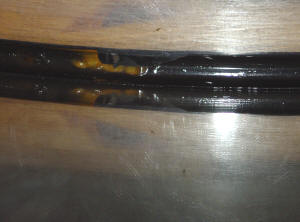
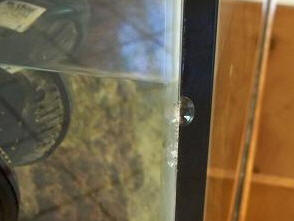
Resealing Used 55 07/28/2008 WWM Crew: I bought a used 55 gallon that I found to have a leak. I've been all over the WWM site, and already know what needs to be done. This tank is a work in progress since I will not be putting it up until our next military move at the end of 2009. I have time. However, I have been told by two hobbyists that I cannot reseal unless I plan on having water in the tank within a year's time. <... incorrect> They are saying that I will have to reseal and that I have been lucky to have dry tanks usable after 2 years. <... No> I have been using Google and checking this site today, I haven't found anything to substantiate this claim yet. <There is no such substantiation. They're wrong> If this is indeed the case, then I can wait several months before messing with it. If not, is there an interesting historical tale I can run back and relate to these hobbyists? <Am feeling so old today that I'll consider myself as such... have them contact me, or Dow Corning re Silastic applications if they're so inclined... Now, back to work in the real world to generate GDP. BobF> Thank You, Becky C Bonding Acrylic to Glass 7/17/08 HI there, <Hello.> Hope you're having a good day. I wanted to know what's the best thing to glue acrylic to glass? I have a glass aquarium and I want to build external coast-to-coast on it using acrylic. Can you please help me? <You could use a two part epoxy gel such as 5 min epoxy, although I would not. For an external overflow do consider using glass and silicone, this will make a much more reliable bond to keep water off your floor!> Thanks Ghazni <Welcome, Scott V.> 125 gallon glass aquarium, sealant good? 06/24/2008 Hello to all! <<Morning, Andrew today>> Sorry for the first message, somehow I managed to send it with just a few words! <<its fine, we are here now>> I have a question regarding a used 125 gallon aquarium that I just purchased. I got it at a steal and was just wondering what kinds of things I should look at as far as signs of silicone failure. The tank is different from what I am used to seeing. It is 1/2" glass with a 3/8" glass brace in the center on top. The trim is wood grain but instead of being flat like most, it tapers as it goes down the side. I am trying to figure out what brand this thing is. The only sticker I can find on it has FM which is bold lettering, like a stamp then it has the date, May 30, 1999 and a serial number...Maybe someone is familiar? Thanks for your time and keep up the good work on the site. <<Not a tank make i am familiar with, unless its referring to "Fauna Marin". As to your questions on what to look for. Look for browning silicone, splits and lifting, bubbles between the glass joints are indicative of poor silicon and bad joints. The main thing i look for to start with, is browning silicon. Please do read more here http://www.wetwebmedia.com/aqrepairfaqs.htm including linked articles and FAQ's >> Jacob <<Thanks for the questions, hope this helps. A Nixon>> 125 gal tank about to pop? 6/12/08 Hi, I have a 125 gal tank, no idea how old it is. We bought it used. I would guess around 10 yrs or so. Anyway we just set it up about a week ago. I noticed after we added water all the way to the top that the front panel on the right looked as if it was pulling away from the panel on the side. <!?> On the left side the silicon is clear and has no air bubbles in it. On the right it has large air bubbles and is cloudy looking. So far there is no leak, but we did drop the water level to half for now. The tank houses 2 4 inch sliders and several feeder fish. I think the turtles will be fine for know, but I am unsure how to fix the problem. <... posted> Do I need to empty the tank and completely take it apart and put it back together? <One approach... however... IF the tank is holding together, and you're happy/satisfied with it partly filled...> And how on earth would I go about doing that? Or could I just empty it and take the silicone off the inside of that corner and replace it, and try to push some into the gap were it is pulling away? Would it stand any chance of holding? I have to say I am very worried, as I would not like a pond in my living room. Please any help is greatly appreciated. <Here: http://wetwebmedia.com/marine/maintenance/index.htm about the sixth tray down... Aquarium Repair... Bob Fenner> Re: 125 gal tank about to pop? 6/12/08 Hi, me again. I looked at all the stories there, <Stories?> but was unable to find one that answered my specific questions. I would like to have a full tank as my sliders really like the space. <... need room to get out of the water as well...> But I am not sure about the seam. Can I empty the tank, scrape off all the corner silicone and clean out silicone between the 2 panels on just that side? <Nope> If so how far down and how to reseal the new silicone to the bottom old silicone? Could I reseal by pushing new silicone in between the panels and then reseal the corner inside? Or do I need to take all the inside silicone off and the side that has pulled away and start from there? Will it hold? Please help!! Thank you> <Read those stories again... IF you decide to re-silicone this tank, all panels will need to be disassembled... it will do no good to just Silicone in the corners... this material is almost non-functional structurally. BobF> Tank Building Beginner 3/22/08 Hi all, <Hi Brian.> I've read a lot on your site, and it is pretty informative! Great Job and thank you! <Thank you, we are happy you find it of good use!> I want to build a tank 48x18x15. I have never built a tank before and I have lots of questions I am having trouble answering. I'll itemize then for you: 1.) I have several 1/4" plates from an old store front, 54x45, it's clean with no major scratches. Is this suitable for building a tank? <Technically, yes. I would opt to go a bit thicker for a DIY project of this size. Overbuilding is one advantage of doing it yourself.> 2.) If there is a small bubble (size of a pinhole) in the glass is it no good? <This can be fine, but do keep in mind that the ¼' glass is already at the bare minimum for this project strength wise.> 3.) Is there a difference between 100% silicone and 100% RTV Silicone? <There is not a difference so long as the RTV has no other additives, some do some don't.> 4.) Are all 100% silicone's created equal, or do you have a suggestion on a brand or something to look for? <100% is 100%. Do be aware that some are not 100% silicone, they contain mildewcides and other additives to prevent mold growth. Stay away from these.> 5.) Is there an difference between 100% silicone and Aquarium Sealant, beyond the packaging? <Nope.> 6.) How perfect do the cuts in the glass need to be for success? <Fairly straight and square.> I've been practicing cutting, and find that there is occasionally a slight taper in the edge, or minor rippling along the cut, it that no good? <This is not good, especially when you consider only a ¼' bonding area. You want a good glass to glass fit with a minimal amount of silicone between the pieces. The silicone should not be used as a gap filler.> Well I think that's a start, and thank you for your help guys! Cheers, Ben O'Brien Maine <Welcome, Scott V., central California.>
Fish Tank Sealant Question 1/12/08 Hi! <Etta> I have looked through your site and have not found an answer to my question. I need to seal one of my 10G fresh water fish tanks. I had mice in it and now want to convert it back to have fish in it. The only problem is they have chewed the bottom corners of the sealant and it needs to be replaced. I just wanted to know the difference between a regular 100% white silicon sealant or regular clear 100% fish tank sealant and what to use. I have some regular hanging around the house but wanted to know if it would kill my fish before I use it. <100% silicone is all you need. Just be sure it is truly 100%, no mildewcides and the such. The white can work if it is 100% silicone, but it will be kind of unsightly.> Thank you! Please reply. -Etta <Welcome, Scott V.> Custom frameless tank 1/11/08 Hi, <Sandy> I just purchased a custom size frameless 125 gallon tank from Lee-Mar. When I received the tank there were numerous air bubbles in the silicone there the panels are joined, I don't mean just little bubbles, I mean large areas that look like a worm crawled though the sealant. They are on all the seams, side, and bottom. The tank was built using ¾ inch Starfire glass and I am concerned with the tanks ability to "stand the test of time". Any thoughts? Thanks! Sandy <Very unusual to hear/read of such apparently sloppy workmanship by Lee Mar... I have known the old owner and now his sons who run the company for decades... and usually the company's craftsmanship is superb. I would take some digital pix and send them to the management... And to me/us as well... IF these vacuolations are not too numerous, nor too interconnected, there should be no problem going forward... Bob Fenner> Re: Custom frameless tank 1/12/2008 Thank you so much for your assistance! We did get a hold of Lee-Mar yesterday, and they, as you, seemed to be surprised that this tank passed quality control, based on the photo's and descriptions of the tank. <Ah, excellent> They are going to take the tank apart and re-do it. Your prompt response and advice was much appreciated. I look forward to a new tank and visiting your site often. Sandy Moats <Thank you for this follow-up. Bob Fenner>
Wrong Silicone! -- 09/05/07 Hello! <<Hi there!>> Kind of panicking a little bit here. <<Oh?>> After doing some research, but apparently not enough, I set up a sump/refugium for my system. <<Cool!>> I installed the baffles with GE Silicone II. <<Mmm, not 100% silicone...contains modifiers to make it paintable and biocides to reduce mold/mildew>> The silicone cured for 48 hrs + before being used, and then used for a little less than 12 hrs before I discovered that this was not an appropriate product. <<Indeed>> Fish look ok now, but do have a couple of corals that do not look normal. Do you think I'm just overreacting at this point or do I have a real problem and do I need to do anything other than just change the type of silicone on the baffles? <<I would remove and replace with an appropriate Silastic silicone rubber. You could even forgo the sealant altogether and use 'pressure-lock' baffles as explained here (http://www.wetwebmedia.com/ca/volume_3/cav3i1/Baffles/baffles.htm). Either way you go...add some carbon/Poly-Filter to help remove any possible contaminants from the Silicone II product and all will likely be fine>> Thank you so much for your wealth of info. Ryan <<Happy to assist. EricR>> White seams 7/25/07 Hello all. I have not seen this on any posts on this yet from when I searched so I thought I would ask. I am currently building about a 150g all glass. Dimensions are 24x24x60, I used 1/2" plate glass. The silicone I used was GE RTV108. From the research I did that is the same stuff tank manufactures use. <Some do> I started filling it and found no problems until it was about 3/4 the way full then the seams along the top of the tank started to turn a little white, after it was as full as my overflows would allow, the white in the seams never grew in size. <Mmmm... how long did you allow for this Silicone to cure?> I emptied it and did more researching on the subject. I went and tried to pull the front pane of glass from the sides to see how well they were siliconed together, then I noticed that it turned white in the same place as when I filled it with water. So that tells me that the water is not getting in the seam turning it white, but when the seam stretches a little is what does it. Do you think from your experience that this will be an issue down the road if I just use it as is? <Is this "only" at/near the surface? That is, an area where there is not much force?> There is a few 0.5-1mm bubbles from when I siliconed it together but they haven't changed size or turned white. <Good> Thanks for the help and the web site. Chris <If there is no further "whitening", and the section where there is has not much structural function I would not be overly concerned. Bob Fenner> Re: white seams 8/26/07 > Hello all. > I have not seen this on any posts on this yet from when I searched so I thought I would ask. > I am currently building about a 150g all glass. Dimensions are 24x24x60, I used 1/2" plate glass. > The silicone I used was GE RTV108. From the research I did that is the same stuff tank manufactures use. > <Some do> > I started filling it and found no problems until it was about 3/4 the way full then the seams along the top of the tank > started to turn a little white, after it was as full as my overflows would allow, the white in the seams never grew in size. > <Mmmm... how long did you allow for this Silicone to cure?> About 7-9 days before it was filled - with two jobs I didn't have time to rush it :) <<This is a good long while... should have been thoroughly cured... I suspect there was a "bad spot" in the filling, making of the one area of the given RTV>> > I emptied it and did more researching on the subject. > I went and tried to pull the front pane of glass from the sides to see how well they were siliconed together, then I noticed > that it turned white in the same place as when I filled it with water. > So that tells me that the water is not getting in the seam turning it white, but when the seam stretches a little is what does it. > Do you think from your experience that this will be an issue down the road if I just use it as is? > <Is this "only" at/near the surface? That is, an area where there is not much force?> The white spot is only along the top side 4" down from the top of the tank near the center of the seam which is 1/2" |--------| ^ about here, it extends about 3/4 inch long <<I see... again, this should be fine>> > There is a few 0.5-1mm bubbles from when I siliconed it together but they haven't changed size or turned white. > <Good> > Thanks for the help and the web site. > Chris > <If there is no further "whitening", and the section where there is has not much structural function I would not be overly concerned. Bob Fenner> All of the lower seams never have changed, so I think that they would hold fine, but I did not leave water in it very long because of the mentioned from above. <<I see... I would test fill this "outside" (maybe a garage) and leave for a week or so to further observe>> Also when reading other posts and pages they talk about the seams turning chalk white, is that from when water is getting into them or is it just from the pressure of the water pulling them? <<The water intruding into imperfectly made (too thick) areas of the Silastic that have not cured. RMF>> Thanks for the help and reply Chris Silicone lifting in 20gal 8/16/07 I have a 1995 model 20 gallon All-Glass tank that was in use for many years with no problems. It spent the last year and a half in the attic, but now I'm hoping to resurrect it in my new apartment. I cleaned it up and tested it, and it continues to be leak-free. The silicone on the inside feels soft and like new, but in one spot along the bottom is lifting and bubbling. <Interesting... I would bet that this was as it was originally constructed. Few influences (time, heat, chemicals...) can change Silastic thus> As I am now living in a second floor apartment with other tenants below me, I'm completely paranoid about springing a leak. Should I scrape out the old silicone and reseal it, or is it best to leave well enough alone? Courtney <If it were me, knowing what I know, what you've related, I would use this tank as is. More likely to be problems from trying to re-do. Cheers, Bob Fenner> Re: silicone lifting in 20gal 8/16/07 Thanks for the quick reply. I will leave the tank another day or two with water to be sure there are no slow leaks, and then I'll go ahead with setup. <Good plan. BobF>
Silicone/Acrylic bond... not great... CPR unit? -- 06/26/07 Hi Bob! Thanks in advance for your response. I am starting up a nano set up at work. I have purchased a 16 gallon acrylic tank that is made by CPR, but sold online under a different label. It has a great skimmer and looks really nice. I am currently cycling the lank with live rock and live sand. However, I am a little concerned because the retrofit light kits appear to be attached to the acrylic hood using silicone. While there is not much weight involved, you mention frequently on your site (which is an amazing site) that you do not have much faith in the adhesion qualities of silicone to acrylic, and I would really appreciate your view of whether or not this use represents a potential hazard. In other words, even if there is not much weight involved, could the heat of the lights or some other factor weaken the bond and result in my lights falling into the tank? I would really appreciate your thoughts on this. Thanks very much, Lindsey. <Mmm, I too am concerned... but I do know and trust the owner of CPR (Suk Chu Kim)... am BCC'g him here for input re... otherwise, do please contact him, them at: http://www.cpraquatic.com/index2.html |
|

|
Features: |
|
| Featured Sponsors: |


.JPG)