|
|
| Home | Marine Aquariums |
Freshwater Aquariums |
Planted Aquariums |
Brackish Systems |
Ponds,
lakes & fountains |
Turtles & Amphibians |
Aquatic Business |
Aquatic Science |
Ask the WWM Crew a Question |
| Please visit our Sponsors | ||||
|
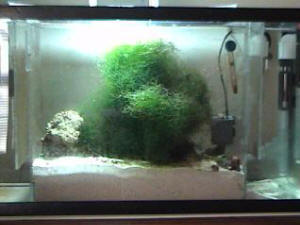
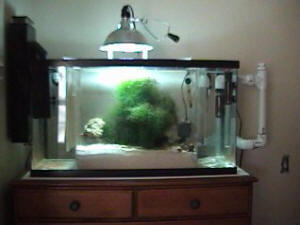
Codium, Mermaid's Fan, and Shaving Brush in same
tank? 6/8/11 Cladophora - use in batteries (article)
11/29/09 Maiden's Hair Plant (Chlorodesmis sp.) 04/28/2008 Hi is Maiden's Hair Plant (Chlorodesmis sp.) poisonous to stingrays and can it release any kind of toxin that will harm the rays (California Stingrays) besides the fact they can dig them up. I don't care about that I have a section in the tank with a decoration toward the top with lighting. <<Chlorodesmis does use a toxic substance to deter herbivores from eating on the plant itself. I do not see this as an issue for the sting ray>> Thanks, Michelle <<Thanks for the question, hope this helps. A Nixon>> Influence of Turtle Weed Allelopathy... about middling... and BBs 8/10/07 Hey Bob, <RA> Well, I wanted to go with growing a few large SPS colonies around my BTA, but I figured that I'd just start out with something easy. So I'm back at the Chlorodesmis/BTA tank idea. I think I'll add on corals in the future if/when I'm ready for them and if/when I know they'll look good. Right now, I just want to grow something so I can get a feel for my LR and how I can use it. Anyways, I'm back with the Chlorodesmis idea for a few reasons. First, I like the look of it and I really don't know how good coral will look in the places I planned on placing it. Second, I really like the pod growing qualities of macroalgae. I have a sump area that was designed to be a refugium, but my dad thinks a light in my stand could start a fire. Oh well. Third, it'll outcompete negative algae, such as Valonia. Fourth, the most obvious reason for macroalgae: nitrate reduction. So the questions are: 1. Have you ever seen Chlorodesmis growing near anemones? <Yes... in the wild and captivity> I've seen pictures of it near coral colonies, but they were separated by at least a foot. In my tank, the anemone would be very close, meaning probably coming in contact with it everyday. If it will affect the anemone when it's that close, I'll have to isolate it at one end of the tank. If not, then the allelopathy must not be very effective. 2. When/If I get my Chlorodesmis, I'll only have snails in the tank. How will I know when the carbon has been used up? <Mmm... the easiest, perhaps best "assay" here is a white piece of paper held up at one end of the tank... If/when you detect "too much" color, time to replace, add to> Do the allelopathy change anything in the water chemistry that can be seen with a test kit? Will the snails show any visible symptoms? <Don't know times two> 3. One of the reasons for Chlorodesmis outbreaks is lack of circulation. I've read elsewhere that they don't require any specific amount of flow. Yet, on websites that sell Chlorodesmis, it says that they need high flow. Can you please explain? <The colonies seem to grow (and look more beautiful) in flowing water... given sufficient conditions otherwise> 4. A bit off topic, but I saw that you had a Reef Central profile. I sent a PM to it asking a question, but then realized that you never posted. What happened? Or was someone an imposter? <Got me... I don't "do" BBs... a waste of time in my estimation... What is it about the input of many unqualified people being better than that of a more knowledgeable few? Not to defame the chatty process entirely... but would you go to the BBs for a "real" medical problem rather than someone university trained, AMA certified? Me neither> Well, that's it for now. Once again, thanks for reading this. Have a nice rest of summer. Sincerely, Random Aquarist <Yikes! Have a nice rest of lifetime! BobF> Bubble Algae/UV Sterilizer - 10-30-06 Hello Mr. Fenner/WetWebMedia crew, <<Hello...Eric Russell here today>> I have just discovered a few pieces of bubble algae in my 110 gal aquarium. The bubble algae was perfectly round and very dark green in color. <<A species of Valonia likely...not uncommon>> I manually removed them however one popped and I bet I will be seeing more in the future as spores were most likely released. <<Possibly...to what degree depends on how "suitable" your system is to harboring these algae>> A water test shows my nitrates are high (40 ppm). <<Yikes! Indeed so if the test kit is accurate>> So, I know I need to work at lowering nitrates. <<Yes...do start reading here and among the linked files at the top of the page: http://www.wetwebmedia.com/nitratesmar.htm >> I was thinking about purchasing a UV sterilizer which I think would kill algae spores with the additional benefit of killing parasites. <<I'm not a fan of these units on reef systems as they are too indiscriminate, but they can be of benefit for FO and FOWLR systems if you're willing to keep up with the high maintenance of these units>> However, I am concerned that using a UV sterilizer may reduce other algae which my lawnmower blenny eats. <<It will>> For now I will continue to manually remove any bubble algae I see as well as reducing the nitrate level. <<May be all you need do. A possible biological control to this species of algae, in my experience, is the Foxface (Siganus sp.)...if your tank has room for the additional bio-load of course>> Do you think the UV sterilizer would help me here? <<Possibly>> And if so, what wattage would you recommend for a 110 gallon tank? <<I'd go with one size up from whatever the particular manufacturer suggests>> Thanks, BobbyG <<Regards, EricR>> Chaetomorpha Competition 4/18/06 Hi Crew, <Scott F. your Crew Member today!> I hope you are all well? <Yes, thanks! Hope you're doing okay, too!> I have a problem with my Chaetomorpha in my Miracle Mud sump, the Chaeto has been in there for about 2 months (shortly after addition of cured LR) I obtained Chaeto from two different sources which left me with what appears to be 2 different varieties - one with quite fine strands & the other with thicker/stiffer strands. The mud area in the sump is 11"x10" with a water depth of around 10" over this is hung a 20w Power compact spot lamp @ 6500k 24/7 currently due to Caulerpa. I estimate around 1000 to 1500 litres per hour throughput in the sump (carbon & Polyfilter in flow also). From my research during the design of the new system I believe these conditions should be ideal for Chaeto (however please do comment if you see any problems thus far). <They sound just fine to me.> Bio load is currently low in the tank (200 litre main tank) with about 26Kg LR, 15 Dwarf Hermits, 5 Nerites, 15 Nassarius, 2 Cleaner Shrimp some Xenia moved from my old tank (still running thanks to you guys) and 4 very small frags (Monti & Acro) which were earlier than I intended but... also there is algae of various sorts on the LR here (small amounts proceeding through succession I assume) The problem is that the thinner stranded Chaeto has been rotting - individual strands (which I understand are single cells joined end to end) have been losing their green pigments and becoming see-through with a general descent into a mushy mess. I have read that Chaeto should "tumble" in flow & despite the good flow through the sump this behaviour eludes me! This said there seem to be plenty of people who don't tumble Chaeto with good results. <I am one of them. To be honest, I have never tumbled Chaetomorpha, and have used this macroalgae for years with great results. It's important to have decent flow going through the dense matrix of fronds, to prevent buildup of debris and detritus, but I have never tumbled the stuff, and I don't personally know anyone who does. I've heard this assertion a lot on the 'net, and I'm not certain how this got started. Perhaps there was some confusion with Gracilaria, which absolutely should be tumbled for maximum success.> Strangely the thicker more wiry Chaeto appears to be fine (however there are no signs of growth). I have removed all of the Chaeto which was rotting & left only the healthy looking stuff (having first picked out all the beneficial life forms I could - waste not want not!! ;o) so I now have only a little handful of the thinner Chaeto In addition I have read that others Chaeto "floats" at the waters surface - mine however prefers to sit on the mud bed surface. <Largely a function of the density of the stuff, I guess. Mine has always sort of floated just below the surface. As long as it gets decent light and flow, and is not clogged with debris, I don't think that it matters, really.> Now I have a theory here which I wanted to run by you good folks. In the mud sump in addition to the Chaeto there is a small amount (handful) of Caulerpa (C. prolifera I think) which came from the same source/sump as the more wiry Chaeto - this seems to be growing fairly well with new green shoots visibly growing over time. Is it likely that this is releasing toxins to the water which are causing the dieback of the Chaeto? If you really think this is a likely cause I will rip the Caulerpa out & toss but I would rather not do this without a fair chance that this will resolve the issue as I don't want to find that I have no viable Macro in the sump of any variety. <A very interesting theory, although I don't know if it is caused by chemical issues. I'm thinking that it may really be more of a case of simple competition for light and nutrients. Caulerpa grows faster and more aggressively than many algae, such as Chaetomorpha, and it simply may be outcompeting the more delicate growth form of Chaetomorpha, or simply blocking out light and flow. There are other, well-documented reasons to despise the stuff, IMO, so I'd try to get out as much of the Chaetomorpha as possible.> Any suggestions? <As above. Also, I'd probably just stick to one form of the Chaetomorpha, since once it's growing, it can easily dominate. besides, you'll be able to harvest large quantities of Chaetomorpha for nutrient export, and to share/trade with other hobbyists. The stuff is always in demand. Besides, Chaeto is a great "substrate" for an amazing diversity of life (like amphipods, mysids, and even tiny brittle stars).> Many thanks as always & apologies for the rambling email but I have tried to give all pertinent information (if there are any further details I can provide please do ask) Cheers Chris <Thanks for the detailed information, Chris! It certainly helps us do a better job for you! Good luck! Regards, Scott F.> Growing Caulerpa algae 7/7/06 hi, <Hi> I want to have a lush growth of Caulerpa green macro algae in my tank... I have a fish only tank with live rock.. its 90 litres capacity. <... please use spelling, grammar checkers...> Will adding snails or hermit crabs to control the slime and green hair algae, affect the growth of my Caulerpa algae, as I doubt whether the snails and crabs will consume the Caulerpa? <Impossible to state, guess, given the information presented. Please read here: http://www.wetwebmedia.com/caulerpaalg.htm and the files linked above. Bob Fenner> Please advise. Thank you, Anup Greens-Caulerpa and Halimeda... competition twixt Algal Divisions 7/30/06 Hey Crew! My main tank is incredibly healthy-90g with 60kg live rock; ammonia=0, nitrite=0, nitrate=0, calcium=360, pH=8.1. This tank is home to 4 Nemos, 1 eibli, 1 flame hawk, and 1 blue ring angel. <Will need more room... soon> It also contains 9 turbo snails for which there is barely enough algae to feed. Every piece of live rock has patches of beautiful purple encrusting algae. No green algae seems to grow in it. This leads to my question. My quarantine tank has nice patches of Halimeda, grapelike Caulerpa, and caterpillar weed. I would like to transfer this algae into my main tank. However I am under the impression, from reading many FAQs, that green algae needs nitrate to flourish. So, if I was to move the macro-algae into the main tank, is it likely to survive or will it die? <Conditions there favor/ing the encrusting Reds will likely preclude the Greens doing well> In the beginning (about 1 year ago) the tank was left for about 4 months to cycle and even in this time, no green algae grew. <Likely your lighting, supplementing habits...> I have moved some hair algae covered rock into the main tank previously and the hair algae slowly disappeared. I started off doing weekly water changes but have since begun doing fortnightly water changes in the hope I might get some nitrate, but it just won't happen! Thank you! <Mmm... like some folks lack of understanding re whether the world's terrorist population is static versus dynamic, you do have nitrate being produced... and readily absorbed... I would feed some of the Greens to the fishes here expressly, and/or offer dried human-intended products of same for the purpose. Bob Fenner> Italian fishes to eat spaghetti algae - Chaetomorpha control 6/28/03 Is there ANYTHING that will eat Chaetomorpha? <indeed... 'a plenty. Some larger gastropods, likely some opisthobranchs (sea hares or Elysia Nudis?)> I bought some about a month and a half ago, and it has quadrupled in size in that time. Now that I'm thinning it out, I was wondering if it would make a tasty snack for any fishes out there? <Rabbitfishes perhaps... funny, but I never thought much about keeping it in the display... really a wonderful macro for nutrient export and manual harvest in refugia as a vegetable filter. Really a wonderful and durable (as you know <G>) algae. So tough many fishes can't eat it> Eagerly awaiting my copy of the new book! <excellent my friend. I'm in SD as we speak signing the pre-orders for posting Monday. It looks like you'll have some reading to do for the holiday weekend :) > Philip DuPont <thanks kindly! Anthony> Valonia Dear Crew, I really appreciate your site and find it very informative. I am always amazed at the boneheads that jump all over somebody when they don't agree with the advice they receive. That being said, I have a question about Valonia. A few years ago I had a few Valonia in my 65 gallon tank, and emerald crab took care of the problem and the tank showed no signs of Valonia. After a tank crash that I think was caused by the death of an orange tree sponge, the crab died. The Valonia has gradually increased to the point where I need to take more aggressive measures to rid my tank of this nuisance. I have read ALL the information on Wet Web Media and its seems that the best answer is to get another emerald crab. <Yes> I have two questions. First, other than the usual nitrate reductions advice is there anything else I can do? <Do not overstock the tank, reduce nutrients.> Second, I am concerned about my other livestock getting munched by the crab if I get it. I have two peppermint shrimp, a scooter blenny, a six line wrasse, a purple tang, and two percula clownfish. I am very worried that the peppermint shrimp and the blenny are potential victims. How threatened are they? <Not to worry. I have an emerald crab sharing the same tank as two cleaner shrimp and four small fish. Haven't had a problem yet.> Any other ideas that might be helpful? <Get another emerald> Thanks for any advice you can provide. <James (Salty Dog)> Containing "Chaeto" (Keeping Chaetomorpha Where You Want It!) Hi Crew, <Hi there! Scott F. here today!> Thanks for the previous response to my worries of a die off in my tank, the nitrogen cycle has settled down nicely now and I'm just waiting for the last little bit of nitrite to disappear and the nitrates are progressively dropping (down to about 10ppm now) and the axinellae polyps are looking very healthy. <Glad to hear that your tank is headed in the right direction!> I have become addicted to trawling through your site and I've learned so much from it, thank you. <We're thrilled to be of service!> I have another question though; I have bought some Chaetomorpha on e-bay which arrived in great condition compared to the Caulerpa which arrived half dead (I have since binned the Caulerpa having read so many bad things about it) <I can't blame you for doing that!> The Chaetomorpha arrived as a kind of ball of spaghetti and I'm not sure whether I'm supposed to unravel it all or just drop it in the tank as is. (i.e. does it need 'planting' or can it just be 'dropped' in the tank and left to it's own devices). (Bearing in mind that the water flow in the tank just carries it around and I'm concerned for it getting tangled on my polyps) Any advice would be much appreciated, Thanking you kindly, Leif Hinks, Birmingham - UK <Well, Leif, with Chaetomorpha, it's really easy- you literally drop it in the tank. No need to unravel the stuff...In fact, you'd drive yourself mad trying to do that! Generally, I recommend employing this macroalgae in the sump or refugium, for the very reason that you cite: It tends to move around! However, I have seen it in displays a number of times. Since this algae tends to grow in a dense "ball", you can literally "impale" it with a toothpick or small dowel, which can hold it in place. Alternatively, you can utilize fishing line to gently tie it to a rock. Either way, this algae grows rapidly under conditions that it finds to it's liking, and you'll really appreciate it's capabilities as a nutrient export device! Enjoy it- and share it with some friends when you harvest it! Regards, Scott F.>
Valonia by another name - 2/10/03 My 55 gallon tank has a new algae problem bubble algae this is the newest problem in a long list of algae problems. It seams when I get 1 problem fixed the next algae pops up. <Seems that way sometimes.> I do not know quite what to do. <Definitely a few things to check. First, be sure to use a good source water (R/O or DI water) for your water changes and top off. Also, be sure you are making changes within a proper timeframe. Weekly vs. one big monthly. I would be sure to check for silicates and high phosphate and nitrate in my make up water also.> My LFS employees all know me and my tanks problems by name. <LOL> What is the best way to control bubble algae? <Frequent water changes if possible. Do not crush the "cell" of the Valonia as it is known to release millions more spores into the tank. Check out the following link that could be of some assistance to you. http://www.wetwebmedia.com/algaeconMar.htm Also do a search on WetWebMedia site with the key word being "Valonia" and see what comes up there. Remember to address the "cause" of the algae, not to just eliminate the "effect". Good luck.> Re: Some pest algae pix... from COZ! Bob, The Neomeris annulata algae, the stuff with the individual, bright green rods extending from a white crunchy (calcareous?) base - is that stuff particularly destructive/rambunctious, etc? I just have a few stems of it in my main aquarium - now wondering if I should eradicate? <Oh... sorry re... not really a pest at all... that is, Neomeris doesn't grow wildly, displace other life, produce toxins... that sort of negative thing... it got caught up in the Valoniaceans in the batch. Sorry re. Bob F> -Zo Hair algae I am TOTALLY new to salt water tanks. I am still studying up and trying to learn all the terminology and noticed mention of hair algae which I have just noticed is in my tank. What causes it and how do I get rid of it? And is it dangerous to my tank life. I have crushed coral flooring and no live rock but I have 11 fish. I just purchased yesterday to scooter blennies and 2 crabs. Will they eat this growth on the flooring? >> Hmm, welcome to the marine part of the hobby! And do keep studying, investigating what it can/could be for you... Filamentous algae are almost inevitable in marine systems... and some amount is desirable. They "just" start as spores from the air (even far away from the ocean), with other livestock introduction, decorations... even foods. Their control involves a many-stepped approach at limiting nutrients (proper foods, feeding, filtration, maintenance), competition (using macro-algae, other photosynthetic life to deprive noisome algae of light, food), predators (unfortunately not the animals you mention), and chemical controls (biological ones are the only to seriously consider... made by algae/mud filters)... Please take a look at the Algae Control materials stored at my website: www.wetwebmedia.com under the Marine Index for much more, details. Bob Fenner Bryopsis Hi Bob, Well, my tank has finally recovered from its crash. Still no idea what happened! I have a question about Bryopsis. I have it growing in my sump/refugium, and it has also appeared on two rocks in the main tank. I understand it can spore and spread, and that it is very difficult to eradicate. I could turn off the lights in the sump, though I have a few leathers and polyps in there. But how to get it out of the main tank? Do you have any suggestions? I have heard talk about Bryopsis eating Nudibranchs, but am not sure how effective they are. Regards Jason Edward >> Hmm, are the filaments divided, like branches? I think this may be Derbesia... but nonetheless, the "cures" are about the same. Do look into out competing it by placing some Caulerpa in the main tank and lighted sump... It will soon be starved. Bob Fenner Maintenance issues Thanks for your quick and informative response, I value and follow your advice because I've found that it works. One follow up question, if I may, how do you eradicate Halimeda from a reef tank when its growing from the live rock. A friend of mine has battled with it for months with little success. I'm battling hair algae on one of my tanks and seem to be losing that war as well despite using only RO water, feeding fish only three times a week, physically removing the hair algae from the rock, using Aquamarine's (reef safe) algae control product and doing 10% weekly water changes. >> Hmm, well, count yourself lucky if your Halimeda is doing that well... for me, I'd just occasionally clip off the bigger bits during routine cleaning. Regarding the hair algae, if the system is 55 or more gallons do consider getting a Lawnmower Blenny... a fabulous green filamentous scraper... only one, because this is about all they eat. And/or if it will go, look into a Mithrax (Emerald Green) Crab... also a great cleaner upper of filamentous (and other) algae. Do leave off with the use of chemical algicide... dangerous/toxic and unnecessary for your system. Bob Fenner Hair algae (Derbesia) hi bob, thank you for answering my question concerning my hair algae problem. you mention in your response to get an algae blenny and some Mithrax crabs. Over the four months, I went through three algae blennies of the species you suggested. they died from starvation. they didn't touch the hair algae or any other food that was offered to them. as far as the Mithrax crabs are concerned, over the past year I put 15 of them in my tank. they did eat the hair algae. they were the only thing that really took a liking to it. I also noticed that they liked my stony corals as well. as I said, they did eat the algae, but didn't put a dent in it. over a months time they all died. you mentioned a fish that might eat this stuff. could you please give me the name of it so I can give it a try. this might be my only hope. as I mentioned before, I have a red sea Sailfin and a Sohal tang that only pick at the algae. not enough to make a difference. I stopped feeding them for a couple of weeks, figuring they would much out on the Derbesia but still didn't touch it. they got real skinny. thank you again for your suggestions. I look forward to hearing from you. >> Hmm.... are you sure this is Derbesia? Not some type of blue-green (they come as filamentous forms too...). Three Sailfin Blennies and fifteen Mithrax?! If the two current Tangs aren't touching the algae much... I would not be too keen on trying some other members of the family... which would be my next best tries. Instead, in case this is a BGA or even the green, Derbesia, I suggest trying two things at once: Overwhelming the filamentous with the use of Caulerpa (in the main tank, even if your tangs decimate it) and/or in a separate/attached sump (continuously lighted), AND raising and maintaining a high pH (8.4-8.5 or so) with daily administration of Kalkwasser... to precipitate out phosphates (among other things). Please do try this double-pronged attack... and make it known to me/us how this works out. Bob Fenner Can't figure out the seaweed I have a 90 gal tank with live rock that forms a long type of algae seaweed that will not stop growing. I have tried to scrub it all off, yet it continues to grow back weeks after and it just gets longer and longer . it is like a thicker green hair algae and I don't know how to stop it. I was thinking about just starting over with new live rock because maybe this one has just had it. What suggestions do you have, Please Bob I am in need of desperate help???? >> Well, I'll be desperate than... First, don't go the "throw out the old, get new" route... it won't work. Any small amount of spores from the existing filamentous algae will quickly (under the rest of conditions of your system) regrow the algae on the new rock... Instead, consider what the source of the nuisance algae growth is... and limit, or eliminate it. Do you have high nutrient levels? How much nitrate, phosphate? Do you have a decent skimmer? Clean it often? Do you have competitive life forms that will use up the nutrient, available light? Next, do consider getting some purposeful filamentous algae eaters. If they'll go in your system without being eaten, get an Emerald Green Crab (genus Mithrax), and/or a Lawnmower Blenny... or/also a Combtooth Tang of the genus Ctenochaetus, or Sailfin (Zebrasoma) surgeonfish... Bob Fenner, your solution man! Hair Algae Hi Bob, My tank's been running for four months now. I have hair algae growing in the gravel. It does not grow on the live rock. I have about 24 hermits and a blenny for grazers that seem to keep it off the rocks and maintain the "lawn" on the gravel. I'm always reading comments/questions on how people must rid their tanks of this horrible algae. I like the look of it. It "blows in the wind" and has a soothing effect when you watch it. My questions is, as long as it doesn't overtake my corals, is it wrong to leave it in the tank? Thanks again and hope all is well, Tony <No problem with having some of these algae... a sign of a healthy setup... just, as you say, that it doesn't get out of hand, cover too much, cause chemical, physical imbalances... you'll be able to see this develop if it happens. Bob Fenner> Bryopsis algae Hi Mr. Fenner, I really enjoy reading your book "The Conscientious Marine Aquarist" it really gives me a wide ranging knowledge about marine aquaria. Currently I have a 150G reef tank. Everything is going fine except I have a major algae outbreak called "Bryopsis", do you have any idea how to get rid of it. I have try many thing such as using surgeon fish (I have a blue/regal tang and also a purple tang) they don't seem to touch the Bryopsis at all. I have also tried using phosphate remover, still no luck yet. Please help. Victor <Thanks for writing, and your kind words of encouragement. Much appreciated. You might get lucky (don't always work), with using either a Mithrax/Emerald Green Crab (just one specimen is all you need to try), and a member of the comb-tooth tang genus Ctenochaetus... I'd place both the fish and the crab... and you can read over the Tang species choices on our site: www.wetwebmedia.com Be chatting, Bob Fenner> Hair Algae Hi Bob. I have another question for you. I have an incredible explosion of what I call "hair algae" in my tank. It covers all of my rock and is a real problem. The stuff breaks off and plugs up the intake for my filters, covers everything so that's all you can see on the rock...you get the picture. I've added hermit and left-handed crabs, about 40 total (I have a 125 gal tank). I probably need to add more of those little critters but my question is this: What kind of fish, if any exist, would you recommend to add to help curb this problem? <There are a few... look into short-circuiting the source of nutrients (and light) as control mechanisms as well... read on through the materials stored Home Page on set-up, algae control... and Salarias, Ctenochaetus, Zebrasoma...> I was thinking tangs and angels...yes?? <Maybe a Centropyge would help... but growing macroalgae in the tank or a sump with lighting would be better, more efficacious> If so, how many of each species should I look to add? <One each... and different appearing...> I understand how the biological load on the tank works, I'll keep in mind the existing fish that I have. I don't have many right now, I'm changing to a more reef environment so my number is pretty low for my big tank. <Good... take your time... important> BTW....about a month ago I added three anemones, a Sebae, a bubble and a long tentacle. The bubble and long tentacle are doing great, the Sebae died within a week. Would you be inclined to think that there was a problem with that particular Sebae, in light of the other two doing fine, or are Sebae more difficult to keep alive? <All anemones are tougher than folks realize... Sebae's are even easier to lose> I know there's a lot of unknown variables here, but any info would be appreciated. Thanks much, Betsy >> <Indeed... Bob Fenner> Bryopsis Hi Bob, Recently, I've noticed a small (so far) outbreak of what I think may be Bryopsis. It is fine feathery looking stuff growing in clumps. Snails, hermits and Bicolor Blenny have shown no interest in it. Is there anything out there that eats the stuff but won't pose a threat to my corals? <Does sound like the genus... and there are a few possibilities... I would try a genus Ctenochaetus tang... maybe a Mithrax Crab... possibly a genus Salarias, Atrosalarias blenny... And consider,,, oh, I see you mention this below....> I've heard some types of calcareous macro algae will help inhibit it's growth. I have Halimeda discoidea and another similar variety, Caulerpa serrulata, Caulerpa racemosa and a type of red macro algae. <Yes, and am surprised that the other macro-algae you mention haven't been doing the same...> I have noticed, for the most part, the Bryopsis does not grow near these macro algae, but grows to within about 5-6" inches away. Will the good macros eventually out compete the Bryopsis? <There is that hope, but I would also consider urging the encrusting reds by possibly increasing alkalinity... maybe culturing in a separate sump...> I keep the Caulerpas trimmed back to just a small area in a corner but let the Halimedas grow at will (the Bicolor Blenny keeps it trimmed). Should I let the Caulerpa patch get a little larger? <I would, yes> Here are the tank specs. 80 gal, 80 lbs + or - live rock, Skilter 400 skimmer (yeah, I know...just put in an order for a Aqua C Remora Pro HOB today), 4 X 96 watt PC lights, 2 powerheads for circulation, salinity 35 ppt, top off and change water is made with RO, PH 8.3, Alk 3.5, Cal 420, Ammonia and Nitrites 0, Nitrates <5, haven't tested for Phosphates. Livestock = Assorted soft corals, mushrooms, star polyps, button polyps, Lemnalia, colt coral, Xenia (pulsing), Sarcophyton, Sinularia and Lobophytum. Assorted hard corals, Hydnophora, Caulastrea, Tubipora, Turbinaria, Goniopora, Fungia, open brain and Euphyllia divisa. Fish, Pair Banggai Cardinal, Pair Amphiprion ocellaris, Bicolor Blenny and Common Firefish. Blue legged hermits, Astrea, Turbo and Nassarius Snails, 2 hitchhiker clams and 2 or 3 hitchhiker crabs, Cleaner shrimp and a couple Peppermint shrimp. Hope you don't mind the long list, but I figure the more info on tank the better. Thanks, Kathy <Sounds like a very nice system... I would take my time here... shoot for the gradual change... and let's see if the free-ranging Caulerpa doesn't curtail the Bryopsis... slowly. Bob Fenner> Green Balls? Valonia... Bob, I have written you in the past with some different questions and would like to say thank you again for your past advice. I have some new things that I would appreciate your advice on. A real quick low-down on my system is 125 gallon aquarium with a Sea Clone protein skimmer (I know that I could do better here), two Emperor filters, VHO lighting, 1 inch of live sand and roughly 70 pounds of live rock. I currently have two green dragon wrasses, a six line wrasse, a Foxface, and two orange diamond gobies. I have two toadstool leather corals, some green button polyps, and a couple of mushroom anemones. My aquarium was having some problems in the beginning and I suffered a few losses before realizing that the well water that I was using was using me to have high phosphates. I proceeded to purchase a RO Filter and have made quite a few big water changes, even more small water changes, and am continually topping off the water with the new water that I am making. My phosphate levels have dropped slightly but for some reason I cannot get rid of them completely. <Good progress so far... the phosphates are "cycling" in your system... and re-cycling...> They are currently measuring at 2.0 ppm. <Yikes... I'd grow and toss some Caulerpa algae here... sort of like the use of biomass accumulators (e.g. Hyacinths and wastewater) to gather and remove nutrients from solutions> I don't over feed so I don't think that this is the problem. Before purchasing the RO Filter my leather corals would hardly open up. Since purchasing the RO Filter, my leather corals are almost always open and seem to be growing. I am happy for this but have had some bad luck with trying to add any new inhabitants. In the past few months I have tried adding a Naso tang, yellow tang, Kole tang, and lastly an Emperor angel all at different times and have watched each one get sick and die in a week or so. <As an indicator, wait on any new livestock till the phosphates are below 1.0ppm, better 0.5ppm...> I think what that died from was ich or velvet. I have done all the environmental manipulation that you suggested but wasn't able to save any one of them. The loss of my emperor angel really bothered me because it was my favorite fish. It used to eat right out of my hand but for some reason I could not keep it from getting sick. I was able to treat in a hospital tank a couple of times but each time I put it back in the main tank it would eventually get sick again and eventually died. My original fish are still alive and don't show any signs of anything. For this reason I don't think that I have a parasite problem so much as that the water quality wasn't good enough to keep these more delicate species alive. <Hmm, no... more likely you have a "toxic tank problem"... that you are salvaging bit by bit...> One thing that I do have in my tank seems to be some uncontrollable green algae. For some reason I can't keep this under control and I think these little green balls that came with my live rock may be causing it. Originally there were only a few little green balls on some pieces of live rock but have recently noticed that they have spread to many other rocks. <Yes... likely Valonia... see the "Algae", "Green Algae", "Pest Algae Control" sections and associated FAQs pages archived on our site: www.WetWebMedia.com> They have almost encrusted this one rock. Finally, here are my questions. What are these little green balls and are they the cause of my green algae problem? Does the presence of the green algae contribute to the high phosphates and do you think this may be the reason why I haven't been able to keep some of the more delicate fish? Again, I want to thank you for any insight you may offer. Gianluca <Green algae group, Valoniaceae... not a direct contributor, but a recipient, user of nutrients... not toxic per se... read the many related sections on the WWM site. Bob Fenner> Major Reef Tank Problem (green hair algae) Dear Bob: I haven't communicated with you for a while. I hope everything is well with you. <Yes. Thank you> Bob, I am trying not to become overly depressed about my 92 gallon reef set-up. I've got an out of control hair/turf algae problem that I cannot pinpoint the cause. Here are some facts: <Not to worry... many causes, cures... we can solve this one> -My tank is 15 months old -90 lbs of live rock -20 gallon sump refugium with housing some Caulerpa algae lighted by a 65 watt LOA Flourex light about 16 hours/day -Euroreef skimmer - MAG 7 return pump -3 internal powerheads -about 2 inches of aragonite sand. Particle size in between crushed coral and oolite sand -low bioload, i.e., 3 fish, cleanup crew, cleaner shrimp, 4 soft corals, 2 LPS corals, mushrooms, button polyps -top off reservoir filled with Tap Water Purifier water -0 nitrates reading -0 phosphate reading -2.5 mg/l alkalinity <Mmm, this is a bit low...> -450 ppm calcium -IceCap 660 VHO lamp system - 1 95 watt actinic blue URI lamp, 1 95 watt white 50/50 URI lamp, 1 95 watt Aquasun URI lamp and 1 75 watt actinic blue URI lamp Turf/hair algae is completely overrunning my tank. It is growing in between my candy cane coral, on every rock, some of it is up to 1 inch in length, some even on sand, consuming almost all of my button polyps, etc. For about 4 weeks now I have been scrubbing rocks and trying pull out this algae, scooping it out with a net. In addition I have been doing 20% water changes every two weeks. Last week, I even took out half of my rock and scrubbed it in a separate container, but it is now growing again on it. I have had carbon in the sump now for about a week, and also Marc Weiss' new Phosphate/Silicate Magnet product in there for 3 days now. <Get rid of this product> I believe my problem may have begun when I decided I needed to start replacing my lamps since it had been 1 year since I purchased them. I first changed the Aquasun, and noticed within about a week that algae was starting to grow on the rocks below this lamp. I changed the remaining lamps, each being changed about every 2 weeks. <Mmm, maybe a source of stimulation... you know now that you want to cycle the lamps in/out on an "effective life span cycle"> Bob, I am so frustrated. I have had no losses of life due to bad water conditions until now - my normally perfectly healthy 8 month old Yellowhead Jawfish I believe got so stressed out from my rock scrubbing and turkey baster blowing that he stopped eating and died, and a new Foxface I got to help with algae control never adjusted and died in a week. Your input would be greatly appreciated, as I am baffled. <You have nice gear, seem quite aware of what is going on (you know what you know) re your system. I would take some simple, plain steps at this point to return your system to "center". As easy as it may seem, raising your alkalinity is paramount to your success here. You don't mention how you raise your calcium, but I would look into two part additives, supplements that contain calcium chloride, and use a modicum of simple baking soda (sodium bicarbonate), a few teaspoons dissolved in system water per day, poured in about the surface... and measure in the AM to see if you're able to boost alkalinity in this way. In addition I would add some of my favorite algae eaters: One or two specimens of Salarias fasciatus or Atrosalarias sp. blennies. Do get/use a phosphate test kit... this source of rate-limiting nutrient may be playing a pivotal role here... And please read through the many FAQs, articles on "marine algae", "control" posted on the WWM site starting here: http://www.wetwebmedia.com/algaeconMar.htm We can/could talk over the implementation of a calcium reactor (a carbon dioxide infusion type), getting a reverse osmosis unit for your new water use (in place of the TWP)... but that can/will come later. Try to read over the links where I've sent you, and prepare for the changes suggested. In a few weeks, the pest hair algae problem will be in decline. Bob Fenner> Sorry for the long dissertation, but I wanted to give you as much information as possible. John Re: Major Reef Tank Problem Thank you for your reply Bob. I did forget to mention that my open brain coral is also not expanding like it normally does, and my pagoda cup coral has not been extending any of it's polyps for about 1 week now. I have been testing for phosphates (SERA test kit) and my readings are nil. I'll take out the Marc Weiss product at your suggestion, but should I keep the carbon in? <Yes> Also, I am using Kent Marine's 2 part alk/calcium system, and dripping granular alkalinity or calcium (Kent) into my sump if these levels have been low. I do agree my system is not "centered" like you stated. Before all of this disrupt, it seems like all I needed to do was add my 2 part solutions and everything was fine. Another additional step I have taken lately has been adding magnesium because my test results showed lower levels. Finally, I forgot to mention that I am noticing a kind of film with small particles that has constantly remained on the water surface. <From the additives... no big deal... can be lifted off with a clean, unscented paper towel as a "wick"> Again, thanks so much for your advice. I do hope you can help get my tank out of this funk so I can really enjoy this great hobby again. <I'll be here to help if I can. Bob Fenner> John Re: Major Reef Tank Problem Thanks once again, Bob. Last question (I think, at least for now!) - do you think I should temporarily reduce the photoperiod? I did this for about 2 weeks (about 4 hrs/day), but I am afraid that my photosynthetic corals may not want this shortened period any longer. <Agreed. I would not shorten, alter your photoperiod. Bob Fenner> Aiptasia, Halimeda Hi Bob, How are you? I was doing just fine myself until I found my first Aiptasia Anemone. Them there was three....eight....you get the picture. I've read your posted information through but still need a little help with a predator for my new specimen. The animal I would like is the Peppermint shrimp. You say, as do some of the queries I read that may eat other corals or stinging creatures when the Aiptasia is gone, or even along the way. John H. Tullock says numerous times in his book "Reef Aquariums" that the Peppermint shrimp is a great choice for reef aquariums due to their propensity to spawn. I don't expect to rear any of them, but the plankton would be nice. This seems very appealing to me, but not at the expense of my corals. Do they have any preference in corals once the Aiptasia is gone? I have a Torch, Slipper, Candycane (2), and Branched Hammer? <Often the Euphylliids are preferred... you can generally see this developing before much damage occurs> From your site I gather you would choose the Berghia Nudibranch. You also suggest removing it once the Aiptasia is gone. How long will it survive after feeding? <For a few weeks after apparently all Aiptasia are no longer apparent... if left in will just "disappear"... die from starvation> The reason I ask this is I wouldn't want to get rid of it too soon only to have the pest return or be rediscovered. On an unrelated topic, how do you feel about calcareous alga such as members from the genus Halimeda. They seem to be readily available and from most accounts are hardy. What would be the potential problems associated with them? <Competition for biominerals, alkaline reserve mainly> I do successfully keep a few specimens of Caulerpa with no problems in a refugium. I prune them regularly and relocate it to display tank for Tang food. Will my Tang consume the Halimeda? <Not much if it is very calcified... but some likely. Bob Fenner> Bubble Algae, Wanted or Not? Bob, I recently got back from my local pet shop. He had a large cluster of what he called bubble algae in his tank. I thought it was neat looking. I asked him if their would be a problem with this stuff taking over my tank. He said no, that he thought it was cool looking stuff also. <I do think some of them are neat, too. In particular, the one referred to a "dead sailor's eyeball" is actually attractive, IMO. It is larger than most other types, about marble size, and has a gray green metallic appearance. But, like any other algae, it can become a problem is given conditions where it will grow out of control.> He gave me some to take home. The more I read on WWM I don't know if this was a mistake? <If your system is well run, low nutrients, the bubble algae will die off in time. Otherwise, it can reproduce and become a problem for corals. No real harm to fishes.> It looks allot like Grape Caulerpa, is their a good picture on WWM to compare? <Do try the Google feature searching for bubble algae/Valonia.> Should I get rid of this stuff ASAP? <It will get rid of itself if your tank and your tank have proper husbandry.> Thanks for your input, Jeff <You are welcome. -Steven Pro> |
|

|
Features: |
|
| Featured Sponsors: |