 |
|
| Home | Marine Aquariums |
Freshwater Aquariums |
Planted Aquariums |
Brackish Systems |
Ponds,
lakes & fountains |
Turtles & Amphibians |
Aquatic Business |
Aquatic Science |
Ask the WWM Crew a Question |
| Please visit our Sponsors | ||||
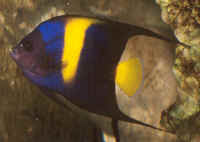
Fishie Mix & Recommendation Stocking an Aquarium for The Long Term 12/5/08 Hi, <Hey there! Scott F. in tonight!> I have been reading your site for a while and really enjoy the information you provide. Read the good reviews you had on the Aussie Harlequin Tusk and just got one. It is eating within 24 hours and is swimming, curious, and beautiful! <Excellent...A great fish in the right aquarium.> Anyway, I've also read reviews on the Map Angel and decided it sounded nice. So I was wondering if I could add this and a couple more to my tank, all my fish now get along great and all except the tusk I've had between 2 and 7 years. I have an established 240 gallon semi-reef but have another tank I can move coral to if they get munched, so that is not a concern. The 240 is hooked to a sump, fuge, frag tank with another 160 gallon of water. Total system volume 400 gallons with skimmer and normal equipment to support a large tank. <Sounds like a nice system.> The fish I have now are: Swallowtail Angel Harlequin Tuskfish Marine Betta Yellow Tail Blue Damsel Sailfin Tang <Gets REALLY large!> 2 Gold Stripe Maroon Clown Coral Beauty I would like to add: Map Angel <Hmm...I have an issue with keeping this fish. Yes, it is hardy, beautiful, and adaptable, but my concern is the huge size that this fish can attain. Twenty inches is not uncommon for this fish. A fish of this size roams over huge territories in nature- acres. To keep a fish that can reach this size in anything but an absolutely enormous aquarium (like dozens of feet long and thousands of gallons in capacity) is like you or I spending the rest of our lives in a walk- in closet. This presents some moral issues for the aquarist. I, personally am not in favor of keeping large fishes such as this one in most aquariums. I discourage you from keeping one as well. Just my two cents worth, as they say.> Male Swallowtail w/another female <A more manageable size, but you would probably hit stocking capacity by adding one or more of these fishes...Two would really put you over the edge, IMO.> A couple more of the same damsels <If you add one more of the Swallowtails, you'd be able to add maybe two more of these fish...then you'd be maxed out.> I am not planning on buying a bigger tank so what I get would have to be housed in the system I have now permanently. <Very responsible philosophy!> Does this sound like a decent combo of fish with the new additions? Thanks, Flo <Well, Flo, as reiterated above. I'd pass on the Map Angel and go with smaller fishes. It's a better long-term move, IMO. Hope this helps! Regards, Scott F.> - Pomacanthus Maculosus Compatibility - Hi Guys, I received him as a gift without notice (shipped) and he's about 5 inches long. <Goodness...> I'm currently keeping him in a quarantine tank with a one and half inch Purple Lobster. I'll start with what I have and you tell me if I'm going to have a problem. <Actually, you already have a problem. Lobsters are not to be trusted with anything. You should keep lobsters only by themselves. Please separate these two or you may be quite sad.> Fish: Forcipiger longirostris Centropyge bispinosa Cirrhilabrus luteovittatus Pseudanthias squamipinnis Amphiprion ocellaris (2) Chromis atripectoralis (2) Chrysiptera taupou Inverts: Scarlet Shrimp (2) Astrea Snails (10) Scarlet Reef Hermit (3) Button Polyp Yellow colony polyp Mushroom coral Toadstool Green Starburst Polyp 3 Large Feather Dusters 150 gallon tank; 30 gallon reservoir tank connected. CPR Refugium Sump with EuroReef 25 watt U.V. 180 lbs. live rock You guys are great, thank you! Carmina <Well, a fabulous fish, provided it survives the lobster would make a great addition to any tank, but you should be cautioned - it's very hard to predict what an angel might choose to take a pick at. Any coral is a potential target. Best to get the fish accustomed to eating intended food during the quarantine period and see how things go from there. Cheers, J -- > Pomacanthus Maculosus or P. Asfur? Hi WetWebMedia crew! Hope it is ok, I attached a pic. <No problem!> I was wondering which species it is, P. maculosus or P. asfur? <It looks like an Asfur to me.> Reading the WWM page on differentiating, Bob says how the yellow tail in juvenile is the give-away. However, I have seen loads of pics on TV (documentary on red sea), and nearly every Mac there has a yellow tail. <Maybe they were Asfurs.> Mine has a blue bar at the edge of his yellow tail. I haven't seen that in pic of Asfurs. Mine also has the dark blue flecking on his forehead if you look closely. Again I haven't seen that on Asfurs. Finally, mine sometimes tones down his colors to a paler blue, very like the pale blue of adult Maculosus pics I've seen. He is a little under 3" body length (little over 3" including tail). Anyway, your judgment on this would be appreciated. Thanks for taking a look. Regards, Matt PS. if you guys want a pic for the wet web site.... no problem, because I note you're missing one at a sort of intermediate stage.... or even for wet web photo's. <This will definitely be posted on the WWM FAQ on Angelfish. Thank you for your generosity. -Steven Pro> Wrasse and angel Hi guys, 2 Quick questions. Tank is 72"x18"x18". Home to my Asfur angel and volitans lion. Each about 2.5 to 3". (1). I know how big Asfurs get in the wild, but how big is he likely to get in my tank, given an average diet and water quality. <About eight inches standard length, ten overall (ends of unpaired fins)... six in a year... the rest within two likely> (2). I love a lunare wrasse (Thalassoma lunare). If I got a small one, is he likely to cause havoc. <Should be fine with the Asfur. Bob Fenner> I had one before, but I was very inexperienced, and I made the mistake of him being one of the first introductions to the tank ..... as he result he was a bit of a bully. Cheers, Matt Is my Maculosus an Asfur ? Dear Bob / Anthony / Steven..... First of all, this is my 3rd email to you guys in 24 hours, so my apologies for so many mails. This should be the last one for a while. Not sure who I am getting :-), so I'll give a quick intro. Bought a little red sea angel a few weeks back..... sold under the scientific name P. maculosus, and common name of 'purple moon angel', so obviously that caused a little confusion, but I assumed the scientific to be the accurate one...... however the more I am reading, and the more pics I see, he is beginning to look like an asfur!!!! Now I don't mind either way, but none the less would like to know, and since there is a price difference in this part of the world, then I'd like to know for that reason too. <Please see here, http://wetwebfotos.com/Home?actionRequest=articleView&articleID=94, regarding picture of each species and short description on telling them apart.> Allow me to describe him. He is approx 2" body length, maybe 2.25". Still predominantly juvenile in coloration (obviously at that size) but he is changing. His yellow stripe goes from the tip of his dorsal fin, to a little over half way down his flank. The portion on the flank is practically vertical and pointed to a sharp tip, maybe slightly leaning toward the rear, then where the body and dorsal meet it strikes off backward at an angle to the very tip of his dorsal. As yet I haven't seen any pictures of the Maculosus with yellow in the dorsal, but a lot of the asfur pics show this. His caudal (this is the bit got me really thinking) is also yellow. Not it is not as vibrant a yellow as that in the center of his body, but it is as yellow as the yellow in his dorsal fin. None the less, it is distinctly yellow, and his a light blue rim around the outer edge. A slight degree of mottling is appearing on the forehead, although judging from the pictures in "The Conscientious Marine Aquarist", this mottling is common to both species. Looking at the pictures on P25, and on P259, if I had to guess which one my juvenile looks more like, then I would have to say the Asfur. Another thing I am looking at, it appears to me that the Maculosus has a more triangular shaped tail, with a slightly straighter edge and slightly more elongated, where as the Asfur seems to have a more slightly rounded, fan shape tail. Lastly, with regard to behavior. I have read how the maculosus is so much more outgoing.... well I know as a juvenile they are all pretty cautious, but this little guy is a lot more so than the emperor I had, and a guy I knew before commented on how his juvenile asfur spent a lot of time hiding, as part of its natural behavior. Also, my little guy seems to really dislike my 4 line red sea cleaner wrasse, who is very similar in color and size.... I note how the asfur is reported as particularly not liking its own kind, where as no such comment is found about the maculosus, and is reported as pretty much letting everything else alone. <None of the large angelfish like their own kind in aquariums. They are all very territorial.> I don't know if my description has been good enough to make a differentiation between species or not, perhaps there is another more tell tail way of differentiating ? I have looked at the pics on Flying fish express, Fishbase, and of course these ones here.... and the pics in "The Conscientious......Aquarist". I don't suppose you guys have any pics of these angels in the transition colors? Or other sights with pics. <Yes, www.WetWebFotos.com has many images.> Thanks for reading in any case. Regards, Matt <Have a nice day! -Steven Pro> New Angel Hi Anthony, <Steven Pro taking a few for Antoine. He is getting a little behind with the emails since we have begun work on the first book from the WetWebMedia crew.> You might remember be from a month or so back. Well cutting a long story short, and after lots of reading etc., I purchased a Maculosus Angel. He is about 2.5" long, settled in great, and looks like he is in the middle of his color transfer, as he has a huge yellow band from the tip of his dorsal to about 2/3's down his flank. As I mentioned before, I had reasonable success with an Imperator angel, growing him from 2.5? to 6-7?, through color change etc?. only to loose him to a freak and substantial power failure last winter. I loved that angel so much, and I read that the Maculosus angel is a lot hardier etc, so I thought I would probably be able to provide him with a good home. <Seems like a reasonable choice.> I obviously know basic Pomacanthus care etc, but this time I want to make as good an effort as possible, with the benefit of the previous Pomacanthus experience. He is currently housed in a 84?x18?x20? tank, and is destined for my new 79?x30?x30? tank in about 10 ? 12 months time. <Wow, truly refreshing! We get some many questions from people asking us if they can cram this or that fish in small to moderate aquarium.> I feed the best diet at my disposal, with includes a couple of dried foods (Kent pellets, for carnivores and for herbivores), a wide range of frozen foods including red plankton, krill, squid, brine shrimp (plain, Spirulina and omega enriched), Mysis, mussel, cockle, and I also feed Nori (red and green) on a daily basis. Weekly 10 ? 20% water changes are conducted, and I am presently letting the S.G. rise to about 1.024. <Could go even a little higher for this Red Sea fish, but all your husbandry sounds solid.> Basically, I am just looking that I am on the right track with this species, as per the Imperator, and was wondering is there anything else I can do to optimize his health, growth, ultimate size and color? <I would recommend adding an Angelfish particular frozen food that has sponge matter in it. Also, perhaps soaking some of the foods in Selcon and/or Vita-Chem.> This fish will be the center-piece specimen, and definitely dominant. Tank mates will be a couple of tangs (Regals and Yellows), and a couple of lion fish (volitans and D. brachypterus). How fast can I expect this angel to grow, and under these conditions, how big would you expect him to get? <Not a particularity fast grower, but once in the big tank, should easily reach close to one foot in length.> Would you suggest any further measures? <You did not get into a lot of your equipment, but a big skimmer and refugium/algae harvesting and export would be a good idea. You may also want to consider a generator or other device for those power outages. At the very least, having a few battery operated air pumps around for emergencies.> Thanks for reading. Regards, Matt <Good luck to you and your fish. -Steven Pro> Asfur Angels I was wanting to know your opinions on Asfur angels, other than being incredibly expensive and beautiful. Good/bad, easy to take care of/ challenging, just over all specs. <Pretty much the same as the other member of the subgenus Arusetta. Read here: http://www.wetwebmedia.com/marine/fishes/angels/Pomacanthus/maculosus.htm and the linked FAQs beyond> Oh, and also, what has Bob been up to. <Same ole pet-fish madness... writing, diving, living...> I used to e-mail almost daily for questions about 2 and a half years ago. I don't know if he would even remember me, but I owe what knowledge I have impart to him, and now you guys. You guys are learned people. I should start my emails with Doctor from now on :-) Just wanted to say thanks for the years of knowledge. Keep it up. Tell the coot hi if ya see him. John Moyer <Hello to you my friend. Bob Fenner> Angels (compatibility) Hey there! <Hello> So I need some advise on how to make my angels get along. <A formidable task. Many possibilities...> I have a thousand gal tank with four large Angels. (15x4x2) I have a Mac (12") that has been with me for two years Emperor red sea (8") two months Blue face (6") two months Majestic (5") two months. The Mac just terrorizes the Emperor, so I put a divider in the tank now and he terrorizes anything else that is close to him in size (Desjardin tang). I have about 500lb of live rock in the tank. Do you think the problem may go away if I isolated the Mac by himself for a couple of months and upped the live rock to 1000 lb. <Worth a try. Some individuals do "settle down"...> You see the live rock offers restriction to currents and that is part of the reason I don't have the whole tank full of it. Please do advise. I love the Mac who is named after you (BOB) since your book convinced me to purchase it. Are they normally this territorial? <Less nowadays... with folks using "cultured" individuals of the subgenus Arusetta and starting from small size there is less frequent behavioral problems. Bob Fenner> Thanks. Re: Angels Hi! Bob, Is it possible to catch the MAC angel and clip of his gill spines with nail cutters or is that a bad thing to do? Would that stop him from hurting the other fish. Or will isolation take care of the problem? Please advise. <Is possible. Might result in a secondary infection there, elsewhere due to chasing, netting... the trauma might well "cure" the aggression for a bit to permanently... May not do much on the other hand to alter its behavior. I would just isolate this specimen for a few days. Bob Fenner> Thanks Shy Asfur Angel Hi, Bob, <<Bob is away diving, JasonC here standing in...>> Thanks for your earlier advice regarding an asfur angel in a reef tank. Based partly on that, I acquired a 3 inch juvenile asfur 3 weeks ago. I feed a mix of frozen (Formula II, Angel, brine), flake (formula I and Spirulina) and Caulerpa. He eats but mostly darts from the LR then hides the rest of the time in the LR. In my experience, even the shy fish settle down after a few weeks but he is still quite skittish. Your book and web resources suggest that the Asfurs are a little flighty. Will he settle down and become more visible in time? He is a beauty but I hardly see anything of him. <<if it helps, I can completely sympathize. I placed a two inch adult Majestic angel about three months ago, and I don't get to see much of it for the same reasons. I find the longer I try to acclimate my face to it - stay frozen in front of the tank, don't wear my watch [shiny/flashy] I get to see it more often. So... I know what you are saying. I'm thinking this is due to their size [food size in the wild] and new conditions. Both of those situations will improve as they get used to their surroundings. So neither of us have anything to worry about. As an aside, I can see you read up - I read up too - we both knew it could be like this, yes?>> The only other large fish in the tank is a purple tang which is an inch larger than he is. Nothing seems to be pestering him, although he is out so little, it is hard to know for sure. <<give it time - lots of time - months, it WILL work out. These fish are making a huge adjustment, why just the other day they were out in the ocean, now they are a continent away. It takes me a week to recover from a "pond jump"...>> Due to an unfortunate crack in my acrylic tank, I will be swapping my tank in about a month. My plan is to hold the asfur in a 45G tank with the tang, a flame angel and a few smaller fish, for 1-3 months while the big tank settles out and any cycling caused by the disturbance settles out. Since I need to tear down the old tank, I have been contemplating re-arranging the LR and was specifically wondering if you thought a layout with more swimming channels might help my asfur. <<I'm a really big fan of the layout Bob presented in his book, [shameless plug, if you don't have it you should put in on your Christmas list] essentially two big islands of live rock - stacked so each has caves, etc. I've found this to be the best thing I ever did in my fish-only, and every couple of months I rearrange it into two islands, just differently shaped/stacked. Helped a lot with territory issues, lot's of places to swim around/beneath/between/behind as fish enjoy doing.>> My tank is 72" by 30" by 22" high. My current layout is two arcs of LR set against the back wall with a lot (10 to 20 inches) of swimming space all in front. It has plenty of caves but only one long swim channel. I like one of the layouts you showed in your book that has two facing triangles since that provides lots of loops for the bigger fish. However, it will be more difficult to construct so I am hesitating to commit to this. However, if you think it might make a material difference for my large fish, that would probably tip the balance in favor. <<ahh... there we go, no need for the shameless plug. Try this, you won't be disappointed, it is incredibly appealing to the eye - well, mine anyway. The fish do seem to like it though and this is probably more important - also better for water circulation. Think about the wire-tie trick to bond the larger pieces together if you don't have any big foundation pieces.>> Thanks for any help! Marc <<Good luck. Cheers, J -- >> More on the Shy Asfur Angel - Questions about Clown Fish Hi, Jason, <<good n'you?>> Thanks for the info. I'll just give the angel time. <<sounds good>> Unfortunately, my tank tear-down won't help his acclimatization but it is unavoidable. <<happens>> I will go with the LR arrangement with lots of channels. <<it's your picture so paint the way you want!>> Instead of the two triangle layout in Bob's book, I was thinking of three (yes, I do have the book; just picked it. Great book; Bob should publish another ;-). I think three triangles might be easier to construct in a 72" tank. <<My FOWLR is 75 and I could only fit two...>> Plus I can make one of the triangles an anemone "bommie." <<fair enough.>> As for clowns, I did check the table on the web page, very handy. Of the H. crispa commensals, what do you think of A. frenatus or A. Percula in terms of aggressiveness? <<If I were to pick one, I'd say the Percula would be friendlier.>> I'd like a clown pair but I don't want them to rule the tank. Or a false Percula? Regarding the ocellaris, is it reasonable to get 3-4 small tank raised and host them together? <<my favorite choice, best chance of getting a tank-raised, durable specimen. Only problem with these is that they require some of the more difficult anemones, BUT... in a large carpet, sure three or four might co-exist. I'd still think two would be better - but no guarantees as to whether they pair up.>> I assume one will eventually turn female but will she then pair up and drive out the two remaining ones or will she keep a harem? <<don't know so much about this, you may want to obtain, if you haven't already, the Joyce Wilkerson Clown book which is a very detailed guide to breeding clownfish and other clownfish fun>> BTW the asfur has been captive for most of his life. He was "larval reared", spent a few months at the LFS, spent 9 months in a hobbyist tank, was returned for eating xenia, spent another 2 months at the LFS then I bought him. Seems healthy all be it skittish. <<well, then at least you know he'll be a strong one. I'd guess then the skittishness is from all the moving around - kind of like a shelter dog. Give it time. I'm sure all will be fine.>> Thanks, Marc <<Cheers, J -- >> Maculosus Angel Bob, <author/friend Anthony Calfo in your service> Why are Maculosus Angels so [passive]? <this is not at all typical for this species. They are normally quite assertive like most Pomacanthus angels> My friend and I both have one. They are very shy, and get scared easily, hiding behind a rock, even when you just walk by the tank. <I'm guessing they were bought from the same source, which may explain their behavior due to shipping/handling duress> Mines about 9 in. He eats, barely, being more scared. My show emperor angel. Now the first day, I put him in my main system, he was swimming around, and eating right away. With the maculosus angel, I believe that ALL of them act this way, because my friends Mac shows the same behavior. What's up with that? <two fish do not offer a fair representation of the species, bud. And their tankmates are also a great influence. If the Emperor that you mentioned above was in the same tank, it would not only be irresponsible/inappropriate but the reason for the behavior. Large tangs and triggers would do the same for example. More complicated than a standard dynamic behavior for the species. Food for thought. Anthony> Maculosus/Asfur Hey Bob. In your article on the Maculosus you mention that it is closely related to the Asfur and are comparable as far as hardiness but that you prefer the Maculosus due to it's outgoingness. <Yes> Could you please expand on what you meant there? You gave me great advice on a Maculosus about a month ago and I was about to make the purchase yesterday when I saw 2 gorgeous Asfur.....now I'm confused again! They have so much more color yet I keep going back to the rave reviews of the Maculosus. Is the Asfur really AS hardy as the Maculosus? <Yes... and especially the last few years offerings... they are "cultured".> Thanks for your time once again Bob. Rick. <If you have the space, inclination, do try one of these magnificent fishes. You won't be disappointed. Bob Fenner> More Asfur questions Hi, Bob, Still enjoying my juvenile Asfur. We've discussed him off and on and you were instrumental in my decision to try him. After some observations, just had some behavior questions for you. <Okay> I'm wondering if either these are deeper water fish or if the juveniles are especially shy and generally only active at dusk and dawn? <Not deepwater... a few meters to tens of meters is where I've encountered sub-adults, adults... and very infrequently juveniles... the latter especially hide, associate with the reef> My juvenile has settled down and is fairly active when the MH are off but when these are on, he is almost always hiding in the LR. I understand these are fairly flighty angels but I'm hoping/expecting that he will be out more as he gets older. Just want to seem him more; he's a beauty ;-) <I understand. Lot of organisms try to eat them in the wild> This one has a fair amount of gold on his dorsal fin. I recently noticed some whitish (possibly light yellow) spots on his ventral fin. They are present and identical on both sides so it looks more like color change to me than stress or disease. <Not disease> Hard to tell; he doesn't stay put for a good look. I wasn't expecting white or gold in that place for an adult Asfur, though. He has a yellow tail so I'm pretty sure he is an Asfur and not a Maculosus. Guess they can vary a fair amount? <Appreciably... more has to do with nutrition and water quality than within-species variation.> Thanks for any thoughts or comments, Marc <Be chatting. Bob Fenner> Red Sea Angels Mr. Fenner, Last week I emailed asking a question concerning mixing angels. I have a Red Sea Juvenile Imperator and you informed me that it was better to stick with species from the Red Sea (don't know if this included angels from the same family). Anyway, I found a small Asfur from the Red Sea, would this be wise to mix with the Imperator? <If you have a large enough system (depending on the size of the two angels to start a couple of hundred gallons), this should be fine. It is so that "generally" large Pacific and Indian Ocean Angels/Pomacanthids of similar size, color especially, don't mix well... but the Red Sea is a "different" place in many ways... Bob Fenner> Ron Asfur angel in a reef Hi, Bob, First, thanks for the great
web site. I just love browsing there; learn quite a few things every
time. Noticed one mention of an Asfur in a reef tank but no details.
<Let's cover them here> Briefly, I've always loved angels
and have had my eye on the Asfur since the late 80s when I remember
seeing them go for $800. They are much more reasonable these days and
I'm tempted to add one to my reef tank as the center piece. I'm
pretty tolerant of coral nipping and have already made adjustments for
my flame and fisher's pygmy angels. I'm wondering what you
think my chances are with this angel. From what I've read for a
large angel, these aren't too bad in reef tanks but it isn't
clear just what the risks are. <You may not know, but this gorgeous
species is now "bred, raised in captivity"... accounting for
its consistent availability, size and much-reduced cost. It is notably
"easy going" and a good risk for many types of reef systems
of size. To place specifics here, at least two hundred gallons for a
small specimen, three hundred plus for a larger (six inch plus) one>
The tank is 6 feet long and 36" front to back with lots of medium
to small caves and crevices and a wide channel in front of the main LR
for swimming. One corner of the tank has a large, hidden swimming area
but there is no back-channel. Invert stock, in addition to typical
cleanup crew, are: SPS tolerant of picking from the angels (Montipora,
a hardy Acropora, Stylophora), various leathers, some LPS, lots of
Zoanthids, 4 bubble tip anemones (thanks to several splits). Fish stock
is fairly mild tempered: 9 green Chromis, 4 "lemon" damsels
(no id), the flame angel and the fisher's angel, a P. sankeyi, 2
maroon clowns. The larger maroon is a tad territorial but mostly with
the lemon damsels. <No worries> The flame occasionally chases the
fisher's, but not very aggressively. <Again, no real problem. If
the Asfur starts here at near three inches or so, it will become the
dominant specimen almost immediately, and actually reduce the potential
aggressive dynamic in your system> The sankeyi never picks at
anything and seems quite tame for a Pseudochromis. I'd like to add
a purple tang although I would take the asfur over the purple.
(Thoughts on how those two would get along given their coloring?)
<They should be fine together here> Also looking at some fairy
wrasses at some point. <A very good choice> I'm willing to
tweak coral selection for a fish but if there is a chance of the angel
laying waste to my tank in a few days, that's another matter.
<Not much chance> While I've got your attention, I've
tried a number of tangs and have returned them for various reasons. (A
sohal was doing fine but I accidentally trapped him while catching
another fish and decided to return him given the horror stories I heard
about them as they got larger. An earlier purple tang was returned
after eating my xenia but I understand that is unusual and it occurred
after a 10 day period where I neglected to feed him his romaine so
I'll take the blame for that.) Any thoughts on a tang if I was
going to add just one? I've always liked the purples myself...
<The xanthurum for sure would be/is my first choice as well. Be
chatting. Bob Fenner> Thanks, Marc Compatibility I hoping you can give me some good information. I have a 75 gal tank. It recently completed it's cycling. I have about 30#'s of live rock, 60#'s of live sand, 2 white-striped maroon clowns, 5 yellow-tailed damsels. I am factitious about taking care of my tank. I want to add 3 more fish. An Asfur Angel (3"), a Red Sea Raccoon,(4"), and a bicolor Foxface (4"). I understand that the Asfur will get very large. ( I will have a much larger tank in a couple of years). Will these fish get along, and how would they be introduced to the tank? <Your Maroons may become/display a bit of obvert territoriality with age/growth toward all, but this is a "mix-able" assemblage. I would place the Butterfly, then Foxface/Rabbitfish, and lastly the Asfur, a good week or more apart> I do not intend to add any more fish to this tank. I will be adding snails and shrimp, possibly a starfish. What do you think? I have been advised against the Asfur. I have been told that they get quite large and can become VERY aggressive. <About a foot long in two, three, four years... and not aggressive, or more aggressive than most marines... Especially now that this species is tank bred, reared, it is much more easygoing... and never was "that mean" for a large Angelfish> Presently the Asfur is in a tank with a 2" clown. She has been eating very well, ( even flake ) and seems very content. The fish store owner has had her for about 4 months. She seems great.... <Yes, a gorgeous centerpiece species> I appreciate your help. You have a GREAT and informative site. Thanks again. Kevin M. Mickey <Thank you for writing. Be chatting. Bob Fenner> Asfur Dear Robert, Can you possibly identify this? All along I thought it was a Asfur, but it sure looks a lot like my maculosus http://www.marineangels.com/Asfur/index.htm <I make it out as an Asfur... for the yellow caudal mainly. My pix: http://www.wetwebmedia.com/pomacant.htm Though other markings (the trailing yellow on the dorsal surface, darker blue mottling on the head... do look like a maculosus... Perhaps a cross? Bob Fenner> Warmest Regards John Fish id? I was reading your web site and had a question about whether or not - my new angel fish is a Map or an Asfur. On your site I noticed you said one of the man differences in juv. was the yellow tail, but I wasn't sure if that was as adults or juv.! <In juveniles, the Asfur's caudal/tail is yellow> Either way it goes, is alright. But it was bought from FF as a juv. Map angel. Thanks in advance for your help & thanks for your book & web site. <You're welcome> Oh, I forgot on page 24 or 25, of your book - there is a picture of an changing (either Map or Asfur) Which one is it? <Bottom, p. 25, an Asfur. Bob Fenner> Thanks again, Jackie Hutcherson Pomacanthus imperator and Pomacanthus maculosus Hello bob, My dealer had some show size angel and I fell in love with the 16 to 18 inches imperator and maculosus angel immediately I saw them. do you think at this size (16-18inches) are they easy to keep? <Decidedly not as easy to keep as ones collected at "reasonable" (a few inches) in length and raised in captivity... Fishes (actually all animals) collected "large" are less adaptable to captive conditions... like food acceptance, getting along with other "novel" species... And shame on the collectors and retailers for extracting adults... leave these in the seas to reproduce.> at the moment they look great. if you were me which one will you purchase? the maculosus or the imperator angel. and why? <Mmm, neither... as I am morally opposed to their collection in the first place. Bob Fenner> My beautiful Mac (angel) I have been a saltwater enthusiast for well over 10 years but early on I had trouble keeping Angels of any kind alive. I attributed that to my own inexperience and poor conditions of my tank .Now I have the finances to try again and recently purchased one of the new tank raised Mac Angels. <These are fabulous specimens... very hardy, adaptable to aquarium conditions... accept all foods, colorful, intelligent, friendly...> Its quite a specimen and I've read up on your Q and A and saw where you mention that their diet should be 50% vegetable. I've been feeding leaf lettuce and spinach but it seems to go straight through it with out being digested . <Yes, skip terrestrial greens> I recently bought some O.S.I. Spirulina flake food and it seems to love it but I was wondering is this an acceptable amount of vegetable matter in its diet. <Not totally no... best actually to grow some macro-algae... and have some micro-algae available via live rock...> I've tried Julian Sprung's dried sea weeds but it just turns it nose to them. I've seen lager specimens and I just want to make sure this angel is with me for the duration .As for tank conditions all parameters are kept in check through monitors and dosing. The tank is 200 g with MH lighting ,wet dry filtration, A.E. Tech evolution 750 skimmer and 250 lbs of live rock (Fiji branch and general Caribbean). Tankmates include a dwarf lion ,Black Volitans and Blue line trigger with the possibility of maybe adding a golden tail moray .Any further advice I obtain from you would be greatly appreciated -Thanks <Please read through the Food/Feeding FAQs on our site: www.WetWebMedia.com and consider the live rock/algae route. Bob Fenner> Maculosus Compatibility HI, I have a Maculosus Angel in my 135 gallon tank. He is about 6" long and has been in the tank as the only angel for about 3 years. Can I add another angel such as an Annularis or French??? If yes, what size? <Mmm, well... not really... though the Maculosus is an "easier-going" species... three years is a long time to be boss then having to share... and a 135 is on the small side for two large angel species> Other fish in tank are: Bird Wrasse, Sohal tank, tomato clown, 2 damsels, 3 PJs and 2 small hawks. Filtration includes wet dry, ETS skimmer and UV. Thanks Jonathan <I'd look into other species. Bob Fenner> Too shy Maculosus Greetings bob, Got a fishy problem for you, Gordon; that's my Pomacanthus maculosus, he's about 5" long, and in his adult colours, eats me out of house & home, been living with me for 8 months, Gordon never catches any diseases, he's as tough as old boots (as if you didn't know) but there's one problem! " he's a nervous wreck" he hides most of the time, when I feed him he watches me drop the food in, then, when I back off he darts though the water grabs the food and returns to his hide, all in a flash! (hence the name Gordon!) I thought he'd get out of this in time, don't you think its unusual for this species of angel fish! <You're right, unusual> apart from giving him valium, any ideas as what I should do bob. <Try the tried and true "ditherfish" here... a small grouping of perhaps a Chromis damselfish species will have that Gordon out in a Flash... In the ole days we used to use Deskills (not trimaculatus) for this same task or Abudefduf (Sergeant Majors) for acquainting wild caught, otherwise shy fishes into being more outgoing... it works> Like the site and your book, many thanks, <Ah, great to read, Bob Fenner> Geoff. from England. Asfur Angels Question... Hi Bob, I just purchased a beloved Asfur this evening. A real Beauty. I had been fortunate to observe and put him on hold for 6 months at my dealer's store. <Wow! A great species to have on hand for so long> He is great. Nice and plump from eating everything you throw at him. He shows the normal aggressive behavior and is my center piece. <A good place> I have 11 years of Marine Experience and have kept several Big Angels. Some of my accomplishments have been a Majestic Angel, Queen Angel, Koran Angel, and Flames of Course. After setting up my 75 Gal (First Big Tank At least big to me) I have added a 4 inch specimen with a maroon clown and a Fiji Devil. I plan on adding a Desjardini Sailfin Tang, a Red Sea Raccoon (In keeping with species from them same region) <Great> and a Bicolor Parrot or Hippo Tang. <Skip the Cetoscarus bicolor, go with the Paracanthurus> Adding all a couple of weeks apart to let the Bacteria keep up. Now to my question. I have read much about the Asfur. I have read about there normal habits and feed, etc. After seeing the size of the systems of those in the QA portion 125+ I started to wonder about the size of my tank. <Me too... I generally suggest a 300 gallon about now...> I thought he would be in for the long haul in my new tank but I am beginning to scratch my head. I really am happy with a 75 and may upgrade a couple of years down the road to a 110 (It will fit on the stand) but is the Asfur going to grow too large? <Yes, psychologically ahead of physiologically...> All of the material I have read stated that the Angel, in the wild, normally attains the size of 6 inches or so and has even been associated as a pygmy angel. <What? Nah... have seen them near their full size of sixteen inches in the wild, had ones of over a foot in length in captivity... Who do you recall making such statements? Please see Pomacanthus asfur on our site (www.WetWebMedia.com) and FishBase.org...> I am really confused. I understand that there is a firm distinction between the Asfur and Maculosus (Forgive the spelling) as it has been nonchalantly avoided by questioners. The Mac, I understand, can grow to 18 inches, I have seen one that large. I have a large Wet Dry Unit with in Sump Protein skimmer, a couple of power heads for circulation and an Aragonite bed. I have even added a high powered pump for a gentle mist of bubbles for added surface agitation to oxygenate the water even more then the wet dry unit will provide. <Good idea> Lighting is on a timed schedule (Power compacts both white and actinic to stimulate algae for nutrition) There is a lot of free swimming space and he is doing quite well (Even coming out in the last couple hours and exploring his surroundings). He is fully shaped and the colors are very prominent. No sign of infection, disease, or lost finnage. <Yes, this is likely a tank-raised individual out of the Far East... quite common nowadays, and fabulous> Can you give me some advice pertaining to growth and true classification. Hardiness is no question in my mind. Surely rivaling and overtaking that of Navarchus (Her royal Majesty) Thank you in advance... <Do take a look on our site and FishBase... Growth can be six inches in a year to nine in two to eleven or so in three... Bob Fenner> Mark, Maryland Pygmy associated (re: Asfur Angels Question...) It was referenced that the Asfur had been considered pygmy because of its small size in The Book of the Marine Aquarium by Nick Dakin. <Wowzah! Nick is a much more careful writer than this... very surprising> It is a wonderful overview of marine keeping and very informative as far as the advanced portion of the hobby. Julian Sprung was also an associate writer on the book so the source seems correct and experienced. <Well...> Not that I am refuting your debate. <Not refutable in this case... have collected this fish in the Red Sea, N.W. Indian Ocean over years time...> Thanks for the info. Will check out your site. <And most recent book which includes a Fishwatcher's Guide to the Fishes of the Red Sea... Bob Fenner> Mark <<I should have suggested looking on fishbase.org: http://www.fishbase.org/Summary/speciesSummary.php?ID=11194&genusname=Pomacanthus&speciesname=asfur ... stated length... 40 cm., 16 inches. RMF>> DISCOLORED ANGEL Dear Bob, Love your wet web media site. Your
dedication to helping us neophytes is greatly appreciated. <Thank
you> Question - I have a Pomacanthus maculosus (map angel), about
4" long (not including tail) and in adult coloration. I got the
fish from one of your sponsors that has a very solid reputation for
acclimating angels properly before they ship them out. I never-the-less
put the fish through a quarantine period. <A good idea still.> I
have the fish in a 20 quarantine gal tank ( I know, larger would be
better, but you've got to draw the line somewhere). The tank has
live rock, a reef sand bottom, lots of plant growth, fully cured live
rock, and it's own Remora skimmer. After 2 weeks in quarantine,
everything was looking good. The fish had some small bumps between
it's eyes that to my eye looked like either Lymphocystis, or maybe
just a few scrapes from rooting around the rock. <Typical... stress
related to moving...> Unfortunately it was at this time that
disaster struck in the 125gal tank that was to be the fish's new
home. To make a long story short, the temperature in the tank fell
precipitously while no one was home, and by the time we noticed, we had
a tank full of sick fish. Getting those that would fit into hospital
tanks, redistributing corals, etc. and eventually getting the tank back
on an even keel was going to take time. <Yikes, what a
nightmare...> With space at a premium, the angel was going to have
to stay in the quarantine tank a while longer. My quarantine tanks are
plumbed so that I can connect them to the main system.
<Neat> My normal process is 2 weeks in isolation and if things
look good, connect them to the main system for a week, then move the
fish to the main system. The angel was eating great, looking good, and
I hoped for the best. Yesterday (by this time she's been in that
tank for about a month), she looked totally washed out. Other than the
yellow stripe and some blue around the edges of her body she was a
pinkish color all over. I checked the water, it was in excellent shape.
She ate normally, no sign of parasites, just this lack of color. Today
she is eating almost nothing and is "listless". Not gasping,
not scratching, just not doing much of anything. <No problem...
color, health will return when acclimated to the main system...>
Question - the 125 gal is ready for fish (no fish in there now, just
rock and inverts). Should I move the angel to the 125 in hopes that
this is all symptomatic of being in a small tank for too long?
<Absolutely YES> I don't want to contaminate the 125 if this
is some sort of disease as it is hooked to several other large tanks,
but I don't want to lose the angel either. After looking through my
library of books (which includes yours, by the way) I cannot find much
in the way of diagnostics for a fish that has lost it's coloration,
but seems to have no other symptoms. Other courses of action?
Suggestions? <Really to just move this specimen, quickly, via two
nets (one to guide, the other to lift, to the main tank... and let it
hide for a day or two... It should rally, improve quickly on its own...
Do add vitamin preparation to the foods daily, the water this
week...> Thanks, Dick from Fredericksburg VA <Bob Fenner> Mum's the Word (Angel Selection...) A quick question. Just how long would I be able to keep an Asfur or Maculosus in the 180 before needing a larger system? Long enough to get a significant other attached to it, and to save enough money, so that I could start a SECOND 300-gallon system with full approval? (Would probably need about 18 months to swing it. . .) (And don't tell a soul I asked you this. .) <Hoping your significant other doesn't browse the FAQs, but about a year to a year and a half... Bob Fenner> JD--always planning ahead. . . James A. Deets 350 Gallon Marine Fish Livestocking Hello, I got a question
about a tank that I am going to be setting up in the next six
month's it will be a 350 gal. I am going to put the fish i have in
my 125 in there. <How nice for you, and your fishes!> Right now I
have a stars and stripes puffer an Assasi trigger and an asfur angel.
Will I be able to put a mappa puffer, a sohal tang or powder blue which
would be better? <The Sohal by far... though this species can be/get
feisty... the Powder Blue (Acanthurus leucosternon) is not typically
hardy, would not be happy with these other fishes, and is a very common
carrier of parasitic disease... a nightmare to cure/treat in a 350...
Please do read over the Tang sections on the site: www.WetWebMedia.com
and the associated FAQs files... on the Sohal (Acanthurus sohal) posted
there> also a Conspiculatus angel fish i have heard they are hard to
keep but i can get good condition specimens at the store i got to do
you think they will do good together with the other angel. <Tough
call here... the Asfur would/will be happiest being the only large
Angel species... Read over the "Angelfishes of the Red Sea"
and "Fishwatcher's Guide... Red Sea" sections on the WWM
site (a full length version of the Fishwatcher's Guide is available
in my latest book> The Hawaiian black trigger I would like to put
also. But I can not find them often. <Actually this is a very common
fish... worldwide in the tropics in fact... just not a great beauty (as
in the market), and therefore not frequently collected... a hardy fish
species. Be chatting. Bob Fenner> Asfur Angel non-problems Hello, Sorry I've been sending so many questions lately but the asfur angel i bought doesn't eat much. I have had him for about a week and he eats little tiny pieces of frozen shrimp and seaweed selects I've tried flake food and angel formulas but it wont touch that the other fish in the tank are an Assasi trigger and a stars and stripes puffer. He is not getting thin but he doesn't eat much and what i was worried about was his health. I would think he would be doing good now because it is a 125 and there is 150 pounds of in live rock for him to hide in. <And also to search through, sample as food... Please don't over-worry re this specimen... Pomacanthus (Arusetta) asfur is a very tough, suitable aquarium species... especially the new tank bred ones (which is very likely what you have... If it isn't "getting thin" your specimen is eating... and will learn to take more captive fare with age, growth> So what else would you recommend feeding him? It will probably take a year until i can setup the swimming pool for them and i am going to go with the Rubbermaid type pools instead. I am going to put the Conspiculatus angel in it because if him and the asfur fight i will take one out and put it in the 125. Do you know of very many people that can keep the angels or are they hard to keep like the blue ribbon eel? <Do know a few rich folks who keep them... not near as hard, hit or miss as Rhinomuraena> I am going to be having all large fish in this tank so how many fish could i have that are going to be a foot long i was going for around 6 big fish do you think this will work? <No, too crowded> I was thinking my puffer a mappa the 2 angels the trigger and a sohal tang maybe a Naso also. What tangs usually do better the sohal or clowns because i am going to get one Thursday? <See the reviews of all tang species on the site: www.WetWebMedia.com Bob Fenner> Eek :o( Well, I put in a cleaner goby and some copper. I have
Sea cure. The test kit says its at 0.5ppm. Would you suggest higher or
lower? My maculosus and black durgeon look like goners. The passer
might live. The other two don't move, breath heavy, won't eat,
hide. I'd be surprised if they were alive tom. I prolly won't
be able to restart the tank if all is lost. I'm going to be a
senior next year so I'm going to leave for college in a year so it
doesn't make sense to set the tank up again. This is really so sad.
Thank-you for all your help and advice and I'll still read books
about keeping fish (I've just ordered a few more from my book
store). I was sort of counting on these fish to live. Thank-you again.
For your book, website, and personal help. Hope all is well and stays
well. Wish me luck in getting into Brown (they have marine bio!)- Yaron
(Let's hope my fish do live). >> Ah my young friend. My heart
sinks when I think of you and your situation. I would keep the copper
at the present level... and I wish you good life. Bob Fenner Feeding strike I am just wondering if it is normal for my maculosus angel to stop eating during the copper treatment. <Yes> The rest of the fish are eating. The maculosus looks at the food and comes to the corner I feed my fish in but he doesn't even nip at the frozen food. Should I try live brine or algae? <Yes> He hasn't been eating for a week. Oh, and one more thing: How can you tell the sex of a passer angel? Externally? Can't. I've heard that females have white pelvic fins and males have yellow but I've also heard the exact opposite. Thanks for your advice and help. - Yaron >> <No worries> Some good news Well, the copper and the lower SG and the high temps and the cleaner goby seems to be working! All my fish are doing much better. The passer angel and black durgeon seem to be on the way to recovery with continued good appetite. I have been slowly lowering SG to 1.020. Is that safe? <Yes, assuredly> The temp is 80 deg. The only problems are 1. the bacteria in the filter seem to have been hurt. I am making water changes to help them out. 2. The maculosus angel, while doing much better (it is now swimming and not hiding), does not eat. It comes up to the corner where I feed the fish during feeding times (9AM, 5PM, 9PM) but does not eat. It sort of looks at the food. The maculosus seems to have been hit the hardest and I would really like to build its strength up by getting it to eat. I am currently feeding angel formula and formula two. I usually feed trigger formula but I ran out. Do you have any suggestions? I was thinking about trying some dried seaweed. <Just stay with the program you are on> Do you have any other suggestions? As per water quality, etc? Copper is at 0.5. I am using sea cure. I have just three more questions: 1. Should have my dad continue to test for and administer copper when I'm gone? <Yes, for two weeks, give him my e-mail addr.> sea cure says two weeks and I'm leaving Wednesday That will be only one week. I'm not 100% trusting of my dad being meticulous with the copper, he comes home late. Is the risk from over medication more or less important than the help the fish will receive from the right amount of copper? <Not to worry, this is about the best that can be done. Be satisfied> 2. Should I run my UV light while using copper? It is currently off. <Leave it off... will interfere with the copper> 3. I have no place large enough to put the three fish for six weeks as the tank "goes fallow" What do you suggest I do to get rid of the parasites in the tank? <They will be gone after the two weeks... turn your UV on then... slowly raise the spg, lower the temp.> Thank-you for your help. I am both anxious and hopeful. Maybe, with some luck, my fish will live. - Yaron. >> <As it will be, Bob Fenner> Great news and a question Well, frozen Mysis and dry algae worked! The maculosus is eating. I think it has a problem eating gel based foods like angel formula and formula two but I'm not sure why. I'm sticking to what works. All the fish seem much better. This is the first time a fish has every gotten better and not just died when it got sick. I'm so happy and thankful for your advice and my fish! <Ah, good news all the way around> One question- I'm leaving for Israel tom. Tom. will also be the 1st full week that copper has been in the tank. Should my dad run it for two weeks longer or just one week longer? <Two weeks total> Oh, and one more thing- I've never had to add copper after the 1st dose. Is that normal? Is anything unusual and/or bad about that. Thanks for your help and have a good summer. - Yaron >> <Good formulations, in clean, properly set-up and maintained systems don't necessarily precipitate out copper... Test for concentration and adjust as necessary. Bob Fenner> Mac attack Hi Bob, After reading your rave reviews of this species in your book, and on the WetWebMedia page, I went out and bought one last night. He looks like a great buy; he nearly jumped out of the water and into the LFS guy's hand when I asked to have him fed, and he's quite gorgeous. <A good sign of health> FYI, the shop > also had about ten baby tank raised specimens. They were about the size of a quarter and cute as all heck. Are these starting to hit the market in larger amounts? <Yes, the species is being cultured in the Far East> I have a quick question and observation for you. I acclimated the angel and introduced him to my tank in the dark of night last night, as per the common recommendation. I had turned all of the tank lights off about an hour before hand, so all of my other fish were asleep when he went in, and since it was dark and late, I didn't change any of my aquascaping. As a bit of background, before this fish, I hadn't added any livestock to the tank for about six months, so the social order was pretty well established. When everyone woke up this morning, and noticed the newcomer, there was a whole lot of chasing and nipping going on (even by my Naso, the pussycat of the tank). When I went home for lunch today, it looked like things were pretty much back to normal, but the Angel is still mostly in hiding, inside a pyramid of LR. Do these fish usually start out timid, or has this one been harassed a bit too much? <The fish is no doubt fine... a new social order is being established... no problem> Should I now go ahead and rearrange the > setting, or do you think everything will cool down in another day or so? <Too late... leave all as is> > As a quick observation that you may appreciate, it seemed that the other red sea fish that I have didn't seem to bother him much at all, compared to the others. Even the current alpha fish of the tank, a 11" Sohal tang seemed only curious at worst. Hopefully this will hold true for the future, as I'm planning on phasing the tank to a red sea biotope... > Thanks, Dan > > Yes to all... the lack of aggression by Red Sea animals.. is normal. Please take a look at the Red Sea Section of the v.1 Fishwatcher's Guide posted on the site: www.wetwebmedia.com Bob Fenner, visiting and writing/photographing the section on the Maldives, I.O. MACULOSUS ANGEL Dear Bob, I have just read a question / topic on your daily column from 1/26/2000. It was about the MACULOSUS ANGEL, that you recommended someone get. Could you please tell us a little about it. It seems very similar to the asfur angel. Thanks, Matt >> They are indeed very similar... if you will sympatric species... about same distribution, size, temperament, and genetics... someone is actually producing young of this species in captivity! And they are gorgeous... My better rendition of what this species is to the ornamental marine interest can be found in an article stored at www.wetwebmedia.com... and I hope to have my better images of both species there soon... and wish you and I were diving in the Red Sea taking their pix right now! Bob Fenner, who is going out to Maui two days hence... and needs to! Maculosus angel I took your advice and added a 6" maculosus angel to my 125. At the same time, I put in a new, large piece of fake coral to disrupt the two fish that are in the tank ( a black durgeon and panther grouper, both about 6" long). My maculosus was eager to get out of the bag and after a 3 minute freshwater dip, I put him in. He has been hiding behind the fake coral ever since he got their, I decided to turn the light on after 4 hours, he still only comes out for a few seconds at a time. He seems physically fine and he has no trouble fending off the grouper's aggressiveness. Should I be concerned? Should I feed him or let the tank go unfed for a day. What can I do to coax him out? He seemed fine in the pet shop, he even came right up to my finger when I pointed too him and looked me straight in the face. I really love this fish and I want his life to be as easy as possible. Any advice would be appreciated. Yaron >> Leave the fish alone.... it will be fine. Bob Fenner Maculosus angel this isn't a question, just a thank-you
note. I LOVE MY MACULOSUS ANGEL. He is so friendly and curious and fun
and beautiful and makes the whole tank a better place. I was kinda
settling on him after I spoke to you about the personifer. But I am so
happy I followed your advice and bought him instead. This is a great
fish that commands your attention immediately and keeps your interest
for a long time. He's eating three different kinds of foods (dried
seaweed, shrimp, and frozen seaweed- formula two) already and is just
great. Thank you for recommending this wonderful fish. - Yaron >>
Outstanding! Glad you find the species (and this specimen) as worthy as
I.
|
|

|
Features: |
|
| Featured Sponsors: |