 |
|
| Home | Marine Aquariums |
Freshwater Aquariums |
Planted Aquariums |
Brackish Systems |
Ponds,
lakes & fountains |
Turtles & Amphibians |
Aquatic Business |
Aquatic Science |
Ask the WWM Crew a Question |
| Please visit our Sponsors | ||||
|
Tying in a macro tank. Substrate sel.
1/7/12 Display Tank Macro-Algae and Sand Types
09/30/10 Macroalgae, culture 10/12/07 Bob~ I hope this finds you well. Last time we spoke you suggested I look in to a refugium. I have looked and honestly don't feel I am quite ready for one yet. Space is an issue. However, I have been thinking about alternatives. I was wondering would it be possible to add both Maidens Hair and Ulva Lettuce to the display. <Maybe... the latter is quite palatable to many...> I love the look of the Maidens Hair and was thinking the Ulva would be great to start so that it could not only help with the pesky nitrates but also provide a food source for a Blue Hippo Tang down the road (I haven't purchased the Tang yet) I have found some good info already on the Maidens Hair. I have not been able to find if they will compete with one another though. <Not excessively, no> My questions are mostly about the Ulva. Okay first off how exactly does it grow? By that I mean in substrate or on rock? <The latter... all the members of the order Ulvales do> If in substrate what exactly would be required? (depth, type) <Mmm, depends on the species... and how it was "cultured" or lived before you receiving it mostly... some tropical types live in relatively stagnant water... of high light intensity (shallow water)> Also I had turned the air up on the power heads to help with oxygenation of the water to help get rid of Cyanobacteria. Should the air then be turned off? <Mmm, not necessarily... try it with, without> Is it likely that there will not be enough CO2 or is that dependant on bioload? <A bit of both> Also what about nitrates? <Some are necessary, but not much... a few ppm> Could I conceivably in the end not have enough? <Possibly, but not practically> Right now I think my bio wheel is causing the high nitrates however I haven't figured out how to remove it without causing a rise in nitrite and ammonia. <There are a few approaches... gone over on WWM> I currently am removing the wheel for a few hours at a time in the hopes that I can build up to complete removal. I'm not certain yet how this is working because I have only been doing it for the last 2 days. I'm should have a better idea on how effective this is in a week or so. I'm starting to feel as though I need a degree in chemistry. <The more you know, the more there is to appreciate, enjoy> Yikes. Once again thank you for your expertise. Melissa <Glad to share with you. BobF> Mixing Macroalgae 10/11/07 Bob~ <Actually- Scott F. in for Bob, who is out diving this week!> I hope this finds you well. Last time we spoke you suggested I look in to a refugium. I have looked and honestly don't feel I am quite ready for one yet. Space is an issue. However, I have been thinking about alternatives. I was wondering would it be possible to add both Maiden's Hair and Ulva Lettuce to the display. I love the look of the Maiden's Hair and was thinking the Ulva would be great to start so that it could not only help with the pesky nitrates but also provide a food source for a Blue Hippo Tang down the road (I haven't purchased the Tang yet). I have found some good info already on the Maidens Hair. I have not been able to find if they will compete with one another though. <Well, to a certain extent, all macroalgae in a closed system will compete for available nutrients. That being said, these algae come from rather different environments on the reef. Maiden's Hair (Chlorodesmis) prefers amazingly strong water movement and super bright light. Ulva, on the other hand, is typically found in rather calm protected environments high in nutrients. It is an excellent choice for nutrient export, as it does grow pretty well in such environments. In fact, a low-flow, high light refugium is the ideal location for this macroalgae. Of the two, the Maiden's Hair would be a better choice for the reef aquarium proper, but is much less efficient as a nutrient export vehicle. In fact, it is rather difficult to grow for many hobbyists.> My questions are mostly about the Ulva. Okay first off how exactly does it grow? By that I mean in substrate or on rock? If in substrate what exactly would be required? (depth, type) <I'd place it in shallow refugium, anchored between some rocks, or perhaps secured by a rubber band. It does tend to be rather delicate, but can reproduce by fragmentation rather readily. It is a great food source for Tangs!> Also I had turned the air up on the power heads to help with oxygenation of the water to help get rid of Cyanobacteria. Should the air then be turned off? Is it likely that there will not be enough CO2 or is that dependant on bioload? <I see no harm in leaving the aerating feature on.> Also what about nitrates? Could I conceivably in the end not have enough? <If your goal is a lush growth of macroalgae, nitrate is desirable. In some instances, you might even find it necessary to dose nitrates. However, in a typical closed system with an active, growing population of fish that are fed well, I wouldn't supplement unless growth of the macroalgae is stunted.> Right now I think my bio wheel is causing the high nitrates however I haven't figured out how to remove it without causing a rise in nitrite and ammonia. I currently am removing the wheel for a few hours at a time in the hopes that I can build up to complete removal. I'm not certain yet how this is working because I have only been doing it for the last 2 days. I'm should have a better idea on how effective this is in a week or so. I'm starting to feel as though I need a degree in chemistry. Yikes. Once again thank you for your expertise. Melissa <No- it's not that complicated...You're doing fine! I would tend to rely on natural processes occurring in the sandbed and within the live rock in your system, and not rely on the BioWheel as your primary source of filtration. A good protein skimmer will also relieve the burden on your mechanical/biological filtration system. I'd either forgo the BioWheel altogether, or simply keep it full time and use the other natural methods outlined above to provide natural biological filtration. Good luck! Regards, Scott F.> Chaetomorpha salinity 09/15/07 Hi. <Hi Larry.> I am planning to do a hyposalinity treatment on my 55 gal. fish only tank due to Ich outbreak. Will the macroalgae Chaeto survive during the treatment? <I tried to grow Chaetomorpha in a brackish tank with sg = 1.010 and it died within 3 weeks. Hyposalinity is used best in a separate tank without substrate (that way you can vacuum the bottom and remove quite a lot of protozoans), but if you are applying this method in your main system, you need to find alternate quarters for you macro algae.> Thanks. Larry. <Good luck with your treatment! Cheers. Marco.> Compact Fluorescents killing my macro algae 4/11/07 Hey Crew, <Keith> Thanks for the great website, I check the FAQs daily for new information. January of this year I upgraded from a 55 gallon tank to a 92 gallon corner tank with a 15 gallon refugium and a 10 gallon sump. I have a 5" deep sand bed in the tank and refugium and about 100 pounds of live rock. The tank inhabitants at this point are two Percula Clowns, assorted soft corals, hermits and snails. Everything is doing great in the tank, I check the water parameters weakly and everything looks great there as well. When I first set it up I used and old 24" double fluorescent strip light with an 50/50 and an actinic bulb, both new, over the refugium. I ordered some Tang Heaven Red from IPSF put the lights on a 12 hour cycle alternating with the main tank and it was growing really well and the amphipods seem to love crawling around on it. The light fixture, which was really old, finally died so I ordered a 12" 36 watt dual satellite compact fluorescent fixture with a dual daylight and a dual actinic bulb. <I'd switch out the actinic here for more "white"> Since then the Red Tang Heaven is slowly decreasing in size. I rubber banded some to a piece of live rock and moved it up to the main tank which has a mixture of four VHO and four T5 bulbs, half actinic white and half actinic blue and it grows great up there. I talked to a LFS owner and he showed me his two of his display tanks which are set up exactly the same except for one has T5 bulbs over the refugium and the other has compact fluorescent. The one with the T5s has macro algae growing like mad and the one with the compact fluorescents is hardly growing at all. Do you have any explanation for this or have you heard of this before? <I have not... perhaps others will "chime in" here> I plan on purchasing a yellow tang and would like to keep using the Tang Heaven Red in the refugium to bring up as food, rather than just throwing away another type of macro algae as it gets overgrown. Sorry it's so long, I am a first timer and trying to cover all the basics. Thanks for any advice you have. Keith <Mmm... I would look into borrowing a club or fish store's PAR meter here to measure the quality and quantity of this illumination. Perhaps time to switch this CF lighting to something else. Bob Fenner> Shaving Brush Substrate 2/28/07 <Hi Brandon! Mich here.> Just a quick question, I am getting ready to add a hang on refugium to my 65 gal reef aquarium. <Excellent!> I have really been considering using mineral mud (about 4 inches), and livestock being Chaetomorpha algae, live rock, and a shaving brush plant. This brings me to my question, will the mud substrate suit the brush plant? <Yes.> Am I just better to avoid adding this species all together due to the fact I will have the Chaetomorpha? <Can try both.> My main goal is to harvest pods for my Mandarin and add biological filtration. <Chaetomorpha is the most important here.> Your help is greatly appreciated, this site is unbelievable in the amount of knowledge is supplies everyone. <Thank you for the kind words.> Keep up the fantastic work. <Will try! -Mich> Brendan Cannot grow Macro's, Help Please 12/14/06 Hi Gang Interesting thing happens when I add any macro to the tank. They slowly melt away over the course of 2 to 3 weeks. <Mmm....> The tank is a 180G, 50G sump, running an AquaC EV400 skimmer and 100Micron bags on the tank discharge into the sump and the Skimmer discharge. yea, no micro bubbles. Params are as follows; SG 1.024 Temp 78F +- 2 degrees Ammonia, Nitrite, and Nitrate 0 Phos 0 Ph Day 8.3 Night 8.1 Calc 420 dKh 14 Top off is via Ro/DI water Ph adjusted, 15% water changes once a week. My corals are doing very well, Shrooms, Leathers, SPS and LPS (frogspawn, Open Brain, etc) Zoa's are happy, fish are doing well, 2 anenomes, a Sebae and a Carpet. <These photosynthetic organisms... their endosymbiotic zooxanthellae are "winning" over the macrophytes... using available scarce nutrients, producing chemicals to limit their growth, metabolism> So what gives, I have tried Maidens' Hair, Red Caulerpa, and Halimeda. The Halimeda melted down within a week, The Caulerpa lasted a few weeks, was covered by purple coralline and slowly faded away. The turtle grass lasted longest but between the tangs eating it and it dropping off large tufts of grass it is almost gone. I have moved that to my clown tank. The main display tank has 3 - 150W MH, and 4 - 96W duals so plenty of light, I have tried various locations and current flows but they do not seem to like any of it. I really want to get some nice Macro growing to one, remove any nitrates, and two as a food source for the tangs. Bio Load 6" Purple Tang 3" Naso 3" Blue Hippo (just inherited from a neighbor who tore down his tank) 4" Blue Stripe Clown 10" Engineer Goby 3" Pearlscale Angle 3" Rusty Angel 5" Checkerboard Goby 2" Blue Green Chromis (5) Assorted snails and crabs. I wonder if I should remove the filter bags? <Mmmm, I would not> It is great for removing the micro bubbles. but does collect a lot of the normal crap in the water. <Their function> I also skim, but a very dry skimmate, <Good> about 2 cups a day. Also of note, I do not have a problem with any algae, <The competing cnidarians...> knock on wood, such as on the sand, glass, etc. So that could be the issue, I just thought the snails had been doing a bang up job Thoughts, ideas, anything would be helpful at this point. Ron <Mmm... well... you could try chemical filtrants like Polyfilter, in your water flow path... but unless you want to greatly increase your "reservoir" (sump, refugium...) volume... and grow the macrophytes there... I would eschew their use here. Bob Fenner> Re: Cannot grow Macro's, Help Please 12/15/06 Thanks Bob, I think I will plan on the increase in volume, i.e. add a 20G Ref with lower flow then the sump, around 100G per hour and try the Macro there. <Ah, very good> Currently I do not see a Nitrate problem, but would love to have a source of fresh greens so to speak for the Tangs, they can go through 2 sheets of Nori a day if I let them. This would help as there is very little "good grazing algae left between the snails and the tangs. My other concern is the snail population not getting enough to eat with the lack of stuff growing. Lately I have been sinking a piece of rock to the bottom with Nori tied to eat for the snails. It looks like a love fest on there as they all find it within an hour of it hitting bottom, kind of fun to watch. <Yes> Thanks again for the input, I love the site, between the FAQs and the people on the forums it takes some of the rocket science out of the hobby. learn something new everyday. <I as well> Regards and Happy Holidays Ron <For you and yours as well Ron. Bob Fenner> Gracilaria Refugium Hi guys. <Hello! Ryan with you today> I would like to set up a Gracilaria refugium next to and above my 180 gal. reef tank (tank is not running yet). The size is about 35 gal. Could you help in telling me how you would set it up? <Yes, lots of flow to keep the Gracilaria suspended in the water column, moderate light.> Will there be sand at the bottom? <I'd skip it, unless it's enough sand to aid in denitrification, like over 5 inches> What size grain? <Sugar-fine> Where do I purchase the Algae? <Don't buy it, just get a few clippings from a fellow reefer...Reefcentral.com is great for trades.> How does it take foot hold? <It grows in big balls, that roll with the current.> How much lighting? <3 watts/gallon> How many time the water should turn over? <10> Will this refugium produce lots of food for the corals that reside? <Yes, but a still algae, such as Chaeto, may provide more nutrient export and may help develop zooplankton in more volume.> Thanks for all the great advice. <No problem! Ryan> Stephan G. Vegetable filter in refugium After much reading online and in your excellent Reef Invertebrates (RI) book, <Hi Mark, Matt here answering questions for Bob 'n' Anthony> I'm planning on utilizing Gracilaria in my refugium for nutrient export and some plankton generation (and for my tang to chow on when he's been good). My problem is that I have yet to run across a discussion of how to confine the algae so that it won't run through the sump baffles and into the intake of my main pump or skimmer pump. In RI, you mention allowing the Gracilaria to "tumble" in the sump's water flow- to my thinking, this requires corralling the algae mat somehow, perhaps with plastic mesh. Would you be kind enough to direct me to (or post) a description of how best to do this? <Sure! I think most people put their macroalgae in a separate container connected to the sump, and then use some sort of grating to keep the contents where they're supposed to be. No reason you can't keep the algae in the sump though! I would construct a box of plastic egg crate (A pic of it here: http://www.ristandassociates.com/stock/plastic_eggcrate.html) It looks like a white grid. Cut out some large squares of this, and connect them together with plastic zip ties. All this stuff should be available at a Home Depot or good hardware store. The box will allow flow through, while containing your Gracilaria. Hope this helps! Matt> Thanks, -Mark- Multiple macroalgae in refuge 3/30/05 Hey crew, It has been over a year ago that I bought a Mandarin without knowing it's special eating requirements. With your help and hours spent reading the FAQ's, I still have a healthy and happy (guessing here) Mandarin. I believe this is mainly due to the refugium I added about 8 months ago. I am looking to complete this upgrade and wanted to bounce a few ideas off you. The refugium is a 75g (24" x 30" x 24") tank that sits above and to the side of my main display (150g). It is lit by 2 x 65w (10,000/6,700k and 460/420nm) Current SunPaqs. The fuge is separated by two internal dividers that are 12" tall which create three identical chambers. The top 12" of the tank is open air. Each chamber overflows into the next and water is gravity fed to the display from the 3rd chamber. <Sounds very nice!> 1st chamber - filter feeders. Got this idea from Anthony's book. It has a 6" sand bed with a top layer of flat rocks for xenia, feather dusters, and rock boring crocea clams. Got the xenia started but lost two clams. 2nd chamber - mud filter/copepods. The idea here was to cultivate copepods for the Mandarin. Blend of Miracle Mud and Carib Sea Mineral Mud form a 3" mud bottom. I tried growing Gracilaria in here but it kept being overgrown by Cyano. I eventually want to add Thalassia (Turtle Grass) to this chamber. Is mud a good substrate for Thalassia? If so, I plan on adding 3" more of Mineral Mud after I plant the Seagrass. The water height in this chamber is only 12". Can the tops of Thalassia stick out of the water? If not, how high should I raise the water level? The reason I am thinking Thalassia here is for the epiphytic material produced. This is a good source of food for pods correct? <The mud is an ideal substrate for Thalassia and it will provide good habitat and food for tiny crustaceans. I suspect that it will grow to the top of the water and either stop growing or bend over. It won't grow out of the surface of the water. Gracilaria is difficult and requires quite a bit of water movement to grow well and so it doesn't get overgrown with other algae.> 3rd chamber - nutrient extract/amphipods Less that 1" aragonite sand with live rubble rock on top. The amphipods seem to like this chamber the best because of the larger substrate. I also keep Chaetomorpha in here which is doing great. I have started to give it away. <Right on! Rubble makes great amphipod and copepod habitat.> I have had great success growing Mysis shrimp and amphipods in this refugium. I see copepods every now and then but I'm guessing there are tons I don't see. Unless, I have always wondered, do the larger Mysis shrimp and amphipods eat copepods? <They may prey on them to some extent, but I wouldn't sweat it. The amphipods and Mysis will produce plenty of tiny offspring to provide food to tiny mouthed animals in your system.> If I have to raise the water level in the fuge, will I need to add more light to keep the Chaeto growing? I recently pulled the Gracilaria out of the 2nd chamber and put it in the sump which has specs similar to the refugium. The section that contains the Gracilaria is about 20" x 30" x 24" with a water column height of about 12". It is lit by 1 65w (10,000/6,7000k) Current SunPaq. The general consensus is for only white light on macroalgae right? <Chaetomorpha will grow in very low light, so you should be fine. White light isn't necessarily better, but appearance doesn't matter in a 'fuge and whiter lights generally produce more usable light per watt, so you get more for your money.> The air bubbles from the overflow keep the Gracilaria tumbling constantly so I hope to get some good growth to feed my Tang. I should mention that I have taken the covers off my refugium and sump to allow more light and aid in evaporation. It gets pretty hot in Las Vegas. <Ahhh... good. The Gracilaria should do much better here. Good luck managing the heat!> To the most important question. I have read many responses that warn against putting different kinds of algae in the same refugium. The thought is that they will spend energy competing against each other and not exporting nutrients. **Deleted quotes from the FAQ's** <I absolutely agree. In addition to competition with each other, the "soup" of chemicals produced may also stunt coral growth.> Does this idea of only having one type of Macro apply to the whole system. If the Chaetomorpha is in the refugium above the tank and the Gracilaria in the sump, will they still compete against each other? Can I add the Thalassia to the second chamber of the refugium even though it overflows into the chamber with the Chaetomorpha? Does Thalassia compete in chemical warfare even though it is a grass rather than an algae? <The plants and algae that you are using are among the "friendliest" and the competition will be decreased by the fact that they aren't in physical contact. I think your plan seems reasonable. I would however, suggest that you use small amounts of carbon changed frequently to help reduce the amount of competitive substances.> One more question related to macroalgae. I have a 70g that I am setting up as a FOWLR predator tank. The tank is not pre-drilled and I don't want to use an overflow. I bought the largest CPR AquaFuge hang on the back refugium to use for nutrient export and threw in some Chaetomorpha. I figure with messy eaters I am going to have a nutrient problem. I have a 6" DSB, 90lbs live rock, and the AquaC Remora Pro. Do you think I will need mechanical filtration? I have stayed away from Caulerpa for my reef tank because of the negative things people say about it. However, most of the negatives apply to reef setups. Can I use Caulerpa since this tank will only have a few fish like a trigger and/or a puffer? Would this be a better nutrient exporter than the Chaetomorpha I have in there now? <Caulerpa would be fine in a non-reef tank. Mechanical filtration would be beneficial if the filter is large enough and cleaned weekly or more often. I would also consider a clean up crew consisting of a few brittle stars and one or two sea cucumbers.> Any input would be appreciated. I sincerely thank you for taking the time to answer these questions. The only consolation I can offer is that I always make sure my LFS have the "CMA", "RI", and "BoCP" books on hand and are aware of their value. Mostly because they have been such a big help to me. cheers, Eric Nightingale <Thanks for the kind words and support! AdamC.> Deep sand bed and Chaetomorpha Hi Guys: <Hello, Howard> Just let me thank you for your time in advance. <You're welcome> I've been going through you site looking for advice on my new tank and I have to say it was very helpful. I've had a Mini Bow 7 with a refugium mud/Chaetomorpha I've built. It was ran successfully for two years so I've thought to build a better version. Now that I'm almost done with building the new tank, I'm just wondering if a deep sand bed would be a better alternative to a mud filter in the refugium. <You don't how large the new tank is that you are building> <<Wha? RMF>> I've been reading that water flow should be high for a deep sand bed but growing Chaetomorpha should have a slower flow. Should I favor the sand bed or the algae or should I compromise? Also the algae in my tank gradually grows pale compared to the dark green color when I've first received it even though it grows like crazy sometimes. Perhaps I'm missing certain nutrients in the tank? My water chemistry is pretty much ideal with 0-ammonia, 0-nitrates, calcium-460. <No need to keep calcium that high, 375/400, dKH 8 to 12> My refugium is about 3 gallons and light with a 18 watt CF 50/50 bulb. I use phosphate pad on the overflow but I do not test for phosphate. 1 gallon water change performed every other week with siphoning. My tank is stocked with zoos, soft coral, purple firefish and a small goby all light with two 36 watt 50/50 CF light. Sorry being long winded but just one more question. I've want to have better coralline growth. All I've been seeing is just a hint of purple on some of my rocking and more of it on the glass but nowhere as much as other rock I've seen. Maybe I should be testing my alkalinity? <Yes, do test. Low dKH doesn't help your coralline growth.> my Ph is mostly at 8.3 but it does drop to 7.6 sometimes (during the day). Do I need supplements? <Try SeaChem's liquid calcium supplement. This has to be used with your regular calcium supplement as it will do little to raise the calcium level. It is just a good *supplement* for growing coralline. James (Salty Dog)> Regarding your advice Hi there Bob, hopefully this email will get to YOU PERSONALLY. Just so you know, you have a great reputation in the Las Vegas Valley!! <Man, I've got to get some of those nose, glasses and mustache disguises!> Upon reading and reading to avoid having to bother you with an email, I stumbled across this in the WWM and I am now not 50% confused but 100%! lol! I have been researching adding macro-algae to my marine tank, and I have decided that Caulerpa is just too unstable and I don't want a 24-hour light on it. Anyhow, I have decided that the red kelp and several other NON-Caulerpa varieties are the way to go. Then I found an email where one of your guys, Anthony, said to an emailer to only pick ONE type of macro-algae as different kinds will fight (chemical warfare). <Mmm, to some extent...> Okay, but if it is all Grac., but different colors, isn't that okay. Does that mean I can't add shaving brush then? Does the kelp release toxins when they go asexual? <Sort of release different chemicals all the time> Or do any of the non-Caulerpa release toxin and cloud the tank when they go asexual?? <All life produces compounds that affect all other life... there, that's pretty much all-inclusive> What can we mix? <What you desire... some will "win out" over others depending on specifics of your situation... light, nutrients, et al... Bob Fenner> Refugium Question - 06/03/05 Ok I recently bought a large CPR refugium. I currently have a DSB in it with Chaeto growing in it. <<Super!>> My main and on going problem is the issue with Cyano I cant manage to get rid of it and since the water flowing through the refuge is so little it seems to grow like a wildfire in there. <<Solution is simple...step up the flow. Chaetomorpha algae is appreciative of high water flow...Cyanobacteria is not.>> I have a 75 gallon system very lightly stocked with fish heavy LPS and soft corals. ETSS Reef Devil and all my other specs are in line as to where they should be. <<OK>> I only feed maybe 3 times a week and my fish scarf everything up. <<I would feed more often than this...at least daily.>> I have tons of flow going through my tank but I still can't manage to kick the Cyano. <<But you stated the flow through your refugium was little.>> And the Cyano in my refuge seems to keep killing chunks of my Chaeto. <<Yes...large/heavy amounts will cover/smother.>> I use RO/DI water and I will be changing the filters on it soon. But how can I get rid of the Cyano in my refuge. <<As already stated.>> Some ppl have told me that this is where you want Cyano but I don't want any at all. <<A small patch or two is no real problem.>> Main question over all is how do I get rid of the Cyano in my refugium because it is disgusting and it keeps killing my Cyano? <<Kick up the that flow through your 'fuge.>> Thanks hope I was clear. <<Clear enough, yes.>> Stephen <<Eric R.>> Containing "Chaeto" (Keeping Chaetomorpha Where You Want It!) Hi Crew, <Hi there! Scott F. here today!> Thanks for the previous response to my worries of a die off in my tank, the nitrogen cycle has settled down nicely now and I'm just waiting for the last little bit of nitrite to disappear and the nitrates are progressively dropping (down to about 10ppm now) and the axinellae polyps are looking very healthy. <Glad to hear that your tank is headed in the right direction!> I have become addicted to trawling through your site and I've learned so much from it, thank you. <We're thrilled to be of service!> I have another question though; I have bought some Chaetomorpha on e-bay which arrived in great condition compared to the Caulerpa which arrived half dead (I have since binned the Caulerpa having read so many bad things about it) <I can't blame you for doing that!> The Chaetomorpha arrived as a kind of ball of spaghetti and I'm not sure whether I'm supposed to unravel it all or just drop it in the tank as is. (i.e. does it need 'planting' or can it just be 'dropped' in the tank and left to it's own devices). (Bearing in mind that the water flow in the tank just carries it around and I'm concerned for it getting tangled on my polyps) Any advice would be much appreciated, Thanking you kindly, Leif Hinks, Birmingham - UK <Well, Leif, with Chaetomorpha, it's really easy- you literally drop it in the tank. No need to unravel the stuff...In fact, you'd drive yourself mad trying to do that! Generally, I recommend employing this macroalgae in the sump or refugium, for the very reason that you cite: It tends to move around! However, I have seen it in displays a number of times. Since this algae tends to grow in a dense "ball", you can literally "impale" it with a toothpick or small dowel, which can hold it in place. Alternatively, you can utilize fishing line to gently tie it to a rock. Either way, this algae grows rapidly under conditions that it finds to it's liking, and you'll really appreciate it's capabilities as a nutrient export device! Enjoy it- and share it with some friends when you harvest it! Regards, Scott F.> Chaetomorpha Chaeto 9/30/05 Hi, I just received some Chaetomorpha and was wondering if I could place it in my penguin 170 without the filter cartridge, with some live rock rubble on top of the algae because its really stringy and I don't want it all over the place. Also would 7 watts of PC lighting be enough and when will I see some pod growth. <I believe there will be too much turbulence inside of the filter box. A hang on refugium such as an Aqua Fuge which can be had for about $75.00 with pump, would be the way I would go. Pods have to be present before reproduction can begin. In a refugium they are slowly pumped into the main display leaving enough behind to continually multiply thus providing a continual live food source. In your penguin, they would be shot out before any breeding could begin. James (Salty Dog)> Thanks Regarding the use of Macroalgae and DSB in a unorthodox remote manner 2/26/06 Crew, Hope you are all well. <Doing well thank you! Tim answering your questions today.> I have been unable to find any reference to this idea and would like a singular or collective opinion if you have interest. For those of us who have smaller reef systems with no room for refuge, sump, etc. (at least no room we are allowed in the living room or I would have 10 interconnected tanks); <My situation also at present... though stay tuned as I am intending on soon posting a useful article regarding this issue!> Here are my assumptions - Since macroalgae does a wondrous job ( specifically Chaeto and Caulerpa, Chaeto being my preference ) <Mine too - Caulerpa has a host of problems of its own!> in the removal of dissolved organics/excess nutrients - and a DSB if maintained properly can be wondrous as well - and a DSB can be remote Could it be possible to have a non-connected system (i.e. LARGE Rubbermaid container) with the proper heat, moderate circulation and enough lighting to effect macroalgae growth, to basically use as a tank water purifier. I can envision swapping 10 gallons of change water out of the tank with 10 gallons out of the remote system and letting the DSB and macro 'process' it for later use. <I would not recommend this, although I appreciate your thinking. The reason is that doing water changes do not simply reduce the level of DOCs in the water, keeping nitrates and phosphates under control, but also i) removes a variety of other chemicals that may be in the water that may not be filtered out by algae or a DSB, for example the toxins released by some corals and other animals ii) water changes actually are important for adding chemicals to the water, in particular trace elements that may become depleted otherwise. Of course with regard to the latter, you could supplement these manually with additives, but I would still be concerned about a potential build-up of toxins in the water.> I could set this up in the garage even in colder months with the proper insulation and heating and have an available supply ready to use as change water. Would also ensure that when/if the DSB got icky or Caulerpa went crashed, there would be no main tank crash. Just a wild thought and thanks for any input, if you feel its warranted. <I would recommend avoiding this option> My only other options is to hypnotize spouse to put a 120g in the formal living room that can have a refugium...<If you manage this, please do tell me your technique as I have been trying the same for some time now, but so far my spiral print-outs have been unsuccessful!>.but she might see that coming.. Take care, Bill Re: Regarding the use of Macroalgae and DSB in a unorthodox remote manner - 2/28/2006 <Hello - Tim responding again. I hope that you are well!> Yet another reason that WWW is one of the best sounding boards <Thank you very much - we do try!> - that is an EXCELLENT point - I thought that I had thought all the options through and the non-exported 'stuff' simply did not enter my brain. <Thank goodness - most of it is the kind of 'stuff' that you do not particularly want entering your brain either! :o) > Especially considering the new dragonette that I just got acclimated and has been spewing a little mucus during acclimation :) <Do ensure that your tank is adequate to support this lovely little fish - or that you have a replenishable source of copepods!> Interesting how diatoms seem to be attracted to any amount of mucus from every nook of the tank..... ewww.. Oh well, water changes it is :). I also noticed that one of my Strombus snails appeared to be expelling multiple cloud bursts of gametes - I thought most all snails copulated in some way and then laid egg strands - is this something you have ever seen? <No I am afraid that is not something that I have experience with - perhaps other members of the crew will be able to comment on this. In any case, do check the WWM site for more information.> I can't imagine it is an efficient way of reproduction with the speed at which they move :) <Interesting point!> I could not get a pic fast enough, then it went on its merry way cleaning the rock.... Take care Your thoughts on my in tank macroalgae garden concept. 03/9/06 WWM Crew, I am planning a large concrete tank, a few thousand gallons. <Whoaaaa, I'm getting jealous now.> It will have a standard refugium, but I am toying with the idea of an in tank macroalgae garden that will give me all the benefits of the macroalgae [either Chaetomorpha or Gracilaria] and will also serve as a constant food source for the herbivores. My concept is to build a pvc frame,48x15x12,then cover bottom and sides with 1/2 square plastic mesh. All preliminary dimensions.] The pvc will be end capped so the frame will float. <Aw, no hiding places for the fishies?> It would be positioned towards the back of the tank and secured in such a way that I can pull it forward for easy harvest and maintenance. It would have a dedicated light source. The fish will be able to nibble at it thru the mesh, but most of the macroalgae and pods within would be protected. What are your thoughts on my combination floating refugium, pod house, veggie garden concept? <Well Rip, it sure sounds like a good plan. Try it, isn't going to cost much to build it. James (Salty Dog)> Thanks, Rip Macroalgae 11/4/03 Hello Anthony! <cheers to Greece> My 80-gallon reef tank is two months old now. It is fully cycled (Ammonia, Nitrite is zero and Nitrate is approx. 5ppm). The hair algae (green and brown) gets less every day, as there are a few species of macroalgae growing on the LR (Halimeda, Padina, Dictyota). There was a lot of Caulerpa during the first month, but turned white and I believe it went through the Sporulation phase. Now there is not much of it on the LR. I do not worry though, because I have the other species of macroalgae, which are more problem-free. <yes... exactly. Fascinating to watch the progress of species in algal succession> There are also some fan worms which I feed with plankton several times per week. Redox is 420, pH is 8.1 (I am trying to raise it now by aerating and buffering the water (3 liters per day) of evaporation. alkalinity is 11 dKH. <all good> I have some problem with my calcium test kit, so I am not sure of the calcium level. <they can be difficult to read> I use B-ionic as a Ca and buffer supplement. The Remora is doing quite a good work. I have been thinking of adding the first clean-up crew and fish but in the meantime I read in your book that it is better to leave the tank without fishes for 4 months, so that some other types of macroalgae will be given the opportunity to appear and grow, which would never do so if there is a fish in the tank. <yes... necessary if you wish to enjoy a good growth of macroalgae and plants> My target for the time being is this, to give place to any kind of macroalgae to grow and not to disturb it by herbivorous snails or fishes. Do you think this is a right approach? <indeed, yes> If yes, then what do you think about adding a fish that is not herbivore, for example two ocellaris Clowns? Will they also eat any of the desirable forms of macroalgae? <they will not touch your macroalgae... but will be a slight burden on the zooplankton (amphipods). A small concern though... they are generally a fine and safe choice> Thanks, Thanassis <kind regards, Anthony> -Macro vs. Hair algae- Dear Crew, I have two questions. First, I know that you are not supposed to put two types of macroalgae in your refugium, but can you have one type in the refugium and a different type in the display? Will they still compete? <Of course, after all, it's the same water. I personally use multiple kinds of macroalgae as they each may remove different compounds from the water.> Second, I have a hair algae (I suppose) growing on my live rock. It is short and flowing, but has no color. <No color?! Hair algae (along with all the other green Algaes) are green, as redundant as that sounds.> I would have to say the color was white if anything, but it really just looks like fog rolling over the rocks. Do you know what this would be? <Maybe some sort of bacterial mess. I'd siphon it out, I can't think of anything good that looks like that! I hope this helps! -Kevin> Thanks so much for your time. Bess Dwarf Seahorses, Refugiums and Macro Algae 5/2/04 Hey gang! Good morning from New Jersey! <Good afternoon from the other side of the country> First off, I'd like to thank you for the wonderful service you do for us fish geeks. It is greatly appreciated. < You're most welcome from another fish geek!> Now, I wanted to run this past you guys before I end up bashing my head against the wall later. <Yikes......Please refrain from head bashing. Then the seahorses will really have a problem and you will have a headache.> I currently have several dwarf seahorses in a five gallon but the brine shrimp is really taking its toll on the nitrate levels. <Hmmmm I assume you are feeding live. My first thought is perhaps you are over feeding a bit. You might want to cut back a bit and do more frequent water changes. If you are not keeping any clean up critters you might want to consider a few Nassarius snails, which will quickly consume detritus, uneaten food, decaying organics, and fish waste. In addition a few of the Hawaiian red shrimp Halocaridina rubra would feed on excess brine shrimp> So I plan on upgrading to a 10 gallon for increased water volume. I would like to partition off half of the tank for a refugium. The side that the seahorses are on would be bare bottom for easy cleaning and the fuge side would contain a DSB with some rock and macroalgae. The hang on filter would uptake from the seahorse side, spill out through the fuge and flow back into the display area. <It's not the typical dwarf set up but sounds very good actually. I have a friend who kept her dwarfs very successfully in the 40g refugium connected to her 125g reef. Be sure to provide some sort of barrier to the intake to protect them from getting sucked against the intake......perhaps a sponge. I would probably be tempted to go with at least a little bit of sand and some of the macros on their on their side for a more natural environment. Unless of course you are keeping captive bred dwarfs which might be used to a more barren tank with a glass bottom. I have one concern .......live rock and the macros combined with live Artemia is the perfect breeding ground for hydroids which as you probably know can wipe out an entire tank of dwarfs. You can avoid this by treating the rock and macro algae with Panacur for 3 days There is more information on dwarf seahorses and their care on www.syngnathid.org in the Tiny Tots forum and specifically hydroids and this treatment regimen in this thread..... http://www.syngnathid.org/ubbthreads/showflat.php?Cat=&Board=Dwarfs&Number=11739&page=&view=&sb=5&o=&fpart=all&vc=1 > So my question is concerning the macro. I have access to several types but I'm not sure which would be best for this application and I know that mixing too many species, especially in this size tank isn't good. Keep in mind that dwarves fair best in 1.019 - 1.021 SG. <Yes I am familiar with that.> I have access to the following: feathery Caulerpa , grape Caulerpa (...would prefer however not to use these), Halimeda ,Penicillus ,Udotea ,Ulva, red Gracilaria, green Gracilaria, and Bryopsis (haha! want some?) < I think I will pass on the Bryopsis but thanks so much for the generous offer <G> anyway . You are limited here by the optimal specific gravity range of the Dwarfs, with the exception of the Penicillus which can be kept at 1.020. The rest of these species have an optimal specific gravity range of 1.023 to 1.025.> Depending on which macroalgae you think is best, do you think I could get away with a 15watt NO 9325 Kelvin bulb on a 10 gal? (I'm thinking probably not! hehe) How about 2x13 watt PCs 50/50?..or would you suggest a different Kelvin since the only thing in the tank that would benefit from a specific spectrum would be the algae? <You can find the answers to this in this article Macro-Algae Use in Marine Aquariums http://www.wetwebmedia.com/maralgae.htm . > thanks, chickie moomoo <You're most welcome, Leslie> Refugium algae Dear Anthony, Many thanks for your quick and thorough response. No way I'd be in this hobby were it not for the books and advice of Bob and friends. Looking forward to the new book. <thanks kindly> A bit of clarification, please. I have dual 95 PC, 10,000 Kelvin lights on the new refugium, on a chain, 8 inches above the water <whoa! stop there bub. Sweet lights... but useless at 8 inches. This may singly explain some previous trouble keeping Gracilaria for example. Although bright to the eye, the usable light (PAR) plummets with every inch off the surface you creep. The "rule" for most fluorescents (including the blazing VHOs and PC.s) is that anything higher than 3" off the water surface if a waste of electricity. A lux meter will confirm this for you... just amazing. With some light systems, the difference between lights at 8" and lights at 4" is 150% or more! Just staggering. Please do lower these lights> line with a .177" acrylic lid. I can put the fixture right on lid, an inch from the surface. <if it presents no fire hazard, yes... OK for livestock> Is this too much light for Ulva, Gracilaria, and/or Chaetomorpha? <my heavens, this is not even remotely too bright for these algae. Gracilaria for example is farmed commercially in floating baskets at the surface of the water under tropical sun. Our pc lights are barely a glimmer by comparison> I can raise the light or lower it easily. <excellent... my vote is 2-3" off water surface> Caulerpa refugium has and old All Glass 2 tube fixture but I will gladly upgrade to your recommendation if and when I can replace the bad stuff. Please describe proper acclimation for these plants. I didn't know it was required. <acclimation of corals, anemones, other invertebrates (shrimp crabs, etc) and plants and algae is extremely critical. They are far more sensitive to osmotic shock than fishes that have many thick layers of skim to temper the osmotic changes. Algae and Arthropods (shrimp, crabs) are perhaps the most sensitive by far. Acclimate them with a slow drip as you would a sensitive fish for 20-30 minutes> Please expand on "competition". Is this completion for space? I have plenty. Or is it a chemical competition? I would like to try continue trying several varieties to see what works. <you would be much better with one species unless the total system volume is huge... competition for available nutrients, noxious exudations, etc. If you want to succeed... definitely begin with one variety only. To compromise... how about going back to Gracilaria and getting both red and green species> I have added a small 600 GPS pump for turbulence since getting your email. OK? <sounds pretty cool... remains to be seen for algae. Keep a good turbulent/tumbling movement of the algae and detritus in suspension> "Free floating for all of the above plants? Blowing around with pump? I can divide the surface area with acrylic or fine mesh fiberglass screening. <not sure I follow here? Gracilaria floats... pump is drawing low? A simple cage may be all that is needed. > Again, many thanks, WetWeb advice has served me well. Never had a disease process since filling the show tank (first reef experience) 30 months ago. I expect Santa will bring me a digital camera (with diving case) so I can send you folks photos of my 160 gallon Howard/Wetweb creation - the best aquarium between Pleasant Prairie, WI and the Shed in Chicago. Howard <awesome! We'll look forward to it! Best regards, Anthony> Refugium plants and algae mixing 3/13/03 I have a question regarding mangroves & other micro algae's in a refugium. Must you use one or the other or can you combine mangroves and micro algae in the same refugium. Many Thanks, John <you may certainly combine algae with mangroves in refugia, bud... mangroves are more ornamental- the macroalgae will be a better vegetable filter for you :) Best regards, Anthony> Sump Algae Migration... Bob: I emailed my question last night and today just read your response on the 23rd regarding what to put in sump. I'd thought of algae but wouldn't it (pieces, spores, etc.) get fed back in the main tank to cause problem? Greg. >> Not really a worry... such "infiltrators" will, do get into your system via the air (yes, even in the Midwest...), foods, other livestock introductions... If there are sufficient conditions (light, water, nutrient, lack of predators, competitors....) algae will grow "there"... Bob Fenner Plants for marine systems? I have currently 5 fish, royal Gramma, raccoon butterfly, domino damsel, yellow tail damsel, common clown, live rock, pc of coral & fake coral in a 28 gallon tank. Is it a good idea to add live plants for food. ALL IS DOING WELL <Lorenzo Gonzalez, responding for Bob-in-Indonesia. That raccoon will eventually be waaaaaay too big for that 28 gallon tank. None of those fish you listed eat algae. But most of them would eat the little crustaceans that would come/grow/breed with a healthy batch of Caulerpa in your system... regards, Lorenzo> Tiny bubbles... (algae trapped gas) Dear Bob, We just put in power compact lights (had regular fluorescents before this) and noticed that our green algae growing on the side of our tank is producing bubbles--not bubble-algae but gaseous bubbles. Is this good or bad? <Neither... but natural, to be expected... boosted photosynthesis, with the oxygen gas produced trapped below the outer cells/colonies of algae. Bob Fenner> It looks like it's growing faster with more light. I did a search for bubbles and algae and had trouble finding an answer. Thanks, Allyson Re: tiny bubbles... Do you ever sleep? <Yes my friend. Bob Fenner, groggily> Thanks. Allyson CO2 and plants question Hi Bob, We have a debate brewing on seahorse.org regarding plants Expiring CO2 in the evening, as a reciprocal process to photosynthesis. Is this true? <Sort of. The vast majority of plants, algae, other photosynthetic life do produce more carbon dioxide during "lights out" (the so-called dark reaction/s) than oxygen production> Do plants actually give off CO2 when the lights go out. <Yes> I have never heard of this, and the people purporting it are basing the info on the fact that pH changes in the evening (we are talking about marine environments here, but I do not think that matters). I was always under the impression that the pH shifted in the evening because the carbonic acid released during photosynthesis was no longer being produced. <Mmm, no> What is the truth of this issue?? Cheers, Christopher Burns Curator seahorse.org <Be chatting my friend. Bob Fenner> Re: CO2 and plants question Interesting! Is there some
botanical term for the "dark reactions"? This is very
illuminating, no pun intended! :> <Ah, do think, use the term
"dark reaction/s of photosynthesis" myself. See here:
http://esg-www.mit.edu:8001/esgbio/ps/dark.html Bob Fenner> |
|

|
Features: |
|
| Featured Sponsors: |
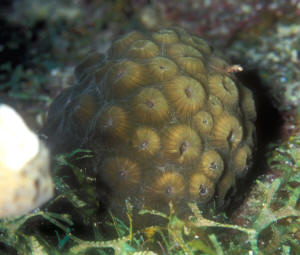 Conditions for ideal
macroalgae growth are identical to those for growing reef
corals
Conditions for ideal
macroalgae growth are identical to those for growing reef
corals