|
|
All "framed" images are linked
to desktop sizes.
 |
|
We ask that, before submitting a query, you refer to Neale Monk's: Before You Write; A Checklist of Common Problems
with Freshwater Aquaria, Bettas, Goldfish, and Freshwater Turtles (Terrapins), Tips on Asking Questions, Ask the WWM Crew a Question,
FAQs on FAQs.
EDFP, TBPFWFAQs, Last Few Days Accrued FAQs,  Subscribe to the Daily Pics Subscribe to the Daily Pics
|
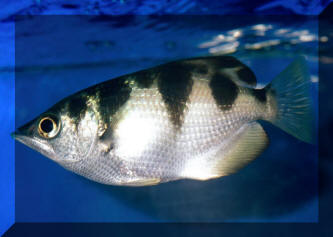
Toxotes jaculatrix (Pallas 1767), the Banded
Archerfish. The principal species used in the trade in the west.
Asia and Oceania; India to the Philippines, Indonesia, Vanuatu, the
Solomons, New Guinea, northern Australia. To one foot in length.
An adult in an aquarium.
Freshwater
Pix Archive Link
|
Freshwater FAQs, Ask us a question: Crew@WetWebMedia.com
Updated 5/6/20
Other Specialized Daily FAQs Blogs: General,
Planted Tanks,
Ponds, Brackish, Last Few Days Accrued FAQs,
Daily Q&A replies/input from the WWM crew: Darrel Barton, Neale Monks, Marco Lichtenberger,
Bob Fenner, are posted here. Moved about, re-organized daily Current Crew Bios.,
Not so current Crew Bios
____________________________________________________________
|
 |
New
Print
and
eBook on Amazon
Betta Success
Doing what it takes to keep Bettas healthy long-term
by Robert (Bob) Fenner
|
Velvet in planted tanks with scaleless fish, shrimp, and
snails 5/4/20
Hello WetWebMedia Crew,
<Hello Sarah,>
Can you give me some advice on treating freshwater velvet under
specific circumstances?
<Can certainly try.>
I currently have two tanks with freshwater velvet. (I diagnosed
velvet by turning off the room lights, shining a flashlight on the
fish, and observing a gold sheen on most of the fish).
<Understood; and certainly indicative of Velvet.>
The first tank is a 29 gallon, planted tank, with rummy-nose tetras,
ember tetras, Kuhli loaches, Nerite snails, and Amano shrimp. The
fish in this tank have been slowly dying off over the course of 6
months. Water parameters are all good. I have tried various
treatments, including Paraguard and API General Cure (these two were
plant/snail/shrimp safe, but apparently not effective, as the velvet
came back each time.)
<Velvet is more persistent than Whitespot, but commercial
medications should work, even if you do requite a second or third
course of treatment.
Do also remember to remove carbon from the filter, if used. Many
filters automatically comes with carbon (a cheap way for
manufacturers to seemingly add value to otherwise ordinary filters)
but carbon removes medications very effectively. Ditto, any other
chemical medium, including peat, nitrate remover, zeolite, etc.
They're all a bit dodgy when it comes to adding medications.>
Most recently I removed all fish and treated them with Ich-x in a
quarantine tank (without carbon filtration) that was 86 degrees and
covered that tank with towels to block out all light. I removed the
snails to a separate tank with only dwarf shrimp. I raised the
temperature in the 29 gallon to 86 for three weeks, removed carbon
filtration and added SeaChem's Paraguard (The tank was just plants
and shrimp at this point).
<This should have done the trick.>
At the end of the three weeks (and after numerous water changes) the
fish in the quarantine tank did not have a gold sheen. I put the
fish back in the 29 gallon tank with the plants and shrimp (which
also had multiple water changes) and added the snails.
<Right.>
I also bleached all my aquatic equipment: nets, syphons, etc.
before, during, and after all treatments.
<Good.>
I thought I had eradicated the velvet, but it came back in the 29
gallon.
It also spread to a 40 gallon tank that contains gold barbs,
snakeskin barbs, cherry barbs, zebra loaches, a bristle nose Pleco,
and live plants.
<And nothing new was added?>
I would like to save my fish without killing my plants, snails, and
shrimp.
Do you have any suggestions?
<Yes; see below.>
I assumed that any velvet that might have been transferred to the
dwarf shrimp tank with the Nerite snails wouldn't live for three
weeks without any host fish. Was that an accurate assumption?
<Yes; the free-living stage of Velvet (like Whitespot) needs to find
a host within a certain amount of time, typically a couple of days
to a few hours depending on temperature. Should it fail to do so,
the free-living stage dies. So, any snails, shrimps or plants moved
to a fish-less aquarium should be parasite-free within X days, with
most fish health experts recommending two to three weeks of
isolation being ideal. Similarly, and often more easily, if you
remove all the fish to a hospital tank, and then leave the main
aquarium 'fallow' for 2-3 weeks (adding the odd pinch of food for
the filter to work on) by the time you return the fish, the aquarium
will be parasite-free. This is the best approach if your tank is
nicely planted and has a thriving population of snails and shrimps,
neither of which are suitable hosts for the parasite.>
Can shrimp or snails carry velvet?
<No. Any wet object can, of course, carry the free-living stage, so
moving a snail or shrimp from an infected tank to a healthy tank can
indeed carry the free-living stages. But the shrimp or snail cannot
do any more than that, so is no more a risk factor than your hands,
a net, a bucket, or any other wet object that might pick up the
free-living stages by accident. The actual parasite cannot live in
or on the snails or shrimps, so after a few days in a tank without
fish, snails and shrimps are effectively parasite-free.>
At what point would you suggest culling everything, bleaching all
equipment, and starting over from scratch?
<Not yet! Certainly, removing all the fish from your established
tank for two weeks will completely re-set it to its parasite-free
condition, and that's surely a heck of a lot easier than stripping
it down! The question is what you do with your fish. If you have a
10-20 gallon hospital tank, that would be ideal. But do bear in mind
that short term, you can keep fish perfectly well in any watertight
container within which you can install a heater and filter. Even
large food-safe plastic containers (such as Rubbermaid-branded
buckets and crates) will do the trick nicely.>
I'd hate to do that since I have invested hundreds of dollars in
these plants, fish etc., but I also don't want to keep buying
medicines and doing multiple water changes every day for weeks, only
to find the velvet is still there...
<Indeed. Treating Velvet is a chore, but it shouldn't be a
nightmare. eSHa EXIT is my medication of choice and usually very
reliable. It's tolerated well by most fish, even things like
pufferfish, so your collection should be fine. It will be toxic to
shrimps and perhaps snails, so one way or another keep them
separated. Alternatively, if separating the fish and snails and
shrimps isn't viable, you can use salt. The whole "scale-less fish"
being allergic to salt is nonsensical (sharks, morays, and
pufferfish are all scale-less, but happily live in the sea) but for
sure you need to use salt carefully and observe for any signs of
stress. The concentration required is at least 2 g/litre, alongside
elevating the temperature to maybe 28 C to speed up the life cycle.
2 grams of salt isn't going to stress any kind of tropical fish,
even soft water species, so don't panic about using it! Have done
this with Neons and Cardinals and it works well.
Remember, the salt doesn't treat the infected fish (there's really
nothing you can do about them) but kills the free-living stages.
Increasing the temperature speeds up the life cycle, so the
parasites infecting the fish mature faster, leave their host, and
boo hoo, get killed by the salt. The flip side is that the infected
fish now have all sorts of little lesions in their skin. Usually
these heal fine (and again, the salt helps a bit here) but do keep
your eyes open for things like Finrot. It's very rare in this
situation, but can happen. Furthermore, once a fish has been
infected, it becomes resistant -- there's some evidence fish have an
immune response to Velvet, which is why, like Whitespot, it seems to
be related to stress more than anything else.>
I appreciate any advice you can give me.
Sincerely,
Sarah
<Most welcome. Cheers, Neale.>
Re: velvet in planted tanks with scaleless fish, shrimp, and snails 5/5/20
Thank you, Neale, for your response!
<Most welcome.>
I may have discovered why the velvet never went away!! I spent today
netting all the fish out of the 29 gallon. I had to remove most of
the plants in order to catch all the fish and as I was removing a
large clump of java moss I discovered a Celestial Pearl Danio inside
the moss--I haven't had any CPDs in the tank for 10 months at least!
(Or so I thought; they were the first species to die off from
velvet. I added the Rummy-nose after I had treated the tank, a month
after all the CPDs had died.) Turns out, that tank was never truly
fish-free, which would explain the velvet persisting.
<It would indeed. Sounds like you have found 'Patient X'.>
Unfortunately, that last CPD was in really bad shape (which probably
explains why it was hiding in the moss and I never saw it swimming
around.)
It had several large open wounds that were red, with protruding
scales around those wounds, and possibly a curved spine--it was
difficult to tell if the fish just looked crooked due to the raised
swelling of the open wounds. I decided the humane thing to do was to
euthanize it. I have read that in the latter stages of velvet, the
skin can peel off.
<Potentially. Recall in my last message that I stated how the
parasites emerge from the skin, leaving behind tiny lesions? Enough
of those is enough to allow secondary infections by opportunistic
bacteria (the sort that cause Finrot) and you can indeed end up with
fish in a very bad state.>
I'm not sure if the CPD was only in the advanced stages of velvet,
or was also suffering from something else. I attached some photos so
you can give me your best guess.
<Hard to say. Could be Columnaris, a secondary infection, or
something else entirely.>
Now, I'm wondering, should I treat for other diseases in addition to
velvet?
<Other than a general antibiotic as per Finrot, I would not treat
for anything else. Antibiotics are helpful in situations where the
skin is damaged, as with Velvet and Whitespot, especially where fish
aren't
recovering quickly. If the fish get over Velvet and Whitespot
without signs of damage to the skin, then the antibiotic isn't
needed, and to be fair, that's the usual situation. Hence we
normally just treat these two diseases on their own. But if you're
dealing with multiple deaths, sick-looking fish, or anything else
that suggests things are a bit out of hand, an antibiotic may help.>
None of my other fish have the open sores. A few look like they're
wasting, a few look possibly bloated (or full of eggs--they are
female ember tetras). The few that look emaciated have frayed fins
(but no white growth on the fins). Initially I thought velvet would
explain all these symptoms, but now I'm not sure. I think I need to
treat for bacterial infections now, too.
<I agree, and would use an anti-Finrot medication of some sort,
whether an antibiotic or otherwise (eSHa 2000, etc).>
Lastly, could I try the salt method of treating velvet with my
plants?
<Yes.>
I have mostly java moss, java fern, Anubias, amazon sword, Marimo
moss balls, Loma fern, hornwort, and duckweed. (I would be happy for
the duckweed to die--it arrived on another plant and has reproduced
like crazy!)
<Apart from the Loma Fern, about which I know nothing, none of these
plants is sensitive to salt. Indeed, Java fern and Java Moss
positively thrive in brackish water. So I'd be perfectly confident
about using salt. What I would do, just as a precaution, is take a
few cuttings or daughter plants of each, stick them in a suitable
container, in case things don't work out.
But I'd not be concerned about most of those plants. Many are widely
used in low-end brackish tanks.>
Now that the 29 gal tank is truly free of fish, the velvet will die
off over time; however, if there is a secondary bacterial disease,
should I assume that disease would not die off?
<Opportunistic bacteria are exactly that -- opportunistic. In
healthy tanks they do no harm. Some species are actually part of the
ammonification process that breaks down waste organic materials into
ammonia that the filter can use. They constantly try to decompose
living tissue, but healthy animals and plants can fight this off,
whether through a physical barrier (like the mucous layer on the
fish's skin) or some sort of immune response (fish have white blood
cells and antibodies much like we do). These bacteria are literally
ubiquitous. They are everywhere, and you simply cannot exclude them
from fish tanks. In other words: don't try and "remove Finrot" from
an aquarium because you can't. So long as your fish are
healthy, they will block bacterial infections just as your body does
every day without a second thought on your part.>
Do you recommend treating the "plants only" tank with antibiotics?
<Nope. See above. Pointless. All the pathogenic bacteria aquarists
deal with (Aeromonas, Pseudomonas, Mycobacteria, etc.) will quickly
find their way back into the tank probably within hours of any
antibiotic course ending.>
Thank you again for time and expertise! I really appreciate your
help!
Sarah
<Most welcome. Cheers, Neale.>
|
Betta with Columnaris? 5/4/20
Dear WWD experts,
<Possibly over generous...>
I hope this message finds you well.
<It does, thank you.>
I need help with the course of action I should take with my Betta fish. I
believe he might have a slow strain of Columnaris:
<Yikes!>
The first symptoms appeared 3 weeks ago: erratic episodes of swimming and
jumping at the surface, gasping for air, then sinking at the bottom
breathing heavily, sometimes slowly falling to the side. A couple of days
after the episodes began I noticed small discolored streaks next to his left
gill. I started daily 30-50% water changes (this seemed to stress him a lot,
so I do it now every 2-3 days). (Before I was doing it weekly)
<Good call. Water changes will usually help most situations, but dramatic
changes in pH, hardness, and temperature can cause problems. "A little, but
often" can work well, if you take 10% off the top of the tank daily, as
you'd do if you were rearing baby fish.>
The episodes have become less frequent, but the lesion has been expanding.
<I see this.>
I have been testing the water daily. It has always been very stable (0
ammonia, 0 nitrites, almost 0 nitrates (maybe a tinge of orange on the API
freshwater master kit), ph 7.4-7.6, GH 143ppm. Temperature is at 78. The
tank is the Fluval Flex 9, with the sponge filter (to which I attached
sponges to reduce to flow). Sharing the tank with the Betta are a Nerite
zebra snail, an Anubias, an elodea and java fern. The snail was introduced
about one week before the episodes began - could it be related? the fish
didn’t seem to mind at all..
<Snails, especially Nerites, are unlikely to cause problems to healthy fish.
While in theory any 'wet' object moved between tanks can carry external
parasites like Whitespot, beyond that snails aren't much of a threat.
Nerites in particular are very safe animals.>
I live in Canada where all fish medication and antibiotics are strictly
reserved to veterinarians.
<What little I know, the law seems an overreaction. Banning antibiotics
except through vets is good science. People absolutely were using
antibiotics intended for animals (mostly farm animals) and using them 'under
the counter' to treat people. Non-medics and non-vets are not equipped to
correctly dose them, and few seem to think about antibiotic resistance,
which is an existential threat to modern society (go back to a time before
antibiotics and things like C-sections and appendectomies become really,
really dangerous). So shutting down the trade in fish antibiotics is
unfortunate but ultimately the right move for society at large. But pulling
medications based on organic dyes and antimicrobials, such as formalin,
copper sulphate, potassium permanganate, etc is just daft because these are
in now ways linked to antibiotic resistance. Are these impossible to buy
too? In the UK, we don't have access to antibiotics either, but
antimicrobials like methylene blue, acriflavine, and so forth are cheap and
easily obtained. They are fairly reliable, if less effective than
antibiotics when dealing with severe cases.>
(fish stores aren’t even allowed to sell Melafix).
<Good.>
I would have to drive for over an hour to see one, and only emergency
appointments can be taken (which cost many hundreds of dollars) as we are in
lockdown due to the coronavirus outbreak..
<Understood. Asking aquarists to visit vets may be scientifically the
correct thing, but financially it's never going to happen for 99.9% of the
situations where it's relevant. Most people aren't going to spend $100+ on
treating a fish that cost $5.>
What would give me the best chance to help the fish?
<Can you obtain non-antibiotics? I'd be trying something like eSHa 2000,
which is pretty good for Columnaris.>
I was suggested to swab the lesion with hydrogen peroxide. I’m hesitant
doing that. I fear that it would burn his gill.
<H2O2 is a powerful antiseptic, but a fish's skin is very delicate, and
slapping on an oxidising agent like H2O2 will, at minimum, be extremely
painful and likely to damage the underlying tissues.>
Would salt water baths be a good idea? should I add other agents (methylene
blue, malachite green, disinfectants)?
<Salt doesn't reliably cure anything outside of Whitespot and maybe velvet,
though 2 g/litre can sometimes help fish out generally and has a mild
antibacterial effect according to some sources. Methylene blue is the
classic treatment for fungus, but since Columnaris is a bacterium, it's not
the best choice. Neither is Malachite green a good antibacterial. Outside of
antibiotics and commercial antibacterials (like eSHa 2000) the standard
treatment is Phenoxyethanol.>
I want to avoid unnecessary stresses as much as possible. I am not sure if
it is indeed Columnaris, since his behavior is still good (no episodes for a
few days now), and from the literature I’ve consumed he would probably be
very much dead by now..
<Does vary widely. I've seen mild strains that don't really do much for
weeks. To be fair, how can we be sure what species is involved? Could be
Flexibacter, but could equally easily be something else. It's not like we're
doing swabs.>
Looking forward to hearing from you. Thank you in advance for your time and
expertise.
<Most welcome.>
Cordially, Jean-Christophe
<And likewise to you, au revoir! Neale>
|
.jpeg) |
|
Re: Betta with Columnaris? 5/5/20
Dear Neale,
Thank you very much for your swift and insightful answer.
<Most welcome.>
I am grateful for your thoughts on Health Canada’s ban on over the counter
antibiotics and animal medication. It makes sense, and I feel more at ease
with it.
<Glad to help. In hindsight, countries should never have made antibiotics
'over the counter' medications, and while useful to aquarists, this has
create a huge headache for modern medicine. The problem is usually the
lawmakers tend to wield blunt instruments where science is concerned.
Banning non-antibiotic antimicrobials alongside antibiotics is very
unhelpful to aquarists and does nothing to help medicine. But it's easier to
write a law that "bans fish medicines" than wade through lists of what is or
isn't an antibiotic.>
From what I can tell, potassium permanganate, copper sulphate, dyes, and
formalin can still be found, but not in pet stores, and cannot be marketed
as animal medication.
<Right. Well, there are fish health books that will indicate the
concentrations to use, and in the distant past, this is what aquarists did.
It's a pain, but do-able.>
I have been trying in vain to get my hand on some eSHa 2000. I have ordered
some online from the US, but it will probably not arrive before a few weeks
from now. (again, coronavirus lockdowns.. I have ordered stickers for my
three year old daughter from a local store over two weeks ago, and they are
still « in transit »)
<Understood.>
Since I wrote to you, I have been doing sea salt water and methylene blue
baths. -I understand it’s not gonna kill the bacteria, but I figured it
couldn’t harm, and perhaps prevent fungus to join the party?-.
<Possibly. Seawater-strength dips is an old school solution to problems, and
can sometimes help. It's a chemotherapy approach though -- lethal to both
parasite and freshwater fish, but we hope the larger fish will survive
longer than the smaller parasite.>
It actually seems to be positively calming the Betta. I am also doing
frequent 10% water changes, which doesn’t seem to bother him. Thank you for
that suggestion.
<Glad it's helping.>
Would you possibly have other suggestions of things to try? I couldn’t find
Phenoxyethanol either. From what I understood from a pharmacist, it’s only
available online now. If ever I can find some, how would you suggest I use
it? one swab daily until improvement?
<According to Andrews et al: bath; 100 mg/litre -- i.e., 50 ml of a 2%
solution in 10 litres of water. Phenoxyethanol reacts badly with filter
carbon, so make sure you remove carbon from the tank, if used.>
Once again, thank you so much for your time and knowledge.
Sincerely, Jean-Christophe
<Good luck, Neale.>
|
|
Goldfish Dropsy, potential parasitic infection
5/2/20
Hello,
<Hello!>
First, I'd like to apologize for the length, a lot has happened in my tank
the last few months and I don't want to leave any potentially pertinent
details out.
<Got you.>
Some background:
I have three 4~4.5" goldfish in a 55 gallon tank.
I'm currently using a Fluval FX4 canister and a sponge filter in the
aquarium
<A good filter.>
I've had all the fish for about 10 months (they had a fourth tank mate who
died from dropsy back in September two months after I got him) I got them
all at the same time and haven't added new fish to the tank. (I do have a
Betta tank and although I try to avoid using the same equipment, accidental
cross contamination could've happened)
<Understood.>
I do 35~45% water changes five to six days a week (I set the water out 24
hours before).
They have a heater so their water stays at 72 degrees.
Ammonia is 0, Nitrite 0, Nitrate less than 5 ppm.
<All sounds fine, though I am by nature skeptical of very low nitrate levels
-- these are virtually impossible in moderately stocked aquaria with messy
fish in them, unless you're doing a ton of water changes and/or have very
fast growing plants.>
The most affected fish developed dropsy about two months ago (underwent
treatment with MetroPlex, KanaPlex, and Epsom salt baths). I assumed the
dropsy was tied to a bacterial infection brought on by a cycle crash (I got
a positive ammonia test, he developed ammonia burns on his chin which have
now healed). The bloating decreased notably after treatment although his
scales still have a spikey appearance. I've been contemplating doing another
round of treatment, but hesitated for risk of damaging him further.
<Does indeed sound like Dropsy, but Dropsy is a symptom, not a disease.
It's like a fever or runny nose in a human. Can mean all kinds of things.>
He started developing issues with his swim bladder after eating (I fed new
life spectrum pellets), I switched him over to eating gel food which has
helped. I've been soaking their food/peas/spinach in garlic prior to
feeding.
<Ah, good.>
Unfortunately, about five days ago the fish developed a collapsed mouth
seemingly over night. (His right top lip folds under his lower lip) I know
this can't be cured, but he can still eat fine. I'm mostly concerned about
what caused it to develop. Likewise, I know the prognosis for dropsy is bad,
but I'd still like to give him as much of a fighting chance as possible
(especially considering he's hung in this long already).
<Dropsy isn't so much a death sentence as a symptom of some serious problem.
If the problem can be turned around, then fish can and do recover.
Seen it myself. But if the Dropsy is caused by irreversible damage to the
internal organs, then yes indeed, the fish usually winds up dead.>
I'm not sure which of these details about his tankmates are relevant, but
I'm including them in case: I noticed a white-ish, slimy coating on him and
one of the other fish on April 6th (it went away after I did a water change
and it hasn't happened again, I thought it could be excess slime coat being
produced). I'll attach a picture of it on the other fish should you think
it'd be helpful to see.
<White slime is, again, not specific but a general reaction to irritation of
the skin. It can mean water chemistry or water quality problems, it can mean
certain ciliate protozoans (Costia being perhaps the best known), or certain
sorts of external worm type parasites often called 'flukes'. So it has to
checked against other symptoms. If the fish are stressed and 'flashing'
against solid objects, then ciliate protozoans are very likely the problem.
Flukes may be present at non-dangerous levels on many fish,
only to flare up when the fish become stressed, and diagnosing such
outbreaks is hard because they're a lot like Costia in terms of slime and
flashing, but you're also likely to see some redness and damage to the skin
or fins. Ultimately only sampling the mucous and examining under a
microscope is going to nail the problem for certain.>
Right before the fish developed dropsy, the tank light had been off for a
few weeks (I was waiting for a replacement) in that time the third fish, who
was orange and white, slowly started turning white. She's now completely
changed color. I noticed redness on the base of her caudal fin that
concerned me, however her vent is not inflamed. I haven't been able to get a
great picture, but today it's looking more pink as opposed to red.
<Redness on the skin tends to imply either inflammation or damage to the
blood vessels in the skin. Either way, bacterial infections are often the
cause, as with incipient Finrot, but not always.>
I'm wondering if these symptoms could be caused by flukes or another
parasite (the white coating, redness at a tail joint, and the collapsed
mouth) and if I should be medicating their tank?
<Flukes can certainly cause irritation of the skin, and if you're seeing
redness and mucous, they're a reasonable bet.>
None of the fish are clamping their fins or flashing like I'd expect;
however the second fish does sit on the bottom of the tank sometimes.
Likewise, the most sickly of the fish (the one with dropsy and the collapsed
mouth) sat on the bottom last night once the light went off. I've noticed
him hanging close to the bottom even if he's not sitting and
floating mid-level instead of scavenging this afternoon. This behavior
concerns me a great deal as he's normally a very active fish.
<Indeed, but of course this sort of lethargy isn't unusual for all sorts of
diseases, so doesn't really pin anything down.>
On occasion the fish will shoot up to the surface to gasp, but this normally
occurs after I've added prime to their tank.
<Odd.>
I'm looking for another opinion about what might be going on and what I
should do. I don't know if I should treat the entire tank for
flukes/parasites or if I should put him back on antibiotics.
<I would not assume a bacterial infection as such, and in any event: if the
antibiotic used didn't work, you should try some other antibiotic anyways.
Remember: each antibiotic is best against a certain category of bacteria
(the old Gram Positive and Gram Negative divisions being the best known)
and the reason medical doctors don't all rely on penicillin for everything
is that you really do need a specific antibiotic for a particular bacterium
species. Repeating the same antibiotic is simply re-doing something you
already know doesn't work. Some aquarists use combinations, such as Maracyn
2 and Maracyn Plus, simultaneously because these cover a wide range of
bacteria without the danger of running one medicine, seeing the fish not get
better, and then not having time enough to run another medicine.>
I have some PraziPro on hand (however it's been opened and is a few months
old... I don't know when it expires) I also have unopened new life spectrum
hex shield medicated food.
<Praziquantel can be good against flukes, but does sometimes need to be run
a second time to shift persistent cases. It's one of the less effective
anthelminthic drugs. Of course if we're dealing with Costia, or what is
properly called Ichthyobodo, then a specific anti-Slime Disease medicine is
what you need, such as Formalin or Tetra Lifeguard.>
I've attached a picture of the white sheen from April 6th (again, this went
away same day after I cleaned their tank)
<I see this.>
Please let me know if you'd like any other pictures or videos. Thanks for
your time and for any help!
Melissa
<Hope this helps. Cheers, Neale.>
|
 |
|
Re: Goldfish Dropsy, potential parasitic infection
5/3/20
Hi Neale,
Thanks for the help!
<Welcome.>
I do a lot of water changes on this tank-- I clean their tank at least five
days a week (there was a period where I cleaned them everyday).
<Understood.>
I decided to treat with Prazi today to try and rule out flukes (so far all
the fish seem fine and are scavenging at the moment). The one with the
collapsed mouth is piping up at the top of the water a bit more. All the
fish ate happily before I added Prazi to their tank. I noticed the dropsied
fish (he's not as swollen or bloated like he was in early March, but again,
his scales are still spikey) pooping and it looked like tiny pelleted chunks
with stringy bits connecting them. It was white and stringy at the end and
there was what looked like a bubble in it. I do have hex shield, which I've
never used before, but is a medicated food for internal parasites.
<A treatment for Hexamita; worth a shot, though I don't think this is the
issue here. Do read up on the symptoms of this disease (in Goldfish
especially) and see if they match your fish.>
I'm going to order lifeguard or formalin later today to have on hand as
well.
<Yes; these may well be more useful.>
Regardless, I plan to finish up the Prazi treatment for the next 5~7 days
and then reassess.
<Good.>
Thanks again for your time and I appreciate any recommendations!
Melissa
<Most welcome, and good luck. Neale.>
Re: Goldfish Dropsy, potential parasitic infection 5/5/20
Another update on the tank, I've continued to do daily water changes (40~50%
daily) and replaced the Prazi removed at each change.
<Understood. Normally water changes shouldn't be done during medicating, but
if you top them up appropriate for the water removed, this should work out.>
One of the two least affected fish (my bottom sitter with the excess slime)
has stopped bottom sitting and has been very active.
<Good.>
Unfortunately, the sickest fish has declined. He spent all of last night
bottom sitting with clamped fins. On his back, he's developed these pinprick
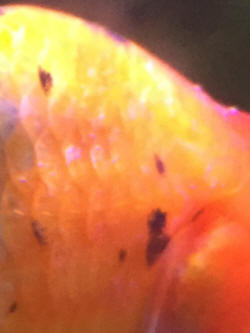
sized red marks.
<Those sound like infected parasite wounds of some sort, e.g., a secondary
infection following Whitespot or Velvet. The photos aren't nearly sharp
enough to be able to confirm.>
I've attached a photo of the dropsied fish's back to show the marks (please
let me know if you receive it), but they don't show up very well on camera.
Is there anything I should do for him further?
<I would not medicate randomly, but if there is evidence of bacterial
infection, the use of a suitable antibiotic (or some other antibacterial
medication) may be warranted. The use of salt can help, at 2-3
gram/litre.>
I will continue using Prazi for at least two more days, then I believe I
should start a second round. However, do you recommend doing anything
additional for him?
<See above.>
His lethargy and fin clamping worries me a great deal (likewise, I'm very
concerned that he's developed tiny wounds on his back) I was honestly
surprised when I fed him last night and this morning that he still has quite
an appetite.
<Positive, for sure.>
Thanks for any advice! Melissa
<Most welcome. Cheers, Neale.>
|
Re: Goldfish Dropsy, potential parasitic infection
5/6/20
Hi Neale,
<Melissa,>
I've noticed some occasional fin clamping from one of the other fish (she's
the one who I saw bottom sitting quite a lot before, but otherwise she looks
and is acting fine and more active than before). Could this be in response
to the Prazi?
<Praziquantel acts by chemically forcing parasitic worms and flukes to
perform random muscular contractions, which eventually causes them to let go
of their host and be washed out of the body. As they twist and twitch they
may well irritate the gut wall, and in humans at least abdominal cramps are
common as well. So signs of stress in fish during medication might be
apparent, but provided the fish is otherwise respiring and feeding normally,
I wouldn't be overly concerned.>
I have Stressguard I've used before (when they've had scrapes) do you think
that would be useful here?
<No. Stressguard is a medication that helps the slime layer on the outside
of the fish. It isn't a general cure-all by any means, and does little more
than help fish fend off external infections if they've been roughly handled,
exposed to ammonia during transit or tank cycling, or otherwise likely to
have lost a bit of slime.>
I've been unable to get better pictures (I apologize for that, he's a fairly
small fish). The marks on his body are like a orangey-red and somewhat hard
to notice even in person.
<The photos really aren't sharp enough to show anything useful.>
One of his eyes had a sort of dark/redness develop next to it. Likewise, his
wen looks separated over his gills on both his cheeks (I've never noticed
any inflammation on his cheeks before, so this surprised me). I've seen two
different white particles fall off him (both small and like a grain of sand,
looked like they were held on by a tiny tiny thread-- one on his back, the
other near his cheek). However, I do not see any white spots actually on him
or the other fish. I can see two tiny dark red-ish marks on his skin inside
the division of his wen.
<Sound pretty much like generic evidence of physical trauma, rather than a
specific thing. Such damage to the skin and mucous, plus subsequent
irritation, inflammation, and/or infection, might be caused by
environmental stress (by far the most common explanation) but can also
follow along from certain parasitic infections such as Velvet, Whitespot or
Costia that breach the epidermis.>
I'm not sure what to do for him at this point. I contemplated doing a dip
with methylene blue, but I'm not sure that will be particularly helpful.
<If you suspect a fungal infection, e.g., can see cotton wool-like threads,
Methylene Blue is useful. Otherwise it's irrelevant.>
I have KanaPlex, MetroPlex, Sulfaplex, triple-sulfa, furan-2, and lifeguard
all on hand.
<Not a bad medicine cabinet!>
The fin clamping has also gotten worse throughout the day and he looks
noticeably stressed. I can set up a 10 gallon tank to QT him should you
recommend it.
<Isolating fish if you plan to medicate them makes sense. Isolating fish if
they are either at risk of infecting healthy fish or being damaged by them
is also a good idea. But otherwise removing social fish from their peers
will only add another level of stress to them.>
I also noticed one of the other fish has white slime/mucus on her wen while
she was eating. The white on her wen looks like the spot I saw on the
sickest fish's wen (tentatively I'd say they have the same thing). To me it
looks like excess mucus (it doesn't look like the "wen pimples" they've had
occasionally) or some bacteria. however, I'm thinking Costia or Hexamita
could be causing the issues with other fish.
<Indeed. Excess slime production is the way fish respond to external
parasitic infections and environmental stress, so if you see extra slime,
it's definitely worth investigating. The first step is always to check the
environment. Water chemistry, quality, temperature, etc. Think about
exposure to airborne toxins and even sabotage by family members (small
children dropping in copper coins for example). If you can rule of that out,
then yes, go through the checklist of parasites. Whitespot and Velvet are
usually obvious, though Velvet sometimes infects the gills more than the
body. Costia can only really be confirmed with microscope work because the
parasites are invisible, and likewise Hexamita is notoriously difficult to
confirm and tends to be arrived at by a process of elimination rather than a
positive ID.>
Thanks again for your help, I really do appreciate it!
<Most welcome.>
Melissa
<Cheers, Neale.>
|
.jpeg)
 |
|
Re: Goldfish Dropsy, potential parasitic infection
5/6/20
It doesn't look fungal to me (but I could be wrong, I don't have much
experience seeing fungal infections on goldfish). Whatever it is looks like
it's on top of her wen/scales, some of it has already sloughed off.
I don't have aquarium salt on hand, but have ordered some and am planning to
add some to their tank. What's the normal concentration used?
<2 gram per litre, but Goldfish can handle substantially more, so maybe up
the dose to 3 gram/litre the following week, and such conditions could be
maintained almost indefinitely.>
This fish is acting otherwise normal, still with occasional fin clamping,
but very active.
<Good.>
I noticed the same fuzz/slime on the other goldfish's wen as well this
morning (only along the separation in his wen, unfortunately I couldn't get
a picture before t fell off). I also noticed him piping up for air a few
times while I cleaned their tank. It's possible when I cleaned their tank
yesterday I may have forgotten to add prime to one of the buckets I set out
(I age their water 24 hours regardless). If some chlorine or chloramine got
in the tank, could that explain the slime? (I made sure I primed the entire
tank today)
<Yes, can do.>
Thanks again for the help! Melissa
<You're welcome. Cheers, Neale.>
|
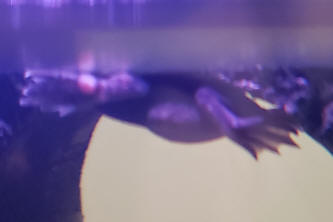
|
|
Hello! I have an adf with a blister(?) on her back foot.
4/30/20
Any idea what it is and how to treat it?
<Going to direct you to some reading, here:
http://www.xenopus.com/disease.htm
I'd be going with 'Red Leg' at the top, and treating with the antibiotics
mentioned, Tetracycline, Maracyn II, or Maracyn Plus. These infections
deteriorate very quickly, so treat promptly. Do also think about what caused
the damage. Cheers, Neale.>
|
 |
|
Female Betta behavior
(Movie
Link) 4/30/20
Hi. I have a female Betta in a cycled 10 gallon. I’ve had her since
November 2019. She has been doing great - beautiful bright
coloration, no fin rot and full of energy.
<Good.>
Lately, she has been doing this strange curling movement when she
swims. She will stop midswim and then she will bend her body into a
shape that resembles the letter j.
<Let's discount all the obvious things. Is the tank filtered and
heated? Both of these are essential with Bettas, but alas, some
retailers tell people they aren't needed. You mention the tank is
cycled, so I'm guessing it's filtered, but let's just be clear.
Likewise, heat. Bettas are sensitive to cold. Next up, Bettas are
labyrinth fish, and more sensitive to airborne pollutants than those
types of fish that don't breathe air. Cleaning products, paint
fumes, and other types of solvents can be easily absorbed by Bettas
and just as with humans, there's the risk of stress, discomfort,
even nerve damage and death, depending on the type of solvent. Next
up, diet. Bettas can live long and happy lives on good quality flake
and pellets, but in truth they're a little prone to constipation
when kept on such foods. Fish do require roughage and exercise to
properly empty their digestive tracts (much like humans!) and while
10 gallons should be enough space for swimming, the addition of
fibre-containing foods will help with constipation. Symptoms vary,
but can include unnatural swimming, bloating, lethargy, etc. Cooked
peas are the ideal fibre-rich foods, but Bettas don't always go for
them. Live or frozen Daphnia and Brine shrimp also work well. Epsom
salt is frequently used as a laxative alongside these foods, but
probably isn't necessary except where obvious swelling is present.>
Her top part stays straight, but her tail will curve around her, or
rather she brings it around deliberately (it seems). She doesn’t
leave it that way. She will straighten it back out and continuing
swimming. Sometimes she uses the curve shape to propel herself into
darting.
She is behaving pretty much normally and eating happily. She seems
to be a little less active possibly and hiding a little more but she
is still curious and comes to see me when I come to the tank.
The frequency of this movement is increasing and I’ve never seen
anything like this in my years the hobby.
Any ideas?
Thanks,
Lauren
<Hope this helps, Neale.>
Re: Female Betta behavior 4/30/20
Hi again. Yes she has a filter and heater (79 degrees). She is fed
4x a week. Omega one flakes, freeze dried daphnia (nowhere to get
fresh or frozen here), bug bites, sometimes those instant brine
shrimp eggs.
<I would avoid freeze-dried Daphnia, as freeze-dried critter-type
foods do seem to be associated with constipation. At the very least,
soak beforehand. Frozen foods infinitely better, though I don't find
many fish like frozen Daphnia that much. They do happily take frozen
Brine shrimp though! If you have access to the eggs, hatch before
use -- feeding them "as is" doesn't make much sense.>
She doesn’t look bloated and does not struggle to swim.
She stays upright but does look a little floaty. She kind of acts a
little tired. She rests on her plants more than she used to. My gut
just tells me this is not ok but I have no idea where to even start
if treatment is needed. I can’t seem to get a pic of her because she
hates the camera. I’m sure I can get a video. So when I went to get
a video, I noticed she keeps going to the bottom head first, tail
up, and not touching but just hovering that way for a while and then
straightens herself and goes about her business.
<Constipation is quite common in Bettas and worth considering.
Watching your video, your fish looks like she's struggling to swim
-- I wonder if the filter is too strong? Try switching it off for 10
minutes and see if she behaves differently. There's nothing obvious
to me in your video, and the symptoms are kinda generic, so don't
really help much. I'd run through the obvious environment checks
(ammonia, nitrite, etc.) and review diet as mentioned. Beyond that,
you could start looking for more useful symptoms. Do you see any
sign of worms? (Example: red threads from the vent.) Do you see
evidence of external parasites? (E.g., unusual amounts of mucous.)
Is breathing laboured or does she 'flash' against leaves? That can
indicate gill parasites such as Velvet.>
She’s deteriorated just since this morning.
<Sorry can't be more help. Cheers, Neale.>
Re: Female Betta behavior 5/1/20
Hi again. Yes she has a filter and heater (79 degrees). She is fed 4x a
week. Omega one flakes, freeze dried daphnia (nowhere to get fresh or frozen
here), bug bites, sometimes those instant brine shrimp eggs.
<I would avoid freeze-dried Daphnia, as freeze-dried critter-type foods do
seem to be associated with constipation. At the very least, soak beforehand.
Frozen foods infinitely better, though I don't find many fish like frozen
Daphnia that much. They do happily take frozen Brine shrimp though! If you
have access to the eggs, hatch before use -- feeding them "as is" doesn't
make much sense.>
She doesn’t look bloated and does not struggle to swim.
She stays upright but does look a little floaty. She kind of acts a little
tired. She rests on her plants more than she used to. My gut just tells me
this is not ok but I have no idea where to even start if treatment is
needed. I can’t seem to get a pic of her because she hates the camera. I’m
sure I can get a video. So when I went to get a video, I noticed she keeps
going to the bottom head first, tail up, and not touching but just hovering
that way for a while and then straightens herself and goes about her
business.
<Constipation is quite common in Bettas and worth considering. Watching your
video, your fish looks like she's struggling to swim -- I wonder if the
filter is too strong? Try switching it off for 10 minutes and see if she
behaves differently. There's nothing obvious to me in your video, and the
symptoms are kinda generic, so don't really help much. I'd run through the
obvious environment checks (ammonia, nitrite, etc.) and review diet as
mentioned. Beyond that, you could start looking for more useful symptoms. Do
you see any sign of worms? (Example: red threads from the vent.) Do you see
evidence of external parasites? (E.g., unusual amounts of mucous.) Is
breathing laboured or does she 'flash' against leaves? That can indicate
gill parasites such as Velvet.>
She’s deteriorated just since this morning.
<Sorry can't be more help. Cheers, Neale.>
Re: Female Betta behavior 5/1/20
Yes she’s alone.
<Good. This idea of Betta 'sororities' floats around, but Bettas aren't
social animals any more than cats, and so while sometimes groups can work,
just like some cats get along, on the whole it's an unreliable approach.
Bettas are best kept alone.>
The alleged experts saw videos that were from maybe 2 weeks ago and said
they didn’t see the movement that I’m describing. They said she looks hungry
and excited Granted, she’s gotten worse since then. It’s not normal. I can’t
decide if she’s stopping to bend or bending to propel herself.
<Hard to say. Fish can damage themselves in various ways, and like humans,
will avoid using certain muscles or bones if these 'hurt'. Of course such
'limping' should only be temporary, but if there's permanent damage,
including nerve damage, things might not improve. Bettas are also prone to
tumours of various sorts, benign and otherwise. All you really can do right
now is observe.>
The shrimp are wet but I’m in the country so my options are limited.
Thanks again
<Welcome. Cheers, Neale.>
|
.jpeg)
Re: Female Betta behavior
5/2/20
This morning she is kinda flopping when she swims. I’ve kinda accepted that
I’m gonna lose her but I won’t euthanize just yet.
<Sorry to hear this. If necessary, let me suggest some reading, here:
http://www.wetwebmedia.com/euthanasia.htm
Bettas cause problems because they are air-breathers, so suffocation using
CO2 isn't ideal. Clove Oil should work fine, if you hold them down. Regards,
Neale.>
Re: Female Betta behavior 5/2/20
I put her in a smaller tank so I could have it bare bottom and she is
basically flipping her back half around like she was paralyzed. So weird.
<Cannot explain this. Poisoning is possible, and if involving heavy metals,
unlikely to improve. Bettas are more or less annual fish in the wild, so if
you've had this girl more than six months or so (they're about six months
when big enough to sell) she may just be a short-lived specimen. For sure
they can live 3-5 years in captivity, but there's a lot of variation, and
anything over 18 months after purchase is venerable compared to wild
specimens. So please don't beat yourself up over this. I think you're doing
your best, the tank looks great, the heating and filtering are spot-on, so
there's really little beyond bad luck or bad genes you can blame here. I
don't see any obvious pathogens or parasites. Cheers, Neale.>
Re: Female Betta behavior 5/2/20
Yes I have clove oil in my fish medicine cabinet. Thank you again. You’re
very patient and kind.
<And that's kind of you to say so. Good luck, Neale.>
Re: Female Betta behavior 5/2/20
I know I keep bothering you. I’m sorry. Please tell me when I’m overstepping
I just don’t want to give up so easily. She looks perfect so maybe that’s
why I’m having a hard time. I have lots of fish, but I’m extra attached to
her. She now seems like she’s trying to shake something off? This is new
just in the past hour or so. I changed the water but no change. And opens
her mouth more than I ever noticed almost like an animal trying to catch
flies. Is the shaking how female Bettas flare? Maybe she’s seeing her
reflection in a new way in the QT. Grasping at straws.
<Understood. Yes, that shaking could be an aggressive reaction to her own
reflection. Try grabbing a small mirror and hold it up to her. Does she do
the same thing? Does she settle down if you cover the tank with a blanket to
darken it? Are you sure she's a female and not a short-finned male Betta?
Females usually have a small white speck (the ovipositor) visible in front
of the anal fin, but otherwise the two sexes can look very similar. Cheers,
Neale.>
Re: Female Betta behavior
5/3/20
Yep she has the ovipositor. And it’s her being big and bad when she makes
that movement lol. It stopped when I covered her.
<Interesting. So when the tank is dark, she behaves more normally? Neale.>
Re: Female Betta behavior 5/3/20
Well yes and no. She just doesn’t shake around at her reflection. *i think*.
Of course i have to try and sneak a peak under the towel and that distracts
her too and allows a little light to get in to see herself again. She seems
to do it mostly in full light. I guess she is used to it in her tank but
it’s new in the QT.
<Maybe.>
When the tank is dark and/or when I watch her from a distance, she still
lets her back end swing around her. She doesn’t act distressed about it. She
acts likes she chilling out floating at the pool. But it is getting worse
so... my gut told me she has some parasite (I don’t know why - just a
feeling) but different parasite treatments showed no change.
<If a worm or fluke, then Praziquantel should help, but if it doesn't, try
Flubendazole instead.>
I was going to put her back in the main tank since she seemed no better in
the small one and because I have no idea how I would treat her since I have
no idea what’s happening. And I am not sure how long the tank will be cycled
without her. I’d imagine the nitrifying bacteria it takes for one fish in a
10 gallon wouldn’t be abundant.
<Indeed.>
Then I realized I hadn’t seen any poop from her since this is bare bottom.
So I gave her some boiled shelled pea and now I’ll wait and see. I really
wonder if something is going on with my water company. They say no changes
but I have guppies in a different tank who have started the shimmies. I do
know the parameters haven’t changed and I’m careful to not cross
contaminate.
<It's not easy during Lockdown times to go visit pet shops. Ideally, you'd
ask to have your water tested for things like copper (which marine aquarium
shops can do) because you probably don't have such tests lying around. But
what you could do is mail order some chemical media such as Polyfilter that
can remove toxins from water. These are widely used in marine aquaria.
Carbon is the cheap and cheerful option, and will remove most poisons,
including some forms of copper, but there are better (if more expensive)
alternatives out there. Either way, carbon or some other chemical media
would be stuffed into the filter in the tank or, ideally, put into a
separate filter placed in a bucket of freshly drawn tap water and left
overnight, so the water is now much safer to use.>
So far my Corys are ok and my outdoor pond fish are doing great. I’ve had
all of them for about six years with no losses. Who knows.
<Not I. Good luck, Neale.>
Re: Female Betta behavior
5/4/20
I have Purigen and some cheap carbon that came with the filters themselves,
some filter floss, and various sponges and filter floss type things that idk
what they even are. What does poly fiber look like compared to filter floss?
<Pretty similar! Poly Filter is simply filter wool that's been impregnated
with chemical adsorbents.>
She’s had a round of PraziPro and Levamisole already. She didn’t pass
anything.
<So not intestinal worms, then.>
She has the stressed gray chin now but hopefully in her home tank she can
just chill. I don’t see her swimming around but she comes when I do. She’s
doing a lot of resting on things.
<Curious. Cheers, Neale.>
|
giant gourami help 4/29/20
Hi Neale, I hope you are safe, well and managing in these
current bizarre times.
<All good, thanks.>
I was hoping you could help with some advice...
<Can certainly try.>
I have a 2000 Litre 7ft by 4ft setup which currently house 3 Giant
Gourami (fully grown at 18 -24 inches each) and a 20 inch red tail
catfish.
<That's a big tank, but....
Please note before reading ahead...
<Yep.>
I know most serious aquarists roll their eyes when they hear of
people keeping these size fish... however my reason for keeping
Giant Gourami was inspired by an article about a year ago in
practical fishkeeping.
<Oh, don't get me wrong: they're both fine species, and Giant
Gouramis especially can make very intelligent pets. They to tend to
become intolerant of their own kind as they age, but if yours are
cohabiting, that's great -- but do keep an eye on them.>
As background, I had on order my big custom tank that I had intended
to keep a MBU pufferfish however having read the article on PFK I
was inspired to keep the giant gourami and based on information in
the article and other online information felt that my tank would be
adequate sized for a group of 3.
<For the Gouramis, quite possibly. But the RTC really will consume
insane amounts of space, and even 2000 litres (530 US gallons) and
it's really hard to say any domestic aquarium is really suitable.>
All 3 were rehomed from smaller tanks and I have now had them about
8 months. They are in general doing great, they get along great and
eat well and are fairly active (gliding through the water quite
gracefully - amazing creatures to watch!)
<Good.>
On the red tail, I am aware that once he reaches over 2 foot I will
need to rehome him and I already have somebody local lined up that
has an indoor tropical pond that would make an excellent home for
him and he is happy to take him when he outgrows my tank. I made
contact with him before I bought the red tail so I knew I would have
a rehome option.
<Great! Sounds like you do indeed have a good plan in place.>
Other background info on the tank:
<Fire away.>
Has an internal built in filter (more like an internal sump, 50kg of
bio media and an 8000 lph pump), I use 3 x 300 watt Visitherm
heaters, I have an auto water change system that changes 5% every 6
hours. It has sand substrate and one big piece of wood in the
corner. I feed them a mixture of fruit / veg and a mostly veg based
koi pellet as a staple. They get fed twice a day. The tank is based
in my (insulated) garage, so they often are by themselves but I do
spent 2 or 3 times a day a good 10-20 min.s with them and often in
the evening I'll be in there for an hour or so.
<Nice.>
I have 2 queries that I was hoping you could help with:
<Sure.>
1. They recently have seemed a bit 'skittish' on occasion. Not sure
what causes it but they will all get a shock and swim to all
different sides of the tank, it often seems to start with the
biggest one. I don't think it is seeing me that stresses them out as
they always swim to me for food. These 'incidents' usually happen at
meal times, however I know it happens at other times as there has
been 2 occasions in the past month where I have gone in and there is
water all over the floor which seems to happen when they are
skittish - big fish cause big splashes!! ( Note I always leave the
glass sliders slightly open). Is there anything I can do to reduce
this? Any idea what causes this?
<Big fish tend to be skittish simply by being confined. In the wild
their main defence is going to be getting out of range, and given
their size and the predators chasing them, that means swimming a
fair old distance in a hurry! Now, if we're talking tetras in a
community tank, a few body lengths will take them into the plastic
plants. But for a Giant Gourami, a few body lengths is several
metres, and the fish knows it can't do that once it's established
the size of the tank (which they can judge to some degree with their
lateral line system). So they're like soldiers out in the open,
without any cover. There are some things you can do. The obvious is
provide cover! Floating plants, or at least, plants with leaves at
the surface, will help a lot. Large hollow logs and other such
ornaments that catfish can physically get inside are another useful
addition. You also need to think about light and sound. Do the
lights come on suddenly or gradually? Are there sources of loud
sounds (or vibrations) nearby, like when doors open or close?
Finally, if the fish feel cramped, they will be skittish. Not much
you can do about that short of thinning out the herd and/or moving
the Red Tail Cat on.>
Linked to this is that a couple of times when this has happened they
have hurt themselves on the wood (only small little cuts, but I am
afraid it could be worse if it was their eye next time!) - should I
take the piece of wood out?
<See above. I'd not have anything in the tank the fish could hide in
or under. Maximum water volume is the goal here, but with
ornamentation used to provide shade and shelter.>
1. Whilst the garage is insulated, without going into too much
detail, I did not research the insulation side of things enough
before preparing for my big tank and the insulation is inadequate.
Although last summer when the tank first arrived I only needed 2 x
300 watt heaters, the winter was obviously a different story. Even
with 3 x 300 watt Visitherm heaters, there have been times in the
winter I needed to use an oil radiator 24/7 to keep the temp at only
23 degrees leading to electricity bills north of £400 a month!
<Yowsers! Do have a look at silvered bubble wrap. This stuff is
amazing, and can be used to cover all but the front pane of glass.
It'll do a great job of insulation. I use it to keep a tank cool,
and the tank is on a windowsill, and I'm amazed how effective it can
be.>
I didn't expect it would be cheap to maintain these fish and I am
fully committed, however I am looking to see if I can plan things
better for next winter. I am going to try and add further insulation
but for one reason or another there is limited options on that.
<Sure. See above. Do also think about how heat escapes: primarily
conduction (i.e., through the floor of the tank, if the floor is
uninsulated and cold); secondly convection (through the sides and
top as heat escapes into the air); and lastly radiation (infrared
light into the surroundings). Styrofoam is a great insulator, and
has been used to 'pack' the sides and tops of tanks, and alongside
the silver bubble wrap (used for things like mail ordered frozen
goods) will do a lot to keep the heat in.>
My question was around, I am thinking of upgrading to a DD titanium
heater / thermostat. I understand that I can run 2 heaters off one
thermostat. My plan is to buy 2 x 600 watt heaters. One for the
summer and 2 in the winter. Whilst technically 600 watts of a DD
titanium heater should work the same as 600 watts of a Visitherm
heaters, are the better quality/more expensive heaters work better?
Or would this be just a waste of money? Is there any other
suggestions you can make on how to heat the water more efficiently?
<See above. Ultimately, adding extra heaters will work, but if
you're losing heat to the cold air and flooring, those heaters will
be burning through the electricity, so insulation is a really good
idea.>
If it helps - please note that the 3 heaters have been set at 27
degrees all winter but the water has struggled to get above 23
degrees.
<To some extent, a few weeks at 22 C will do neither species any
harm, and indeed, some seasonality is beneficial. Neither will
handle much below that for long, but 22-23 C for the wintertime is
not a concern.>
Thank you in advance
<Most welcome. Neale.>
Re: giant gourami help 4/29/20
Hi Neale
<Nathaniel,>
Thank you for your detailed and informative reply.
<Most welcome.>
Just to check - they sometimes hide behind the wood - but I am
better off removing this in favour of increasing water volume (and
avoid injury risk) but ensure I replace with something like floating
plants for them?
<Hiding under something is better than hiding behind something.
Large ceramic pipes (of the sort you'd use for sewerage, as sold at
places like Wickes) or large flower pots (from garden centres) are
commonly used for large catfish. If the catfish is wedging itself
between some wood and the glass, that will feel less secure to him.>
Please can you suggest any good floating plants?
<Giant Gouramis are somewhat herbivorous, so this might be tricky.
I'd try out a variety and see what works. Amazon Frogbit and
floating Indian Fern are my two favourites, but even plain old
Duckweed can be useful. In really big tanks with strong lighting, a
good choice can be pond lilies. These will likely need to be potted
in their own container to protect them, but they're robust enough
that, once settled, catfish and Gouramis can't do any harm. The big
lily-pad leaves provide great cover. True floating pond
plants can work too, including Water Hyacinth, which doesn't need
potting and produces lovely flowers.>
Ideally plastic as this will fare better with the fast flow rate?
<So far as plastic plants go, all sorts are good options. I'd tend
to avoid anything with fluffy leaves like fake Cabomba because these
are harder to clean.>
Thank you again
<Welcome, Neale.>
Re: giant gourami help 4/29/20
Thanks Neale,
<Welcome.>
I will work on finding the right plants and also insulation options.
Thank you again for your help.
<Not a problem.>
In terms of insulation, if I plan to cover the entire top of the
tank with a layer of silver bubble wrap and Styrofoam - do I need to
be concerned with a gap for air with the gourami being surface
breathers?
<Realistically, no. Unless you seal it up tight as a drum, plenty
enough air will get in. Just make sure you leave an inch or so gap
around the edges so *some* air can move in and out. You're not
trying to stop air flow, just cut down the convection currents.>
The current lid is glass sliders and the water level is usually a
few inches below to give them a gap. I would add a big air pump and
air lines into the tank, but I guess oxygenate water would not help
the gourami?
<You do want a few inches gap between the glass lid and the
waterline, yes.
Adding an airstone would, of course, help aerate the water -- but
it'd also be pulling cold air into the warm water, and unless your
tank is overstocked, an airstone isn't really necessary. Normal
water circulation via the filter should provide sufficient aeration
as water moves across the surface of the tank.>
I am thinking of fitting some elastic to silver bubble wrap as a way
of securing that as a lid and include a layer of Styrofoam between
that and the tank..
<Yep. Take a look at what people do to insulate greenhouses and
you'll get the general idea. So long as you're covering the sides
and back, got the tank on an insulated floor of some sort, and cover
90% of the hood (leaving 10% for air to get in/out) you should find
you will dramatically reduce energy costs.>
Thank you
<Cheers, Neale.>
Re: giant gourami help 4/30/20
Hi Neale,
Thanks again - I really appreciate all of your help and advice and
the time you take to send thorough replies.
<Most welcome.>
Keep well and I'll keep you updated on how I get on.
<Real good. Cheers, Neale.>
Re: giant gourami help 5/5/20
Hi Neale.
Apologies to bother you again so soon.
<No bother.>
I ordered some floating plastic lily pads, about 30 cm diameter.
<Nice!>
I put one in as a ‘tester’ and didn’t yet take out the wood. The
lily pad totally stressed them out. They swam to the other side and
hid behind the wood when I put it in (normal when doing
maintenance). I came back an hour later they were still all hid
behind the wood, never seen them do that before. I took the lily pad
out and within minutes they were all happy and swimming again.
Bizarre behaviour- any idea what may cause this?
<Did you add the giant plastic plant with the lights on? That'd do
it.>
They obviously see it as some sort of threat / danger. Should I just
take the wood out so they have nothing to hide behind and put a few
of the pads in and hope they settle?
<No. Standard operating procedure here is to remove the fish,
redecorate the tank, turn the lights off, put the fish back in, and
leave them with the lights off for the rest of the day. Now they'll
accept the ornaments as just 'stuff', and without overhead lighting,
there are no new shadows to freak them out. With luck they'll accept
the new arrangement of stuff as a new part of the river, and stake
out their territories as if in a new aquarium.>
My nervousness is that if they get too stressed they may become more
likely turn on each other?
<Possibly, but more likely they view the overhead shadow that's
suddenly appeared as a predator.>
Thanks
<Cheers, Neale.>
Re: giant gourami help 5/5/20
Thanks Neale,
The tank lights were on but the room lights were and its only go
glass sliders so I guess that would have the same effect.
Practically speaking I can't really take the fish out given their
size/weight, however I will take the wood out, leave it for a few
hours to settle with the lights off, and then, with the lights still
off, I'll add the plants and leave the lights off for the rest of
the day ? If you think that may work?
Thanks again
<Sounds like the best you can do. Your goal is to make the fish feel
like they're moved into a different part of the river, or at the
very least, to accept new ornaments as inanimate objects and not as
threats. Give the fish time to accept something is harmless before
turning the lights on. Cheers, Neale.>
Advice on sick Oscar
4/27/20
Good evening,
<Good evening!>
I came across your site and have been reading through some of the
questions regarding sick Oscars and i need some urgent advice.
<Indeed?>
About 3 weeks ago my Oscar started sitting at the bottom of his
tank, not eating and on the odd occasion he came up for food he spat
it out. I have a 260lt tank with 2 blood parrots and 2 small clown
loaches. My water
parameters have been tested and are all perfect.
<What do you mean by "perfect"? Can you tell me the actual values?
To recap: Oscars prefer soft water and appreciate warmth. You are
aiming for 2-12 degrees dH, pH 6.5-7. They are messy fish, but are
sensitive to
nitrate. So apart from the usual 0 ammonia and 0 nitrite, you want
nitrate below 40 mg/l and ideally below 20 mg/l.>
I did a water change and added some ParaGuard and a handful of salt
as I initially thought he may just be bloated as his poo was stringy
and white.
<White, stringy faeces is often associated with Hexamita infections,
which are VERY common in large cichlids. The only reliable
medication is Metronidazole, usually used alongside an antibiotic.>
nothing change. I then contacted someone who deals with Oscars and
he gave me a broad spectrum antibiotic (chloramphenicol to dose the
tank) 2 doses 4 days apart. after a few days still nothing changed.
he is also breathing heavy.
<Do see above; antibiotics alone aren't going to help. As well as
the stringy faeces, Hexamita infections are often associated with
"Hole in the Head Disease". Whether these are the same thing is
debated. But they often go together. Look for pits on the skin,
especially around the head and along the lateral line.>
i also did put my hands in the tank and felt him and he was
exceptionally slimy. I only came across Oscar slime disease now and
i am thinking that it could be that.
Question - should i take him out and quarantine him and treat with
stress coat and a second dose of chloramphenicol?
I am worried that he would be stressed in a quarantine tank. Any
advise or questions that you may have please let me know - would
appreciate any urgent interventions that you suggest i can take.
Kind Regards,
Shaakira
<Hope the above is useful. Metronidazole together with an antibiotic
is a good treatment for cichlids and cures a number of problems.
Slime Disease, also called Costiasis, is something else though, and
difficult to treat.
Your local aquarium shop should have medications for this. It is
often known by the parasite that causes it, "Costia", or
"Ichthyobodo". Cheers, Neale.>
Re: advice on sick Oscar 4/27/20
Hi Neale, Thank you so much for your response.
<Welcome.>
pH is 7
Nitrate and nitrites 0
<Nitrite of zero is excellent. Nitrate of zero virtually impossible
unless you're keeping your Oscar in Lake Malawi. So clearly your
nitrate test kit is broken. Please check it again, or use another
one. Nitrate levels of
zero are virtually impossible because it's the end product of
biological filtration, and should be increasing steadily between
water changes. Given you're keeping a big, messy fish, there's
essentially no way nitrate won't be rising significantly. What is
the nitrate level of your tap water? It will never be lower than
that. I'm stressing nitrate because it's the 'silent killer' of
cichlids, and strongly associated with all sorts of
problems.>
Temperature is 27 degrees Celsius
These were tested twice.
<See above.>
I am based in South Africa so I'm not sure if i can get
Metronidazole. If I do, what is the recommended dosage? As I may
have to get it from a pharmacy as many of the LFS don't keep these.
Even with chloramphenicol it was someone who had specialised in this
and is struggling to get more.
<In the UK, Metronidazole is prescription-only, and legally the only
way to get it is via a vet or doctor. They'll offer up a dosage.
Some American retailers sell antibiotics and drugs like
Metronidazole pre-packaged for
aquarium use, again, with a suitable dosage advised. I'm not
familiar with the situation in South Africa. Perhaps a regional fish
club or online forum might be able to offer some insight? There are
medications sold without prescriptions, such as eSHa HEXAMITA and
Waterlife Octozin that treat the same sort of pathogens as
Metronidazole, though perhaps less reliably. You should be able to
obtain these online without too much trouble.>
I haven't seen any signs of pits in the head.
<That's a good sign. Cheers, Neale.>
Re: advice on sick Oscar
4/28/20
Hi Neale,
<Shaakira,>
Apologies on the nitrate i checked with the guy who came to do my water
test (i don't have my own kit usually take water to LFS but we're on
lockdown so I'm stuck) and he didn't test any nitrates as he didn't have
the kit.
<Understood.>
He confirmed pH 7 and nitrite 0. In typing this email to you, my fish
sadly passed away this morning ��
<I am sad to hear this.>
I think all the treatments and 3 weeks of no food and just the stress of
being sick took it's toll.
<Certainly sounds like it. In the meantime, stay safe and be well,
Neale.>
|
Tumor Cichlid 4/27/20
Hello- My yellow lab has a very swollen belly over the past week or so
with a darkening patch behind it towards his tail. At first I thought it
was Malawi bloat, but he acts normal and hasn’t lost his appetite. The
swelling and darkness is more pronounced on his right hand side, which
unfortunately my pic does not show. I’m terrible when it comes to pics.
I can try to take another. He’s 10 years old and the tank water (65
gal.), checks out fine. My guess is he has a tumor and the dark patch is
blood. Could this be what’s wrong? I’ll take another pi and send it
because it’s worse today. Thank-you-Lisa
<Hi Lisa. Forgive me simply restating what I said yesterday about an
Angelfish in the similar situation. "Does appear to be a tumour, but
whether benign or cancerous impossible to say. You could lift the fish
out gentle with a net, and using wet hands, just feel the lump very,
very gently. If it 'gives' easily, it could be a fluid build-up, what is
properly called oedema, but widely known as Dropsy. Normally this
happens around the abdomen, but can happen elsewhere. The use of Epsom
Salt in the water (1-3 teaspoons per 5 gallons/20 litres) can help,
along with a suitable antibiotic. But if the lump feels more or less
solid, then it's a cyst for sure. Be sure not to apply any pressure
anywhere other than on muscles -- pushing down on the abdomen (bottom
half of the fish between the head and the vent) can damage the internal
organs and kill the fish. Benign cysts are not lethal unless they
obstruct an important organ or blood vessel." Elsewhere, I said, "In
some situations these benign cysts clear up by themselves, perhaps
triggered by a bacterial or viral infection, but more often they're
permanent, and perhaps genetic more than anything else. The more inbred
fish are certainly more prone to them than wild-type fish, so you do
tend see them in things like Goldfish, Koi, Bettas and fancy Angels and
Guppies. If the tumour is malignant, there's no real treatment nor much
hope. Thankfully, such tumours are rare in tropical fish. But if you did
see the fish obviously suffering, then humanely destroying it would be
best (the Clove Oil method is safe, cheap and easy to use).
Incidentally, vets can remove cysts and tumours from tropical fish, but
it's usually only practical and cost-effective for things like Koi. Up
to a point, optimising water conditions will certainly help generally,
and a healthy fish is one more able to use its immune system to deal
with problems. But benign cysts tend to be very persistent, though they
do, sometimes, subside themselves (indicating, perhaps, a viral or
bacterial component). It's really more about ensuring the Angelfish is
able to swim about and behave normally. If it can, then I wouldn't be
overly concerned." Unlike yesterday's question, where the swelling was
obviously behind the vent, your fish seems to have the swelling in the
abdomen in front of the vent, which is MUCH more alarming. If the
swelling blocks important passageways, like the digestive tract, your
fish will quickly begin to suffer. So do keep an eye on it, and in
particular, check that it's feeding and defecating normally. Hope that's
useful, and I'd also keep your mind open about water chemistry (I'm a
cynic when anyone says the aquarium is 'fine' but doesn't give me any
parameters). For Yellow Labs, and Mbuna generally, you're after high
oxygen levels (these are almost surf zone fish) and water that is hard
and alkaline (15+ degrees dH, pH 8). Crucially, they're very sensitive
to nitrate, and that should certainly be below 40 mg/l and ideally lower
than 20 mg/l. Cheers, Neale.>
|
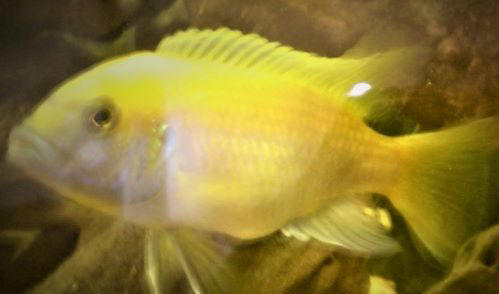
|
Re: Tumor Cichlid
4/29/20
Thank-you so much for the information!
<Welcome.>
I checked his water and the PH was 8.2 - Ammonia 0 - Nitrite 0 - Nitrate was
40.
<A significant risk factor, nitrate, when it comes to cichlids. So should be
kept lower.>
I'll do a water change tonight.
<Good.>
He had a small bm yesterday. If he's had more I didn't see. I'm sending
another pic - he's the bottom fish - it shows how big the lump has gotten- a
lot bigger than just 2 days ago! (darker brown too). I'm going to catch him
and feel his lump when I do the water change after a bit. I'll try the
Epsom salts too. He acts 'normal' like he feels good and all!
Thank-you!
<If he's feeding normally, and swimming about, you might be lucky for a
while. But looking at the size of the swelling, I'm not optimistic in the
long term. See if the Epsom salts help, though. Cheers, Neale.>
|
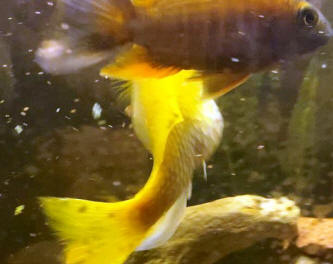 |
|
|
Blue Angel (RMF?)<<Nothing more>>
4/24/20
Hi, a friend of mine told me about your site.
<Well, that's nice.>
I was wondering if you could help me out with 1 of my Angels. I thought
she may have been carrying eggs but that was about 2 months ago and
she's still bloated. Others I have asked said it appears to be a tumor.
<Indeed. Much less good news here. Does appear to be a tumour, but
whether benign or cancerous impossible to say. You could lift the fish
out gentle with a net, and using wet hands, just feel the lump very,
very gently. If it 'gives' easily, it could be a fluid build-up, what is
properly called oedema, but widely known as Dropsy. Normally this
happens around the abdomen, but can happen elsewhere. The use of Epsom
Salt in the water (1-3 teaspoons per 5 gallons/20 litres) can help,
along with a suitable
antibiotic. But if the lump feels more or less solid, then it's a cyst
for sure. Be sure not to apply any pressure anywhere other than on
muscles -- pushing down on the abdomen (bottom half of the fish between
the head and the vent) can damage the internal organs and kill the
fish.>
If you believe it is, is there anything I can do?
<No. Benign cysts are not lethal unless they obstruct an important organ
or blood vessel. Since this cyst appears to be on the muscles between
the abdomen and the tail fin, this is unlikely to be a dangerously
located cyst. In some situations these benign cysts clear up by
themselves, perhaps triggered by a bacterial or viral infection, but
more often they're permanent, and perhaps genetic more than anything
else. The more inbred fish are certainly more prone to them than
wild-type fish, so you do tend see them in things like Goldfish, Koi,
Bettas and fancy Angels and Guppies.
If the tumour is malignant, there's no real treatment nor much hope.
Thankfully, such tumours are rare in tropical fish. But if you did see
the fish obviously suffering, then humanely destroying it would be best
(the Clove Oil method is safe, cheap and easy to use). Incidentally,
vets can remove cysts and tumours from tropical fish, but it's usually
only practical and cost-effective for things like Koi>
Any Meds? I started changing the water every 3 days at 65% instead of
every Saturday at 75% (some suggested more water changes )
<Up to a point, optimising water conditions will certainly help
generally, and a healthy fish is one more able to use its immune system
to deal with problems. But benign cysts tend to be very persistent,
though they do, sometimes, subside themselves (indicating, perhaps, a
viral or bacterial component). It's really more about ensuring the
Angelfish is able to swim about and behave normally. If it can, then I
wouldn't be overly concerned.>
Any help will really be appreciated. Thanks so much
Dennis
<Sorry can't offer much more help than this. Cheers, Neale.>
|
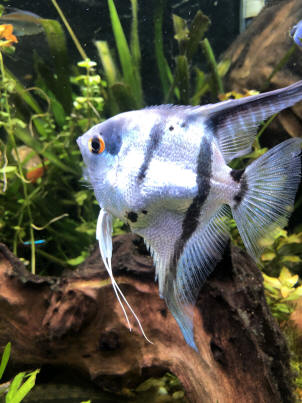 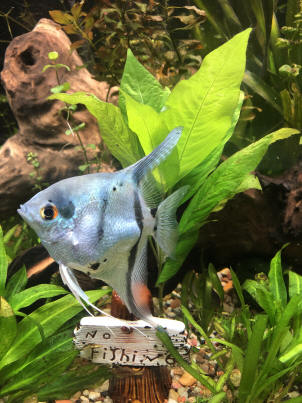 |
|
Re: Blue Angel 4/29/20
Hi, thank you so much for this info. I will keep you posted. Stay Safe
Dennis
<Most welcome, and take care. Neale.>
|
-------------------------------------------------------------------------------------------------------------------------------------------------
Freshwater Aquarium Articles & FAQs
- Set-Up: Gear/Components:, Set-Up, Tanks, Stands, Covers:, Water, Filtration of All
Sorts, Sumps, Refugiums:, Circulation, Pumps, Powerheads, Aeration,
Electricity, Heating/Chilling, Light/Lighting:; Types of Systems:,
Substrates, Aquascaping:
- Livestock 1: Stocking/Selection, Biotopes, Quarantine, Acclimation.
Fishes: Stingrays, Inadvanced Bony Fishes, Eels, Tetras & Their Relatives,
Killifishes, Livebearers, Catfishes, Goldfish, Barbs, Danios, Rasboras,
Minnow Sharks, Loaches, Misc. Fish Groups
 |
New
Print and
eBook on Amazon
Goldfish Success
What it takes to keep
goldfish healthy long-term
by Robert (Bob) Fenner
|
Livestock 2:
Gouramis, Bettas, Cichlids, Fresh to Brackish Water Fishes,
Invertebrates (Hydra, Worms, Snails, Insects, Crustaceans...),
|
|
New
Print and
eBook on Amazon
Betta Success
Doing what it takes to keep Bettas healthy
long-term
by Robert (Bob) Fenner
|
-
Herps:
Amphibians, Turtles,
- Maintenance/Operation: General Maintenance,
Algae, Foods/Feeding/Nutrition, Disease/Health,
- Freshwater Aquarium Science:
Behavior, Topics, Reference and Aquatics Writing Business, Reviews,
|
|

