Archive 107: Daily Pix FULL SIZE
(For personal use only: NOT public domain)
(Mmm, right click, add, set as background...)
To: Today's: Desktop size
download , Today's FAQs, SW Archive 51,
SW Archive
52, SW
Archive 53, SW Archive 54,
SW Archive
55, SW
Archive 56, SW Archive 57,
SW Archive
59, SW
Archive 60, SW Archive 61,
SW Archive
62, SW
Archive 63, SW Archive 64,
SW Archive
65, SW
Archive 66, SW Archive 67,
SW Archive
68, SW
Archive 69, SW Archive 70,
SW Archive
71, SW
Archive 72, SW Archive 73,
SW Archive
74, SW
Archive 75, SW Archive 76,
SW Archive
77, SW
Archive 78, SW Archive 79,
SW Archive
80, SW
Archive 81, SW Archive 82,
SW Archive
83, SW
Archive 84, SW Archive 85,
SW Archive
86, SW
Archive 87, SW Archive 88,
SW Archive
89, SW
Archive 90, SW Archive 91,
SW Archive
92, SW
Archive 93, SW Archive 94,
SW Archive
95, SW
Archive 96, SW Archive 97,
SW Archive
98, SW
Archive 99, SW Archive 100,
SW Archive 101, SW Archive 102, SW Archive 103, SW Archive 104, SW Archive 105, SW Archive 106, SW Archive 108, SW Archive 109, SW Archive 110, SW Archive 111, SW Archive 112, SW Archive 113, Freshwater
Pic of the Day Link,
|
LG.JPG)
|
| Premnas biaculeatus (Bloch 1790), the
Spine-Cheek Anemonefish, Maroon Clownfish. Bright red to orange
body and fins, with three narrow white body bars and prominent
opercular spine. Females to six inches, males about half that
size. A brilliant red male in Sipadan 08. |
|
|
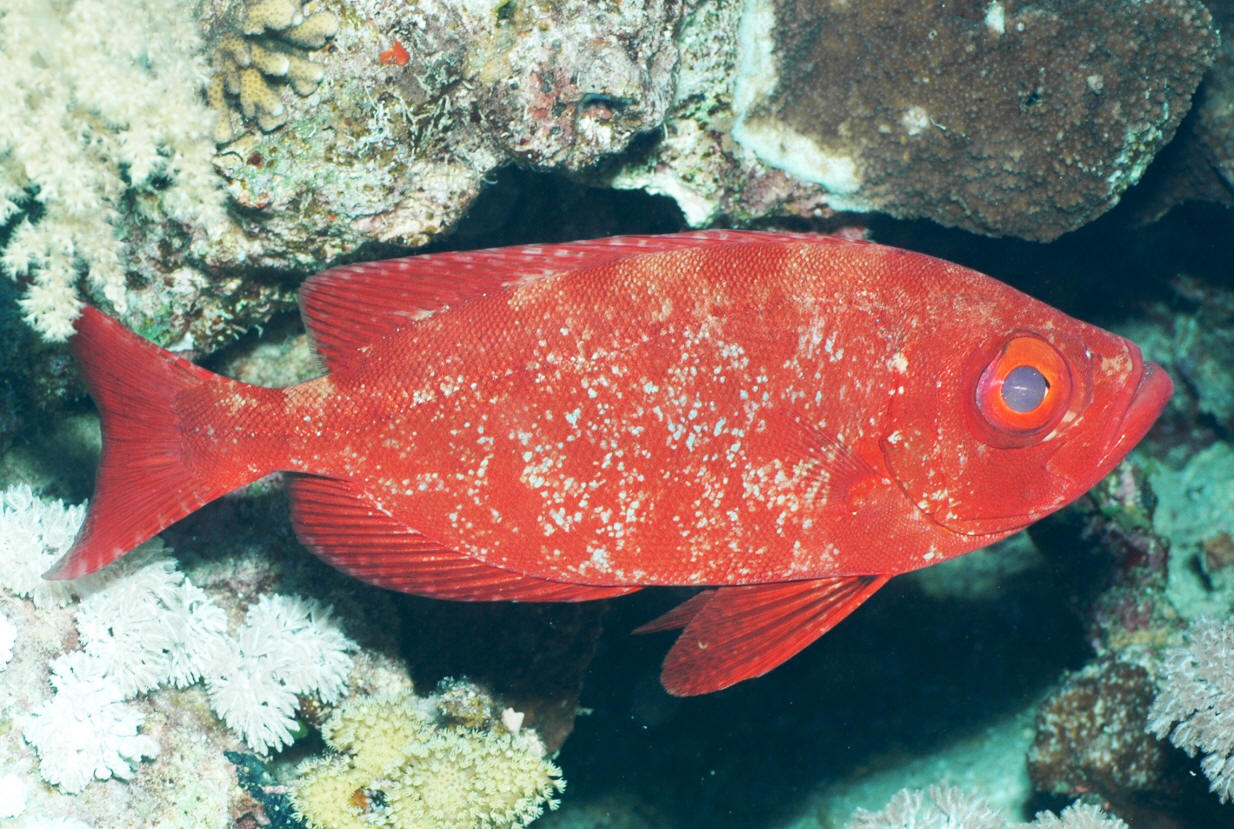
| My favorite of the family is the
handsomely red, Crescent-Tail Bigeye, Priacanthus hamrur
(Forsskal 1775), widely taken in the Pacific to the Indian Ocean
and Red Sea. Be aware that this fish can get to eighteen inches
long; feed sparingly. Red Sea image. |
LG.JPG) |
| My favorite of the family is the
handsomely red, Crescent-Tail Bigeye, Priacanthus hamrur
(Forsskal 1775), widely taken in the Pacific to the Indian Ocean
and Red Sea. Be aware that this fish can get to eighteen inches
long; feed sparingly. Red Sea image. |
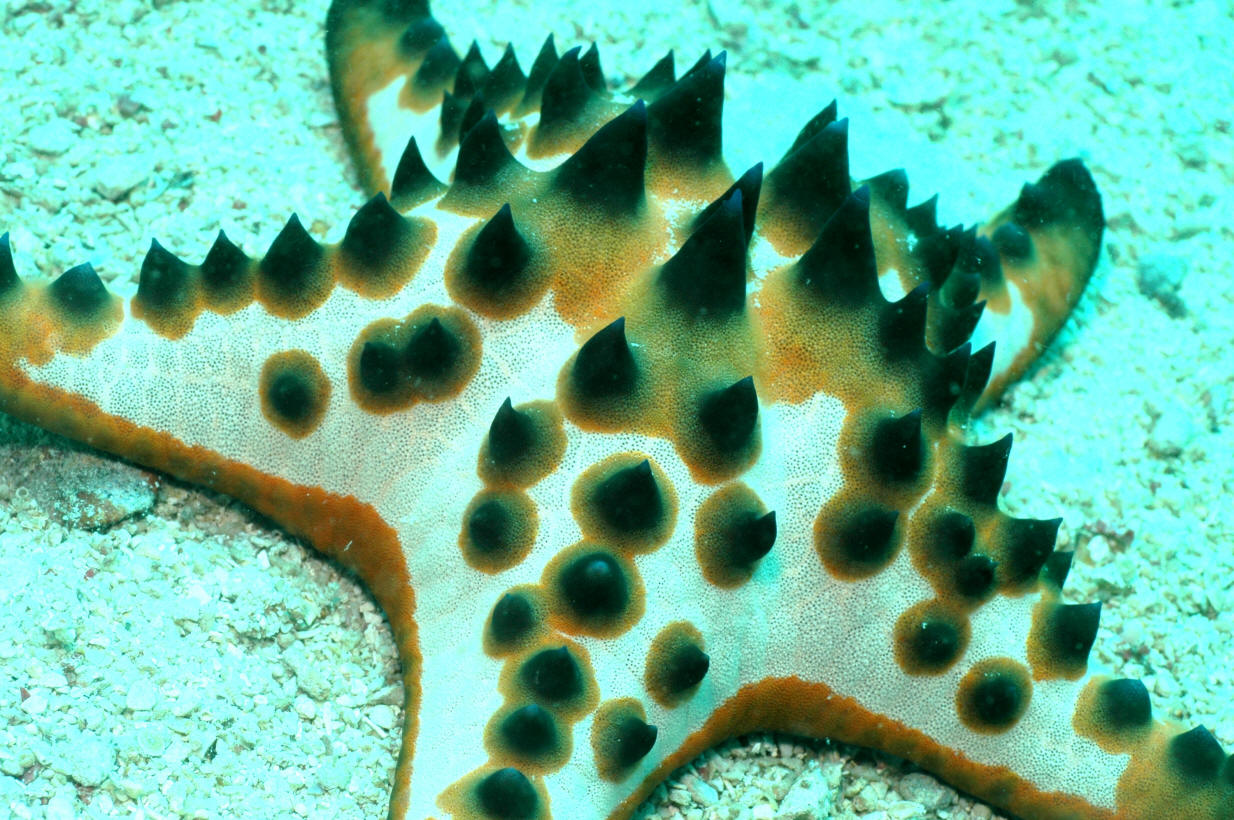 |
| Another "Knobby" species, the Chocolate
Chip Star, Protoreastor nodosus at a wholesalers and close
up in N. Sulawesi. An opportunistic omnivore on other
invertebrates. Found widely throughout the tropical
Indo-Pacific. Select for smaller 2-3 inch specimens and keep them
well fed. Sipadan 08 |
|
|

