|
FAQs on
Betta Systems: Water Quality
Related Articles: Betta Systems,
Improved (Better?) Products for Bettas!
Anabantoids/Gouramis &
Relatives,
Betta splendens/Siamese
Fighting Fish, Betta Diseases,
Improved
(Better?) Products for Bettas!,
Related FAQs: Betta Systems 1, Betta Systems 2, Betta Systems 3, Betta Systems 4, Betta Systems 5, Betta
Systems 6, & Betta System: Bowls/Tanks, Heating, Lighting, Filtration, & (See also: Ammonia, Nitrite,
Nitrate, Nitrogen Cycling), Maintenance, & Bettas in General, Betta ID/Varieties, Betta Behavior, Betta Compatibility,
Betta
Selection, Betta Feedings, Betta Reproduction, Betta Disease,
|
Bettas are more than fine
with most all tap/source waters. Better than bottled. Do either
treat (and store for a week ahead of use) new water or treat with
a dechloraminator. No salt added please. Plants can do a great
deal of good though... aid/assure in cycling. No ammonia or
nitrite, less than 20 ppm of nitrate. |
 |
Betta Success
Doing what it takes to keep Bettas healthy long-term
by Robert (Bob) Fenner
|
Is coral stones harmful to beta fish if I boil it...its a 60L
tank? 9/16/19
Hi i rescued one green tiger barb and he wasn't happy. He now has 7
barbs and loving company. I'm moving them to 60L tank. Tried sand but
too cloudy..washed multiple times! I've purchased what looks like tiny
wee pours golden stones but realised it's for saltwater. Will it harm
barbs if I boil it first? In ratio to tank, it's not a great amount of
gravel. Will they b ok with that?
Thanks Sharon
<Hello Sharon. Products designed for use in marine fish tanks are not
always safe in freshwater tanks. If they are made of a calcareous
material, such as limestone, they will harden the water and raise the
pH. So short answer: nope, leave these out of your Betta's aquarium!
Cheers, Neale.>
Better, difficult water parameters (Betta splendens)
8/22/19
I have a male betta in 5 gallons, filtered, WC every other day.
<Mmm; I'd do water changes just once a week>
My tap water has a PH of 8.5 and KH of 4. GH is 8-9.
<Got you>
I can drop the PH by mixing with water from another tank that has
organics, or mix with RO (current strategy) as aerating overnight does
nothing to drop the ph.
<Ah no; boiling might, but... I would not do this>
Regardless of the method, when the PH drops to 7.8 or 8, the KH has
dropped to 2.5. I’ve tried the SeaChem products to buffer by bracketing
and if the KH is at 4 or 5, the Ph is once again at least 8.5.
<Yes>
Can my Bettas live comfortably in an 7.8-8 range PH with a KH of 2.5. ?
<Yes>
Is the PH or the KH the bigger problem?
<A bit of both at extremes... put more clearly (hopefully), you have to
have/want "some" KH (or GH), and a pH that is neither too high, nor
low... The values you mention are fine for "modern" Betta splendens
(cultured; let's say versus some species that might be closer
generations-wise to wild-collected)>
These tanks are not cycled, I just do water changes every day with a
drop of Prime. I have sponge filters cycling in a bucket, but not
finished yet.
<Ahh; I would cycle them, move the media when it is ready, go to the
weekly partial (half) water changes. All will be well otherwise (given
the water quality parameters mentioned here)>
Thank you so much,
Amy Larson
<Welcome. Bob Fenner>
Better, difficult water parameters /Neale
8/23/19
I have a male betta in 5 gallons, filtered, WC every other day.
My tap water has a pH of 8.5 and KH of 4. GH is 8-9.
<As you probably realise, pH is a bit high for this species. But that
would seem to be a result of your water chemistry, though your carbonate
hardness doesn't seem especially high.>
I can drop the pH by mixing with water from another tank that has
organics, or mix with RO (current strategy) as aerating overnight does
nothing to drop the pH.
<Indeed not. If there's a source of alkalinity in the aquarium, such as
seashells or lime-containing gravel, or the water itself has some
buffering capacity, any direct pH changes will be temporary.>
Regardless of the method, when the pH drops to 7.8 or 8, the KH has
dropped to 2.5.
<Correct. Do you remember at school the old "acid plus alkali equals
salt plus water" idea? This is more or less applicable here. When you
add acid to a hard water aquarium, that acid is neutralised by the
alkalinity in the water. Normally, this alkalinity is, in part or in
whole, the carbonate hardness. So the acid reacts with the carbonate,
and both are combined to form a soluble salt of some kind. The acid has
therefore lowered the carbonate hardness. The carbonate hardness will
continue to react with acid so long as acid is present, which is why
carbonate hardness is a good indicator of buffering capacity -- it
inhibits pH changes.>
I’ve tried the SeaChem products to buffer by bracketing and if the KH is
at 4 or 5, the pH is once again at least 8.5.
<The basic rule is don't EVER try and change pH directly. It's
pointless. At best it's a hit-and-miss approach; at worst you just fill
your tank up with competing chemicals that produce unstable water
chemistry that stresses your fish.>
Can my Bettas live comfortably in an 7.8-8 range pH with a KH of 2.5. ?
<It is not ideal, but tolerable if all else is positive.>
Is the pH or the KH the bigger problem?
<A-ha! You're on the right track now. When you decide to change water
chemistry, you adjust hardness, whether KH, GH, or both. If you want
soft, acidic conditions, your aim is to lower the hardness, because it's
hardness (not pH) that matters to fish. If you have hard water, the
question you ask yourself is where do you get demineralised water from?
RO water or rainwater are the two standard options -- not domestic water
softeners though! If you have "liquid rock" hard water with a high pH, a
50/50 mix with RO or rainwater will produce something that'll be fine
for most community fish, including Bettas. The pH, while interesting,
will be unimportant, so long as it's stable.>
These tanks are not cycled, I just do water changes every day with a
drop of Prime. I have sponge filters cycling in a bucket, but not
finished yet.
Thank you so much,
Amy
<Hope this helps, Neale.>
Persistently high water pH; Betta sys.
11/16/16
<Hi Elaine.>
I have been struggling to keep Betta alive, with limited success. My
second died last week. I have a 5-gallon, filtered, heated tank.
Chemical readings at zero ammonia, zero nitrite and about 5 ppm nitrate.
Temperature maintained at about 78 (little fluctuation).
<Good so far...>
I foolishly used water that had been through our water softener and
suspect that may have killed the last fish – not sure. The other
possible reason is that our water pH is just too high for Betta. I tried
to do more water testing. When our well was drilled, it tested general
hardness at 29. (It was also tested at that time, and again a few years
ago, for chemical and bacteria harmful to humans – it was fine for us,
but not sure about fish because I can't find those lab reports. Only way
to get a lab test is mail it to the closest lab a few hundred miles away
and pay a substantial amount – if I have to, I will.) We now have a pH
meter calibrated and get pH reading of 8.7, as did nearest aquarium
store.
<8.7? I wish I could maintain that for my little reef tank ;) OK there
are various ways to bring down pH, used by people who want to keep
things like discus and other "softer water" species. Check WWM for info
on that. It seems like you are using "liquid rock" well water like a lot
of mountain areas get. A good rule of thumb is that if you drink it,
then it's ok for general aquarium use. Any way you look at it, I am in
agreement that the pH is the problem. Side note- check into your tank
decor, it's not impossible that you have something in there that is
messing with the water, although I doubt it.
Down to brass tacks here. Your tank water has most likely fluctuated
dramatically in a short time. A very small tank will swing dangerously
with what seems to be a minimal change. Maintaining a steady temperature
like you do is an excellent practice and challenge due to this. One more
reason to have the biggest tank you can. I recommend taking a second
look, and taking measurements of space available, trying to upgrading to
a 10g if you possibly can do so. A larger tank may not have a much
larger footprint that you'd expect...a couple inches. Betta are not
especially picky about pH but they do need it *stable* above all. Drip
acclimate them over an hour or so when introducing them. Your goal is
for close to neutral pH. Try to find out what the readings are in the
store the fish has been living in. Moving it from a 7.2 tank to an 8.0
tank is a death sentence. Also, as standard practice, if your LFS is
lacking, be a little pushy if you have to. Then order online. There are
far too many excellent retailers who can ship you a healthy fish for a
reasonable price especially compared to the cost of shipping out water
for testing, etc.. And they will be more communicative.>
Even with 50% - or 75% - distilled water, we're not having any luck
bringing it down, not sure why. I didn't tell the aquarium store -
because the guy is obnoxious and insisted that we’d kill a Betta by
mixing in distilled water - but the water he tested was 50% distilled
which had sat for 36 hours, and it was still 8.7. Is there a way to
bring down the pH which is safe for Betta? Should I give up on Betta and
try a species that can tolerate our high pH? I'm limited to a small
5-gallon tank because there is no place for a larger tank where our 3
large cats won't go fishing – and they are Maine Coons quite capable of
removing tank lids. So I'm not sure what species are feasible – and I
would prefer another Betta. But, I do not want to kill another one.
Perhaps buy jugs of drinking water and use it in the aquarium?
<Water "softeners" as we call them may involve salt, so there's that.
Back to the stability thing though. Controlling the water with additives
and such is not as good long term as adjusting the *fish* to what will
be its conditions. Long story short (too late!) I'd personally probably
just buy bottled spring water (not distilled), dechlorinate it simply by
leaving it open overnight, and have this set up, heated and ready to go
before introducing a new fish.
Please check out
http://www.wetwebmedia.com/fwsubwebindex/bettasysart.htm and please use
the site's built-in search, there's a lot of stuff about these nifty
fish so always read these articles first. The F.A.Q.s are obviously very
involved and can be a bit daunting, but a simple CTRL-F for your issue
will help point you to what you need. Best, Earl C. >
Re: Persistently high water pH 11/16/16
Many thanks. I'd tried site research first but your email was more
useful. I'll check on larger tank but I only have just over 2 inches to
spare on width and 3 inches in height. It's tight now. The pH readings
were from the well, not the aquarium. I just checked aquarium and it was
over 9, but I'd doctored it with ammonia to keep cycle going and that
probably skewed it. I'll check when it cycles back to zero ammonia in
the morning. With fish in, not big jolts of ammonia, ammonia stays at
zero. I had already removed some aquarium gravel to a bowl with 8.7 pH
water to see if it affects it. So, I'll check on larger tank and bottled
spring water, finish testing on gravel from tank. - and keep close eye
on aquarium pH. I've found an online seller here in Texas who sounds
promising when I get issue resolved. Our well is through limestone
(former sea reef) and dolomite with large reservoir in dolomite - yes it
would do well for reef tank!
<Sounds good. Probably worthwhile to call the seller and ask about your
concerns as well. Ideally they are keeping their Bettas in similar water
to what you have, knock on wood. Your game plan seems solid. Let us know
how it goes! -Earl C.>
Re: Persistently high water pH (RMF, Plus back to Earl)
11/16/16
I’m so sorry to take so much of your time with my high pH questions. I
can’t get a larger tank, but I can use spring water instead of our very
high pH tap water - problem solved, right? WRONG. The aquarium
water itself tests about 9.3 or 9.4 - significantly higher than the 8.5
tap mixed with 50% distilled.
<Please.... Simply READ here:
http://wetwebmedia.com/FWSubWebIndex/fwh2oquality.htm
and the linked files above. You might well want to consider an RO device
for your fishes/aquarium and potable uses... Bob Fenner>
So I started trying to figure out if I had a problem with something in
the tank. Most likely culprit seemed the gravel, even though it was
intended for an aquarium. I put some gravel from the aquarium into a
small bowl of distilled water and the pH went up from 7.0 to above 7.5
(still under 8.0). Ok, I think. That’s an issue although I still don’t
understand the 9.4 aquarium water; I’ll just have to remove all the
gravel. Then, the light bulb went on in my head this morning. The water
in the tank is such a high pH because I was using 100% tap water until
very recently and only 25% water changes since I made the change to add
50% distilled water to the changes. That water in the aquarium is still
over 50% tap, I think - I’ll need to do a 100% change. Also, as I know
from my cat water bowls, our faucets, etc, our water leaves deposits.
Almost every thing in that tank has been in there since July (more than
4 months) so there’s a good chance the water left deposits on it,
further raising the pH. I cleaned a handful of gravel from the aquarium
very well in distilled water - a soak and 3 or 4 rinses in distilled
water. Aha! It doesn’t affect the pH of the distilled water if it has
been well rinsed. So, rinse the gravel and everything else in the
aquarium as well as 100% water change. But . . . I have all that
wonderful bacteria I took weeks to get established which is doing a
great job of converting ammonia and nitrites. I don’t want to lose that
good bacteria. I know your site says to usually rinse items from the
aquarium in the water removed from the aquarium to preserve the bacteria
- but that water is pH 9.4 or higher. Here’s my thought: I have a very
large foam filter in the aquarium, about 4.5 inches in diameter and the
same height. It has to be full of good bacteria by now. If I rinse
everything EXCEPT the filter in spring water, rinse the filter in the
water removed from the aquarium and squeeze it out most of the way, then
return it to the fresh water, I hope that will leave me enough good
bacteria while removing enough of the high pH water and its deposits.
Does that sound workable? I don’t want to start over on building the
bacteria colonies, but I need to remove the high pH water and its
deposits as much as feasible. Elaine
Re: Persistently high water pH
11/17/16
Sorry to have bothered you.
<Not a bother; and have sent your ongoing corr. to Earl for his further input.
Stay tuned. BobF>
I actually had “simply read" the entire page you sent by your link before I sent
my first message to you because I had researched pH on your site to see if I
could avoid bothering you at all I know that you are busy with people with ill
fish and your site is a real blessing. From reading that page you linked, it
really sounded like I should give up on Betta and find some other species for my
tank due to our water. I stated that in my first email and asked for advice on
feasible species, even though I would prefer a Betta. The response from Earl C.
- first email below - seemed to indicate a Betta might be possible with spring
water and careful monitoring. So I was trying to set that up. Really, I do read
the material on your site before emailing and I do read any links I am sent. I
guess I’ll keep fumbling along and do my best not to kill any more fish. I do
not need an RO unit for potable water. Our water creates no health risks for
humans. Most of my family lives to past 90 drinking the well water from these
limestone hills. Perhaps I need one in order to keep one little fish. I’ll look
at cost. Elaine
Supplementing RO Water 11/18/16
I'm sure the answer to this is probably on your site somewhere, but my
internet is out till who knows when (joy of rural life) and I've spent
the last 2 hours squinting at a 4-inch iPhone screen trying to research.
I'm giving up and writing - sorry. After a long and useful exchange with
you about my well water problems, I convinced a local aquarium store to
sell me RO water at 25 cents a gallon if I bring in containers.
<A good deal... much cheaper than elsewhere.>
I asked them about necessary additives to keep a Betta healthy and they
told me that they never add anything for any of their fish.
<Mmm; I would NOT keep any aquatic life in straight RO>
Since these are the same folks who were convinced I'd kill a Betta by
mixing ANY distilled water with my well water because I'd mess up the
electrolytes, I think they have a misunderstanding about RO and DI
water.
<Agreed>
Either that or this water isn't really RO - but that certainly looked
like a very large RO unit. Can you advise me? I have seen SeaChem
products recommended, such as SeaChem Replenish. Elaine
<This is an excellent choice. I'd add, mix, and use. Bob Fenner>
|
My Betta.... I'm worried 4/24/16
So I just changed my fish`s water, put him in and I noticed that he
started opening and closing his mouth repeatedly and flapping his gill
opening, is he gonna be okay? I did the water changing process correctly
<Define "correctly" please. Step by step. Also if you have any other
tank to safely put him in, that would be a good idea until you know what
the problem is exactly. I'd start with asking if you aged and
dechlorinated the water you used and how much water you changed out.
Give me a rundown one step at a time, please. -Earl>
Re: My Betta.... I'm worried 4/25/16
<Ok. Firstly, how is he this morning now that several hours have
passed?>
Ok, I first took our dipper (we always put him in it when we change his
water) and cleaned it out with only cool water. I then filled it up
halfway. My dad said to put in 1 drop of the water cure liquid. I did
that.
Next I found our fish net, washed it out with hot water for about 15
sec.
Next I stirred the treated water with the net I then carefully got flash
out of his tank. He is my only fish in my house. I took his dipper and
put him by the sink (in the water, of course) next I took his tank into
the bathtub, poured the water out, along with his gravels in the bottom
of the tank.
<A word about water treatment stuff in a bottle/dechlorinator...it takes
some time to work and is better left as a backup or emergency solution.
What you really need to do is get a container that you know is
absolutely clean (you can get a 2 or 5 gallon bucket at Lowes or
whichever hardware store, use a bottled water jug, whatever, as long as
it's NEVER been used for any other purpose other than storing drinkable
water. Preferably with a lid. Keep it filled at all times then stash it
someplace where it will not be contaminated but can age. Tapwater has
chlorine, chloramine, stuff that will "gas out" within a day but is
harmful to the fish. Do your water changes using this aged tapwater and
fill it back up as needed to keep it filled for next time. Change about
1/4 or 1/3 of the water in the aquarium using this once a week rather
than one huge change. You don't want to dump the whole thing out if you
can avoid it. "Partial" water changes!
If you are going to do a major cleaning of the entire tank including
gravel, etc. do it only rarely and simply put enough water in a clean
bowl (like say a mixing bowl or like I did as a kid, a Kool-Aid plastic
pitcher) in other words, leave the fish in water it's been living in, no
need to switch it into entirely new water.
But here is the problem and why the details are important! :) You are
using a filter with one filter pad, and you have gravel. Both of these
things are your biological filters and are how the tank is "cycled" and
habitable. When you clean or remove them, you are essentially putting a
fish into totally new, fresh tapwater, which is dangerous. Usually you
want to just partially change smaller amounts of water more often. But
never change (or kill off the helpful bacteria in) both the gravel AND
the filtration pad at the same time. Do one or the other but never both.
So to sum up, use aged water stored for the purpose, change it often but
in smaller amounts, and don't destroy the bio-filtration in the tank. I
would just swap out the filter pad as needed independently of water
changes. Just change small amounts, and if you must do a total-tank
cleaning, just toss a bunch of the water in the tank into a separate
holding area with the aged filter pad, clean the tank, put the old water
(with the fish) back in, fill up with the new water from your stash, and
put the old pad into the filter.
PLEASE read about cycling tanks, water changes, and also freshwater
Bettas on Wet Web Media, all this is covered extensively on the site.
There are also many books about Betta care, probably even in the local
library.
Knowledge is power. I went over this just now to help walk you through
the specific process and time urgency but read up next time first...it's
a must. Also as a suggestion, if you have had Bettas for 3 years, it
might be time to upgrade to planted tanks, since you clearly have a
long-term interest and well...planted is the next step into a larger
world esp. for fish like a Betta. :) Search the WWM site, it's got a
built-on Google section to boot. Good luck. -Earl>
I put the gravels under the faucet, turned the water on. With the water
on, I made my hand into a claw shape and started running my fingers
through the gravels. I saw discolored water and fish poo coming out of
the gravels.
Once I saw that no more discolored water rinsing away, I put all the
gravels back in the tank. (The gravels are for fish tanks, not for
driveways.) I took his submarine toy and took a clean washcloth, got it
wet and washed the yellow-Orange gunk off. I did the same to his
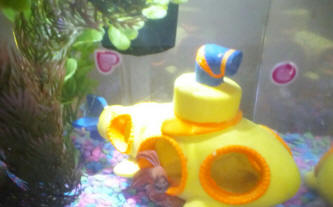
whisperer filterer. I took out those old filter and threw it away I took
a new filter and put it in cool tap water. Then I rinsed it. I filled up
the usual tank with 77 degree water then put 3 drops of treatment in. I
carried the tank back to my room and put it on its shelf. Then I took
the dipper containing
the fish and set it by the tank. Flash swam into the net. I plopped him
in the water as quick as I could. That was the water changing process. I
changed all the water in the tank. He isn't doing it as much now. I gave
him food and he swam up to it, but he wouldn't eat it. I know I did the
process right because I saw my dad do it a lot of times. The tank is
about 3 years old. This is my second Betta. I will show you a pic of him
in his tank today, and my old one in the same tank. The new fish is
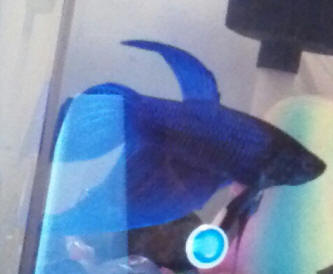
pink, the old one is blue. Thanks for listening to me
Re: My Betta.... I'm worried 4/25/16
He is a pretty fish, isn't he? My family is used to having fish. When I
was 5, we had a whole aquarium of different tropical fish, so we aren't
new to fishkeeping
<Yep, take good care of him and he will be a cool little pet for years.>
|
 |
|
Betta Question; water qual. 10/14/15
Dear Crew!
<Cori>
For the past 7 years I have used your site as a source for so many
issues/questions/solutions and for generally learning to keep tropical fish! I
started in 2008 with my first 26 gallon Marineland community tank in Las Vegs
which I kept successfully (mostly thanks for your straight-forward and practical
advice on cycling, fish-keeping, etc.) and moved my fish 500 miles back to
Northern California (Sacramento) with virtually NO hiccups! So, thank you thank
you thank you.
<As many welcomes; plus one>
I now own a 65 gallon cichlid tank and am contemplating my next tank; either a
planted tank of Angels or saltwater - maybe seahorses if I can master the
salt-water chemistry/courage to move forward.
I am also a sucker. I am the one in the PetCo looking sadly at all the Betta
fish in small cups. I have rescued more than my share. Currently, I am down to
one small tank at work (2.0 gal Aqueon bow tank). Here in lies the
problem/questions: I am on my third Betta - two have died (both while I was on
vacation and I had a "helper". That was before I read, just fast
them...sheesh.)
Current parameters of my desk tank are:
pH 7.4
Ammonia 0 ppm
Nitrite 0 ppm
Nitrates 5.0 ppm
Temp 80 degrees (I am using Betta bowl heater)
<All fine values>
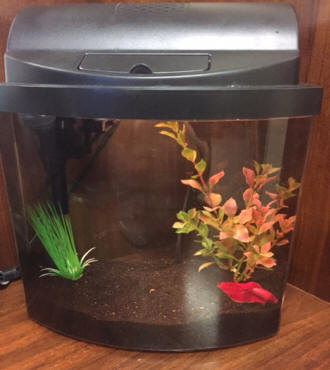
(see attached photo).
<Have>
My tank is occupied by 1 male Betta (my third attempt) as of today.
Food: Omega Betta Buffet Pellets and Bloodworms occasionally
<Mmm; I'd skip the latter... Sub another frozen item. Rationale posted on WWM>
When I returned from my last vacation, my fish "helper" had noticed a dead fish
one morning when she went to feed him. Apparently she was feeding him 6 pellets
a day and noticed him swimming on his side the day before. By the time I
returned to the office the water was a mess. Fish had been discarded but
parameters showed ammonia spike and zero nitrates. I let
the tank sit for 3 weeks attempting to recycle with no success. Eventually, I
washed the tank and the substrate (about 1 1/2 inch sand) and used water from my
established Cichlid tank at home. I let it sit another week and since the
parameters reached above, I have acclimated my newest Betta rescue to the tank.
Any chance high pH will be a problem with the Betta?
<Not likely; no. Sevens are fine for domesticated Betta splendens>
This is the tap water at my office.
I looked everywhere I could to find pH for Betta but didn't find too many
entries or any discussions. Help!
Thank you so much!
Cori Durkee
<Cheers, Bob Fenner>
|
 |
|
PH water chemistry question 5/3/13
Hello I'm hoping you can help me resolve a problem. I have a
10 gallon planted tank with a Betta. This is a
low light set up with 2 -10Watt CFLs.
I dose fertilizers including Excel 3 times per week. Tank has been
set up for 1 1/2 months. In setting up my tank I decided to mix
distilled water 75% and tap 25% to lower my GH. My tap is
GH16 and I didn't want to be limited by this. My formula ended giving me
GH5 and PH7.6. Over a three week period I tested the GH and it was
pretty constant at GH5-6. I didn't bother testing the PH as I assumed it
was in line also. When I was acclimating my fish I tested all my water
param.s to compare to the water my fish came in. To my surprise my PH
tested at 8.2. How can this be?
<Easily.>
The good thing is my Betta's water tested at 8.0, but I'm concerned
about the large swing. I did more testing and the result is that during
the night the PH would be high and during the day the PH would be
normal. I'm concerned because high PH fray Betta fins and I know they
need a stable PH.
<Slight pH changes, say from 7.6 to 8.2 over a 24-hour cycle, are not a
problem; indeed, they happen in the wild all the time. e.g., in garden
ponds.>
I've inquired else where and was told this is normal, but I'm concerned.
Can I add something to the water to stabilize the PH?
<No real need.>
I've read about different products, but they indicate they will increase
the hardness. Doesn't this defeat the point?
<Depends what "the point" is. First, check the carbonate hardness,
measured in degrees KH, as this is the stuff that mostly inhibits pH
drops. It's not the same as general hardness (GH, measured in degrees
dH). If your carbonate hardness is very low, then pH will drop;
conversely, if carbonate hardness is very high, it will probably keep
the pH around 8, plus or minus a little. My guess would be that you have
carbonate hardness around 10-15 degrees KH out of the tap, and so you
should still have 2-4 degrees KH in the aquarium assuming your 3:1 ratio
of pure water to tap water. You may want to use a neutral pH buffer, but
to be honest, I wouldn't bother. If the fish is basically happy, I'd not
be worried; indeed, I'd not even faff with the 3:1 ratio, and would
simply mix DI water with tap water at a 50/50 ratio, which is plenty
good enough for farmed Bettas, and being cheaper because you're using
less DI water, you can afford to do more water changes.>
I'm new at fish keeping and water chemistry. Thank you!
Donetta
<Welcome, Neale.>
Re: PH water chemistry question 5/4/13
Hello Neale, I so appreciate you answering this question! It's
been really bothering me and it takes a load off. I am going to
change my RO formula to 50/50, I agree that works better for me.
One more question if you don't mind. My Betta had been happy,
however last week I noticed that some of his fins started to split and
his tail developed pin holes and was getting shorter and shorter.
I read that the issue is almost always poor care/water quality, however
I couldn't imagine that because I usually do 2X weekly water changes
because of the live plant start up.
<Non-zero ammonia and nitrite levels during the cycling process (or of
course afterwards) are common reasons why fish become stressed. In turn,
stress weakens their immune system, and that allows opportunistic
bacteria to invade the fin and skin tissue, starting the process of
Finrot. With this said, because Bettas have unnaturally long fins, they
are especially prone to physical damage as well, such as clumsy netting,
bounces during the trip from store to your house, abrasions caused by
sharp rocks and ornaments, even excessive suction from filters (you
should use an air-powered filter on a Betta tank rather than an electric
filter). Rapid pH changes don't normally cause Finrot directly, though
repeated water chemistry changes can stress fish beyond their ability to
adapt, and that could allow something like Finrot to get started. But
more normally rapid pH changes produce more obvious signs of stress:
nervousness, jumpiness, gasping at the surface, and other such signs of
a fish that wants to get out. Provided your tap water isn't
mind-blowingly hard (above, say, 20 degrees dH, pH 8) then there's no
real need to mess about with water chemistry for domesticated fish such
as Bettas. Indeed, you could argue that a stable, if high, pH around 7.6
would be better than trying to maintain, clumsily, a more "natural" pH
around the 6 to 6.5 mark that actually ends up changing every day.>
So I thought maybe it could be PH swings, now I know differently.
However, I realized that poor water quality came from my water sprite
plant that rotted. However, I was stumped by this because only the
base (mother plant) died and the floating part had and created tons and
tons of baby plantlets and I've had to cut it back every week.
Anyway, so much to learn.
<Water Sprite is easy to grow, but yes, it's a good idea to crop it back
regularly. I'd warmly encourage you to try it again, but do get true
Water Sprite (Ceratopteris thalictroides) rather than a lookalike
species like Water Wisteria and bear in mind that all floating plants
need some space between their leaves and the tank lights, at least an
inch, preferably more. I happen to find Amazon Frogbit works much better
in tanks with limited space under the hood; it's an easy to grow plant
in other regards too.>
So, I pulled up the plant and cleaned everything out really good.
Last Saturday I moved my Betta to the 1.5 QT tank and have been doing
90% water changes with 1.5 tsp of salt.
<I wouldn't bother with the salt, to be honest; at least, not once the
fins are better.>
His fins stopped receding and the pins holes have mended even though I
can tell the healing in not complete. There's still a tiny split
and the fins have not grow back yet. My question is can I move him
back to his regular home since now I know the problem?
<Sure, provided water chemistry is stable and water quality is good.>
Another thing I should mention is he clamps his back tail at times.
Is this part of the fin rot?
<Unlikely.>
Also, under his chin it looks a little more smooth than usual seems like
it should be more scaly. He hates it in that little tank and
definitely he is not as active in there. If I move him back is
twice a week water changes enough at 15% each?
<Or some multiple thereof, yes. For a single Betta in a 10-gallon tank,
a 25% water change every week or two should be ample. Remember not to
overfeed though!>
Also, if I move him I will have to decrease the salt? I believe it
will kill my plants.
<May do so; depends on the plants.>
I'm scared to do this, unless possibly only 1 tsp for the whole tank.
<One teaspoon per 10 gallons is trivial, and will have zero effect on
either plants or fish. I know some Betta people are wedded to this
addition of salt to their systems, but there's no real evidence it
helps, and at this level, it can't possibly stress or kill pathogens
like Finrot bacteria (which do, after all, live in brackish and marine
aquaria!!!).>
Also, I have two crazy Oto cats in his big tank that helped with the
algae, but I'm thinking it's best to take them out.
<Ah! The plot thinnens! Otocinclus are NOT as harmless as they seem.
Some specimens are known to nibble at the flanks of slow-moving fish. I
would not keep them with a Betta; if you must have tankmates with a
Betta, choose something totally harmless, like Corydoras or Whiptails.>
They are so hyper! I know there are tons of threads on this issue, but
I'm hoping to get an answer for my set up. Your site is truly
amazing. Thanks for being so willing to help.
Donetta
<Most welcome, Neale.>
Re: PH water chemistry question 5/4/13
Neale,
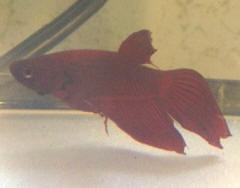
I forgot the picture!
Donetta
<Ah yes, a Betta that's been through the wars a little. Otherwise looks
sound though, so should recover. See previous message for suggestions on
this. Cheers, Neale.>
|
 |
|
Re: PH water chemistry question
5/6/13
Thanks again for your reply! I really appreciated the tip on water
sprite
:)
Donetta
<Glad to help. Cheers, Neale.>
|
water quality, Bettas
1/17/12
Hi,
My name is Randy. I have 6 Betta tanks, 2.5 gal. filtered with
AZoo palm filters. I also have a 3 in 1 gal. jars with no filter. I
also have a 10
gal. Neon tank. The jars get 2 water changes a week and the 2.5
gal's.
once a week and the 10 gal. 25% change once a week.
<Good>
All was doing well until the
city water changed and started using chloramines instead of
chlorine.
<Ah yes... potable water quality around most of the world is in
transition... to worse>
I store my water in 7 gal. plastic containers and let stand for
about a week.
<Excellent>
I am using Kordon's Novaqua plus as the conditioner and then after
the city changed I noticed that the nitrates were off the charts.
Everything else looked good. I then started using Amquel Plus
along with the Novaqua Plus.
Now the water checks out looking good. PH about 7-5. Ammonia, Nitrites,
Nitrates are 0 across the board. The problem is now the algae was green
but is now turning brown. Is this anything to worry about?
<Mmm, given your stated water change, maintenance schedule, likely
not>
I would love to us RO water
<Nah, or at least not exclusively>
but is not an option as for cost and availability.
<Easy enough to make your own... there are some inexpensive (under
$100) DIY installed units... I use one>
Can you suggest another or better way to treat water for
changes?
<Mmm, well there are contactors one can buy/use, but they cost more
than RO in any time frame>
I am trying to learn and do the best I can for my tanks so I can expand
and get better at fish keeping. I will as soon as I can get a RO unit,
but for now ????
Thanks for any suggestions,
Randy
<There are some simpler approaches... the use of Peat Moss for
instance... a bag of this could be suspended in your 7 gal. make-up
water, or put in a box or internal power filter... Bob Fenner>
Re: water quality 1/17/12
Thank you very much for the info. I do use peat in my Neon tank. I am
just wandering, would I still use the 2 conditioners in my holding
water if I used the peat in it ?
Thanks,
Randy
<I use no/none in water I've stored for use.
BobF>
Re Dead Betta; mystery rocks?
10/28/11
Hello again:
I was wondering if toxins in the water in a fish tank will always cause
the ph or alkalinity to change?
<Depends on the toxin. If you mean ammonia, then that'll cause
the pH to rise (but has no effect on alkalinity). If you mean nitrate,
then that dissociates into nitric acid, and that will lower the pH, and
by
neutralising alkalinity, will cause alkalinity do drop. If you mean a
poison that isn't either a weak acid or weak base, then it
shouldn't affect pH -- though the decay of dead organisms will
produce ammonia and that in turn produces nitrate. "Toxin" by
itself doesn't mean much; water is a toxin if you drink too much,
as is salt, sugar, and every conceivable drug or medication you've
ever taken. Something becomes toxic in a given context.>
I am the one who had the black Crowntail Betta that died. I put the
"art store" stones in there and found out later that the
stones have a film of wax on them to give them a matte finish.
<Not a very clever thing to do. Don't put anything in an
aquarium not clearly stated to be aquarium-safe. Some folks do use
flowerpots and rocks collected at beaches, but even then, that's at
your own risk.>
I did an experiment where I put half of the stones I had in the five
gallon, in a 2 gallon jar, filled it up, and the next day I used a test
strip for the water. Everything came out the same as a tank that I have
that is perfectly healthy soft water tank. The Betta did have about
four of these stones in there with no effect, but maybe the larger
number did him in. Just wondering?? I also notice that a lot of people
have those
glass stones in their tanks Thank you!!
<Some glass stones are sold for use in aquaria. They look nice when
clean, I suppose, if you like that sort of thing; your Betta won't
be that keen on them though because they're reflective. Once
covered in algae and bacteria they look like any other kind of stone.
Don't see the point to them myself, and do wish Betta keepers would
concentrate on the basics -- 5 gallon tank, heater, filter, hood -- and
not worry so much about sticking baubles in their Betta's home! Yet
the market for this kind of stuff is vast, from cartoon characters to
wildly overpriced bits of smoothed glass and rock. A clump of Indian
Fern (water sprite) would do much more good, providing shade and better
water quality, and cost a fraction of the price.>
Judy
<Cheers, Neale.>
Ideal pH for Betta 1/27/11
Hi Bob,
<Liz>
Just making triple sure about the tank pH for my 1 year old female
Betta. Is 7 ideal?
<Yes>
I noticed my happy Betta wasnt so happy so I tested her water, and the
pH had taken a nose dive. With no tank changes except two new
decorations (nothing she can get stuck in and drown!), its the only
thing I can guess was the culprit. One of the decorations grew a white
algae and the other identical decoration did not so I took both of them
out immediately and recycled them.
I have swapped out 40% of her water and now the water tests at 6.6.
<Mmm, better to be closer to "neutral"...>
Jinx lives in a 10 gallon, filtered, heated tank. I am just hoping she
pulls out of this successfully as she is spending all her time at the
bottom in the corner.
6.6? 7? I have drops to raise the pH.
<Do the raising outside the system... Read here: http://wetwebmedia.com/FWSubWebIndex/BettaH2OQualF.htm
Thank you,
Elizabeth
<Welcome. B>
Betta beh., following water
changes... 1/23/10
Dear Crew,
My brother has a red Betta splendens. Every time he changes the water
he appears to float at the top as if he has swim bladder disorder
(S.B.D.). I don't think he has this disease and why does this
happen every time we change the water??!!
Thank You
<Make sure you're doing water changes the right way. New water
should have the same temperature and water chemistry as the old water.
You shouldn't change more than 25% at a time (assuming this is an
aquarium 5 gallons or larger, and equipped with a biological filter).
New water should be treated with a water conditioner that removes
chlorine, chloramine, ammonia, and copper. If you're using well
water, it's a good idea to let the water stand for 24 hours before
use. Don't use softened water (e.g., from a domestic water
softener) or RO water. If your tap water is very hard, either use it as
it is, or else mix 50/50 with RO water (or rainwater). But if you use
RO water all by itself, there will be nothing to buffer against pH
changes, and every time you do a water change the pH will dramatically
rise, and the fish will be stressed. Generally, review the basic needs
for Bettas: a 5 gallon or larger aquarium, a biological filter, and a
heater that keeps the water around 28 C/82 F. Water chemistry isn't
critical, but water quality must be good: 0 ammonia and 0 nitrite.
Bettas will NOT last long in unheated and unfiltered bowls, under
angle-poise lamps, and other such numbskull ideas. It's a sad fact
many (perhaps most) Bettas are killed through ignorance. Cheers,
Neale.>
GH/KH concern with new Betta
10/28/07 Hello :), I have a 6 gallon tank in my office with a
heater (80 degree water), an internal filter stuffed with filter floss
(for low current), a few Java Ferns, an Anubias, and some Val.s.
<Nice> I mixed 3/4 R/O water with 1/4 Spring water, and I have
had a PH level of 7.2 for a week now. (Without the mixture of water,
the PH of my tap water was pretty high at above 8. <Wow. Liquid
rock> Even the Spring water with the lowest PH reading I found, 7.0,
jumped to over 8 in my filtered tank.) My GH and KH readings are at
about 53.7ppm (if I'm understanding the API test kit.) Some of the
articles on the internet seem to indicate that these GH/KH levels are
fine, and others would seem to suggest a raising of the GH.
<Mmmm> I understand that there are products like Kent R/O right
and GH Botanica plus from your website. But I know that Bettas like
somewhat soft water, and I'd rather not affect my PH if I don't
have to, so I'm wondering if I can leave this alone, or if that
would be harmful to my new friend over time? Thank you, Patricia P.S. I
will be cycling with Bio-Spira, and Thanks for keeping up such a great
website! <Thank you... and I think you are fine here with the
calcium and general hardness... for the plants, Betta... I would not
change your stated protocol for mixing water. Cheers, Bob
Fenner>
Re: GH/KH concern with new Betta
10/30/2007 Hello, Thank you so much for your quick response :).
It's a scary moment, when you think after weeks of research, you
may have actually made things worse for your fish! Thank you for
sharing so much of your time with those of us who need it :) Thanks
again :), Patricia <Am very pleased to help you, others to improve
their experience, the lives to the life in their care. Cheers, Bob
Fenner>
Torgo the Betta update, sys., reading
3-4-09 Hello crew! <Elspeth> This weekend I
managed to scrape together sufficient funds to buy Torgo a 6 US Gallon
tank with a nice BioWheel filter (with adjustable flow so it's nice
and gentle) and a heater. I have it cycling and it is staying around 77
degrees Fahrenheit. In the meantime, I am continuing to change 25% of
Torgo's water with a turkey baster every day and am giving him a
~100% water change once a week-- all with unfiltered, treated
(dechlorinated) water. One question: There are so many products out
there that say they will harden my water (it is oh, so soft at my
house). <Really? How soft is soft? Not water that is "run"
through a residential water softener I hope/trust... if so, I'd
"go outside", use the tap from a spigot, warm up and use it
instead> What is your favorite product/method to add some minerals
to your water? <Just exposure to natural carbonate material...>
Thanks for all your help and patience! -Elspeth <Read here re:
http://wetwebmedia.com/FWSubWebIndex/fwhardnessfaqs.htm and the linked
files above. Bob Fenner>
Re: Torgo the Betta update - 03/06/09 Oh my gosh! I
got a reply from Bob, himself! Hello again crew! <Hi!> I think
you'll be happy to know that don't treat our water and the
hardness is the same from the tap as it is from the hose: 4dKH and
17.9ppm I used the API Aquarium Pharmaceuticals KH/GH test. From what
I've read around, Bettas like "moderate hardness" and I
don't think that my water qualifies. <Bettas will adapt to a
wide range of conditions, and in the wild, will be living in fairly
soft water, as is common for most (though certainly not all) Southeast
Asian fish. However, it is true to say that soft water aquaria can be
less difficult to maintain than hard water aquaria, so by default,
it's usually best to aim for neutral, moderately hard water
conditions if you have the option. This won't harm soft water fish
at all, but will resist pH changes much better than soft water
will.> Soft water certainly gives a lovely lather in the shower, but
I'm not so sure Torgo will like it. <It's unlikely to be an
issue provided you can ensure pH stays stable; that's usually the
problem with soft water aquaria.> On the FAQs I read that adding
baking soda may be useful. How much per gallon would you recommend?
<I wouldn't recommend adding just baking soda by itself.
Instead, I'd use some Rift Valley salt mix, which you can either
buy ready made or mix yourself very inexpensively. A classic Rift
Valley mix, per 5 gallons (20 litres) is as follows: 1 teaspoon baking
soda (sodium bicarbonate) 1 tablespoon Epsom salt (magnesium sulfate) 1
teaspoon marine salt mix (sodium chloride + trace elements) Since
you're not keeping a hard water fish as such, I'd actually
start by using one-quarter the amount, stir well, test the water, and
see what your water chemistry test kits say. It should be adequate, but
if not, perhaps use one-half the amount.> I also read that someone
was adding a chunk o' coral to his freshwater tank-- which was ok
by Neale-- since his water needed to be hard and alkaline. <Crushed
coral, as opposed to a dead coral, can be used to buffer the water, but
only within certain limits. Firstly, water has to be flowing past the
crushed coral, so you have to put the coral inside the filter, often an
undergravel or canister filter. Secondly, it's difficult to predict
how quickly and how effectively crushed coral will work, which is why
it's usually used in large amounts (so it's quick) and in
systems where a high pH/hardness is required (so there's no danger
of "overdosing"). A Malawi cichlid aquarium is the classic
situation. Thirdly, crushed coral has to be regularly cleaned or
replaced, else it loses its efficacy. In short, in a small Betta tank,
sticking a head of coral in the aquarium is not going to create
precise, manageable conditions of the sort you're after. I'd
also add that the trade in dead corals is generally considered
unsustainable and is illegal in some areas, e.g., Europe, so unless you
have access to dead corals from (unsuccessful!) marine fishkeepers, I
can't in all honesty recommend anyone use them. Faux corals are
just as good looking, don't affect water chemistry, and are not
expensive.> Would this be a possible solution, or is it likely to
make the water too hard for a Betta? <Wouldn't use coral in this
system.> (and how would it go for tetras? My sister has a tank of
cute little neon and cardinal tetras over at her place, so I'm
curious.) I guess it would depend on the size of the coral chunk, eh?
<Repeat after me: corals do not belong in a freshwater aquarium. If
you want corals, either get faux ones, or set up a marine aquarium and
keep live ones! There's really no ethically or practically
acceptable use for dead coral skeletons in freshwater tanks.>
Ultimately, I think I should look into having a soft water tank after
Torgo goes to that big fish tank (or rice field) in the sky, in a few
years (since Bettas have fairly short lifespans). If I've got soft
water, I may as well use it to my advantage, right? (your Soft Water
Aquarium page gave me some food for thought.) <This is consistently
my advice: Learn your water conditions, and choose fish that enjoy
them. In soft water areas your challenge is pH stability, so that
invariably means using as big a tank as you can afford, and to tend
towards understocking it to prevent excessive amounts of decay.>
Thank you for your patience and advice! Sincerely, -Elspeth <Cheers,
Neale.>
Betta Behaviour, Water Quality - 05/17/2006 Hi! I don't
think this has been discussed anywhere else, but if it has, I'm
sorry. <No worries.> I'm having a problem with my new male
Betta. I got him about two weeks ago from a very reputable shop and put
him in a set-up identical to the one my other Betta is in (I've had
him for a good six months and he's always been a picture of
health). For the first few days, he seemed to be completely fine: He
was active, his fins looked great and he blew a very large nest. He
swam around calmly, exploring his situation. Very occasionally, his
body would give a little twitch (very slight), but I put that down to
the stress of moving into a new home. He was also not eating as much as
my other guy, but given that my blue boy eats more than my
roommate's male too (also in the same set-up, also very healthy), I
didn't consider that an issue. The about three days ago,
my roommate got himself a female. To cut a long story short, she was
accidentally placed where my new guy could see her, and he was flaring
at her for a good five minutes before we noticed and moved her. This
was in the evening before he had been fed. When I did feed him about an
hour later (freeze dried blood worms), he seemed kind of lethargic and
just nipped at a worm before spitting it out again and ignoring it.
When he still hadn't eaten five minutes later, I fished the food
out and left him for the night. The next morning, he was
like a different fish. Most of the time he spends resting on or near
the bottom, but every so often he will dart around the tank like a
maniac, body twitching violently with every move. Sometimes it has got
so bad that he will flip himself out of the water completely. <Good
description. Thanks for being so clear.> He has lost
interest in his food completely, but will occasionally make loud
chewing sounds with his jaw. His fins have become lifeless and droopy,
but he is still blowing nests. On the first day, I thought
something might have somehow gotten into the water (God knows how), so
I did a 100% change, rinsing out thoroughly with bottled water. It
doesn't seem to have made any difference. I'm extremely worried
about him, but I'm a very inexperienced fish-owner and I'm
terribly worried about putting anything in without expert advice.
Please help? <What you are seeing is more than likely a reaction to
a toxin in the water. This may be ammonia or nitrite from
the nitrogen cycle, chlorine from the tapwater, or some other toxin
that somehow got introduced to the system. Of course, it is
possible that the animal brought home an illness, but the first most
likely problem is just simple water quality. Please test
your water for ammonia, nitrite, and nitrate; if ammonia or nitrite is
above ZERO or nitrate above 20ppm, you'll need to do water changes
to correct these. Please be sure to use a
chlorine/chloramine neutralizer when you change water. Also
make sure that the temperature and pH of the new water are matched to
the temp and pH of the water in the tank. Take a look at
WetWebMedia, articles on cycling, maintenance, and water quality, to
learn more: http://www.wetwebmedia.com/FWSubWebIndex/fwmaintindex.htm
.> Thanks, -Annika <Wishing you
well, -Sabrina>
The right kind of water? 10/31/06
<<Hello. Tom here.>> I am trying to find out what kind of
water to use when I clean my Betta fish's, "Sera",
bowl. The first time (when we purchased our Betta, "Sera") we
used bottled water, but we noticed the same day that her bowl was
getting cloudy and it was smelling. <<The cloudiness and odor
were caused by bacteria. This is more likely to occur quickly if the
new water were simply added to the water that the Betta was already in.
Perhaps a little more food than should be provided and youve got a
bacteria bloom, i.e. cloudy, smelly water. As for the right
type of water, we strongly recommend that you acclimate your pet to
whatever water you get from the tap. This should be treated with a
dechlorinator if your water is contains chlorine/chloramine.
Bottled/distilled water lacks a number of the trace elements found in
tap water that fish need for good health which is why we dont recommend
its use for water changes/general aquarium use.>> She seems to be
fine. We feed her Monday, Wednesday, Friday, and Sundays. She seems
happy although we are concerned about her bowl. She eats fine. Our
daughters ages 12, 2, and 1 love her, our 2 year old named her Sera. I
would not want her to get sick or die. Please help? <<Please
consider a filter and a heater for your pet if you dont already have
them. If your bowl isnt large enough to accommodate these, you might
consider a small 5- or 10-gallon tank for Sera. Keeping a Betta in a
small bowl may seem like fanciful fun but these arent the best for the
fish and really make it harder on the keeper where water conditions and
general cleanliness are concerned. Enjoy your new friend.
Tom>>
New Betta With Ammonia Problems 1/18/06 Dear
Sirs: I did search for this, and found something quite close, but it
didn't address my exact concern, so please bear with me. My
Concerns: the tail "threads" the water getting cloudy so
quickly. Here are the facts: New Male Betta, just purchased 50 hours
ago. First 24 hours were spent in smaller bowl, with tap water &
drops of tap water conditioner. Now in a round 1 gallon plastic tank,
tap water conditioner drops, fake plant (I would describe the feel of
the fake plant as perhaps feeling soft pine needles), plastic beads,
little divers helmet. All came with tank) Just put him in this last
night. Mid-day today. water seems to be slightly
cloudy. (not heavily, but perhaps as if I'd put a
teaspoon of skim milk into the bowl) I am in Australia, very hot, so
air-conditioner has been on quite a bit during day, off at night. I
have taken a cooked small prawn, held it a bit above or just on the
water a couple times today and he'd do a little jump and take a
very small bite out of it. I did notice when my husband was getting the
new bowl ready, he had both his (cleaned) hands in the water trying to
adjust the beads and such. Water did set for about 2-3 hours after
being treated before putting fish in. He is acting just fine, but for a
lack of a better way to say it. looks like he's starting to lose
"threads" of his tail. Just today. Not getting quite as
excited about seeing himself in the mirror as he used to. I tried to
keep this as concise for you as possible. Thank you in
advance. Juli < As you new little Betta excretes waste it and
uneaten food quickly turns to ammonia which is toxic to fish. This is
the cloudy water you are experiencing. It "burns"
the fish's gills and fins. This may explain the threads you are
seeing. Do a 50% water change to dilute the ammonia. Feed
only once a day and only enough food so that all of it is gone in two
minutes once each day. Remove any uneaten food after two minutes. This
will reduce the ammonia but not eliminate it. You can continue to
dilute it with daily water changes. You can add Bio-Spira from
Marineland that will put the bacteria in the tank and begin to start to
break the ammonia down. The will transform the ammonia to nitrites and
then to nitrates. The nitrates are less toxic but still need to be
removed with water changes. There are many chemical resins that will
remove ammonia. You might want to look into these and make a little
"tea bag" filled with these resins top control the ammonia
until you can get around to doing a water change. An ammonia test kit
will let you know when the resin needs to be replaced and when a water
change is needed. Over time you may get the bacteria to developed
naturally. Go to Marineland.com and check out Dr Tim's Library. Go
to the article titled "The First Thirty Days" for a better
understanding about what is happening in your bowl.-Chuck>
Distilled Water 6.12.05 Robert, I have always used distilled
water for Betta tank when I change the water. My fish is two+ years old
and seems happy. I am giving a new fish to a friend and the fish store
says to use spring water. Why should I do this if I know the distilled
water has kept MY fish happy for two years? I am interested in your
opinion. Also...when I do my community aquariums I use tap water and
Stress-Coat" or similar water conditioner, and I love that stuff
but never have used it for the Betta. Why start now?? Thank you for
your help, Jeanie from MA ... Siamese fighting fish lover
<Hi Jeanie, you've got Gage today, but I am a big fan of water
so I think I can help. First for your Betta, if it is
working don't change it, if I say use conditioned tap water and you
try it and your fish dies for some reason you will blame me and we
can't have that, I'd prefer to stay friends. For all
my freshwater fish I have always used tap water and water conditioner,
I like Prime because it is really concentrated and seems to work for
me. I am sure others work well too but if I change on
someone else's suggestion and something happens to my fish, well
you know. What's the difference? Distilled water is null
and void of any minerals, ions, salts, all kinds of science type stuff
that your fish need. The dissolved solids in your water also
buffer your water so that you do not experience large PH
swings. On a large scale distilled water is too expensive
for aquarium use, most folks who mix up their own water will go with
reverse osmosis and or deionized water. Spring water. . . I
guess it's makeup would have to depend on the spring that it came
from, I have not really looked into it. So, if your tap
water is not bad, dechlorinate it and use it. If you are
just changing a small Betta container, feel free to use whichever water
makes you and your fish happy (I still might mix a little tap water in
with the distilled water to buffer it). Feel free to search
our site for a whole lot more detail on the different water
options. And for me, I will drink water from Abita Springs,
LA because I named my dog "Abita Turbo Dog" after the
beer. Hope this helps, Gage>
Betta bowls I recently bought a Betta. While surfing your
site to find the answers to some questions about overeating, I saw some
comments about Betta lily bowls. <I assume you mean the vase-type
containers, with a plant (peace lily, usually) growing out?> Are
they really bad for the fish? <Well, not directly.... But
you'll need to provide as large a volume of water for the fish as
you can, and be sure to change a little bit of water out for new
dechlorinated water every few days.> If so why, and is there any way
I can safely keep my lily and my Betta together? <Use only
dechlorinated water for your Betta (a trip to the fish store will show
you a wide array of things you can choose from - get something that
treats tapwater for chlorine and chloramine), make sure when you do
water changes to exactly match the water temperature, so as not to
shock your fellah, change a third or so of the water every few days,
and provide the largest possible container to keep him
in. I've seen some nicely done things like this that had
more than a gallon of water volume for the fish. If done
properly, it could be a nice fishy home for your
dude. -Sabrina>
Bettas don't like nitrites! <Hi! Ananda here
tonight...> I have a 2 week old tank containing a Betta splendens
(male), 2 zebra Danios, 2 platy and 2 black molly. <Ack! Your tank
is far too new to be holding that many fish. You should have let it
cycle first.> Everything was fine for the first week and a half
until the nitrite level raised to about 5ppm. I carried out a 25% water
change and then things started to go wrong with my Betta. He started to
turn white, loosing his colour, his skin is rough and raised and he
sits lifeless at the top of the tank refusing to eat. As the black
mollies started to pick on him I put him in a large isolation net but
it has made no difference. His fins appear thin and straggly. What can
I do? It's my daughters fish and I can't let him die. <Your
Betta can *not* survive in water with nitrites. You need to temporarily
move him into his own tank, or, if you must, a bowl or something that
can hold at least a half gallon of water. There is a nice little
1-gallon tank with a filtration system for under $10 that I've seen
available at chain store pet stores and even Wal-Mart and Meijer's
stores. Or if you can't do that, cut off the top of a milk jug!
This guy really needs pristine water conditions, pronto, if he's
going to survive. You will be doing *daily* partial water changes to
keep his water quality good! I would change about half of it a day, or
more if necessary. You need to keep the ammonia at zero, too, or his
gills will get damaged. Mollies, platies, and Danios are hardier fish,
but I would continue with daily partial water changes in the main tank
so they are not stressed too much. --Ananda >
Betta's First Day Home To whom it may concern, <Hi,
Peter,> Today we got a Betta fish. I rinsed the tank (about 1/8
gallon in size) with tap water and then filled the it with bottled
water. I then put my fish in and after about one hour, I came to check
on the critter. It was at the bottom of the tank (still alive) and
almost never swimming around. I know this is the first day but is it
normal for the fish to do this? <No, not at all.> Also I'm
worried about the little amount of chlorine from the tap water. Will
this harm the fish? <I sincerely doubt it. I trust you
did not use any tapwater to fill the tank, correct? Just the
bottled water?> It's a very small amount of chlorine. <If the
tank was only rinsed in tapwater, agreed.> I also tried feeding it a
little and it still wouldn't budge. I really need some advice from
the experts. <It sounds perhaps that he didn't get a chance to
acclimate to his new water. Was there a temperature
difference between the water he came home in and the water in the
tank? It could also be shock from differing pH, in which
case, the best thing you can do is let him recover on his own, changing
the pH again could cause more problems. Of course, it is
also possible that he may have been sick when you got
him. Is there anything visibly wrong with him,
physically?> Thank you very much for your time! <Sure
thing. Hope all goes well, -Sabrina> Thank
you, Peter
Hexed Mini-Hex (1/20/04) I received a 2.5 gal hexagon tank
for Christmas it came with water conditioner an undergravel filter and
pump. I set it up and let it run without fish for 2 weeks. <Actually
a good idea to put a pinch of food in there to generate nutrients for
bacteria.> that's where everything I did right ended. I went to
get a single male Betta <good plan> for the tank (because I
thought they had to live alone) When the store attendant pointed out
all the fish that would live with the Betta I wanted them all! <They
just wanted your money...> On her recommendation I came home with 4
small zebra Danios 2 ghost shrimp the male Betta and a heater, they
also recommended adding a small algae eater when algae started to
develop. <...and they got it.> Through the 1st week everything
was normal ( I found out through research) the water clouded then
cleared on its own which I understand it part of the cycle process and
the water tested ok for a cycling tank. <Yes, but not normal for a
tank with fish in it.> Into week 2 the Betta became lethargic laying
on the bottom with an occasional swim to the top for air and back down
again. I suppose this is a good time to mention that I also way overfed
these poor little guys (They always seemed hungry and I didn't want
them to starve). 2 days ago a test of the water showed the ammonia and
pH through the roof, searching the web for answers led me to believe a
50% water change with vacuuming would help the problem. <A temporary
fix> things seemed better in the tank for a day, when I retested the
water today the results were the same. So a trip to a different pet
store <steer clear of the other one in the future> this morning
sent me home with Amquel <helps a bit>, ph down <why?>, and
an undergravel upgrade kit with a carbon insert. <Zeolite would be
better for ammonia> I added the ph down and the Amquel, the carbon
filter attachment is for a 1" lift tube which they assured me was
standard but it seems my lift tube is only 1/2". so my 1st
question: I have the top with the carbon insert sitting over the lift
tube is this inhibiting the way the filter works or is it still working
properly? <Should work some, but flow through it will not be
ideal.> 2nd the water seems to be clouding again is this normal?
<No. You need good bacteria. If you could get a hold of some
Bio-Spira, this may help.> 3rd the Betta seems happy and active
again, the ghost shrimp are more active then they ever were climbing
the sides of the tank up and down and the Danios have all gone to top
of the water. Is this normal behavior? <Danios love to swim actively
in the upper tank. They are very active and do not belong in such a
small tank. Also, they will stress your low-moving Betta out. Were I
you, I would return them and stick with just the Betta in this tank.
The "algae eater" you bought is likely the king that will
suck the skin off of your Betta when it grow bigger. Otocinclus would
be better.> Last should I be doing something else at this point or
just wait and see what happens? <Patience is important. Consider
doing what I mentioned above. Buy a good book about freshwater aquaria
or a good book about Bettas.> Thank you for your help! Cathie
Water For A Betta - 08/05/2004 What type of water should I
use for a male Betta fish in a fish bowl with a plant? <Just
conditioned tapwater will do fine.> Arrowhead type bottled water or
distilled water? <If these are the ONLY options, do NOT use
distilled water; at least use drinking water. However, it
would be better for the fish (more constant pH, etc.) if you simply use
tapwater - just be sure to use a conditioner that removes chlorine and
chloramine in the water before using it for the
Betta. Wishing you well, -Sabrina>
Betta system Hi Chuck Thanks to your recommendations I will
house my 1 Betta splendens alone without Otocinclus I'm getting a
10 gallon aquarium a small Marineland (brand-if possible) outside power
filter with the bio wheel sand for substrate a few plants that
you've mentioned...You've mentioned to "tie" the java
fern (attractive plant) to driftwood - if I want a plant that seems
grounded-will the roots take hold on the wood being that they can't
in sand? < Java ferns roots often rot in sand so many aquarists tie
them on to rocks and driftwood fore awhile until the new roots take
hold.> The plants you've mentioned: hornwort, Naja grass are all
floaters? - do any of them have long reeds that grow down to
bottom. And sand is preferable to gravel for my Betta being
more good bacteria can colonize.. <These floating plants eventually
will send down runners that will root in the gravel. Probably not where
you want then. A good choice for a plant that is anchored in the sand
would be a Crypt wendtii. Not too particular about light or water.
Grows best in a Fluorite substrate by SeaChem. I have one in a 50
gallon tank that gets to be the size of a basketball every year under
ideal conditions. It won't grow that fast in a small 1o gallon>
I'm glad you've mentioned these varieties of plants I'm not
clear on the "Pothos plant" you mean to just have its roots
in tank - the plant itself is not submerged in water? < You can get
then at any nursery. Wash off the roots or break a stem off and place
the lower end it in the aquarium in the corner out of the way were it
will get some indirect light. Eventually it will start rooting and the
plant will take off.> would I have to secure the plant tie it to
something, <They do like to grow so a trellis of some sort would
help support it.> you like the Pothos cause its roots suck up the
nitrites very well. Just trying to picture the image - hope it wont be
an eye sore. < This plant is not needed, but it is an option. It is
just a suggestion to try something new. Other people have done this in
those jars/vases with a Betta in the bottom and a plant growing out of
the top. It is the same idea.> So I take it you recommend
"sand" for substrate and the plants that go with it for my
one Betta in 10 gal tank. Just noticing the plants seem to be mostly
floaters - I would like some long reed-like or plants which
start from bottom-up-(rooty plants) if that's possible with sand.
< The Val's or sag's produce long grass like leaves and many
runners. The do well under bright light conditions, but may require
occasional fertilization. You've also mentioned when I vacuum - to
do 1/2 the tank 1st my Betta will move to other side. Do you mean I
should vacuum only 1/2 the sand for a week then the other (side) 1/2
sand following week? < Just alternate from side to side every time
you do a water change. This will keep the bacteria healthy and the sand
clean.> I called my aquarium store they don't carry Bio-Spira by
Marineland, they carry: "stress zyme", "cycle" and
"Bactervital" which would you recommend? < The rest of
these are all equal in their effectiveness.> this might seem like
silly ques. - sand wont irritate his gills -do I need a certain grade
of sand maybe medium? < Bettas are not sand sifters. Some species of
fish do mouth sand and gravel for food but you don't have to worry
about this with Bettas.> And is it better to use a starter solution
for cycling along with my one Betta I'm buying the whole package
any day now being that fall is setting in thanks again Diane < The
starter solutions would definitely help.-Chuck>
Betta Questions Hello, <Hi...Jorie here tonight.> I
have recently purchased a Betta and got him settled into his tank. He
was very shy at first and refused to eat. <This is altogether
normal, as long as it doesn't go on for more than a few
days. It takes Bettas a little bit to "settle
in".> I tested the pH of the water after a couple of days and
found that it was extremely low (around 5-it turns out we have very
soft water here, which I didn't know before) I did a half water
change with bottled water to try to raise the pH. <Although we
humans love it, bottled water isn't the greatest thing for fish, as
it is missing important trace elements and minerals. Perhaps
look into an inexpensive water filter such as the one put out by
Aquarium Pharmaceuticals...this unit will produce what's known as
de-ionized water, and you can purchase a couple of supplements to add
the necessary elements back, and adjust the pH (the pair sold by
Aquarium Pharma. are called ElectroRight and pH Adjust, respectively.
Simple to use and very accurate - I used them for a couple of years
without problem.> He's been fine since the water change, began
to eat (he was spitting his food out at first), built a bubble nest,
etc., only now he's become extremely aggressive. While he still
doesn't react if I put him in front of a mirror, he flares up if he
sees my fingers near the bowl or if he sees my face when
I'm trying to look into the bowl from the side. Is this
normal? I'm just worried that since he's flaring so often
he's going to get stressed out. <This is completely normal,
don't worry! Bettas are such neat little creatures, and each one
really does have his own personality. I've got two
Bettas right now (separate tanks of course!), and one is meek and
timid, and the other is just as you describe. Both are quite
healthy.> I looked all over for an answer to my question and
couldn't find one, so I'm hoping you can help me. I
don't want to hurt him if I can help it. <It sounds like you are
taking very, very good care of your guy...what's his name? Bubble
nests are always a good sign...usually means near-optimum conditions,
so kudos to you for that. Also, it's great that you pay
such close attention to your Betta's actions. Have fun
with him...since he doesn't respond to the mirror, just put your
face or finger in front of the tank a few minutes each day to let him
exercise. Sounds like he has a very nice home! Thank you,
Ashley. <You're welcome, Ashley. Take care,
Jorie>
Betta Questions Hi Jorie (or whoever reads this, I suppose :)
) <Yep, it's still me, Jorie> I wasn't sure what to do
about the water issue because I knew that bottled water
takes out some of the minerals but I wanted to get the pH up since it
was so low. I thought that since I don't really have the resources
here at college to deal with a filter that making a half dechlorinated
tap water/half bottled water combo would be the easiest way to up the
PH and try to make sure that D'Artagnan has everything he
needs. I will look into all that you suggested, though, and see if it
would be possible for me to prepare large quantities of water while
I'm at home on Thanksgiving break and bring it back
in gallon jugs for class. <Hi Ashley. Sounds
like you made a wise decision having weighed the options. I
haven't tried it myself, but you could investigate whether a
product like ElectroRight would add essential elements back into
bottled water, in addition to reverse osmosis and/or de-ionized water,
as it's meant for. That might do the
trick. Or, in all reality, you may be OK with your
"half and half" theory...sounds reasonable and smart to me.
And yes, you could, if you wanted to, prepare water at home and store
it in gallon containers, if you had the space...> Thank you for your
prompt reply! I haven't owned a fish in a very
long time, and I've never owned a Betta, so I'm kind
of nervous. :) <You should be just fine. Bettas are relatively easy
to care for, and you sound as though you are doing a great job. Please
let me know if you have more questions, though, and good luck in
school! Jorie> And I'm very glad to hear that it's not a bad
thing that he's started to flare up at me. I was concerned that it
was a bad sign. <Not at all. Just a feisty little guy you have!>
Thanks again, Ashley <You are welcome. Jorie>
Betta Habitat I just lost my Betta, Sam. Sam and I
had been together for a year and I talked to him all the
time. I was amazed at how much he understood. I
am a teacher, and deliberately tried to teach him by saying the same
things in the same way and same tone of voice, much as I had done when
I had a dog. <<Ok.>> I thought I was doing him a favor two
months ago, when I purchased a ten-gallon tank with a heater and
filter. And I bought three Neon Tetras to keep him
company. But he seemed to be jealous of these little guys
and chased them around and ate their food. (He stopped
chasing them when I told him to, and I told him what a "good
fish" he was, but of course he started again when he thought I
wasn't looking.) He may have been eating too much, which
may have led to his demise. ????????????? <<Bettas can
be kept successfully with many other species of fish. I doubt the
overeating led to his demise, unless the uneaten food at the bottom of
the tank helped contribute to deteriorating water quality.>> When
he lived in a (one gallon) bowl, I cleaned it every week, including his
plants, rocks and gravel. I changed out two cups of water
each morning and one cup at night. I let the water sit
around for a couple of days, but did not use
dechlorinator. I fed him five pieces of Betta bio gold one
piece at a time first thing in the morning. (I called them
"dried bugs"). I tried to do the same thing in the
aquarium, and fed the tetras flake food. It worked for a
while, but then he figured what I was doing, before they even knew I
had fed them; he swam to the opposite end and ate their flakes.
<<Most tetras are faster than Bettas. If these tetras were not
fast enough to snag some food, then perhaps they are weakened by toxins
in the water: please test the water for ammonia, nitrite, and nitrates.
By the way, tetras and Bettas eat the same foods in nature.>>
Anyway, I now have this tank and equipment, plants, gravel and three
little tetras. I am wondering whether to buy another
Betta. And if I do, should I keep the tetras, or would he be
happier alone? What about a mirror? <<No mirror. Get
the water tested for the above things, and buy a new Betta only if the
water quality tests fine. I don't mean a pH test, you must ask to
have ammonia, nitrite, and nitrates tested. You need to know these
values.>> In the aquarium I changed out maybe a gallon and a half
of water each week. I know I need to clean it; I don't know how
often.???????????????? <<A nitrate test kit will tell
you this. Regular water testing will give you test results, which you
then compare to the color charts they come with. Keep your nitrates in
the 5-20ppm range by doing partial water changes.>> Do I clean
the tank as I did his bowl? Do I rinse the plants and clean
the rocks? <<Buy a syphon at your LFS to vacuum your
gravel with.>> I used dishwasher detergent for his rocks and
bowl, then rinsed three times as the dishwasher does. I
certainly would need to clean the gravel. Nedra <<Never use
detergent in a tank, or on the decor. This is poisonous. All you need
to do is vacuum the gravel weekly, and remove about 25-50% of the
water, which you will replace with dechlorinated water at the same
temperature. You can rinse plants and other decor with tapwater ONLY.
Good luck. -Gwen>>
|
|
Betta Success
Doing what it takes to keep Bettas healthy long-term
by Robert (Bob) Fenner
|
|
|

