 |
|
| Home | Marine Aquariums |
Freshwater Aquariums |
Planted Aquariums |
Brackish Systems |
Ponds,
lakes & fountains |
Turtles & Amphibians |
Aquatic Business |
Aquatic Science |
Ask the WWM Crew a Question |
| Please visit our Sponsors | ||||
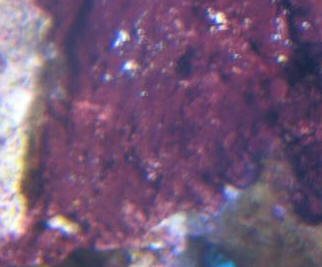
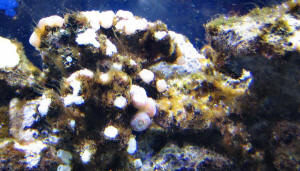
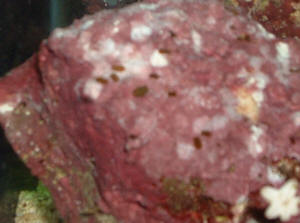
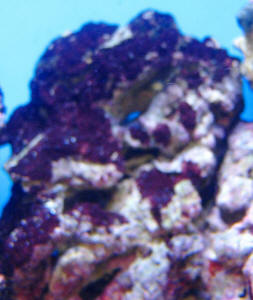
Aquarium Lighting and Nuisance Algae -- 04/09/07 All, <<Thomas>> Thanks again for everything, and it's nice to write in for an opinion verses a solution. <<Ah well'¦hopefully one leads to the other>> My question is about lighting. I've read lots of the FAQ, spoke with several stores, etc, seem to get a lot of different answers. <<And you think coming here will be different? {grin} >> Perhaps they're just overly complex answers. <<Ahh'¦>> I've seen in stores and read about Halide, HQI, PC, T5, T6, T8, etc. I've decided I don't want Halide lights. <<My personal fave>> I don't think I need them. <<Okay>> My tank is 72" long, is a FOWLR setup, and of course there are little hermits (red & blue leg), some small clams and oysters (compliments of live rock), tiny fan worms, and copepods. I really like the coralline algae, the purple stuff, and I want it to thrive and grow. <I see>> What light setup is going to provide this what it needs? <<Lighting does play a part, but is only a portion of the equation. It won't matter what type lighting you have if water quality is low and bio-mineral content is deficient/out of balance. That said'¦some of the most impressive Coralline growths I have witnessed were under either high-Kelvin (20,000K) Metal Halide lighting that was well up off the water'¦or under Fluorescent lighting with lots of Actinic>> I'm leaning towards putting two 36" PC strips on the tank, both having 192 watts (dual bulbs, one of the actinic variety). That would be a total of 384 watts of light. Think this would be sufficient? <<Would be fine here'¦though be aware the life present on the live rock may change as only those organisms able to make adjustment/utilize the available lighting will flourish>> I'm already wiping down the tank glass once a week to remove algae. <<Not necessarily a function of the lighting>> I don't think it's a bad variety, just the common green algae that snails like to eat. <<And likely won't just 'go away' with a change in lighting>> I think I would need 1273 snails to keep up with it though, especially with the new lighting. It's a different topic, but I've read that nitrates increases the algae, but they consistently test at less than 20 ppm, and usually it's 10 ppm or less. <<And even at that is PLENTY to fuel nuisance algae'¦though what you describe on your glass is quite common and easily just 'wiped away.' Nothing of concern in my opinion>> Is there another factor that causes it that can be controlled, or is it just something you live with due to the intense lighting? <<Water quality and the presence (or lack) of herbivores has much more to do with nuisance algae problems than lighting'¦if this is your focus then you need to spend some more time reading. Start here and follow the associated links at the top of the page: http://www.wetwebmedia.com/nutrientcontrol.htm. But as already stated the light film of green algae you clean off once a week is not problematic in my opinion, nor something you will likely ever eliminate no matter what you do. Many a hobbyist would be happy to have this as their only algae issue>> I've been reading about it, but it doesn't seem to be any of the bad algae (brown, hair, etc), just the green stuff. <<Agreed'¦of no concern>> Well, thanks again and take care! Thomas Roach <<Happy to assist. Eric Russell>> Re: Cyanobacteria 5/6/08 Scott V., Thanks again. <Very welcome.> I had mentioned that the Cyano was reforming, but I got home last night and there had been no real additional forming/spreading of it. <A good sign, caught it early.> I think that perhaps what I was seeing was the original Cyano that had been 'turned' by the vacuuming of the substrate, and perhaps vacuuming that substrate really well has removed a lot of the detritus and is slowing the Cyano quite a bit. Only time will tell. <Yes, it will!> As far as skimmers, I'm going to leave this one on here, and add an additional one. <OK> I can purchase a Prizm Pro for a good price brand new, this unit is rated for 300 gallons. Any thoughts on this model, being coupled with the Sea Clone 180 Gallon HOB model I have now? <None I wish to share too openly :) I would honestly seek another model for this system, regardless of price. Scott V.> Thomas Roach
Heavy Bioload and Algae Control in XL Marine System 3/30/08 Hi folks, <<Mike.>> I was wondering if you could offer some advice? <<I will attempt to.>> I have two 750 gal fish-only marine aquariums that share a common filtration system (sump, refugium, PS - i.e same water). <<Okay.>> Tank One has around 10 tangs <<What species/genus?>> (plus 13 other tank mates - butterflies, angels, percula clowns and Chromis) that do an awesome job keeping the tank clean of hair and other algae. Tank Two contains a 9" Lion, 8" Cowfish, 5" Picasso and 5" Clown triggers, 9" French angel, 8" queen angel, 8" dogfaced puffer, 8" spiny box puffer, 9" Lunar Wrasse and finally a 10" Sohal tang. <<Heavy bioload on both tanks.>> This tank has an unsightly hair algae problem. Is there ANY creature that I can add that won't get pummeled by the Sohal or eaten by the triggers that might graze on the algae? <<In such a rough and tumble tank I honestly would not recommend any invertebrate and I too would be concerned about adding any more fish, not only because of aggression but I would not want to add any more to the bioload. Even if we were able to find an animal that would consume the hair algae/Cyano it would only mask the real issue which is an overabundance of dissolved organics.>> Would Nudibranch work? <<Certainly not.>> I don't think I can catch the Sohal to introduce other tangs and then reintroduce him - barring a harpoon. <<I wouldn't introduce more animals anyway, see above.>> As you can tell there is a heavy bioload on the system. <<Oh yes.>> I do monthly water changes of about 125gal. About every two weeks I pull out 20lbs of macro algae from the refugium and I am experimenting with coil denitrators (but haven't get them working yet). <<Sounds like you are on the right track to dealing with your nutrient issues, if feasible a larger refugium and or more water changes would help. Nutrients are accumulating somewhere, likely from the heavy bioload. See here for more details; http://www.wetwebmedia.com/nutrientcontrol.htm http://www.wetwebmedia.com/scottsh2ochgart.htm http://www.wetwebmedia.com/watchgantart.htm http://www.wetwebmedia.com/bluegralgae.htm http://www.wetwebmedia.com/algaeconMar.htm .>> Thanks, Mike <<Welcome, Adam J.>> Hair Algae 3/21/08 Crew, thanks for all your past help. <Welcome, I am glad we were of help!> I've always gotten great advice from you guys and hope you can help with my perplexing hair algae and Cyano problem. <I am sure we can.> I've been testing my water and I get 0 nitrite, 0 nitrate, and 0.7 phosphate. The phosphate doesn't seem high enough to be causing all the algae that grows on my glass each day, hair algae on my back wall, and Cyano on my rocks. <Your phosphate level is indeed high, and would be higher if it were not for the algae consuming some of it as the algae grows.> I have a 10 hour light period using T-5s. Is there anything else I should check? <Water flow, feeding, filtration, detritus accumulation in substrate/filtration, make up water, etc. The point being that the nutrients fueling the algae are coming from somewhere, by analyzing your system and maintenance you can figure out where.> Thanks for the help. <Welcome, I included a link for you below to get you started on what to look for. Good luck, Scott V.> http://www.wetwebmedia.com/bluegralgae.htm Purple coral alga... no useful data or pic. 03/15/2008 I am a beginner w/marine tanks. My live rock is covered w/purple coral alga. This has started turning orange over nite <?> and I'm concerned. The shop I deal with says its ok but seems unsure. All water tests are good. Ph & SG are fine. Temp is between 78 & 80 degrees. Tank is about 4 months old. Can you advise? <... need much more information... Likely this is the beginning of a BGA outbreak though. Read here: http://wetwebmedia.com/marine/maintenance/index.htm the lighter green tray... marked Algae... downward... Re: Identification... Bob Fenner> Algae problem...help! 03/11/2008 I've reading through your site on this subject but I still need some advice please. <<Andrew today>> I have a 65 gallon tank, 85 lbs of live road, a Sally Lightfoot Crab, snails, a Bubble Tip Anemone, one Duster worm, and a star polyp along with 8 small fish (saltwater) and a Hawknose named "Macgregor". My tank was set up Dec 27th, and I waited 7 weeks before adding anything. I have a protein skimmer, two powerhead circulators to give current (one was only added last week), and a filter. <<What fish are stocked in this tank?>> I noticed the red hair like algae starting before I got the second powerhead (the reason for the purchase); I cleaned it as I was told using a tube and sucking it out. It's also on the crushed coral bottom, The problem is it seems to be getting away from me, and I wanted to know what else I could do. I've read your articles about adding too many "other products" and I don't want to do this. I also have a bright green algae forming (it's quite hard), is this ok? It's now on the tube of my feather duster (the duster is laying on the bottom (with it's rock). Should I move it higher, I don't want to hurt it and I don't know how much light is too much (lights are for coral -hydride (sp?) <<Halide ;O)) <<Its possible your experiencing Cyano bacteria outbreak. Check here for confirmation http://www.wetwebmedia.com/bluegralgae.htm >> I do water changes regularly, use reverse osmosis water and have been adding calcium lately as well as iodine and strontium/molybdenum as directed. <<You could be overdosing these trace elements. Please stop adding these, as i don't see any reason why you should be using these with the stock your keeping in the tank. Have you been testing for the additives you have been adding?>> The algae seems to have started with these additions. Testing, weekly water changes (5 gallons) and recording are done faithfully. What am I doing wrong? Thanks once more for your help. Marilee <<Thanks for the questions. A Nixon>> Re: Algae problem...help! 03/14/2008 Thank you so much for getting me in the right direction, <<No problem at all, my pleasure to help>> Back to our store today and one of the problems may be that the filter equipment wasn't strong enough, actually they were surprised that it was sold to us because it was more on the level of freshwater. <<Yikes>> Now we have a tank filter, instructions on how to clean the rock and will keep working on it. I really appreciate your help with directions in what to read, this is certainly a hobby that is ongoing learning. Our Salt Saltwater crab shed it's skin today, we didn't know it would do this and thought it died until we found the live one and looked it up. <<Superb, the first molt, always a nice thing to see>> I love this hobby, never a dull moment, always a challenge and so much pleasure as well. <<Always a pleasure, never a chore i always think>> Marilee <<Good luck, your well along in the right direction. A Nixon>>
Marine Tank Algae Problem 2/21/08 Hello WWM crew, <Good evening.> I've had my Salt water marine tank for about 3 months now, and so far nothing has gone wrong with it. It is a 29 gallon Oceanic BioCube. Currently it is housing a small 3 inch yellow tang who is very healthy and active. <This tank is way too small for the sake of this fish.> I am sending this email because I'm pretty sure it has an algae overgrowth problem. The walls get covered in brown algae and when I clean it off, it rapidly comes back. I'm not sure how it got out of control or if it is even bad since the yellow tang loves it and munches on it. The only two ways I can think it came in is either, it came in with the live rock, or I have added phyto pheast into the tank, but not much just about the recommended amount once every two weeks or so, but I haven't added any recently. <Algae always finds a way into a tank. Controlling the algae entails controlling the nutrients that fuel it. Controlling feeding, increasing filtration/protein skimming and increased water changes are in order. See the links below and related FAQ's for more information on how to battle this.> P.S Is it bad that on the glass I see little...insect looking creatures, and on the live rocks there are live barnacles that you can see filter feed with their tentacles, and it seems that one of the rocks has a mini feather duster colony starting, and they are even growing larger. <All this is normal biodiversity seen with live rock. All are good signs. Good luck, Scott V.> http://www.wetwebmedia.com/bluegralgae.htm http://www.wetwebmedia.com/zebrasom.htm Moving Corals w/o algae... 2-12-08 Hello Everyone at WWM! <Howdy Art> Quick question, I have a friend who has offered to sell me some of his corals, I do not know the parameters of his system, but all corals I observed appeared to be healthy and in good condition. What I do know, is that he has a hair algae infestation. I'm worried that I will be introducing something invasive into my tank (Which BTW, has been running for over 3 months with, from what I have read and researched, excellent water quality and a very low bio-load) <Mmm, then it is very unlikely the algae will proliferate here...> By keeping my strict regimen of water changes and skimming is this something I should be worried about? <Nah> Since the corals are attached to large pieces of LR, I will try to remove as much of it manually as possible. Will the remaining algae slowly starve to death? <Most likely scenario> I have also contemplated chunking off the bits of LR to which the corals are attached to and just adding the corals themselves with their LR base, but I'm worried that I might do more harm than good by trying to separate the corals from the LR. <Better to frag them if going this far...> This might be important to answering my questions so... my lighting is 150W MH (55 GL tank) which I keep on 6 hours a day <Mmm, I'd extend this photoperiod... see WWM re...> about 15" from the water's surface. No corals yet, so I will add them one at a time and photoacclimate (is this even a word? :-P) <Yep> by starting them on the substrate and gradually moving them up. Don't want to make this "quick question" longer than it already is, so if you need to know my water parameters or my bio-load to answer this question I can respond with that info too. Thanks in advance for your time! <With the increased lighting, feeding of the Cnidarians... you may well experience some/more algal growth than you have thus far... but... we can cross that bridge when you approach, arrive, pass over/under it. Bob Fenner> Algae control and quarantine 2-10-08 Dear WetWebMedia Email Answerers, <Mike here> We have had our tank (set-up below) for almost 3 months. We have been reading your site the whole time and thank you for the time you have spent providing information. <Sure thing - this website is an excellent source of info> We recently purchased Drs. Calfo's and Fenner's book - Reef Invertebrates. <I have an autographed copy ;)> We love the book and have learned a great deal from it. We believe we have the information we need to move forward, but we would like to clarify a few things first. Here is our tank set-up: 55 gallon 38 lbs of live rock 60 lbs of sand 2 maxi-jet 1200 powerheads Fluval 305 filter We are planning to purchase a protein skimmer today. <A skimmer is highly recommended. So is more water flow, and make sure the laminar flows from the powerheads and returns are pointed to produce as much random turbulent flow as possible> Livestock: 6 Nassarius snails 2 Astrea snails 2 turbo snails 3 blue-legged hermit crabs 1 red-legged hermit crab 2 emerald green hermit crabs 1 fire blood shrimp 1 cleaner shrimp 1 spotted mandarin fish 2 maroon clownfish 1 rose bubble tip anemone <That mandarin is going to slowly starve with the little live rock you have in your tank. I would immediately work on a refugium, and try to get the mandarin eating prepared foods. I would also purchase copepods as a supplement - I've used www.Reed-Mariculture.com in the past with excellent service> The tank did not get any livestock for about 1 month. Then we started to add the Nassarius snails, Astrea snails, and crabs (not all at once - a little at a time). Fish and shrimp and anemone were just added about 2 weeks ago. The turbo snails were added a week ago. Our plan is for few fish, mostly invertebrates (corals, 1 clam, starfish? - not sure on that one having read the Invertebrates book). <Educate yourself regarding the lighting/feeding of (I assume) Tridacnid spp. before purchasing> All of our water checks have been good, including checks for phosphates. We have it checked at the store, but are purchasing our own test kit today. <What is "good"? Numbers are always encouraged when sending us questions. You should have already purchased a complete set of test kits, but better late than never> All is going well and everyone is getting along well. Our biggest problem is algae. We have a fair amount of what we think is green algae. It looks like the picture of Chlorodesmis in the Invertebrates book. If it is this, we understand it is good, but we don't want it to fill the tank and it is spreading. We also have brown hair alga on the back tank wall and a small amount of Cyanobacteria. We have been removing the Cyanobacteria as best we can using a suction tube when we do water changes. We had been doing them about monthly, but plan to start doing them more often (1/week or so). <Nuisance alga is *always* an indicator of excessive dissolved organics and usually lack of water motion, as well> Problem 1: Algae - We know this comes with a new tank. We think the protein skimmer will help. We think more often water changes will help. <Yes, and yes. Don't be afraid to perform large water changes every week - I tend to perform 50% water changes/week in every marine aquarium I've owned - just make sure the fresh saltwater is the same temp/pH/salinity, and well mixed/aerated> Question 1: Our filter has 3 carbon sacs we change with the water 1x/month. Can we change 1 sac at a time and do it more often (1x/week)? Will that help with algae? <Quality carbon should last at least a month after the cycle is complete - Seachem Matrix carbon is great if you want a recommendation> Question 2: We are considering getting a kole or chevron tang to help with the green algae. Is the tank large enough for him with 3 other fish? <This aquarium is really too small for any tang species> It seems he will eat the green algae and mysis shrimp. We feed our clownfish defrosted mysis shrimp (alternating plain with some that have Spirulina mixed in). Will that be ok for him or will he need something else? Question 3: Kind of related to algae - what is the best method for straining the frozen food to get the water out? Our feeding routine is: we defrost 1 cube of food in a small amount of tank water (in a small container) and pour out as much water as we can. Then we feed 1/2 of the food and refrigerate the other 1/2 until the next day. We feed with a turkey baster. We supplement our anemone and shrimp with small pieces of krill (1-2x/week). <Pour through a kitchen strainer or piece of cloth> Problem 2: Quarantine - We know we should quarantine the fish for 21+ days. Question 1: What should we feed the kole tang while in quarantine? <Don't purchase a tang> If he eats algae off live rock, and live rock can not be in quarantine, how do we proceed? Question 2: We already have a small (10 gal) tank set-up with some live rock, a sponge filter, air tank, no sand, but some detritus and PVC small pipes. Some of the live rock will go to the main tank in a few weeks to 1 month, after it has cured a bit. The main purpose of the tank is that we are trying to grow some copepods for the main tank. It has only been set-up for 1 week (using water from our last water change). We know fish can not be quarantined in this tank with the live rock. But would this be a good tank for quarantining the coral? Or will that cause a problem with the water/rock in there? <I wouldn't use LR in a quarantine tank at all, turn it into a refugium instead, and set up a separate system for QT> Question 3: Would a second similar set-up (to the one above) be good for a fish quarantine? <Yes> Question 4: Do we put copper in the water with the fish in quarantine even if the fish is not showing any symptoms? Or is it ok to just treat if we see problems? <Preventative treatment with a less stressful medicine such as methylene blue would be fine, but I would never representatively treat with copper> Thank you for your time. Please let me know if I have not been clear about something. <I was lenient with you because you are new to the hobby, but the answers to all of your questions could have been found with more perusal of our archives. Do take the time to educate yourself with the resources available here> Sincerely, Jessica <M. Maddox> SW Algae at it's best, Algae Control 2/6/08 Hello folks, <Hi Ben> Thought I would send you an email since I have pretty much been on this site for the last 30 days straight (much to my boss' chagrin...) <Ah, one finger on the home key, huh?> I have looked everywhere on WWM but am hoping perhaps a direct email might be able to get a more direct answer, or at least help me with the finessing of my particular issue... <Will try my best.> I am a newbie to salt water, and really want to do it right as it's sort of a thing I am working on with my boys, teaching them a variety of things from husbandry to maintenance to general responsibility. Not to mention totally cool! They tell everyone at day-care. <Neat!> And I tell everyone at work! But a tank that looks like ours doesn't really help along those lines... Because I am new, I wanted to do this by the book (or at least one version of it...). So here it is: 40 gallon breeder with a Millennium 3000 filter, a Remora skimmer, Current Dual Satellite 96 Watt (dual daylight/actinic) lighting, and 2 Maxi-Jet 1200s creating flow. I have 40 lbs of live sand, and 50 or so pounds of fully cured live rock. I use Instant Ocean salt mixed with RO water and occasionally use Kent Phosphate sponge in the filter. The tank is currently 60 days old. <Sounds pretty good.> I set the tank up and let it cycle. It did great and went pretty quickly (I credit kick-butt live rock from my LFS). I started off leaving the lights on 12 hours a day during cycling, because the kids wanted to look at it. Mistake, I guess because I was soon neck deep in an out of control algae explosion- first diatoms, then hair algae then red hair- a mess. <Yep, not a good idea lighting the system during cycling, especially with new live rock.> So I went out and got our first critters, a clean up crew put together by us, 16 Cerith Snails, 2 Mexican Turbos, 2 Nassarius, 4 Tongan Conchs, 4 little Emerald crabs, and 2 brittle stars (not all at once, but pretty quickly). Oh yeah, and Spike, our long spined urchin (the boys pick the names...). I combined this with reducing the light to 5 hours a day, <Since you have no light loving animals, do not light until the problem is under control.> and doing my first water change -10%. After about a week, things were looking great! So we got our first fish about a month into the process. A couple of Ocellaris (Hannah and Shippen) and an algae blenny (Wintergrace). Seeming success! All the while, we maintained (and still are maintaining) these readings- Ammonia:0 Nitrite:0 Nitrate: 5/10 (can't tell the colors are almost exactly the same on the AP test card), pH of 8.2, and we don't test for phosphate, assuming our R/O device is eliminating it. <Most foods contain phosphates, problem is, the phosphates are readily used up by the algae. Just because a test kit cannot read a phosphate level, doesn't mean they are not being produced/created.> I keep the tank at 77-78 degrees as well, with a salinity of 1.024. So, everyone seems happy for a couple of weeks, and we decide to go ahead to start setting up for corals. In this process we do another water change with R/O water (10%) and replace the filter pads and put in some more phosphate sponge, add a few small pieces of live rock rubble (3 pounds) and turn the lights back on to 12 hours a day. Then Boom! The algae is back, with a vengeance and almost immediately. So I think, well maybe my Calcium and alkalinity need to be adjusted. A quick test indicates it is low if I want to have corals so I do another 10% water change and start doing 'Kalkwasser Slurry' in the evenings before I hit the sack. As of this moment, the calcium is 360 (low I know) <Not that low, 360-400 is acceptable.> and alkalinity of 143 (also low I know). <Is this a typo, should it read 14.3? If it is 14.3 dKH, it is high, possibly high enough to cause the calcium to precipitate.> But no help there either. This is the kicker. The green dust like algae on the glass, returns a mere 60 minutes after being scraped off, and siphoned off the substrate. It's crazy, like I never even removed it in the first place. Even after using the sponge-from-bottom-then-rinse technique. And it's returning now on the rocks as well, and turning what was the beginning of some great coralline into brown and green fuzz. What am I doing wrong? Can the blame be placed on the nitrates? Or maybe it's an oxygen issue? Most of the FAQs and knowledgeable folks on WWM and elsewhere say it's about nutrients, but with the exception of slightly high Nitrates, I thought we were doing good on that front. I really want this to work. My little guys are really into it and it will be a beautiful thing eventually, I just feel if I don't figure out this issue it's going to haunt me for the rest of the tanks life- which will hopefully be long. It's been a really great learning tool for all of us, and generally part of what I hope to be an ocean consciousness I would like to instill in my boys (we live on the coast of Maine). Anyway, sorry for the long story but after reading the FAQs, it seemed like the whole truth and nothing but the truth (including our newbie mis-steps) would elicit a more in-depth answer... <For what you intend on keeping in your system, the Millennium filter would not be my first choice. I would go with a canister filter where I would have the capacity to use a quality chemical media such as Chemi-Pure that would aid the skimmer in removing excess nutrients and other dissolved compounds. The pads in the Millennium need to be changed at least weekly. The waste that collects on the pad needs to get out of the system before it can turn into dissolved organic waste, an excellent nutrient for algae. The Rena Filstar XP-2 would be a good choice for your size tank giving you two separate baskets for incorporating chemical media into the system. Have you read here? http://www.wetwebmedia.com/nutrientcontrol.htm http://www.wetwebmedia.com/algaeconMar.htm Thanks folks for the hard work! <You're welcome. James (Salty Dog)> Ben Algae Control 2/2/08 Hi there <Hi Len> I have a marine tank which has been up and running for about 4 months now. I've scoured all the posts on your site for advice on algae, and have tried everything suggested (I think) but I still get a thick covering of algae over the glass within just 4 or 5 days of cleaning it off! Here's some details about my tank, please let me know if you need any more . 220 litres total water volume 25kg live rock shallow covering of Aragonite sand AquaC Remora skimmer, collects green stuff, emptied every 2-3 days, powered by a MaxiJet MP1200 powerhead, a bag of RowaPhos in the return box, changed every 4-5 weeks Water Flow provided by an additional 3 Maxijet MP1200s, 1 on permanently and the other 2 on a Natural Wave alternating timer to prevent dead spots 4 x 54W T5 Arcadia bulbs on an Arcadia overhead Lumminaire, 2 bulbs are Marine Blue <actinic?> and come on between 1.30pm and 10.30pm, the other 2 are Marine White 14000K and come on between 2pm and 10pm Water temp set at 26.5C Ammonia = 0 Nitrite = 0 Nitrate = 0 ph = 8.3 Calcium = 390ppm, currently adding Salifert All-in-one to increase this kH/Alkalinity =2.9meq/L Phosphate = 0 (by Salifert Profi test kit), possibly any phosphate is being used by algae which forms on the glass? Small amount of hair algae on a couple of rocks, I pull it off now and again but it comes back Water changes of 45 litres once every 7-10 days, water provided by a 4-stage RO unit complete with DI unit - just added new filters and resin, TDS = 0, Instant Ocean salt added to new water to keep Salinity at 1.024 Fish: 2 Clownfish, 1 Regal Tang, 1 Yellow Tang, <Tank is too new and too small for the tangs.> 4 Green Chromis Feeding - a few Ocean Nutrition Formula Two flakes in the morning, half a cube of frozen mysis shrimp in the evening (defrosted and then the phosphate-laden water discarded), they eat it all up within 2-3 minutes Corals: all soft . a few mushrooms, toadstools, Cladiella, 2 feather dusters - all look healthy and are spreading Cleanup crew: 4 Red l Leg Hermits, 3 Blue Leg Hermits, 8 Turbo Snails, 1 cleaner shrimp. This is what I've tried . lights reduced to 8/9 hours per day bulbs are only 4 months old, so will replace at 6 months <Should last about a year.> Have increased cleanup crew as above. Feeding minimally to reduce any phosphate added in food, draining liquid when defrosted. Regular water changes of 20% with RO water Regularly change RowaPhos in case it's exhausted Take pumps out and clean now and again to make sure water flow isn't reduced. I clean the front glass with an algae magnet every other day, but within a week the back wall is completely covered and needs a good scrape, then a water change to suck out the floating debris. Do you have any other advice as to what might be causing the algae to build up so quickly? All I can think of is to buy a phosphate reactor, but then I'll be spending money just fixing the symptoms (forever) without ever fixing the cause, so to be honest I'd much rather find the cause. <Yes, best to fix cause. Being your tank is newly set up, this isn't unusual and adding this many fish can cause this since the tank has not aged yet. Depending on the specie/size of Clownfish you have and the size of the tangs, this could very well be causing your problem by producing more waste than the system can handle. Your maintenance looks good otherwise. Do incorporate the use of chemical media such as Chemi Pure. Will aid the skimmer in removing dissolved organics. You may want to get a Tuxedo Urchin, very good at cleaning up this type of algae. Do let me know the size/type of Clownfish and the size of the tangs.> Thanks for your help. <You're welcome. James (Salty Dog)> Regards Len Mrowiec Re: Algae Control 2/4/08 Hi James, nice to hear from you. <Hello Len> The two Clownfish are Perculas - I think, (Bob's book says these can be identified as having black borders along the white bands). In any case whatever they are they seem to be the most common form of Clownfish on sale here in the UK. They're both about an inch long. <Was more concerned with them being Tomatos, Sebae, or any of the larger Clownfish which would produce more waste adding to your problem.> The Regal Tang is about 2 inches long, and the Yellow Tang is a bit bigger at about 3 inches long. <Would not add any more fish to this system, as the tangs grow, they will need larger quarters.> We don't have Chemi-Pure over here in the UK - is it basically similar to TMC's HR Carbon, which we do have? <Not familiar with that product. Chemi Pure is a high grade carbon mixed with resins.> Or would it be the same if I put a Polyfilter pad into the outflow box of the skimmer, along with the RowaPhos bag? <The Polyfilter is a good product also, I'd use if the HR Carbon is not similar to the Chemi Pure. Bio Chem Zorb is another product that also performs well.> I have never seen a Tuxedo Urchin on sale here, but will keep an eye out for one from now on. <May also be called a Pincushion Urchin (Mespilia globulus)> What do you think will happen as my tank ages? What physical changes will take place in it, which will help prevent algae growing so much? <As your tank ages, it should become more stable, and, as your fish grow, you will also have more waste entering the system. Algae require three things to grow...water, light, and nutrients. Since we cannot eliminate water and light, our only path is to eliminate/reduce nutrients. You may want to take a sample of your RO water to some pure water shop and have it tested for Total Dissolved Solids (TDS). This test will ensure that your RO membrane is working properly. Do read here for more info on reducing nutrients. http://www.wetwebmedia.com/nutrientcontrol.htm James (Salty Dog)> Regards Len Brown algae buildup 02/01/2008 Hello, <<Hello, Andrew today>> My 75 gal. marine tank has been set up for approx. 4 weeks. I have 2 clowns, 3 crabs and small assortment of hermits and snails. All my water quality readings are zero. My problem is that I have a large brown algae growth everywhere. Is this normal. <<Yes, this is perfectly normal for any new aquarium startup. Your tank is experiencing a Diatom algae outbreak which all new tanks go through. Read some here http://www.wetwebmedia.com/brownalgcontfaqs.htm >> Will it decrease or hopefully go away completely or is there something I need to do that I am not. I am doing a 10% water change bi-weekly. I have cut back the lighting to approx. 8 hours a day. Currently I am cleaning the glass and filtering the loose algae out with my Magnum 350, but would prefer a more permanent solution. <<Keep good flow, clean up crew and patience, it will go in time. Once this starts to recede, it clears up pretty quickly>> Thanks in advance, Shawn <<Thanks for the questions. A Nixon>>
Fungus Growing In Tank 1/30/08 Good Evening
Crew -- <good evening/morning- caught between days now :-)>
I've searched all over the wet web site and the internet for
answers, and have found a few references that make me suspect I have a
fungus growing on the live rock and sides of the tank. It's white,
fuzzy and short. <Hydroids maybe?> At first I thought they were
diatoms, but I can't seem to starve them out until they eventually
go away. Tank parameters are: 75 gallon - set up 9 months ago and
cycled with live rock ordered online 1 1/2" crushed coral
substrate - recently removed it all and replaced with 1/2"
oolitic, which now looks awful 384 watts PC light calcium 350 alk 11
dKH pH 8.3 nitrates 0 nitrites 0 2 clowns 1 flame angel 1 cleaner
shrimp 2 blue legged hermits 1 cowry In trying to track down why
I've got a rapidly growing film all over the tank, I've cleaned
out the skimmer several times, removed the HOT bio wheel, cleaned out
the canister several times, removed and soaked the powerheads in
vinegar several times, replaced all of the substrate, scrubbed the
rocks and have been right on top of keeping everything clean.
<wow> I've run poly filters and replaced them regularly,
along with ChemiPure. What do I do if I suspect that I've got a
fungus growing on the rocks?? <not likely a fungus> Scrubbing
doesn't seem to help. The fish all seem ok, but I'm sick of
scrubbing and cleaning everything. If I don't scrub something every
night, I can't keep up. This has been going on for about 3 months
and I'm getting tired of this. Can live rock grow fungus, and if
so, can I get rid of it? <Do you have a picture? Could this be
algae, hydroids, sponge of some type?> Thanks. Kim
|
|

|
Features: |
|
| Featured Sponsors: |