|
|
| Home | Marine Aquariums |
Freshwater Aquariums |
Planted Aquariums |
Brackish Systems |
Ponds,
lakes & fountains |
Turtles & Amphibians |
Aquatic Business |
Aquatic Science |
Ask the WWM Crew a Question |
| Please visit our Sponsors | ||||
Nuisance Algae Control... -- 06/19/07 Good Day Crew! <Hi there! Scott F. here today!> Let me begin by expressing my most sincere thanks for the service you provide to so many people. <Thanks for the kind words. I'm very proud of the work we do hear on WWM every day! Glad you enjoy it!> I have several questions, however, I have managed to narrow them down to a few for time's sake. I have a 90 Gal Perfecto corner-flo tank, 20 gal sump which I built, myself. I have a skimmer box with a Tunze 9010, following the discharge chamber, and after that I have a space about 12"x10" which I have added a 4" remote DSB with some live rock rubble. <Nice use of space!> In the display I have about 110 lbs of live rock, 40 of which I recently added when upgrading to this tank from my previous 55 gal. I have 2x150 DE HQI 10,000 and 2x96 actinic Aqualights about 6" from the top, on the legs that came with the lights. I have a few LPS on the lower side of the aquarium and a Montipora frag and a yellow scrolling (Turbinaria) near the top. Recently, my water quality has degraded a little and some Cyano has began to appear on the less illuminated parts of the aquarium. I have lots of flow since this is a BB set up. Also, I began to notice bubble (Valonia) algae forming and I am at a loss in what to do. Water parameters test fine and I have an Auto Top Off which keeps the tank leveled with Kalkwasser fresh water (DI). I have 1 False Percula Clown, 1 Pajama Cardinal, 1 Sixline Wrasse, 1 Purple Tang, 1 Naso Tang. <Those Tangs are definitely going to need larger homes in the not-too-distant future...> I have several inverts (snails) a Coral Banded Shrimp, and 2 Peppermint Shrimps. Everything looks very healthy and nothing in distress. I have only made 1 10% water change in 4 weeks since moving everything into the new tank and I added 40 lbs of live rock that I cured myself. <Ahaa..> Should I make more frequent water changes since I just started this new tank? Since moving everything? Could I have die off from old and new live rock that is affecting my water quality? <Yes, Yes, and Yes! Consistent small water changes are an absolutely essential part of aquarium husbandry, and you simply need to do them. Weekly 10% changes are easy to perform and the benefits will be readily apparent.> New live rock was a little bit smelly when I introduced it, but nothing too bad. Please help, as I have sunk in more money than I care to admit and I want to have a successful tank. Is it my fish load? Thanks Sebastian <Well, Sebastian, algae problems such as yours are almost always caused by insufficient nutrient export mechanisms. The water changes with quality source water are just a part of the issue. You need to work it from several angles, such as making sure that the skimmer is really producing skimmate on a regular basis. Consistency in maintenance is as important as any "big moves" that you can make. Do research "nutrient control" or "nutrient export" here on the WWM site, and you'll find a lot of information on this topic. Your intuition is very good- you simply need to stay on course and continue to practice excellent husbandry...Best of luck to you! Regards, Scott F.>
Hair algae problems... Set-up, stkg., maint. issues 6/5/07 First I would like to say thank you for your site and all the information freely given. I was hesitant to ask my question, thinking that the answer had to be already posted somewhere, but I am about at my wits end ( and I have searched your site for months and still cant find my answer). <Okay> I have a small 29 gallon semi reef tank, meaning there are corals but not many. <The "kinds", species, size, placement, your actual set-up, maintenance... are germinal to success here> I have a hang-on refugium/ protein skimmer with a DSB and Caulerpa (at least that's what I was told, green stalks with little bubble looking extensions) <Take a look... even just on the Net here... Google Pix... Important to know> which is powered by a 250 gph powerhead. I also have a 400 gph Hydor powerhead. <Nice products> The tank is holding 30 lbs of live rock and a DSB. Inhabitants include a false perc, bi-color Blenny, yellow watchman goby, shrimp, emerald crabs, snails, small green stars, various mushrooms, very small zoas, xenias and a growing BTA. <... trouble... An incompatible mix for such a small volume> The tank parameters are 0 for amm, nitrite and nitrate. Calcium- 440, Alk- 12. I add Aqua C 2 part system everyday and that's all. I feed Formula one flakes, Hikari Brine and Mysis, DT Phyto and Marine Snow (I know not recommended but all the LFS had). Water changes are 4 gallons every Sunday with Instant Ocean Salt. The tank has been running for about a year. Within the last three months I have had a tremendous hair algae bloom and the corals wont grow. <This is telling...> Changes that have occurred within that time are moving and a 24 hour power outage, both three months ago. Phosphates, which used to be undetectable, are at .5. <Perhaps the "snow", other un-processed foods...> My RO water tests at .5 and the bottled water I used prior to the RO unit are .5. <Something amiss here... likely with the test kit itself> Lights were just changed (130 watts power compact). I just ordered phosbuster and poly-filters from Dr. Foster and Smith. I intend to treat the tank with the phosbuster and treat my make up water with the poly filters. <Okay...> Finally, the question, are there any suggestions on how to rid the dreaded hair algae from the tank and how can I encourage the corals to blossom? Thank you in advance for any help you can give me. Cory <Well... the best would be to get a much larger system, an external refugium... incorporating a DSB, other genera of macroalgae... In the shorter term? To change your feeding habits likely, increase your water change volume, spiff up your skimmer/skimming. Do take a read re the Compatibility, Systems of all the livestock you list... You have some inherent, iatrogenic problems here. Bob Fenner> Algae Woes- Coping With The "Yucky
Phase"! 6/4/07 Hi Scott, <Hi there!> I desperately
need your help! I've been diligently doing water changes (10 gal
2x/weeks) and it seems that the Cyano is diminishing but other things
have popped up and I need advice. I've notice 2 bubbles of what I
have determined to be Valonia. I bought 2 Mithrax crabs but they
haven't gone near them. <Not unusual, in my experience. Seems
like careful manual extraction and continued good nutrient management
(yup- your water changes and good feeding habits) are the keys to
controlling this algae. It may be extremely difficult to completely
eradicate Valonia, but they can be severely restricted if you are
vigilant> Also, a glass anemone came up on the same piece of live
rock. Would I be ok to take that piece of rock out on the next water
change and remove all that myself? <You certainly could. Keep in
mind that Aiptasia are not in and of themselves "bad";
it's just that in reef systems with favorable conditions, they tend
to multiply rapidly, overtaking and damaging other sessile inverts.>
Also, I've noticed what looks like strands of brown algae with a
bubble at the end (only 2)...are the dinoflagellates? <Could
be...Again- don't panic, just keep employing your good husbandry
tactics and water management. Often times, you will eradicate one
algae, only to see another species take its place in a succession.>
Then today I've notice the conch snails and some of the live rock
have what look like bread mold on them. Then there's the clear
fuzzy stuff growing on some of the rock...Would it help if I sent pics?
<All sorts of possibilities. Again, if you put it in you head that
this is a natural progression, and that the nuisance algae will
eventually be out-competed by more favorable species, you'll come
through just fine! Almost every system goes through what I call the
"yucky phase" (a highly technical phrase that I arrived at
through many years of advanced study!) where various algae appear,
peak, and subside. If you keep addressing nutrient control management,
you'll see these nasty algae fad in good time.> I've tried
to find them on WWM...I'm pretty sure they some sort of algae.
I'm about to lose my mind! <No- please don't! You're
gonna be fine! Trust me on this! Don't get discouraged!> Should
I increase the amount of water I change out in each water change?
I've been getting water from a LFS. He tested the water in front of
me with a TDS meter so I know the water is good. <Well, TDS is just
one measure of water suitability. Make sure that the pH and alkalinity
are nice and high, and that the water has little of no detectible
phosphate (algae "rocket fuel"). Remember to maintain good
circulation, stable temperature, and keep other environmental
parameters in your system under control.> I'm using a Coralife
Protein Skimmer (the small model), should I upgrade that? <You know
what? If you're getting a good quantity of skimmate, you're
skimmer is fine with me. Keep tweaking it until you get regular,
measurable amounts of skimmate daily. If you aren't after all of
that, we can certainly talk about other skimmers that may do a better
job.> Sorry for rambling on...thank you for your help! Jennifer
<Please, don't apologize! You're on the right track...It is
really hard to keep a level head when your dream aquarium seems to be
smothered in nasty algae, but you WILL definitely get through this and
enjoy a beautiful aquarium once this phase passes. Keep reading the
algae control FAQs right here on WWM, and keep that positive outlook.
You've got sympathetic ears here at WWM who have been through
exactly what you're going through! Stay with it! Good luck!
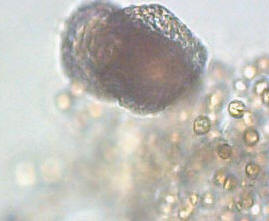
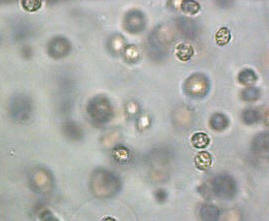
Regards, Scott F.> Green slimy algae 6/1/07 Hi! Thanks for having such a great website! <Hello> I have a question and although there are a lot of posts about this I happen not to be able to find the right answer to mine. We have a 36 bow-front saltwater tank. Before this, we had a 20 gallon fish only tank, so the new one is an "upgrade". We started to cycle it with 25lb of live rock (which we did not cured 'cos the LPS said not needed to, since we were going to cycle the tank alone) and a small bed of sand. It cycled (although we never saw nitrites really go up) and after a month when levels were normal, we started moving our stock one at a time from the 20 gall tank. We have a few Kenya trees (we had one that has divided 5-6 times in the old tank) so we moved 4 of the trees that are stuck to the same rock. Everything ok. 3-5 Days after moved the six line wrasse...Everything sort of ok, a green later slimy algae started to cover the tank and also the rock. <Cyanobacteria, http://www.wetwebmedia.com/algaeconMar.htm .> Ammonia was a bit up (not a lot just one under the "normal" level) <needs to be 0> so we moved out turbo snail to help with the cleaning. A week later, algae is still there (also in the sand now) easy to remove from the sand forming like a slimy-string like film , but a nightmare to remove (as it floats freely when doing it) from the glass. Levels are all fine (including phosphates, etc) so moved the two clown fish. Slimy algae keeps growing and keeps driving us nuts....We also bought (LPS suggested) two turbo snails, two Nassarius, and three hermit crabs to help on the "cleaning"....... <Not much eats this stuff, needs to be controlled by limiting nutrients.> We still have the big Kenya tree to move into the bigger tank along with a small mushroom but were wondering if there is a way of taking control over the continuously growing driving-me-nuts slimy/string-like/bubbly green algae.. All creatures look fine, levels are ok. We have a 305 Fluval canister, a RemoraC (with 1200 MaxiJet) protein skimmer, 25lb of live rock (we know we need more but we'll do it sequentially), and for lighting an orbitCU1022 (1x65w dual daylight 1x65 dual actinic). Animals are fed once a day with either flakes or brine shrimp (not overfed I am sure of this). <Might want to change this, flakes lose many vitamins quickly due to the large surface area and brine is just about worthless. A good pellet food and frozen Mysid work much better.> What would you suggest regarding the algae....what else should we do? It sounds like red slime but it is bright green not red...and if so from where is it coming? The tank was new....Thanks a lot!! Roberto <To some extent an initial bloom of Cyano is almost unavoidable, but it should pass with some time and physical removal. Try running poly-filters and carbon to remove the nutrients that are fueling it.> <Chris> Some Algae Problems, SW - 05/26/07 Hey WWM, I have been noticing in my tank that there has been more algae starting to grow, <Mmm, have been here for billions of years... "winning" strategies, adopt, adapt to many environments, changing them to their benefit... will be here when we're long gone...> and it confuses me because I have upgraded my lighting, done many water changes reaching nitrates to 10 and phosphates to zero, and my tank has been established for about 25 weeks or so. Ok for one I believe that I have the bubble algae Botryocladia skottsbergii. It isn't a serious infestation, but I have noticed it around the tank, some spots where it is just one bubble, and others where it is a small patch of the red bubbles. What is the most effective way to remove them? <There are a few "fronts" to work on this, yes> I figured siphoning but wasn't sure it would be able to suck them up since they are attached to the rock. <Correct... some good might be done with a combo. scraper, siphon...> Second, I think I am growing some hair algae. <A generic term> I only noticed it on one of my rocks and on the back of the tank where it is hard for me to scrub with my Magfloat. On the one rock it is green and on the back wall it is brown, stringy, and somewhat connected. Lastly, I think some of my coralline is starting to turn white. Areas on top of my powerhead, near the surface of the tank on the glass, somewhat on my protein skimmer powerhead, and a little bit of white on my one rock. Could it be I am bleaching my coralline growth? <Maybe> My lighting is T5 2x39 actinics and 2x39 10ks. I figured my lighting would prevent algaes, and yet I also have some nutrients for them to absorb. I am in the process of getting macro algaes, but wasn't sure how effective they would be. <Try and see...> They would have to go into my tank until my DIY fuge is built. <I'd build, install the refugium first> My tank at the moment has no fish in it besides a bunch of snails who are doing fine. Another thing to add, I did a lot of re-working with my rock aquascape and a lot of stuff fell out of the rocks too, so I cleaned them off a bit and took it all out with my net, not quite sure what it was. My parameters are like this Ph. 8.3 Nitrates 10-15, hard to tell with tube, Nitrites 0, Ammonia 0, Phosphates 0, Calcium 400, dKh 7, Salinity 1.025, Ph 8.3. I am going to buy a new magnesium tester also. Also, would you recommend an oxygen tester? <Mmm, not likely. Better things to spend your time, money and general resource on... Like that aforementioned DIY project> my tank gets a lot of bubbles sometimes, but i wasn't sure if that was because of high oxygen levels or just b/c of water changes. <Read on my friend... Learn to/use the search tool, indices on WWM... Your answers and much more ancillary material is posted over and over. RMF> Brown Algae... Diatoms and Hair... Not reading 5/11/07 Hi there guys, or girls, I am having a very hard time with brown algae in my 6 month old tank. It is a 125 gallon reef ready with a bio-rocker, <One source...> Kent nautilus skimmer, 1000 watt titanium heater in sump, and 2 big power heads that provide plenty of current flow in the tank. I have in there now a blonde Naso, <Will need more room> a tomato clown, 2 cleaner shrimp, diamond goby, and a gold head sleeper goby. I have 140 pounds of Fiji live rock, and 100 pounds of live sand. My parameters are as follows: salinity is 1.022, <I'd raise this... see WWM re> temp. 78.5, Ammonia 0, nitrite 0, nitrate 2.5 ppm, calcium 400, phosphate 0. I have is my sump 3 units of Chemi-pure, and 1 unit of phos lock, and a PolyFilter in my bio rocker, and I do 25 gallon water changes about every 3 weeks. As far as I can tell my water quality is perfect. I have read as much as I can <Not on WWM you haven't> and I am doing everything that everyone says. The only other thing is my light. I have it on from 3-10. But it is an old 48" power compact 110 watt (2 55 watt reef (half and half) lamps. (New)), and I have brown diatom, but turned into hair algae all over my live rock and overflows, and back of the tank. It doesn't really grow on the sand, however in the middle of the tank I am starting to get purple colored algae on my sand. Just a light covering, not hair. It is ruining the look of my tank. I know it is normal and beneficial to have algae in a tank, as that is all that my fishes do all day is pick at it, but it is overtaking everything. I am awaiting the arrival of a 1134 watt metal halide/ power compact 72" fixture with 3-250's and 4-96 CF's, and moonlights. <This won't solve the issue/causes of the algal proliferation here> Could weak light cause such a problem. <Not really> I know the light I currently have is not even in the ballpark of being close to what I need but I have been saving up to get my new light. I just go into all the fish stores and see all there tanks and they are crystal clear with no algae at all. I ask them how they do it and they all tell me the same story, you know the drill. <Mmm, no, don't> I'm doing all that and still no results. I have cleaned the rocks off with a soft plastic detailing brush. New of course. and it comes off easy, but keeps coming right back. I am very frustrated and the only thing I can think of left is my light. You guys have been such a help in the past and I really appreciate it. We all do. Aaron <... You are faced with the same assortment of avenues for control here... nutrient limitation, competition, predation... Please read here: http://www.wetwebmedia.com/marine/maintenance/index.htm Scroll down to the tray on Marine Algae, Control... Bob Fenner> Re: Brown Algae... 5/17/07 Just a new thought, I am using water from the grocery store in their water machine. It says it goes through ro, and uv and everything else. It usually tests in about the 20-30 range on my TDS meter, <Not a good reading for reverse osmosis water...> and I've tested for phosphates and there is nothing. Have not tested for silicates though. Do you think this water is ok, or should I be buying the water that my LFS is selling for tanks. <Mmm, really... neither. I'd get, install, use my own RO... is what I do... is simple, inexpensive (for gas, your time hauling)... and useful for potable purposes> My tank measures at mid 300's on my TDS. Is that too high. <Mmm, depends on what is making up the dissolved solids, but as a "reading", no> No phosphates in there either. Thanks Aaron <Bob Fenner> Getting rid of a toxic dinoflagellate, Marco's go -- 05/08/07 Hello I am hoping you guys can help me out with this or refer me to someone that can. This is a copy of a email that I had sent to Randy XXX. I have not heard anything back for some time and my local fish store told me about this site. I really hope someone has experience with this dreadful stuff. Thanks in advance for your help. Hello and first let me say how helpful your articles on reef chemistry have been. I've been in the hobby for 15 years and have learned more in the last year from reading your articles than in the rest combined. It's good to hear solid answers about a lot of things that are often misconstrued in this hobby. I am writing today to try to get some answers on a very unusual problem I have been having with some of the tanks i maintain. Out of all the research I have done you are the only person who seems to have heard of this problem. I have been killing fish when I scrub troublesome algae off the sides of these tanks. I thought it was contamination with my equipment for the longest time. After taking a sample of this stuff to a veteran biologist up at CSU he identified it to me as Amphidinium carterae a toxic dinoflagellate that is capable of producing neurotoxins. I found your article on dinos doing a search and found that they don't like elevated pH. I dosed numerous Kalk slurries, covered tank, and turned light off. I also did vigorous nutrient export using Pura PhosLock, PolyFilters, and Chemi-clean. It seemed to have worked for a while, however now with lights on and pH back to normal it's coming back. All water parameters check out well alk 3-4 meg/l cal 350-380 and phosphate less than .03 yet this stuff still grows. It is dark brown in color and if let to grow for awhile will develop small hair like structures on it. Coral and Coralline all do well. it only affects the fish which will go into shock breathing rapidly and darting around soon dying of asphyxiation if a lot of this stuff gets into the water column. I desperately want to get rid of this stuff and cant believe that i am the first to ever encounter such a thing. I am hoping that you have heard of others having such problems and would love to hear some success stories on how they managed to eradicate this stuff. Any info or links you may have would be greatly appreciated. If you need more info or some pictures of this stuff I would gladly forward them to you. I have posted numerous threads on reef central but nobody seems to know what I'm talking about. I apologize for tracking you down like this, but I am very eager to get some professional answers. Thanks in advance for your help. Sincerely, Justin <Hi Justin. I am no expert with dinoflagellates, but can confirm that Amphidinium carterae produces fish toxic substances. Please read this paper www.uwm.edu/~berges/Publications/Franklin_Berges_2004.pdf that deals with the mortality of your species. I would remove fishes and corals from the system, remove as much as possible mechanically and leave it in complete darkness for at least 4 weeks while filtering with fresh activated carbon. Possibly someone else has something to add or knows of less dramatic measures or which other specific parameters could limit the growth of the dinos, but would not harm the corals. Cheers, Marco.> Toxic dinoflagellate Amphidinium carterae, Bob's go 5/9/07 Hello I am hoping you guys can help me out with this or refer me to someone that can. This is a copy of a email that I had sent to Randy Holmes-Farley. I have not heard anything back for some time and my local fish store told me about this site. I really hope someone has experience with this dreadful stuff. Thanks in advance for your help. Hello and first let me say how helpful your articles on reef chemistry have been. I've been in the hobby for 15 years and have learned more in the last year from reading your articles than in the rest combined. Its good to hear solid answers about a lot of things that are often misconstrued in this hobby. I am writing today to try to get some answers on a very unusual problem i have been having with some of the tanks i maintain. Out of all the research i have done you are the only person who seems to have heard of this problem. I have been killing fish when i scrub troublesome algae off the sides of these tanks. <Mmm... can be a real issue, yes> I thought it was contamination with my equipment for the longest time. After taking a sample of this stuff to a veteran biologist up at CSU he identified it to me as Amphidinium carterae a toxic Dinoflagellate that is capable of producing neurotoxins. <Interesting: http://www.google.com/search?q=Amphidinium+carterae&rls=com.microsoft:en-us:IE-Address&ie=UTF-8&oe=UTF-8&sourceid=ie7&rlz=1I7PCTA> I found your article on dinos doing a search and found that they don't like elevated Ph. I dosed numerous Kalk slurries, covered tank, and turned light off. I also did vigorous nutrient export using Pura PhosLock, PolyFilters, and Chemi-clean. it seemed to have worked for awhile however now with lights on and Ph back to normal its coming back. All water parameters check out well alk 3-4 meg/l cal 350-380 and Phosphate less than .03 yet this stuff still grows. It is dark brown in color and if let to grow for awhile will develop small hair like structures on it. Coral and Coralline all do well. it only affects the fish which will go into shock breathing rapidly and darting around soon dying of asphyxiation if a lot of this stuff gets into the water column. I desperately want to get rid of this stuff and cant believe that i am the first to ever encounter such a thing. I am hoping that you have heard of others having such problems and would love to hear some success stories on how they managed to eradicate this stuff. Any info or links you may have would be greatly appreciated. If you need more info or some pictures of this stuff i would gladly forward them to you. i have posted numerous threads on reef central but nobody seems to know what I'm talking about. I apologize for tracking you down like this but i am very eager to get some professional answers. Thanks in advance for your help. Sincerely, Justin ErwinOwner/OperatorReefscapes Service Co6489 S Xenophon StLittleton, CO 80127720- <Mmm, I would take the same approach you mention... environmental intervention... Cleaning up, enhancing skimmer performance and increasing ReDox (likely through the use of a Ozonizer... if not this, then a serious ultraviolet sterilizer)... And possibly a one- or two- shot increase of pH with Kalkwasser (to about 8.6 during the early day... to precipitate phosphate et alia. res. Bob Fenner>
Re: Fighting The Algae War...There "Is" Light At The End Of The Tunnel! RO use, alg./nutr. depr. - 05/01/07 Hey Eric! <<Hey Linda!>> Linda from GA here...hope all is well with you. <<Ah yes, I do recall...and I'm doing fine thanks>> Things are great here. <<Excellent>> Here is my awesome update on my saltwater tank you coached me thru in March due to all the algae problems I "HAD". <<Awesome...thank you for the update!>> (100 gal. saltwater tank, with 100+ lbs live rock, 1" sand, 6 fish, zoanthids, toadstool, snails, wet/dry with live rock, protein skimmer, 5 powerheads, PC lights.) First of all, I decided to invest in my own RO/DI unit, instead of getting my water from the Culligan Machine at Wally World (aka Wal-Mart). <<A wise move>> It has been the most wonderful piece of equipment I believe I've invested in yet because of the sheer convenience of having it at hand whenever I need water. <<Indeed...along with "knowing" the quality/process used to derive the effluent>> I ordered the Typhoon III from airwaterice.com at a very reasonable price. <<Nice piece of equipment>> Bought it with the hose hook up. Very easy, and run the "bad" water into my in-ground pool. No waste. <<Ah, very good>> So-o-o, I did not end up using the Poly-Filters but did use the Phosphate remover (ROWAphos) and started changing out 20% of the water every week until last week where I started changing out only 10%, because there wasn't as much algae to vacuum. <<Ok>> YEAH! <<Yes indeedy!>> Gradually, I have seen a huge improvement over the algae I had, which was red hair algae, blue green algae, all over the sand and glass and live rock. <<The "key" word here being gradually. Fighting the "nuisance algae war" is never a speedy proposition, but it can/will be won with a bit of patience and perseverance. Obviously you were able to find the root-cause of your problem and took adequate steps to rectify>> Now, there are barely any algae at all, so I must be doing something right. <<Agreed>> The tank looks beautiful. So, just this weekend I put in some more Aragamax sand (because I had ended up over the past few weeks vacuuming out most of what I had because of all the algae growing all over it.) Anyway, not sure whether my RO water improved the algae problem or whether my water changing routine did the trick or combination of both <<Likely the combination of the two...with the siphoning/removal of detritus during the water changes being a large factor>> ...but what I've started doing is being diligent on keeping my filter pad rinsed in clean water every other day and the sponge that is in the overflow box rinsed out as well and from now on will keep up with changing out 10% of the water every week. <<Very good...fastidious removal of the accumulated detritus on the filter elements, before it has a chance to break down, will go far in preventing another outbreak of nuisance algae>> Hopefully, the tank has come to a comfortable happy place! <<Sounds as if it is on its way>> I lost my pulsing xenia weeks ago. <<Mmm, these are strong absorption feeders, it is "possible" the dramatic scrubbing of organics from your system as a result of your war on the nuisance algae had something to do with the Xeniids demise>> It just shriveled up and went away, BUT everything else, (which really isn't much) is looking great, especially my Toadstool. It is SO beautiful and healthy and has grown since all the changes. You can really tell it is really thriving. <<Excellent to hear>> Now, I may go back and buy another pulsing Xenia. <<It's just a hunch really, but if you find you still have problems keeping the Xeniids try removing the iron-based Phosphate removal media...replace instead with the Poly-Filter and see how things go>> Thank you for being there for all of us. <<It is a pleasure to share>> Any other problems, I will call on you. Linda in GA <<I look forward to our continued exchanges. EricR in SC>> At war with brown slime 4/18/07 Hey crew! (we need to coin a name a little more glorious than that for y'all...) <Mmm, "O ye pet-fish types"?> Just when all is well... my NanoCube24 has been invaded by brown slime. For the last 2 weeks I've been using every trick to battle it that I could find, including reducing feedings for my fish, shortening my tanks "day", using PhosEx, changing a few gallons every day, etc... It's driving me batty! I've used 3 different test kits (all pretty fresh), and all say that there should be no problems within my tank. <Mmm, consider... the algae (likely BGA) is "taking up" the nutrient so quickly/well, that your test kits aren't "finding it"... in the water> I can't figure it out. This slime even seems to grow at night, because by morning it's blanketing the sand again. It's even begun to grow on my Button polyps, Star polyps, and the shells of my hermit crabs. Today I found this article in your database: Solution to Brown Slime AKA Snot Algae. Rick Gibson's investigation, eradication of BGA 12/27/06 [ http://www.wetwebmedia.com/algnutrcontrolfaqs.htm ] Do you think that I could use SeaChem's CupriSorb safely, without harming my inhabitants. <Likely so> I'm currently a bit overstocked, as I seem to be the caretaker of my friends livestock until they can reestablish their systems (one guys house was hit by a tornado last week, killing his power and cracking his tank, <Yikes!> while another in the same area won't have power for another 3 days). So, aside from the polyps I currently have a Pom-Pom crab, Peppermint shrimp, tiny Flame Angel, a Damsel, Royal Gramma, and a Mandarin (he'll be going to the LFS to live in their coral display tank till his daddy is ready for him again). The last thing I want to do is have to find someone to sit THIS collection as I am doing for others.... Do you think it'd work safely? Thanks much, Darby <Adding a refugium, DSB, macroalgae... Posted over and over on WWM. I'd hold off on using the chemical filtrant till your friends' organisms are removed. Bob Fenner> Re: At war with brown slime 4/19/07 Thank you Bob. Hmm, I already have a refugium (well, a 7 gallon tank) setup to breed copepods, but it is not connected to the nano in any way. <Oooh, I would do so for sure> I had previously thought of a whacky way to do so utilizing an old "knuckle turn" dialysis pump, but I was waiting until I move house in 30 days. I guess it wouldn't hurt to start on it now... <Sounds good! BobF> Thanks again Darby Whats on my Rocks? Tank Problems...or Just New Tank? (Marine Water Chem/Algae) 4/17/04 Hi everyone! <Hello.> I just got a salt water tank <How new? How many weeks...cycled?> with 3 lbs of live rock (15 gallon tank) and sand. I have one starfish <What species, some are very demanding?> so far because I am going out of town and wanted to wait on getting any fish. I've had the tank for about 2 weeks. <One of my questions answered, hmmm, I would not have added any livestock yet, this tank is still in the nitrogen cycle-process.> I noticed 2 days ago that I have a Rust colored dusting growing on my live rock. Now today, it's covered the live rock and is all over the sand in my tank. Plus there's some green on the tank window. I checked the water and my PH is to low, my Nitrite is in the Danger section, and my Nitrate is Unsafe. What should I do and can you help me understand what this is and what I am doing wrong!? <Other than adding livestock to soon you aren't doing much wrong. The water parameters and algae (rust colored stuff) are all normal for a tank this new; See here: http://www.wetwebmedia.com/estbiofiltmar.htm. And do keep reading.> Thank you sooo much! Ash! <Adam J.> Red hair algae... ID, control 4/15/07 Crew, Hey all thanks for all the help over the years. I have some algae growing in my tank that I'm trying to ID (so I can find something that will eat/kill it). It is NOT Cyano. <Mmm, there are many species of other groups of life that look like this superficially... Culture, microscopic examination are the only definitive means of identification> Since I don't have a camera... <Easy to "get", borrow...> It basically looks like puffs of red cotton candy. Sometimes it's whitish with a reddish apical surface, sometimes deep red or maroon throughout. When it grows in low-light areas, it's hot pink. <Could be a rhodophyte...> It used to only be in my refugium, but the last six weeks it has proliferated in the main reef tank and is encroaching on several corals (don't think I'm going to be able to save my hammer coral). I think it is the red hair algae in Sprung's algae book ( apparently a juvenile form of some macro algae that often "proliferates perpetually in this form in the aquarium). Wasn't 100% sure though so I thought I'd run it by you all to confirm. And tell me how to make it die please. -Mike <... Please start reading here: http://wetwebmedia.com/redalgcompfaqs.htm and the linked files above. BobF>
Algae or Diatoms? 3/24/07 Hi There, <Hi Carlos, Pufferpunk here again> 3 months have passed since I last spoke to you, I've taken your advice and here is the latest. - I've removed the UV filter - Lights are now on 8 hours a day - Built a small refugium with live sand, live rock and a small bit of macro algae (apparently there's not a demand for it in Australia) - Bought an RO unit as advised And the algae does not go away!! <Is this green algae (hairy?) or just the brown stuff I wind up having to clean off my glass daily?> I recently discovered I had nitrates of 30ppm, reduced it down to 15ppm, yet the RO water I use tested 0 to nitrates. I also discovered I had phosphate of 1ppm now reducing it to .06 ppm, yet the RO water I use tested 0 to phosphates. <Probably not doing large enough/often enough water changes. Possible, overfeeding.> I am using Seachem's Reef Salt, Seagel (Carbon and Phosguard) and de-nitrate in my filter. I only have 2 x 36 watt PCs in a 20 gal, what else do you suggest I try? <Try feeding less. A larger fuge, with more macro algae may be help. How about a deep sand bed or remote deep sand bed? Do a search at WWM on algae issues. ~PP> Thanks once again for your help, Carlos Red-Algae, What's to blame? 3/21/07 Hello, <Hi.> first of all let me tell you how much you guys are appreciated.. outstanding job!!!!!! <Thanks.> I am trying to pin point the source of a new red algae growth spurt. <I'll see if I can help.> I have recently changed from a wet/dry filter to a lighted refugium. <A good change.> The lighting for the plants (Caulerpa and chaeta) is a Coralife mini aquatic 18 watt which is on 24/7. My nitrate reading has elevated to about 5- 10 ppm and phosphates are less than 3 ppm. <These are not ideal, the nitrates are not so bad'¦but the phosphates'¦.we need to get rid of those. What is your source water? Also consider that your tank has gone through a rather drastic change recently and you may be at a point where nitrifying bacteria is 're-establishing' after removing the wet-dry and adding the 'fuge. The algae will also take a little while to get going. I would compensate with extra water changes.> I feed my fish and coral inhabitants a mixture of phyto, Mysis shrimp, Formula One, and Arctic Pods a quantity of two and one/half tablespoons daily. I am not sure if the actinic bulb in the mini light is the culprit or my feedings. <Could be the feedings, especially phyto, when large amounts are added at once it usually just amounts to liquid pollution.> Any help would be greatly appreciated. <I think you are on the right track Kathy, you may also want to consider additional water flow.> Thanks from an avid fan, Kathy <Welcome, Adam J.>
R2: Gold Algae Plague Driving Me Mad - 03/26/07 Hi Eric, <<Hello Arno>> Last msg came through completely... <<Ah good>> In re.: -I have some more experts/scientists looking at the problem and so far I already have been confirmed that it is NOT a Cyano. <<Hmm...I would be interested to here what the final determination is>> <RMF is curious... could/would you stain a sample with a bit of iodine to determine if the storage food of this unicellular algae is starch?> -as for light-inadequacy: previously the infected tanks received far more light than now and this is why I think that more light is increasing the problem... this algae is growing pref. on places where it receives the highest light intensity! <<Mmm, but that contradicts your previous statement that the tank with the highest lighting intensity (metal halide lighting vs. T-5 lighting) was not being affected by this algae>> -aging freshly made saltwater for several weeks makes it fundamentally unfit for sps; most important trace elements will have been removed. OK, the water is less harsh, but it no longer has a right ionic balance either... <<An interesting perspective... But I must say I fundamentally disagree (and a bit taken by surprise)...and am more than a little interested in how you have come to this determination>> gr's Arno R4: Gold Algae Plague Driving Me Mad - 03/28/07 Hi Eric, <<Hello Arno>> * Natural daylight: - Yes the tanks are stacked, but: - Previously the roof and 6 large doors let light through, similar to a glass house . - The room in which the system is situated is fully tiled with white tiles and the reflectors over the tanks almost fully cover the surface. I.O.W.: the tanks were not only lit from the sides, but in fact 360 degrees. - Latitude (not offended!): <<Ah good!>> I keep a record of days of sunlight, clouds, hours of daylight, etc. Clearly the light intensity is not to be compared to that of the tropics and we have some 3 months of days with less than 12 hours of daylight. But on the other hand, the days when the sun is at its peak show far more than 12 hours (up to 16.5 hours)! Even under a moderately clouded sky, no aquarist merely working with artificial light means can reach the light intensity that we had here! <<Well Arno I have no doubt the room was very bright, but I still wonder about the amount of useful photosynthetically active radiation made available to the lower tanks...something a PAR meter might best determine. But I will also concede that there is nothing like ¡§being there¡¨ and that you are in a far better position to make anecdotal speculations/determinations re this setup>> In our many glasshouses many (sub)tropical fruits and vegetables are grown for some 9 months/year... * changes in ionic balance by longtime aeration: As you know I'm Dutch, you'll understand that I find it a pity to have to extra dose certain macro-elements because they get lost by long time aeration, whereas I so far have never observed any harm from using freshly made, well dissolved saltwater of merely several hours old. ;-) <<Ah yes, I do understand my friend (VAT was 18-percent when I lived there for 3 years...nearly 30 years ago now). But geographical economic considerations aside...there are assertions that ¡§hours old¡¨ artificial saltwater is very aggressive; maybe even toxic, to many of the organisms we strive to keep. Though you may not have witnessed any deleterious effects from your use of this water, who's to say what ¡§might be¡¨ if you were to use water that was less demanding on the corals' energy reserves/more kind to their metabolic processes. As for the supplementation...we often advise hobbyists to forego supplements and rely on frequent partial water changes to provide the necessary mineral/trace elements their systems require. But in most systems with stony corals, especially heavily stocked SPS systems, some type of alkaline material/calcium/magnesium supplementation is usually required as simple water changes can not keep up with demand. In these situations most hobbyists will be utilizing a calcium reactor or additions of Kalkwasser (or both), which in my mind would render the argument of precipitation loss even less valid as any losses (though arguably still a burden on the system) would quickly be ¡§made up¡¨ in the system...with very little if any noticeable economic burden>> You are right that most trace elements we cannot test for and the discussion there might quickly prove to be more or less academic... but for those elements that we can measure the loss is quite significant in my view and therefore a waste of time, money and energy. <<Well there you go Arno Æ'º, we share a difference in views...fair enough>> OK, we aerate instead of using a powerhead for fresh water motion. I guess that'll make a big difference too. I'm curious to hear what's Bob's view on this. <<Bob has made several comments on our exchanges which are seen when viewed in the daily FAQs (http://wetwebmedia.com/daily_faqs3.htm). He has stated that he too believes the alga in question is a species of BGA, and has asked if you could stain a sample with a bit of iodine to determine if the storage food of this unicellular algae is starch? His response on the water storage issue was as follows: ¡§<Mmm, interesting speculations... and well-worth investigating. Ron Shimek had some assertions re the lack of utility of synthetic salt mixes period... Others have touched on precipitation issues... Within practical "reason"... weeks of storage, use... I don't find any such issues being valid... IO/Instant Ocean for instance is still used planet-wide for all sorts of SOP bio-assays, culture... RMF>¡¨ >> >Mmm, yes... and so's not to appear (and definitely not BE) mysterious, please read here: http://www.google.com/search?q=chrysophycean+staining+characteristics+habitat&sourceid=ie7&rls=com.microsoft:en-US&ie=utf8&oe=utf8 RMF< gr's Arno <<Be chatting my friend. Eric Russell>> R5: Gold Algae Plague Driving Me Mad - 03/29/07 Hi Eric, <<Hello Arno>> 1) I don't have a PAR-meter, but we also grew tomatoes like mad there. Ok, no comparison, but it says something about the light conditions. <<Ok>> 2)VAT is/has been 19% for many years now. <<Wow, only a 1% increase in three decades...>> 3) I'm not a hobbyist <<...?>> <See the email address Eric... this is an institution. RMF> 4) I have some 30 years very broad marine aquarium experience. <<As do I, though the latter half has been devoted primarily to reef-keeping and more specifically for the past few years...Acroporids>> 5) I'm quite aware that heavily stocked sps-systems need calcium reactors and KW-reactors, as well as plentiful Ca-, KH-, Mg- en Sr-supplements all of which we have/do. <<I had no doubt you would be aware of and maybe even utilizing these methodologies...but we have folks from a wide range of skills/experiences browsing our material and as such it is often necessary to state the obvious to support a point of view>> <Yes. RMF> Replacing the water with aged water that is vastly reduced in Mg is in fact a true economic burden... this is the most expensive salt there is! <<I agree on the expense for Magnesium salts...and I would be interested (as I think Bob and our readers would), to know just how much you are losing to precipitation over what period of time and what the particulars are on the method of storage involved...if you have those figures/data>> 6) I'm not quite sure what Bob asks. <<Re the staining? I believe he wants to know if adding iodine to a sample of the problem algae produces a "blue stain" which would indicate the presence of starch, and may aid in the identification of the algae of which Bob will hopefully expand upon>> <Correct. RMF> gr's Arno <<Regards, Eric Russell>> R6: Gold Algae Plague Driving Me Mad - 03/30/07 **What follows is a copy of a previous exchange in which the author of the query has responded to specific comments by placing his further comments after my double-carrot <<>> replies. For clarity, my comments/responses in this exchange will be enclosed in triple-carrots <<<>>>. EricR ** Hi Eric, <<<Arno>>> R5: Gold Algae Plague Driving Me Mad - 03/29/07 Hi Eric, <<Hello Arno>> 1) I don't have a PAR-meter, but we also grew tomatoes like mad there. Ok, no comparison, but it says something about the light conditions. <<Ok>> 2)VAT is/has been 19% for many years now. <<Wow, only a 1% increase in three decades...>> We already pay quite enough taxes... <<<Indeed>>> 3) I'm not a hobbyist <<...?>> Hobbyist sounds to me very much like "amateur" and as I try to approach marine aquaristics in a professional manner, I no longer see myself as a hobbyist. Nevertheless I'm quite devoted to marine life keeping... <<<A matter of opinion/perception I suppose (or maybe I'm losing something in the translation [grin])...Many hobbyists take a very professional approach to what we do...many of the "industry professionals" are indeed "advanced hobbyists">>> 4) I have some 30 years very broad marine aquarium experience. <<As do I, though the latter half has been devoted primarily to reef-keeping and more specifically for the past few years...Acroporids>> My devotion is vastly broader, not to say "full range", whereby fish come actually last... as I'm more a coral, mollusk and crustacean man ;- <<<As much as I love the non-vertebrate life-forms of the reef, the fishes still hold a very strong attraction/special appreciation for me...as can be witnessed in my reef display tank>>> 5) I'm quite aware that heavily stocked sps-systems need calcium reactors and KW-reactors, as well as plentiful Ca-, KH-, Mg- en Sr-supplements all of which we have/do. <<I had no doubt you would be aware of and maybe even utilizing these methodologies...but we have folks from a wide range of skills/experiences browsing our material and as such it is often necessary to state the obvious to support a point of view>> OK Replacing the water with aged water that is vastly reduced in Mg is in fact a true economic burden... this is the most expensive salt there is! <<I agree on the expense for Magnesium salts...and I would be interested (as I think Bob and our readers would), to know just how much you are losing to precipitation over what period of time and what the particulars are on the method of storage involved...if you have those figures/data>> It's already several years ago that I've tested this. If I recall correctly aerating the water for a week led to a loss of app. 25 % Mg compared to water that was aerated for some 5 hours (Other values like Ca and Sr I didn't test). <<<Indeed a significant loss...and as such I would think this would bear further testing to determine the "exact" reason; whether that be the method of mixing (adding water to salt?), the source water, use of aeration (as you have claimed), or even the brand/lot of salt mix>>> I only tested this once and the outcome was so significant that there and then I decided to (apart from some 200 ltrs saltwater that we always have ready for the taking) use mainly freshly made water aerated no longer than 5-6 hours. <<<I see...but I must state, this hardly seems substantive enough to make the broad statement that aging artificial saltwater for a few weeks will "render it unsuitable" for SPS corals>>> 6) I'm not quite sure what Bob asks. <<Re the staining? I believe he wants to know if adding iodine to a sample of the problem algae produces a "blue stain" which would indicate the presence of starch, and may aid in the identification of the algae of which Bob will hopefully expand upon>> There I'll need some instructions like e.g. 1 cc iodine on a 10 cc sample. Also expand on the type of iodine...: is this Betadine (organic) used to cure infected corals or an organic iodine for use in the aquarium? <<<I don't think the sample size vs. amount of iodine need be precise, and a dilute form of iodine (such as tincture of iodine) would be preferred though I believe you could also dilute the Betadine solution with isopropyl alcohol for this purpose. But, I don't want to presume so I will 'CC' Bob for his input re>>> <Can be "just a drop" of almost any strength Iodine... on a small sample... as this gentleman originally sent a micrograph of... Not concentration dependent. BobF> gr's Arno <<Regards, Eric Russell>> gr's Arno <<<Eric Russell>>> Marine Tank Lighting and Algae ) 3/14/07 Hi - <Hi!> I'm sure you've received this type of question many times, but I'm still looking for a "definitive" answer. I have a fish-only 46 gallon bow front tank. It's well established and uses a built in wet-dry filter along with a 350 magnum canister and Prizm protein skimmer. It has a bare bottom and rainbow rock for decoration. <Rainbow rock as in the resin replicas or actual sandstone (silica based) rocks?> I do cleaning, vacuuming, filter changes and water changes every week. <If you are too aggressive with your cleaning every week, it disrupts the beneficial bacteria and balance of the tank. Avoid sterilizing too thoroughly and don't change all the filter media every week. It is not "well established" if it has to start over every week.> The problem is I'm a fanatic about not having algae, but I can't seem to prevent it. The type I get looks brownish, collects on the rocks and tank, is very powdery and readily brushes off. <These are diatoms. A silica based unicellular algae. They are actually quite beautiful under a microscope, but not so lovely all over the aquarium! Read here re diatom control: http://www.wetwebmedia.com/diatomfaqs.htm > Unfortunately it starts showing in just 3 days after a full cleaning and rock bleaching. <Over-cleaning is probably upsetting the balance of your tank.> I use DI/RO water, no additives other than pH buffer, I've tried various phosphate removers to no avail, all the chemistry is good and the phosphates are low. <How good? It is hard to advise without knowing pH, SG, alkalinity, ammonia, nitrite, nitrate, etc. Phosphate is not the problem with diatoms. Silicate is more relevant.> I'm curious what I should do about lighting. I have four T-5, 36" 39w bulbs with two daylight and two actinic. I'm only using two of the bulbs currently, one of each type. They are on probably 14 hours a day. I've been told two things; shut the lights completely off other than when I am home, the other was to step down to a standard fluorescent light of less intensity than the T-5's. I sort of feel like having the lights off most of the time is not a normal environment for the fish, and giving up on an expensive fixture and paying additional money for a even cheaper one doesn't feel right either. <Agreed. Your lighting is fine. The fish do need a natural light cycle to be comfortable and healthy. You could back off to 12 hours, but 14 is ok. > I'm willing to do whatever - your advice? <Consider allowing a more natural evolution in your tank. Introduce some algae that you do like to compete for nutrients. Add a more aggressive protein skimmer. Cut back on feeding if you can. Do not over-sterilize your tank. Adding some live rock or aragonite substrate could help create a more natural balance. If you do not want any type of algae or natural live rock in the main tank, a hidden refugium may be the answer for you. http://www.wetwebmedia.com/refugium.htm Keep reading'¦ Alex> Rob Buchanan Re: Marine Tank Lighting and Algae - 3/15/07 Thanks for the advice -- <Welcome. Hoping to help.> To answer one of your questions: The rainbow rock is the "Feller Stone" type "natural" rock. It's the only stuff I have in the tank and there's quite a bit in large individual rocks. I went to this primarily because it's easy to clean. I tried a live reef tank, spent hundreds on Marshall Island rock but it (and the tank) all became so overwhelmed with green slime algae I had to throw it out. <I see. Yikes!> I'm really hoping you won't suggest the rainbow rock could be the source of a silicate problem . . . I just spent a (another) couple hundred to get it! <Gotcha. This shouldn't be a problem if all else is in balance. Just something to keep in mind if your silicates are high and if the other measures don't help.> The current tank chemistry numbers are: pH 8.34 (by meter) SG 1.021 by hydrometer <This needs to come up. Slooooowly increase it by not topping off with fresh water, even topping off with salt water if you need to, until you get to 1.025. The fish will be happier and your tank will be more stable.> PO4 0.25 <Hmm. Would like for this to be zero. Since you use DI/RO water, it should not be coming in from your source water, so either has been there a while, or is coming from foods. If you add macroalgae, it can help export phosphates. Otherwise, water changes or filter media are indicated. Read here about phosphate control, esp. about feeding: http://www.wetwebmedia.com/hpo4control.htm > Alkalinity 4.5 mg/L Ammonia 0.1 mg/L <This must be 0 for a mature tank! This is what I was worried about with the too-thorough cleaning routine. You are removing too much of the beneficial bacteria and causing a mini-cycle every week when you clean. You really need to be less aggressive with the cleaning. Adding substrate to keep more beneficial organisms going will help. Read here about biological filtration: http://www.wetwebmedia.com/marine/setup/filtration/biological/biofiltr.htm > Nitrate Non detect <I think you meant nitrite. Zero is good.> Nitrate 10 mg/L <This seems reasonable for a fish only tank like this. Water changes should keep this in check.> I'm willing to try the aragonite suggestion, I'm not really willing to try live rock again (at this point and I don't have room for a hidden refugium). <I see. Aragonite substrate would be my suggestion here. When cleaning, only vacuum a section each week, or lightly vacuum the surface to avoid disturbing the bacteria too much. Let them be your cleaning crew.> This is a pretty compact tank and stand. I'm very limited in being able to use external units to pump in and out of the tank. In that regard, I chose the Prizm skimmer because it attaches to the back of the tank. The tank manufacturer (Sea Clear) recommended this solution as they provided some design features to support it. Can recommend another skimmer that would be "more aggressive" without requiring a lot of space and plumbing? <yes, you should upgrade from the Prizm to help with this and general tank welfare. A nice article with reviews of several brands: http://www.wetwebmedia.com/ca/cav1i1/protein_skimmer_impressions.htm I do have an Aqua-C Remora hang-on, and it is very compact and affordable, and seems to be well thought of by everyone here.> What type of "beneficial" algae would I add directly in the tank? <Read here'¦ http://www.wetwebmedia.com/algaeasfriend.htm . It does depend on what fish you have and if they will mow it all down anyway. I would see what is available at the LFS and read up on it here, then try a small bit to see if the fish decimate it.> Is there a test kit, or removal media for silicate? <Yes. May have to order online. LFS may not carry the less common kits. Test your aquarium and your source water to make sure you are not adding it when you do water changes.> Am I better off using the carbon filtration on the Magnum, or the polishing (particulate) cartridge, or switching off? <I would probably switch up on this. I like diversity.> Again, thanks for the help. My guess is you're very busy. Any thoughts you can share I'd greatly appreciate! <Upgrade skimmer, lighten up on feeding (look for low phosphate foods), try to let some bacteria grow on your rocks and (future) substrate. Best wishes, Alex> Rob
Hair algae invasion - 3/11/07 Please! Tell us something we haven't already read. <We'll try!> We have scoured your site, posted on Yahoo! saltwater groups, bugged our LFS and our tank is still infested with long-haired algae. In short, we have a 120-gallon reef tank with about 160 pounds of live rock, sand that varies from half an inch to about six inches (depending on the job the starfish or sand gobies do), and the following inhabitants: Coral: Large: Goniopora, torch, Anthelia, bubble, mushroom. Medium: star polyps, plate, brain. Small: Kenya tree, three Gorgonia (red, yellow and purple), chili coral, wall hammer, Alveopora and Caulastrea. One feather duster, two cocoa worms. Four banded cleaner shrimp, innumerable snails and hermit crabs, three disgusting sea hares and two starfish. <How much/often do you feed the filter feeders? A potentially messy and fertilizer producing process.> Fish (six inches): Naso tang, sailfin, Foxface; (three-to-five inches): three clarkiis, two algae blennies, two sand gobies, three yellow tang; (one-to-two inches): five Chromis, one bicolor, one flasher wrasse. <This is a lot of fish! Providing lots of fertilizer for your algae crop. This is pushing the stocking limit, and they are still growing. Not to mention the potential territorial issues as they continue to grow. Read here re stocking levels: http://www.wetwebmedia.com/stocking1.htm > We keep the tank at 78-79 degrees, use R/O water, have a powerhead, installed a protein skimmer <Are you getting lots of nasty skimmate? How long have you had this skimmer? What kind of skimmer?> and are diligent about changing the phosphate and charcoal filter. The tank is topless and so we top off about 1.5 gallons per day (also R/O water). <Have you had this source water tested? Is it RO/DI, or just RO? My RO unit only reduces TDS from 80 to 20 ppm. The DI resin polishes it to zero. Plain RO water can still have a lot of contaminants. Would definitely check this.> The main lights are on 8 hours; actinic 1.5 hours before and after. All chemistry is good, although pH tends to run more toward the 8.3 or 8.4 side. <pH is fine. What about the rest of the parameters? Especially nitrate, phosphate? Even if they are low, the algae is utilizing it before it is removed. But we need to know how low/high they are.> We have removed about 50 percent of the rock and toothbrushes the algae off, but it always comes back. <Removing manually is ultimately helpful as you are exporting nutrients. Keep trying.> The sea hares initially did a good job, but after a day or two they seem to disappear (perhaps they are too full!). How do we get rid of this stuff? Or is patience the key? We are at our wit's end and are seriously thinking of either dismantling everything and starting from scratch and letting new rock and new sand cycle again, <It's not the rock or sand's fault.> or just giving up (which we really don't want to do). <Don't give up. It has taken me a while to beat an algae problem myself, but finally, it has receded! This is a densely stocked tank. How frequent are your water changes? If you are confident in the purity of your source water, stepping up the amount and frequency of the water changes will help. Give the skimmer time to work. Consider how much you are having to feed the filter feeders and the demanding fish, adding all that pollution to the tank every time. With your stocking level, larger water changes are required. There is no magic cure for algae problems. Patience and persistence will prevail. <A refugium with purposeful algae growth will help in removing the nutrients before the nuisance algae do. Read here: http://www.wetwebmedia.com/refugium.htm - Consider reducing the population of your tank if you want to have a lower maintenance reef.> So, we hope you can help! Michael and Dianne (who tried to check all spelling before sending this missive) <Thank you. Wishing you an algae-free tank! Alex> Re: Hair algae invasion - 3/12/07 Alex: <Hi Michael and Diane> Thanks for your suggestions, and here are the answers to your questions: We use liquid coral food about once a week (one tablespoon of each); and, in no particular order but each happening randomly about every three or four days (so the inhabitants eat about three times per week): one cube of frozen veggie matter (thawed in tank water), about one inch of Mysis shrimp (also thawed in tank water), a few pinches of pellets, a half sheet of seaweed in the clip. Different fish each different thing (we have discovered); the only fish that eats everything is the sailfin. <Mine is a pig!> We try to keep to the "all they can eat in two minutes" rule. <A good variety, and it sounds like you are being conservative on quantity.> Our numbers are very consistent (we keep a log book to track of what's happening in the tank): <Excellent!> ammonia, 0; nitrates, 0; nitrites, 0; phosphates, 0; salinity, 1.023. About five weeks ago our phosphates shot up to more than 10 (off the card) which is when we switched to the R/O water (see below). <Aha! A clue? This could very well be your culprit.> As to the R/O water, well, it's a little complicated. Suffice to say that we cannot install a unit in our house so we purchased two eight-gallon containers on wheels and our LFS gives us free water from its 300-gallon-per-day system. We drive over and fill the containers about once a week. The containers sit in the bathroom with a heater in each one. (Our usual water is from a well and we have a water softener.) <Ahh. You might just periodically check the phosphates in the RO water just in case some phosphate sneaks through. Just a spot check now and then for quality control.> The skimmer has been in about four weeks and we don't get much from it yet. I'd say a total of 1.5 cups in the last three weeks. <A half a cup per week does not sound like much for this bio-load. It shouldn't take more than a few days to get up to speed. Consider investing in a different one, or see if you can tweak it to produce more. Not sure what type you have, but this seems an area for possible improvement. Aggressive skimming could help your situation. Much discussion of skimmer choices here to read.> We change 30 gallons every four weeks (we drive back and forth a lot on those days). At that point we also clean the sand. <If possible you might want to try to do this every two weeks for a while to get ahead of it.> We've been thinking a lot about this, and realize that we enjoy watching the fish more than we enjoy watching the coral. Perhaps we need to lessen the coral load? Look into having a FOWLR tank rather than reef tank? <Certainly consider what you enjoy most about your tank and the relative work of each type. Less coral could simplify your maintenance somewhat. Unfortunately, that won't help your current algae problem, but it is a valid question for your long-term enjoyment of the hobby.> By the way, we also have a 12-gallon nano with two inch-long Nemos, one three-inch algae blenny, one feather duster (fused to a rock so we can't move it), one LTA and one fire shrimp. That tank also has a few frags of various coral and live rock and sand. Three days ago we got our first bloom of long-haired algae in one spot on one rock. Ugh. <Ooh. I might take that rock out before it spreads!> Hope this answers your questions and inspires you to give us the magic one-step instant cure! <With your diligent maintenance, continued removal of as much algae as you can, skimming, and water changes, it should subside. It will take some time.> Thanks again. <Very welcome! Alex> Michael and Dianne Frustrating Algae... SW system a little out of
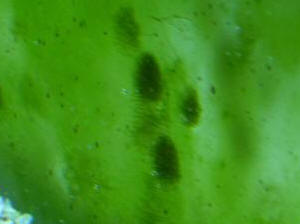
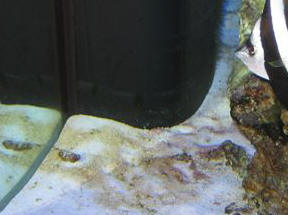
balance 3/6/07 Hello guys, <Anjel>
Recently
I upgraded from a 55gl tank that was up for about 7 months to an 80gl
tank that has since been up for about 2 months with HORRIBLE side
effects. <Yikes!> Firstly let me tell you the specs in respect to
equipment as well as levels and the livestock I am aware of being
present. Equipment 80gl Glass 50# assorted LR T5 Tek Retro w/ 2 54w
Geissmann Aqua Blue + 1 65w Coralife w/ 50/50 Sea Clone 100 Protein
Skimmer <Mmm... I'd upgrade> 1 Zoo Med Power Sweep 240 Power
Head (160Gph) <A friend distributes, but this product is bunk> 1
Marineland 1140 Power Head (300Gph) 1 Penguin 350 w/ Bio Wheel running
PURA PhosLock on 1 side Livestock 1 Chocolate Tang <Neat... not
common> 1 Algae Blenny 1 Clown 1 Blue Damsel 1 Yellow Headed Sleeper
Goby 15 Hermits (Red & Blue) 15 Turbo Snails 1 Wellsophyllia 1
Feather Duster 1 Sea Apple <Errr.... I'd remove this animal
post-haste... See WWM, the Net, most anywhere re> 1 Starfish 1
Condylactis Anemone <Incompatibly placed here as well> Levels NO3
20ppm <Borderline high> NO2 0ppm KH 180ppm Ph 8.4 PO4 0 Temp 82 F
Specific Gravity 1.023 I have only the Wellsophyllia so I do little
calcium additives. <How? With what? Administered in what
fashion?> Now, on to the issue; About a month ago I noticed some
type of rust/brown algae starting to form on the bed of the tank, which
I attributed to a cycling of the tank since the move. I removed the
problem spots and changed 40%of the water. BAD IDEA!! It spread all
over, so I waited 2 weeks took the rock out and cleaned it the best I
could with a tooth brush in a separate bucket of saltwater, vacuumed
the gravel, did another 40% water change put all the rock back in and 4
days later. BOOM Now it is everywhere, but it is now beating out the
coralline algae and just blanketing the substrate to the point that I
can roll up the algae as opposed to vacuuming it. Where is my error,
how can I rid myself of this unsightly algae? <Mmm... a few
approaches to try... First off, improving your skimmer/skimming...
adding, yes... a living sump (a refugium) with a DSB, macro-algae,
lighting...> It was my belief that the problem would correct itself
<Mmm, no, not likely... before driving you bonkers, and out of the
hobby> Attached are pictures of the scope of the problem and a few
close ups in hopes to better identify the algae in hopes a solution can
be easier to attain. Thanks in advance, Harry <Mmm... a bit to
read... to gain an understanding of your situation, the paths available
to you... Please start here: http://www.wetwebmedia.com/algaeconMar.htm and
here: http://www.wetwebmedia.com/nitratesmar.htm and the linked
files above... take your time... good notes... and we'll be
chatting. Bob Fenner>
|
|

|
Features: |
|
| Featured Sponsors: |