|
|
| Home | Marine Aquariums |
Freshwater Aquariums |
Planted Aquariums |
Brackish Systems |
Ponds,
lakes & fountains |
Turtles & Amphibians |
Aquatic Business |
Aquatic Science |
Ask the WWM Crew a Question |
| Please visit our Sponsors | ||||
|
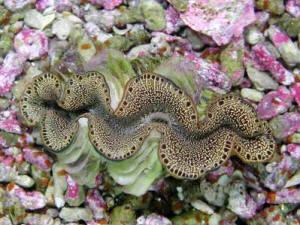
Metal Halide, Shallow Tank, and Clams - 06/12/06 Hello, hope ya'll are having a fine morning. <<Mmm, yes...for a Monday>> Just got back from my bachelor party so I can't complain. <<I see>> Anyway, there is a lot of advice out there as far as the appropriate wattage/mounting depth to correlate with certain tank depths, but I can't seem to find any that fit well enough with my situation. <<Much left to personal opinion/subjective interpretation>> Currently I have a 250W double-ended HQI MH lamp with 14k bulb. My aquarium is a 40g flat-back hex with a depth of about 20" from top to bottom. After accounting for substrate and unused space, the greatest depth any of my charges can be possibly kept is 16". <<Okay>> My lamp is mounted approximately 8.5" away from the water surface. <<If your corals are acclimated to this lighting then this is fine. But considering the wattage of the bulb/depth of the tank you could easily move it up several inches...in my opinion>> With the use of a fan heat is kept within sane values (78 degrees). <<Much to be said for evaporative cooling>> I'm worried though that this might be too much light. <<Depends on what you are trying to keep>> My coral charges seem fine and quite happy with the new arrangement. <<Then likely nothing to worry about>> My T. crocea (which I received shortly after) did expel some Zooxanthellae right off even though it was placed in the bottom of the tank, <<More likely due to shipping/handling stress, than lighting>> currently it seems fine (mantle spread, not gaping) and I have had it a week now. My main concern is for my smaller juvenile T. maxima (w/ darker gold coloration). <<Any Tridacnid species under 2" is problematic (seem to be especially susceptible to shipping stress/problems with acclimation)...best to obtain these clams at 3"-4" in size for the best chance at keeping them alive>> Is my concern misplaced, as these are light loving creatures, or should I consider raising the lamp considering the depth of my tank? <<What is the clam telling you? If it seems happy and healthy then leave as is. But I also think raising the light a bit won't "hurt" anything if you should so choose>> The T. maxima seems to be happier on the whole since I have started using a sodium nitrate solution. It concerns me though that no matter how much I add I still seem to have 0 nitrates. <<Likely used/removed very quickly...be sure to make increases in small increments...and keep a sharp eye out for the start/increased growth of nuisance algae>> Could this solution be taken out by a skimmer or PolyBioMarine's Poly-Filter? <<Yes>> It doesn't seem likely, being a salt, but my knowledge in that area is pretty limited. I'll appreciate any knowledge you wish to pass my way. If perhaps I have missed this information in your faq, I apologize. <<No worries mate>> Thanks for your help! James Tanis <<Cheers, Eric Russell>> Anniversary marked by Maxima Clam feast 6/5/06 Bob, Anthony, Crew. <Tirion> It has been a while since my last mail so I hope to find all of you well. <I'm fine, thanks> I just celebrated one full year of reef keeping and it has been amazing. From taking it slowly and pragmatically most of the time, to the occasional 'oh my gosh I have to have that', which we all experience. I couldn't have done it without your collective expertise. Thank you. <Welcome> To mark my anniversary in the hobby; I awoke 2 days ago to a stable tank, everyone hungry, a couple of new frags doing very well.....and a missing maxima clam. <!?> Very upsetting. Found it several inches away under a patch of xenia. Shell partially open, cleaner than a shucked oyster. <Who dunnit?> I created a divot/shelf for this creature in which it has lived for a almost a year - in my opinion, perhaps arrogantly, compared to LFS and others I have seen, I would say thrived as it was always fully open, double in size and colorations were outstanding. Just that evening, all seemed well. I believe there are three possibilities; 2" red Mithrax, posse of rogue hermits, some unseen critter. <Could be...> I have gotten rid of most hermits as I find them, as the little blighters are not great scavengers and lazy enough to bother anything at any time - <Agreed> even now that are picking on the leathers. The Mithrax is actually friendly and is fed with Nori and algae 3 times a week as to not get ravenous, although in my opinion all crabs are hungry 29 hours a day regardless of how well fed. <Again, agreed... Mithraculus are not what they're promoted to be... can/do get largish, predatory> I am pretty sure that I have few to no predatory worms as I did have several at first, picked and drained the rocks several times and have seen no sign for 7 months. What are the possibilities of smaller, unseen predators, as I cannot imagine even the Mithrax prying open the shell - it was 'clean' inside except for a small piece of connector tissue. That really leads me to a predatory worm like a Caribbean fire worm (which I did have two of) or some smaller rock dweller I have not seen. The only starfish that I have are micro brittle stars and have never seen one bigger than a penny. My fish are a clown goby, scooter, maroon clown, fridmani and two Chromis so I do not believe I have a fish predator. Thanks so much and thanks for your input. Bill <Would have to somewhat of a "group effort" to consume this bivalve in such a short while... I would try baiting the area, checking with a flashlight every hour or so... toward and into the evening. Bob Fenner>
Ailing clam - 04/07/06 Hey guys.<Hello> I came home today to find my beautiful crocea clam with a near-gaping intake and some pretty sad mantle extension-and its response to light was kind of sluggish. I looked around the tank to maybe try and ascertain the problem, and it turns out there was an Aiptasia with its tentacles stinging the clam. This clam has been absolutely wonderful before this-wonderful mantle extension, deep color, good growth, very responsive and no gaping. I killed the Aiptasia and the clam's looking a little better. But, its intake is still a bit too wide open for me. Is there anything I can do to help my clam along in its recovery? I run my salinity near 1.024-.026 and there is very little to no nitrates(0-5 ppm with weekly to biweekly water changes) and no ammonia or nitrite. I haven't seen any of the fish bug the clam, save for the clam reacting to fish shadows above it. Also, assuming it dies (God forbid), how will I know it is dead-I know dead clam really messes up a tank. Thanks for your help. <Other than keep a very close eye on your readouts and on the clam itself, there isn't much more I can tell you to do other than wait. You'll be able to tell if it declines further (loss of color so on). If this was really the problem, then it should have been minor and your clam should recover. Like I said perfect water quality here will be the deciding factor. Also do a search on WWM for more general info. Thanks Jen S.> Re: T. maxima VS. Sweeper's - 03/22/06 Thanks for your help before. <Anytime.> Just as an update: <I like those'¦.> The clam decided to start detaching from the rock on his own authority. <Happens.> I helped it along a bit (just the white strings and I cut them as close to the rock face as possible). <Still risky, but it sounds like you did the best you could.> So they are now separated and the clam seems to be recovering from surgery well (so far). <Great, keep me updated.> Thanks again! <Sure thing.> Andy <Adam J.> Pyramidellids On Astrea Snails? - 03/12/06 Hi, <<Hello>> My tank has been setup for a little over a year and I never had a clam. Occasionally, I've noticed what look like Pyramid Snails on the under side of some of the Astrea Snails. I am now considering getting a Crocea Clam, but am worried that these might be Pyramid Snails. <<Possibly...have read of this.>> Also, where would these snails attach to a clam? <<Wherever they can reach the flesh, usually along the edges under the mantle or around the byssal opening.>> And would it be noticeable before the clam just dies? <<Not always...can happen virtually "overnight.">> Do these Pyramid Snails eat Astrea snails as well as clams? <<Don't know honestly, but have heard others state it is so. Try going to this clam forum (http://www.clamsdirect.com/forum/index.php) and post your questions re.>> If not, does that mean that they're not Pyramid Snails? <<Possibly>> I thought I read somebody here say that if you don't have clams, then they're not Pyramid Snails. <<Mmm...may not always be the case.>> Is it possible that they are some other type of snail? <<sure>> I have seen some of these on the LR at night, only about 1/16". I also have a Bodianus bimaculatus and was wondering if he might be eating some of them? I know they're actually a wrasse, so not sure if he might be controlling them. <<A possibility, small mollusks (bivalves, gastropods) do make up part of their diet. Other possible biological controls would be the "lined" wrasses (Pseudocheilinus sp.) or wrasses from the genus Halichoeres.>> Thanks, Craig <<Regards, EricR>> White Spots On Tridacna gigas - 03/07/06 Hi. <<Hello>> I'm trying to get information regarding the occurrence of white spots in giant clams. The information that I've come across so far relate to fish, shrimp, sea cucumbers. Perhaps, marine aquarists may have observed clams having white spots, about 1-2mm diameter, on their mantles. <<Yes, sometimes a result of "bleaching" caused by stress, inadequate lighting, or improper lighting acclimation. But I have also seen many clams with white spots/markings as part of their normal (and healthy) color pattern.>> Did the affected clams die eventually? <<If it is bleaching, many times this will resolve itself just fine with excellent water conditions and proper/normal care. If the clam is being stressed by tank mates, then it may be best to move it to a suitable quarantine tank to recover.>> I would appreciate any observations on the white spots and their effect on clam condition. Thank you. Yours truly, Suzanne Licuanan <<Suzanne, here's a link to a forum on clam diseases/predators ( http://www.clamsdirect.com/forum/viewforum.php?f=2). Do give it a visit and ask questions of/see what others have to say. Regards, EricR>> Clam damage question 03/07/06 I bought a brown
tear drop derasa clam last night and this morning found its foot
completely detached on the other end of the tank. <Very bad...> I
have 3 other clams that I have had for a little over a year and never
had this problem, any idea what caused it? <... something
strong/disruptive... Was someone in the tank?> And will it survive
without it? <Not very likely...> Anything I can do to
ensure its survival? Thanks Melissa <Mmm, am asking friends Barry
Neigut and James Fatherree to respond to you here. They know much more
re Tridacnids, their care. Bob Fenner> Galaxea VS. Tridacnid 1/8/06 Hey! <'¦is for horses. Just kidding, couldn't resist. Hello.> I recently received a Galaxea (Oculinid) as a package deal on a piece of live rock with a clam (T. Maxima, gorgeous). <Oh yes.> They are both attached to the same large piece of rock. They are both currently doing fine. But, I was surprised the first time the Galaxea busted out with its sweepers. Those are long sweeps! <Oh yeah, have seen them personally at 10 to 12 inches. And very potent I might add.> Anyway, they are not touching the clam at this point, but if the coral continues to do well I am concerned that it might touch the clam in the future. Will the clam be affected? <Generally the sweepers are extended at night when the clam is closed so it should not be too much of a problem. However yes if the sweepers do come in contact with the clam (the mantle most likely) this could cause some mantle recession, which yes is very bad for a clam which needs the mantle for photosynthesis. Keep an eye out.> Do these kids need to be sent to different areas of the classroom? <Maybe, just keep a close watch as I mentioned.> Thanks for your help and for fighting the good fight! <Thank you for the encouragement.> Andy <Adam J.> Tridacnid ligament destruction 11/17/05 Hi guys,
<Hello Heidi> I am impressed with your message board, and find
myself looking at it frequently; thought I might shoot you a question.
<Okay> I am a professional aquarist and care for a Tridacnid
display that is on a closed 4500 gallon system connected with a live
corals exhibit. I have a 16" derasa, three 10-14" Maximas,
and five Squamosas ranging from 5-8". I am writing because
something is eating external and internal ligaments on the hinges of
all but one maxima, and I don't know who's doing it! My three
suspects, upon whom I hope you might comment, are: 1)
Pyramidellid snails, 2) another species of snail that looks like
Collonista, but tends to collect in nooks around byssal openings and
ligaments, so I am suspicious, and 3) bristleworms, whom I have
found nestled into a couple of ligaments in early morning hours.
<Mmm, could be any or a mix of these. They are most easily observed
during night...> Pyramidellids came in on a few aquaculture clams
while I was on vacation. Neat. <... best to elevate (in a section of
cut off PVC is my fave) such new clams, examine them, brush clean with
(someone else's) toothbrush...> I THINK I have them mostly under
control via weekly manual removal and scrubbing small enough clams (to
free them of egg masses) in a separate floating tub. Numbers of visible
specimens are dwindling significantly, but I am concerned that they
could be living inside the clams where I cannot see them, and chewing
up the ligaments at night. Is this possible? <Mmm, yes...> If so,
what can I do about internal snails that I cannot see? I also have 12
six line wrasse to help control the snails. They are very fat, think I
need more. <Wait till they evidence themselves, use erstwhile snail
predators...> During weekly cleanings, I frequently find a species
of snail that looks like ~2mm Collonista nestled into the Tridacnid
shell around the ligaments. I would love it if they ARE Collonista and
I am just paranoid, but their location in conjunction with the damage
makes me very suspicious. I do also find them on the backdrop, far away
from clams. I always remove them from the display when I find them, but
I am REALLY fighting a losing battle with these guys. They are
proliferating like tomorrow is D-Day. Do you know of a species of snail
that looks like Collonista but devours Tridacnid ligaments? <Am
going to cc the two best people I know of to proffer input here: James
Fatherree (finishing a book on Tridacnid husbandry) and Barry Neigut
(of ClamsDirect.com)> And lastly, the bristleworms. The exhibit has
a live sandbed, with live rock piles that house the clams. Only the big
derasa sits directly on the sandbed, everybody else sits on seasoned
live rock that has been in the exhibit for ~3-4 years. Only 3 have
byssal threads attached to substrate. I have found a fat Bristleworm in
the ligament of the big derasa, but that's the only occasion of
veritable Bristleworm/ligament association. I look forward to any
insights you might have, Heidi Sullivan Animal Husbandry Supervisor
Underwater World Guam <Barry, James, please reply back to both of
us. Cheers, Bob Fenner> Clam question, quarantine 10/5/05 Hi guys (and gals), <Howdy> Thanks for all you do to make the captive marine hobby better. Quick question. I have read (repeatedly, I might add) your strong encouragement to QT all animals, and I have learned this lesson from experience, too. But now, I am in a bit of a quandary. I have a clam (crocea) coming tomorrow afternoon--my first one. It's final destination is the upper rockwork of my 72G bowfront reef--(SG 1.023, 0 Ammonia and Nitrites, Nitrates under 5ppm, 20G refugium w/Caulerpa, Poseidon 2 skimmer, 4 110W VHO--2 50/50 and 2 A03. I just discovered my alkalinity and calcium have dipped a little, but will do a partial WC and refill my bionic bottles today). I have also cleared a space on the gravel for the clam to have a couple weeks acclimating. Tank occupants are a purple tang, diadema Pseudochromis, green Chromis, mandarin, yellow watchman goby, a fire shrimp, and many LPS corals, mostly Euphyllids. I also have a 20G QT tank set up (with two small reef-safe fish for another tank currently finishing their QT period) with just an undergravel filter and a whisper 1 back filter, and a 15W SO fluorescent light. No skimmer. Now for the question: should I QT the clam in the 20G? <I would... to check its health, see if any undesirable hitchhikers have come along with it> The lighting seems woefully inadequate, and there's no skimmer, and I don't even check nitrate, calcium or alkalinity in that tank. I just do a 100% WC after each QT period, dumping all water and replacing with water from my display tank. <Good technique> I want to do what is best for the clam, and for my system, and if that means QT for the clam, that's fine, but I was just wondering if the QT period in the 20G would actually do the clam more harm than good? Things are pretty stable in the 72G reef. What do you recommend? If you do recommend QT, how long? I generally QT fish about 4 weeks, but in the past I have not QT'ed inverts at all. Thanks in advance, Jim Jensen <A week or two is about all that is called for close observation, isolation of Tridacnids. Bob Fenner> Crocea Clam with Attached Snail 09/25/05 I just
purchased a 5" Crocea clam and he had what I believe to be a
Cymatium muricinum snail attached to his byssal opening, How do I go
about removing this predator, I though about crushing his shell with
pliers but I don't want to get too extreme without seeking help
first. <<Use tweezers or anything else handy. While you are there
look around for more. You may actually have a Pyramidellid snail. They
are a predatory snail that will attach Tridacna clams. Search WWM for
"Pyramidellid" as well as "Tridacna
disease">> Thanks For your time! Mark <<You're
welcome. Good luck - Ted>>
Tridacna stroke? - 6/2/05 I have a Tridacna maxima in my 29gal reef that has been great for the few months I have had it. <Actually says very little unfortunately. It can take up to nine months for a healthy specimen to starve to death. A slow death indeed. This is the case with a lot of Tridacnid species as they don't get all their nutritional needs from light alone.> The past few days he has only opened on one side. <Weird.> I know that is hard to picture but imagine what a clam would look like after having a stroke. He is lying horizontal and the left side is colorful and looks as it has, but the right side is tucked away. <Maybe something irritating the mantle by way of stinging or picking at it?> All other corals, fish and inverts are doing fine. <Doesn't help me to further identify your situation any better without knowing more about your tank. Size is good but what about inhabitants (specifically fish and corals and other inverts), water chemistry, lighting, and any other thoughts that might come to mind. Thoroughness really goes a long way in diagnosis. Can't help much here except possible predation on the mantle or irritation from chemo reactants (i.e.. coral aggression through allelopathy) or again possible starvation.> Is this normal or is my clam in danger? <Very likely in danger> Thanks for your much appreciated help! <Please read through our articles and FAQ response to Tridacnid care. See if there are any questions/answers describing your situation. Thanks for being part of it all. ~Paul> Controlling Pyramidellids 5/23/05 Hi whoever is there tonight, I have been doing some reading on keeping clams and a few aquarists suggest adding a six line wrasse to the tank to keep clams clear of parasites. <Six lines are about 50/50 for controlling Pyramidellid snails. Other wrasses, including P. tetrataenia (four line), several Coris sp. and Halichoeres sp. are better but equally or more destructive as they grow larger.> I previously had a six line and it killed all my cleaner shrimps. Would a neon goby be as effective in keeping clams parasite free? I am reluctant to re-introduce a six line wrasse into my tank. Thanks, Sharon <A neon goby would be useless for this purpose. Your six line sounds like a particularly destructive specimen. If you don't want to add another one, I would suggest aggressive and persistent manual removal of the snails from your clams. After a few weeks of carefully removing adults and egg masses, it is often possible to eradicate them. Best Regards. AdamC.> Urgent help needed with injured Crocea clam Hi crew, Hopefully you can help me with this injury to my new T. crocea 2.5-3" clam. (totally blue, and beautiful!) It was just shipped to me by mail order (about 24 hours transit time, unfortunately), and I'm really trying to do the best I can to help it! I know you guys have the wisdom to give me the best advice.. However, I don't think the transit was what has hurt it. I spent over 3 hours doing a very slow drip acclimation, and it was open during this time.. responding to my hand shadowing even over the ambient lighting. Well, after taking it out of the container I was using, it seems a very small piece of tissue fell out of the foot. I think it was what it was using to attach to the rock it was previously on. <Not good> After putting it into my tank, my cleaner shrimp went nuts almost immediately. (Just one, out of two common cleaner shrimp). There were tons and tons of little bugs (isopods, copepods, black swimmers) in the shipping water. <...? Unusual> I tried to get most of them out, but must not have... so I thought maybe it was trying to clean the clam and smelled food on/in it. Well after about 10-15 minutes of this (and pushing away the shrimp, who would just come back like a kid to candy), I took the clam out cause it wasn't happy.. closing and opening up. After the end of the 15 minutes, the clam did open back up, but the mantle wasn't "hanging off the edge" of the shell. The shrimp was almost entirely inside the clam, picking/nibbling/cleaning? inside the hole in the clam. <Maybe... perhaps eating it> So, as I've read on WWM, Anthony said sometimes (rarely, though) they like to eat clams, but I didn't have any other place to put it back in. So I have it covered with a net now. The shrimp still showed a keen interest to getting through it through the net, trying to even pick at its foot on the bottom.. <Good to use the net, perhaps a plastic basket (like those used for displaying strawberries)> This has stopped a few hours later, and the clam doesn't look so good. It IS still alive, though. On the bottom of the clam the tissue/foot area got sucked in and now it's just a big hole. The clam re-opened somewhat, and you can look through the clam and see right through it. It reopened somewhat wide, but the mantle is still inside. It wasn't really responding to anything. I know it's severely stressed out by this, so I've stopped messing with it. It's quiet, and night now, and the shrimp are leaving it alone for now. It's entirely closed up now, and has stayed that way for some time.. I do hope that it's not going to die. Do you think I have to get rid of both cleaners? Or just the one that messed with it? Or will they just ignore it once it's "not new"? <I would not get rid of either... if the clam is/was healthy it/they would likely leave it be> My tank parameters: 55gal, 100lbs live rock, 265w PC, ammonia, nitrite, nitrate, 0. Alkalinity 3.0meq/L, calcium 415ppm, phosphate 0.1ppm. I apologize for the length of this email, and greatly appreciate the service you provide! I read your site daily! Thanks so much, and hopefully I can follow your suggestions to the tee to get this clam "happy" once again. Michael <I do hope you have contacted the shipper re the organisms that were received along with the clam (please do so and send along their response)... I suspect there is/was something seriously wrong with this specimen before it was shipped, and the "other" life was capitalizing on the clams impugned health, the shrimp just "cleaning up" opportunistically. Bob Fenner> Tridacnid stuck open I have a clam that all of a sudden will not close his shell. He is still alive and moves when you touch him, but the shell will not close. Is he dying? Thanks for your time, Lea. <Help yourself and use the search tool or indices here: http://www.wetwebmedia.com/index.html Bob Fenner>
Crocea clam looking unwell: blotches 8.25.05 Hey everyone,
how's it going? <Well... with hope for you in kind.>
Don't want to take up too much of your time so I'll get right
to the question: after doing some research and having continuous good
fortune and success (Thanks much to the great info and search tools on
this site) I decided to get my first clam. I was pretty skeptical and
at first wasn't going to try as I only have 260 watts of PC
lighting over my 55 gallon tank, <Actually... at 5 watts per gallon,
your lighting is quite on par with typical (aquarium-suitable) zoox
reef creatures. Only the SPS nuts abusing light will tell you that you
need more light ;)> but many fellow reefers encouraged me as several
people on the internet and elsewhere have kept them with little trouble
when significantly high up in the tank. <Agreed> So, I picked out
a crocea and after acclimating it I put it about 4 inches from the
water surface (about 6-7 inches from the lights themselves) and left
the lights off for the rest of the night. I also set only half of my
lights to come on the next day so as not to shock the clam (though I
did figure that it would be hard to shock the clam with PC lighting,
but I didn't want to risk it). <Its a nice thought, but you
deprive all the other creatures in your tank every time you do this.
It's better to cut some fiberglass fly screen in a swatch slightly
larger than the footprint of the new coral/clam and stack some sheets
above the water to cast a shadow in the one place where the new coral
or clam is. Please do not stress the tank by playing with light
cycles.> After I came home from work I found the clam was opened
nicely and was setting down it's threading into the rockwork (after
a little repositioning into a spot it liked) and so I figured I'd
turn on the second set of lights for the last 3 hours of the day as I
was worried about stressing the coral from lack of lighting. When I
turned on the light I noticed a few grayish spots in the bluish/green
mantle and was concerned that this might be a sign of bleaching.
<Sound more like predation... a fish taking shots/nips> It seems
strange since I wouldn't think the lighting would have been intense
enough to cause this, but there are definitely a few grayish spots in
the mantle. I'm not sure if this was already there in the holding
tank at my LFS. Could this be bleaching or could it be something else?
<Turn the room lights off and leave the tank lights on only... and
sit still back away from the tank and observe. You might see a dwarf
angel, peppermint shrimp or tang (common clam nippers) taking shots>
Not having the experience, I'm not sure if crocea clams sometimes
have small flecks of gray in them or are usually all blue/green. Also,
it's in an area of light to moderate flow so could this be a build
up of some kind? <Naaaaaa... you should see them on the reef!>
Should it get more flow or does it need more lighting or does it need
to be acclimated slower to the PC lighting? <Please DO NOT move new
corals or clams... it is extremely stressful. Put them in the right
place the first tie and let them adapt. Moving them around after new is
a surefire way to stress or kill them.> I didn't start with it
on the substrate because I was worried about it not getting enough
light, but maybe that was a bad call. <Relax my friend> All the
water param.s are good as I check twice a week and nothing else in the
tank seems affected. Any help you can lend would be greatly appreciated
or if you can't give a clear answer based just on this information,
then I appreciate any sound advice you have. As always, love the site
and the hard work you all put into it. Nick <Blotches sound like
predation, not bleaching. Spy on the tank by day and night, and be
patient overall. Anthony> |
|
|||||||||||||

|
Features: |
|
| Featured Sponsors: |