|
|
| Home | Marine Aquariums |
Freshwater Aquariums |
Planted Aquariums |
Brackish Systems |
Ponds,
lakes & fountains |
Turtles & Amphibians |
Aquatic Business |
Aquatic Science |
Ask the WWM Crew a Question |
| Please visit our Sponsors | ||||
|
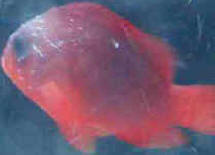
Brooklynella 12/28/05 To the WWM Crew <Fl?io> In a small, 20 Lts., quarantine tank I have a clownfish probably with Brooklynella. He arrived 4 days ago. <Am sure you're beginning to appreciate the value of captive produced clowns versus wild-collected...> Don't eat, is in a tank corner, breathing rapidly and has some kind of whitish coat extending from the dorsal fin to the medium and lateral part of the body. He has also three or four white spots on the frontal part. <All indicative> Today I added Coppersafe, one cupful as the manufacturer indicates. In the meantime I read your advice about Brooklynella and dips in formalin ( 15 to 30 minutes with 1ml (20 drops) for 4 Ltr of salt water, as you state). <Yes... if Brooklynellosis, copper will not cure it> My question is if I can put some formalin in the quarantine tank in order to treat the possible occurrence of the two diseases. How much formalin could I put there. 2 drops? Thanks in advance Fl?io <I would not place formalin in your quarantine system if you can treat otherwise... instead I would run a dip/bath and move the animal to a newly cleaned/sterilized system to avoid cross-contamination. Please see WWM re Formalin use, http://www.wetwebmedia.com/formalinart.htm, Brooklynella. http://www.wetwebmedia.com/brooklynellosisart.htm Bob Fenner> Brooklynella? 12/9/05 Hello, <Hi Mark.> I have two tomato clowns who are very active with there mate anemone. Just recently my wife and I have noticed a white, almost greasy like substance on their bodies. They are showing no signs of "illness" or lethargy. <Mmm, hard to say without a picture but from your description sounds like Brooklynella. It's quite common on wild-caught anemone fish. See here: http://www.wetwebmedia.com/brooklynellosisart.htm. If what your fish have is indeed Brooklynella they will need to be moved to a quarantine tank to treat them. In fact any fish other fish in the display will also need to be moved into the quarantine as this is a direct transmission parasite. The display tank needs to run empty for 4 weeks minimum. For Brooklynella the most effective treatment in my experience is pH adjusted freshwater dips and saltwater/formalin baths. These procedures can be found here at WWM also. Though I digress, first and foremost I would identify what this is on your specimen before going forward with nay treatment/actions.> They eat as they always do and love being in their anemone. <<This does not sound like Brooklynellosis, as this disease kills too quickly. Marina>> <Keep feeding a varied diet.> Contents of our 90gal. high sump tank. 40#'s live rock, 2 yellow belly damsels, 1 green Chromis, 1 cherry pseudo, 1 medium yellow tang, 1 cleaner shrimp, 1 blood shrimp, 1 coral banded shrimp, 1 brain coral, 1 sm. colony rock, blue mushroom coral, 1 button pearl coral, 2 large snails, 5 scarlet crabs, 4 turbo snails and 1 blue knuckle crab. Diet consists of frozen brine <I would like you to ahead and cut the brine from the diet, its not very nutritious at all, switch to a more varied diet, i.e. Mysis, Prime Reef, rotifers, squid and other meats of a marine origin, also consider a nutritional supplement such as Selcon or Zoe.> flake Spirulina and krill once in a while. Water changes weekly and a min. 25% change once a month. <10% weekly would be much better.> We utilize an Excalibur protein skimmer. I would appreciate any feedback that would help. <I hope it has helped.> Thank you, Mark <Welcome, Adam J.> Brooklynella 11-29-05 Hi guys, <Hello> I am really desperate for an answer regarding disease. I have had 2 Percula Clowns in the tank for about 2 months now and they seem to have suddenly erupted in a fungus/parasitic infection. The white stripes are flaking and turning grey, and there are a combination of white bumps and white spots descending over the gill area. I have read many FAQs on Clownfish disease/disease but have a dilemma; I am going to place the two clowns into QT for treatment, however there is no way that I can include the other fish, due to territoriality and restriction of volume. These are: 2 X Green Chromis, 1 X Andaman Damselfish and 1 X Royal Gramma. Could I please add that these fish are showing no signs or symptoms and are as full of vigor as ever. My question is, would it be too risky to QT the clowns but simply observe the others for a change in condition? <Yes, the other fish will be carriers if they don't die and will infect the clowns when they come back. Use plenty of hiding spots in the QT and you can even use buckets to QT if necessary.> Secondly, tiny (about half a millimeter) clear sacs containing what look like eggs are sporadically stuck to the inside glass. I believed these to be Nerites eggs but am now wishing to know if they are perhaps parasites or spores etc. <Most likely snail eggs. Nothing to worry about.> Many, many thanks in anticipation of any help offered. Steve Morse. <Glad to help, Travis>
Battling Brooklynella! Hello, <Hi there! Scott F. here today!> I'm so friggin' depressed. I'll try to be succinct. I recently purchased three clowns labeled by the LFS as "Perculas." My assumption was that they were "true" Perculas. Subsequent research leads me to believe that they were "false" Perculas. Anyhoo, one by one over the course of about 5 days, all three showed symptoms of Brooklynella. One died within a day. <Yikes! Sorry to hear that.> I frantically scoured the Internet and polled the LFS' for info on what to do about it. Got a lot of different answers and possible solutions and ended up attempting a freshwater dip on the two living fish. Both died within about an hour of being returned to the main tank. <Freshwater dips may assist in curing the fish, but they are not a "cure" in and of themselves. As far as the fish fading as a result of the dip- it is entirely possible, because the fish were severely stressed out to begin with.> I got one replacement false percula. I tried to quarantine him/her/it, but was having some problems with the QT and rather than watch the little guy/gal/thing die in there, I put him in the main tank. <Uh-Oh...> He has been doing very well for the past two weeks, and looked great up until yesterday when he started exhibiting the same initial symptom as his predecessors: cloudy eyes. In the other fish, this lead to stringy white poop, a tendency for the afflicted fish to hang in the current from the powerhead, then death. After my "cure" killed the two other fish, I'm kind of afraid to try anything else, i.e. quarantine, freshwater dip, treatment with formalin, etc. I know I should have quarantined in the first place. I know. My question is, what should I do now? Tank info, if you need it, is: 150 gallon reef tank, about 10 months old. My husband set it up, so I can't say much about the filtration other than it's got a refugium with Chaetomorpha in it, and a skimmer. Sorry. Other occupants are 1 Sailfin Tang, 1 Lemonpeel Angel, 1 Lawnmower Blenny, 1 Coral Banded Shrimp, 1 Cleaner Shrimp, snails and hermit crabs. All the other occupants show no signs of distress. Thanks so much, Nicole <Well, Nicole, this is certainly something that needs to be addressed, and quickly! As you know, this is an extremely virulent disease. "Conventional" treatment methodologies include the previously-attempted freshwater dip (do read up on the techniques of FW dips right here on the WWM site), followed by treatment (in a separate tank, of course) with Formalin at the dose of 1 drop per each liter of water. Formalin is extremely toxic to invertebrates, so under no circumstances should you administer it in your display tank. In addition to treating the Clown, you really need to observe the other fishes carefully, as they may certainly become infected. The possibility exists that you may have to remove the other fishes for observation and treatment. Do read up on this disease and its treatment here on the WWM site and you'll find some very concise information! Best of luck to you! Regards, Scott F.> Clownfish nodules related to Brooklynella? Hello there! I recently moved my pair of 3/4" ORA tank-raised Ocellaris out of their three-week quarantine and into my tank. They did not appear to be afflicted with anything, and ate just fine previously. My question really only pertains to one of the clowns, the one that is developing larger white nodules. By nodules, I mean what seem to be larger, semi-translucent fluid-filled sacs, anywhere from 1mm-4mm in diameter. The nodules seem to stick to her (the larger clown) at certain areas, but most prominently the gill covers and tail fin. They are occasionally found elsewhere also. The fish is fine as far as activity goes, and eats like a pig. Are these nodules in any way related to Brooklynella? <Don't think so... have battled with this protozoan, dissected many clowns...> I'm simply afraid that although they are the only two fish in the system, that I may have moved them through my quarantine procedure without being cautious enough. Can you help me? <A bit at least... I strongly suspect this is NOT a pathogenic reaction... the folks at ORA would not have such in their systems...> Thanks so much for all the time and effort you put in to answer the questions that fellow hobbyists such as myself have. Quentin D. <I wish I could tell you more... is very strange that only one of the two is affected... I do hope the blistering will fade of its own accord. Bob Fenner> Frequency of Brook Treatment Please help! We are researching and researching and can't seem to find a unified answer. How often do we do the formalin dips? Can we do them every day or must we stick to the every other day? <Can be done daily if the specimen/s are in otherwise good health> We have a clown that has Brooklynella and would hate to lose her...she actually ate yesterday a little while after a dip, but today is hovering at the top again. Do we have to wait until tomorrow to dip or can we do it again today? Thank you so much for your help! <Mmm, are you returning this fish to the same infested system? Please read here re the causative organism of this disease: http://wetwebmedia.com/brooklynellosisart.htm and the related FAQs files (linked, in blue, at top). Bob Fenner> Clown Going Down? (Brooklynella?) I have an ailing/recovering clownfish. I have been reading through some of the FAQ's. I am having a terrible time distinguishing velvet from Brooklynella from ich. First, here is a ROUGH timeline of what I have been going through. About a month ago Purchased two small (1in.) percula clownfish and a rose anemone from LFS for cycled 10 gal. fish tank One clown defended the anemone from the other after a day or two. Talked to LFS, they told me I could return the outcast clown with slight hopes of ending up with a mated pair. When I took the clown out, it looked like it had a slimy film on it that I could peel off. Sounds a lot like Brooklynella's external symptoms> I took it to the store and they told me that it was probably low ph and gave me another. (found out yesterday that the clown died in the bag while they floated it) <No surprise there, if we're talking about this disease. It is nasty!> (Some time here, I did some research and decided that I needed a larger tank to do a reef setup. I bought a 45 gal. and started piling in the rock here and there along with three Chromis damsels to cycle it.) I took the new clown home and floated it. It was love at first sight. Or so it seemed to me. A little over a week ago... It was doing fine for a week or so and then it developed the slimy film. I started researching the ailment and can't determine if it is velvet, ich or Brooklynella. I did immediately start FW dips (only for a min or two as this was the first time frame I read about). Keep in mind that the first clown never showed (and still doesn't show) any sign of any problems. <Well, a fish infected with Amyloodinium ("Velvet") will usually patches of discoloration where the tissues have been liquefied. The affected fish will also display difficulty breathing, lack of appetite, and general listlessness. The "slime" that you have described sounds more to me like Brooklynella. Fishes infected with this disease seem to slough off large quantities of mucus, and display similar lack of feeding, listlessness, etc. They will often "hang" in the current.> The larger tanks numbers went fine quite soon with the LR and wet/dry filter. The ailing Clownfish's tail started having problems (disappearing) so I took the good clown and the anemone out and put them in the 45) I was afraid that the healthier appearing clown was picking on it or that it would contract the illness. I realize now that this was probably not the best thing to do especially since I added a coral beauty and a bicolor blenny to the larger tank. <You really need to develop a quarantine procedure and stick to it. With regular quarantine, you'll be able to treat such diseases before they get to the display and cause problems> I went to the LFS and he gave me some antibiotic tablets. I have been adding the correct amount of antibiotics to the new 10 gal hospital tank and doing a FW dip (I started increasing the time spent in the FW to a little over five min last night) <Well, antibiotics are effective if you are dealing with a disease that requires their use! If you are dealing with any of the aforementioned afflictions- they are parasitic, and require medications like copper sulphate or formalin to do the job> I did some more research last night and found this site to be very helpful, but I am having trouble diagnosing the problem and verifying that I am on the right course of action. I don't think it is velvet because it just doesn't sound like it. It sounds like Brooklynella, but the other clown still doesn't show any signs. It doesn't sound like ich because I don't see any crystal-like spots. There was a spot on the second day that seemed to disappear either from the fw dip or from the net in transferring to the fw. I asked the guy about Brooklynella and he didn't seem to know anything about it. I asked about getting some Formalin and he said that it was formaldehyde and that he could give me a little if I wanted to try that. First of all, is this info right, second of all, do I need to use it and finally, how do I use it. <Best you get an aquarium-specific formalin medication. This way, you'll be getting a medication with the proper concentration and a set of instructions on how to use it!> I do appreciate the time taken to look at my problem. Forgot one thing. The fish is hanging in there and seems to be doing okay other than acting lonesome since I took the other clown out. It still eats <and that is a good sign> :-) Thanks in advance! Gordon <Yes, Gordon- the fact that the fish is eating is excellent! I'd get going on a copper sulphate or formalin treatment regimen (not in the display tank, of course) and monitor carefully. This disease can be very contagious, so do observe your other fishes for potential signs of illness. Arm yourself with some good research on the WWM site and others about these diseases, and you'll be able to make a positive ID rather quickly! Good luck! Regards, Scott F.> URGENT_ sick clownfish: Brooklynella 5/21/04 Hello, <howdy> When I woke up to turn on the tank light I noticed that one of my percula clownfish was very badly injured. He has this mucus white cobweb like stuff all over him and is breathing hard. I don't know what is wrong. <This sounds like classic "clownfish disease" (Brooklynella... do a keyword search of this term on our website. Google search tool on the home page)> The female is fine and is eating, but I noticed her nipping at her mate. I believe that the female is pregnant because she is quite large (stomach area), and this is leading to stress. Nothing appears to be wrong with the other tank mates. My tank is 75 gallon, live rock, skimmer, UV, filter, liver rock, 9 months old. pleas help I don't want to lose him. Scott <the disease generally only afflict new fish or comes in with livestock recently added to the tank without quarantine. It is critical to QT all new livestock for 4 weeks without exception (all new fishes, corals, rock, snails, plants, shrimp, crabs... everything!). Else you risk random infections perpetually. Treatment of Brooklynella generally requires Formalin. The Aquarium Products brand "Quick Cure" may work here with aggressive freshwater dips. Do see our archives for more details on how to do this. Anthony> Battling Brooklynella Hi crew, <Scott F. here today!> I have been battling what I thought was Marine Ich, but I now believe to be Brooklynellosis. The reason I believe this, is because I have 2 clowns and 5 other fish and only the two clowns ever show signs of any disease (unfortunately the disease came about in my main tank). I have been FW bathing the clowns to keep them in good health. My question is will Brooklynellosis die out in the main tank if the other fish never show any signs of disease, or will they host itjust like Ich? <Good question. Brooklynella is a protozoan-based disease, similar to ich. It is actually found on occasion in Angelfish, too. Personally, I'd attack this problem just like I would Ich: Remove all potential hosts (your fishes) to a separate tank for further observation, while letting the main tank run "fallow" for about a month. Better to be safe than sorry, IMO. Good luck! Regards, Scott F> Fallow Tank hello, <Morning! Ryan with you> I recently lost my two Percula Clowns to Brooklynellosis. I was treating the tank with Formalin for two days...I was literally turning on the light to another tank when I turned around and they were both dead. My question for you today is if the tank is still infected. They were the only fish in the tank at the time and its been running without fish for about 4 days. I want to add more clowns and was wondering when I could. <Sam, you need to allow time for any Protozoans in your tank to die. Without a host, they soon will, but it's going to take time. Most experts advise 4-6 weeks of running your tank "fallow" before returning livestock. http://www.wetwebmedia.com/brooklynellosisart.htm Good luck! Ryan> Thanks Sam Hindsight is 20/20 OK! I learned the hard say, should have quarantined! (As a Biology teacher, I am ashamed!) I have two new Perculas and one is not looking very good, while both are acting withdrawn, no interest in eating flakes. I am not sure if my percula clownfish necessarily has clownfish disease (Brooklynella sp?). Today, it has developed a white lesion on the body just below the dorsal fin. It also has a ~2" long whitish/clear excrement strand hanging off of it and seems to have a loss of appetite and equilibrium. I have not noticed paleness of color nor excessive slime secretion. The other percula seems healthy. I am wondering if/how I should treat as well as what are possible causes of infection? <hello, Well I am afraid to tell you it sounds like Brooklynella. The best and fastest way I have found of removing the parasite is a 15 minute freshwater dip. make sure the water is same temp and ph as tank water) I know this seems like a long time but if you do not do a full 15 minutes it will come back. Hopefully it is not too late. As for how the got it. Most likely they were infected when you got them or you did not acclimate them slow enough. Always quarantine!!!!MikeH> (29 gal eclipse 3 system, temp ~ 76F, sal. 1.022-3, pH 8.2 Nitrate, nitrite ammonia levels 0. New tank, only 3 weeks with 9lbs live rock, 1 Sebae anemone, <If the tank is only 3 weeks old you should not have put an anemone in there. To keep them alive you will need at least 4-5 watts per gallon> 3 turbo snails) Thanks for any insight. Brooklynellosis III, Treatment's Underway! >Hello AGAIN crew! >>Hello again. >I am still treating my clowns for Brooklynellosis per Marina's advice. I have them in a 10 gallon QT with a reduced specific gravity of 1.012 (not sure if this is effective against Brooklynellosis but I assume it stresses the parasite as it does ick) and a solution of formalin and malachite green. >>This is very good, others meet with much success using this method. >They seem quite active and still eat like pigs (food soaked in Zoecon now) though I am feeding lighter in order to keep up with the ammonia swings in this tiny tank. >>Sounds good. >I also give them both freshwater baths with the formalin solution matching pH, temp, and have an airstone to move about the water for about 15-20 minutes a day (they actually seem to like it???). >>Excellent, couldn't do better myself! >The other clown does not have the white patch under his chin (never did), but the other still does but it has not spread and I do not see the red ulcers I did when she was in the display tank. >>This is good news, it sounds as though you've caught it and have a good handle on it. >My question is how long does it take to see progress, it's actually hard to see on her. Do you think it still may be Brooklynellosis or a bacterial infection? >>That is difficult to tell (between one or the other), but let's keep to one treatment for now, then reassess the situation. >I'm not quite sure how long to keep them in there...6 weeks to be safe? >>Total time in hospital, yes, 4-6 weeks. As far as treatment for the Brooklynellosis, I believe that two weeks would be sufficient. >Should I still administer an antibiotic in conjunction with the anti-parasitic solution because she did have that white stringy feces? >>No, not unless after finishing treatment for the Brooklynellosis you still see the white feces, and then I would treat that first as a bacterial infection. >Furthermore, is Brooklynellosis free swimming in one of its stages being killed in the display once it can't find a clownfish after a period of time or is there possibility as always that it may re-infect my poor clownfish? >>I am not positive, but knowing that it is not necessarily specific to clowns I would say that it could still be in the tank. However, I also believe that, as I'm learning with ich, fish might be able to build up an immunity to it. >Speaking of, I don't "see" any symptoms exhibited on my green mandarin or neon goby. Unfortunately, I've never seen them passing feces, so it's hard for me to determine if they had the white stringy feces also. They don't seem to have the white patch like the one clown did. >>Generally, observe. If nothing appears awry, then chances are they're fine. >I know that the green mandarin has a thick slime coat in comparison to other fish. Is Brooklynellosis prominently on clownfish only? >>Most prominently, yes, but exclusively, no. >Anyway, thank you for taking the time to read my problems and so many others! Your help is always appreciated. Danny >>You're very welcome, I do hope that the fish recover quickly and all will be on their way (and you can breathe easy!). Marina Beating Brooklynella! Hello guys! I am new here so I hope you would help me... and quick if that's not too much to ask? <Scott F. at your service!> This morning, I noticed that my Flagfin angel developed some white patches all over his body. Though I didn't notice any adverse reactions from this, I opted to do a 10 minute freshwater dip just to be sure. I know this is something serious because from hindsight, a couple of really healthy bi-color angels I had in the past developed similar symptoms where their entire body turns hazy, almost white and then dying a day later. <Not good...> I know this is not ich because there are no apparent white spots. I also discount the fact that this might be velvet because the fish doesn't exhibit rapid breathing, is not flashing and he is still feeding. <Well, the fact that the fish is eating is a very encouraging sign...> Same thing in the past with my bicolors. My best guess is that this might be Brooklynellosis. I read from your site that this occurs mostly among Clownfishes, but what do you think? How can I cure it? I'm not considering formalin because I have no access to it. Will hyposalinity work? <Well, it might provide some temporary relief from symptoms, but it is not generally considered a "cure" for Brooklynella. As you point out Formalin-based medications, and Malachite Green meds are usually considered the proper cure for this illness. Feeding the fish with antibiotic-laced medication after they are healed can help prevent the occurrence of secondary infections in these fishes.> I also put a really nice Centropyge flavicauda yesterday before I noticed the disease on my Flagfin. What are the chances that this fish might contract the disease? <It's really hard to say...This is a highly contagious illness, and I'd operate on the assumption that any fish which has been exposed to it is a potential victim...I'd remove all fishes from this tank (even the apparently healthy ones) and place them in a separate quarantine tank for observation and/or treatment if symptoms manifest. Meanwhile, you'd let the display tank run "fallow", without fishes, for about a month. This will result in a significant decrease in the population of the Protozoans that cause this disease. Not a fun procedure, but quite effective> What can I do to prevent it from attaching to this fish? <As above> I also have a whitecheek tang, clown tang and 2 Ocellaris clowns in with these angels, though I don't seem to notice the parasites attaching to them... ever! Why could this be? <Hard to say...Could be some form of resistance- could just be random luck...It's up to you if you want to approach the management of this disease aggressively, or wait it out and see...> I'm planning to do a 25% water change tomorrow to help alleviate the situation. <A water change is always a good thing. Not sure, however, if it will have any impact on this illness in a display tank while fishes are still present> Pardon me for the long story, just like to divulge all important details. <You did a great job! No problem!> I will greatly appreciate your response! Salamat nang marami, from your friend here in Manila! Regards, Mitch <Best of luck to you, Mitch! I hope that things work out okay! Good luck! Regards, Scott F>
Sounds like Brooklynellosis I am a new hobbyist. I recently purchased a Maroon clown fish. He was doing well for about 2 weeks. I had a four striped and a yellow damsel in the tank previously. all who are doing well. Last week, I purchased a yellow tang, a Black and White Heniochus, a chocolate chip starfish, and a cleaner shrimp. All did well at first. I noticed however that the Heniochus was picking on the starfish as well as my feather duster. <yes, sometimes these fish do pick on inverts, they are closely related to butterfly fish> A few days later, I could not find my cleaner shrimp (I have a 35 gallon tank in which he was easy to find). I am assuming he died, and one of the fish ate him. <most likely> For the past few days, my clown fish has not been eating. Today he is hovering on the bottom of my tank. He looks like he has a little white like film on his head. <sounds to me like Brooklynellosis or "clownfish disease"> His white stripes look like they are not white as usual. And his Dark orange has lighter orange marks within (a little hard to explain). <I know what you are talking about> I am not sure what is wrong with him. <You need to read over this following link and take action immediately or the fish will perish very soon http://www.wetwebmedia.com/brooklynellosisart.htm > I took the Heniochus back, thinking he was terrorizing my other species. <good idea> I do not think that my clownfish will survive, but I am interested in knowing what happened and how to prevent this again. <again try to save this fish and next time quarantine all fish before they are placed in the main system> I do not have a hospital tank. <please purchase one> Should I get one for the future? Thanks for you help, Debbie <YES> How to I set it up, and when should I set it up (before a fish get sick or when they get sick)? <I would just set it up and maintain it just like you would do your show aquarium...Qt aquariums are essential, Good Luck, IanB> Beating Brooklynella! Hey guys, hope all is going well. <Doing Well, thanks! Scott F. with you today!> Thank you for providing such an informative, easily navigated site. I live in a smaller town, hours away from the nearest pet store and your site is my (and all of my friends) best source of information, thank you for all your help. <Glad to be here- even in "cyberville"> I've had a tomato clown fish for about 3-4 weeks now (he was transferred from a friends tank-had been in there for about a year or so) and I've recently (past 4-5 days) noticed clear to milky-white splotches on his sides. My friends and I don't think its "ick" because its not really white dots, just grayish film. The fish had been bullied the whole time he was in his previous home, but my tank (44gal 20lbs live rock, devils hand coral, and a leaf fish SG 1.023 , temp 77, water conditions are fine-just had water tested) has been a peaceful place. He seems to eat fine, but he just hangs out in the bottom corner and seems to rub on the glass. And he sometimes darts around his side of the tank. I'm worried that what he has might spread to my leaf fish. I want to treat ASAP, but I (being a poor college) do not have a Q-Tank. Any advice would be very much appreciated- not mention you will be saving the only clown fish in a 100 mile radius. Thanks again-Nick C <Well, Nick it sounds like you could be dealing with Brooklynella, which is a lethal disease that certain Clownfishes are particularly susceptible to. Symptoms are a thick white mucus on the fish's body, rapid respiration, loss of appetite, faded color, and general listlessness...My recommended course of action is to dip the fish in freshwater for 10-15 minutes, followed by a stay in a separate hospital tank. In the hospital tank, administer two drops of Formalin per gallon (or the recommended dosage per the manufacturer of the Formalin-based medication that you're using). This disease is quite fatal, so rapid action on your part is vital to save the fish's life. Good luck! Regards, Scott F> Treatment of Clownfish disease Hi Ian, what would you use for Clownfish disease then? Also, you say that chelated copper will wipe out bio-filtration, yet manufacturers such as Mardel (CopperSafe) guarantee that it's safe for bio-filtration.... how can it be? <Have read ways to treat Brooklynella hostilis (clownfish disease), In Martin Moe's "The Marine Aquarium Handbook" he states that copper treatment is ineffective without co-treatment with formalin, Quinacrine or malachite green. He states one of the best treatments is the Malachite green treatment (but not in the main aquarium-in the bare bottom hospital aquarium-so it doesn't kill your beneficial bacteria) its a five day exposure to malachite green. One or two drops per gallon of a 1% solution makes up the treatment bath. After four to five days in a treatment tank, the disease should be gone.> <You can also try this method of treatment but make sure its not in your main aquarium- All new fishes should be quarantined, isolated in a separate system for a good two weeks before exposing them to established systems. As regards wild-collected Clownfishes and Seahorses this is a particular concern. In almost all cases a preventative pH-adjusted freshwater baths (Fenner 1989, 97, 98) in process of acclimation and placing of new fishes in quarantine eliminates this and other external parasitic problems. If Brooklynella expresses itself on your fishes in quarantine or a main-display setting it is necessary to act quickly to effect a cure by chemical treatment. As mentioned earlier, copper is largely ineffective in treating for this protozoan. The most efficacious cure is made by using formalin solution in either dips/baths (in freshwater or marine) or more dangerously, in administering the formalin to a system (with no invertebrates, algae, live rock present). Stock solutions of formalin (formaldehyde) are generally about 37% composition, and can be used as dips/baths of one cc. per gallon. Baths should extend for a minimum of fifteen minutes, perhaps as long as thirty... with you present (lest the animal/s need to be removed due to stress) and mechanical aeration (bubblers, airstones) added to the bath. (got this from WWM) Hope this helps, IanB> Luke Brooklynella Hello, <Hi Petr, wish it was under better circumstances you were writing us.> A few days ago I purchased Maroon Clown (~5in). I put the fish in my 20gal QT (whisper power filter, SeaClone skimmer, heater, and a small light) and a day later noticed white spots/clumps on its skin. I'm pretty sure that it is not Ick (I already had to treat my other fish for ick before and would recognize it). The white spots have irregular shape and some are larger than other. Some of the spots make the fish look almost as if it was covered with spider webs. The fish swims around pretty well, seems to eat and reacts when I walk by the tank. Is this Brooklynella?! <It could be, there's several possibilities.> In my LFS I was told to try ParaGuard (Seachem) and to follow the manufacturer's instructions: - 1hr bath in 3ml/gal solution - then administer the med. to QT 1ml/2gal I was wondering if you have any experience with this medication and if it makes sense to use it to treat this parasite. Would formaldehyde be a better solution? <Not that I'm aware. I've not had any experience with ich, or any of the other diseases. Here's the link to the site on diseases: http://www.wetwebmedia.com/parasiti.htm There's a number of FAQs also. From what I've read, the treatment is the same as for ich: lowered salinity, and, for clownfish, low doses (1/2 recommended) of copper.> Best regards, Petr <Good luck, and I hope the little bugger pulls through.> Combating Brooklynella Hello, <Hi there! Scott F. with you tonight> A few days ago I purchased Maroon Clown (~5in). I put the fish in my 20gal QT (whisper power filter, SeaClone skimmer, heater, and a small light) and a day later noticed white spots/clumps on its skin. I'm pretty sure that it is not Ick. I already had to treat my other fish for ick before and would recognize it. The white spots have irregular shape and some are larger than other. Some of the spots make the fish look almost as if it was covered with spider webs. The fish swims around pretty well, seems to eat and reacts when I walk by the tank. Is this Brooklynella? <Well, it could be Brooklynella, but you should see if some of the symptoms outlined here seem familiar: The keys to the diagnosis of this disease are a thick, whitish mucus, faded body color, loss of appetite, heavy respiration, gasping, and some degree of difficulty swimming.> In my LFS I was told to try ParaGuard (Seachem) and to follow the manufacturer's instructions: - 1hr bath in 3ml/gal solution - then administer the med. to QT 1ml/2gal I was wondering if you have any experience with this medication and if it makes sense to use it to treat this parasite. Would formaldehyde be a better solution? Best Regards, Petr. <ParaGuard is a good product. However, I've experienced good success in combating this disease by using a 10-15 minute freshwater dip, followed by Formalin administered (in the quarantine or hospital tank) at 4 drops per gallon (OR the dosage recommended by the manufacturer!). This usually does the trick for me. However, make absolutely sure that you're dealing with this disease before beginning a course of treatment. Remember, if it is Brooklynella, rapid response is important. Good luck!> Illness (Clownfishes... probably Brooklynella) Hi Bob, Anthony or who is doing the mail today. I have two common Clown fish and they are both ill. This morning I noticed one of the fish has what looks like long strains of cobwebs coming from his fins and body, about 1/4 to 1/2 inch long, and he is constantly swimming at the surface tail down. I have managed to look at one of them with a magnifying glass and it looks like their skin is peeling and swaying in the water from their bodies. <Ohh, likely very bad I'm sorry to state> I have removed them from the main tank and put them both in a hospital tank, but what do I treat them with? Could you please help me? As I would hate to see anything happen to them. <Are these fish new? Wild caught? I suspect the answer is yes to both questions. You are likely experiencing a protozoan named Brooklynella... and very hard to cure. You need to act immediately, treating with a formalin/formaldehyde based medication... Please take a read through here: http://www.wetwebmedia.com/clownfis.htm and through the linked (in blue, at top) FAQs files on Clownfish Diseases. Good luck, life. Bob Fenner> Many thanks Colin Clown Fish Disease Hello, My brother recommended that I write to you about this. I had two clownfish (tank raised Ocellaris) die this morning in my tank. I took them to the fish store and they determined that it was clownfish disease (I think they called it Brooklynella?) after looking at it under a microscope. I still have a Coral Beauty in my tank as well as some shrimp and snails. What should I do to keep what I still have healthy? <Remove the Coral Beauty to a quarantine/hospital tank and begin treatment with Formalin. Please see here for additional information: http://www.wetwebmedia.com/quaranti.htm http://www.wetwebmedia.com/clndisfaqs.htm> The Coral Beauty still looks healthy but he has been scratching up against rocks frequently. Thank you, Tyler Packard <You are welcome.> The clown fish looked fine all the way to last night so I am concerned about the same thing happening to the Coral Beauty. <As am I. Good luck! -Steven Pro> Clown Fish Disease Hello, My brother recommended that I write to you about this.<sounds like a cool guy> I had to clown fish (tank raised Ocellaris) die this morning in my tank. I took them to the fish store and they determined that it was clown fish disease (I think they called it Brooklynella?) after looking at it under a microscope. I still have a Coral Beauty in my tank as well as some shrimp and snails. What should I do to keep what I still have healthy? The Coral Beauty still looks healthy but he has been scratching up against rocks frequently. Thank you, Tyler Packard The clown fish looked fine all the way to last night so I am concerned about the same thing happening to the Coral Beauty. <Brooklynella is usually noticeable, it looks more like a bunch of soft, translucent, dead skin or mucus peeling/flaking off the fish. I would keep a close eye on the Coral beauty. Take a look at our information on disease to see if it is showing any other symptoms. You may want to consider removing the coral beauty from your main tank and placing it in a quarantine tank for a few weeks for treatment if necessary. I would not worry about the shrimp and snails. Also, test your water, make sure everything is as it should be. Check out the links below and get back to us with any more questions that may arise. Best of Luck, sorry about the loss of your clowns, Gage. http://wetwebmedia.com/clndisfaqs.htm http://www.wetwebmedia.com/parasiti.htm> Re: Clown Fish Disease I will get on that right away. Is it possible for other types of fish to contract Brooklynella from clown fish? <Yes> I was just wondering if putting my Coral Beauty in quarantine is precautionary or is he in severe danger of contracting the disease.<He is in danger of contracting the disease.> One other quick question, the shrimp I have are cleaner shrimp and the coral beauty stops and lets them clean them off every once in awhile. Is this something that could be helping resolve the situation with the Brooklynella? <The cleaner shrimp will do his best, but if you just lost other fish I would go with the QT method. Good luck, Gage> Thanks, Tyler
Ocellaris Clown (disease) Hello Sirs. Thank you again for all of the info. I'm writing to get your opinion on diagnosis/treatment of my false percula. After searching the site, I found a post that seemed pretty similar to my situation (as far as the symptoms). It goes: Brooklynella, Microsporidium, or Lymphocystis? Hello, I recently made the mistake of purchasing a large (3") Amphiprion Ocellaris (common clownfish) from my local fish store. They had just received the animal when I purchased it, mistake number two. I added the clownfish to my newly cycled reef tank (mistake number three, biggest one). Within 24 hours I noticed a white wart/cauliflower growth on the animal's right side, in the white band area, just behind the gills. The clownfish will not eat and appears to be stagnant although it is moving about somewhat. The animal does not exhibit any other signs of infection, no small white spots, glazed or popping eyes, scratching, fin rot, and the like. What has infected my fish? I've narrowed it down to either Brooklynella, Microsporidium, or Lymphocystis or ? ? ? What can I do to cure the fish and save my reef tank. Should I remove the infected fish to prevent the disease from spreading to the other tank mates (choc chip star, scooter blenny, 2 turbo snails, 6 reef crabs)? Please advise, I want to save my tank and the clown if possible. thanks, Dan Rose Thank you for writing so well, including with such clarity and humility... Glad to know that I'm not the only one who makes egregious errors in the hobby... I would almost bet that what you are seeing is indeed the Clown-attacking protozoan Brooklynella... And would in any case follow these steps. Do take the fish out and treat it in a separate "hospital" system... for it's sake, the use of the treatment "medicine", and the safety from the same of the rest of your system. The likelihood that the Brooklynella will affect your other livestock is minimal (there are no other Clownfishes...)... Copper is of little use if indeed this is Brooklynella, but formalin dips/baths are efficacious. Buy a stock solution (my fave retail brand is Kordon, but any will do)... generally a few drops per quart of pH adjusted (just with sodium bicarbonate, baking soda is fine) freshwater... and move the fish from the main tank into this solution for about ten minutes... either add an airstone, occasionally splash the water around for aeration), move the Clown to the bare-bottom (but still filtered, aerated.... with a hang on, sponge, box filter...) hospital/quarantine system... Dump the treatment water... repeat every day for three days... and stop there if there is no further visible sign of the disease... If it re-shows or persists, wait two days and resume the dip/baths... This will work.... Bob Fenner Well I thought that the "wart/white cauliflower" part definitely defined what has appeared on the very tip of the dorsal fin of my fish. I've had this fish about a month. 2 weeks in QT and 2 in main display. About 3 days after introduction into the main tank, I noticed a white spot about the size/shape of a grain of table sea salt (yum). Wasn't sure so I've been watching and reading in the meantime. In the last 10 days the spot has maybe grown by 25-50%, but has not spread to any other areas. It also has not spread to Pac Blue Tang. He (or she I'd suppose) was eating normally until yesterday when he/she started "sampling" then spitting out food (similar CMA recipe). Seems similar enough to enclosed post to warrant an email. Would this be a Brooklynella infection that would require the above recommended treatment? <Mmm, the wart-like growth on the Clown could be lymph, the spot on both fishes is likely crypt, tangs don't "get" Brooklynella> Other info: 125 gal, 90# LR (more coming when the $$ does), 200# LS, 240W NO fluor. lighting @13 hrs/day (MH with more $$ again), 2x Rio 1100 plus return for circulation, TF 1000 skimmer, sump w/ 55W PC lit 'fuge, airstone and active carbon. Today's parameters were pH-8.2, Ammonia-0, Nitrate- <5 ppm, Alk- 4.8 mEq/L, Ca-350 ppm, Temp 77, SG-1.025 Other livestock: 1- Pacific Blue Tang, 1-sand sifting star, 12 bumblebee snails(?), 6-turbos, 12-astrea, 1- hitchhiker clam as of yet un-i.d.'d, misc hitchhiker polyps/sponges etc, and very soon 1- cleaner shrimp to be determined <I would hasten the acquisition of the Cleaner Shrimp/s... maybe get more than one> Hope this is enough/ not too much info. Thank you for your help and dedication to helping the rest of us become as informed as we can possibly be. <Perhaps add a Gobiosoma Goby to the Cleaner list as well... otherwise nothing "stands out" as real trouble/cause here. Bob Fenner>
HELP! Do I have Clownfish Disease? Hi, I've read your site extensively for about 2 days straight now, but am still not sure about this... I have just recently (2 days ago) gotten 2 False Percula Clowns. They are in a QT. The QT has been having problems with ammonia and I've been doing a 4-5 Gallon water change daily (its only a 10 Gallon tank) - with seawater aged overnight. I have the S.G at about 1.018-1.019. <I would raise this spg to about near seawater, 1.025 at a rate of .002 per day> One seems Ok but his appetite has dropped off, and the other is not eating at all and hides under the rock - looks at the food, but wont eat. I've been offering Live Brine as a bribe ( I know it's not the best, but a good start to get them feeding? I've also tried a pinch of flake and a pinch of formula one frozen, but not takers) My questions is this, The both have come down with two different looking symptoms that I am unsure of. 1) They both have a few patches on the skin that just look different - a little raised but not discolored, possibly extra mucus?, <Maybe... likely tied to the low spg.> I'm not sure. 2) whitish/tannish (more tannish looking) small clumpy spots more on one than the other running basically along the lateral line. <Does sound like Brooklynellosis> Also looks as if there could be some lesions (some redness along with it). Doesn't look like typical Ick as "salt" grains. I don't have a good LFS around so I got them through FFE - so most likely wild caught. <Maybe. Do contact them re> Is this Brookylenna (I know - spelled wrong - but you know what I mean) - or is this Ick? A combo of both? I have used OrganiCure (I know some of you don't like that either.. but don't currently have a test kit for SeaCure - can try to get one during the week) - and have done a daily Freshwater Dip in 1 Gal. <Copper compounds won't cure this protozoan infestation... I recommend formalin based.> of PH matched, Temp. matched w/ one drop of QuickCure (Formalin/malachite green) for about 5-10 minutes. Is this Ok for them? <Should be, if they're healthy enough at this point... but not likely effective simply as a dip... need to be treated in the QT tank> Should I continue this treatment? Your help is greatly appreciated! I don't know if I should but them in the main tank or not - as I'm also worried about damaging them with high ammonia levels in the QT. Thanks! You people are wonderful! <Don't place these clowns in the main system... if they are carriers of other pathogens you may well spread these to your main system. Read more thoroughly re the causative organism (Brooklynella hostilis) and its treatments, then act. Bob Fenner> Beating Brooklynella Hi guys, <Scott F. here today!> I need your help on this one. I have an established 55 gallon marine aquarium with Live rock, which was basically stocked with fish and a few inverts (mostly crabs and a cleaner shrimp). I recently introduced several fish to the tank ( four blue Chromis) and noticed that within a day one of the Chromis was turning grey and starting to develop serious mucus, and expired within two days. At first I thought it might have been stress that did him in from the mail order shipping, however within two days I noticed white specks all over several other fish. Basically on the fins and mouth. It looked too small to be Ich but larger than velvet. I tried Kick Ich, Maracyn, and Rally over the past several weeks but more and more of the fish were becoming infected. I did a little more research into various marine diseases and I now believe that what the infection was, was Brooklynella. <Yep, this sounds just like Brooklynella to me. Good pickup!> The infected fish showed no real signs of debilitation other than the spots for several days, then begin to hover near the bottom of the tank, eventually there eyes would get cloudy, mucus or what looked like scales/skin began shedding off of the fish and within 24 hours afterward they would be dead. All that is left in the tank is a yellow tang and a percula clown. For years I have never had any type of bacterial, fungal or parasitic infection in my tank, but now I am paying the price for not maintaining a quarantine tank. <Well, that's true. At least you are learning the value of the quarantine process, so this awful experience will not have been in vain...> I have several questions for you. Tonight I set up a quarantine tank with some live rock and substrate from my main tank. I have no idea if this will be bringing any of the offenders into the QT or not, but I needed something with some type of biological filtration. <Oops! Don't do this! The "hospital tank" (or your quarantine tank) should not have any substrate or rock. By bringing in substrate and rock from the main tank, you are very likely to bring the parasites into the treatment tank. Plus, having a substrate reduces the effectiveness of medications, such as copper sulphate, which tend to be absorbed by these materials. You can supply necessary biological filtration for a QT tank by running a sponge filter in your sump for a couple of weeks before you use it in the QT tank. In this case, I'd go with one of the "cultures" that you can get at the LFS, such as Cycle, etc. to "kick start" the treatment tank.> I have read that if I raise the temperature of the QT tank to mid 80s, that the reproduction cycle can be broken. <Not broken, but sped up. Medication is required to nail this disease...And, let your main tank run fallow, without fishes, for at least a month. THAT will help break the life cycle of this nasty parasite.> Should I dip my fish in formalin or malachite green and then place them into the QT, then raise the temp up? <I'd give the affected fishes at least a 10 minute freshwater dip, then place them into the treatment tank, where you could administer a Formalin-based medication, per manufacturer's dosage and instructions.> Also, anything that seems to wipe out Brooklynella also destroys the biological filtration, is there any other treatment that I can use? <Honestly, I'd go with the old-fashioned, effective Formalin technique. It works!> If I remove the fish from my main tank, is the best way to clear up the infestation, just let it tank run (with the inverts) without fish for 3-4 weeks and hope they all die off? If I go this route, what will happen to the biological filtration in my main tank? Without the waste load of fish, will the live rock and the rest of the biological filter weaken or cease to exist? <Just let it run fallow, without the fishes. You'd be surprised at how well things will run during this time. And, continue to perform all regular maintenance during this period. Fallow tanks are no guarantee that the disease will be completely eradicated from your tank, but it is a big help.> Finally, around the time that I added the new fish, I also added a few pieces of cured live rock from the LFS. After several of the fish perished, I noticed very, very small white "bugs" crawling on the glass. I can't give more of a description as they are so minute in size (probably 15-20 would cover the head of a pin). The owner of the LFS feels that it was probably something living on the live rock before I introduced it into my tank. He thought it was not the cause of the tank apocalypse. Can you tell me if Brooklynella is an animal that could be seen with the naked eye? <Very unlikely that you could see the parasites. Sounds like some kind of other life form that you will find on rock...However, there is a possibility that the parasites did come in on the new rock, visible or not> Any help you can give me regarding this is much appreciated as it is hard to watch this destruction happen so quickly. I am anxious to 'rebuild' but I want to do things correctly to ensure that everything is properly eradicated. I guess I will keep a QT tank up and running at all times from now on! Thanks. Dave <Well, Dave- I predict that you will be a very vocal proponent of the quarantine process, just like yours truly! It only takes one experience like this to make you a believer! Hang in there...You can beat this thing! Good luck! Regards, Scott F>
Maroon Clown fish Hey Guys <<And hello to you, JasonC here...>> I have a 2.5-inch maroon clown fish that has started to get a chalky white film on his body and has been rubbing its self on the rocks frequently. <<Uhh-ohh...>> There are 5 other fish in the tank that are not showing any sign of the same symptoms. My questions are what do you think this is from if it is an ailment how do I cure it and do you think it could spread to the other species in the tank? <<Well... clownfish in captivity quite often come down with a funk known as Clownfish Disease, of all things... it's rather common and also quick to take effect and often doesn't bode well for the fish. You will need to take rapid action to deal with this if you want to save the fish. Do read the following URLs which will detail the problem and course of action: http://www.wetwebmedia.com/clownfis.htm http://www.wetwebmedia.com/clndisfaqs.htm http://www.wetwebmedia.com/dips_baths.htm http://www.wetwebmedia.com/quaranti.htm As to your other question about the problem spreading... there is always that chance. Don't waste any time dealing with this and quarantine this fish.>> Oh also this fish's stripes have not yet changed to a gold color like the guys at the fish store said they would is this a problem or is this fish supposed to have white stripes? <<I have seen these fish in both white and yellow strips - not 100% sure why this is, but my guess is it will depend on the broodstock if captive raised or perhaps the region it was collected if not.>> Thanks Jason <<Cheers, J -- >> Re: Maroon Clown fish Hello again, <<And hello to you...>> I had read about marine itch both symptoms and cures it was my first suspect for this situation. "I do not want to argue with your expertise". However this fish is not showing signs of this disease he acts more then fine other then the white chalky tone and his persistent rubbing. <<The chalky tone and persistent scratching are both what I would consider serious preliminary symptoms. The ball is in your court now.>> There is no sigh of him gasping or staying towards the top of the tank, in fact he is very persistent in staying in his territory and not letting any other fish in the area. The only time that he comes near the top of the tank is when I feed flakes to the lot of them. So would the diagnosis still lean towards marine itch? <<I was never leaning toward ich [Cryptocaryon irritans], but towards Clownfish disease [Brooklynella hostilis] which is a combination of problems of which ich is not one of them, but still parasitic.>> Jason <<Cheers, J -- >> Brooklynella A few weeks ago I lost three clown fish to what sounded like Brooklynella. All three had been in contact with each other through anemones. The first sign was that they each stopped eating, then they got blotches that looked white and some reddish. I still have a pink skunk which was very close to the maroon that died and yet three weeks later the pink skunk is fine. What causes Brooklynella, why didn't the skunk get it, and is there anything I can do to prevent this again. The other fish in the tank are alright as well, which is a yellow tang and a purple Firefish. I do have a UV sterilizer. >> This does sound like Brooklynella (hostilis), a protozoan infestation of mainly Clownfishes. All authors I'm aware of attribute its outbreak and introduction to shipping and stress. Also, it is not susceptible to copper treatment. Formalin baths have proven efficacious, and the friends who I've helped to develop receiving protocols for these animals use a commercial copper-formalin product (Kordon is my fave manufacturer) in a dip/bath to prevent introduction of the ciliate into their systems... At this point, it may be that due to size, initial health, that your remaining clown is resistant to the present Brooklynella organisms... If they show on this fish, do try a formalin, or formalin plus bath procedure, moving the animal to another tank... and do not place any new clownfish livestock in the tank for a few months. Bob Fenner The Brooklynella Blues I just purchased a percula clown. It won't eat anything but newly hatched brine shrimp and the day after I got it, it developed what looks like ich. <Actually, more likely another protozoan infection peculiar to Clownfishes... do you have a cleaner organism in with it?> It doesn't seem to be eating at all now (4 days later) and is growing listless. Any ideas about what I can do to get it to eat something besides brine shrimp? I treated the ich for 2 days when I first saw a problem but the fish seemed to be declining faster in the medicated water (malachite green) I am brand new to the marine hobby but have kept freshwater fish for about 10 yrs. <The protozoan problem is not treatable with Copper-based ich remedies... look into Brooklynella... and institute freshwater dips and formalin treatments... NOW! Bob Fenner> Clownfish Breathing Hard hello I have a clown fish that is breathing real hard but the weird thing is that everything in the test kit that I have is all perfect? what do you think it is and what should I do for it? thanks <Many possibilities here... could be just simple anoxia (lack of aeration, circulation)... possibly an osmotic imbalance (too much change in your water make-up in too short a period of time), perhaps a Brooklynella infestation... Please read through the Clownfish Health/Disease sections and related FAQs files posted on the site: www.WetWebMedia.com for hopefully what will surface as the cause/s, path to take here. Bob Fenner> Re: clown fish Mr. Fenner, Thank you again for your quick response. What is a bio cleaner (protein skimmer?) and how would I treat the disease (Brooklynella) if in fact she does have the disease. Thanks for all your help. Jason Cohen <All answered on www.WetWebMedia.com. Bob Fenner> Re: clown fish Mr. Fenner, As per our pervious conversations the white matter on my female clown has reappeared after nearly 7 to 10 days. Is it possible that the white matter is coming from her anemone or could it be ick or velvet reappearing? <Not likely the former, very possibly the latter... that or another microorganism pest, Brooklynella... very common on wild-collected Clowns> She is very active and shows no signs of illness. I will just have to wait and observe like the pervious time. Thank You, Jason Cohen <Yes, this is best... and consider a biological cleaner... Bob Fenner> Maroon Clown with Disease Greetings WWM team, <cheers!>
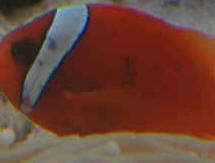
Hope this email finds you all doing well... <and you as well my
friend> I have greatly enjoyed and learned from this awesome
website, and firstly would like to say THANKS... <Thanks to you as
well. Do help our cause and tell a friend about us> I am fairly new
to marine aquariums (1 yr) and keep a 120 gal, with 200 lbs LR, 210 lbs
LS, and mainly soft corals... <a very nice start!> The only
fish in the tank are a pair of yellow striped maroons. This morning I
noticed some whitish specks (and maybe slimy spot??) on the
female. <if the fish is not new, it is very unusual... such
parasitic infection evidenced in your photo are usually stress and
temperature induced. Common after a power outage of heater malfunction
(or inappropriately variable temp in home tank... 3+ F temp swing by
day)... but more often this is seen in new fishes on import. It is
critical that all clowns be quarantined to avoid or address this common
disease> I must have been lucky thus far because I have never had to
deal with any problems like this before... I have attached a photo and
would greatly appreciate an identification of this problem so I can
correctly treat it... <parasitic/protozoan in nature... could be
Oodinium or Brooklynella easily. Please do browse our FAQs and articles
on the treatment of this disease. The crash course, however, is daily
freshwater dips, formalin (necessary if Brooklynella) in long baths in
QT and a minimum of 2 week isolation (4 weeks best). Medicated food and
low salinity (1.017 gradually) may also be helpful in QT> Thanks
again for all the great educational information...Jarrett W. Cravey
<best regards, Anthony> |
|

|
Features: |
|
| Featured Sponsors: |